Family Portraits: A Trilogy of America (2003)

One of the buzzier cultural events on the cinematic calendar in recent years has been the annual celebration of Bleak Week, a repertory block designed to celebrate the “cinema of despair.” What started as a cheeky attempt to create a Shark Week style marathon for arthouse cinema’s most notoriously dour, punishing missives in the cultural hubs of Los Angeles & New York City has since escalated to a global-scale film festival. In its fifth year, Bleak Week was celebrated by over a hundred theaters in over seventy international cities, each with their own unique lineups of hopeless, despairing classics. It’s proven to be a remarkably popular event, which means that it’s only going to expand even further in the coming years before cinematic masochists everywhere tap out and declare that we’ve already suffered enough. As a result, repertory programmers across the globe are soon going to run out of the more obvious Todd Solondz, Michael Haneke, and Lars von Trier titles that would conveniently pad out an annual Bleak Week schedule, and they’re going to have to venture further into the cinematic abyss for bleak deep cuts to avoid repeating themselves. To that end, I would humbly recommend that rep programmers consider screening Douglas Buck’s 2003 short film collection Family Portraits: A Trilogy of America in future Bleak Week celebrations. Not only does it match the general Bleak Week vibe in its early-aughts edgelord miserabilism, but its structure as a tryptic of shorts would fit right in with the typical rhythms of a festival program (especially as a reprieve from lengthier Bleak Week regulars like Bela Tarr’s 7-hour stunner Sátántangó).

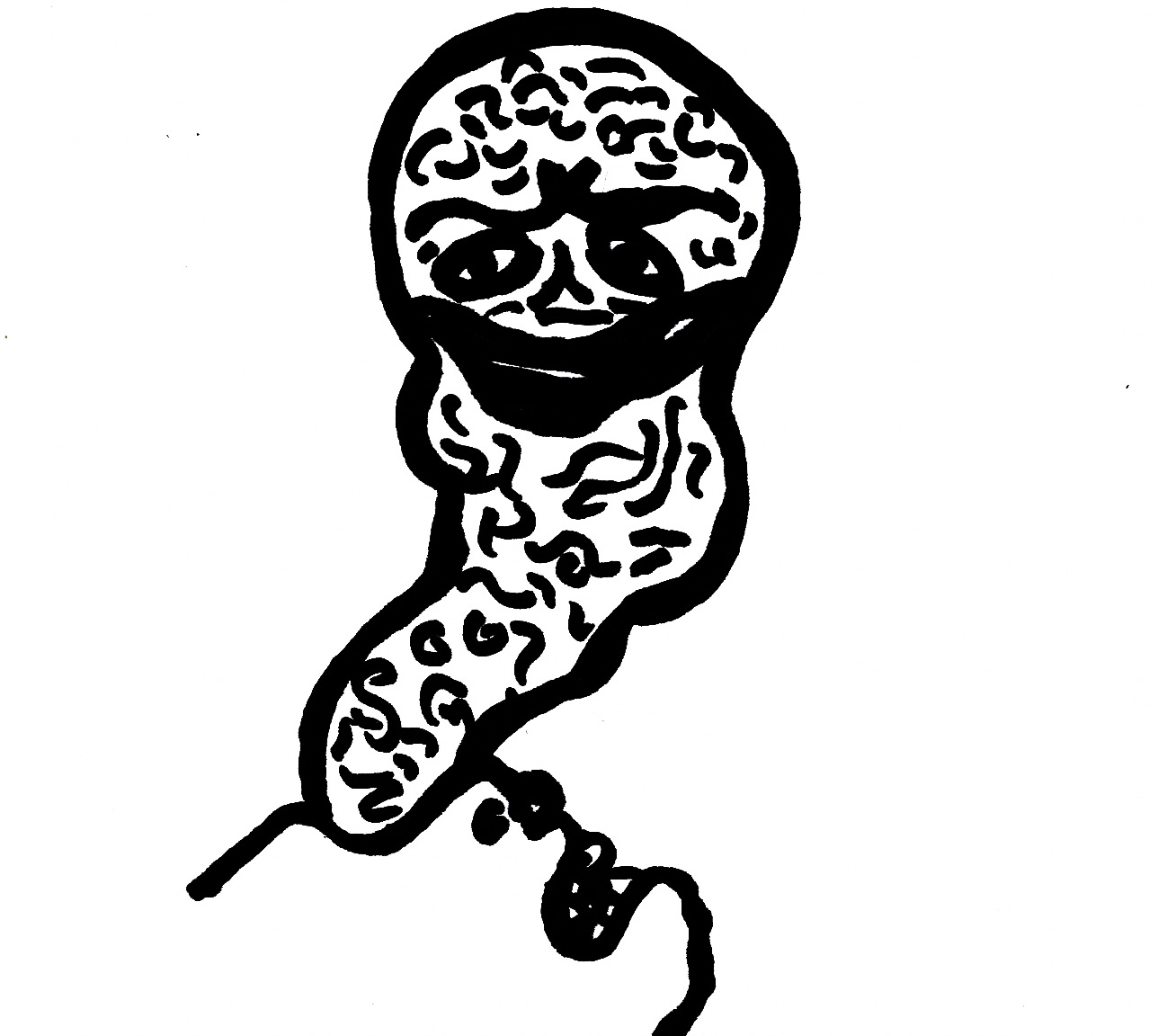
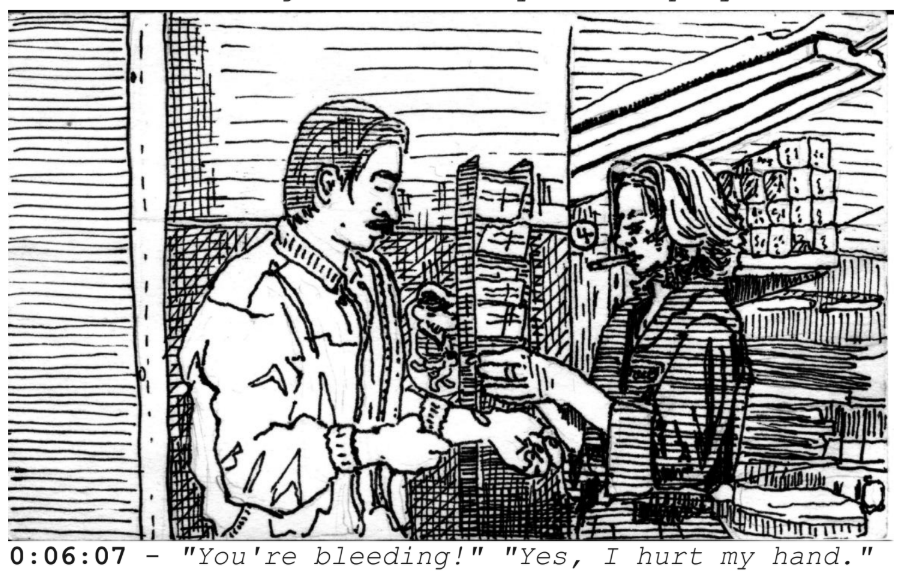
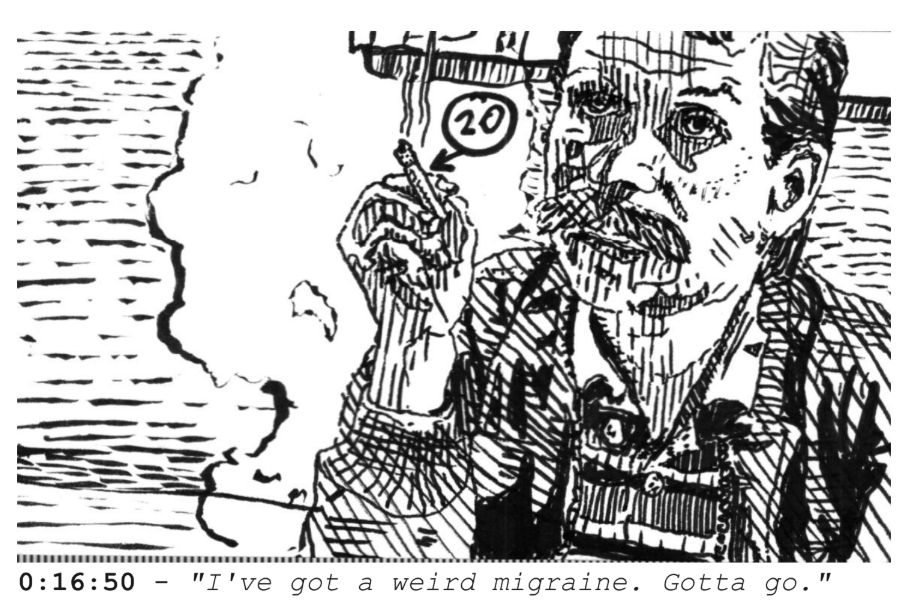
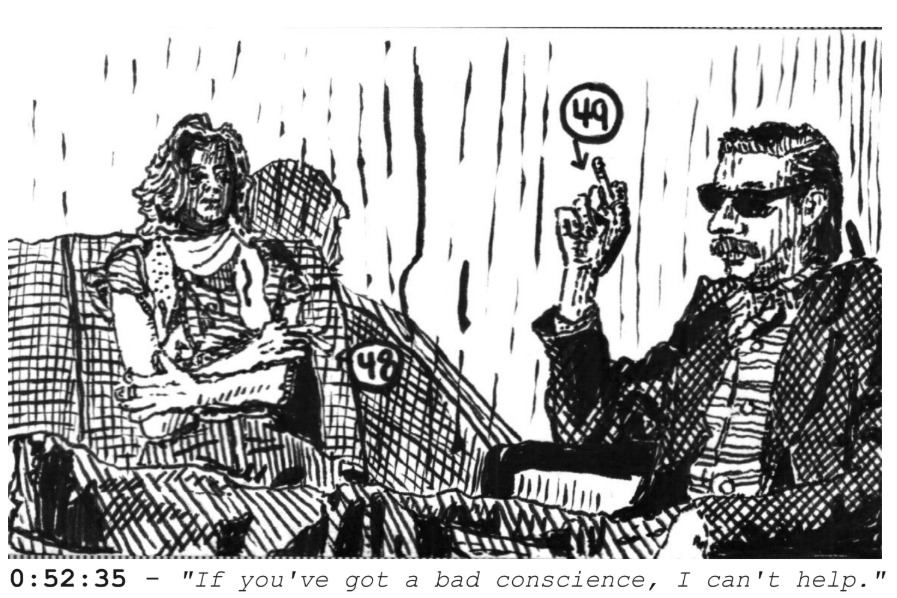
The subtitle “A Trilogy of America” makes Family Portraits sound like it tackles a much broader topic than what it actually covers. Buck’s trademark short films specifically depict the failures of American fatherhood, not America as a whole. The fathers in all three of its vignettes are dead-eyed, emotionally unavailable brutes guilty of domestic violence and incest. The other descriptor Buck used to describe these shocking portraits of bad dads was “a Suburban Holocaust trilogy,” signaling the shorts’ penchant for inhuman cruelty and their anonymous setting in the suburbs of Everywhere, America. Just as depressing as the passionless acts of familial violence is the pervasive blandness of the mise-en-scène, as these fucked up domestic dramas are staged in loveless, artless homes with cheap appliances and no distinguishing character. In “Cutting Moments”, a lonely housewife mutilates herself in a desperate attempt to distract her abusive husband from a televised baseball game. In “Home”, a lonely housewife struggles to conform to the self-flagellating religious rituals of her Evangelist husband, who’d rather slaughter his family than pursue a healthier relationship with his sexuality. In the longest, concluding segment, “Prologue”, a lonely housewife discovers a cache of her husband’s crude artworks that confess his double life as a small-town serial killer. In all three shorts, the men profiled are serial rapists of children and terminate their loveless marriages in horrifically violent acts. They’re all variations on the same bleak idea: that the American family unit is rotten at its core, that most of the nation’s bleakest horrors play out quietly behind closed suburban doors.

“Cutting Moments” was Douglas Buck’s student film, and you can feel a youthful eagerness to resolve the tension of its suburban despair in the shocking violence of its conclusion (which features gore effects from horror legend Tom Savini). By the time Buck made “Prologue”, he was much more willing to sit in a rotten mood without offering his audience the violent catharsis of genre filmmaking (despite horror mainstay Larry Fessenden’s appearance in a small role). Not only is “Prologue” the longest & quietest segment, but it’s also the only one where all of the sensational violence has already occurred years before the story’s start, and all the audience can do is chill in the aftermath. Its ice-cold sparseness in mood & setting recalls the arthouse abstraction of James Benning’s Landscape Suicide more than any shock-value horror title, whereas “Home” & “Cutting Moments” wouldn’t feel out of place as standalone segments in the Masters of Horror miniseries. In a way, Buck’s Family Portraits are their own mini Bleak Week program, condensed down to 100 convenient, squirmy minutes. The genius of the anthology’s sequencing is in how it gets bleaker as it goes along, despite opening with its most attention-grabbing acts of onscreen brutality. Whether you live in a city that has yet to initiate its own Bleak Week celebrations (such as New Orleans, which has yet to participate in this relatively new tradition) or you already miss that cold, despairing feeling and can’t wait for next year’s program to come around, Family Portraits: A Trilogy of America is the perfect Bleak Week microdose to help you get through the sunnier days of summer blockbuster season, as ruled over by the tyranny of joyful entertainment.

-Brandon Ledet

The Invite (2026)

After the much derided (but enjoyed by me) Don’t Worry Darling, Olivia Wilde was put in director jail for a while, only returning this year with the premier of The Invite, a comedy starring Wilde, Seth Rogen, Penélope Cruz, and Edward Norton. Wilde and Rogan portray Angela and Joe, a couple whose married life is circling the drain, with Norton and Cruz as their upstairs neighbors Hawk and Pína. Taking place over the course of a single, awkward, semi-disastrous, illuminating dinner party that Angela and Joe host, the film plays out as a less biting, more comedic version of Who’s Afraid of Virginia Woolf?

The strains on Angela and Joe’s married life are self-evident from the get-go. Angela is a consummate (and bad) liar who, when caught in her dishonesty, simply freaks out until something else comes up conversationally that distracts from her lies. She prepares an elaborate meal and charcuterie in her excitement over the dinner, which was only planned earlier that morning after a chance encounter with Pína, despite lying to Joe that she told him about it the night before, and that he simply didn’t listen to her. When Hawk compliments her on a designer rug, she claims to have found it at a flea market, despite the audience seeing her unpack it and lay it out during the film’s opening title sequence. It appears that she has chosen to fill her life with these falsehoods (and too many podcasts) to distract herself from its banality, despite that life being one that she chose, as she admits that she got her degree and never did anything with it. For his part, Joe is also dissatisfied, seeing himself as a failure due to the one hit wonder nature of his band, his employment as a music instructor at a third-rate, non-prestigious conservatory, and the fact that the couple and their daughter live in the apartment that he grew up in. From within the horizon of her own unhappiness, Angela can only see that they live in a beautiful home, have a daughter who adores her father, and that Joe has an ideal job, regardless of the lack of respect that his institution commands. 

Into this dynamic comes the duo of Pína and Hawk, whom Angela is desperate to impress and for whom Joe has nothing but contempt, as he finds Hawk’s casual small talk in the elevator annoying, not to mention that the upstairs couple’s sex life is both very active and extremely loud. The dinner itself is a disaster, Angela’s souffle is completely burnt, Pína is revealed to be a vegan (debatable, given that her contribution to the meal is a flan) and unable to eat anything other than the charcuterie olives, and Angela’s lack of planning means that their only option for wine is a bottle given to them by Joe’s late uncle to save for a future anniversary. The two break off into pairs, with Pína joining Joe for a joint in his office while Angela gives Hawk a tour of the house that ends with tequila shots. With everyone properly socially lubricated, Hawk and Pína apologize for the frequent ruckuses upstairs before Joe can address the subject more hostilely, and admit that they are swingers who are interested in their hosts. Angela is fascinated by the possibilities that this opens up, and Joe, initially resistant to the idea based on the assumption that he would be excluded, also warms to the idea. The results are moderately disastrous, but not in the way that one would expect. 

The Invite is an adaptation of the 2020 Spanish film The People Upstairs, with a screenplay from Rashida Jones and a co-credited Will McCormack, whose only feature writing credit prior to this was as a co-story writer on Toy Story 4. The script is a delight, capturing a great deal of insight into relationships and their idiosyncratic disconnections (or, as Leo Tolstoy might put it, each failing marriage is “unhappy in its own way”) while never losing sight of the fact that this is first and foremost a comedy. That doesn’t mean that the film treats every part of its subject matter with levity, with a particularly noteworthy scene in which Norton’s Hawk delivers a sobering monologue about his failures as a husband to his now-deceased wife, but even that is undercut by the fact that this is Hawk’s self-rationalization for his current sexual curiosity. Penélope Cruz struts around this film with the knowledge and understanding that she is one of the sexiest people on earth, and her calm, casual demeanor is as magnetic to the audience as it is to an enraptured Angela. I also found myself charmed by Seth Rogen here; much of his film career consisted of variations on the single central idea of “pothead gets into A Situation,” which has never been a brand of humor that resonates with me. In The Invite, Rogen is still the snarky stoner providing commentary on everything that passes before him, but he’s also a sad, trapped man, and he conveys that complexity in a commanding way. 

The real revelation here, as is the case with all of her projects, is Olivia Wilde. Booksmart was universally praised while the critical reception to Don’t Worry Darling was… harsh. It’s impossible to fully sift out every part of that backlash to the latter that had more to do with the casting and behind-the-scenes controversy than the actual quality, but criticisms of Darling included that it was a bit of a mish-mash, never fully committing to any of its myriad ideas enough to coalesce into a solid thesis. While that wasn’t a problem for me, The Invite is a film that’s so confident and singular in its vision that it feels like a direct answer to that critique. This film is the twenty-first century reinvention of Woody Allen’s 70s adultery comedies (the film is even dedicated in memoriam to Diane Keaton), but Wilde has so thoroughly committed to separating the art from the artist that she has taken on Allen’s role as both director of the film and neurotic lead, with great success. Wilde reveals herself here as a very talented physical comedian as well; one of the biggest of my many laughs in this film came during Angela’s argument with Joe about cancelling the dinner, where the camera shifts to a downward angle that positions the front of the oven on the left side of the screen. Wilde crouches into the frame, almost feral, gesticulating to the souffle within. It’s very confident, but also strangely vulnerable, and I loved it. 

A story like this has the potential to feel extremely heteronormative, especially as it revolves around two typical man/woman pairs, one of them sexually repressed and the other more permissive and exploratory. While it stretches belief that a modern day couple would be completely unfamiliar with swinging, if this were an American film of even a decade ago, the main couple would open things up a little, have an awkward interaction that proves that they really love one another, and resolve to recommit to heteronormative routines. The Invite doesn’t do that; in fact, it never gets to the “sex” part of the sex comedy, and instead has the encounter collapse before it ever really gets started. Angela and Joe’s relationship isn’t rattled by temptation in order to come out stronger on the other side; instead, the revelations that emerge from both the need for trust and the rejection of anger that open relationships demand highlights that each is miserable. The ending is deliberately ambiguous, as Pína tells them directly that, in her opinion as a psychotherapist, their relationship is over, but also that a new relationship can form between two people if they try. It’s sweet without being overly sentimental, and it works.

-Mark “Boomer” Redmond

Lagniappe Podcast: BLKNWS – Terms & Conditions (2026)

For this lagniappe episode of The Swampflix Podcast, Boomer & Brandon discuss the encyclopedic Black culture mixtape BLKNWS: Terms & Conditions (2026).

00:00 Welcome
02:35 Supergirl (2026)
14:14 Roommates (1982)
18:45 Touch Me (2026)
33:05 BloodSisters (1995)
37:12 War and Peace (1965-1967)
1:02:22 Shōwa era Godzilla (1954–1975)
1:11:33 Vortex (2022)
1:21:51 Family Portraits – A Trilogy of America (2003)

1:27:30 BLKNWS – Terms & Conditions (2026)
2:04:50 2026 so far

You can stay up to date with our podcast through SoundCloudSpotifyiTunesTuneIn, or by following the links on this page.

– The Lagniappe Podcast Crew

The Prince of Pictures

Prince was a lot of things: a genius, a control freak, a madman, a pervert, an enigmatic visionary. Based on those descriptors, you might assume he was also a great filmmaker, but it’s difficult to make a convincing case. Having already mastered the medium of pop music by the mid 1980s (an indisputable fact by the time he produced the album 1999), Prince was determined to get into pictures, threatening to drop his then-manager Robert Cavallo if he couldn’t land a starring role in a big-time Hollywood movie. That’s how 1984’s Purple Rain came to be, and that’s how Prince’s big-screen career is mostly widely and most fondly remembered. Purple Rain was a huge hit, mythologizing the broad bullet points of the Minneapolis musician’s life story in what’s essentially a feature-length music video about the vicious cycle of domestic abuse. It’s the closest Prince ever got to making a normal, functional movie and it’s still an MTV-addled brainscrambler, repurposing the relentless quick-edit montages of Adrian Lynne’s Flashdance to illustrate & promote its eponymous album by Prince & The Revolution. Unwilling to cede any creative control of his music or image, Prince was heavily involved in the writing of the screenplay and the sounds of his onscreen avatar The Kid’s rival bands, most notably Morris Day and the Time. As a result, everyone in the film dresses & sounds exactly like Prince, while he saves the best tunes for himself and the fictional crowds reject him as an underdog anyway, betraying an underlying self-doubt that drove him to be such a controlling perfectionist in the first place. It’s a narratively confused & confusing film as a result, but it’s undeniable as an 80s-era pop artifact, the undisputed pinnacle of Prince cinema. Then, things got really strange, inscrutibly so.

After the commercial success of Purple Rain, Warner Bros issued a blank check for Prince to produce whatever he wanted for a follow-up, which resulted in the 1986 headscratcher Under the Cherry Moon. Recently restored & re-released for its 40th Anniversary, Under the Cherry Moon is a Merchant Ivory-themed music video set in an alternate universe only Prince could dream up: one exclusively populated by chic babes and flamboyantly gay skirtchasers. Prince stars alongside The Time member Jerome Benton as a pair of Miamian expats who are explained to be brothers living on the French Riviera, but whose onscreen personae are only explainable if they are a closeted gay couple. Regardless, their financial well-being is hinged on their dual schemes to woo local heiresses as boytoy gigolos, a status that’s threatened when Prince accidentally falls in love with a playfully bratty Kristin Scott Thomas. An anachronistic period-piece tragicomedy, Under the Cherry Moon is gorgeous, corny, hip, sexy, and disastrously unfunny in equal measure. Like a lot of failed comedians of their time, Prince & Benton’s approach to humor appears to be entirely based on impersonating Eddie Murphy, to consistently clumsy results. Most failed comedians don’t have access to Prince’s library of all-timer pop tunes, though, and it’s near impossible to hate a film that’s scored by tracks like this one’s hit single, “Kiss.” Prince seemed to be aware that the music video was the visual medium he was best suited for, initially hiring frequent Madonna collaborator Mary Lambert to direct. The same refusal to collaborate that led him to writing & recording all of The Time’s songs himself also led to him taking the project over from Lambert, however, and he ended up with his first official directorial credit — a beautiful, confounding mess.

Prince’s total creative control as a self-designated auteur only tightened from there. The rest of his cinematic output was contained entirely within the sound-stage studio space of Paisley Park, where he made both his very best and his very worst pictures. 1987’s Sign o’ the Times finds Prince in peak form, doing what he does best: music. Ostensibly a live concert film, Sign o’ the Times marks the exact moment Prince retreated to the hermetic studio space of Paisley Park, where he could exert total control over every sound & image captured on record. After shooting some genuine live concert footage in Northern Europe that he found lacking in quality, Prince then reshot a majority of his band’s live show in his home studio, with performers miming their instruments to pre-recorded tracks for optimal sound quality. Once again, the result is more closely aligned with music video filmmaking than a traditional concert doc, so much so that when the footage switches to an actual music video interlude for the Sheena Easton collaboration “U Got the Look,” there’s no discernible break from reality. In this one instance, Prince’s megalomaniacal control over every aspect of production proves to work in his favor, resulting in one of the greatest concert films of all time, regardless of its flimsy definition of what a “concert” even is. Still, some of his control-freak tendencies show in concerning ways. The one standout sequence that doesn’t highlight Prince’s all-powerful awesomeness is a minutes-long drum solo by bandmate Sheila E, who goes full beast mode on a 360° Neil Peart kit. Later, Prince attempts to steal her thunder by having Sheila E indulge in a stage-front dance break so he can show off on that drum kit himself, as if to prove to the audience that he could hit the skins just as well as anyone, if it weren’t for the physical limitation of only having enough arms to play one instrument at a time. In that moment, you get the sense that Prince’s ideal version of playing in “a band” would be taking the stage alongside five or six of his exact clones, but I’m sure he’d also find a way to get overly competitive with parallel versions of himself if he could.

Now self-isolated in the cavernous dungeons of Paisley Park, Prince returned to narrative filmmaking in the early 1990s, kicking off the decade with an instantly ignored & forgotten sequel to Purple Rain. Graffiti Bridge once again stars Prince as The Kid, professionally competing against his funky-unc nemesis Morris Day. Instead of riding his superhero motorcycle around the streets of Minneapolis, however, Prince is now trapped on a skyless sound stage, which is designed & lit in a way that suggests that all four Ninja Turtles are hanging around somewhere nearby, always just barely cropped out of the frame. Plot-wise, Graffiti Bridge makes its audience nostalgic for the relative coherence of Purple Rain, which at least includes narrative details like events and consequences among its more Princely abstract poetics. While Prince is still somehow struggling to convince crowds that his band (now The New Power Generation) is better than The Time, the years-long rivalry is interrupted by the intrusion of an ironically named muse, Aura (the auraless Ingrid Chavez). Aura reads bad poetry to no one in particular under an unconvincing bridge prop leftover from a Muppet Show set. Later, she’s hit by a speeding jeep, and an ambulance scrapes her body off the street, leaving behind her two pop-superstar suitors to call a truce because they’re both sad to see her go. Apparently, she was an angel sacrificed by God to inspire said truce, like a second, sexy coming of Jesus Christ. That non-story just about accounts for the majority of the runtime, give or take the expected music video interludes that mercifully interrupt this supernatural love triangle melodrama (and occasionally feature always-welcome industry luminaries George Clinton & Mavis Staples). The biggest creative leap Graffiti Bridge makes in Prince Cinema is allowing its characters to break into song in full movie-musical fantasy sequences, instead of restricting the song & dance numbers to diegetic stage acts. Otherwise, it finds Prince recoiling into an increasingly private sphere where no one can tell him “No” loud enough to inspire him to refine his ideas in a second draft. Like all first-draft poetry, it sucks.

Prince’s reclusive cinematic output at least got more entertainingly bizarre in 1994’s 3 Chains o’ Gold, even if qualifiers like “good” or “coherent” would be laughably generous. In this case, the muse-du-jour for his Pepe Le Pew romantic antics is short-time spouse Mayte Garcia, whom he met and courted at her mother’s suggestion while she was still a teenager. Alarmingly, 3 Chains o’ Gold includes even younger footage of Mayte as a small child appearing on a segment of the 1970s variety show That’s Incredible!, showing off her prodigal skills as a belly dancer. Prince watches a VHS recording of that performance with a Videodrome-style unseemly fixation and as a result finds himself psychically connected to the now-adult Matye, characterized onscreen as an Egyptian princess fleeing a violent regime change. You can tell 3 Chains o’ Gold was a straight-to-video affair as soon as Princess Matya is introduced during a nude game of lesbian grabass with her bathing handmaidens, intercut with images of her royal father’s nearby assassination. Meanwhile, in Paisley Park, Prince is going through a tough-as-nails hardcore rap phase in a string of music videos for songs with titles like “Sexy MF”. The two destined lovers meet in the US, have a brief soul-shattering affair, then quickly find trouble as the nonstop orgies of Prince’s more routine sex life call back to him like a siren song. Like Sign o’ the Times, 3 Chains o’ Gold finds Prince finally excelling at cinematic language because he’s fully given into the idea that all he’s making are long-form music videos. Only, the songs aren’t as good this time around, and the self-contained self-mythology has gotten so inscrutable to outsiders that it plays like Prince’s version of a Dianetics video. He makes the full transition from pop singer to compounded cult leader in the final minutes of the video, when he literally buries the Prince persona in the ground and resurrects himself as The Symbol — an idol to be worshipped for the endless cosmic power of his sexual charisma. It’s neither good nor coherent, but it is admirably insane.

Those five titles account for Prince’s filmography as listed on Wikipedia, a convenient reference point for audiences outside the Paisley Park cult. Prince’s official filmography gets much more unwieldy when you refer to the bottomless archives of The Prince Vault, which has separate pages listing titles of various TV movies, documentaries, and concert broadcasts Prince produced alongside his more widely distributed works. The most instructive page on the site, for me, is the subcategory of “Unreleased Movies and Documentaries“, which lists a dozen or so projects that were abandoned at various stages of production. It’s in Prince’s unreleased work that I believe he reached his final form as a filmmaker. No longer satisfied with the amount of control he could exert as a writer, director, producer, star, and composer, he eventually discovered a way he could also act as his movies’ sole audience member, so that they could be properly watched & appreciated by the only person who would know how to fully understand them. The stubborn assuredness in vision that Prince demonstrated as an artist allowed him to create some stunning cinematic objects — some great (Purple Rain, Sign o’ the Times), some merely bewildering (Under the Cherry Moon, 3 Chains o’ Gold). The way that same stubbornness got in the way of his ability to delegate & collaborate also cornered him in the lifeless, hermetic world of Graffiti Bridge, though, which I struggle to see as anything other than an elaborate embarrassment. The man was a one-of-a-kind genius, which made for some great art and some frustratingly overworked mediocrities. In either case, I’m surprisingly sad there’s not more of it around to puzzle through.

-Brandon Ledet

Deeper Inside Annie Sprinkle

There’s a new HBO documentary out called Bang My Box that profiles the life and art of late-night TV host Robyn Byrd, who first became famous for hosting a pornographic call-in show on NYC public access channels in the mid 1970s. Byrd’s career spanned multiple decades of bright-eyed & bubbly political provocation, as she used her TV broadcast platform to advocate for free speech, safe sex, gay rights, trans visibility, and sex-positive feminism through the darkest days of Reagan’s regime and beyond. When the documentary crew catches up with her in the 2020s, she’s long outgrown & outlasted her signature crocheted bikini and mostly just lounges around her Fire Island home with her longtime partner, waxing nostalgic about the good old days. She’s a pure joy to be around in either timeline, but the audience is especially grateful for every frame of vintage footage from her heyday on The Robin Byrd Show in particular, which itself was a weekly document of the bigger personalities from the NYC Porno Chic scene of the 1970s & 80s, as filtered through Byrd’s personal brand of low-fi psychedelic video art. It’s no surprise at all, then, that the self-described “post-porn modernist” Annie Sprinkle eventually pops up in both of the timelines covered by the doc, appearing as a creative collaborator for Byrd in the 1980s and as a personal friend in the 2020s. Sprinkle’s own career saw her starting as a Porno Chic starlet on the NYC scene before she moved to San Francisco in the 1990s, where she made pornographic self-help tapes that doubled as psychotronic video art in the Robyn Byrd Show tradition (most notably among them, the Sluts & Goddesses Video Workshop). Given their parallel career paths, a Robin Byrd retrospective documentary is just about the most likely place imaginable to find Annie Sprinkle besides maybe her own home. To find a proper recap of Sprinkle’s career in politicized porn production, however, you have to dig a little deeper than what you’ll find on the HBO Max splash page.

Annie Sprinkle was eager to reveal herself to her audience as early as her first directorial effort, the early-80s Porno Chic confessional Deep Inside Annie Sprinkle. There, she breaks the rules of pre-video porno production by making direct eye contact with the camera and verbally addressing her audience, inviting them into her bedroom. Deep Inside is more a loose collection of Sprinkle’s sexual fantasies than a true self-portrait, though, acting as a catalog of her personal turn-ons rather than a true autobiography. It does open with Sprinkle flipping through a family photo album from her actual childhood, though, which is a lot more personal than most professional pornos tend to get. The closest thing Sprinkle has to a true Bang My Box-style career retrospective is the one-woman stage show Herstory of Porn: Reel to Real, which she filmed for the home video screen in 1999. Cinematically, Herstory of Porn borrows from the meta-critical Gen-X sarcasm of Talk Soup & MST3k, placing Sprinkle front row at her local porno theater so she can comment on a Greatest Hits clip show package of her own pornographic highlights in real time through the magic of greenscreen. As an autobiographical documentary, it’s occasionally informative, especially in the earliest stretch where Sprinkle reveals that she got into the porno business while working as a popcorn girl at a theater that was screening the Porno Chic landmark Deep Throat. When her theater’s print of Deep Throat was confiscated by the feds for an obscenity trial, Sprinkle was summoned to testify in court about its exhibition, which is where she met director Gerard Damiano, who dutifully helped initiate her into the biz. It’s difficult to take insightful anecdotes like that too seriously, though, since Sprinkle spends the majority of the runtime shoving toothbrushes & rolled-up American flags up her anus, narrating a “cumshot medley” from her classic works, and performing drag queen lip-syncs to footage of herself from various scenes of Deep Inside. Herstory of Porn is relatively informative about the general shape of Annie Sprinkle’s career, but it’s also an anarchic riot meant to shock & awe the jaded off-Broadway theatre types of 1990s NYC, which is a far cry from the softcore respectability of the Robin Byrd documentary.

Maybe the most revealing snippet of Herstory of Porn is Sprinkle’s assertion that sex is “simply the most interesting subject in the world,” musing to herself “why anyone would want to make a film or a video about anything else, I don’t understand it.” She really means it too. The deeper you dig into her 90s-era video productions the more you realize how all-important sex is to her, to the point where it’s just as much of a religious pursuit as a professional one. Her self-help video Annie Sprinkle’s Amazing World of Orgasm (filmed in the 1990s, completed in the 2000s) continues the greenscreen psychedelia of the Sluts & Goddesses Video Workshop and the Herstory of Porn videos, with Sprinkle appearing onscreen in the pose of a local weather report girl to inform her audience about the spiritually transcendent power of the orgasm in all its many forms. She’s joined in her spatial void by a variety of experts on the subject: sex researchers, sex educators, sex therapists, cultural sexologists, regular sexologists, prostitution activists, chiropractors, poets, dominatrices, yoga instructors, and erotic touch experts. Each takes a turn describing a different facet of the human sexual orgasm in a standalone vignette: how to have one, how to fake one, what they feel like mixed with laughter, what they feel like mixed with pain, how they can occur during birth, how they can occur during death, how they can connect us to the world beyond observable life altogether. The Amazing World of Orgasm video is presented as an all-encompassing documentary on the health & spiritual benefits of sexual pleasure, but it looks & feels like a Dianetics or Unarius video — more New Age religion than quantifiable science. When it ends on the proclamation, “Happy orgasms to all!” it reads like a call to wands, inspiring its audience to change the world for the better by rubbing one out as soon as the tape concludes. It also consciously functions as an outsider-art curio, though, which is immediately apparent when the very first sexpert’s testimonial is illustrated by overlayed video-warp projections from both Fritz Lang’s sci-fi masterpiece Metropolis and vintage porn from Sprinkle’s personal catalog. As sincere as Sprinkle is about the spiritual & political power about safe, pleasurable sex, she’s always careful to punctuate her rigorous research findings in that field with a sugary wink, signaling to her audience that it’s all in good fun.

As recounted in Herstory of Porn, Annie Sprinkle moved to San Francisco in the 1990s because she had earned a reputation for being too kinky for the professional pornographers of NYC. The cultish New Age hippie spirituality of California suits her well, and she’s since moved on from her “post-porn” self-help psychotronic phase to produce “eco-sexual” documentaries where she sensually fucks the planet Earth to promote Climate Change awareness (along with her wife and creative collaborator Beth Stephens). She’s also been incredibly smart about presenting & archiving her films in academic settings, where she can be primarily understood as an artist and a feminist instead of a pornographic actress, a designation that would undervalue her work in other contexts. I most frequently see her pop up as a talking head in documentaries on human sexuality these days, including the recent documentary on Fakir Musafar and the body modification movement, A Body to Live In. It may not surprise you to hear that Fakir also appears as a talking head in Sprinkle’s own Amazing World of Orgasm video, promoting body modification as a practical means for achieving religiously transcendent sexual climax. The only reason I know that is because Sprinkle maintains a subscription-based website where you can pay to access her archive of vintage “post-porn” self-help tapes online, including her must-see works: Amazing World of Orgasm, Herstory of Porn, and the Sluts & Goddesses Video Workshop. There’s a D.I.Y. ethos to her work in porn production & exhibition, refusing to wait around for institutions to fund, legitimize, or immortalize her art before it disappears forever. So, the most emotional I got while watching the new HBO doc Bang My Box was a scene where Robin Byrd reads a personal letter written by Sprinkle, urging her to have her personal VHS archive of The Robin Byrd Show scanned & preserved by an academic institution before that wealth of material is lost forever to time & decay. In that letter, Sprinkle stresses how important Byrd’s art is in both the realms of national politics and personal spirituality, and you can tell she means every word. Revisiting clips from that archive in Bang My Box, it became clear to me that The Robin Byrd Show was influential on Sprinkle’s signature “post-porn” video art style, and I was grateful that Sprinkle was retroactively influential on making sure that archive isn’t left to rot, unwatched.

-Brandon Ledet

Pornography Trichotomy

Anytime the cult media distributor Vinegar Syndrome advertises an online sale, I immediately start perusing the offerings on their sister site Méluisne, where they’re also selling discounted Blu-rays of vintage pornography. Since most streaming services won’t touch hardcore titles of any quality, the only legal way to access most Golden Age pornos is to collect them on physical media, which makes Mélusine an irresistible siren during sales. That’s not to say that Vinegar Syndrome’s work restoring vintage horror schlock like Nightbeast, Demonwarp, Devil Fetus, or The Suckling is any less important than their restoration of retro pornos, but there’s something about the physical-media-only exclusivity of Mélusine’s library that routinely has me reaching for my wallet. It’s highly plausible that I could catch up with an Italo horror relic like Burial Ground on Tubi one day, for instance, while the same can’t be said for the hardcore cuts of titles like SexWorld, Blonde Ambition, or Pandora’s Mirror. So, during Vinegar Syndrome’s recent “Halfway to Black Friday” sale, I picked up a trio of Golden Age pornos to add to my personal schlock pile simply because they were discounted and looked interesting. As a group, the movies ultimately didn’t have much in common besides their shared X rating, their early-80s premiere dates, and their universal inclusion of a gentle lovemaking scene on the carpet in front of a fireplace. Individually, however, I found them taxonomically clarifying in the way they identify three distinct modes of traditional pornographic storytelling: the expected collection of standalone sex scenes that became an industry standard in the VHS era, the saga of absurd letters-to-the-editor sexual fantasies you’ll find in stereotypically airheaded pornos, and the shockingly thoughtful & tragic dramas that are too much of a bummer for you to imagine anyone actually getting off to them despite all of the exposed & penetrated flesh.

1981’s Deep Inside Annie Sprinkle was the directorial debut of its titular star, who makes direct eye contact with her audience while inviting us along to indulge her hottest sexual fantasies, one at a time. Sprinkle starts the picture pouring a glass of wine under the candelabra lighting of her living room piano, then shows the audience childhood photos from her life before the industry, when loved ones knew her as Ellen. After this photo album nostalgia trip, the camera pans over to a fireplace that’s been cropped just outside the frame, where two naked men are arm wrestling on the carpet as foreplay, waiting for Sprinkle to use their bodies. She quickly obliges, guiding the audience through her individual fantasies as she fucks new scene partners in every room of the house, narrating instructive demos for novelty sex acts like tit jobs, golden showers, and prostate play. The one-on-one intimacy of this non-narrative hangout would become much more common in the home video era that would soon snuff out the industry’s Porno Chic boom. In order to properly break the fourth wall, Sprinkle has to film herself instigating an orgy in the rows of a 42nd Street movie theater, exciting the audience with the fantasy that she might sit next to us at any time. It’s more an elaborately mediated act of mutual masturbation than it is a proper Golden Age porno, which has only become more standard and more direct in the modern era where performers can now interact with their audience in real time on video chat sites like OnlyFans. Sprinkle’s early prototype for that modern porno template—wherein narrative has been excised in favor of stringing together a collection of standalone sexual stunts—is still heavily scripted, though, and it includes such delightful cornball dialogue as, “Do you like big tits? Well, as you may have noticed, I have rather larger ones.” It’s just a nice, holesome hangout with our good friend Annie, who would later push its interactive format to much more psychedelic extremes in the Sluts & Goddesses Video Workshop, an all-timer in pornographic video art.

You can tell Deep Inside Annie Sprinkle was ahead of the curve in its audience-interactive intimacy by watching the bonus features for Neon Nights, which was also released in 1981. While providing commentary for a reel of unused outtakes, Neon Nights director Cecil Howard calls attention to the shots where Kandi Barbour makes direct eye contact with the camera during her own fireplace lovemaking scene, which had to be trimmed as a result. Neon Nights is much more traditionally narrative than Deep Inside, following the hitchhiking adventures of a horny runaway teen (Lysa Thatcher). That’s not to say Howard’s movie is better behaved than Sprinkle’s, though. It starts with Jamie Gillis fisting that teenage runaway’s mother while the teen listens intently from the opposite side of her bedroom wall, brushing her hair & practicing her makeup before using her beauty instruments as makeshift dildos. She decides to hit the road when her stepfather hits on her the next morning, in one of two scenes that reference the infamous shower stabbing sequence from Hitchcock’s Psycho. The horrors continue on the road, where she encounters swinger magicians who make her levitate out of bed like Linda Blair, an unscrupulous nude photographer who likes to fuck on a bed of porcelain babydolls, and a dreamworld doppelganger for her creepy stepfather that she’s much more willing to sleep with. Neon Nights is one of the few movies where you’re grateful for a last-minute “It was all just a dream reveal,” since it recontextualizes a series of seemingly nonconsensual sex acts as the incoherent fantasies of a young woman who doesn’t know what she wants. More importantly, it’s an instructive look at the thin border that separated horror & pornographic filmmaking sensibilities in its era — two disreputable genres that were culturally dismissed for their shared cheapness & prurience. The runaway’s far-out sexual exploits are often set to the spooky theremin sounds of a sci-fi soundtrack. Veronica Hart’s sex scene among her babydoll collection is frequently punctuated by flashes of lightning to accentuate the taboo. Much like many dirt-cheap horror titles of its time, Neon Nights would make for an excellent classroom tool to demonstrate how simple lighting & color scheme choices (from the titular neon hues of a motel sign to the more porno-specific contrast of a pink-flushed face pressed against a lime green bedspread) can make even cheapest sets look fantastic … if it weren’t for all of the vigorous onscreen penetration that would alienate most students. It’s also just a very silly story about a teenage hitchhiker’s letters-to-the-editor sexual fantasies, nakedly so.

When most modern audiences picture a narrative porno, they’ll think of outlandish fluff like Neon Nights, wherein a hitchhiker’s road trip storyline is used as a flimsy excuse to connect a series of standalone goofy sex scenes, even if artfully staged. There was a brief time, however, when Porno Chic features were thought to have a “crossover” commercial appeal and, thus, were expected to be populated by real characters with real emotional crises that could be resolved dramatically instead of pornographically. 1982’s Roommates (directed by Chuck Vincent) is the rare hardcore title that leers harder at women’s internal lives than their external ones, the kind of Golden Era porno that’s so dramatically heavy that it’s difficult to imagine anyone being turned on by it. Samantha Fox, Veronica Hart, and Kelly Nichols star a trio of young professionals sharing rent in a New York City apartment while struggling to break into the entertainment industry. Fox is eager to get into movie production work but is professionally haunted by her previous career as a callgirl; Hart is getting her feet wet as an off-Broadway stage actor but is caught between the affections of her seemingly gay costar and her older, married drama teacher; Nichols is a fashion model whose escalating drug addiction leaves her vulnerable to creeps & stalkers (most notably Jamie Gillis, again playing to type). All three women are on the verge of thriving, with only the universal problem of men being disgusting getting in the way of their success. As a result, most of the sex they have along the way is intentionally, uncomfortably bad — tainted by coercion, extortion, intoxication, and abuse. It’s the only professional porno I’ve ever seen where women immediately disengage from oral sex to spit in disgust, once in a toilet and another time onto the trousers of a reviled colleague. It’s also the only professional porno I’ve seen that convincingly stages actual, recognizably human arguments instead of bouts of belligerent shouting (give or take Andy Milligan’s Fleshpot on 42nd Street). It’s as heavy on dialogue as it is short on sex, to the point where even its obligatory fireplace lovemaking scene is staged in front of the punier flame of several candles instead of the real deal. As a result, it’s the only title out of this trio that could be convincingly passed off as “a real movie” to most discerning audiences, which is a designation that’s often saved for pornos that are too dramatically upsetting to function as a genuine turn-on.

Obviously, the major cinematic draw of these vintage porno titles is the opportunity to see extreme images no other filmic genre would dare show onscreen. There is no shortage of those extreme moments in Deep Inside Annie Sprinkle, but I think I was most surprised by the infinite angles & configurations Sprinkle (along with uncredited co-director Joe Sarno) came up with to capture the action of Ron Jeremy’s hardon sliding between her “rather large” breasts. On the opposite end of the dramatic-pornographic spectrum, Roommates thought to include representation of cis women huffing poppers on a nightclub dancefloor, a salacious pastime that has become something of a trend among young partygoers in recent years but has obviously been in practice for decades. The real standout moment to me, however, is a scene from Neon Nights where actress Arcadia Lake is painting a giant cock on her home easel while actively masturbating between brushstrokes, which is just about as honest of a depiction of artistic process as I’ve ever seen in cinema. While cheap-o horror schlock and other disreputable genres have gradually been legitimized as worthy cultural artifacts, vintage porno is still a niche beat for professional critics & academics to cover, if it’s touched on at all. Since sexual fantasy is just as integral to human life and cinematic expression as any other natural impulse, it’s a shame that it has so little room for discussion or exhibition in the modern discourse, while half a century ago it was being covered by outlets like Variety and The New York Times. Even as someone who already values this kind of cultural runoff, I’m struggling to not make qualitative judgements about the naked titillation tactics of Deep Inside Annie Sprinkle or the daffy daydream fantasies of Neon Nights against the more somber downbeats of Roommates, which earns instant respectability by undercutting its own eroticism. I’ll need to watch more vintage pornography to work on that. In fact, all serious cinephiles should be watching more pornography of all varieties, the more outdated the better. There’s much left to interrogate & discuss, while most avenues of vintage horror discourse have already been exhausted well past their dead ends.

-Brandon Ledet

The Doll (Vaxdockan, 1962)

Stop me if you think that you’ve heard this one before: A lanky loner who works late nights and has uneasy relationships with women lives alone in an upstairs attic with an empty rocking chair, muttering increasingly disconcerting, violent things to an imagined woman who isn’t really there. Psycho was on my mind during the entire runtime of Arne Mattsson’s The Doll, which was produced in Sweden just two years after Alfred Hitchcock’s genre-defining masterwork. And yet, none of the film’s prominent critical commentary mentions Hitchcock by name, instead likening The Doll to the more sophisticated national cinema of Ingmar Bergman. Personally, I can’t read The Doll as anything other than an attempt to class up Psycho for an international arthouse crowd. It’s less of a direct photocopy than it is a cross-cultural echo, altered enough through translation that it gradually becomes its own distinct art piece. If nothing else, in the process of swapping out Norman Bates’s maternal corpse for a sexy department store mannequin it pushes past Hitchcock knockoff territory to explore new psychosexual genre textures, accidentally inventing Peter Strickland’s fetish-horror cinema in the process.

Our troubled antihero is a self-pitying sad sack who moans & groans about the loneliness of everyday city life. He spends countless hours staring at the water stains on his apartment ceiling, daydreaming about his ideal romantic partner instead of actually, you know, talking & relating to the women around him. The incel loser then strikes gold while working a shift at his nightwatchman job, discovering a department store mannequin that looks exactly like the ideal woman he’s been picturing in his head: a near-featureless object with a blunt brunette bob. He steals her away from his post, blames her absence on a robbery, and relocates her to the squeaky mattress in his bachelor pad. There, he keeps the plastic woman as a kind of domestic prisoner, pouring his heart out to her as the first woman to ever fully understand his peculiar persona . . . since she’s an inanimate object he can control through his own imagination. The longer he spends time alone with the mannequin, however, the more of her own self-determined personality & autonomy starts to emerge, and her captor once again struggles to reckon with the idea that women are people with their own wants & needs, not possessions to dress up & neatly store like dolls.

Once The Doll finds its unlikely man & mannequin couple locked away in a single-room attic apartment, it becomes a kind of volatile stage play about gendered domestic squabbles. Although the incel nightwatchman does commit violent acts as these one-sided arguments escalate, it’s less a horror of action than it is a horror of the uncanny. As he starts to fully believe in the personhood of the mannequin, she subtly comes to life; she laughs, she cries, she dances, she writhes. At first, she lays still while Mattsson’s camera handles all the movement, indicating her emotional state through a sweeping pan around her prison bed. Then, her mannequin body is periodically replaced by the real-life flesh of actress Gio Petré, who’s outfitted with the same bob wig and feature-flattening makeup. The mannequin figure alternates seamlessly between Petre’s body and its artificial surrogate, so that many shots leave the audience questioning which is which. This dynamic gives actor Per Oscarsson a fellow onscreen player to bounce the protagonist’s misogynist ideology off of, so that he’s not entirely acting opposite a doll, but it also provides the majority of the film’s horror-cinema chills.

Despite its potential framing as a rushed-to-market Psycho knockoff, The Doll is a beautiful art object in its own right. Mattsson lights his players with the harsh low-angle flashlight spotlight of a crime scene, establishing an Old Dark House vibe in what’s otherwise a fairly mundane apartment building. He also frequently finds aesthetically beautiful ways to accentuate the uncanny nature of the titular doll’s body, such as the Buñuelian image of her severed hand resting on the apartment’s basement stairs, or a rose gently resting on that same upturned palm once it’s reattached to the mannequin’s arm. Petre consistently contorts her hands to match the mannequin’s pose in her scenes, and she finds a way to appear distant & glassy eyed even in her fiercest arguments with Oscarsson’s disturbed lead. For a sexually sordid horror picture with a creepy children’s theme song about “a grown man who plays with dolls,” it’s a remarkably classy affair, one that earns its Bergman comparisons in its lengthy, vicious war-of-the-sexes dialogue exchanges. If you want the trashier, campier version of this movie, check out Peter Strickland’s In Fabric or the German whatsit The Berlin Bride. This one’s for the artsy-fartsy horror crowd, the elite pervert aesthetes.

-Brandon Ledet

Night Nurse (2026)

Usually, when a movie is described as “Cronenbergian,” that genre descriptor is meant as a synonym for “body horror,” focusing solely on the mutational gore effects of Cronenberg’s early calling-card works like Videodrome or The Fly. Georgia Bernstein’s debut feature Night Nurse is Cronenbergian in a different way; it’s Cronenbergian in the way that it imagines a world where any interaction can qualify as a form of sex, like the vehicular mayhem of Crash, the surgical procedures of Crimes of the Future, or the graveside mourning of The Shrouds. Specifically, Bernstein imagines a world where scamming the elderly over the phone is an intimate sexual act, rehearsed and ritualized in such a playfully heightened atmosphere that it’s more immediately recognizable as a sexual kink than it is as elder abuse. Even the opening credits play over one such phone call, with the camera leering over the scammer’s rhythmically gasping body with the same uncanny, gliding closeups that Cronenberg’s on-screen avatar examines his wife’s corpse with in The Shrouds. That phone call is, in effect, a sex scene, but everyone involved is fully clothed and the bondage gear of more typical kink scenes has been replaced with the spiraling wire rope of a landline.

Cemre Paksoy stars as the titular night nurse, a new hire at a senior-care assisted living facility in the great beige American suburbs. She’s immediately warned by the head admin (Mimi Rogers) to be wary of the home’s most notoriously misbehaved patient (Bruce McKenzie), who has a tendency to confuse the nurses assigned to him for his deceased wife, touching them inappropriately in apparent fits of dementia. That supposedly demented Lothario appears to be much mentally sharper than she’s led to believe, however, and he’s quickly revealed to be a petty conman who’s using the cover of declining health to conceal his crimes. On her very first night shift alone with him, our seemingly naive nurse is very literally roped into his schemes, wrapped up in telephone wire and pressured to play pretend that she’s the troubled granddaughter of the mark on the other end of the line — in immediate need of cash lest she be kidnapped, jailed, or worse. It proves to be a huge turn on. This same semi-scripted scenario plays out repeatedly, mark after mark, as a lucrative substitute for sexual contact between an elderly man and his youngest ingenue. Only, both the conman’s mental sharpness and the nurse’s bewildered innocence prove to be a kind of practiced performance, so the con can’t go on forever.

Besides its ability to eroticize the unconscionable, Night Nurse is also remarkably Cronenbergian in its general affect. The entire picture is rendered in uncannily flat digital plastic, and yet it excels as one of the most effective erotic thrillers made outside of France in decades. Its hushed, beige-carpeted crime spree is both oddly gentle and intensely uncomfortable. The overall mood is just as quietly mesmeric as the seductive eye contact made by its demented conman, who gradually piles up a full staff of uniformed nurses on the floor of his living room harem. Despite that extended dream-sequence atmosphere, the movie can still be astutely observational when it comes to the rituals of industrialized elder care, focusing on the physical touch of physical therapy as old men are routinely paired off with young women in a transactional simulation of traditional domesticity. The gendered power imbalance of that generational divide also exacerbates the eroticism in unexpected ways, especially when it’s flipped by a young nurse who’s turned on by the helplessness of the old man in her care, lusting after his soft skin for feeling “like a woman, like a baby.” Everyone is horny, no one’s technically fucking, and yet it plays like a feature-length orgy replayed in slow motion.

As with Cronenberg’s less showy, more cerebral works, Night Nurse operates on an extremely peculiar wavelength that can be difficult to tune into. You can tell some social taboo is being transgressed in every scene, but these wanton freaks’ sexual dynamic is so absurdly idiosyncratic that it’s near impossible to pinpoint exactly which one it is. The only specific audience I can think to recommend it to are people who wished the straight-to-Netflix crime thriller I Care a Lot had more patience & sharper fangs, and that’s only because it’s the only other vaguely sexy movie about elder abuse that I can recall. Otherwise, it’s the kind of for-weirdos-only proposition that will find its own dedicated, odious audience in due time, the same way Crash premiered to angry booing at Cannes and has since been canonized as a modern erotic classic by the freaks on its frequency.

-Brandon Ledet

Touch Me (2026)

Touch Me had its Shudder premiere this week, and I went into it completely blind, which I recommend for anyone who is interested. This is a color-soaked fever dream of a movie, an erotic thriller wrapped in a science fiction plot that doesn’t shy away from turning a titillating moment into one of pure body horror, then following that up with a joke that underlines the tone without undercutting it. It’s fresh, fun, and something decidedly new, although it’s obviously not going to be for everyone. 

The film opens on a therapy session with Joey (Olivia Taylor Dudley) detailing an experience she had with a charismatic man five years earlier. She ran into him at two separate events wearing an out-of-place track suit, and mockingly (and correctly) dismissed him as an alien. When he revealed that this was true and that he came from another world devastated by climate change to save the earth from falling victim to the same fate, she allowed him to share his psychic touch with her, which had a euphoric effect that effectively combatted her psychological issues. She hasn’t seen him since a sexual encounter between the two of them turned into an assault when he wouldn’t stop despite her asking him to, running straight to the home of her gay best friend Craig (Jordan Gavaris), where she has remained ever since. For reasons that are revealed later, the two are able to live comfortably in Craig’s home, despite neither having a job, but when an unexpected and costly plumbing emergency occurs, Joey starts looking for work. This brings her back into contact with Brian (Lou Taylor Pucci), her alien ex, and she ultimately accepts his invitation for her and Craig to spend some time in his modern mansion in the hills. There’s some friction between the two and Brian’s human assistant Laura (Marlene Forte), but after a few sessions of alien group therapy, things are going well, until they suddenly aren’t. 

One of the barriers that I think some viewers will have with this one will come down to its playful zaniness. Touch Me isn’t trying to be taken at face value and as such calls attention to its filmic and fictional nature constantly. After Joey witnesses video evidence that there’s something more sinister going on than she’s been led to believe, the film shows us the backstory of the person she’s just seen die in a black and white segment; the victim was lured in via hookup app, with the telltale sounds of Grindr notifications going off but those messages appearing on screen like silent picture intertitles. It’s quirky, but not overly so. When Joey considers applying to work at the coffee shop she frequents, the “help wanted” sign on the counter appears and reappears in multiple floating bubbles that frame her face. It’s cartoonish, and the tone of the film supports it, but I can see a lot of the film-going audience growing frustrated with Touch Me because of this visual playfulness in a film that spends much of its time dealing with sexual assault and its psychological impacts. Those scenes are never played for laughs and are treated with appropriate weight, and we’re never subjected to it and only witness the victims recount them in therapeutic sessions, both legitimate and manipulative. That tonal whiplash is part of what makes the film special, however, and I don’t think that I would have it any other way.

Brian turns out to want “cross-species intercourse” with both of his hot young houseguests (and as many others as possible), and the film is very good at capturing what makes him both desirable and uncannily, repulsively inhuman. Pucci is an attractive man who has clearly put a lot of work into maintaining his physique, but he also has very impressive control over his facial muscles in a way that, in combination with his unnatural dark hair, allows him to look eerie and not entirely trustworthy. When characters are aroused by him, either through psychic manipulation or basic human lust, the film communicates this through erotic, almost pornographic close ups of his bouncing pectoral muscles or undulating abs, but then intersplices this with off-putting close-ups that feature his creepy stare and libido-shriveling Gary-Oldman-in-Bram Stoker’s Dracula grooming. It’s very effective at being both arousing and off-putting, and I’m not sure I’ve ever seen a film that captures that line so well. Both Taylor Dudley and Gavaris are familiar to me as a viewer who soaked up a lot of 2010s Vancouver-based genre television; the former portrayed divisive character Alice in The Magicians and the latter was the universally beloved Felix on Orphan Black. I was delighted to see both of them in this film, and they not only have great chemistry with one another but are also putting in performances that are so distinct that, despite having spent dozens of hours with them as their familiar-to-me characters, I never found myself slipping into thinking about Alice or Felix at all. Joey’s grief is completely different from Alice’s, as is her expression thereof; Craig is easier to differentiate from Felix since he doesn’t share that character’s accent, but Craig also lacks Felix’s motivation, integrity, and unrelenting self-love. When it comes to Gavaris, his dedication to picking up the weights as he aged out of his Orphan Black era twinkiness was a cause of some concern for me; I started following him on social media some years ago when he led a short-lived comedy series called The Lake in which Julia Stiles played his conniving step-sister, and the way that he would post about his workouts and the way he felt about his body was troubling. One hopes that he’s come to terms with that since then, and that Craig’s body dysmorphia here is him taking some agency over Gavaris’s own, since Craig calls himself “fat” and “hideous” despite being neither

Of course, it’s also an equally valid interpretation that Craig doesn’t actually think that he’s either of those things, and that it is instead his way of fishing for compliments from Joey. It’s a sign of their co-dependency; we eventually learn that they were both victims of childhood sexual assault, but that Joey has kept this from Craig, which has allowed for him to weaponize his victimhood against her in a way that she feels she can’t counter without either being forced to relitigate her trauma or risk her living situation. It’s not ideal for either of them, and demonstrates how this betrayal during their vulnerable years has led them to dismiss those traumas flippantly, through dismissive humor, or through total suppression, and this makes them easy prey for Brian. It’s good stuff, and although the film draws attention to its artificiality through overt stylism, it doesn’t feel the need to broadcast that it’s tackling “elevated” horror themes. 

I’ve had mixed feelings about a lot of the horror that’s come out this year. I was personally underwhelmed by Obsession because of the familiarity of its narrative structure, but I was also quite taken with Leviticus despite the fact that it traffics in images and ideas that are not necessarily novel either, just viewed through a new lens. Touch Me is fresh, irreverent, exciting, and sexy, despite also owing major debts in its visual inspiration to Neon Demon, Ex Machina, and Mandy. It won’t be for everyone, but will be thoroughly enjoyed by those for whom it does work. 

-Mark “Boomer” Redmond

Podcast #268: Jackass – Best and Last (2026) & New Releases

Welcome to Episode #268 of The Swampflix Podcast. For this episode, Brandon, James, Britnee, and Hanna discuss a grab bag of new releases from the first half of 2026, starting with the gross-out clip show Jackass: Best and Last.

00:00 Welcome
01:30 Sleepaway Camp (1983)
09:47 Annie Sprinkle
16:00 Disney animation
25:36 Undertone (2026)
27:47 How to Make a Killing (2026)
29:44 Straight to Hell (1987)

35:46 Jackass – Best and Last (2026)
50:25 The Piano Accident (2026)
1:09:42 Natchez (2026)
1:35:37 A Useful Ghost (2026)
1:46:07 28 Years Later – The Bone Temple (2026)

You can stay up to date with our podcast through SoundCloudSpotifyiTunesTuneIn, or by following the links on this page.

– The Podcast Crew