Jawbreaker (1999)

I’m genuinely shocked by how few times I’ve seen the 1999 high school murder comedy Jawbreaker compared to other films in its same wheelhouse. This is far from the pinnacle of the post-Heathers teen girl cruelty satire, but I’m still close enough to dead center in its target demographic that it should have been a teen-years favorite for me. Was it merely the happenstance that Drop Dead Gorgeous was the murderous-teen-girls high school comedy that found its way onto Blockbuster’s used VHS liquidation tables at the right moment that made that one a go-to standard for me instead? Both films are deeply flawed for sure, but I could never tell exactly why one was a beloved favorite that I looped into dust while the other was a film that I occasionally ran across here or there. In retrospect, I think it’s mostly because the appeal of Drop Dead Gorgeous is instantly recognizable; the low-key absurdism of its femmed-up Christopher Guest mockumentary schtick strikes a somewhat familiar tone, no matter how ill-behaved its amorality can be from gag to gag. The specificity of Jawbreaker’s appeal was a little more obscured & difficult to pin down for me, but it finally clicked on my most recent rewatch (only my second or third experience with the film, somehow): it’s Gay.

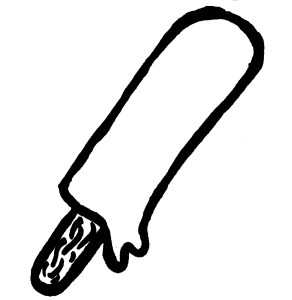
More specifically, Jawbreaker is perversely funny for having teenage high school girls deliver dialogue obviously written by adult gay men. Judging by writer-director Darren Stein’s work on explicitly gay projects like the queer screwball high school comedy G.B.F. (Gay Best Friend) and the drag queen horror comedy All About Evil, he knew exactly what he was doing here. The dissonance of Jawbreaker is that the Teen Girl actors tasked to deliver his Gay Man dialogue don’t know what they’re communicating at all; it’s as if they’re phonetically speaking a foreign language for the very first time. The result is a bizarre comedy that is paradoxically both over-written and under-performed, which makes it exceedingly difficult to connect with if you aren’t aware of the reason for that disconnect. Once you realize the film is basically the preemptive drag parody of itself, however, everything clicks into place. It becomes clear why all the girls are breathlessly horny for each other, why they use the word “kink” every other sentence, why they emphasize the pet names “Honey” and “Bitch” with such withering sass, and why the film’s only genuine sex scene revolves around a jock hunk fellating a popsicle. It’s Gay™.

One thing both Jawbreaker and Drop Dead Gorgeous get exactly right about the post-Heathers mean-girl high school comedy template is the callous cruelty, something not all its descendants have the stomach to commit to. In this case, Stein specifically zeroed in on the Corn Nuts gag from the iconic Daniel Waters screenplay, a sequence in which a beloved prom queen chokes to death in a prank gone horribly wrong. In Jawbreaker, the most popular girl in school is “kidnapped” by her friends as a prank for her 17th birthday, gagged with the titular candy to muffle her screams of protest. When she chokes to death on the giant ball of sugar in the trunk of their car, they decide to restage her death as a rape & murder case at the hands of a stranger, and their lies eventually overwhelm them in a haphazard cover-up. This mostly manifests in them bribing the school’s most reclusive werido nerd (played by Judy Greer, somewhere under a pile of oversized wigs & sweaters) with a hot-girl makeover. They help her navigate being on top of the clique culture food chain that once buried her (pointing out such adorable social distinctions as The Karen Carpenter Table in the cafeteria) while also coaching her in how to lie to the homicide detective who investigates their friend’s death (Pam Grier, forever a badass). Unbeknownst to anyone involved, they also teach her the ways of Adult Gay Man sass & slang in exchanges like “Life’s a bitch and then you die.” “No, honey, you’re the bitch.” Did I mention that this film is Gay?

Besides its post-Heathers cruelty and its preemptive drag parody humor, Jawbreaker is most enjoyable for its bubblegum pop art aesthetic. It’s a film that’s firmly rooted in a 90s high school comedy patina (after all, it’s one of two 1999 films in which The Donnas play the climactic prom), but its candy-coated surface also has a distinctive retro appeal to it. In that way, I’d almost more readily recommend it to fans of the Sexy Archie update Riverdale than to anyone looking for more of a Drop Dead Gorgeous sensibility. If nothing else, Rose McGowan exudes some real Cheryl Blossom energy in her role as the school’s queen bee, and the cheekily named Reagan High setting shares an R letterman patch with the classic Riverdale uniform. Sometimes this heightened rot-your-teeth pop aesthetic shines beautifully, like in several surreal sequences where the titular jawbreaker makes its way through a giallo-lit candy factory or rotates in the air like a planetary orb. Sometimes it falls embarrassingly flat, as in the obnoxious screen-wipes that frequently interrupt the dialogue or the visible boom mic that dips into the cafeteria tour. Either way, the film shares the clueless-teens-delivering-Adult-Gay-Man-dialogue dissonance that also makes Riverdale weirdly enjoyable, which manifests here in strange touches like the casting of legends like P.J. Soles & Carol Kane or in throwaway references to Barbara Streisand’s “On a Clear Day You Can See Forever” for no reason in particular. It’s disorienting, but it helps distinguish Jawbreaker as having a distinct flavor within the post-Heathers teen cruelty pantheon. I still don’t love it as much as Drop Dead Gorgeous, but I at least now clearly recognize its appeal as The Gay One in its genre.

-Brandon Ledet
Midsommar (2019)

“For Dani, it is a wish fulfillment fantasy. A fairy tale.”

About a week after seeing Midsommar, the friend with whom I attended a screening featuring a post-film Q&A with director Ari Aster turned to me as we were hanging out and asked, “Boomer, did you actually like Midsommar?” And I replied, “Yeah, of course I did. Didn’t you?” To which he responded, “I’m not sure. I think that Q&A kinda ruined it for me.” And I have to admit, as soon as the film ended, I was fully ready to do my write-up, only for my excitement to dwindle as Aster and Alamo Drafthouse founder Tim League swirled mostly-empty rocks glasses and chuckled. At first, I was mostly concerned for Aster’s feelings (I’m a softie like that); when I saw Hereditary, there wasn’t a single guffaw or chuckle from the audience with whom I sat in the dark and partook in a somber meditation on grief (at least until the very end, but I’ll circle back around to that), but in the sold-out audience for Midsommar, there were laughs within the first 5 minutes, leading to out-and-out peals of laughter until the film’s closing moments. I worried that Aster would hear this reaction and determine that we were a theater filled with bumpkins and deviants–and not the fun kind–who didn’t appreciate his work.

This was not the case, or if it was, Aster did a good job covering his disappointment, engaging in the good natured ribbing of the characters’ foibles, noting that if a viewer didn’t think the film was intentionally comedic by the time an older woman was manhandling the male lead’s buttocks and helping him thrust, then he must not have done his job. Comedy was his real interest, he stated, and he had gotten sidelined into doing horror because that seemed to be of greater public interest. And that is one of the beautiful draws of Midsommar: it is hilarious. I needn’t have worried at all it seems; I wrote in my Hereditary review about “a moment close to the end of the film that sent much of the auditorium agiggle, despite being one of the creepiest sequences,” but Aster stated that he himself found that scene hilarious, and it was intentionally comedic.

It’s been long enough since Midsommar came out that an extended director’s cut rerelease has already happened, but in case you’ve had the misfortune of missing the film, a brief synopsis: Dani (Florence Pugh), recently having experienced a horrific family tragedy, accompanies her douchebag boyfriend Chad Christian (Jack Reynor) on a trip to Sweden. Ostensibly, this is not a holiday but a research expedition as part of Josh (William Jackson Harper)’s thesis research about Hårga, the commune from which the group’s exchange student friend Pelle (Vilhelm Blomgren) hails. However, the inclusion of Mark (Will Poulter), a doofus completely lacking in even the least bit of self-awareness, cements that the Swedish foray exists solely for the purpose of eating a bunch of mushrooms and trying to bed as many commune girls as possible during the Hårga’s titular Midsommar festival, with this year’s being a special kind that only comes every ninety years. And then, as is the genre’s wont, bad things happen. And good things, too. After all, that quote about Dani above? That’s from Aster.

From Texas Chainsaw Massacre to Dead Calm to upcoming Movie of the Month Who Can Kill a Child?, I’m pretty much always on board with a daytime horror movie. Midsommar pushes past the boundary of the “day won’t save you” concept into a completely disorienting perpetual daylight. This starts even before the audience has the opportunity to ask themselves if something’s rotten in the village, when Mark expresses unease upon learning that it is after 8 PM, despite the sun still appearing high in the sky; the film takes advantage of the northern latitudes’ geographically anomalous prolonged days and plays on the effects that could arise from being unaccustomed to such an unusual night/day rhythm. Characters attempt to circumvent community rules under the cover of “darkness” with about the success that you would expect. People lose track of time and then possibly lose track of the concept of time, all under the watchful and unfaltering gaze of the sun. That alone isn’t enough to make the film worthwhile, of course; the 2006 remake of The Wicker Man kept the seminal original’s daytime frights, but lost the core of what made Robin Hardy’s version a classic (although what it lost in the fire it gained in the flood; it’s a romp).

What makes Midsommar work isn’t just the unease that comes from the finding of no safe haven from horror in the light, it’s also the discomfiting nature of lingering on what Aster called “static image[s] of relatively little interest.” It’s been three years since the YouTube channel “Every Frame a Painting” stopped updating, but I have no doubt that they would have a lot to say about the growing Aster oeuvre. His two big features so far have depended heavily on lingering shots of mostly-static settings to convey a sense of displacement and balance. The mainstream horror-going audience has spent over a decade now subsisting on films that depend heavily on unearned jump scares to produce a reaction, but Midsommar and its predecessor instead use the quietness of their presentation to inspire a disquiet of the soul. We’ve been forcefed Baghouls hiding behind open medicine cabinet doors for so long that when lingering shots of pastoral peace are succeeded by calm pans across striking farmhouses or documentarian framing of a Swedish banquet, there’s nowhere for that energy to go; so it just builds and builds until whoops, now you’re wearing a bear suit and boy are you not going to like it.

A friend who is known for his tirades recently produced a new rant about the performative sententiousness of horror fans, noting that many he has met seem to think that horror fans have a kind of ownership of subtextual analysis. And hey, I know I’ve been guilty of that. (Said friend also hated Hereditary, unsurprisingly.) In a way, Aster reminds me of Panos Cosmatos, in that his films act as originals in spite of being pastiches of older genre films; I’ve said before that my favorite thing about Hereditary is how it starts out as an apparent homage to The Bad Seed, before turning into Ordinary People for so long that you gaslight yourself into thinking all that seemingly extraordinary stuff from Act 1 was just in your head, before bam: Rosemary’s Baby all along. In Midsommar we find a movie that, frankly, owes its existence to the aforementioned The Wicker Man (1973, just to be clear), but has a lot more going on than at first meets the eye. You don’t need another thinkpiece on this movie; various outlets have already dove into the apparent pro-eugenics nature of the narrative, an argument that I’ve read four times now and still have difficulty following, and have read the film as a trans narrative and a new camp classic. And if a slightly sloppy Q&A (someone actually gave Aster their contact info on a Drafthouse order card and asked to work on his next project, so the audience was matching the level of “shoot your shot” that the director was putting out, at least) in which Aster admitted under questioning that the 72-year life cycle didn’t actually jibe with the 90-year festival cycle didn’t ruin it altogether, I don’t think anything can.

P.S.: I didn’t even get to touch on my three favorite moments, but here they are:

  1. The paneled cloth depicting a particular Hårga fertility ritual, and each time that something popped up on screen that had appeared in it previously (how Christian didn’t notice that his lemonade was distinctly pinker than anyone else’s is a mystery).
  2. The foreshadowing in Pelle’s scene with Dani, where he tells her that his parents died too. In a fire.
  3. “What game are those kids playing?”
    “Skin the fool.”

-Mark “Boomer” Redmond

Annabelle Comes Home (2019)

I hated the first Annabelle film. The second was passably okay. This movie eventually bests them both, but jeez is it ever an exhausting journey getting here. The problems that hinder this series from fully blossoming into the Evil Doll splatter fest it so easily could be are consistent throughout each entry. Firstly, despite her effectively spooky visual design, Annabelle herself is embarrassingly underutilized. She’s a cursed doll who does not move or stab or kill or speak on her own accord, robbing the series of the usual payoffs of the Evil Doll horror genre. Instead, Annabelle is a talisman used to extend the reach of The Conjuring franchise’s function as the Spooky MCU. Her titular homecoming here refers to her arrival in the basement of the paranormal-investigator couple The Warrens, who tie this loose extended universe of undead creepy-crawlies together with a bookended cameo in each picture. From there, Annabelle is sidelined in her own movie, as always, to make room for non-doll creatures to be brought in to individually audition for their own spin-off series, expanding the Conjurverse even further instead of paying off their full potential in the moment. Unless you’re crafting soap operas or wrestling angles, it’s an awful approach to storytelling, as it always promises satisfaction next time instead of emphasizing in-the-moment, self-contained stakes. Thanks to every single movie production company wanting what Marvel has, though, it’s now the norm in commercial filmmaking, which is getting increasingly frustrating.

All that said, Annabelle Comes Home at least openly accepts its role as a franchise brand extender whereas previous entries in its series have downplayed that function as much as they can – saving teasers for Conjuring spinoffs like The Nun for their post-credits stingers. Here, Annabelle operates as the Nick Fury of the Warrens’ basement, assembling undead ghoulies like The Ferryman, The Killer Wedding Dress, and The Werewolf Ghost to torture the teens she shares a house with, effectively auditioning each of them for their own Spooky MCU spinoffs. She’s contextualized as a “beacon for other sprits” within the movie to justify this indulgence, but that throwaway dialogue does little to reconcile with the fact that this is an Annabelle movie where Annabelle disappears for long stretches of time to make room for another Conjurverse monsters. Once again, this is an evil doll movie that has no interest at all in being an evil doll movie, which is maybe Annabelle’s true curse. The good news is that Annabelle Comes Home eventually does pack the screen with plenty of non-doll spookies off all shapes & sizes. Once all of Annabelle’s fellow spirits are set loose around the Warrens’ house to torture the Generic Teen Babysitters inside, the movie does reach a few blissful moments of midnight movie mayhem. It just takes a lot of franchise place-setting effort to make it to that point, when you could just watch a standalone free-for-all like Hausu or The Gate and get ten times the payoff for 1/10th the effort.

I don’t care about the Warrens. I rarely tune into dispatches from The Conjurverse unless the individual film in question happens to touch on a subgenre I generally have a weakness for – like the killer doll movie. All I wanted to see here was a creepy doll torture some teens, and I was made to settle for the swerve of a decent haunted house movie instead, just like how Annabelle: Creation was a ghost story and the original Annabelle was a Rosemary’s Baby bastardization – not one genuine killer doll movie among them. It’s disappointing, then, to see this potentially bonkers free-for-all dampened so extensively by its franchise-building requirements. We eventually make our way to a very simple, contained haunted house story but not until after a lengthy frame story wherein the Warrens take a joy ride through an Ed Woodian graveyard only to disappear until the film’s conclusion. Also, because each monster’s appearance here is just an appetizer for a possible future spin-off, we only get a small taste of creatures like Werewolf Ghost so that we’re hungry for more Werewolf Ghost Content the next time it’s offered to us; and the cycle continues. Annabelle Comes Home is an adequate enough mainstream horror flick. It may even be the best Annabelle film to date, once it fully warms up. It just also participates in the worst tendencies of franchise filmmaking of the 2010s, which is getting more exhausting the more ubiquitous it becomes.

-Brandon Ledet

Fast & Furious Presents: Hobbs & Shaw (2019)

“Pinhead.” “She-Hulk.” “Sumbitch.” “Wanker.” “Bulldog Balls.” “Asshole.”

These are just a few of the lovely pet names the double-ampersand stars of Fast & Furious Presents: Hobbs & Shaw call each other throughout what unexpectedly turned out to be a deeply, deeply unpleasant trip to the movies. Of course, a little misguided machismo is always to be expected when venturing out to a Fast & Furious movie, but there’s usually an underlying sweetness & sincerity to the series that’s sorely missing from this scaled-down spinoff. Director David Leitch is unfortunately operating here in his Deadpool 2 shock humor mode rater than continuing the over-the-top action cinema slickness he brought to John Wick or Atomic Blonde. Fast & Furious is an absurdly melodramatic series in which global-scale action set pieces are flimsily glued together with teary-eyed speeches about what it means to be Family. It’s understandable why a spinoff from the series would operate with a smaller scale & budget in its action, but once you also substitute its Sappy Bro messaging for winking-at-the-camera meta humor there’s nothing left that feels Fast or Furious at all. It also doesn’t help that this film’s approach to “jokes” is to have its two absurdly muscly stars, The Rock & Jason Statham, insult each other for two solid hours about the size and/or existence of each other’s dicks. It’s as exhausting as it is repugnant.

The best way to encapsulate what’s so wrong-headed about this deviation from Fast & Furious tradition is to point to the godawful stunt-casting choices the movie floats as potential new members of the Family: Kevin Hart & Ryan Reynolds, two absolute clowns who believe any #haters don’t find them as funny as they believe themselves to be are #triggered #snowflakes. Their above-it-all, insincere Family Guy snark humor seeps into the rest of the film’s DNA like a fast-acting poison. In fact, the literal, potentially world-ending poison that Hobbs & Shaw are tasked to contain in this single-conflict plot is called Snowflake as a reflection of that #edgy sense of humor. You can hear it echo in a subplot wherein Hobbs & Shaw are wrongly reported by the Fake New media to be criminals instead of heroes. Worse, you’re strangled by it in every over-written one-liner insult they bitterly trade throughout, like when one describes hearing the other’s voice as feeling “like dragging my balls against shattered glass” and the other retorts, “Oh yeah, well, looking at your face is like having God projectile vomit right in my eyes.” Shut the fuck up, you cruel, unpleasant goons. The only satisfactory line of dialogue from either knucklehead is when they simultaneously point at each other and complain “This guy’s a real asshole!” I couldn’t agree more, but I don’t understand why that should entice anyone to spend 137 minutes with either of them, much less both at once.

Not everything about Hobbs & Shaw is a misstep. The third act of the film, in which our titular Heroic Assholes attend a family reunion in Samoa to overthrow their heavily armed enemies Ewok-style, is sincerely cheesy & melodramatic in a way that actually feels at home with Fast & Furious pathos. The earlier action sequences in urban spaces like London & Moscow are more aesthetically similar to the series’ past but aren’t nearly distinct enough in their goofball stunts to make much of an impression (give or take a shapeshifting motorcycle that hilariously defies all laws of physics, Transformers style). Hobbs & Shaw really finds itself in its Samoa stretch once its stars decide to get along for a common good and cool the insults for a much-needed breather. It’s too little too late, though, as the bitter taste of them flipping each other off & calling in false alarms so that security guards anally probe each other (har, har) has already poisoned the mood beyond repair. Vanessa Kirby & Idris Elba are also welcome additions to the cast who somehow shine through the winking snark humor as a badass hero and a futuristic supervillain, respectively, but both performances deserve to be in a real Fast & Furious movie instead of this Deadpool-flavored knockoff.

A lot of people complained when Statham’s character made the jump from villain to Family in this series, even starting a #JusticeForHan hashtag campaign to protest the decision. It was never really a complaint that registered with me, since the only consistent thing about the Fast & Furious series from the beginning has been its total disregard for consistency in favor of in-the-moment thrills & novelty. By the time the series had forgotten its allegiance to Coronas at its Family cookouts for crew to instead toast each other with Bud Lights or some other such blasphemy, it was clear that nothing is sacred. Apparently, that includes the one thing that has been consistent to this series up until this point: its big, stupid, dorkily sincere heart, which contrasts wonderfully with its over-the-top action. That’s a damn shame; the series is nothing special without it.

-Brandon Ledet

The Dragon Lives Again (1977)

There is almost no way to describe what happens in the public domain martial arts cheapie The Dragon Lives Again without overselling its low-key charm. Part of the 1970s wave of “Brucesploitation” pictures that capitalized on the untimely death of rising action star Bruce Lee by casting less talented knockoff performers like Bruce Le, Bruce Li, and Bruce Leong in his place, this is the kind of dime-a-dozen schlock that really has to swing for the fences in its basic premise if it’s going to stand out in any way. The filmmakers may have gotten a little overzealous in that effort here, making a deeply, deeply strange film by any standard while merely attempting to stand out among their Brucesplotiation peers. In The Dragon Lives Again, “Bruce Lee” teams up with Popeye the Sailor Man to beat up James Bond, Dracula, The Exorcist, “Clint Eastwood,” and a Party City-costumed skeleton army in Hell. I’m not exaggerating. If anything, I’m holding back other post-modern, copyright-infringing character inclusions (like soft-core porno icon Emmanuelle) in an attempt to simplify the concept. I also hesitate to hook anyone into watching the film based on that synopsis alone, since it promises a surrealist action spectacle that The Dragon Lives Again is not interested in delivering. There are certainly bursts of exciting fight choreography to be found here or there, but for the most part this is a weirdly low-energy hangout film where Bruce Lee chills in Hell with his newfound friends & enemies from pop culture royalty of past & present. The premise does little to prepare you for how lackadaisical the tone & pacing can be.

You may find the idea of a film “dedicated to the millions who love Bruce Lee” that opens with the beloved, deceased actor (played here by Bruce Leong) waking up in Hell a little distasteful. Would it help if I told you that most of the film’s commentary on Lee’s real-life persona revolves around his reputation as a lady-killer and, frankly, a slut? Or that he’s eventually successful in his war against The Emperor of the Underworld’s gang of pop culture misfits and earns his life back on Earth through his combat skills (a chance obviously never afforded to Lee in the “real“ afterlife)? Probably not. It’s as if The Dagon Lives Again’s major contribution to the “Brucesploitation” genre was to really lean into the ”exploitation” half of the portmanteau. This an R-rated picture with lengthy, nudity-filled trips the Emperor’s royal bathhouses. “Bruce” spends a lot of his screen time (when he’s not hanging out with Popeye or teaching gambling addicts how to shed their vice) either seducing women or turning down their offers to seduce him. When he arrives in Hell as a fresh corpse in the opening scene his nunchucks are mistaken by the Emperor’s harem as a bulging erection. The movie makes sure to pack the screen with just enough horned-up sleaze to fill the time between its occasional sequences of “Bruce” beating up famous pop culture characters & their nameless ghoul-goons in bursts of chaotic martial arts spectacle. And just in case you forget that the figure you’re watching onscreen is “Bruce Lee” himself, he goads his opponents with self-referential taunts like “Now enter the dragon!” before punctuating the joke with a punch to drive it home. The film is almost as sleazy as it is silly – no small feat considering its premise.

A lot of what helps The Dagon Lives Again go down smoothly despite its low-energy hangout vibe and weakness for exploitative sleaze is its self-awareness in just how silly it’s being from scene to scene. Of course, the film could not afford to animate Popeye the Sailor Man à la Roger Rabbit nor to hire the real-life Clint Eastwood to appear onscreen next to its knockoff Bruce Lee, so it only puts in the bare minimum effort for the audience to recognize those pop culture figures through their Spirit Halloween Store costuming. It directly acknowledges that visual discrepancy, though, with Bruce Lee’s unconvincing appearance as Bruce Leong being explained in a throwaway line about how when you die your face & body change in the afterlife. More importantly, the movie deploys classic Looney Tunes gags (like opponents being tickled mid-battle or a pistol firing a red flag instead of a bullet), joke needle drops for the Carl Douglas disco hit “Kung Fu Fighting,” and a credits-length spoof of the James Bond series’ iconic intros just to signal that nothing in the film should be taken too seriously (least of all Bruce Lee’s legacy). It’s almost less of a genuine artifact of Brucesploitation than it is a ZAZ-style spoof of the genre – just with a significantly less zany energy level. Besides, even if you did have a chip on your shoulder about the film’s careless handling of Bruce Lee’s legacy, you’ve already won the battle. Because of the film’s shaky-at-best rights issues, it’s currently only available in hideous, crudely cropped public domain transfers that frequently cut entire characters out of the frame while they’re talking. It’s already been banished to the hellish dregs of YouTube & PutoTV where only weirdos who are awake at 3am will stumble into it, perplexed– the only delirious, low-stakes state where this movie stands a chance to fully satisfy its audience anyway.

-Brandon Ledet

Putney Swope (1969)

I first heard of Putney Swope when the post-Dissolve podcast The Next Picture Show covered it last year as a point of comparison for Sorry to Bother You, a film I enjoyed a great deal. It was an incredibly apt selection with plenty of thematic overlap between the two pictures, despite Boots Riley’s admission that he had never seen Putney Swope himself before writing his debut screenplay. Both films are absurdist workplace satires that traffic in broad comedic tones but are also potently weaponized against the horrors of corporate culture & Capitalism at large. More distinctly, they also both feature white actors overdubbing the vocal performances of their black stars as a means delivering that social & economic commentary. The major difference there is that Sorry to Bother You’s purpose for that vocal dub was pointed & purposeful, whereas Putney Swope’s use of the same device is much more wildly irresponsible.

The name Putney Swope belongs to a character played by Arnold Johnson, a fictional black man who becomes the head of a major advertising firm when its white figurehead dies in the middle of a boardroom meeting. This unexpected career advancement gives Swope the opportunity to shake up the very structure of American culture; he fires all of the white board members from the company, replacing them with politically radical black comrades who create a disruptive new wave of TV ad spots that subvert American ideals & economics on a fundamental level. The rise of the Truth & Soul ad agency is a brilliant wraparound narrative that allows the movie to basically function as a sketch comedy show, rolling full-length “ads” for products like airlines, breakfast cereal, and acne cream with Rejected-like premises that could never fly in real life. The sketches themselves (the only parts of the movie shot in color) are consistently funny and standout as clear highlights, with characters delivering lines like “I have a malignancy in my prostate, but when you’re in my arms it’s benign” as if it’s naturally the kind of thing you hear in TV commercials all the time. It’s the wraparound story that’s hit-or-miss as a successful satire, not least of all because Johnson’s vocal performance was overdubbed entirely by the film’s white director, Robert Downey, Sr.

According to Downey, the reason Johnson’s performance had to be overdubbed was because the inexperienced actor kept flubbing his lines. Why it had to be dubbed by a white man doing an exaggerated, deep voice that strays so uncomfortably close to vocal minstrelsy is another question entirely, a choice that undermines the film’s admirably radical leftist politics at every turn. The one element of Putney Swope that helps counterbalance Downey’s distancing-at-best vocal dub is that Swope is not the only black character in the film. The entire advertising agency being swapped out with black usurpers means that Swope’s status as The Black Man in the company doesn’t carry as much weight in its representation politics as the film initially suggest. You could even forgivingly frame the choice as unintended commentary on what it means for a white filmmaker to be writing dialogue for black characters to deliver onscreen, especially since Swope & his employees at Truth & Soul exist more as mouthpieces for leftist political statements then they do as real, fleshed out people. That interpretation would be meeting Downey more than halfway, however, as he really should have known better than to overdub Johnson himself in the first place without having a pointed satirical reason for doing so.

Holding this half-a-century-old comedic satire up to current political standards is a fool’s errand, for sure, but it ultimately can’t be helped. Stray political oversights like Putney’s white voice, casting little people as sight gags, and sidelining the women of Truth & Soul as sex objects are only frustrating because so much of the film’s incendiary political commentary isn’t outdated at all. Its swipes at the industry of War, the corrupting force of Capitalism, and the institutional perpetuation of racism in America still ring as true as anything you’ll see in Sorry to Bother You, but you have to strain to hear that echo over Downey’s booming vocal dub. As a low-budget D.I.Y. sketch comedy show, Putney Swope holds up remarkably well fifty years later; its commercials for Ethereal Cereal, a Ms. Redneck New Jersey beauty pageant, and the children’s game Cops & Demonstrators clear the way for other major satirical sketch comedy touchstones to follow, like The Groove Tube, Kentucky Fried Movie, Monty Python’s Flying Circus, and Saturday Night Live. It even directly inspired one of my favorite movie scenes of all time—the tense firecracker house party gag from Boogie Nights—which until now I had no idea was an homage. The only thing Putney Swope seeming didn’t inspire was Sorry to Bother You, a film that catches a lot of flak for being “messy“ but at least feels more generally considerate & purposeful in its satire than this ancient predecessor.

That’s how it feels now, anyway. Maybe in 50 years some major aspects of Sorry to Bother You will stand out as just as glaring of a misstep as Downey’s voice does here. It’s highly likely that its punching-up institutional satire will remain evergreen either way, unfortunately, considering that the power dynamics subverted by Putney Swope in its own time haven’t changed a lick since despite the other ways it may have soured.

-Brandon Ledet

Breakfast on Pluto (2005)

I very distinctly remember going to the theater to see Breakfast on Pluto in 2005. I remember enjoying it. I even remember why I sought it out in the first place (the ads reminded me of the glam androgyny of Velvet Goldmine, a movie that meant a lot to me at the time). When I recently ran across a used DVD copy of the film in a thrift store, however, I realized I remembered almost nothing else about it. The cast, the characters, the plot, the setting, the soundtrack – the entire film, really – had all dissipated from my memory like a vapor. I didn’t even know it was directed by Neil Jordan, whose chaotically inconsistent catalog somehow also includes The Company of Wolves, Interview with a Vampire, and this year’s Greta. It all makes sense in retrospect now that I’ve revisited the film, though. Neil Jordan’s involvement tracks as a follow-up on his interest in transgender narratives via The Crying Game (for good and for bad). The Euro-glam 70s setting and gender androgyny that drew me in as a teen is strongly present throughout, even if the movie doesn’t comment on it directly. The story told therein is so vague & exhaustively obedient to the tropes of a lifelong memoir that it’s easy to quickly lose track of the details. And yet, even with its many, many faults only made more glaring in the sober light of a late-2010s revisit, I still left Breakfast on Pluto with an idiotic smile on my face (and its major details again immediately slipping away).

Cillian Murphy stars as a trans woman in this coming of age biopic about a fictional 1970s Irish community in crisis. Murphy’s vocal performance in the role can occasionally be off-putting in its exaggerated lilt; the politics of casting trans and gender-nonconforming characters has changed drastically since the film’s mid-aughts release; and the language around gender identity has evolved since its 1970s setting even more so. All of these modern discomforts are only compounded by the fact that the character was made up entirely by a cisgender author, Patrick McCabe, in the late 90s, leaving very little room for authenticity in its exploration of transgender themes & narratives despite being constructed like a birth-to-death biopic of a real person. Still, despite all these red flags, Breakfast on Pluto is immensely enjoyable to watch for the relative eternity of its 128mn runtime. It often plays like a glammed-up spiritual sequel to the Quentin Crisp biopic The Naked Civil Servant in its story of transgender identity in a time before its proper terms & borders were solidified, but its fictional source material opens it up to even more absurd, outlandish plot developments than that relatively well-behaved work. It’s also packed with always-welcome character actors who had not yet become recognizable faces to wide audiences in 2005: Liam Neeson, Brendan Gleeson, Ruth Negga, Liam “The Onion Knight” Cunningham, and Neil Jordan mascot Stephen Rea. Also, if nothing else, it’s just always wonderful to stare at Cillian Murphy’s gorgeous face for two solid hours.

This fictional trans woman’s coming-of-age story starts with a few scenes of small-town childhood crossdressing so cinematically familiar they were already cliché when they surfaced in Billy Elliott five years prior. Patricia “Kitten” Braden’s life’s story gets incrementally more distinct as she ages into her teenage & young adult years, however, since her unorthodox gender expression becomes more of a source of conflict at home, school, and church as she ages. She eventually announces, “Oh fiddly boogles, what’s the point?” and leaves her small Irish town for the metropolis of London, the city that “swallowed up” her estranged birth-mother – known to the audience as The Phantom Lady. As Kitten chases down this human MacGuffin (surviving mostly on various forms of sex work along the way), her friends back home struggle with the escalating violence of The Troubles – which encroaches closer & closer to her own life in unexpected jolts of gory brutality & rudimentary CGI explosions. With over 30 onscreen chapter titles interjecting every couple scenes, Breakfast on Pluto is a never-ending parade of period-specific details that swirl around Kitten as she searches for a family of her own: glam rock bands, penny arcades, mournful priests, milk deliveries, car bombs, etc. When she does eventually find her family, emerging miraculously unscathed from a chaotically cruel world, it’s both the least expected configuration possible and the most endearingly sweet.

This is essentially a fairy tale, complete with talking CGI birds that flutter around the screen warning you of the fantasy indulgences to come. That genre distinction helped me get over my main problem with the film, which is that it’s gushingly romantic at every turn and yet entirely sexless when it comes to genuine eroticism – as if it were unafraid to actually depict non-straight, non-cis couplings on the screen. Fairy tales (or at least the modern post-Disney variety) are largely sexless affairs, so I’m okay with overlooking that hiccup. Whether or not you’re personally okay with a cisgender male actor playing a fictional trans woman within that glam-70s fairy tale is up to you, and will likely guide your relationship with the film at large (especially when it comes to adjusting to the hushed, delirious whispers of Murphy’s vocal performance). There’s plenty to enjoy in Breakfast on Pluto otherwise, though, and even if you happen to impervious to its other charms it has a way for sprinkling fairy dust over you by the end credits so that you forget most of the movie permanently anyway.

-Brandon Ledet

The Queen (1968)

One of the reasons it was so easy to become an immediate fan of the competition reality show RuPaul’s Drag Race (admittedly as a late-comer) is that instantly felt familiar to me through the NYC ball culture documentary Paris is Burning. The runway categories, library reads, and aggressive voguing gyrations of the show felt like they were directly lifted from Paris is Burning’s most iconic moments – just smartly adapted to a modern reality competition show format. It turns out that was an incomplete picture of where Drag Race was pulling its inspiration from, as I recently discovered while watching the new digital restoration of the late-60s drag pageant documentary The Queen. Predating both Paris is Burning and, incredibly, the Stonewall riots, The Queen is a behind-the-scenes tour of a drag competition in 1960s New York City. It’s such an early glimpse of the scene that it was Rated X by the MPAA largely for its cohabitation of black and white contestants backstage before racial segregation was officially outlawed by The Supreme Court. It’s an invaluable artifact from a pageant drag tradition that hasn’t changed a lick over the last half-century even though the world has drastically changed around it. The trail back from Drag Race to Paris is Burning directly leads even further back here – a clear lineage of the exact kind of D.I.Y. spectacle & glamour in gender performance entertainment you can still see at your local drag bar this very weekend.

Of course, because it’s such an early snapshot of the pageant drag scene, the film is narrated with a kind of Drag 101 overview (not to mention outdated in its discussions of transgender identity politics). Mostly, though, it’s structured like a lost early season of Drag Race. At first, it feels as if there are way too many contestants for any one individual personality to shine through, but the major players and the obvious winner emerge over time in a slow-moving meltdown of hurt feelings, petty jealousies, and pure D.I.Y. glamour. Celebrity guests like Andy Warhol briefly appear to boost ratings. Life or Death wig emergencies heighten the backstage drama. Crystal LaBejia (whose infamous drag house would later feature prominently in Paris is Burning) reads a younger queen to filth for not having paid her dues. There’s even a controversy where the RuPaul-like figurehead of the pageant, Sabrina, is accused of rigging the results to crown her preferred queen in a sham of a competition. You could almost map out a Drag Race season’s worth of ficitional Reddit message board discussions of the competition and pass it off as critique of a recent era of the show. The only thing that’s noticeably out of date on the surface (as opposed to lurking in its era’s politics) is the types of drag represented onstage are much more limited in their variety – encompassed entirely by the Passing, glamorous concerns of the old pageant drag traditions that defined the artform for me growing up in the South. The exponential popularity of Paris is Burning & Drag Race has expanded the definition of what drag is (and the possibilities of what it can be) in recent years, but the competition format here indicates that the structure of its presentation has largely remained the same for a long time now.

The similarities between these three drag culture touchstones wouldn’t be so remarkable if there were more documents of the artform over time, so a lot of The Queen’s value as an artifact is how rare its backstage 1960s access truly is. Still, the film has its own artistic merits outside its place in a drag competition lineage, even if it’s more functional & matter-of-fact than it is avant-garde. Even in its new restoration it has the overly rich color & wildly out-of-focus drunkenness of an old Polaroid preserved in the back of a forgotten photo album, seeing the light of day for the first time in decades. Because the backstage spaces it crams into to document the drag show’s contestants are so cramped, it’s often shot from drastically low angles, incredibly close to its subjects’ faces. The audience often takes on the POV of a lost toddler who stumbled behind the scenes of a Vegas floor show. There’s plenty of beauty & glamor, but also cacophonous chatter & an overwhelming funhouse mirror effect in its closeups of half-dressed performers. You won’t find that kind of guerilla filmmaking excitement in the crisp, digital gaudiness of Drag Race, which has honed this drag competition format down to a machine-like precision. That tangible presence of humanity behind the camera overrides the sense that Sabrina is attempting to over-produce the narrative of her supposedly non-rigged competition à la RuPaul, and The Queen gradually takes on its own look & tone separate from its drag competition descendants to follow as a result. It’s both unique & traditionalist, warmly familiar & shockingly fresh – a vibrant relic from a drag lineage that’s proving to be eternal.

-Brandon Ledet

Rocko’s Modern Life: Static Cling (2019)

You hardly have any time to adjust to the updated look & feel of the 2019 reboot of Rocko’s Modern Life before the movie makes fun of you for struggling to adapt to the change. In the new series timeline, the titular cartoon wallaby has been floating in outer space with his three animal besties (a cow named Heffer, a turtle named Filbert, and his pet dog Spunky) while watching the same rerun of their favorite cartoon, The Fatheads, over and over and over again. This absurd state of preserved, perpetual stasis is clearly coded as a comment on the real-life audience’s nostalgia for an ancient, deeply silly cartoon show from the 1990s – right down to its vintage orange VHS cassette packaging that all Nickelodeon shows were immortalized on in their home video form. Rocko is perfectly happy in his rut of watching the same show on loop for decades, asking “Isn’t it great how some things never change?” Obviously, a lot has changed in the 23 years since Rocko’s Modern Life has been on the air, which is immediately apparent in the crisp digital look of its updated 2010s animation style. Acknowledging & confronting those changes head-on quickly becomes the entire point of this straight-to-Netflix sequel to the show, which smartly interrogates the necessity of its own existence in a way that justifies the entire exercise beyond its value as a nostalgia stoker.

Once their outer space hiatus inevitably ends, Rocko & crew rejoin the citizens of Earth to find that a lot of change has transpired here in their absence. While Rocko can overlook his buddies’ fascination with the food trucks, smartphones, and 3D printers that define this new normal of the 2010s, he struggles with the revelation that his favorite cartoon show has been cancelled while they were gone. Most of Static Cling concerns Rocko’s campaign to Bring Back The Fatheads as a 2010s reboot, a Sisyphean effort to preserve just one thing as it was 20 years ago instead of accepting that everything changes with time. Mishaps in bringing back the series’ original creator, fighting off corporate directives to cut corners by having it computer-animated, and preventing the original show’s central dynamic between its main characters from shifting at all drive Rocko mad as he attempts to control just one aspect of his life in a constantly changing world. Those struggles also directly reflect the effort to bring back Rocko’s Modern Life in a meaningful way, of course, so it’s for the best that the movie eventually settles on an “Embracing change is the key to happiness” message, even if it pauses to make fun of 2010s concepts like “going viral” and to adjust to modern concerns like the evolution of modern transgender identity politics before it can get there. It’s wonderful that the return of the show found a way to be about something instead of merely skating by as an empty nostalgia exercise, even if that Something was empty nostalgia exercises.

It’s worth noting that Rocko’s Modern Life hasn’t changed so drastically in this modern iteration that it’s no longer recognizable. Its proto-SpongeBob hyperactivity and grotesque dedication to gross-out details like booger jars & prehensile nipples remain intact, as do the basic character traits & vocal performances of its main cast. The movie just doesn’t pretend that the world is exactly the same as it was when we last visited the show, instead adjusting its purpose for existing to address that exact cultural shift. It works both as a 90s nostalgia generator and as a meaningful work of modern animation in its own right, which is more than anyone should have reasonably expected from this straight-to-streaming novelty.

-Brandon Ledet

Night on the Galactic Railroad (1985)

I didn’t really grow up with anime as a child, or even a teen. It was something I first explored in my early twenties in the aughts when it seemed like the last remaining sanctuary for hand-drawn animation in modern cinema. And even since then my familiarity with anime has been very surface-level, defined by major genre touchstones like Miyazaki, Sailor Moon, and Satoshi Kon. The one major exception I can think of in this late-to-the-table anime exposure was my childhood VHS tape of Little Nemo: Adventures in Slumberland, an 80s relic (and a Japanese-American co-production) that I watched countless times as a kid despite it being a drowsy, unhurried mess. Watching its contemporary peer Night on the Galactic Railroad for the first time recently felt like a weirdly comforting return to those childhood viewings of Little Nemo – one of the rare anime titles where I felt at home with the tone & artistry instead of in over my head with a genre I don’t know nearly enough about. Night on the Galactic Railroad is a soothing, hypnotic film for me, which is odd because it’s intended to play as a devastatingly somber fantasy drama.

This is an adaptation of a popular 1930s children’s novel from Japan, in which a lonely young boy escapes the isolation of caring for his sick mother in a small town where hardly anyone notices him by riding a magical late-night train with his only friend his age. For reasons unexplained, the movie decided to remain faithful to the book’s plot but recast most of its characters as talking cats. But not all of them! It’s in no rush to emphasize or justify this major alteration to its source text (or to clarify exactly why most characters are cats, but some remain human). In fact, it’s in no rush to do anything at all. It takes nearly 40 minutes for the titular magic train to arrive, before which we mostly watch our melancholic feline protagonist attend to his daily chores at work, school, and home. Once on the train, he has lowkey conversations about the immensity of the galaxy and the meaning of life with a series of passengers – including his aforementioned bestie and, most surprisingly, passengers of The Titanic. The tone is grim & low energy, slowly chugging along to a major reveal about what riding the train symbolizes in its closing minutes, long after an adult audience would have guessed the twist. If young children had the attention span to follow its story and parse out its symbolism, it’s devastating enough that it could really fuck them up. Instead, it plays like a minor-notes lullaby, a warm naptime blanket made entirely of grief & regret.

Besides my recollections of Little Nemo, Night on the Galactic Railroad reminds me of when I had Final Fantasy on Gameboy as a kid but didn’t really know how to play it, so I would just wander around the game’s villages talking to fictional strangers. Absolutely nothing happens in this movie and the feline character designs stray disturbingly close to online furry art, but it still works like a soothing salve on a troubled mind. This film is potent catnip for anyone who can lose themselves in the pleasures of looking at cute cats & outer space imagery for the eternity of a lazy afternoon. Its unrushed tedium isn’t boring so much as it’s a time distortion device, making 100 minutes stretch on for 100 pleasantly melancholic hours – like contemplating the nature of Death while drifting through outer space all by your lonesome. It’s not the dazzling, intricate artistry and propulsive excitement of anime that I’ve come to appreciate in recent years as I’ve sought out the legendary standouts of the medium, but rather the dozy nostalgia-prone slow-drift of 80s anime that I grew up with as a kid.

-Brandon Ledet