There was a point sometime in the past decade—at least as early as 2014’s Sharknado 2: The Second One—where I completely lost my appetite for ironic “bad”-on-purpose schlock. Even retro broadcasts of Mystery Science Theatre 3000 have lost their luster for me, as I often find myself wishing I was just watching the B-movies being mocked without all the Gen-X sarcasm spoiling the mood. Based on its title, its blatant Ed Wood homages, and its $10 budget, I was worried that Codependent Lesbian Space Alien Seeks Same would be the exact kind of lazy B-movie throwback that I’ve lost my appetite for in recent years. I was wrong. It’s incredibly funny & heartwarming, joining the ranks of the few rare examples of digital-era retro schlock that’s genuinely entertaining as the genre relics it’s parodying:Don’t Let the Riverbeast Get You!, B.C. Butcher, The Lost Skeleton of Cadavra, etc. Its cheap digital sheen & buzzing room tones almost scared me away in the very first scene, but by the end I was wishing it was a pilot for a What We Do in the Shadows-style sitcom instead of a standalone film.
The titular lovelorn Lesbian Space Aliens are basically a rehash of The Coneheads, complete with bald caps and robotic vocal inflections. They’ve been exiled to Earth from planet Zots because their “big emotions” are eroding their homeworld’s ozone layer. The plan is for the trio of romantic misfits to enter the dating pool in NYC, where they’re sure to have their hearts broken and return to Zots emotionally numb. While one of the Zotsians is a shameless flirt seeking “hot alien-on-Earthling action,” the other two are just painfully lonely. Their romantic mishaps on the NYC singles scene are mostly an absurd excuse to make tragicomic observations about the quirks of lesbian dating – the kinds of anxious “Are we being friendly or are we flirting?” observations that still routinely make the rounds on Twitter. Every character in their orbit is oddly loveable in their downtrodden, softspoken misery – right down to the self-deprecating G-men who’re assigned to uncover their UFO launching site. And when one alien does make a genuine romantic connection, it’s more satisfying than any mainstream romcom storyline Hollywood has produced in decades.
I’m not surprised to learn that Codependent Lesbian Space Alien Seeks Same originated as a queer-culture stage play in the early 90s, nearly two decades before its movie adaptation. Its writing & performances are much better defined than most backyard digi movies on its production level, and its retro-schlock patina is more of a launching pad for its humor than it is the entire joke. The film was met with high praise when it premiered at Sundance & Out Fest in the early 2010s but hasn’t had much of a cultural impact in the decade since. Anecdotally, it appears to have a low number of viewers but a high satisfaction rate, and director Madeleine Olnek at least went on to helm the more robust production Wild Nights with Emily (with Susan Ziegler, the actor who plays the codependent lesbian space alien Zoinx, in tow). I totally get audiences’ general suspicion of low-budget, “bad”-on-purpose B-movie parodies like this, but it’s one of the good ones – meaning it’s one that has a sincere heart beating in its chest, just beneath its irony-coated novelty skeleton.
1. Titane— Wow. Just wow. This movie has so much to say, and it just shouts it in your face. The explorations of gender performance are grotesque and brutal. The body horror is absolutely disgusting. Julia Ducournau made a greasy, Cronenbergian nightmare that I didn’t want to wake up from. At times it is overwhelmingly explicit and unflinchingly focused on its gory violence, but it leaves enough open to interpretation that it’s not just dumbed down brutality.
2. In the Earth — It’s easy at the beginning to think this movie is just going to be a basic slasher. During a pandemic, a scientist and a park ranger venture into the woods to figure out why no one has heard from a researcher who has isolated herself to study a vast mycorrhizal network. Then, a crazed man obsessed with a photography project gone wrong chases after them with an axe. Yet there’s nothing basic here. This movie dips into psychedelic sci-fi and odd character studies at times, eventually introducing a lady who plays keyboards to trees alone in the woods. A vision of isolation making us crazy; Brandon best described this movie as people taking their COVID hobbies too far. I think I chose the wrong hobbies and should have picked up playing synths in the forest to talk to trees.
3. I Blame Society — To make movies you kind of have to be a horrible person. You have to obsessively craft a story and a vision and believe in it enough to see it through. Also, you have to convince a whole team of people to back you up and let you boss them around. It takes a special kind of self-absorption and narcissism that just gets written off for men who we consider geniuses. What if you’re a woman just starting out?
Gillian Wallace Horvat plays herself as an independent filmmaker that can’t get any support for her films. Instead of giving up she doubles down on a project inspired by a couple of her real-life friends saying that she would make a great serial killer. It quickly spirals out of control, and she becomes an actual serial killer. It’s hilarious. There’s a moment in this movie that will stick with me forever where she’s in the home of a future victim, drinking wine in her underwear, and she says, “I’m living my best life.” This movie is so angry and bratty, and I loved every second of it.
4. Pig— It’s satisfying to watch a movie based in the town where you live and have it get the setting exactly right, especially when it’s in subtle ways. There’s a scene in this movie where Nic Cage’s character sneaks into the backyard of his old house and has an amazing conversation with a child playing a weird instrument, and it’s an absolutely accurate and genuinely Portland moment. The conversation he has with a chef at a pretentious restaurant where the man cannot give a straight answer about his craft is 100% Portland. (Why can no one here deliver unpleasant answers directly?) Forsaking city life and fame to harvest truffles in a rustic cabin in the woods is exactly what someone from Portland would do. It’s not the only thing I liked about this movie, but it’s a special feeling to have my adopted hometown portrayed so accurately and even lovingly for all its many flaws.
Nic Cage gives a heartbreaking performance. Remembering the importance of food—especially a good meal prepared by a talented chef—is something many of us are holding onto right now while we wait for safe time outside the house. The heart of this movie is big, genuine, and forgiving, which is why it’s so beautiful and moving. I cried. A lot.
5. The Medium — This year, I liked a lot of very combative movies. This one is no exception.
A mockumentary/found footage horror about a spiritual medium’s niece becoming possessed is not a hard sell for me. This started out as a sequel to The Wailing, which is a movie I liked enough to do an entire Lagniappe Podcast episode about it. Obviously and thankfully, it became its own thing. A chipper woman becomes possessed, gradually wastes away, and becomes a wraith; her devout shaman aunt starts to question her own belief system and place in the world; and the whole family tries to hold itself together despite decades of cultural and spiritual differences. Ultimately, everyone gets ripped apart, even the film crew.
There’s a lot of questions here about whether filming this family drama is exploitative. The crew is constantly asked, “Do you have to film everything?” Like I said before, to be a filmmaker you kind of have to be awful, so yes, they do continue to film it all, until it’s way too late. The filmmaking itself is even weaponized and used by the demon to up its body count, at one point even beating a woman with a camera. What is more important: family privacy and safety or artistic integrity? Is documenting this event worth it?
Runners-Up!
Saint Maud — Religious devotion gone way too far. Feels like how the actual stories of saints would play out if we looked at them through a modern, critical lens.
Bo Burnham: Inside — I didn’t expect to like this, but for something that starts out as ye olde times YouTube humor, it truly hooks you. By the end, you feel like something vital has been ripped out and put on display for everyone to see.
The Green Knight — A beautiful visualization of an Arthurian quest. Gritty enough to modernize and critique the myths, but not so much that the magic is lost.
Saint Maud was one of the very first 2021 releases to sneak onto my Best of the Year list and Benedettawas one of the last, which means that my movie year was bookended by erotic horror stories about religious zealots. Let it be known that queercore provocateur Bruce LaBruce also entered the chat in that particular forum last year with his latest low-budget button pusher, Saint-Narcisse. Of the three erotic religious nightmares I saw last year, Saint–Narcisse was the least substantial, but it was also the gayest and the most pornographic, which has gotta count for something. Saint Maud & Benedetta were also pretty horned-up & gay in their own respects, but they were outdone in both metrics by LaBruce, whose fearlessness in soaring over the top apparently surpasses even Verhoeven’s.
Saint–Narcisse is a taboo melodrama about a narcissist who falls into lust with his long-estranged twin. The narcissist has transformed himself into his own fetish object, only experiencing erotic euphoria when taking dirty Polaroids of himself in isolation . . . until he meets his twin. The twin is a cloistered monk whose own sex life is traumatically limited to the abuses of the higher-ups in his monastery, who’ve raised him since birth. The two brothers are psychically linked through erotic nightmare visions of each other; they’re also linked to their witchy, reclusive mother, who’s been estranged from them since birth. The narrative drive of the film is in liberating the diasporic family from their various sexual prisons, uniting them in a shamelessly incestuous commune isolated from the judgmental eyes of the outside world. As always, its overall purpose is driven by LaBruce amusing himself by discomforting the audience with a series of tongue-in-cheek erotic pranks. It’s not great, but it is great fun.
There’s a flat, soap opera approach to this incestuous familial drama that’s in direct conflict with the atmospheric tension that usually carries religious inner-conflict movies of its kind. In LaBruce’s The Misandrists, that emotionless, detached acting style was hilariously paired with overwritten political rants that kept the mood lively, if not outright volatile. Here, the flat dialogue exchanges are spaced out with pensive motorcycle rides & wet dream sequences, calling for a level of dramatic & atmospheric tension that the movie never delivers. Still, LaBruce rewards your patience with plenty of narrative pranks at the expense of good taste, including a backyard cookout cheerily scored by a cover of Sly & The Family Stone’s “Family Affair.” Whether that punchline ending is worth the road trip journey of its set-up is debatable, but it’s undeniable that LaBruce is a brave soul for attempting it in the first place.
We’d be in a much better place if more filmmakers were this shameless in amusing themselves at their audience’s expense, even if the results are often bested by better-funded competitors who work within much more rigid guard rails.
For this lagniappe episode of the podcast, Boomer, Brandon, and Alli discuss Julia Ducournau’s Titane, a distinctly macho, thematically elusive nightmare about a serial killer who learns how to love a fellow human being as much as she loves cars.
It’s totally understandable to feel burnt out on biopics as a genre. They’re often formulaic to the point of self-parody, especially the American star-vehicle variety that seems specifically designed to generate applaudable clips for Oscar highlight reels. The recent Finnish film Tove admittedly does little to reinvent the biopic, but it at least finds ways to make its overly familiar tropes & structure feel intimate & tactile. It’s unlikely that anyone who wasn’t already interested in the life & art of its titular subject would get much out of the film, which likely means it does not transcend the limitations of its genre. Still, it doesn’t waste her fans’ time by shoehorning her into the by-the-numbers clichés that sink most biopics into tedium.
It helps that Tove is not a birth-to-death recap of Moomins creator Tove Jansson’s entire life. It covers only her creative breakthrough & troubled romance years post-WWII. We do not watch her experience an “Aha!” discovery at her drafting table, conjuring Moomins characters directly out of the creative ether. She’s already doodling them in the margins of her notebooks at the start of the film, as if they were idle distractions from her “real art” as a classically trained painter. Her journey in the film is less a rise-to-success story that is a slow, reluctant acceptance of the popularity of her more “frivolous” children’s book illustrations at the expense of her Serious Art. Her self-acceptance as an artist runs parallel to her volatile bisexual romances in that same period, where she also finds herself reluctant to accept which opportunities are fruitful vs which are dead ends. It’s all shot with a delicate, drunken fury in up-close, handheld engagement with Jansson as a complete, self-contradicting person – not just an iconic visual artist.
Tove is nothing mind-blowing, really, but it is lovely. I was much more impressed with the similarly styled biopic Tom of Finlanda few years back, which more aggressively shakes loose the limitations of its genre. By contrast, the rejections of biopic cliché are much subtler here, rooted in exclusion & de-emphasis. I’m a recent Moomins reader, so I knew nothing of Jansson’s life going into the film beyond the most popular work she left behind. It was cool to see her raising hell in post-War Europe with her fellow art-community rebels, who dreamed that they could collectively re-shape the morals of modernity in the wreckage of the Old World. Even though the Moomins are new to my life, I likely would’ve most appreciated this film in my teens or 20s, since it presents one of those fantasy realms where every single person you know is an artist of some kind – including your browbeating parents. Seeing it now, it really only enhances the art I already adore by fleshing out the ferocious creator behind it.
One of the most surprising frontrunners for 2021’s Movie of the Year is the culinary revenge drama Pig, in which a world-weary Nicolas Cages emerges from retirement & isolation to smite his rivals with the fine art of fine dining. I personally related to Pig‘s kitchen culture critiques more than I expected to, especially as someone who put themselves through college by working back-of-house positions for most of the 2000s. But what about people with no kitchen experience? What if you’re a veteran of less macho service industries, like hair salons & drag clubs? Don’t you deserve your own revenge-mission drama that’s quietly bitter about the changing world?
Yes, Swan Song is essentially Pig for bitter old queens instead of bitter old chefs. Udo Kier stars as a gay-elder hairdresser in Sandusky, Ohio, who’s dragged out of retirement for one final mission (and to square off against his nemesis in glamor, Jennifer Coolidge). “Inspired by a true icon,” he’s known in his community as “The Liberace of Sandusky,” but he dresses & quips more like a small-town Quentin Crisp. Reassembling his gaudy costume rings & 70s leisure suits like knights’ armor, he embarks on a heroic journey to spruce the hair of his wealthiest client as she lays in her casket, carefully burning every bridge along the way between his old life & a new—to his eyes—less authentic world.
Unfortunately, this is a case where the character is much stronger than the movie that contains him. Swan Song constantly distracts from its own antique glamor with attempts at a distinctly modern, Sundancey style. Despite its shockingly expensive soundtrack, it’s shot with the same cheap, bland digi sheen that’s plagued most quirky character studies on Sundance’s docket in recent decades (although the film notably premiered at SXSW, despite appearing tailor-made for that fest). Its story structure is so by the numbers that you halfway expect Tim Meadows to interject, “Pat Pitesenbarger needs to think about his whole life before he dresses hair.” And the frustrating thing is that the character is solid enough of an anchor on his own that none of the movie’s failed attempts at style or poignancy are at all necessary. In an ideal world, this would get a Sordid Lives-style spinoff sitcom where Kier & Coolidge wage war in competing hair salons across the street from each other. I could watch them bitterly banter forever, even if everything around them tested my patience.
There is one major advantage Swan Song has over the other quirky character studies that continually ooze out of festivals like Sundance & SXSW: it has a distinct point of view. Udo Kier’s bitterness about the changing world can sometimes feel justified, as when he laments “I wouldn’t even know how to be gay anymore” in frustration over cruising’s migration from bars to apps. Sometimes, it feels pointlessly egotistical, as when he complains that younger generations should be “kissing his rings” for paving the road to their civil rights. It at least has something pointed to say about the way community elders are often left behind by youth-obsessed gay culture instead of being properly revered & cared for, whatever the occasional limitations of that perspective may be. It’s also amusing as a bitterly fabulous counterpoint to Pig, with truffles swapped out for vintage cans of Vivante hair gel.
1. Titane – A surreally macho, thematically elusive nightmare from Julia Ducournau, the director of Raw. As with the perpetually underseen & underappreciated The Wild Boys (the very best movie of the 2010s), it’s a nuclear gender meltdown with no clear sense to be made in its burnt-to-the-ground wreckage. A thrilling experience in both cases, both of which find unlikely refuge in the violence of pure-masc camaraderie & social ritual.
2. I Blame Society – An incredibly dark comedy about a struggling filmmaker who realizes her skills behind the camera resemble the skills needed to pull off The Perfect Murder, then quickly turns into a serial killer. Feels like it was aimed directly at my tastes, from the no-budget D.I.Y. aesthetic to the transgressive joy of Difficult Women to the flippant meta commentary on movies as an artform. Love to be pandered to bb.
3. French Exit –Leaving Las Vegas for pompous, affluent drag queens. I loved Michelle Pfeiffer’s scenery chewinginmother!and I feel like I’ve been waiting for this exact career resurgence vehicle for her ever since. Just deliciously vicious camp from start to end; easily one of her career best.
4. The French Dispatch– Maybe my favorite Wes Anderson since The Royal Tenenbaums, or at least a perfect encapsulation of everything he’s been playing with since then. People often complain about how visually lazy studio comedies are, so here’s a film packed with Hollywood Celebrities where every scene is overloaded with gorgeous visuals and hilarious jokes.
5.Pig– “A John Wick knockoff about Nic Cage fighting to recover his stolen truffle pig? Sounds like a hoot and a half.” Cut to me struggling to see the screen because crying into my mask is fogging up glasses. An understated execution of a preposterous premise, refusing to behave either as a sober return-to-form showcase for the often-mocked actor or as fodder for his infinite supply of so-bad-its-good YouTube highlight reels. It’s its own uniquely beautiful, tenderly macho thing, with more to say about culinary arts than the peculiar flavors of Cage’s screen presence.
6. Lapsis – A high-concept, low-budget satire about our near-future gig economy dystopia. It doesn’t aim for the laugh-a-minute absurdism of Sorry to Bother You, but it’s maybe even more successful in pinpointing exactly how empty and draining it feels to live & work right now.
7. Beast Beast – Tubi’s bold foray into prestigious festival acquisitions: a very Sundancey teen drama about gun violence, one that’s both horrified by and in reverent awe of the Internet as a creative or destructive tool, depending on who’s wielding it. The ultimate example of the dictum “It’s not what happens but how it happens,” as its hyperkinetic, youthful style entirely overpowers its afternoon-special PSA plotting. Think of it as the Gen-Z version of Elephant.
8. Pvt Chat – A grim internet-age romance starring Uncut Gems‘s Julia Fox as a camgirl dominatrix with the world’s wormiest fuckboy client. Late-night NYC mania & grime de-fanged by the cold isolation of life online. No Wave filmmaking echoed in 1’s & 0’s. Small & intimate, but explicitly about how all modern relationships have been completely drained of their intimacy.
9. Zola– Genius in its costuming & dark humor, but what really struck me is how unbearably tense it is as soon as it embarks on its road trip to Floridian Hell. I hadn’t read its infamous online source material, so I had no idea where it was going (except that @zolamoon lived to tweet about it). Scarier than any horror movie I watched this year.
10. Barb and Star Go to Vista Del Mar – A delightful throwback to a very specific type of absurdist buddy comedy that rarely gets made anymore (Romy & Michelle, Zoolander, Dude Where’s My Car?, etc). Also an underdog contender for the year’s most crowd-pleasing musical.
11. Annette – Leos Carax’s entertainment-industry rock opera, originally composed as a concept album by the avant-garde pop group Sparks. The nagging question of whether it’s Good Weird or just Weird Weird never fades at any point during its unwieldy runtime, but I’m cool with it either way. It has a sense of humor about itself, and there’s nothing else like it: two qualities that can’t be undervalued.
12.The Matrix Resurrections– Lana Wachowski’s New Nightmare: a platform for her to reflect on the core philosophy & romance of her most iconic work while lashing out at a movie industry that seeks to dilute & pervert it for an easy cash-in. I most loved being trolled by the opening fifteen minutes; just the absolute worst-nightmare version of what it could be before it reveals what it’s actually doing. It’s an A+ prank, both on the audience and on the higher-ups at Warner Brothers.
13. Bo Burnham: Inside – When it pretends to be a sketch comedy revue, it’s very hit or miss joke-by-joke, song-by-song. By the time it mutates into full-on video art about Internet Age despair it feels like something substantial, though, meaning it works better as a movie than it does as a comedy special.
14. In the Earth – The exact psychedelic folk horror it’s advertised to be, except with an entire slasher about an axe-wielding maniac piled on top just to push it into full-on excess. As a nightmare reflection of our collective, COVID-era mindset, it’s difficult to pin down exactly what it’s doing except to say that it’s impressively strange, upsetting stuff considering its limited scope & budget. A rare example of COVID Cinema that aims for something intangible and indescribable, something that captures the existential horrors of current life rather than the logistical ones.
15. Benedetta – Part erotic thriller, part body possession horror, part courtroom & political drama, pure Paul Verhoeven. I was fully prepared for its sexual theatrics & religious torments, but completely blindsided by its visions of Jesus as a sword-wielding warrior from a romance novel. My only disappointment is that it backs off from illustrating Benedetta’s visions in the second half in a ludicrous nod to “playing both sides”; would’ve loved to see more fantasies of Jesus as a hunky heavy-metal badass.
16. Saint Maud – Speaks both to my unquenchable thirst for the grotesque as a horror nerd and my unending guilt-horniness-guilt cycle as a lapsed Catholic. I appreciate it more each rewatch for what it actually is (an intensely weird character study) instead of what I wanted it to be (a menacingly erotic sparring match between a religious-zealot nurse and her atheist patient).
17. Lucky– A high-concept home invasion horror about a woman who’s cyclically attacked by the same masked killer night after night after night. Works best as a darkly funny act of audience gaslighting and a surprisingly flexible metaphor about gender politics. Recalls the matter-of-fact absurdism of time-loop thrillers like Timecrimes & Triangle, with a lot of potential to build the same gradual cult following if it finds the right audience.
18. Red Rocket– Another bleak poverty-line comedy from Sean Baker, except this time it’s more of a feel-bad hangout vibe than a nonstop plummet into chaos, and the protagonist is deeply unlikeable instead of charmingly vulgar. It’s like a goofier, laidback version of Good Time, where you feel terrible laughing while a desperate scumbag exploits every poor soul in their path just to keep their own head slightly above water. Really slows down to make you squirm between the punchlines.
19. Mandibles– Quentin Dupieux’s absurdist comedy about bumbling criminals who adopt & corrupt a gigantic housefly so it can join them in acts of petty theft. Last year’s Deerskin felt like a career high for Dupieux, especially in its sharp self-satirical humor about the macho narcissism of filmmaking as an artform. This finds him backsliding into his more typical comedies about Nothing, just two dumb buds being dumb buds who now have a weird pet. He totally gets away with it, though, solely on the virtue of the jokes being very funny.
20. Cryptozoo – Dash Shaw’s mildly psychedelic fantasy comedy about a futuristic zoo for cryptids. Like My Entire High School Sinking into the Sea, it’s a bizarre clash of far-out visual play & laidback aloofness, calling into question how much its internal ethical conflicts are intended to be taken seriously vs how much they’re an ironic joke about the film’s own sprawling, convoluted mythology. Shaw’s work is never boring to look at, though, even if his characters appear to be bored within them. His visual playfulness is a quality that’s increasingly difficult to find in modern animation, questions of sincerity be damned.
Welcome to Episode #150 of The Swampflix Podcast. For this episode, Britnee, James, Brandon, and Hanna discuss the often-ignored art of the short film, starting with the existential nightmare La Cabina (1972).
26:45 A Trip to the Moon (1902) 36:16 The Dancing Pig (1907) 41:00 Meshes of the Afternoon (1943) 52:00 The Red Balloon (1956) 1:08:08 The Fantastic Flying Books of Mr. Morris Lessmore (2011) 1:22:22 Money + Love (2018) 1:38:55 Opal (2020)
It’s been a popular meme among online movie-nerds in recent years to declare “All movies are bad” in self-deprecating irony. The latest experimental essay from Theo “RatFilm” Anthony actually makes a sincere case for that exact sentiment, damning its own medium as a tool of police & military violence since the moment of its invention. AllLight, Everywhere broadly details the weaponization of motion picture recordings in our racist surveillance state, but it extends that critique to the very first examples of motion pictures, underlining that “All movies are bad” – at least on a moral, political level. It’s one of those philosophical nightmares that makes you bitter about being born on this miserable hell planet (or at least makes the cinephile in you want to find a new hobby). It’s also a great movie, even if it is anti-movie.
It doesn’t take much effort for All Light, Everywhere to make a modern audience feel sickened & infuriated by police bodycam tech. The breezy, self-protective training that cops receive when equipped with bodycams and the smug self-satisfaction of the tech’s biggest manufacturer Axios advertising their wares is difficult to stomach. Memories of Black citizens murdered by the police state without consequence for the cops who pulled the trigger—thanks to the intentional limitations & biases of surveillance tech—lurk just outside the frame, souring every chipper onscreen boast about its profitability and illusion of accountability. Anthony even threads those memories into his larger thematic preoccupations with his home city of Baltimore by citing the murder of Freddie Gray as a specific example of bodycams protecting cops instead of citizens. It’s all emotionally raw, morally corrupt, and worthy of documentation.
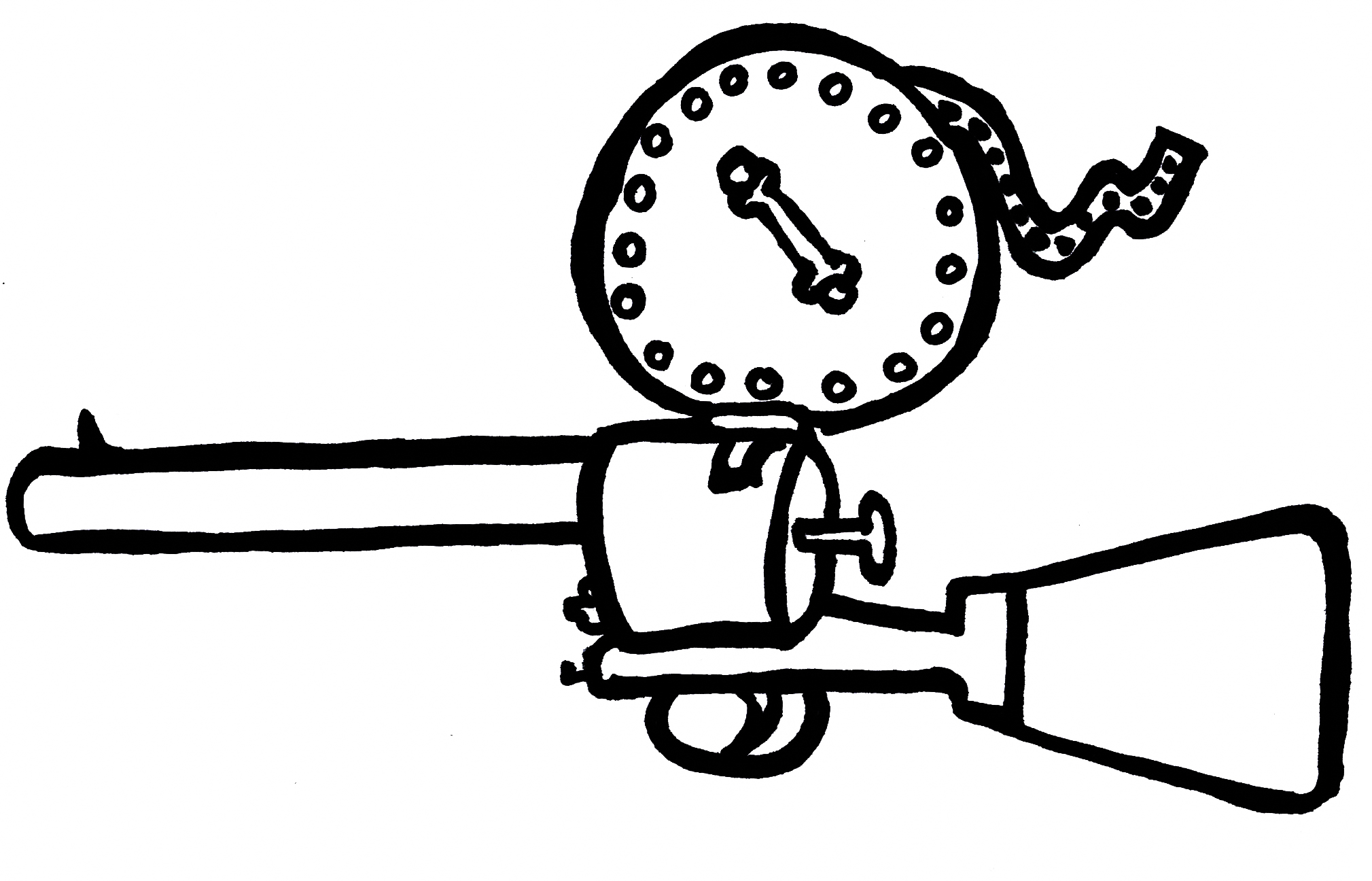
Where All Light, Everywhere excels is in connecting that modern weaponization of the motion picture camera back to its earliest uses & abuses. Early movie cameras were typified by designs like “the photographic rifle” and “the photographic revolver,” leaving behind a language where cameras still “shoot” their subjects. There’s a hypothetical version of this movie to be made where each new development in motion picture tech was used to further the art & distribution of pornography, but instead Anthony focuses on how they were used to afford the illusion of unbiased automation to morally bankrupt police & military systems. Police body cameras are just the next logical evolution in a long history of supposedly “objective” motion picture recordings reinforcing the biases of the inherently violent political institutions behind them.
If you’ve seen RatFilm, you know that Anthony does not lay out this political history of the weaponized movie camera in a linear, easily digestible argument. Instead, scientific explanations of the camera’s “blind spots”, the philosophy of its place in modern culture, its effect on human perception of the world, and the racial politics of Baltimore as a microcosm of the US at large are all loosely mixed in an open-ended visual essay that’s heavier on atmospheric dread than it is on declarative statements. Still, the movie leaves you disgusted with the motion picture as a medium, no matter how open its arguments are left for interpretation or how much Anthony strives to leave on a moment of hope in the epilogue. It turns out all movies really are bad. Bummer.
There’s a brilliant sequence in RoboCop 2 where a boardroom full of market testers discuss what a new & improved RobCop should look & act like. Their conflicting input confuses his already perfected programming & design, rendering the rebooted RoboCop 2.0 entirely useless. It’s a hilarious example of a movie sequel arguing against its own existence, mocking the concept of diluting a pure, original concept with a profit-obsessed aim for mass appeal. Given RoboCop 2‘s general reputation as an empty-headed misfire, I’m not surprised that The Matrix Resurrections is proving to be a divisive work among general audiences, since it expands that exact brand of self-loathing meta-humor into a feature-length screed against corporate franchise filmmaking at large. The Wachowskis reportedly did not want another Matrix film to happen, but Warner Brothers was going to reboot their iconic cyberpunk series with or without their input. Lana stepped in on her own to save their work from falling into the wrong creative hands, then used the opportunity to condemn the very idea of making a nostalgia-bait Matrix sequel in the first place. Using Neo as an avatar, she practically stares directly into the camera to declare, “This movie should not exist,” in open defiance of the IP-addicted movie industry that forced her hand. It’s as hilarious now as it was in RoboCop 2, and in this case the critique is drawn out to feature length.
The opening fifteen minutes of Resurrections plays like a worst-nightmare scenario of what a 2020s Matrix sequel could be. New, hip, young characters revisit and replay exact scenes from the original 1999 movie, trading quips about how totally awesome Neo & Trinity were in their time. It’s an escalation of the callbacks & Easter eggs that superhero nerds crave in each new big-budget fan-pleaser, turning those cheap nostalgia pops into full-on cosplay & highlight reels. Not only is that obsession with past triumphs a disappointing turn for a series that felt genuinely revolutionary when it premiered, but it’s also self-defeating in the way it draws comparisons between the original film’s exquisite fight choreography & cinematography and the blurry, incoherent mess of Resurrections’s own action sequences. Then, that disastrous opening sequence is revealed to be a video game simulation designed by a still-alive Neo himself (rotting at another miserable desk job in-Matrix under his deadname, Thomas Anderson), and Resurrections starts editorializing about those modern industry-standard shortcomings in soulless, movie-by-committee sequels. It turns out the film is not the worst-nightmare version of The Matrix 4; it’s Lana Wachowski’s New Nightmare: a platform for her to reflect on the core philosophy of her most iconic work while lashing out at a movie industry that seeks to dilute & pervert it for an easy cash-in. It’s an A+ prank, both on the audience and on the higher-ups at Warner Brothers.
It may be a stretch to assume that Resurrections‘ unwieldy 148min runtime was also a metatextual joke about the cumbersome length of modern Hollywood action franchises (or maybe not, considering that it taunts the audience with an ironic post-credits punchline after a 15-minute scroll). Either way, I appreciate that Wachowski never drops her searing industry commentary once she gets into the thick of the film’s actual plot. She approaches the ongoing philosophic & romantic conflicts of The Matrix‘s core players—Neo & Trinity—with full, open-hearted sincerity. She just frames the doomed revolutionary couple’s strive for a happy ending as a heist plot, where she (again, through Neo) has to infiltrate her movie studio’s evil lair to rescue their fairy-tale romance before it’s killed forever. Along the way, she continually cracks meme-culture jokes about bots, MILFs, Handsome Chads, “binary” code, and Arthur Read’s clenched fist – never letting up on her meta-commentary on the way movies and the Internet have changed in the two decades since Neo chose the red pill. Wachowski may open Resurrections arguing “This movie should not exist,” but she follows it up with a “But while we’re here . . .” addendum that allows her to sincerely grapple with the lives & loves of characters she’s obviously still emotionally & creatively invested in. It’s a volatile mix of sincere sentimentality and ironic shitposting, one that’s sure to alienate plenty of uptight nerds in one or both directions.
I was not this enthusiastic about The Matrix Reloaded or The Matrix Revolutionswhen James & I revisited them for the podcast last year. I really wanted to join the freaks on Film Twitter in reclaiming those back-to-back sequels as something that was wrongly dismissed in their time, but they really are exhaustingly dull – especially considering how vibrant the original film still feels. Some of the action in the earlier sequels is delightfully over-the-top, but for the most part they turn what started as a very simple, tactile sci-fi allegory into trivial superhero fluff. The Matrix Resurrections is their functional opposite. This time around, the action is underwhelming, but the ideas are explosively combative in a way that totally makes up for it. Fans who’ve swooned for every entry in this series are going to be over-the-moon for its epic Neo-Trinity romance plot no matter how they feel about the film’s self-critical meta-commentary. I’m here to report as a Matrix-sequel heretic that the film is a triumph no matter how invested you are in that emotional core; it’s the most I’ve appreciated a Wachowski movie since The Matrix ’99, entirely because of its cynicism over how the world (and the movie industry in particular) has gotten worse since 1999.

















 Swampflix