Buzzard (2015)

EPSON MFP image

three star

Slacker culture is surely alive & well in 2015, but there was something unavoidably ubiquitous about 90s MTV slacker culture. Pretty much the definition of a low-stakes drama, Buzzard feels oddly old-fashioned in its portrayal of an apathetic underachiever, Marty, who feels like a cultural relic from a bygone lackadaisical era. Cheaply filmed and intentionally flat in style, Buzzard seemingly cares as little as Marty does, echoing his “It doesn’t matter” mantra with every fiber of its being. Buzzard portrays a world of petty victories & major losses where the odds are stacked so highly against Marty that he really has no incentive to try or care about anything and the movie itself has its own apathetic crisis in the same vein.

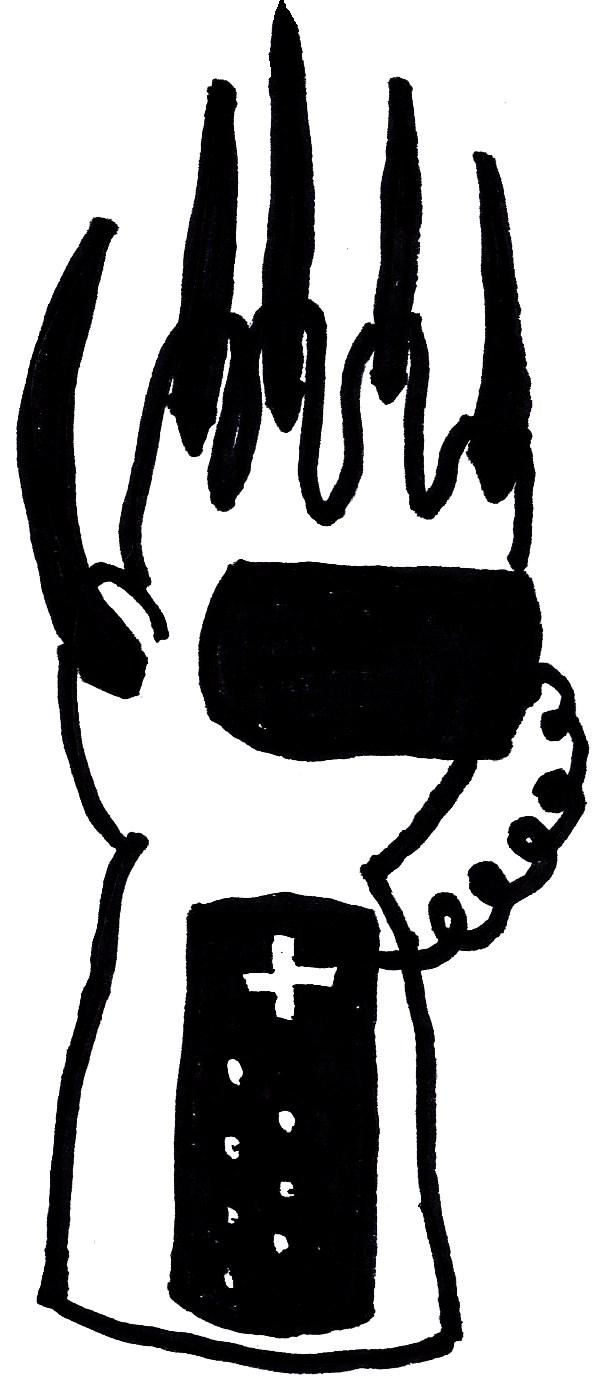
An angry, depressed loser with a go-nowhere job as a temp for a bank, Marty’s petty victories involve eating junk food, listening to metal, jumping on his bed, watching pornos while wearing a Halloween mask, and scamming suckers for small increments of cash. His half-assed scams typically pay off as long as the person on the other end cares as little about the transactions as he does. The problems that Marty faces only get rolling once the people he’s scamming start to care & take notice of his chump-change crimes. Marty amps up the damages of his mistakes as well when his most significant petty victory of all comes to fruition: a homemade Freddy Krueger glove that gives his “nothing matters” attitude some real-life consequences.

If Buzzard was intentionally looking to cultivate the 90s MTV slacker aesthetic it was astute in including outdated cultural markers like Nintendo NES, CD towers, and Freddy Krueger posters & merchandise. Although its ambitions & style feel like little more than a vintage throwback, its themes exploring the isolation of poverty, corporate culture, and poor mental health still resonate. Although it’s unlikely that Marty will ever approach anything that resembles a “successful” life, it’s still satisfying to watch him achieve short-term goals like the construction of his Krueger glove or eating a massive plate of spaghetti in a luxury hotel room. Due to Marty’s (and Buzzard’s) lack of motivation, regard, or enthusiasm for anything, it’s hard to celebrate too much of his life other than with surface-level observations like “Cool Demons t-shirt, dude,” but in a world where he has very little room to achieve much of anything, that line of shallow praise has considerable amount of significance.

-Brandon Ledet

A Commentary to Die For: Blood and Black Lace (1964)

EPSON MFP image

Watching a film with the commentary on can sometimes be a tedious experience, but that is not the case when it comes to Tim Lucas’ commentary on the 2005 2-disc DVD release of April’s Movie of the Month, Blood and Black Lace. Lucas is known as a highly respected film critic and founder of Video Watchdog magazine, but he’s also a fountain of knowledge when it comes to everything Mario Bava. After spending over 30 years researching Bava’s life and films, he wrote the acclaimed book Mario Bava: All Colors of the Dark, which, at over a thousand pages long, is pretty much a Bava Bible. I’m not sure who decided to have Lucas participate in the Blood and Black Lace commentary, but that individual deserves a big pat on the back for making such an excellent choice.

Lucas talks about so many different things in the commentary, but most of the information he shares deals with the background of the film’s actors. I’m definitely not going to mention everything he discusses in this article because I’m more interested in the fun facts and quirky incidents that occurred behind the scenes during production. Here are my top three favorite facts/comments from the commentary:

1. In the beginning of the film during the fashion show (before the diary fiasco occurs), there is a pretty long shot that stretches on for about a minute or so where the camera is effortlessly gliding from one end of the room to the other. According to Lucas, Bava did not have very much funding for fancy camera equipment, so he propped up the camera on a child’s wagon for this scene. Actually, the budget for the film was less than $125,000, so Bava needed to be as creative as possible. I was pretty surprised by this information. I expected Bava to have had access to the latest and greatest camera equipment during the production of Blood and Black Lace simply because the film is known for its impressive camera work, so it’s completely mind-blowing to know that this wasn’t the case.

2. As I briefly mentioned in the Blood and Black Lace Swampchat, there seems to be a color theme going on in the film. Lucas does mention this a few times in the commentary as well. He examines Isabella’s relationship with the color red (red raincoat, red diary, etc.), and he really draws attention to the color black’s connection with death, especially when it comes to Nicole. She wears a black gown at the fashion show, carries a black purse, and while the majority of telephones in the film are red, the phone that she uses has a black receiver. Spooky!

3. Mary Dawne Arden is the actress that played the role of Peggy, the beautiful model that was burned and tortured before meeting her maker. According to Lucas, she had the worst luck during the film’s production. She spent over 5 days acting as a dead body, and at one point, she almost ended up being an actual dead body. During the scene when she falls out of the car trunk, the trunk’s lid partially opened and then immediately slammed back down. When it slammed down on her, the sharp trunk lock was inches away from stabbing her in the eye. She was in such a state of trauma and shock that Bava stopped shooting to come to her aid. What a gentleman! Thankfully, she only received a wound and small scar from the episode. I have such a huge amount of respect for Arden because not only did she continue to finish her scenes after almost being blinded, but she was apparently never paid for acting in the film.

Bava was so passionate about his art. To produce a film that would become such an influential landmark in cinema with such a small budget is not something that just any director could do. I definitely respected Bava prior to listening to Lucas’ commentary, but I now value his work on Blood and Black Lace more than ever.

For more on April’s Movie of the Month, 1964’s Blood and Black Lace, visit our Swampchat on the film, a look at its Bollywood brethren, Veerana (1988), and last week’s fan art ode to the poetry of giallo film titles.

-Britnee Lombas

Escape from Tomorrow (2013)

EPSON MFP image

threehalfstar

campstamp

The tale of Escape from Tomorrow’s production is much more infamous than anything within the film itself. As the story goes, writer/director Randy Moore was hammering out some daddy issues he associates with the Disney World theme park in Orlando, Florida by staging a guerilla film shoot within the park. Filmed without Walt Disney’s permission, Escape from Tomorrow follows a family of tourists around the park, including shots staged in the resort hotel rooms, restaurants, and the amusement park rides themselves. Promising to turn the fantasy land into a live-action nightmare, the film has essentially been reduced to an anecdote about its production, without a whole lot being said about its actual quality. I went in expecting a dark, twisted sci-fi slow-burner that milks the park’s artificiality for an unnerving effect, but what was actually delivered was much more playful & amusing.

Backing up the director’s claim that he made the film as an exploration of his relationship with his father, Escape from Tomorrow’s protagonist is a hapless, lecherous doof of a man who drags his miserable family through Disney World as a means to forget his troubled employment status & loveless marriage. The characters sport the subtlety & nuance of an 80s sitcom family here. The kids are more or less whiny brats. The mother is a humorless shrew. The father is slack-jawed lecher that gets obnoxiously drunk & openly ogles giggling teen girls in the park in plain view of a wife he openly despises. As I’m sure happens often in that Florida sunshine, this group of Disney World tourists is having a full familial meltdown, even without the more sinister aspects of the plot & imagery coming into play.

The acting leaves a lot to be desired in Escape from Tomorrow (I desperately wish the idiot dad were played by Rob Huebel or Ken Marino), but there’s a sense of purpose to the family’s phony, exaggerated mannerisms. The whole film just feels playfully & intentionally . . . off. There are CGI decapitations, a pious reverence to the Epcot dome as a religious symbol, intentionally crude green screen shots that counteract the documentary feel, real life evil Disney queens (sex-crazed, of course), and a persistently cheesy Old Hollywood score that underlines the intense artificiality of the whole affair. It’s not a subtle film. It is, however, a delightfully goofy & irreverent one.

Anyone looking for a deep, prodding indictment of the nuclear, American family unit or a super creepy sci-fi freakout are likely to be disappointed by Escape from Tomorrow‘s who cares/nothing matters tone. The film succeeds in its quest to compose a film almost entirely from shots “stolen” from within Disney World (although the word “Disney” is bleeped out for legal reasons), but much like with all merchandise shoplifted from within those gates, the narrative it runs away with is frighteningly empty, like well-crafted kitsch. Much like with a lot of Disney products, it looks great & has an interesting backstory, but it’s a lot more satisfying as an eccentrically goofy trifle than a work of “serious” art.

-Brandon Ledet

Predestination (2015)

EPSON MFP image

fourstar

There has been a recent push to update the sci-fi genre in varied, interesting ways. While there have certainly been a few throwbacks to the traditional rocket ships & gunfire Flash Gordon adventure epics like Guardians of the Galaxy & Edge of Tomorrow, titles like Upstream Color, Under the Skin, Coherence, The Congress, and Beyond the Black Rainbow are searching for new territory for the genre to mine. They’re all unique works that can hardly be compared to one another individually, but as a group they feel like a refreshing revitalization of a genre that can sometimes get trapped within its own tropes & clichés. No matter how much I love these movies and what they’re attempting to accomplish, however, there’s just no denying the inherent draw of the sci-fi aesthetic of yesteryear. My favorite film from last year was Interstellar, not because it carved out new sci-fi territory, but because it felt authentic to old school sci-fi pulp you could read serialized in special interest quarterlies or hear in long gone radio plays. There’s a draw to this old fashioned sci-fi aesthetic that I’m glad to see hasn’t been left by the wayside in the wake of our recent crop of experimental exercises in the genre.

With its muted noir tone & a setting that spans from the 1950s through the 70s, Predestination firmly plants itself within this brand of sci-fi throwbacks. Based off of a 1959 Robert Heinlein short story titled “All You Zombies” (which was first published in an issue Fantasy and Science Fiction magazine, the exact type of old school serials I’m describing), the film has an authentically old fashioned take on sci-fi as a genre. It is undeniably cheap & trashy in the way its twists & turns are revealed to the audience (some of those reveals are not nearly as surprising as the movie seems to think they are) but that potential flaw is severely undercut by its straightforward style of storytelling. On paper the movie’s plot about time travel, secretive government agencies, and self-fulfilling paradoxes wouldn’t add up to much of value, but the way the story is framed as a drunken, embittered bar patron spinning a yarn for the barkeep is a perfect, no-nonsense approach to material that is nothing but nonsense.

There are some typical sci-fi adventure aspects to Predestination, like virtual reality helmets, “time jumps”, and young girls recruited to be male astronauts’ “companions” (an idea that reminded me of the similarly pulpy Journey to the Seventh Planet), but they’re counteracted with more concrete, noir-influenced images like trench coats, smoke-filled bars, homemade bombs, and a fedora on fire. Just as the always-tricky time travel aspect of the story starts to get overwhelmingly intricate, it also boils down to a typical action movie plot of trying to prevent a bomb from going off and catching the bad guy before he gets away. Even the story’s peculiar play with gender identity, which you would expect to mark it as a modern work, feels old fashioned & outlandish as it’s dealt with here, but straightforward performances from the two leads Ethan Hawke & Sarah Snook anchor that aspect well, just like the barroom storytelling framing device anchors the movie’s outlandish plot.

Predestination is neither a wholly unique work nor an exercise in good taste. It is, however, an example of the virtue of sincere, traditional acting & storytelling and how those elements can elevate ludicrous material into something special. Although its major twists & reveals may occasionally be telegraphed, it’s fascinating to watch the film reach those conclusions in its own time and on its own terms. There’s a sci-fi tradition to its sincere pulp sense of tonal balance, but it’s a vintage tradition that’s unconcerned with the new territory the genre’s been exploring in recent years. I appreciate the movie the way that any audience can appreciate a great storyteller, especially a rapt audience in a late night barroom who has nothing better to do than listen to a good yarn that becomes increasingly more outlandish as it stretches on.

-Brandon Ledet

Beyond the Black Rainbow (2012)

EPSON MFP image

fivestar

In its opening minutes Beyond the Black Rainbow prepares its audience for its slow motion, abstract tone with phrases like “a state of mind”, “a way of being”, “a practical application of an abstract ideal”, and “the dawning of a new era in the human race and the human soul.” Beyond the Black Rainbow is not a straightforward cinematic experience, but instead works more like ambient music or a poem. In an age where the lines dividing cinema & television are becoming increasingly blurred, there’s an exponential value in movies that work this way. Recent mind-benders like Beyond the Black Rainbow, It Follows, Upstream Color, Under the Skin, and The Strange Color of Your Body’s Tears are much-needed reminders that there are still things cinema can do that television can’t, no matter how much HBO wants you to believe otherwise.

That’s not to say that Beyond the Black Rainbow is an entirely new, unfamiliar experience. Its 1983 setting intentionally recalls vintage psychedelic sci-fi titles like Zardoz & Phase IV that turned a hangover from optimistic hippie mysticism into something much more sinister. Instead of apathetic dystopias & mutated killer ants, however, it mines its horrors from new age psychiatry, or what it calls “therapeutic technologies”. Although it’s set thirty years in the past, Beyond the Black Rainbow occupies a decidedly futuristic hellscape made up of telekinesis, television static, clouds of smoke, melting walls, and intense hues of red & blue. It packs the same unnerving punch of a traditional horror movie experience, but that effect is distilled in a futuristic void. This becomes increasingly apparent as the movie’s killer, an . . . unorthodox psychiatrist named Dr. Nile, behaves more & more like a traditional horror movie villain until he reaches full Jason Voorhees status late in the film.

The slow, methodical pace of Beyond the Black Rainbow is not going to win over everyone in the audience, but for those who aren’t in a particular rush for the plot to be pushed along are sure to be wowed by its plethora of mind-bending, often horrifying images. It is a decidedly cinematic experience, one that depends greatly on the strengths of its potent sounds & images instead of more traditional markers like plot & dialogue that carry less hallucinatory films. It’s impossible to imagine Beyond the Black Rainbow working in the television format and there’s an increasingly valuable virtue in that aspect of its design. Go into the film with an open mind & diligent patience and you may find the experience to be therapeutic, especially in a time where some people claim that television has surpassed cinema as a superior visual art form.

-Brandon Ledet

Journey to the Seventh Planet (1962)

EPSON MFP image

fourstar

campstamp

Did you know that in the year 2001 we conquered long-distance space travel, achieved nuclear disarmament, and handed over the entire world’s sovereignty to the United Nations? Me neither, but I was really into shitty rap-rock & sneaking even shittier beers at the time so I might’ve been too distracted to notice. Needless derision aside, you really do have to admire the optimism of Journey to the Seventh Planet’s version of 2001. Years before the moon landing, the end of the Cold War, and, hell, even JFK’s assassination, the film felt like the world had its whole life ahead of it. Journey supposed that by 2001 we’d have a good enough handle on space travel to make it all the way to Uranus (sadly not pronounced the fun way here), but instead by that time we’d never made it past the moon and a lot of people were listening to Limp Bizkit.

Journey to the Seventh Planet did get one thing right, though: the universal appeal of 60s era pin-up girls never truly faded. The film tells the story of a small, all-male (of course) rocketship crew who journeys to Uranus (teehee teehee) and discovers that it looks an awful lot like California wilderness. This similarity is not only a frugal cost-saving measure, but rather part of a super cool plot device in which a nefarious alien spirit hypnotizes the rocket crew and brings their subconscious visions to life. During the atomic age opening monologue about the end of the arms race and the world-governing UN, a narrator warns “There are no limits to the imagination and man’s ability to make reality out of his visions is his greatest strength.” Apparently this extends to the visual re-creation of California forest & breathable air, but that’s not all. As the crew is composed entirely of lonely, horny, red-blooded space travelers, their hallucinations begin to take the form of voluptuous pin-up models who lure them away from safety one at a time so the alien spirit can try to hitch a ride back to Earth in their stupid, horny bodies. It’s pretty damn adorable.

The pin-up models and a forest covered Uranus are the most unique aspects of Journey to the Seventh Planet, but they’re far from the movie’s only charms. There’s also a plethora of adorable atomic age sci-fi staples like model rocketships, dinky rayguns, science babble about “atomic units” & “retrorockets”, and strange green lights that give the film a less-artsy Planet of the Vampires feel once the illusion is broken. The hypnotized men also conjure up images of stock footage “giant” spiders and stop-motion Harryhausen-esque cyclops lizard monsters that are legitimately pretty awesome. There is no shortage of cool ideas and goofy practical effects in Journey to the Seventh Planet and I much prefer its space alien pin-up version of 2001 to the much more depressing Limp Bizkit reality. I honestly believe that if it had chosen the much more memorable title Journey to Uranus it would have a much larger cult following, if not only for the juvenile giggling it would be sure to induce.

-Brandon Ledet

How to Play the Miss Meadows (2014) Drinking Game

EPSON MFP image

As I mentioned in my review for last year’s Miss Meadows, a vigilante justice head-scratcher starring Katie Holmes, the movie works a lot better as a surreally campy oddity than a straightforward moral tale about crime & the failings of the justice system. I said, “There is a moral grey area in Miss Meadows’ worldview. According to Miss Meadows herself, ‘There are bad people in the world and they shouldn’t be around the good people.’ She means that people are either wholly ‘good’ or wholly ‘bad’ with little to no further nuance in their worth as human beings. […] Judging Miss Meadows on its merits as a moral tale is a tricky proposition, one that doesn’t flatter its likeability. However, as a detached-from-reality vigilante story with a campy mean streak (and an admittedly low body count, in case that’s what you’re looking for), it’s quite pleasant.”

There’s enough bizarre tonal juxtapositions in both its images & narrative that Miss Meadows has the potential to gradually cultivate a cult following despite (or maybe even because of) its muddled moralizing. Who wouldn’t love a stark clash of aesthetics that could be described under the range of Pulp Fiction Mary Poppins, Cinderella Death Wish, Serial Mom: The Early Years, or Batman in Pretty Dresses? It’s best to approach Miss Meadows as goofy pulp in this way, as it will most certainly be a more satisfying experience than if you took its musings on vigilante justice & mental illness at face value.

To encourage this playful approach to enjoying Miss Meadows, I’d like to suggest a drinking game. It’s a real simple one that should be easy to get a grip on, much unlike the central moral to the film itself. Here’s your drinking prompt if you want to play along from home:

1) Drink every time someone says “Toodaloo”

This prompt is a perfect distillation of the film in a few ways. Not only does it reflect the central character’s antiquated, genteel personality (when she’s not murdering people she deems not worthy to live), but it also is effective for the purposes of a drinking game, as the word is repeated often within the film. “Toodaloo” is Miss Meadows’ calling card (one she learned from her controlling, not-all-there mother), a catchphrase that amplifies her comic book character personality to an absurd extent. Approach the film with armed with this drinking prompt and campy expectations and you might just enjoy yourself.

As always, play safe. Toodaloo!

-Brandon Ledet

Tusk (2014)

EPSON MFP image

onehalfstar

campstamp

Somewhere at the heart of indie staple Kevin Smith’s horror debut Tusk lies a scathing takedown of toxic hipster irony the likes of which I haven’t seen since the Tim Heidecker’s starring role in The Comedy. The problem is that the film itself is just as self-indulgent & grotesquely ironic as the subject it’s supposedly lampooning. Tusk succeeds to gross-out viewers on almost a Human Centipede level of depravity in some of its bodily horror, but those moments are isolated images in a largely masturbatory genre exercise that was conceived in a conversation during an art form best known for encouraging masturbatory exercises: the podcast.

Tusk was conceived during Kevin Smith’s podcast and the film is framed in that same context, beginning with the sounds of self-indulgent laughter & aimless conversation that often sinks the likeability of the art form. The host of the program is a fatally ironic Justin Long (along with his sidekick, a disturbingly adult Haley Joel Osment), who plays the toxic hipster persona right down to the bushy walrus mustache. That mustache is an effective bit of foreshadowing, of course, because Long’s character is rewarded for his cruel radio program’s “cringe humor attack shit” (he’s like an effete Howard Stern) when he is abducted by a serial killer who intends to turn him into a humanoid walrus. Once abducted, Long is punished for his podcast’s crimes against humanity by being offered this ultimatum: “If you wish to continue living, you’ll be a walrus or you’ll be nothing at all.”

The movie’s sole effecting element is the walrus transformation, which is alternately horrifying & silly. It’s a grotesque display for sure, but despite the narrative bending over backwards to explain why a serial killer would want a human walrus named “Mr. Tusk” for a companion, it feels overwhelmingly pointless. Once Long’s walrus man apologizes for his crimes against decency in the line, “I’m sorry I’m such an asshole,” there seems to be no point for the film to continue. But, continue it does. There are long stretches of who-cares dialogue about war stories & police investigations that feel like listening to a particularly self-indulgent podcast on a subject you have no interest in. Tusk’s central conceit and bizarrely specific mode of punishment is interesting, but amounts to exactly one memorable scene: a climactic walrus fight set to Fleetwood Mac’s “Tusk”. That fight is the only genuinely entertaining moment in a film prone to committing the very sins of irony, cruelty, and narcissism that it supposedly abhors. On the whole, Tusk wasn’t nearly as empty or as unwatchable as I had expected (though the monotonous police investigation sublot certainly pushed it), but it was hardly worthwhile for that two minute payoff either.

-Brandon Ledet

The Voices (2015)

EPSON MFP image

twostar

campstamp

Comedy is risky. If you fail to connect with your audience the time you spend together can be brutal. Just ask any stand-up who’s bombed a set. That disconnect between audience & performer can be even more punishing if the material is aggressive. To succeed, a horror comedy has to find humor in sadism & cruelty and it takes a well-balanced, lighthearted tone to pull that off properly. Curiously enough, The Voices fails even though it nails that balance. There’s a playful party vibe to the movie (complete with a conga line) that counteracts its homicidal maniac narrative very well, achieving the exact kind of tonal balance a horror comedy typically needs to succeed. That makes it all the more frustrating that I just didn’t find it funny and, by extension, didn’t enjoy the movie outside of an occasional chuckle.

The main problem for me personally might just be an over-saturation of Ryan Reynolds. There is just so much Reynolds in the movie. He not only plays the central serial killer protagonist, but also provides the voices that the killer hears in his head, voices he attributes to his cat & dog. The idea of a talking cat & dog inspiring the crimes of a crazed killer sound like it could be played laughs rather well, but it just fails to reach anything approaching humor in The Voices. It’s not that I have anything particular against Ryan Reynolds in general. He has a natural smarm to his charisma that makes him an effective cad in films like Adventureland & Waiting, but whenever he’s supposed to be a likeable protagonist I fail to connect. That connection is made even more difficult here by the hurdles of him playing both a murderer of women and house cat with a Scottish accent. There’s some backstory to his killer protagonist’s childhood, which was plagued by an abusive father & a mother who also heard voices (attributed to angels instead of pets in her case), but it does little to make him likeable or his murderous antics amusing. Much of the film plays as if in Tucker & Dale Vs Evil Tucker & Dale turned out to be coldblooded, homicidal bullies but you were supposed to root for them anyway.

The English-language debut of Persepolis-director Marjane Satrapi, The Voices has so much going for it. Saptari provides the film a delicious living-cartoon setting, a playful atmosphere, and Disney-esque hallucinations that made the tonally similar (but much more amusing & less “on the nose”) Miss Meadows enjoyable, but here it’s all for naught. Even the adorably dorky charisma of Anna Kendrick couldn’t save the film from its core problem of being a failed comedy with an unlikeable ham protagonist. When comedies don’t work there’s just no way for an audience to enjoy themselves. I wish I could’ve laughed at the dialogue coming from Reynolds’ talking pets; I wanted to find them hilarious. Instead I was blankly staring at their stupid, little CGI mouths and hoping for the run time to be over quickly. I’m sure there are plenty of people who will be laughing right along with The Voices’ admirable brand of goofy, black humor, but it’ll be a total chore for whoever finds themselves watching in silence, unamused. Trust me.

-Brandon Ledet

Miss Meadows (2014)

EPSON MFP image

threehalfstar

campstamp

In the opening scene of Miss Meadows, a primly dressed Katie Holmes (as the titular Miss Meadows) tap dances down a suburban sidewalk, whistling whimsically at the CGI squirrels, birds & deer that surround her as if she were a real-life Disney princess. This reverie is interrupted by all-too-familiar street harassment as a lecherous man attempts to lure her into his dirty pick-up truck with salacious commands. In response, she shoots him in the neck. Miss Meadows describes itself as a Pulp Fiction Mary Poppins, but it plays  more like a Cinderella Death Wish, its central character acting as a no-nonsense vigilante that stands as a dividing line between decency & bloodthirsty, frothing-at-the-mouth criminals. It could also be described as Serial Mom: The Early Years and Batman in Pretty Dresses.

Much like with Death Wish & Batman there is a moral grey area in Miss Meadows’ worldview. According to Miss Meadows herself, “There are bad people in the world and they shouldn’t be around the good people.” She means that people are either wholly “good” or wholly “bad” with little to no further nuance in their worth as human beings. Miss Meadows, of course, believes herself to be one of the good ones. She tap dances, reads poetry, dresses immaculately, calls her mother regularly, dates a cop, sings in the choir, plays hopscotch, giggles during sex, knits, gardens, brings her neighbors tea & crumpets, and teaches a 1st grade class about the virtues of courage & kindness. She also, you know, murders people she doesn’t deem worthy to be alive. At one point she even admits with acidic honesty that she would rather criminals die than cost taxpayers in the penal system. That’s pretty damn cruel for someone who’s supposed to be a model citizen. Even Batman had his limits.

It’s difficult to tell exactly where Miss Meadows falls on its protagonist’s genteel brand of vigilante justice. It has the inauthentic feeling of a fairy tale or a moralizing allegory, with only children & a dog named “Frank” being honored with first names and most characters being addressed solely by handles like “Miss Meadows” & “The Sherriff”. The exact nature of the central moral, however, is more than a little muddled. A supposedly reformed criminal seems to question Miss Meadow’s good person/bad person worldview, but eventually she’s more or less proven to be right and his reformation unravels. Then again, Miss Meadows’ own mental health is quite poor and she reveals a little too much of herself in an exchange with a criminal where she shouts “I’m not crazy! You’re crazy and I’m nothing like you.” Judging Miss Meadows on its merits as a moral tale is a tricky proposition, one that doesn’t flatter its likeability. However, as a detached-from-reality vigilante story with a campy mean streak (and an admittedly low body count, in case that’s what you’re looking for), it’s quite pleasant.

-Brandon Ledet