There was a lot of understandable pushback against the initial wave of “pandemic cinema” that was made during the first couple years of COVID-19, movies that distilled the mood & setting of our global lockdown into the same smartphone video diaries and Zoom meeting windows that we were already submerged in outside of The Movies anyway. A lot of the resistance to that iconography from audiences & critics alike was just fatigue with the cheapness & smallness of that era in image production, but it was always couched in a concern that in the long term even the best pandemic movies were going to be instantly dated and, thus, disposable. Betrand Bonello’s Coma defies that line of criticism by expanding the scope of lockdown-era doldrums as a symptom of a larger global illness, one that’s now persisted a half-decade beyond the initial COVID-19 outbreak. It’s been nearly five years since the earliest COVID lockdowns and the world still feels like it hasn’t broken the spell we fell under then; we’re all still sleeping under the same weighted blanket of dread & futility. That’s bad news for our collective mental health, but it’s great for the thematic shelf life of Coma, which finally went into wide release in 2024 after premiering at European film festivals two long, grueling years earlier.
Coma is a multimedia experiment in which Bonello attempts to relive the early lockdown days of the pandemic through his teenage daughter’s eyes. A five-minute intro directly addresses the teen in subtitles without accompanying audio, urging her to not “surrender to the current mood,” because he believes things will eventually get better if we survive long enough to see it. The drama that follows is mostly confined to a teen girl’s bedroom, with an actress playing a fictionalized version of his child (Louise Labèque, notably of Bonello’s Zombi Child). She reaches out to peers through Zoom & FaceTime calls—at one point organizing a group-chat ranking of history’s greatest serial killers—but for the most part she’s tasked with entertaining herself in isolation. She plays with Barbie dolls the way an 18-year-old would, imagining them in salacious soap opera sex scandals and feeding them outrageous dialogue from internet sources like Trump’s Twitter scroll. She obsesses over the New Age musings of a social media influencer called Patricia Coma (Julia Faure, soon to appear in Bonello’s The Beast), who seems wise & poised until it becomes apparent that she’s suffering the same existential malaise as her followers. The room alternates between rotoscope animation, Blair Witch found-footage nightmares set in a limbo-like “Free Zone” between worlds, paranoiac surveillance footage, and sponcon commercials for a pointless, existential memory game called The Revelator. The entire movie is just the daily toiling of a teenager who passes her time “doing nothing much,” and the oppressive listlessness of it all is suffocating.
Bonello is mostly being playful here, and most of the appeal of the movie is in watching an accomplished filmmaker daydream in internet language, mentally drifting from the boredom of modern life. Still, there is a heartfelt urgency in his appeal to his daughter to remain resilient despite the great Enshitification of everything, to the point where the movie is less about her interior response to the lockdown than it is about his own anxieties about having created a young child in such grim, impotent times. In pandemic cinema terms, the result lands somewhere between the vulnerable earnestness of Bo Burnham’s Inside and the digital-age terror of the screenlife horror Host. It’s the same push-and-pull tension between dread and romantic idealism in Bonello’s follow-up, The Beast, except that this time he’s actively fighting to not let the dread win. Coma finds Bonello desperately searching for hope in an increasingly isolating dead-end world, because he has to believe his child is not going to suffer through The End. The real horror of it all, of course, is that no one ever imagined the apocalypse would be this much of a bore. As a species, we’ve never been lonelier or more useless than we are right now, and the first year of COVID lockdowns was only the start of that cultural decomposition. I wish this movie had aged poorly in the past couple years, but unfortunately it’s still painfully relevant.
It’s likely cliché to describe any movie’s editing style as being similar to jazz, but in the case of Soundtrack to a Coup d’État the descriptor is literal. The anxious sounds & stylish block text of vintage jazz albums overlay news-report propaganda clips for 150 relentless minutes in this essay-style documentary film, which covers the CIA’s efforts to rebrand the Cold War as a “Cool War” by deploying popular jazz musicians to distract from its conspiratorial overthrow of the Congolese government. While political figures of the era as formidable & dissonant as Nikita Khrushchev, Dwight D. Eisenhower, and Malcolm X weigh in on the UN machinations that led to the CIA’s conspiracy to assassinate Congolese leader Patrice Lumumba, the soundtrack to that coup is provided by formidable & dissonant jazz greats of the era: Dizzy Gillespie, Duke Ellington, John Coltrane, Nina Simone, Charles Mingus, and, most improbably, Louis Armstrong. That soundtrack is not a formalistic choice made by director Johan Grimonprez so much as it is the core of his subject. He details how those musicians were manipulated into working as semi-official “jazz ambassadors” for Black American culture in African nations that recently joined the UN, and how those ambassadors of Cool were used to distract from and cover for the planned execution of a newly sovereign foreign leader.
There’s a sharp specificity to this doc’s subject, walking the audience through how African nations newly inducted into the United Nations were seen as a threat to be squashed by paranoid US leadership. Their power within the UN as a young, organized voting block was especially threatening to the US government’s interests, since it relied on those nations remaining colonized so they could be mined for uranium supplies in the ongoing nuclear Cold War against the Communist Bloc. Each subversive maneuver to ensure Belgium’s continued rule over the Congo is thoroughly documented in the onscreen text that interrupts the archival clips, often with page numbers & footnotes to encourage further research on your own time. What Khrushchev describes as the “cacophony” of jazz guides the everything-goes, free-association editing style of that archival footage, so that the film ends up snapshotting the greater context of late-50s & early-60s global culture outside its duty to detail the step-by-step progress of its titular coup. By the time Khrushchev is making jokes about visiting Disney World in a press conference attended by Marilyn Monroe, it plays like an alternate version of Joe Dante’s The Movie Orgy made for lefty academics: an impressive feat of politically fueled editing-room mania that captures & compresses the moral & political rot of an entire era.
Soundtrack to a Coup d’État‘s focus on the CIA’s appropriation & manipulation of Black American artists recalls a few other recent documentaries about the politics of Black artistic life in the US,namely Recorder: The Marion Stokes Project,Going to Mars: The Nikki Giovanni Project, and I Am Not Your Negro. It distinguishes itself from that cluster of radical docs by slightly shifting focus away from Civil Rights clashes of the 1960s to a different form of racist US state violence, but it’s still racist US state violence all the same. Grimonprez uses a key Malcolm X clip to link the two struggles, in which the activist encourages his audience to get angrier about the US’s violence abroad instead of just the Civil Rights struggle at home, emphasizing that foreign governments are dropping American bombs on Americans’ behalf. All efforts to de-colonize are worth supporting, but it’s especially egregious to ignore the ones suppressed by bombs bearing your country’s name. That line of thought has obvious current relevance in the continued bombing of Gaza by the Israeli military—backed by US weapons supplies—resonating just as loudly as the continued cultural racism of the US and the continued, aggressive unpredictability of jazz. It’s a documentary about a very specific political moment in time, but the global fight for post-colonial freedom smashes through that temporal window.
For this lagniappe episode of The Swampflix Podcast, Boomer, Brandon, Britnee, James, and Hanna discuss the 1997 DTV actioner Drive, recommended by a listener for its “transcendently unhinged Brittany Murphy performance.”
Sean Baker’s time is here. After nailing down his gig-labor docufiction style in the 2004 food-delivery tragedy Take Out and then applying it to a long string of sex-industry dramas in the couple decades since, Baker has finally earned his moment in the prestige-circuit spotlight. Earlier breakthroughs like Tangerine& The Florida Project perfectly calibrated his caustically funny, soberingly traumatic storytelling style in his best work to date, but he emerged from those triumphs recognized as a name to watch rather than one of the modern greats. He’s been recalibrating in the years since, going full heel in his deliberately unlovable black comedy Red Rocket before face-turning to the opposite extreme in his latest work, Anora. Clearly, Baker has decided he wants audiences to love him again, and it’s impressive to see him swing so wildly in tone between his last two features without losing his voice. Anora is the feel-good sweet counterbalance to the feel-bad sour Sean Baker of Red Rocket. Both are equally funny & frantic, but only one is affable enough to set the filmmaker up for a Best-Picture Oscar run after taking home the top prize at Cannes. It’s his time.
The surprising thing about Anora’s critical success is that it’s such a dutiful continuation of the work Baker’s already been doing for years – just with an extra dash of sugar to help sweeten the bitter. Mikey Madison stars as the titular erotic dancer, another trapped-by-capitalism sex worker in a long tradition of Sean Baker anti-heroines dating at least as far back as 2012’s Starlet. Anora is a thorny, chaotic, unfiltered baddie whom the audience instantly loves for her faults, because she’s fun to be around. Like in Tangerine & The Florida Project, we meet her working customers in a high-stress but manageable profession, then follow her on an anarchic journey through her larger urban community, walking a tightrope between slapstick physical comedy & face-slap physical violence until she’s offered a moment of grace in the final beat. As the editor, Baker has worked out a well-timed rhythm for this story template through its many repetitions in previous works. He sweeps the audience up in the hedonistic romance of Anora’s Vegas-strip marriage to a big-spender Russian brat who offers a Cinderellic escape from the strip club circuit in exchange for helping secure a green card. The quick-edit montage of that fantasy then slows down to linger on its real-world fallout, investing increasingly long, painful stretches of time on Russian gangsters’ retribution for the young couple generating tabloid headlines that embarrass the brat’s oligarch father. The laughs continue to roll in, but the punchlines (and physical punches) get more brutal with each impact until it just isn’t fun anymore, as is the Sean Baker way.
There’s nothing especially revelatory about the Sean Baker formula in Anora. In the context of his filmography, it’s just more of the same (of a very good thing). However, the increased attention to his career-long project as an auteur has had its immediate benefits, not least of all in Baker’s collaboration with the local repertory series Gap Tooth Cinema (formerly known as Wildwood). When asked to program a screening for Gap Tooth as a primer for what he was aiming to achieve in Anora, Baker offered three titles as options: Fellini’s Oscar-winning sex worker drama Nights of Cabiria, the fish-out-of-water Eddie Murphy comedy Coming to America, and a second Italian sex-work story in 1960’s Adua and Her Friends. Gap Tooth ultimately selected Adua, the most obscure title of the trio and, more importantly, one of the very best titles they’ve screened to date. I don’t know that Sean Baker’s name would have come to mind had I discovered Adua and Her Friends in a different context, since it’s a much more formally polished picture than the anarchic comedies he’s become known for since he filmed Tangerine on an iPhone. The comparisons that more readily came to mind were Mildred Pierce, Volver, and The Best Little Whorehouse in Texas. It’s a less recognizable title than any of those comparisons, but that’s the only way in which it’s lesser. It’s an incredibly stylish, sexy, tragic, and cool story of self-reinvented sex workers making do in late-50s Italy, one that speaks well to Baker’s genuine interest in his characters’ inner lives beyond what they symbolize as society’s economic casualties.
Adua and Her Friends is a darkly comic drama about a small crew of sex workers who are forcibly retired by the Merlin Law of 1958, which ceased the legal operation of all Italian brothels. Unsure how to get by without the only trade they have experience in, the women conspire to open a rural, roadside restaurant as a front for a new, illegal brothel they will run themselves. Only, after a few successful months of food service—depicted as being equally difficult as prostitution—they decide they’d rather “go straight” in their new business than convert it into an underground brothel. As you’d expect, the self-reinvented women’s lives as restaurateurs are upended by men from their past that refuse to let them start fresh, the same way Anora is blocked from upgrading her social position from escort to wife. Where Adua excels is in taking the time to flesh out the inner lives & conflicts of each woman in its main cast. Lolita is led astray by conmen who take advantage of her youthful naivete; Marilina struggles to reestablish a familial relationship with her estranged son; Milly hopes to leave her past behind and start over as a devoted housewife, Anora-style. Adua (Oscar-winner Simone Signoret) gets the first & final word in her struggle to establish a new career before she ages out of her livelihood, but the movie is an ensemble-cast melodrama at heart, asking you to love, laugh with, and weep for every woman at the roadside restaurant (and to hiss at the cads who selfishly ruin it all).
Much like in Baker’s films, the majority of Adua and Her Friends is a surprisingly good time, with plenty slapstick gags & irreverently bawdy jokes undercutting the hooker-with-a-heart-of-gold tropes typical to this subject. Like Anora, it’s a 2+ hour comedy with an emotionally devastating ending, one that carefully avoids making its titular sex worker a purely pitiable symbol of societal cruelty even while acknowledging that she’s backed into a pretty shitty corner. Adua and Anora can be plenty cruel themselves when it helps their day-to-day survival. That might be where the two films’ overlapping interests end, since Adua lounges in a much more relaxed hangout vibe than Anora, scored by repetitions of Santo & Johnny’s “Sleepwalk” rather than t.A.T.u.’s “All the Things She Said.” Adua and her friends loiter around their Italian villa, fanning themselves in a deep-focus tableau, while Anora is dragged around Vegas & NYC by Russian mobsters who (for the most part) don’t see her as a human being. There is one early sequence in Adua where a black-out drunken night is represented in choppy lost-time edits that may have been an influence on the rhythms of Anora’s first act, but otherwise I assume Baker was inspired less by the film’s formal style than he was by the characterizations of its main cast. The frank, sincere, humanizing approach to sex-worker portraiture in Adua and Her Friends speaks well to Sean Baker’s continued interest in sex-work as a cinematic subject and, although both were great, I feel like I learned more about his work through its presentation than I did by watching his latest film.
Welcome to Episode #225 of The Swampflix Podcast. For this episode, Hanna, James, and Brandon discuss a grab bag of self-reflective documentaries directed by Agnès Varda, starting with her dumpster-diving doc The Gleaners and I (2000).
00:00 Welcome
01:20 The Company of Strangers (1990) 05:21 Adua and Her Friends (1960) 10:39 Corrina, Corrina (1994)
14:44 The Gleaners and I (2000) 32:25 Jane B for Agnès V (1988) 44:52 The Beaches of Agnès (2008) 54:26 Faces Places (2017)
I know it’s gauche to discuss a movie’s marketing instead of its content, but the 1989 adaptation of The Phantom of the Opera is an especially peculiar case. Clearly, the best way to sell the film would be to piggyback off star Robert Englund’s success in the Nightmare on Elm Street franchise, especially since Freddy Kreuger’s make-up designer Kevin Yagher tagged along to apply the exact same make-up to this public-domain franchise. The video store poster for The Phantom of the Opera tiptoes as close as it can to declaring “Freddy Kreuger is the Phantom of the Opera” without getting sued by New Line. It’s not exactly false advertising, either. The entire Phantom story is told as one long dream-sequence journey into the past, where a wisecracking Englund in the gooey Freddy makeup slashes down every fool who gets in the way of the young ingenue he wants to transform into an opera star. What that premise doesn’t convey is that the film also adopts a romantic stage-theatre tone, playing like a throwback to classic Hammer Horror (or, at times, Masterpiece Theatre) that offers a classier, more literary take on the genre. That’s the version of Phantom of the Opera you were sold if you happen to catch the film’s trailer, which shows you all of the period-piece tragic romance of the plot with none of the flayed-alive gorehound grue that frequently interrupts it.
Setting up a modern-day sequel that never came to be (The Phantom of the Opera 2: Terror in Manhattan), our story starts in 1980s New York City, where The Stepfather‘s Jill Schoelen is auditioning to become a professional opera singer. There’s a stage prop accident during her audition that smashes her into a mirror realm so, naturally, she travels back in time to a past life in 19th Century London, again working as a hopeful opera singer. Only, the past version of herself is supported by a mysterious benefactor who skulks around the rafters and dungeons of the theatre, acting as her “angel” (through mentorship and murder) but carefully staying out of the spotlight. According to the title, Englund is strictly playing the Phantom of the Opera here, but his character details are a hodgepodge amalgamation of the Phantom, Faust, Jack the Ripper and, of course, Freddy Kreuger. The theatrical setting offers the film a classy surface aesthetic, like a straight-to-video version of Argento’s Opera. The Phantom’s quipping & mugging in the extreme-gore kill scenes drags it back down to the base pleasures of a by-the-numbers slasher, though, which is a fun contrast to the stately background setting. Then, when the story eventually smashes back through the looking glass to modern-day New York, bringing along Phantom Freddy with it, it’s even more fun to briefly see that dynamic flipped.
I always got the sense that Robert Englund never wanted to be fully pigeonholed as a Horror Guy, much less as Freddy Kreuger. If nothing else, he commiserates with fellow reluctant-horror-icon Wes Craven over that professional disappointment in A New Nightmare, where the actor & director find a way to flex their more erudite offscreen personae under the Freddy Kreuger brand. In The Phantom of the Opera, he’s clearly attempting to stray from the Freddy Krueger schtick into something more literary, but the furthest away he was allowed to get was emulating Vincent Price in The Abominable Dr. Phibes. It doesn’t help that he’s wearing the Freddy makeup beneath his Phantom mask, which is stitched together from harvested patches of discolored human flesh. That dual make-up layering is mirrored in the film’s double-exposure imagery during more surreal moments where the story travels time, echoes Faust, or underlines the Phantom’s extraordinary powers as a supernatural killer. So much of the Phantom plays like a standard BBC adaptation of a literary classic that it’s shocking when an especially beautiful or grotesque image punches through: a vibrant shock of red fabric, a flayed man transformed into a human puppet, the Phantom posed in Mario Bava color-gel artifice, etc. It may not be the career turn that Englund was hoping for, but it does offer a lovely, volatile contrast between the career he wished he had and the career he actually had, violently juxtaposed in real time.
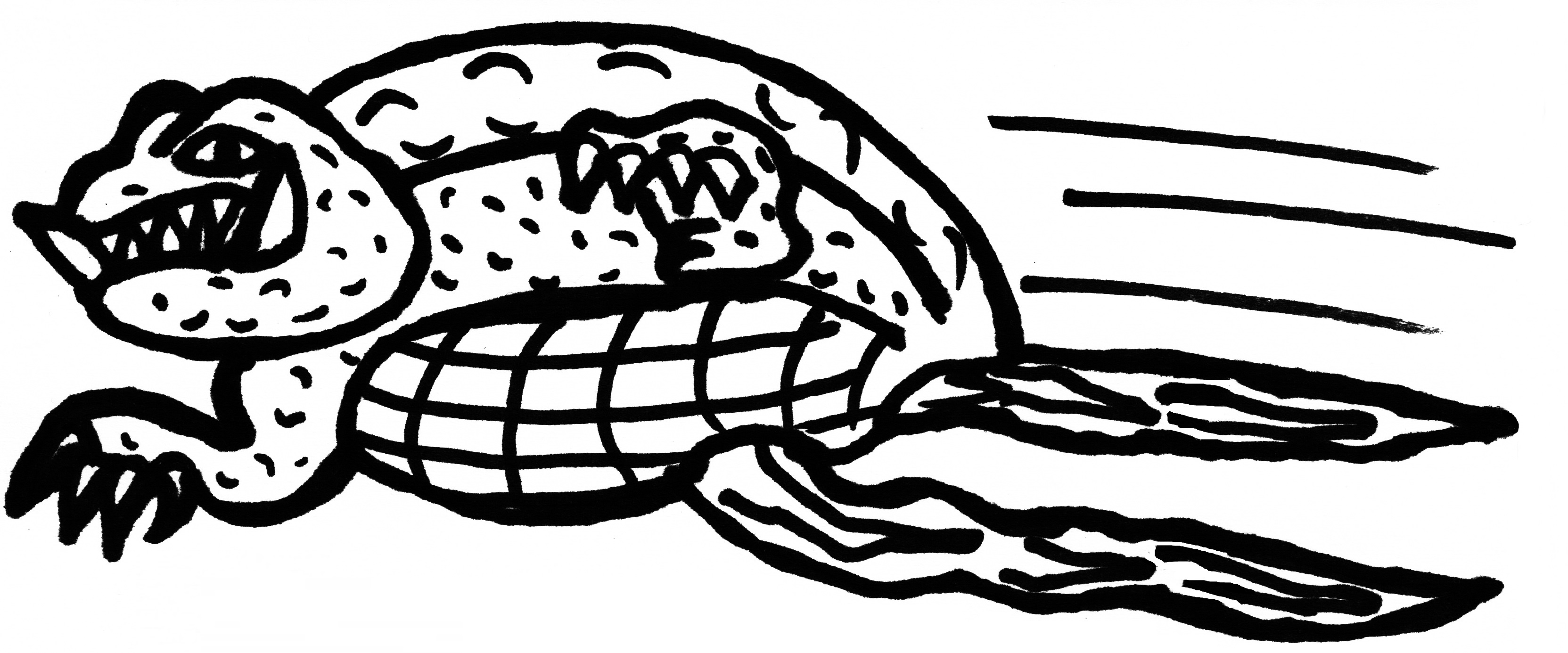
All you really need to earn respectability in the entertainment industry is to stick around long enough for the bad reviews to fade away and your presence is undeniable. It worked for Keanu Reeves, it worked for Adam Sandler, and it also worked for the fire-breathing turtle monster Gamera. When Gamera first premiered in the 1960s, the giant turtle beast was essentially a goofy knockoff of Godzilla, and he was treated as such. As a result, he quickly pivoted to become a “hero to children everywhere” in a long string of kiddie sequels (before Godzilla also got into that game), so that the original Daikaijū Gamera film was never treated with the same critical or historical respect as the original Gojira. We all love Earth’s hard-shelled protector anyway, though, so it’s good to know that Gamera did eventually get his deserved victory lap in the 1990s, when he was given a slick, big-budget makeover to help boost his reputation as one of the kaiju greats. I haven’t yet seen all of Gamera’s kid-friendly sequels from the 1960s & 70s, but I can’t imagine any could compare with his action-blockbuster spectacles from the 1990s. Gamera’s Heisei-era trilogy is a glorious run of high-style, high-energy kaiju pictures that for once genuinely compete with the best of the Godzilla series, instead of registering as a court jester pretender to the King of Monsters’ throne.
The debut of that 90s makeover, 1995’s Gamera: Guardian of the Universe, is both the best and the most faithful of the trilogy. Gamera is re-introduced to the world as a living relic of Atlantis, not a newly arrived extraterrestrial protector. He battles the Giant Claw-like bird creatures the Gyaos from his 1960s days, who are theorized to have been activated by Climate Change, and his ability to fight them off is powered by a child’s love. Just in case audiences weren’t sure that this straightforward Gamera revival was inspired by the success of Jurassic Park, Guardian of the Universe almost immediately includes an archeological dig and a scene where the scientist studying the Gyaos shoves an entire arm into their droppings like Laura Dern going shoulder deep in triceratops poop. It’s the Jurassic Park style mixed-media approach to the visual effects that really makes this one stand out, since the plot and the monster-of-the-week enemies are such classic Gamera fare. There’s something gorgeous about the film’s 90s green screen magic, surveillance video inserts, and rudimentary CGI mixing with the rubber monster suit tactility of classic kaiju pictures that inspires awe in this reputation-rehabilitator. We are all Sam Neill gazing upwards, slack-jawed at our giant reptile friend and, then, begging the Japanese military to stop shooting at him so he can save the day. Every time Gamera bleeds green ooze in his fight to save us, we too ooze a tear in solidarity.
Things turn more horrific in the 1996 sequel Gamera 2: Attack of Legion, shifting from Jurassic Park to Mimic in Hollywood comparison terms. Instead of fighting off the Gyaos sky-beasts, Gamera has to face underground bug creatures collectively called Legion. As a threat, Legion can be genuinely unnerving in their Phase IV-style insectoid organization skills, at one point carpeting Gamera’s entire body in a collective swarm. In individual design, they’re a touch creepier than the Arachnids from Starship Troopers, adding a gross little cyclops eyeball to the center of each bug’s frame. All we can do in the face of such horrors is to thank Gamera for sticking around to protect us . . . unless you happen to be one of the poor children orphaned by the large-scale destruction of his skyscraper heroism. Gamera’s enemy in the third installment, 1999’s Revenge of Iris, is the titular parasitic monster that has been orphaned by the turtle’s heroic violence, birthed from a loan surviving egg seemingly borrowed from the set of an Alien sequel. Really, though, Gamera has to contend with the disaffected child psychically linked to that monster, who lost her parents when Gamera crushed their apartment during a Legion attack in the previous picture. It’s a plot that questions whether the widespread collateral damage of Gamera’s heroism is worth having him around to fight off lesser monsters, to the point where he has to fight a personified version of the Trauma he’s caused in past battles. We all still love the big guy, but accountability is important.
Of the two sequels, Revenge of Iris is the only true contender for possibly besting Guardian of the Universe as the best of Gamera’s 90s run. By that point in the series, Gamera’s reputation as something too goofy to take seriously had been fully overcome, so there was only one goal left to achieve: make Gamera scary. It’s an incredible accomplishment, achieved by filming the giant turtle beast from inside the homes he’s supposedly protecting with his righteous, vengeful violence. There’s a somber, funereal tone to Revenge of Iris, as if it were clear to the filmmakers that Gamera’s 90s revival was a special moment in time that had already reached its natural conclusion. Images of dead Gyaos covered in flies and a sea floor carpeted in dead Gameras from Atlantis’s ancient past convey a sad finality to the series echoed in Gamera’s “What have I done?” moment self-reflection when he realizes he has traumatized the very children he sought to protect. Personally, I was much more impressed & delighted by the spectacle of Gamera’s official makeover in Guardian of the Universe, but the tonal & thematic accomplishments in Revenge of Iris are just as remarkable, considering the monster’s humble origins three decades earlier. Attack of Legion is a worthy bridge between those two franchise pillars as well, especially on the strength of its creepy creature designs. Gamera may not have emerged from his 90s run as a hero to all children everywhere, but he carved out an even bigger place for himself in this overgrown child’s heart. I love my giant turtle friend, and I’m happy that he eventually found the respect he’s always deserved.
There is no horror subgenre more hideously racist than the Italian cannibal film, and yet I keep tricking myself into watching them every time they appear in the wild on thrift-store DVDs. The 1980 Fulci knockoff Zombi Holocaust was at least more memorably entertaining than the last time I picked up one of these cursed objects about five years ago, when I reviewed Slave of the Cannibal God. I was hoping Zombi Holocaust would be Zombi-style gonzo Italo mayhem while fearing it might be Cannibal Holocaust-style racist Italo bullshit instead. The results were just as evenly mixed as the title suggests. Opening in a New York City med school where cadavers are being ransacked for lunchmeat behind professors’ backs, it at least promises a novel, urban angle on the Italo cannibal movie. Soon enough, though, those unsanctioned organ harvests are revealed to be the work of “primitive savages” from a small Indonesian island, and the white academics set sail to see what’s causing those “Asiatic” brutes to go so violently mad. Once on the island, the movie becomes more traditionally racist in the Mondo Italo style, except that the usual cannibal-tribesmen threat is made worse by the locals worshiping a small gang of rotting zombies who stalk the jungle and occasionally pop by for a human snack. It’s a wild genre mashup between the kind of shameless schlock I love and the kind of shameless shlock I loathe, erratically alternating between them from minute to minute.
What’s fascinating about Zombi Holocaust‘s xenophobia is that the film actively attempts to convey an anti-racist sentiment; it’s just too tone-deaf to pull it off. In a laughable line of faux-profundity, a college professor asks if New York City is really all that different from a society of “primitive savages,” undercutting whatever point they think they’re making with their own racist terminology. There is something to the juxtaposition of the university’s nighttime cannibal raids and its daytime surgery lectures, though, calling into question how medical study is functionally different from mad-scientist butchery. That parallel is confirmed later when it turns out that the reason the islanders have been regressing to crazed cannibal savagery is that they’re being experimented on by the professors’ white academic colleague who has gone mad and gone rogue. It’s a plot wrinkle spoiled by the film’s alternate American title Dr. Butcher M.D., which is a little less descriptive than Zombi Holocaust but a lot less embarrassing to say out loud when someone asks what movie you’re watching. The messaging behind that white villainy reveal is somewhat commendable, even if it is driven by an impulse to shock & entertain rather than an impulse to discourse. It’s also completely undone by the way every single Indonesian character is presented onscreen, since it still gets its thrills by depicting them as cannibalistic humanoids regardless of the reasoning.
It’s foolish to look for any coherent messaging in this vintage zombie cheapie, of course, so it’s ultimately a movie that lives & dies (and comes back to life) by the frequency & brutality of its violence. There are a few mundane stretches wherein characters drive around NYC, change clothes in real time, and struggle to read a map, but for the most part it’s a volatilely entertaining picture. When the island cannibals eat, they disembowel and chow down in swarms while their victims squirm & scream in protest. When the mad doctor performs surgery, he cracks open his nonconsenting patients’ skulls to dig around the goop inside in full view of the camera. There’s even an early giallo-style sequence in the hospital morgue where a gloved maniac meticulously removes a corpse’s hand with a bone saw and then runs off with it, presumably for a midnight snack. For all of my wincing at Zombi Holocaust‘s racial stereotypes and willingness to dawdle, it did make me yell “WHAT?!” at the screen several times, which is invaluable for second-hand horror schlock. I’m still not convinced that the Italo cannibal genre at large has anything of value to offer to cinema or to humanity, but this one example is just crazed enough in its practical-effects hyperviolence that for once I didn’t regret watching it. I’m just a lot more likely to rewatch Burial Ground instead next time I get the itch, since it delivers the same Italo zombie goods without miring them in cannibal muck.










 Swampflix