I Saw the TV Glow (2024)

I saw I Saw the TV Glow at this year’s Overlook Film Festival, a five-day horror marathon that’s held in New Orleans every Spring.  In an attempt to put my festival pass to full use, I crammed my schedule with new releases, spending noon to midnight at a downtown shopping mall for a four-day stretch of the fest.  I skipped sleep, meals, and parties so I could disappear into The Movies, only seeing friends in passing if they happened to catch me in line for a screening.  It’s likely no coincidence, then, that the Overlook title that has stuck with me most was the one about the self-destructive distraction of niche media obsession.  Jane Schoenbrun’s follow-up to the isolation-of-the-internet drama We’re All Going to the World’s Fair is about the corrosive isolation of obsessively watching television instead of living a real, authentic life.  It felt absurd to immediately get in line for another movie right after its credits rolled, but I found myself doing it anyway, refusing to wake up from my self-induced screen rot stupor.  It didn’t exactly change my life, but it did make me sincerely question some things about how I’m living it.

Justice Smith stars as a socially petrified suburban nerd who’s afraid to fully express himself to anyone, including himself.  The closest he gets to breaking out of his shell is in watching The Pink Opaque, a 90s kids’ fantasy show about two psychically linked summer camp friends who are geographically separated but still fight supernatural evil as a team.  Styled after retro Nickelodeon programming like Are You Afraid of the Dark? and The Adventures of Pete & Pete, The Pink Opaque is the kind of deceptively complex children’s programming that roots itself in a young audience’s brains for a lifetime, immediately triggering dormant memories & feelings with just a couple still images or a few notes of a theme song.  It’s also a show specifically marketed to girls, so our timid protagonist is afraid to be caught watching it, both out of fear of his homophobic brute father (an unrecognizable, terrifying Fred Durst) and out of fear of what it might awaken in his own psychology.  He finds refuge in an older, lesbian student at his school (Brigette Lundy-Paine) who sneaks taped episodes of The Pink Opaque into his possession, so that their real-life relationship mirrors the psychic link between the distanced besties of their favorite show.  When his only friend asks him to join her in breaking out of the oppressive social & familial ruts of the suburbs, he’s too scared to go.  The show is then abruptly cancelled, reality breaks, and the parts of himself he refuses to confront devour his soul while he suffocates in isolation.

I Saw the TV Glow is the melancholy dark side of the Brigsby Bear moon.  It’s specifically targeted at Millennial nostalgia for vintage, tape-warped 90s media, but like Brigsby Bear it’s clear-eyed in its messaging that disappearing into that media is not a healthy substitute for a real-world social life.  It’s impossible not to read this particular version of that story as a cautionary tale for would-be transgender people who are too afraid to come out to themselves, to the point where Shoenbrun practically reaches through the screen to shake that specific audience awake with the handwritten message “There is still time.”  Even if you don’t need to be encouraged to embrace your true, hidden gender identity, the movie still hits home for anyone who’s ever avoided authentically engaging with their life, body, or community by disappearing into niche media consumption instead.  Like World’s Fair, it’s an emotionally heavy film that touches on themes of suicide, loneliness, and parental abuse.  No amount of Pete & Pete visual references or prop Fruitopia vending machines can ease the pain weighing on its heart.  If anything, its nostalgia for vintage 90s media only gets more sinister the more it’s used as an emotional crutch; the Trip to the Moon-styled villain of The Pink Opaque becomes a stand-in for suicidal depression and his on-the-ground moon minions become gender dysphoria demons who go away if you stop thinking about them but never die if you never confront them. 

The most frequent complaint about We’re All Going to the World’s Fair was that it was mismarketed as a horror film when really it’s just a melancholy drama about a terminally-online teenager who’s so lonely she deliberately loses her grip on reality.  It was bold of Overlook to screen Schoenbrun’s next film alongside the program’s more recognizable ghouls, ghosts, and ballerina vampires, then, since their customer base can be vocally opinionated about what does or does not count as Horror; I can still hear echoes of bros in black t-shirts grumbling after their 2019 screening of Jennifer Reader’s Knives & SkinI Saw the TV Glow has a much stronger case for being programmed in a horror genre context than World’s Fair, though, since it depicts a full supernatural breakdown of reality after the cancellation of The Pink Opaque.  Tape warp TV static and monster-of-the-week villains invade the real world of our emotionally-closed-off protagonist with escalating violence the longer he ignores who he really is.  The static even invades his body, literalizing the dysphoric sensation he describes of having his insides dug out with a shovel.  Maybe it’s more of a nightmare drama in the way Ari Aster pitched Beau is Afraid as “a nightmare comedy,” but it’s a goddamned nightmare either way – one that the volatile combination of rigid social norms and insurmountable personal anxiety make countless people suffer every day.   It made me so sad I felt physically ill, and then I immediately disappeared into another horror movie so I didn’t have to think about it for too long.

-Brandon Ledet
Bill and Ted Face the Music (2020)

Bill & Ted Face the Music finds our lovable slacker buds, William S. Preston Esq. (Alex Winter) and Theodore Logan (Keanu Reeves), still at the great work that Rufus (the late George Carlin) foretold for them: the song that would unite the world. They’re also middle aged, with daughters of their own, named for the other: Wilhelmina “Billie” Logan (Brigette Lundy-Paine) is dark-haired, shy, and androgynous like Ted, while Theadora Preston (Samara Weaving) is blonde, confident, and hyperactive like Bill. The film opens on the wedding of Missy (Amy Stoch), who was once our hapless duo’s babysitter, then was Ted’s step-mother, then Bill’s step-mother, and is now marrying Ted’s younger brother Deacon (Beck Bennett, taking over for Frazier Bain). At the reception, Bill and Ted plan to perform the first three movements of their latest composition, entitled “That Which Binds Us Through Time: The Chemical, Physical, and Biological Nature of Love and the Exploration of the Meaning of Meaning — Part 1,” and it starts with throat-singing and theremin, so I’m on board, but it’s not a crowd pleaser. At the suggestion of their wives, the princesses (Erinn Hayes and Jayma Mays), Bill and Ted attend couple’s therapy with their respective spouse, as a quartet. 

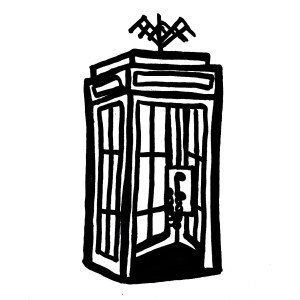
Meanwhile in the future, time and space are falling apart. Rufus’s daughter Kelly (Kristen Schaal) and widow The Great Leader (Holland Taylor) have different interpretations of the prophesied Wyld Stallyns song, with the latter believing in her father’s vision of universal unity through the power of music, and her mother hoping to put things back on track by reluctantly killing the Stallyns. To that end, she sends a time-traveling murderbot (Anthony Carrigan) to hunt them down across space and time. Learning about the dire situation, Bill and Ted steal their old phone booth time machine and move progressively forward in time along their own lifelines in an attempt to acquire the song from their future selves. Meanwhile, Billie and Thea travel through time to acquire various historical musicians (and Kid Cudi) in preparation for the performance. 

The sad thing about Face the Music is that, all too often, Bill and Ted are the least interesting things in it. This movie made me feel young, and then it made me feel old, and then it made me feel young again, but not in a way I was happy about. There’s just a little too much happening here, in a sequel to a movie that knew just how many juggling pins it could keep in the air at one time, and there are too many narrative threads. Offscreen, the princesses have been invited by future versions of themselves to see all of space and time and see if there’s any way they can actually be happy in their marriages to the men of the title (not to sound too much like the boys, but, like, that plot is majorly a downer). Meanwhile, the daughters are having their adventure, which is a mixed bag; Weaving and Lundy-Paine are both great here but are sometimes forced into delivering dialogue that hits the ear with neither subtlety or comedy. They have a kind of abridged version of Excellent Adventure as they collect Mozart, Hendrix, and Louis Armstrong (Daniel Dorr, DazMann Still, and Jeremiah Craft) and others, to form a supergroup rather than for a history project, but each encounter feels more expository than fun. They encounter one instance of resistance in their plot and overcome it almost immediately, then have nothing but easy success from there on out, which doesn’t make for a compelling watch. Conversely, each future version of the adult Bill and Ted is drunker and less helpful than the last, and these encounters go on for too long (especially in 2025), making the whole thing feel more like a labor than a good time. Then, as if that weren’t enough, we get a slight rehash of Bogus Journey with a trip to Hell, where the guys, their daughters, several time-displaced musicians, and Ted’s dad once again meet up with Death (William Sadler) to get back to the world of the living in time to perform the song and prevent the end of existence as we know it–because, if there’s one thing you have to remember, it’s this: the clock in San Dimas is always running. 

I didn’t even get into the plot that’s running concurrently in the future in which The Great Leader keeps getting summoned into the same amphitheater to look at the hologram of space and time (represented as the earth as a turntable, with a record deck at the equator like Saturn’s rings) to fret, which seems to happen nearly half a dozen times. In an overstuffed movie, it’s crammed in there too for some reason but there seems to be a disconcerting lack of a narrative purpose for us to keep going back there. Obviously one would want to get their money’s worth when hiring Holland Taylor, but from a story standpoint, there’s just no reason to keep doing this; a ninety-three minute movie shouldn’t have 125 minutes of plot crowding it up like the suitcase of a Looney Tunes character, as it leaves no breathing room and creates the situation mentioned earlier, in which character dialogue is rushed and overly expositional.  

I loved Bill & Ted in my youth, and no one wanted this movie to be better than I did. There are a few solid jokes here, but even some of the best are in service of generating a nostalgic feeling, which isn’t the wrong way to go with this particular franchise, but could have been scaled back by about 35% and had both more room to breathe and been just as effective. Lundy-Paine and Weaving are doing a lot of heavy lifting, and they’re up to most of it, but there are lines that they’re asked to sell that are simply impossible to pull off, and while Reeves has continued to carve out a niche for himself with John Wick and one-off minor roles in things like Neon Demon, Alex Winter has remained largely out of the public eye, mostly making documentaries. It’s great to see him here; he seems to be having the most fun of anyone, and it’s infectious, even when the film drags. It’s a less than delightful end(?) to a franchise that had a better ending in Bogus Journey.

-Mark “Boomer” Redmond