Self-described as “a summer camp for genre fans,” The Overlook Film Festival has quickly become the best of New Orleans’s local film fests . . . as long as you’re a total sicko. I consistently catch a wide selection of the year’s most stylish, violent, memorable horrors & thrillers in the festival’s lineup, many of which don’t otherwise reach local theaters before they get siphoned off to the cultural void of streaming platforms. It’s a surprisingly sociable experience too, considering that its main attraction is quietly watching movies in the dark. In recent years, all Overlook selections have been corralled to the two locations of The Prytania Theatres, which allows attendees to form a weekend-long bond with fellow movie nerds they continually run into while lining up for the next fucked-up delight. Everyone’s watching too much, sleeping too little, and loving every horrific minute. It really does capture the summer camp slumber party feeling of staying up all night watching scary movies with your friends after the adults fell asleep and can no longer police what’s playing on the TV.
While this year’s Overlook concluded over a week ago for out-of-town attendees, locals have been spoiled with a daily schedule of “lagniappe” screenings that kept the spooky-good vibes going twice as long as the festival proper. It was a decadent indulgence, especially on the afternoon I was able to sneak away from work early to catch the original Invasion of the Body Snatchers screening uptown on 35mm, exhausted & half awake, like Don Draper on a liquid lunch break. That extended Overlook hangover also gave me time to reflect on what I had seen over the busier opening weekend, gathering my hazy thoughts in a week spent writing short-form reviews. Leaving the couple repertory screenings I caught of the 1950s Body Snatchers and Larry Fessenden’s 1990s hipster vampire picture Habit out of it, I’m listing below the ten new-release feature films I caught at this year’s Overlook Film Fest, ranked in the order that I appreciated them, each with a blurb and a link to a corresponding review. For a more detailed recap of the Swampflix Crew’s festival experience beyond these reviews, check out the most recent episode of The Swampflix Podcast.
A Lovecraftian horror story told entirely through local television commercial parodies, in which a small town is swallowed whole by an unholy buffet chain. For all of its high-concept buffoonery, it ends up making a fairly coherent point about how everything decent in the world is currently being devoured in some hostile corporate takeover. Shop local, protect your loved ones, take shelter in the bunker until it’s all over.
A child abduction martial arts revenger that solves all the evils of the world with the swing of a hammer, like You Were Never Really Here restaged as an action thriller. Between this & The Forbidden City, it’s already been a great year for legible fight choreography, but this one is way more relentless & brutal. This is very likely the best action movie since RRR, give or take Furiosa. It also very likely means something that every movie I’m referencing happens to be about human trafficking.
Turns quirky Movie Girlfriend behavior into a grotesque horror show, delivering the first truly scary Manic Pixie Nightmare Girl. Turns out, the archetype still a little cute even in that context.
An unofficial Uzumaki spinoff that trades in spirals for human pyramids. This is a delightful headscratcher for audiences of any age, but it’s going to blow the mind of the right teenager who’s watching their first Weird Movie in the phase when their #1 enemy is Conformity.
In which Casper “Too Many Cooks” Kelly graduates from one-off Adult Swim novelties to his first fully formed feature, to mixed results. When it sticks to its cursed Barney & Friends episode premise, it lands all of its laughs & scares. When it deviates from that format, it feels like a confession that this should’ve just been another short, since the idea can’t fully sustain itself for feature length.
Between this & Oddity, it’s clear Damian McCarthy has a unique talent for constructing an effective jump scare. That’s why it’s a little disappointing this one spends so much time dwelling in Elevated Horror atmosphere instead. There are some exceptional witchy gags in this haunted hotel story, but they’re frustratingly sparse.
Perfectly captures the alienation of loving movies but hating movie audiences. Who do you side with here? An incurious public who laughed Exorcist IIoff the screen for taking chances instead of delivering more of the same? Studio executives who lost money on an artistic gamble? Or the artist himself, who improbably staged a literal fever dream on someone else’s dime? Even when this documentary gets cutesy about the mass rejection of the Exorcist sequels, I could feel my blood boiling in general misanthropy.
Supernatural conversion therapy horror set in macho small-town Australia. It shares some cast & crew with Talk to Me, but it plays more like a spiritual sequel to It Follows, making up for that film’s queer oversights
It turns out to not be such a big deal that the latest Scream sequel was a morally & creatively bankrupt shit show. The new Faces of Death has a lot more to say about modern audiences’ relationship with violent entertainment media than any Scream movie has in at least 15 years. The only letdown is that all of its payoffs are intellectual; it’s not nearly upsetting enough to earn its title, at least not for a desensitized social media addict such as myself.
A Māori colonization story set in a kinda-sorta haunted house. It’s the kind of politically furious, grounded-to-reality horror you can tell only dabbles in genre tropes because it’s more difficult to get funding for an arthouse drama on the same subject.
One of the unofficial themes of this year’s Overlook Film Festival was the Adult Swimmification of the modern horror comedy, which has gradually emerged as a trend in the last decade of the genre’s furthest-most surreal outliers. Certainly, there have always been post-Tim and Eric, Adult Swim-style horror comedy oddities scattered throughout Overlook’s diverse programming, from the suburban soccer-mom meltdown Greener Grass to the gross-out Frankenstein riff Dead Lover to last year’s festival-wide spotlight on Kuso director Flying Lotus. This year’s Overlook had an even more pronounced Adult Swim presence than usual, though, not least of all due to the omnipresent ambassadorship of The People’s Joker herself, Vera Drew. Ostensibly flown out to participate in a panel about “Techno Horrors in the 21st Century,” Drew could be seen (and heard, thanks to her iconic Jokerfied laugh) at various movies throughout the weekend, taking just as much advantage of her festival pass as anyone else roaming the French Quarter shopping mall hub. The least surprising place to find her, of course, was a double feature of the two most Adult Swim-coded selections in the program, since her own aggressively surreal editing style has helped guide the rhythms of that particular genre niche in projects like Comedy Bang! Bang!, On Cinema at the Cinema, and the aforementioned People’s Joker. Spotting Vera Drew in line for this year’s absurdist horror comedy selections felt like a pre-emptive stamp of approval that we were in the exact right place, swimming with the adults in the horror-comedy deep end.
If any one title could claim to have earned its Adult Swim bona fides, it was Buddy, the debut feature from director Casper Kelly. Kelly first made a name for himself with 2014’s Adult Swim short Too Many Cooks, followed by more recent Adult Swim experiments in the weirdo-comedy block’s Yule Log series. Like those two previous attention-grabbers, Buddy starts as an eerily accurate parody of a long-dead television format, which Kelly then subverts by underlining its most uncanny qualities. After parodying 90s sitcom intros (in Too Many Cooks) and seasonal yule log screensavers (self-explanatory), his first feature begins as a retro episode of Barney & Friends, swapping out the friendly purple dinosaur for an orange unicorn named Buddy. There’s some incredible attention to detail in the cursed children’s TV show set decor, establishing a Pee-wee’s Playhouse style world where every piece of furniture is alive & costumed with googly eyes. Buddy rules over them all as a fascist tyrant, redirecting all attention & behavior from his various “friends” to focus on him at all times, all in the name of mandatory fun. Unfortunately, Kelly then breaks format while sketching about the basic rules of Buddy’s televised universe, leaving that colorful playhouse set for a much more mundane world outside its invisible barriers. When we’re trapped inside the Barney parody with an abusive dictator unicorn, Buddy easily lands all of its discomforting laughs & scares. When Kelly deviates from that format, it feels like a confession that this project should’ve just been another short, since the idea can’t fully sustain itself at feature length.
Simon Glassman’s own directorial debut Buffet Infinity demonstrates a much more admirably stubborn commitment to its own bit. Buffet Infinity tells a surprisingly legible Lovecraftian horror story through a series of local restaurant commercials for fictional businesses in Alberta, Canada. What starts as petty political attack ads between a local mom & pop sandwich shop and a corporate buffet chain quickly escalates into a town-wide hostile takeover, with an entire community swallowed whole by a single insatiable restaurant franchise. Its individual commercial parodies recall the awkward sub-professional sketch comedy of Tim & Eric Awesome Show, Great Job!, edited together with the relentless intensity of an Everything is Terrible! mixtape. For all of its high-concept buffoonery, though, it still makes a fairly coherent point about how everything decent in the world is currently being devoured in some soulless corporate acquisition. All of the quaint hometown flavor of your neighborhood sandwich shop’s family-recipe “secret sauce” is being obliterated by grotesquely underpriced, overstuffed fast-food deals for meat-tower monstrosities with names like “The Beyond Comprehension Burger.” Buffet Infinity urges you to shop local, protect your loved ones, and take shelter until this soulless corporate takeover is all over.
I don’t think the full story of what Casper Kelly’s Buddy means in the current moment of post-Adult Swim absurdist comedy will be clear for some time. The film is still seeking a theatrical distributor after its mixed-reviews premiere at Sundance, and its public perception won’t fully solidify until it can be compared to the other upcoming Barney subversion, improbably reported to be written by Ayo Edrbiri and produced by Daniel Kaluuya. Meanwhile, Buffet Infinity is a self-contained, fully realized project with contracted distribution in the works from Yellow Veil, to be enjoyed by freaked-out stoners everywhere by the end of the year. Together, they made for a perfectly overwhelming double feature at this year’s Overlook, likely the strangest pairing I’ve seen at the fest since I watched Greener Grass back-to-back with Peter Strickland’s killer-dress anthology In Fabric in 2019. Praise be to the Overlook programmers for their longtime commitment to keeping the Adult Swim spirit alive at the festival, love & respect to Vera Drew for acting as that spirit’s living mascot at this year’s fest, good luck to Casper Kelly for finding his way out of his current distribution limbo, congratulations to Glassman, hail Satan, and all the rest.
Damien McCarthy quickly became a legend at The Overlook when the festival screened his 2024 spookshow Oddity to a loudly reactive crowd, then snuck in one last scare on the way out by propping up its creepy wooden puppet at the theater’s only exit. Oddity had great word of mouth in the queues between showtimes that year, celebrated as the rare movie to actually scare the jaded horror-nerd audiences who’ve already seen it all. McCarthy’s return to the festival with 2026’s Hokum was highly anticipated, then, boosted by the savvy marketing team at Neon and the name-recognition star wattage of Adam Scott. With Hokum, McCarthy once again demonstrated a unique talent for constructing an effective jump scare (even eliciting a top-volume scream from a fellow Swampflixer, whom I will not name & shame in this review). That’s why it’s a little disappointing that the scares are so sparse in this bigger-budget follow-up, where McCarthy is determined to dwell in Elevated Horror atmosphere instead of routinely setting up & knocking out the scare gags he stages so well. Although each were effective, I can count Hokum‘s memorable scares on a single hand, while the majority of its runtime was spent exploring every inch of its haunted hotel setting in near silence.
A spooky atmosphere goes a long way, though, and McCarthy makes intriguing use of Hokum‘s haunted hotel location by sidestepping the type of supernatural ghoul you’d typically expect to confront there. Adam Scott stars as an asshole alcoholic novelist who’s hoping to spend a few days quietly ignoring the world in a remote Irish inn. Against his will, he accidentally makes friends with the inn’s snarky bartender (Florence Ordesh) and then finds himself investigating the mysterious circumstances of her sudden disappearance (and presumable murder). That vigilante Murder He Wrote investigation quickly gets the novelist trapped in the hotel’s haunted honeymoon suite, where he’s tormented by vengeful spirits of the past. The most shocking thing about Hokum, then, is that it’s not technically a ghost story, at least not in the traditional sense. Adam Scott’s spooked protagonist is specifically locked in an Old Dark House setting with a witch—not a ghost—who’s occasionally joined (or takes the form of?) a humanoid donkey with a wicked sense of humor. She is a stereotypically witchy hag, warts & all, when the film’s setup leads you to expect another classic Halloween costume entirely (a bedsheet with eyeholes).
Hokum was not the only bait-and-switch ghost story I saw at this year’s Overlook. Taratoa Stappard’s debut feature Mārama also plays with Gothic Horror visual tropes that lead its audience to expect traditional ghostly hauntings, but its version of a haunted house story turns out to be “spiritual” in an entirely different sense. Adriana Osborne stars as a 19th century Māori woman who travels from New Zealand to England in search of her missing twin sister. The spirits of her sister, her mother, and another ancestor do haunt the spooky English estate she sets out to investigate, but her supernatural connection to them is more rooted in Māori religious traditions than in haunted-house movie tropes. The real horror haunting the house is not these women’s lingering spirits but the greater evil of British colonialism, which is what displaced them from New Zealand in the first place. Every time our troubled paranormal investigator is confronted with a supernatural scare, it’s always represented as some pilfered & perverted aspect of her culture: relocated homes, ceremonial masks, mutilated whales, a straight-up minstrel show, etc. Mārama is the kind of politically furious, grounded-to-reality horror story you can tell only dabbles in genre tropes because it’s more difficult to get funding for an arthouse drama on the same subject. See also: Nikyatu Jusu’s kinda-sorta folk horror Nanny.
Yûta Shimotsu’s Lovecraftian horror comedy New Group also dabbles in classic haunted-house movie atmospheres, but it proves to be even more difficult to pin to a single genre designation than Hokum or Mārama. Like McCarthy, Shimotsu quickly became an Overlook crowd favorite with his previous picture, Best Wishes to All, but his follow-up swerved in much more inscrutable directions. New Groupmight be an alien invasion story; it’s hard to say. It’s certainly a variation on the Uzumaki plot, trading in Junji Ito’s town-wide obsession with spirals for a town-wide obsession with “human pyramid” gymnastic formations. Inexplicably, a human pyramid is forming outside a small-town Japanese high school, gradually growing to skyscraper scale one joiner at a time. It’s unclear what’s inspiring this sudden social phenomenon except a generalized urge to belong, and it quickly spreads off-campus to inspire different cheerleader-style human structures elsewhere in town. Because of the film’s scope & budget, though, it’s difficult to convey the widespread danger of the phenomenon, so Shimotsu shrinks the threat down to a single container: the high school gym. Only, the gym was temporarily converted to a Halloween-style haunted house by the students before they were compelled to join the pyramid, providing a traditionally spooky environment for the town’s few defectors to be chased around by the mind-zapped gymnasts in their midst. Supernatural hijinks ensue, both inside the makeshift haunted house and on the playground outside the high school’s walls.
New Group is a delightful headscratcher for audiences of any age, but it’s going to blow the mind of the right teenager who’s watching their first Weird Movie in the exact phase when their #1 enemy is Conformity. The genre-filmmaking payoffs of Hokum & Mārama are much more immediately apparent, since their own haunted house settings are merely stages for their bigger interests in jump scares & political commentary. As a group, this unlikely international trio illustrates just how flexible horror movie tropes as old-hat as a Haunted House still are. Each film uses that setting for an entirely different purpose, stocking it with an entirely different monster: witches, ancestral spirits, and gymnastics-obsessed townie conformists who may or may not be mind-controlled by space aliens, respectively. The reason strictly horror-focused film festivals like Overlook never get tiresome is because the genre allows for that kind of tonal & thematic range, freeing filmmakers to be as scary or political or absurd as they want, trusting that audiences is familiar enough with the environment that they’re game for anything you stage within it.
Welcome to Episode #263 of The Swampflix Podcast. For this episode, Brandon, James, Britnee, and Hanna discuss a selection of genre films that screened at this year’s Overlook Film Festival, including Larry Fessenden’s hipster NYC vampire flick Habit (1995).
00:00 The Overlook Film Festival 01:34 The Boulet Brothers 10:26 Hokum (2026) 18:55 Buffet Infinity (2026) 25:40 Buddy (2026) 36:01 Faces of Death (2026) 39:46 Obsession (2026) 43:10 Leviticus (2026) 44:48 The Furious (2026) 47:33 New Group (2026) 49:15 Boorman and the Devil (2026)
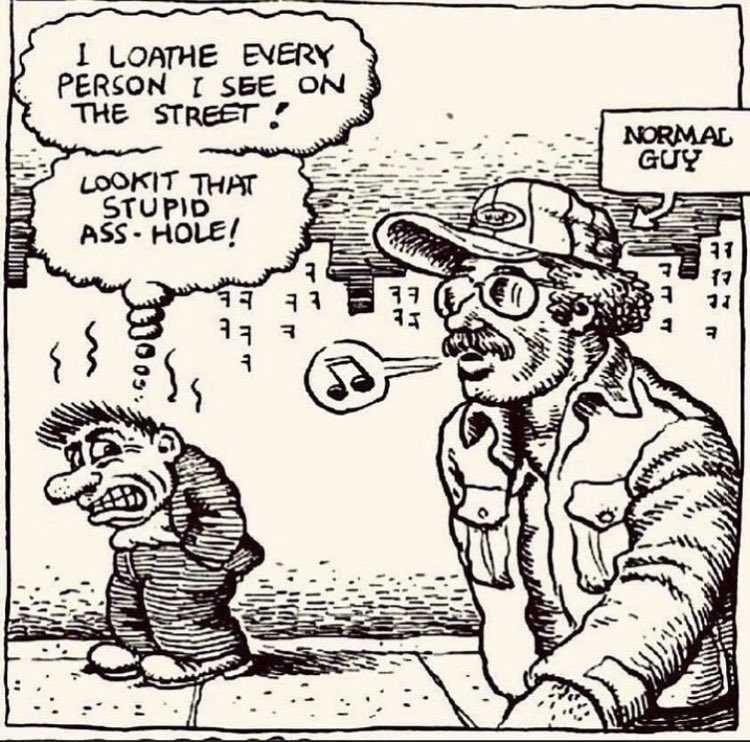
As much as I love the movies, I hate moviegoing audiences – at least en masse. Chatting with individual festival attendees at this year’s Overlook Film Fest was as warm & friendly as always, like meeting up with old friends who I’ve technically never met before. Then, watching Boorman and the Devil at that same fest reminded me just how rare of an experience it is to celebrate the artform with a like-minded crowd. David Kittredge’s documentary about the production & public perception of John Boorman’s Exorcist sequel The Heretic is an intensely alienating experience for true cinephiles, a reminder that most people who go to the movies don’t care at all about art. They are not open to being challenged; they demand satisfaction. It’s repugnant. Even when Kittredge gets cutesy about the mass-audience rejection of The Heretic, I could feel my blood boiling in general misanthropy, loathing every person I see on the street like that one Robert Crumb comic panel.
After the overwhelming financial success of William Friedkin’s The Exorcist, Warner Bros threw an obscene amount of money at Linda Blair to return for a cash-in sequel, alongside new-to-the-franchise costars Richard Burton & Louise Fletcher. They also gave free rein to New Hollywood auteur John Boorman to take the Exorcist story in any direction he wanted, an opportunity Boorman leveraged to deliver a hypnotic arthouse nightmare that recalls The Exorcist in name only. His vision was met with wide public derision, derailing his career until he could redeem himself with another hit in Excalibur a few years later. So, who are we supposed to side with here? The incurious audience who laughed The Heretic off the screen for taking chances instead of delivering more of the same? The studio executives who lost money or an artistic gamble? Or the artist himself, who improbably staged a literal fever dream on someone else’s dime? There is only one morally acceptable answer.
Boorman developed a life-threatening fever while filming The Heretic, a direct result of his own overly demanding ambition. That wasn’t the only on-set disaster. Burton struggled to stay sober enough to deliver his lines while standing still. Fletcher barely made it through the shoot before needing to have her gall bladder removed in emergency surgery. Blair spent long hours dangling off the roof of a skyscraper, unharnessed. Meanwhile, Boorman’s sick-leave absence opened a power vacuum for his screenwriting partner Rospo Pallenberg to run wild & unchecked on set, an off-putting presence that almost inspired open mutiny. The production was so troubled that the crew joked it was cursed by the demon Pazuzu himself, but none of that would’ve mattered if Boorman ultimately delivered a hit.
Kittredge relays these production-delay anecdotes from people who were actually there via tried-and-true documentary clichés that barely liven up the still set-photo imagery: first-person narration in his own voice, talking-head interviews with film critics & historians, cut & paste animation, and periodic chime-ins from fellow filmmakers with no direct association to the subject at hand (namely, Karyn Kusama, Mike Flanagan, and genre-doc mainstay Joe Dante). However, while Kittredge doesn’t match Boorman’s sense of poetic imagination, he is sincerely in awe of it, which goes a long way. This is not a movie about how Exorcist II: The Heretic was a laughable disaster; it is a story about how ambitious, risk-taking art isn’t always appreciated by the public, who’d rather laugh in mockery then get lost in cinematic poetry. Fuck ’em. They don’t know what they’re missing.
Looking back, it’s impossible to fully measure the impact that David Robert Mitchell’s indie horror phenomenon It Follows has had on the past decade of high-concept, mid-budget genre filmmaking. Predating Robert Eggers’s atmospheric folk horror The Witch by a full year, It Follows now registers as ground zero for the “elevated horror” trend of the 2010s (give or take The Babadook). Its supernatural stalker plot about a shapeshifting, sexually transmitted specter has directly influenced works as cerebral as Brea Grant’s feminist head-trip Lucky and as lizard-brained as Parker Finn’s suicide-virus thriller Smile. It’s a little silly, then, that Mitchell is currently working on a proper It Follows sequel titled They Follow, considering how many iterations there have already been on the original’s mood & conceit. I even saw a new one just this week at The Overlook Film Festival, which borrows the invisible-stalker device from It Follows for a story about an entirely different kind of sexual menace.
The rural horror story Leviticus shares some notable cast & crew with the recent Aussie hit Talk to Me, including actor Joe Bird (the cursed hand’s most brutally tormented victim) as its teen-in-peril lead. Leviticus plays more like a spiritual sequel to It Follows, though, shifting that seminal film’s focus from heterosexual desire to a wholly queer sensibility. Instead of the It Follows demon being sexually transmitted among careless hetero twentysomethings, it’s forced upon gay teenagers as a supernatural form of conversion therapy. The shapeshifting demon’s form is also no longer randomized the way it was in Mitchell’s film. It instead appears before its victims in the shape of the person they desire most, acting like the gay-conversion version of those Disulfiram pills that “cure” alcoholics by making them sick when they taste booze. The goal appears not to be curing teens of their homosexuality, exactly, but to frighten them too much to act on their desires, lest they be gaybashed by a demon that looks like their hottest crush.
Bird stars as a lonely teen who’s just moved to macho small-town Australia with his religious zealot mother (Mia Wasikowska, who not too long ago was playing youthful brats instead of their stern maternal figures). He quickly develops a mutual crush on a classmate (Stacy Clausen), who only expresses his desire in private – first through roughhousing, then through smooching. The boys’ timid love story would make for a cute indie rom-dram if it weren’t for all of the religious nuts in town, who have developed a hypnotic ritual involving a butane lighter that chains gay teens to the aforementioned variation on the It Follows demon. The rules of the curse are fairly simple. The demon looks like the person you desire most, and it only attacks when you are alone. The metaphor that first-time director Adrian Chiarella is getting at is a little vaguer, though, to the movie’s benefit. Much like It Follows, it finds a way to physicalize a form of sexual menace & repression without overly explaining what it represents in dialogue (a temptation later derivatives like Smile cannot resist).
That’s not to say that Chiarella doesn’t make a coherent point with this conceit. It’s clear that the real evil here is the isolation caused by small-town bigotry, forcing gay teens into the darkest of closets. The cure for not being destroyed by that desire is to never be alone, to be out in public instead of saving your romantic trysts to private hookups, locked away in dingy warehouses where you can never be sure if you’re making out with a boyfriend or his evil doppelganger. There’s some heartfelt, meaningful social commentary in there, but the basic rules and mechanisms of its central metaphor are just mysterious enough that it doesn’t feel overly schematic in the moment. If there’s anything Chiarella doesn’t handle especially well tonally, it’s in the overall bleakness of every last interaction. Leviticus is a dour film with little room for humor in its metaphysical exploration of the tyranny of the closet. That tonal severity is appropriate for its subject but a little grueling to trudge through at feature length. Even It Follows included a few sight gags between its slow-burn scares, and that’s clearly the template we’re working with here, as we so often are.
Is there a more dependable path to horror filmmaking success right now than getting your start in sketch comedy? Following in the recent footsteps of sketch-turned-horror comedians Jordan Peele, Zach Cregger, and the Philippou Brothers, up-and-coming director Curry Barker has graduated from YouTube prankster to buzzy horror auteur du jour. The connection between those two artforms feels obvious, at least in the way that they deal in high-concept premises that need to be quickly explained and then immediately punctuated with punchlines. There’s an overt, sadistic humor in the way Barker cyclically builds & relieves tension in his debut feature Obsession that feels like a natural progression from the sketch comedy format. More importantly, these post-YouTube sketch creators speak directly to a youthful audience, playing to the prankish sensibilities of teens & twentysomethings instead of dwelling in the overly patient rhythms of recent decades’ “elevated horror”, which is quickly becoming the genre equivalent of le cinéma de papa.
I mention the youth appeal of Obsession up-front because it’s a movie tailored for people whose greatest concern in life is still their unreciprocated romantic crush, or who’s fucking whom at that their go-nowhere retail job. There’s more cowardly, unreciprocated yearning in this gross-out gore film than you’ll find in even the wimpiest teen-romance anime. Yes, you will see skulls crushed, skin carved, and house pets desecrated, but the most discomfort you’ll feel is in watching a twentysomething coward fail to muster up enough courage to confess he has a crush on his coworker. Instead, he resorts to supernatural magic, making a wish on a cursed children’s toy that she will love him “more than anyone in the whole frickin’ world.” Of course, the wish quickly backfires, as our yearning anti-hero can’t handle the intensity of being desired instead of quietly doing the desiring himself, in private. Don’t worry, he’s also cosmically punished for the crime of using magic to coerce a peer into a nonconsensual sexual relationship, cruelly & usually.
Michael Johnston does a perfectly cromulent job playing that supernaturally tortured anti-hero, remaining a useless coward all the way to the very end. He’s frequently told by the more magic-savvy mystics in town and the One Wish Willow customer service reps that he can break the spell at any time by killing himself, but that would require action, while he is purely a creature of thought. Johnston convincingly contorts his brow with worry while considering his increasingly grim, shrinking options, never brave enough to act on any one of them. However, the real discovery here is his costar Inde Navarrette as his magically coerced crush, who’s tasked to deliver a much bigger, bolder performance. Through Navarrette, Obsession turns Quirky Movie Girlfriend behavioral tropes into a grotesque horror show, delivering cinema’s first truly scary Manic Pixie Nightmare Girl. It turns out, the Quicky Movie Girlfriend archetype is still a little cute even in that context, and Navarette performs some of the best uncanny smizing seen onscreen since Anna Kendrick first became a star. She does other tricks too, like strutting backwards, discovering culinarily unconventional sources of protein, and acting as her new boyfriend’s personal sleep paralysis demon – whatever it takes to keep them close.
In its broadest terms, Obsession is a classic “careful what you wish for” Monkey’s Paw story, and Barker has admitted in a recent Fangoria interview that he initially got the idea while watching the “Monkey’s Paw” vignette from the Simpsons‘ Treehouse of Horror specials. It’s probably notable that Jordan Peele named his own production studio Monkeypaw Productions after the same short story, just as it’s notable just how much Obsession‘s house party sequence recalls the ritualist peer-pressure magic of the Philippou Brothers’ Talk to Me. Barker clearly belongs in this new class of sketch-to-horror auteurs, unafraid to prank his audience with shamelessly unfair jump scares. All that matters, really, is getting the laugh or the gasp from the audience in the moment, which Obsession did remarkably well at its local premiere opening this year’s Overlook Film Fest. Leave the worry about good taste & artistic restraint to the elevated horror fuddy-duddies of the recent past.
Many longtime Scream fans were horrified by what happened to their beloved slasher franchise this year, after the brand chose to self-implode rather than to employ actors vocally opposed to the ongoing Palestinian genocide. Just a few months later, it turns out not to be such a big deal that Scream 7 was a morally & creatively bankrupt shit show after all. The producers got what they wanted in reliable name-recognition box office returns from the politically apathetic masses, and the more discerning audiences who boycotted can now get what they want in the new Faces of Death: a reboot of a legacy horror franchise that questions the ways the genre has changed in the decades since its start. 2026’s Faces of Death has a lot more to say about modern audiences’ relationship with violent entertainment media than any Scream movie has in at least fifteen years. Notably, it does so by tracking the ways horrifically violent imagery has moved from the cineplex to our smartphones, including news footage of the aforementioned genocide.
Euphoria‘s Barbie Ferreira stars as a content moderator for a TikTok-style social media platform called Kino. She spends long, demoralizing days approving or disapproving user-flagged content on the platform, flooding her brain with the most heinous imagery & behavior her fellow humans can conceive & shoot. Much like with the original 1970s mondo movie Faces of Death, it becomes increasingly difficult for her to differentiate what violent content is simulated vs. what is authentic, pressured by her corporate higher-ups to avoid being overly censorious. The plot gets meta when she stumbles across an anonymous account that’s recreating the most gruesome scenes from Faces of Death “for real,” and she struggles to convince anyone in her life that she’s uncovered an active serial killer. When she takes this discovery to online message boards, she is subsequently abducted by that killer to star in his next viral video. Many flame-war social media posts and real-life bludgeonings ensue.
If the new Faces of Death has any overt shortcomings, it’s that it’s not nearly scary nor upsetting enough to earn its title, at least not to the desensitized eyes of a social media addict such as myself. That largely appears to be the point. Technically, this is a bloody bodycount slasher, but all of its payoffs are purely intellectual. Longtime collaborators Daniel Goldhaber & Isa Mazzei (Cam, How to Blow Up a Pipeline) clearly took on the project as an opportunity to discuss the ways snuff-footage media akin to the original Faces of Death has become mundane thanks to the social media feeds that relentlessly overstuff our brains with real-life grotesqueries. There’s more meaning in the transition of its fictional news broadcast switching from vertical smartphone footage of a suicide to a fluff piece about a puppy shelter than there is in the cruelty of any particular kill. The movie isn’t especially scary, but it is remarkably thoughtful about the current corporate-sponsored hellscape we all willing enter every day through our phone screens.
That lack of genuine scares is no fault of its masked killer, played by Stranger Things‘s Dacre Montgomery. Covering both the ice-cold intellectualism of Hannibal Lecter and the perverse sensuality of Buffalo Bill, Montgomery’s Arthur is the total package. He’s converted his suburban McMansion into a makeshift movie studio, restaging scenes from Faces of Death because reboots are favored by the algorithm. He finds his own sense of style in the process too, murdering his victims via automaton contraptions constructed out of department store mannequins. He’s even transformed himself into a living mannequin of sorts, via skinsuits & masks, further removing himself from the violence he films for views. Everything is mediated through an artificial remove, to the point where his final showdown with Ferreira’s final girl mostly plays out on their individual laptop & phone screens even while they’re standing feet apart in the same blood-spattered room. It’s chilling to think about, even if it’s not especially scary to watch, unlike its namesake source of inspiration.
Faces of Death recently saw its local premiere at The Overlook Film Festival, where Goldhaber & crew gushed about how wonderful New Orleans is as a shooting location. Besides a brief throwaway scene set at a corporate crawfish boil on the lakefront, there isn’t much indicating that the story is set here, whereas most New Orleans movies make sure to toss in a few French Quarter scenes for local flavor. There’s probably some substantive commentary in there about the way screenlife has flattened all modern living to one locationless artificial world devoid of discernible local culture, as this is a movie entirely made of metatextual commentary about the current state of things. The Scream franchise used to think about these kinds of things too, before it devolved into cataloging the life & love soap opera milestones of Sidney Prescott, et al. Now you have to find your Slasher With Ideas kicks elsewhere, starting here.
Without question, the local MVP this Halloween season has been the original uptown location of The Prytania, which has provided the bulk of local repertory horror programming in the lead-up to today’s spooky holiday. Not only was the single-screen theater’s regular Classic Movie Sunday slot repurposed to feature Halloween fare this month (Dial M for Murder, What Ever Happened to Baby Jane?, The Haunting, 13 Ghosts, The Bride of Frankenstein, and Abbott & Costello Meet Frankenstein — all Swampflix favorites), but The Prytania also doubled down on its Spooky Season Content by staging a week-long film festival of classic horror titles. In collaboration with local MVP horror fest The Overlook, The Prytania launched a “Kill-O-Rama” lineup midway through the month, making up for the relatively anemic output of exciting new horror releases currently making the rounds. This year’s Kill-O-Rama lineup included perennial Spooky Season classics The Exorcist & Halloween, a 30th anniversary screening of George Romero’s Day of the Dead, multiple alternate-ending variants of the murder-mystery crowdpleaser Clue, and a victory-lap rerun of their 70mm print of Sinners (which they’ve been heroically exhibiting all year). It was the exact kind of Halloween-season programming I’m on the hunt for every October, conveniently gathered in one neighborhood theater. Although I was unable to give this year’s Kill-O-Rama the full mind-melting marathon treatment I tend to give other festivals, I was able to catch a few screenings from the program, reviewed below. Here’s hoping that this festival format returns to The Prytania next Halloween season, when I can plan ahead to live in the theater for a week solid — ignoring all non-scary-movie obligations in my schedule until All Hallows’ Eve has passed.
Interview with the Vampire (1994)
Sometimes, procrastination pays off. It’s likely shameful that I hadn’t seen the 1994 adaptation of Anne Rice’s vampire saga Interview with the Vampire until this year, especially since I lived here through the 90s era when the French Quarter was overrun with gothy vampire cosplay inspired by Rice’s local cachet. It was especially fun to watch with a New Orleans audience, though, so I’m glad I didn’t spoil the experience by diluting it with ad breaks on cable. There’s a moment late in the runtime when Brad Pitt’s woe-is-me vampire Louis announces that he is traveling to reunite with his jilted master (Tom Cruise, as the dastardly Lestat) on Prytania Street, and the crowd erupted into titters. It’s the most firmly I’ve felt rooted in The Prytania’s geographical location since catching an early screening of Happy Death Day there (which was filmed on a college campus a few blocks away, with students filling out most of the audience). Interview with the Vampire is not entirely anchored to New Orleans, but instead globetrots between three international cities: New Orleans, Paris, and San Francisco — great company to be in. Still, its locality is undeniable in that New Orleans is the chosen home of its most infamous vampire, Lestat, who attempts to break away from the restrictions of his European coven to establish a new afterlife on American soil, starting his new family by turning the sad-eyed Louis into one of his own. There’s only trouble once that family becomes nuclear, when Louis gives into vampiric temptation by feeding on a small child, damning her to an eternal adolescence as her new two dads’ doll-like daughter. After about thirty years of faux-domestic stasis, she rebels in spectacularly violent fashion, burning their shared home to the ground in a righteous rage.
For all of the A-lister hunks in the cast (Cruise, Pitt, Christian Slater, Antonio Banderas), I was most impressed with Interview with the Vampire as The First Great Kirsten Dunst Movie. Dunst has been a wonderfully talented screen actor for as long as I can remember watching the screen, but it’s still incredible to watch her out-perform her more famous, better-paid adult co-stars in a role filmed when she was only 10 years old. Dunst’s embodiment of Claudia, the eternally dollish vampire, conveys a world-weariness and vengeful fury far beyond the age of the actor behind it. Part of the reason she stands out so much is that all of the male leads are such sad sack yearners, all fitting neatly into the somber tone typical of director Neil Jordan’s work. Jordan’s interpretation of Rice’s text is more melancholy than it is sensual, finding its hunky, mutually obsessed vampire men jaded beyond repair long after they’ve lost their lust for sex & blood. As the latest addition to that damned clan, Claudia is the only character who’s going through a major emotional upheaval, so that the story’s most violent, extravagant turns rest on her little shoulders. Given the specificity of locale and the name-brand talent elsewhere in the cast, it’s likely the movie would remain undead in annual Halloween-season circulation with or without Dunst’s involvement, but it’s her performance that actually earns that cultural longevity. She’s eternally great.
Corpse Bride (2005)
I was drawn to Kill-O-Rama’s 20th-anniversary screenings of Tim Burton’s stop-motion musical Corpse Bride for a few reasons, not least of all because it felt like a rarer anomaly in the schedule than more frequent go-tos like The Exorcist & Bride of Frankenstein. That’s assumedly because it’s a lesser loved title among the rest of the heavy hitters on the schedule, despite it being a perfectly charming seasonal novelty. When it was first released, Corpse Bride was treated like the microwaved leftovers from earlier Tim Burton/Henry Selick productions like The Nightmare Before Christmas & James and the Giant Peach, but 20 years later it now plays like a precursor for later Laika productions like ParaNorman & Coraline, which have since become the go-to primers for lifelong horror nerd obsession among youngsters. Time has mostly been kind to it, give or take the biggest star in its voice cast (the wine-tasting spit bucket Johnny Depp), but I’ve personally always had a soft spot for it. It’s hard not to adore a movie that fantasy-casts Peter Lorre as a talking brain maggot with kissable lips and takes breaks from advancing its plot to animate a band of stop-motion skeletons playing saxobones against Mario Bava crosslighting. I missed the film during its initial theatrical run, though, so I had only ever seen it on a 2nd-hand DVD copy, which made this repertory screening a must-attend event.
In short, Corpse Bride looks great. All of the visual artistry that distinguishes The Nightmare Before Christmas as a holiday classic is echoed here without any lost integrity. The worst you could say about it is that Burton borrows a little too freely from former collaborator Henry Selick in the production design, to the point where the underworld afterlife setting appears to be pulled from the live-action sets of Selick’s Monkeybone, entirely separate from the film’s production overlap with Nightmare. If I were Selick, I might be complaining, but as an audience member, I’m more than happy to spend time with the cartoon gals & ghouls in that underground otherworld where every day is Halloween. Much like in earlier auteurist works like Batman Returns, Edward Scissorhands, and Ed Wood, Burton conveys a yearning desire to party with the undead freaks of the underworld instead of being stuck with the drab drips of the living flesh. Johnny Depp & Emily Watson voice a soon-to-be-married couple of awkward strangers who’ve had all the joy of life strangled out of them by their uptight, aristocratic parents. They seem to be instantly, genuinely fond of one another despite the grim-grey world they sulk in together, but tragedy strikes when the groom accidentally marries an animated corpse instead while practicing his vows in the spooky woods outside town. The titular undead bride (Helena Bonham Carter, duh) drags the poor, nervous lad down to her Halloweentown underworld where he’s forced to party with the lively dead instead of moping among the dead-eyed living. Song & dance and comedic antics ensue, ultimately resulting in a tender-hearted reunion for the rightful bride & groom and a cosmic comeuppance for the dastardly cad who sent the Corpse Bride underground in the first place. It’s wonderful kids-horror fare, especially if your particular kid has already re-run Coraline & ParaNorman so many times that you’ve become numb to their Laika-proper charms.
Frankenstein (2025)
The concluding event on the Kill-O-Rama schedule was a double feature presentation of James Whale’s iconic 1931 adaptation of Frankensteinand the latest interpretation of that text, directed by Guillermo del Toro. Besides the double-feature format of that programming, the most exciting aspect of the new Frankenstein film’s presentation during Kill-O-Rama is that The Prytania continued to run it weeks after the fest concluded on a 35mm print, the only venue in town to see the film on celluloid before it is shuffled off into the digital void of Netflix. After similar runs for titles like Sinners, Tenet, and One Battle After Another, The Prytania is making a reputation for themselves as the premiere film venue in town by default, since they’re the only place that can actually project film. Given the massive crowds that have been swarming The Prytania every night in the past week to catch Frankenstein in that format, it’s clear that the public yearns for tangible, physical cinema and are willing to pay extra for it. My screening even started with an audience member loudly booing the Netflix logo in the opening credits, to the rest of the crowd’s delight. Netflix’s omnipresence in urban & suburban homes indicates that most of these crowds could’ve waited a couple weeks to see Frankenstein at home for “free,” but they instead chose to attend a big-screen presentation with richer, deeper colors in projection and visible scratches on the print. It was a classic theatrical experience befitting such a classic literary adaptation.
As for the movie itself, it’s exactly what you’d expect from a Guillermo del Toro adaptation of the Mary Shelley source text. It’s pretty, it’s moody, and it’s got a surprisingly sensitive heart for a movie in which a mad scientist stitches together leftover corpse parts to create a monster and then proceeds to abuse that monster. The biggest surprises in Frankenstein lurk in the intensity of the performances, given that the actors could have easily gone through the motions and let the exquisite sets & costumes do all of the work. Mia Goth conveys a defiant ferocity as Dr. Frankenstein’s uninterested love interest, matching his creative intensity but swatting down his god-scale ego in what feels like an onscreen avatar for Mary Shelley’s literary jam sessions with Percy Shelley & Lord Byron. Jacob Elordi plays Dr. Frankenstein’s monstrous creation as a big scary baby who’s convincingly dangerous when provoked but angelic when properly nurtured. Oscar Isaac is feverishly manic as Dr. Frankenstein himself, so fixated on his mission to bring dead flesh back to life that he doesn’t consider what kind of father he’ll be once he succeeds (having only Charles Dance’s physically abusive patriarch as a default example to follow once the creature is in his care). It’s in that cautionary tale of what happens when you single-mindedly dedicate yourself to a passion project at the expense of your own humanity that del Toro’s Frankenstein starts to feel personal to the director beyond its surface aesthetics. This is a project he’s been fighting to complete for decades and, thus, it has partially mutated into a story about the madness of its director’s own grand-scale, solitary ambition. The result is not one of del Toro’s best works, but it’s at least a more heartfelt, refined, accomplished version of what Kenneth Branagh failed to fully give life when he adapted Mary Shelley’s Frankenstein in 1994. After three or so decades of book-faithful Frankenstein adaptations, I’m excited that we’re approaching the point when Jack Pierce’s creature design will enter the public domain (in 2027) so that every new repetition of this story isn’t so fussy & literary, but del Toro’s version still feels like an exceptional specimen of its ilk. I appreciated seeing it big & loud with a full horror nerd crowd, instead of alone on my couch the way Netflix intended.
Self-described as “a summer camp for genre fans,” The Overlook Film Festival has quickly become the best of New Orleans’s local film fests . . . as long as you’re a total sicko. I consistently catch a wide selection of the year’s most stylish, violent, and memorable horror films & thrillers in the festival’s lineup, many of which don’t otherwise reach local big screens before they get siphoned off to the cultural void of streaming platforms. In recent years, all films programmed have been corralled to the two locations of The Prytania Theatres, which allows you to form a weekend-long bond with fellow movie nerds you continually run into while lining up for the next fucked-up delight. Everyone’s watching too much, sleeping too little, and loving every horrific minute. It really does capture the summer camp or sleepover feeling of staying up all night watching scary movies with your friends after the adults fell asleep and can no longer police what’s playing on the living room TV.
This was the first year of the festival where I made some time in my schedule for a couple repertory screenings: the Corman-Poe classic The Fall of the House of Usher (1960) and a block of David Lynch’s early short films (namely “Sick Men Getting Sick,” “The Grandmother, “The Amputee,” and “Premonitions Following an Evil Deed”). The Vincent Price campiness and costume drama fussiness of House of Usher made for a classically wonderful trip to the Prytania’s original location uptown, but the Lynch shorts made a much more significant impression on me. As a collective, they offered a glimpse into an alternate dimension where Lynch might have stuck to a full career as a Don Hertzfeldt-style outsider animator. More importantly, they also projected most of the scariest images I saw at this year’s festival, especially in the domestic blackbox-theatre artificiality of “The Grandmother.” There’s always something novel about watching challenging art films in a downtown shopping mall like Canal Place, and that Lynch block may have been the most abstract & challenging films ever screened there. It says a lot about Overlook’s sharp, thoughtful curation that they made room for films that academically rigorous alongside feature-length sex-and-fart-joke comedies like Grace Glowicki’s Dead Lover (which, I might as well admit, was my favorite of the fest).
I see no point in rating or raking the works of recently fallen legends like Corman & Lynch here, since their contributions to the festival are so deeply engrained in genre cinema history, they’re beyond critique. Instead, I’m listing below the ten new-release feature films I caught at this year’s Overlook Film Festival, ranked in the order that I appreciated them, each with a blurb and a link to a corresponding review. For a more detailed recap of the Swampflix Crew’s festival experience beyond these reviews, check out the most recent episode of The Swampflix Podcast.
Grace Glowicki follows up her freak-show stoner comedy Tito with a flippantly surreal Hammer Horror throwback, filtering the Frankenstein myth through the Tim & Eric meme machine. Some of the most gorgeous, perverted images you’ll see all year paired with the kind of juvenile prankster humor that punctuates its punchlines with ADR’d fart noises. If Glowicki’s filmmaking career doesn’t work out, she can always pivot to becoming the world’s first drag king Crispin Glover impersonator, bless her putrid heart.
Grief has been the major theme in horror for the past decade, while Conspiracy has been the major theme of mainstream political thought. Only Cronenberg could find a way to eroticize both in a single picture. The king of the perverts continues his reign, despite his reluctance to wear the crown.
An all-in-a-car, real-time thriller that reimagines 2013’s Locke as a dark fairy tale about irresponsible parenting. Extremely satisfying for anyone who loves to watch Rosamund Pike act her way through a crisis.
A self-deprecating meta doc about a true crime dramatization that fell apart in pre-production. Reminded me of a couple postmodern television series of my youth: Breaking the Magician’s Code – Magic’s Biggest Secrets Finally Revealed (for spoiling the magic of how the true-crime genre works) and The Soup (for giving a broad enough overview of the genre that I don’t feel like I have to watch any genuine examples of it to Get It).
The new Kiyoshi Kurosawa (no not that one, the other one) asks a really scary question: What if online flamewars became physical, literal, and consequential? Turns out they’d still be at least a little bit silly and a lotta bit pathetic.
Screenlife cinema that abandons horror in favor of the heist thriller, following the small-scale, laptop-bound schemes of four teens who steal a Bitcoin fortune from an Elon Musk-type dipshit. I personally preferred when this still-burgeoning subgenre was fully supernatural, but it’s nice to see a version of it where teens are actually having fun being online (even when in peril).
A documentary about To Catch a Predator as an aughts-era reality TV phenomenon. Felt like I was going to throw up for the first 40 minutes or so, because I had never seen the show before and wasn’t fully prepared for how deeply evil it is.
You’ve seen a haunted house movie from the POV of a ghost. Now, line up for a haunted house movie kinda-sorta from the POV of a dog! What a time to be alive.
A WWII-set creature feature stranded somewhere in the Pacific Ocean. Continues a long tradition of unspoken homoeroticism in wartime dramas, now with a Roger Corman rubber-suited monster as lagniappe.
A sci-fi revenge thriller about a grieving mother who gets addicted to killing her child’s murderer in multiple alternate dimensions. It brings me no pleasure to act as the logic police, but the temporal shenanigans of this one make no sense. It’s like they wrote it as a time-loop movie and subbed in the word “multi-verse” instead at the last minute without cleaning up the implications of how time passes differently in that genre. The violence is effectively nasty, though, and there are a few tense set-pieces that almost distract from the quibbles.