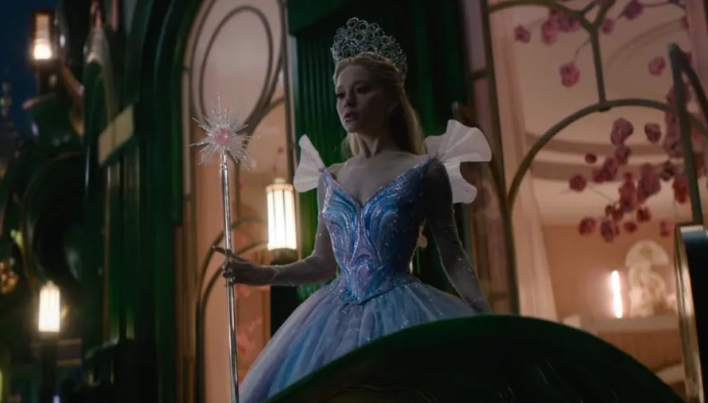
Wicked: For Good (2025)

In the lead up to the release of last year’s Wicked—which surprised no one by turning out to be an adaptation of only the first half of the hit Broadway musical inspired by Gregory Maguire’s revisionist novel of the same name—I saw a spectrum of positive to negative press from legitimate outlets and fawning praise from musical fans and Ariana Grande devotees. My thoughts were mostly positive, finding it a perfectly pleasant, if incomplete, story with passable-to-admirable performances. I didn’t understand then why people seemed so upset about the film’s visual stylings; it wasn’t perfect, but I went into that film expecting to hate it and came out pleasantly surprised. It didn’t end up on my end of the year list, however, despite my positive review; I had a good time, but it didn’t stick with me. As early as the days following the premiere of 2024’s Wicked, those most familiar with the Wicked musical cited that it infamously has a weaker second half than its first and that this downward momentum would not serve the second film well. Their foresight was mostly true. Early reviews of Wicked: For Good moved the needle in an even more negative direction, as those who came without the foreknowledge of the overall quality of the back half of stage production were underwhelmed by this concluding outing. The reception has been mixed at best, so I once again went into this film expecting that I wouldn’t have a very good time, but once again, I enjoyed myself. Not as thoroughly as last time, and I expect this one to stick with me even less, but less enchantment didn’t mean I wasn’t charmed at all. 

The film picks up five years after Elphaba (Cynthia Erivo) oooh-wa-ah-ah-aaaaah’d off into the western sky. In the interim, her sister Nessarose (Marissa Bode) has taken over their late father’s position as governor of Munchkinland, with Munchkin Boq (Ethan Slater) as her primary attendant. The Wizard (Jeff Goldblum) is continuing his wholesale prosecution of the talking Animal community while winning the public relations war on two fronts: the impending completion of a major public works project, The Yellow Brick Road (which was built with enslaved Animal labor), and—via Madame Morrible (Michelle Yeoh)—a constant output of propaganda painting Elphaba as the terroristic “Wicked Witch of the West.” The opposite of wickedness is goodness, and to that end, Morrible and the Wizard have created a cult of personality around Galinda (Ariana Grande), who has now taken the name “Glinda” and accepted the title “the Good.” It’s so like a modern P.R. campaign that they even throw in a sudden celebrity marriage between Glinda and Prince Fiyero (official sexiest man alive Jonathan Bailey), who has been appointed to the Emerald City’s special “Gale Force” (get it?) tasked with taking down the Wicked Witch. 

There’s a big love pentagon going on here. Nessarose is in love with Boq, who was encouraged by Glinda to show Nessarose attention and affection in their college days, and who is ready to move on but has been hesitant to do so because she’s still grieving her father (and Elphaba, in a different way). Boq is in love with Glinda and has been since they were all in school together, and learning of her impending wedding to Fiyero causes him to try and depart for the Emerald City, only for Nessarose to go full fascist and shut down Munchkinland’s borders to keep him from leaving her. Glinda, despite still being a bit of an airhead, is deep enough to know that the lack of happiness she feels despite public adoration and supposed romantic fulfillment means that it’s all hollow underneath; nevertheless, she genuinely loves Fiyero. For his part, Fiyero is taken aback by the sudden announcement of his wedding (no proposal was made by either party) and feigns positive feelings about this development, continuing to hide his pining for Elphaba. She feels that same love in return, but all she can see from her vantage is the Emerald City-propagated public image of him as a righteous crusader against the vile Wicked Witch. 

These interpersonal relationships are more integral to the story than the supposed greater political situation, the subjugation of the sentient Animals, although there’s more here than in the stage musical. The film opens with an action sequence in which Elphaba disrupts the building of the yellow brick road by freeing the Animals being used as slave labor, and she later interacts with a group of animals who are fleeing Oz via a tunnel under the road, begging them not to give up. Later still, she discusses a truce with the Wizard, with her final demand being that he release the flying monkeys, to which he agrees, only for her to discover an entire second chamber full of abducted Animals in cages, including her goat professor from Shiz University. She releases the animals, which stampede through Glinda and Fiyero’s wedding, and then this subplot is mostly forgotten about as the film moves on to putting all the pieces on the board in the place that they need to be for the events of The Wonderful Wizard of Oz (the book) and perhaps more importantly The Wizard of Oz (the movie) to occur, getting only a moment of lip service in the conclusion as Glinda gives her big speech. 

That table-setting is this film’s biggest hindrance, and why the back half of this story feels less organic and emotional than the first part. Nessarose has to decide to take advantage of the ancient spell book being open to try and use magic to make Boq stay with her, causing him to lose his heart. Elphaba has to try additional magic to save him, which means turning him into the Tin Woodsman, because eventually turning into the Tin Man is the only reason Boq is here in the first place. Madame Morrible wants to lure Elphaba out of hiding, so she sets out to hurt her sister. In order to do so, she creates the tornado that brings Dorothy’s house to Oz and crushes her in the street, because that’s where this story has always been going. The Cowardly Lion stuff is borderline irrelevant, other than his accusation that she was responsible for creating the winged monkeys rattling the Animals’ faith in her, but it’s here because that’s where this story has always been going. The most egregious is the fate of Fiyero. After holding his own ex-fiancee at gunpoint in order to get the Gale Force to release Elphaba, he doesn’t go with her, citing that it would be “too dangerous.” What? More dangerous than them dragging him off to torture him? Moments later, in “No Good Deed,” Elphaba sings that she presumes that they are in the process of beating him to death, if they haven’t already; I’m not really sure how that’s better than going on the run together? There’s absolutely no reason within this narrative for Fiyero not to run off with Elphaba in that very moment, but because we have to move the pieces into place for the story of The Wonderful Wizard of Oz to happen, he has to stay behind so that Elphaba’s concern for him can drive her to cast a spell that—surprise!—turns him into the Scarecrow we all know and love. It’s a necessary evil, but it doesn’t exactly flow the way that last year’s release does. 

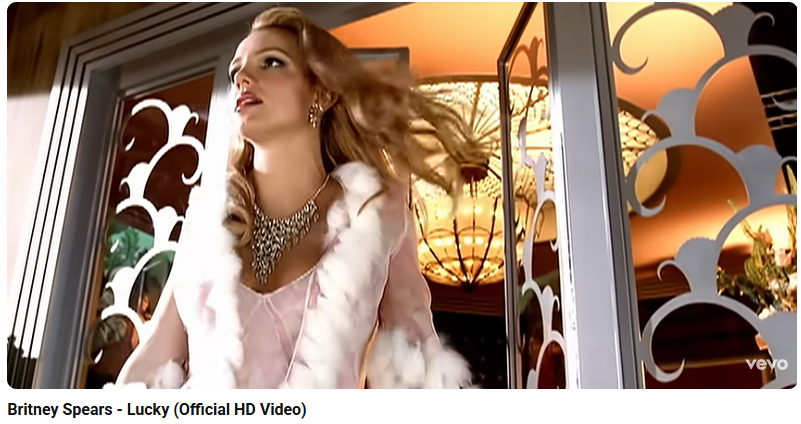
This film is also goofier than the first, and it feels like it comes from carelessness, except when it’s audaciously borrowing elements from the MGM film. Elphaba levitates her paraplegic sister by enchanting their late mother’s silver (as they were in the book) slippers, but her power makes them glow red so that Universal Pictures can skirt MGM’s copyright for Judy Garland’s ruby slippers. Two of the songs featured in the film are new to the adaptation; one of them is Ariana Grande as Glinda as Britney Spears in the “Lucky” video. I’m serious. 
The second is a new song for Elphaba when she tries to inspire the Animals to stay and fight, and it’s called “No Place Like Home.” That’s trying too hard. It’s difficult not to notice since this film wraps up the narrative threads of everyone but the little girl whose fate is left unknown, given that Glinda is a witch with no magic (which is a miserable creature indeed) and can’t send her back to Kansas. Admittedly, this does lead to a funny background bit where the Wizard takes off in his balloon and leaves Dorothy behind, this viewpoint implying that he was running for his life before Glinda decides to turn his exile into imprisonment. About half of the laughs I had in the theater were clearly intentional on the film’s part; the other half … I’m not so sure. After Elphaba’s disruption of the road construction, the film’s title suddenly appears over an image of a government overseer fleeing through fields of flowers as tense, dramatic music plays, and it’s so jarring it feels like an intentional joke. When Elphaba confronts the Wizard for the first time in this film, he playfully bonks himself with a yellow brick, which he then demonstrates as being light and bouncy before tossing it away. Was that a bit that Goldblum did on set with a prop brick that they decided to keep in? It’s bizarre. At other times, I merely groaned as the film forced in references, or when we had to make a hard right in a given character’s storyline so that they can get railroaded on track for their respective stations of the canon

I’m being pretty negative about a film that I had a pretty decent time watching, so it’s worth noting that there’s still a lot to enjoy, even if it’s rushed in some places and sluggish in others as it chugs toward its inevitable conclusion. Erivo’s pipes are still masterful, and the songs are sufficiently rousing even if they’re not as inspired as the last time we were all here. It has come, it will go, and by this time next year we’ll have mostly forgotten about it. Once its theatrical run is completed, the overwhelming tie-in advertising (Bowen Yang and Bronwyn James put in two brief appearances as their sycophant characters from the first film in order to justify their appearances in For Good-themed ads for Secret Clinical deodorant) will come to an end, and people will mostly remember the first film fondly, and this one little if at all. Don’t take it too seriously, have a good time, and perhaps see it late enough in the evening that there will be a minimal number of children in your audience (trust me).

-Mark “Boomer” Redmond

Wicked (2024)

In our recent podcast episode about Sirocco and the Kingdom of the Winds, Brandon mentioned having seen (and not enjoyed) Wicked. I had previously shared that, when this film was over, I turned to my viewing companion and said, “I have a confession to make. I thought I was going to hate this,” but admitted that I had, in fact, loved it. The Wizard of Oz is one of the first movies that I can ever remember seeing, and I had a secondhand walkman that the red cassette of Oz songs basically lived inside of for years. I loved the books, reading them repeatedly (my favorite characters were Tik Tok and The Hungry Tiger, whose tormented existence torn between desire and moral conviction probably spoke to me at a deeper level, even at that young age). We named one of our chickens Billina and I even spent an entire summer saving my chore money toward a layaway copy of the much-maligned SNES Wizard video game. (The only other person I have ever met with any memory of the game, my friend Eric, also admitted he had never been able to beat it. About five years ago, we got together to watch a playthrough of it on YouTube and were shocked to discover that, of about 110 minutes of gameplay, neither of us had ever gotten past the first 25 minutes, which is where we inevitably died. It was just that hard.) I read Gregory Maguire’s Wicked in the summer between undergrad and grad school, and while I didn’t love it, I didn’t think it was bad, just that I preferred to imagine Oz as I had when I was a child. But after so many bad Oz movies and series over the years (especially Oz the Great and Powerful), I didn’t expect that I would fall into the magic of a movie that had so much negative press surrounding its visual style, especially since a musical is already kind of a hard sell for me. I was mostly there for the Jonathan Bailey of it all (since Broadchurch, if you’re keeping score at home). 

Wicked (Part 1, as everyone suspected) is about Elphaba Thropp (Cynthia Erivo), a woman from Munchkinland who, as the result of some magical hanky-panky in the middle of some extramarital hanky-panky, was born with green skin. This makes her an ostracized outsider among the Munchkins and leaves her the less-favored daughter of her widowed father, who dotes upon her paraplegic younger sister Nessarose (Marissa Bode). Nessarose is accepted to attend Oz’s Shiz University, and although Elphaba is not a prospective student, her accidental use of real magic in the presence of Madame Morrible (Michelle Yeoh) leads her to being invited to attend, under direct tutelage of Morrible, on the spot. As the result of a misunderstanding, Elphaba is set up to room with Galinda (Ariana Grande), the prettiest, most popular girl in all of Oz, although Elphaba ends up shoved into a small corner of their shared lodgings as a result of Galinda’s extensive pink wardrobe. Initial conflict between the two leads to Elphaba’s further isolation at school, and it is further exacerbated with the arrival of Prince Fiyero from Winkieland, whose devil-may-care attitude and carpe diem approach to academics, love, and life in general. Fiyero and Elphaba meet before he arrives at the school, and he is charmed by her lack of deference to either his royal title (of which she is ignorant) or his stunning good looks (which she cannot help but notice). However, upon arrival at the school, Galinda immediately gloms onto him and he accepts and reciprocates the attention, attempting to get the entire student body to reject the boredom of academia in favor of vice and fun, much to Elphaba’s annoyance. Meanwhile, there is an undercurrent of fascism and racism at Shiz U, as the once-diverse teaching body of the university has been whittled down to have only one remaining talking Animal instructor, the goat Dr. Dillamond (Peter Dinklage), who is the person willing to befriend Elphaba. Galinda and Elphaba eventually reconcile when, after a particularly cruel prank, Galinda learns that Elphaba has done something genuinely kind and meaningful in helping Galinda pursue her greatest ambitions; Galinda then makes it her project to rehabilitate Elphaba’s public image and make her, as the song says, popular. When Elphaba at last receives an invite to come to the Emerald City and meet The Wizard (Jeff Goldblum), she chooses instead to argue on behalf of the plight of the Animals rather than ask him to cure her of her green skin, setting events into motion that change the destinies of everyone involved. 

I’ve long been known to be a musical-averse person, but I’m coming around. After having seen recorded versions of Sweeney Todd (the one with Angela Lansbury) and Phantom of the Opera (the 25th anniversary production) this year, I’m more open to them than I once was, and it’s no secret that Wicked is one of the biggest and most widely acclaimed ones of all time. I can’t really speak to this one as an adaptation, but I really enjoyed it. I didn’t love every song (“Dancing Through Life” is acceptable as a bit of exposition/character development, but it’s very boring to me, and if it didn’t have Jonathan Bailey dancing through it, I wouldn’t work at all), but I thoroughly enjoyed most of them, and some are real standouts. Erivo’s voice is fantastic, and in some behind-the-scenes footage she’s singing live in several scenes that show that the magic is coming from her and not from any studio enhancements. She’s entrancing here as Elphaba, and I see so much of people I’ve known and loved in her performance that she completely won me over. I’ve also never been all that interested in Ariana Grande; she came along after I had already long graduated from the age group that she’s aimed at. I was of the generation whose adolescent-aimed-cable-channel-musical-industrial-complex products were Raven and Hillary Duff, so Grande’s rise from that same metaphorical farm league came long after I was among the target demographic. She’s quite fun here, and separates herself from the others on the same career path with a lot of genuine charm and a willingness to commit to the bit that’s quite admirable. 

As for most people’s complaints about the film and its visual style, I have to admit that I didn’t mind it. It would have been nice to have the film try to replicate the Technicolor-sais quoi of the MGM classic, but there’s still a lot to love here in the designs and the details. The costuming is fantastic, and at no point did I think that Oz looked boring or colorless, except in moments in which there’s an intentionality to the blandness that I find appropriate. This one left me feeling elevated and effervescent, and I loved that, even if what we’re watching is the real time character assassination of our protagonist at the hands of an evil government. What more could one really ask for?

-Mark “Boomer” Redmond

Widows (2018)

I’m not sure what aspect of Widows’s marketing led me to expect a stylish heist thriller about vengeful women transforming into reluctant criminals in the wake of their husbands’ deaths. That version of Widows is certainly lurking somewhere in the 128-minute Prestige Picture that’s delivered instead, but it’s mostly drowned out by what I should have known to expect: an ensemble-cast melodrama packed with talented women in beautiful clothes & a world of political intrigue. Everything about 12 Years a Slave director Steve McQueen’s involvement, his collaboration with Gone Girl writer Gillian Flynn, and the film’s Oscar-Season release date should have tipped me off that the promise of a heist genre action picture was merely a cover-up for a thoughtful, handsomely staged drama about women’s internal turmoil in the face of gendered, financial, and political oppression. Widows might still be a slight deviation from McQueen’s usual Prestige Drama fare in its isolated nods to heist genre convention, but surprise twists are becoming Gillian Flynn’s clear specialty; this entry in her modest canon includes a twist in the basic tone & genre of what you’d expect from an ensemble-cast heist picture.

Viola Davis stars as the ringleader widow, who attempts to rope three other widows (Michelle Rodriguez, Elizabeth Debicki, and a barely- present Carrie Coon) into a heist job to help heal the financial wounds left by their dead criminal husbands. Following the detailed instructions left behind by her respective husband (Liam Neeson) in a Book of Henry-style notebook, she transforms from grieving teacher’s union organizer to criminal mastermind in the blink of a teary eye. The nature of her planned caper lands her in the middle of a hard-fought Chicago City Council’s race between brutish local politicians (Colin Farrell, Brian Tyree Henry, Daniel Kaluuya, and Robert Duvall), which is dangerous territory for her small crew of grieving non-professional women who just want to put their lives back together. Oh yeah, and Bad Times at the El Royale’s Cynthia Erivo joins the crew as a getaway driver/muscle, just in case the cast wasn’t already overstuffed. And the dog from Game Night is also along for the ride; and Matt Walsh too. And Lukas Haas. And Jacki Weaver. If the enormity of that cast and the themes of that premise sounds like it might be overwhelming, it’s because it very much is. Widows plays a lot like an entire season of Prestige Television packed into a two-hour span – complete with the execution of the central heist acting as a self-contained episode. The economic & political backdrop of a stubbornly changing modern Chicago sets the stage for a wide range of actors (mostly playing dirtbag men and the women who love them) to patiently wait for their spotlight character moment to arrive in due time. Meanwhile, Flynn adds a new wrinkle to the plot every few beats to leave the audience salivating with anticipation for what’s going to happen next. It’s overwhelming (and a little thinly spread), but it’s also exhilarating.

Widows feels like a movie custom built for people whose all-time favorite TV show is still The Wire (and who could blame ‘em?). Its tangled web of debts, power plays, and barely-concealed vulnerabilities make for sumptuous melodrama, where lines like “We have a lot of work to do. Crying isn’t on the list,” don’t feel at all out of place or unnatural. The POV may be spread out too thin for any one character’s emotional journey to stand out as especially effective, but the performers are all so strong they manage to make an impression anyway: Davis as a once-confident woman at her wit’s end, Kaluuya as an inhuman terror, Erivo as an athletic machine, Debicki as the world’ tallest (and most tragic) punching bag, etc. I was way off-base for looking to Widows as a highly stylized heist thriller, as if it were the 2010s equivalent of Belly. Instead, it’s more of an overachieving melodrama and an actor’s showcase, the exact kind of smartly considered, midbudget adult fare Hollywood supposedly doesn’t make anymore. The action-heist element of the plot is just some deal-sweetening lagniappe for a stylish, well-performed story that would have been just as entertaining without it.

-Brandon Ledet

Bad Times at the El Royale (2018)

In just a few high-profile creative projects, Drew Goddard has built up such an impossible stockpile of anticipatory goodwill that it was inevitable his second feature as a director would suffer some kind of sophomore slump. After his work on Lost, The Good Place, and (his debut feature) The Cabin in the Woods in particular, Goddard has become synonymous with high-concept philosophical interpretations of Purgatory. Goddard sets his most distinct projects in artificial environments where the morally judgmental voyeurism of the audience becomes part of the text. He uses this metatextual remove to explore the psychological & philosophical implications of audiences’ desire to judge fictional characters as either Good or Bad, Moral or Evil. His second feature, Bad Times at the El Royale, has all the makings of a perfect Drew Goddard project in that way. It’s set in a complexly mapped-out artificial environment that encourages voyeurism & moral judgements. It’s populated by troubled, mysterious characters who unsubtly teeter between Good and Bad on a moral scale. It’s also intricately constructed on a narrative level, coming together onscreen like a temporal puzzle or a Rube Goldberg contraption. Yet, there’s something lacking about Bad Times at the El Royale that keeps its overall effect disappointingly pedestrian, recalling Goddard’s creatively muted credits on Netflix’s Daredevil series or Ridley Scott’s The Martian. It’s a handsomely staged, frequently entertaining picture – yet it’s inevitable to feel letdown by it because we know Goddard can deliver so much more than that.

Even if Bad Times at the El Royale is a little underwhelming, its titular locale is a wonder of sinister-kitsch production design. A Lake Tahoe novelty destination that lost its luster as 60s swank descended into hippie rot, the hotel represents American culture in decline at one of its most turbulent times. Nixon, Vietnam, Hoover, Manson, Civil Rights protests, hippies, and heroin swirl around in the cultural zeitgeist outside the hotel like an especially morbid verse in “We Didn’t Start the Fire.” A perfectly preserved novelty from before those political flashpoints sparked a Cultural Revolution, the El Royale pretends on the surface to be a World’s Fair attraction vision of an idealized American past – complete with automatic food dispensers and a sense of lawless Wild West hedonism. Undercover G-men, bugged rooms, and a secret hallway that exposes each hotel guest to being spied on via two-way mirrors compromise that outdated idealism to reveal that the swanky 60s America of the past was no less sinister than the hippie 70s of the near future (the film is set in ’68). This is of no surprise to four guests who all converge at the El Royale at the exact same time to kickstart the film’s multilayered conflicts: a soul singer (Cynthia Erivo), a hippie (Dakota Johnson), a priest (Jeff Bridges), and a vacuum salesman (John Hamm, back in Don Draper drag). Each conceal mysteriously guarded identities & motives until all is inevitably revealed in an ultraviolent climax (excluding what was prematurely revealed in the film’s trailer). It all comes together with the routine precision of clockwork, mirroring both the cultural ticking clock of the setting and the patience-tested audience’s urge to check our wristwatches.

It’s difficult to parse out exactly why Bad Times at the El Royale lands as good-not-great, despite the wonders of its production design, costuming, performances, and intricate plotting. It could be that, at 140 minutes, the film is too narratively unwieldy to support the weight of its runtime. The nonlinear structure of the story, broken up into chapters by hotel room, certainly doesn’t help there; it’s difficult to become too invested in any particular story before film switches tracks & resets. That structure’s similarities to the post-Tarantino 90s aesthetic, echoed by its 60s soul needle drops & humorously overwritten dialogue, feels a little too familiar to land with any genuine awe (especially since it isn’t observed with any of Goddard’s signature meta critique). My best guess for Bad Times at the El Royale’s shortcomings, however, is that the film doesn’t fully commit to the supernatural Purgatory elements of its script that feels so uniquely menacing in Goddard’s superior works. The film feels like such a blatantly coded, exaggerated depiction of the 1960s’s cultural catharsis, covering everything from religion to drugs to race to sex to war, that it’s almost a shame the artificial conflict of that philosophical stew wasn’t made literal in the text. The way all four of the El Royale’s guests arrive at the same time feels like a fresh batch of applicants being processed as a group at the Pearly Gates. Snippets of dialogue & signage like “See You Again Soon,” “How did you end up at the El Royale?,” “This is no place for a priest,” and (from the advertising) “All roads lead here,” suggest a supernatural tour of the Afterlife, or at least something more philosophically sinister than the sprawling dramatic thriller that’s delivered instead.

We’ve seen Goddard strike gold with those philosophical breaks from reality before, so it’s tempting to want more of the same here. Either way, he’s demonstrated he can do something far more interesting than this handsomely staged, but logically well-behaved popcorn movie. I hope whatever he works on next is just a structurally complex, but infinitely more preposterous. I don’t need him to ground his meta-philosophical contraptions within the bounds of reality. Reality is limiting, if not outright boring.

-Brandon Ledet