The Severing (2023)

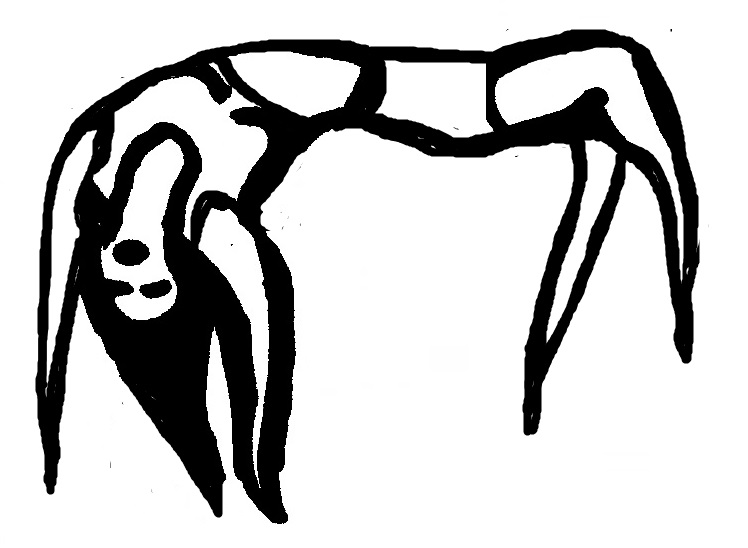
Without question, the strangest moviegoing experience I’ve had all year was attending a repertory screening of the 2002 supernatural thriller The Mothman Prophecies, presented by a formerly incarcerated member of the West Memphis Three in a series about ceremonial magick.  There was just something intensely odd about seeing such a flavorless, anonymous PG-13 Studio Horror presented as a deeply spiritual text.  And just a few months later, I am once again confronted with a bizarrely idiosyncratic presentation of director Mark Pellington’s workman-for-hire artistry.  Pellington’s filmmaking career peaked in the Y2k era with The Mothman Prophecies & Arlington Road, two serviceable thrillers with mainstream appeal.  His most recent feature, The Severing, is borderline avant-garde in contrast, enduring a slow-trickle rollout from smaller festivals like Slamdance to the public library-supported streaming service Hoopla.  It’s an abstract interpretive dance horror film made in collaboration between Pellington (whose involvement doesn’t make much sense) and Nina McNeely, the choreographer of Climax (whose involvement makes all the sense).  Like The Broad’s recent screening of The Mothman Prophecies, this really was one of the stranger viewing experiences I’ve enjoyed all year, and although neither were especially great films, they were at the very least memorable.

I guess this film makes sense within Pellington’s larger catalog if you know him primarily as a music video director, which is the side hustle that’s been paying his bills since well before his feature-length breakout in Arlington Road.  Shot with a small dance crew in a single, crumbling warehouse locale, The Severing is essentially a feature-length music video without much actual music to speak of.  Composer Peter Adams mostly works in light piano twinkles and long, droning tones, so that the interpretive dance artistry on display never convincingly builds to any kind of crescendo or catharsis.  However, if you hit the mute button and throw on your favorite Nine Inch Nails record as soundtrack replacement, it’s easy to see the spooky mood Pellington & crew were aiming for.  The dancers craft some gorgeous, upsetting images throughout, painted in full-body bruising that makes them look like rhythmically decomposing corpses.  Their movements are pained & frustrated, often stuck in repetitive, throbbing movements like looping .GIFs.  The warehouse locale is lit with the sickly fluorescent washes of vintage torture porn, recalling the haunted house your dirtbag cousin worked at on the weekends more than a professional movie set.  It’s eerie, it’s uncanny, but it’s mostly hung off the shoulders of the contorted dancers and their avant-garde choreographer.  Pellington’s generic-horror touches mostly just get in their way.

Replacing the soundtrack with your industrial rock album of choice would help cover up some of the ill-advised dialogue snippets that distract from the dancers’ onscreen movements, but the film’s high school goth poetry is still inescapable as constant, on-screen text.  Title cards & incoherent ramblings about how we shallow humans “move like lemmings” or how “sleep is a doorway to the 4th dimension” detract from the inherent tension & beauty of the dance choreography.  In a year when horror has been shaken up by slow-cinema abstractions like Skinamarink, The Outwaters, and Enys Men, it’s frustrating to see a formal experiment like this repeatedly ground itself instead of fully giving into its true, alienating self.  Since my familiarity with Pellington is as an openly, thoroughly commercial director, I’m assuming a lot of that normalized framing is his doing.  As such, this is more of a balletic echo of the Michael Jackson “Thriller” video than it is some jarring breakthrough in cinematic form.  It makes for great spooky background imagery for the Halloween season, but it’s frustrating that it couldn’t amount to more than that, since there’s some truly powerful artistry expressed through these tortured, writhing bodies.  A more daring, adventurous director would’ve matched the dancers’ artistic boldness in their own visual medium, but there’s something to be said for Pellington’s workman spirit getting this project completed & distributed at all.

-Brandon Ledet

Ema (2021)

I’m currently catching up with this year’s Oscar nominees in my down time, a shameful ritual that I mostly use as a motivational deadline for movies I planned to seek out anyway.  The Oscars can’t bully me into watching keeping-up-with-the-discourse titles like Belfast or Don’t Look Up!, since I have no personal interest in their existence beyond how they might play into this year’s ceremony.  The nominations are useful for pressuring me to seek out prestige flicks leftover from the Best of 2021 listmaking season, though, and I’ve recently enjoyed catching up with titles like Parallel Mothers, Nightmare Alley, Summer of Soul, and The Worst Person in the World since they were announced.  So far, there has only been one major disappointment in this year’s catch-up ritual: the Princess Diana biopic Spencer.  I hate to say it, because I’m generally a fan, but Kristen Stewart’s performance as Diana Spencer is the only reason it did not work for me, and it happens to be the only category the film was nominated for (Best Performance by an Actress in a Leading Role).  Spencer‘s retro couture, ghostly imagery, and suffocating tension are all consistently effective, but Stewart’s the anchor of every dramatic beat and it all just rings as embarrassingly phony.  It feels like a Kate McKinnon parody instead of the genuine thing.  That didn’t bother me so much when Natalie Portman channeled Jinkx Monsoon in its spiritual predecessor Jackie, but Spencer feels like it’s running away from the laidback cool of Stewart at her best, and the gamble just didn’t pay off.

What’s most frustrating about Spencer‘s dramatic disappointments is that director Pablo Larraín did deliver a stellar, accolades-worthy picture in 2021 that’s mostly going unnoticed while the inferior one’s out there chasing awards statues.  Ema would not have qualified for this year’s Academy Awards even if it were the kind of picture that institution tends to recognize (it’s far from it), since COVID derailed its distribution in a messy, years-long path from its festival run in 2019 to widely accessible screens.  I would at least have liked to see it celebrated on more critics’ Best of the Year lists, though, which tend to have a less pedantic approach to citing a film’s official release (i.e., accounting for wide distribution rather than limited screenings in elitist hubs like Cannes, Venice, New York, and LA).  Even I failed to highlight Ema as Best of 2021 material on my own modest platform, waiting to access a DVD copy as a library loan instead of spending $5 to see it VOD before weighing in on Swampflix’s Top 10 list for the year.  That DVD was eventually put on hold for me this February, and if I were re-drafting my personal Best of 2021 list again today Ema would have ranked among my top three favorites of the year (along with Titane & I Blame Society, all great films about violently transgressive women).  I can at least take solace in knowing that it ranked on Hanna’s personal Best of 2021 list for this site and, more importantly, that none of this listmaking or awards-season bullshit ultimately matters anyway.  It’s all an overly complicated movie promotion machine, a process I can sidestep at any time simply by saying this: Ema is a great movie, and I highly recommend you seek it out.

Part erotic thriller, part domestic melodrama, and part interpretive dance, Ema feels like Almodóvar doing Climax, which I mean as the highest of compliments to Larraín.  A young couple become pariahs in their Chilean town by returning their son to his adoption agency after ten months of parenting, as if they were returning a faulty home appliance.  The son’s absence haunts their household like the ghostly presences of Jackie & Diana in Larraín’s political psych-thrillers.  Only, Polo is alive & retrievable in a nearby home – adopted out to a new, more affectionate family.  Gastón (Gael García Bernal) is content to deal with the fallout of Polo’s exit by endlessly debating who was the worse parent with his wife/employee, Ema (Mariana Di Girolamo).  Ema takes a more pro-active approach to restoring order to the family, scamming her way into Polo’s new household Parasite-style and—no exaggeration—burning down half of their town with a flamethrower until she gets what she wants.  She leaves her subservient life as an anonymous member of her choreographer-husband’s avant-garde dance troupe to form a vicious girl gang who are willing to fuck, scratch, dance, and burn the world to the ground in Ema’s name.  Meanwhile, she only grows more powerful the further she drifts away from her husband’s petty criticisms of her moral character (ranging from her ineptitude as a mother to her ill-reputable taste in reggaeton dance music).  The film can only end with every character in Ema’s orbit observing her infamy in stunned silence, impressed but horrified by how much chaos she’s willing to unleash in order to get her kid back – a kid she once casually tossed away.

As the title and synopsis suggest, the film is in awe of Ema as a character more so than it is interested in the logistics of its drama.  She recalls the subversive anti-heroines of erotic thrillers past – like Sharon Stone in Basic Instinct, with a severe bisexual haircut to match.  It’s like being intensely horny is her superpower, a force so overwhelming it bends everyone to her fucked-up will.  Wielding a napalm-dripping flamethrower is only her second most dangerous weapon, considering how much more societal terrorism she achieves through sex (along with her harem of fellow dancers).  Ema the character is alone a spectacle to behold, and it feels like every other aspect of the film exists only in service of admiring her from different angles.  The domestic melodrama she shares with Gastón only exists to highlight her viciousness, as the doomed couple use memories of their collective failure as parents to inflict maximum pain on each other in constant emotional cheap shots.  The reggaeton & interpretive dance sequences add a lyrical exuberance to her city-wide mayhem, making it clear that she’s having fun ruining the lives of everyone around her in the relentless pursuit of her selfish goals.  Even poor Polo is only a mirror reflection of Ema’s fantastic wickedness, as his maternally inherited hedonism & pyromania are exactly what drove him back to the adoption agency in the first place.  And the flame thrower?  That just makes Ema look like a badass, like Rambo wielding a rocket launcher.

All the things I admired about Jackie & Spencer are readily present in Ema: the unbearable tension, the over-the-top costuming & theatrics, the fascination with the inner lives of Complicated Women, all of it.  The difference is that the historical drama is an inherently more restrained genre than the erotic thriller, no matter how much Larraín tries to mussy up his performance-piece biopics with arthouse mystique.  Ema is totally free to be its fabulous, fucked-up self with no respect owed to historical figures or the conventions of good taste.  It’s a shame that its distribution was so muddled by the chaos of COVID, since it at least could have earned as big of a cult following as Titane in the right circumstances (which landed on Hulu within months of winning the Palme d’Or).  I can only hope that Ema gradually cultivates that kind of following over time, and I encourage anyone who enjoyed Titane to give this sinister spectacle a shot as well; it’s the closest any film has come to besting it for my favorite release of 2021. 

-Brandon Ledet

Never Fear (1949)

You might be tempted to ask for a better directorial debut from actor-turned-auteur Ida Lupino than the 1949 sudden-illness weepie Never Fear, but it would be tough to ask for a more personal one. Lupino’s first credit as a director is a well-behaved but harrowing melodrama about polio, a disease that Lupino herself had suffered early in her career as a young actor. In fact, it was being bedridden with polio (and eventually losing some mobility in her leg and hand) that inspired Lupino to develop skills as a writer & a filmmaker in the first place, as it was a harsh realization that her career as an onscreen beauty was limited & impermanent. She explained in an interview, “I realized that my life and my courage and my hopes did not lie in my body. If that body was paralyzed, my brain could still work industriously . . . If I weren’t able to act, I would be able to write. Even if I weren’t able to use a pencil or typewriter, I could dictate.” Polio was maybe too sensitive of a subject at the time of Never Fear‘s release and, thus, failed to make a splash at the box office, but Lupino fearlessly tackled it head on from a place of personal frustration & anguish that affords it cultural significance anyway.

Story wise, there’s nothing especially daring about Never Fear that you won’t find in the decades of romantic melodramas about ill, bedridden women that followed: Love Story, The Big Sick, A Walk To Remember, The Fault in Our Stars, Ice Castles, etc. In this iteration, a young dancer (Sally Forrest, who also starred in Lupino’s uncredited debut as a director Not Wanted that same year) has her career cut short by a rapidly onset case of polio that leaves her paralyzed. She gradually earns her mobility back through painful months of physical & emotional therapy, but in the meantime struggles to hold onto her hopes to maintain the love, art, and independence she knew before the disease left her unable to dance. There are about twenty minutes of puppy-love bliss shared between the dancer and her partner/choreographer before polio cuts their ambitions short. The remaining hour is a pitch-black tearjerker that threatens to break that blissful romance apart, both through the introduction of potential love interests inside & outside the hospital and through the protagonist’s self-pity that makes her believe she’s no longer worthy of her former beau’s love & devotion now that she’s not a soon-to-be-famous dancer.

This movie would be a totally standard sudden-illness “Woman’s Picture” if weren’t for the way Ida Lupino pulls from her personal experience with polio to illustrate just how isolating & embittering the disease could be. It’s impossible to not draw this extratextual comparison as we watch a young artist who’s limited by the failings of her body just as her career is taking off. While the narrative beats are uniformly familiar to its genre, the details of the dancer’s time alone in her hospital bed can be impressively, uniquely horrific in flashes. In feverish internal monologues, the dancer curses her own body for failing her and endlessly frets about how much of a burden she is on her able-bodied fiancée despite his protests to the contrary. Everyone’s optimism that she will find a way to live a fulfilling life only makes her more bitter and she shrinks within herself, frustrated and increasingly alone. At the same time, this isolation is the first opportunity she’s had in her entire life to be alone with her thoughts (with the audience as spectator), which opens her up to a newfound sense of autonomy. At the beginning of the film, she’s somewhat resentful of her dance partner/choreographer/future-husband’s control over every aspect of her life (even though she loves him dearly), and in a fucked up, roundabout way the disease gives her the first chance to make decisions for herself by herself. The film illustrates a complex, nuanced psychological portrait of someone bedridden with polio, one that arrived in theaters while the country was still suffering the darkest days of the epidemic.

Presented as a true story “photographed in the places where it happened,” Never Fear was largely filmed on-location at the Kabat-Kaiser institute in Santa Monica, CA, employing many of the facility’s live-in patients as background characters. I almost wish Lupino had pushed this proto-cinema verité approach even further and played the lead role herself, amplifying the film’s personal resonance within her own biography. If nothing else, it could have used the extra oomph her screen presence brought to The Bigamist. Forrest does a decent enough job as Lupino’s avatar to make to sell the heartbreak of her frustrated internal monologues, though, and the sudden-illness weepie genre structure is emotionally effective even if it is overly familiar. Never Fear isn’t Lupino’s best work in the director’s chair, but it is one with surprising emotional depth in her expressions of personal, professional anguish, which makes it a worthy watch for anyone interested in her one-of-a-kind career as one of the most substantial female directors in the Old Hollywood system.

-Brandon Ledet

Buckjumping (2019)

Mardi Gras has an elusive spirit that’s impossible to accurately capture onscreen – whether in documentation or in fictional restaging. That’s largely because it’s a participatory culture – one that can only be reveled in, not observed. Countless local documentaries have attempted to tackle that impossible topic over the years anyway, usually through the lens of specific pockets of New Orleans Mardi Gras culture: the costume-beading traditions of Mardi Gras Indians, the pageant-drag of gay Carnival ball culture, the disruption of festivities caused by Hurricane Katrina, etc. For my money, the only doc that’s truly come close to nailing down the spirit of Mardi Gras is the classic Les Blank pic Always for Pleasure, which spreads its love & attention around an impressive portion of the city by partying along with its subjects. I mention this only to clarify that I mean it as a huge compliment when I say that the recent documentary Buckjumping feels like a 2010s update to Always for Pleasure, and a damn good one at that. Shot with at least six cinematographers over a three-year span, this low-budget doc demonstrates incredible patience in spreading its admiration, observation, and participation in New Orleans culture across the city to reach as many traditions as possible. At times, its parallels to the Les Blank classic feel deliberate, such as how it updates Always for Pleasure’s recipe tips from soul legend Irma Thomas by staging kitchen interviews with 90s bounce rapper Mia X (among interviews with other local hip-hop royalty like Mannie Fresh & DJ Jubilee). More often, their shared sensibility is more apparent in how they relate to the city and how well they capture its elusive spirit.

To be clear: Buckjumping isn’t specifically about Mardi Gras per se. Its announced subject is New Orleans dance traditions, which just naturally tend to revolve around the holiday. The ambition of that subject’s scope gradually becomes apparent as the overwhelming number of New Orleans dance traditions pile up onscreen: second-lines, jazz funerals, high school marching troupes, Mardi Gras Indians, dive bar drag acts, etc. Although it does conclude on the most modern addition to this tableau (the shaking & twerking of New Orleans bounce), it’s not so much a historical timeline of dance traditions from the city’s 300 year past as it is a participatory record of the traditions that are still thriving today. Led by head cinematographer Zac Manuel, the camerawork feels alive & alert in its hands-on engagement with its subject – filming the parade marches of dance troupes, footwork stunts of second-liners, and sweaty body-popping of bounce club hedonists with impressive intimacy & craft. There are extremes of emotions that naturally arise through that intimacy, from the soul-crushing grief of mourning to the ecstatic out-of-body experiences of second-line footwork at its most jubilant. Of course, this up-close, privileged documentation should be of interest to anyone who studies dance as an artform, but I think labeling Buckjumping simply as a dance documentary would be selling its merits short. This is a document of the elusive spirit of the city at its best, without comprising the black, queer, and radically political influences that propel that culture the way so many #NOLA commercializations of the city do. In other words, it’s an Always for Pleasure for the 2010s.

Living on Broad Street in the 7th Ward, one of my favorite Mardi Gras traditions is to hide in my living room from the first second-line after Fat Tuesday, not making it to the porch to cheer on the brass bands & rhapsodic dancers the way we usually do for the rest of the year. I’m always amazed that the local Social Aid & Pleasure Clubs still have the energy to party in that post-Carnival refractory period, the most recent one of which occurred the exact week I saw Buckumping at its second-ever screening. There are plenty of historical anecdotes & explanations of political context in this documentary that detail the evolution of our dance traditions (especially regarding their roots in slavery), but its greatest accomplishment might just be in how well it conveys the passion & compulsion that makes that bottomless dance energy possible. Maybe it takes an enthusiastic outsider to accurately capture that spirit onscreen (like Les Blank was when he filmed Always for Pleasure, Buckumping’s director Lily Keber is a young outsider relatively new to the city). More likely, this film is one of the few to accurately capture the elusive spirit of the city because it instinctively knows to participate rather than to merely observe (working with local cinematographers is likely also a plus). Either way, it’s an impressively successful, if not outright essential document of local Mardi Gras traditions – dance and beyond.

-Brandon Ledet

Climax (2019)

It’s finally come to pass: notorious edgelord Gapar Noé has gotten bored of trying to piss us off and is now trying to dance his way into our hearts. The fucked up thing is that it’s working. Climax is the first feature film from the shock-peddling prankster that I’ve ever enthusiastically enjoyed, and it feels like that reconciliation is the result of a direct invitation from the creator. Noé changes nothing about his usual schtick in this provocation du jour either, at least not in terms of content. Climax is still the cruel, obnoxious, try-hard shock fest that Noé has been delivering over & over again throughout his career, complete with juvenile interest in hard drugs, gore, and sexual assault. The only real difference is in the tone & rhythms of the packaging. A constant dance beat propels Climax‘s pacing so that it’s more of a party than a grueling torture sesh. The sexual assault is largely implied rather than graphically lingered on for eternal minutes. It’s also the first film I’ve seen from Noé that could be comfortably categorized as Gay, rather than Homophobic. Most significantly, Climax is packed to the walls with dancing – gorgeous, infectious, horrific dancing. It’s as if Noé kept audiences waiting in the line outside his club for decades while only a few in the inner circle partied within, but now everyone’s invited to the dance floor to celebrate his fucked-up happening. The music hasn’t changed, but the atmosphere is much more accommodating.

Climax wastes no time announcing itself as pretentious smut, bursting out of the gate with structural shenanigans meant to disorient the audience. As its title cheekily promises, we open with the climactic end of the film, complete with closing credits. We’re then treated to an introductory collection of VHS interviews with the film’s cast of dancers, DJs, and choreographers set against a decrepit warehouse wall & framed by stacks of cassette spines through which Noé admits upfront the cinematic influences on what you’re about to see: Possession, Suspiria, Salò, Dawn of the Dead, Un Chien Andalou, etc. As performers with names like Serpent, Psyche, Daddy, and Dom audition for a spot in the film’s central dance troupe, this prologue begins to feel like a mid-90s matchmaking service produced by the good folks at Videodrome. Once those salutations are doled out, the film stops in its tracks yet again to watch the troupe perform a routine they’ve been rehearsing for several days in a rural, isolated gymnasium before the audience arrived. It is a spectacle. Long, swooping, full-bodied takes of modernist dancers exhibiting their craft stretch on into a hedonistic mania, slapping the screen with more death drops than Paris is Burning before finally rolling the opening credits in a strobelit visual assault. While the audience is bewildered in that drunken, disoriented state, it becomes apparent that someone among the dancers has spiked the sangria with an overdose of LSD. Their behavior becomes erratic and increasingly violent – devolving into the same hedonistic ugliness Noé always indulges in while the dance beat pounds in the background for hours on end.

Climax is one of the ultimate examples of a genre I like to call the “Part out of Bounds” – horrific sideshows where guests at a party recognize the vibe is turning darkly uncivil, but they all feel compelled to see it through anyway. Up until now, my personal experience with Noé’s filmography has itself been a party-out-of-bounds story. As a huge sucker for pretentious smut & over-the-top genre cinema, I’m continually lured in to check out his latest provocations, only to be punished by the edgelord posturing found therein. The difference is that my experience at the Gaspar Noé party finally reached a breakthrough with this picture, where I learned to let go & have a “good” time, mostly thanks to the host’s increased interest in accommodating his audience. For the LSD-poisoned dancers in Climax, the party only gets worse – devolving into terrible sex, horrific violence, and horrifically violent sex. Your personal response to this pretentious, obnoxious, “French and fucking proud of it” smut will vary wildly depending on how much interest you tend to have in the type of edgy, over-the-top art-schlock Noé usually traffics in. If it’s something you have absolutely zero patience for, the movie will alienate you early & often – leaving you just as miserable as the tripped-out dancers who tear each other apart on the screen. If, like me, you’re always curious about what Noé’s up to but never fully connect with the fucked-up party therein, you might just find yourself succumbing to the prurient displeasures of DJ Daddy and the killer sangria.

-Brandon Ledet

Suspiria (2018)

On an aesthetic level, Luca Guadagnino’s Suspriria bears very little resemblance to Dario Argento’s Supsiria. If anything, this 40 years-later reimagining of that cult-favorite resembles an entirely different flavor of intensely stylized, European arthouse horror: Andrzej Żuławski’s Possession. Guadagnino’s picture may have maintained the witchy dance academy setting & central character names from the Argento original, but it ditches all of that film’s intense giallo cross-lighting & prog rock sensibilities for the cold, greyed-out concrete & infectious madness of Possession. Where Suspriria (2018) deviates in tone & imagery from its source material, however, it did zero in on the most vital aspect of Argento’s work: excess. Everything about Guadagnino’s Suspiria is indulgently excessive: at 142 minutes, it’s structured as six acts & an epilogue; Tilda Swinton appears in multiple roles among an already sprawling cast of witchy women (including actors from the original film); unsatisfied with merely being a stylish tale of witchcraft, it also attempts to engage with the politics of post-war Germany; it features an original soundtrack from Radiohead frontman Thom Yorke. The most Suspiria (1977) thing about Suspiria (2018) is that it’s wholly confident that every self-indulgent impulse it has is worth exploring; the only difference in that respect is that the Argento version was more frequently correct in that shared delusion.

One of my favorite tactics that carries over from Original Flavor Suspiria to Nu Suspiria is that neither waste any effort hiding that they are about dance schools “secretly” run by a coven of witches. In the original, this mystery is “spoiled” by an early sequence of a frightened dance academy student fleeing into the woods while the prog band Goblin whispers, “Witch, witch-witch-witch” over the soundtrack. In the new version, that same freaked-out runaway character (Chloë Grace Moretz) blurts, “They are witches” in blatant terms to her old-man psychiatrist (a gender-blind cast Tilda Swinton) before continuing, “They’ll hollow me out and eat my cunt on a plate.” The psychiatrist, of course, believes this paranoia to be delusional and a large part of the narrative likens his dismissal of her cries of witchcraft to the ways he failed his long-gone wife during The Holocaust. That post-war grief & guilt swirls outside the dance academy, while inside the flesh-eating witches in question are undergoing a more insular political crisis of their own. Unbeknownst to the young dancers in their care, the women who run the academy as an incognito coven are experiencing a kind of civil war on two key issues: choosing new leadership & selecting an unwitting student for a mysterious ritual that will secure the school’s future (at the student’s own peril, of course). That freshly-arrived American student’s name is Susie Banion (Dakota Johnson in a role originated by Jessica Harper), who is afforded her own lengthy backstory in a distant Mennonite community, just in case the narrative wasn’t already overstuffed without it.

It’s probably safe to say that no one loves the original Suspiria for the strengths of its story. Like most giallo-related media, it’s a film best appreciated for its overbearing sense of style more so than the cohesion of its narrative. This only became increasingly apparent as Argento attempted to retroactively make sense of his witchcraft lore in the Suspiria sequels Inferno & Mother of Tears, expanding the original film’s elevator pitch of “A ballet school run by witches” into an unwieldy (but still charming) mess now known as the Three Mothers Trilogy. Guadagnino greedily eats up this now-sprawling mythology and attempts to reinforce each element with even more over-explained backstory: how the dance school relates to its German setting; why Susie Banion is targeted and what her life was like before the ritual was initiated; how the coven negotiates & organizes its collective will across hundreds of women in three separate locales. Beyond skewing its overall aesthetic closer to Żuławski than any gialli, Guadagno’s Suspiria avoids becoming a pointless retread of its Argento source material by pulling its narrative to the opposite extreme – from vaguely stretched-out elevator pitch to overly complex, unnecessarily dense mythology. Paradoxically, the effect of that overcorrection is oddly similar to how plot & lore work in the original film; its narrative is such an overdose of information that very little of it sticks to the walls and what’s mostly left for the audience to digest is the overbearing sense of style it’s delivered through.

As much as I admire Guadagningo’s dedication to excess here, this is the exact kind of messy ambition that invites viewers to pick and choose individual elements at play to praise or critique—as opposed to the more unified vision of the Argento original, which is more of an all-or-nothing proposition. Personally, my favorite aspect of the new Suspiria is the purposeful ways that the act of dance (modern here instead of ballet) is linked to the practice of witchcraft, establishing a cause & effect relationship between dancers’ beautifully contorted bodies and their grotesquely contorted victims’, left to stew in their own piss & mucus. I was also in love with the complexly detailed imagery of Susie Banion’s nightmare montages, each individual flash of a tableau carefully staged like fine art photography. At the same time, there were two glaring stylistic choices that harshed my buzz throughout: a camcorder-level choppy frame rate effect worthy of a Milli Vanilli music video & the jarring inclusion of Thom Yorke’s crooning vocals in an otherwise phenomenal soundtrack. My aversion to those choices are likely personal biases, given that they’ve also bothered me in previous works (specifically, the choppy frame rate in Daughters of the Dust, and Sufjan Stevens’s voice in Guadagnino’s Call Me by Your Name), but I can’t help but find them cheapening & distracting all the same for crashing me down from the film’s otherworldly spell to a much more pedestrian tone.

There’s so much on the screen in Suspiria that most audiences will find something to nitpick in their personal experience with its relentless over-indulgences in gore-soaked, lore-obsessed witchcraft horror. I envy those who weren’t distracted by stray choices like Yorke’s mewing, appreciating this love letter to excess in its overwhelming entirety. I also pity those who can’t find anything to enjoy here; Guadagnino offers so much to choose from that if you can’t latch onto something the problem is you. I’m personally falling somewhere in the vast middle between those extremes—in impressed, but frustrated appreciation of the film’s dedication to the extremes.

-Brandon Ledet

Snowy Bing Bongs Across the North Star Combat Zone (2017)

Knowing the director duo Daniels from their work on projects like Swiss Army Man and the “Turn Down for What” music video, it’s immediately apparent why they would be interested in signing on as producers for Snowy Bing Bongs Across the North Star Combat Zone. Not only does the movie feature comedic actor Sunita Mari, who also features heavily in their work on “Turn Down for What,” it also plays directly into the post-Adult Swim visual excess & juvenile fart humor absurdity that’s quickly come to define their work. Later in the film, a cameo from digital era prankster Reggie Watts sets in stone the exact visual & comedic vibe the film is aiming for. What’s important about Snowy Bing Bongs, though, is not the continued joy of revisiting its more recognizable contributors, but rather the way the film works as an introduction to new talents. These newcomers arrive in the form of the Cocoon Central Dance Team: Eleanore Piente, Tallie Medel, and Sunita Mani (who has already had a great year on the screen, thanks to eye-catching turns on both GLOW & The Good Place, probably my two favorite new television comedies). The film is essentially a mid-length showcase for their various comedic styles, so your reaction to it as an overall piece will rely heavily on how much they can make you laugh.

Most stills & advertisements for Snowy Bing Bongs emphasize the look of its central tableau: a snow-covered planet where three women dressed only in bear skin rugs awkwardly dance with beach ball props. The weirdo dance sequences set on this cotton candy planet only make up a fraction of the film’s runtime as a kind of all-purpose wraparound. The majority of the film functions as a sketch comedy revue, with each member of the Cocoon Central Dance Team being afforded their own series of non sequitur vignettes in which to steal the spotlight. Weirdo characters who can’t pronounce their own names, refer to applause as “hand-slappies,” and discover that they have more internal organs than they initially suspected take turns branching off into their own sketches before the film’s rotary dial returns to the cotton candy snow planet wraparound. The whole thing feels like an extended episode of an Adult Swim sketch comedy show, only functioning like a proper movie in the tableau dance routine & moments of meta commentary on cinema, like the question, “Why do we make movies?” or a sketch that’s essentially a built-in post-screening Q&A. The movie can be very funny from gag to gag, but it’s very rare that it actually feels cinematic.

The heart of Snowy Bing Bongs definitely lies in that cotton candy snow planet, which is explained to be under attack by beach ball asteroids. There’s a slight narrative shift within that wraparound, starting with a rival planet of over-heated bikini babes whose beach balls invade the snow planet and are eventually defeated. More importantly, though, the aggressively ungraceful “choreography” of the dance routines outshines much of the traditional comedy sketches they interrupt, a point that’s driven home in the film’s best vignette: a horrifyingly amateurish pop music performance on a fictional early 2000s TRL-style variety show. Snowy Bing Bongs might have been a better film if it had stuck to a single storyline set on the icy planet of bear skin rug-wearing alien women, but I’m not even sure what that would look like. Instead, we get a mid-length introduction to a new crop of sketch comedy performers & writers that incorporates its fractured structure into their aggressively amateurish Tim & Eric aesthetic. That’s its own kind of pleasure for sure and by the end I was far more surprised than I was disappointed by the form it chose to take.

-Brandon Ledet

Kiki (2017)

By billing itself as a “spiritual sequel” to the landmark documentary Paris is Burning, the Swiss-American co-production Kiki smartly brought a lot of attention to itself & its political cause in an overcrowded media market where most low budget documentaries slip by without notice. It also set the expectation of what it can deliver to an impossibly high standard. Kiki is not as significant of a work as Paris is Burning. It’s not even close. Not only has the initial wow factor of what Paris is Burning managed to unearth faded with time, but the switch from celluloid film to digital media has significantly hindered the quality of imagery in this distant echo of an unofficial sequel. Still, as a modern check-in on the state of the NYC ballroom and voguing scene decades after that landmark work and a document of the heights of visual art being achieved within that subculture today, it’s a worthwhile addition to the classic doc’s legacy.

Paris is Burning documented the well-established “houses” & long term history of ballroom culture in NYC, a pocket of queer society fiercely dedicated both to artistic expression (mostly through fashion & dance) and self-preserving loyalty. Kiki focuses on a much more specific subset within that larger scene. Its title not only refers to the communal act of partying or hanging out, but also defines a subset of ball culture participants who are remarkably young and, unlike the older houses profiled in the previous film, unestablished. A large population of the Kiki world are underage PoC, abused or abandoned by their parents for being homosexual or trans. The “house mothers” who take them under their wing and help them prepare for ballroom & voguing competition are barely older than them, mostly in their early 20s, and that age range is largely what separates the “Kiki” scene from traditional ballroom culture.

What’s most exciting about Kiki as a film is in knowing that the ballroom scene does have this young blood flowing through its veins, keeping it alive. In a world where there aren’t many true countercultures left untouched by homogenized pop culture at large, it’s reassuring to know that the NYC ballroom scene is still as vibrantly punk as ever. You can see reflections of what Paris is Burning first documented in mainstream outlets like Ru Paul’s Drag Race today, but for the most part the culture had been left untouched & far from normalized. The aggressively defiant fashion, death drops, and openly expressed sexuality documented in Kiki is still punk as fuck and still a wonder to behold. The best moments of the film are when it merely documents & broadcasts the fine art achievement of the in-their-infancy houses like House P.U.C.C.I., House Juicy Culture, House Unbound Cartier, etc.

Although a respectable ambition, it’s the film’s overt attempts at political statement that drag down its overall value as an art piece. Kiki rightfully has a lot to say about queer and trans identity in modern America. Since it follows a younger set of subjects, it even has terms like “triggered” and “gender fluidity” in its arsenal to discuss these issues effectively. When it dares to flash back to images pulled directly directly from Paris is Burning, however, you get the sense that these politics might have been better served if they were allowed to crop up naturally while focusing on what makes this community’s highly specific POV special in the first place: ballroom culture. The issues discussed in the film are damn important, but by splitting its time between the less visually compelling political maneuvers that take place between the ballroom competitions and actually documenting the competitions​ themselves, the film ultimately feels a little weak and diluted, especially when compared to its spiritual predecessor.

Kiki makes some admirable maneuvers to improve on the Paris is Burning formula. It updates the soundtrack to a modern pop aggression provided by Qween Beat, deliberately puts its LGBTQ politics in the foreground of its subject, and goes as far as to include one of its interviewees in the production of the doc, correcting what many perceive as an exploitative element of Paris is Burning. Even with these positive alterations and additions, however, Kiki can never shake the feeling of being little more than an addendum or an epilogue to that superior work. It shines when it focus on the priceless visual art being produced in the ballroom subculture (sometimes even playing like a voguing-themed version of Girl Walk // All Day), allowing its politics to be passionately expressed in that display. When it strays from that task, however, it starts to feel a lot more like countless works we’ve already seen before. It’s horrifically upsetting that statements like “I am a person” should feel overtly political in a 2010s context, but I can’t shake the feeling that there are more interesting ways to say it than the way it’s handled in Kiki. Take, for instance, the way it’s expressed in the film it openly pays homage to at every turn.

-Brandon Ledet

The Fits (2016)

EPSON MFP image

fourhalfstar

The closest I can relate to the protagonist of The Fits‘s crossroads crisis is when I’m choosing a lazy evening’s campy entertainment, a sadly frequent conundrum. Do I want the over-the-top masculine gender performance of pro wrestling or the cartoonishly feminine gender performance of drag? This is an exceedingly trivial, inconsequential choice of which lights & noises I want blasting through my TV for an hour, but it does in a way mirror The Fits‘s central character, Toni, as she floats between the rigidly separated & gendered worlds of boxing & dance. Her decision on where to fall on that divide reminds me of my outsider’s fascination with both pro wrestling & drag, except her choice of which world to explore has much more significant implications on the trajectory of her life, her identity, and her sense of autonomy. It also leads to a supernatural occurrence of divine transcendence, which is not the kind of thing I normally experience while drinking box wine on my couch.

Toni is a tomboy, or at least she’s perceived that way. Her brother trains her to be a tough-as-nails boxer at their local community center, where she silently, sternly fits in with his peers’ aggressively masculine atmosphere of blood, puke, bruises, and concussions. The gym where they train presents a literal barrier between the masculine & the feminine and Toni begins to curiously peer into the dance troupe practices that share a dividing wall with the boxers. There’s a palpable, magical magnetism to the dance team practices that draws Toni towards them (something anyone who’s enjoyed a marching dance troupe’s Mardi Gras parade routines should be able to relate to). Her brother is surprisingly supportive of her sudden interest in the dance team and sagely advises her, “The only way you can lose a fight is if you don’t get in the ring.” She eagerly accepts the encouragement & joins the team as an underling. At first she’s unsure about her assigned routines/moves except when she’s punching the air, but she eventually finds her own feet & friends within her newfound community. The problem is that as she explores this new space, that community suffers a wave of unexplained convulsions, seizures, fits. That’s when things get weird. You’d be forgiven, based on the above description, for assuming that The Fits is a fairly standard coming of age story, but the truth is it’s unlike anything you’ve seen before, a uniqueness & distinction that’s often one of cinema’s highest forms of currency.

So, if The Fits isn’t a standard coming of age drama, what is it? A medical thriller? A supernatural horror? First time writer-director Anna Rose Holmer sidesteps genre classification here and aims more for an art house tone poem than a traditional A-B story structure. The point of The Fits isn’t solving the mystery of why the seizures epidemic is happening, but more negotiating how it relate sto young Toni’s newfound identity & sense of self. As she curiously gazes at the mystic power of gold glitter paint, sequin dance uniforms, and pierced ears, a new mystic power of the uncontrollable bodily convulsion arises & develops into a strange rite of passage somewhat synonymous with puberty or menstruation, but only in the vaguest of terms. The unexplained phenomenon throws an entire community into a confused state that matches the fish-out-of-water uncertainty of our overwhelmed protagonist. All of this otherworldly disorientation is intensified by an ambient, uneasy jazz/noise score and grounded in intensely still, symmetrical camera work. Also, the film’s setting is limited to a few very specific locations — mostly the community center and a yard outside a Cincinnati housing project — that gives the whole film the dreamlike POV of a child’s imagination, like a more muted Beasts of the Southern Wild or a George Washington. The near-total lack of adults onscreen (and, even more refreshingly, white faces of any age) set up the central conflict of The Fits as something Toni & her peers have to handle on their own. At first Toni’s merely learning how to divide her time between her tomboyish & more traditionally feminine interests, but that personal bifurcation leads to a much more fascinating, vulnerable leap into the unknown where she must discover her own sense of identity entirely separate from outside influence. It’s tied to her burgeoning sense of her own femininity, but encompasses so much more than that. There’s a strange, new, self-actualized power building inside her & she’s the only one who can set it loose.

Last year’s Girlhood offered a rare cinematic glimpse into young, modern, black femininity and Creed did the same for the masculine side of that coin. In just 72 minutes The Fits breaches the barriers between them using their own respective cultural markers –dance & boxing– and pushing their collective coming of age narrative structures into quietly bizarre, seemingly supernatural territory that’s bound to leave a lasting effect on you whether or not you’re on board with its ultimate destination. Besides having what has got to be the single greatest name in Hollywood, young actor Royalty Hightower is incredibly stoic & measured in her performance as Toni, especially considering her age. Even if The Fits were a more standard coming of age drama about a young girl deciding between the rigidly divided realms of dance & boxing, Hightower’s performance & the camera’s striking sense of symmetry would make the exercise more than worthwhile. There’s something a lot more special going on here, though. As Toni becomes more sure of herself she learns to remove the arbitrary masculine-famine divides between her interests & creates her own confident space with some kind of dance-boxing hybrid (no word yet on if I’ll ever get a similar drag-wrestling hybrid in this lifetime). In these moments it looks as if she’s training for some kind of upcoming, unknowable battle, but the truth is she’s more or less ramping up for a epiphany of self-realization.

How this personal journey towards knowledge-of-self is linked to the film’s central epidemic of “the fits” is largely up to interpretation, but the two conflicts do communicate with each other nicely and I love the way Holm is comfortable with dealing in their ambiguity. A less confident work might’ve put too fine of a point on the two conflicts’ connection, but then we would’ve been cheated out of the transcendental beauty of the film’s conclusion, which will surely prove to be one of this year’s defining moments of pure cinematic pleasure. The Fits is a small production with near-limitless ambition, the exact kind of film that asks to be championed & rewards you for your full attention. Seek it out & surrender to its spell as soon as you can.

-Brandon Ledet