
Die Nibelungen: Kriemhild’s Revenge (1924)

On the trivia subpage for Die Nibelungen on TVTropes, which treats this film and its predecessor as a single work, there’s a notation that Kriemheld’s Revenge is generally considered the superior work. Since the expansion of Google into mostly pyramid schemes of search engine optimization, I’ve had a hard time verifying that against any academic texts, but the few blog posts I’ve found seem divided roughly down the middle. Most viewers are in agreement that one part is good and the other is great, with proponents of exalting Kriemhild over Siegfried mostly noting that the former ejects all of the more fantastical elements of the latter, instead going for more grounded spectacle in the form of massive battles. I found Kriemhild to be a bit of a letdown after all of the filmic magic of Siegfried; it’s still a lot of fun, but it didn’t live up to its first half. 

When Kriemheld’s Revenge opens, we find the grieving Kriemhild attempting to use Siegfried’s gold hoard to win over the commonfolk of Burgundy to rise up and avenge the death of her husband at the hands of the monster Hagen Tronje. Hagen, who is forever up to no good, discovers where the hoard is hidden and throws it into the river to cut off Kriemhild’s support (it was also Siegfried’s wedding gift to her, to further underline the betrayal of the act). Rudiger, a military commander and vassal of King Etzel (better known to us as Attila the Hun), comes to Burgundy to seek Kriemhild as a bride for the mighty warrior king. Although initially reluctant, she realizes that this may be her only chance to see Siegfried’s killer see justice, and she agrees on the condition that Rudiger swear an oath to help her kill Hagen. Before she leaves her homeland, she stops at the same spring where Hagen murdered her late husband, and digs up several handfuls of earth to take with her to her new home. 

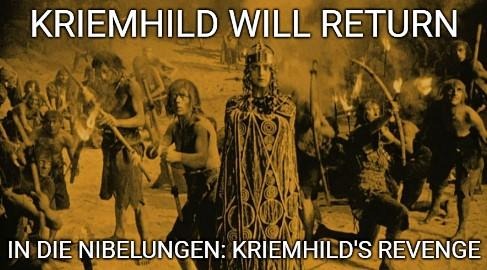
Some time later, Kriemheld has solidified her alliance with Etzel by bearing him a son, and she requests that her husband invite her family to celebrate the Midsummer Solstice with them in the Hun kingdom. The Huns themselves have grown restless as they believe that Kriemhild has tamed their king; outside of his fortress, they speak traitorously among themselves, asking “What is in the mind of our King?” and replying “Lord Etzel sleeps; the white woman stole our lord! She uses her golden hair to bind him!” Kriemhild herself believes that she has this power over Etzel, as she comes to him to beg him to fulfill his oath, saying “He who murdered Siegfried is now in your hands.” Etzel, who knows that Kriemhild does not love him, tells her that he can’t, as he and his people hold the responsibility of hospitality sacred. Kriemhild then bribes the rebellious Huns instead, asking only for the head of Hagen Tronje but for her family to be spared. They kill most of the Burgundian envoy in the caves beneath the feasting hall, with only one knight escaping to tell the royal family, prompting Hagen to murder Etzel and Kriemhild’s baby on the spot. All out war then erupts, with the remainder of the film playing out as the Burgundians barricade themselves in the feast hall and attempt to fend off wave after wave of attacks. Kriemhild makes several overtures to her brothers, promising to spare them if they will simply deliver up Siegfried’s murderer, but they stubbornly refuse. By the end, the feast hall has been burned to the ground and Hagen meets his death, and the entire dynasty of Burgundy is dead, Kriemhild included. Her revenge has been wrought, and it cost her everything. 

Narratively, there’s not as much to discuss this time around. It’s essentially an extended version of the Red Wedding from Game of Thrones (a comparison a Redditor made eleven years ago, so I’m somewhat late to this party), with a forty-five minute battle sequence that is unfortunately somewhat repetitive. One of the things that I found my mind wandering to as the fight wore on (and on) was an exhibit of illustrated manuscripts that I saw at the Blanton Museum several years ago. At the time, I was struck by a tendency of medieval artists to depict all of history through a contemporary lens: every event, from the Bronze Age through the life of Christ, was depicted with then-modern fashion, weapons, and armor. Setting a Biblical story in modern times (or even modern raiment) is something that, in the present, would be considered virtually heretical to contemporary believers, so much so that I’m hard pressed to think of a TV or film production that tries it. There was the short lived NBC series Kings, which was a modern retelling of the life of King David, but when it comes to updating the gospel narrative, I can only think of Tyler Perry’s ill-fated TV movie spectacle Passion and the recent evangelical-owned Angel Studios’ Testament. To get back on topic, Fritz Lang’s Die Nibelungen is twice removed from the original story’s origin. As the presence of Atilla the Hun indicates, whatever real life events were narrativized and mythologized in Nibelungenlied had to have happened at the tail end of the Classical Era, in the 5th Century C.E. Nibelungenlied, or The Song of the Nibelungs, was, as best we can tell, first recorded in print in 1200, and as such has all the trappings of medievality, including the reimagining of 5th Century characters in the armor, ornamentation, and fashions of the beginning of the 13th Century, all captured on film in the 20th. It’s artifice upon artifice upon artifice, and it’s a fascinating thing to behold. I was still having more fun watching Siegfried talk to birds and turn invisible last time, but this one gives you time to meditate on what it means as an artifact, mythologized all the way down. 

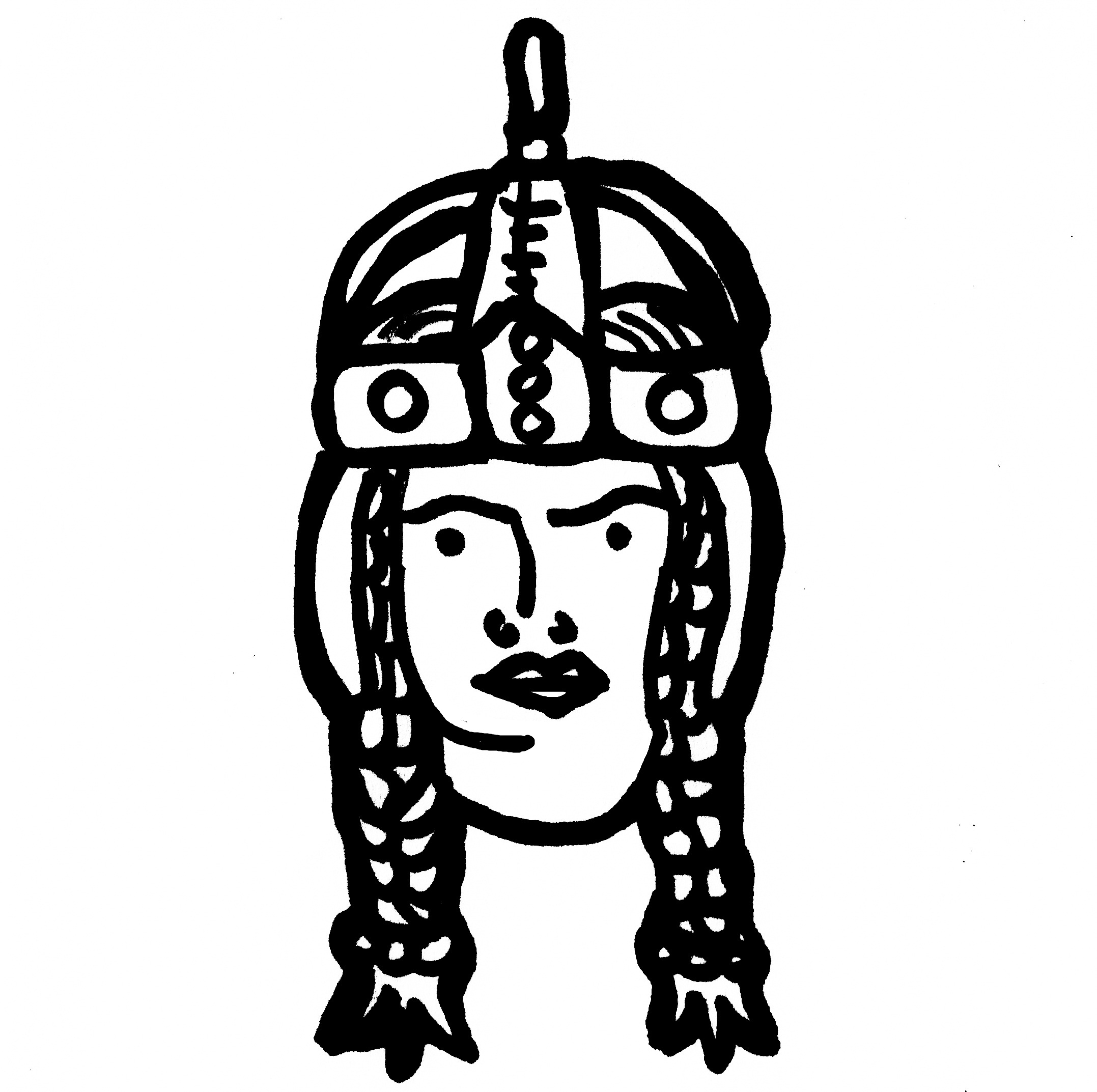
In all of the intertitles, the first letter of the dialogue is ornamented, in the style of an illuminated manuscript, and the speaker is indicated by what appears in the illustrated first letter. In accordance with his legendary ability as a horseman (and many horse-related justifications for the etymology of his name), Etzel’s icon is that of a horse, and Kriemhild’s cowardly brother Gunther’s is a crown. Kriemhild’s lines are denoted by a unicorn. To a medieval audience, this would suggest nobility, suffering, and salvation, and it’s something that appears to be an intentional choice of Lang’s rather than something taken from a pre-existing text (although I am not an authoritative source on this). From what I’ve gathered in my reading, Nibelungenlied is a tragic story about how revenge only begets further violence, with long periods of scholarship centered around two women, Brunhild and Kriemhild, and how they brought down an entire dynasty through their wiles. I think that Lang’s use of the unicorn for Kriemhild is a sly acknowledgement that she’s soldiering on in sacrifice in order to see justice done, even if the ultimate end of her endeavor is the death of her entire family line. Earlier audiences would have seen Gunther’s forcible capture of and marriage to Brunhild as the natural thing for an ancient king to do, something that we in the present “can’t judge” via the same moral lens as we would the same thing happening today. 

Perhaps Lang had already seen the writing on the wall with regards to the path that Germany was headed down, because if we view this narrative through that aforementioned modern lens, it’s clear that the real villains here are King Gunther and his evil buddy Hagen. Gunther, a legendary Germanic figure, is a sniveling, craven man, unfit to lead his nation and who commits the real “original sin” of this story that sets all the tragedy in motion: invading a sovereign nation with no justification other than his desire to expand and control, and—let’s not mince words here—raping the Icelandic queen Brunhild. He and his brothers’ commitment to protecting his inner circle is the embodiment of cronyism, as they take “bros before hoes” to an extreme end, refusing to allow Hagen Tronje to meet his just reward even at the cost of their family honor and, eventually, their lives. Gunther is a shortsighted despot who lacks the will to take accountability for his poor decision making, and in so doing, brings a nation to ruin. Does that remind you of anything? The fact that this film predates WWII by over a decade is merely testament to the fact that history is alive and forever repeating itself, and that artists can always see the pendulum swing back into darkness that lies just over the horizon. As established last time, that didn’t protect Die Nibelungen from being used by the Nazi propaganda machine (and it’s worth noting that the racist presentation of the Huns here shows them as being so alien and ugly that it can’t be justified), but I do think that Lang was trying to send a message to his adopted home before it was too late. Or perhaps, sometimes, a unicorn is only a unicorn. 

-Mark “Boomer” Redmond
Die Nibelungen: Siegfried’s Death (1924)

I really had no idea what to expect when I put a hold on a library DVD copy of Die Nibelungun. I just wanted to watch some more Fritz Lang. When I opened the case, I found two discs inside and, upon examination, discovered that they were two halves of a single story (or a film and its immediate sequel; I’m sure there is a distinction, but it makes little difference). I remember thinking to myself, “Oh, well, they must be short.” Dear reader, they are not. I haven’t watched the second half yet, but the runtime of Siegfried’s Death alone is 150 minutes, although some portion of that is introductory information about the Kino Lorber restoration and its sources. Sorry about that spoiler title, by the way, but it’s in the text (or this version of it, anyway); but also, this story is so old that it’s referenced tangentially in Beowulf, so don’t blame me. Putting this disc in, hitting play, and seeing that runtime, I admit that I felt a little daunted. And then, two and a half hours later, I was still utterly entranced when it came to an end. 

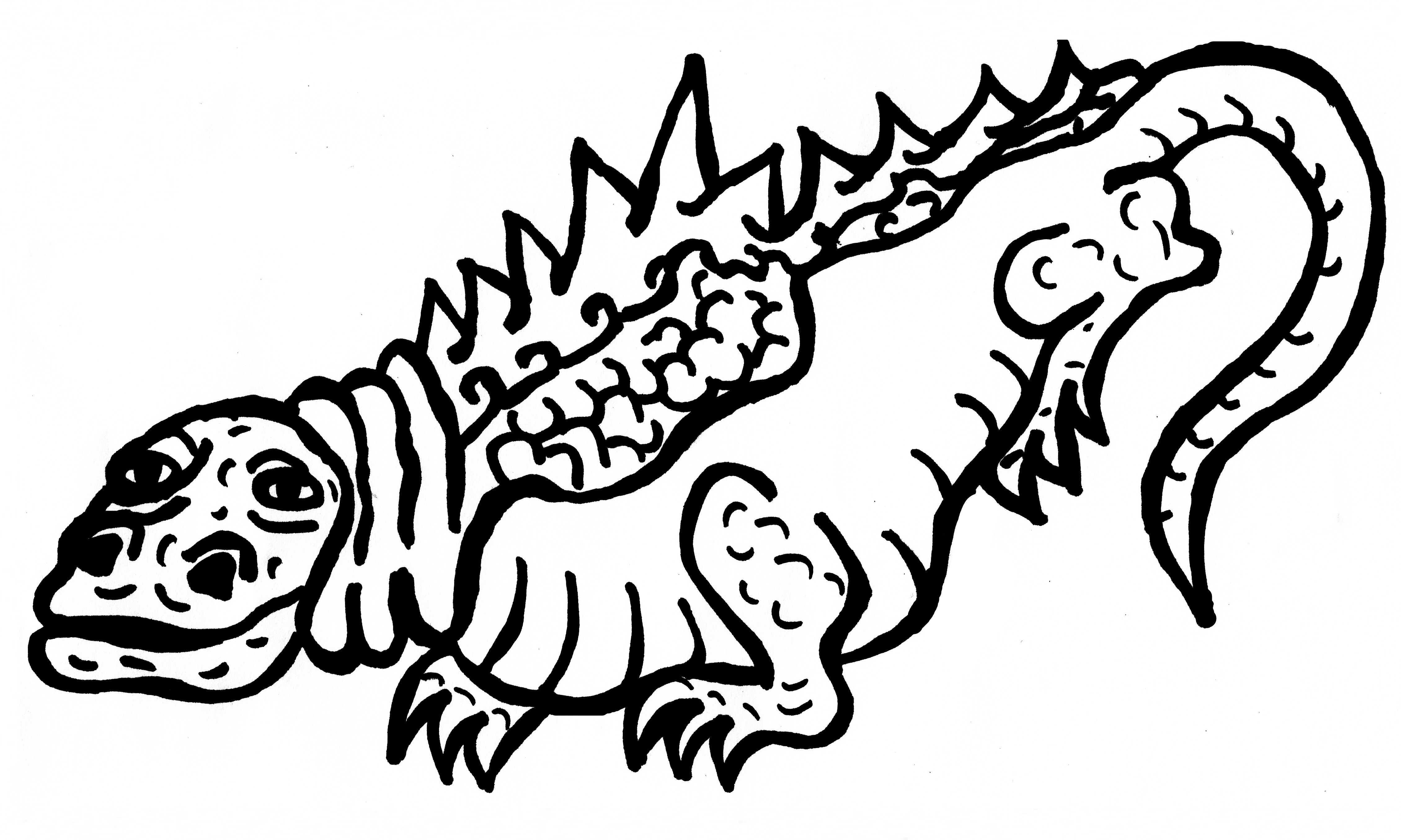
Even if you think you haven’t heard this story before, you have, if not in the form of all the pieces it shares with more familiar epics that preceded, then in the stories which took inspiration from it, probably most notably The Lord of the Rings. Siegfried (Paul Richter), son of Westphalian King Sigmund (or Sigmonde, if you prefer the spelling from Beowulf), surpasses the forging skills of his teacher, a craven man named Mime. When Sigfried learns of the beauty of Princess Kriemhild of Burgund (Margarete Schön), he decides to seek her hand, and Mime, in a fit of pique, directs him to Burgund through a wood that contains monsters. Siegfried happens upon a dragon, which he slays; a taste of the dragon’s blood gives him the power to understand birdsong, and a nearby bird tells him to bathe in the dragon’s blood to become invincible. Sigmund does so, but a falling leaf lands on his back above his shoulderblades, leaving him with one vulnerable spot. 

Siegfried finds himself in a land of dwarves, and manages to defeat their king, Alberich, despite the latter being invisible. In exchange for his life, he offers Siegfried the sword Balmung, the magical net he has which allows him to be invisible or appear in another form, and a horde of gold. When Alberich tries to kill Siegfried atop the treasure heap, Siegfried easily bests him, and with his dying breath, Alberich curses the treasure and all who might use it. With his newfound wealth, Siegfried is able to present himself at the court of Burgund as a king with several vassals. There, he meets King Gunther (Theodor Loos), Kriemhild’s brother, and his obviously evil vizier, Hagen of Tronje (Hans Adalbert Schlettow). Hagen tells Gunther not to allow Siegfried to woo Kriemhild unless Siegfried agrees to help Gunther win the hand of Icelandic queen Brunhild (Hanna Ralph), a maiden warrior whose suitors must best her in a triple sport competition. Siegfried goes to Brunhild’s castle under the guise of one of Gunther’s bannermen and, using the helm he won from Alberich, becomes invisible and helps Gunther cheat. 

Brunhild returns to Burgund with Gunther, whom she reluctantly marries in a double ceremony with Kriemhild and Siegfried, and Siegfreid and Gunther become blood brothers. Brunhild initially refuses to consummate the marriage, until Gunther convinces Siegfried to “tame” her, disguised as Gunther, which he does by wrestling her. Brunhild, still bristling, antagonizes Kriemhild by insisting that as the queen of Burgund, she should be able to walk into church before Kriemhild, as the wife of a vassal, and the argument leads to Kriemhild revealing Siegfried’s role in Brunhild’s hostile wife-takeover. Brunhild, furious, demands that Gunther kill Siegfried, and lies that Siegfried deflowered her. Gunther is torn by his blood oath, but Hagen convinces him to allow him to do the deed, and likewise tricks Kriemhild into revealing Siegfried’s vulnerable spot, which he uses to kill him during a hunt. Brunhild mocks Gunther for allowing the lie of a woman to trick him into taking his best friend’s life, then takes her own. When Siegfried’s body is returned, Kriemhild demands justice against Hagen, but her family protects him because of their complicity. 

Kriemhild swears vengeance: “Whether you hide behind my family, or upon the altar of God, or beyond the edge of the world, you will not escape my vengeance, Hagen Tronje!”

This movie is so fucking cool. There are images in here that are so potent and so powerful that I’m surprised this film doesn’t have the same broad awareness that Metropolis does. It’s clearly been incredibly influential. There are shots in Die Nibelungen that are recreated almost identically in Dune, Lord of the Rings, and even Star Wars. There are images here that are incredibly powerful: Brunhild brooding, perfectly centered in the frame; Siegfried, holding aloft the sword that he has just forged; Alberich and his cohort turning to stone upon defeat. Kriemhild’s dreams are manifested in beautiful, if crude, animation, and there’s a sequence at the end where Kriemhild looks at the place where Siegfried said his last goodbye to her and the image slowly crossfades into an image of a skull. Siegfried’s fight against the landwyrm in the forest still looks sick as hell, and the framing of Brunhild’s stronghold, bracketed above with the aurora borealis and below with a field of unquenchable flame is an image that I’ll never forget. 

So one must wonder, why exactly has this film been largely forgotten while Metropolis, M, and others endure? Well … this is an adaptation of Germany’s national epic, which I mean in the literary tradition of great poetic works which define, delineate the founding of, and reinforce national identities. The more well known adaptation of this text is Richard Wagner’s operatic The Ring Cycle, which has been accused of carrying over the composer’s own antisemitic views (although his friendship with the racial science codifying historical monster Arthur de Gobineau did not begin until at least half a decade after The Ring Cycle was completed). Die Nibelungen, having Fritz Lang as its director, excludes Wagner’s more regressive choices (notably, Alberich and Mime are largely considered to be anti-Jewish stereotypes in The Ring Cycle, which they are not here, at least as far as I can tell). Still, that doesn’t mean that a film adaptation of Germany’s national epic poem, which was all about the proud traditions of Germanic ancestry and nation building, wasn’t considered fair game by the Nazi propaganda machine. The opening of the film sees Lang dedicating the movie to the “proud German people,” whom he himself would flee less than a decade later after an ominous meeting with Joseph Goebbels, which made it easy for Die Nibelungen to be trotted out at party meetings. 

This becomes the default means for examining any piece of German interbellum art, and it’s valid, but I’m not a sufficiently qualified historian to get into that extensively, and there’s already probably a decent amount of scholarship about that which you can find online (for now, anyway). What I do find interesting, if not surprising, is that the primary conflict of this text is so blatantly patriarchal. Brunhild is treated as a kind of villain here, but to a modern reader/viewer, she’s completely justified. Her unwilling marriage to Gunther makes her, for all practical purposes, a sex slave in a gilded castle, and Siegfried’s use of glamour and magic to deceive her into believing that Gunther has passed the challenges she created to maintain her dominion and anonymity means that, yes, Siegfried is an accessory to her rape. She has every right to demand his death, and Gunther’s, for that matter. Instead, within the narrative itself, she’s a vindictive woman whose manipulations cause her husband’s downfall. 

I’m going to go ahead and disregard authorial intent, which would have us agree that her line about “a kingdom brought down by a woman’s lie” is clearly meant to be taken at face value. I also have a feeling that Kriemhild’s revelation to Hagen about Siegfried’s weakness is also supposed to be more “a woman can bring a nation to ruin” reinforcement of sexist presuppositions. To some, Kriemhild is the Madonna whose naivete creates the possibility for Siegfried to be killed, and Brunhild the Whore whose lies lead to his death. I’m going to reject that paradigm and say that, as a text, Die Nibelungen makes it explicit that Gunther is the root cause of every conflict here, either because of his belief that he deserves Brunhild or because of his craven weakness as a monarch so easily misled by Hagen, who is the other villain of the piece. Helen didn’t start the Trojan War; Paris did. 

A five hour epic in two parts is a hard sell. In ten years, I have convinced fewer than a dozen people to check out Baahubali, and I only have to overcome people’s resistance to subtitles for that; for Die Nibelungen, I’m also fighting their resistance to silent film. And, it’s also entirely possible that the back of this filmic diptych will be awful and I’m setting them (and myself) up for disappointment. I’ll let you know once I’ve engaged with Kriemhild’s Revenge.

-Mark “Boomer” Redmond