X/Y (2015)

EPSON MFP image

three star

It’s not the film’s fault, but I had a hard time appreciating X/Y after seeing a similar backdrop & story played out so excellently in the recent break-up drama Appropriate Behavior. The two movies aren’t even that much alike. They do both begin at the end of a relationship between a young couple in NYC, but while Appropriate Behavior closely follows the emotional fallout of a single protagonist, X/Y tracks the ripples of the dissolution in a series of vignettes that details how four friends’ lives are affected by the change. In light of their disparate structural differences, it’s far from fair of me to compare the two films, but there’s just something really special about Appropriate Behavior that makes X/Y feel inessential in its wake. The lack of a connection between the film’s free-floating segments (each named after the character they follow) didn’t help either.

“Mark”: The first segment concerns Mark as he deals with his recent break-up with Sylvia by flirting with strangers, working out, and drinking to excess. We also follow him to a business meeting where he’s trying to sell a script to a major film studio and his agent provides him the advice, “Don’t fuck it up with this ‘I went to film school so I have to make art’ bullshit.” We’re most likely supposed to identify with Mark in this moment (who I guess is a stand-in for writer/director Ryan Piers Williams?) but at the same time it’s easy to see how X/Y could’ve benefited from the same advice.

“Jen”: The “free spirit” of the group, Jen is the only character in the film not in an emotional tailspin from a recent break-up, but instead suffers from the emptiness of single life. Jen is currently between jobs, between romantic flings, and between moments of knowing what to do with herself while she’s alone. As she stares wistfully into her own city-life isolation while a Chromatics song gradually gets louder on the soundtrack, we start to get a clear picture of what the movie is aiming for.

“Jake”: Jake is the thematic bridge between Jen’s free spirit sadness & the Mark/Sylvia break-up. He’s a fashion model/EDM DJ/aspiring photographer/casual sex magnet that seems to “have it all” but is just as miserable as everyone else profiled here, as he struggles with both a less-recent break-up of a long term relationship and a quest for a solid personal identity. When Mark angrily asks him, “Who are you? You’re like five different people,” it feels like his entire character in a nutshell.

“Sylvia”: Sylvia is dealing with her break-up very similarly to Mark (alcohol, flirtation, exercise) except that she’s getting laid a lot more frequently. Her segment adds the least thematically to the movie, but instead is a sort of callback to the original conflict that’s supposed to tie everything together.

So, there you have it. Four NYC sad sacks drift in & out of each other’s days while all nursing broken hearts, a lonely sounding Chromatics song playing in the background to help flesh out their big city sense of isolation. It’s by no means a terrible film; it’s pleasant enough in its small scale ambitions & comfortably sullen character studies. It’s just not an especially essential film either. I feel like a real piece of shit for saying this, because the comparison is mostly unwarranted, but if you’re going to see one post-break-up NYC drama this year, make it Appropriate Behavior. That one is a real doozy & X/Y mostly just is.

-Brandon Ledet

The Duke of Burgundy (2015)

EPSON MFP image

fivestar

It’s difficult to explain in print exactly why, but Peter Strickland’s The Duke of Burgundy may be the most uncommercial film about a BDSM-leaning lesbian relationship possible. Although Strickland’s film has sensuality to spare, it deliberately strays from being exploitative, choosing to explore the central couple’s universally relatable struggles with selflessness & compromise instead of engaging in typical blank leering. There’s a sexual element at play in nearly every scene, but the film is more romantic than voyeuristic. The Duke of Burgundy is a portrait of a long-term relationship’s struggling to find balance, with the more unique elements of the role playing games shared by its same sex partners functioning more as a detail that provides specificity than as an overwhelming fetishistic obsession. Strickland has found a balance here that threatens to tip in a disastrous direction at almost every turn, but instead holds steady, much like the romantic balance found within the film’s central relationship.

It’s not only the refusal to perv out that will keep The Duke of Burgundy from reaching a mass scale audience. It’s also a deliberately “artsy” film that luxuriates in its own gorgeous images & atmosphere, like a sex-tinged The Spirit of the Beehive. Strickland carves out a natural world here (as he did before in last year’s Bjork concert film, Biophilia Live), filling the frame with running water, wriggling insects, rustling tree limbs, and beating wings of moths & butterflies. So much of the film is composed of nature, books, lingerie, and women (I don’t think a single man appears on-screen), that a distinctly insular vibe is achieved, as if the entire film takes place within a cocoon. It attempts more of a preciously delicate visual aesthetic than it does a traditional, straight-forward narrative.

The Duke of Burgundy’s varied shots of a butterfly & moth filled specimen room sets a tone for how the film operates. It’s a narrative that relies on repetition & ritual, much like the repetition of a specific butterfly specimen is repeated within the display cases. Similarly, each image is tacked to the wall, hovering to be appreciated like a precious, organic object. Strickland finds emotional resonance in the film’s central relationship, but he also spends inordinate amounts of time reveling in the textures of the world that surrounds them. Filming the couple through mirrors, fringes, and fabrics, Strickland finds the same reverence for the sense of touch here that he did for sound in his 2013 ode to giallo, Berberian Sound Studio. It’s a challenging prospect for viewers, but the rewards are glorious.

Warnings of tasteful sensuality & highfaluting cinematography aside, The Duke of Burgundy is a lot more playful than you would expect from art house fare of its caliber. Sure, the film has a stuffy, old-fashioned vibe with interiors that are far more likely to conjure the words “parlor” & “boudoir” rather than “living room” & “bedroom”, but it also lets on that it’s self-aware of that vibe as early as the opening credits when it provides a title card that reads “Perfume by Je Suis Gizella.” Also, although the film’s central BDSM relationship has a serious issue at the heart of its struggles with power balance , the movie finds plenty lot of effortless humor in that conflict. The emotional tug of war at the heart of the film’s romantic conflict reminded me a lot of a poem deceased artist Bob Flanagan reads in the documentary Sick that starts, “Smart-Ass Masochists: Those are masochists who can take anything– can take anything they tell you to do. Anything I tell you to do I’ll do it just for you.” The power dynamics of a BDSM relationship are more complicated than they may first appear to an outsider and The Duke of Burgundy has a lot of fun playing that aspect for both humor and emotional resonance.

It’s incredible that The Duke of Burgundy never loses its balance. It’s an affecting story about true love, but it also sports piss jokes. It’s a movie that features kaleidoscopic cunnilingus, but it never approaches being salacious. It values strong, isolated images over plot & pacing, but never feels like a slog. It’s a well-made, satisfying film that simultaneously stimulates the intellect and entertains on a simple, surface-pleasures level. In short, it’s a fantastic, must-see film that will find you saying “Thank you so much. This is all I ever wanted,” even before one of the protagonists gets to say it first.

-Brandon Ledet

Appropriate Behavior (2015)

EPSON MFP image

fourhalfstar

It’s difficult to describe Appropriate Behavior without using titles like Broad City & Obvious Child as reference points, but those comparisons truly do the film a disservice, as it’s much more emotionally satisfying than either of those titles (both of which I like very much). True, Appropriate Behavior is yet another raunchy, sex-obsessed comedy-drama centered on a New York City woman-child struggling to figure her shit out, but there’s something uniquely direct & honest about its approach to this aesthetic that distinguishes it from its peers. Its authenticity might have a lot to do with the overall strength of the writer/director/actress Desiree Akhavan, who delivers the material as if she’s lived it before, but what’s really arresting is the crippling, all-too-common sadness that anchors the story. The details of the protagonist’s Shirin’s lifestyle & personality may be specific, but her heartache is universal & familiar.

Shirin is a young, bisexual Brooklynite party girl with a journalism degree & Persian heritage. Not everyone is going to relate to certain aspects of her sex life, such as safe-words, strap-ons, group play and hiding her sexuality from her Iranian-born parents.  However, the film’s central romantic conflict is an about as universal as they come. Appropriate Behavior details the depressing, gradual detangling of two people exiting a long term relationship. The film thankfully doesn’t dwell solely on the couple’s post break-up gloom, but instead adopts a flashback structure that allows it to show the former couple in better times, like in a flirtatious exchange when the first meet where Shirin says, “I find your anger incredibly sexy. I hate so many things too.” When the broken relationship Shirin’s mourning is first detailed it looks too toxic to be worth the heartache. The flashbacks reveal that it was at one time something playful, something worth saving. It allows the film to run through the entire cycle of a romantic tryst from first meeting to fucking to fighting to eventual dissolution.

Although the universal relatability of this cycle is what makes the film affecting, it’s the specificity of Shirin’s world that makes it special. The film’s Brooklyn setting provides a lot of room for lampooning of ludicrous personalities like social justice comedians, Kickstarter gurus, pothead businessmen, and absurdly pretentious performance artists. Shirin’s open, playful sexuality is an invitation into a world of group sex, kink play, and drag queens. Her Persian heritage is a window into both the culture’s familial intimacy & rituals as well as its malignant homophobia. At the center of this Venn diagram is a very relatable Shirin. She calls Brooklyn hipsters out on their nonsense, asking  “What is up with your placid disinterest in everything?” She laughs in the faces of people who take their kink play seriously and finds a way to reconcile her sexuality with her family in a somewhat disheartening “don’t ask, don’t tell” type of equilibrium.  A lot of Shirin’s life goals amount to “a good time”, which is more than understandable for a woman in her twenties.

It’s incredible how much Shirin’s zest for fun shines through when Appropriate Behavior finds her in such a dark time. It’s a familiar balance to anyone who’s experienced true heartbreak: trying to party away the pain like it doesn’t matter, but the superficial hedonism always feeling empty. She pretends like she doesn’t care, but she continuously ends up alone & hurt after the high. No matter your relation to the specifics of Shirin’s background & lifestyle, it’s easy to see yourself in her sadness when she curls up in a ball and says, “I’m going to lie here and forget what it feels like to be loved. Could you please turn off the light?” It’s a sadness that feels like it’s never going to fade, but it always does . . . eventually. Shirin can’t move past it until she gets wrapped up in her own project, a distraction that finally allows her to let go of the past. The thing that saves her? An elaborate fart joke. That’s the exact kind of clash between emotional devastation & goofball irreverence that makes Desiree Akhavan’s debut such a strong, relatable film, even for those worlds apart from her protagonist’s exact circumstances.

-Brandon Ledet

Buzzard (2015)

EPSON MFP image

three star

Slacker culture is surely alive & well in 2015, but there was something unavoidably ubiquitous about 90s MTV slacker culture. Pretty much the definition of a low-stakes drama, Buzzard feels oddly old-fashioned in its portrayal of an apathetic underachiever, Marty, who feels like a cultural relic from a bygone lackadaisical era. Cheaply filmed and intentionally flat in style, Buzzard seemingly cares as little as Marty does, echoing his “It doesn’t matter” mantra with every fiber of its being. Buzzard portrays a world of petty victories & major losses where the odds are stacked so highly against Marty that he really has no incentive to try or care about anything and the movie itself has its own apathetic crisis in the same vein.

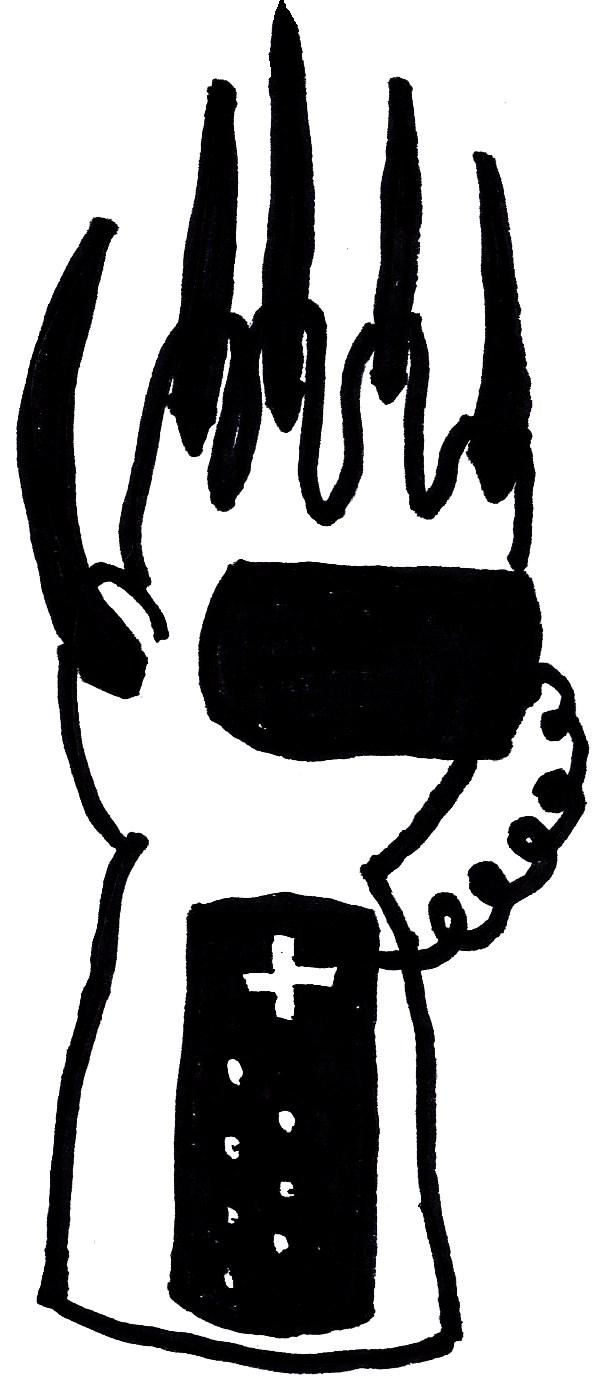
An angry, depressed loser with a go-nowhere job as a temp for a bank, Marty’s petty victories involve eating junk food, listening to metal, jumping on his bed, watching pornos while wearing a Halloween mask, and scamming suckers for small increments of cash. His half-assed scams typically pay off as long as the person on the other end cares as little about the transactions as he does. The problems that Marty faces only get rolling once the people he’s scamming start to care & take notice of his chump-change crimes. Marty amps up the damages of his mistakes as well when his most significant petty victory of all comes to fruition: a homemade Freddy Krueger glove that gives his “nothing matters” attitude some real-life consequences.

If Buzzard was intentionally looking to cultivate the 90s MTV slacker aesthetic it was astute in including outdated cultural markers like Nintendo NES, CD towers, and Freddy Krueger posters & merchandise. Although its ambitions & style feel like little more than a vintage throwback, its themes exploring the isolation of poverty, corporate culture, and poor mental health still resonate. Although it’s unlikely that Marty will ever approach anything that resembles a “successful” life, it’s still satisfying to watch him achieve short-term goals like the construction of his Krueger glove or eating a massive plate of spaghetti in a luxury hotel room. Due to Marty’s (and Buzzard’s) lack of motivation, regard, or enthusiasm for anything, it’s hard to celebrate too much of his life other than with surface-level observations like “Cool Demons t-shirt, dude,” but in a world where he has very little room to achieve much of anything, that line of shallow praise has considerable amount of significance.

-Brandon Ledet

Lost River (2015)

EPSON MFP image

threehalfstar

Sometimes it’s gotta suck to be Ryan Gosling. Not often, but sometimes. Everything sucks sometimes, right? I’m sure being a talented actor & a beautiful human specimen is mostly all perks, but what if no one takes you seriously when you try to let loose the weirdo artist lurking under your perfect skin? Finalizing his gradual transition from pint-sized Mouseketeer to big boy artist, Gosling recently stepped behind the camera to write & direct his debut feature, Lost River. Critically-speaking, it didn’t go well. The film was panned on the festival circuit as “derivative” “poverty porn” and lost its wide distribution detail in the process, eventually being damned to direct-to-VOD status. Gosling’s first outing as a creator instead of a performer failed to secure accolades and the talented sex beast was left having an uncharacteristically bad day in the sun. The dirty secret is that Lost River is actually pretty damn good for a debut feature. It’s far from flawless, but there’s very little justification for the vicious critical beating it received on the festival circuit. If the film were directed by a fresh-out-of-film-school nobody it most likely would’ve had a better chance in the critical eye. For once it didn’t pay to be for Ryan Gosling to be a wealthy, well-known pretty boy.

Both the “derivative” & “poverty porn” complaints feel somewhat like they were aimed specifically at Gosling’s pretty boy swag instead of his final product. The claim that the film is “derivative” is technically true, but not really a problem considering the sources Gosling pulls from here. Names like Lynch, Bava, Korine, Mallick, and Refn are sure to be conjured by any discerning audience, but what film buff wouldn’t love pieces of those five aesthetics gathered in one neon-soaked, dilapidated package? Speaking of dilapidated, the film may also technically substantiate that “poverty porn” critique, as it pulls beautiful images out of economic despair, turning what remains of Detroit into a ludicrous dream world. I also see this complaint as more of an asset than a problem, especially considering how the images tie into the film’s thematic details (foreclosed houses, stealing copper from blighted properties, etc.). Also, it’s an aesthetic that’s worked wonders before in titles like George Washington, Gummo, and Beasts of the Southern Wild.

The one legitimate qualm I found with Lost River is that it is poorly paced. There’s a calm, unrushed progression to the movie that plays right into the stereotype that art films have to be boring to be taken seriously. At least while the run time is glacially gliding along, there are plenty of worthwhile images to chew on: flaming bicycles, pink neon lights, glistening Casio keyboards, underwater dinosaur statues, slow-motion house fires, and so on. That’s not even getting into horror legend Barbara Steele’s hermetic mourning or fellow-perfect-specimen Christina Hendricks’ Tree of Life cosplay & blood-soaked burlesque. These images appear slowly, but each with great individual impact, backed by the sleek nightmare sounds of Chromatics genius Johnny Jewel. They’re definitely a sight to behold and it’s a sight I expect to revisit often, even if they do work better as still images than as a feature film. Gosling most certainly has an eye and once he tightens aspects like pacing & narrative, he has untold potential to make something truly great. I just hope that he hasn’t been discouraged from making more films by the negative reception his debut garnered. Lost River may not be a perfect work, but it does demonstrate a wealth of promise and it’d be a shame if that promise were snuffed out in its infancy by sourpuss critics.

-Brandon Ledet

Mall (2014)

EPSON MFP image

three star

Last summer I attended a Linkin Park concert in Houston, Texas and before the concert began, there were a buttload of advertisements for Mall. I was really confused as to why a film was being advertised at a concert, but I later discovered that Linkin Park’s DJ and sampler, Joe Hahn, directed the film. He also directed some of Linkin Park’s best-known music videos, such as “Numb,” “From the Inside,” and “ Somewhere I Belong,” so I wasn’t really surprised to find out that he directed an actual feature-length film. As embarrassing as this may sound, the main reason I decided to watch Mall was because Mr. Hahn directed it. Interestingly enough, it was very similar to a Linkin Park music video, due to its slow motion action scenes, futuristic visual features, and soundtrack composed by members of Linkin Park along with Alec Puro (drummer of Deadsy).

Mall is based on a novel of the same name by Eric Bogosian. The film follows the lives of several individuals that connect once a meth addict shoots up their local shopping mall. The film does a great job with bringing attention to the subplots of each individual character without losing focus on the mass mall shooting, but the film does have its share of problems. The biggest problem is that the script is poorly written. It’s difficult to keep up with what’s happening because there’s too much going on and none of it is very interesting. On a more positive note, the film’s visual elements were excellent. Mall is actually kind of similar to Blood and Black Lace (April’s Movie of the Month) because it is a film worth watching for the visuals rather than the story.

I can’t go without mentioning that the one and only Gina Gershon makes an appearance in the film as Donna, a dissatisfied suburban housewife. This role was perfect for Gershon and she was definitely one of the strongest actors in the film. While her character was my probably my favorite, she hasn’t come very far since Showgirls. Yes, she’s still the campy hot mess that I fell in love with years ago.

Unfortunately, Mall wasn’t as good as I expected it to be, but it certainly wasn’t terrible. It falls right in the middle, making it an “ok” film. The underwhelming script and lack of buildup are overshadowed by the amazing cinematography, so it’s definitely worth a watch. A lot of people are going to hate this film, but in the end, it doesn’t even matter.

Mall is currently streaming on Netflix.

-Britnee Lombas

Serena (2015)

EPSON MFP image

onehalfstar

campstamp

Serena is a masterclass in piss-poor editing. On paper, it’s baffling that a prestige costume drama featuring two of Hollywood’s currently best-selling acts, Jennifer Lawrence & Bradley Cooper, would skip a wide theatrical release and go straight to VOD. On film, it’s entirely understandable. Drowning under an endless flood of inept editing choices is the raw material for a potentially great movie that’s gasping for air, but never allowed to surface. Alternately, Serena is also just a few cuts away from being a brilliantly funny camp classic, but it’s not even allowed to be enjoyable as a terrible film. It’s downright fascinating how frustrating this movie can be. It’s rare that a Hollywood film is released this unpolished and . . . off, but that doesn’t help the fact that it’s not even entertaining as a total disaster.

On the side of the film’s fight for legitimacy there’s an oddly old-fashioned big studio classic feel to the whole affair. Having two of Hollywood’s biggest stars struggle to negotiate their romantic & professional dynamic in an ancient, treacherous locale feels like the exact kind of movie that would’ve been made by every major studio 50 to 80 years ago and it’s charming to return to that familiar Old Hollywood vibe. This is a world where brassy women assert their power with lines like “I didn’t come to Carolina to do needlepoint,” in traditionally male arenas occupied by lumberjack types with perma-stubble & prison tattoos. Cooper & Lawrence aren’t gruff enough to believably sell the dangerous frontiersman developer and his half-feral wife routine, but their natural charisma and the effortlessly pleasant nature of costume dramas in general makes me want to root for the movie to turn out well. If the pacing had the good sense to slow down and let any of these elements breathe it really could’ve been something. That is not what happened.

There is so much more arguing for the movie to go in the camp classic direction. We’re introduced to Jennifer Lawrence’s titular Serena as she’s galloping on a horse in slow motion, a horrendously tender acoustic guitar plucking away in the background. The music doesn’t improve from there, with its slow, sappy, meaningless musings poisoning nearly every moment. The emptily symbolic animal imagery doesn’t stop there either. Bradley Cooper’s character spends the entire film on a laughably maudlin, metaphorical panther hunt and Lawrence finds empty metaphors of her own in the repetitive scenes where she trains an eagle to hunt the snakes that have been biting Cooper’s workers. The animal imagery, like nearly everything else in play, is almost always followed by blunt interjections of Cooper & Lawrence fucking, as if the film were edited by a half-awake Russ Meyer on cough syrup. Immediately after we meet Serena on the horse she’s squirming under the sheets and she comes out of an abrupt montage a married woman. The same The Room-esque sex interruptions occur after her eagle kills its first snake and after she hits on her husband’s investors at a ball in yet another scene that goes nowhere (except back to the bedroom). The images in these montages all feel like placeholders for longer scenes to be added later, a task that no one ever got around to. Oddly enough, the one image afforded the most room to breathe is the most disturbing one of all, a vigorous bathtub fingering that I’m likely to never forget thanks to Cooper’s intense, empty stare. In time, that bathtub moment might be the only image from this film I remember all, both because it’s so uncomfortable and because the other contenders are way too brief to make a lasting impression.

The scale really is tipped for Serena to reach a camp classic status, but it just never gets there. Besides the sex & animals, there’s also an evil, jealous, homosexual henchmen and a mystic, murderous woodsman who has “visions” that both feel like odd caricatures out of a different, thankfully bygone era. Also, any credibility Serena’s struggle to assert herself professionally adds to the plot is severely undercut by her gradual transformation from a confident woman to a murderous Lifetime Movie sociopath in the wild, like a knife-wielding Nell. I promise that sounds so much more fun than the film allows it to be and just as the characters are prone to fast, flat mumbling, so is the film’s editing. Each scene in Serena bleeds into the next in a way that makes no particular moment feel any more or less significant than the one preceding it. A hand being chopped off feels just as important as miscarriage or a blood transfusion or a town hall meeting. It’s all fast, flat mumbling here.

I truly believe someone could recut Serena‘s raw footage into something worthwhile, (starting by pulling brief images out of the endless montages to allow them room to breathe and scrapping the entire awful soundtrack wholesale) and come out the other end with a polished finished project that would have audiences counterintuitively rooting for Cooper & Lawrence to chop down thousands of trees as well as impregnate & murder their employees. It’s entirely possible. It’d be even easier to cut it into an over-the-top melodrama ripe with Lawrence going full, feral Mommy Dearest on the frontier folk. It’s almost there. In Serena’s fight for either legitimacy or camp, it was decidedly much closer to camp, but thoroughly disappointing as either. If nothing else, if someone wanted to learn how not to edit a film’s separate parts together into a cohesive whole, this would be a great place to start.

-Brandon Ledet

Mood Indigo (2014)

EPSON MFP image

fourstar

The word “twee” is a loaded descriptor that is sure to chase away a large section of any potential audience. A lot of people bristle at the mere mention of twee, generally construing it as a brand of unbridled, whimsical cuteness. That dismissive conception entirely disregards the bottomless depression of twee genre staples like Wes Anderson, Noah Baumbach, Todd Solondz, and the music of Belle & Sebastian. It’s a bookish, sentimental sort of sadness, but twee generally plays its grief so close to the heart that it becomes extremely difficult to differentiate it from the heights of its cheery sweetness. Any twee work that’s worth a damn is just as depressing as it is joyful; the problem is that a lot of audiences don’t find any of it worth a damn to begin with.

Director Michel Gondry has received near universal acclaim for his music video work with acts like Björk & The White Stripes, but whenever he helms a feature film his name has a tendency to be an automatic turnoff for a lot of folks just as much as some people are turned off by the mere mention of the twee genre he often gets categorized within. His films, (titles like The Silence of Sleep, Be Kind Rewind, and Eternal Sunshine of the Spotless Mind) can be downright infuriating when you’re not on their wavelength, but they can also be deeply rewarding for those not alienated by their fanciful sentiments. Personally, I’ve always been a fan of Gondry’s, finding his films to range from pretty good to absolutely fantastic. My only slight qualm with his filmmaking style is that he always feels somewhat restrained by the format, like he needs to bend over backwards to justify the dreamlike loopiness of his practical effects visuals with a narrative purpose. In his short-form music video work, Gondry was free to experiment with visual techniques and surreal logic without having to provide context for their existence (like the video stores, dream sequences, and memory erasure in the titles mentioned above), but that sense of liberation has been difficult for him to translate to feature films.

In a lot of ways last year’s Mood Indigo finds Gondry at last discovering that sense of freedom on the silver screen. The film’s narrative makes no attempt to justify Gondry’s visual whimsy, but instead rolls with it as if it were a normal part of everyday life. It’s not a film that’s going to win over Gondry’s detractors, but it is instead one that caters to his established audience, assuming they are already game for the intricate, dreamlike quirk he is sure to throw at them. Entirely unrestrained, Gondry allows his imagination to run wild here, like an especially quirky Rube Goldberg contraption on the fritz.

Mood Indigo is just crawling with weird, loopy inventions like alarm bells that infest kitchen walls like bugs, pianos that mix hard liquor “harmonic cocktails”, see-though plexiglass limousines, elephant-shaped tanks, and a species of bird people that takes that concept even more literally than the movie Bird People. The film’s first half is a frantic flurry of Gondry whimsy that gets so overly excited that its elements blend together, causing a strange sort of synesthesia: vinyl records can be watched, food can be heard, sounds can be drank, etc. If the pace of the first half had kept up its blinding speed even I might’ve turned on the film. It’s a near-exhausting flood of strange ideas that begin to feel as if they are connected by no unifying concept at all, as if Gondry were the Richard Kelly of twee. Fortunately, if you stick with the film, it eventually relents and begins to reveal it does indeed have a very strict method to its madness. As the protagonist says to a friend, “Despite the complexity of your words you might be onto something.”

The loopy dream logic of Mood Indigo initially feels formless, but it’s eventually revealed that the movie’s fundamental reality is influenced directly by the mood of the characters that inhabit it. The film tells the basic full-cycle story of a life-long relationship from lovers being introduced by friends at a party to their blissful marriage to their eventual dissolution. The constantly shifting, optimistically energized mood of the first half (wherein everything from the food to the household appliances feels alive & happy) fades as the central couple suffers through sickness & poverty, a change sparked by a seemingly harmless water lily. As the mood sours, the pace slows tremendously; the walls literally start closing in, cobwebs form over once sunshine-blessed windows, characters age rapidly, and ominous shadows start coming to life. One character explains, “As you go through life spaces seem smaller.” It’s a sad statement that rings punishingly true as the ostensibly invincible young love from early in the film succumbs to the pressure of life’s heaviest burdens and the even the frame of the film itself begins to constrict & turn grey.

Mood Indigo is almost certain to alienate the twee-averse very early in its proceedings and may even push a large part of the remaining audience a little too far (the same way an increasingly fussy Wes Anderson has seemingly been testing how much Wes Anderson people can take in recent titles like Moonrise Kingdom & The Grand Budapest Hotel). From what I understand, the film’s original European cut was a full 40 minutes longer than the American home video version and that massive edits were made to cut down on its overabundance of ideas. Honestly, that extra 40 minutes probably would’ve poisoned even my viewing experience and I really, really liked the movie. As is, Mood Indigo is a spontaneous, lively film balanced out by the soul-crushing dread of its final hour. For audiences already on board with Gondry’s hyperbolic visual imagination, it’s refreshing to see the director set free by such a vague narrative structure as a gradually shifting mood and Mood Indigo might rank among titles like Eternal Sunshine as his best work. For those who find the idea of that lack of restraint insufferable, it’s best that you stay far, far away. If nothing else, the movie finds Gondry at his Gondriest, which can go either way for you depending on your tolerance of the heights & depths of both Gondry & twee.

Mood Indigo is currently streaming on Amazon Prime.

-Brandon Ledet

Mother Night (1996)

inaworld

threehalfstar

Mother Night is an outstanding novel by Kurt Vonnegut, Jr., arguably his best work outside the holy trinity of his titles that get the most attention: Slaughter House Five, Cat’s Cradle, and Breakfast of Champions. Mother Night is surprisingly just as great (if not better) than any of those books, but what makes it even more surprising is that was remarkably adaptable for film. In addition to hitting my costume drama sweet spot (a low bar to clear, for sure) 1996’s Mother Night was also the best Vonnegut adaptation I’ve ever seen (another low bar, since I’ve only seen the not-very-good Breakfast of Champions). It obviously doesn’t touch anything near the greatness of Vonnegut’s novel (how could it?), but it was effective as a summary of the film’s best touchstones with some inspired casting choices helping bring his words to life.

Playing a role that would likely be filled by Bruce Dern if it were released in 2015 and not 1996, Nick Nolte is damn good in the film’s central role as Howard W. Campbell, Jr., an American playwright turned Nazi propagandist during World War II. In some ways Vonnegut does for the Nazi scumbag what Nabokov did for a pedophile in Lolita: he makes Campbell a complicated, richly human character that is at times sympathetic and at other times beyond contemptible, even to himself. Especially to himself. Campbell is a Nazi propagandist who says gut-wrenchingly evil things about Jews as a people in his radio broadcasts, but he’s also an American spy who transmits sensitive information about the war in those very same broadcasts. Nolte carries the gruff, broken spirit of Campbell well, selling the alternating self-hatred and self-aggrandizing of his inner conflict exactly as I imagined it while reading the novel.

Vonnegut’s plot allows a lot of room for consideration in the ways morality during war is a lot more questionable than the typical good vs. evil narrative that’s usually depicted. For Campbell that means that the coded spy language that’s infused into his hateful Nazi broadcasts makes his sin & his virtue inseparable. As his German father-in-law puts it, it does not matter whether he is a spy or not, because the hate in his propaganda is so effective that there is no way he could have served the enemy (America) as well as he served his adopted country (Germany). Campbell tries to remain impartial to the Nazi/American divide, saying that he only feels allegiance to his marriage (“a nation of two”) but the impossibility of that lie is a lesson he learns too late. It’s a moral he summarizes as “You must be careful what you pretend to be, because in the end you are what you pretend to be.”

Mother Night is not only commendable in its competence at capturing Vonnegut’s tricky sense of humor on film; it’s especially praiseworthy because the task in this particular case is made even trickier by the story’s habit of culling amusement out of the horrors of Nazism. It’s partly successful because of its willingness to let the hateful things Campbell says ruminate, like in a scene where a filmed version of one of his broadcasts is projected onto his horrified face as he truly listens to his own words for the first time. Although Campbell is occasionally sympathetic, the movie rarely lets him (or the audience) forget that he is a monster. Besides Nolte’s excellent turn as the central propagandist, there are plenty of other performances to praise here: Alan Arkin’s role as his best friend; Sheryl “Laura Palmer” Lee as his German wife; a perfectly cast John Goodman as the American agent that recruits him as a spy; and Kirsten Dunst as an adorable, pint-sized Nazi moppet, among others. There are some really dark touches to the film’s humor, like when Bing Crosby’s “White Christmas” plays over images of a concentration camp or when Campbell makes sensual love to his wife while one of Hitler’s impassioned speeches blares on the bedside radio. These touches all feel oddly subversive, as the whole film has a decidedly old-fashioned feel to it, like black comedy version of The Rocketeer. As a film, it’s more than just a rushed, abridged version of a great novel; it’s also a handsome, well-acted historical drama that finds a peculiar line of humor in narcissism, self-hatred, and genocide.

-Brandon Ledet

Dream Lover (1994)

EPSON MFP image

twostar

campstamp

Thrillers and James Spader are two of my favorite things, but they do not come together harmoniously in Dream Lover. The film’s director, Nicholas Kazan, seemed to be more interested in making this a chic, sexy movie instead of a genuine psychological thriller and that was a bad move on his part. Many thrillers, especially those in the early 90s, have sexual elements that enhance their appeal, but something went terribly wrong with this one. Dream Lover isn’t a well-balanced film, but it was sort of enjoyable because it was so crappy (hence the Camp Stamp).

Ray Reardon (James Spader) is a successful businessman that becomes instantly attracted to Lena Mathers (Mädchen Amick), a beautiful woman he meets at an art gallery. They partake in a passionate love affair and after sleeping together a few times decide to tie the knot. Of course, after marrying Lena and not knowing much about her past, Ray finds himself in a marriage filled with mystery and deception. He has recurring clown nightmares that reflect his crumbling love life and I absolutely hated them. They didn’t blend in with the rest of the film and are insanely annoying. It quickly becomes obvious that Lena is psychotic and after Ray’s money, but her plan to get her hands on his money doesn’t surface until the end of the movie. Thankfully, Kazan allows the audience to have a little bit of fun attempting to figure out Lena’s diabolical plan.

Uncovering the mystery of Lena’s scheme was a bit fun, but the film was ultimately a very unsatisfying, predictable thriller. There weren’t many surprises or unexpected twists, which are some basic components to a decent thriller. Spader was the best thing about the film because his acting was flawless (as always), but it wasn’t enough to save the film from falling into the depths of bad movie Hell.

Dream Lover is currently streaming on Netflix.

-Britnee Lombas