The Meta Experience of Prytania Screening Cinema Paradiso (1989)

paradiso

I was washing dishes this Thursday afternoon when I was unexpectedly alerted that Prytania Theatre was going to screen Cinema Paradiso for free in a half-hour’s time. I dried my hands, crated the dog and sped Uptown just in time to take my seat among the little old biddies and stray college students just before the movie began. With no time for Google or IMDb before I ran out the door, I went into the movie completely blind. All I knew was that it’s one of those foreign titles synonymous with phrases like “Oh man that’s a classic” and “How have you not seen that yet?” Oh man. It was a classic. How had I not seen that yet?

Cinema Paradiso is a movie about movies, cinema about a cinema, art about art. It’s one of those rare films that attempts to provoke every possible response in its viewers (laughter, tears, heartbreak, frustration, unbridled joy) and succeeds consistently. As the audience watches the story young boy grow into an old man, they also watch a history of how audiences have engaged with film over the course of decades. When we watch Cinema Paradiso, we watch the way people watch movies. At the beginning of the film the Cinema Paradiso’s audiences basically riot throughout the pictures. Towards the end they sit in rapt silence.

The audience at Prytania that day was anything but silent. They weren’t the masturbating, shit slinging, drunken near-rioters of Cinema Paradiso, but there was some audible chatter throughout the movie in the seats behind me and a full-on celebration in the lobby that could easily be heard through the dividing curtains. The Prytania was screening free movies that day and was gearing up for an afternoon block party to commemorate its 100th anniversary. As the oldest operating cinema in New Orleans and the only one in its neighborhood, it’s way too easy to draw connections between the Prytania Theatre and the titular Cinema Paradiso. Just as the Cinema Paradiso grows with & serves its Sicilian village, Prytania is a cultural mainstay of Uptown New Orleans. They planned on screening the film a second time later that night at the block party, the same kind of outdoor community screening Alfredo stages in the film.

Before the afternoon screening I attended began, Prytania’s 93 year old operator Rene Brunet told the following anecdote: When the one-screen theatre first ran Cinema Paradiso in 1989 it played for over six weeks, upsetting the locals (presumably the college kids) enough to picket the theatre to finally move on & play another movie. It’s the exact kind of episode that would’ve happened in the film itself, although presumably more tame.

The meta experience doesn’t stop there. When Cinema Paradiso was first released to an American audience, the undisputed king of cinematic self-sabotage Harvey Weinstein cut a full 51 minutes of footage from the Italian original (a tactic he almost repeated with last year’s Snowpiercer). The streamlined cut is the one that played at Prytania this Thursday, but it’s also the one that played in its original extended run at that cinema, as well as the one that earned the Oscar for Best Foreign Film. Oddly enough, Roger Ebert himself contended that the Weinstein cut is “a better film than the longer.” Whether or not that is true, it’s still hilarious to me that drastic edits were made to a film that depicts a priest making drastic edits to other films as one of its thematic lynchpins.

The programming choice to celebrate Prytania’s century long history with Cinema Paradiso was wholly perfect. It was the story of New Orleans’ most significant one-screen cinema examining itself by revisiting the most significant story of a one-screen cinema around. They could’ve played a more tragic (but just as potent) work of cinematic navel-gazing like 1971’s The Last Picture Show or last year’s Life Itself, but that would’ve undermined the reason we were all there: a celebration. Commemorating Prytania’s first 100 years with Paradiso left me with the hope that it will last at least 100 more. There was no  better way possible to celebrate the movies than to watch people watch movies.

-Brandon Ledet
The Comedy (2012)

EPSON MFP image

fourstar

Throwing down the gauntlet in its opening shots, The Comedy begins with a sexlessly homoerotic dance party. Naked schlubs grind against each other to a sensual R&B soundtrack, pouring cheap beer down their pale, soft bodies, tucking their genitals between their legs. The last image before the title card is a flash of Tim Heidecker’s scrotum. The scene is devoid of sex appeal because the characters aren’t into what they’re doing. The ritual is a joke inspired by alcohol-fueled late night weirdness. The characters are governed by their sense of irony and the joke isn’t nearly as funny as they think it is.

Even The Comedy’s title is ironic. The same behavior Tim Heidecker usually employs for absurdist humor is weaponized here for a scathing indictment of a generation of scumbags whose entire personalities are affectations. Heidecker’s protagonist makes a sport out of saying things he presumably doesn’t mean. He drunkenly defends Hitler as a flirtation tactic, muses about his terminally ill father’s prolapsed anus, and loudly insults a Catholic church as his degenerate friends blow out prayer candles and roughhouse on the pews. Playing an overgrown, affluent child, Heidecker drifts through menial jobs that would suit a teenager on summer break out of boredom rather than necessity. He manipulates people with his wealth in almost Cheap Thrills levels of cruelty. He pinches a sleeping woman’s eyelids when he’s ready for her to wake. He is more toddler than man and it’s genuinely tragic when he admits that he’s 35 years old. The film doesn’t allow much room for sympathy, though, as it’s gradually revealed that he’s less of a lost, listless soul and more of a spoiled brat & racist prick.

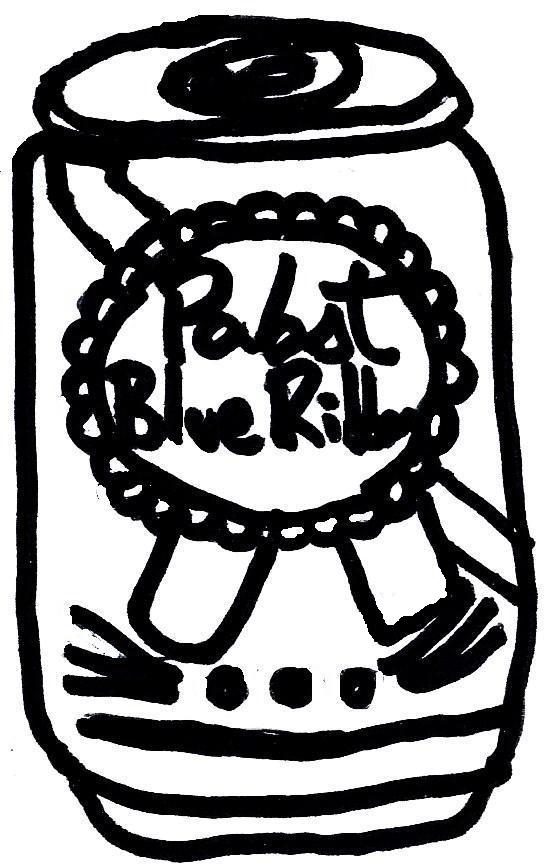
Through a few minor signifiers, like the protagonist’s affinity for the Williamsburg neighborhood and cans of Pabst Blue Ribbon, the movie specifies its exact target: the aging American hipster. This is not the broad definition of “hipster” that applies to almost anyone relatively young & discerning. It’s a very specific subsect of rich kids who speak & act exclusively through ironic detachment. It was brave of Heidecker to lend his Tim & Eric brand of humor (including longtime cronies Eric Wareheim & Gregg Turkington) to such a brutal impeachment of a group that likely overlaps with his established audience. Injecting Tim & Eric’s anti-humor into real human interactions leaves their characters looking like pampered shitheads as others blankly stare at them with disgust and exhaustion. The Comedy is a melancholy, unforgiving portrait of ironic toddler men. It’s not the kind of movie where a lesson is learned. The privileged don’t get their comeuppance. No one is punched in the mouth, even when they truly deserve it. Instead, they float on unchallenged, intoxicated, and refusing to engage with a sincere existence. Just like in real life.

The Comedy is currently streaming on Netflix.

-Brandon Ledet

Marks & Smarks: No Holds Barred (1989) & The Wrestler (2008)

wrasslin

Definitions pulled from Wikipedia’s glossary of professional wrestling terms:
-“Mark”: a wrestling fan who enthusiastically believes that professional wrestling is not staged.
-“Smark”: a fan who is aware of and interested in the backstage and non-scripted aspects of wrestling; a portmanteau of “smart” and “mark.”

Last night I attended my first live pro wrestling event, a months-long goal fulfilled. Despite the distinctly tame vibe of the crowd, I decided to misbehave. Couldn’t help myself. I got drunk, cheered for heels like a jerk, and shouted things that disturbed the 10 year old boy sitting in the row ahead of me. A few rows behind me, another ten year old was also yelling ridiculous taunts, but his were much funnier & more insightful than mine. I was thoroughly upstaged. Around a third my age, this kid had a preternatural comprehension of the sport that he thankfully shared with the neighboring crowd in short, high-pitched bursts. The kid ahead of me would be genuinely upset if he were in earshot. I know I upset him myself. I was sandwiched between a young mark and a smark, two different wrestling worlds clashing on either side of me.

I think it helps to appreciate both sides of the coin to experience the full potential of pro wrestling. Losing yourself in the characters & the soap opera drama is just as important as the in-the-ring athleticism. The violence wouldn’t mean as much without the camp. On the other hand, the context of the practical, behind-the-scenes operations of the sport gives deeper meaning to the in-the-ring storylines. It’s a scripted sport, but scripted in the style of reality television: the reality & the fiction are inseparable. One feeds off the other. A well-rounded fan needs a solid admiration of both.

Searching for this balance in pro wrestling cinema leads me to the bookends of the modern wrestling movie. 1989’s Hulk Hogan vehicle No Holds Barred perfectly captures the nature of mark mentality in the infancy of the current Vince McMahon era. 2008’s The Wrestler, by comparison, is a smark’s dream: an authentic look at the brutal truths of pro wrestling as a career. Together, help paint a complete picture, the fiction & the reality, one feeding off the other.

No Holds Barred (1989)
Although No Holds Barred was far from the world’s first pro wrestling picture, it was the first film produced by the World Wrestling Federation (now WWE). It would take over a decade after its release for Vince McMahon’s juggernaut wrestling promotion to form its own movie studio, so in this way No Holds Barred was ahead of its time. This was the only way it was ahead of its time. Miming the late-80s Schwarzenegger action movie format as much as the budget would allow, No Holds Barred was a blatant attempt to launch the movie career of Hulk Hogan, who had already dominated the “sports entertainment” world and was looking for his next conquest. The first sounds you hear in the film are the voices of Jesse “The Body” Ventura & “Mean” Gene Okerlund, who had come to define the era’s ringside announcing. The film’s head villain is character actor Kurt Fuller testing an almost exact prototype of his career-defining role as a television network scumbag in Wayne’s World. No Holds Barred is in every way a product of its time.

Keeping in line with the 1989 perspective of pro wrestling, before the internet’s obsessive nitpicking of the sport, No Holds Barred is firmly on the mark side of the mark/smark divide. Hulk Hogan’s character Rip Thomas is a superhuman beast in the ring and out. He leaps to incredible heights, destroys cars with his bare hands, and dismantles “bad guys” to an 80s “rock music” soundtrack, all while wearing a costume befitting of a superhero biker. In a world devoid of subtext he is a hero without flaw, an incredibly smart brute who’s dedicated to his charity work, the kind of guy who inspires lines like “Rip’s word is his bond” even when he’s not in the room. The entire movie exists to make Hulk Hogan look impossibly good. He’s a saint, a “good guy”.

Objectively, the movie is not very good. In fact, it’s awful. There’s some guilty pleasure to be found in its campy action movie spectacle, like when Rip force-feeds a rejected bribe to Kurt Fuller’s television executive and quips “I won’t be around when this check clears.” It’s also funny to think that Vince McMahon produced a film that indicts the evil nature of megalomaniac network executives, because, well, he’s a megalomaniac network executive. For the most part, though, the movie is shoddily made of generic kids’ stuff: jokes about “dookie” and slobbering hillbillies, world-class mean-mugging from immense muscle men, “good guys” beating up “bad guys”. It’s a movie you have to love for its savage idiocy, not in spite of it.

More importantly, it’s a document of a different time, a swan song for the era of the mark.

The Wrestler (2008)
A drastically different approach, Daren Aronofsky’s The Wrestler is an objectively good movie. I’d even go as far as to call it a masterpiece. Applying the modern online smark mentality to pro wrestling, Aronofsky turns the backstage repercussions of sports entertainment into a Greek tragedy. Unlike Hogan’s Rip Thomas, Mickey Rourke’s Randy “The Ram” Robinson is a real human being outside the ring. Well past his glory days, Randy struggles with health, finances, and personal relationships badly damaged from years spent on the road. In-the-ring injuries have increasingly severe real life consequences. In one particularly gruesome scene medics remove staples, glass, etc. from Randy’s skin as the camera cuts back to show how they got buried there in a horrific hardcore match, a bloodthirsty crowd chanting “You sick fuck!” in the background. As the pain periodically hits him throughout the film, the intense sound design cues you in with high-pitched noises to match his wincing. Referring to himself, Randy “The Ram” says “I’m a broken down piece of meat. And I’m alone. And I deserve to be alone.” Time proves him right. This is far from the marked-out world of Rip Thomas.

Aronofsky’s attention to authenticity is a remarkable achievement here. As I said before in my list of top pro wrestling documentaries, Randy “The Ram” feels like wrestlers we know, wrestlers like Scott Hall & Jake “The Snake” Roberts. Smarks would take particular interest in the way the movie depicts wrestlers planning spots before matches, laying out a basic framework within which they can improvise. The movie also addresses blading/juicing, steroid abuse, boozy bouts of self-medication after matches, shady promoters and minuscule pay. Randy directly refutes claims that wrestling is “fake” and shows off his scars as proof. Part of why it hurts to watch him despair over the old action figures, Nintendo games, and 80s monster ballads that serve as relics of his former fame is that it feels all too real. There are people who live like this.

Of course, an accurate portrayal of pro wrestling is seated somewhere between these two extremes, just as I was seated between two wildly different children last night. Without the glam showmanship, juvenile humor or outrageous superheroics of Rip Thomas, Aronofsky’s version of wrestling is a grim, lethal ordeal. The wrestling of No Holds Barred is an idealistic child’s macho fantasy. From The Wrestler’s viewpoint, it’s more like assisted suicide. To take in the full scope of the bizarre, idiosyncratic, self-contradicting superhero spectacle of the brutal sport, you have to appreciate both perspectives. You have to look through the eyes of the mark and the smark. Drunken yelling also helps.

-Brandon Ledet

Back Street (1961)

backstreet

fourstar

Based on the 1931 novel by the late, great Fannie Hurst, Back Street is a tragic film about the relationship between a man and his mistress. There are two other versions of this film that I have yet to see, but it’s only a matter of time until I get to the 1932 and 1941 Back Streets. I doubt that they will be able to top the decadent set designs and costumes from renowned designer Jean Louis, but I’m sure each film has an interesting take on this legendary love story.

Rae Smith (Susan Hayward) and Paul Saxon (John Gavin) meet by chance as Saxon is passing through Nebraska on military business, and they fall in love almost instantly. The problem is that Saxon is a married man. Once Smith finds out that he is married, she cuts him off and moves from Nebraska to New York as a form of therapy. She ends up running into him in New York after she has established a career in the fashion design industry. She rejects him once again and shortly thereafter earns an opportunity to move to Rome in order to expand her business. She immediately accepts, mostly because she wants to dismiss all chances of running into Saxon again. Guess whom she runs into in Rome? I swear he’s got some sort of tracking device on her. Once she runs into him, along with his entire family in Rome, she decides to just give in to the affair of her dreams. Of course, this doesn’t last for long and everything starts to fall apart as expected.

What I love most about this film is its ability to keep such a raunchy situation so classy. Their love just feels so authentic, mostly thanks to Hayward. I’m a pretty big fan of John Gavin, but this definitely wasn’t his best performance. He was just this sort of strange statue hanging around the set majority of the time (a very handsome statue at that). However, Hayward was, as always, astounding. Thankfully, the film focused more on her character than Gavin’s. Back Street is a film I watched years ago that I’ve kept on the back burner, but after watching it again recently it’s slowly becoming one of my favorite classics.

-Britnee Lombas
