In Albert Birney’s debut feature The Beast Pageant, a lonely man who gets all of his social interaction through the machines in his job & home is shaken out of his daily routine and forced to go on a supernatural adventure in a Natural world that looks suspiciously like rural upstate New York (where Birney was living at the time). In Birney’s breakout collaboration with Kentucker Audley, Strawberry Mansion, a lonely man who gets all of his social interaction through the machines on his jobsite visits to strangers’ homes is shaken out of his daily routine and forced to dream of a supernatural adventure in a Natural world that looks suspiciously like rural Maryland (where Birney has been living since). In his most recent directorial outing, OBEX, Albert Birney himself appears onscreen as a lonely man who . . . you get the picture. Birney has six feature films to his name, and the three I’ve happened to have seen all follow the same basic narrative structure, the same way that all Neil Gaiman stories I’ve read happen to rely on the same Alice-down-the-rabbit-hole plot device. The only thing that’s changed between these career checkpoints, really, is the nature of the sad-sack protagonist’s job, the types of machines that distract him from his mind-numbing daily labor, and the type of fantasy adventure that breaks him out of the routine. If you’ve already seen The Beast Pageant or Strawberry Mansion, you’re already familiar with the general vibe & shape of OBEX but, thankfully, Birney still finds plenty room for variation & novelty when coloring within those rigid lines.
In this iteration, Birney plays a 1980s computer whiz & agoraphobe who never steps outside his modest Baltimore apartment. His only true friend is a geriatric lapdog named Sandy that randomly wandered into his yard and has been spoiled like a baby ever since. Birney’s sad-sack loner makes a living by “drawing” computerized portraits of strangers on commission, recreating family photos with carefully arranged keystrokes on commercial-grade printer paper. When it’s time to relax, he entertains himself with the other screens arranged throughout his house, most notably a tower of cathode-ray TVs stacked in his living room as a kind of unintentional video art instillation. He often runs three different programs out-of-sync on this TV tower like a televised-media DJ, cuddling up with Sandy on the couch and cranking up the volume to drown out the roar of cicadas outside of the house. Things go awry when he purchases a PC computer game through mail catalog that promises to bring great adventure into his life — a promise made literal when the game invites a demon named Ixaroth to invade his home through the screen, directly importing Sandy into the game. To rescue Sandy, he must then go on a harrowing adventure outside of his apartment by willingly entering the game himself, represented as a live-action roleplay version of 8-bit era Zelda puzzle games. The story is not unfamiliar (especially not if you’ve seen Riddle of Fire in addition to Birney’s prior work), but its familiarity is ultimately, warmly sweet.
The most notable shift in craft here is Birney’s newfound interest in horror genre tropes, which is usually where most low-budget directors start. Some of his best couch time with Sandy in the first act is spent recording the entirety of A Nightmare on Elm Street Film from TV broadcast to VHS tape, so they can rewatch it together later, anytime they want. This allusion opens the film up to a wide range of surrealistic horror touches, including dozens of rubber-masked cicada mutants straight out of 1950s creature features, a couple Harryhausen-style skeleton soldiers and, most improbably, some spooky late-night drives inspired by Lynch’s Lost Highway. The treacherous demon Ixaroth obviously adds to the film’s horror bona-fides as well, represented onscreen as a beast made entirely out of TV static, with a tangible taxidermy skull. It’s an image that pairs well with Birney’s return to the Game Boy Camera-style black & white cinematography of The Beast Pageant, but more importantly it’s one that signals the themes he’s getting at with this latest stylistic experiment. The evil entity is composed of the glowing-screen filler that keeps his protagonist from venturing outside his apartment, making the film out to be a dire warning about the price of staring at screens all day instead of living a real life. Sure, you get some mind-melting psychedelic video art out of it, but at what cost? In comparison, I’m not sure that The Beast Pageant had a similar underlying message other than that having a job sucks. Maybe OBEX is Birney admitting that making & looking at niche art all day sucks too, especially if that’s the only thing you do.
Once upon a dream, Disney was in the business of producing world-class visual art. Now they’re just in the business of business — corporate acquisitions and such. The dream is over. So it goes.
That corporate culture shift didn’t happen overnight. At minimum, it happened over a decade. The 1950s saw Disney’s earliest, mightiest strides to diversify its portfolio, expanding into television and amusement parks after spending its first couple decades focused on its core mission: overworking & union-busting animators. Still alive, engaged, and at the helm, Walt Disney himself was conscious of the ways his company’s corporate expansion could dilute the quality of its feature films, so he made a point to reaffirm dominance in the field through technically accomplished pictures like Cinderella, Alice in Wonderland, and Peter Pan. Fittingly, the studio closed out the decade with the most back-to-basics title of the batch, 1959’s fairy tale romance Sleeping Beauty.
This feature-length adaptation of Tchaikovsky’s thinly plotted ballet is, above all else, a formal flex. Narratively speaking, Sleeping Beauty doesn’t accomplish anything that wasn’t already covered by Snow White or Cinderella. It’s yet another princess-in-distress fairy tale of a fair maiden being rescued from a jealous hag’s curse by a macho hero’s kiss. Only, it’s stripped of any defining characteristics that would make its doomed lovers lastingly memorable. Nothing about Princess Aurora is especially iconic, to the point where she’s more often referred to nowadays by the film’s title than by her proper name. All memorable character quirks are instead reserved for the women in charge of her fate: the three goofball fairies who protect her from Evil (Flora, Fauna, and Merryweather) and the villainous Mistress of All Evil (Maleficent, the only character here deemed worthy of her own spinoff franchise).
Without any of the usual pesky plotting or character concerns getting in their way, Disney’s team of technicians could focus entirely on the animation’s visual majesty. Afforded an extreme “Technirama” aspect ratio to paint his elaborate backdrops within, artist Eymind Earle crafts an extravagantly detailed tableau in every frame. Walt Disney tasked his crew with evoking Medieval tapestries in the film’s design, and Earle goes so overboard in his traditionalist craftsmanship that he upstages the characters that populate his backdrops. In turn, his collaborators create an incredible depth of field through cell animation techniques, especially in early sequences where the wicked witch Maleficent and her fairy foes bless & curse the newborn baby Aurora through a series of magic spells. Roses, specters, lightning, and other abstract premonitions swirl in psychedelic montage as Aurora’s fate is decided at the foot of her royal crib. It’s a divine intersection of the fairy tale traditionalism of Snow White and the pure orchestral illustration of Fantasia — two mighty Disney triumphs from decades past, the best animation money can buy.
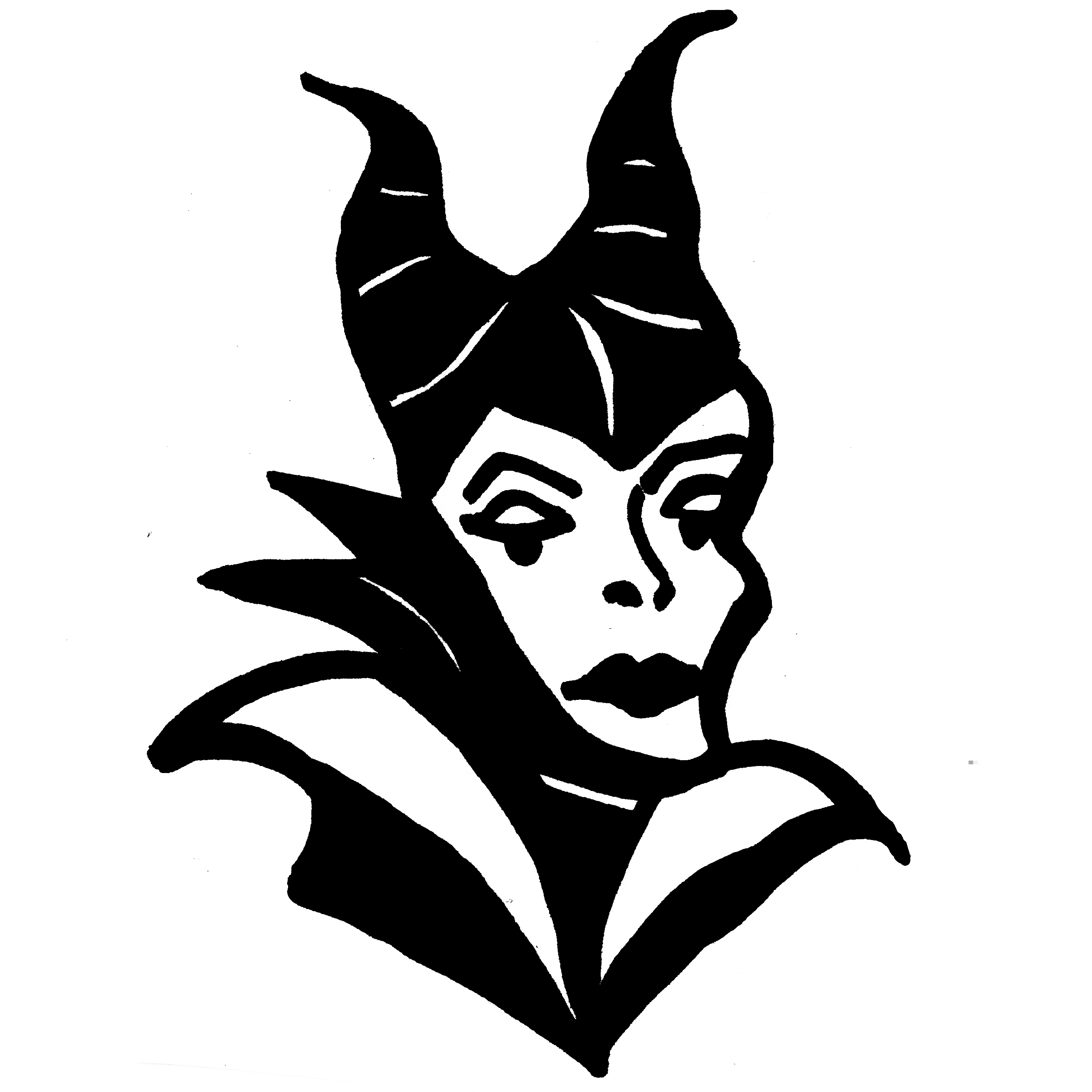
I have no interest in recounting Aurora’s troubled path to womanhood here. She’s cursed to die on her 16th birthday but is saved by a good nap and a classic case of puppy love. The rest is all arranged royal marriages, goofy sidekick antics, and sitcom-level mistaken identity hijinks. Even the mighty Maleficent is more memorable for her visual design than for her words or actions. We love the drag queen pageantry of her devil-horned headpiece. We love the green-on-black color scheme of her magic spells. We love her climactic transformation into a purple, fire-breathing dragon — another grand achievement in classic, hand-drawn animation. When the evil witch is defeated and Aurora is saved by the kiss of her sweetheart prince, the picture ends with the young couple dancing in the clouds. That’s also where the audience’s heads are supposed to be, not sweating the details of the storytelling on the ground.
When was the last time Disney was more focused on the visual majesty of it’s animation than on the marketability of its characters? Every in-house Disney production is now shrewdly designed to stock some toy shelf, amusement park attraction, or T-shirt screen press with fresh, sellable IP. It’s difficult to imagine an instance where they’d set aside character quirks & catchphrases to wow an audience with a return to classic, elegant animation. At this point, the company’s animation wing is a product delivery mechanism, like an assembly line conveyor belt. It used to be their entire raison d’être.
Angel’s Egg, a 1985 film from director Mamoru Oshii of Ghost in the Shell fame, is currently screening in limited runs with a 4K remaster, and I was lucky enough to catch it at my local arthouse. It’s stunning. A beautifully rendered monochrome world with only two living beings within it, the film is one that resists most attempts to interpret its metaphors, with Oshii himself admitting that there are parts of it that he does not understand. As such, it feels like a long, strange dream, full of images that feel pregnant with symbolism but too ephemeral to achieve any truly coherent exegesis.
In a waterlogged and abandoned city, an unnamed girl protects a large egg, while she forages for canned food and collects jugs of water. A giant machine rolls through the town, and an unnamed man bearing a cross-shaped weapon clambers down from it. They resemble one another, both being porcelain pale with platinum hair, but the girl flees from the man initially, and when he asks her for her name, it’s unclear if she fears him, can’t remember her name, or if she perhaps never even had one in the first place. The man briefly steals the egg and then returns it to her, retelling the story of Noah’s Ark but changing the ending so that the dove never returned, and that everyone on the ark simply forgot about their pasts. This leads the girl to take the man to a sort of sanctuary where she has been bringing her collected jugs of water, numbering in the thousands, and placed them all around the fossilized skeleton of an angel. The man, who has said that the only way to know what is inside of an egg is to break it, does so one night while the girl sleeps, and her screams the following morning when she discovers the bits of shell are heartbreaking. She runs and falls into the churning sea, where she drowns.
That’s a very rough sketch of what barely constitutes the “plot” of the film. This isn’t a story so much as it is a series of surreal images strung together as flimsily as the sluggish narrative of a dream in which you’re exploring a seemingly endless, empty city beneath a gray sky. (These are positive qualities that the film possesses despite “flimsy” and “sluggish” having derogatory connotations.) None of it really seems to mean much of anything. My favorite images from the film are completely tertiary to the above synopsis. The city seems to be filled with statues of fishermen, which the girl is startled by and avoids the presence of. Later, the city suddenly becomes filled with shadows of giant fish, silhouettes cast upon the streets and the sides of buildings, and the fishermen spring into action in an attempt to catch them, firing harpoons into the road and through streetlamps and into windows and empty houses. When I was still trying to understand the film and not simply experience it, I thought of them as automatons from the derelict city’s ancient past, left running in order to catch fish which had been hunted to death. That didn’t at all explain where the shadows came from, and now I see the sequence as two different kinds of ghosts, memories of two extinct parties that are both now long gone, physical husks that hunt long-dead prey, and the shadows of the flesh long since transcended. Is that accurate? Does any of it mean anything? I’m not sure, but it definitely doesn’t really matter.
Angel’s Egg is filled with Biblical imagery, with occasional glimpses of what appears to be the (or an) actual ark, sitting on a cliff as rain falls. Noah’s Ark is thematically central, and the film’s final image implies that all of what we have seen transpire occurred on the upturned hull of a giant ark-style vessel. The man’s use of a weapon in the shape of a cross is likewise open to many interpretations, but I remain convinced that attempting to puzzle all of that out is utterly the wrong way to engage with the film. There’s a giant mechanical sun that’s also an eyeball, and it’s covered in statues. What does it mean? Who cares? Enjoy the ride.
A late-70s Japanese folk horror about a demonic dragon that lurks underwater, threatening to drown a nearby village that won’t do its bidding, sounds like film bro catnip — the kind of zany, go-for-broke genre freak-out that the smelliest twentysomething in your life makes their entire personality for a couple years before moving on (see: 1977’s House). In practice, 1979’s Demon Pond is much more delicate than that. Its titular demon is a whispered-about, metaphorical presence that never graces the screen. Its vintage Moog score lilts and swells instead of hammering the audience with analog synth coolness. Its heroic fights against the otherworldly spirits that haunt the human world are staged as the ceremonial ringing of a bell. It yearns more than it burns, getting more wrapped up in doomed romance than doomed society. If you want the zany, go-for-broke genre freakout version of Demon Pond, check out something like Yokai Monsters: Spook Warfare. Here, the yokai are quiet observers of human longing & misery, their supernatural antics held at bay by calm waters & a ringing bell. The film gingerly holds the audience in its palm like a flower petal, until it crushes us in the vengeful fist of its climax.
Although adapted from a traditionalist kabuki stage play, Demon Pond structurally mimics the basic story template of folk horror cinema like The Wicker Man, The Wailing, and The Last Wave. These are stories in which a Big City outsider stumbles into a rural town with its own mysterious, supernatural traditions that ultimately leads to his demise (and often to the wide-scale destruction of everyone around him). In this case, a schoolteacher on vacation pretends to be studying the small village he’s visiting as a casual tourist, when he’s in fact searching for a dear friend who disappeared from his life three years prior. He finds that friend married to an alarmingly delicate, ethereal woman who’s so childlike in her innocence that she seems alien to the human world. Indeed, her earthly presence is reflected in a magic-realm doppelganger that only the audience can see: a spiritual priestess who lords over the local yokai, bound to an ancient agreement that they will not flood the nearby village as long as the humans on-site ring the temple’s ceremonial bell three times a day. An academic collector of local folk tales, the teacher’s lost friend has taken up the lifelong duty of ringing said bell to save the thousands of villagers who would drown if the area floods. Meanwhile, the villagers have long dismissed the bell business as ancient superstition, but they’re starting to suspect that the strangers at the edge of town are the reason they’re suffering the unreasonably long drought that’s threatening their livelihoods. The race to see which superstition will win out (i.e., whether continuing to ring the bell or slaughtering the outsiders will fix the village’s water woes) is a one-track race to doom, inevitably leading to the village being sunk to the bottom of the titular pond.
Part of Demond Pond‘s delicate nature is due to its queer angle on gender & romance, resulting from the casting of stage actor Bandō Tamasaburō in the dual role of Yuri/Yuki, bell-tender/princess. Tamasaburō was specifically trained in the kabuki art of onnagata: male actors who play overly dramatic female roles. He performs the fragile softness of Yuri and the all-powerful romantic fury of Yuki with a heightened, drag-like attention to gender cues that adds to the stagecraft artifice of the film’s fantasy realm. It also adds a subversive texture to the central romance between the ringers of the temple bell, something the movie leans into heaviest when it draws out the couple’s intimate mouth-to-mouth kiss into elaborate choreography & blocking worthy of an early-MTV music video. Meanwhile the aquatic-yokai princess Yuki is most pained by her bell-bound agreement to not flood the village because it keeps her apart from a neighboring prince she yearns to marry. She eventually comes to welcome the flood, as it would free her to love as she pleases, making poetic proclamations like, “How blissful to dissolve in the stream of affection. Let my body be crushed to pieces. Still my spirit will yearn for him.” That’s some high-quality yearning right there, especially since its cinematic adoption of kabuki theatricality drags it into the realm of tragic queer love.
For most of its runtime, Demon Pond floats somewhere between the isolationist folk-tradition dread of The Wicker Man and the garish high-artifice spectacle of The Wizard of Oz. Then, it’ll swerve into a special effects showcase sequence here or there unlike anything you’ve seen anywhere else. When the yokai “creatures of mud” (humanoid catfish, crabs, frogs, etc.) emerge from the pond grounds to summon the fabled flood, they’re represented in costuming befitting of community theatre or a well-attended Halloween soiree. When their bell-bound princess emerges, however, her otherworldly magic is represented in purely cinematic double-exposure techniques truly befitting of an underwater spirit. When the village inevitably fails to ring her bell and floods in the consequences of its own inaction, director Masahiro Shinoda (and special effects wizard Nobuo Yajima) go full tokusatsu spectacle, crushing the village under a heavy flow of water with the same might & scale of a Godzilla rampage. Whereas most later Godzillapictures would indulge in kid-friendly pro wrestling drama, however, Demon Pond‘s spectacle is instead a tragic expression of nuanced, adult conflicts. Its superstitious villagers are paradoxically desperate for water but afraid of a pond. Its doomed-lover outsiders are paradoxically resentful of those villagers but feel responsible for keeping them alive, undrowned. The entire local structure at the edge of the Demon Pond hangs on a precarious balance, one so delicate it can be thrown off by a single bell tone. When it all comes crashing down, you feel the weight of that tragedy pressing directly on your heart. It hurts.
My first obsession as a child was with Oz. The MGM musical has been a part of my life for so long that I can’t recall the first time I saw it, as its entrance into my life predates my earliest still-retained memories. I can recall the first time I saw any other Oz-related media, however, as I can still remember—even if distantly and vaguely—a Christmas that we spent at my grandparents’ cold New Jersey apartment when I was four years old. They had HBO, and in the early hours of the morning, with the scent of Community Coffee (which we always brought to my grandparents when travelling, as well as several containers of Tony Chachere’s, both of these being luxuries they couldn’t obtain in the north) and my grandmother’s Marlboro Reds in the air, I watched an episode of an animated series featuring Dorothy and company. This was a revelation to me, that there was more Oz to know, and I immediately started to devour as much of it as was available. I was reading by age five and although the early 20th century diction of the Oz books was somewhat difficult to parse, most of the versions available at my library were illustrated, and this was enough for the early years. But what affected me even more than the Judy Garland film was its long distant Fairuza Balk-starring sequel, Return to Oz, which was exactly the kind of proto-horror that my young brain was attuned to.
Return to Oz opens in Kansas, where the reality of post-tornado living is dreary and dire (and, given the age that I was when I first saw it, likely felt familiar to me in the wake of Hurricane Andrew). It’s nearly winter and the new house isn’t complete, and while Dorothy excuses Uncle Henry’s tendency to stare into space with his feet up, Aunt Em knows that it’s PTSD, even if the terminology doesn’t exist yet. Still, she’s more concerned with young Dorothy’s mental state, given that the little girl no longer sleeps through the night (when she sleeps at all) and is insistent that her imaginary journey to fairyland and the friends she made there are real. Em’s desperation to do the right thing for her niece leads her to leave the girl in the care of a doctor named Worley (Nicol Williamson) and his severe-faced nurse Wilson (Jean Marsh) overnight, where they promise that the newly discovered “science” of electroshock therapy will cure all of Dorothy’s ills. A storm comes in the night that allows Dorothy an opportunity to escape, which she does, although she ends up falling into a river; climbing aboard some floating debris, she falls asleep, only to discover that she has awakened near Oz, and is in the company of Billina, one of her chickens, who has not laid an egg since the tornado.
Dorothy quickly discovers an Oz in ruins. Although she finds the old house she first arrived to Oz in, there’s no Munchkin village nearby; the yellow brick road she travelled for much of the first film is in a state of advanced disrepair; the Emerald City’s brilliant gemstones have vanished as the city’s architecture lies in ruins. Worse, the city itself is ruled by the Wheelers, a pack of feral Klaus Kinski-looking men who travel on all fours on legs that end in squealing wheels. Hiding from them, she finds “the royal army of Oz,” which consists of a single individual, a mechanical man named Tik-Tok who is awakened via a series of wind-up keys. The inhabitants of the city have all been turned to stone by magic, with only Tik-Tok having survived this transformation unharmed by virtue of not quite truly being alive. He’s only the first of Oz’s inhabitants to join Dorothy’s new adventuring party, however, as she also soon collects Jack Pumpkinhead—a Jack o’ Lantern/scarecrow hybrid brought to life in order to scare the witch Mombi (Marsh again)—who governs the empty Emerald City as regent for the Nome King (Williamson again). The final member of the group is the “Gump,” a loathsome creature that Dorothy and company build out of old furniture and assorted attic garbage and bring to life via the same magic powder as Jack was in order to escape Mombi. Adventure awaits!
Although it may not be the most valuable element of media made for children, I do think one of the things that makes a piece of kid-oriented art have some sense of staying power is the extent to which it encourages imaginary play. A kid who loves The Land Before Time will get just as much pleasure out of going to the playground and pretending to be Littlefoot with their friends as they would out of rewatching the movie. I vividly remember running around in my front yard with my mom as a kid, sometimes on all fours, shouting “To the meadow! To the meadow!” in recreation of a scene from Bambi; the Little Golden Book Scuffy the Tugboat encouraged me to get outside in the rain and play with my own toy boat, and my mother still uses “There’s enough to float Scuffy” as a descriptor of how much rainfall she gets when I call her. Even more so than The Wizard of Oz, The Return to Oz capitalizes on this inherent hunger that children have to create the magical out of the mundane, and it does so using the same extratextual decision that Wizard did—that Oz contains “echoes” of the real world—in a more deliberate way. In the earlier film, this was much more explicitly a way of telling the audience that Dorothy’s adventures were just a dream all along, that her companions were the farmhands and the witch was Mrs. Gulch, translated into her fantastical dreams. As an official sequel, Return follows that same narrative choice, but more subtly and arguably more fantastically. Besides the obvious correlation between Worley/the Nome King and Wilson/Mombi, we also see Dorothy’s “inspiration” for Tik-Tok in the form of the shock therapy device, and she’s given a tiny jack o’ lantern by another patient (who is the spitting image of the missing Ozma, princess of Oz, who also happened to be Jack Pumpkinhead’s “mother”).
This is something that all children do, applying personality to toys and items and giving them voices and roles in their imaginary play. Even if kids don’t pick up on that being what’s happening in the film, that doesn’t mean that it doesn’t unconsciously get absorbed and make their internal worlds just that much more magical. That’s not even counting the number of kids who realized that they could imagine returning to a fantasy land in disarray as a new adventure to play out, following the yellow brick road once more, but one that’s twisted and broken. What if I pretended I was in NeverNeverLand, but without Peter? What if Fantasia needed another Bastian to give the Empress a new name? What if Narnia fell? (Admittedly, Prince Caspian opens in the ruins of the Pevensie’s castle Cair Paravel and The Last Battle features the actual end of Narnia, but you get what I’m saying.)
I’ve spent enough time praising the film for its potential to inspire imagination, which, while valid, isn’t praise for the film as a text unto itself. Every time I watch Return, I discover (or rediscover) something new to love about it. For one thing, this is a film that I never really thought of as being funny when I was a kid, but there are one-liners and jokes aplenty that will no doubt appeal to any adults in the audience (one of my favorite smirkers is Dorothy’s reply to Jack’s confusion that Tik-Tok might still be able to talk after his “thinking” spring had run out, which is to say that “It happens to people all the time”). My favorite thing about the film is the presence of the copper kettle-like Tik-Tok, who was always my favorite character in the books as well, with the eighth book in the series, Tik-Tok of Oz (specifically the one with this less-than-honest cover) being read no less than fifty times in my childhood. He’s just adorable. I love him. Billina is perhaps the second best non-human actor in the film, a Henson Company creation that’s such a perfect recreation of a Buff Cochin Bantam hen that there are moments where I know she’s a puppet and others where I know she’s a real chicken, but there are many more where I could not tell you if she’s “real” or not to save my life.
If the general public remembers this one at all, it’s usually negatively in comparison to their memory of the MGM picture, or they remember this one specifically for being on the scary side. While Wizard’s Wicked Witch of the West scared generations of children, this film had multiple frights that play out over the course of the film. The escape from the sanatorium is notably frightening, as the nurse screams into the pouring thunderstorm for Dorothy and her benefactor to return before they fall into a river and nearly drown. The Wheelers are scary, with their squealing wheels (inspired by the squeaking gurneys in the Kansas portion, naturally), and several of them are turned to sand and desiccate before blowing away when they fall into the Deadly Desert while pursuing Dorothy and friends. The Nome King’s death as he becomes more rocklike before crumbling and melting away in a hellish fire, his stone skeleton frozen into a screaming death face before it eventually crumbles, is also noteworthy, as is much to do with the Nomes and their kingdom in the first place (their faces moving about in stop motion on various rock faces remains impressive to this day). But the most memorable scene is one that I would argue remains one of the most chilling in all of cinema, including horror made for adults. At one point in the film, Dorothy must sneak into the chambers of Princess Mombi, which she has already seen contains dozens of glass-fronted cabinets containing the detached (but still living) heads of various Ozian women, which she changes to suit her mood as easily as changing hats. She awakens Mombi’s original head, which then begins chanting her name in a guttural, almost unearthly voice, as all the heads around her scream and Mombi’s headless body rises from her bed to attack. It’s fantastic!
It’s only a matter of time before this film gets lumped in with its intro-to-horror brethren as fodder for slop content along the lines of “CaN yOu BeLiEvE they showed THIS MOVIe to KiDs!!?!” that I’ve started to see pop up online. (Newsflash: if you’re under a certain age, you may not realize this, but art used to be created for multiple groups to enjoy and get something different out of because we didn’t all have individual devices programmed to shovel unchallenging, hyper attuned, algorithmically-driven, intellectually incurious fodder into our brains every waking hour). Enjoy it now before the internet tries to ruin it for you.
Let me tell you a story. A human boy comes into possession of a bladeless sword hilt that only he can control and which only has a blade at his command. He teams up with a rogue pilot whose rough exterior belies a heart of gold and, alongside a sassy computer intelligence, they meet a space princess. They visit exotic locales like the desert, a swamp, and a hive of wretched scum and villainy. Before the end, the boy learns that he is part of a long line of people who wield a mystical power and who can appear after death as spectral guides in this metaphysical art, and he defeats an ancient evil in a dark cloak. Sounds like Star Wars, right?
I really didn’t know that much about Starchaser: The Legend of Orin. I’m not even really sure exactly when I managed to acquire a digital copy, or when I transferred that file to my phone for a potential future viewing (I’m not an Apple user so I’ve had the same phone for 4 years without a forced upgrade occurring as a result of planned obsolescence). I’m traveling at present and I did foresee that while journeying I might grow weary of the beautiful but nonetheless antiquated and challenging prose of Jessie Douglas Kerruish’s 1922 novel The Undying Monster: A Tale of the Fifth Dimension, and had planned ahead by downloading a couple of episodes of Peacemaker while I was on Wi-Fi. I did not foresee that the HBO app would simply not load at all once I was in airplane mode, and thus after failing to simply sleep on the flight, looked at what I had in my videos folder, and there Starchaser was, waiting for me to finally give it my attention. Many worse things have happened on airplanes recently than watching Starchaser, but I still nonetheless failed to be engrossed.
The eponymous Orin is an enslaved human miner living beneath the surface of the planet Trinia, where he and other humans toil with laser diggers for volatile crystals, which are then “fed” to a giant dragon-like face when the slaves are visited by their god, Zygon. One day, Orin finds a sword buried in the rock, and when he frees it, the grandfather of his girlfriend Elan tells him that it may be part of an ancient legend about a liberator, before the sword projects an image of an old man who speaks a muddled prophecy, then the blade disappears. Elan’s grandfather is killed, prompting Orin and Elan to take actions which eventually result in them climbing into a crystal shipment and travelling through the dragon’s mouth, where the scales fall from their eyes about the nature of their enslavement, and Elan is killed by Zygon. Orin manages to dig his way up to the surface, where he meets a smug smuggler named Dagg Dibrimi and his smart-mouthed ship’s AI Arthur, although Dagg doesn’t believe Orin’s claims that there are slaves beneath Trinia’s surface. Dagg completes a hijacking of some of the crystals from one of Zygon’s freighters, and in the ensuing firefight, ends up in possession of an administrative fembot named Silica, whom he reprograms (through a not-very-funny scene in which we learn that the relevant circuits are in her posterior, and it’s very uncomfortable to watch), causing her to immediately become devoted to him.
Along the way, the travelers are occasionally annoyed by a sprite-like “starfly,” which eventually directs Orin to discover a bomb hidden within the payment that Dagg receives for his services, eliciting Dagg’s loyalty, and the two of them eventually meet Aviana, the daughter of the local interplanetary governor. She recognizes the hilt from her historical studies and accesses a library file that reveals that the hilt belonged to the “Kha-Khan,” a group of legendary heroes from eons past who vanquish threats to humankind, although the last of the Kha-Khan disappeared from history after defeating a robot intelligence known as Nexus who sought to enslave humanity, at which point the hilt disappeared. And wouldn’t you just know it, it turns out that Nexus wasn’t really defeated; he simply rebranded as Zygon and got a new job as the overseer of the robotic underground miners of Triana, although he quickly replaced his initial automaton workers with human slaves so he could then reprogram the mechanical miners into warriors, and uh-oh, here comes the invasion fleet! They’re defeated by the ragtag group, of course, and the starfly reveals itself to be the Force, um, I mean the spirit of the Kha-Khans past, who appear to Orin and the others as Force ghosts, I mean, uh, regular ghosts, I guess.
Director Steven Hahn worked mostly as a production manager on animated TV shows, with eighties juggernaut DIC as well as other studios, after getting his start with Ralph Bakshi working on his seminal work Wizards. During the off season for the various TV series that he was working on (like the Mister T animated series, Care Bears, the anglicization of French series Clémentine, and perhaps unsurprisingly, Star Wars: Droids), Hahn wanted to keep his Vietnamese animators busy. If you just read the Wikipedia page for this film, you might think, “Oh, how thoughtful,” but the quotation that he provided to the now-defunct sci-fi blog Topless Robot reveals that he, like George Lucas, was a man with dollar signs in his eyes more than anything: “I’d been working in television animation and owned a rather huge facility in Korea. I’ll tell you why I came to direct and produce this film. It’s not something you might expect. During the off-season, I had nothing else to do! When you own and run a big studio, it’s difficult to sit around and pay everyone a salary when there’s no work. So, I had to do something, and I thought, why not make an animated film?” There’s nothing artful in that, so it’s not really all that surprising that there’s nothing artful in the final product, either.
I’m being a little harsh. There’s not nothing worthwhile here. Although all of the character designs for the men are ugly as sin and Princess Aviana looks like she was traced from a He-Man episode, the ship designs are relatively cool, and the robots that we see are inoffensive even if they’re not particularly imaginative. The film also manages to have a couple of cool sequences when it manages to break free from its lockstep dedication to slightly misremembering Star Wars, with the most striking images from the whole film coming close to the beginning and the end. For the former, it’s the appearance of the decomposing “mandroids” living in the Trinian swamps, cyborg ghouls that are creepy and off-putting, and it’s unfortunate that they warrant mention only in the scene in which they appear. For the latter, there’s a moment during the climactic space battle in which Orin accidentally opens a bay door, unwittingly ejecting all of the robotic troops within the hangar into open space, which was a fun visual. The space battles are the most interesting things that we get to witness, and it’s worth noting that this is probably because the film was created to cash in on 3D movies, so it’s clear that all the budget that didn’t go into making Orin and Dagg not hideous to look at went into making Dagg’s ship look cool. Money not exactly well spent, but I suppose it was put where it needed to be the most. It certainly didn’t go into score composition, as there are moments where Luke Skywalker’s theme and the Imperial March are imitated so clearly that it’s shocking that Hahn didn’t get into legal trouble. Not for the faint of heart or short of attention span, this is to be viewed solely if your only alternative is unconsciousness and you can’t seem to sleep.
For decades, whenever someone cited the “uncanny valley” effect of modern filmmaking, they were referring to the off-putting resemblance of CGI to real-life humanity. As computer technology inches nearer to photographic accuracy, the ways in which the images are still just slightly off become monstrously horrific, especially when rendering human faces. As a result, movie nerds tend to fetishize the practical effects of yesteryear, preferring the blatant artifice of movie-magic techniques like stop-motion, animatronics, and latex makeup transformations to the uncanny computer effects of our current corporate hellscape. Ironically, that fetishism has recently led to an entirely new uncanny valley forming between advanced practical effects and the CG graphics they’re meant to counteract. For instance, when the stop-motion Wallace & Gromit shorts were mostly made by Nick Park’s hands in the early 90s, you could see the lumpy imperfections of his fingerprints in the characters’ clay bodies, unmistakably marking them with evidence of human touch. Now that Wallace & Gromit features like Vengeance Most Fowl are being produced by hundreds of collaborators for major studios like Netflix, those fingerprints have to be artificially applied, intentionally warping the clay so the machine-printed faces can’t be mistaken for computer animation. Likewise, the new children’s fantasy-adventure The Legend of Ochi features an animatronic puppet so perfect in construction & operation that it uncannily resembles its CGI equivalents in movies from less discerning filmmakers. Music video director Isaiah Saxon has spent years perfecting the puppetry & matte paintings of his feature-film debut to revive an industry overrun by computer-generated tedium with some old-world movie magic and old-fashioned awe. He didn’t think to artificially muck up the final product like Aardman Animations, though, and the result is so uncannily similar to CGI that you have to wonder why he even bothered.
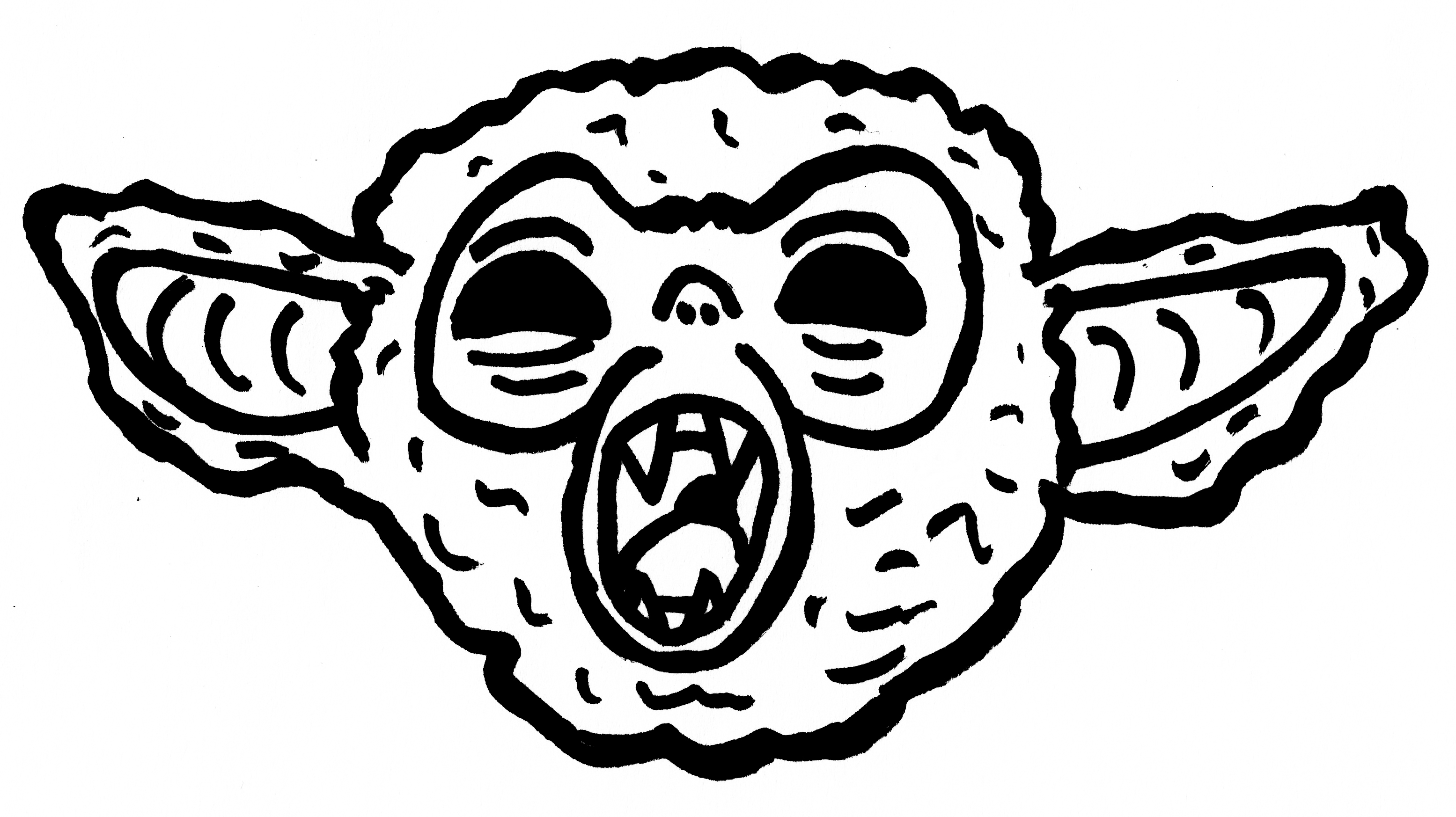
The titular Ochi are magical creatures brought to life via animatronic puppetry. The species largely resembles the golden snub-nosed monkeys of China, except that its bites are poisonous and its children are adorned with Mogwai ears for maximum cuteness. The Ochi are introduced to the audience in a scientific text titled Carpathian Beasts & Demons to help distinguish them from the real-life primates they resemble. Their presence on the fictional, Romania-adjacent island of Carpathia is treated as vampiric & monstrous, with a crazed patriarch played by Willem Dafoe training a new generation of boys to hunt & kill the supposedly demonic beasts on sight. His daughter is not so convinced of the nobility in this mission, and she quickly befriends a baby Ochi left behind by one of her father’s hunts. The rest of the movie is an E.T.-inspired children’s adventure, in which the sullen teenager runs away from home to safely return the Ochi to his fleeing family in a coming-of-age act of rebellion. If there’s any modern update to that familiar formula, it’s in Dafoe’s mockery of Jordan Peterson-style manosphere philosophy, which he preaches to impressionable young boys while driving around his monster-truck chariot in antique battlefield armor. He has no particular interest in his daughter beyond her value as “a father’s greatest treasure,” while she rejects her extremely gendered role in the house by donning costume vampire fangs and cranking heavy metal tunes from the fictional band Hell Throne. The goodbye note she leaves when she runs away proudly declares, “I am strong and cool and don’t believe anything you say,” speaking for all teenage rebels everywhere in their universal language of sass. As a result, the movie should spiritually speak to any depressed loner children who resent their bloviating fathers—of which there is always an infinite supply—regardless of whether they’ve already seen an E.T. riff or three.
The Legend of Ochi evokes all of the childlike wonder and sarcastic teen humor needed to make this genre formula work, but neither of those elements are entirely convincing. Its teenage characters (Helena Zengel as the Ochi’s bestie and Finn Wolfhard as a burgeoning fuckboy who’s “only nice when no one’s looking”) mumble their lines under mops of greasy hair to the point of near indecipherability. They aim for deadpan comedy but overshoot to land at dead-eyed monotony instead. There are also long stretches of the adventure to Ochi territory that have no dialogue at all, which would test audiences’ patience at any age and suggests that Saxon isn’t used to filling up a feature-length runtime with his writing. The real disappointment is that the psychedelic magic of his past music video work for artists like Björk & Panda Bear fall short of inspiring awe here. His puppetry & matte-painting visual tricks, while admirably old-fashioned, are too technically perfect to convey their construction by human hands. When the trailer for the film first dropped, social media C.H.U.D.s baselessly accused Saxon of boosting his budget with A.I.-generated imagery, which had to be heartbreaking for an artist who spent multiple years fighting to render this passion-project fantasy world through the most practical, tactile methods possible. Still, the final result is a little too machine-perfect to inspire genuine awe, and you can easily see what stoked those accusations. There’s an uncanny valley effect in how close its state-of-the-art puppets resemble computer-generated images, leaving them a little off-putting & soulless despite the passionate craft behind them. Saxon technically did everything right here. The aesthetic is distinct; the puppets are cute and smoothly operated; the gender politics are pointed and relevant to the moment; the kids are authentically mopey & rebellious. That’s what makes it so frustrating that the movie never fully sings, even if it can demonstrably hit all the right notes in perfect pitch.
Gwen et le livre de sable (Gwen and the Book of Sand) is a 1985 animated feature directed by Jean-François Laguionie, with its illustrations and animations done in gouache, giving the whole film a very watercolor texture. The plot concerns Gwen, a teenage girl who is adopted into a nomadic tribe who live in a post-apocalyptic desert. One member of the tribe, Roseline, is identified as a witch, and is said to be over 170 years old, and it is through her we get what little knowledge we have of this world and how it came to be. She tells us that the gods destroyed the civilizations of the past, and that now the world is stalked by an Eldritch abomination called Makou, which periodically roams the desert and spews out reproductions of various household objects from the sky, usually of a gigantic variety. Of course, Roseline also believes that the walled city she and her people avoid and from which the Makou seems to originate is the afterlife and that those within it are spirits, but when we learn more about them later, it becomes clear that Roseline’s wisdom is incomplete and thus many of her concepts of the universe’s function are inaccurate. In Gwen, Roseline sees a girl who has never known fear and respects this about her, but when Gwen and Roseline’s grandson Nokmoon sneak out one night to make love and fall asleep in a giant chest of drawers, Nokmoon ends up taken by the Makou. As the rest of the tribe moves on, Roseline and Nokmoon journey to the “afterlife” to try and rescue him.
This film, like The Tragedy of Man, is currently available in a remastered edition from boutique home video retailer Deaf Crocodile. I got to see it on the big screen at my local arthouse, and it was absolutely gorgeous. Although the motion of the animation is limited at times, that minimal movement lends the whole thing a storybook quality, rendering Gwen as a post-apocalyptic fairytale. It’s a fairly short feature, clocking in at under 70 minutes, but it feels no less fully realized than a film that was twice its length. The desert features fantastical creatures that feel like revisitations of earlier French animation experiments in design; there’s nothing as strange here as what you might see in La Planète sauvage or Les Maîtres du temps, but they are of a kind. The desert nomads live solely off of a diet of feathers harvested from a mutant ostrich, and the only light that they have at night comes from a bioluminescent scorpion. Where the film gets its most surreal visual elements is in the “gifts” of the Makou, as giant watering cans reign from the sky and Gwen and Roseline navigate a labyrinth of doors or summit a mountain range of clocks. We eventually learn that these items are generated by the Makou is response to religious supplication from the people who dwell within the walled city, where religion has dissolved into a unified cargo cult centered around the titular book of sand, which is in actuality a home goods catalogue from before the collapse of civilization. Their hymns consist of recitations of product descriptions, which then prompt the Makou into creating them. The leaders of this “faith” are two twin brothers who observe the captive Nokmoon’s psychically projected dreams and hope that this can help them to prompt the Makou to create something “alive” rather than the inanimate objects that it normally produces.
The mechanics of all of this are mostly irrelevant. The world-building exists solely to allow for the visuals, and that’s where the film shines. Gwen is able to rescue Nokmoon because this is that kind of fable, and it’s mostly an accident. The twin priests observe that a spiral image in Nokmoon’s dream resembles the product image of a particular firework, and prompt their faithful throng into singing it into existence via the Makou, which backfires when the people below are terrified by the suddenly bright, loud heavens. Gwen’s presence in the climax has no real bearing on the events there, except that she is able to bring Nokmoon home. She knows a bit more about the world now than Roseline does, but she lets the old woman continue to believe as she always has. Even if that story is a little confusing for the audience (and there are certainly some things left up to interpretation and conjecture, which is why I would recommend watching this one with a friend), it’s the sumptuous use of a non-standard artistic technique that makes this one worth finding and checking out.
Just one year after the classic fairy tale “Little Red Riding Hood” got a post-modern feminist reexamination in The Company of Wolves, the classic children’s novel Alice’s Adventures in Wonderland got the same treatment in the less-seen, less-discussed Dreamchild. Both films juxtapose real-life sexual predation against its warped fantasy-realm mirror reflections, picking at the gender politics of their selected works to find surprising, uncomfortable nuance. For its part, The Company of Wolves asks how much tales like “Little Red Riding Hood” were meant to protect young women from the sexual predation of older men vs. how much they were meant to scare them off from participating in their own sexual development & pleasure. Likewise, Dreamchild revisits the sexual predation behind the writing of Alice’s Adventures in Wonderland and Through the Looking Glass to question just how diabolical Lewis Carroll’s relationship with his young muse was, or if there’s room to find his fixation on her empathetically tragic. The main difference between these two literary autopsies is that “Little Red Riding Hood” is a stand-in for all young women everywhere, while “Alice” was a real-life victim with her own name and her own internal life, which makes for a much more delicate, dangerous balancing act.
Carol Browne stars as the real-life Alice Hargreaves in her twilight years, summoned to a Depression Era NYC to commemorate the 100th birthday of the deceased author who made her famous as a child. American journalists hound the prim & elderly English woman the second she hits the shore, desperate for whimsical pull-quotes from The Real Alice to fluff up their human-interest columns. The barrage of questions about her childhood family acquaintance Reverend Charles L. Dodgson (pen name Lewis Carroll) sends her into a tailspin of repressed memories & demented hallucinations, effectively re-traumatizing the poor woman for the sake of a disposable puff piece. Preparing for an upcoming Columbia University speech to celebrate Dodgson’s birthday, she becomes unmoored in time, reliving both traumatic moments as her childhood self and fantastic moments as her famous literary avatar. It quickly becomes apparent in flashback that Alice’s Adventures in Wonderland was written as an elaborate grooming tactic, with the middle-aged Dodgson hoping to woo the 10-year-old Hargreaves into being his eventual bride. That toxic dynamic has soured her lifelong relationship with the Wonderland books in a way that the American press is entirely uninterested in interrogating, so she has to work through it isolated in her own dreams & memories. The nuance of that discomfort arises in recalling her own active participation & manipulation of the author-muse dynamic as a child, something she does not care to remember.
A less thoughtful version of this story might’ve characterized Alice Hargreaves as a victim first and a victim only, but Dreamchild puts a lot of work into fleshing her out as a thorny, complicated human being. She’s a hard-ass social tyrant in both her 80s & her adolescence, and she was too sharp as a child not to notice the unseemly power she had over Dodgson as her much-older admirer. Ian Holm does an incredible job invoking both menace and pity as the lonely, nerdy Dodgson, pining after a child in a way even he knows is wrong. The young Alice pretends not to catch on, but plays games with the older man’s heart in a way that recalls the cruelty of a school-age bully. Meanwhile, the 1930s NYC segments draw a parallel between their delicate power imbalance and the normal, socially accepted rhythms of heterosexual courtship, with a fuckboy reporter (played by Peter Gallagher) hounding the elderly Hargreaves’s teenage assistant for romantic connection so he can exploit her access for personal profit. The fully grown men are fully aware how vulnerable the younger women they pursue are to their gendered power & privilege, and they choose to cross the line anyway. What seems to haunt Hargreaves in her final days is how aware she was of that one-sided romantic dynamic as a child, and the ways in which manipulated it for her own amusement. It’s a difficult topic to discuss without slipping into blaming victims or excusing abuse, but the movie pulls it off.
Dreamchild was the brainchild of screenwriter Dennis Potter, whose name is all over the credits as a producer who self-funded the project. All of the visual panache of the fantasy sequences arrive courtesy of the Jim Henson Creature Shop, who illustrate several key characters from the Wonderland & Looking Glass canon as nightmarish ghouls who haunt Alice Hargreaves in her old age. Those sequences are relatively sparse, though, and most of the runtime reflects Potter’s background as a journalist and television writer, staging lengthy exchanges of dialogue in hotel rooms & press offices. In those conversations, Potter pokes at the differences between American & British cultures’ respective relationships with money and, more bravely, the differences between 19th & 20th Century cultures’ respective relationships with age-gap courtship. As depicted in the film, Alice Hargreaves suffered self-conflicted feelings on both subjects and her own personal participation in them. She is, undoubtedly, Lewis Carroll’s victim, in that her entire life is unfairly shaped by his immoral yearning for her as a child. However, Potter finds enough grey-area nuance in her victimhood to allow her to appear onscreen as a fully realized human being instead of a historic symbol of trauma and abuse. Lewis Carroll himself is even extended that grace, regardless of whether he deserves it.











 Swampflix
