
The early-Fall lull between the Summer Blockbuster schlock dump and Awards Season prestige rollouts is always somewhat of a cinematic dead zone, but this year’s has been especially harsh. The ongoing SAG/AFTRA strikes have scared major studios into delaying some of their biggest Fall releases for fear that their marketing would fail without the star power of a Zendaya or a Timmy Chalamet doing traditional promo, leaving very little of note on the new release calendar (until the Studios cave on those actors’ reasonable demands for fair compensation). I’m sure it’s been a strain on movie theaters in the meantime, and I hope that they squirrelled away enough of that sweet Barbenheimer money this summer to survive the drought. Speaking selfishly, though, it’s been awesome for me as a regular moviegoer. Stumbling into this new-release wasteland during Halloween Season inspired local indie theaters to get creative in their respective repertory programming, resulting in what has got to be the greatest month of local film listings I can remember in my lifetime (with the caveat that I grew up in the era when suburban AMC multiplexes strangled the life out of what used to be a much more robust New Orleans indie cinema scene). I spent most of October bouncing and forth between The Broad and The Prytania on the same #9 Broad bus line, frantically catching as many never-seen-on-the-big-screen horror titles as I could while the getting was good. And there were still plenty more I missed that I would’ve loved to see properly projected, including the early Universal Horror all-timer The Black Cat. What a time to be unalive!
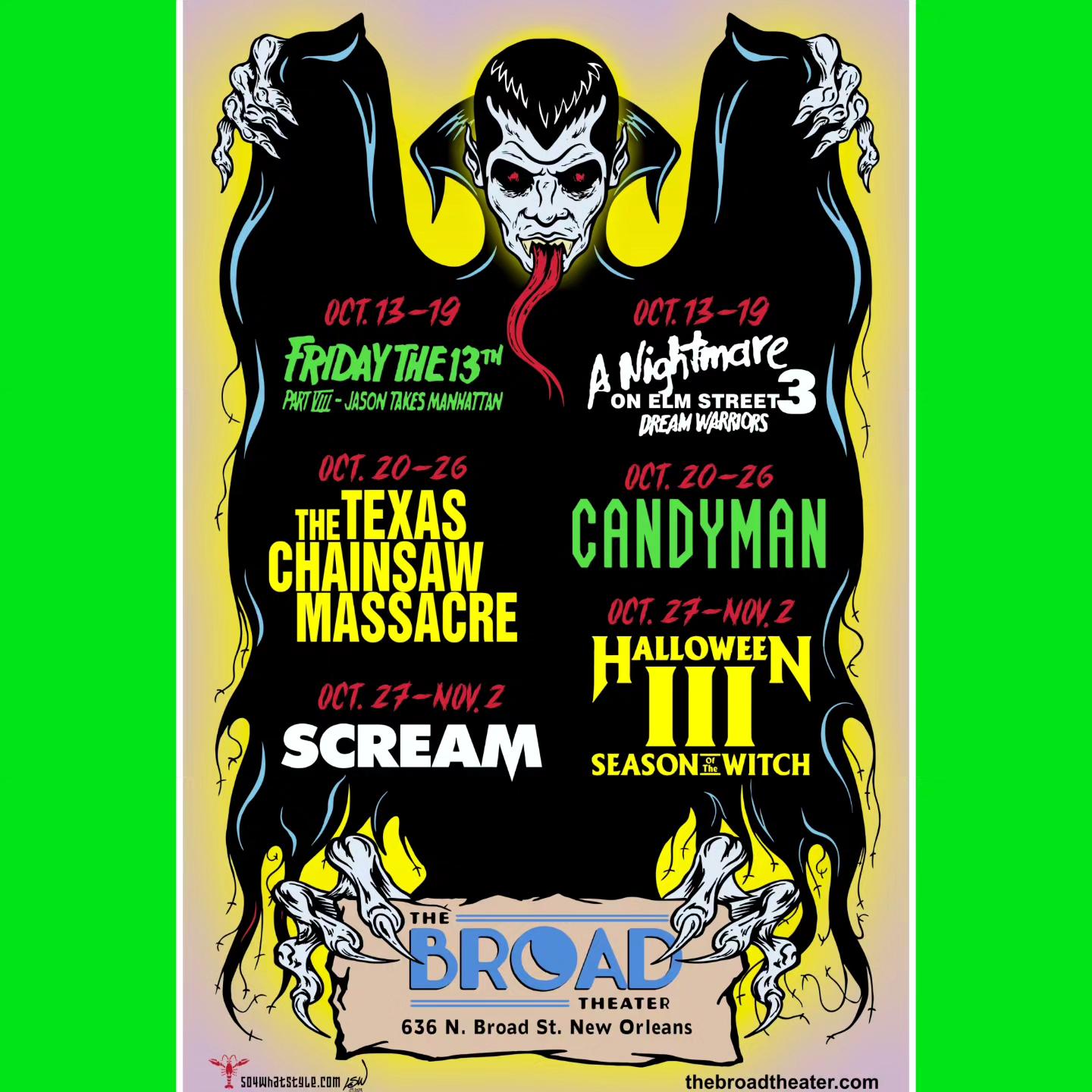
If I were to parse out the two distinct flavors of these theaters’ dueling Spooktober line-ups, I’d say The Prytania offered an older, dustier variety of venerated genre classics while The Broad offered slightly warped cult favorites of the video store era. I personally trekked out to The Prytania to see odds-and-ends obscurities I’d never seen before at all, let alone on the big screen (Dracula’s Daughter, Bell, Book and Candle, The Creeping Flesh), but they also programmed a long list of definitive Hall of Fame horror classics that should be checked off of any genre fan’s personal watchlist (Don’t Look Now, Psycho, The Wicker Man, The Shining, The Exorcist, etc.). Meanwhile, The Broad’s lineup made a few more surprising, left-of-field choices, mostly in straying from the classics to instead screen their most chaotic, divisive sequels. While The Prytania screened the John Carpenter slasher-definer Halloween, The Broad screened its Michael Meyersless sequel Halloween III: Season of the Witch. While The Prytania screened fellow slasher-definer Friday the 13th on Friday the 13th, The Broad screened Friday the 13th, Part VIII: Jason Takes Manhattan, its most over-complained-about sequel. The Prytania’s schedule was so plentiful with exciting horror titles this October that I hardly had time to watch movies anywhere else, but I pushed myself to catch the most esoteric selections in the “Nightmares on Broad Street” program anyway, just to support the iconoclasm, as detailed below. And while I’m comparing the two theaters’ programs here, I should note that the one film they both played last month was Wes Craven’s teen meta-slasher Scream, which I suppose makes it their consensus pick for the greatest horror film of all time.

A Nightmare on Elm Street 3: Dream Warriors (1987)
The most rewarding trip I had to The Broad this October was to revisit Dream Warriors, a movie I mostly remember from late-night cable broadcasts and oft-repeated Blockbuster VHS rentals. The film marks Heather Langenkamps’s return (and shockingly morbid departure) as the series’ Final Girl figurehead, now a young medical student researching violent sleep disorders in order to help suffering teens survive nightly dreamworld visits from Freddy Kreuger. The film’s limited setting in a mental hospital narrows its focus to a small group of traumatized teen insomniacs and their befuddled doctors who can’t quite figure out how they all suffer from the same group delusion that causes them to self-harm; spoiler: it’s because Freddy is real. Dream Warriors has long been a favorite of mine in the series due to the novelty of its imaginative kill scenes, which include Freddy puppeteering one of his victims using their exposed veins as marionette strings and Freddy transforming his finger-knives into hypodermic needles to feed the hungry mouths of another victims’ pulsating track marks. It’s pretty fucked up, especially since it’s combined with Freddy’s early stirrings as a stand-up comedian – crushing one victim’s head with a television while quipping “Welcome to primetime!,” declaring another victim “tongue-tied” after literally tying them to a bedframe with his detachable tongue, and punctuating every misogynist kill with the punchline “Bitch!”.
What will always stick with me about Dream Warriors now, though, is that it’s the only Nightmare on Elm Street movie that has managed to make me cry. Maybe I’m getting too soft in my old age, or maybe it was just the theatrical atmosphere replacing the film’s usual brewskies-on-the-couch presentation, but I got unexpectedly emotional watching these kids get disbelieved and blamed for their own illness for so long before finding unexpected strength in solidarity. Every authority-figure adult in their lives is dismissive of their nightly suffering except the one who happened to go through their exact supernatural torture in her own youth, and then she teaches them how to fight against their isolating threats as a collective group through lucid dreaming. It’s oddly sweet, even as it is hideously gruesome. It’s probably no coincidence that the three best-remembered Elm Street movies are the ones Wes Craven had a direct creative hand in—the original, Dream Warriors, and New Nightmare—and, while I might personally prefer New Nightmare in that trio, they’re certainly all worthy of standalone repertory programming. Not many theaters would take a chance on the sequels outside a marathon context, though, so Dream Warriors immediately registered as mandatory viewing, even in such a crowded month.
Friday the 13th Part VIII: Jason Takes Manhattan (1989)
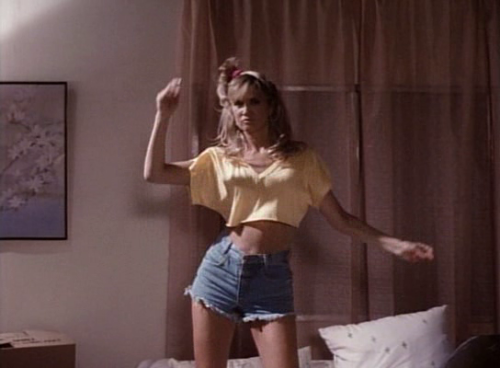
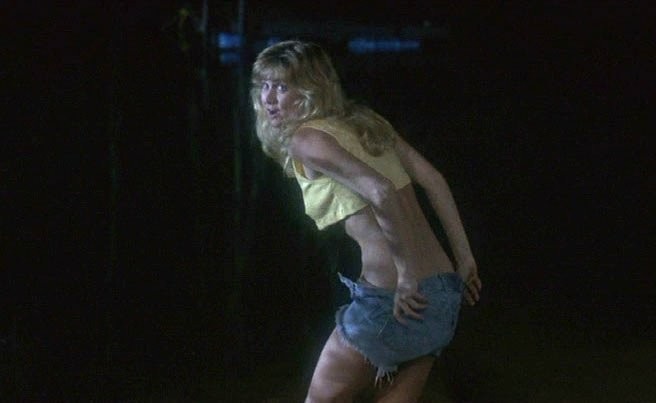
Speaking of slasher sequels no one would usually take a chance on, holy shit. Dream Warriors has plenty of long-running goodwill among horror addicts as one of the best of its franchise, but Jason Takes Manhattan has a long-running reputation of is own as one of its franchise’s worst. Wrongly. The standard-issue complaint about this much-mocked slasher sequel is that it’s flagrantly mistitled, promising that Jason Voorhees will take a grand budget-burning tour of New York City, when in reality he spends most of the runtime killing teens on a boat trip to the city. Given that marketing department disappointment, I wish the film had simply been retitled Jason Takes a Cruise to calm the horror nerds’ nerves. Complaining about the locale of Jason’s tireless teen slayings in this outing three decades after the first-weekend jeers is idiotically shortsighted & petty, since Jason Takes Manhattan is scene-to-scene the most memorably entertaining entry in its franchise, give or take Jason X (which is mostly set on a ship of sorts itself). En route to Manhattan, Jason punishes high school seniors for celebrating graduation with the old-fashioned teen sex, drugs, and rock ‘n’ roll that he loathes so deeply: filming amateur rock videos in the engine room, snorting coke off mirrors in the supply closet, and seducing the uptight principal to get out of completing their science fair projects. It’s a random assemblage of quirky slasher-teen behavior that even on land would be more entertaining than the snoozy cabin-in-the-woods doldrums of earlier Friday the 13th sequels, and then the Manhattan-themed rampage promised in the title is delivered as a sweet novelty dessert.
If anything, there’s something immensely satisfying about the way Jason’s whirlwind Manhattan tourism is delayed for a condensed, climactic payoff instead of being drawn out into urban slasher tedium. An opening credits sequence details the grimy back-alleys of 1980s NYC, particularly focusing on a barrel of toxic sludge that serves as the bathtub for a gigantic rat. We do not return to that alley until the third act, when Jason drowns the film’s most detestable character headfirst in that exact barrel, the rat now dead beside him to emphasize just how gross the sludge truly is. There’s also some great metaphysical character at work here as well, where Jason now appears to be made entirely of toxic sludge himself, having been submerged in the murky waters of Crystal Lake for so long that he’s essentially a hulking collection of sentient goo. His younger, drowned self appears to the film’s Final Girl in frequent, psychedelic hallucinations during the boat trip to Manhattan – underlining the killer’s supernatural constitution, connecting his qualities as an aquatic zombie to the waters that connect Crystal Lake to the Hudson Bay and, frankly, killing time between his actual kills. Mostly, though, his gooey, goopy body is just an extension of the way the movie associates New York City with sludge & grime, painting it as a landscape made entirely of rats, rape, street punks, and shared hypodermics. In a way, you get a little taste of Manhattan on the ride to its shores in Jason himself. More importantly, it’s one of the precious few entries in his franchise where he isn’t a total bore. Too bad so few people get past the misleading title to see that; it was the least well-attended horror screening I saw all month.

Opera (1987)
Now here’s where things get interesting. The Broad had already filled its schedule with classic horror films at the start of the month, and then Taylor Swift dropped a rushed-to-market concert film that cleared even more room on local marquees, since film studios were scared to compete with the most famous woman alive. I’ve never been a bigger Swiftie. Because Swift’s Eras Tour cleared the weekly release schedule, The Broad added three additional classic horrors to its line-up, all digital restorations of vintage gialli by Dario Argento. And so, I got to see my personal favorite Argento film on the big screen with my friends instead of the way I’ve watched it previously: alone as a fuzzy YouTube rip. Like with my appreciation for Jason Takes Manhattan, Opera is far from the wider consensus pick for Argento’s best; I was genuinely shocked to see it theatrically listed alongside his better respected works Deep Red & The Bird with the Crystal Plumage on The Broad’s marquee. At this point in the month, it was starting to feel like someone was programming a mini horror festival just for me, and it was delightful to see plenty likeminded freaks in the audience instead of the empty seats I was met with at the screening of my favorite Friday the 13th.
Opera finds Argento working in his Inferno mode, putting far more effort into crafting individual images than weaving them into a cohesive story. After being hired to direct a real-life opera of Macbeth and abandoning the project before production, Argento salvaged his scrapbook of ideas for its staging in this loose mystery crime thriller about a gloved killer’s obsession with an opera singer. The killer’s mechanism for torturing his muse is tying her up with pins pointed at her open eyelids so she cannot look away from his violent slayings of her friends, lovers, and collaborators. It’s a double-contrivance of Hitchcockian voyeurism, where the killer obsessively watches the singer from the anonymous crowds of her opera house and, in turn, makes her watch him perform his art backstage. It’s also just an excuse for Argento to indulge in a glorious clash of high & low sensibilities, alternating between operatic vocal performances in the theatre and thrash-metal slashings on the streets. Opera might feature his most overactive, over-stylized camerawork to date, too, most notably in scenes where the camera adopts the POV of the trained ravens on his Macbeth set to directly attack his own audience in murderous swoops & dives. Opera may not be as beautiful as Suspriria, nor as horrifying as Tenebrae, but it’s Argento’s mostly wildly impulsive vision – both his most invigorating and his most incompressible. I loved seeing it get the proper theatrical setting it deserves.

Halloween III: Season of the Witch (1982)
YWhile there may still be some novelty in exalting Opera & Jason Takes Manhattan as the top of their respective classes, I’d say Halloween III: Season of the Witch has been thoroughly reclaimed in the modern discourse to the point where calling it The Best Halloween Movie is almost an online Film Bro cliche. Hell, that thought even occurred to me back when we covered it on the podcast in 2016, when I called it the best Halloween movie. There’s some necessary semantic clarification to make there, though, because I’m not only saying that its infamous Michael Meyersless deviation from the John Carpenter slasher franchise makes it the most interesting movie of its series. I’m saying that it’s the best horror movie in any context that’s specifically about Halloween as a holiday, from the roots of its pagan Samhain traditions to its modern Trick or Treat rituals in the American suburbs. The only films I skipped on the Nightmare on Broad Street roster were the widely beloved horror classics The Texas Chainsaw Massacre, Candyman, and Scream, and I believe the horror nerd community has gotten over Season of the Witch‘s disregard for Michael Meyers slashings well enough that it now registers among that verified pantheon of seasonal greats (in a way they still haven’t gotten over the title of Jason Takes Manhattan). The reason I didn’t skip Season of the Witch, though, is that The Broad happened to screen it on Halloween Night, and I couldn’t fathom a better way to cap off this exquisite month of local repertory moviegoing. It was a hoot, and I’m already excited to see what they pull out of the haunted vault next year.
-Brandon Ledet



 Swampflix