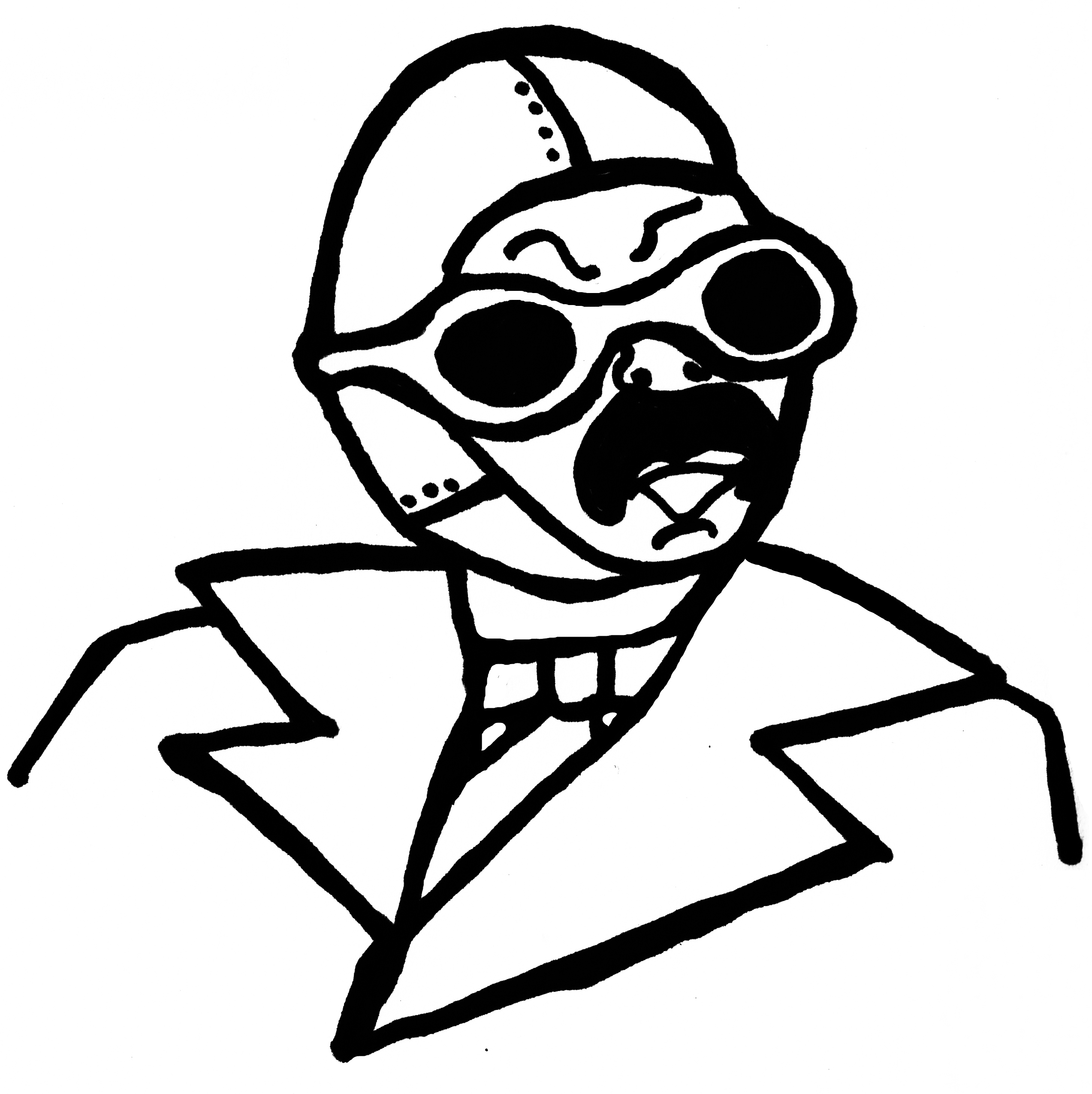

Spies (1928)

I am excited to watch what’s being marketed as the final chapter in the Mission: Impossible saga later this week, but I’m not sure exactly when I’m going to be able to clear an entire evening for it. Clocking in at 169 minutes of Hollywood action spectacle, The Final Reckoning is easily the longest Mission: Impossible sequel to date. Likewise, the most recent James Bond sequel, 2021’s No Time to Die, clocked in at 163 minutes as the longest of its own decades-spanning franchise. The Fast and Furious series is following the same trend, with both 2021’s F9 and 2023’s Fast X breaking the 140min barrier because two hours is no longer enough space to tell the epic story of black-market street-racers who found a second life as international superspies. I have no doubt that its own upcoming finale, Fast 11, will be even longer. It’s clear that these decades-running espionage thriller series have become bloated through the virtue of their success, racking up enough international box office to earn a blank-check approval for every imaginable indulgence, supercharged by the egos of Hollywood Elite freaks like Tom Cruise & Vin Diesel. In a roundabout way, though, their exponentially expanding runtimes do call back to the earliest days of spy-thriller cinema, both in the episodic “Until next time…” storytelling of pre-show serials and in the epic scale of Fritz Lang’s 1928 genre landmark Spies (aka Spione), which in its original exhibition ran for an impressive 178 minutes, putting all of its modern decedents to shame. Even its incomplete, surviving prints stretch past the 140 minute mark, trimmed down by half an hour but still meeting the modern Hollywood standard.

Despite its near-three-hour runtime, Spies is not an especially self-serious or prestigious work. Lang sets his espionage saga against the same kind of impossible, expressionist backdrops crafted for his sci-fi epic Metropolis the previous year, but it’s all in service of telling a low-brow, pulpy romance between undercover spies. If the film has earned any historical or artistic prestige outside the typically masterful imagery of Lang’s monocled eye, it’s all due to the fact that it is almost a century old. Co-written with his wife & collaborator Thea von Harbou, Spies pioneers a long list of genre tropes both big (referring to the protagonist only by his agent number, 326) and small (comically tiny cameras, disappearing ink, etc). As a result, it now plays heavily tropey, taking three hours to tell a fairly simple love story between two spies who work for opposing agencies. Our somewhat heroic Agent No. 326 (Willy Fritsch) is employed by the German Secret Service to thwart the criminal-mastermind plans of Haghi (Rudolf “Dr. Mabuse” Klien-Rogge) to intercept a top secret British-Japanese peace treaty. Not nearly as suave nor as talented as he thinks, No. 326 is already on the Russian enemy’s radar at the start of his mission, and he’s assigned to be taken down by the femme fatale counterspy Sonja (Gerda Maurus), who’s always two steps ahead of his plan. Only, Sonja is secretly a bit of a softie, blackmailed by Haghi to commit evil deeds. Naturally, she immediately falls in love with No. 326, constantly saving his ass in times of crisis and engineering a scheme to free them both from their professional obligations so they can spend the rest of their lives in each other’s arms.

This airport paperback plot doesn’t sound especially substantial in the abstract, at least not when compared to other, juicier Fritz Lang triumphs of its era like Metropolis, Destiny, and M. It’s illustrated with the same German Expressionist gloom & grandeur as those more infamous works, however, finding Lang at the height of his powers (long before he sleepwalked through late-career studio noirs like Beyond a Reasonable Doubt). The opening prologue and explosive climax are especially stunning, kicking things off with a rapid-fire montage of espionage action and closing things out with a literal circus of violence. It’s at those bookends where Lang crafts isolated images in inserts that rival the beauty of any individual frame of classic cinema: a spy posing atop the rubble of an exploded bank wall, a low-angle close-up of an assassin on a motorcycle, a woman’s hands posed with gun & cigarette. There are a few other scenes sprinkled throughout the sprawling runtime that rival those images (namely, the makeup rituals of a creepy secret agent named Nemo the Clown and a boxing ring encircled by ballroom dancers), but much of the drama between those spectacular bookends takes on stage-play feel. Whereas Ernst Lubitsch would’ve turned No. 326 & Sonja’s ill-advised romance into a perverse romp (see: Trouble in Paradise), Lang & von Harbou craft a fairly somber story rife with blackmail, prostitution, opium addiction, and suicide. The old-fashioned sweetness of the central romance can’t help but be marred by the grim practicalities of spy work, which sometimes leads to bursts of violent visual poetry but often leads to conflicted players clawing their own faces in agony over who to be loyal to – lover or employer.

Even the relatively shortened Restored Cut of Spies was a little trying on my 21st Century attention span, which began to waver any time Lang strayed from grand German Expressionist spectacle to stage-bound melodrama. At the same time, I’ve seen plenty of Ethan Hunt, James Bond, and Dom Toretto spy thrillers in recent years that are just as long but not half as cool. It would’ve taken the same time commitment for me to catch up with the most recent Fast & Furious film, which I never got around to because nothing from the previous, even-longer one lingered with me past the end credits; they even found a way to make a forgettably dull image out of the Fast Family finally launching a car into space. Meanwhile, there are at least a dozen individual frames from Spies that will be burned into the back of my skull forever, even if it’s telling an equally inconsequential story as most of its modern equivalents. All that these bloated spy-thriller sequels need to do to earn their ever-expanding runtimes is take a page from Fritz Lang’s book and craft some of the most fantastic, gorgeously composed images in the history of cinema. It’s that simple.

-Brandon Ledet

Asphalt (1929)

I am by no means well studied in the broader history of German Expressionism, but I have seen a horror movie or two.  When I think of the German Expressionist visual style, my mind immediately conjures up the fantastic, transportive images of titles like Nosferatu, M, The Cabinet of Dr. Caligari, The Man Who Laughs, The Hands of Orlac, Destiny, The Golem and, of course, Metropolis.  Even the cultural impact of those films’ innovative directors & cinematographers emigrating to America has always been most immediately apparent in early Hollywood horrors like The Black Cat & Dracula, given their surrealistic production design and shadowy visual play.  It was surprising, then, to find no supernatural dream logic in the once-lost German Expressionist drama Asphalt, which might account for the film’s relatively low name recognition in that field.  In terms of narrative, Joe May’s tragic story of mismatched lovers feels more familiar to early Hollywood dramas about misbehaved women than it does to the nightmare-realm horrors more typically associated with German Expressionism.  However, all of the ecstatic visual flourish associated with that film movement is in full swing, as the camera sways wildly in an attempt to capture the bustling urban chaos of Berlin, where its doomed love story is set.  Its plot synopsis might sound like the German equivalent of early US films like A Fool There Was, The Red Kimona, Parisian Love, or A Woman of the World, but it’s way less restrained & stage-bound than any of those titles.  It’s pure cinema, made by the people who established the language of that artform in its infancy.

Metropolis star Gustav Fröhlich plays a bumbling, naive cop who’s not quite streetwise enough to handle the streets of Berlin.  Else Heller (doing her best Louise Brooks drag) plays the young man’s downfall: a cunning, compulsive thief he catches robbing a jewelry store when he should be directing traffic his first day on the job.  The poor rube buys her sob story about needing to steal to survive, as she is perilously close to being evicted onto the harsh streets of Berlin.  An unlikely romance blossoms between cop & criminal as his sympathy grows, until she can’t stand his naivety any longer and fully confesses her betrayal of trust.  She does not, in fact, steal for survival.  She steals because it’s thrilling to get away with taking home diamonds & furs.  She steals for the fun of stealing.  What ruins the fun is the way her flirty pickpocket lifestyle gets her new beau into steep trouble, both with the macho brutes of her past and with the strictly law-abiding members of his own family.  The dramatic entertainment value of Asphalt is in watching a young, fashionable woman thieve, lie, and cheat in hedonistic excess, even if the morals of the era require it to eventually condemn her for crimes against morality.  No matter how deplorable the femme fatale’s behavior is in the abstract, the movie takes obvious delight in watching her smoke cigarettes and smolder in a heated bathtub, treating herself to a life of luxury that she would be denied through any legal path.  She might not steal to survive, exactly, but she does steal to make life worth surviving.

Asphalt intuitively takes for granted that crime is sexy & fun, so it gets to spend a lot of its time playing around with new, exciting ways to move the camera instead of complicating its central romantic dynamic.  It opens with kaleidoscopic mirroring of Berlin street traffic and sweeping montages of the rain-slicked asphalt beneath those cars & feet.  The camera is in constant motion, either evoking the mania of navigating a city’s cacophonous busyness in exterior scenes or taking inventory of individual objects & players on interior sets.  It represents an end of an era for ecstatic, inventive German filmmaking, but there’s no solemn, settled maturity to its cinematography.  It’s desperate to impress.  Like Metropolis, a complete print of Asphalt was considered lost media for decades, until it pieced back together through archival discovery & recovery in the 1990s.  Unlike Metropolis, it’s been largely forgotten to time a second time since that restoration.  There just isn’t as much of a completionist streak among romance & crime film enjoyers the same way that horror & sci-fi freaks will seek out anything that falls into their genre of choice.  I’m as guilty of that bias as anyone, having never heard of this film until a used DVD copy fell into my hands at the Minneapolis record store Electric Fetus.  Meanwhile, I’ve actively sought out at least a dozen horror films from the German Expressionist era in my frantic search to guzzle down all things horror.  It turns out they were making romantic dramas in that period too, just like in Hollywood (except way dreamier & prettier).

-Brandon Ledet

Lagniappe Podcast: Metropolis (1927)

For this lagniappe episode of The Swampflix Podcast, Boomer, Brandon, and Alli discuss Fritz Lang’s German expressionist sci-fi landmark Metropolis (1927).

00:00 Welcome

01:07 Idiocracy (2006)
07:40 Days of Heaven (1978)
13:42 The Parallax View (1974)
20:01 Blue Sunshine (1977)
25:54 Phantom Thread (2017)
29:02 M (1931)
33:30 Gasoline Rainbow (2024)
38:42 Furiosa (2024)
43:26 Hundreds of Beavers (2024)
47:56 Blue Velvet (1986)
51:55 It’s Such a Beautiful Day (2012)
57:30 Le Samouraï (1967)
59:02 Evil Does Not Exist (2024)

1:02:22 Metropolis (1927)

You can stay up to date with our podcast through SoundCloudSpotifyiTunesTuneIn, or by following the links on this page.

– The Podcast Crew

The Cat and the Canary (1927)

three star

One year after the Art Deco silent horror masterwork The Bat made the jump from stage to screen, Universal Studios got their feet wet in the horror game with an adaptation of a very similar play, The Cat and the Canary. Along with the much lesser trifle Midnight Faces, The Bat & The Cat and the Canary combined to establish what would become a very popular subgenre of early horror: the “old dark house.” In the “old dark house” story, guests at an ancient, spooky mansion are terrorized by seemingly supernatural events & a mysterious killer. At the story’s natural end the killer’s identity is revealed and all of the preceding supernatural events are explained to be their doing. This was a very popular murder mystery/horror plot form the 30s throughout the 50s until the murder mystery aspect was dropped & the supernatural elements were played up & developed into the “haunted house” genre. By the 1970s & onward the “old dark house” plot was spoof fodder for properties like Murder by Death, Clue, and Scooby-Doo, but in the 1920s it played remarkably fresh, with The Cat and The Canary standing as a prime example of the horror genre’s merits as an artform. Unfortunately, in retrospect the film feels a lot less special & a little more flawed than it did to the audiences it floored in 1927, especially with the towering presence of The Bat casting its shadow over the ordeal.

A wealthy eccentric on his death bed bemoans the fact that his family hungers after his money like a gang of cats circling a caged canary. In order to fight them off, he sets the reading of his will 20 years into the future, when the family returns to learn that the money has been willed to his most distant relative. There is then a conspiracy to drive this distant relative insane as a means to strip them of their newfound wealth due to incompetence. In the meantime anyone foolish enough to get in the way is mysteriously murdered and, because the mansion setting is so very spooky, their deaths are blamed on “ghosts.” The Cat and the Canary boasts a very straightforward plot structure that calls a lot of attention to its stage play origins, but what the film lacks in a unique narrative, director Paul Leni makes up for in pure atmosphere. The German Expressionist filmmaker brings an incredible eye for visual play to the big screen, a bridge between art house Europe & the more rigid spectacle of Old Hollywood that I believe would guide the heights of Universal horror productions for decades to come. Leni unlocks the silliness of the film’s stage play origins and allows the camera to move in subtly haunting ways, as if exploring a crime scene with a flashlight (quite literally in an early moment). He also relies heavily on German Expressionism’s penchant for drastic lighting & dreamlike imagery. Gigantic cats & medicine bottles tower over a dying man. Overlaid images like a doorknocker, an envelope, and a gloved hand shift large in perspective, foreshadowing the deep focus technique Citizen Kane would pioneer in the early 40s. Just examining gorgeous, isolated frames of the film, it’s no wonder that The Cat and the Canary was known as the definitive  & haunted house movie,  inspiring no less than five other feature film adaptations of the same play & influencing horror giants like Alfred Hitchcock with its visual style.

The problem with The Cat and the Canary is a fairly common one with old school horror productions. It’s actually the sole reason I had to knock a half-star off my rating for the otherwise flawless The Bat. In order to soften the cruel blow of the film’s supernatural (and potentially blasphemous) terrors, old fashioned horror was often mixed with hokey yuck-em-up comedy, particularly in American productions. In The Bat, a dopey, dim-witted maid makes an ass out of herself by continually mis-guessing the true identity of The Bat. In Midnight Faces, the “old dark house” genre’s other founding father, the comedy takes the ugly form of racial caricature in a scaredy cat black sidekick. The Cat and the Canary, unfortunately, stretches the comedy element across as many characters as it can, turning what is otherwise a beautifully-constructed art film into a painfully hokey farce. Now-tired gags like a scared character stuttering, “G-g-g-g-ghosts!” & incomprehensible relics like, “It’s about time you climbed on the milk wagon,” (what?) drag a lot of what makes The Cat and the Canary special down into the depths of eyeroll-worthy comedic tedium and it’s honestly a damn shame.

There’s certain old-world cheese that I can forgive given this film’s ancient release date, such as the way it hammers home the central cat & canary metaphor that gives it a title over, I believe, three separate repetitions. That I can live with. The way the film’s hokey comedy routines drain the blood out of its supernatural horror, however, is a true bummer. The Cat and the Canary is ultimately a film at war with itself. As a cornerstone of what American horror would come to look like in it wake, the film is an indispensable artifact and an occasionally breathtaking one at that. It’s also a failed comedy, though, which is up there with the most difficult kinds of films out there to enjoy. This is a problem made even worse by the fact that it’s bested by The Bat in every single possible regard, especially in the look of its central killer antagonist, which is not at all catlike in his visage in comparison to the other film’s humanoid creature. The result is a flawed work that I admired, but also found a little disappointing. I hope somewhere else in Paul Leni’s career there was a film that made proper use of his stunning cinematic eye without cheapening it with broad humor.

-Brandon Ledet

The Man Who Laughs (1928)

EPSON MFP image

threehalfstar

(Viewed 07/14/2015, available on YouTube.)

I have to admit that I had no idea what I was getting into with this film.  A black and white picture of Conrad Veidt with a painfully grotesque smile and desperate eyes was posted online next to an illustration of Batman’s Joker.  The Man Who Laughs – inspiration for the Joker!”

I’m a sucker for a dramatic photo.  And for Batman.

The Man Who Laughs turns out to be a gorgeous 17th century period piece filmed on the eve of the sound age and the Hays Code, based on Victor Hugo’s 1869 novel.  The Laughing Man himself, Conrad Veidt, is well known for his other roles in movies such as The Cabinet of Dr. Caligari and Casablanca, and I’m sure that you’ve all heard of this film already and that I’m behind the curve on this one.  The 1928 Universal Pictures movie is a melodrama, a romance, a comedy, a swashbuckler, and a thriller.  The story follows a man who, kidnapped and mutilated as a child to punish his father, lives as a performer until his lost identity catches up with him and drags him into a world of intrigue.  There is not a speck of realism to be found and it’s completely delightful.

Conrad Veidt’s portrayal of the mutilated clown Gwynplaine is a fantastically overwrought exploration of existential crisis.  Mary Philbin’s portrayal of the literally blindly innocent Dea is one of the most beautiful presentations of spotless femininity that I have ever seen on film (helped no doubt by constantly luminescent lighting).  Olga Molnar presents a contrasting and archetypically vampy performance of the Countess Josiana: beautiful, sexual, powerful, and cruelly self interested.

The Man Who Laughs is a fun watch, and as a (mostly) silent film it will require your actual attention and a modicum of active investment.  I found the pacing quick enough and the story engaging enough to keep me interested without much effort.  The visual lushness of the movie makes it a treat to watch.  I would consider this movie to be a fairly accessible silent film for anyone interested in dipping their toes into the world of pre-sound movies, and should go on your list if you’re interested in pre-Code movies, German Expressionism (even though it’s an American film), or visual inspirations for the Joker.

-Erin Kinchen