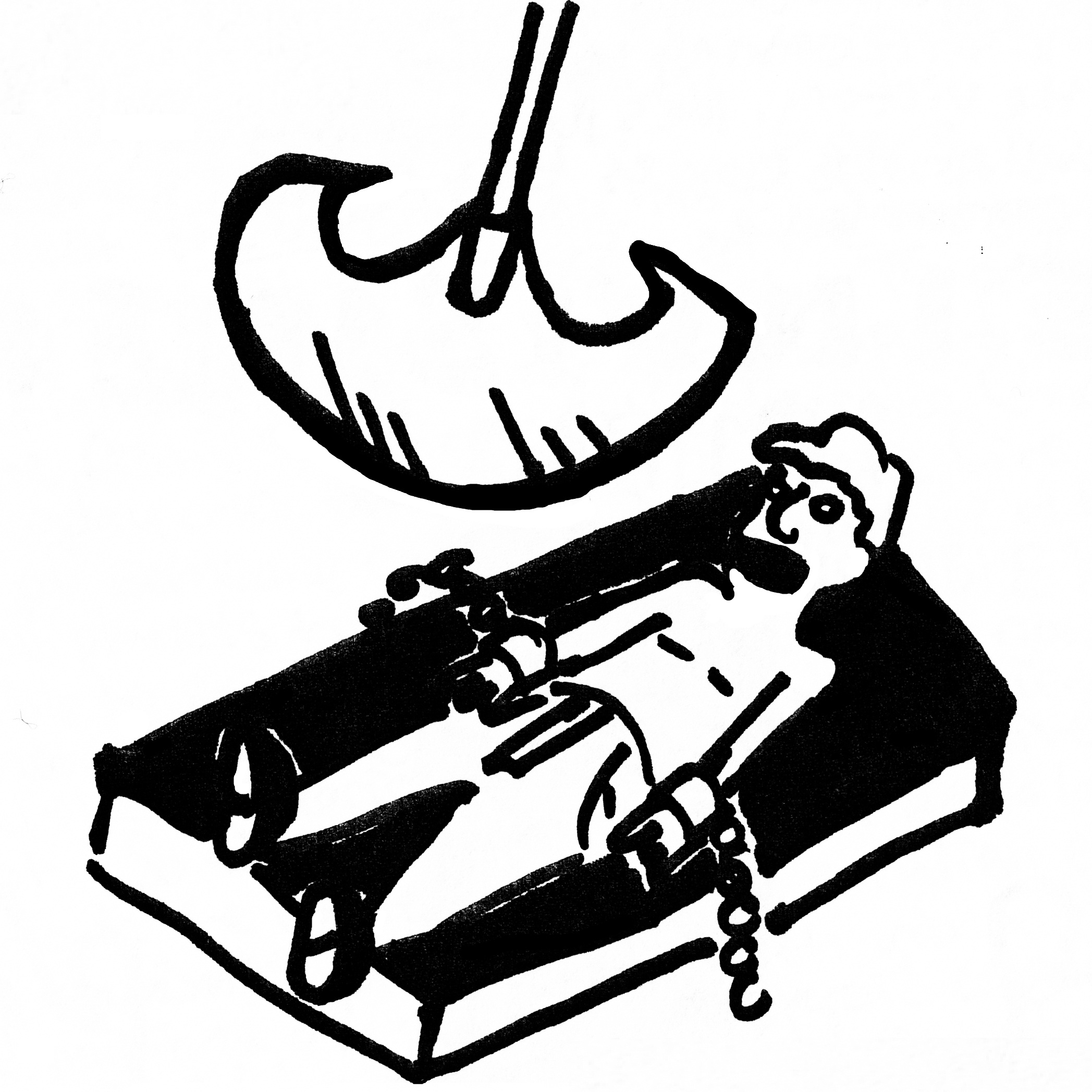

The Pit and the Pendulum (1961)

In my review of The Spiral Staircase, I mentioned Douglas Brode’s Edge of Your Seat: The 100 Greatest Movie Thrillers, and that I expected I would soon be getting to #61 on that list, Roger Corman’s adaptation of Edgar Allan Poe’s short story “The Pit and the Pendulum.” It is the only film from Corman to make the list, and although I am reviewing it last in my Corman/Poe series of reviews, it’s notable that this was only the second of these adaptations, following House of Usher by about a year. It was itself followed by Premature Burial, and having viewed those out of order, I made a joke in my Usher review that it and Burial follow a fairly similar and specific sequence of events. I’m glad I didn’t watch them in release order, because I might have given up on Burial, given that Pendulum follows almost the exact same stations of the plot. 

As the film opens, a man approaches a seaside castle (different from Usher and Burial in that the character does not approach the lead’s home from across a foggy moor), knocks upon the door and demands to see the home’s owner, and is initially rebuffed by the servant who answers the door, but is then allowed in to the home by the sister of Vincent Price’s (and in the case of Burial, Ray Milland’s) character. It’s genuinely shocking that so little effort was made to differentiate this from its immediate predecessor, and that the film that immediately followed would adhere so closely to the same structure. Here, our hero is Francis Barnard (John Kerr), who has come to see the widower of his late sister Elizabeth (Barbara Steele). He is allowed entry by his sister-in-law, the Donna Catherine Medina (Luana Anders), who tells him that her brother Don Nicholas (Price) is resting, but allows him inside nonetheless. Barnard asks to see his sister’s grave, but Catherine tells him that she is not buried in some churchyard and is instead interred in the crypts beneath the castle; as she escorts him to Elizabeth’s resting place, the two pass another room in the catacombs from which a great racket emerges. Nicholas exits the door and tells Barnard that it conceals a contraption, the ceaseless operation of which he is responsible for. 

Although the Medinas are reticent to reveal every detail of Elizabeth’s death, the arrival of family friend Dr. Leon (Antony Carbone) leads him to drop some information that prompts Barnard to demand explanation. As it turns out, although theirs was a good and loving marriage, Nicholas’s beloved bride was ultimately affected by the evil that is present in the Medina estate, as Nicholas and Catherine’s father, Sebastian (also Price) was a member of the Spanish Inquisition. An untold number of people were tortured and killed in the castle’s catacombs, where Sebastian’s implements of torture remain. Apparently, the sleepwalking Elizabeth made her way to this chamber and somehow got herself stuck in an iron maiden, and when she awoke there, she died of heart failure from the fright of it all. Of course, Nicholas himself fears that Elizabeth was not truly dead when she was buried (again, just as in Usher and Burial), despite Dr. Leon’s willingness to stake his reputation on his confirmation of her death, and that her spirit haunts the castle as a result. There are spooky things about, after all. Elizabeth would play the harpsichord nightly for her husband, and when the instrument is heard late at night and one of her rings found atop it despite the apparent absence of any people or even a way in or out of the room, it raises questions. A kind of explanation is found when Barnard discovers a series of secret passageways that connect locked rooms to Nicholas’s own chambers, with Nicholas himself fearing that he may be losing his mind and performing as Elizabeth. 

This one is pretty fun, and it probably is the best thriller of Corman’s Poe cycle. I’ve tried to avoid spoilers as much as I can for these but I don’t seem to be able to find a way to talk “around” another of the recurring elements here, so I’ll just have to come right out with it: it’s very strange how often the resolution to the apparent mystery is that Vincent Price’s character’s wife isn’t as in love with him as he was with her, and also that reports of her death are greatly exaggerated. As in The Raven, we’re never given any reason to think that Elizabeth here, Lenore there, or Emily in Burial are anything other than the loving, adoring spouses that they appear to be, until the sudden revelation that all of the gaslighting being performed against the lead is being done by his wife. And it’s Hazel Court two of those times! (She also appeared in Masque of the Red Death, but her villainous nature is on display from her first moment on screen therein.) It stands to reason that making eight of these movies in four years would be bound to lead to some recycling of plots, especially given that the specific Poe works being “adapted” also have large Venn diagram overlaps in their narratives, but viewing this one as the finale in an attempt to save the best for last ends up doing it a disservice. It’s not a bad movie, but it feels repetitive, which isn’t fair to hold against Pendulum because it was only the second one of these that Corman made and is thus responsible for setting the standard which was copied, not vice versa. But hey, at least the Medina castle doesn’t get burned to the ground at the end.

One of the recurring elements present here that really works is the use of the oversaturated nightmare sequence, although here it’s more of an oversaturated flashback. As Nicholas reveals the details of the halcyon days that he and Elizabeth had together, everything is bathed in greens and blues, which turn to purple when Elizabeth “takes ill.” There’s also a fun iris-in transition to this flashback, which happens again when Catherine reveals to Barnard that Nicholas actually bore witness to the murder of his mother and uncle Bartolome at the hands of their father, who discovered his wife and brother were adulterers. In this sequence, the saturation color turns to a bloody, angry red, and it works remarkably well. (For those like me whom I would lovingly refer to as “Belle & Sebastian-pilled,” think of it as going from the cover of The Boy With the Arab Strap to Write About Love to If You’re Feeling Sinister.) Of course, this all comes back around when it’s revealed just who’s behind everything, only for Nicholas to fall backward down some stairs in fright at the sudden reappearance of Elizabeth and, concussed (or more), descends into the belief that he is Sebastian and that Elizabeth and her lover are the late Mrs. Medina and Bartolome and exacts his revenge accordingly, not entirely unlike Dexter Ward being overtaken by the spirit of his ancestor in The Haunted Palace

Another notable element of these, now having seen all of them, is how variably effective they work as mystery thrillers. Other than Masque with its large ensemble, the cast of all of these films has been relatively small, in line with Corman’s notoriously spendthrift nature. As a result, the extremely limited number of characters can curtail the film’s ability to provide sufficient red herrings or otherwise conceal the identity of the film’s villain or villains. Pendulum certainly does the best job of keeping one guessing as to what’s really happening in the stately mansion in which all the events occur, playing things close enough to the vest that the reveal of Elizabeth’s co-conspirator feels satisfying but not obvious. That’s probably why Brode selected this one for inclusion in Edge of Your Seat, even though I wouldn’t call this the best of the Corman-Poe cycle overall. In his “also recommended” section, however, I found that he agreed with me overall, writing “Among the other Poe adaptations, by far the best two are The Masque of the Red Death […] and Tomb of Ligeia,” the latter of which he calls “an intelligent, restrained suspense tale.” 

You may be asking yourself where the pendulum is in all of this, or the pit, for that matter. For that, my friend, you will have to watch for yourself.

-Mark “Boomer” Redmond

The Masque of the Red Death (1964)

The Masque of the Red Death may have already been discussed to death on Swampflix. It was Movie of the Month in February 2015 (so slightly before my time), was reviewed in conversation with its 1989 remake (Adrian Paul?!), and served as inspiration for a Mardi Gras costume as immortalized here. But I just saw it for the first time and was completely blown away by it. It’s the exact flip side of Premature Burial, figuratively, and—since they were released together on a double sided MGM Midnite Movies DVD—literally. I couldn’t believe just how cool it was, especially since Roger Corman, despite how dearly I hold him in my heart, does not have a reputation for being a good filmmaker. The set & costume designs were really terrific, and Vincent Price is an absolute great in this role, treating the whole thing as if he’s doing Shakespeare at The Globe. 

Price plays Prince Prospero, whom I always imagined from the original Edgar Allan Poe short story as being a much younger man, possessed of a kind of haughtiness of youthful royalty. Here, he is instead portrayed by the fifty-three-year-old Price, and his indifference towards the suffering of his subjects is not an aristocratic apathy toward the suffering of the poor as he and his sexy friends (as I always imagined them based on their descriptions as being “hale and light-hearted”) wait out an epidemic. Prospero is instead an out-and-out worshipper of the devil who takes delight in committing acts of evil and depravity and who spends much of the film trying to undermine the faith of a peasant girl named Francesca (Jane Asher). As the film opens, Prospero and his men ride carelessly through a village in his domain, narrowly avoiding trampling a child to death in the thoroughfare through the quick intervention of Gino (David Weston). When the prince stops in the village, he takes umbrage at the underhanded things being said about him, and he plans to kill both Gino and another man named Ludovico (Nigel Green), but Francesca intervenes on their behalf and Prospero humors her; he tells her to choose which one will die, but she cannot choose between her beloved and her father (the former and the latter, respectively). When Prospero learns that there is plague in the village, he cuts his visit short and takes all three back to his castle to deal with them later, and orders the village burnt to the ground. 

I mentioned before that Corman wasn’t known for being one of the greats, but what he was known for in his time and beyond is that he was a very economical filmmaker. When writing about Targets years ago, I mentioned an anecdote in which Corman said that he had managed to shoot entire movies in two days; the Corman interview that is the only special feature to speak of on this home video release is pretty illuminating about his process. When talking about American International Pictures’ higher-ups, he says that they learned about a special tax credit that the UK was offering for films shot there. Feeling that they were leaving money on the table by not taking advantage of it, AIP relocated Corman from his normal filming environs and sent him to Associated British Elstree Studios in Hertfordshire, England (where Jamaica Inn was filmed!). Corman praises this decision, as it allowed him to hire actor Patrick Magee, whose performance as Prospero’s friend Alfredo conveys both vulnerability and menace in a way that Corman highlighted when meditating on the making of the film. 

Also here in the castle is Julianna (Hazel Court, who was also in Premature Burial), Prospero’s mistress who has heretofore enjoyed the fruits of being Prospero’s concubine without having to commit to marriage. The presence of Francesca (and Julianna’s eviction from her own suite to make way for her) complicates these matters, prompting Julianna to commit to going “all the way” in her dark studies and present herself to the devil as his willing bride. She goes through with the final ceremony and then the film goes into a weird psychedelic dream in which she’s attacked by an entire United Colors of Benetton ad’s worth of international stereotypes before she gets pecked to death by one of Prospero’s birds. This might be part of what makes this one so memorable and novel, as the film has all of the trappings of being a very different, Shakespeare-for-the-BBC, self-serious film, but because Roger’s at the helm, he brings a little bit of that Hollywood flavor to it so we also get to have a series of excitingly violent sequences, including the burning of Francesca’s village, Prospero murdering a guest who arrives late to the party with a crossbow, dungeon-based sword-fighting, a man being burned alive in a gorilla costume, and the aforementioned death-by-bird. What’s also impressive is the scale of this one, as production was completed in a mere four weeks, and yet there are many impressive camera movements around the ballroom where the festivities largely take place while the dancers in the background never lose a single step in their choreography. In fact, Corman said that he considers it to be a 3.5-week picture that just happened to take four weeks to complete because of what he considered to be a slower pace. (James Cameron is still sour about British crew’s slow pace making Aliens, and Stanley Kubrick was likewise vexed by the high number of tea breaks taken during the making of Full Metal Jacket, which is not bad company for Corman to find himself, to be honest.)

I had quite a good time with this one. It’s very well made, has extremely high production values, and is never dull for a single moment. The only really puzzling thing about it is the casting of Esmerelda; without watching the Corman interview that explained it, I would never have known that the child actress was supposed to be portraying an adult little person, especially as they had her in the same scenes with Hop-Toad, who was portrayed by an actual little person (Skip Martin). This confusion works in the context in the first scene in which she appears, as we see that Alfredo talks about her with a kind of lust that helps to illuminate the depths of the depravity that Prosper’s boon companions are filled with. In her only other scene, when Hop-Toad is preparing for his vengeance on Alfredo for striking Esmerelda, he warns her to be ready to flee the castle, and she speaks with an adult voice, which didn’t make sense until Corman admitted in the interview that he couldn’t find a little person actress for the role in England and cast her with eight-year-old Verina Greenlaw instead. Just have that in mind when you check this one out. And you should! 

-Mark “Boomer” Redmond

The Premature Burial (1962)

The Premature Burial is, unfortunately, not very good. The third Roger Corman film based (very loosely, in this case) on an Edgar Allan Poe short story, this was the only film of the eight that the director made which did not star Vincent Price. The story is that while Corman was in dispute with American International Pictures about what project to film next, he was approached by a film printing lab that wanted to get into the production business. They put up half the funding and Corman provided the other half out of his own pocket, but Price was unavailable due to being under contract with AIP. On the first day of shooting for Premature Burial, the two heads of AIP showed up and said that they were excited to be working with Corman again, because they had just that very morning bought out the film lab that Corman had partnered with. As a result, this one ended up being released by American International as well, but it was too late in the process to change horses, and instead of Price, we get Ray Milland in the leading role. Interestingly, the night that my friend and I ended up renting Goodfellas (as discussed recently on the podcast), we were seeking out Corman’s Masque of the Red Death at the video store and were unable to locate it. It was supposed to be in the “double features” section, as it’s paired with Premature Burial on one of those “MGM’s Midnite Movies” DVDs. It wasn’t there, under “P” for “Premature” or “M” for “Masque,” nor could it be found in the general horror section. When I returned Goodfellas the following week, I decided to check again, and there it was, filed correctly. The weird thing was that the person working that day thanked me for finding it, since the person who had assisted me before had marked it as missing in the system. It’s not a very interesting story, but it is more than you’re going to get from Premature Burial

After an opening sequence in which a gaggle of grave robbers are digging up a body only to discover the inside of the coffin lid streaked with blood and tattered from scratching, we open on Emily Gault (Hazel Court). She’s arrived at the manor house—on a perpetually misty soundstage moor, of course—of her beloved, Guy (Milland), and although Guy’s sister Kate (Heather Angel) attempts to send her away, Emily insists that if Guy won’t receive her, he must tell her to her face. Kate relents, and we learn that Guy is a pupil of her father, Dr. Gault (Alan Napier), and that Dr. Gault and Guy were present at the desecration of the coffin in the pre-title opening, with Guy feeling so embarrassed about having fainted that he’s ready to end their engagement rather than admit the truth. He reveals that his family has a predilection toward catalepsy, that is to say that they enter into a comatose state that so closely mimics death that he believes his father was buried alive, as he recalls hearing him screaming within his tomb in the catacombs beneath the manor. As a result, he also possesses a paralyzing fear that he will be entombed while still alive, a fear that seeing the corpse that had tried to dig its way out triggered. Emily convinces him that they can work through it together, and he agrees to proceed with their wedding. 

At the ceremony, we meet Miles Archer (Richard Ney), whose repeated insistence that he’s truly happy for Emily telegraphs that he and Emily were once in love but that he has lost her. Emily sits at the pianoforte and plays the song “Molly Malone,” which causes Guy to spiral further, as this was the same tune that was hummed by the gravediggers on the night that he went out with Dr. Gault and saw the man who had clawed at the inside of the coffin. Guy then builds an elaborate freestanding tomb with layer upon layer of failsafes that would allow him to escape if he were entombed there prematurely, including a rope ladder that appears at the pull of a sash, digging tools (and tools for the repair of digging tools), and even a couple of sticks of dynamite. The final safeguard, of course, is a dose of poison, so that he could kill himself quickly rather than die slowly. Emily convinces him to get out of this morbid place and go for a walk on the moors, but when he hears “Molly Malone” being whistled, he and Emily are parted, so that she does not see the grave robbers who appear out of the fog (or do they?) to torment Guy. 

It’s at this point in the film that my already taxed investment hit an all time low. Guy passes out, and then he has an extended dream sequence in which he is locked in his fancy foolproof tomb, only for all of his various and sundry plans to fall apart. The rope ladder falls from the ceiling, unanchored. The dynamite has dry rotted and crumbles under his touch. When Guy was showing all of his contraptions to Emily and Miles (and thus to the audience), this was already tedious enough, but now we have to go through essentially the same motions and at the same speed, just watching everything not work. It’s the scene that serves as a microcosm of just how much this whole film simply doesn’t work, as Guy runs through the same cycles of depression and paranoia in a way that may be meant to evoke a descent into madness but which ultimately feels repetitive and tiresome. Milland is trying here, I suppose, but there’s never a point before his obsession that we get to meet him and know him as a mentally healthy person, so there’s not that far for him to fall from the person we meet in the first scene to the person he becomes when he actually does get buried alive and then wreaks havoc on those who have wronged him. It’s a short trip between those two mental states, but it takes over an hour to get there. 

The pace does quicken a bit around the middle. Emily gives a fairly well written and delivered speech in which she tells Guy that his obsessive fear of being buried alive has made him functionally do exactly that, as he spends his days fully within his tomb. There’s also a bit of fun to be had when someone sneaks down to the family basement and messes around with Guy’s father’s crypt, so that when Kate seeks to prove that their father died peacefully by opening his tomb, Guy’s fears seem to come to life, as it appears his father tried to escape. Things quickly peter out by the end, however, and the reveal of the architect of this attempt to drive Guy mad is hardly surprising. Even if you’re a Poe or a Corman completist, this is one that I can recommend that you skip. 

-Mark “Boomer” Redmond