Destroy All Neighbors (2024)

I have developed parasocial relationships with several of the key collaborators behind the retro splatstick comedy Destroy All Neighbors, which has me rooting for its success.  I met one of the film’s writers, Charles Pieper, at a local horror festival a few years ago, and we established one of the most sacred bonds two people can share: social media mutuals.  The film’s score was also co-produced by Brett Morris, who produces and co-hosts several podcasts I’ve regularly listened to for over a decade now, which is arguably an even stronger (one-sided) bond.  Several of the central performers—including Jonah Ray, Alex Winter, Jon Daly, and Tom Lennon—have all maintained the kind of long-simmering, low-flame cultural longevity on the backburners of the pro media stovetop that also encourages that same kind of parasocial affection, the feeling of rooting for someone to continue to Make It just because knowing of their existence feels like being privy to a deep cut.  It seems appropriate, then, that the film is about the kind of long-term, stubborn hustle artists must maintain to complete any creative project in a town like Los Angeles, and how that LA Hustle mindset can also get in those poor souls’ own way.  There’s a tricky balance between the lonely self-determination of seeing a project through even though no one else fully believes in it and the simultaneous need to foster collaboration & community to achieve success.  The people who made Destroy All Neighbors appear to understand the difficulty of that balance down to their charred bones because they’re all struggling with it in real time; all the audience can do is cheer them on from the sidelines.

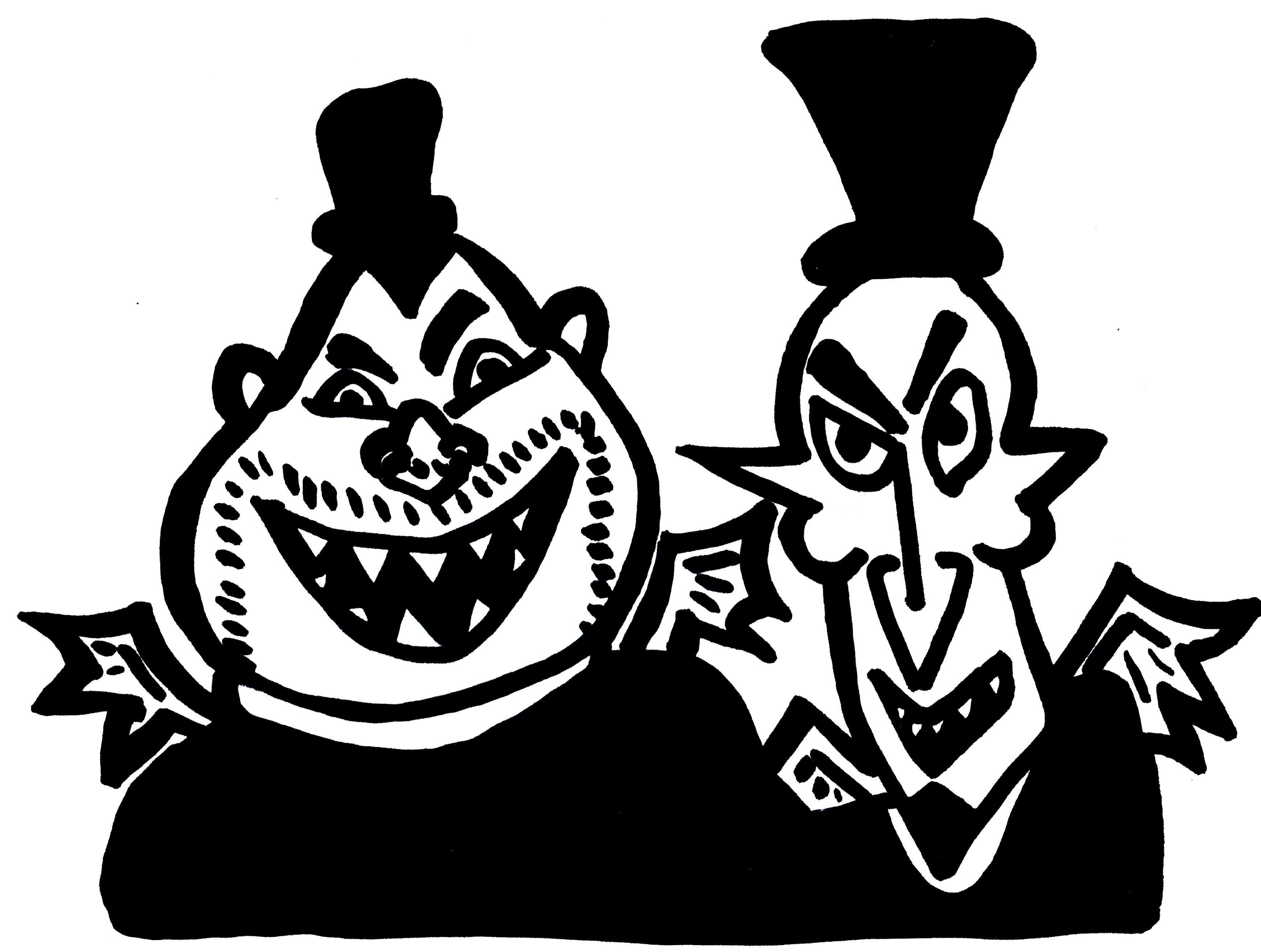
Jonah Ray stars as the avatar for that LA Hustle mindset: a prog rock musician who has been tinkering with the inconsequential details of his unfinished magnum opus album for years, with no sign that he’ll ever walk away from the project.  Like all frustrated creatives, he blames his creative block on the minor annoyances of anyone within earshot, from the untalented nepo-baby hacks who cash in on their industry connections for easy success to the mentally ill homeless man outside his jobsite who’s just angling for a free croissant.  Things escalate when he finally lashes out at one of these annoying distractions from his “work”, a cartoonishly grotesque neighbor with an addiction to wall-shaking EDM (played by Alex Winter under a mountain of prosthetic makeup and a Swedish Chef-style goofball accent).  What starts as a neighborly spat quickly snowballs into a full-blown killing spree, and the frustrated musician’s Nice Guy persona is challenged by his weakness for violent white-nerd outbursts.  His grip with reality becomes exponentially shaky as his body count rises, and the film slips into a Dead Alive style approach to comic chaos and goopy puppetry, regularly delivering the kinds of practical effects gore gags that earn “special makeup effects” credits in an opening scroll.  Does the troubled prog nerd finish his unlistenably complicated rock album before he’s brought to justice for his crimes? It doesn’t really matter.  What’s more important is that he learns how to get along with the people around him instead of lashing out while he’s trying to tinker with his art project in peace.  It’s just a shame that by the time he figures that out, most of the people around him are reanimated corpses and cops with their guns drawn.

In horror comedy terms, Destroy All Neighbors falls somewhere between the belligerent screaming of a Texas Chainsaw Massacre 2 and the nostalgic throwback to old-school splatstick of a Psycho Goreman.  If it does anything particularly new within the genre, it’s in its use of cursed guitar lesson YouTube clips instead of cursed camcorder found footage.  Jon Daly regularly appears on the prog nerd’s phone as the host of evil YouTube tutorials, filling his brain with poisonous ideas about how if people “get” or “enjoy” your music, you’re automatically a failure and a sellout.  He’s just one of many abrasive characters who live in the musician’s head rent-free, though, and to blame the murderous rampage on that one rotten influence would be to misinterpret the film’s overall push for communal art collaboration.  Otherwise, Destroy All Neighbors is just impressively gross in a warmly familiar way.  It’s playful in its willingness to distract itself from the main narrative just to have some fun with the tools & personnel on hand, exemplifying exactly what the nerd-rage prog boy needs to learn if he’s ever going to finish his magnum opus.  What’s amazing is that we’re still rooting for him to pull it off even after the liner notes for his unfinished album now include an “In Memoriam” section.  Regardless of whether you’ve ever tried to Make It in LA, anyone who’s ever worked on a noncommercial art project for a nonexistent audience should be able to relate (give or take a couple murder charges, depending on your personal circumstances).

-Brandon Ledet

Poor Things (2023)

“We are a fucked species; know it.”
“We are all cruel beasts – born that way, die that way.”
“Polite society is fucking boring.”
“Polite society will destroy you.”
“All sexuality is basically immoral.”

Poor Things is the kind of movie about the total scope of life as a human being that allows characters to voice those kinds of abstract philosophical statements, often with immediate dismissive pushback from the poor souls hearing them.  In that way, it’s the culmination of everything provoc-auteur Yorgos Lanthimos has been working towards since early antisocial provocations like Dogtooth & Alps.  He’s always had a coldly detached fascination with basic human behavior & relationships, but he has yet to dissect & catalog them all in a single text the way he does here.  Every new Lanthimos movie feels like it’s poking at some assumed social norm as if it were a corpse he found in the woods.  Poor Things finds that naive interrogation at its most scientifically thorough & perversely fun, to the point where he articulates the entire human experience through repurposed dead flesh.  In doing so, he’s clearly made The Movie of the Year, and so far the movie of his career.

Emma Stone stars as the repurposed corpse in question: a suicide victim who has been reborn as a Frankenstein-style brain transplant experiment in a mad scientist’s Turn-of-the-Century laboratory.  Her monstrous “Daddy God” creator—played with pitiable Elephant Man anguish by Willem Dafoe—initially keeps his experiment on a short leash, confining her entire life to his grotesque but lavish home.  She eventually breaks free, though, as all Frankenstein monsters do, and ventures into the world as an adult-bodied woman with the mind of a rapidly developing child.  Her resulting interrogation of the world outside her home is intensely violent, as anyone who can picture an adult-sized toddler throwing a temper tantrum would expect.  It’s also intensely sexual, as she can find no joy more immediately self-fulfilling than orgasmic bliss but lacks basic understanding of that joy’s socially appropriate boundaries: assumed monogamy, acceptable dinner conversation, the stigma of sex work, when & where it’s permissible to masturbate, etc.  If she is meant to represent humanity at its most basic & untouched by learned social restrictions, she represents us as insatiably horny, violent beasts who have to consciously strive to learn empathy for each other because it is not innate in our souls.  It’s a hilarious, uncomfortably accurate assessment of the species.

If there’s any one particular social norm that Lanthimos naively interrogates here, it’s a gendered one.  Much of the reanimated monster’s exploration of Life is limited by the men who wish to control her.  First, her Daddy God confines her as a domestic prisoner, the same way all fathers of young women fear their freedom as autonomous adults.  Once she’s loose, a small succession of selfish bachelors aim to trap her again in the domestic prison of marriage: Ramy Youssef as an ineffectual Nice Guy, Mark Ruffalo as a dastardly fuckboy fop, and Christopher Abbott as a sociopathic abuser.  All the men in the monster’s life seek to control her in ways that stifle her self-development.  It’s a movie about male possessiveness just as much as it’s about the absurdities of Life & societal decorum in that way, and the heroic triumph at the center is mostly in watching the creature fuck & read her way out of her patriarchal bonds to become her own person.  At times, that sentiment is expressed through philosophical assessment of what it means to live as an ethical person in modern society.  More often, it’s a crass celebration of women being annoying & gross in public despite the men around them demanding they calm it down.  It’s oddly uplifting in either case.

Yorgos Lanthimos’s films have become more recognizably comedic since he broke through to a wider audience with The Lobster, and they’re all the better for it.  There’s a sense of playful collaboration here where the director allows each contributor freedom to run wild: Stone & Ruffalo in their sketch comedy acting choices, cinematographer Robbie Ryan in his fish-eye lens fantasia, screenwriter Tony McNamara in his violent perversions of vintage humorist quips.  It’s telling that the only work that’s directly alluded to onscreen (besides, arguably, Mary Shelley’s Frankenstein and its James Whale mutations) is Oscar Wilde’s The Importance of Being Earnest, another prankishly prurient comedy of manners.  Lanthimos has always morbidly poked at social norms & decorum with this same curious outsider’s perspective, but never before while taking so much obvious glee in the act, nor on this wide of a scope.  I rarely have this much fun thinking about how we’re “a fucked species” of “cruel beasts,” and how our rules of appropriate social interaction are so, so very “fucking boring.”

-Brandon Ledet

Head of the Family (1996)

One distinctly American subgenre is the backwoods family horror, which shocks the audience simply by introducing them to a family of reclusive weirdos who live in the rural South.  Defined by such low-budget, high-visibility titles as The Texas Chainsaw Massacre, Spider-Baby, and Mudhoney, the backwoods family horror tradition continued in an increasingly goofy fashion in The Texas Chainsaw Massacre Part 2, the later Basket Case sequels, Nothing but Trouble, and in pretty much every movie directed by Rob Zombie.  And since the intersection of unrestrained goofiness & unoriginal genre filmmaking is the exact sweet spot of the American home video label Full Moon Features, they of course made a backwoods family horror of their own for the mid-90s video market.  Head of the Family is a variation on the Texas Chainsaw weirdo-family subgenre, reconfigured to fit into Full Moon Features’ house specialty: R-rated movies for children.  It has everything an unsupervised child could possibly want out of a late-night movie snuck past their sleeping parents: cussing, sex, and a house full of weirdo freaks.  Adults might not be as impressed with those goofball transgressions, but Full Moon doesn’t really make horror movies for adults anyway.  That ground was already well covered by Tobe Hooper.

Head of the Family is built entirely on one visual pun.  The “Head” in question is just that: an oversized human head.  He pilots his wheelchair around his family home with the tiny limbs that extend from the liminal space where his neck and torso should be.  The other three members of The Head’s family make up a set of telepathically-linked quadruplets.  Naturally, The Head is the brains of the operation, and his similarly mutated siblings help make up the rest of his deconstructed body: The Eyes (a spy with hyperactive senses), The Muscle (a towering brute enforcer), and The Body (a buxom bimbo honeypot).  They all share thoughts & senses as a collective, but The Head makes all of their decisions – until The Muscle eventually rebels.  Not much is done with the disembodied body horror of this premise, which is a little disappointing when it comes to the three brothers vicariously experiencing sexual pleasure through the dalliances of The Body.  Mostly, the movie coasts on the initial shock of introducing the audience to the horrid little monster inspired by its titular pun, and then letting us get to know his fucked up family as they go about their busy routine (of collecting & torturing local, unsuspecting citizens in the dungeon under their Grey Gardens mansion).

One thing this entry in the backwoods family horror canon gets exactly right is the genre’s inherent Southerness.  The Head is a bitchy Southern dandy, constantly rolling his eyes at the comparative unintelligence of his fellow conversationalists as if he’s constantly four martinis deep.  To be fair, the dialogue offered by his intellectually inferior foes is remarkably vapid, including such astute observations as “This is some kind of weird bullshit” and “Sometimes I feel like a big ol’ turd in a small toilet”.  The audience is forced to spend a half-hour with these low-life dolts before we’re graced with the refined Southern gent presence of The Head, patience that it is only somewhat helped along by most of their lines being delivered mid-coitus.   Once The Head arrives, though, the Full Moon dream factory makes the most of his hideous visage, dwelling on the horror of watching him accomplish simple tasks in confrontationally tight close-ups: slurping soups, wetting lips, licking nips, etc.  When the novelty of that image wears off, the movie mostly just kills time in order to achieve feature length.  At one point, The Head forces his dungeon captives to put on little stage plays for his amusement, as if to make fun of how bad of an actor everyone else is except him.

In case you were unaware you had stumbled into a Full Moon Feature, the label’s house composer Richard Band opens the production with the most acrobatically goofy score of his career – employing violins, harps, glockenspiels, vibraslaps and percussive cheek pops to achieve the Fullest Moon sound ever recorded on VHS.  Head of the Family also promises to deliver on another definitive Full Moon Features trope: the sequel no one asked for.  Just a couple years ago, Full Moon teased promotional art for a decades late follow-up titled Bride of the Head of the Family, coming soon to a Tubi app near you.  It makes sense that a sequel to this picture would have to expand the size of the Family with new, hideous members, since there isn’t much to this genre beyond getting to know the insular, often incestuous little freaks who populate it. 

-Brandon Ledet

Bell, Book and Candle (1958)

This month’s Classic Movies and Late Night oddities line-up at The Prytania has been, without question, the best run of repertory programming I’ve ever seen in New Orleans.  Even with the caveat that I came of age during the AMC Palaces’ total decimation of the city’s indie cinema scene, the wealth of classic horror titles on their October docket feels like an all-time great moment in local theatrical exhibition: Psycho, The Shining, The Craft, The Wicker Man, Don’t Look Now, Scream, Halloween, Night of the Living Dead, Friday the 13th, Dracula’s Daughter, Beetlejuice, The Black Cat, The Exorcist, The Creeping Flesh, Theatre of Blood, Little Shop of Horrors, and their regular midnight reruns of The Rocky Horror Picture Show.  It’s such a staggering assemblage that I had to be choosy about which screenings to make time for, especially since The Broad was screening some of my favorite oddball horror sequels on the other side of town: Halloween III, A Nightmare on Elm Street III, and Friday the 13th Part VIII, all choice selections.  What a time to be unalive! Maybe it’s a little silly, then, that I treated The Prytania’s Sunday morning screening of Bell, Book and Candle as high-priority, can’t-miss viewing while I skipped out on a few screenings of classics I already know & love.  Bell, Book and Candle is a fluffy major-studio romcom about a lovelorn witch, establishing the 1950s middle ground between its 40s equivalent I Married a Witch and its 60s equivalent Bewitched.  It’s not an electrifying watch, but it is a cozy one, providing the same witchy-but-not-scary seasonal viewing most modern audiences find in Hocus Pocus instead.  While it feels a little puny in comparison to some of the all-time classics it shared a marquee with this month, its exhibition was more of a special occasion in some ways, since it has weirdly spotty home-video distribution right now, available only on Tubi or on DVD through the New Orleans Public Library.  More importantly, it fit in nicely with the usual programming of The Prytania’s Classic Movies slot, due to its unlikely connection to Alfred Hitchcock.

Part of the reason this month’s classic horror line-up at The Prytania feels so refreshingly adventurous is because the single-screen landmark usually only has the space in their schedule for a couple well-worn, widely beloved classics – more TCM (Turner Classic Movies) than TCM (Texas Chainsaw Massacre).  It’s still the most dependable repertory venue in the city, though, and over the years I’ve come to associate it with Hitchcock’s catalog in particular, since the director seemed to be a personal favorite of late proprietor Rene Brunet, Jr.  I’ve seen a good handful of Hitchcock titles for the very first time by attending The Prytania on Sunday mornings: To Catch a Thief, Strangers on a Train, Saboteur, Rope, Suspicion, Stage Fright, and Frenzy, to name them all.  Unfortunately, Hitchcock did not direct his own witchy love-spell romcom for The Prytania to program this month (they opted for Psycho instead), but Bell, Book and Candle does share some incidental similarities to his most critically lauded work.  It’s essentially the cutesy, witchy B-side to Vertigo. Both films feature Kim Novak putting Jimmy Stewart under a spell while his jilted, more socially appropriate love interest works out her romantic frustration by furiously painting on canvas alone in her apartment.  Novak’s given more to do here than play Stewart’s object of desire, since she initially holds all the (magical) power in their relationship and the vulnerability of their romance puts her in danger instead of him.  In either case, she is treated as a kind of fetish object by the camera. Here, she’s so performatively feminine that she’s basically feline, as indicated by the onscreen credit for the costumer who provided her furs.  There’s also an intense, Tarantino-esque focus on her bare feet, which is presented as a witchy character quirk but becomes outrageously obsessive by the time we linger on them slipping in & out of high heels.  The difference is that in Bell, Book and Candle she’s an aspirational figure for a lovelorn audience, while in Vertigo she’s a collectible figurine for an obsessive Stewart (and his directorial counterpart).

Novak plays Gillian Holroyd—a powerful young witch making waves on the Manhattan occult scene—whose loneliness & boredom at the top fixates her on the unsuspecting, nonmagical book publisher Shepherd Henderson, played by Stewart.  She’s careful to only share her powers with those she trusts: a bumbling hipster brother who’s smoked one too many jazz cigarettes (Jack Lemon, auditioning for his career-making part in Some Like It Hot), a kooky upstairs aunt (Elsa “Bride of Frankenstein” Lanchester), and the fellow witches & warlocks who drown martinis and talk shop at the magical dive bar The Zodiac Club.  Falling for her new neighbor and enchanting him to ditch his uptight fiancée is what unravels her usually careful approach to witchcraft, both because he’s a publisher who’s threatening to expose her coven with an upcoming book titled Magic in Manhattan and because falling in love means that she’ll lose her magical powers, according to The Rules.  Outside a couple scenes in which Novak and her witchy family (including the actress’s real-life pet Siamese cat) cast spells in her lavish apartment, there isn’t much genuine horror imagery in Bell, Book and Candle.  It’s just as much a precursor to Sex and the City as it is a precursor to Bewitched, with most of the central drama resulting from the witch’s disastrous, Carrie Bradshaw style attempts to “have it all” while living in The Big City.  It’s all very light, cozy, and unrushed, with only a couple jokes about the coven’s “Un-American activities” and what possible insults “witch” might rhyme with registering as anything especially risqué.  Still, it was wonderful to see on the big screen for the first time with a giggling crowd, and it was a wonderful middle ground between this month’s run of classic-horror obscurities at The Prytania and their Classic Movies series’ usual TCM-friendly fare.

While I’m fixating on Bell, Book and Candle‘s appropriateness as seasonal programming, I do want to note that it resonated with me as more of a Christmas movie than a Halloween one, despite all of its thematic & aesthetic focus on witchcraft.  Much of the early stretch of the film is set during Christmas rituals, including a Christmas Eve get-together at The Zodiac Club and Novak trading presents with her family around a modernist “tree” sculpture.  Halloween and Christmas both have cultural significance as liminal stretches of the calendar when the veil between worlds is at its thinnest, so it makes just as much sense to me that this story about a young witch in love would be set during Yule as it would during Samhain.  It also makes sense to me that its Christmastime setting would be forgotten when choosing seasonal programming, especially as memories of the film get muddled with its better-remembered predecessor I Married a Witch.  Speaking personally, I’m grateful that I got to catch Bell, Book and Candle on the big screen for my first viewing, but I am mentally filing it away as a Christmas movie for future revisits.  As a life-long Scrooge, I’m always desperate for lightly spooky Yuletide movies that aren’t so saccharine they rot your teeth, while witchy Halloween movies are already more than plentiful. 

-Brandon Ledet

Dr. Caligari (1989)

The Criterion Channel has been spoiling me like a little brat all year, handfeeding me cult cinema curios I’ve been desperate to see forever but could never get my hands on through official channels: The Doom Generation, Kamikaze Hearts, Demonlover, Flaming Ears, and the list goes on.  The pummeling rhythm of those dopamine hits have slowed to a trickle in recent months, though, so I’m seeking out my cult classic wishlist items in other venues.  Thankfully, there are a thousand vintage genre-film Blu-ray labels happy to take money from an addict, and I recently scored another notoriously hard-to-find schlock relic off of the trash-hero distro Mondo Macabre.  Their recent 4k restoration of the 1989 absurdist horror sequel Dr. Caligari did not disappoint.  It’s less of a New Wave update of the German Expressionist classic The Cabinet of Dr Caligari than it is a guided tour of the inside of my mind, hosted by a vintage dominatrix with an academic appreciation of Camp.  The second major Caligari revision after the 1920 original (following a Hitchcockian psychodrama version from 1962), this Totally 80s™ take on the story reimagines German Expressionist tropes & aesthetics as MTV era sleaze.  Not to damn it with hyperbole, but it is cinema perfected. 

Given the resume of director Stephen “Rinse Dream” Sayadian (Cafe Flesh, Nightdreams), it might be more appropriate to compare Dr. Caligari‘s spare sets & heightened aesthetics to video store pornography rather than music video artistry.  The handbuilt, absurdly geometric art design and smoke-machine clouded sound stages are pure MTV movie magic, though, imagining a world where Devo scored an adults-only episode of Pee-wee’s Fuckhouse.  Any list of its nearest stylistic comparison points could also be found scribbled in a late-80s art school weirdo’s discarded notebook: the Elfman brothers’ live-action cartoon playground Forbidden Zone; Tim Burton’s higher-budget refinement of Ed Woodian artifice; John Waters’s purposefully overwritten, underperformed brays of dialogue; David Lynch’s eerie atmospheric dissonance.  The angular, poised performances resemble voguing more than acting, preceding Madonna’s appropriation of the trend by at least a year.  There’s even a Cronenbergian flesh wall that kisses its victims back with full tongue.  All of this up-to-date 80s Weirdo posturing is at least anchored to overt references to ancient filmmaking aesthetics, including the fellation of a Wizard of Oz scarecrow, a villainous combination of Marlene Dietrich & Ethyl Merman, and the obvious German Expressionist touches referenced in its title.  It could have only been made in the glory days of early MTV, but its secret weapon is tying that moment to a larger continuum of wet-nightmare cinema – a long, throbbing history of populist art for perverts.

Still, Dr. Caligari‘s plot is befitting of a Rinse Dream porno, and its hyperfixation on women’s orgasms and bare breasts pushes it to the fuzzy borders of softcore.  It’s not a porno parody of the original Cabinet of Dr. Caligari so much as it’s a long-gestating sequel.  The titular villain is the granddaughter of the original Caligari, running his legacy insane asylum with newly radical, perverted tactics more befitting of a dominatrix than a psychiatrist.  Her most treasured patient is an oversexed suburban housewife whose Reaganite husband fears his spouse’s “diseased libido.”  Caligari feigns to cure the monstrously horny woman by experimenting with “hormonal interfacing,” but in truth she’s tinkering with ways to weaponize her patient’s sex drive against the men who cower from it.  Caligari’s true lab work involves “hypothalamus injections” that allow her to directly transplant brain fluid—and, thus, character traits—from one patient/victim to another.  It’s a two-part plan that would allow her to fully claim power over her psych ward fiefdom: first by transplanting the horned-up housewife sex drive of her star patient into the minds of all of her professional nemeses, then by injecting the incredible mental powers of her legendary grandfather into her own mind, becoming unstoppable amidst the chaos.  Things do not go according to plan, and her various injections from a “nympholepsy” poisoned mind into her enemies’ hypothalamuses eventually tears down the walls of the Caligari Insane Asylum for good, simply because everyone around her is too horny to control.

If Dr. Caligari is sincerely “about” anything, it’s about Reagan Era suburban fears of sex, particularly of women’s desire & pleasure.  In that context, its spare, post-Apocalyptic set design appears to be a nuked-to-oblivion wasteland rather than a rented LA soundstage.  The nuclear family unit has died from the slow radiation poisoning of the Cold War, leaving the men in charge terrified that the women below them will climb the ladder of chaos in the rubble.  Transplanting those women’s scary libidos into the men’s fragile, fearful minds induces a distinct gender dysphoria horror, erasing their power at the top of the Patriarchy by erasing their manhood altogether.  There’s always a question of whether this is pointed political commentary, an indulgence in softcore forced feminization pornography or, most likely, a purely aesthetic provocation with no guiding sense of purpose.  Every line reading is an act of sarcastic poetry & performance art, putting each overt political statement and subconscious expression of sexual id in gigantic square quotes.  It’s a very specific brand of jaded, ironic, hedonistic fashionista posturing that will test the patience of the sound of mind and pure of heart.  However, if you are impure of heart & libido, you’re likely to fall in love with it, especially in its new, crisp presentation from Mondo Macabre. 

-Brandon Ledet

Smoking Causes Coughing (2023)

French absurdist Quentin Dupieux has been on a real hot streak lately.  Threatened to only be remembered as an early-internet memester for his Mr. Oizo music videos and the killer-tire horror comedy Rubber, Dupieux recently hit a creative breakthrough in the killer-jacket horror comedy Deerskin.  On paper, it might not appear that there had been much progression between his early novelty horror about a murderous rubber tire with telekinetic powers and his more recent novelty horror about a murderous deerskin jacket with telepathetic powers, but Deerskin really did mark a new level of maturity & self-awareness in Dupieux’s art that’s been consistently paying off in the few years since.  Every one of his films, including Rubber, are proudly Absurdist comedies about the meaninglessness of Everything, but Deerskin extended that worldview a step further to indict his own catalog of work as meaningless art about meaninglessness – an endless parade of empty frivolities.  That might sound like it would de-value Dupieux’s creative output, but it’s instead freed him to follow his most inane, meaningless impulses for the sake of their own pleasure, and he’s been making his funniest comedies to date as a result.

At first glance, Smoking Causes Coughing registers as just another one of Dupieux’s hilarious but meaningless novelties, no more important in his larger oeuvre than his recent Dumb & Dumber buddy comedy about a monstrously gigantic housefly.  Since all of his movies assert a consistent absurdist worldview, there isn’t much to distinguish the individual titles from each other outside the immediate humor of their high-concept bar napkin premises.  If Dupieux had fully committed to a feature-length Power Rangers parody entirely focused on the Super Sentai superhero knockoffs rebuilding group “cohesion” & “sincerity” on a mundane work retreat, that’s exactly what Smoking Causes Coughing would be: another fun, dumb, proudly meaningless comedy from an increasingly prolific director who makes two or three novelties just like it every year.  Instead, it manages to feel like yet another Deerskin-style shakeup to his creative routine, freeing him to be even dumber & more meaningless than ever before.  That’s because it’s an anthology horror comedy disguised as a feature-length Power Rangers parody, a surprise change in format that has not been hinted at in the film’s cheeky advertising.

Apparently antsy about having to spend 80 minutes on just one absurdist bar napkin premise, Dupieux is now chopping them up into bite-sized 8-minute morsels, which is great, because every impulse he has is hilariously idiotic.  With Smoking Causes Coughing, he’s entered his goofball Roy Andersson era, merging philosophical art & sight-gag sketch comedy into an efficient joke-telling machine that’s free to follow its momentary whims from vignette to vignette without fear of losing the audience’s confidence.  In the Power Rangers-spoofing wraparound story, a team of helmeted rubber-monster fighters called The Tobacco Squad (because they use the destructive powers of cigarette smoke to defeat their intergalactic kaiju enemies) find their teamwork in daily battles increasingly disjointed, so they go on a corporate-style work retreat to rebuild group cohesion.  As soon as that gag is milked for all it’s worth, the individual members of Tobacco Squad (Nicotine, Mercury, Methanol, etc.) entertain each other with campfire horror stories to pass the time, which allows Dupieux to fire off as many short-form, for-their-own-sake inanities as he pleases.  They’re all very funny (especially the slasher parody segment involving a noise-cancelling isolation helmet) and intensely idiotic in the exact ways Dupieux’s ideas have been from the start, but none of them threaten to outstay their welcome the way a single-joke premise like Rubber might have in the past. 

All that Dupieux’s missing at this point, really, is an American audience.  It’s likely no coincidence that my favorite two movies from him to date are the ones I happened to catch in the theater, so it’s a shame their only New Orleans screenings were at festivals, not in regular theatrical runs.  I very much appreciated getting to laugh along with like-minded crowds during Deerskin at New Orleans French Film Fest in early 2020 and, more recently, during Smoking Causes Coughing at Overlook Film Fest last week (the same day it was domestically released VOD). Still, it’s odd to see his work sidelined as specialty events for niche audiences.  Both films killed in the room, and it would be incredibly cool to see Dupieux’s recent output get the crowd-pleaser rollout they deserve.  If an easily marketable Power Rangers aesthetic and a glowing blurb from John Waters calling his latest “a superhero movie for idiots” & “one of the best films of the year” isn’t enough to earn Dupieux wide theatrical distro before being siphoned to streaming, it’s doubtful anything ever will.  We shouldn’t be allowing the funniest comedies on the market to be downplayed as high-brow festival fodder because they happen to be in French, but I guess I should just be grateful that he’s continuing to make them and that local fests like Overlook are continuing to program them; it’s always a blast, especially with a crowd.

-Brandon Ledet

Cocaine Bear (2023)

I’m not sure how I didn’t recognize from promotional materials that Scott Seiss, best known online for his character of a retail employee who responds to F.A.C.s (that’s an acronym I just made up for “Frequent Asshole Comments”) the way that every retail employee wishes that they could, was the male paramedic in Cocaine Bear. He’s in pretty much every trailer! Further, I have no idea how I still didn’t put that together after seeing this video, in which he hypes Cocaine Bear in the same manner, noting that you don’t have to have done homework before seeing the movie and that there won’t be a dozen thinkpieces exploring the possible meanings behind the film’s ending. There’s no long-beloved intellectual property of which this is an adaptation (unless you count the actual 1985 events which very loosely inspired the plot), no secret clues about who’s going to be the villain in the next MCU feature, nothing to inspire a MatPat Film Theory video. Cocaine Bear is just a comedy-horror-thriller about a bear who does cocaine, and the people who find themselves caught in its freakout. And it’s a delight. 

Multiple story threads find themselves woven together from their disparate origins in the opening act of the film, as disparate parties are drawn together to Blood Mountain, a Georgia peak located in the Chattahoochee National Forest. After a drug drop goes south due to the delivery man bashing his skull on an airplane bulkhead while attempting to exit and parachute, a number of interested people become invested in trying to find the drugs that are missing on the mountain, as well as the law enforcement in pursuit of the traffickers. Kingpin Syd (Ray Liotta) sends his lieutenant Daveed (O’Shea Jackson, Jr.) to the national park to find and recover the duffel bags, and tells him to bring along Eddie (Alden Ehrenreich), Syd’s son who left the family business at the urging of his recently deceased wife Joanie, which the sociopathic Syd thinks means that his boy will be ready to get back into the trade. In Tennessee where the dead parachuter’s body has landed, Detective Bob (Isiah Whitlock Jr. of The Wire) leaves his new dog with Deputy Reba (Ayoola Smart) as he travels across state lines and out of his jurisdiction in pursuit of Syd, who he’s been chasing for years. Local middle schooler Dee Dee (Brooklynn Prince) and her friend Henry (Christian Convery) skip school so that she can paint a picture of the park’s Secret Falls, an outing she was supposed to take with her mother Sari (Keri Russell) but which has been postponed due to Sari’s boyfriend inviting the two of them to Nashville for the weekend instead. At the park itself, Ranger Liz (character actress Margo Martindale) is preparing for a park inspection by Peter (Jesse Tyler Ferguson), on whom she has a crush. And, of course, deep in the woods, there’s a mama bear who’s developing a taste for nose candy. 

As I was leaving the auditorium after the screening, a woman behind me declared, “Well, that sucked.” My viewing companion was also less than enthused on our drive away from the theater, although he was bemused by my passionate defense of the film. I’ve seen and heard criticism of the story, and while I wouldn’t exactly call the film’s composition an elegant puzzle box, it was very fun and moved at a great pace; I was never bored, and there was never a prolonged period of time between laughs. Not every joke landed for everyone in the audience, but there were some jokes that didn’t provoke a laugh from me while others produced a laugh only from me, and that’s a good balance for a comedy to strike. Maybe in future viewings I’ll find that some of the punchlines that didn’t land this time will land the next time, and I can say definitively that this is a comedy that I will watch again, which isn’t something that I say very often. I’ve long been a fan of campy, self-aware horror comedies, and long been opposed to movies that attempt to ape that specific genre and do it poorly; Cocaine Bear manages to walk that tightrope deftly, mostly by not calling attention to itself. 

I’ve lost count of how many movies and TV shows of the past decade attempted to cash in on nostalgia for the 1980s, but this film manages to capture the quintessence of movies from that era and combine it with the modern cinematic eye in a way that doesn’t call attention to itself. With a 1985 setting, a lazier filmmaker would fill the soundtrack with songs from that year specifically and exclusively, but there’s greater verisimilitude in the text by including music that was recent and not just current. The film starts out with the Jefferson Starship track “Jane” (1979) and includes the 1984 track “The Warrior” by Scandal and featuring Patty Smyth, 1978’s “Too Hot ta Trot” by the Commodores, and even “On the Wings of Love” by Jeffrey Osborne (1982), which is plot-relevant in the scene in which it appears. It’s a small thing, but I appreciate it and the way that it evokes and inscribes its time period without worshipping it, like IT or Stranger Things. We’re not presented with an endless parade of 1980s pop culture or media—Remember Ghostbusters? Remember Nightmare on Elm Street? Remember G.I. Joe?—and, in fact, there’s very little reference to the media of the time at all. Outside of the use of actual contemporary media footage taken when Andrew Thornton landed, parachute undeployed, in an old man’s driveway and the appearance of a few of the era’s anti-drug PSAs, the only material reference to contemporary events comes in the form of the delivery of a new-and-improved Smokey the Bear stand-up to the ranger station. You’re not taken out of the reality of the moment because the period elements draw attention to themselves; you just exist there. There’s something that’s just so true about Keri Russell’s pink jumpsuit and the way that her purse strap has a big knot tied in it to shorten it; I don’t know what’s not to love. It’s grisly, fun, and campy, and I loved it. 

-Mark “Boomer” Redmond

M3GAN (2023)

M3GAN is the best horror movie of the year! I know it’s only the eighth day of the year so far as of this writing (I hope you’re all enjoying your king cake and that you all waited until this weekend to do so, since not waiting until after Twelfth Night is the reason we’re all cursed), and I’m sure a hundred other hacks have already made the same joke, but who am I to mess with the formula? After all, if it isn’t broke, don’t fix it. Right?

Four years ago, Child’s Play creator Don Mancini was on the Post Mortem podcast and confirmed what many had assumed for years: that the film that introduced us to the pre-eminent killer doll, Chucky, was a critique of consumerism. “Because of my exposure to the world of advertising and marketing through my dad,” he said, referencing his father’s pharmaceutical work, “I was very aware from an early age of the cynicism inherent in that world, particularly selling products to children. Madison Avenue refers to children as ‘consumer trainees’ and I discovered that as a child. I thought, I wanted to write a dark satire about how advertising affects children.” Many of those anti-consumerism elements were excised from the final product following editing and collaboration with John Lafia, but they’re not removed completely: the original Good Guys doll that is inhabited by the dark soul of a serial killer is still very clearly inspired by both Cabbage Patch and My Buddy dolls of the 1980s, up to and including the insidious nature of advertising directly to children through animated programming as seen in the Good Guys cartoon that Andy watches in the first film. By Child’s Play 3, toy company exec Sullivan (previously introduced in the second film) is expressing, verbatim, the things that Mancini quotes real life movers and shakers at the cathedrals of capital, saying “And what are children after all, but consumer trainees?” 

Smartly, M3GAN initially seems to be coming at the “killer toy” plot from a similar angle, and although the corporate greed of toy companies remains relevant throughout (Ronny Chieng’s upper management character David Lin at one point expressed excitement at the prospect of the M3GAN toy finally letting their company, Funki, “kick Hasbro in the dick”), the story quickly becomes less about consumerism than it is about letting technology be your kids’ babysitter, or parent. The film opens with an advertisement for the “Purrpetual Petz,” in which a child mourns the loss of her dog but whose spirits lift immensely upon receipt of her new best friend, a giant fuzzy triangle that’s somewhere on the scale between a squishmallow and a Furby, with funny/scary human teeth for some reason, and which is capable of “defecating” little bits of scat if overfed (via the interactive app). We zoom out on said app to find Cady (Violet McGraw) feeding her Purrpetual Pet on a tablet in the backseat of her parents’ SUV, en route to a ski vacation that never comes, as the vehicle is violently smashed by a snow truck. Elsewhere, her Aunt Gemma (Allison Williams) is hard at work at Funki, the makers of Purrpetual Petz, along with her assistants Tess (Jen Van Epps) and Cole (Brian Jordan Alvarez). Her boss David (Chieng) is riding her hard to churn out a prototype for a less expensive version of the Petz line since their competitor has launched a knock-off version at $50, half the price of at Purr Pet; his sycophantic assistant Kurt (Stephane Garneau-Monten) constantly at his side. When David catches Gemma working on her pet (no pun intended) project, a Model 3 Generation Android nicknamed “M3GAN” instead of her assigned work, he puts her on notice, moments before she gets the call from the hospital where Cady is being treated, the lone survivor of the car crash. Gemma finds herself having trouble interacting with Cady, as her gorgeous mid-century modern house is a mixture of that era of furniture style with the sort of home personal assistant gadgetry that many people who are less paranoid than I am have in their houses. Gemma’s toy robot collection isn’t for playing, it’s for observing, and when Cady asks her to read her a bedtime story, Gemma has no books that might interest the nine-year-old and has to go searching for one on an app, which then has to update. 

This is the meat of the film’s larger techno-hesitant themes; it’s not anti-technology per se, but it is invested in highlighting the ways that we let software and the expectation of instant gratification take on a huge role in our lives, to the point of supplanting our actual relationships. We’ve all seen it. Less than 48 hours before my viewing of the film, I went out Friday evening to a restaurant happy hour with the same friend who went with me to see M3GAN, and there was a mother-and-son duo seated near us who caught my friend’s attention, as the woman first tried to engage her young son in conversation before finally giving up and letting him have his device, and she herself got involved with something on her phone. My dinner companion noted that the kid was playing some video on his small tablet but wasn’t even watching it, as it sat in his lap while he ate with his headphones in. So often, when we see this thing play out in movies, it’s often a condemnation of the young, how they don’t have any attention span because of TikTok or how Gen Z is doing blah blah blah now that enough of them have come of age to become the new political scapegoats after we Millennials destroyed the diamond industry and somehow caused the downfall of the West because of avocado toast. M3GAN is acutely aware that this is a problem across all generations, and that the young aren’t to blame for the fact that algorithms are created to entrap them before they’re old enough to have the understanding of how they’re being psychologically manipulated, whether it’s Cady here or Andy in Child’s Play. Before their deaths, Cady’s parents discuss screen time, and how many hours a day Cady is allowed to interact with her device; later, it’s Gemma who is so caught up in staring at her phone that she doesn’t notice that Cady is eating her breakfast in silence and waiting for her aunt to talk to her, and when she encourages Cady to play with her tablet while the older woman puts time in on her work project, Cady asks how long she is allowed to do so before she has to turn it off, and Gemma is caught off guard by the notion that limiting screen time is something that parents even have to do. 

For as long as I can remember, there’s been much ado about the effects of using TV as a babysitter. Won’t someone please think of the children? What long term psychological damage will little Johnny endure if he watches reruns of Growing Pains every day after school while one or more parents decompresses from the stresses of work? Is there maybe too much Tinkerbell content available on demand, and is it the worst thing in the world to let little Jenny absorb it for a few hours while dinner is prepared, now that she’s too squirmy to sit in the kitchen and watch how the sausage gets made? But none of us were really prepared for the way that video apps (especially ones with short-form content that consistently and continuously releases dopamine in the lizard parts of the brain) and constant connectivity were going to rock our world. I’m not just saying that because I’m Abe Simpson in that evergreen “Old Man Yells At Cloud” meme; I’m of the generation that were children when 9/11 happened and watched how every adult in the world lost their mind in a jingoistic fervor that, coupled with unfiltered access to constant one-sided news rhetoric, means we all have to monitor our parents’ social media as well just to make sure they don’t all start agreeing with Andrew Tate and Kanye West. Unfortunately, when this sort of presents itself in media, it’s often a very shallow, surface-level critique because, as Audre Lorde writes, “The master’s tools will never dismantle the master’s house,” and the same corporations that are causing and have caused reckless and irreparable damage to our society (and, if we’re being completely honest, to the fabric of democracy) are necessary tools of the same megacorporations that produce the content that we consume, so Disney can never really take the piss out of Twitter because that’s where all their megafans live and their engagement is driven. 

M3GAN sidesteps this by not being “about” social media, or even “about” the so-called evils of technology. It’s about what happens when the responsibility of guardianship is overlooked, and it does so without shifting blame to the people who are the victims: the kids. There’s a lovely little visual storytelling beat in the aforementioned scene in which Gemma asks Cady over breakfast to entertain herself for a while; she promises that she won’t be more than a few hours, but we cut immediately to an establishing shot of the house, where night has fallen, signalling that Gemma has been caught up in her work all day. It’s not Gemma who suddenly realizes that she never made lunch or dinner that initiates the next scene, it’s Cady peeking into Gemma’s office and the latter making the connection that she’s been in her workshop all day with no regard for Cady’s well-being or engagement. That Cady has taken the time that she was alone and used it not to sit around and waste the day watching videos or playing one of the millions of Candy Crush derivatives that are out there these days but instead to draw is telling: children need more than just to be set up with a device all day, and it’s foreshadowing that M3GAN, for as much as she seems to be the perfect toy and friend, is never going to be able to replace real social interaction for Cady, even if the algorithms that drive her machine learning (like the algorithms that drive the online content that all of us consume) are working hard to replace all other areas of her life. Late in the film, the psychologist assigned to ensure that Gemma is capable of taking care of Cady (Amy Usherwood) has a discussion with the former, warning her that the kinds of connections that, according to attachment theory, children need. She warns Gemma that allowing Cady to invest so much time in M3GAN could consequently lead Cady to develop emotional bonds that will end tragically, one way or another. 

All of this probably makes it seem like the film is super serious, but it’s not; it’s actually very funny. It wasn’t until after the viewing that I realized the director, Gerard Johnstone, was also the man behind Housebound, a film we loved so much that we made it into content for Swampflix twice: first with a very positive 2015 review and again five years later as the topic on one of our earliest episodes of the Lagniappe podcast. That actually explains the comedic sensibility; it’s not omnipresent, but it’s almost funnier that the jokes are paced with some distance between them, allowing them to break the tension when they reappear, and the emotional whiplash of it all is part of the fun. There are two perfectly attuned parodies of children’s commercials that appear in close proximity to each other, and although they’re probably more like the advertisements of the late-nineties to early-aughts than those of the present, that makes them familiar and charming to most of the intended audience. The first is the aforementioned Purrpetual Petz ad, and the second is an advertisement for the competing knock-off, which forsakes the pooping feature for a light-up butt that tells you the creature’s mood. Both have the energy of that Kooshlings commercial meets the one for Baby Uh-Oh with the one for Baby Rollerblade mixed in for good measure. Directly between them rests the scene depicting the harrowing death of Cady’s parents, which is fraught with tension throughout. They’re spread a bit further out than they were in Housebound, but they’re just as effective. 

If I have one complaint, it’s that M3GAN is a little restrained with its violence in certain places. The final confrontation is as good as it gets at this level, with some real peril for a child, which always ramps up the tension. The kills get gorier as the film goes on, but it feels like it could have cut loose sooner and with more oomph, but that’s not the end of the world. It’s a worthy entry in the killer doll canon even if it decides to be demure and understated in certain places. 

-Mark “Boomer” Redmond

Motion Stopocalypse

One of the bigger trends of the 2022 movie calendar was the prominence of stop-motion animation as a medium.  Netflix’s cheeky horror anthology The House was the first Great film of the year, and that early stop-motion triumph rolled into the wide, acclaimed release of so much direct competition that it now feels distant & puny in retrospect.  Rolling into awards season, Marcel the Shell with Shoes On and Guillermo del Toro’s Pinocchio are formidable contenders for best animated film of the year against the more typical Disney-funded CG mediocrities that have earned that prize by default since Toy Story put Pixar on the map.  And then there was Phil Tippet’s magnum opus horror show Mad God, which pushed the stop-motion medium to the outer limits of what animated cinema can achieve.  Usually, I’m on top of all stop-motion feature films as soon as they’re released, but this year offered so many varied, prominent titles in that category that I let a couple slip through my fingers until now.  Neither The Old Man Movie nor Wendell & Wild completely blew my mind as I caught up with them for Best of the Year listmaking season, but that was mostly a result of them joining such an already crowded field.  In a more typical year, these would have been the only two stop-motion releases of note, and I likely would have been much more ravenous for what they have to offer.

The more disappointing title of this late-entry pair is Wendell & Wild, since it’s the one with the highest pedigree behind its production.  Not only does it reunite the iconic comedy duo Key & Peele as a pair of wisecracking demons, but it’s also the comeback film of legendary stop-motion animator Henry Selick, who has not directed a film since 2009’s Coraline.  As a recently converted Monkeybone apologist, it brings me no pleasure to report that Wendell & Wild is, by far, Henry Selick’s worst film to date.  The good news is that it’s still pretty great, as long as you only pay attention to its mall goth art design & vintage Black punk soundtrack.  Story wise, the film is a sprawling, unresolved mess in a way a lot of blank-check Netflix productions have been for directors like Scorsese, Baumbach, Fincher, and The Coens, who have been putting in some of their career-weakest work on the platform with no one to push back on or hone their ideas.  Out of the pair, Netflix was smart to give del Toro’s Pinocchio the bigger Oscars Campaign—it is the better film—but it’s also far from del Toro’s best work either.  If anything, the two films could have borrowed and swapped a lot of their shakier qualities: Wendell & Wild should have been a punk rock musical, since its charms rely entirely on its soundtrack & visual spectacle, and Pinocchio should not have been a musical at all, since its entire songbook is limp & forgettable.  They’re both decently entertaining movies about rebellious youth, though, with Wendell & Wild falling somewhere at the Hot Topic end of that spectrum.

If the story of a high school punk rocker teaming with a pair of wisecracking demons to resurrect her dead parents with magical hair cream (and to avenge the wrongful deaths of the family’s condemned root beer factory while they’re at it) is a little overly complicated, maybe The Old Man Movie has a leg up on Wendell & Wild.  In The Old Man Movie, three siblings have to recapture & milk their grandfather’s escaped cow before its udder explodes, nuking their entire village in a milky “lactocalypse”.  Those are pretty clear, cut-and-dry stakes even if they are ridiculous ones, and the movie even provides a helpful 24-hour deadline before that udder catastrophe strikes.  The Old Man Movie also enjoys the benefit of nonexistent expectations. Henry Selick’s previous films Coraline, The Nightmare Before Christmas, and James and the Giant Peach rank highly among the most beloved stop-motion films of all time.  By contrast, The Old Man Movie is the most profitable animated film ever exported from Estonia, but it’s likely most audiences outside that country have never heard of it.  That might hint at its comparatively limited appeal, since Selick makes mildly spooky movies that are still friendly enough for children, while The Old Man Movie looks like it was made for children but would likely psychologically scar any who wander into the room.  It performs the shrill gross-out humor of Ren & Stimpy in the once-wholesome visual language of Wallace & Grommet.  It’s teeming with grotesque milk monsters, mile-high piles of pig shit, and unstoppable killer kratts – pushing it more into Phil Tippet nightmare territory than Henry Selick’s goth kid starter packs.

Some of The Old Man Movie‘s one-off gags offend, especially when it singles out hippies & women as targets for mockery.  Other gags deliver enormous laughs that make the eyerolls worthwhile, especially in its visible disgust for the gnarlier details of daily farm work.  While Wendell & Wild pushes the boundaries of stop-motion as an artform into the technological marvel territory of a Laika film, The Old Man Movie scales it back down to a handmade claymation style that feels a little like serial killer bedroom art.  It was refreshing to see a film so volatile in its moods & humor after the more cumbersome, plot-fixated machinations of Wendell & Wild felt so weighed down by its own enormity.  That’s not to say Wendell & Wild isn’t shocking or over-the-top in its own ways; it’s especially bold to see a children’s film about a rebellious youth’s team-up with demons get a major-platform release in a year when online Evangelicals are obsessed with the ways Satan is “grooming” children into cannibalism & debauchery through “hidden” messages in popular media.  What’s most incredible, though, is that neither The Old Man Movie nor Wendell & Wild qualify as the wildest, most outrageous stop-motion release of the year – a title that has a shocking amount of competition (and still belongs to Mad God).  There has been enough of a wealth of anarchic, ambitious stop-motion feature films that I can be a little bratty and brush both of these movies off into the “Pretty Good” pile instead of the “Saviors of Modem Animation Pile.”  I want to live in a world where I’m this spoiled every year.

-Brandon Ledet

All Jacked Up and Full of Worms (2022)

Does sincerity have no place in low-budget genre trash these days?  Must all of our D.I.Y. practical-gore freakouts be buried under mile-high layers of ironic detachment and nostalgia for decades of horrors past?  I was really hoping the low-budget, psychedelic gore fest All Jacked Up and Full of Worms would live up to the gruesome glory of its title, and in some ways I guess it does.  It’s impressively revolting filth in fits & jabs, at least when it’s leaning into the visceral disgust of its wriggling worm imagery – which ranges from real-life worms squirming in cigarette ashtrays to gigantic, intestine-length latex monstrosities stretching across warehouse-scale movie studio voids.  It’s too bad all of that effort is undercut by its juvenile edgelord humor, though, as shock value topics like needle drugs, Satanic worship, and pedophilia are frequently mined for cheap, empty punchlines.  When you see a “Special Worm Effects By” credit in the opening scroll, you’re prepared for a Screaming Mad George-style descent into Hellish, surrealistic gore.  Instead, you get a movie custom made for middle schoolers to prank each other with as a sleepover dare.

Like this year’s much more sincere gross-out horror Swallowed, All Jacked Up is set in a fictional world where consuming worms—either orally or nasally in this case—creates a powerful psychedelic trip akin to an acid overdose.  These are just regular, everyday worms, as far as the audience can tell – a conceit that’s underlined by the repetition of the word “worms” in every single line of dialogue.  As it’s explained by a worms enthusiast, “There’s only one wrong way to do worms, man […] Not do worms!”  This is a pure drug-trip movie, with several loosely connected characters becoming increasingly manic under the worms’ influence.  I’d recount their exploits here if they were worth repeating, but they’re mostly just an improv comedy assemblage of self-amused bits that don’t translate outside the troupe.  The worm imagery is frequent & remarkably grotesque, but so are the purposeless, off-topic jokes about sexually assaulting babies.  Maybe it’s a matter of personal taste (or tastelessness), but I just wonder how much further this movie could push its discomforts if it were a sincere low-budget horror instead of an irony-poisoned horror comedy.

Anyway, if you really want to watch a retro, VHS-warped gross-out that’s overflowing with worms, you might as well watch the 1976 Tubi mainstay Squirm instead.  It’s not an especially great film either, but it’s at least a genuine one.  All Jacked Up and Full of Worms is a distinctly modern echo of that era’s pure-schlock filmmaking, mimicking long-outdated surface aesthetics instead of seeking genuine, of-the-moment terror.  It’s likely unfair of me to pin it under the full weight of modern horror’s weakness for ironic detachment & retro aesthetic worship, but it was also unfair of the movie to make me sit through so many schoolyard jokes about baby rape, so let’s call it even.

-Brandon Ledet