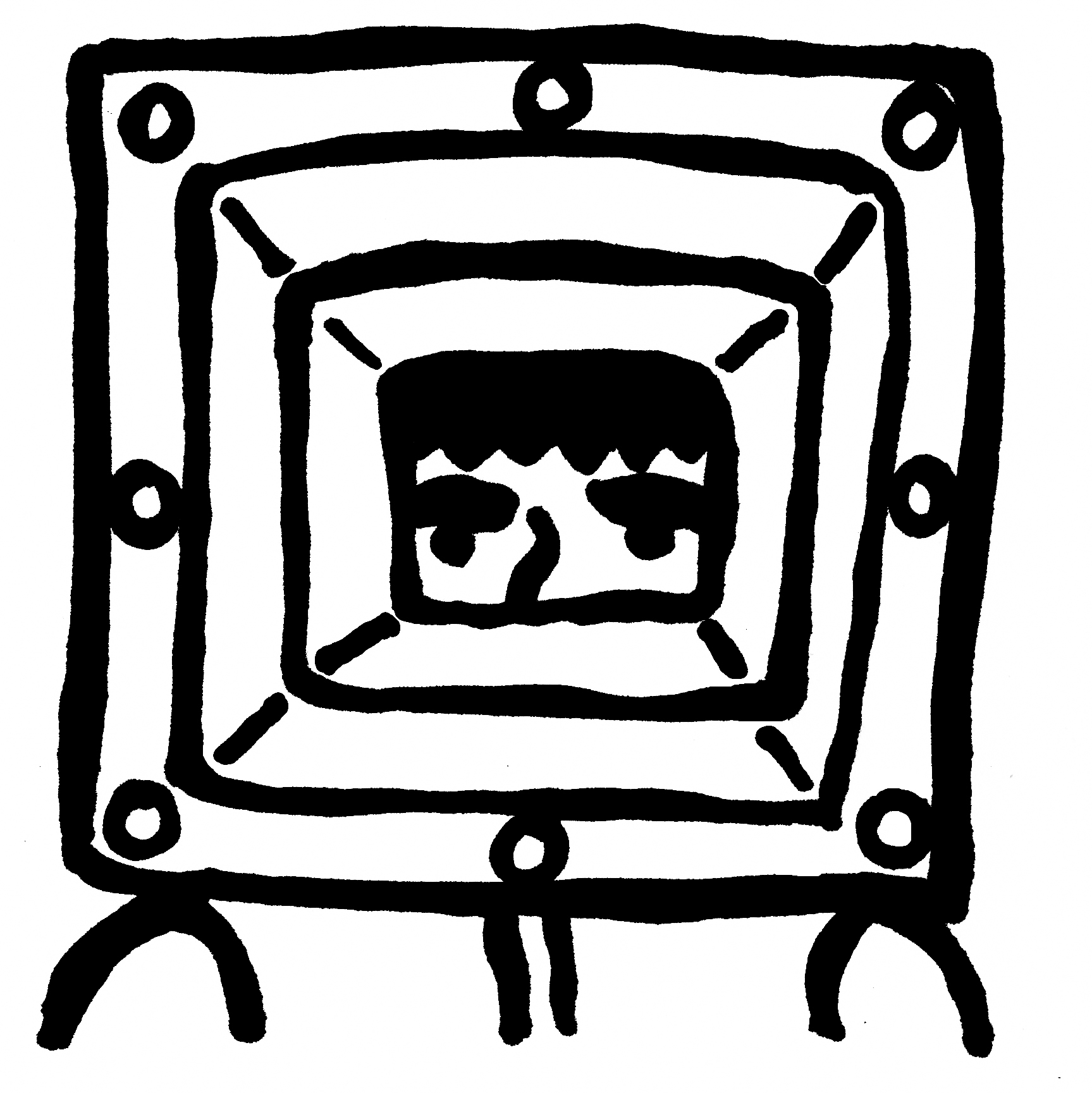
Teenage Sex and Death at Camp Miasma (2026)

Teenage Sex and Death at Camp Miasma is the latest feature from director Jane Schoenbrun, following A Self-Induced Hallucination, We’re All Going to the World’s Fair, and I Saw the TV Glow. In the film, Hannah Einbinder plays Kris Williams, an indie darling director whose most recent project—the last third of which “remade Psycho from the point of view of the shower curtain”—brought her to the attention of the studio in possession of the rights to the fictional Camp Miasma slasher franchise. Following the breakout commercial success of the first Camp Miasma flick, the film’s killer Little Death and their inexplicable air vent-shaped helmet became horror iconography on par with Freddy Krueger and his glove or Jason Voorhees and his machete. The drive to produce endless sequels led to creative rot (like the late sequel Little Death Takes Manhattan), gimmicks (like Camp Miasma 3-D), and diminishing monetary returns. Kris now finds herself at the helm of Camp Miasma reboot, which the studio wants to ensure is “elevated” in order to align with current horror film trends. The purpose is two-fold: the studio hopes to reinvigorate interest in a once-lucrative intellectual property while also redirecting attention away from the original film’s transphobia by hiring Kris, a queer woman. Supposedly seeking inspiration, Kris tracks down reclusive Billy Presley (Gillian Anderson), Camp Miasma’s final girl, who invites Kris to meet with her at her home, which turns out to be the same abandoned campground where the first Miasma picture was filmed. Of course, Kris’s motivation to meet Billy has additional undercurrents that she herself isn’t fully cognizant of, stemming from an epiphanic experience she had while watching Camp Miasma as a child. 

The text within the film, the Camp Miasma franchise, is wonderfully detailed stuff: the mounting number of sequels on VHS that bear the distinct typeface of the Friday the 13th film series, from which Camp Miasma takes most of its aesthetic cues; the watering down of the genuinely menacing Little Death until they start to appear in 90s anti-drug campaigns; the moral outrage from concerned citizens’ groups, leading to picketing of the movie, resulting in even more attention from the public. It’s window dressing, but it’s so thoroughly realized that one can’t help but gawk in amazement at the level of attention to detail. It’s referential through reinterpretation and reinvention, rather than just recreation. Besides the Friday the 13th films, the most obvious inspiration is Sleepaway Camp. Instead of simply recreating that film’s twist ending, the original Camp Miasma’s Little Death (Jack Haven) was an avenging spirit of a genderfluid child who was killed by several other campers. This allows Schoenbrun to grapple with the transphobia of that film by using it as a vehicle to criticize the ignorance that led to its creation, while also playfully poking fun at the large amount of cinematic non-criticism that, instead of grappling with a text’s successes and failures, relies solely on pointing out older media’s flaws without anything more substantial to say. 

The meta-textual nature of the narrative draws comparison (even within the text itself!) to “Frightmaster Wes Craven’s New Nightmare,” but an equally applicable comparison would be to say that Teenage Sex and Death at Camp Miasma is a movie that loves horror of a bygone era the same way that Galaxy Quest loves Star Trek. Of course, what was lacking from those films was a character using their media obsession to examine their sexuality or the nature of desire. Camp Miasma reflects, I imagine, what it feels like to experience sexual arousal only when it’s part of a fantasy mediated by a screen, rather than being aroused by touch, sensation, or intimacy. Kris admits to Billy that she’s allowed herself to be coaxed into opening up her relationship with her partner because she’s unable to meet their sexual needs because, like Owen in TV Glow, she’s more interested in TV/movies than she is in real life, and more comfortable with experiencing sexuality through the distance that a lens creates. Where this differs from Schoenbrun’s previous film is that the ending of TV Glow is considered a bleak, downer ending by most audiences, while Miasma feels like a much more celebratory endeavor, like Schoenbrun got out all of their negative feelings in Glow so that they could tackle the inherent eroticism of the slasher genre in a more fun, positive way. Owen’s narrative is one about what happens when one consigns themself to a box, while Kris’s is one that teaches her that it’s totally okay to be obsessed with a one hit wonder scream queen and only get off through fantasy — even a violent one, because that’s the point of fantasy, it’s not real. As the advertisements for the home video release of the original Camp Miasma note, “if it gets too real, you can always turn it off.” 

The major detriments largely come in the form of visuals. This is a film that is largely unconcerned with making sense of time. The on-screen date given in Roman numerals for the release of the original Camp Miasma is 1980, which would make Billy a solid decade older than she is said to be, and the area around the campground moves from winter to summer over the course of a single night. One can accept that as artistic license, and one must accept it when considering that, when we get to see Little Death’s rampage from the end of Camp Miasma, it’s set to “Long December” by Counting Crows, which was not released until 1996. One could even chalk that up to the idea that we’re not seeing that scene as it was in the film, but as Kris remembers it. What I can’t accept about that scene is how badly done the special effects imagery is. There’s a fun little homage to one of Jason Voorhees’s most famous kills, the sleeping bag scene from The New Blood, wherein Little Death picks up a camper and slams them against a tree, but the kill is farcical rather than sincere, because the victim flies apart and falls to pieces like a mannequin. This same “error” occurs throughout the Little Death massacre, and it’s distracting. I’m not sure if this is supposed to represent Kris’s point of view, as it’s made abundantly clear that she finds slasher film death arousing in a way that she doesn’t understand, but if it’s supposed to be funny, it falls apart. There are several special effects “failures” throughout that have intentionality and are open to interpretation (like the Thomas Kincaid-esque winter scenes, which also look awful but have narrative purpose), but this rampage feels as if it were generated using AI. I’ve searched high and low for confirmation of this and can only find minimal discussion of it from others who get the same feeling, but please bear in mind, dear reader, that if it eventually is revealed that this is the case, disregard the star rating above and consider this film radioactive, with a big thumbs down. With nothing proven at this time, it’s still a negative, as it looks like hot garbage, but it’s not enough to ruin what is otherwise a delightfully fun movie. 

Einbinder and Anderson have absolutely excellent chemistry. Anderson puts on a delightful Southern drawl for the character, and every one of her line reads is magical. During their first meeting, Billy intentionally gives Kris a tiny fright, and the following morning, she encourages Kris to enter a room where a Little Death costume is on display, cackling like a cartoon witch when her prank succeeds. What fun! I don’t eat fast food, but Schoenbrun’s choice to shoot Billy and Kris digging into KFC in pornographic, erotic close-up meant that I ended up getting some myself less than 48 hours later. I also had my biggest laugh of the year when Kris is word vomiting about the problematic elements of art from previous generations; when she mentions a Mickey Mouse racial caricature, Billy responds “Mickey did that?” and I laughed until I choked. When watching Camp Miasma together, Kris excitedly says “This part’s transphobic!”, prompting Billy to merely shush her, even though this is the scene that gave the film its macabre, thoughtless, hilarious tagline, “They killed him. They had to.” Sleepaway Camp has been derided in the intervening decades for its blatant transphobia, but like Rocky Horror Picture Show (as we have been reminded by the think pieces that have sprung up in the wake of the death of Tim Curry), it was also transgressive, and those who may be part of the demographic that has the right to be offended by dissonant values of older media are also capable of finding something meaningful within it. Rejection of art that was, intentionally or unintentionally, textually or subtextually, and positively or negatively queer in eras past prevents us from examining them within the context of their time, and how people lived in that time. It’s not a defense of antiquated portrayals, but it is an invitation to do something more than have a knee-jerk reaction to the past. Schoenbrun certainly has, and I was pleased to join them on their journey. 

-Mark “Boomer” Redmond

I Saw the TV Glow (2024)

I saw I Saw the TV Glow at this year’s Overlook Film Festival, a five-day horror marathon that’s held in New Orleans every Spring.  In an attempt to put my festival pass to full use, I crammed my schedule with new releases, spending noon to midnight at a downtown shopping mall for a four-day stretch of the fest.  I skipped sleep, meals, and parties so I could disappear into The Movies, only seeing friends in passing if they happened to catch me in line for a screening.  It’s likely no coincidence, then, that the Overlook title that has stuck with me most was the one about the self-destructive distraction of niche media obsession.  Jane Schoenbrun’s follow-up to the isolation-of-the-internet drama We’re All Going to the World’s Fair is about the corrosive isolation of obsessively watching television instead of living a real, authentic life.  It felt absurd to immediately get in line for another movie right after its credits rolled, but I found myself doing it anyway, refusing to wake up from my self-induced screen rot stupor.  It didn’t exactly change my life, but it did make me sincerely question some things about how I’m living it.

Justice Smith stars as a socially petrified suburban nerd who’s afraid to fully express himself to anyone, including himself.  The closest he gets to breaking out of his shell is in watching The Pink Opaque, a 90s kids’ fantasy show about two psychically linked summer camp friends who are geographically separated but still fight supernatural evil as a team.  Styled after retro Nickelodeon programming like Are You Afraid of the Dark? and The Adventures of Pete & Pete, The Pink Opaque is the kind of deceptively complex children’s programming that roots itself in a young audience’s brains for a lifetime, immediately triggering dormant memories & feelings with just a couple still images or a few notes of a theme song.  It’s also a show specifically marketed to girls, so our timid protagonist is afraid to be caught watching it, both out of fear of his homophobic brute father (an unrecognizable, terrifying Fred Durst) and out of fear of what it might awaken in his own psychology.  He finds refuge in an older, lesbian student at his school (Brigette Lundy-Paine) who sneaks taped episodes of The Pink Opaque into his possession, so that their real-life relationship mirrors the psychic link between the distanced besties of their favorite show.  When his only friend asks him to join her in breaking out of the oppressive social & familial ruts of the suburbs, he’s too scared to go.  The show is then abruptly cancelled, reality breaks, and the parts of himself he refuses to confront devour his soul while he suffocates in isolation.

I Saw the TV Glow is the melancholy dark side of the Brigsby Bear moon.  It’s specifically targeted at Millennial nostalgia for vintage, tape-warped 90s media, but like Brigsby Bear it’s clear-eyed in its messaging that disappearing into that media is not a healthy substitute for a real-world social life.  It’s impossible not to read this particular version of that story as a cautionary tale for would-be transgender people who are too afraid to come out to themselves, to the point where Shoenbrun practically reaches through the screen to shake that specific audience awake with the handwritten message “There is still time.”  Even if you don’t need to be encouraged to embrace your true, hidden gender identity, the movie still hits home for anyone who’s ever avoided authentically engaging with their life, body, or community by disappearing into niche media consumption instead.  Like World’s Fair, it’s an emotionally heavy film that touches on themes of suicide, loneliness, and parental abuse.  No amount of Pete & Pete visual references or prop Fruitopia vending machines can ease the pain weighing on its heart.  If anything, its nostalgia for vintage 90s media only gets more sinister the more it’s used as an emotional crutch; the Trip to the Moon-styled villain of The Pink Opaque becomes a stand-in for suicidal depression and his on-the-ground moon minions become gender dysphoria demons who go away if you stop thinking about them but never die if you never confront them. 

The most frequent complaint about We’re All Going to the World’s Fair was that it was mismarketed as a horror film when really it’s just a melancholy drama about a terminally-online teenager who’s so lonely she deliberately loses her grip on reality.  It was bold of Overlook to screen Schoenbrun’s next film alongside the program’s more recognizable ghouls, ghosts, and ballerina vampires, then, since their customer base can be vocally opinionated about what does or does not count as Horror; I can still hear echoes of bros in black t-shirts grumbling after their 2019 screening of Jennifer Reader’s Knives & SkinI Saw the TV Glow has a much stronger case for being programmed in a horror genre context than World’s Fair, though, since it depicts a full supernatural breakdown of reality after the cancellation of The Pink Opaque.  Tape warp TV static and monster-of-the-week villains invade the real world of our emotionally-closed-off protagonist with escalating violence the longer he ignores who he really is.  The static even invades his body, literalizing the dysphoric sensation he describes of having his insides dug out with a shovel.  Maybe it’s more of a nightmare drama in the way Ari Aster pitched Beau is Afraid as “a nightmare comedy,” but it’s a goddamned nightmare either way – one that the volatile combination of rigid social norms and insurmountable personal anxiety make countless people suffer every day.   It made me so sad I felt physically ill, and then I immediately disappeared into another horror movie so I didn’t have to think about it for too long.

-Brandon Ledet

A Self-Induced Hallucination (2018)

I have a huge soft spot for archival preservation of disposable internet ephemera.  Even from just running this blog, I’m constantly reminded how vulnerable online content is to digital rot, with most of our posts from over a year ago featuring dead links to nonexistent YouTube clips that used to bolster & illustrate our lukewarm film takes. Internet culture documentaries like The Road Movie (which archives Russian dashcam footage), Wrinkles the Clown (which chronicles the online hoax of real-world horror clown sightings) and We Met in Virtual Reality (which documents a community of VR enthusiasts navigating the early stages of the pandemic) aren’t widely beloved or even respected, but they are loved by me, and I believe their cultural value will only increase the further we get away from their subjects.  We spend a lot of our time online interacting with temporary, disposable imagery that will be lost to time without active, academic preservation of the user-interface hellscape we’ve trapped ourselves in. It’s a shame that most cinema is too timid to do that work, mostly out of fear of appearing cheap or dated.  This kind of serious, thoughtful archival work was especially hard to come by back in 2017, when I positively reviewed the HBO Doc Beware the Slenderman even while noting that it devolves into true crime exploitation and “Won’t somebody please think of the children?” fearmongering.  It turns out I should have just waited a year to see the definitive Slenderman documentary, A Self-Induced Hallucination, directed by Jane Schoenbrun before developing their breakout indie hit We’re All Going to the World’s Fair.  Comprised entirely of 2009-2018 YouTube clips, Schoenbrun’s document of the Slenderman creepypasta phenomenon is such a comprehensive, insightful record of its ephemeral online subject that it even includes criticism of & fallout from the exploitative HBO documentary that was released to a much wider audience & higher praise a year earlier.  It’s undeniably great that Schoenbrun has been able to graduate from D.I.Y. bedroom art to professional productions in the years since, but A Self-Induced Hallucination is not just background prep work for World’s Fair.  It’s a significant work in its own right, especially as an internet culture time capsule from one of the darkest moments in the history of memes.

YouTube is a brilliant catch-all for chronicling the full history of the Slenderman tragedy, which played out on much less cinematic (and only slightly more toxic) platforms like Something Awful, 4Chan, and Reddit before it was regurgitated as viral video content.  In the earliest stirrings of Slenderman creepypasta memery, a loose collection of juvenile “experts” explain to their small audience of YouTube subscribers exactly how & where the Slenderman legend spread online, and how you can tell that the “evidence” presented on the originating forums were fake (or real, depending on the poster’s perspective).  The meme evolves from that Slenderman 101 crash course to include Slenderman short films, Slenderman novelty raps, and Slenderman confessionals from World’s Fair-style loners desperate for online community.  There isn’t much to the tall, faceless, suited figure in either iconography or lore, which makes him the perfect blank screen for users to project meaning onto.  Of course, that memetic potency eventually proved deadly when two 12-year-old girls repeatedly stabbed a friend at the supposed command of the Slenderman.  That’s when Schoenbrun’s archival work gets really interesting, pushing beyond the rundown of basic creepypasta mechanics that you’ll find in Wrinkles the Clown & Beware the Slenderman to examine how real-life tragedy is digested into entertainment #content, both online and in traditional media outlets.  On the amateur level, YouTube creators casually discuss & dissect the details of the stabbing case while playing Minecraft and 1st-person shooter games.  Meanwhile, professional media turns the Slenderman stabbing into vapid news chatter and then, worse yet, fictional fodder for the aforementioned Beware the Slenderman documentary, an official Slender Man horror film, and a legally shaky “inspired by” Lifetime movie of the week: Terror in the Woods.  We catch glimpses of these Slenderman-branded true-crime cash-ins through Fan Reaction Videos to their various trailers and through YouTuber interviews with young actors making their PR rounds.  A Self-Induced Hallucination documents the full metamorphosis cycle of amateur content to real-world tragedy to professional product back to amateur content again that the Slenderman creepypasta uniquely traveled, only commenting on the phenomenon through the sequence of its presentation.

There’s something wryly funny about Schoenbreun’s editing style here, which simulates what it would be like if the Everything is Terrible! team remade Unfriended entirely through amateur YouTube clips (the same way they “remade” Holy Mountain with pet videos in Doggiewoggiez! Poochiewoochiez!). Its opening credits’ presentation as real-time screen capture of a word processor document, its full-spectrum omnibus of the embarrassing shades of YouTube Voice, and the throwback CG news recaps from TomoNews are all amusingly absurd, even if only in fits.  Mostly, though, A Self-Induced Hallucination is just deeply eerie & sad in the exact way that We’re All Going to the World’s Fair eventually proved to be.  If the heartbreaking isolation and vulnerability of the literal children posting about their personal experiences with Slenderman doesn’t hit you by the time one of those children are stabbed by their schoolmates, it’s certain to sink it during the end credits, where each featured video is listed alongside their view counts as of the film’s final edit in 2018 – typically millions of views for professional content like Sony Pictures’ Slender Man horror trailer and dozens of views for amateur users’ bedroom broadcasts into the online abyss.  As someone who regularly posts sincere diaries of my day-to-day Movie Thoughts for a near-nonexistent audience, I’m highly sensitive to that embarrassment & loneliness.  I assume Schoenbrun is too, or at least they were at the time of assembling this completionist’s archive of Slenderman lore & cultural fallout.  This is clearly the work of someone who’s submerged in online culture.  It’s both heartwarming to see that disposable culture taken seriously as its own cinematic texture and devastating to see how destructive & isolating it can be to users with no other outlet for social interaction.  There’s no doubt this earlier text deepens & enriches what Schoenbrun would later achieve in We’re All Going to the World’s Fair, but in a lot of ways it’s a purer, more streamlined version of the same story, one that clearly deserves to be engaged with as substantial art regardless of its connections to its dramatic sister film.

-Brandon Ledet
