Wicked: For Good (2025)

In the lead up to the release of last year’s Wicked—which surprised no one by turning out to be an adaptation of only the first half of the hit Broadway musical inspired by Gregory Maguire’s revisionist novel of the same name—I saw a spectrum of positive to negative press from legitimate outlets and fawning praise from musical fans and Ariana Grande devotees. My thoughts were mostly positive, finding it a perfectly pleasant, if incomplete, story with passable-to-admirable performances. I didn’t understand then why people seemed so upset about the film’s visual stylings; it wasn’t perfect, but I went into that film expecting to hate it and came out pleasantly surprised. It didn’t end up on my end of the year list, however, despite my positive review; I had a good time, but it didn’t stick with me. As early as the days following the premiere of 2024’s Wicked, those most familiar with the Wicked musical cited that it infamously has a weaker second half than its first and that this downward momentum would not serve the second film well. Their foresight was mostly true. Early reviews of Wicked: For Good moved the needle in an even more negative direction, as those who came without the foreknowledge of the overall quality of the back half of stage production were underwhelmed by this concluding outing. The reception has been mixed at best, so I once again went into this film expecting that I wouldn’t have a very good time, but once again, I enjoyed myself. Not as thoroughly as last time, and I expect this one to stick with me even less, but less enchantment didn’t mean I wasn’t charmed at all. 

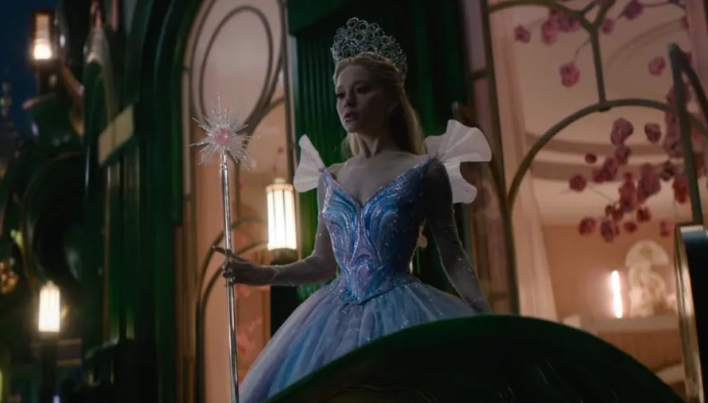
The film picks up five years after Elphaba (Cynthia Erivo) oooh-wa-ah-ah-aaaaah’d off into the western sky. In the interim, her sister Nessarose (Marissa Bode) has taken over their late father’s position as governor of Munchkinland, with Munchkin Boq (Ethan Slater) as her primary attendant. The Wizard (Jeff Goldblum) is continuing his wholesale prosecution of the talking Animal community while winning the public relations war on two fronts: the impending completion of a major public works project, The Yellow Brick Road (which was built with enslaved Animal labor), and—via Madame Morrible (Michelle Yeoh)—a constant output of propaganda painting Elphaba as the terroristic “Wicked Witch of the West.” The opposite of wickedness is goodness, and to that end, Morrible and the Wizard have created a cult of personality around Galinda (Ariana Grande), who has now taken the name “Glinda” and accepted the title “the Good.” It’s so like a modern P.R. campaign that they even throw in a sudden celebrity marriage between Glinda and Prince Fiyero (official sexiest man alive Jonathan Bailey), who has been appointed to the Emerald City’s special “Gale Force” (get it?) tasked with taking down the Wicked Witch. 

There’s a big love pentagon going on here. Nessarose is in love with Boq, who was encouraged by Glinda to show Nessarose attention and affection in their college days, and who is ready to move on but has been hesitant to do so because she’s still grieving her father (and Elphaba, in a different way). Boq is in love with Glinda and has been since they were all in school together, and learning of her impending wedding to Fiyero causes him to try and depart for the Emerald City, only for Nessarose to go full fascist and shut down Munchkinland’s borders to keep him from leaving her. Glinda, despite still being a bit of an airhead, is deep enough to know that the lack of happiness she feels despite public adoration and supposed romantic fulfillment means that it’s all hollow underneath; nevertheless, she genuinely loves Fiyero. For his part, Fiyero is taken aback by the sudden announcement of his wedding (no proposal was made by either party) and feigns positive feelings about this development, continuing to hide his pining for Elphaba. She feels that same love in return, but all she can see from her vantage is the Emerald City-propagated public image of him as a righteous crusader against the vile Wicked Witch. 

These interpersonal relationships are more integral to the story than the supposed greater political situation, the subjugation of the sentient Animals, although there’s more here than in the stage musical. The film opens with an action sequence in which Elphaba disrupts the building of the yellow brick road by freeing the Animals being used as slave labor, and she later interacts with a group of animals who are fleeing Oz via a tunnel under the road, begging them not to give up. Later still, she discusses a truce with the Wizard, with her final demand being that he release the flying monkeys, to which he agrees, only for her to discover an entire second chamber full of abducted Animals in cages, including her goat professor from Shiz University. She releases the animals, which stampede through Glinda and Fiyero’s wedding, and then this subplot is mostly forgotten about as the film moves on to putting all the pieces on the board in the place that they need to be for the events of The Wonderful Wizard of Oz (the book) and perhaps more importantly The Wizard of Oz (the movie) to occur, getting only a moment of lip service in the conclusion as Glinda gives her big speech. 

That table-setting is this film’s biggest hindrance, and why the back half of this story feels less organic and emotional than the first part. Nessarose has to decide to take advantage of the ancient spell book being open to try and use magic to make Boq stay with her, causing him to lose his heart. Elphaba has to try additional magic to save him, which means turning him into the Tin Woodsman, because eventually turning into the Tin Man is the only reason Boq is here in the first place. Madame Morrible wants to lure Elphaba out of hiding, so she sets out to hurt her sister. In order to do so, she creates the tornado that brings Dorothy’s house to Oz and crushes her in the street, because that’s where this story has always been going. The Cowardly Lion stuff is borderline irrelevant, other than his accusation that she was responsible for creating the winged monkeys rattling the Animals’ faith in her, but it’s here because that’s where this story has always been going. The most egregious is the fate of Fiyero. After holding his own ex-fiancee at gunpoint in order to get the Gale Force to release Elphaba, he doesn’t go with her, citing that it would be “too dangerous.” What? More dangerous than them dragging him off to torture him? Moments later, in “No Good Deed,” Elphaba sings that she presumes that they are in the process of beating him to death, if they haven’t already; I’m not really sure how that’s better than going on the run together? There’s absolutely no reason within this narrative for Fiyero not to run off with Elphaba in that very moment, but because we have to move the pieces into place for the story of The Wonderful Wizard of Oz to happen, he has to stay behind so that Elphaba’s concern for him can drive her to cast a spell that—surprise!—turns him into the Scarecrow we all know and love. It’s a necessary evil, but it doesn’t exactly flow the way that last year’s release does. 

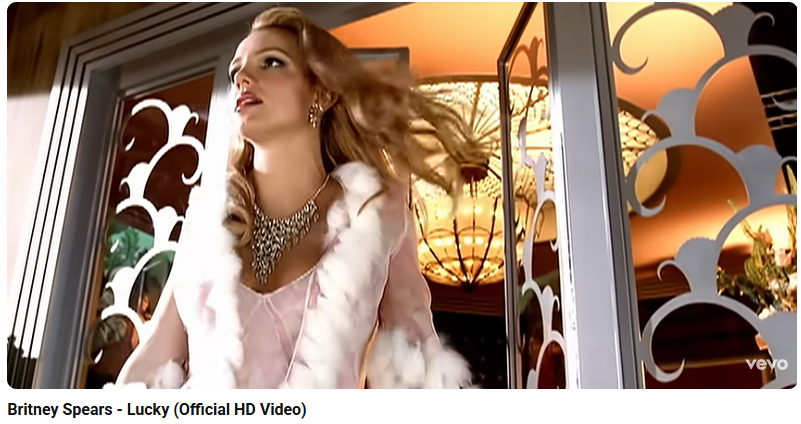
This film is also goofier than the first, and it feels like it comes from carelessness, except when it’s audaciously borrowing elements from the MGM film. Elphaba levitates her paraplegic sister by enchanting their late mother’s silver (as they were in the book) slippers, but her power makes them glow red so that Universal Pictures can skirt MGM’s copyright for Judy Garland’s ruby slippers. Two of the songs featured in the film are new to the adaptation; one of them is Ariana Grande as Glinda as Britney Spears in the “Lucky” video. I’m serious. 

The second is a new song for Elphaba when she tries to inspire the Animals to stay and fight, and it’s called “No Place Like Home.” That’s trying too hard. It’s difficult not to notice since this film wraps up the narrative threads of everyone but the little girl whose fate is left unknown, given that Glinda is a witch with no magic (which is a miserable creature indeed) and can’t send her back to Kansas. Admittedly, this does lead to a funny background bit where the Wizard takes off in his balloon and leaves Dorothy behind, this viewpoint implying that he was running for his life before Glinda decides to turn his exile into imprisonment. About half of the laughs I had in the theater were clearly intentional on the film’s part; the other half … I’m not so sure. After Elphaba’s disruption of the road construction, the film’s title suddenly appears over an image of a government overseer fleeing through fields of flowers as tense, dramatic music plays, and it’s so jarring it feels like an intentional joke. When Elphaba confronts the Wizard for the first time in this film, he playfully bonks himself with a yellow brick, which he then demonstrates as being light and bouncy before tossing it away. Was that a bit that Goldblum did on set with a prop brick that they decided to keep in? It’s bizarre. At other times, I merely groaned as the film forced in references, or when we had to make a hard right in a given character’s storyline so that they can get railroaded on track for their respective stations of the canon

I’m being pretty negative about a film that I had a pretty decent time watching, so it’s worth noting that there’s still a lot to enjoy, even if it’s rushed in some places and sluggish in others as it chugs toward its inevitable conclusion. Erivo’s pipes are still masterful, and the songs are sufficiently rousing even if they’re not as inspired as the last time we were all here. It has come, it will go, and by this time next year we’ll have mostly forgotten about it. Once its theatrical run is completed, the overwhelming tie-in advertising (Bowen Yang and Bronwyn James put in two brief appearances as their sycophant characters from the first film in order to justify their appearances in For Good-themed ads for Secret Clinical deodorant) will come to an end, and people will mostly remember the first film fondly, and this one little if at all. Don’t take it too seriously, have a good time, and perhaps see it late enough in the evening that there will be a minimal number of children in your audience (trust me).

-Mark “Boomer” Redmond

Transylvania 6-5000 (1985)

I recently attended a screening of Elvira: Mistress of the Dark at my local coffeeshop in Austin, Double Trouble (I’m screening Hush… Hush, Sweet Charlotte and Cherry Falls there on 10/17 and 10/31, and there will be a presentation of Paprika on 10/24 despite my absence; all screenings are at 8 PM, but get there early so you can get drinks and food!), and attached to the beginning of the film was a trailer for another New World Video release, Transylvania 6-5000. I’ve been curious about this one for a long time, since a horror comedy starring Jeff Goldblum and Ed Begley, Jr., with a supporting role for Carol Kane, seemed right up my alley. Unfortunately, this movie is one of the least funny things that I have ever seen. 

Transylvania 6-5000 opens on Jack Harrison (Goldblum) and Gil Turner (Begley) being given instructions by their tabloid editor, who is also Gil’s father, to go to Transylvania and investigate the story behind a homemade videotape of two European men fleeing in terror from an unseen (except from the waist down) “Frankenstein” [‘s monster]. Harrison bristles at this, claiming that he was brought onto the paper to increase their journalistic integrity, to which the editor replies he was brought on to increase their vocabulary. Upon arrival in Transylvania, Gil makes himself the laughingstock of the village by outright asking a local if they have heard of any Frankenstein sightings, and Harrison takes particular umbrage at this because it might reduce his chances of hooking up with an American tourist, Elizabeth (Teresa Ganzel), who is traveling with her young daughter. The two “journalists” find themselves lodged at a creepy castle whose manager also happens to be the town’s mayor (convicted sex offender Jeffrey Jones), who tells them that he plans to turn the place into a kind of Disney park for Transylvanian history. Every member of the staff is obnoxious, from butler Radu (John Byner) who calls everyone “master,” his unrelentingly irritating wife Lipi (Kane), and the film’s worst character by many miles, a bellboy/servant named Fejos (Michael “Kramer” Richards). Also, there’s a vampire lady in the castle, too, played by Geena Davis. 

You can imagine my excitement at reading all of those names in the opening credits (except for the obvious one), which was greatly outmatched by the utter disappointment that followed. After his second scene, every time that Richards appeared on screen, I would groan aloud. His character’s schtick is 50% incomplete pratfalls and the other half is prop comedy, like delivering a telegram to our tabloid boys clutched in a fake hand, so that when they take it, they pull the hand out of his sleeve. It’s shockingly unfunny. I’ve read that a lot of the film was improvised, with the notation that the overlong scene in which Radu and Lupi attempt to prepare a grapefruit having only the script direction “cut and serve fruit,” and that’s apparent in the finished product. Richards’s Fejos character constantly repeats “Come here, I want to show you something” or some variation thereof during virtually every moment that he’s on screen, and it has much the same energy of a child trying to prank their parent before they’ve developed any stage patter. At the end of the film it’s revealed that Radu and Lupi were supposed to be posing as people with hunched backs for the entire film, but when this was mentioned, it came as a complete surprise to everyone watching this in my apartment. One of the better comedic elements in that it manages to land some of the time is the instant conversion of “Dr. Malavaqua” from sincere and gentlemanly to unhinged and diabolical (Jekyll and Hyde style) upon crossing the threshold into his lab. But for every time this resulted in a polite chuckle, there was Fejos slipping on a banana peel or appearing from behind a painting. 

One of the friends who attended this viewing said that a lot of the conversation about the film online is from people who remembered loving the movie as children and returning to it as adults and being greatly disappointed. This was only my first viewing, but I can understand that as their experience. The film’s final act reveals that the mayor and the chief of police have been keeping Dr. Malavaqua sequestered because the coincidental similarities between his patients and classic Hammer Horror icons are ruining their attempts to revamp the town’s image for the purposes of non-monster tourism. The vampiress stalking Gil in the castle is merely a nymphomaniac wearing Halloween fangs because she was convinced that no man could ever love her (hence her getting a nosejob from the good doctor); the wolfman is only a man afflicted with severe hypertrichosis and Malavaqua is giving him electrolysis; and so on and so forth. This is probably the scene that most people remember from their youth, as it’s one of the few in which something interesting is happening. I also infer from the film’s continuous presence on Tubi that it’s been a cheap and easy license for basic cable filler since the mid-nineties, and if you tune in only to the second half, you’d probably have fewer memories of Harrison’s agonizing pursuit of Elizabeth and thus fonder memories overall. 

I cannot in good conscience recommend this one. Goldblum’s character’s smug arrogance and the underbaked concept that his greater journalistic prowess is demonstrated by his repeated skepticism about Gil’s experiences make him unlikable to a degree that Goldblum’s normal, effortless charm is unable to surmount it. Kane has no chemistry with Byner, and her entire character is the same joke over and over again—trying to help uselessly and refusing to get out of the way—and I know you’re telling yourself that it sounds like something that would be well within Kane’s wheelhouse but she is seriously off of her game here. If you have fond memories of this one, save yourself the heartbreak of losing them. If you haven’t seen it, then spare yourself the trouble. 

-Mark “Boomer” Redmond

Wicked (2024)

In our recent podcast episode about Sirocco and the Kingdom of the Winds, Brandon mentioned having seen (and not enjoyed) Wicked. I had previously shared that, when this film was over, I turned to my viewing companion and said, “I have a confession to make. I thought I was going to hate this,” but admitted that I had, in fact, loved it. The Wizard of Oz is one of the first movies that I can ever remember seeing, and I had a secondhand walkman that the red cassette of Oz songs basically lived inside of for years. I loved the books, reading them repeatedly (my favorite characters were Tik Tok and The Hungry Tiger, whose tormented existence torn between desire and moral conviction probably spoke to me at a deeper level, even at that young age). We named one of our chickens Billina and I even spent an entire summer saving my chore money toward a layaway copy of the much-maligned SNES Wizard video game. (The only other person I have ever met with any memory of the game, my friend Eric, also admitted he had never been able to beat it. About five years ago, we got together to watch a playthrough of it on YouTube and were shocked to discover that, of about 110 minutes of gameplay, neither of us had ever gotten past the first 25 minutes, which is where we inevitably died. It was just that hard.) I read Gregory Maguire’s Wicked in the summer between undergrad and grad school, and while I didn’t love it, I didn’t think it was bad, just that I preferred to imagine Oz as I had when I was a child. But after so many bad Oz movies and series over the years (especially Oz the Great and Powerful), I didn’t expect that I would fall into the magic of a movie that had so much negative press surrounding its visual style, especially since a musical is already kind of a hard sell for me. I was mostly there for the Jonathan Bailey of it all (since Broadchurch, if you’re keeping score at home). 

Wicked (Part 1, as everyone suspected) is about Elphaba Thropp (Cynthia Erivo), a woman from Munchkinland who, as the result of some magical hanky-panky in the middle of some extramarital hanky-panky, was born with green skin. This makes her an ostracized outsider among the Munchkins and leaves her the less-favored daughter of her widowed father, who dotes upon her paraplegic younger sister Nessarose (Marissa Bode). Nessarose is accepted to attend Oz’s Shiz University, and although Elphaba is not a prospective student, her accidental use of real magic in the presence of Madame Morrible (Michelle Yeoh) leads her to being invited to attend, under direct tutelage of Morrible, on the spot. As the result of a misunderstanding, Elphaba is set up to room with Galinda (Ariana Grande), the prettiest, most popular girl in all of Oz, although Elphaba ends up shoved into a small corner of their shared lodgings as a result of Galinda’s extensive pink wardrobe. Initial conflict between the two leads to Elphaba’s further isolation at school, and it is further exacerbated with the arrival of Prince Fiyero from Winkieland, whose devil-may-care attitude and carpe diem approach to academics, love, and life in general. Fiyero and Elphaba meet before he arrives at the school, and he is charmed by her lack of deference to either his royal title (of which she is ignorant) or his stunning good looks (which she cannot help but notice). However, upon arrival at the school, Galinda immediately gloms onto him and he accepts and reciprocates the attention, attempting to get the entire student body to reject the boredom of academia in favor of vice and fun, much to Elphaba’s annoyance. Meanwhile, there is an undercurrent of fascism and racism at Shiz U, as the once-diverse teaching body of the university has been whittled down to have only one remaining talking Animal instructor, the goat Dr. Dillamond (Peter Dinklage), who is the person willing to befriend Elphaba. Galinda and Elphaba eventually reconcile when, after a particularly cruel prank, Galinda learns that Elphaba has done something genuinely kind and meaningful in helping Galinda pursue her greatest ambitions; Galinda then makes it her project to rehabilitate Elphaba’s public image and make her, as the song says, popular. When Elphaba at last receives an invite to come to the Emerald City and meet The Wizard (Jeff Goldblum), she chooses instead to argue on behalf of the plight of the Animals rather than ask him to cure her of her green skin, setting events into motion that change the destinies of everyone involved. 

I’ve long been known to be a musical-averse person, but I’m coming around. After having seen recorded versions of Sweeney Todd (the one with Angela Lansbury) and Phantom of the Opera (the 25th anniversary production) this year, I’m more open to them than I once was, and it’s no secret that Wicked is one of the biggest and most widely acclaimed ones of all time. I can’t really speak to this one as an adaptation, but I really enjoyed it. I didn’t love every song (“Dancing Through Life” is acceptable as a bit of exposition/character development, but it’s very boring to me, and if it didn’t have Jonathan Bailey dancing through it, I wouldn’t work at all), but I thoroughly enjoyed most of them, and some are real standouts. Erivo’s voice is fantastic, and in some behind-the-scenes footage she’s singing live in several scenes that show that the magic is coming from her and not from any studio enhancements. She’s entrancing here as Elphaba, and I see so much of people I’ve known and loved in her performance that she completely won me over. I’ve also never been all that interested in Ariana Grande; she came along after I had already long graduated from the age group that she’s aimed at. I was of the generation whose adolescent-aimed-cable-channel-musical-industrial-complex products were Raven and Hillary Duff, so Grande’s rise from that same metaphorical farm league came long after I was among the target demographic. She’s quite fun here, and separates herself from the others on the same career path with a lot of genuine charm and a willingness to commit to the bit that’s quite admirable. 

As for most people’s complaints about the film and its visual style, I have to admit that I didn’t mind it. It would have been nice to have the film try to replicate the Technicolor-sais quoi of the MGM classic, but there’s still a lot to love here in the designs and the details. The costuming is fantastic, and at no point did I think that Oz looked boring or colorless, except in moments in which there’s an intentionality to the blandness that I find appropriate. This one left me feeling elevated and effervescent, and I loved that, even if what we’re watching is the real time character assassination of our protagonist at the hands of an evil government. What more could one really ask for?

-Mark “Boomer” Redmond

Deep Cover (1992)

There was a period of time in my childhood when I was convinced that Laurence Fishburne is the greatest actor alive.  Decades later, I’m once again being swayed to believe that superlative, except now my supporting evidence has less to do with his work in the high-premise sci-fi films The Matrix & Event Horizon than it has to do with his more complex character work in Bill Duke’s Deep Cover & John Singleton’s Boyz n the Hood.  Fishburne was well rewarded in his 1990s heyday, including an Oscar nomination for his brutish portrayal of Ike Turner in What’s Love Got to With It? and an Independent Sprit Award for Best Male Lead in Deep Cover.  To my knowledge, Event Horizon earned no Oscar buzz to speak of in 1997, which would have disappointed me to know at age 11.  Since then, Fishburne has slipped into the Great Actor void, mostly working in TV and in IP extenders when studios should be churning out a new Awards Bait star vehicle for him every year the same way we pamper other living greats like Glenn Close, Annette Benning, and Meryl Streep.  It’s a shame, especially once you get cynical about how other Black legends like Denzel Washington, Angela Bassett, and even Deep Cover director Bill Duke have been left to simmer on the same Hollywood backburner.

It might seem naive to discuss an undercover cop thriller like Deep Cover in these prestige-acting terms, but it really does give Fishburne a lot of room to show off.  If nothing else, it somehow finds an entire new layer of self-conflict to the moral dilemma of a cop having to commit crimes to stop them, despite the already long-bald tires on that trope.  We open with a flashback to the cop’s childhood trauma on A Very Shane Black Christmas, when his addict father was gunned down in front of him while robbing a liquor store for gift & drug money.  The rest of the movie is set in the New Jack City 1990s, where Fishburne’s childhood trauma under the violence & desperation of addiction has curdled into furious disgust with the crack epidemic that has rattled Los Angeles.  In order to take down the white ghouls at the top of the ladder who supply drugs to the Black community, Fishburne allows himself to be recruited to go undercover as one of their business partners.  In the process, he gets especially close to a scummy yuppie lawyer played by Jeff Goldblum, whose “condescending infatuation with everything Black” makes their already volatile workplace relationship even more explosively tense.  Most of Fishburne’s conflict is internal, though.  He is handling, selling, and profiting off the one evil he has dedicated his life to avoiding, and every moment of that hypocritical turmoil weighs heavy in his angry, self-hating eyes.

Deep Cover is currently in print as a Criterion Collection Blu-ray, but it entered my house as a 20-year-old thrift store DVD.  That dichotomy is a perfect snapshot of where it lands on the prestige/trash spectrum, stealthily operating as a high-style art film that’s gone undercover as a thriller-of-the-week marquee filler.  Bill Duke’s directorial instincts deserve just as much credit for its impact as Fishburne’s acting chops, updating classic noir tropes for Spike Lee’s America.  Fishburne’s overly verbose narration track is classic noir at least, and Duke’s vision of Los Angeles is one where every alley spews a volcano of mysterious urban steam into an atmospheric haze of neon reds & blues (often alternating from the tops of passing cop cars).  The editing rhythms are chopped into jerky stops & jumps, feeling more DJ’d than traditionally spliced.  Its aesthetic indulgence in post-MTV style only gets more intense from there the further its characters lose themselves in the momentum of cocaine psychosis – a style that eventually came full circle when the movie was marketed with a tie-in music video featuring Snoop Dogg & Dr. Dre.  It’s a cool video promoting a very cool movie, but what I ended up cherishing most about Deep Cover was the amount of screenpsace it reserved for watching one our greatest living actors be great at acting.  It’s shocking how few other movies afford Fishburne the same generosity.

-Brandon Ledet

Vibes (1988)

As is often my wont, I was recently extolling to a friend about the virtues of our local library, and declared I would purchase said friend an inexpensive DVD player the next time I saw one at an estate sale (there’s a one-in-four chance there will be, in my experience) so that he could enjoy some of the more obscure picks that are available. This was perhaps days before the announcement that Netflix would be discontinuing its DVD-by-mail service, which was very close to my heart and which flung wide the doors for me to discover a plethora of movies and shows that had been out of my reach before. I couldn’t afford to have internet in my home when I was in college, but even at nineteen I could spare $8 a month for a constant stream of discs into my apartment, and although my local library can’t boast that it has a copy of everything (and for some reason doesn’t do interlibrary loans for media), there are thousands of things that are otherwise inaccessible now. My friend joked (I hope) that everything is streaming now, and that there’s no reason to own such a thing; I pointed out that I have been watching a lot of episodes of Ebert & Roeper at the Movies recently and that it’s opened my eyes to a huge number of movies that I never would have known existed otherwise. Every episode, the boys discuss 4-5 movies, with two of them usually being films that have remained in the public consciousness or otherwise has some kind of name brand recognition (your Top Gun, your Beauty and the Beast, a Silence of the Lambs), one or two movies that fall into the moderately obscure “oh, yeah,” category, (Uncle Buck, for instance, or She-Devil, or Major League: Back to the Minors; anything that you’d watch at a hotel when you’re on vacation and it’s raining on a Saturday afternoon), and then one or two movies that have, for all intents and purposes, vanished from the face of the earth. Is it worth listing those? We Think the World of You from 1988 and 1994’s BackBeat aren’t the kinds of titles you drop when you’re trying to impress someone. Buried among these episodes, I stumbled across their review of Vibes that sparked my interest and, having finally seen it (thanks, libraries!), has also stolen my heart. 

Ostentatious but insecure Sylvia (Cyndi Lauper – yes, really) meets staid museum curator Nick (Jeff Goldblum doing the platonic ideal of a Jeff Goldblum performance) under strange circumstances; they and several others are guests of Dr. Steele (Julian Sands), a parapsychologist. They’re both psychics; he’s a psychometrist, meaning that he can read the history of an object and even information about the people who have touched it, while she gained clairvoyance via a psychic guide named Louise, whom only she can see and hear. Louise, via Sylvia, warns Nick that his long-term girlfriend has been unfaithful while he’s been away, and although he doesn’t believe it, he’s confronted with the truth when his powers inadvertently reveal her deceit. Sylvia, meanwhile, meets her occasional flame Fred (Steve Buscemi) at the racetrack, where she is cajoled into using her powers to pick a winning horse on his behalf, only to be unceremoniously ditched for another woman moments later. Returning home, she finds a man named Harry (Peter Falk) in her kitchen, where he offers her $50K to help find his son, who has gone missing in Ecuador. Sylvia then enlists Nick to go along as well, since two psychics are better than one, and he opts to go rather than continue to spiral out and stew over the failure of his relationship. Once they arrive, Nick deduces with his powers that Harry has deceived them, and the older man admits that he’s actually seeking a fabled room of gold in the mountains, which was previously discovered by his business partner, but the latter man has since been hospitalized in a persistent vegetative state. The two psychics reluctantly agree to go, falling in love while being pursued the whole way by Steele, fellow psychic Ingo (Googy Gress), and a sexy assassin (Elizabeth Peña). 

I mentioned above that Gene and Roger reviewed this movie; I didn’t mention that they both hated it. Not hated hated hated it, but neither was very impressed. In fact, most critics seem to have felt this way, as it’s sitting at 13% on Rotten Tomatoes. I’ve never considered that a perfect metric for a movie’s actual quality, but as a measurement of critical favor, it’s very telling. About halfway through this movie, my best friend, after several chuckles aloud, asked me how the film could have been reviewed so poorly, and neither of us could believe it. Unfortunately, it wasn’t that long after this that the film’s quality dipped, to the point where I could understand how a general audience may have been turned off by the pacing issues in the film’s third act. We can’t really go any further without noting, however, that Lauper is incredibly charming here, and a delight to watch. 

I can’t remember the last time I watched one of these kinds of movies—you know, where a non-actor performer (or sports star) is trying to break into pictures—and the non-traditional actor really disappears into the role. She has great comedic timing for someone with no real background in that field, and she and Falk have amazing chemistry. She and Goldblum are a delight to watch together as well; according to her autobiography, they didn’t get along, but you wouldn’t be able to tell from how well they play off of each other here. Goldblum’s decision to go full Goldblum matches her energy perfectly, as even though Lauper’s hair, make-up, and sartorial choices are always completely over the top, her vibe (sorry) is much more subdued than the man standing next to her, eyes bugging and stams stammering. 

The first few scenes in Ecuador are fun, as the trio arrives there to head for the mountains, albeit there’s some All in the Family-era racism from Falk’s character that doesn’t pass the sniff test these days. At first, these seem like mannerisms of the character Harry is playing, of the terrified father of a missing boy, but he spouts off a few other Bunkerisms even after the reveal that are jarring in an otherwise very goofy movie. Travelogue scenes set prior to the cresting of the mountain are gorgeous, capturing the natural verdant beauty of the Ecuadorian mountains, like something out of a movie with a much higher budget. Unfortunately, once Sylvia, Nicky, and their pursuers get to the mountaintop where Harry’s partner found a small, glowing pyramid in the film’s cold open, the plot drags considerably. All of this takes place on a set, which is fine, but the effect of being at the top of a high peak with nothing in the background makes the whole thing feel like it’s taking place in a void. Right before they arrive, we’re treated to a gorgeously rendered matte painting, but once on the actual mountaintop set, characters move around and make choices that feel like shuffling the deck before the denouement. This goes some way to explain why contemporary critics may have turned on the movie when the third act trended toward boredom, but I’m more forgiving, especially when there’s so much charm and appreciable humor on display. 

The film manages to run the gamut of different comedic styles. When the trio first arrive in Ecuador, Sylvia teases Nick for bringing so much luggage, assuming that he’s overpacked. He reveals that one of the suitcases contains an entire month’s worth of dehydrated rations; when Sylvia points out that it’s normally the bacteria in the water that caused travellers of the time to become ill, Nick reveals that another suitcase is full of giant jugs of water, which he also brought along. Later, after Harry’s deception has been revealed, he and Sylvia find themselves at the tiki-themed hotel bar, where he is drinking directly from one of the jugs, which has a festive paper umbrella embellishment. It’s a good visual gag, one among many, including one in which the 5’3” Lauper and the 6’4″ Goldblum perform a tango that ends with her arms around his shoulders, essentially being carried, with her legs dangling back and forth. It all leads one to believe that the contemporary audiences and critics of the time may simply have misunderstood that the film understands that its zany, sometimes cartoony plot is intentional, not the result of poor writing or direction. 

The real crime here is that the public reaction pushed Lauper to abandon film business, albeit not completely. She’s effervescent here in a very real way, like she’s trying some things out. At one point, when Nick rejects her because he misunderstands the reasons that she’s expressing interest, Lauper shifts into an affected Transatlantic accent and mockingly blurts “I want you bad all right. I dream about you and me and a house in Long Island. I’m only half a woman until I make love to you.” For someone who’s not really part of the business, she’s making interesting acting choices that reveal a talent range that most people wouldn’t assume. Reportedly, Dan Aykroyd was first interested in the project (which makes sense, since he’s a big believer in the paranormal in real life) but left because he refused to be in a movie with Lauper, which is both absurd and for the best, since Goldblum’s take on Nick is a much more believable match for Sylvia than I could imagine Aykroyd providing. As a fun bit of fluff, this is one worth tracking down. 

-Mark “Boomer” Redmond

The Fly II (1989)

One of my favorite phenomena in the history of genre cinema is the R-rated horror film that feels like it was made for children. Mostly born of the VHS era, titles like The Dentist, The Ice Cream Man, Killer Klowns from Outer Space, and practically any Charles Band production you could name all feel like they were intended for a juvenile audience in their artistic sensibilities, but also happen to be overrun with sex, monsters, and intense gore. Much hated for its deviation from its predecessor’s more adult tone, The Fly II (1989) is an impeccable specimen of the R-Rated children’s horror. Directed by Chris Walas, the special effects artist responsible for the grotesque mayhem of Cronenberg’s iconic 1986 remake of The Fly (1958), The Fly II is an over-the-top indulgence in ooey-gooey practical effects work worthy of the most vomitous nightmare. Most of the The Fly II’s negative reputation is in the claim that Walas’s special effects showcase was the only thing on the movie’s mind, that there is no plot or substance to speak of outside the movie’s many, many gross-out gags & surreal bodily transformations. That criticism discounts the most interesting aspect of The Fly II, the fact that everything outside its Lovecraftian, sci-fi creature transformations plays like a late-80s kids’ movie more than any direct Cronenberg descendent likely should. The two central relationships at the film’s core are essentially a boy-and-his-dog coming of age drama and a wish-fulfillment fantasy about growing up overnight, conveying R-rated perversions of movies like Big & My Dog Skip. The juxtaposition of these kids’ movies sensibilities and the nightmarish gore of the film’s gross-out creature transformations makes for a much more interesting tension than The Fly II is often given credit for. The movie deserves to be understood less as a diminished-returns echo of Cronenberg’s work and more as a high-end, well executed specimen of one of the strangest corners of VHS-era horror cinema.

For a movie with hardly any cast rollover from the Cronenberg “original”, The Fly II is shockingly confident in operating as a direct sequel to its predecessor. Tertiary player John Getz, the only returning cast member, watches in horror as “Geena Davis” (replacement actor Saffron Henderson, whom the film makes no attempt to disguise) gives birth to the resulting child from her first-film love affair with Jeff Goldblum’s Brundlefly. Goldblum himself only appears in-film in the form of pre-taped video diaries documenting his (disastrous) teleportation experiments, which are essentially deleted scenes from The Fly repurposed to legitimize this film’s existence. It’s difficult to take too much notice of these casting cheats & narrative workarounds, though, since the birthing scene that opens The Fly II is so overwhelmingly traumatizing that the petty concerns of series continuity are entirely beside the point. “Geena Davis’s” pregnant belly writhes with the contortions of a monster struggling to break free from within. She shrieks, “Get it out of me!” as surgeons pull a mutated, inhuman knot of tissue from inside her body, a cocoonish husk that leaks a milky bile from its creases. The husk cracks open to reveal a healthy-looking human baby inside, which the surgeons lift into the light with perplexed awe. This unholy surgical nightmare of an opening scene is a warning shot for the many grotesqueries to come. The body horror of bug-like transformations & fleshy decay from Cronenbrg’s The Fly repeat here, but Chris Walas uses them as a mere launching point for a relentless onslaught of even more varied gross-outs: mutated pets, infected injection wounds, face-melting bug bile, and an extension of the first film’s climactic reveal of the Brundlefly’s final form into nearly a half-hour’s worth of shameless creature feature mayhem. It’s easy to see how someone could dismiss the film as an excuse for indulgences in gross-out practical effects (especially given Walas’s background & the flimsy connective tissue between its narrative & the previous film’s) but that unwillingness to engage with the film doesn’t consider two very important factors: practical effects gore is inherently cool on its own and this particular story would still be remarkably bizarre without it.

“Geena Davis’s” inhuman husk-baby is raised as the property of the evil corporation who funded the original film’s teleportation experiments. Martinfly, son of Brundlefly, grows up incredibly fast (and with incredible intelligence) thanks to his father’s compromised DNA. In the early stretch he’s a Book of Henry-style smartass (complete with homemade helmet contraption) who maintains a lifelong rivalry with the evil scientists who study/torture him – corporate villains he refers to as “the people who live beyond the [two-way] mirror.” Because of his accelerated Brundlegrowth, Martinfly doesn’t last long in this juvenile state. On his fifth birthday he’s revealed to be a full-grown Eric Stotlz, a super intelligent specimen with the emotional intelligence of a young child. In this “adult,” rapidly decaying body, Martinfly fulfills common childhood fantasies about growing up overnight, claiming the privacy & personal property privileges of being a grown-up that most children long for. This bizarre version of Big is made horrifically perverse when the five-year-old Martinfly woos himself a twenty-something girlfriend (with their taboo lovemaking secretly surveilled & documented by the evil corporation’s science lab staff, of course). Concurrently, Eric Stoltz’s adult-toddler also befriend a golden retriever who is kept on-site as a test subject in the continued (and increasingly unsuccessful) teleportation experiments. This boy/dog-bonding children’s media trope is turned into its own skin-crawling nightmare when the poor pup is horribly mutilated in a failed transportation, then kept alive for years in intense pain & physical dysfunction for further research, a mangled mess of muscle & fur. Martinfly eventually gets his ultraviolent revenge on his lifelong abusers, particularly the Daddy Warbucks father figure who placated him through the torture/research, when he retreats into a second husk and metamorphosizes into a giant, killer bug beast, destroying the facility that has imprisoned him since birth. Everything preceding that traditional creature feature payoff, however, is a bizarre, nightmarish perversion of kids’ movie tones & tropes, which is exactly what makes The Fly II stand out as a unique practical effects gore fest.

Of course, there are a few moments of so-bad-it’s-good camp that flavor The Fly II’s VHS era pleasures. I’m particularly tickled by a scene where a dejected Martinfly bitterly stares at a bug-zapper while his housefly brethren are obliterated by its allure – the blue glow of their destruction lighting his melodramatic monologue about the meaningless of life. The over-the-top staging of that third act slump feels entirely at home with the film’s other campy touches, which recall the juvenile, unsubtle eye of vintage superhero comics. Not only does the movie begin as a kind of superhero origin story and heavily features a smiling Lex Luthor-type archvillain as its antagonist, it also leans heavily into the increased strength & agility Martinfly’s transformation affords his body. Even the creature’s final form is surprisingly mobile (especially for a hand-built puppet), leaping from platform to platform in the evil science lab like a visibly grotesque superhero, getting revenge on faceless baddies who torture animals for profit. This comic book sensibility is partly what makes The Fly II feel like it was made for children despite the intense gross-out gore featured throughout. The movie’s direct sequel even took the form of a short-run comic book instead of a feature film: a miniseries titled The Fly: Outbreak, published in 2015. Considering The Fly II’s distinct comic book sensibilities, the larger boom of R-rated kids’ horror in its late-80s era could be understood as a continuation of the tradition established by EC Comics in the 1950s, where juvenile morality tales were filtered through increasingly grotesque, supernatural plots. The same year of this film’s release there was even a more deliberate, direct attempt to keep that EC Comics tradition alive in the launching of HBO’s Tales from the Crypt horror anthology series, which also juxtaposed adult sex & gore with juvenile media sensibilities.

Like the better episodes of Tales from the Crypt and other VHS era oddities of its ilk, The Fly II feels like the exact kind of movie that would grab a child’s attention on late-night cable after their parents fell asleep, then scar them for life with nightmare imagery of melted faces, mutated dogs, gigantic bug-beasts, and milk-leaking husk babies. Its tone can be campy at the fringes (as expected, given the material) but it’s also complicated by the severity of its details, especially its dog torture & Eric Stoltz’s lead performance, which is heroically convincing, considering the ludicrous plot it anchors. The Fly II may over-indulge in Chris Walas’s artistic interest in practical effects gore (an attention to tangible, hands-on craft that only becomes more valuable the further we sink into CG tedium), but the consensus claim that those effects are the only noteworthy aspect of the film deliberately ignores how incredibly bizarre its R-rated children’s movie sensibilities can be and where that astoundingly self-conflicted tone fits in with the larger history of horror as a modern artform.

-Brandon Ledet

Hotel Artemis (2018)

There was a long period of time where slick crime pictures with deliberately overwritten dialogue felt distinctly like post-Tarantino drivel. The post-Tarantino thriller was a far-too-common manifestation of macho posturing where fresh-out-of-film school cinema bros could indulge in style-over-substance “subversions” of genre flicks – mostly to their own delight. Now that the artform of the Tarantino knockoff is much less ubiquitous, however, it’s evolving into something much more adventurous. Free Fire remolded the overly-talky Tarantino formula into an absurdist meta comedy about how audiences should be feel bad about being endlessly entertained by gun violence. Three Billboards outside Ebbing, Missouri (embarrassingly) attempted to graduate it to the level of Oscar Bait Melodrama. Neither were nearly as satisfying as the post-Tarantino sci-fi comedy Hotel Artemis, which has evolved the medium into something I never thought I’d see it become: adorable.

Set in a near-future dystopian Los Angeles where Jodie Foster is clearly tired of your shit, Hotel Artemis details a single night of backstabbing, thievery, and bloodshed among chatty, professional criminals. A sprawling cast that somehow includes Foster, Dave Bautista, Jeff Goldblum, Jenny Slate, Sterling K. Brown, Charlie Day, and Zachary Quinto mingles in the titular art-deco-meets-steampunk hotel while a historically massive riot rages on outside. Stray references to a border wall and the exorbitant cost of clean water detail the general state of the decaying, overpopulated world outside, but Hotel Artemis mostly concerns itself with the John Wickian criminal society that walks its wallpapered halls. “Hotel” is kind of a misnomer, as the space these organized, warring thieves occupy is in fact an underground hospital run by Foster: a rules-obsessed nurse who does not suffer fools gladly. She and Bautista, who acts as her enforcer yet fancies himself “a healthcare professional,” struggle to maintain order on this particularly chaotic night at the Artemis. Various criminal members with barely-concealed agendas talk shit & start deadly fights throughout the increasingly bloody night, counteracting the hotel’s intended function as a hospital for critically injured reprobates. As the situation worsens by the minute, Foster seems more annoyed than disturbed, passing off the rules-breaking violence around her as just another busy Wednesday shift, her least favorite night of the week.

Unlike most overwritten, post-Tarantino crime thrillers, this film is genuinely, consistently hilarious. With the hotel setting and absurdist mix-ups of an Old Hollywood face, Hotel Artemis embraces the preposterousness of its exceedingly silly premise in a way that more cheap genre films could stand to. Foster & Bautista have the adorable rapport of a local news segment on a raccoon that made friends with a baby elephant. Foster shuffles down the hotel’s hallways with animalistic determination & a distinct old-lady waddle that might go down as the comedic physical performance of the year. Bautista brings the same matter-of-fact line deliveries that are so endearing in his role as Drax in Guardians of the Galaxy, somehow making lines like “I will unheal the shit out of you” endearingly warm despite the physical threat of his massive body. Even the general rules of the film’s world-building are treated as a kind of throwaway joke. Characters repeatedly exclaim their surprise at the hotel’s existence, claiming they thought it was a myth, despite the massive neon sign that reads “Hotel Artemis” on the building’s roof. The entire film plays like that, casually breaking with logical consistency for the sake of a gag, relying on the easy charm of its cast and throwaway action movie one-liners like “Visiting hours are never” to pave over any jarring bumps in the road. It’s a gamble that totally worked for me, as I watched the entire movie with the same wide, stupid grin throughout.

I don’t know that I would recommend Hotel Artemis for sci-fi fans specifically. Besides shallowly explored concepts like 3D organ-printing & medically employed microbial robots explained in lines like “Yeah yeah yeah, I know what nanites are,” the movie’s genre beats are more consistently defined by its old-timey hotel setting and its clashes between various criminal elements. There’s minimally-employed CGI and even less world-building exposition, so I’m not sure a true sci-fi nerd is going to get the genre payoffs they’re looking for. Similarly, fans of the Tarantino & John Wick aesthetics the movie superficially echoes in its chatty crime world setting are likely to walk away unsatisfied, as the movie lacks the macho energy of either influence (and is better for it, in my opinion). It’s hard to know who to recommend Hotel Artemis to at all, given its bafflingly low critical scores and the fact that I was the only audience member laughing in my theater (for the first time since . . . Spy? Chappie?). The joys of watching Jodie Foster waddle around the Artemis and lovingly tell patrons they look “like all the shades of shit” are very peculiar & particular, which means that Hotel Artemis will have surprisingly limited appeal for a movie with this objectively wonderful of a cast. That kind of highly specific appeal can be a blessing in disguise for a scrappy, over-the-top genre film, though, and I can totally see Hotel Artemis gathering a dedicated cult following over time. I hope that appreciation doesn’t take too long, though, as Foster & Bautista’s adorable chemistry in this picture deserves to be recognized as a Cinematic Event.

-Brandon Ledet

Isle of Dogs (2018)

Director Wes Anderson has such a meticulously curated aesthetic that his work is almost polarizing by design. As his career has developed over the decades, long outlasting the wave of “twee” media it partly inspired, he’s only more fully committed himself to the fussed-over dollhouse preciousness of his manicured visual style. That can be a huge turnoff for audiences who prefer a messier, grimier view of the world that accepts chaos & spontaneity as an essential part of filmmaking. Personally, I can’t help but be enraptured with Anderson’s films, as if my adoration of his work were a biological impulse. Like the way house cats host parasites that fool pet owners into caring for them, it’s as if Wes Anderson has nefariously wired my brain to be wholly onboard with his artistic output. It’s a gradual poisoning of my critical thinking skills that stretches back to my high school years, when his films Rushmore & The Royal Tenenbaums first established him as a (divisive) indie cinema icon. Anderson’s latest work, Isle of Dogs, only makes his supervillain-level command over my critical mind even more powerful by directly pandering directly to things I personally love. A stop-motion animated sci-fi feature about doggos who run wild on a dystopian pile of literal garbage, the basic elevator pitch for Isle of Dogs already sounds like a Mad Libs-style grab bag of the exact bullshit I love to see projected on the big screen, even without Wes Anderson’s name attached. As he already demonstrated with Fantastic Mr. Fox, the director’s twee-flavored meticulousness also has a wider appeal when seen in the context of stop-motion, which generally requires a level of whimsy, melancholy, and visual fussiness to be pulled off well. That’s why it’s so frustrating that Isle of Dogs is so flawed on such a fundamental, conceptual level and that I can’t help but thoroughly enjoy it anyway, despite my better judgment.

Set decades into the future in a dystopian Japan, Isle of Dogs details the samurai epic-style adventure of a young boy attempting to rescue his dog from an evil, corrupt government (helmed by his own uncle). All dogs in his region have been exiled to the pollution-saturated hell of Trash Island (which is exactly what it sounds like) amidst mass hysteria over a canine-specific virus, “snout fever.” The story is split between two efforts: a search & rescue mission involving the boy & a gang of talking Trash Island dogs (voiced by Bryan Cranston, Jeff Goldblum, Bill Murray, Ed Norton, Bob Balaban, Tilda Swinton, etc.) and a much less compelling political intrigue narrative in which an American foreign exchange student (voiced by Greta Gerwig) attempts to expose the government’s villainous deeds. As an American outsider himself, Wes Anderson is at times contextually positioned in the POV of both the Trash Island Dogs and the foreign exchange student, the only consequential English-speaking characters in the film (a large portion of the dialogue is unsubtitled Japanese). In his worst impulses, Anderson is like Gerwig’s foreign exchange student– an enthusiastic appreciator of Japanese culture who awkwardly inserts themselves into conversations where they don’t belong, wrongfully feeling entitled to authority on a subject that is not theirs to claim. From a more generous perspective, Anderson is like one of the American-coded trash dogs– compelled to honor & bolster Japanese art from a place of humbled servitude, even though he doesn’t quite speak the language (either culturally or literally). By choosing to set an English language story in a fictional Japanese future, Wes Anderson has invited intense scrutiny that often overpowers Isle of Dogs’s ambitious sci-fi themes, talking-dog adorability, and visually stunning artwork. This is especially true in Gerwig’s (admittedly minor) portion of the plot, which sticks out like a sore thumb as one of the film’s more conceptually flawed impulses. For a work so visually masterful & emotionally deft, it’s frustrating that it seemingly wasn’t at all self-aware of its own cultural politics.

There are much better-equipped critics who’ve more thoughtfully & extensively tackled the nuanced ways Isle of Dogs has failed to fully justify its Japanese culture-gazing: Inkoo Kang, Justin Chang, Emily Yoshida, Alison Willmore, to name a few. As a white American, it’s not my place to declare whether this gray area issue makes the film worthy of vitriol or just cautions consideration. I could maybe push back slightly on the cultural appropriation claims that say there’s no reason the story had to be framed in Japan and that Anderson only chose that setting for its visual aesthetic. Like Kubo & The Two Strings’s philosophical relationship with the finality of death (or lack thereof), Isle of Dogs engages with themes of honor and ancestry that feel very specific to its Japanese setting (even if not at a fully satisfying depth). Truth be told, though, I likely would have enjoyed the film even without that thematic justification. Unless Isle of Dogs is your very first exposure to the director’s work, you’ve likely already formed a relationship with Wes Anderson as an artist, whether positive or negative. It’s a relationship that can only be reinforced as the director doubles down with each project, sinking even deeper into his own particular quirks. I assumed with Moonrise Kingdom that no film could have possibly gotten more Wes Andersony. Its follow-up, Grand Budapest Hotel, immediately proved that assumption wrong. While Isle of Dogs stacks up nicely to either of those films in terms of visual achievements, its own doubling-down on the Wes Anderson aesthetic is tied to the director’s long history of blissful ignorance in approaching POC cultures (most notably before in The Darjeeling Limited). It does so by submerging itself in a foreign culture entirely without fully engaging with the implications of that choice. As a longtime Anderson devotee in the face of this doubling-down, I’m going to have to reconcile my love of his films with the fact that this exact limitation has always been a part of them, that I’ve willfully overlooked it in my appreciation of what he achieves visually, emotionally, and comedically elsewhere. Isle of Dogs is a gorgeous work of visual art and a very distinct approach to dystopian sci-fi. It’s a great film, but also a culturally oblivious one. The conversation around that internal conflict is just as vital as any praise for its technical achievements.

-Brandon Ledet

Thor: Ragnarok (2017)

Thor: Ragnarok marks the third Marvel release of the year that focused on fun and adventure, and all for the best. After last year’s kinda-dreary Civil War and the visually arresting but narratively empty Doctor Strange, the film branch of the House of Ideas was in top form this year, churning out an equal sequel with Guardians of the Galaxy 2 and the delightful Spider-Man: Homecoming. Although Guardians 2 may have leaned a little hard on the beats with its humor (kind of like your friend who tells great jokes but is also a little desperate and always ends up laughing too hard at himself) and Homecoming was an out-and-out comedy with intermittent superheroing, Marvel brought it home with a good balance of strong character moments, spaceships flying around and pewpewing at each other, new and returning cast members with great chemistry, and a hearty helping of the magic that is Jeff Goldblum.

After visiting the fire realm ruled by Suftur (voiced by Clancy Brown), Thor (Chris Hemsworth) returns to Asgard after a few years galavanting about and looking for the Infinity McGuffins, only to find Loki (Tom Hiddleston) still disguised as Odin (Anthony Hopkins) and ineffectually ruling Asgard while propping up the myth of the “dead” “hero” following Loki’s supposed sacrifice at the end of The Dark World. Thor enlists Loki in helping him seek out the real Odin on Midgard (Earth), but events conspire to release the long-imprisoned (and forgotten) Asgardian Goddess of Death, Hela (Cate Blanchett).

Her return to Asgard to take the throne leaves Thor and Loki stuck on the planet Sakaar, ruled by the Grandmaster (Goldblum), who offers the space- and time-lost denizens of the planet their proverbial bread and literal circuses in the form of massive gladatorial games. As it turns out, this is where our old buddy the Hulk (Mark Ruffalo) ended up after his exit at the end of Age of Ultron, and he’s the champion of the arena after having stayed in his big green form since we last saw him on screen. Also present is Scrapper 142 (Tessa Thompson), a former Asgardian Valkyrie who likewise found herself on this bizarre planet after being defeated by Hela before her imprisonment. Meanwhile, Heimdall (Idris Elba) is hard at work putting together a resistance and biding his time until Thor and company can return to Asgard, stop Hela and her new lieutenant Skurge (Karl Urban), and prevent Ragnarok.

Despite apparently being no one’s favorite Avenger and being overshadowed in virtually every installment by inexplicable (to me) fan favorite Loki, Thor has experienced a lot of growth in the past six years since he was first embodied by Hemsworth, and so have his films. The Dark World was, in many ways, the nadir of the MCU franchise as a whole (until Doctor Strange came along), where it felt like everyone was just going through the motions after having a lot more fun with the surprisingly pleasant balance between the fish-out-of-water humor and royal family drama of the first film. I quite like Natalie Portman, personally, and I would have loved to see her continuing to have a role in these films, but she was sleepwalking through that last film with so much apathy that she made Felicity Jones look like an actress.

Here, however, everyone is totally committed to the job, which is probably easier under the guiding hand of the bombastic and colorful Taika Waititi, who seems to be the embodiment of Mr. Fun, than it was in a film helmed by Alan Taylor, whose work tends to be more grim, if not outright melancholy. This is a movie with setpiece after setpiece, all in different realms and on various planets with their own palettes and aesthetic principles, which lends the film a verisimilitude of scope, even though each conflict (other than the opening fight sequence) comes down to something much more intimate and personal: the friction between selfishness and the responsibility to something greater than oneself. The wayward Valkyrie forsakes her desire to drink herself to death while running from the past in order to defend her home once again, Bruce Banner risks being completely and permanently subsumed by the Hulk in order to lend a hand when Asgard calls for aid, Skurge finds a strength he didn’t know he had when faced with the extermination of his people, and even Loki ends up making a decision that helps others with no apparent direct or indirect benefits to himself. The oldest being in the film, Hela, has never learned this lesson despite having nearly an eternity to do so, and it is her ultimate undoing (maybe), and it’s a strong thematic element that comes across clearly in a way that a lot of films from the MCU do not.

There are some mitigating factors, as there always are. Those of you hoping for a Planet Hulk adaptation are going to be mightily disappointed, although you should definitely check out Marvel’s direct-to-video animated version, which is not only the only unequivocally good animated film Marvel produced before ceding that realm to DC, but also has a starring role for my boy Beta Ray Bill, who has a blink-and-you’ll-miss-it cameo as one of the faces carved into the Grandmaster’s tower. There are also some character deaths earlier in the film that I think are supposed to be shocking in a meaningful way, but come on so suddenly and have so little effect on the plot that it feels kind of tasteless. I would have loved to see more of Sakaar’s arenas as well; it’s hard not to feel cheated when a movie promises some gladiatorial combat and ends up giving you only one match-up.

I’ll save the rest of my thoughts for our Agents of S.W.A.M.P.F.L.I.X. review, but I’ll say this for now: this is a fun summertime Thor movie that somehow ended up being released in November, but it’s nonetheless a delight. Check it out while it’s still in theaters, as you should never pass up the opportunity to see a live action depiction of that ol’ Kirby crackle on the big screen.

-Mark “Boomer” Redmond

Independence Day: Resurgence (2016)

EPSON MFP image

twohalfstar

Several years ago when Rob Zombie’s Halloween remake was first announced, I asked my neighbor and fellow horror fan Drew if he thought it would be worth seeing. In his trademark bombast, he declared that there was no point; the original Halloween had spawned so many imitators and copycats over the ensuing decade that the movie had essentially been remade dozens of times.

I couldn’t help but think about the autumn afternoon that conversation took place while sitting in the theatre watching Roland Emmerich’s latest cinematic outing, Independence Day: Resurgence last week. Why should we revisit the world of Independence Day when there have been so many imitations, parodies, and virtual remakes of that movie in the twenty intervening years between the original and this too-late sequel? Especially given that many of the attempts to recapture ID4’s success were made by that film’s director? After early career success with cult film Universal Soldier and the big-budget sci-fi flick Stargate (which I rather like, although I understand and accept that I’m in the minority on this one), Emmerich hit the film world with comparable force to one of the ID4’s flying saucer beams. The 1996 film was the highest grossing movie of the year, with a box office take of $817.4 million (for comparison, Twister was the second highest grossing film of 1996, raking in $494.4 million, about 60% of ID4’s total), and led Time to declare that science fiction was back in the mainstream. Comparative quality aside, Independence Day was essentially the Star Wars of the nineties: a surprise blockbuster success that catapulted almost everyone involved into another level of Hollywood starpower.

There are those who argue that Independence Day is a dumb movie, including most internet reviewers like (my personal hero) Lindsay Ellis, although even the hardest-hearted nitpicker can admit that there’s nothing wrong with loving a dumb movie. I have an unabashed fondness for ID4 even after all the times that I’ve seen it, and I can’t even find it in my heart to consider it a dumb movie, for all of its flaws. The characterization is generic and bland; as a result, most of the audience investment in the film rides on the charisma of its leads, Jeff Goldblum, Bill Pullman, and (especially) Will Smith, even more than the show-stopping effects work that turns DC, LA, and NYC into smoldering ruins. The film is unabashedly patriotic and jingoistic, but in a largely positive way; it’s not pro-America to the extent that non-Americans are portrayed as chaotic evil monsters, as in films in the vein of Emmerich’s later film The Patriot. What I love most about ID4 is that the stakes feel real and tangible, because the world of Independence Day is, for all intents and purposes, our world.

Resurgence’s biggest flaw lies in how it fails to understand the simple appeal of that reality. Because all the reviews that you’ve seen talking about how Resurgence is an awful piece of shit aren’t really accurate: Resurgence is a perfectly serviceable modern science fiction film. That’s faint praise and I know it, but it’s the truth. Resurgence is not a good movie or a bad movie, it’s just a moderate, middle of the road, mediocre film. It’s just as “dumb” as ID4 but without the charm. It’s basically a Syfy Channel original but with actors who can recite dialogue like they’ve met a human being before (minus Brent Spiner) and a budget that accommodates the spectacle that Emmerich wants to put on display. It’s as bland and inoffensive as a film can possibly be, and it would be as quickly forgotten as comparably unmemorable sci-fi time-passers like 2013’s Oblivion and 2014’s The Signal were it not for the fact that it’s a follow-up to a movie that people have intense nostalgic fondness for.

But before I spend any more time deliberating on the differences between the sequel and the original, a brief plot outline: 20 years after the “War of 1996,” the various nations of the planet are largely unified into a single governmental body and with a singular planetary defense force. Doctor Ian Malcolm David Levinson (Jeff Goldblum) is director of Earth Space Defense, and his father Julius (Judd Hirsch) wrote a self-aggrandizing book and is living off of its profits on an apparently indestructible houseboat. Former President Whitmore (Bill Pullman) is tended to by his daughter Patricia (It Follows’s Maika Monroe taking over for Mae “Her?” Whitman, because the latter is “not pretty enough” I guess), who is also a former space jet pilot and current staffer in the White House under President Sela Ward, who may have been given a character name but damned if I can recall it. Dylan Dubrow-Hiller (Jessie Usher replacing Ross Bagley), the stepson of Will Smith’s character in the first film, is the leader of a squadron of “legacy” pilots, including new characters Jake Morrison (Liam Hemsworth) and Charlie Miller (Travis Tope), who have been busted down to menial work after Morrison endangered Dylan in a practice flight. Also, Charlotte Gainsbourg is in this movie for some reason, as a researcher who thinks that a very simplistic icon that repeats itself in the drawings of people who were psychically connected to the aliens is important before disappearing as soon as the plot no longer needs her. Oh, and Brent Spiner is back as Dr. Okun, only this time he’s a major part of the plot in addition to service as one of the film’s four(!) comic relief characters. The plot follows the new generation (Hemsworth/Monroe/Usher) teaming up with the old (Spiner/Pullman/Goldblum) to destroy a new alien threat, which is the same as the old alien threat but bigger.

One of Emmerich’s trademarks is that his films (that aren’t the least historical historical pictures ever committed to film, like The Patriot and the utter garbage Anonymous) usually open with one character finding out about something, then that information being communicated to several other people before being disseminated to one of our protagonists. Stargate opens with a child in Egypt discovering something that becomes her life’s work, and then James Spader is eventually brought in to translate the hieroglyphics that kickstart the plot. In ID4, a signal is detected and the information is eventually escalated to the point that the president is awoken to be told this information. Often, someone of import will be in the middle of a party and then be called away to answer a phone call. As lazy as it is to repeat this trick over and over again, it’s a decent filmic way of using a gigantic cast of characters in order to convey a sense of scale. That’s part of what helped ID4 feel so global, but here the world of the film feels very small, and we see characters that we already know almost immediately. A lot of this has to do with the film’s world-building, which is another element that alienates this sequel from the original. The appeal of Independence Day is that it took place in our world, whereas Resurgence takes place on an Earth with antigravity helicopters, interplanetary “tugs” that can shuttle to the moon and back in a matter of minutes, a building that you don’t even realize is the rebuilt White House at first, and soldiers carrying around Halo-esque pulse rifles. Everything in the film is futuristic because it’s been reverse-engineered from alien tech; this needn’t inherently detract from the film, but it does mean that the world of Resurgence isn’t ours, and it’s hard to care about the stakes in this film when compared to the original. This entire film could take place on Alderaan or Arrakis for all that it resembles the 2016 we’re all living in. And when we live in a world where 9/11 imagery is used to “sell” the audience destruction on a massive scale in everything from Man of Steel to Transformers, Independence Day’s relatively tasteful and understated destruction and use of practical effects seems dated now, but Resurgence goes too far in the other direction, with the over-the- top devastation looking like outtakes from 2012 that were put back in the box for being too unbelievable.

There’s honestly too much to say about why this film fails as a sequel, so divorcing it from that context and viewing it as a run-of- the-mill sci-fi flick that combines absurd schlock (Judd Hirsch outrunning a tidal wave on a tiny boat is some ‘98 Godzilla shenanigans) with occasional tenderness (Monroe and Pullman pull off some damn fine interfamilial love) is the best way to enjoy it Resurgence, should you want to do so. There are interesting ideas aplenty: post-singularity life forms that exist elsewhere in the universe, an insular nation where a ground war against survivors of a crashed alien ship went on for a decade after the invasion proper was thwarted, and the haunted dreams of post-invasion survivors are all woefully underdeveloped in comparison to subplots that are useless and forgettable, like Charlie’s crush on the Chinese pilot, the tagalong auditor comic relief character, the busload of kids that Judd Hirsch rescues, and pointless rivalry between Dylan and Jake. The attempts to recreate the personal relationships of the first film fall flat, and it would have been better not to try at all.

Overall, Resurgence is too little, too late, and it doesn’t have the heart and charm that the original did to cover its flaws. But it exists now and we all have to live with it, so my advice is to either not bother or try to enjoy it as an Asylum flick that somehow got a big-screen budget.

-Mark “Boomer” Redmond