Urban Legend (1998)

The 1998 college-campus horror Urban Legend resides at the crossroads of two major 1990s cultural projects, both involving the legacy of Wes Craven. First & foremost, it’s a post-Scream third wave slasher, coasting on a deluge of self-aware meta horrors starring young, hot teen actors who are conscious they are in a horror movie and provide live commentary on the tropes of the genre as they’re systematically killed. In this case, the famous-at-the-time teenyboppers in question (Alicia Witt, Jared Leto, Tara Reid, Joshua Jackson, etc.) attempt to guess the next patterned kill of a serial murderer who’s recreating long-debunked urban legends rather than recreating famous movie scenes—like in Scream—but the effect is the same. The secondary project of Urban Legend was part of a larger 1990s effort to reclaim the public reputation of Robert Englund as more than just the creep who played Freddy Kreuger, presenting him instead as a kind of effete academic. His late-80s turn as the Phantom of the Opera transported his Freddy Kreuger persona to the more refined cultural space of a period-piece opera house.  He later turned up as himself in Craven’s proto-Scream meta slasher A New Nightmare, appearing out of Kreuger drag as a thoughtful, classically trained actor haunted by the grotesqueries he was typecast as post-Elm Street fame. In Urban Legend, Englund’s past professional triumphs as Freddy Kreuger still linger in the audience’s mind as his character is floated as the most obvious suspect in the serial-killer investigations, but he’s quickly cleared of guilt and presented as something much more respectable: a bespectacled, leather-patched college professor and the leading expert in his field, which conveniently happens to be urban legends.

Of course, the only reason to return to Urban Legend all these decades past its expiration date is to pinpoint what, exactly, is the most 1990s-specific detail about it. There are plenty of late-90s time capsule contributions competing for that honor: frustrations with dial-up internet connections tying up a shared phone line, Joshua Jackson’s frosted-tips Peroxide hairdo, a meta joke at the expense of Jackson’s Dawson’s Creek fame, “Goth 4 Goth” campus hookup message boards, needle drops from Stabbing Westward and Cherry Poppin’ Daddies. When I saw the film was screening on a Monday evening down the street from my house, I didn’t attend in hopes that it would hold up as a wrongly dismissed 90s classic, à la The Rage, The Craft, or Cherry Falls. I attended out of nostalgia for the film’s value as a retro Blockbuster Video rental, watched alone on my bedroom VCR when I was old enough to crave teenage transgressions but too young to experience them first-hand. It was a pleasant time to return to, if not only to reminisce about a moment when teen slashers were slickly produced, hot commodities. Every exterior scene involves a completely unnecessary crane shot, and every nighttime slashing sequence is set during a music video-style thunderstorm for atmospheric effect, flaunting money most modern slashers couldn’t afford to scrape together. The only embarrassing thing about the movie, really, is watching the adults in the room have to play archetypes for mouthbreathing teens’ entertainment: Brad Dourif as a creepy gas station attendant, Loretta Devine as a Coffy-obsessed campus cop and, of course, Robert Englund as a learned professor of the macabre.

As for the urban-legends-obsessed serial killer conceit, even the teenage victims point out that the premise is “a bit of a stretch.” There are a few obvious go-to urban legends that map well to the teen slasher format. There’s the classic “The call’s coming from inside the house” story of the babysitter being killed by a home invader, restaged here in a frat house much like how the foundational 70s slasher Black Christmas restaged it in a sorority house. The first kill involves an axe murderer hiding in the backseat of a woman’s car, played for ironic humor as she sings along to the “Turn around” refrain of Bonnie Tyler’s “Total Eclipse of the Heart,” painfully off-key. The killer’s motivation being a disastrous prank version of the “flashing headlights gang initiation” legend is similarly effective. Three or four clever kills are not enough to fill the 100-minute runtime, though, which inspires the movie to reach for urban legends that don’t fully map to the genre. In the most egregious example, one character is force-fed a combo of Pop Rocks & Drano in a violent escalation of the schoolyard myth that combining Pop Rocks & soda will explode your stomach. Otherwise, things get exceedingly silly when the legends are updated with modern twists, like switching phone calls for online chatrooms or creating new teen slang in which victims-to-be each share their “favorite U.L.” at the campus coffee shop. With the gnarly exception of a microwaved dog, the violence of the film is never especially gruesome, but it does find plenty of novelty in its post-Scream meta slasher premise. It’s a wonder there were any legends left for its two less-remembered sequels; it seems like this one ran through all the standards.

If you want a smart, level-headed version of this movie, you’re much better off revisiting the 1992 classic Candyman, which starts with a grad student recording a broad range of urban legends before settling on one specific, hyperlocal one that destroys her life. The modern folklore academia of Urban Legend is much broader, and it only serves two cynical purposes: cashing in on the popularity of Scream and making Robert Englund appear intellectual. A couple decades later, the only cultural significance the movie has gained is as a reminder that Jared Leto was once passable as a normal, functional human being, albeit a strikingly pretty one. Everything else is pure late-90s nostalgia, the cinematic equivalent of binging Stabbing Westward & Cherry Poppin’ Daddies music videos on YouTube.

-Brandon Ledet

Horror Noire (2019)

It’s initially tempting to receive the Shudder-produced documentary Horror Noire as a kind of celebratory victory lap after the financial & awards season successes of Get Out helped greenlight so much new black art in the horror genre. Indeed, the film includes several interviews with black creators whose latest projects were funded in the wake of Get Out’s game-changing pop culture impact, including author Robin R. Means Coleman, whose eponymous source material itself was greenlit into this feature-length documentary the very morning after Jordan Peele won his Oscar for Best Original Screenplay (as reported on an episode of Shock Waves early this year). Horror Noire does allow the recent success story of Get Out to boost morale on its back end, and several black authors & filmmakers do use the opportunity to plug their latest projects, but this documentary is just as much of a rebuke as it is a celebration. It’s first & foremost an academic conversation covering the history of black representation in American horror cinema, from the coded racial caricature of amoral classics like King Kong & The Creature from The Black Lagoon to the celebratory upswing in black filmmaking in the modern day. The history of black representation, black audiences, and black art in American pop culture doesn’t leave a lot of room for Horror Noire to play like the victory lap a lesser film could slip into, and it’s impressive to see a talking-heads doc on this scale & subject to be willing to have those tough conversations. As one interviewee puts it, “We’ve always loved horror, but horror hasn’t always loved us.”

The list of celebrity interviewees from The Black Horror Hall of Fame gathered here is impressive and alone worth the effort of putting this doc together: Jordan Peele, Ernest Dickerson, Ken Foree, Tony Todd, Loretta Divine, Keith Davis, The Craft’s Rachel True, etc. Their talking-heads commentary is smartly staged as audiences watching the screen inside a movie theater rather than as creators toiling in their workspaces, emphasizing how onscreen representation shaped them as people as well as artists. The real joy of this film, however, is how much it allows author Robin R. Means Coleman to guide the discussion in her own words instead of letting the flashier celebrity interviewees fully take over. She obviously has a reverence for horror cinema as an artform, but she’s also fearless in interrogating the ways it has failed black audiences since the very beginning. American history itself is declared to be “black horror.” Birth of Nation is framed as a horror film from black audiences’ POV. Tropes like the easily scared back buffoon providing comedic relief, the “magical negro” helping white characters navigate supernatural realms, and the sole black character being the first to die – and so on – are called out for their social menace even in beloved horror classics like Candyman & The Shining. Get Out’s success is contextualized as a cyclical breakthrough moment that’s already been seen before in landmark texts like The Night of the Living Dead, Blacula, and post-Spike Lee 90s gems like Tales from the Hood. Coleman is given free rein to throw bare-knuckled academic punches here, and she does not disappoint.

Although this isn’t the surface-level celebration of black success stories in horror cinema that it easily could have been, it’s still only a thematic primer that compresses Coleman’s rigorous academic text into a breezy 83min discussion. As such, I didn’t walk away with too many deep-cut recommendations for titles I haven’t seen before (Sugar Hill, Abby, and Def by Temptation being the few standouts), but the implied promise is that there’s plenty more to dig into once I pick up the book that inspired this production. Since this is just a standalone feature and not a ten-part mini-series, however, that compression is perfectly suited for the task at hand: using the success of Get Out to center a crucial academic discussion that well deserves the signal boost. It’s not the exhaustive, final word on the topic the way a lengthy academic text could afford to be, but it’s a worthwhile conversation starter that isn’t afraid to take on the Goliaths of the genre as it interrogates a history just as worthy of scrutiny as celebration. A weightier film would’ve been less digestible in a single sitting, and a lighter one would’ve underserved the political & emotional severity of its subject. In that way, Horror Noire finds an ideal Goldilocks middle ground, while doing the essential public service of amplifying Robin R. Means Coleman’s authorial voice.

-Brandon Ledet

Anna to the Infinite Power (1982)

EPSON MFP image

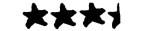
fourhalfstar

I’ve mentioned before, in my review of The Legend of Boggy Creek, that I used to look forward to reading Maitland McDonagh’s “Ask FlickChick” column each week with great anticipation as a preteen. Some movies, like Boggy Creek, were perennial favorites, movies half-remembered by children of the seventies and eighties from repeated airings on late-night cable or watched secretly at mostly-forgotten sleepovers. One such film that stuck in the minds of that generation’s children was a film about a young girl who discovers that there are other girls who share her face; McDonagh was often happy to inform them that they were remembering the made-for-TV children’s thriller Anna to the Infinite Power, which premiered on HBO in 1982 and on home video in 1983.

The film’s plot follows Anna Hart (Martha Byrne), the brilliant but bratty daughter of scientist Sarah (Dina Merrill) and piano teacher Graham (Jack Ryland). Anna is a genius, but she has a history of stealing and misbehaving, prioritizes her scientific studies to the extent that her artistic accomplishments are mechanical and uninspired, is afflicted with migraines caused by flickering lights, and is openly disrespectful to her teacher (Loretta Devine, who unfortunately doesn’t get much to do here). Graham doesn’t understand why Sarah is always so defensive about Anna’s brilliance, but he chooses to let it go. The couple also have an older son, Rowan (Mark Patton, star of A Nightmare on Elm Street 2: The One with the Homoerotic SubText), who is studying music as well. Rounding out the main cast is Donna Mitchell as Michaela Dupont, another piano teacher who has moved in across the street from the Harts at the time that the film opens.

One night, Anna has a dream about being on a rough flight and being comforted by a woman who seems to be her mother, but isn’t. When she awakes the next morning, she finds that there has been a plane crash in Philadelphia and a girl who looks like her is interviewed by a reporter at the scene. Rowan, who is initially sceptical, finds a photo of this other Anna in the newspaper and agrees to help his sister figure out what’s going on. The two track down the home of the second Anna, but when her mother answers the door, she claims to have no daughter; when they leave, they are attacked by a biplane piloted by someone who has seen North by Northwest one too many times. They escape this murderous pilot and are found by their mother, who tells them the truth: Anna is just one of many girls who were cloned from a scientist named Anna Zimmerman, a girl who was the daughter of a scientist and a musician and lived through the Holocaust to become a scientist in her own right, but died just as she was on the verge of finalizing her designs of the “replicator,” a food generating device that would end world hunger. An unnamed genetics company devised a plan to clone Zimmerman and raise these clones in a similar family structure with the goal of one day recreating an Anna who can complete the replicator device.

For a movie ostensibly made for children, this is a dark but engrossing and ambitious feature with a great premise that paints the world in ambiguous colors. The reveal that the flickering lights cause Anna pain because Anna Zimmerman’s sister, a composer, was well liked by a Nazi commandant who forced her to play her trademark sonata (which is also the film’s main musical leitmotif) by candlelight is particularly grim; in an interview on the 2010 DVD release of the film, Patton talks about how he is still recognized on the street for his role in this movie, and that he has heard from many people that they first learned about the Holocaust as children by watching this film. The horrifying, soul-crushing truth about the extent of the historical event is only alluded to here, but I can’t remember the last time I saw a kid’s movie that explicitly referenced concentration camps, outside of those narratives that are based on the lives of real survivors.

In contemporary children’s media, we rarely see stories that explicitly tell children to question authority, or which suggest children should be given agency in the decisions which affect their future life. Here, Anna is exposed to the cruel fact of life that adults make terrible decisions, that parents lie to their children and to each other (Sarah volunteered to be a mother in the Anna program, but Graham knew nothing about it), and that grown-ups can be as easily manipulated as children, or choose to do immoral things because they, like children, are trapped within the horizon of their own beliefs. Most importantly, Anna comes to realize that companies (and governments) can and will sacrifice innocents in the pursuit of a “greater good,” although the ends—be it a stronger, independent Germany, as was the case for the regime that nearly killed Anna Zimmerman, or the end of world hunger, as was the goal of the experiment that created and nearly destroyed Anna Hart—do not justify the means. By the time a youngster watching this movie learns that the organization that created Anna is completely unethical and evil (Michaela is actually the only escapee/survivor of a previous batch of Annas, who were killed along with their families when they were unable to recreate Zimmerman’s work, a fate that is planned for Anna Hart’s fellow clones and their respective families before Michaela intervenes), they’ve probably learned more about human nature than they could have imagined. Life is cheap, trust is a commodity, and blind faith in a higher order of authority can lead to destruction of the highest and most disturbing caliber.

Anna is not a perfect movie. The production values are very low, and this shows in a lot of the scenes, particularly early in the film. Still, the movie is an exercise in economical filmmaking both monetarily and within the commodity of time; not a single frame or note is wasted, and all of it builds towards an ambiguous ending that, judging by the sheer number of people who wrote to McDonagh about it, left an impression on an entire generation of kids who were lucky enough to grow up with HBO. I hate to sound like an old fart, but the 1980s and 1990s were a glorious time for children’s media; animated films did not shy away from being somber and occasionally frightening or macabre, and television was more open about the fact that adults didn’t know everything. Today, we live in a world where children’s media underwent a massive shift in the first part of the new millennium, as American culture moved from inquisitive outspokenness to enforced jingoistic patriotism and adherence to authority in the wake of 9/11, and the TV programs and movies produced for children followed suit, turning into a pablum of trite, cheery shows with little reflection of reality. Although the tides of this anti-intellectual movement have finally started to turn (most notably in the popularity of The Hunger Games, which I find laudable because of its themes that the government can’t be trusted and that media is intentionally manipulated to prevent criticism of toxic institutions), parents would be well served by looking back to the late twentieth century for realistic heroes and important messages about society and its ills. Anna to the Infinite Power is definitely something I intend to show to my (future, hypothetical) children, and I would recommend you do the same.

-Mark “Boomer” Redmond