
The Fast and the Furious: Tokyo Drift (2006)

EPSON MFP image

threehalfstar

campstamp

Tokyo Drift, the third installment in the Fast and Furious franchise, is not a particularly unique film when considered on its own merit, but it is very much an outlier in the series it’s a part of. The first two Fast and Furious films are undercover police thrillers about trust & family and the criminal world of California street racing. Tokyo Drift, on the other hand, is about a high school reprobate’s struggle to find The Drift within. The Drift, in case you somehow didn’t already know, is the ability to more or less drive sideways, something Japanese teens are apparently very good at. The Drift also serves as some kind of metaphor for growing up or taking responsibility or something along those lines (with a direct reference to The Karate Kid for full effect), but one thing’s for damn sure: it has nothing to do with the world of the Paul Walkers, Vin Diesels and Tyrese Gibsons of the first two films. There’s a hilarious last minute cameo that attempts to tie it into the rest of the series, but for the most part Tokyo Drift is a free-floating oddity, just sort of . . . drifting out on its own, disconnected. It’s also a genuinely fun bit of trash cinema.

Although there’s very little narratively connecting Tokyo Drift to its predecessors, it does share a lot of their surface pleasures: it brings back the rap rock from the first film (with Kid Rock in this case), it adds new toys to the vehicles (this time a revolving sports car vending machine, 3-D paint jobs, and nitros tanks shaped like champagne bottles), and the cars reach the cartoonish, blurred warp speed that the series finds so fascinating (although this time they’re moving sideways). The most important connective tissue here, however, is the stunt casting of a rapper in a supportive role. The first film had Ja Rule, the second had Ludacris. Tokyo Drift has (Lil) Bow Wow, playing a wisecracking sidekick who winks at the camera, delivers one-liners like “Japanese food is like the Army: don’t ask, don’t tell,” and refers to the Mona Lisa as that lady who’s smiling all the time. In the previous two Fast and Furious films Paul Walker served as the only common element between them; in Tokyo Drift, Bow Wow’s stunt casting makes that connection even more tenuous.

Substituting Paul Walker in the central role is the aforementioned teenage reprobate Sean, played by Lucas “The Kid From Sling Blade” Black. Never you mind that Sean is easily in his mid-twenties (and the rest of his American high school classmates are nearing their thirties). He’s a teenage dropout who burns his last chance for redemption in an opening street race with Zachery “The Kid From Home Improvement” Ty Bryan in an attempt to “win” his opponent’s girlfriend. By the time the girlfriend in question declares “Looks like I got a new date to the prom” it’s more than fair for the audience to ask “Who are these people?!” The answer to that question never comes (although their connection to the franchise is hinted at in that all-too-important last second cameo). Saved from going to jail for his street racing transgressions by his leopard print hussy mother, he’s promptly shipped off to Tokyo to live with his military daddy, who really only exists to occasionally give the film some girl group song levity in lines like “It was either this, or juvie hall” and “Have you been racing, Sean?” Sean himself isn’t a particularly essential addition to the Fast and Furious world, but it is amusing to hear him pronounce Japanese words in a thick Southern accent once he reaches “The Drift World” and the idea of a girl-group style teenage bad boy looking for his inner Drift headlining one of these movies is a bizarre enough detail on its own regardless of execution, given how far removed it is from the undercover cop intrigue of the rest of the franchise.

Besides Bow Wow’s antics and Sean’s extended screen time, the real draw of the film is The Drift World itself. There’s an unashamedly trashy pleasure in Tokyo Drift’s world of Japanese sports cars sliding sideways in parking garages and down mountainsides, its Yakuza members who speak English even when they’re the only people in the room, and the live-action videogame feel of its downtown street racing. There’s a few innovations to the format here: it’s surprisingly the first film in the franchise to feature a car being built from scratch via montage; spectators discover a way to watch an entire race through a series of flip phones; this has got to be the only Fast and Furious movie to feature a Shonen Knife song on the soundtrack; and I’m pretty sure that during the opening race a smashed porta potty splashes digital feces on the camera lens. The most entertaining part of Tokyo Drift, however, is how little it is concerned with engaging with the rest of the franchise at all. It’s its own little side story about a young Southern boy trying to make his way through the class struggles of two worlds-apart high school hierarchies. Does he ever find his inner Drift? Yes, but does he get the girl? You betcha. As Sean himself says in the film, “It’s not the ride, it’s the rider,” and Tokyo Drift takes that lesson to heart, using the franchise as a vehicle to create its own space as a ridiculous, surface-pleasures action thriller with some ridiculous one-liners, a car racing fetish, and career high moment for rapper-turned-actor Not-So-Lil Bow Wow. I’m a little surprised by how much that formula worked for me and it ended up being my favorite film in the series so far.

-Brandon Ledet

Mall (2014)

EPSON MFP image

three star

Last summer I attended a Linkin Park concert in Houston, Texas and before the concert began, there were a buttload of advertisements for Mall. I was really confused as to why a film was being advertised at a concert, but I later discovered that Linkin Park’s DJ and sampler, Joe Hahn, directed the film. He also directed some of Linkin Park’s best-known music videos, such as “Numb,” “From the Inside,” and “ Somewhere I Belong,” so I wasn’t really surprised to find out that he directed an actual feature-length film. As embarrassing as this may sound, the main reason I decided to watch Mall was because Mr. Hahn directed it. Interestingly enough, it was very similar to a Linkin Park music video, due to its slow motion action scenes, futuristic visual features, and soundtrack composed by members of Linkin Park along with Alec Puro (drummer of Deadsy).

Mall is based on a novel of the same name by Eric Bogosian. The film follows the lives of several individuals that connect once a meth addict shoots up their local shopping mall. The film does a great job with bringing attention to the subplots of each individual character without losing focus on the mass mall shooting, but the film does have its share of problems. The biggest problem is that the script is poorly written. It’s difficult to keep up with what’s happening because there’s too much going on and none of it is very interesting. On a more positive note, the film’s visual elements were excellent. Mall is actually kind of similar to Blood and Black Lace (April’s Movie of the Month) because it is a film worth watching for the visuals rather than the story.

I can’t go without mentioning that the one and only Gina Gershon makes an appearance in the film as Donna, a dissatisfied suburban housewife. This role was perfect for Gershon and she was definitely one of the strongest actors in the film. While her character was my probably my favorite, she hasn’t come very far since Showgirls. Yes, she’s still the campy hot mess that I fell in love with years ago.

Unfortunately, Mall wasn’t as good as I expected it to be, but it certainly wasn’t terrible. It falls right in the middle, making it an “ok” film. The underwhelming script and lack of buildup are overshadowed by the amazing cinematography, so it’s definitely worth a watch. A lot of people are going to hate this film, but in the end, it doesn’t even matter.

Mall is currently streaming on Netflix.

-Britnee Lombas

Chappie (2015)

EPSON MFP image

three star

campstamp

As a sci-fi action thriller with prodding questions about private sector weapons production, the drone/surveillance state, and the nature of consciousness and personal identity, Chappie is an utter failure and deserves all of the vitriol that’s it’s been drowning in. As a feature-length Die Antwoord music video, however, it’s a winning success. I’m honestly happy to report that the distinguished pedigree of pop-music movie vehicles like Cool as Ice, Crossroads, Glitter, Spice World, and KISS Meets the Phantom of the Park is alive & well in 2015. Honestly. I’m happy with Chappie for what it is: a two hour long commercial for a South African “rap-rave group”, a living, breathing internet meme that scored a surprise one-hit wonder status five years ago.

Although Die Antwoord has released three full-length albums and nearly a dozen music videos at this point, it’s still tempting to categorize them as a one hit wonder. Hell, pop star Tiffany has eight full-length albums and a documentary and she’s still defined by the success of “I Think We’re Alone Now”. Die Antwoord’s own “I Think We’re Alone Now” is a 2010 trash pop oddity called “Enter The Ninja.” Unlike a lot of Die Antwoord’s more repetitive, rave-friendly songs, it’s a real ear-worm in its own bizarre way and it had the added benefit of introducing a their then-fresh world of graffiti-soaked visual art in an eye-popping music video that went “viral”. In the five years since the release of “Enter The Ninja” their act has worn a little thin on me (as one-hit wonders often do), but they’ve developed a devoted niche audience for their version of the South African “zef” aesthetic, an audience that takes their music & visual art very seriously. If Die Antwoord was conceived as a joke or a meme, it’s impressive how committed they are to the gag, seemingly integrating it into their personal lives & physical appearances to the point where it doesn’t matter whether they’re “for real” or not.

It’s no surprise, then, that Die Antwoord’s singular hit “Enter the Ninja” plays over the final shot & end credits of Chappie. When I first spotted them in the trailer for the film, I assumed their role was a severely limited one, a glorified cameo. I was wrong. Die Antwoord are to Chappie what Vanilla Ice was to Cool as Ice, what Eminem was to 8 Mile, what The Village People were to Can’t Stop the Music. This is their vehicle. They play themselves. Their music dominates the soundtrack. They flaunt their own merch. Their visual aesthetic (crude phalluses, expletives, and all) is drawn all over every inch of the set. What outfits vocalists Ninja & Yolandi Visser are going to wear from scene to scene are vastly more interesting choices than what their far more famous co-stars Hugh Jackman or Sigourney Weaver are going to do or say. Even the basic appeal of the titular robot Chappie revolves around the duo, since they raise him like their baby and teach him to walk & talk their brand of zef culture. This is unmistakably Die Antwoord’s movie.

The movie vehicle for flash in the pan one hit wonders was an artform I had assumed long dead, but Chappie brings it back to life with the modern update that the group in question started essentially as a meme. Director Neil Blomkamp (District 9, Elysium) tried to elevate the material with questions like “Where is our privatization of military weapons production & law enforcement headed?”, “Why are we so cruel to what we don’t understand?”, “What is a soul?” and blah, blah, blah. In this line of questioning, Chappie is nowhere near as insightful as its robot movie ancestors, like the near-30 years old (and near perfect) RoboCop or, hell, even the severely flawed Short Circuit. It is, however, particularly exciting as a return to form for fans of campy vehicles for pop music icons and one-trick ponies. In this case, Die Antwoord. If you’re looking for a thought-provoking sci-fi action flick with well-considered themes explored to their full potential, you will hate Chappie. If you like (or are amused by) Die Antwoord and wonder what a trashy action movie about armed robots & roving gangs ransacking Johannesburg that Ninja & Yolandi would imagine themselves starring in would possibly look like, you have a pretty good chance of enjoying yourself. The only thing it was missing on that end was a live performance.

-Brandon Ledet

Body Slam (1986) and the Often Superfluous Nature of Bloated Spectacle in Pro Wrestling

wrasslin

Like most adults find themselves doing from time to time, I spent this past Friday night yelling myself hoarse at sweaty, costumed men as they wrestled each other in a middle school gymnasium. It was my first exposure to New Orleans’ own pro wrestling promotion Wildkat Sports, at an event called Wildkat Strikes Back. Sitting in a cramped, hot gymnasium with a crowd that ranged from screeching children to their elderly grandparents to hardcore, middle-aged wrestling nerds to roving gangs of way-out-of-place crust punks was a welcome alternative to the way I usually enjoy the sport: in the cold, TV-provided glow of living rooms. There was an intense, communal vibe in that gym that can be lacking in the larger, televised promotions and it made me realize just how much of a spectacle the sport can be on its own merit. When stripped down to its bare bones (sans the slapstick comedy sketches, celebrity cameos, pyrotechnics and half-baked stunts that can exhaust a more bloated program), pro wrestling is still entertaining in a genuine, visceral way.

Sometime in mid-80s pro wrestling had reached its most bloated point in history. With the rise of Hulkamania, the undeniably potent likeability of Andre the Giant, and the cutthroat business-sense of juggernaut promoter Vince McMahon, WWE (then WWF) reached the pinnacle of its cultural dominance when WrestleMania III broke the all-time attendance record of an in-door sporting event with more than 93,000 fans present in the stands (a record that still holds today). The level of sheer spectacle that accompanies events like WrestleMania is as disparate from the brand of pro wrestling you’d see at events like Wildkat Strikes Back as the difference in size of their respective crowds, but that spectacle isn’t exactly necessary to make “sports entertainment” . . . entertaining.

Arriving just a year before that record-breaking crowd at WrestleMania III (and a whole three years before WWE got into the film business themselves with No Holds Barred), the 1986 film Body Slam similarly gets confused about what makes pro wrestling entertaining, putting more value into the spectacle surrounding the sport than the sport itself. In the film’s laughably convoluted plot (it is a comedy, after all) rock ‘n’ roll manager Harry Smilac is struggling to make it with only one client under his wing (a band called KICKS) when he fortunately expands his roster by signing on pro wrestler “Quick” Rick Roberts (played by “Rowdy” Roddy Piper), mistakenly assuming that he is a musical act. Despite his initial repugnance toward pro wrestling, Smilac discovers that there’s good money in the sport and pretty much dives head first into the wrestling business until he (late in the film) has the brilliant idea of combining KICKS & Quick Rick’s talents and voila! Smilac gives birth to “Rock ‘n’ Roll Wrestling”. The spectacle of a live rock band playing while sports entertainers perform is treated here like the discovery of the cure for cancer. Smilac is lauded as a genius.

In Body Slam’s logic, Smilac not only improves pro wrestling with this invention, but he also improves rock ‘n’ roll. These are two forms of art that don’t need improvement. Both rock and wrestling are perfectly appealing when reduced to their most basic parts; they don’t need 80s-tinged grandstanding to make them worthwhile. It’s fitting, then, that the band Smilac manages, KICKS, is an obvious stand-in for the band KISS, who are no strangers to using theatrics & merchandising to distract audiences from their okay-at-best brand of rock ‘n’ roll. In the movie’s logic, KICKS’ songs (as well as their deep love of pyrotechnics) are not only a draw for the crowd, but they also give the wrestlers (well, the faces at least) strength to overpower their opponents. They’re breathing life into a far-from-dead brand of entertainment that really didn’t need their help in the first place.

Of course, Body Slam is a silly trifle of a film that shouldn’t be judged too harshly about what it has to say about pro wrestling as a sport, because it doesn’t have too much to say about anything at all, much less wrestling. However, the film does have some charms as a campy delight. The 80s cheese is thick enough to choke you as early as the opening scene, which features Smilac hanging out of a convertible, hair slicked back, hitting on bikini babes by showing off his gigantic car phone. There’s also some corny humor in exchanges like when a friend asks Smilac, “What are you gonna do, Harry?” and he responds “What I always do: manage!” The campy appeal of the rock ‘n’ roll wrestling plot doesn’t really get going until the last third of the film, but the montages are so worth it, especially the one that’s accompanied by the Body Slam theme song. There’s also, of course, a wide range of 80s wresters to gawk at here. Besides the aforementioned Roddy Piper, the film includes “The Nature Boy” Ric Flair, “Captain” Lou Albano, “Classy” Freddie Blassie, “The Barbarian” Sione Vailahi, and several members of the Samoan Anoaʻi family (including Roman Reigns’ father Sika), among others. Besides the innate fun of seeing them all in a feature film, they’re also more or less abysmal at acting, which helps keep the mood light. With all of this 80s-specific cheese flying around, the inclusion of always-welcome Billy Barty & Charles Nelson Reilly is somehow just icing on the cake.

It’s not a great movie, but Body Slam is effective as a time capsule of the 80s as an era of corny comedies, show-off musicians, and the birth of bloated spectacle in wrestling. The time capsule aspect goes both ways, though, both funny in its quaintly out-of-date aesthetic and disturbing in its penchant for finding cheap humor in topics like misogyny, racial caricature, cross-dressing and pedophilia. Those offenses aside, there are moments late in the film when they finally get the basic appeal of pro wrestling down when during a rock ‘n’ roll wrestling performance the band KICKS is attacked by a group of heels and the whole show devolves into chaos. There’s also a particularly bloody street fight match involving chains that feels pretty close to what a lot of hardcore fans are looking for in the sport, despite an announcer’s exclamation that “This is setting wrestling back 1000 years!”

When considered from the perspective of an enterprising showman (like a Harry Smilac or an Eric Bischoff), Body Slam is an interesting case study of what outsiders often get wrong in their assumptions about what makes pro wrestling entertaining. I’m not saying that local promotions like Wildkat Sports are inherently better than their televised, large scale, rock ‘n’ roll wrestling competitors; I’ll still be eagerly watching all 4 bloated-spectacle hours of WrestleMania XXXI this coming Sunday. I’m just saying that the sport is entertaining enough on its own merit, even when stripped of the fireworks, the KISS-knockoffs, and the David Arquettes. There’s a basic appeal to its violence & pageantry that’s evident whether you’re in a middle school gym with 1,000 sweaty nerds or an outrageously packed stadium of 90,000 rabid fans. The bloated spectacle is delicious lagniappe at its best and unnecessarily excessive at its worst. In Body Slam, it’s mostly the latter, though the film argues otherwise.

-Brandon Ledet

Crossroads (2002)

EPSON MFP image

twostar

campstamp

Shonda Rhimes is currently one of the most powerful women in television. She’s the mastermind behind programs such as Scandal, How to Get Away with Murder, and Grey’s Anatomy, but before all of her fame and success, she wrote the infamously terrible film, Crossroads. After attempting to figure out how Rhimes was responsible for writing such a bad movie, I came across a quote that explains everything: “I never thought the critics were going to say Crossroads was a brilliant movie. My goal was for 12-year-olds to think it was brilliant [. . .] I became a rock star to the preteen set.” She went on to say “That movie bought my house.” It turns out that she has always been a genius. In 2002, Britney Spears was a god to teenagers around the globe and Rhimes was able to make loads of money by writing this garbage.

I was a 12-year-old Britney Spears super fan when this film came out and I annoyed every adult I knew by constantly begging them to bring me to the movie theater so I could see Crossroads. The movie trailers would play on MTV all throughout the day and I never got tired of watching them. I remember thinking that by watching this movie I would be an even better and more loyal Britney Spears fan. Come to think of it, it was like being in a preteen cult. Well, someone finally caved in and I was able to see Crossroads on the big screen. I didn’t really understand most of the movie, but that didn’t matter because I was so thrilled to see Britney Spears in something other than a music video or a Pepsi commercial. I recently revisited the film for the first time in 12 years and the experience I had was very different compared to my initial one. Everything was just so embarrassing and awkward to watch, but it was slightly enjoyable due to its nostalgia value.

Lucy (Britney Spears) has lost touch with her two childhood friends, Kit (Zoe Saldana) and Mimi (Taryne Manning). After their high school graduation, the girls dig up an old “wish box” they created as children and they’re reminded of their past wishes and friendship. They all decide to go on a road trip across the U.S. to fulfill their wishes: Mimi, who is pregnant, wants to go to California; Lucy wants to visit the mother who abandoned her in Arizona; and Kit wants to visit her flawless fiancé in Los Angeles. They hitch a ride to California with a supposed ex-con from a local trailer park, which is such a terrible idea for 3 immature teenage girls, but since this is a tween flick, he actually turns out to be a hunky good guy who doesn’t slit their throats. Their journey brings out many horrible secrets and truths, but it really makes them all closer to each other while allowing them to sort of “find themselves.” The film ends with Britney performing “I’m Not A Girl, Not Yet A Woman” and the song pretty much sums up the meaning of the film.

The most memorable scene from the film would be the “I Love Rock n’ Roll” karaoke performance. The ex-con’s car breaks down near New Orleans, and no one has the money needed to fix it. They just so happen to come across a karaoke contest with a cash prize at a bar on Bourbon Street, so the girls decide to give it a shot. They do a really awkward performance of Joan Jett’s classic hit and end up winning a good bit of cash. Even though it’s the most memorable, I think this is actually the worst scene in the entire film because it’s so embarrassing to watch. Lucy, Kit, and Mimi try their best to look “alternative” and cover themselves in glitter. Mimi nervously attempts to do the lead vocals, and the audience trys to boo them off the stage. Dave Allen has a quick cameo as a bar patron that yells “Get off the stage!” and it’s pretty damn hilarious. Of course, Lucy saves the day by taking over the lead vocals, and the entire bar starts dancing and cheering them on. I cringed the entire time because everything about their performance (especially their outfits, facial expressions, and dancing) was so horrendous.

Britney Spears is a kickass performer that I still adore to this day, but she is definitely not cut out to be an actress. She didn’t seem to be very comfortable with her role as Lucy; every gesture she made and every word out of her mouth felt forced. It’s a good thing she sticks to music videos, commercials, and the occasional guest appearance nowadays. Still, I honestly think that Crossroads is worth a watch due to its goofy nature and its nostalgia value. Thankfully, it’s currently streaming on Netflix.

-Britnee Lombas

Pop Music Cinema & That Thing You Do! (1996)

EPSON MFP image

After spilling what most likely already amounts to way too much ink on pro wrestling movies, we here at Swampflix decided to collect all of our reviews & articles about the “sport” on a single page titled Wrestling Cinema. As time has gone on it’s become apparent that we have more than wrestling on our minds. We also like movies about pop music. From Björk to ABBA to KISS, movies about or featuring musicians are apparently a source of fascination for us, so we’re starting a Pop Music Cinema page to give those movies their own home as well. To commemorate the birth of our Pop Music Cinema page, I’d like to revisit one of the most delightful examples of the genre I can remember: 1996’s That Thing You Do!

The first feature film written & directed by America’s goofy uncle, Tom Hanks, That Thing You Do! is remarkable both in its effortless charm and in its perceptive mimicry & satirization of pop music clichés. The only film that’s maybe covered more pop music ground in the twenty years since its release is 2007’s Walk Hard: The Dewey Cox Story. The difference is that Walk Hard, while gust-bustingly funny, is poking fun at the pop music biopic & all of its genre-trappings while That Thing You Do! proudly wears the costume of the pop music biopic, playing some jokes at its expense, but mostly honoring it through homage. It toes a fine line between honoring & making fun, between nostalgia & derision, between parody & the real thing. Tom Hanks wrote & executed a very funny, perceptive script with his first feature, something that he failed to do a second time with his back-to-college midlife crisis comedy Larry Crowne just five years later.

Part of what makes That Thing You Do! work so well is its succinct accuracy. Framed as the biopic of a single American, Beatles-imitating one hit wonder group, the story is more the biopic of every American, Beatles-imitating one hit wonder group. It follows the entire birth, rise, and fall life-cycle of the fictional group The (one hit) Wonders. The film opens with the band writing their signature song & trying to agree on a name for their group. They then win a local talent show that leads to a steady gig at a restaurant near the airport where their fan base swells to the point where they decide it’s time to cut a record. An upstart manager takes an interest in the band, gets their song played on the radio, and books touring gigs that eventually lead to them losing touch with the friends, families, and lovers they leave behind in their small town. The band bombs their first major concert, but lands an incredible record deal anyway and begin to tour with much bigger acts, groups they’ve idolized for years. While on tour their hit song climbs the Billboard charts in the inevitable climbing-the-Billboard-charts montage. They land opportunities to appear in movies & television until their popularity reaches a breaking point where their egos are far too oversized for the band to continue. They then dissolve & separate, the band of their dreams now a pleasant, but distant memory as they assume new identities as studio musicians & has-beens. As Tom Hanks himself says in the film, “It’s a very common tale.”

As cynical of a take on pop music as a business as all that sounds, the film is still remarkably celebratory. There’s an infectious nostalgia for the mic’d handclaps, groovy wardrobes, and shoddy Gidget movies of yesteryear. The hit song at center of the film is legitimately enjoyable, which is a great advantage since it plays at least a dozen times throughout the runtime- the same way you’d expect to hear a hit song repetitively on the radio. The cast (which includes Tom Hanks, Charlize Theron, Liv Tyler, Giovani Ribisi and a brief early glimpse of Bryan Cranston) is thoroughly likeable. Even Steve Zahn, who can grate on me in large doses, is nothing but charming as the world’s only lead guitarist who can’t seem to get laid. His brand of smart-ass comedy is the funniest it’s ever been; the way he sells lines like “A man in a really nice camper wants to put our songs on the radio!” are among the best moments of his entire career. It’s as if the entire cast and, by extension, the film itself borrowed Tom Hanks’ likeability as if it were a pair of shoes. The main protagonist, played by Tom Everett Scoott, borrowed so much that he even eerily looks like he could be Hanks’ offspring.

That Thing You Do!‘s central message seems to be encapsulated in the line “Ain’t no way to keep a band together. Bands come and go.” It’s smart to recognize, however, that when a band is in full glory it can be a magical thing. The ecstatic look on girls’ faces as The Wonders play on television, the excitement musicians feel when meeting their idols & living their dreams, and the inevitably sappy true-love conclusion to the story all make the fleeting, somewhat meaningless success of a pop group seem like the most important thing in the world. That Thing You Do! showed me that you can be critical of how a thing works on a fundamental level while still finding a deep appreciation for its benefits. It also taught me that Tom Hanks can be terrifying when he’s acting mean. It’s not the most important film about pop music ever made, but it is an immensely enjoyable one & it’s one that has a lot to say about what the genre means as an art form. I’m sure as time goes on that we’ll cover many films that have a lot to say about the genre as well. The nature of pop music seems to be be an endlessly fascinating subject for both folks behind the camera and the rest of us here in the audience.

-Brandon Ledet

The Magic, Mystique, and Merchandising of KISS on Film

EPSON MFP image

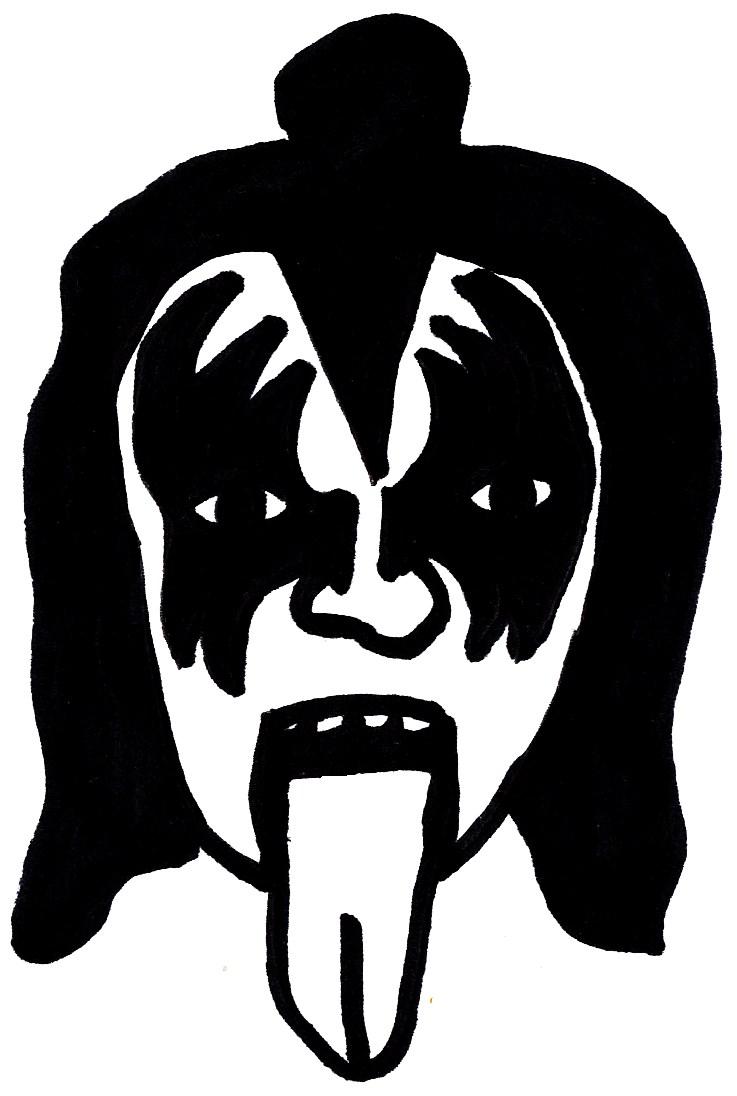
One thing is for certain in regards to the rock band KISS: they’re far better businessmen than they are musicians. That’s not to say they’re particularly bad musicians or they don’t have at least a few great pop tunes (I’m personally partial to “Love Gun”); it’s more of a testament to how great they are at selling themselves as a product. The range of KISS merchandise is staggering. In addition to standard rock n’ roll commodities like t-shirts & guitar picks, the band sells everything from beach towels & throw pillows to baseballs, oven mitts, garden gnomes, pinball machines and air fresheners featuring their likeness. This dedication to branding not only made relatively harmless songs about partying seem downright demonic to unsuspecting parents in the 70s, it’s also given the band a strange longevity in the pop culture landscape. No matter how ugly KISS are (both morally & physically) without their makeup or how boring they are without the glam rock showmanship covering up their underlying mundanity, their flare for merchandising makes them an ever-present powerhouse. Their two forays into feature films, 1999’s Detroit Rock City & 1978’s KISS Meets the Phantom of the Park, are merely an extension of that keen, pragmatic business sense. KISS on film is not all that much different than KISS on lunchboxes or KISS on lava lamps, all things considered.

The 1999 film Detroit Rock City was my first major exposure to both KISS as a band and KISS as a product. As a young teen misanthrope with an unfortunate affinity for nu metal (it was a different time, folks) I was firmly in the film’s target demographic. Conceived & filmed around the same time as That 70s Show, Detroit Rock City works with a very similar visual language: glorifying the era’s outsider teen ennui while also nostalgically celebrating its more commercial curiosities like vintage K-Mart fashion & disco. I identified with the film pretty deeply at the time. In what basically amounts to a standard stoner comedy/road trip movie, four members of a KISS cover band embark on individual journeys to score tickets to their favorite group’s show in the KISS mecca of Detroit. The characters aren’t nearly as likeable as I remembered (their fondness for the word “fag” is definitely a turn-off), but it’s easy to see what drew teen me to the film. Along their journey to The Concert of Their Lives, the four bumbling fools satisfy typical rebellious teen urges like getting laid, smoking weed, and telling their parents to fuck off. The stoner gags are fairly effective as far as those things go and there are several good turns from a few actors of note. A young Edward Furlong sells menacing teen angst uncomfortably well. Natasha Lyonne is beyond fabulous as a party-hungry disco queen. Character actress Lin Shaye steals the show as an obnoxiously uptight & overeager Christian mother. There’s a lot to love about Detroit Rock City even when the four main characters aren’t themselves loveable.

One thing Detroit Rock City does very well is sell the legend of KISS. Lin Shaye’s overprotective mother leads a conservative protest group called Mothers Against the Music of KISS. She’s the type that proclaims rock n’ roll to be “The Devil’s Music” and has no doubt that KISS is Satan’s favorite group among the worst of the worst. She genuinely, foolishly believes the band’s name to be a sly acronym for “Knights in Satan’s Service”. This attitude, of course, makes the band all the more attractive to her teenage son, who worships KISS in his every waking moment. In addition to the KISS cover band he drums for, the protagonist Jam is the exact kind of kid who collects KISS belt buckles, posters, drumsticks, and so on (behind his mother’s back, of course). The film really does make the band feel like a supernatural phenomenon, like the greatest thing that has ever happened to popular music or maybe even to modern society as a whole. KISS is not just a band to the four main characters; it’s an identity. It’s a personal rebellion that gives them a sense of purpose & sets them apart from straight-laced normals who can’t get it through their thick skulls that “disco sucks!” Like all false idols, no band could ever live up to that level of importance & mystique, so the movie smartly limits the amount of screen time KISS gets in a film designed to constantly remind you about how awesome they are. Detroit Rock City’s killer 70s soundtrack is era-defining, including cuts from The Runaways, T. Rex, Thin Lizzy, Edgar Winter, Black Sabbath, David Bowie and The Ramones. KISS does make up nearly half of the soundtrack, but they’re never allowed to overpower it. As much praise as the band receives during the film’s 90min runtime, they only physically appear at the climactic concert in Detroit, which is the exact opposite of other band-worship films like, say, ABBA: The Movie. It’s an effective tactic, as it affords the band a mysterious, magical charisma.

In 1978’s made-for-TV feature KISS Meets the Phantom of the Park, the band’s charisma is literally magical. During the opening credits KISS soars through the air, playing loud rock music over footage of amusement park rides. They then fade to the background during a fairly dull stretch of rising action involving a mad scientist who narrow-mindedly sets his sights on dominating an amusement park instead of the world at large. When the band returns it’s in glorious fashion: they descend from space, shooting laser beams from their eyes and breathing fire while lightning dances around them. Apparently KISS can read minds, burst through walls, roar like lions, and master martial arts maneuvers that would make Batman envious. In KISS Meets the Phantom of the Park, the band members aren’t merely Peter, Paul, Gene and Ace. They’re Cat Man, Star Child, Space Ace and The Demon. Although the mad scientist plot starts slowly, it pays off by affording the magical foursome the opportunity to fight opponents like android werewolves and Frankenstein’s monster. It also allows for strange details like a not-so-subtle Star Wars nod in some androids’ light-up swords and strange magical talismans that provides the band their special powers.

After seeing how extensively KISS was worshiped by their fans (or “The KISS Army”, if you will) in Detroit Rock City it’s satisfying to see them act as literal deities in Phantom of the Park. The only problem is that it’s hard to imagine that The KISS Army would have enjoyed the film at all, because it not only tries to appease them, but also tries to win over their parents. Scenes showing the band’s gentler side in heart-felt ballads, gags about an animatronic barber shop quartet, and an onslaught of corny one-liners all do a huge disservice to the band’s mystique. Only “The Demon” Gene comes out unscathed & still menacing while the rest of his bandmates are portrayed as truly good dudes under all that scary makeup. Personally, as a fan of cheese & schlock, I enjoyed how awful & miscalculated the humor was in Phantom of the Park. It’s just hard to imagine the bong water-soaked, KISS worshiping teens of Detroit Rock City feeling the same way, considering that the band’s demonic powers are used for good instead of party-minded chaos in the film. I imagine the band’s younger fans were over the moon for Phantom of the Park; I just can’t say the same about stoner teens.

Even for those who aren’t fans of KISS’s music, both Detroit Rock City and KISS Meets the Phantom of the Park are surprisingly watchable. It’s fascinating to an outsider how an okay-at-best party band branded themselves through mysterious lore and on-stage theatrics as fire-breathing, laser-shooting gods of rock n’ roll. As a stoner comedy, Detroit Rock City is an amusing glimpse into the late 90s’ nostalgic fascination with 70s cool. As a family-friendly, made-for-TV creature feature about robot werewolves and a band from outer space, KISS Meets the Phantom of the Park is entertaining enough as how-was-this-even-made shlock. Together they help paint a picture of a rock group that was incredibly adept at brand-awareness, self-lore, and merchandising. KISS may not be the greatest musical act on record or on film, but they might very well be the best act on golf club covers, lip balms, snow globes and Christmas ornaments. That’s certainly a feat within itself.

-Brandon Ledet

ABBA: The Movie (1977)

EPSON MFP image

three star

campstamp

In our recent conversation about the Village People movie Can’t Stop the Music, I asked Britnee if it’s possible to make a legitimately-great disco musical or if the two genres were fundamentally irreconcilable. Britnee answered with a resounding “Yes!” but I remained somewhat unconvinced. The repetition inherent to disco makes a musical film’s plot feel like its idling in a way that a more narrative-intense music genre wouldn’t. Can’t Stop the Music’s musical numbers were strange Village People music video-type interjections that barely interacted with the film’s completely unnecessary plot involving Steve Guttenberg’s DJ career and some out-of-place heterosexual shenanigans. The movie’s disco & plot mixed just about as cohesively as oil & water.

ABBA: The Musical brilliantly sidesteps the problem by not even attempting to mix its plot with its disco. The movie does tell a half-assed story of about country music DJ assigned to interview the Swedish pop group on their Australian tour, but it’s entirely inconsequential. Early conversations between the DJ and his station manager are periodically interrupted with crowds chanting “We want ABBA!”, voicing exactly what the audience is thinking. The movie delivers the goods early on, full live performances of the band’s hit songs running almost continuously from about ten minutes in. ABBA: The Musical is essentially a concert film in disguise, the Australian DJ’s story arc serving mostly as filler. Between the live performances, he conducts street interviews with fans, reads about the group member’s individual personalities in magazines, and struggles to make his way backstage at their concerts. Where Can’t Stop the Music made the band it was marketing second to its superficial plot, ABBA: The Movie is smart to do the exact opposite, always putting the band first & the fiction second.

Honestly, Can’t Stop the Music is a much more interesting film (especially in its choice to obscure both its subject’s homosexuality and the disco scene’s rampant drug use), but ABBA: The Movie isn’t without its own strange subtext. There are some questionable inclusions in the film’s attempt to push its product. If they were trying to make the group seem hip to kids, it may not have been the best idea to include street interviews where parents praise the music as “nice & clean”. In direct contradiction, there’s a lot made of singer Agnetha Faltskog’s award-winning ass, which is talked about & filmed so much it’s easy to think of her as the Nikki Minaj of her time. My favorite oddball choice is the endless parade of ABBA merchandise (hats, socks, buttons, beer mugs, picture books, etc.) on display while the group sings the anti-capitalist anthem “Money Money Money.” Then there’s an early press conference in which ABBA complains about the grueling ordeal of touring in a movie that glorifies their life on the road. For the most part, though, the film really does live up to the parental-friendly “nice & clean” image the band intentionally cultivated, making little attempt to mine anything under the surface.

There’s not much going on here besides the idea that ABBA is awesome and people who paid to watch their movie mostly just want to watch them play their music. It’s a honest concept I can get behind. Although the film may lack the more bizarre connotations of Can’t Stop the Music, it’s very easy to get swept up in its straightforward “ABBA is awesome!” sentiment when the group is performing killer pop tunes like “Waterloo”, “S.O.S.”, “Mamma Mia” and, of course, “Dancing Queen”. It’s downright fascinating how thick the 70s cheese is here, considering it was released the same year punk starting poking its head out from dive bars and terrified parents across the world. It’s a flawed, corny film, but it’s one that delivers the product it promises. Of course the Australian country music DJ asides are mostly inconsequential, but they don’t overpower the band the same way the plot did in Can’t Stop the Music and they also help to break up the more laborious task a full-on concert movie from the group would’ve presented. All I really wanted from an ABBA movie was some great ABBA musical performances, which it delivered in abundance.

-Brandon Ledet

Swampchat: Can’t Stop the Music (1980)

EPSON MFP image

Sometimes it takes more than one of us to tackle a film. Those are the times when we need a Swampchat.

Brandon:
Britnee, I took your recommendation on watching the Steve Guttenberg/Village People vehicle Can’t Stop The Music for its value as a camp fest and I gotta admit: it was thoroughly insane. The weird-ass costumes people wear to the disco, the Rock & Roll High School dance number at the YMCA, the impromptu backyard disco concerts (which are not a thing), Steve Guttenberg rollerskating to maddeningly repetitious lyrics about “New York, New York, New York”: the movie’s got a lot of weird energy. I’m not saying everyone was on cocaine, but c’mon, everyone was on cocaine. The characters talk incredibly fast, rapidly moving on from task to task like little chatty raccoons. When one character offers Guttenberg’s goofy DJ a joint it seems so out of place because marijuana is most definitely not these people’s drug.

The cocaine use isn’t the only thing that’s swept under the rug either. I find it so strange that The Village People, a pop group so conspicuously catered to fit disco’s gay audience, would star in a movie that pretends to be so fiercely heterosexual. I realize that it’s unrealistic to expect a PG comedy from 1980 to display its homosexuality openly, but this was also the year of Friedkin’s Cruising, so I’d at least expect something a little more than just offhand details like a flaming-baton twirler who proclaims “I’m James and flame’s my game.” I wonder if even the straight audience was rolling its eyes at the central “Are they gonna get together?” heterosexual romance the film didn’t need or deserve. As the story jumps around from one insane, loosely tied together scene to another I got the feeling that I was watching less of a professionally-made movie and more of a coked-out drag show trying its damnedest to come across as the heterosexual dance party it definitely is not.

Britnee, does the movie’s refusal to acknowledge its subject’s inherent homosexuality hold the film back or does it make for a more interesting viewing experience as a time capsule of a 1980 bias?

Britnee:
Prior to my first viewing of Can’t Stop the Music, I really expected it to have a good bit of homosexuality. The Village People were brought together to target the gay disco scene by French disco producer, Jacques Morali (sounds a bit like Jack Morell, right?), so they’ve always been a big deal to the LGBT community. Until this day it’s hard to go into a gay club and not hear “Go West” or “Y.M.C.A.” blaring in the background. Needless to say, I was disappointed by the amount of heterosexual romance in the film. It sort of made certain scenes difficult to watch, knowing that this was the time for homosexuality to shine. I guess the crew behind the film didn’t want to take a chance by going in that direction, which is a complete and utter shame.

The absence of much needed homosexuality really did hold the film back from being almost revolutionary. I have yet to see Cruising, but I remember reading about how much the gay community really disliked the film. If only a film that really celebrated homosexuality would’ve came out around the same time as Cruising, but no, Can’t Stop the Music didn’t have the balls to do so. As we all know, films that are daring and ahead of their time are the most memorable, so I can’t help but think about what the film would be known as today if the producers and writers were braver. I’m not saying that it would have Gone with the Wind status, but it would probably have a much larger cult following like the Rocky Horror Picture Show. Well, maybe not that large, but it would be way much bigger than it is today.

Brandon, do you think that the film is ok as just a campy classic or with better writing, acting, directing, etc., that it would’ve had a chance at being a memorable movie musical?

Brandon:
Honestly, I don’t think the movie ever stood a chance. Its basic premise required two things: rushing into production while both The Village People (and disco in general) were still hot commodities & also offering a product that was appealing to the widest possible audience. There was obviously a lot of pressure to clean up their act for discerning, “wholesome” movie-going families, which is why you get Steve Guttenberg, Bruce Jenner, and a flirtatious party girl eating up the runtime while The Village People themselves take a back seat. The writers still obviously had a little bit of fun sneaking naughty dialogue into the script. Lines like “You rotten pussy,” “Nice box,” “You sure get up quick,” “What were you doing? Cruising down Times Square?” and “Anyone who can swallow two snowballs and a dingdong shouldn’t have trouble with pride” stand out as writer’s room mischief. Then there’s the nudity in the “YMCA” dance-number, which you pointed out in your review. Either the censors were willing to let a lot more slide in 1980 or they fell asleep during the opening “The Sound of the City” number. It’s a shame the writers weren’t set free from the sanitized worldview presented in the film, but the film would never have been made otherwise. Turning The Village People into a cash grab meant making them as commercially-viable as possible & stripping them of any countercultural tendencies.

Another reason why the film was doomed from the start: disco is not suited for the movie musical format. Disco is dance music. You sweat to it, forgetting where you are for long periods of time as the repetition thumps all around you. Musicals need the songs to further the plot line, to flesh out a character’s story arc as they dance out their emotions. The repetition of disco makes a movie feel like it’s treading water. It can be maddening in a musical context. Both Xanadu & Staying Alive suffered from a similar downfall at disco’s repetitious nature in the same era of Can’t Stop the Music’s release.

Britnee, I trust you as a greater authority on both disco & musicals. Are the two formats irreconcilable? Was a truly great disco musical an impossible dream?

Britnee:
Personally, I really do enjoy disco musicals. Disco music is upbeat, catchy, exciting, and fits in perfectly into the musical experience. Of course, disco musicals usually don’t do a great job of having deep, serious story lines, but I think that’s what makes them so much fun. Sometimes it’s nice to watch something just for the entertainment value and nothing more. They may not do very well in the movie format, but when it comes to the stage, they’re much more successful. For instance, the Xanadu film is considered to be a catastrophe, even though I absolutely adore it. I was in love with Xanadu before I developed an interest in reading movie reviews, so I was completely heartbroken when I realized that so many critics disliked it. In recent years, Xanadu has become an award-winning Broadway musical, and although the story was changed up a bit, disco was still present in the production.

I really think the same thing can be done with Can’t Stop the Music. The ingredients for an amazing musical are there, but the recipe is a little off. One of the biggest mistakes in the film was that just about all of the songs were presented in a music video/live performance format and seemed so out of place. They should’ve blended with the scenes and involved other members of the cast participating in the singing. If a couple of brilliant minds would get together and work on remaking Can’t Stop the Music, it has the possibility of being a great musical. The reboot might not do very well on the big screen, but it definitely has the potential to be a Broadway hit. That would be a dream come true!

Lagniappe

Britnee:
Describing Can’t Stop the Music is a difficult task because nothing in the film makes sense, but it’s heaps of fun to watch. I wish I could go back in time to the late 70’s and put a stop to all of the film’s unnecessary heterosexual love. I would also demand more focus on the members of The Village People since the musical was supposed to be about them. If only time travel was more achievable! Maybe all of my wishes will be granted with a reboot in the form of a Broadway production?

Brandon:
I definitely think you’re onto something with the Broadway (or even off-Broadway) idea for a reboot. Hell, live disco musicals worked pretty well for both Mamma Mia! & (more recently) Priscilla, Queen of the Desert. Why not Can’t Stop the Music? I absolutely adore the Xanadu film as well, but I’m not going to pretend it’s not an objectively bad movie and I’m sure a lot of the Broadway audience felt the same way. It’s one of those properties you love for their faults & I could totally see a live performance being the perfect way to celebrate that spirit. Similarly, Can’t Stop the Music could be a blast with a live atmosphere, maybe even with dancefloor breaks so you can groove with the glitter-coated performers and run to the bar for drinks. There’s even a built-in title waiting to go: Can’t Stop the Musical! Talk about a dream come true!

I’m glad the movie version exists as is, though, even if the songs could’ve been incorporated better. In some ways the movie might benefit from having so much subtext covered up with its half-assed heterosexual posturing. Sometimes the transgression of the gay movie under the surface aching to peak its head out makes for interesting energy the film wouldn’t have otherwise. For instance, there’s the scene where The Village People sing “It’s time for liberation!” (in a film where they’re far from liberated) and there are weird details in the set design at their impromptu disco concert (again, not a thing) that look eerily similar to the patio from Friedkin’s other controversial gay movie The Boys in the Band (which you really should see in addition to Cruising; time has been kind to both). I obviously still would’ve wanted to see Can’t Stop the Music if it were more open about its inherent sexuality, but it made for a more complicated, memorable experience in its self-denial. Maybe we’ll one day be able to write a more honest version with a Can’t Stop the Musical, but as a cultural document & a bizarre viewing experience Can’t Stop the Music is engaging enough in its current, compromised state.

-Britnee Lombas & Brandon Ledet

Anna and the Moods (2007)

EPSON MFP image

threehalfstar

It’s nearly impossible to be hard on Anna and the Moods, an animated short children’s film from 2007. It’s not perfect, but it is perfectly charming. Because the title character was voiced by the musician Björk I expected a story about a young girl singer in a rock band called The Moods. Instead I was treated to a quirky, compassionate take on puberty and what The Fresh Prince would call The “Parents Just Don’t Understand” Dilemma.

Anna and the Moods tells the story of a young girl who is expected to be consistently cheerful & obedient by her family, which she does willingly until she one day wakes up transformed. No longer a sentient beam of sunshine, Anna finds herself plagued by “moodicles” (hormone-induced moods). Her image shifts from that of a precious little girl to a moody goth teen and she decides to freak her parents out instead of playing to their expectations. She smokes cigars, commits petty crimes, listens to loud music, and develops a questionable taste in boys. Disturbed, Anna’s parents subject her to psychological evaluation, where a doctor, to their horror, diagnoses her as a “teenager”. Instead of prescribing her a solution to the newfound shifts in her mood, the doctor teaches Anna how to deal with flawed parenting. The movie takes a mischievous stance on the sudden changes that come with puberty, encouraging kids to misbehave, but also warning them that their parents are going to be jerks about it.

Directed by one of Björk’s former bandmates from the alt rock group The Sugarcubes, Anna and the Moods works with some hideously cheap CGI, but uses the handicap to its advantage. The characters look like snotty versions of Margaret Keane’s “big eyes” paintings and the whole picture has a bending, warped surreality to it that fits the puberty-altered mindset of its subject well. Monty Python veteran Terry Jones narrates with a perfectly measured children’s book tone that makes the movie’s less successful elements (like an unnecessary potshot at Michael Jackson) more than forgivable. It’s not a complicated or even a good-looking film, but as a short, fun trifle with an empathetic message & a sense of mischief, it’s sincerely entertaining.

-Brandon Ledet