New Orleans French Film Fest 2024

It’s the more laidback of the New Orleans Film Society‘s two annual film festivals, but New Orleans French Film Fest is still always a major highlight of the city’s cinematic calendar.  It’s more of a for-the-locals event than the Oscars-qualifying red-carpet pageantry of New Orleans Film Fest proper, and since it’s all contained to one single-screen venue, attendees tend to become fast friends in line between movies.  Every spring, French Film Fest takes over the original Uptown location of The Prytania for a solid week of French-language cinema from all over the world.  It’s usually slotted in the lull between the chaos of Mardi Gras and the chaos of Festival Season, a time when there’s nothing better to do but hide from the few weeks of nice weather we’re allotted every year in a darkened movie theater.  I’m forever looking forward to it, even now that this year’s fest has just concluded.

One of the more charming rituals of French Film Fest is the way it integrates The Prytania’s usual Sunday morning slot for the Rene Brunet Classic Movies series.  This year, that repertory slot was filled by 1978’s La Cage aux Folles, the French farce that was remade as The Birdcage in 1990s Hollywood.  Curiously, the projection was SD quality, when past years’ Classic Movie selections like Breathless, Children of Paradise, and Cleo from 5 to 7 were screened in crisp digital restoration. It was a warmly lowkey presentation that fit the tone of the film, though, recalling the feeling of renting a Blockbuster Video cassette of a classic comedy to watch with the family.  A lot of the jokes in La Cage aux Folles might be overly familiar for audiences who’ve seen them repeated beat-for-beat in The Birdcage, but I can report that the VHS-quality scan absolutely killed with a full 10am audience anyway. It’s classically funny stuff.

Everything else I saw at this year’s festival were new releases, many of them just now arriving in the US after premiering at last year’s Euro festivals like Cannes & Berlinale.  They were the kinds of non-commercial art cinema that most audiences can only access at home on streaming services and borrowed public-library DVDs, unless they happen to live in a city with a bustling Film Festival calendar.  As a couple of titles were real patience-testers in their sprawling, unrushed runtimes, I appreciated the chance to watch them without distraction in a proper theater.  Even moreso, it just felt great to spend a week watching esoteric cinema with up-for-anything filmgoers in a century-old single-screener – downing gallons of black coffee between screenings to keep up the momentum.  To quote every hack journalist who’s ever been flown out to Cannes … Vive le cinéma, vive la différence!

Below, you’ll find a rating & blurb for every new release I caught at this year’s New Orleans French Film Fest, ranked from favorite to least favorite. Enjoy!

Omen (Augure)

What’s scarier: sorcery or disappointing your family?  Omen is a magical-realist emigration drama about a Congolese-born man who returns to visit his family after growing up estranged in Belgium.  The family is displeased to see him and his white, pregnant wife, both of whom they greet more like demons than like fellow human beings.  After an ill-timed nosebleed is misinterpreted as an attempt to curse the family with his demonic spirit, he and his wife are briefly held hostage for a sorcery ritual meant to disarm their threat to the community.  Then, the central POV of the story fragments into multiple perspectives, abstracting Omen into a much more unique, open-minded story than what’s initially presented.  I’ve seen tons of Afro-European emigration dramas of its kind at film festivals in the past (most often dramatizing the shifting identity of French-Senegalese immigrants), which set a very clear expectation of where this story would go.  It turns out the movie was deliberately fucking with me through those set expectations, much to my delight.

Rapper-turned-filmmaker Baloji Tshiani leaves a lot more room for voices from the opposite side of this post-colonial culture clash to be heard with clarity & sincerity than what audiences have been trained to expect.  Usually, we follow characters who were born in Africa but socialized in Europe as they float between the two worlds, untethered to any clear sense of personal identity.  That’s how Omen starts, but then we get to know the Congo Republic through the eyes of its lifelong citizens who never left.  The two worlds are described as belonging to “a different reality” and “a different space time”, conveyed here through magical-realist fairy tale logic that includes breast-milk witchcraft, a music video retelling of “Hansel & Gretel,” a Neptune Frost-style “Cyber Utopia,” and Warriors-style street gangs of warring marching bands, luchadores, and crossdressing ballerinas.  None of these stylistic touches come across as empty aesthetics, either.  The region’s religious conservatism, political corruption, labor exploitation, financial desperation, and mass stripping of identity are all taken gravely seriously; they’re just expressed through the visual language of a culture that operates in a “different space-time” from what most audiences are used to seeing.

Omen is packed with tons of striking images, tons of eerie atmosphere, and tons of characters squirming under soul-crushing tons of guilt.  The familiar, opening-segment protagonist is just one of many.

Our Body (Notre corps)

The dark fantasy of Omen was somewhat of an outlier at this year’s festival.  Most of this year’s program was defined by rigorous, realistic documentation of French-language cultures across the globe.  The major highlights hyped in the fest’s pre-screening intros were two documentaries that sprawled past the 2-hour runtime mark, with programmers half-apologizing and half-daring the audience with durational cinema ordeals. I showed up for both.  Of the two, Claire Simon’s exhaustive, 3-hour documentary about the daily operations of a Parisian hospital’s gynecology ward was my favorite. It starts as a fly-on-the-wall doc that observes the medical consultations & procedures that everyday French citizens undergo at the hospital.  Then, it gets incredibly personal incredibly quick as Simon becomes a patient herself.

Our Body is a little frustratingly slack in moments but overall impressive in scope, basically covering the entire span of human life in a single location.  Simon starts the film with mention that she walks past a graveyard when traveling from her home to the hospital for every day’s shoot.  In the hospital, she witnesses multiple modes of birth, therapeutic preparation for death, and endless variations of bodily transformation between those two points (including transgender perspectives that might otherwise be excluded from a less thoughtful gynecology doc).  It would have been a compelling film even if it maintained a Frederick Wiseman-style distance in its fascination with daily bureaucratic process, but its eventual Agnès Varda-style inclusion of Simon’s own medical crisis & recovery is what makes it something special.  As the title indicates, it’s impossible to maintain emotional distance when studying the creation, transformation, and expiration of the human body like this; we’re all intimately familiar with the condition of being human, even if only a fraction of us have ever had a C-Section.

Menus-Plaisirs – Les Troisgros

Speaking of Frederick Wiseman, the 93-year-old director also had a sprawling documentary on this year’s French Film Fest lineup.  The four-hour runtime of Menus-Plaisirs – Les Troisgros made Claire Simon’s film look puny by comparison, though.  It’s easily the longest movie I’ve ever watched in a theater (an experience made doubly daunting by the fact that I immediately bussed to The Broad Theater to watch Żuławski’s 3-hour sci-fi abstraction On the Silver Globe after it was over).  Thankfully, Menus-Plaisirs does not make its audience weep & squirm quite as much as Our Body does, since it’s about a trio of family-owned fine dining restaurants instead of the immense beauty & cruel limitations of the human body.  I can’t say it was an especially significant experience for me, at least not when compared to critics who recently declared it the Film of the Year.  Mostly, it was just a pleasant afternoon sit, like binge-watching a season of Top Chef guest-produced by Dodin Bouffant.

In Wiseman tradition, there is no voiceover or onscreen text explaining the interpersonal drama of the chefs at the story’s center.  In fact, all of the contextual background info about how the three restaurants operate is saved for a tableside conversation in the final 2 minutes of the runtime, so feel free to fast-forward 4 hours for that explanation if you’re feeling lost.  Even without the context, though, you gradually get to know the trio of chefs as a father who can’t quite let go of his business and his two apprentice sons, who struggle with a low, consistent hum of brotherly competition.  Because it’s a Wiseman movie, though, most of the drama is just the garnish decorating the main course: process.  We mostly just watch the chefs source ingredients, brief staff, prepare food, and schmooze guests.  The scenery is beautiful, the personality clashes are mostly under control, and everyone is well fed.  Life goes on.

The Animal Kingdom (Le règne animal)

One of my favorite French Film Fest traditions is selecting movies based entirely on the actresses featured in the cast, regardless of director, genre, or subtext.  The French Film Fest ritual is incomplete if I haven’t seen a mediocre movie starring at least one of a handful of festival-standard actresses: Isabelle Huppert, Juliette Binoche, Charlotte Gainsbourg, Marion Cotillard, etc.  And now, I can confidently say that Adèle Exarchopoulos has earned her place on that prestigious list.  I’m at the point where I’ll enjoy pretty much anything as long as Exarchopoulos is in it, including this supernatural thriller that was instantly forgotten after it premiered last year in Cannes’s Un Certain Regard program.

The Animal Kingdom is a moody fantasy film about a world where humans start mutating into other animal species, like a somber revision of the Netflix series Sweet Tooth.  The central drama is a coming-of-age story about a teenager who’s struggling with the sudden loss (or, rather, transformation) of his mother during this phenomenon.  He also struggles with the terrifying possibility that his own body might be transforming as well, in an especially monstrous version of puberty.  Then there’s his struggle to connect with his distracted father, who’s fixated on retrieving his feral-beast mother and reassimilating her into the family home.  Exarchopoulos operates at the fringes of the story as the father’s reluctant love interest.  She plays a kind of stock FBI character from 90s action thrillers, the kind who are always 2 or 3 steps behind the fugitive main players.  It’s like watching Tommy Lee Jones track escapees from the Island of Dr. Moreau – a part she plays with only mild enthusiasm.

There are a few Icarian moments when the ambition of the film’s superhuman CGI are not matched by the might of its budget, which often breaks the spell of the story it’s telling. There’s some grounding, visceral detail in the body horror of the beastly transformations, though, especially as characters pick at their bloodied nails, teeth, and stitches the way a wounded animal would.  That’s another time-honored French Film Fest tradition in itself, come to think of it: listening to an audience who don’t typically watch a lot of genre cinema express disgust with the ordeal of a well-executed gore gag.  I have particularly fond memories of watching the grotesque erotic thriller Double Lover with this exact festival crowd for that exact reason.  I just wish Adèle Exarchopoulos was given something half as interesting to do in this film as any one scene in that all-timer from Ozon.

The Crime is Mine (Mon crime)

François Ozon’s selection in this year’s French Film Fest was nowhere near as memorable as the nonstop freakshow of Double Lover, but it did hit a different quota for what I love to see at the fest.  The Crime is Mine is a traditional crowd-pleaser comedy that features a performance from festival-standard Isabelle Huppert, making for two collaborators who are both capable of much weirder, wilder work.  Huppert stars in this 1930s-throwback farce as a Silent Era film starlet who struggled to make the transition to talkies, so she instead attempts to become famous through a headline-grabbing murder.  It’s an adaptation of a stage-play comedy that mildly updates its source material, but mostly just aims to please.  It’s very charming & cute but deliberately unspecial, like a mildly more subversive version of See How They Run.  If you want to see Isabelle Huppert go big in an outrageous wig, you could do much worse, but you won’t walk away accusing Ozon of having The Lubitsch Touch.

-Brandon Ledet

Lagniappe Podcast: Tightrope (1984)

For this lagniappe episode of The Swampflix Podcast, Boomer, Brandon, and Alli discuss the New Orleans-set Clint Eastwood thriller Tightrope (1984).

00:00 Welcome

01:15 Columbo (1971 – 2003)
03:45 The Not-So-New 52
07:22 American Fiction (2023)
13:20 Stalker (1979)
24:45 Party Girl (1958)
29:55 White Heat (1949)

35:45 Tightrope (1984)

You can stay up to date with our podcast through SoundCloudSpotifyiTunesTuneIn, or by following the links on this page.

– The Podcast Crew

Down By Law (1986)

Big changes are afoot at Wildwood, the weekly series that has recently brought classics as varied as John Waters’s Desperate Living and Barbara Loden’s Wanda to local cinemas for packed-room repertory screenings.  Firstly, the series doesn’t officially appear to be called Wildwood anymore; all social media presence has been temporarily rebranded to “WWCinema” while the programmers soul-search for a new name.  More importantly, it has switched times & locations to Wednesday nights at The Broad, which is much more easily accessible to me by bus than their previous slot on Thursdays at Canal Place.  So, it was my solemn duty to attend WWCinema’s “debut” at The Broad this month, despite the fact that I don’t particularly care for the films of notorious No Wave slacker Jim Jarmusch.  Programming Jarmusch’s 1986 prison escape comedy Down By Law in any local screening series is kind of a no-brainer, since it’s the exact kind of high-style, low-ambition filmmaking that convinces college-age hipsters from around the world to move to New Orleans and inspires lifelong New Orleanians to pick up cameras to capture the local mise-en-scène.  It’s often cited by cineastes as the best movie ever set here (an honor that actually belongs to Paul Schrader’s Cat People, also a former Wildwood selection), which always sets my teeth on edge even though it is, from what I can recall, the only Jarmusch movie I’ve ever fully enjoyed.  Thankfully, rewatching it with an enthusiastic crowd did remind me exactly why I have vaguely fond feelings for Down By Law despite all of its minimal-effort hipster posturing & N’awlins Y’all cultural cachet, which already makes me grateful that Wildwood is moving closer to home.

My knee-jerk resistance to Down By Law comes from two separate places of distrust.  The major issue is my longstanding bias against Jarmusch as a filmmaker with an incredible wealth of resources who often deliberately chooses to do nothing with them, because doing nothing is the Gen-X ideal of cool.  Speaking more personally, this is the project that brought that performative Gen-X slackerdom to my home turf, making hip-cred outsider musicians Tom Waits & John Lurie the poster boys for laidback New Orleans cool.  When I hear someone declare Down By Law their favorite film set in New Orleans, I automatically assume they idolize the kind of dirtbag alpha male behavior exemplified by those two leads, who are both role models for a specific kind of French Quarter hipster that’s been around as long as I can remember (likely because this movie was released the year I was born).  Waits stars as a WWOZ radio DJ with a dumb little porkpie hat & goatee combo to match his dumb Cool Guy™ personality.  Lurie co-leads as a suave street hustler out of a classic shot-on-location noir starring a Sal Mineo or a James Dean (or, in the case of King Creole, Elvis doing his best impersonation of Dean).  They’re both framed for crimes they didn’t commit and are locked up in a small cell at OPP, spending the rest of the picture trying to out-alpha each other as top dog of their block.  For the first twenty minutes or so, Down By Law is the exact ambitionless, inert slacker drama Jarmusch always delivers, more concerned with cool cred than artistic ambition.  Then, the film’s third lead arrives in the form of Roberto Benigni as an Italian tourist who was arrested for manslaughter – the only one of the cellmates who wasn’t framed for his crime, and the movie’s saving grace.

I have whatever rare brain disorder causes people to find Robert Benigni funny; in my worst moments, I’m convinced he’s the funniest man who ever lived.  If nothing else, he’s the only comedic performer who’s ever dared to ask the question “What if Harpo Marx was obnoxiously loud?”, a true visionary.  Setting his chaotic cornball energy loose on an otherwise typically laidback Jarmusch set is the genius of Down By Law, a magic trick the director only ever came close to repeating with Mia Wasikowska’s vampire-brat in Only Lovers Left Alive.  Jarmusch clearly understands the value of what he has in Benigni, and he allows that vaudevillian presence to reshape the entire movie to great effect.  While Lurie & Waits are participating in an imaginary Cool Guy™ contest, pretending to heroically care the least about what’s going on around them, Benigni strives with every atom in his body to be classically entertaining.  He wills the movie into becoming more exciting, citing The Great Escape as an example of great American cinema because it has “lots of action.”  His cellmates put on stoic Tough Guy personae, but he’s the only character in the movie who hunts, who kills, who fucks.  By the final scenes the difference between him and the other boys verges on the philosophical; Lurie & Waits split into arbitrary, opposing directions just to spite each other while Benigni finds happiness staying in place, a fully content man.  In short, the problem with New Orleans these days is that too many young, impressionable dudes watch Down By Law and move here with ambitions to become suave street hustlers and hipster radio DJs, when what we really need is more classical Italian clowns.

The funny thing about Down By Law‘s reputation as New Orleans’s finest moment onscreen is that very little of the film’s runtime actually showcases the city.  Sure, it opens with sideways pans of shotgun homes & cemetery tombs set to one of Tom Waits’s greatest hits, but just as much of the third act features forward-facing boat trips into mysterious channels of the swamps outside the city.  The story opens with Waits & Lurie committing petty crimes as French Quarter gutter rats, but after they’re pinched by the NOPD we never return to the city streets.  Shot on cheap black & white film stock and deliberately ignoring the basic facts of New Orleans geography, the film often recalls the Poverty Row noir aesthetics of schlock like the 1956 Roger Corman cheapie Swamp Women.  The OPP cell block looks like it could’ve been filmed in a hastily decorated warehouse or apartment.  The prisoners’ escape from OPP directly leads into swamp water instead of the intersection of Tulane & Broad.  The cops-and-hounds hunt for the escaped prisoners is represented entirely as distant sounds to keep the costs of casting down.  This is scrappy, D.I.Y. filmmaking from the height of the Indie Boom that made festival darlings like Jarmusch moderately famous instead of desperately auditioning them for career-crushing deals with Marvel or Netflix.  WWCinema is pitched to its audience as a series programmed by and for legitimate working filmmakers, so it’s not surprising Jarmusch’s current go-to editor Affonso Gonçalves selected Down Bay Law for the series, given its local connections and its inspirational model for high-style, low-budget filmmaking.  Let’s just hope most of the impressionable young men in the audience latched onto the right role model at that screening; the city already has more than enough Tom Waits wannabes hanging around, doing nothing especially worthwhile.

-Brandon Ledet

Johnny Handsome (1989)

I just finished reading the deceptively dense travel guide San Francisco Noir by essayist Nathaniel Rich, which doubles as both a guided tour of San Francisco’s many character-defining landmarks and a critical history of “the city in film noir from 1940 to the present.”  There are so many noirs set in San Francisco that Rich is able to map out all of the city’s disparate moods & neighborhoods by cataloging how they’ve been portrayed onscreen in that one specific genre, frequently stopping the tour for incisive, short-form reviews of the dozens of noirs set in and around The Bay.  As a movie nerd, the book was a great way to familiarize myself with a city I love to visit but never get to stay long enough to feel submerged below its touristy surface.  As a New Orleanian, it made me jealous.  Besides the impracticality of its distance from Los Angeles, why is it that so few classic noirs were set in New Orleans compared to the seemingly infinite noirs of San Francisco?  Reading through Rich’s illustrated history of his port city’s deep well of art, music, crime, sex, and scandal, I couldn’t shake the feeling that all of the hallmarks that made San Francisco such a perfect setting for noir are echoed in my own city’s alluringly sordid history.  And yet I can only name a few classic noir titles I’ve seen set on New Orleans streets: New Orleans Uncensored, Swamp Women, and Panic in the Streets.  That’s a relatively puny list when compared to such formidable San Francisco noir titles as The Maltese Falcon, The Lady from Shanghai, Out of the Past, and Vertigo.

It turns out I’m not the only person convinced of New Orleans’s hospitality to noir moods & tropes, as I found Roger Ebert entertaining the same thought in his 1989 review of the Walter Hill neo-noir Johnny Handsome.  Ebert wrote, “Johnny Handsome comes out of the film noir atmosphere of the 1940s, out of movies with dark streets and bitter laughter, with characters who live in cold-water flats and treat saloons as their living rooms.  It is set in New Orleans, a city with a film noir soul, and it stars Mickey Rourke as a weary loser who has just about given up on himself.”  Struck by Ebert’s assessment of New Orleans’s “film noir soul,” I dug into his other contemporary reviews of New Orleans-set thrillers starring the leads of Johnny Handsome.  The results were mostly silly, including a thumbs-down dismissal of Hard Target (featuring Johnny Handsome villain Lance Henriksen) as being “not very smart and not very original” and a positive review of Angel Heart (also starring Mickey Rourke) that describes the West Bank neighborhood of Algiers as a “town across from New Orleans that makes the fleshpots of Bourbon Street look like Disneyland.”  Sure, Roger.  I’m glad I kept digging, though, because his 1987 review of the neo-noir erotic thriller The Big Easy (which shares a star with Johnny Handsome‘s secondary villain, Ellen Barkin), captures the city’s “film noir soul” perfectly in the paragraph, “The movie takes place in New Orleans, that most mysterious of American cities, a city where you can have the feeling you never will really know what goes down on those shadowy passages into those green and humid courtyards so guarded from the street.”  That’s some good poetry.

As you can likely tell by my stalling to discuss this film directly by recapping the works of more talented & prestigious film critics, Johnny Dangerously is not especially interesting, at least not when compared to the rest of its era’s New Orleans crime pictures.  It’s not as scuzzy as Angel Heart, nor as steamy as The Big Easy, nor as deliriously over-the-top as Hard Target.  Its one claim to novelty among the other 80s New Orleans crime thrillers starring its central trio of volatile performers is that it’s the most faithful to the genre’s classic noir roots.  Johnny Handsome evokes the drunken, downtrodden storytelling logic of vintage crime story paperbacks, ones written decades before its actual 1970s source material.  Walter Hill reportedly dragged his feet on adapting that novel for years despite multiple offers, but his eventual decision to move its setting from New Jersey to New Orleans and to frame it within a traditionalist noir sensibility makes perfect sense for the material.  The results just aren’t particularly exciting.  Johnny Handsome is bookended by two heists: an early one in which Rourke’s titular disfigured anti-hero is abandoned by his gangster cohorts (Barkin & Henriksen) while looting a French Quarter jewelry store, and a climactic one in which he pays them back by trapping them in a doomed robbery of a shipyard construction site.  Both sequences are fantastic, but there’s a lot of dead air between, which Hill mostly fills with achingly sincere melodrama about a supposedly reformed criminal who can’t seem to get out of the game.  It’s the same level of heightened pastiche he brought to his 50s greaser throwback Streets of Fire, but something about it feels weirdly subdued & unenthused this go-round.

There are actually two old-school genre tributes at play in Johnny Handsome, both of which are signaled to the audience in black & white flashback.  While the film’s classic noir tropes are introduced in an early flashback washed in an aged sepia tone, its simultaneous echo of German Expressionist horror is presented in a starker Xerox contrast.  We’re told that Johnny Handsome was born with a monstrous, mutated face, even though he honestly doesn’t look too out of place in the context of The French Quarter – a circus without tents.  His disfigurement is important to the plot, though, so much so that Hill allowed Rourke to mumble his lines under heavy prosthetics to achieve the effect.  After getting busted during the first botched heist and before plotting to launch the second, Rourke finds himself imprisoned in Angola, where a kind mad scientist (Forest Whitaker) offers to lessen his sentence if he agrees to experimental facial reconstruction surgery.  The surgery goes so well that Rourke is able to insert himself into his old, leather-clad cohorts’ lives incognito, luring them into participating in their own demise with the second heist.  That sci-fi aspect of the plot has a distinct Hands of Orlac feel to it, which was also echoed in contemporary thrillers like Scalpel & Body Parts to much greater effect.  At least Johnny Handsome switches up the formula by combining its German Expressionist patina with classic noir tropes.  It’s a unique genre hybrid, even if subtly played, and it all comes together beautifully by the time the semi-reformed Rourke’s new girlfriend is practically screeching at his old frenemies, “No! No, don’t cut up Johnny’s beautiful face!”

All of the classic New Orleans noirs I’ve seen are fairly mediocre pictures.  Most of the San Francisco noirs covered in Nathaniel Rich’s book are mediocre too, which is true of most movie genres and of all art everywhere.  By the erotic thriller boom of the 1980s (which was essentially just neo-noir with an emphasis on video store sleaze), the movie industry had caught up with New Orleans’s noir potential and set some pretty great crime thrillers here: The Big Easy, Angel Heart, Tightrope, Cat People, Down By Law, etc.  Johnny Dangerously is far from the best example of that wave of locally set 80s thrillers, but it’s the one that best evokes the city’s classic-period noir past that never was.  I enjoyed the movie less as a sincere, in-the-moment thriller than I appreciated it as a what-could’ve-been simulation of what New Orleans’s “film noir soul” might’ve looked like if given the same amount of screentime as San Francisco noir in the genre’s heyday. 

-Brandon Ledet

Krewe Divine 2023

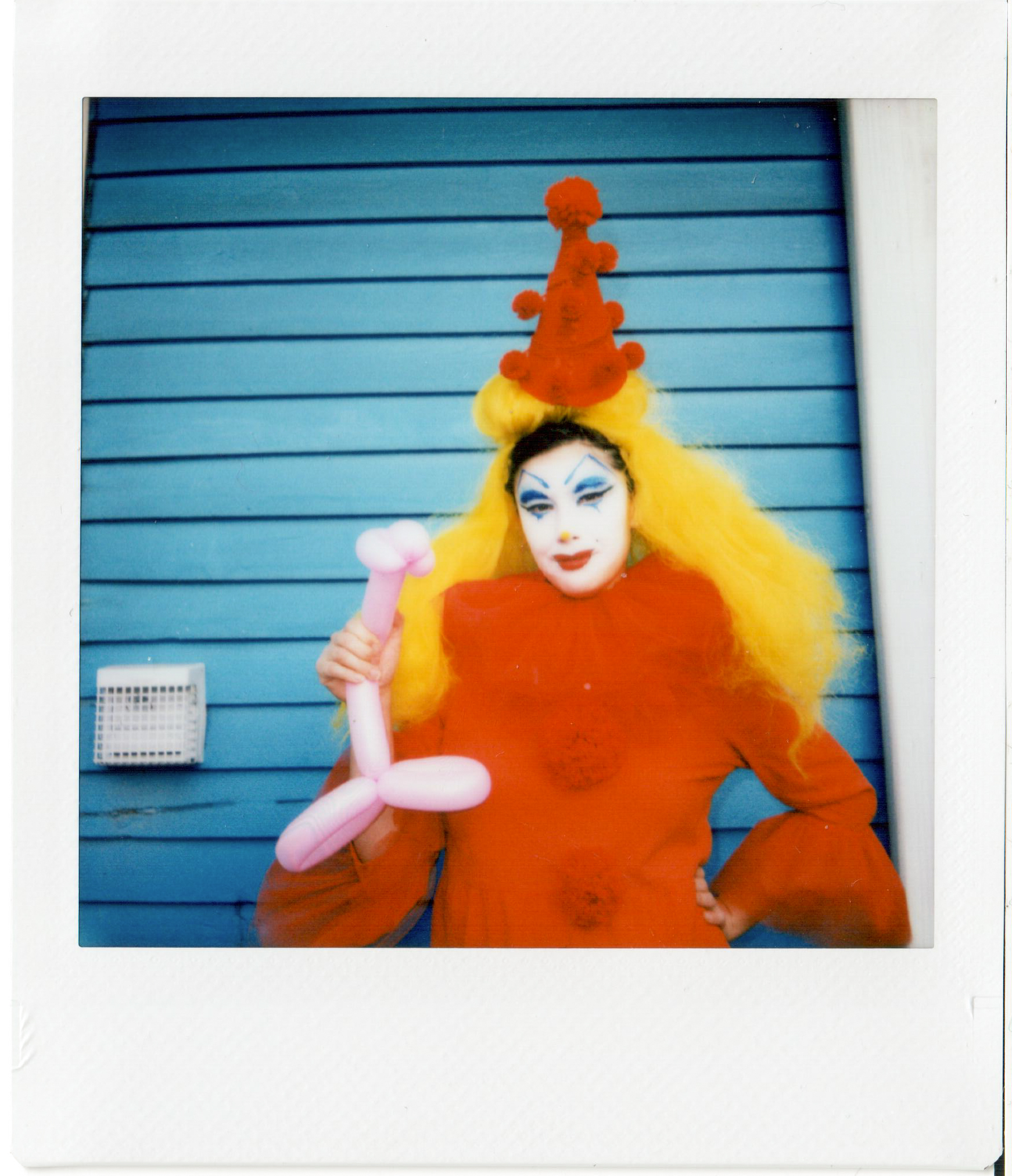
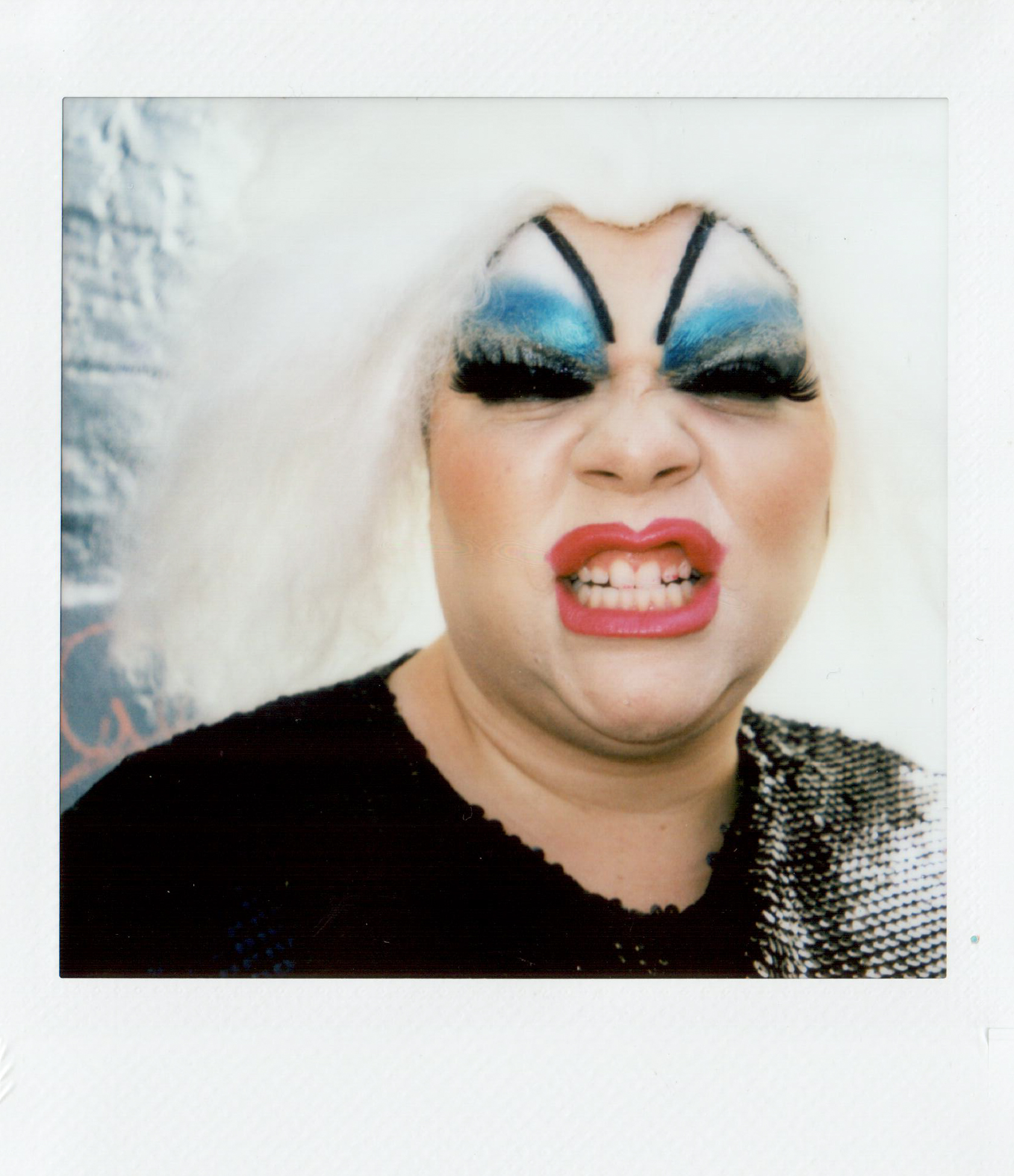
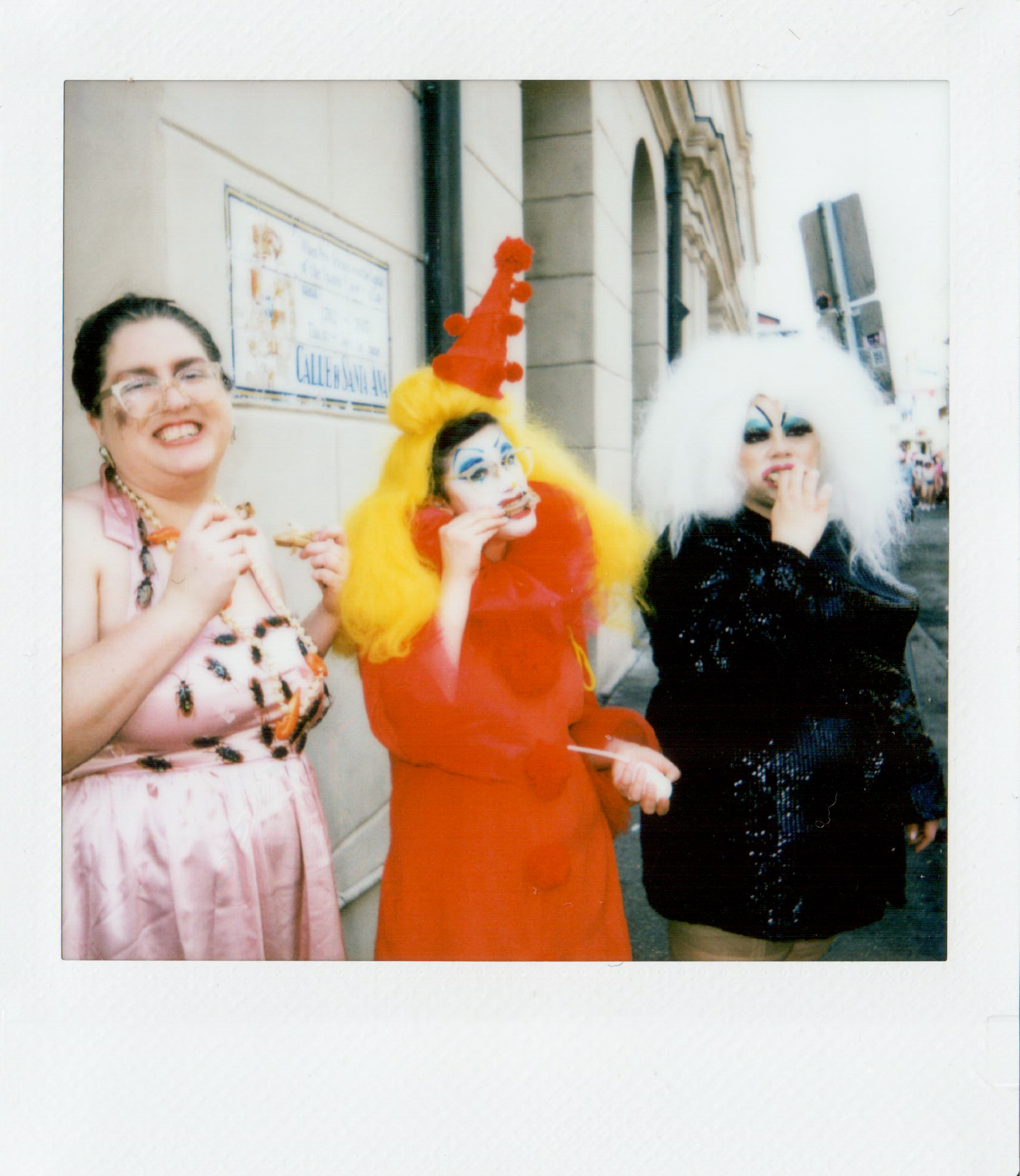
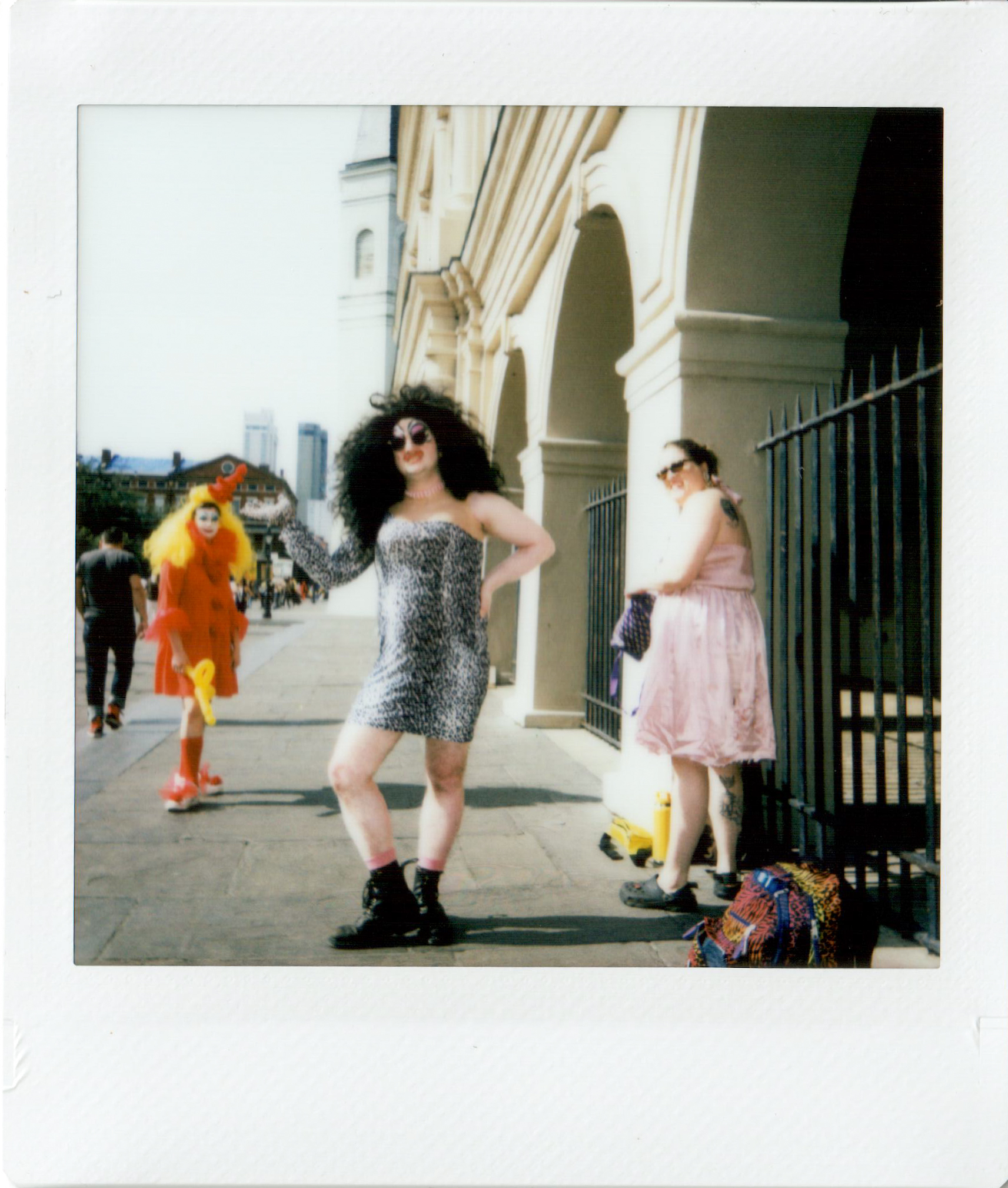
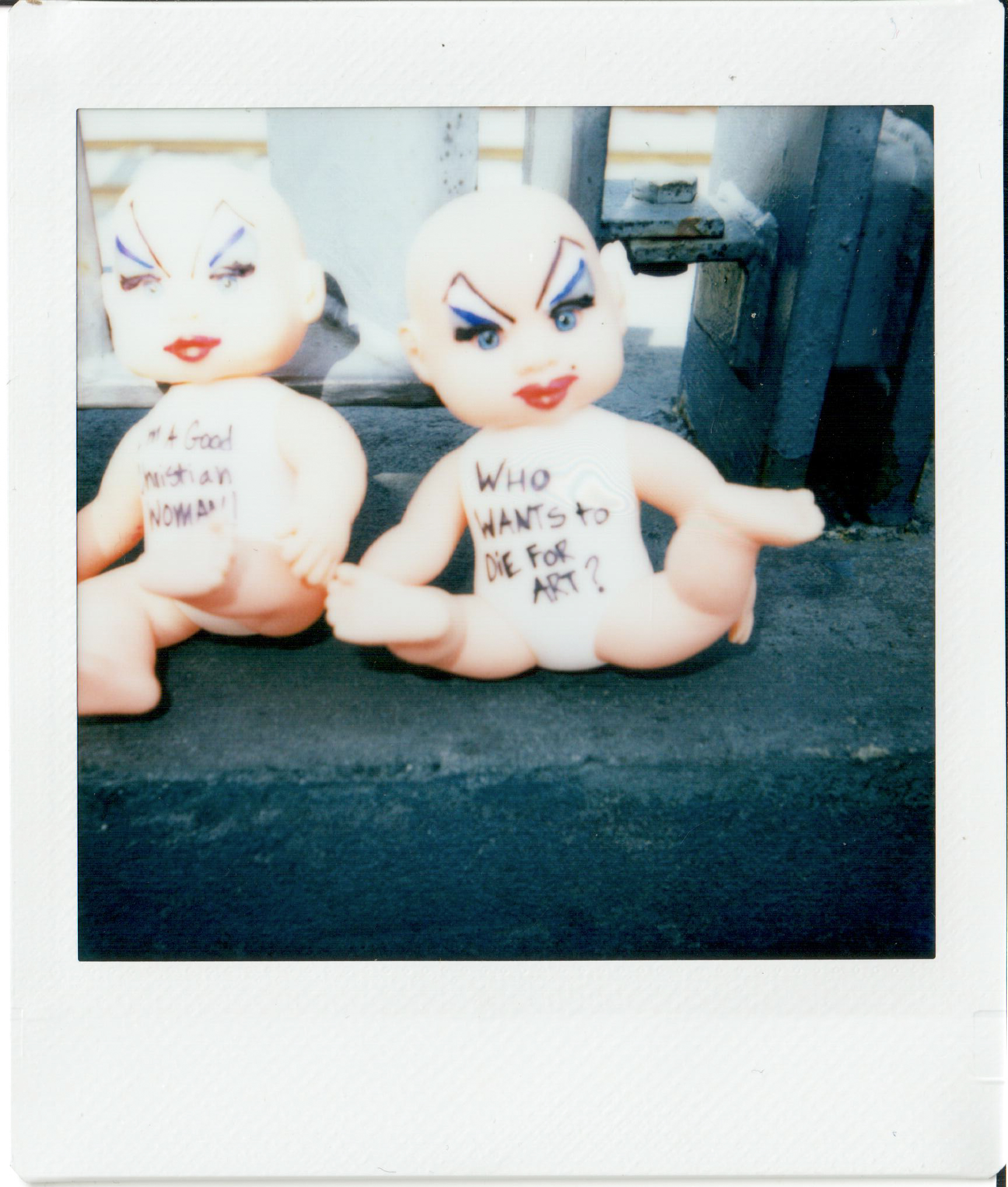
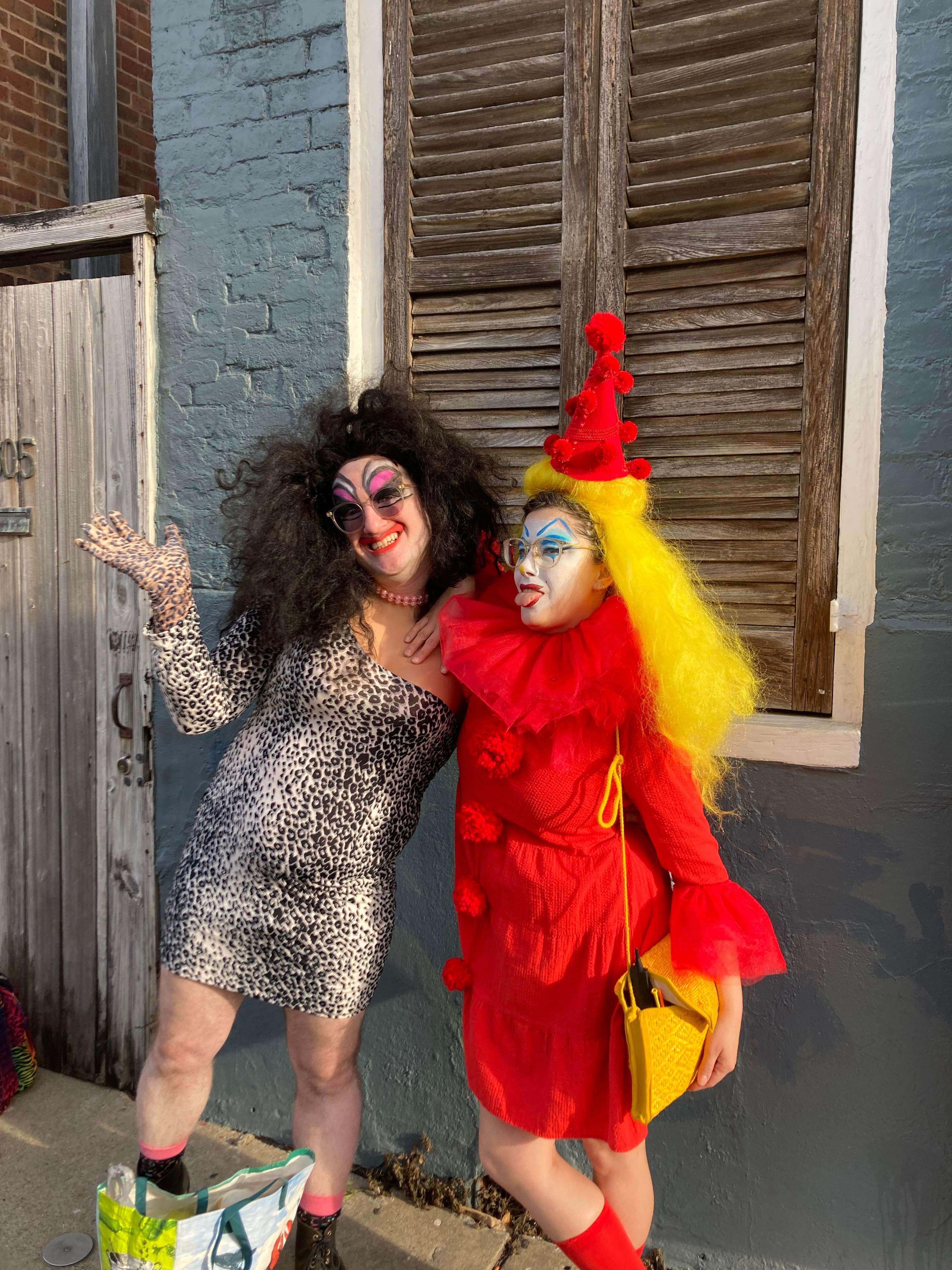
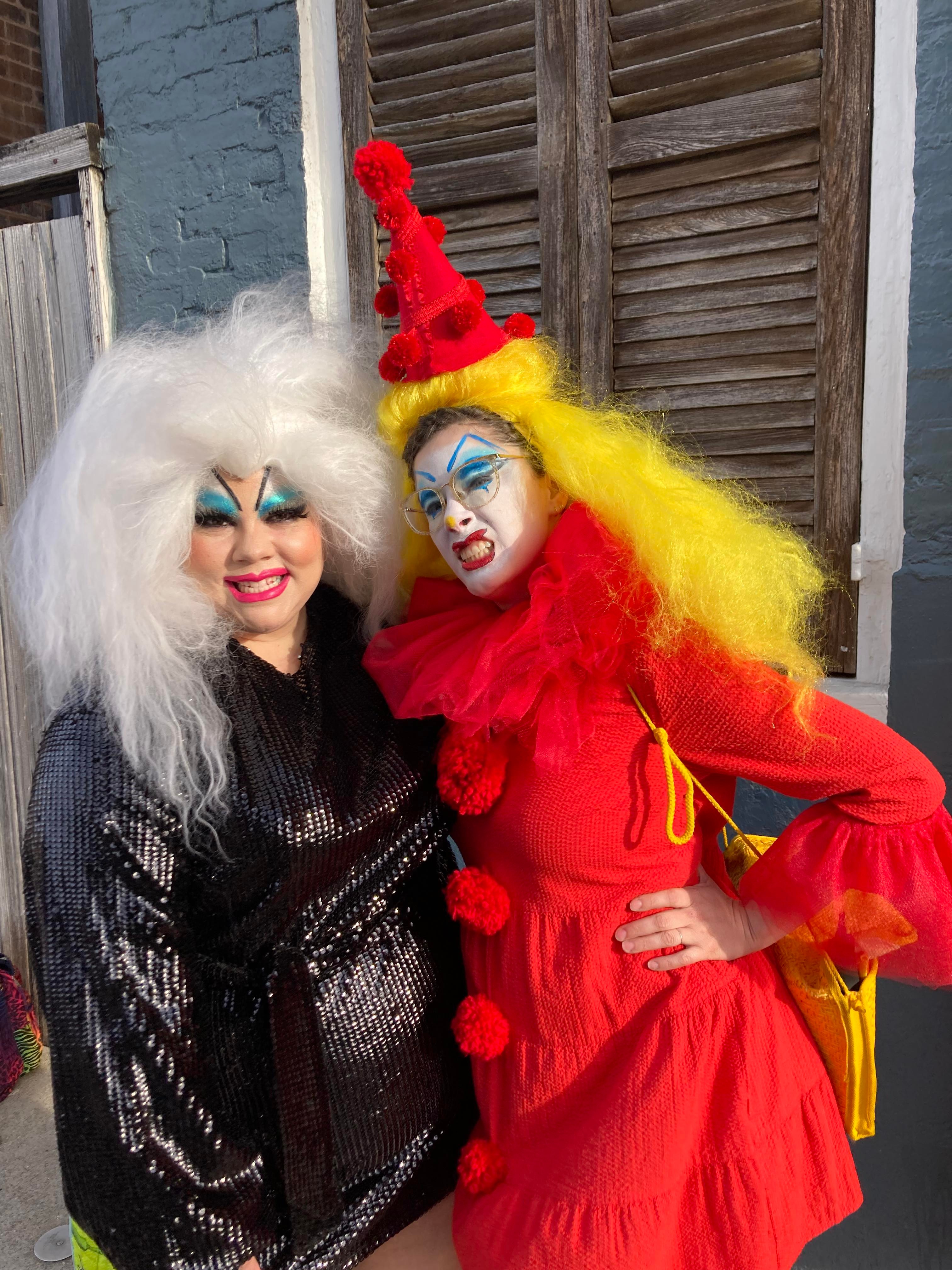
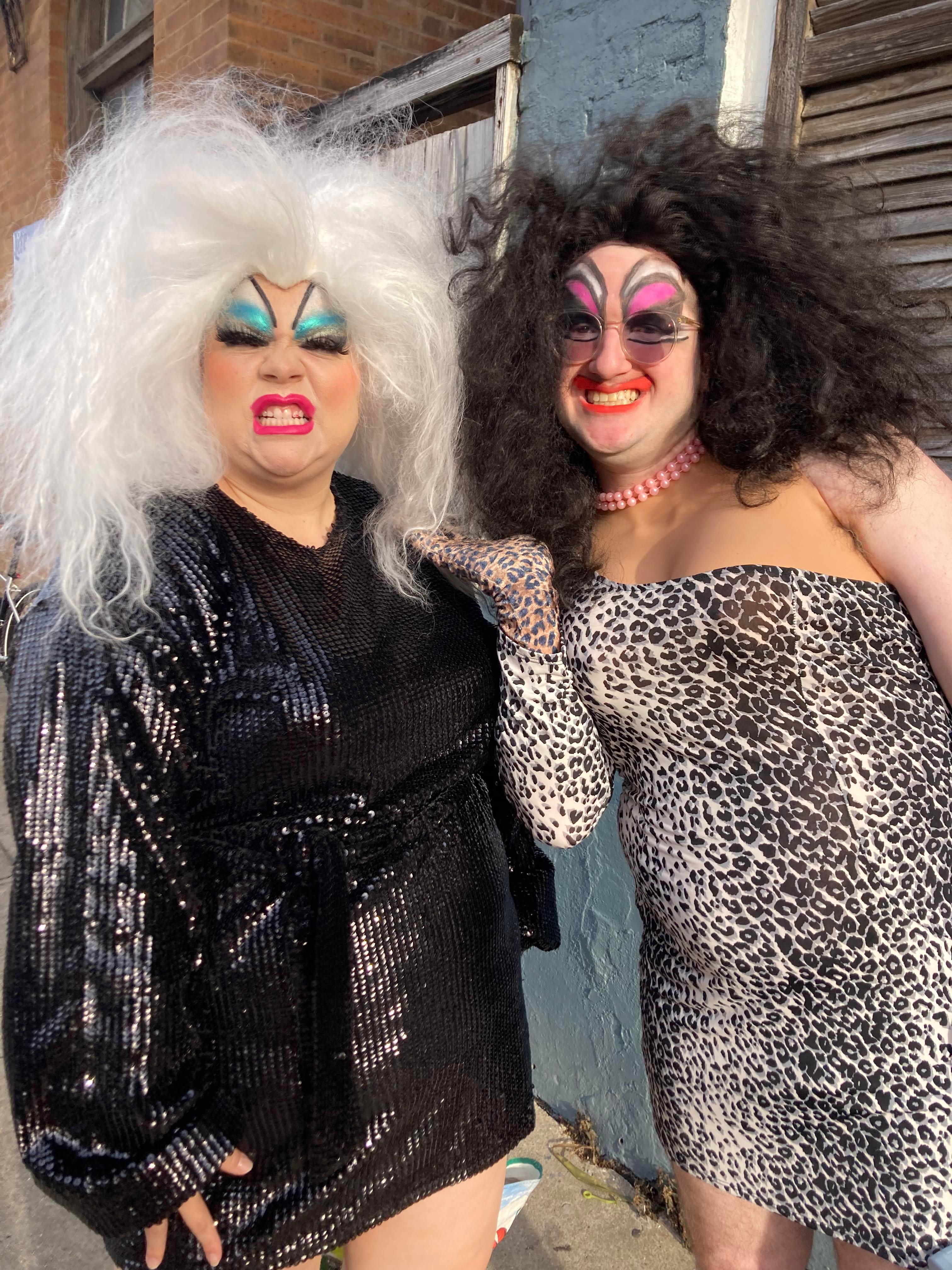
For Carnival 2017, a few members of the Swampflix crew joined forces to pray at the altar of the almighty Divine. The greatest drag queen of all time, Divine was the frequent collaborator & long-time muse of our favorite filmmaker, John Waters. Her influence on the pop culture landscape extends far beyond the Pope of Trash’s Dreamlanders era, however, emanating to as far-reaching places as the San Franciscan performers The Cockettes, the punkification of disco, and Disney’s The Little Mermaid. Our intent was to honor the Queen of Filth in all her fabulously fucked-up glory by maintaining a new Mardi Gras tradition in Krewe Divine, a costuming krewe meant to masquerade in the French Quarter on every Fat Tuesday into perpetuity.

Our initial krewe was a small group of Swampflix contributors: site co-founders Brandon Ledet & Britnee Lombas, regular contributor CC Chapman, and repeat podcast guest Virginia Ruth. We were later joined by local drag performer Ce Ce V DeMenthe, who frequently pays tribute to Divine in her performances. There’s no telling how Krewe Divine will expand or evolve from here as we do our best to honor the Queen of Filth in the future, but for now, enjoy some pictures from our 2023 excursion, our fifth year in operation as Swampflix’s official Mardi Gras krewe (and our first year returning after the COVID-19 outbreak of 2020):

Eat Shit!

❤ Krewe Divine ❤

Lost Junction (2003)

I don’t know about you, but when I find an aughts-era Neve Campbell thriller set in the hot, sticky depths of the American South, I expect it to be a knockoff Wild Things. A real trashy one. It turns out Lost Junction is more a knockoff of the Melanie Griffith matricide dramedy Crazy in Alabama, so it’s an entirely different kind of trashy. Instead of echoing Wild Things‘s audience-trolling triple crossings and poolside threesomes, Lost Junction offers trashy delights of a much weaker flavor: Neve Campbell struggling to master a Southern accent; an emotional plot-stopping monologue from acting powerhouse Jake Busey; a touristy road trip to pre-Katrina N’awlins; vintage CW visual aesthetics, etc. It’s rated R, but it’s Rated R for “Language,” since Campbell’s genteel Southern belle can’t stand to hear the gruff men in her life do a cuss, so they tease her with those cusses incessantly. I expected Lost Junction to be a Bad Movie; that’s fine. I just wasn’t prepared for it to be such a chaste one.

You’ll have to excuse my unusual lack of contextual bearings here. Lost Junction apparently did not exist prior to my stumbling across it at a local Bridge House thrift store, and only the thinnest of Wikipedia pages has had time to populate since that fateful purchase. To borrow some inane language from people who like to chat Avatar online, this film has no cultural footprint. It’s not even streaming on its obvious, destined home platform Tubi. The only reason a bad-taste loser would ever pick up a physical copy in the wild is whatever residual affection for Campbell as a screen presence still lingers so many decades after her Golden Age titles like Wild Things, Scream, The Craft, and Party of Five. There’s some small pleasure in seeing her do a half-speed Kristin Chenowith impersonation as the world’s most chipper femme fatale, but it’s not a good sign that Jake freakin’ Busey steals the show from under her with only a fraction of the screentime. By her tragic damsel’s own admission, she can’t cook, she can’t sing, she’s not that bright, and she’s kind of a prude. There’s not much to her at all outside her “Southern” accent and her off-screen history of domestic abuse. As a result, there isn’t much to the movie either.

Billy Burke costars as a generic Drifter With a Past who hitches a ride with the wrong dame, climbing into the Manic Pixie Murder Suspect’s car not knowing that her husband’s dead body is cooking in the trunk. Our star-crossed lovers meet in the first few frames, and although the film basically functions as a sunlit neo-noir, there isn’t much actual criminal behavior in their subsequent Bonnie & Clyde crime spree. The dead husband clearly deserved it, it’s frequently questioned whether Campbell actually did it, and most of the movie is a getting-to-know-you first date that happens to involve his rotting corpse (give or take a third-wheel intrusion from Busey). At least in Crazy in Alabama, Melanie Griffith took great transgressive delight in carrying around her husband’s head in a hatbox. Here, Campbell would rather just pretend that her husband never existed, which isn’t much fun for the (nonexistent) audience following along at home. The most incongruous cheeriness we get is in the impromptu road trip to New Orleans, where Campbell refers to our cemeteries as “neat little buildings” and the doomed couple dance at a bar called Gator Blues. It’s cute, but it’s not worth the commute.

While perusing her IMDb page to confirm that Lost Junction does indeed exist, I was shocked by how many films Neve Campbell headlined in the aughts. She basically disappeared from my radar at the close of the 1990s, outside occasional resurfacings as Sidney Prescott or as one of Don Draper’s anonymous hookups. It turns out there are plenty of post-Wild Things titles out there waiting to offer the sleazy Neve Campbell thriller that’s apparently missing in my life, titles like Intimate Affairs, Last Call, and When Will I Be Loved. Or, those are just more dusty DVDs waiting to prank me with eye-catching, tantalizing covers at the thrift store, only to reveal their overly demure nature once I take them home. I hope Jake Busey will be there as a third wheel to keep the mood light & chaotic, because there’s no way I’m going to avoid taking the bait a second or third time.

-Brandon Ledet

Last Dance (2022)

It’s undeniable that the art of drag has changed drastically in the past decade, at least from what I can see in New Orleans.  The traditionalist dive-bar pageant drag that I grew up with in the city has been pushed out to the edges of the frame, found only in the annual Gay Easter parade in the Quarter or at spaghetti & mimosas brunches on the West Bank.  These days, most local drag acts are young cabaret weirdos who are much more interested in testing the boundaries of good taste than they are in looking pretty under a pound of pancake-batter makeup.  In most cities, drag’s recent shift towards the avant-garde might only be attributable to the popularity of television programs like Ru Paul’s Drag Race and its legion of international spinoffs.  Here, it’s more directly influenced by the New Orleans Drag Workshop, an intensive drag bootcamp that spawned most of the city’s most vital, exciting queens for the better half of the 2010s.  That’s the local legacy of drag mother Lady Vinsantos, who closed the New Orleans Drag Workshop just before the pandemic in 2019, leaving behind a glamorously mutated art scene that now sets the city apart from the Southern Pageant traditions I remember from Mardis Gras & Decadences past.

The French “dragumentary” Last Dance honors Vinsantos for recontouring the New Orleans drag scene into the vibrant freak show it is today, so it was wonderful to see it presented with ceremonial prestige at this year’s New Orleans Film Festival.  As the older, stuffier crowd attending the local premiere of the Louis Armstrong documentary Black & Blues spilled out onto the sidewalk in front of The Prytania, the drunken reprobates waiting for the Vinsantos doc rushed in, ready to cheer on & heckle the projection of their friends’ faces onto the century-old silver screen.  The movie asks, “Remember when Neon Burgundy had that gigantic beard?” as if it’s making nostalgic small talk between stage acts at The All-Ways.  It treats local drag performers like Franky, Tarah Cards, and Gayle King Kong as if they were the first wave of punk bands to perform onstage at CBGB’s, a much-deserved reverence you’ll only find in film-fest documentaries like this & To Decadence With Love.  Director Coline Albert may not be from New Orleans, but she does a great job of highlighting what makes the local drag scene special, and how much of a hand Vinsantos had in shaping that scene into what it is.

Besides, New Orleans is only one part of Vinsantos’s story, as it’s told here.  This is a documentary of thirds, split between the closure & legacy of the New Orleans Drag Workshop, Vinsantos’s youthful run as a chaos queen in San Francisco, and the character’s official retirement show in Paris – a lifelong dream realized.  The writing & production of the Paris show helps establish a narrative momentum as Vinsantos reminisces about what he’s accomplished with his drag artistry in two distanced American cities, saving the movie from devolving into pure talking-heads tedium.  Even as someone who’s attended many shows populated entirely by Workshop “draguates” (as well as Vinsantos’s horror-host screening of the San Francisco cult film All About Evil), I’ve had little direct interaction with his own work, as he’s been gradually, consciously ceding the stage to younger talent.  Last Dance operates as a fly-on-the-wall portrait of Vinsantos as a self-doubting, frustrated artist with a chaotic stop-and-start creative process.  The Paris retirement show finale and clips from past triumphs also offer a decent sketch of what the Lady Vinsantos stage persona is like in action – a volatile combo of a Strait-Jacket era Joan Crawford and a Grande Dame revision of Freddy Kreuger.  The retirement of that persona is very much worth preserving here, even if she eventually rises from the grave to terrorize yet another city.

To Last Dance‘s credit, it doesn’t attempt to cover all of Vinsantos’s various art projects from throughout the decades.  His dollmaking, songwriting, and filmmaking efforts are only captured in glimpses, sometimes frustratingly so.  The archival fragments of the D.I.Y. drag-horror films he made as a prankish youth in San Francisco were the major highlight for me, since they have a vintage texture that can’t be matched by modern digital cameras.  Even just limiting itself to the dual retirement of the Drag Workshop and the Lady Vinsantos persona, though, the movie can still feel a little narratively unfocused, frantically plane-hopping between the three cities tethered to Vinsantos’s heart.  If it’s at all meandering or overlong, though, the indulgence is clearly earned.  If anything, we should have rolled out the red carpet and handed over a Key to the City to make the ceremony of this retirement documentary even more ostentatious.  As is, getting home from the post-screening Q&A after 1a.m. at least felt appropriate to the late-night freak scene Vinsantos helped establish here; the only thing the event was missing was a crowd-hyping MC and a two-drink minimum.

-Brandon Ledet

Podcast #173: Causeway (2022) & #NOFF2022

Welcome to Episode #173 of The Swampflix Podcast. For this episode, Brandon is joined by Moviegoing with Bill‘s Bill Arceneaux to review the films they caught at the 33rd annual New Orleans Film Festival, starting with the locally-set Jennifer Lawrence drama Causeway.

00:00 #NOFF2022

14:44 Causeway

36:55 The Negro and the Cheese Knife
45:00 Signal and Noise
51:55 Really Good Friends
1:00:40 The Streets Tell a Story
1:03:03 Iron Sharpens Iron
1:15:15 Street Punx
1:17:37 In Search of … Pregame
1:26:30 Friday I’m in Love
1:29:50 Three Headed Beast
1:34:18 Last Dance
1:38:34 Nanny

You can stay up to date with our podcast through SoundCloudSpotifyiTunesStitcherTuneIn, or by following the links on this page.

-The Podcast Crew

Quick Takes: Virtual Cinema at #NOFF2022

I only attended two in-person screenings at this year’s New Orleans Film Festival: local premieres of the New Orleans drag scene documentary Last Dance and the Sundance Grand Jury Prize-winning horror film Nanny.  Everything else I caught at this year’s festival was presented on its Virtual Cinema platform, streamed at home on my laptop & TV.  Logistical obstacles kept me from catching more titles in person, which is a shame, since one of the major joys of NOFF is being immersed in microbudget, niche-interest cinema alongside huge, enthusiastic audiences that those movies would not reach otherwise.  After a week of rushing from screening to screening trying to cram in as many personal, handcrafted pictures as I can before they disappear into the distribution ether, I tend to lose track of the textures & standards of professional, corporate filmmaking.  It’s a low-key, intimate headspace I never want to emerge from, and there’s something especially cool about dwelling there with the sizeable crowds that are missing from arthouse theaters every other week of the year.  I obviously couldn’t simulate that experience attending the festival’s Virtual Cinema at home, but I did still get to see some pretty great movies.

Last year, I wrote a quick-takes roundup of the higher-profile Spotlight Films I caught at NOFF, but this year I’m flipping it around.  Stay tuned for standalone reviews of Last Dance & Nanny, as well as an audio recap of the full #NOFF2022 experience on an upcoming episode of The Swampflix Podcast.  In the meantime, here’s a brief round-up of all the smaller, more esoteric NOFF titles I watched at home – the closest I could get to full immersion in indie-budget Festival Brain.

Three Headed Beast

The first film I watched on NOFF’s Virtual Cinema platform this year ended up being my clear favorite.  The intimate, largely dialogue free drama Three Headed Beast got me excited to spend a week watching nothing but microbudget indies with no commercial appeal, and I was surprised that each subsequent virtual “screening” was a case of diminishing returns.  A small, quiet dispatch from our sister city Austin (where one central Swampflix contributor currently dwells), it’s got an infectious D.I.Y. spirit that’ll convince you the only resources you need to make a great film is a few free friends & weekends and a halfway decent script.  It’s cute, it’s stylish, it’s sexy, and it’s a more emotionally involving drama than most Awards Season weepies with 1000x its budget.

In Three Headed Beast, a loving bisexual couple struggles with their open relationship when one of them catches feelings for a younger third.  The historical details of their relationship dynamic—how long they’ve been together, how long they’ve been open, who suggested the change, etc.—aren’t spelled out until late in the runtime, when the wordless montages of their various romantic trysts are put on pause for the film’s first lengthy exchange of dialogue.  It’s all clearly communicated in their body language before that late-in-the-game explainer, though, and a tryptic split screen editing technique helps pack as much of that visual information into the frame as possible in an intricate, exciting way.  The tension of who’s putting more logistical & theoretical work into their polyamory (through podcast & literature research) vs. who’s actually committing to that lifestyle with a full heart is complexly mapped out using very simple, straightforward tools of the editing room – pulling a great, low-key romance drama out of very limited resources.  Plus, it’s the only film I saw at this year’s festival that includes a tender act of analingus, which has got to count for something.

Friday I’m in Love

I’m embarrassed to admit that my two favorite selections at this proudly local film festival were both imports from Texas.  The pop culture documentary Friday I’m Love is a detailed hagiography of the locally infamous Numbers nightclub in Houston, which opened as a dinner-theatre cabaret before converting to an immensely popular gay disco, then mutating once again into a new wave & industrial music venue.  Decorated with the tape warp & pre-loaded fonts of a vintage home camcorder, the movie presents “Houston’s CBGBs” as a Totally 80s™ nostalgia pit, one filled to the brim with half-remembered anecdotes about counterculture legends as varied as Divine, Ministry, Grace Jones, Nine Inch Nails, and Siouxie Sioux.  The doc is primarily a time capsule record for people who happened to live near the gay Houston neighborhood Montrose when the club was its cultural epicenter, but anyone with a decent sense of taste in music would find something worthwhile in that hazy stroll down memory lane.

Friday I’m In Love commits the worst crimes of a low-budget pop culture doc.  It invites talking heads to endlessly daydream about the glory days; its director makes themself a part of the story for no particular reason; it could have easily been reduced to a short.  And yet it’s got so much great archival footage of the loveable freaks who ran wild in the pre-internet world that it easily transcends those petty quibbles.  It turns out I’m willing to overlook a lot of gruel & glut as long as you throw in some anecdotes about drag queens, goths, and Björk, and there’s something especially charming about seeing those beautiful freaks party in the Texas heat. It turns out I wasn’t the only one so easily charmed, either; the movie won this year’s Audience Award for Best Documentary Feature.

Street Punx

While the one truly local film I caught on the Virtual Cinema platform wasn’t my favorite of the fest, it was maybe the best suited for the fest.  Street Punx is perfect NOFF programming in that it’s a flippant satire about the petty, logistical frustrations of making the exact kinds of movies that never make it past the film festival circuit.  You get to laugh at the ludicrous, aimless hipsters who don’t even know why they’re making art in the first place, then immediately dance with them at the afterparty.  It’s self-critical about the entire enterprise of making niche-interest, microbudget films about “the real world” instead of genuinely engaging with it, while also never taking that to-the-mirror indictment all that seriously.

In this low-key slacker comedy, a pair of directionless New Orleans filmmakers attempt to scrape together funds to make a movie about street punks in Myanmar.  Hiding behind moodboard comparisons to the unscripted No Wave influences of filmmakers like Jarmusch, they’re never straightforward to potential investors about why they want to make a movie in Myanmar, mostly because they don’t even know the reasons themselves.  The studded jackets and spiked mohawks of their potential subjects look great on camera, especially in contrast to the ceremonial Buddhist robes worn by local monks & nuns.  They’re not even really interested in those surface-level aesthetics, though; nor are they are interested in the violent military coups that give those punk-culture rebels a political purpose.  Their concerns are selfish & petty well past the point of parody (including the director using the potential location shoot as an excuse to bang her Myanmarese crush), and most of the movie is a comedy about attempts to justify the project as anything other than a grotesque personal indulgence.  It’s a funny joke too, even if Street Punx itself feels a little messy & aimless in the exact ways it’s critiquing its would-be film-within-a-film for being.

Wetiko

My least favorite film of my Virtual Cinema selections was also the one with the highest ambitions, one that has a much clearer political purpose than the fictional Myanmar punk culture film in Street Punx.  In Wetiko, an Indigenous youth gets tangled up in a spiritualist turf war between authentic Maya shamans and their phony Euro initiators in the Yucatan, since his family’s pet store supplies hallucinogenic toads needed for their rituals.  It’s sharply critical of druggy white colonizers coopting Maya shaman traditions for recreational & self-aggrandizing purposes, recalling the criticisms of ayahuasca tourism in the overlooked, underloved drama Icaros: A Vision.  Featuring performances in the English, Spanish, Mayan, Afrikaans, and (fictional) Empire of Love languages, it’s got an impressively broad scope for such a tiny production, and the New Orleans Film Festival should feel proud to have hosted its World Premiere.

I just couldn’t shake the feeling that Wetiko isn’t as great as it could have been.  It’s shot on film, so it’s automatically got a leg up over most modern festival programming in terms of texture, color, and warmth.  It’s a shame, then, that it loses some of that ground in its choppy, “trippy”, CG-laced editing techniques during its hallucination sequences, which often feel cliché when they need to feel darkly magical.  Thinking back to the way this year’s magnificent Neptune Frost updated its own ancient mystique with the string lights & glowsticks of modern urban living, it’s easy to find Wetiko lacking in comparison.  I still found plenty to enjoy about it though, from the eyeroll-worthy cult members of the Empire of Love Conscious Community Center’s awe for “the universal hum of connectedness” to their satisfying violent overthrow at the hands of true local shamans who actually know what they’re talking about.  If its stoney-baloney trip-outs had just looked a little more uniquely uncanny & nightmarish, it likely would’ve been my favorite screening on this list.  “Impressive but flawed” is far from the worst thing you could say about a film festival title, though, and it was cool to see one of these low-profile movies punch above its weight class.

-Brandon Ledet
Lagniappe Podcast: The Beyond (1981)

For this lagniappe episode of the podcast, Boomer, Brandon, and Alli discuss Lucio Fulci’s surrealist horror whatsit The Beyond (1981), set at the gates of Hell just outside New Orleans.

0:00 Welcome

02:22 Halloween Ends (2022)
09:14 Halloween II (1981)
14:10 Nightmare on Elm Street (1984)
16:22 Hellraiser (2022)
19:10 Bride of the Re-Animator (1989)
24:38 Smile (2022)
29:09 The Ballad of Buster Scruggs (2018)
33:20 Dark Glasses (2022)

46:09 The Beyond (1981)

You can stay up to date with our podcast through SoundCloudSpotifyiTunesStitcherTuneIn, or by following the links on this page.

-The Lagniappe Podcast Crew