Dream Scenario (2023)

There’s something distinctly Kaufman-esque about Dream Scenario, and it’s not just that the film stars Adaptation performer Nicolas Cage. All of Charlie Kaufman’s films are ambitious narratives that revolve around a man who is in some way, be it major or minor, removed from the reality of the people around him, and who ends up caught up in a widespread event that is (usually) not of their own making or volition. In Adaptation, meek screenwriter Charlie ends up caught in a criminal enterprise as a result of simply trying to adapt a non-fiction book into a workable film adaptation; in Anomalisa, Michael Stone’s apparent mental disorder causes him to see all faces as identical, and he gets swept up in a nightmare scenario of bureaucratic intrigue; in Synecdoche, New York, Caden Cotard’s creation of a nesting doll of reality takes on a life of its own and he is swept away inside of it. All of his works are also about a person being forced into a situation that is, to their mind, completely unfair, and their myopic reactions to it exacerbate the situation. It seems unfair to Joel in Eternal Sunshine of the Spotless Mind that Clementine has intentionally lost her memories of him, so he pursues the same avenue to have her removed from his thoughts; it seems unfair to Philip Seymour Hoffman’s character in Synecdoche that his wife has left him and taken their daughter with her, and his imaginings of the worst possible outcomes of that situation contribute to his declining health; the unfairness of a life of unfulfilled dreams causes the janitor character in I’m Thinking of Ending Things to fantasize a completely different life, which has its own horrors. 

Paul Matthews (Nicolas Cage) is, like many of the Kaufman protagonists listed above, a man with a fairly decent life, including a tenured position at a small college. He and his wife Janet (Julianne Nicholson) have a pleasant enough life, living in her spacious childhood home with their teen daughters, elder typical teen Hannah (Jessica Clement) and younger Sophie (Lily Bird). Paul isn’t a bad person, but he is hapless and overly invested in other people’s perception of him. The film opens in Sophie’s dream, where objects begin falling from the sky, and although she calls out to the Paul in her dream for help, he doesn’t react; when she tells her parents about the dream the next morning, Paul gets hung up on the fact that the dreamed version of himself was apathetic to his daughter’s concerns and worries about what his daughter thinks of him. On campus, he’s too focused on his students talking about him behind his back. He has the respect of his school’s administrator (Tim Meadows), but he yearns for acknowledgement from his former academic colleague Richard (Dylan Baker), who is known for hosting fabulous dinner parties for other people he considers elite. This seems terribly unfair to him, even though there are actions he could take to better himself. Instead of humiliating himself by pleading for a co-author credit from a different former colleague on a subject he claims to have conceived of first, he could stop talking about “thinking about writing a book” and actually do some of that research and writing himself. 

Despite his relative anonymity, Paul finds himself a sudden subject of internet virality. After running into an old girlfriend (Marnie McPhail) after a play, she tells him that she has been dreaming about him and asks if she can blog about the experience. In doing so, she links to his Facebook page, which results in a huge influx of notifications from hundreds, then thousands of others, all who have seen Paul in their dreams; Paul is flustered that he seems to be a passive observer in all of these scenarios. Suddenly flush with positive attention, Paul attempts to leverage this into a book deal, and signs up with a P.R. firm headed by the neurotic Trent (Michael Cera) and Mary (Kate Berlant), who swings back and forth between sycophantic and self-absorbed. In so doing, he meets assistant Molly (Dylan Gelula), who leads him to realize that doing nothing in people’s dreams is actually the best case scenario here. The general public turns on him for reasons I won’t spoil, and all of it is out of his hands. 

I couldn’t have imagined that I would reference the 2007 novel Mon Cœur à l’étroit (My Heart Hemmed In) by Marie NDiaye in a single review this year, let alone two. In writing about Beau is Afraid, I talked about how the protagonist of the novel awoke one morning to learn that all of her neighbors despised her, or perhaps that they suddenly all despise her at once, after years of apparent tolerance. Like her, Paul is a teacher here, and although the reason for the sudden change of heart among her peers results in not just the loss of academic prestige, but its conversion into outright hostility. Although the reason that the narrator of Hemmed is ostracized is less explicit than in Scenario, the reasons are nevertheless just as ethereal, and the horror comes from the way that something over which one has no control can completely destroy their life. Hemmed never mines that field for comedy like Scenario does, but they exist in the same rhetorical space nonetheless, wherein a fairly well-liked educator becomes a pariah because of circumstances in which they have no say. 

There’s a deft handling of the metaphor of fame in Dream Scenario that I really enjoyed. Like many people who achieve a modicum of viral fame, he didn’t do anything to make himself the center of attention, at least initially. His sudden appearance in people’s dreams has no explanation and isn’t the result of anything that he has done. Although he initially appears in the dreams of people who know him like his daughter and students, he only becomes known to the public because of his ex-girlfriend’s blog post, when strangers become aware that the man that they are seeing in their dreams is a real person. Like all internet fame, however, it’s fleeting, and his attempts to leverage it into achieving his actual desires are stunted when his dream persona moves from being an apathetic bystander in their dreams to an active participant and, eventually, a source of terror, all of it once again having nothing to do with anything that Paul himself has done. Sure, he’s hapless and selfish, but no more so than the average person, and it’s hard to blame him for wanting to use this unwanted stardom to get something that he actually wants. Although he is pathetic, letting his ego get the best of him, there’s nothing malicious about anything that he does, which makes his sudden turn into Twitter’s villain more pitiable; his poorly received, self-serving online apology makes things worse (as they often do, just look at Colleen Ballinger), but unlike a lot of the internet celebs whose attempted apologies are dissected to hell and back for their insincerity, Paul actually didn’t do anything to deserve his backlash. 

The film ends on an ambiguous and bittersweet note, which reflects the film’s slow turn from being a comedy about an upper middle class nobody to a horror story about being a public figure with no control over his perception. There are still comedic moments as the final minutes approach, including a scene wherein Cage goes full-camp in a photoshoot with a bladed gauntlet that is similar to but legally distinct from Freddy Krueger’s, as well as a visual call back to an earlier discussion of Paul’s Halloween costume from a few years prior, but it ends without setting everything in Paul’s reality back to where it was before, ultimately making it the kind of somber movie that so often plays so well during this time of year. 

-Mark “Boomer” Redmond

Beyond Dream’s Door (1989)

Most of my favorite art tends to get labeled as “Bad Movies” outright, as if “Bad Movies” were a legitimate, defined genre.  Snarky mockery of low-budget genre films accounts for a lot of movie-nerd culture in a post-MST3k world, without much thought to what the “Bad Movie” label even means.  Friends will gather for regular, celebratory Bad Movie Night rituals, and then log the films watched on Letterboxd with a half-star review that reads “I had the time of my life watching this! The most entertaining movie ever made.”  It’s driven me to the conclusion that what most people label as “Bad Movies” is really just underfunded outsider art. There’s a discomfort in stepping outside the systemic quality controls of a professional production, but those same controls can also dampen the personalities & idiosyncrasies of the artists behind those productions.  When someone says they love watching Bad Movies, there’s a cognitive dissonance between objective quality in craft and the subjective enjoyment of the audience.  To me, nothing made with ecstatic passion and highly entertaining results could ever truly be “Bad”; it’s just art that requires you to readjust what you expect out of Movies in general.  What good is consistency, coherence, and logic in a robust, mainstream production if the images feel limp & uninspired when compared to their no-budget equivalents?

Beyond Dream’s Door is A+ outsider art that I’m sure has made the rounds among the irony-poisoned Bad Movies crowd.  It’s an easy target for that kind of mockery, inviting laughter as soon as you hear the first few sitcom-level line deliveries from its subprofessional actors.  If you can stifle your snickering long enough to stick with it, though, Beyond Dream’s Door proves to be an ideal example of passion outweighing resources.  It recreates the nightmare surrealism of the Elm Street series, restricted by the production values of a 16mm regional-horror cheapie but also much freer to disregard the boundary between its dream sequences and waking “reality.”  The emotional & narrative logic behind its nightmare imagery isn’t especially deep or nuanced; it hinges its entire premise on the cryptic idiom “Beyond dream’s door is where horror lies,” and it contextualizes all of its action within a university’s Psychology program so it can make room for brief, vague lectures on “psychosis.”  It also relies on frequent dream-within-a-dream-within-a-dream rug pull surprises, making it clear that nothing in the characterizations or story matters as much as establishing a consistently fun, unnerving sense of dream logic in its low-budget aesthetics.  At times, it’s transcendent in what it achieves within that seemingly limited frame, even recalling the headlights crime scene terror of a David Lynch nightmare (years before those exact images were echoed in Lynch’s Lost Highway).  And yet, it’s the exact kind of sub-professional production that instantly gets slapped with the “Bad Movie” label, while more venerated, traditionally trained artists like Lynch are afforded the benefit of the doubt.

The story of a Psychology student’s stress dreams breaking out of his skull to infect the reality of (and physically attack) his classmates isn’t sketched out with much detail, give or take his dreams finding a demonic mascot in the movie’s special guest star The Suckling.  Mostly, Beyond Dream’s Door follows its moment-to-moment whims to create movie magic on a college student budget.  Beyond posing a few dreamworld images in a blacked-out sound stage void, most of its action is staged in generic, practical locales.  The film attempts to make liminal spaces out of the mundane, Skinamarinking its suburban homes through confused geography and warping the empty halls of its academic institutions through video surveillance displays.  It conjures a literal demon through a college sleep study gone awry, but most of its horror is established in the uncertainty of where its dreams begin & end.  Lightbulbs explode in slow-motion close-up to punctuate the shock of being dunked back into a recurring nightmare.  Clear glass skulls fill with running water to erase the physical humanity of the characters navigating the dreamworld.  Disembodied arms rise from an open grave like time-elapsed flower growth, shot in psychedelic red & blue crosslighting.  The narrative may be simple, but the visual language is constantly surprising, never lazy or needlessly repetitious.  This is clearly the work of cinephiles striving to make the best possible movie they can with the resources they have within reach. It’s noticeably cheap, but it’s also thoroughly wonderful.

The main reason I love horror as a genre is because it makes this kind of dream-logic outsider art commercially viable in a way no other medium can.  If a group of college students made an avant-garde art film about the thin veil between dreams & reality, it’s extremely liable to have been forgotten to time (unless it was an early project for a director who later earned a mainstream fanbase, like Lynch).  By contrast, Beyond Dream’s Door has a kind of built-in, infinitely repopulated audience who will always be voracious for more nightmare-logic horror schlock, especially after they’ve run through the official Elm Street films a few dozen times.  It seems conscious of its debt to the larger horror genre in that way, reaching beyond the visual touchstones of an obvious Freddy Kruger knockoff to instead make allusions to Hitchcock’s Psycho and Steven King’s novel IT.  The need for scares & gore to attract an audience serves the film well structurally, giving it momentary goals to achieve beyond crafting artsy images with literal arts & crafts supplies.  The would’ve been just as great without its more overt horror elements, though; it would just also have far fewer eyes on it.  A lot of my favorite filmmakers fit into that same category: underfunded visionaries like Ed Wood, Roger Corman, and William Castle, who managed to make & sell wildly entertaining pictures on shoestring budgets by working on the B-horror margins.  They’re the exact kind of names that end up on lists titled “The Best of the Bad” instead of earning the label they truly deserve, “The Best Outsider American Filmmakers.”  I haven’t seen enough of Jay Woelful’s directorial work to say he belongs in that same conversation, but I can confirm Beyond Dream’s Door admirably continues the tradition.

-Brandon Ledet

Skinamarink (2023)

For anyone disappointed that Jane Schoenbrun’s microbudget darling We’re All Going to the World’s Fair was a somber teen-crisis drama instead of the low-fi creepypasta horror it was mismarketed as, Kyle Edward Ball’s Skinamarink might be the salve for your year-old wounds.  Curiously, the next project on Schoenbrun’s docket is titled I Saw the TV Glow, which is the closest thing to a coherent plot synopsis you could apply to Ball’s narrative-light experiment in digital-grained dread.  Skinamarink is crowdsourced Internet Age horror, both in funding and in conception.  After honing his craft by adapting user-submitted dream journals into horror shorts on his YouTube channel Bitesized Nightmares, Ball crowdfunded a feature-length amalgamation of those comment-section submissions’ most common themes & images for his official, theatrical debut.  Skinamarink was essentially conceived by the internet hivemind.  It was marketed by it too, illegally leaked out of online film festival platforms and spread around as a slumber party-style dare among TikTok Zoomers, as if it were vintage found footage instead of an upcoming theatrical release.  Whereas We’re All Going to the World’s Fair is about creepypasta, Skinamarink is a genuine example of it, which makes the two films an unlikely, unholy pair (and possibly just the start of a larger, not-yet-defined Internet Age film movement).

It’s easy to forget Skinamarink‘s Internet Age DNA in the moment, though, since it’s aesthetically nostalgic for an earlier era.  While the look & feel of Skinamarink conjures memories of impossibly late nights spent online in my teen years, its 1995 setting dials the clock back even further to a time before when it was affordable to bring the internet home.  Ball shot the film in his own childhood home, perfectly preserved with popcorn ceilings and unstylish lighting fixtures that recall a bland childhood everyhome.  In its one overtly nightmarish conceit, two young siblings—Kevin and Kaylee—wake to discover that not only are their parents missing, but the doors & windows to the outside world are missing too, with the remaining smoothed-out walls forming an endless, featureless labyrinth.  Ball creates a first-person-POV childhood nightmare experience by removing all possible distinguishing features from both the setting and his characters, ensuring there are no framed art pieces, family portraits, or even characters’ faces to differentiate this eerie childhood memory from your own (presuming you’re old enough to remember a pre-internet world).  The exact vintage toys, cartoons, and drab carpeting of a 90s childhood immerse the audience in an uneasy familiarity with this forgotten psychic space.  Even the title—a reference to an ancient novelty song best remembered as the repurposed theme for The Elephant Show in the 1980s—feels eerily familiar, but initially difficult to place.

That dual familiarity to 1990s suburban homes and 2000s internet subdungeons is an important sensory anchor in a film with very little narrative structure to speak of.  Kevin and Kaylee are young children with malleable minds, so they take the sudden disappearance of their parents & escape paths as a simple matter of fact, choosing to ride out the nightmare by playing with their off-brand Legos in front of public-domain Fleischman cartoons looping on the basement TV.  On their occasional excursions up the stairs and down the hallways it becomes increasingly apparent that something is in the house with them, an evil presence that’s destined to be colloquially known as The Skinamarink as this film’s legacy stretches into the future.  To explain how The Skinamarink torments these faceless children in this featureless suburban prison would spoil the three or four identifiable events in the otherwise sparse 100 minutes of film grain & room tone.  It’s a work mostly made of textures, not narrative.  The heavily distorted tape hiss & digital grain invite you to lean in, searching for something tangibly evil in the undulating darkness.  You do eventually find it, usually in loud flashes that interrupt long stretches of wooshy quiet with the arthouse equivalent of a jump scare.  What’s much more important is the dread you feel looking for something that isn’t there, though, which leaves a much starker, more memorable impression than the spooky shapes The Skinamarink eventually takes.

Skinamarink is simultaneously a familiar experience and an alien one, mixing generic horror tropes with an experimental sensibility – like a Poltergeist remake guided by the spirit of Un Chien Andalou.  It’s the kind of loosely plotted, bad-vibes-only, liminal-space horror that requires the audience to meet it halfway both in emotional impact and in logical interpretation.  In the best-case scenario, audiences will find traces of their own childhood nightmares in its darkened hallways & Lego-piece art instillations.  Personally, I was more hung up on the way it evokes two entirely separate eras of my youth: my alone-time online as a sleep-starved teen and my alone-time in front of cathode TVs as a sleep-starved tyke a decade earlier.  There’s some dark magic in the way it buries its analog horror tropes under a heavy digital shroud, and the looping, undulating patterns of the digital film grain were often just as mesmerizing as the search for the monster they obscure.  Even if the film doesn’t ignite your brain on that digital-psychedelia level or stir a more sinister, subliminal reaction in your chest, its immediate financial & cultural success is still a victory worth celebrating.  It isn’t often that a film this strange breaks out of the straight-to-Shudder release model, much less one shot in a single week for $15,000.  Skinamarink is a good omen for the continued theatrical distribution of Weird Art in our sanitized corporate hell-future, even if it plays like a cursed internet broadcast from a post-theatrical world.

-Brandon Ledet

Phantasm (1979)

Because we’re living in an absurdly spoiled golden age of physical media production & cult horror reappraisal, there’s a new, crisp digital 4K restoration the 1970s regional cheapie Phantasm currently making the rounds. It wasn’t until I saw that restoration listed in the BYOB Midnight Movie slot at the Prytania this summer that I realized I had never actually seen it before. I’m familiar with the film’s Tall Man villain (played by the recently deceased Angus Scrimm) and his armory of flying, bloodletting orbs from catching a sequel or two out of sequence over the years, but the original film has always eluded me. In retrospect, it’s incredible that it ever registered on my radar at all. Crowdfunded by director Don Coscarelli’s Long Beach, CA community (including major financial & production contributions from his own parents) and crewed mostly by locals, Phantasm likely should be relegated to the cult curio popularity level of other regional cheapies like Don’t Let the Riverbeast Get You!, The Gate, and The Pit. Instead, it’s somehow earned horror-legend status for its Tall Man villain among the likes of Freddy, Jason, and Chucky, as well as four better-budgeted sequels in the decades since, most recently Phantasm: Ravager in 2016. After dragging my old-man bones to the Prytania’s midnight screening of this regional-cheapie-turned-cult-classic, the reason for that success became abundantly clear: Phantasm fuckin’ rules.

Like The Gate & The Pit, the film is framed through the POV of a young boy whose anxiety over his shifting family dynamic & his own coming of age discomforts is reflected in the increasingly nightmarish world around him. The protagonist here is slightly older than our usual nervous-child-with-bad-dreams tykes from this genre template, so his tween interest in the adult activities just beyond his reach get a little squicky in their prurience — especially when he trails his older brother to a graveyard to watch him have sex with a stranger. Mostly, though, it’s a familiar story in which the boy has trouble handling a recent death in the family, so that no one believes him when he reports that the evil ghouls he’s been spotting around town aren’t just an extension of his grief-stricken nightmares. Phantasm puts most of its emotional heft into exploring the feeling of abandonment & helplessness when family members die or move away while you’re still at a formative age. In that respect, its most distinct early scenes involve the teen boy’s fascination with the funeral business, both compelled and scarred by watching a member of his family going through process of being prepared for burial then hidden away forever. Angus Scrimm’s performance as The Tall Man starts off as a part of that morbid funeral business fascination, standing in as a Lurch-like funeral home mortician (and by extension, Death) in his earliest scenes before his role becomes something much, much stranger.

Of course, it’s not the Horror 101 themes of familial grief & childhood anxiety that make Phantasm stand out as a gem in its genre. The film is most remarkable for its constantly shifting, disorienting nightmare logic. It plays like a bad drug trip or a half-lucid dream, wherein its unprepared teenage victims struggle to establish their footing in a world that’s rules are completely governed by the moment-to-moment whims of a lanky ghoul. The Tall Man is a scary enough figure just in his enormous stature & funeral parlor costuming, but what really fucks with your head is his ever-evolving arsenal of creepy crawlies & sci-fi gadgets that he unloads on his victims. He commands an army of Druid-costumed dwarves from an alien planet; he disguises himself as a smokin’ hot Blonde Babe to lure men in with his feminine wiles; he appears in your actual dreams to expend his powers to a Freddy Krueger level command on the metaphysical world around him. And then there’s the Tall Man’s signature weapon: a flying metallic orb that latches onto victims’ skulls with a retractable blade to drain the blood from their bodies in a geyser of gore. This grab bag of surrealistic horrors all arrive to the same repetitive prog organ theme music, making the film play like a low-budget D.I.Y. version of an American giallo. It’s a beautiful, confusing, creepy, deliberately goofy film that surprises at every turn because it follows the cyclical, non-linear rhythms of a nightmare instead of the typical slasher template it teases in its first act.

This “Let’s put on a show!” communal enthusiasm & D.I.Y. approximation of nightmare-logic surrealism is the exact kind of thing I’m always looking for in low-budget genre films. Phantasm’s trajectory of starting with familiar regional slasher locations like suburban cul-de-sacs, dive bars, and graveyards before launching into a fully immersive nightmare realm of its own design is a perfect encapsulation of how it somehow turned low-budget scraps into cult classic gold in the real world as well. By the time the sparsely decorated mausoleum set starts to resemble a de Chirico painting (or a precursor to The Black Lodge) that opens a gateway to an alien planet, the film is bewilderingly impressive as an act of low-budget alchemy. And it only gets more surprising & impressive from there. I now get why Phantasm has earned so many sequels over the decades; I’m dying to see them myself, even if I doubt this is the kind of low-budget movie magic that could ever be duplicated. Any chance to continue poking around in the makeshift dreamworld Coscarelli created could only be a gift.

-Brandon Ledet

Stripped to Kill 2: Live Girls (1989)

Stripped to Kill 2: Live Girls is my favorite kind of unnecessary horror sequel. Since the first film in Katt Shea’s unashamed sleaze franchise is a self-contained murder mystery mostly comprised of 15(!!!) strip routines and a few gruesome murders, no one was exactly salivating for a follow-up – at least not for narrative reasons. The only reason the sequel was made in the first place (besides the surprise financial success of its predecessor) is that Roger Corman had a strip club set leftover from an unrelated production for a few days before it was going to be dismantled. Having wrapped filming her previous picture Dance of the Damned on a Saturday and rushed unprepared into filming this movie on the leftover set with no script the following Monday, Shea found herself working in the Corman machine at its most budget-efficient but most creatively restrained. She used the few days of strip club access to film as many dance routines as she could, then retroactively churned out a screenplay to tie them together in the following weeks. The result is total madness, a disjointed sense of reality that transforms the original serial-killer-of-strippers formula of Stripped to Kill into something much more surreal & directly from the id. It’s the same madhouse horror sequel approach as films like Slumber Party Massacre 2, Rob Zombie’s Halloween 2, and Poltergeist III: avoiding rote repetition of its predecessor by completely letting go of reality and indulging in an over-the-top free-for-all of nightmare logic. The fact that it was written in a rush after it already started filming only adds to its surrealist pleasures, like how the best SNL skits are the nonsensical ones written in a 3 a.m. state of delirium.

Live Girls opens with its best scene. A frightened stripper in 80s hairspray & lingerie dances in frightened flight as a room full of mysterious nightmare figures reach out to handle & harm her. Ominous winds roar on the soundtrack as if we had accidentally stumbled into David Lynch’s wet dreams. The dance routine itself is less akin to the straightforward LA strip club acts of the previous film than it is to the interpretive dance madness of The Red Shoes or any Kate Bush music video you can conjure (especially the one where Bush pays homage to The Red Shoes). As early as that opening, it’s clear that Live Girls has abandoned the gritty real-world crime drama of Stripped to Kill for a logically looser MTV aesthetic, caring little for how plausible its strip routines & murder spree play onscreen as long as they’re “cool.” The dance numbers are less frequent here (they were rushed to accommodate a soon-to-disappear set, after all), but they’re also more memorably bizarre. A tag-team lion tamer act, a fire-breathing routine with a flaming stripper pole, and an oddly juvenile ballerina number feel just as detached from reality as the frequent dream-sequence murders that are expressed in full-on interpretive dance. Although the MTV nightmare logic of the opening sequence does persist throughout, though, the film never quite matches the Kate Bush striptease madness of its opening, which concludes with a masked killer taking out their first stripper victim with a razor blade kiss. The howling winds of this opening nightmare do return in subsequent stripper-killing dreams, but none are quite as delirious or deranged as the first. Still, I was too immediately enamored for my mood to drop too significantly as the movie calmed down to stage a proper murder mystery.

Besides adding some heightened surrealism to its never-ending parade of strip routines, the dream logic conceit of Live Girls also improves on the Stripped to Kill formula by obscuring the misogyny of its stripper-killing violence. In this sequel, the kills are staged in the context of a stripper’s half-remembered dreams as she mentally unravels. Amidst the dream sequences of interpretive dance, a masked killer with a razor blade secured in their mouth slices stripper victims on the face & neck with a deadly kiss and our frazzled protagonist wakes with a mouth full of blood & no recollection of the hours since she blacked out. The ultimate reveal of the killer’s identity is unfortunately just as politically #problematic here as it was at the conclusion of the previous film. The difference is that the kills leading up to it aren’t nearly as brutally misogynistic. I respect the unembarrassed sleaze of Stripped to Kill in concept, but the way that film alternates between gawking at women’s bodies as sexual objects and then gawking at those same bodies being mangled and torn apart left me a little queasy at times. Here, both the sex and the violence are less reminiscent of real-world misogyny and play more like a horny teenager’s nightmare than a proper thriller. Disembodied hands reach through a series of glory holes on a shiny zebra-striped wall to grab a stripper as she’s tormented by the howling wind. Occultist strippers with face-obscuring masks & robes dance erratic circles around a victim before they’re kissed to death at the business end of a fog machine. Both Stripped to Kill films end on a morally offensive queerphobic twist, but only the first is truly morally grotesque long before it gets there. This follow up is loopy & goofy in all the places where its predecessor is grimy & gruesome, endearingly so. The neon lights & hairspray-fried mops of curls didn’t change between the two films, but the worlds they decorate feel like they belong to entirely separate realms – the real & the unreal, the grotesque & the delirious.

In its most surreal moments, Stripped to Kill 2: Live Girls is like a psychedelic, Kate Bush-inspired porno where the performers took too many hallucinogens and accidentally slipped into interpretative dance when the script said they should bone. At its worst it’s low-energy Skinemax sleaze, which can be charming in its own way. In either instance, it’s way more entertaining & bizarre than the first Stripped to Kill film, despite their shared penchant for poorly aged, queerphobic conclusions. Even if the final twist spoils the fun, you do have to admire the distinct delirium of the picture, which it shares with other rushed-through-production Corman classics like Blood Bath, Bucket of Blood, and Little Shop of Horrors. This addition to that haphazard canon of barely coherent projects that somehow lucked into cult status is a little more adherent to the bare flesh & neon lighting of MTV-era sleaze than its cohorts, but it fits right in among the best of ‘em all the same.

-Brandon Ledet

It Comes at Night (2017)

In his debut feature, Krisha, young director Trey Edward Shults crafted an incredible level of tension & terror by staging a dramatic Thanksgiving dinner at his parents’ house. The wait to see what Shults could do with a bigger budget and a more straightforward horror tone has been blissfully short. His follow-up feature, It Comes at Night, has been pushed into wide release by modern indie distribution giants A24 and boasts recognizable actors like Joel Edgerton & Riley Keough (unlike Krisha‘s cast, which was mostly filled out by Shults & his family). First weekend horror audiences have been loudly disappointed by the film, saddling it with a “D” CinemaScore for not living up to their genre expectations, the same way a mass of people vocally derided The Witch, (our favorite film of 2016) upon its initial release. Do not be fooled by the grumbles & whines. Shults’s command of tension & terror is just as impressive here as it is in Krisha, even continuing that debut’s focus on familial discord & grief. The exciting thing is seeing that terror blown up to a slick, multi-million dollar film budget instead of a self-propelled scrappy indie production. 

Two young families struggle to survive a post-apocalyptic American landscape devastated by a deadly virus, a plague. This isn’t the outbreak horror of the more narrative-focused The Girl With All the Gifts, however. There are no zombies, no monsters, no transformations. The infected merely die, rot, and spread disease. The two families we get to know in this bleak scenario attempt to find peace & optimism in domestic cohabitation. They keep telling themselves everything will be fine, but there’s no indication that anything can or will ever improve. Edgerton’s paterfamilias often commands the room, setting firm rules on how to keep infected strangers & animals locked out of their peaceful, isolated cabin in the woods. It’s his teenage son who acts as the film’s de facto protagonist, though. Late at night, once the comfort of domestic routines and keeping busy fades away, the teen boy’s mind begins to wander into darkness. Anxieties over survival, sexuality, and sorrow for those already lost haunt him in hallucinatory dreams and late night walks through the house’s eerie hallways. What comes at night is not any kind of physically manifested evil, but rather an extreme grief for what’s already been lost and a dread for the violent, depressing end that’s fated to come in the near future.

Dream logic and nightmare imagery are a cinematic pleasure I never tire of and Shults does a fantastic job of building tension in these moments of subconscious dread. If It Comes at Night can be understood as the horror film A24 marketed it to be, those genre beats are wholly contained in the teen protagonist’s stress-induced nightmares. Nightmare imagery is not exactly unique territory for horror, though. Its presence in the genre stretches at least as far back as the German Expressionism movement of the silent era. What It Comes at Night captures more distinctly than any other horror or thriller I’ve seen before is the eerie feeling of being up late at night, alone, plagued by anxieties you can usually suppress in the daylight by keeping busy, and afraid to go back to sleep because of the cruelly false sense of relief that startles you when you slip back into your stress dreams. It’s in these late night, early morning hours when fear & grief are inescapable and nearly anything seems possible, just nothing positive or worth looking forward to. Shults inexplicably stirs up that same level of anxious terror in Krisha, with the same deeply personal focus on familial discord, but It Comes at Night features a new facet the director couldn’t easily afford in his debut: beauty. The nightmares & late night glides through empty hallways are frighteningly intense, but they’re also beautifully crafted & intoxicatingly rich for anyone with enough patience to fully drink them in.

Not everything in It Comes at Night is disjointed dream logic & slow burn focus on atmospheric tone. There’s plenty of tense dialogue, creepy treks through the woods, gunfire, and desperate scavenging for food & clean water. Often, the film’s late night eeriness is used to quietly lull the audience into a false sense of safety before a loud, disruptive threat explodes onscreen. It can even be a visually ugly film when the moment calls for it, often lighting trees & hallways like a crime scene via rifle-mounted flashlights. I’m not surprised that first weekend audiences were frustrated by their expectations of a straightforward genre film, though. Edgerton is an amazing screen presence who once again wholly disappears into his role, somewhat anchoring the film in dramatic moments of disagreement with his wife & son. There’s no explicit explanation of his demeanor or plans, however, just like how there’s no expositional explanation of the history of the plague that has trapped his family in that cabin in the woods. The highlights of the film are more image-focused & ethereal: a triangle-shaped shadow, complex tree roots & branches, sweeping pan shots & drone-aided arials, an intense fixation on a red door that separates the family from the plague lurking outside.

The subtlety of It Comes at Night‘s overwhelming potency is never more apparent than it is at its violent climax. That’s when its aspect ratio gradually, almost unnoticeably constricts its action into an increasingly cramped frame that gets more constrictive by the second until there’s no room to breathe. It’s in that climax that you get the sense that Shults may just be a master in the making. Let’s just hope that the memory of that “D” CinemaScore fades away quickly enough for more production money to flow the director’s way. If he can craft such memorably terrifying, personally revelatory works on budgets this minuscule, I’d love to see what he could do with total financial freedom, general audiences be damned.

-Brandon Ledet

Ink (2009)

EPSON MFP image

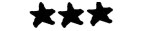
three star

Online piracy is usually the scourge of the film industry, since many ticket & home video sales are lost to content that’s easily downloaded illegally. Occasionally, though, a small budget film will actually benefit from digital word of mouth & peer-to-peer sharing. The sci-fi fantasy epic Ink is a decent example of the way online piracy can boost a film’s notoriety. After a couple premieres at low-profile film festivals, Ink never scored a major theatrical or home distribution deal & initially suffered a limited, self-distributed DVD release with little to no fanfare. It wasn’t until the film saw major traffic on peer-to-peer torrenting sites that it earned any significant attention & it eventually scored VOD distribution that landed it on major streaming services like Hulu & Amazon Prime. Ink might be one of the few concrete examples of a film being saved instead of savaged by online piracy.

It’s not at all difficult to see how a film like Ink could attract a loyal cult fanbase. The specificity & intricately detailed structure of its dreamworld full of “pathfinders”, “storytellers”, “codes”, “access to the Assembly”, and magical bongos that open interdimensional doorways is perfect for fantasy nerds who eat up that kind of immersive worldbuilding. The film follows a group of mysterious dreamfolk who visit us while we sleep to protect our REM imagery from bad vibes. Aching to interrupt the fantasy are the nightmare assassins of bad vibes personified, a The Dark Side of dream warriors who range in style from plague doctors dressed in rags & chains to some kind of cyberpunk cross between Hellraiser‘s Pinhead & Bubbles from Trailer Park Boys. These fairy-like whimsies & cyberpunk nightmare baddies stage a literal battle between good & evil (complete with martial arts) while the “real” world tries to sleep through the night in peace. The fate of one little girl’s slumber & her workaholic father’s weakness for addiction give the story an in-the-moment sense of purpose & specificity, but for the most part the film is a work of fantasy genre worldbuilding more than it is a well-sketched out narrative.

The bummer about Ink is that it never feels like its means or its talent match the massive scale of its ambition. The film aims for the go-for-broke loopiness of a Terry Gilliam epic, but, unfortunately, also carries Gilliam’s languid sense of pacing without every nearing the same level of visual talent that the Monty Python vet commands with ease. At best the film feels like a lesser version of titles I hold in much higher regard. Its bedtime spookiness & made-for-TV visual cheese recall the sleep paralysis “documentary” The Nightmare. Its storybook push & pull between the dream world & waking life feels like a direct descendant of the far superior Dave McKean epic MirrorMask (right down to the annoying street performer/tour guide). Honestly, most of Ink feels inconsequential until a climactic narrative twist that lands with enough of a significant impact that you feel compelled to give the movie a second watch . . . or at least a hearty recommendation to a fantasy-minded friend (who’s already watched MirrorMask 1,000 too many times).

Still, I was ultimately surprised & charmed by what Ink delivered, if not only because of its limited budget visual cheapness & lack of a vocal fanbase. The film has an endearing pedigree as an underdog story of mishandled distribution & subsequent reappraisal. I found myself rooting for it to succeed & there was enough payoff in its last minute narrative twist & overall attention to worldbuilding that made the effort feel worthwhile.

-Brandon Ledet