My Week with Marlene

I know for a fact that there was a recent time when Marlene Dietrich’s numerous, star-making collaborations with director Josef von Sternberg were streaming on The Criterion Channel.  I know this because I happened to watch one of the lesser titles from that collection, The Devil is a Woman, during that window.  If I had known how difficult it would be to access the Dietrich/von Sternberg oeuvre just a few years later, I would’ve pushed myself to stream them all when I could, not just the one that jumped out at me because it had “Devil” in the title and was set during Carnival.  Currently, none of von Sternberg’s collaborations with his sexual-anarchist muse are streaming on any online platform (legally, at least), which means you’re either coughing up $100 for Criterion’s DVD box set (The Blu-Ray discs are currently out of print) or you’re waiting patiently for them to return to their streaming platform some distant, wistful year.  Well, I’ve unlocked a secret third option: buying used DVD copies of whatever Marlene Dietrich movies I happen to stumble across in thrift stores.  Sure, I’ve still never seen Morocco or The Blue Angel—two of her most beloved collaborations with von Sternberg—but I’ve managed to pick up a few of their shared titles in the meantime to help me get through this unexpected streaming drought.

1932’s Blonde Venus finds von Sternberg in awe of Dietrich’s charisma . . . and her stockinged gams.  She stars in this pre-Code adultery drama as a woman who is simply too fabulous to cut it as a housewife, too magnetic to not be onstage, so badass it’s criminal (in this case to her marriage’s peril).  As flattering as von Sternberg’s movie is to Dietrich’s plentiful charms, he still dramatically puts her through the ringer.  Blonde Venus opens with Dietrich and fellow, unnamed actresses skinny-dipping – their naked flesh just barely obscured by reflections on the surface of the water.  They’re naturally peeped on by group of horny fuckboys, one of whom is smooth enough to talk Dietrich into a date after her next performance.  Years later, she’s married to the galoot, raising their son, and worried that their family won’t be able to survive the financial burden of her sickly husband’s skyrocketing medical expenses.  Of course, this leads her to return to the stage to earn quick cash (in a time when “dancer” effectively translated to “prostitute”), where she quickly is led astray by a young, wealthy, hunky Cary Grant who throws her marriage into a death spiral.  Blonde Venus is extremely dated to 1930s sensibilities, by which I mean Dietrich’s stage numbers get real racist real quick, with her first performance featuring a gorilla suit and a bevy of buxom dancers in blackface.  It’s dated in all the right ways too, though, laying on so many double-entendre line readings and horned-up “come hither” glances that you’re tempted to say von Sternberg has “The Lubitsch Touch“.  Of course, he’s actually got his own touch, which mostly shows in the lighting’s gorgeous play with silhouettes & shadows and in the drama’s gloomy mood, which is something you won’t find in most of Lubitsch’s pre-Code sex comedies.

Shanghai Express, from the same year, doubles down on the gloomy drama, trapping Dietrich in a series of locked train cars where are no stages for the fräulein with the redrawn brow-lines to model sparkly outfits or sing cabaret.  Instead of locking horns with a fellow horned-up cabaret dancer named Taxi (whom she insults in Blonde Venus by asking “Do you charge for the first mile?” in perfect ice-queen bitchiness), Dietrich is instead paired with an equally gorgeous & charismatic actress who genuinely poses a threat.  Shanghai Express is a rolling cage match in which Dietrich & Anna May Wong are locked in tight quarters to compete for the title of most alluring femme fatale; I’m afraid Orientalism wins out in the end, but it’s still a beautiful fight.  Like in Blonde Venus, things get real racist real quick, with every character casually tossing around the word “chinaman” and musing about the moral corruption of The East in practically every scene of dialogue (and with the villain appearing in yellowface to seal the deal).  I very much understand the movie’s appeal to those who rank it highly in the Dietrich von Sternberg catalog, especially as a political thriller in which a train of innocent passengers are held hostage & tormented by corrupt Chinese officials in an increasingly tense stalling of their lives.  The government corruption, moralist Christian hypocrisy, and opium trade maneuvers that drive the plot are all intriguing enough in this Dietrich von Sternberg bottle episode, but I just couldn’t get past the Orientalist stink of the premise & setting.  As perfectly cast as she is, Anna May Wong is herself a victim of that racist streak, with her screentime greatly diminished in comparison to Dietrich, who stars as the infamous “coaster” (coastline sex worker) Shanghai Lily.  Dietrich lands some great zingers about how “respectable people” are “dull” and how she & God are “not on speaking terms”, but they’d all be better served in a film where she’s a bawdy cabaret performer instead of an expatriate political refugee.

1931’s Dishonored splits the difference between Blonde Venus and Shanghai Express, combining the best parts of both films to achieve the highest highs of this thrift-store-purchase trio, despite having the lowest name recognition.  Dietrich stars as a sex-worker musician and as a political agitator, using her alluring beauty & party-girl charms to infiltrate Russian forces as lady-spy X-27.  Dishonored is the most visually showy von Sternberg film I’ve seen so far, layering shadows, dissolves, and foreground props in what could’ve been a very straightforward wartime espionage drama otherwise.  It’s also got plenty of pre-Code shocks, most lovably in a rare Carnival sequence that credibly conveys the debauchery of the holiday (even more so than in The Devil is a Woman).  It’s ideal TCM broadcast fodder all around, with lines of dialogue like “I suppose I’m no good, that’s all,” and “The more you cheat and the more you lie, the more exciting you become” registering as all-timers that should be just as iconic as “Here’s looking at you, kid” and “Of all the gin joints in all the world, she walks into mine.”  It’s a bleak, bleak, bleak picture, even for its time – featuring two suicides in its opening half hour and concluding on an unflinchingly brutal execution.  At the same time, von Sternberg leaves plenty of room for ribald joviality, with Dietrich joking about the difference between “serving her country” as a spy vs “serving her countrymen” as a streetwalker.  Like in Shanghai Express, she doesn’t sing any cabaret numbers, but she does play plenty of piano, and her director is going so buck wild with his lingering dissolves and long-distance push-ins that you hardly have time to notice she’s not performing on a stage.

I cannot claim that Dishonored is the best of Marlene Dietrich’s collaborations with Josef von Sternberg, because I am working with an incomplete data set.  I can only report that it’s the best of their collaborations that I currently have access to.  It seems almost criminal that any of the seven films they made together wouldn’t be currently available to the public on a streaming service, but scarcity of access is a constant in any cinephile’s life.  Unless you’re lucky enough to have the made-up, mythological resource of “disposable income”, it’s likely you’re used to having your film selections dictated by access points like library cards, video store rentals, thrift store purchases, and shared streaming-service passwords; I know they’re what drive the programming on this humble film blog, anyway.  I’m committed to catching up with Morocco, The Blue Angel, and The Scarlet Empress the next time they’re conveniently available to me, but I will admit there was an unbeatable thrill to finding used copies of a few other blind spot titles in the Dietrich von Sternberg catalog to hold me over until then – especially since Dishonored & Blonde Venus ended up being such rewarding pre-Code dramas that might’ve felt more anonymous if I watched all seven movies at once.

-Brandon Ledet
42nd Street (1933)

Thanks to The Prytania’s Classic Movies series that we regularly attend on Sunday mornings, I recently got to see my very first Busby Berkeley musical . . . on the big screen! Berkeley’s elaborate, geometrically patterned choreography style is something I’ve known about since I was a child, as it’s often featured in highlight reels as the typifying example of Old Hollywood extravagance. The choreographer’s style involved onscreen audiences watching a stage play where a Rockettes-type chorus line kicks & twists rhythmically in an increasingly elaborate pattern that would be impossible to stage outside the dreamlike ream of cinema, only for the audience to applaud at the end as if they had collectively hallucinated the act. The common interpretation of this choreography’s popularity is that it offered a fantastic escape for real-life audiences during the lean times of The Great Depression. The geometric patterns of torsos & limbs twisting in unison like an organic kaleidoscope would be beautiful in any context, but its extravagance is said to have been especially alluring for Depression Era audiences who would have been forcibly acclimated to finding only minor, stripped-down joys outside the cinema. What I didn’t know until I saw one of these spectacles for myself is that Berkeley & his major studio collaborators were likely popular for an entirely different reason than their era’s dire economic circumstances; they, along with their audience, were horny as fuck.

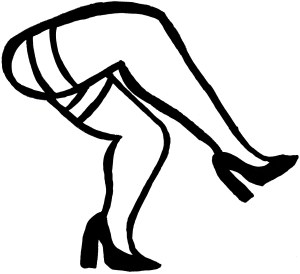
Busby Berkeley is a fetishist and his obsession is stockinged gams. It’s a sexual fixation apparently shared by the director & studio heads that helped bring the first of Berkeley’s classic musicals to the screen, but the wag of their own tongues does little to match the way lady’s legs are lustfully presented in Berkeley’s choreography. There isn’t much to 42nd Street plot-wise that you wouldn’t see in any other backstage musical. This is the story of an emotionally and professionally exhausted Broadway producer who wants to put on One Last Show to secure his legacy as an entertainer. We watch as the mad perfectionist pushes his theatre company to the brink of physical & emotional destruction as the opening night of the show nears. Then, at the last minute, his star is injured and must be replaced by a naïve chorus girl who’s just getting started in the biz. The show (or at least the Berkeley-choregraphed hallucination) goes great and the new star is a hit, but the producer is still bummed & unfulfilled. None of this really matters, of course, at least not nearly as much as the film’s true obsession: Dem Gams. Casting directors command young actors to lift their dresses so they can get a better peak at the walking sticks beneath. Conversations are frequently staged under staircases so the audience can watch gams climb their way upscreen instead of focusing on dialogue. Berkeley’s big musical-number climax is a twisty, kaleidoscopic orgy of gams! gams! gams!, all wrapped in sheer dancers’ stockings. The film is shamelessly fetishistic, as is all the greatest art.

This overt, shameless horniness for women’s barely covered legs was no subconscious mistake, either. 42nd Street arrived in a pre-Code era when shameless tongue-wagging was a Hollywood norm. Sexuality is an explicit, purposeful presence in nearly all the film’s dialogue. Women boast names like Anytime Annie, openly discuss landing Broadway jobs through casting-couch politics, encourage total-pervert producers to invest in their art, and sport the same Power-Top tuxes that Blake Lively wore in A Simple Favor. The film is a little coy in directly depicting onscreen sexual contact (and in explicitly acknowledging the homosexual desire that’s barely concealed by its heteronormative surface), but for the most part it proudly wears its horniness on its sleeve as a badge of Dishonor. As a lifelong lover of Pretentious Smut, I found all this fetishistic fervor to be a most pleasant surprise. I entered 42nd Street expecting a respectable, traditional backstage musical with some early glimpses at the extravagant choreography that made Busby Berkeley a legend. What I found was a technically gorgeous porno about women’s stockinged legs, a film that was much more interested in the infinite potential ways those body parts could be displayed & arranged than it was in the inner lives of the women attached to them. It’s shameless smut hiding behind an artistic pretense and has been historically lauded due to its Depression Era context; in other words, it’s a gem.

-Brandon Ledet

Waterloo Bridge (1931)

Old Hollywood legend James Whale is most famous for directing the first two Frankenstein films, both of which are highly ranked among Universal’s classic Famous Monsters relics. The project that landed him that job was far outside the confines of the horror genre, though: a wartime drama titled Waterloo Bridge. Bringing in the production of Waterloo Bridge on-time & under-budget for Warner Brothers, Whale earned the respect & attention of Universal executives, who then gave him free reign to helm any property owned by the studio, of which he chose Frankenstein. That follow-up has obviously outshone his work on Waterloo Bridge in terms of defining his legacy as an auteur, but Waterloo Bridge was a resounding success with a long-lasting legacy of its own. A pre-Code drama about a sex worker making do & unexpectedly finding love in wartime, Waterloo Bridge is a controversial work that, although subjected to censorship & patchy distribution as the moral landscape of Hollywood changed after its release, was popular enough to inspire two (toned down) remakes in the following decades. It’s an impressively bleak work of Old Hollywood filmmaking that, while drastically different from the Frankenstein series in terms of genre, telegraphed much of the grim atmosphere & well-budgeted spectacle that would soon define Whale’s career.

Mae Clarke (of Frankenstein fame, naturally) stars as an American prostitute struggling to make ends meet in a nondescript English slum. Introduced as just one chorus girl among many in a lavish stage musical before casually soliciting men & avoiding cops at her real job walking the streets, our financially & emotionally broken protagonist is a microcosm of the young people who’re made into living ghosts by the Great War. She takes no pleasure in sex work, which is mostly a desperate necessity to (barely) cover her rent. The dread of a life that can’t be sustained forever is made even more unbearable by the constant air raids that terrorize London, sending its worse-for-the-wear citizens seeking shelter at a moment’s notice. In one of these air raid crises, Clarke’s fragile antiheroine meets a wealthy, naïve American solider (Douglass Montgomery) who instantly falls in love with her. She bats away his sweet offerings of rent money, pretty dresses, and marriage purely out of self-loathing, believing that her sordid lifestyle & family history means she doesn’t deserve happiness with such a well-to-do sweetheart. Indeed, his heart visibly breaks in half when he first discovers her profession, but his offer of marriage & lifelong happiness stands anyway. The conflict of Waterloo Bridge is tragic, but largely internal; it depends entirely on if a young woman can forgive herself for the “immoral” things she had to do to survive. It doesn’t end well.

The painfully earnest performances from Clarke & Montgomery drive much of Waterloo Bridge, which often shows its origins as a stage play in long, uninterrupted conversations during air raids & romantic getaways. Whale strategically chooses moments to splurge on spectacle, funneling most of his budget into a few isolated effects shots that almost trick you into thinking you’re watching a war epic instead of a parlor drama. Huge crowds of extras & bomb-dropping model airplanes bookend enough of the single-apartment dialogue-dumps that the whole thing feels way more extravagantly expansive that it truly is at its core. You can easily tell what Universal execs saw in Whale’s financial resourcefulness & why they had the faith in him that led to Frankenstein. A few choices, like the soldier’s off-putting sense of entitlement or his practically deaf father’s one-note version of comic relief, prevent the film from being an all-time classic, but they feel tied to the writing & the source material more than anything Whale had influenced. His mark on the film is delivering a powerfully grim punch to the gut on a bare bones budget, something that helped launch his career & establish his reputation as an Old Hollywood legend.

Presuming most modern audiences aren’t 1930s producers looking to fund the long-dead James Whale’s next project, Waterloo Bridge mostly offers 2010s film nerds one of those glimpses of grimy pre-Code Hollywood sex & violence that feel so out of place in ancient black & white studio pictures (thanks to the moralistic bullies who censored them into oblivion). Besides not shying away from the source material’s matter-of-fact discussion of the practicality of sex work, Whale also searches for sexual tension in the details of dialogue & body language. Chorus girls are filmed in their dressing rooms, lounging in see-through underwear. When one prostitute complains to a friend that the men conducting air raids give her “the willies,” she glibly responds, “Well, they are men, aren’t they?” As Montgomery’s worked-up soldier gets hot & bothered in Clarke’s presence, he strokes the blatantly phallic corner post of her bed, leering. Waterloo Bridge is not a sexy movie. It’s too relentlessly grim & ultimately tragic to earn that descriptor. Its frank discussions of sex & sex work make for a striking Old Hollywood wartime drama, though, something I imagine was lost in its two Hays Code-era remakes. I can’t say it’s my favorite work I’ve ever seen form James Whale or even the most shockingly sex-comfortable pre-Code film I’ve encountered (Baby Face is tough competition for that distinction), but it is an impressive small-scale work for something that’s essentially a grimy stage play with occasional war epic aspirations.

-Brandon Ledet

Baby Face (1933)

I’ve been casually flipping through & taking notes on Kenneth Anger’s Hollywood Babylon for a few months now (even though it’s essentially a lengthy gossip rag & could easily be read in an afternoon), which really is one of the better trashy reads on cinema history out there. If even a tenth of Anger’s ancient gossip is to be believed, the early days of Hollywoodland were a reckless, anything-goes bacchanal of drugs, sex, murder, and glamor, a just-born industry living out its youthful transgressions with unfathomable lust & fervor. There’s an obvious allure to these tawdry movie industry legends that just about anyone should be able to latch onto, but for film nerds early Hollywood gossip & myths are especially intoxicating. Among its more prurient interests, Anger’s book offers a glimpse of American cinema before it was defanged by the browbeating morality of the Hays Code, a time when Major Studio filmmaking was just as wild & transgressive as any art in production. I could have easily devoured Hollywood Babylon in a single sitting, but I find myself slowing way down to take notes on as may films Anger mentions as possible, hoping to find a movie-shaped doorway into the freewheeling times when the Studio System’s tawdriest works were being produced. That’s why it was beautifully serendipitous to recently find a used copy of a Warner Archives release titled Forbidden Hollywood at a second-hand media store. Featuring pre-Code pictures from Old Hollywood’s wildest era, the modest collection found its way into my personal stash at the exact right moment of my life, not only because of the surprising modern relevance of its crown jewel: 1933’s Baby Face.

A Barbara Stanwyck vehicle released just one year before the Hays Code was first strictly enforced, Baby Face is one of the most notorious examples of pre-Code Hollywood boundary-testing. It’s a grimy, cynical work about weaponized female sexuality and corporate culture exploitation, a true wonder as a Studio System relic. What’s most incredible, though, is the way its basic premise of lifelong sexual harassment corrupting & limiting women’s professional opportunities as autonomous adults continues to be vividly relevant to the current Cultural Discourse. The solution for combating that patriarchal oppression (essentially a Fuck Your Way to the Top ethos) has drastically changed, but the circumstances have not. The Forbidden Hollywood DVD features a recently discovered “pre-release” cut of Baby Face that includes extended sequences & alternate takes that are even racier than the version of the film that ruffled feathers in 1930s theaters. The official theatrical cut is plenty shocking for its time as is, though, not only in its casual approach to aggressive female sexuality, but also in its strides towards equality for onscreen black representation. The film is by no means a prophetic reflection of 2010s political ideology, but it is an incredibly honest screed about social & institutional oppression of women in the 1930s. It’s a kind of honesty we’re not used to associating with Old Hollywood pictures, thanks to the blanket moralizing of the Hays Code that would soon neuter American Cinema until the New Hollywood movement took over decades later. Its world of casual sex, suicide, interracial friendship, untold hundreds of cigarettes, and swanky Dixieland jazz paints a picture of what Old Hollywood could’ve been, if it were only allowed to fully blossom into its flagrantly amoral ideal.

Barbara Stanwyck stars as a put-upon barmaid who’s been harassed, cat-called, and groped every day of her life since she was a teen. Her father is her employer and, without consent, her pimp, charging men by the hour to be alone in the bar with her. A grim factory smoke tableau fills the window to the world outside their lowly speakeasy. A tragic accident suddenly frees her from this imprisonment and she flees to the city with her best friend (a black servant played by Theresa Harris) to establish her own place in the world. Resourceless and encouraged by the only speakeasy customer who’s ever been nice to her to stop being a pushover for horny men’s whims, she consciously decides to use her sexuality to earn money & status. Early in the film, Stanwyck’s antihero walks up to an impossibly tall skyscraper bank with no contacts or experience necessary for employment. To put it crassly, she systematically fucks her way to the top floor over the course of the movie, leaving behind a trail of heartbroken men in her path to financial success. Stanwyck is incredible in the role, confidently delivering lines like, “I don’t owe you a thing. Whatever I do is my business,” with a nonchalance that borders on viciousness, but never enough to turn the audience against her. The tragedy of the film is not the bosses, managers, and banking associates she seduces & leaves ruined, but in a climactic decision that jeopardizes the money she’s earned though the transgression. Using her intimacy as leverage and often waiting a beat to decide how to act before claiming another “victim” (would-be-harasser), she flips the power dynamic of a corporate world stacked against women by weaponizing the one asset that’s been afforded her: sex appeal. By the time she’s holding a major bank’s entire board of directors hostage with that one minor resource, Baby Face becomes a perverted David vs Goliath story and the movie is clearly rooting for her succeed by any means necessary.

Obviously, the theatrical edits made to soften Baby Face’s sexual transgressions also weaken its modern appeal. A moralistic coda about changing her casual sexin’ ways is tacked onto the story and stands out as just as much of a sore thumb as the similar false ending to The Bad Seed. Her amoral life coach is more of a Christian finger-wagger in the theatrical cut, scolding her for doing what he encourages her to do in the original, unreleased version of the story: fucking for power. Small moments of sex & violence are more explicitly depicted in the “pre-release” cut, hammering home what’s only implied in the version that’s been publicly available for decades. No matter which cut of Baby Face you’re privileged to see, however, the movie still shines as a grimy, transgressive wonder of Old School Hollywood boundary-pushing. Pre-Code Hollywood really was an amoral Babylon of hedonistic indulgences in sex & violence, as evidenced by the fact that even Baby Face’s censored, theatrical cut is more thematically & morally risky than most modern Major Studio releases dare to be. The fact that it accomplishes this while tackling an issue that’s currently commanding our cultural zeitgeist (the exploitation & sexual degradation of women in a male-dominated workplaces) only makes it all the more astounding.

-Brandon Ledet

The Horrors of Self-Contradiction in Tod Browning’s Freaks (1932)

The 1932 exploitation horror Freaks has always had a reputation for controversy, even losing a third of its original runtime to drastic edits meant to soften its abrasive effect. After the wild success of the Bela Lugosi-starring Dracula for Universal, director Tod Browning was given total freedom to jumpstart MGM’s own horror brand in a project of his choice. Urged by little person performer (and future member of The Lollipop Guild) Harry Earles to adapt the Tod Robbins short story “Spurs” for the screen, Browning chose to draw on his own past as a circus performer for a film that ultimately ruined his career. As a historic, pre-Code horror relic, Freaks has a fascinating cultural cache that only improves every passing year. It’s a film that’s just divisive now as it was over eight decades ago, however, largely because it’s divided in its own dual nature. Freaks is both a deeply empathetic call to arms against the social stigmas that surround its disabled “circus freak” performers and a horrifically exploitative “Get a load of these monsters!” sideshow that defeats its own point. Which side of these warring, self-contradicting intents ultimately overpowers the other is a question largely of genre, for which horror might not have been Browning’s wisest option.

As David Lynch later proved with The Elephant Man, it’s entirely possible to tell a heartfelt, empathetic story about real life sideshow performers through a Universal Monsters aesthetic. In the younger, less nimble days of horror cinema, Browning was a lot less confident about the technique. The majority of Freaks is not a horror film at all, but rather a comedic melodrama that happens to be set in the insular community of a traveling circus. With the campy, braying line deliveries of a John Waters production, the little people, conjoined twins, amputees, and microcephalics of Browning’s cast pal around in what’s essentially a hangout comedy. In a typical joke, two men remark on the intersex performer Josephine Joseph, “Don’t get her sore or he’ll punch you in the face,” and then maniacally laugh as if it’s the funniest thing that’s ever been said. An opening scroll & a carnival barker preface this comedy with a plea for the audience to empathize with its “ABNORMAL” & “UNWANTED” societal castoffs, stressing that they are only human beings whose “lot is truly a heartbreaking one.” As we watch the titular “freaks” live, laugh, and love in the film’s first act, the only detectable trace of horror is in the way they’re treated by able-bodied outsiders. Harry Earles falls for an erotic dancer who plans to marry & poison him in a plot to rob him of his inheritance. She & her strongman secret lover are grotesquely cruel to their “circus freak” co-workers, whom they openly mock for their disabilities. The comedic melodrama of the film’s opening concludes with the two wicked souls making out in front of Earles & laughing in his face on their wedding night. When hiws fello circus performers famously chant, “One of us! One of us! We accept her!” to welcome the new bride into the fold, she shrieks “Freaks!” in their faces and violently rejects the offer, campily revealing who the True Monsters are.

The self-contradiction at the core of Freaks kicks in immediately after that wedding celebration. The film shifts focus from the horrors of social cruelty to the supposed horrors of its disabled cast as they exact revenge on the erotic dancer who is gradually poisoning their “circus freak” brethren. Although Browning’s script makes a point to stress the humanity of his characters in the film’s opening half, he leans in heavily on the exploitation of their physical appearances as “living monstrosities” in the film’s final act. What was once an unconventional hangout comedy with a tragic mean streak reverts to the Universal Monsters model of Browning’s roots, reducing the “freaks” to silent, wordless monsters who stalk their erotic dancer prey from the shadows until it’s time to maim. In a mood-setting rainstorm, the circus performers crawl towards her with knives wedged in their teeth, all of their pre-established humanity now replaced with the supposedly grotesque image they strike as onscreen monsters. It’s arguable that without this conclusion Freaks would not technically qualify as a horror film, but by backsliding into the exploitative nature of horror as a genre, the movie effectively undoes a lot of its argument for empathy. Essentially, if the story Browning truly wanted to tell was that the performers were ordinary people who happened to have abnormal bodies, he should not have told that story through a genre that requires them to be visually shocking monsters.

As a visual achievement, a cultural time capsule, and a one of a kind novelty, Freaks has more than earned its place in the Important Cinema canon, if not only for inspiring the masterful The Elephant Man to accentuate its virtues & undo its faults. As a horror genre entertainment, however, it’s too self-defeating to qualify as a creative success. Browning asks his audience to think twice about treating his disabled circus performers like inhuman monstrosities and then marches them through genre conventions that require them to be exactly that. You could generously argue that societal cruelty & bigotry is what leads the film’s disabled characters to inhuman violence at the climax, but the film concluding on that violence for exploitative effect is too much of a self-contradiction to brush off entirely. Freaks‘s most effective mode of horror is in presenting a moral discomfort in the disconnect between its words & its actions, especially as its story gradually shifts genres while it reaches for an inevitably tragic conclusion.

-Brandon Ledet