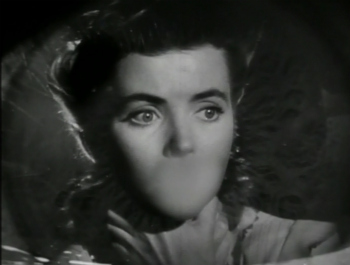
Smile 2 (2024)

I wanted to see a new-release horror on the big screen in the lead-up to Halloween, and the offerings are desperately thin.  There are no original horror films in wide release this week (give or take the last few remaining screenings of The Substance, which premiered over a month ago).  Everything on offer is reboots & sequels, continuing this summer’s trend of name-brand horror properties filling in the gaps left by the usual action/superhero fare that’s nowhere to be seen this year.  Among the few horror franchise extenders that did make it to theaters in time for Halloween, it was difficult to find one worth leaving the house to see. Besides being a novelty-Christmas slasher, Terrifier 3 simply looks too mean.  By contrast, Beetlejuice 2 & Venom 3 both look too goofy, to the point where they barely converge with horror at all.  Smile 2 was the obvious choice, then, since it falls somewhere between those tonal extremes.  I remember the first Smile movie being cruel in its messaging that the suicidally depressed should self-isolate to avoid scarring or infecting loved ones with their mental illness, but at least it wasn’t as violently, grotesquely misogynistic as the first Terrifier film.  I also remember Smile being silly in concept, never overcoming the initial cheese of building its horror around an evil Snapchat filter, but at least its sequel isn’t going to indulge in the self-aware schtick of a Beetlejuice or Venom sequel: echoes of you-had-to-be-there comedic properties that would’ve been better off abandoned as one-off novelties.  So, Smile 2 reigns supreme this Halloween, entirely by default.

I suppose Smile 2 is also superior to the first Smile film entirely by default, given that it finally comes up with a reason for The Smile gimmick besides it looking off-putting.  In the first film, the titular Smile is a body-hopping demonic curse that possesses the minds of the mentally unwell, driving them to suicide within a week, then transferring to a new host through the miracle of Trauma. It’s represented onscreen as the hallucinated smiling face of everyone the possessed victim meets, creeping the doomed soul out with a harsh face-altering digital filter that exaggerates their features (a gimmick borrowed from Blumhouse’s Truth or Dare, from which Smile 2 also borrows its ending).  You could meet Smile halfway by mentally reaching for some thematic connection in how it’s isolating to suffer a mental episode while everyone around you is seemingly, sinisterly cheery, but there really isn’t much to it beyond it looking creepy.  However, Smile 2 does justify The Smile visual gimmick in its narrative, this time following demonically possessed popstar Skye Riley (Naomi Scott) as she prepares for a career-comeback tour after rock-bottoming as a drug addict.  Skye is outfitted to look like Lady Gaga in her onstage costuming, but her offstage struggle to please fans, staff, press, record label execs, and her micro-momager while maintaining a cutesy smile read as Chappell Roan.  Being grinned at by strangers & sycophants all day really does seem like a tough part of the popstar gig.  Usually, the millions of dollars in monetary compensation help make that discomfort worthwhile, but I can see how being stalked by a suicide-encouraging demon might tip that scale in the wrong direction.

Not that it’s easy to know exactly what poor Skye Riley is going through.  The demon’s main method of attack is to cause its hosts to hallucinate, confirming their fears that nobody cares about them, and they deserve to die alone (soon!).  As a result, roughly 90% of Skye’s onscreen journey happens entirely in her head, and the movie constantly pulls the rug from under her to reveal that she’s imagining things, often while humiliating herself in public.  It’s the kind of social cringe that makes you cover your eyes in embarrassment while watching a hack sitcom more often that it is the kind of unnerving horror that makes you cover your eyes in dread.  There are plenty of genuine scares, though.  This being a mainstream studio horror means that things get real quiet every time Skye is alone, only for a loud soundtrack stinger to startle the audience with an out-of-nowhere jump scare (punctuated by a creepy smile, of course).  Her luxury apartment is also invaded by a hallucination of her backup dancers doing a body contortionist routine straight out of Climax, revealing anxieties around how she’s passed around like a doll during her stage act.  Thankfully, no one stops the plot dead to recite search engine results for the word “trauma” like in the first Smile film, but there’s still plenty of brooding over topics like addiction, survivor’s guilt, and suicidal ideation, establishing a visual device where Skye chugs bottled water every time she’s triggered.  Just when you think all of this could be solved by the popstar-in-crisis admitting herself to a “health clinic” for “exhaustion,” though, the film reminds the audience that, yes, there is an actual, physical demon at work here – not just a metaphorical one.

In popstar-crisis terms, Smile 2 is about on par with Trap but oceans behind Vox Lux.  It makes good use of the inherently exaggerated music-video aesthetics of its setting but just as often strays from that world to dwell in the same drab, grey spaces most mainstream horrors occupy.  It’s clear that writer-director Parker Finn was funded for more creative freedom to play around as a visual stylist here than in the first film, and he uses the opportunity to make a name for himself as a formidable auteur before tackling his next ill-advised project: a modern remake of Żuławski’s Possession.  The results are mixed.  The high-gloss pop music aesthetic and sprawling 127min runtime suggest an ambitious filmmaker who’s eager to leave his mark on the modern-horror landscape, but by the third or fifth time he frames that landscape through an upside-down drone shot you have to wonder if he has enough original ideas in his playbook to pull off a name-brand career.  I’m not yet fully invested in Parker Finn as an artist, but I am grateful that he delivered a moderately stylish mainstream horror with a few effective jump scares during such an otherwise abysmal Halloween Season drought.  Smile 2 might not have meant much to me as cinema, but as a commercial product it supplied exactly what I demanded.

-Brandon Ledet

Rumours (2024)

Before things go to hell for the characters of director Guy Maddin’s Rumours, one of them suggests that they get down to the business at hand, citing that the G7 Summit “isn’t a summer camp.” You wouldn’t know that from the way that the so-called leaders of the so-called free world behave. For the most part, they behave like a group of high schoolers assigned to work together on a project and treat the summit with exactly as much gravitas as—or perhaps even less than—an after-school club. These two hooked up last year and one of them wants to get to work on their group statement while the other is still unrequited; one guy is content to sit back and let others put in all the work; another person thinks that they’re doing inspired, powerful work when in fact his contributions are meaningless flim-flam; and there’s the one little weirdo who wants everyone to like him and has cured meats in his pocket. You had one of those at your high school, too, right? 

This year, Germany is hosting the conference, under the leadership of Chancellor Hilda Ortmann (Cate Blanchett). After a few photo ops, the seven adjourn to a gazebo to work on their joint statement about the never-expounded-upon “current crisis,” but not before they stop off to take a look at—and get a photo with—an archaeological discovery on the grounds of the castle at which the conference is taking place. It’s a “bog body,” mummified remains over two thousand years old. Owing to the unique composition of the soil, the flesh remains intact while the body’s bones have completely liquefied. It’s noted that the corpse has had its genitalia chopped off and hung around its neck, and this is specifically mentioned to be a punishment that ancient peoples of the area practiced in rebellion against weak, inept, or otherwise failed leaders. We learn that U.K. P.M. Cardosa Dewindt (Nikki Amuka-Bird) slept with the supposedly charismatic Prime Minister of Canada Maxime LaPlace (Roy Dupuis) at a previous summit, although this time around, she simply wants to focus on the “work,” such as it is. Representing the U.S. is President Edison Wolcott (Charles Dance), a doddering, elderly man whose sleepiness, apathy, and exhaustion are attributes clearly mocking current White House occupying chickenshit Joe Biden. French President Sylvain Broulez (Denis Ménochet) is a vain, self-important man whose greatest desire is to be appreciated as a deep thinker by the others, while Italy’s P.M. Antonio “Tony” Lamorte (Rolando Ravello), for whom this is the first summit, finds easy acceptance among the others through his genuineness, although he comes across as naive as a result. Japanese Prime Minister Tatsuro Iwasaki (Takhiro Hira) is … also there. 

Maxime has an emotional outburst just as the gazebo dinner is finished, and the rest of the group pair off to brainstorm ideas for their statement while he stalks about the woods nearby, calming himself. President Wolcott tells P.M. Lamorte that it’s not worth working on, that no one takes these statements very seriously and that it’s fine to slack off a little, leading him to regaling the newcomer with exactly the kind of “good ol’ days” talks that geriatric politicians love to spout. Broulez and Iwasaki passionately discuss a potentially powerful opening statement, but we later learn their collaboration produced nothing but meaningless buzzwords amid wishy-washy ideology. Ortmann and Dewindt likewise make little progress, as each time one of them makes a statement that expresses any strong ideas, the other cautions for the need to walk this back so as to appear nonpartisan. Things take a turn for the worse when the regrouped seven realize that they are completely alone, and that no staff has appeared for some time. The nearby catering set-up is long vacant and the castle in which all their aides and staff should be is empty, quiet, and locked. From here, things get surreal and bizarre, as the seven try to find out what is happening and make their way back to so-called civilization despite their isolation. More bog bodies start popping up, potential pagan rites are performed and witnessed, there’s a giant brain in the woods, and an A.I. chatbot designed to entrap potential child predators may have gained sentience and decided to destroy mankind. 

If Rumours is only two things, it’s both funny … and toothless. One Gets The Point very early on, and that drum is beaten over and over again. Perhaps this obviousness is the point. After things have gotten very strange and dangerous, one of the characters comments on the potential of viewing each of the world leaders in attendance as a microcosm of their represented nation and that the events playing out before him is an allegory. Of course, this comes at a time when France is being hauled around in the woods in a wheelbarrow, revealing that the film’s Canadian director may have little respect for the boot-shaped nation. That observation doesn’t hold up, however, and this might have been a stronger film if it had gone fully allegorical and used the summit as an opportunity to play out personified international relations, but that’s not what Maddin is aiming to do. What was advertised as a satire is more of a farce. It’s funny that, upon viewing a photo of the hatchback sized brain that Maxime discovered in the woods, three of the male delegates comment that it must be a woman’s giant brain because “it’s smaller than a man’s giant brain would be,” despite this being a completely novel event. We’re meant to laugh at the inherent sexism of the patriarchy, and we do, but it has no bite to it. Characters behave like they’ve reunited for, as noted above, a summer camp getaway, with special attention being paid to everyone being sad that this is likely Maxime’s last summer at camp with them; he’s facing legal trouble for an utterly (and realistically) banal monetary scandal. Tonally, it’s like he’s being punished by his parents and not being allowed to come back next year, and the rest of the leaders treat his serious legal trouble (which is legitimately unethical) with the frivolous dismissal of the kind of low-level mischief that might cause a kid to be grounded from going to camp. 

The comedy works, but ironically, its aim is as broad and meaningless as we are meant to find the film’s characters’ lukewarm politics to be. Again, that may be the point, but that justification doesn’t move the barometer for how much I like the piece in a positive direction. When the humor works best is when it plays a little dirtier. Maxime gets a text message, supposedly from a girl named Victoria, and Dewindt tells him that he may be chatting with an A.I. chatbot that was created in order to ensnare pedophiles by messaging potential sex criminals, citing that people in their positions of power are statistically more likely to be sex pests. Hilda suggests that they play into the scenario, as if they “trip the alarm,” so to speak, the authorities will trace the phone, and they can use this to be rescued. However, on the off chance that they may be speaking with a real child in need of help, they must also play down the creep factor to avoid psychologically harming Victoria. This observation about the frequency with which power overlaps with sexual abuse is one of the only times that the film is really cutting, taking aim not just at the facile nature of empire and its pageantry but at the seductive and corrupting nature of invisibility and immunity. That this leads into a good running gag in which the group must brainstorm messages that are creepy and gross (but not too creepy and gross) seems almost indicative of the fact that if the film leaned harder into the satire and less into the farce, the jokes would land with more punch. 

This isn’t really the kind of film that you can spoil, but this film does end in an apocalypse. There’s a big stew of what might be happening: the bog bodies rise from the earth as (compulsively masturbating) reanimated undead, with the implication that there might be something primal and supernatural at work; “Victoria” may have gained sentience and masterminded a cleansing of the earth in order to start anew; the big brain in the woods and its psychic effect on those around it may be related to the latter or could be another concurrent apocalyptic scenario. It doesn’t really matter if these are connected or not, as the group makes its way back to the castle and, covering themselves in the reflective silver emergency blankets that they find in their G7 gift bags, prepare to give their joint statement. Maxime, using scissors and tape, rejects a statement that “Victoria” has created and covers it with excerpts from the various things that different characters have managed to scribble down over the course of the movie. There’s Biden’s Wolcott’s sleep-talking nonsense about “need[ing] a slip to go to the sleep tank,” dutifully transcribed by Lamorte. There’s sections from another character’s ramblings that begin with a metaphor of marriage for international relations before devolving into a revealing glimpse at an attempt to negotiate for non-sexual physical intimacy with a disengaged partner. Throughout the film, characters express reverence for previous G7 Summits and the “powerful” declarations thereof, citing passages that are perhaps pleasing to the ear but ultimately hollow. As the film ends, they stand on a balcony to make their address to an empty lawn, their blankets reflect an orange sky and distant pillars of smoke, making the mirrored surface look more like translucent plastic that contains nothing of substance. The statement is delivered with gusto but signifies nothing, their drama observed only by the undead, one of whom seems to be mocking them by masturbating over their self-congratulatory nonsense. 

The film is a decent success as a comedy, although it lacks the unusually-expressed but nonetheless palpable sentiment that makes something like My Winnipeg work. I’d call it a cynical meanness, but it’s not nearly cynical or mean enough. As a result, it’s not a success as a satire. You’ll laugh, but it’s unlikely to stick with you. 

-Mark “Boomer” Redmond

Memoir of a Snail (2024)

Memoir of a Snail is a new stop-motion animated dramedy about cruelty, loneliness, and mental illness from the director of 2009’s Mary & Max: a stop-motion dramedy about cruelty, loneliness, and mental illness.  It’s also the best movie I saw at this year’s New Orleans Film Festival, where it was met with waves of warm laughter and audible wincing from a packed audience (whereas Mary & Max played to mostly empty theaters when it went into wide release 15 years ago).  I’m really into what Adam Elliot’s doing.  He’s got a tangible, darkly comic sense of despair to his work that’s matched only by fellow snail’s pace animator Don Hertzfeldt.  Thankfully, this time Elliot borrows a little Jean-Pierre Juenet whimsy to help cut the bitterness of that despair, but it’s not an entirely convincing affirmation about life’s silver linings. Even though he ends his morbid tale of lifelong sibling suffering on an unexpected happy note, he’s still the living personification of the “Do you think a depressed person make this?” gag from Parks & Rec.  Elliot makes sad little tableaus about lonely shut-ins for a sad little audience of lonely shut-ins . . . Then you see all the celebrity vocal performance credits in the concluding scroll (Sarah Snook, Kodi Smit-McPhee, Magda Szubanksi, Nick Cave, etc.) and assume he’s gotta be doing somewhat alright.

Memoir of a Snail is a story told to a snail by an adult woman dressed as a snail.  Continuing the epistolary format of Mary & Max, Grace Pudel (Snook) recounts her entire life’s journey to her favorite pet mollusk (Sylvia, after Sylvia Plath), occasionally pausing to recite letters written by loved ones – namely, her estranged brother Gilbert (Smit-McPhee) and her geriatric bestie Pinky (Jacki Weaver).  All three are lonely souls who’ve had a real tough time of it, having lived lives defined by tragic isolation from family, depressive bouts of self-hatred, and cruel bullying from small-minded townies.  Grace has found joy only in those two remaining members of her family, and most of her life since being orphaned as a child has been a struggle to restore that family unit in a single location.  The struggle is mostly inward, but it’s externally marked by Grace’s obsessive collection of snail-themed clutter.  She lives alone and gradually turns her small-town home into a shrine to all things snails, carpeting the floors, walls, and shelves with snails & snaily tchotchkes, burying herself under the weight of a singular personal obsession instead of reaching out for genuine human contact.  She even costumes herself as a snail in her everyday dress, signaling to the world that she’d rather find safety in her own shell than be vulnerable to the worst of humanity.

Adam Elliot admits to the audience that he sees a part of himself in Grace Pudel by making her great ambition in life to become a stop-motion animator.  The gamble there is hoping the audience will see ourselves in Grace Pudel too, which is a pretty solid bet if you’re sitting inside watching stop-motion cartoons about loneliness at a film festival instead of enjoying the crisp Fall weather outside.  Elliot throws a lot of cruelty at us, including especially vicious sequences involving gay bashing and nonconsensual force-feeding fetishism.  If you’re the kind of shut-in sad sack who occasionally grumbles “Goddamn life!” to yourself at your lowest moments, though, there’s plenty humor to be found in Grace’s never-ending misfortunes, like when her adoptive parents find more joy in swinger culture than being around her or when her brothers’ adoptive religious-nut parents speak in tongues like cattle auctioneers during prayer.  There’s a kind of classic Tim Burton sentimentality to Memoir of a Snail that acknowledges how miserable life can be for social outsiders while celebrating those outsiders for their eccentricities.  Elliot is eager to illustrate monstrous, unforgivable human behavior at every turn, but he just as often underlines the survival need for human touch & companionship.  While Grace’s constant search for silver linings might read as sad & desperate, she does always find them.

-Brandon Ledet

On Becoming a Guinea Fowl (2024)

In the opening scene of Rungano Nyoni’s On Becoming a Guinea Fowl, a young woman dressed as Missy “Supa Dupa Fly” Elliott drives alone on an unlit Zambian highway, abruptly pausing to inspect a dead body in the road.  Remaining in costume, she makes several nonchalant phone calls to family, notifying them that she has discovered the corpse of her Uncle Fred.  No one seems to be in a particular rush to help, and she’s reluctantly roped into the petty concerns of her party-drunk father, her more belligerently drunk cousin, her absent mother, and a police force that can’t arrive until morning because their one vehicle is already in use.  It’s only after Uncle Fred is scooped off the road in the morning hours that she can finally take off her comically oversized Missy Elliott costume and return to her regular self as the prodigal urbanite daughter, Shula (Susan Chardy).  Uncle Fred is also stripped of his costume in those daylight hours, as the sins of his living days are revealed by stripping away the respectability afforded to all corpses at their own funeral.  We quickly understand why Shula met Uncle Fred’s death with such an icy, deadpan detachment, and by then the joke isn’t funny anymore.

On Becoming a Guinea Fowl starts on a sharp streak of morbid humor, then gets increasingly nauseating the deeper it digs into the Patriarchal sins it unearths, which is also how I remember Nyoni’s debut, I Am Not a Witch.  It’s a film about the value of a whisper network, likening its titular bird’s usefulness on African savannahs as a warning-signal for nearby animals that a predator is approaching to women who warn each other of a nearby sexual predator’s potential to harm.  The problem, of course, is that guinea fowl’s usefulness to other animals does little to save their own hides, as they presumably squawk their way into being eaten while everyone else scurries away.  We come to learn that Uncle Fred left many victims in his wake, notoriously preying on underage girls in his family & community with no consequences, since the advice his victims are given by their matron elders is “Don’t think about it, and don’t talk about it.”  There’s no real way to hold the now-dead man accountable, but Shula becomes increasingly uncomfortable with the idea that his crimes against his own people should go undiscussed, and she subtly, gradually takes on the behaviors of a guinea fowl the longer his sham of a funeral drags on.  Maybe she can be a useful warning to others about the dangers of men like Fred; or maybe her animal noises of protest will only separate her out as a target for more cruelty.

Besides the gender politics of Shula’s quiet resistance to her family’s loving memory of Uncle Fred, Guinea Fowl is most engaging as an alienating look at Zambian funeral rituals.  Every aspect of Uncle Fred’s days-long funeral is seemingly designed to trigger Shula: her required presence, the women’s critique of each other’s crying techniques, the men outside who drink beer in wait of the women in the home to feed them after they perform the labor of mourning, the world-class victim-blaming of Uncle Fred’s teenage widow for failing to keep him alive, etc.  Meanwhile, Shula’s relationship with reality unravels as she dissociates from the absurd celebration of such a wicked man.  Her dreams & memories become increasingly intrusive, interrupting the flow of the narrative with images of her younger self observing Uncle Fred’s body, images of that body resurrected and covered in maxi pads, and vintage 1990s broadcasts of children’s television shows detailing the natural behaviors of the guinea fowl.  Those intrusions call into question the real-world credibility of other details like the floodwater floors of a local university or the music-video pool party atmosphere of the local library.  The film never fully tips into the fantasy realm, though; it just precariously teeters on the edge between worlds as Shula calculates what to do with her voice as one of Uncle Fred’s surviving victims.

On Becoming a Guinea Fowl locally premiered at this year’s New Orleans Film Festival, where it was initially met with the soft laughter of recognition until the room went coldly silent the more we all realized what kind of story we were watching.  It’s an especially tough watch if you belong to a family that stubbornly ignores its worst members’ most heinous crimes for the sake of social politeness, which I assume accounts for just about everyone.  And if it doesn’t, please know that I am jealous. 

-Brandon Ledet

The Forbidden Photos of a Lady Above Suspicion (1970)

A couple Halloweens ago, I was costumed as a creepy teddy bear and dancing to loud electronic music over cocktails at R Bar.  Being a helpless cinema addict and not on the hunt for a Halloween hookup, I remember fixating on the muted, subtitled giallo that was screening on the walls of R Bar, fascinated.  My body may have been politely gyrating to the DJ’s set, but my mind was racing trying to figure out what gorgeous giallo oddity was providing the party’s background texture, since it was one that I had not yet seen.  Some light googling on All Saint’s Day led me to the typically poetic, overlong giallo title The Forbidden Photos of a Lady Above Suspicion, which soon enough mysteriously appeared on a used DVD at a local thrift store.  Is it the same copy they were spinning at R Bar?  Was I being stalked by a giallo?  What could this vintage Technicolor erotic thriller possibly want from me?  The answer, of course, was nude photographs.

In retrospect, it’s funny that of all the gialli in the world, the above-the-bar selection that Halloween night was Forbidden Photos, since it’s not nearly as pronounced of a Horror Film as some of the more obvious titles from a Bava, or a Fulci, or an Argento.  Director Luciano Ercoli is less of a household name because of that lack of horror fandom support, since this falls closer to the proto-erotic thriller end of the giallo spectrum than the proto-slasher end.  With an atypically focused script from Ernesto Gastaldi and a softly melodramatic score from Ennio Morricone, Forbidden Photos is relatively straightforward and emotional for a giallo – trading in throat slashings from a leather-gloved killer for amateur porno shoots & sadomasochistic acts of blackmail.   It’s stylish, swanky, sadistic and, ultimately, sad, with internal-monologue narration that invests in its female victim’s inner life more than most examples of the genre.

Dagmar Lassander stars as the tormented Minou, played with the sad, glassy eyes and stiff, vaulted wigs of a Cole Escola character.  While her wealthy businessman husband is away on a work trip, she is physically assaulted by a mysterious brute who claims to have evidence that her spouse is a murderer (through the ludicrous method of artificially inducing The Bends in a business rival, then staging their death as a drowning).  Drawn into the stranger’s web, she involuntarily sleeps with him to receive (and destroy) evidence of the murder in trade, then briefly becomes his “sex slave” once he produces photographic evidence of their tryst (i.e., her rape) which he again leverages as blackmail.  Seedy pornography seems to be the criminal’s livelihood, as he appears as a performer himself in illicit photos owned by Minou’s hedonist bisexual friend Dominique (Susan Scott, who steals every scene she’s in).  Only, he may not exist outside of the pornography at all. Minou quickly spirals as the master-slave relationship escalates until her blackmailer suddenly vanishes; she’s then unsure whether she’s being gaslit or losing her grip on reality thanks to her favorite snack & drink combo of cocktails & tranquilizer pills.  That mental breakdown is when the film fully tips into supernatural horror territory, finally justifying its Halloween Night background programming.

In his interview on the 2006 Blue Underground disc I picked up, Gastaldi credits Forbidden Photos‘s unusual sense of clarity & cohesion to Ercoli sticking to the narrative of his screenplay instead of using it as a flimsy excuse for whatever visual indulgence happened to catch the director’s attention that day, as was giallo tradition.  An incredibly prolific writer in his heyday, Gastaldi would know, having written over eighty produced screenplays – including such formidable titles as All the Colors of the Dark, The Whip and the Body, The Vampire and the Ballerina, and Your Vice is a Locked Room and Only I Have the Key.  If you’re looking for the version of Forbidden Photos that takes wild, stylistic swings at the expense of narrative & tonal control, I’d recommend Fulci’s maniacal erotic thriller The Devil’s Honey, which is much looser in its forced S&M plot.  Ercoli is more grounded & restrained in his approach, which means that this is the rare giallo where the reveals behind its central mystery (whether Minou is being blackmailed or experiencing a mental breakdown) actually matter to the audience, as opposed to being treated as a last-minute formality.

That’s not to say that Forbidden Photos is not dripping with classic giallo style.  All of its characters live in sparse, swanky houses, which operate more as minimalist art galleries than traditional homes.  When Minou reunites with her husband after her initial attack, he’s introduced through a pane of shattered glass, sharply calling his honesty & integrity into question.  When she first enters her blackmailer’s apartment, she has to peer into his seedy world through Lynchian red-velvet curtains, like entering a fairy tale realm through a theatre stage.  Her rape in that apartment is only visually represented in flashback, with the more salacious details punctuated by a severe “Chinese devil statue” that the brute keeps on display.  Even more important to the picture is Minou’s genuine sexual tension with Dominique.  Their first hangout together involves the two gal-pals browsing through a mountain of amateur pornography, much of it featuring Dominique herself.  Dominique is such an aspirational antidote to Minou’s torturous lack of confidence that you actively root for her not to be involved with Minou’s potential gaslighting plot, since the story would be much more satisfying if they could manage to stay “friends.”  I will not spoil the way that story turns out, but I think it says a lot that it’s a giallo with a mystery worth leaving unspoiled just as much as it’s worthy of being projected as a stylish Halloween Night mood-setter at a dive-bar dance party.

-Brandon Ledet

Flesh and Fantasy (1943)

Most scholars cite the 1945 British “portmanteau” film Dead of Night as popularizing the horror anthology genre.  No one would claim it was the first horror anthology film, since the storytelling format is almost as old as the cinematic medium itself, but it is credited for establishing the rules & tones of the genre that would eventually be codified in anthologies from Amicus, EC Comics adaptations, and the like.  That horror-history milestone puts the 1943 anthology film Flesh and Fantasy in a unique position.  Since the Universal Horror production precedes Dead of Night by a couple years, it avoids a lot of the typical trappings of a by-the-numbers portmanteau, delivering something so far outside the expectations of the horror anthology format that it almost doesn’t qualify as horror at all.  It’s a lot more handsomely staged and a lot less macabre than what most anthologies would become in its wake, often transforming its characters through supernatural phenomena instead of punishing them for their moral transgressions.  More genre-faithful titles like Asylum, Creepshow, and Tales from the Crypt introduce selfish, amoral assholes who get their cosmic comeuppance at the hands of otherworldly ghouls, while Flesh and Fantasy plays its horror with a softer touch.  We have immense sympathy for each of its hopeless protagonists, rooting for them to make it out of their darkly fantastic crises alive & improved.  The movie is not vicious enough to be chilling, but it is beautifully eerie throughout, and its three tales of “dreams and fortune tellers” each land with genuine dramatic impact (which is then somewhat undercut by a racist punchline in the final seconds because, again, it was the 1940s).

The first tale (read from a spooky short story collection over a nightcap between businessmen in the hotel-lobby wraparound) immediately sidesteps genre expectations in its chosen setting.  While there are countless horror stories set on the thin-veil-between-worlds holidays of Halloween, Christmas, and New Year’s Eve, Flesh and Fantasy finds its own thin-veil fantasy realm in the final few hours of Mardi Gras night, just before the Christian calendar transitions from hedonism to Lent.  The story starts with the discovery of a dead body pulled from the banks of the Mississippi River, a victim of suicide by drowning.  Drunken, costumed revelers briefly sober up while gathering around the unidentified corpse, but then quickly return to partying the last few hours of Carnival away before midnight ends the fun.  Only one woman stays behind, sympathizing with the suicide victim a little too intimately and considering joining him in death.  She sees herself as too ugly to be loved or to even party with the rest of her community, as represented by harsh low-angle lighting that accentuates strange, scowling curves on actor Betty Field’s otherwise pretty face.  Just before she drowns herself, a mysterious mask shop owner offers her an It’s a Wonderful Life-style perspective shift on her miserable life, allowing her to be beautiful for the last few hours of Mardi Gras thanks to a yassified plaster mask.  She, of course, subsequently learns a Twilight Zone-style lesson about how beauty comes from within, but the enchantment of the mask and the magical costume shop that provides it still hangs over her all-in-one-night journey like a heavy, eerie fog.  The only death in the segment happens before the story even starts, and all of its supernatural imagery is derived from the Mardi Gras floats & costumes parading in the background.

Legendary noir actor Edward G. Robinson has a much rougher time in his segment, in which he plays a wealthy lawyer who’s told by a palm reader that he’s going to become a murderer in the near future, to his shock.  This, of course becomes a story about self-fulfilling prophecies, as Robinson’s obsession over his fate to become a murderer against his will is the exact catalyst that drives him to becoming a murderer.  It’s like a noir variation on The Hands of Orlac in that way, with Robinson having heated debates with his own reflection & shadow about who in his life would be most ethical to kill, just to get the weight of the prophecy off his shoulders.  The argument is rendered in creepy, hushed whispers, which are echoed in the clouds of urban steam that pour in from every corner of the frame.  Likewise, the third & final segment of the film involves a self-fulfilling prophecy about a tightrope walker (Charles Boyer, of Gaslight fame) who envisions his own death in a nightmare featuring a cameo from (Robinson’s Double Indemnity co-star) Barbara Stanwyck.  Only, he doesn’t actually meet Stanwyck’s noir-archetype femme fatale until after he sees her in his dream, and he ignores the déjà vu feeling in pursuit of romance, ensuring that the dream will eventually come true.  It’s the most surreal segment of the trio, featuring psychedelic double-exposure compositions in its multiple dream sequences that provide the only true effects shots in the film, give or take the rear projection of Tarnished Angels-style Mardi Gras parade float footage in the opening vignette or Robinson’s onscreen doubling in the second.  It’s also the gentlest in its horror elements, though, offering a much kinder fate to Boyer’s helplessly smitten tightrope walker than what Robinson suffers after his own doom & gloom vision of the future.

In one of the stranger deviations from typical horror anthology formatting, there’s no wraparound buffer between the second and third segments, which bleed right into each other.  Edward G. Robinson reaches the end of his rope outside the very circus where Charles Boyer is walking his rope, so that the two stories are daisy-chained together.  That narrative conjunction feels excitingly ahead of its time, but it also leaves the opening Mardi Gras segment feeling isolated & insular in comparison.  The thematic & narrative connections between the tightrope & palm reading segments are crystal clear, which leaves a haze over how they relate to the opener.  What’s really important, though, is that all three segments are solidly satisfying and entertaining on their own terms, so that even if the audience might walk away with a personal favorite, it’s unlikely that one would stand out as the stinker of the bunch.  That might be the biggest deviation from horror anthology tradition, since even the best examples of the genre usually include a throwaway story that provides convenient bathroom-break time between the bangers.  The only throwaway segments of Flesh and Fantasy are its wraparound story which, again, concludes on a casually racist quip about superstitious “gypsies”.  If a horror anthology is going to whiff on any of its individual segments, the wraparound is the ideal place to do so, since it doesn’t tend to linger in the memory as much as the stories it scaffolds.  As a result, Flesh and Fantasy does register as one of the all-time greats of its genre, often by virtue of not falling victim to that genre’s worst, yet-to-be-established tropes.

-Brandon Ledet

The Not-So-New 52: Justice Society – World War II (2021)

Welcome to The Not-So-New 52, your digital Swampflix comic book (adaptation) newsstand! Starting in 2007, DC Comics and Warner Premiere entered the direct-to-home-video market with animated features, mostly in the form of adaptations of well-received event comics or notable arcs. This Swampflix feature takes its name from the 2011 DC relaunch event “The New 52,” and since there are (roughly) fifty-two of these animated features as of the start of 2024, Boomer is watching them in order from the beginning with weekly reviews of each. So, get out your longboxes and mylar sleeves and get ready for weekly doses of grousing, praise, befuddlement, recommendations, and occasional onomatopoeia as we get animated for over fifteen years of not-so-new comic cartoons. 

Here we go, boys and ghouls, the “Tomorrowverse” is officially on, as we now have our second film in this subfranchise. That title is a little on the silly side, but it is a fair sight better than “DCAMU,” and I’m hoping the number of times I have to type that particular acronym will now be fewer and further between. Justice Society: World War II is a narrative about the current-day Flash, Barry Allen (Matt Bomer), apparently traveling into the past as a result of moving so fast that he breaks the Speed Force barrier. Finding himself in the middle of World War II, the fastest man alive finds himself face-to-face with the Flash of the past, Jay Garrick (Armen Taylor), as well as a team of commandos who are operating on behalf of the Allies. There’s Hourman (Mathew Mercer), who can take a serum of his own invention that provides him with super strength and durability for an hour, but which he cannot take more than once per twenty-four hour cycle; Hawkman (Omid Abtahi), an infinitely reincarnated ancient Egyptian who possesses wings; Black Canary (Elysia Rotaru), a street-level vigilante and occasional scofflaw who harnesses sound as a weapon via her sonic scream; and the group’s leader, the Amazonian Wonder Woman (Stana Katic), as well as her longtime boyfriend and U.S. Army liaison Steve Trevor (Chris Diamantopoulos). Together, they are on a special mission to stop Hitler’s ongoing search for supernatural artifacts that he hopes will give him an edge in the war. 

I’m still not won over by this art style, but it does fit a bit better here, with the thick line animation being more akin to the cartoonery of decades past. It still feels a bit Venture Bros. for something that’s supposed to be taken a bit more seriously, but within the context of this being a story set in a different time it manages to work, more or less. If this were the aesthetic solely of this time period (which, spoiler alert, is actually a different timeline, meaning that they’re going multiversal in only the second film of this new subfranchise—yikes), I’d be more accepting, but I guess for as many of these as I’m going to have to watch (four to eight, depending on how you count things), I’m just going to have to stomach it. For what it’s worth, before starting this project, I had already watched the upcoming-within-this-project Legion of Superheroes of my own volition—I’ve said it before and I’ll say it again, I love Supergirl—and found it less distracting there, although it’s entirely possible that I assumed it was a one-off and not the defining visual style of a film series

There’s not much to say about this one. It falls right in the middle ranking of these movies: solid, but unremarkable. I guess it’s fun that Matt Bomer and Stana Katic are together again after they previously played Superman and Lois Lane, respectively, all the way back in Superman: Unbound, if you’re into that kind of thing. As far as character work, the Flash/Iris relationship is really thin, but the stuff between Trevor and Wonder Woman, who has promised to marry him “one day” but who rejects each individual proposal, is probably the most interesting thing about this flick. Their ongoing incomplete engagement serves as a kind of good luck charm to get them through the war, and we start to believe in its efficacy just as much as they do, until that luck finally runs out. It’s the emotional crux on which this narrative hangs, and it reads and even elicits a twinge in the heartstrings, even if it never manages to pluck them. It’s also a welcome reprieve to see what may well be the only team-up movie in forty-odd movies that doesn’t feature Batman, especially given that the next few are set to be very Bat-heavy. The perfect place for this movie is on a Saturday afternoon on Cartoon Network ten years ago. Where it belongs now is where it is: near the end of an assembly line that’s starting to wind down (like Cartoon Network now). Not bad, but not special.

-Mark “Boomer” Redmond

It’s What’s Inside (2024)

This is a movie that it’s really best to go into as blind as possible. I was supposed to see this one back in March at SXSW, and it (along with I Saw the TV Glow) was one of the ones I was most excited about, even though I ended up getting bumped from both of them by passholders (such is the nature of being a townie). I avoided reading anything more about it until it premiered on Netflix this week, and it was all that I could have dreamed of and more. I’ll put up a spoiler warning before I get into anything that gives too much away, but I’d recommend you skip this review if you haven’t seen it yet, and avoid any other reviews that might reveal too much about the film’s plot. 

Shelby (Brittany O’Grady from White Lotus) and her boyfriend Cyrus (James Morosini) have been together for nine years, and it’s less than blissful. Shortly before they travel to attend a wedding of one of their old college friends, Shelby attempts to seduce Cyrus while wearing a blonde wig, a fantasy of his that she was less than enthused about. When she enters the room, however, she catches him masturbating to a gangbang video, having (unbeknownst to her) just navigated two tabs over from the Instagram account of Nikki (Alycia Debnam-Carey), Cyrus’s longtime crush who was part of the same circle of close knit friends and who is now an influencer of some notoriety. The groom to be is Reuben (Devon Terrell), who is soon to marry a woman named Sophia, but, the night before the wedding, he’s hosting a final party at the home of his late mother, an artist who purchased a stately manse and turned it into a living exhibit, meaning that one might go down a corridor and end up in a room that looks like an inside out disco ball, with a light pulsating at the center. Also in attendance are stoner Brooke (Reina Hardesty), modern day flower child Maya (Nina Bloomgarden), and trust fund kid and Post Malone wannabe Dennis (Gavin Leatherwood, of The Chilling Adventures of Sabrina). An eighth friend, Forbes (David W. Thompson), is mentioned, and the falling out that he had with Dennis is revealed in flashback. Forbes was invited but never responded, although he does surprise the others by showing up at the party, carrying a suitcase that holds something mysterious inside. 

There’s a similar “trapped a party that you can’t leave” vibe here that’s reminiscent of Bodies, Bodies, Bodies, although the twists and turns that each film takes are starkly divergent. As a setting, Reuben’s mother’s house and all of its installations make for a film that, despite being set almost entirely in one house, manages to remain visually interesting throughout. Odd sculptures and light fixtures litter rooms that feel as if they were designed to make it feel like you’re inside of a beating heart. There’s even a literal glowing sign that says “TRAUMA,” even though this is not that kind of movie. The tension between Cyrus and Shelby is palpable and real, and his lack of interest in getting married or even engaged is something that other characters take note of and comment upon, and Cyrus’s defensiveness only draws attention to what a terrible boyfriend he is. Not only does he not respond when Shelby tries to give him one of his fantasies, but he’s also clearly lying about how often he’s jerking it on PornHub despite having promised to save his sexual energy for his partner. When she’s not around, he complains to his old buddies that she’s always trying to get him to go out and “have new experiences,” his voice dripping with disdain when he mentions that she tried to get him to go dancing. He’s not evil; he’s just selfish, withholding, and dishonest. Once they get to the estate, it becomes more and more clear that there’s a lot of that going around. Despite it being the night before his wedding, Reuben is clearly still in love with Maya, whom he dated years earlier, and there’s also romantic history between Dennis and Nikki, which further complicates things. And boy, are we going to get to explore every angle of these sexual and romantic dodecahedron. 

Ok, this is your last chance to get out before spoilers. You have been warned. 

As we find out in a story that is told to Shelby about a party in college that she didn’t attend, Forbes and Dennis got into a fight years earlier when Forbes brought his high school aged sister, Beatrice, to a party, where she got too drunk and the cops were called, resulting in Forbes being expelled. After that he moved out west, got involved with tech, and hasn’t really been in contact with the others since. In the present, Forbes opens his suitcase to reveal a device that he convinces the others to try by putting electrodes on their temples, promising a “twenty second experience.” What then happens is a full on Freaky Friday, in which all of the members of the group swap consciousnesses for a brief period of time. Although Shelby is understandably freaked out about the fact that Forbes shuffled everyone’s minds around without really explaining what he was about to do, Cyrus pressures her into playing a game that Forbes proposes. Similar to Mafia or Werewolf, the eight party-goers swap consciousnesses with one another, with Forbes acting as DM. If you guess who someone is, they have to admit the truth and wear a Polaroid of who’s “inside,” but if you guess incorrectly, you must reveal yourself and get no further guesses.

The first round ends up being a success for everyone but Cyrus. When a guess is made that Cyrus is in Dennis’s body, the true occupant, Forbes, pretends that this is correct, leaving Cyrus, who is in Reuben’s body, to be forced to play along that he’s actually Forbes in Reuben’s body (confused yet)? Although Cyrus-in-Reuben first tries to use this to his advantage when he realizes that Reuben’s old flame Maya is in Nikki’s body—Maya-in-Nikki is hot for Reuben while Cyrus-in-Reuben is hot for Nikki—he quickly weirds her out, then is forced to watch as Shelby-in-Brooke has a good time with Dennis-in-Cyrus. For Shelby, she’s having the subjective experience of being with her boyfriend(‘s body), but one who’s fun-loving and willing to dance with her, and when she starts to loosen up and joke about Cyrus’s porn habits, he’s forced to continue to pretend to be Forbes-in-Reuben. After everyone switches back, it’s now Cyrus’s turn to be the one who doesn’t want to play, while Shelby tells him that she’s actually having a good time. When he insists that they work out a sign between them that will let the other know who they really are, she reluctantly agrees, but once the second round begins, none of the other participants returns the sign, so Cyrus-in-Forbes wanders the party, sullen and miserable. Things really take a turn for the worse when two of the group sneak off and hook up, again per the same mutual inner-attracted-to-outer situation as Cyrus and Maya in the first round, and they end up falling to their deaths. Now, two people find themselves unable to return to their own bodies, leading to friction between them and the others who have bodies to return to, while Forbes realizes that he’s made a huge mistake and attempts to simply take the device and flee. From here it’s a twisting, turning game of manipulation as each person tries to figure out where they’ll end up once they all sit down from the game of mindswap musical chairs. 

The visual language of the film is a lot of fun. Early on, one of the partygoers mentions that she has been working on a new art form, wherein she draws images of people inside of images of other people, which are revealed by placing colored plastic over the drawings that filter out the top image and show what’s underneath. This neatly sets up later scenes in which we the audience, looking through different panes of glass in the mansion, see who’s inside of whom at certain points. The flashback to the night that Forbes and Dennis had their falling out is told through a series of monochromatic still images that look like Instagram-ready party pics, with a mini-Rashomon playing out as Brooke and Maya recall certain details slightly differently as the images change in real time to reflect the corrections from each storyteller. It’s also an interesting choice that we spend most of the film with Cyrus, regardless of which body he’s in, as he moves through the party, given that he is, for all intents and purposes, one of the antagonists of the film, at least when it comes to the way that he treats Shelby. His narcissism drives the narrative, and it’s satisfying to see him get his comeuppance, even if his punishment far outweighs his actual sins. I don’t want to give any more away; just go watch!

-Mark “Boomer” Redmond

Carrie (1976)

Running this movie blog for the past decade has rotted my brain to the point where I can’t even vacation without planning my day around cinematic artifacts.  Thankfully, I recently found plenty cinema history to visit in Washington D.C.: a superb selection of used film-criticism texts for sale at Second Story Books, a few gorgeous art objects on display at the Smithsonian Museum of American History (including a foam face-hugger egg from Aliens) and, of course, the infamous Exorcist Steps at Georgetown.  That part was easy.  What was a little more difficult to pin down was a local screening of a D.C.-specific film to commemorate the trip, like when I caught the Bay Area Blaxploitation relic Solomon King at The Roxie in San Francisco.  Visiting D.C. during an election year, I expected there to be some local rep series of 70s-political-paranoia classics screening somewhere, but what I mostly found was the usual suspects that clog up most corporate cinema calendars: Harry Potter, Hitchcock, the rest.  Weirdly, though, I did discover a D.C.-specific tidbit when The Angelika Pop-up at Union Market listed a couple screenings of the classic 1976 adaptation of the Stephen King novel Carrie.  Although King’s work is generally associated with Maine, the movie version of Carrie neither premiered there nor in more traditional first-run cities like Los Angeles or New York.  For its first couple weeks in theaters, Carrie played exclusively in the D.C. and Baltimore distribution markets before expanding nationwide, for no other reason that I could identify besides giving this humble movie blogger something regionally specific to do on a Monday afternoon while vacationing there a half-decade later, where I comprised exactly 50% of the attending audience.

Even without knowing its bizarre distribution history, Carrie has always been a kind of orphaned anomaly to me.  The problem is that it’s almost too perfect as a literary adaptation, vividly capturing everything I remember about King’s most powerful, most succinct work.  It’s so vivid, in fact, that I had remembered looking up the definition of the word “telekinesis” in my high school library while reading it for the first time, only to rediscover on this viewing that my supposed research was actually just a scene from the novel & film.  Given that narrative loyalty to its source text and given its looming stature in the larger canon of All-Timer Horror, it’s easy to forget that Carrie is also a great Brian De Palma film, maybe even one of the director’s personal best.  While not as wildly chaotic as a Sisters or a Body Double, Carrie does not find De Palma tempering his stylistic flourishes for wide-audience appeal.  The man never met a lens he didn’t want to split or a Hitchcock trope he didn’t want to reinterpret, and those personality ticks are present all over Carrie if you’re looking for them.  Every time he doubles the frame or imports notes from Psycho score the film’s placement in his personal canon becomes just as clear as its placement in the larger Horror canon.  Carrie is just so self-evidently great on its own terms that I never think of it as a De Palma film first and foremost.  Maybe it’s just not sleazy or ludicrous enough to register among his more idiosyncratic titles like Dressed to Kill or Femme Fatale.  Either way, I can’t name another time when a De Palma film has made me cry in public, whether those tears were earned by the director or by his lead actor, Sissy Spacek.

Spacek stars as the titular Carrie White, a cowering teenage recluse whose abusive homelife (at the hands of her religious zealot mother, played by Piper Laurie) makes her an easy target for high school bullies (including improbable castings of Nancy Allen, John Travolta, and P.J. Soles as cackling teenage demons).  What Carrie’s wicked parents & peers don’t know is that she has a powerful mind that can violently lash out if provoked, like a goth Matilda.  Because this is a high school movie, this all comes to a head at prom, when Carrie is taken on a pity date by one of her former bullies and then grotesquely pranked by the rest of the knuckleheads, who pour days-old pig’s blood on her homemade gown so that everyone can point and laugh at the freak.  In an act of moody teen-outsider wish-fulfillment, she snaps and effectively burns the entire town to the ground with her immense, supernatural intellect, taking revenge on world that was cruel to her for no other reason than the fact that she was born Different.  Carrie is bookended by bloodshed, but not in the way you’d expect a classic horror movie to be.  It ends with the pig-blood prank and begins with Carrie getting her first period in a high school locker room, having had no previous sex-ed training to prepare her for the shocking experience, much to her peers’ cruel delight.  That inciting menstruation is exactly what makes it one of the core texts of the Puberty as Monstrous Transformation canon, with especially thunderous echoes in later horror titles like Ginger Snaps, Teeth, and Raw.  It’s a perfect, self-contained text in that way, when the other heights of De Palma’s filmography tend to be defined by ecstatic messiness and directorial indulgence.

This theatrical revisit of Carrie is the first viewing that both made me cry (when Carrie finally enjoys herself for ten minutes of her otherwise miserable life at prom) and made me jump out of my seat (when Carrie’s undead hand reaches out from the rubble of her home, post-revenge).  Those strong emotional reactions directly resulted from De Palma’s deliberately Hitchcockian use of tension.  His filmmaking hero famously demonstrated how to build cinematic suspense through the “Bomb Under the Table” analogy, explaining that the best way to keep the audience on edge is to show us the bomb minutes before it goes off rather than to surprise us with it at the moment of detonation.  Ever dutifully faithful to the Master of Suspense, De Palma literally translates the Bomb Under the Table tension of that analogy to the Bucket in the Rafters totem of King’s novel.  He allows us to be swept up in the momentary fantasy of Carrie White’s prom night romance, but not without repeatedly cutting to the bucket of pig’s blood that hovers over her, waiting to tip over at the most painful moment possible.  The way he draws out that tension can be knowingly absurd at times, especially when the camera trails up & down the string that controls it in long, unbroken tracking shots that tease its precarious position above our poor, murderous heroine’s head.  It’s incredibly effective, though, and its obvious adherence to Hitchcock tradition is just as much a De Palma calling card as the countless shots framed with a dual-focus split-diopter lens (as well as the leering girls’ locker room opening that crams in as many naked actresses as the script would possibly allow, the pervert).

I don’t know that I discovered anything new about Carrie by watching it in the unlikely city where it premiered in its initial theatrical run, but I did rediscover a lot of what made it feel so powerful when I first saw it in my own moody, poorly socialized high school years.  Back then, I would’ve watched the movie alone in my bedroom on a rented VHS tape.  Now, I watched it alone with an afternoon beer in a city where I didn’t know anyone and didn’t have anything especially urgent to do.  Its story of religious resentments and teenage revenge felt empowering when I was still a Catholic school grump, but this time I didn’t feel invigorated by it the same way I did revisiting The Craft at The Prytania last year.  I mostly just felt sad, unnerved, and coldly alienated from the rest of humanity by the time the end credits rolled – all reassuring signs that it’s an all-timer of a horror movie.

-Brandon Ledet

Sex Demon (1975)

These days, rip-offs & retreads of The Exorcist are all the same grim-grey trudges through tired Catholic iconography.  They’re so dutifully routine that I can close my eyes and picture the entirety of titles like The Exorcism, The Last Exorcism, The Pope’s Exorcist, and The Exorcism of Emily Rose without having seen so much as a trailer; the only novelty left in the genre is Russell Crowe occasionally doing an outrageous Italian accent.  That wasn’t always the case.  While William Friedkin’s original Exorcist was a relatively reserved, grounded horror film that tried to make a supernatural phenomenon feel like a genuine real-world threat, a lot of its immediate echoes were bonkers, wildly unpredictable novelties (not least of all its own sequel The Exorcist III).  We used to live in a world where an Exorcist riff could be a Blacksploitation sex romp like Abby, a Turkish copyright violator like Şeytan or, apparently, a hardcore gay porno like 1975’s Sex Demon.  To be clear, Sex Demon is not a porno parody of The Exorcist.  It’s a strangely serious, sinister knockoff of the original – a psychedelic story about a cursed medallion, nightmare-realm Satanic orgies, and a couple who’s normal, milquetoast life together is violently disrupted by demonic possession . . . and ejaculating erections.  It would take a lot of footage of Russell Crowe riding a Vespa to match that kind of novelty.

To celebrate their anniversary, a gay male couple have morning sex and then venture out of the apartment to buy each other gifts.  Some misguiding antiquing leads to the purchase of a cursed medallion (helpfully accompanied by a note that explains “This medallion is cursed”), which the older man buys for his younger lover as an affectionate gesture.  Since there’s less than an hour’s worth of celluloid to fill, the medallion makes quick work of transforming the younger boyfriend from gentle lover to demonic rapist, sending him on a manic quest to fist, piss on, and cum inside as many men as he can before either the spell wears off or his body expires.  The movie skips all of the science vs. religion diagnoses of its source text and gets right to the bed-rattling goods, but it somehow doesn’t lose an ounce of the feel-bad domestic horror in the process.  By mirroring specific objects & moments from the original Exorcist, it invites a parent-child reading on the main couple’s age gap relationship, which is a kind of 40-something/20-something affair.  Having given his younger boyfriend a cursed anniversary present, the older man is worried that he’s psychologically fucked the kid up for life, and a lot of the same helpless exasperation Reagan’s mother feels in the original carries over here.  It’s a feel-bad porno where even the sex scenes are set to a somber, menacing orchestral score, leaving you to wonder exactly what audience this was intended to please. 

Sex Demon‘s specific allusions to moments & totems from The Exorcist are relatively sparse beyond a brief recreation of the Catholic, climactic bedside ritual meant to cast the demon out of its host body.  It might not have clearly been presented as an Exorcist knockoff at all if it weren’t for the final scene’s violent tumble down a flight of apartment stairs or the marketing tagline declaring “Not even an exorcist could help!”  It’s only in retrospect that some moments stand out as allusions to The Exorcist, like Reagan’s masturbation with a crucifix being reworked as the possessed man stabbing a hookup in the anus with a screwdriver.  A lot of Sex Demon‘s horror is of its own making, including a ritualistic Satanic orgy that signals halfway through the runtime that the demonic possession has begun (a move that feels more inspired by Rosemary’s Baby than anything Friedkin directed).  The real creative centerpiece is a concluding montage that chaotically remixes all of the preceding film’s imagery into a violent, dizzying meltdown.  Sex scenes, antiques, dive bar strippers, candles, skulls, kitchen cabinets, and wobbly lamps rapidly flash over a menacing orchestral soundtrack, as if every frame snipped onto the editing room floor was randomly stitched together in lieu of filming something new for the climax.  That nauseating montage feels legitimately evil by the time it reaches its fever pitch, and for the first time you almost forget you’re watching something otherwise dutifully derivative.

Sex Demon was a lost film for nearly four decades, recently rediscovered and restored through the archival diligence of Ask Any Buddy‘s Elizabeth Purchell.  This was a much more substantial preservation of a lost porno parody than the infamous Bat Pussy reels uncovered by Something Weird in the 1990s.  It’s a battered, seemingly incomplete print, but it gets across the film’s artistic significance as an independent queer cinema mutation of a now-canonized horror classic.  Bat Pussy is much too silly of a comparison point, since Sex Demon takes its dramatic, romantic tension seriously enough to match other vintage porno outliers like Both Ways, Equation to an Unknown, and Pandora’s Mirror.  If you’re looking for a goofy parody of The Exorcist, you’re looking for the 1990 Leslie Nielsen comedy RepossessedSex Demon is much more concerned with echoing the evil, supernatural horrors of the original, which is a pretty lofty goal for low-budget pornography.

-Brandon Ledet