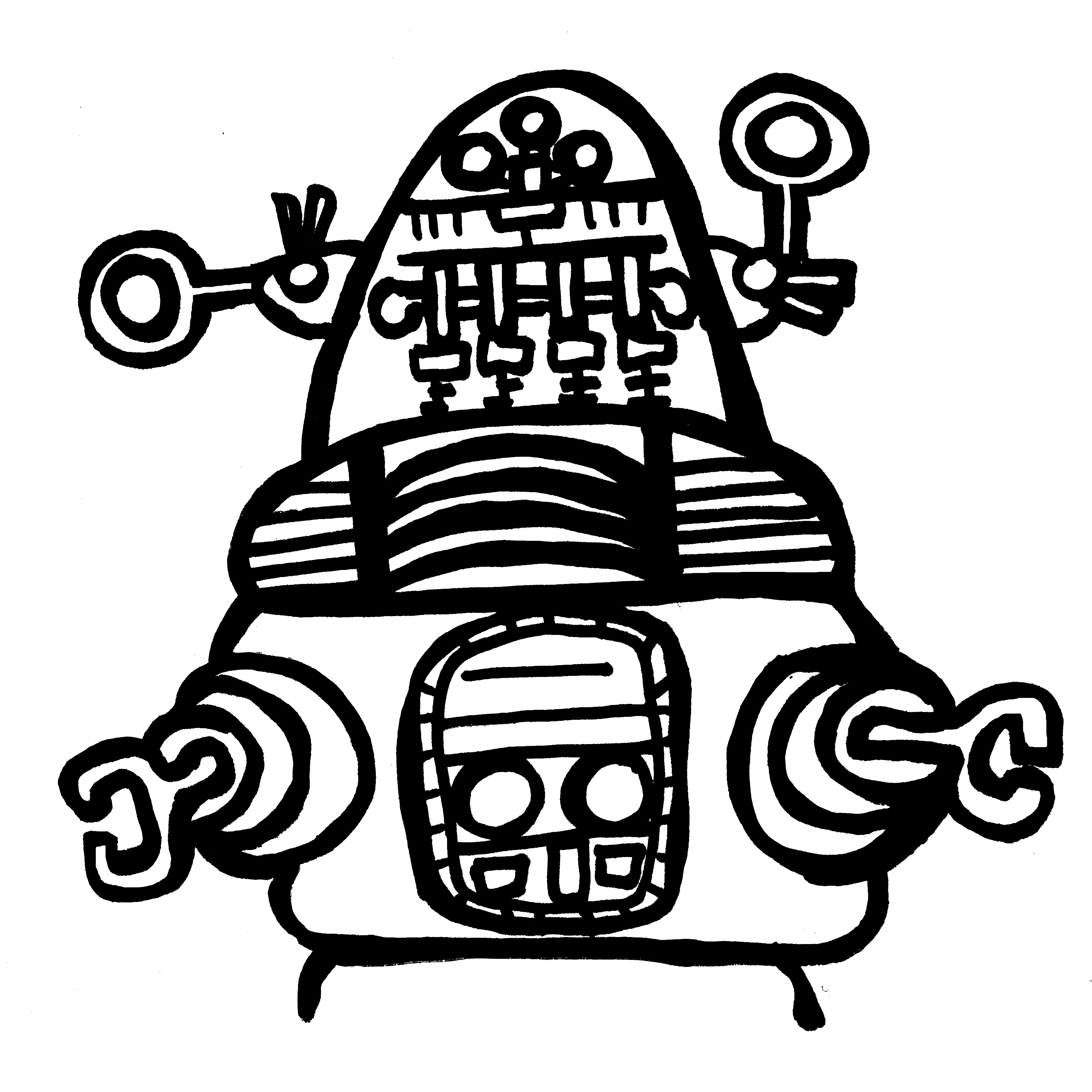
The Hardest Working Prop in Hollywood

Until 1956’s Forbidden Planet screened at The Prytania last week, I had only ever watched it as a VHS tape, fuzzed out and color-faded on a squared-off TV screen. It’s easy to take the movie for granted as an Atomic Age sci-fi novelty in that format, where it resembles any number of 1950s space adventures of the Buck Rogers mold. Revisiting it in CinemaScope on the big screen painted a much clearer picture of just how extravagant its production was for that genre. If anything, Forbidden Planet is the Atomic Age sci-fi novelty. Between its flying saucers, laser battles, psychic monsters, synthesizers, mini-skirted alien babes, and Mid-Century Modern decor, it stands as the Platonic ideal of Atomic Age sci-fi, a perfect specimen. Its influence on all space-adventure sci-fi to follow is also glaringly apparent in retrospect. Within the first five minutes, the Earthling astronaut heroes step into a light-beam transporter device that looks suspiciously like the ones on Star Trek; the yellow text scroll of its original trailer looks suspiciously like the opening prologues of classic Star Wars films. Not for nothing, composers Bebe & Louis Barron’s far-out analog synth soundtrack is also cited as the first feature-length electronic score in movie history, overloaded with futuristic beep-boop sounds that would change the shape of music forever, in cinema and beyond. I was delighted by the Barrons’ opening credit for “electronic tonalities,” since what they were doing with their self-invented gadgetry was so experimental the studio unions weren’t convinced it technically qualified as music. I was even more delighted by the similar credit “introducing Robby the Robot” in that sequence, though, as if Forbidden Planet‘s breakout robo-star was a working actor instead of a movie prop.

Robby the Robot should be familiar to any movie lover regardless of their personal interest in Atomic Age sci-fi or whether they know Robby by name. His image is synonymous with the genre, to the point where he earned the nickname “the hardest working robot in Hollywood” for how often he was referenced in other works. Robby has dozens of acting credits on IMDb, ranging from speaking roles in vintage TV shows like Lost in Space, Twilight Zone, and Columbo to uncredited background cameos in Gremlins, Explorers, Looney Tunes: Back in Action, and even a few movies not directed by Joe Dante. His continued popularity after his “introduction” in Forbidden Planet was at least partly genuine, since he is an instant charmer in that big screen debut. Robby was introduced to audiences as a kind of robot butler & 3D printer, always available to serve cocktails and fabricate gem-studded haute couture gowns at the simplest request. His flat vocal affect (provided by actual-human actor Marvin Miller) and his overly buff body design also made him an oddly manly screen presence, so bulkily muscular that he had to toddle across the screen like a baby taking its first steps. A lot of Robby’s continued public circulation after Forbidden Planet was an effort from MGM to recoup a return on investment, though, since his construction for his introductory film appearance was exorbitantly expensive, estimated at nearly 7% of the film’s overall budget. That money was put to great use, affording Forbidden Planet a recognizable mascot that could sell tickets with his coneheaded good looks and dry robotic wit, but it was a huge gamble to invest so much of the special effects budget on a single prop. The only way to justify the expense, really, was to put the robot to work.

Without question, the most bizarre ploy to squeeze more return on investment out of Robby’s robo-body came the immediate year after Forbidden Planet, when the sci-fi mascot was once again billed as a big-name actor in the children’s comedy The Invisible Boy. Robby’s second acting credit only does the bare minimum to justify the logic of his screen presence, gesturing towards an offscreen time travel device that connects its 1950s suburbia setting to a future century when Robby could’ve conceivably traveled to Earth after the events of Forbidden Planet. All of this half-baked lore is effectively contained to a single postcard, briefly discussed by the father-son duo who hog most of the runtime. Personally, I prefer to take the opening credits at face value, agreeing to a reality where Robby is a working actor whose appearance onscreen doesn’t need to be narratively justified any more than his human costars’. The important thing is that Robby is given the opportunity to make friends with a young nerd in the American suburbs, offering some direct-to-consumer wish fulfillment for the target audience of sci-fi adventures like Forbidden Planet. Then, a dirty Commie supercomputer hijacks Robby’s programming, temporarily turning him evil and overriding his prime objective to do no harm to living beings. He gets up to increasingly ridiculous, nefarious deeds in his second outing: turning the young boy invisible, kidnapping him to the moon, and getting hit with a military-grade flamethrower for his troubles. Then, he finally snaps out of it and becomes the Robby we all know & love in the final scene. All’s well that ends well, I guess, as long as you don’t pay too much attention to the Father Knows Best familial dynamics that continue in the subtly abusive family home Robby invades, in which spankings are frequent and other expressions of parental affection are difficult to come by.

The Invisible Boy is kiddie stuff, but it’s at least memorably deranged kiddie stuff. There’s a brief comedic sequence after Robby first turns his young friend invisible that threatens to run out the rest of the runtime with slapstick hijinks (again, mostly involving unseen spankings). Instead, the movie gets admirably bizarre in its scene-to-scene plotting, diverting attention from Robby’s new homelife to the evil machinations of a treasonous supercomputer, hellbent on ruling the world in an AI takeover by hypnotizing the humans at its controls. That computer is about the size of an average home’s living room, but it’s said to contain the sum total of human knowledge in its memory banks the same way the cavernous underground computers in Forbidden Planet were explained to contain the sum total of space-alien Krell knowledge. Any of The Invisible Boy‘s direct connections to Forbidden Planet could only diminish it in comparison, though, since that bigger-budgeted work was set entirely in a sound stage otherworld (the first of its kind in that regard as well), while the action sequences of its kinda-sorta follow-up mostly amount to military goons firing blanks at its most expensive prop in an open, barren field. Whenever Robby’s not onscreen in The Invisible Boy, the audience is asking, “Where’s Robby?,” whereas he’s just one of many wonders in Forbidden Planet, competing with flying saucers, psychic monsters, and laser battles for the audience’s attention. It sure is fun to imagine what life would be like with Robby hanging around as your big, buff robo-butler as a child, though, which makes the overall appeal of The Invisible Boy immediately apparent. We all wish we could spend more quality time with our good friend Robby, which is partly why he has never truly gone away. He’s always hanging around in the background somewhere, chilling and collecting royalty checks from past acting gigs.

-Brandon Ledet

Robot Dreams (2024)

I had two animated features on my personal Best Films of 2023 list (Suzume & Mutant Mayhem), and neither one was nominated for Oscars.  I am at peace with this outcome, just as I was last year when my pet favorites Mad God & Inu-Oh weren’t nominated either.  In general, I find the practice of getting hung up on Oscar “snubs” to be deeply silly, since the process of narrowing down the best movies of the year to just a few selections in any category is silly by nature.  There are only five slots for Best Animated Feature nominations and only a few movie distributors with enough marketing funds set aside for substantial FYC campaigns, so it’s obvious that dozens of worthy titles are going to be left off the list.  My personal favorites may not have made the cut, but the 2024 slate is largely decent.   If nothing else, I enjoyed both The Boy and the Heron and Across the Spider-Verse a great deal, and I would be delighted if either of those titles takes home a statue; they’re both worth rooting for.  Disney’s Elemental and the Disney-forsaken Nimona represent the kinds of kid-friendly CG animation that eats up Oscar noms by default in this post-Pixar world, but it feels encouraging that they’re no longer the dominating force in every new round of Awards Season discourse.  That leaves one open slot for this year’s long-shot outsider, a cutesy buddy comedy titled Robot Dreams.  Since it’s the one film on this year’s list that hasn’t yet been distributed wide, it’s the only one I hadn’t seen or heard much about before the nominations were announced.  And since its distributor Neon can now easily market it off of its awards buzz, it will soon be hitting a large number of theaters across the US – which is exactly what The Oscars ritual is good for: not determining the best movies of the year but boosting awareness & appreciation for a select few lucky contenders.

The premise of Robot Dreams sounds like the exact Disney-branded kids’ fluff that clutters up the Oscars slate most years.  It’s a movie about the friendship between a robot & a dog, set in 1980s NYC.  They dance in City Park, they enjoy a fun day at the beach, and they strut around the city whistling the Earth, Wind & Fire hit “September” while other various animals & robots beam smiles back at them.  After a short stint of happy companionship, they’re separated and spend the rest of the movie trying to get back to each other to revive the good vibes from the opening act.  There isn’t much narrative or thematic complexity to Robot Dreams, at least not when compared to the new Miyazaki & Spider-Verse films it’s competing against for an Oscar statue.  Thankfully, it’s a much more artistically complex movie than it is a complex story.  It’s entirely dialogue free, which forces it to rely on the traditionalist physical humor of an ancient Charlie Chaplin or Jacques Tati comedy, something that makes it feel both widely accessible & vaguely classy.  Despite its American setting (which is nostalgic enough for the past that it prominently features the Twin Towers in as many frames as possible), its Spanish production also gives it a default air of Euro sophistication, despite sounding more on paper like The Secret Lives of Pets than The Triplets of Belleville.  It’s also a strangely melancholy film.  There’s nothing sadder than a lonely dog, since they were specifically bred to love & obey, so the movie taps into some easy emotional heft in its earliest stretch where the canine protagonist gets so lonely that he orders a robot friend from a TV infomercial.  Watching his new robo-friend learn the basic rules of public life is funny in the same way that watching Bella Baxter & Stereotypical Barbie navigate the world for the first time was in last year’s funniest comedies, but then the unlikely friends are separated for long stretches of heartbreak & isolation until they can find companionship again. 

Of all the things that make Robot Dreams commendable among this year’s Best Animated Feature nominations, the thing that I most want to celebrate is its chosen medium of traditional, hand drawn 2D animation.  Just as the visual gags in the film’s comedy sequences are more cute than hilarious, its animation style is more tidy than expressive – recalling the simple, clean lines and character designs of a syndicated cartoon.  Watching the movie is like reading the Sunday funnies on a week when the cartoonists are feeling especially sentimental; neither the highs nor the lows are especially surprising, but it’s still a warmly nostalgic act.  The “dreams” of the film’s title also hint at its adherence to one of my favorite plot structures in narrative filmmaking: the repeated fakeout that our hero has emerged from a nightmare, only to be pulled back to their starting position like a rotary dial (best exemplified by my all-time favorite X-Files episode, “Field Trip”, in which Mulder & Scully repeatedly hallucinate that they’ve escaped a magic mushroom prison while they continue to rot there).  In short, Robot Dreams is not an especially great movie, but it is an especially likeable one.  Considering that it’s competing in an Oscar category that was created to award something as abominable as Shrek in its first year, getting by as “likeable” is a worthy enough achievement to celebrate.  If it does win an Oscar at this year’s ceremony, it will fall more into the low-key charmer category of former winner Wallace & Gromit: Curse of the Were-Rabbit than it would fall into the category of a hideous embarrassment like former winner Happy Feet.  Even if it doesn’t win anything, it’s already greatly benefited from its nomination, which is one of the few ways that non-Disney, non-Pixar, non-superhero animation has a chance to land proper distribution & marketing in our modern corporate hellscape.  I’m only ever rooting for a few reasonably good movies to benefit from an Oscars bump—not necessarily my exact personal favorites—and this one fits that descriptor just fine.

-Brandon Ledet

Silent Running (1972)

EPSON MFP image

fourstar

campstamp

The 1972 Bruce Dern sci-fi epic Silent Running offers an interesting moral litmus test for its viewers. Depending on how you see the film it can either play like an environmentalist screed against the evils of modern Capitalism (think Ferngully set in space) or a chilling tale of crazy-eyed hippie who gets so entrenched in his ideology that he’ll murder any humans necessary to save a few trees. Either way, it’s a strange little film loaded with the kind of production detail that sci-fi cinema nerds crave in their media, the kind that only improves as it becomes more outdated. Directed by a special effects supervisor who worked on Kubrick’s 2001: A Space Odyssey, Silent Running‘s intricate space ship models & star-filled backdrops are exceptional for a modest pre-Star Wars production. It avoids the swashbuckling-in-space thrills of George Lucas’s future game-changing franchise, however, so that it can focus on its murderous hippie philosophical dilemmas. Once Dern’s long-haired, bleeding heart astronaut murders his entire crew to Save the Forest in the film’s first act, Silent Running proves to be something of a hangout movie, just a calm drift in a vacuum enjoyed by a lonely environmentalist soul, his forest full of wild animal pets, and a few stray robot “drones.” Pesky humanity taken out of the equation, the film finds a sense of peace. The question is where you’ll land on how that peace is achieved.

The film opens on close-ups of delicate animals in a natural habitat: frogs, turtles, snails, hawks, Bruce Dern. This Garden of Eden is soon revealed to be an artificial biodome (for lack of a better term) on a near-nude American Airlines space freighter in outer space. The status quo on this spaceship & the post-apocalyptic Earth they left behind is that Nature was a fixture of the past, not something worth worrying about now that everything worthwhile can be automated & manufactured. As Dern’s resentful hippie tends his space garden, the universe’s last hope for genuine plant life, his shithead co-workers casually cause havoc, running space age go-carts over his flower beds & maliciously smashing his self-grown cantelopes as a means of joshing him. He’s already a bit unhinged at this point, prone to ranting maniacally about how his fellow astronauts are poisoning their bodies with synthesized foods & how a world without Nature is a world without beauty. It’s when the crew’s ordered to abandon their project, nuke the biodomes, and return home that our hero/villain snaps and murders his entire crew. He feels occasional remorse for his actions once the cabin fever/space madness sets in, but mostly he just chills with his dinky robot pals in his pristine space garden and enjoys a peaceful life without his fellow man mucking up his ethereal hippie paradise. The only crisis that arises is when a “rescue mission” arrives to pluck him from isolation in the abandoned freighter and he must choose whether to rejoin humanity to pay for his crimes or to nuke himself into oblivion along with anyone who dares threaten his beloved plant life.

Whether or not you’re interested in the crazed hippie moral dilemma at the center of Silent Running, the film is interesting enough in its production details alone to deserve a look. Besides the obvious care that went into constructing the space freighter models which float by in endless lingering shots of outer space majesty, the dinky drone bots Dern’s savior/killer hangs out with are a strange practical effects novelty. Operated by bilateral amputees walking on their hands in seemingly heavy robot shells, they’re cute little pre-R2D2 buggers with plenty of unwarranted AI personality useful for keeping their crazed killer master some company. They’re also notably the only actors in the film who aren’t all white men, not that you ever get to see them onscreen. I should also mention that, in true hippie fashion, Silent Running features original songs by Joan Baez, who serenades the audience with poetic lines like, “Tell them it’s not to late, cultivate one by one. Tell them to harvest in the Sun” along with some proto-Jill Stein raps about the feeling of earth between your toes. I think there’s some distinct camp value to the way the film succinctly simplifies the cause to Save the Forest by making the forest a small, manageable space that can be saved by murdering a few careless capitalists. Whether you’re a no-bridge-is-too-far hippie activist, someone who’s terrified to death of those activists, or just a sci-fi nerd who enjoy looking at toy spaceships & hand-built robots, Silent Running has plenty to offer in terms of pure entertainment. Whether you see it as a horror film or an inspiring message of hope relies entirely on you.

-Brandon Ledet