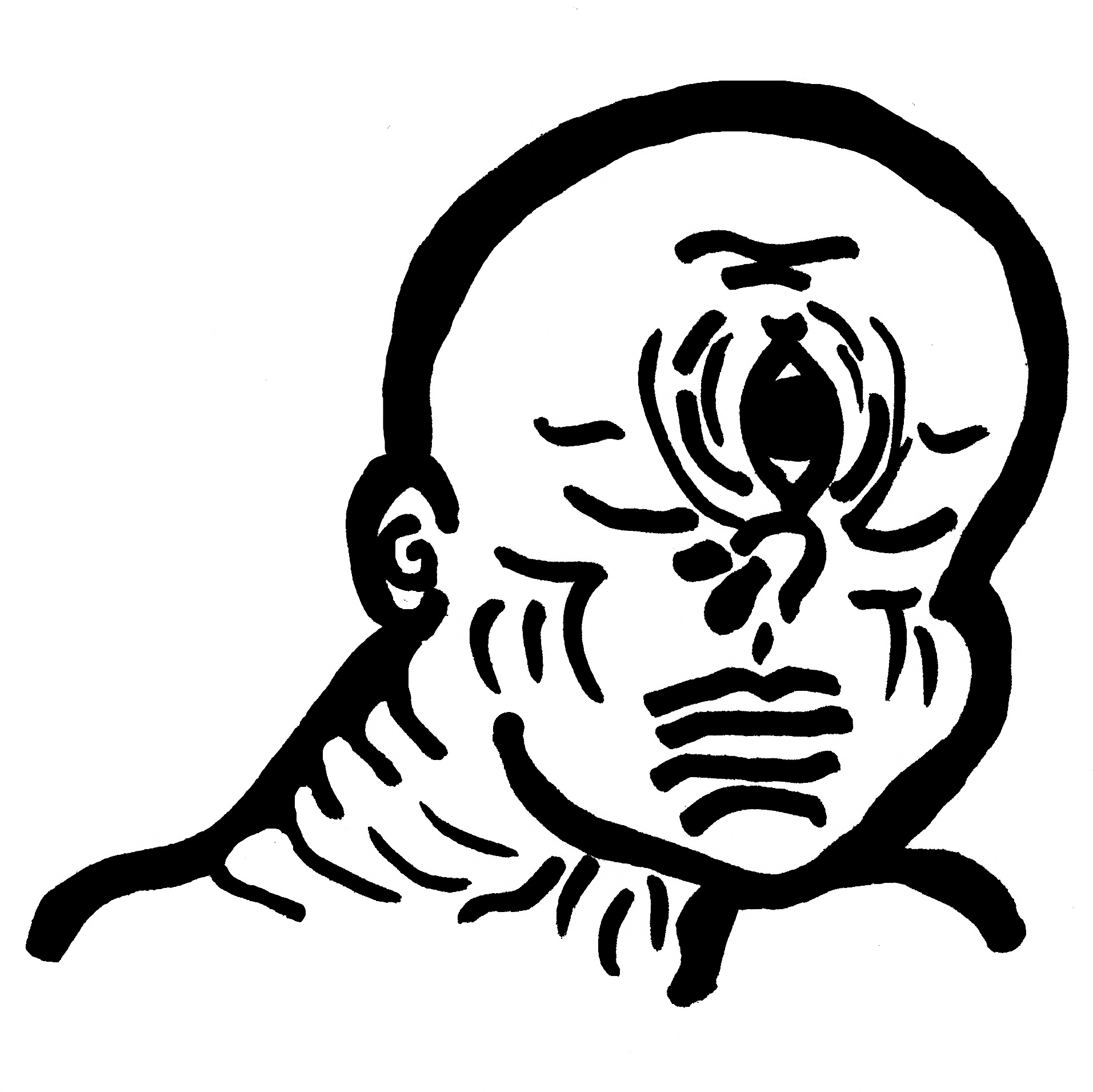

For the first hour of Christopher Nolan’s adaptation of The Odyssey, I found myself somewhat bored. As I sat in the theater, staring up at the screen, I felt a sense of dread creeping over me as I wondered whether the whole film would play out as that first third did, like a well-produced but ultimately faithful-to-a-fault PBS adaptation of Homer’s poem. As a filmmaker, one of the things that makes Nolan’s work so widely accessible is his ear for expository dialogue. If it weren’t for all the spectacle that accompanies his films, most people would find them overly explanatory in a way that feels like educational media. I have gone on record as being unimpressed with one of this year’s most acclaimed and discussed films, Obsession, and admitted that my dislike for it was that I really thought it would be something new, fresh, and exciting, but found myself bored and frustrated with what, to me, was a conceptually stale piece of art. For sixty minutes of The Odyssey, I found myself asking the same questions that I did during Obsession: Why are we here? What’s the point of creating a film if it can’t bring something novel and noteworthy to an idea that I’ve seen dozens, perhaps hundreds of times before? Who is this even for? (In the case of Obsession, it turns out that the answer is “everyone but me, apparently,” but I digress.) Even the film’s first major effects sequence, which recounts the encounter that Odysseus (Matt Damon) and his men have with the cyclops Polyphemus, was both well-executed and a bit of a yawn. Was this really going to be all that The Odyssey would be? A very expensive, well-made adaptation of a very familiar story? Then, at around the hour mark, Circe (Samantha Morton) enters the film, and everything shifts. By the end, I was pleased with the journey, even if it was one that I had taken many times before, because Nolan had successfully managed to make the narrative resonant in a new way, even if every plot beat was familiar.
You probably know this story. If you didn’t read it in college or high school, then you probably saw the nineties miniseries in one of its endless repeats on the Syfy (at the time the Sci-Fi) Channel, or you saw O Brother, Where Art Thou?, or you saw Odysseus played by a Jack Russell Terrier on Wishbone (my first exposure was an episode of DuckTales). After years of unsuccessfully sieging the walled city of Troy under the command of Greek king Agamemnon (Bennie Safdie), the clever hero Odysseus lights upon the idea of concealing a contingent of men within a hollowed out wooden horse to be presented to the Trojans as a gift and taken within its walls. Once inside, Odysseus and his men open the gates of Troy to Agamemnon and his waiting army, who storm Troy and pillage the city. Eight years later, Odysseus has yet to return home; his wife Penelope (Anne Hathaway) has spent the last few of these years being forced by the divine laws of hospitality to entertain a number of suitors who wish to marry her and take the throne of Ithaca. Chief among these is the boorish Antinous (Robert Pattinson), who loves to falsely recount his desire to join the Trojan campaign, claiming that Odysseus personally asked him to watch over his family instead. In reality, Antinous was drafted via lottery and traded places with a shepherd’s boy, Sinon (Elliot Page), who died in the sand of Troy’s shores. Penelope’s only real allies are Eumaeus (John Leguizamo), a blind herder of pigs who remains devoted to Odysseus even in his long absence, and Odysseus and Penelope’s son Telemachus (Tom Holland), who hadn’t even been weaned when Agamemnon summoned his vassals.
Odysseus’s attempt to return to Ithaca alongside Eurylochus (Himesh Patel) and bring the men under his command home is long and arduous, as he follows the stations of the canon that most of us already know: the Cyclops shepherd, Circe turning the Ithacans into pigs, losing ships to the Laestrygonians (here reimagined as 10-foot men in otherworldly armor), wax in the ears to drown out siren song, the consultation with Tiresias’s spirit in the afterlife, navigating between Scylla and Charybdis, Odysseus’s men eating Apollo’s sacred cattle; it’s all here. As with a lot of modern “realistic” retellings of classics that were composed in an era when the contemporary audience believed that their deities walked among them, Nolan excises all of the gods and goddesses from this version, reassigning their roles in the events to others. The sole exception is Athena (Zendaya), who appears only to Odysseus and is mostly an externalization of his guilt over his role in the downfall of Troy and, by extension, the collapse of the myth of civilization.
This extends into other realms, of course, as the overall “gritty” look of the film requires the excision of the more fantastic parts of the setting as well, like making Circe a woman in a roughhewn stone cottage wearing coarse, muted clothing rather than a daughter of the sun with all of the magnificence thereof. There are also concessions made for time and pacing, like removing the isle of lotus eaters entirely and moving the memory-clouding flower to Calypso (Charlize Theron)’s story and allowing the framing device of Odysseus recounting his journey to Nausicaa to be converted to his memory coming back as the effect of the lotus wears off. Telemachus’s travels are simplified to a single outing to visit Menelaus (Jon Bernthal) and Helen (Lupita Nyong’o) to learn about the fate of his father. Even this condensation of plot elements to make the narrative tighter is nothing new. This is a foundational narrative that’s nearly three thousand years old, and it’s changed and had more permutations than could ever realistically be traced.
So what’s Nolan doing with it here? He blends in sources from The Iliad and even extra-Homeric texts (Sinon appears in neither The Iliad or The Odyssey, and his role here as the deceiver of the Trojans is taken from Virgil’s Aeneid) to weld together a cohesive story, but also leaves out certain factors that some readers would consider integral to the narrative. The one that I find most revealing about Nolan’s motivation is that he’s made Odysseus’s guilt the central focus of his character motivation, but only his guilt about the sacking of Troy, not about his role in the instigation of the Trojan War itself, which is entirely left out. Odysseus’s love for Penelope led him to introduce the pact that allowed Agamemnon to call his vassals to war in the first place, but Odysseus doesn’t blame himself for the war in Illium because his era is one in which such scrabbling is part of the natural order. His world is one that is utterly alien to us in the modern era, one of gods and monsters and “apparent magic,” but which is nonetheless undergirded by its own sense of morals and ethics, just as our society is.
Chief among these divinely demanded statutes is xenia, herein referred to as one of “Zeus’s Laws,” which was an ancient nigh-universally observed mandate from on high that travellers and beggars be treated with hospitality. Odysseus’s decision to falsely enter Troy by pretending to offer up a tribute to a goddess worshipped by both parties is the equivalent to a war crime. It’s so unthinkable that it effectively destroys the fabric of society itself, exposing an existential truth that the world of observed communal social order is a thin membrane on which we all float above a roiling abyssal ocean of darkness and mayhem, reinforced only by our shared belief in it and our commitment to upholding it. For as slimy as he is, Antinous only ever bends the rules of xenia, or takes advantage of them for his own benefit, but even he never conceives of the entire system being upended. Odysseus bears the weight of understanding that his “brilliant” war tactic has plunged the world entire into a darkness that he created and cannot escape, represented by many characters voicing their fears about the fabled “men from the sea” who terrorize the coasts and don’t follow Zeus’s laws. Even before he realizes that these rumors are about him and his men, he seems keenly aware that he has brought an end to civilization as he knows it. As a new take on this text, it justifies its existence.
That having been said, this film still falls victim to the pitfalls of Nolan’s work and mainstream filmmaking in general. This month, I watched all four parts of the Soviet-produced War and Peace adaptation from the 1960s, and I was continuously struck by the raw, miserable, hellish conditions of war that Sergei Bondarchuk captured with his lens. It left me thinking a lot about the criticism that Western cinema can never be truly anti-war because of the nature of our filmic language and the way that our cultural narratives justifying mass slaughter trickle down into everything that we create. The Odyssey has this problem. I’m fairly confident in my reading of Nolan’s authorial intent regarding Odysseus’s motivations in this telling, so I have little doubt that he intended to make the scenes of the sack of Troy harrowing, but the heavy stylization and action movie editing undermines any anti-war sentiment that the film might be trying to capture. I think Nolan probably believed that he was making something with that thesis, but he just can’t help himself when he’s got his hands on an IMAX camera.
I’ve long been critical of The Dark Knight Rises, a film that I think is best consigned to being forgotten as a piece of reactionary propaganda. Defenders of the film cite that the infiltration of the Occupy Gotham movement by Bane and his terrorist cronies is a statement about the ease with which progressive movements can be co-opted by fascists. I can’t abide this reading, since the film that I watched was one that was narratively patronizing to progressives as sheep who can be easily misled, a film in which everything goes to pot when the police are disempowered in a city that can only be saved by getting the police back on the streets, a story in which a character living in a hellish Gotham under fascist control proudly says “Look around, this is what we wanted!” That film may not seem like it came out all that long ago, but it hasn’t even been 15 years. The state of our society has just fallen so far since then that it feels like an artifact of a time that’s almost as alien as Homer’s.
I don’t think that Nolan himself is a reactionary the way that many of his detractors do (I mostly lay my issues with TDKR at the feet of David S. Goyer), but his Odyssey feels like an attempt to grapple with the reality of a dissolved social order. The sack of Troy is predicated on the breaking of a sacred trust, one that results in the dissolution of the social order and the end of an era of certainty built on universally accepted norms. It is the January 6th of antiquity, the act that unmakes civilization not because of its inherent violence but because it exposes how fragile our “reality” is, the end of normalcy before a dark age. For all of the discourse online from those whose moral compasses are broken, who racistly criticize the casting of Nyong’o or insist on misgendering Page, they’re all utterly missing the point that their effigy of “woke” Christopher Nolan overlooks the direct rebuke of reactionaries and right-wingers. He’s doing so by invoking traditional moderate values—implicit acceptance of institutionalized, lineage-based rulership, great man theory of history, and even the disruption of social order as chaotic and inherently negative—but their frothing madness at the perceived slights of a non-white Athena and Helen means that they’ll never even see the real way that Nolan is criticizing them. It may be one of his more visually impressive works, but it’s not the most thematically consistent, perhaps for reasons that Nolan is unable to see from within the horizon of his own self-understanding. It’s worth seeing as an insight into the director’s soul, and if it gets more people to read pre-modern literature, I’m all for it.
-Mark “Boomer” Redmond