Nope (2022)

When Nope was announced earlier this year, Brandon reached out to ask if I wanted to do coverage of it and, of course, my answer was “Yes.” Get Out was my top film of 2017, and I was passionate about giving Us a five star review in 2019. The only issue was that, when Nope came out in mid-July, I was going through a pretty rough, prolonged breakup. I missed the screenings they were holding at the drive-in and wanted to see it so badly that when a copy proverbially fell off the proverbial back of a proverbial truck, I immediately watched it, but not without some difficulty. The audio quality was awful, so much so that some of the dialogue was virtually inaudible, and the video cohesion also suffered, especially in the night scenes. I was lucky to have a friend over watching it who had seen the film in theaters, so she was able to describe what was happening at times when the truck-fallen video didn’t have the resolution to speak for itself (most notably in scenes with Jean Jacket). And so when people asked if I had seen it, I said “Yes,” but for a long time, I hadn’t really. If anything, I had seen a bunch of shadows on a cave wall. But all that has changed, and although as I sit here on the first day of the new year fulfilling a very late promise, I’ve seen the real deal, and I can’t go back to the cave. 

Nope largely takes place on the Haywood Hollywood Horse Ranch, a legacy and a legend which has passed the prime of its life. Otis Haywood Jr., or “OJ” (Daniel Kaluuya) has recently taken over the business from his father Otis Senior (Keith David), who was killed in a freak accident some six months prior when pieces of metal fell from the sky, supposedly from a plane. The horse that was being trained under the path of the inexplicable event had a key embedded in its flank, while Otis Senior somehow ended up with a nickel embedded in his brain through his eye. OJ inherited the gift of horse training from his father but lacks the elder man’s interpersonal abilities on the micro and macro levels, being unable to work a crowd as his father did but also failing to communicate with others on a day-to-day level without a high dose of awkwardness. All the social skills went to his younger sister, Emerald “Em” (Keke Palmer), a fast-talking, wise-cracking whirlwind who never stops hustling, much to OJ’s chagrin. We see this from one of the film’s earliest scenes, in which OJ begins to recite the rote speech that was no doubt his father’s, about their family’s descent from the Bahamian jockey who appeared in Horse in Motion, what is generally considered to be the first motion picture, and how they are keeping that tradition alive by continuing to train horses for film. OJ is hesitant, stumbling over his words, until Em appears and delivers the spiel with style and aplomb. When she wanders off during the actual screen test and the movie crew fails to heed OJ, causing the horse to act out in a way that costs them the job, we have the perfect vision of how the two siblings function as a team, two halves of a whole that only works when they are together. The two other major players in the film are Ricky “Jupe” Park (Steven Yeun), a former child star who experienced a harrowing and traumatic tragedy on the set of a gimmick 90s sitcom, and Angel Torres (Brandon Perea), a peroxide-highlighted electronics store employee who gets wrapped up in the Haywoods’ lives after he becomes suspicious while installing cameras and other monitoring equipment at their ranch. 

Why do they need that monitoring equipment? Why, because OJ and Em are dealing with a UFO, of course. And if they can get footage of it, then they’ll be financially set, meaning that OJ will no longer have to sell off the horses from the ranch to remain solvent. 

Jordan Peele’s films are always thematically rich, and manage to exist in that space where they remain fascinating, captivating, and utterly watchable. Many films manage to mostly stay the course and we can forgive their slight imbalances if they manage to avoid tipping too far to one side (Glass Onion comes to mind—it gets close at points but never tilts so much that it starts to take on water), and others can lean too far over one side and become (in the words of Lindsay Ellis) “Oops, all allegory.” There are dozens, if not hundreds, of things that Nope could be said to be “about,” or which present rich veins of interpretable ore to be hammered out and turned into gold by better writers than I am. So with that said, I want to talk about the three themes that are my favorites in Nope: the illusory nature of totems, the illusory nature of memory, and the illusory nature of media.

There are a number of totemic items present throughout the story: the Monopoly pieces that the crew sets out when planning to get the shot of the alien creature they have nicknamed Jean Jacket, after a horse that was supposed to have been Em’s ninth birthday gift but which ended up being selected for a movie; the VHS tape of her father’s spiel that Em watches the night that Jean Jacket vomits viscera all over the Haywood farmhouse; the giant balloon version of Jupe that suffers the same fate as the real one. Even the original Jean Jacket himself, in his absence, represents something about Em, her brother, and the fickle nature and absurd reality of the film industry. But the two biggest ones belong to OJ and Jupe. For the former, it’s the coin that improbably killed his father. For the latter, the impossible is represented in something equally quotidian and mundane that was given significance because of circumstance: a shoe. At one point in the film, OJ asks Em if there is a term for a “bad miracle,” referencing the way that his life has changed as a result of witnessing an extra-terrestrial, but this also plays into Jupe’s backstory, in which he was the ostensible human lead in Gordy’s Home, the aforementioned TGIF-style sitcom in which the gimmick was that a family had adopted a chimpanzee. During the filming of an episode of the show’s second season, one of the chimps playing Gordy was started by the popping of an on-set balloon and went on a violent rampage, killing several people and maiming the actress playing Jupe’s older sister, sparing only Jupe himself, who was transfixed throughout the attack on the unusual sight of a shoe standing straight up on its heel. Even as an adult, he keeps this same show in his ad hoc museum of Gordy’s Home memorabilia, enshrined in a place of honor. What differentiates the two men is that OJ ultimately realizes that the nickel that he’s pinned to his wall in memoriam of his father isn’t important, not really; it may have struck the killing blow but he recognizes that it is, in essence, a real life MacGuffin, with no inherent import in and of itself. Jupe continues to attribute significance to the show insofar as he comes to see himself as the recipient of some supernatural, if not necessarily divine, intervention. Late in the film, OJ notes that the alien Jean Jacket isn’t sticking around because doing so is in its nature, but because Jupe thought that he could tame the alien because his belief in his infallibility as some kind of animal whisperer, as made manifest by the impossibility of the self-stabilizing shoe, and he turned out to be very, very wrong. The power of totems is an illusion; it’s just people projecting their magical thinking onto objects in the same way that we often anthropomorphize nature, again to our detriment when it comes to predators. 

For Jupe, part and parcel of this is the nature of his memories. When asked about the incident by Em, Jupe doesn’t recount any honest details to her: not his fear, not the sickening sound of flesh being struck by simian fists, not the panic in the voice of his TV father as he attempted to escape the carnage. Instead, he recalls a Saturday Night Live sketch lampooning the event, except that he doesn’t even really describe the sketch and how it plays out (other than the small detail that Sketch!Gordy panics at mention of the jungle, not the real cause of his outburst), only recounting which cast member played whom and praising Chris Kattan’s performance as Gordy without any specifics other than that Kattan was “undeniable” and “eating it up, crushing it, devouring every moment.” The real memory, as we see it play out, is visceral and full of intricate details, down to the particular transparency of the tablecloth on the on-set dining table that obscured Jupe’s eyes from Gordy, foreshadowing that Jean Jacket’s territorial attacks are only against things that it perceives as looking at it. We know that this event still haunts Jupe and that, like a lot of traumatic memories, the specificity of the day remains vivid and sharp in his mind, interjecting itself into his thoughts when he’s preparing for a performance at the ranch, intrusive. Jupe has taken this memory and buried it under layers of media interpretation and interpolation and changed its quintessential form, just as he has foundationally changed the “meaning” of the shoe. Jupe makes his living off of nostalgia and in so doing never leaves the past behind, and he has supplanted his own memories with, for all intents and purposes, a movie; OJ, meanwhile, is preoccupied with the future and finding ways to keep Haywood open, and Em is focused on the present, with her hustles both professional and romantic. As such, we spend much less time in full flashbacks for the Haywoods; though they are standing in the shadow of Otis Senior and talk about him, each character only gets one actual visual representation of their memories, and it’s open to interpretation how much of each is accurate. OJ’s takes the form of a dream in which his father, speaking of one of the horses, says “I guess some animals ain’t fit to be trained,” a statement which perfectly slots into OJ’s current situation and provides a key moment of insight/realization about the nature of Jean Jacket, in a manner perhaps too apropos for the elder Hayworth to have actually said it and instead synthesized from OJ’s real memories through that ephemeral nature of dreams. Prior to this, on her first night back at the farmhouse, Em recounts the days leading up to her ninth birthday and looking down from the window to see the two generations of Otises training the namesake Jean Jacket, speaking with a soft bitterness about how Otis Senior had given up her promised horse because of “some Western.” This memory, too, is flawed: OJ corrects her by saying that it was actually Scorpion King that the horse had been picked for, and that the film had ended up using camels instead. Memory can be a mirage as much as it can be a mirror, and it’s ultimately imperfect. 

At its peak, though, that’s the biggest theme of Nope: the distortion of reality via the camera lens. One of my favorite lyrics from one of my favorite bands comes from the opening of Typhoon’s track “Young Fathers,” which is “I was born in September / And like everything else I can’t remember / I’ve replaced it with scenes from a film.” Jupe has done this almost literally, but Nope is also about the nature of how the proliferation of media has irrevocably changed our lives. There’s a really fun mixture here of media both real—Scorpion King, The Horse in Motion, Saturday Night Live—and imagined—Gordy’s Home, Six Guns, a nonexistent SNL sketch—which plays with the audience’s perception. After all, if you sort of half remember the SNL sketch in which Kattan plays the monkey man Mr. Peepers, then it doesn’t seem impossible that there was a similar sketch about Kattan playing Gordy. Theoretically, the camera lens should offer us perfect, objective truth, should record reality as it is without the wrinkles and imperfections that our memories include because of distance from events and the horizons of our experience, but that’s not what actually happens, because media is just as edited as our memories are, meaning that they are just as flawed in their ability to capture an inarguable “reality.” In few places is this more apparent than in media parasite organization TMZ, which becomes a literal part of this film when one of their employees appears at Haywood Ranch right in the middle of the Haywood crew’s big push to capture Jean Jacket on film, disrupting the entire operation while begging OJ with his dying breath to get pictures of the entity. This man values the money shot over his own life, and he pays dearly for it. The great irony is that nothing is “real” until it’s captured on film, but even that supposed “truth” is still subject to the edit; if nothing is real until we film it, but film is inherently not true either, then is there even such a thing? Every character in this movie navigates their life in some way informed by mass media: cinematographer Antlers Holst (Michael Wincott) intones a dead-serious rendition of the pop novelty song “One-Eyed, One-Horned, Flying Purple People Eater” at the Haywoods’ dinner table; Angel singsongs the famous “They’re here” line from Poltergeist when Jean Jacket appears; the course of Em’s life was changed in a small way by Scorpion King, and Jupe’s was altered on a mass scale by Gordy’s Home. It’s just as much a force in everyone’s lives as Jean Jacket itself. 

There’s still more onion to peel back here, but it’s not for me to take up all that space. I could go on and on about how it’s a fascinating choice that almost no character is called by their real name but by a nickname or derivation thereof (even Holst is introduced offscreen as “Ants”), or about the performances (Kaluuya really embodies a specific kind of eyes-averting blue-collar humility that was familiar and beautiful to me, while Palmer is a natural at everything, it seems), or all the little bits of foreshadowing, but I think that’s enough for today. This review is long overdue, but if you’ve for some reason avoided seeing Nope up to this point, then there’s no time like the present. Giddy up. 

-Mark “Boomer” Redmond

Gender Repeal Party

In the back of my mind, I’ve been saving a couple slots on my personal Best of 2022 list for two titles that never screened theatrically in New Orleans: Amanda Kramer’s Please Baby Please and Bertrand Mandico’s After Blue (Dirty Paradise).  Having now rented both films for an especially lurid double feature, it turns out those reserved parking spots were totally justified. Both films hammered the exact personal pleasure centers I’m always looking to hit when seeking out new releases, exactly as expected.  What I didn’t expect was that they would be so sympatico in their dreamlike deconstructions of gender, nor that they would be thematic mirror opposites of their respective directors’ previous works.  I was introduced to Kramer through her apocalyptic meditation on the vicious, combative impulses of femininity in Ladyworld; I was introduced to Mandico through his wet nightmare vision of the vicious, combative impulses of masculinity in The Wild Boys.  With their latest features, they’ve swapped topics (i.e., swapped genders), which makes After Blue & Please Baby Please a rewarding, fascinating double feature beyond their momentary value as last-minute best-of-the-year contenders.

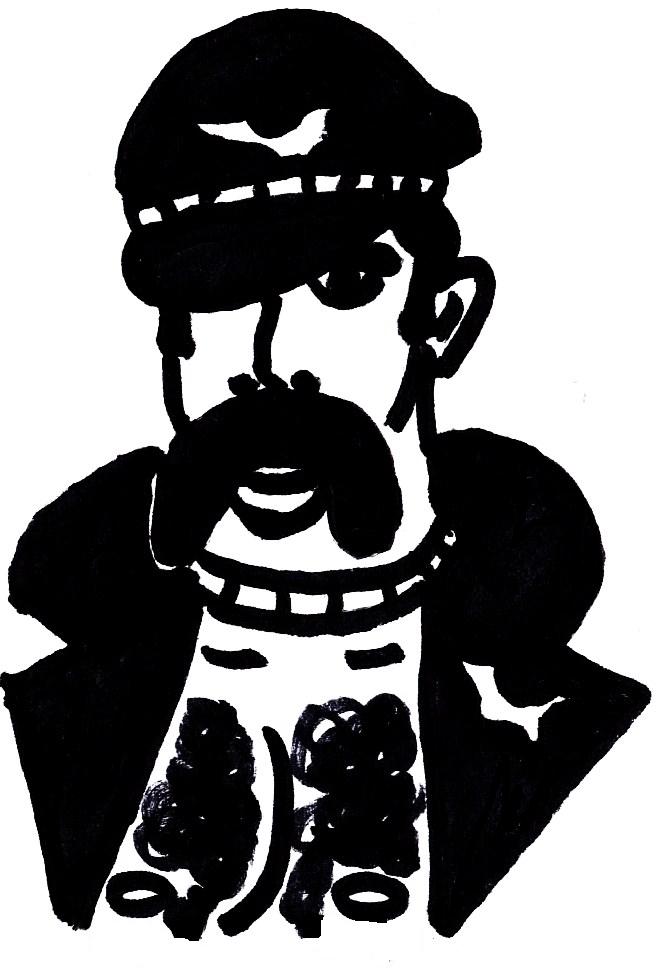
In Ladyworld, Amanda Kramer immerses her audience in a never-ending Buñuelian house party where a group of young women eternally, ritualistically tear each other apart in the darkest corners of feminine bloodlust.  In Please Baby Please, she reflects on the performative brutality of masculinity instead, abstracting & eroticizing the violence of traditional machismo.  After a seemingly cis-hetero 1950s couple falls in lust with a gang of leather-clad ruffians (the wife out of gender envy, the husband out of closeted homosexuality), they separately explore their own relationships with masculinity as a social power & as a fetish aesthetic.  As the couple unravels & retangles, Kramer ponders the question “What is a man, anyway?” through lofty academic discussions of how masculinity is socially engineered and through kinky fetishization of 1950s kitsch. Andrea Riseborough gives the performance of the year as the beatnik housewife turned Tom of Finland brute, approximating what it would be like if an especially rabid Jerri Blank had a Marlon Brando drag-king impersonation act.  Harry Meulling’s crisis of masculinity is much more internal & philosophical, interrupting every friend group conversation with off-topic questions about why he must perform a gender at all, much less one arbitrarily assigned at birth. The film is overflowing with queer menace, artifice, and excellence, all achieved on a community theatre budget. 

Bertrand Mandico’s The Wild Boys is my favorite film released in my lifetime, a complete gender meltdown that erodes all of the traditional characteristics & boundaries of masculinity in its titular group of nihilist ruffians but does not reform their vicious misbehavior when they emerge as women on the other end.  Mandico’s second feature is just as gorgeous, grotesque, and wonderfully genderfucked as that debut, but goddamn that’s a tough act to follow.  After Blue (Dirty Paradise) starts with feminine violence as its thematic anchor, dreaming of a far-out lesbian orgy planet that cowers in fear of a demonic, almighty serial killer named Kate Bush.  As a disgraced hairdresser and her horndog daughter hunt down the elusive Kate Bush in the alien wilderness and fall in lust with other bizarre women they meet along the way, After Blue proves to be just as visually & thematically daring as The Wild Boys, just on the opposite end of the gender spectrum.  The hallmarks of its sci-fi acid Western subgenre weighs heavily on its momentum & pacing, but it also constantly fills the frame with the most exciting, glitter-slathered nightmare imagery you’re likely to see this year.  It plays like someone fed “James Bidgood’s Dune movie” into one of those AI art generators, and the results are intoxicating, even if a little exhausting.

Anyone who has already tasted “the rotten fruit of [Mandico’s] imagination” knows what to expect from After Blue, but that’s more of a sign of his out-the-gate fervor as a fully formed auteur than a sign that he’s repeating himself.  By contrast, Kramer’s ideas & imagery appear to vary more from film to film, aiming for a fluorescent-trash version of John Waters’s aesthetic in Please Baby Please that I don’t believe was present in her previous work.  As a pair, they’re among the most exciting artists currently working in the medium of queer filmmaking, not least of all because of their respective indulgences in over-the-top visual style and their shared philosophical hostility towards rigid gender boundaries.  I have no idea where their careers are going (especially Kramer’s), but I’m confident in saying they’re already making some of the best movies out there on the new release calendar, and it’s a shame these two titles aren’t being published on more critics’ Best of the Year lists.

-Brandon Ledet

Vesper (2022)

I was a few minutes late to my screening of the dystopian sci-fi cheapie Vesper, so I missed the opening scroll that explained exactly which doomsday scenario its few scattered characters had survived.  According to Wikipedia, the film is set in “The New Dark Ages,” triggered by bio-engineered plants & viruses that escaped from the lab and into the wild, mutating the Natural world that scientists were attempting to save from Climate Change.  Basically, in the near future we take the “Hack the planet!” messaging from Hackers a little too literally.  Whatever table-setting paragraph I missed at the start of the film didn’t end up mattering too much, though, since its interest in old-fashioned sci-fi worldbuilding does not stop there.  Vesper is essentially a feature-length worldbuilding exercise, one that invests all of its energy in exploring the lush, biohacked landscapes of its Apocalyptic Vegetation futureworld, with little attention left for the characters who have to hack their way through it.  And for a certain type of hardline sci-fi nerd, that escape to an intricately detailed otherworld is going to be immensely satisfying no matter what happens there.

Plot-wise, this is a Young Women in STEM story. The titular Vesper is a plucky teen who’s incredibly gifted at biochemistry, stubbornly determined to biohack her way out of the Biohack Apocalypse.  Camping in the woods between a petty-dictatorship barter town run by her creepy uncle and an aristocratic “citadel” with a “No Poors Allowed” sign posted to its gates, Vesper is a fairly typical YA heroine: the only freethinker who’s ruggedly independent & smart enough to rescue her dystopian world from its downward spiral.  She’s more of a video game avatar than a fully formed character, since her main function is to lead us through the overgrown vegetation and crumbling urban infrastructure of the “world of shit” she calls home.  There are plenty of contemporaries to Vesper‘s style of low-key, lived-in sci-fi, from the surreal vegetative mutations of Annihilation to the violent Natural reclamation of urban spaces in The Girl with all the Gifts to the analog sci-fi throwback of Prospect.  Only this movie exists in this specific world, though, so it’s more important that Vesper give us the full guided tour of her far-out greenhouse creations than it is for her to stir up meaningful drama with her dying father, her creepy uncle, or her fellow scrappy rebels.

Vesper can feel a little humorless and drawn out at times, but it’s shrewd about inspiring awe & disgust with limited resources.  This French-Lithuanian production was shot in an uncanny English dialect as a bid for wide international appeal, but I’m not sure that it ever had a chance to make it beyond a few festival raves & VOD streaming deals. Its detailed worldbuilding impulses are tied to such a literary sci-fi tradition that it was never going to fully break out of its nerdy niche, at least not without giving its Wilson volleyball drone sidekick a bunch of James Corden-voiced one-liners (as opposed to the defeated wheezings of Vesper’s dying father).  Its ambitions are super admirable, though, and it accomplishes a lot creatively even if its distribution has been limited.  Shot without artificial green screen environments, Vesper explores a lived-in, tactile dystopian world that should be a major draw for anyone who’s at all nerdy about world-building and practical effects.  It feels vibrantly alive – brimming with mutated plant tendrils, radioactive glow worms, and A.I. creatures made of vintage medical equipment.  You just won’t find much of that vibrant life in the drama or dialogue.

-Brandon Ledet

Ghost in the Shell (1995)

I am once again living without a car.  It hasn’t been a traumatic life adjustment or anything, but it has limited how much of the city I can conveniently access without it feeling like an epic journey.  It’s also made me realize, once again, how few legitimate movie theaters are currently operating in New Orleans proper.  Ever since most theatrical screenings were exported to the Metairie movie palaces in the 1990s, there have been precious few cinemas operating in the actual city.  I can only name three currently running, and if you’re biking & bussing around the center of town, only two of those are easily accessible; most nights for me, the original uptown location of The Prytania might as well be on another planet.  So, in these dark days when the ludicrously cheap AMC A-List subscription service is miles of interstate out of reach, I am relying heavily on the programmers at The Broad & The Prytania at Canal Place to keep me air conditioned & entertained.  Thankfully, they do a kickass job.

In particular, I’ve been loving the repertory programming at The Canal Place Prytania in recent months.  The Rene Brunet Classic Movie series at their uptown location is the closest thing this city has to a solid rep scene, so it’s been cool to see that NOLA TCM energy flow downriver to their new outpost.  If anything, the downtown location has been much hipper in its curation, including the Wildwood series—a “weekly celebration of daring cinema”—and, more recently, a month-long program of anime classics branded “Anime Theatre.”  I had just caught up with Akira and Cowboy Bebop: The Movie in the few months before the Anime Theatre series started running, and I very much wish I had held out to catch them for the first time on the big screen.  I just never would have assumed the opportunity would present itself so conveniently (except maybe as a glitchy Fathom Events stream out in the suburbs).  Luckily, though, there was still one major blind spot that series could fill for me: the 1995 cyberpunk classic Ghost in the Shell, which was a real treat to see projected big & loud with a fired-up audience of downtown weirdos.

It’s a stain on my honor that I watched the live-action Scarlett Johansson remake of Ghost in the Shell years before seeking out its animated ancestor.  Worse yet, I apparently enjoyed that remake at the time, faintly praising it as “Blade Runner-runoff eye candy” with “a deliriously vapid sci-fi action plot.”  In retrospect, I’m surprised to see how much of that Blade Runner DNA flows through the original film’s synthetic veins.  I assumed the live-action version borrowed a lot of Ridley Scott’s neon-noir imagery as lazy shorthand, but it turns out the anime version of Ghost in the Shell sets a lot of its own moody, “What is humanity anyway?” introspection on the same neon-lit, rain-slicked streets of future-Tokyo.  There’s plenty of RoboCop influence at play here too, not only in the ultraviolence exacted by Ghost in the Shell‘s cyborg law enforcement leads, but also in the first-person POV framing of those cyborgs booting up in a cold, blue world.  The movie was plenty influential in its own time too, to the point where you could argue that The Matrix was actually its first live-action remake – right down to its green towers of binary code.  Watching Ghost in the Shell for the first time felt like finding a crucial, missing piece of a larger genre puzzle.  It helped contextualize other genre works I already love by fitting them into an infinite continuum of sci-fi visual language.

It’s also just gorgeous.  This is brain-hacking cinema of the highest order, much more low-key & philosophical than I expected based on its most lurid imagery.  Yes, these badass cyborg women strip down into flesh-tone body suits before digitally cloaking themselves in reflective pixels, but they look amazing doing it, blurring humanity & technology in the medium itself.  Ghost in the Shell was at the forefront of mixing digital animation with traditional hand-drawn cells, conjuring a new, glitchy spectacle out of their interplay where most future productions would only see cost-saving measures.  It’s through those digi animation experiments where the film manages to feel like its own weird thing despite all the convenient comparisons swirling around it.  The future-world body horror of seemingly human parts opening in segments to reveal the fabricated machinery inside is mirrored in the human/machine hybrid of the film’s animation.  It’s a tension in technique still echoed in contemporary anime, whether thoughtfully in films like Belle or lazily in films like Fireworks.

If I’m not spending much time recapping the themes or plot details of Ghost in the Shell, it’s because I assume most cinema obsessives have already seen it.  This was a behind-the-times educational experience for me, which is pretty much how I always feel when watching classic anime.  The only relatively unique aspect of my Ghost in the Shell experience was the opportunity to see it projected big & loud, thanks to the downtown Prytania.  It was the closing film in their Anime Theatre series, but their kickass repertory programming is marching on into spooky season with their upcoming line-up of Kill-O-Rama double-features, pictured below. In a city with a relatively small cinema exhibition scene, that kind of thoughtful, adventurous curation is invaluable.

-Brandon Ledet

Vicious Lips (1986)

I love Z-grade exploitation cinema as an artform.  The Roger Corman method of cranking out low-budget, high-concept features over a single weekend with a sleep-starved crew is the exact kind of behind-the-scenes underdog story that always wins my heart.  All you really need to make a successful genre picture is a good marketing hook, some pocket change, and enough film-geek enthusiasm to power through a hectic shoot.  At least, that’s the fantasy.  The reality is that making movies is almost impossibly hard no matter the scale of production, and it’s a miracle that any movie reaches completion.  While Corman can pen a memoir titled How I Made a Hundred Movies in Hollywood and Never Lost a Dime with a straight face, there are plenty filmmakers who’ve adopted his same run-and-gun shooting style and fallen flat on theirs.  From what I’ve already seen, Albert Pyun is totally capable of completing quick-shoot pictures on the cheap, at one point whisking rappers like Silkk the Shocker & Ice-T off to Slovakia for one-week productions like the urban crime drama Corrupt.  His career is also littered with what-could’ve-been near misses, though, like the 80s new wave space opera Vicious Lips.

Vicious Lips is the exact kind of underdog story I love to champion.  Shot in seven days on an outstretched $100,000 budget, it fits snugly in the Roger Corman exploitation mold.  Except, Corman always finds a way to package his most chaotic productions (Blood Bath & The Raven most notorious among them) into something resembling coherence, reportedly never losing a dime. Pyun completely biffs it here.  Dream sequences, flashbacks, and an extensive second-act hangout all reek of financial & creative desperation in the editing booth, struggling to mold Vicious Lips into a complete feature.  It’s a shame, too, since the movie has a killer hook.  The titular Vicious Lips are a space-traveling New Wave band (performing the songs of real-life New Wavers Sue Saad and the Next) who go on an intergalactic road trip for the gig of a lifetime, with only a stowaway rubber-mask monster to get in their way.  It’s impossible to describe without making it sound more fun than it is.  Despite the band’s bubbly 80s mallrat aesthetics and the much-needed adrenaline injection from Milo the Venusian Manbeast, the movie barely drags itself across the finish line.  It’s barely a movie at all.

Vicious Lips starts with almost enough manic MTV editing to distract from its overall incoherence.  Unfortunately, on the band’s journey to their career-making gig at The Radioactive Dream, the film literally crash-lands on a desert planet and rots in the sun.  All of the drag makeup, glitter, pleather, and teased wigs of the music video opening are still on full display, but the band essentially just hangs around a cardboard spaceship set waiting for more production funds to come through.  Those funds never arrive.  Milo and a few thriller-video zombies chase the girls around the spaceship’s “hallways” for a bit to burn off some pent-up energy, but we’re stuck in that sunlit sandpit for a really long time without much to do except wait.  It’s a hack observation to say any Z-grade schlock resembles a sexless porno, but this particular low-budget novelty does have an exact porno corollary in New Wave Hookers – a film that, despite its own myriad of faults, at least maintains a sense of momentum & purpose from scene to scene.  Once The Vicious Lips finally get back on “the road”, the movie cruelly cuts back to earlier scenes of their impromptu desert vacation in wistful montage, dragging us back into total sunburnt stasis for a second near-eternity.  Vicious Lips should be an inspiring story of a renegade film shoot pushing beyond near-impossible conditions to make gorgeously transcendent schlock. Instead, it plays as a cautionary tale about not going into production if you don’t have all the time & funding you need to complete a picture.

There’s no reason to be too hard on Pyun here.  It’s not his fault he was working with scraps.  Besides, he’s already been punished harshly enough for his hubris.  Vicious Lips failed in theaters, was dumped direct-to-VHS outside the US, and was essentially considered “lost” until Shout Factory released it on Blu-Ray in 2017.  There’s a lot to be charmed by in its 80s MTV revision of 50s Space Age kitsch, from the main character’s birthname Judy Jetson to the half-baked futurism of its three-tittied bar wenches, “sonic bloomers” lingerie, zig-zag shaped cigars, and glowing guitars. It’s cute; it’s just also inert.  It’s probably less useful for me to drag this already little-known film’s name through the mud that it would be to recommend watching its more successful equivalent Voyage of the Rock Aliens instead.  Still, it does help illustrate the limitations of the one-week-shoot Corman model.  Those run-and-gun schlock productions are the stuff of legends when they’re pulled off well, but they are frustratingly dull when they fail to cohere.

-Brandon Ledet

Cross-Promotion: The X from Outer Space (1967) on the We Love to Watch Podcast

I recently returned as a guest on the We Love to Watch podcast to discuss the adorably jazzy kaiju space adventure The X from Outer Space, as part of the show’s ongoing “Size Does Matter” theme month.

Aaron & Peter were kind to invite me back after previous discussions of Brigsby Bear (2017), Dagon (2001), The Fly (1958), and Xanadu (1980). It’s always a blast to guest on their podcast, since I also listen as a fan. Their show is wonderfully in sync with the enthusiasm & sincerity we try to maintain on this site (especially when covering so-called “bad movies”), so I highly recommend digging through old episodes & clips on the We Love to Watch blog if you haven’t already. And, of course, please start by giving a listen to their episode on The X from Outer Space below.

-Brandon Ledet

After Yang (2022)

Do you think Colin Farrell starts his workdays by looking in the mirror and declaring, “I’m going Lobster Mode on ’em”?  At the time, The Lobster felt like a significant departure for the pretty boy Irish actor, but he’s played enough emotionally hollowed sad sacks in the years since that Lobster Mode Farrell has become its own subgenre: The Beguiled, Voyagers, Widows, Killing of a Sacred Deer (obv), and now the sentimental sci-fi chiller After Yang.  I expected Farrell’s post-Lobster run to show off much more range in his new turn as a Serious Actor, but he only breaks out of Lobster Mode when he’s working in goofball genre films (see: Farrell going Penguin Mode in The Batman).  For the most part, if you’re casting Colin Farrell in a sincere drama, you’re going to get the same quiet, inward brooding with the same furrowed brow and the same gravely grumble of a voice he’s been delivering since he first worked with Lanthimos in 2015.  He’s good at it, but it would be nice to see him perk up a bit.

The gloomy predictability of Farrell’s performance aside, I was thrilled by After Yang as an ultra-modernist sci-fi picture . . . for its first half hour.  It leads with its best scene: a DDR-inspired opening credits montage where several families compete in an online dance-off in impossible, isolated photo-shoot voids.  It really gets the blood pumping, only to coast from there on waves of loneliness & grief.  Farrell stars opposite Jodie Turner-Smith as adoptive parents of a young Chinese girl (Malea Emma Tjandrawidjaja).  They are loving but inattentive, purchasing an android model (Justin H. Min, the titular Yang) as a babysitter & Chinese Cultural Ambassador, looking after their child while feeding her a steady stream of “Chinese Fun Facts.”  Most of the movie is concerned with what happens after Yang stops functioning and is effectively decommissioned.  Is he an appliance they should leave on the curb with the rest of their weekly suburban waste, or is he a legitimate member of the family deserving of a respectful burial?

Reductively speaking, this is the mawkish family-drama sci-fi of Bicentennial Man repackaged as a quieter, more cerebral meditation like Marjorie Prime.  My declining interest in its central story was more a question of genre tastes than artistic success, as director Kogonada only uses the thrills of future-tech paranoia as a starting point for a much calmer, less sensationalist conversation.  Farrell’s rattled patriarch starts the film skeptical of the inner lives of the clones & technosapiens that now live among traditional humans, a cultural conservatism that’s reflected in his life’s work cultivating & brewing authentic teas (in a future-world that’s converted to single-use packages of flavor crystals).  He pays shady characters to break into the deceased Yang’s memory banks, fearful that they’ll find spyware recordings of his family’s intimate moments, but instead he discovers that Yang was his own separate person with his own inner life.  Yang’s stored memories play like a film school thesis project from a young director who just saw their first Malick – collecting small, sunlit details from the world around him in a digital scrapbook that’s useful to no one else outside his head. 

That switchover from cybertech paranoia to lingering questions about the borders between humanity & its closest imitators is admirable, but it doesn’t leave much of a narrative drive to propel the movie across the finish line.  When it’s a seedy backroom thriller about A.I. surveillance, it has its hooks in my flesh.  After the switch, it’s just mildly melancholic & sweet, with about ten consecutive endings it quietly drifts past in search of a grander purpose.  It doesn’t help that Farrell goes full Lobster Mode in this instance, since his low-energy moping does little to fill the void left by the genre switch.  I had some hope in the opening minutes that Kogonada made the actor jump around to shake himself loose & awake with some DDR choreo, but he immediately regressed to his Lobster state in the very next scene.  At this point, I have to assume that’s exactly the performance he was hired to deliver, considering that he’s been reluctant to try anything else in recent years, at least not when the role calls for a Serious Actor.

-Brandon Ledet

Neptune Frost (2022)

At its best, cinema is honest artifice.  At its best, cinema is fiercely provocative & political.  It’s a shared dream; it’s poetry. Neptune Frost is cinema at its best.  The genderfucked Afrofuturist sci-fi musical is the kind of start-to-end stunner that feels so peerless in its fury & creativity that there isn’t a clear, pre-established critical language to fully discuss what it’s doing.  In genre terms, it triangulates unlikely holy ground between the communal-solidarity sci-fi of Bacurau, the dreamworld lyricism of Black Orpheus, and the “Hack the planet” online resistance culture of Hackers.  Otherwise, it’s untethered to tradition, using the digital tools of internet-era filmmaking to build an entirely new cinematic sensibility from scratch.  While so many genre filmmakers are stuck mining the past for retro nostalgia triggers, Saul Williams & Anizia Uzeyman are honest about the look & means of the moving image of the present, and as a result Neptune Frost feels like the future of sci-fi in the medium.

Neptune Frost‘s resistance to clear comparison or definition is integral to its design.  It boldly opposes every institutional structure it can hurl a brick at, from major oppressive forces like Capitalism, Christianity, and rigid Gender boundaries to more pedestrian concerns like Plot.  There are two lovers at the center of its loose, musical fantasy: a coltan miner mourning the loss of his brother and a non-binary traveler mourning their loss of place & community.  They find each other in the Rwandan savanna, and their love for each other combines with their hatred of modern civilization to create a new way of engaging with spiritual life & the physical world.  Other refugees & dissidents appear drawn to their subsequent political commune like a spiritual magnet, finding a way to collectively “hack” into the world’s computer systems from their remote locale through the power of their own hearts & minds.  Enough characters have names like Innocence, Philosophy, and Tekno that Neptune Frost feels like it should have a clear metaphorical guide to its scene-to-scene events, but I would be lying if I could say that I can make full sense of it (or that I’m even confident about my vague overview of its big-picture premise).  Since it’s all conveyed through music & poetry, though, it doesn’t have to make logical sense; it just has to be emotionally potent, and I felt every minute of it deep in my chest.

I do believe there is a clear guiding force to its political messaging, at least.  As much as it sets out to methodically undermine every single institutional structure in its path, it’s all filtered through a very specific disgust with the mining of coltan in countries like Rwanda & Burundi, where horrifically exploitative working conditions are treated as a necessary evil to powering the world’s smartphones.  It’s openly confrontational about this trade-off, starting with a needless death in a coltan mine and referencing “Black-bodies currency” in its free-flowing song lyrics.  The beauty in its political subversion is in the way its savanna hacker commune turns the tools of their oppressors against them, using the community of online connection to overpower the systems that profited from its creation.  It’s a purely electronic mode of spirituality & political fury that feels more real & vital to modern life than the organized religions & pre-existing political movements it’s supplanting.  I don’t know that it offers a clear, real-life solution to the exploitation of coltan miners, but it does have a clear ethos in how online political organization is necessary to create meaningful change in the physical world, despite the exploitation that makes that connection possible.

The closest I’ve seen previous experiments in form approximate Neptune Frost‘s specific mode of political-resistance sci-fi euphoria was in the feature-length music videos Dirty Computer & When I Get Home.  I love both of those films for their boldness in pushing the medium to its outer limits, but I don’t think even they quite match Williams & Uzeyman’s far-out achievements here.  More importantly, they’re both relatively recent works, which means Neptune Frost is at the forefront of something new, something not yet fully defined.  It’s a thrill to behold, even with the uneasy balance between its political hopefulness and the real-world misery that drives its resistance to current status quo.

-Brandon Ledet

Crimes of the Future (2022)

He has not announced plans to retire, but if Crimes of the Future does end up being David Cronenberg’s final film, it would be an excellent send-off for the director’s career.  Just as A Dirty Shame registers as the perfect marriage between John Waters’s early-career transgressors and his late-career mainstreamers, Crimes of the Future lands midway between the sublime body-horror provocations that made Cronenberg famous and the philosophical cold showers he’s been taking in more recent decades.  It’s less of a complete, self-contained work than it is a loose collection of images, ideas, and in-jokes aimed at long-haul Cronenberg sickos.  It’s got all the monstrous mutation & fleshy, fetishistic penetration of his classic era, which makes it tempting to claim that the body horror master has returned to former glories.  It presents those images in the shape of his more recent, more talkative cerebral thrillers, though, as if to prove that nothing’s changed except that’s he’s grown out of a young man’s impulse to gross his audience out.  Crimes of the Future is the kind of film that’s so tangled up in the director’s previous works that it makes you say things like “‘Surgery is the new sex’ is the new ‘Long live the new flesh'” as if that means anything to someone who isn’t already a member of the cult.  And yet it might actually be a decent Cronenberg introduction for new audiences, since it’s essentially a scrapbook journal of everywhere he’s already been.

If there’s anything missing from Crimes of the Future that prevents it from reaching Cronenberg’s previous career highs, it’s not an absence of new ideas; it’s more an absence of narrative momentum.  Much of it functions as a dramatically flat police procedural, gradually peeling back the layers of a conspiracy theory that never feels as sharp or as vibrant as the future hellworld that contains it.  It’s a pure, playful exercise in complex worldbuilding & philosophical provocation, which are both major markers of great sci-fi no matter what narratives they serve.  Cronenberg essentially asks what our future world will be like once we inevitably accept the New Flesh mutations of his Videodrome era body horrors, as opposed to recoiling from them in fear.  He imagines a scenario where the pollution of accumulating microplastics in our bodies has triggered a grotesque evolution of new, mysterious internal organs that are hastily removed in surgery as if they were common tumors.  Meanwhile, our new bodies have essentially eradicated pain, making the general populace a depraved sea of self-harming thrill seekers.  A murdered child, an undercover cop, a network of paper-pushing bureaucrats, and a nomadic cult of proud plastic eaters all drift around the borders of this new, grotesque universe, but they never offer much dramatic competition to distract from the rules & schematics of the universe itself.

Crimes of the Future is at its absolute best when it’s goofing around as a self-referential art world satire.  Its most outlandish sci-fi worldbuilding detail is in imagining a future where high-concept performance artists are the new rock stars.  Viggo Mortensen stars as “an artist of the interior landscape,” a mutating body that routinely produces new, unidentifiable organs that are surgically removed in ceremonious public “performances.”  Léa Seydoux stars as his partner in art & life, acting as a kind of surgical dominatrix who penetrates his body to expose his organic “creations” to their adoring public (including Kristen Stewart as a horned-up fangirl who can barely contain her excitement for the New Sex).  Cronenberg not only re-examines the big-picture scope of his life’s work here; he also turns the camera around on his sick-fuck audience of geeky gawkers & fetishists.  It’s all perversely amusing in its satirical distortion of real-world art snobbery, from the zoned-out audience of onlookers making home recordings on their smartwatches, to the hack wannabe artists who don’t fully get the New Sex, to the commercialization of the industry in mainstream events like Inner Beauty Pageants.  Although it appears to be more self-serious at first glance, it’s only a few fart jokes away from matching Peter Strickland’s own performance art satire in Flux Gourmet, its goofy sister film.

I hope that Cronenberg keeps making movies.  Even five decades into his career, he’s clearly still amused with his own creations, when there’s big-name directors half his age who are already miserably bored with their jobs.  Hell, he doesn’t even need to create an entire new universe next time he wants to write something.  Crimes of the Future‘s plastic gnawing, organ harvesting, surgery-fucking future world is vast & vivid enough to support dozens of sequels & spin-offs.  It turns out you don’t even need much of a story to make it worth a visit.

-Brandon Ledet

Lagniappe Podcast: Cube (2021)

For this lagniappe episode of the podcast, Boomer, Brandon, and Alli discuss last year’s Japanese remake of the classic Canuxploitation sci-fi thriller Cube (1997).

00:00 Welcome

01:55 Drag Me to Hell (2009)
04:45 Evil Dead (2013)
10:30 Being John Malkovich (1999)
13:40 Madame X: An Absolute Ruler (1978)
19:30 Interview with a Vampire (1994)
26:00 The Overlook Film Festival
31:37 Spider-Man 3 (2007)
38:00 Beyond the Infinite Two Minutes (2022)

41:27 Cube (2021)

You can stay up to date with our podcast through SoundCloudSpotifyiTunesStitcherTuneIn, or by following the links on this page.

– The Lagniappe Podcast Crew