Boys Go to Jupiter (2025)

It’s been three decades since Toy Story diverted the animation industry towards computer animation instead of traditional hand-drawn & stop-motion techniques, and the world is mostly worse off for it. The CG animation era has largely been dispiriting, typified more by soulless corporate dreck like Bee Movie, Shrek, and The Secret Lives of Pets than more relatively artful corporate products like Across the Spider-Verse. It feels like the entire battlefield has been surrendered to lazy IP cash-ins so celebrities like Chris Pratt can collect easy voice-acting paychecks. I haven’t seen much genuine, personal art in the medium outside a few short films in festival showcases. The new debut feature from outsider 3D animator Julian Glander is a welcome glimpse of how that might change as the tools of the trade become more widely accessible outside the corporate offices of Disney & Pixar. Admittedly, Boys Go to Jupiter indulges in the same lazy celebrity voice-acting traditions of lesser, more expensive CG animated films, but this time the voice cast happens to be overpopulated with hip, talented people: Jeaneane Garofalo, Julio Torres, Cole Escola, Elsie Fisher, Joe Pera, Chris Fleming, Demi Adejuyigbe, Sarah Squirm, and the list goes on. It’s also got a distinct visual style, an understated tone, righteous politics, and an authentic sense of genuine humanity — all things that are difficult to find in the average computer-animated feature. It’s a vision of a better world, even if it’s one that satirizes the corporate hell world we currently live in.

In essence, Boys Go to Jupiter is cozy slacker art. It follows the daily toils of food-delivery-app worker Billy 5000 as he spends every waking minute scheming to earn the $5,000 fortune of his namesake. He scoots around his bumhole Florida town on a Segway, cramming in as many deliveries a day as he can to exploit a financial loophole in his delivery app before the bigwigs at Grubster catch onto the grift. Most of his interactions with fellow disaffected Floridians are exceedingly low-key, as he casually bumps into acquaintances like his dirtbag friends, his religious nut neighbor, an overly dedicated hotdog salesman, and his fellow Grubster drones while scooting from doorstep to doorstep. His coming-of-age Bummer Summer lifestyle is only effectively interrupted by the intrusion of two supernatural forces: an E.T.-type alien creature invading from beneath the Earth’s surface and a potential love interest who works at her mother’s science lab developing impossible varieties of semi-magical fruits. It turns out that even these fantastical players are weighed down by the daily mundanities of labor, however, as the older girl he crushes on struggles to accept her fate as her mother’s successor and the underground E.T. creature is revealed to belong to a family of social media food bloggers who have to transmit Grubster take-out reviews to their followers back home to justify their vacation on the surface. Many pointless hangouts and improvised junk food jingles ensue, with all of Billy 5000’s many trivialities revolving around one simple truth: having a job sucks.

The rounded edges, overemphasized light-sources, and blown-out haze of Glander’s visual style belong to the kind of 3D art renderings you’d only expect to see in indie comics and homemade videogames. Specifically, it plays like a D.I.Y. videogame set in Steven Universe‘s Beach City, so much so that I’m amazed it’s screening in neighborhood arthouses like Zeitgeist and not personal Steam Deck consoles. Whether Glander effectively applies that softly psychedelic visual aesthetic to anything especially unique or useful is up for debate. I didn’t find it had anything new to observe about gig-economy exploitation that wasn’t more successfully satirized in fellow low-budget sci-fi whatsit Lapsis, but it’s relatable & satisfying enough as a slacker comedy that its political effectiveness is a moot point. All I know is that I liked the way it looked, its laidback novelty songs soothed my addled brain, and I laughed every time Billy 5000 concluded a Grubster delivery with the fictional company’s signature slogan, “Have a Grubby day!” I know a lot of people had their faith in computer-animated outsider art restored by last year’s feline adventure flick Flow, but I couldn’t feel that future promise of the medium myself until I “went to Jupiter” (i.e. ate some junk food and sang silly songs on the beach) with the boys.

-Brandon Ledet

Vulcanizadora (2025)

Are there still Godsmack fans in 2025? What kind of weirdo buries porno mags in the woods? Is it important to enjoy the company of the other person in your suicide pact? There’s lots to ponder in the latest feel-bad slacker comedy from director Joel Potrykus. Continuing his career-long collaboration with actor Joshua Burge, Vulcanizadora is yet another aimless indulgence in stasis & rot along the same lines as their previous breakouts Buzzard & Relaxer. The deep well of sadness beneath that surface layer of rot has never been as complexly layered, though, and Potrykus is almost starting to give off the impression that he actually cares about what he’s saying with his proudly low-effort art. The message he’s communicating has not evolved beyond “Life sucks shit, dude,” but there’s no reason that it has to. It’s worth repeating, because it’s true.

The real evolution in Potrykus & Burge’s collaboration here is that it has moved from behind the camera to the screen. The actor-director duo star in Vulcanizadora as two nu-metal wastoids on a camping trip in the Michigan woods, seemingly working towards opposite purposes. For his part, Potrykus’s Derek is hell-bent on making lifelong bro-trip memories with his camcorder & a small arsenal of fireworks, filming an amateur video he models after Faces of Death (but registers more as a 12-year-old’s backyard homage to Jackass). Meanwhile, Burge’s Marty has brought along some homemade fireworks of his own, and he is visibly annoyed by every one of Derek’s stunts that delays their ultimate purpose: exploding the two dirtbags’ skulls in a beachside double suicide. As with all of their work together, however, it’s ultimately a trip to nowhere, and the second half of the film drops all plot momentum to instead sit in the personal & familial disappointments that inspired the suicide pact in the first place. The laughs gradually fade, and all that’s left is the depression, isolation, and impotent aggression.

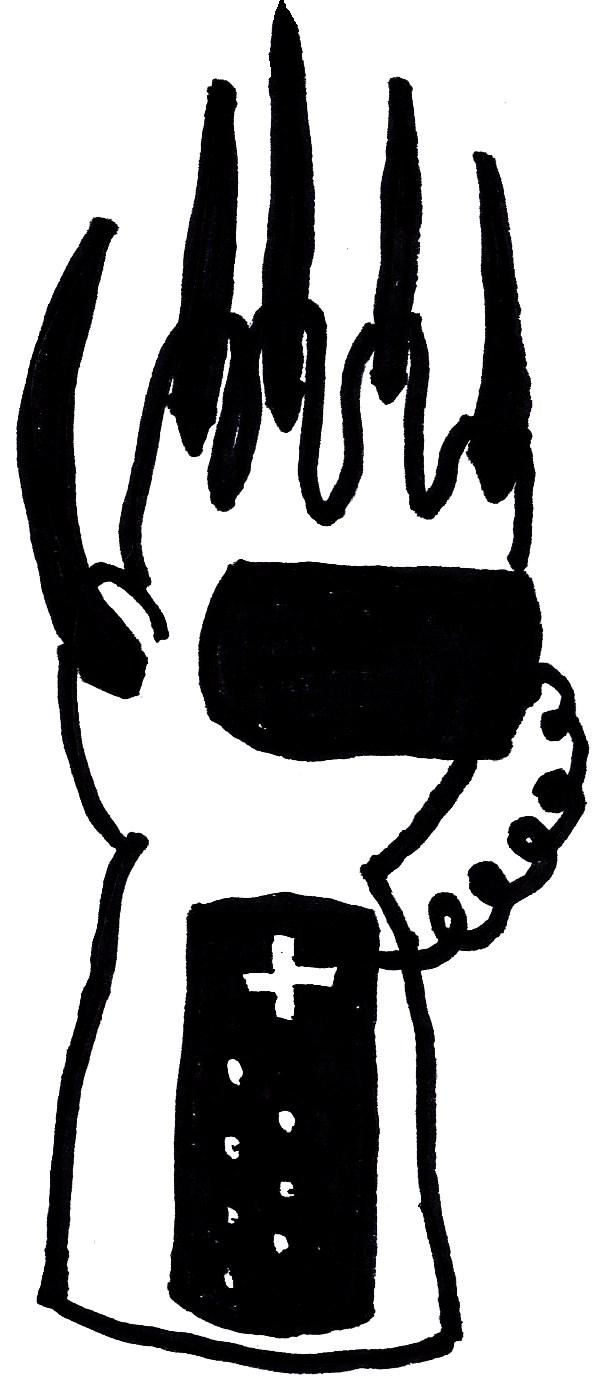
If Potrykus’s darkly comic portrayals of leftover late-90s metalhead machismo have dulled over the years, it’s because he now has more competition in similar comedic voices like Tim Robinson, Conner O’Malley, and Kyle Mooney. Still, there’s an attention to detail here in the collected paraphernalia of the archetype that feels freshly observed: gas station snack piles, vintage porno mags, broken glow sticks, ditch weed, Audioslave karaoke, etc. Like the Freddy Krueger Power Glove prop in Buzzard, he also creates a uniquely upsetting object of his own design here: a piece of BDSM head gear designed to house the suicide-mission explosives in the wearers’ mouths. He also finds some novelty in airing his metalhead slacker routine out in the sunshine, leaving the Relaxer couch behind for a stroll in the woods. His creative dynamic with Burge otherwise hasn’t changed much, and that personal stasis is somewhat the point. Their pointlessly destructive pranks are even less becoming now that they’re the age when fatherhood & male pattern baldness have made their adult responsibilities more immediately apparent. Now their corrosive aimlessness has actual consequences, each remarkably bleak.

– Brandon Ledet 

Mona Lisa and the Blood Moon (2022)

It’s usually a meaningless cliché when people say they were born in the wrong era, but I would make an exception if I heard it from Ana Lily Amirpour.  Since her 2014 debut A Girl Walks Home Alone at Night, Amirpour has been making the exact kind of high-style, low-effort hangout indies that earned easy festival buzz in the slacker culture days of the 1990s.  Two films later, it’s getting frustrating to see her drag that proud burnout energy into the 2020s.  It makes sense that her debut was a small-scale genre picture that coasted on laidback cool, but her resources have expanded greatly since then and she’s still making low-effort slacker films with attention-grabbing premises and a snotty “Fuck you” attitude.  The only difference is she’s now armed with celebrity stunt-casting & more extravagant locales.  Her post-apocalyptic cannibal whatsit The Bad Batch remains the most frustrating waste of her Flashy Debut clout to date, but its follow-up telekinetic fairy tale Mona Lisa and the Blood Moon is only a half-step up from that disappointment.  Like her previous two films, Mona Lisa leans back & hangs out in a way that makes you wonder why Amirpour is making high-concept genre films when she’d clearly have more fun making no-concept, character-driven comedies.  The marquee promises a bubblegum pop version of Scanners or The Fury, but Amirpour is more interested in making a neon-lit Clerks.

Mona Lisa and the Blood Moon isn’t bad; it’s just a little underwhelming.  Imagine if Harmony Korine couldn’t afford to be choosy with his projects and settled for making a straight-to-Shudder Gen-Z update of Carrie for an easy paycheck.  The titular Mona Lisa is an escaped mental patient with violent impulses & telekinetic powers.  She’s effectively a blank slate, having grown up in a padded cell with nothing but a straitjacket & a prison cot to keep her occupied.  Like the DaVinci muse, that internal void invites strangers to project meaning & intent onto her, which says more about their worldview than it does about her own personality (especially the freaked-out cops who want to lock her back up and the scheming hustlers who exploit her powers for cash).  This is Horror of the Hassled, as all Mona Lisa really wants is to hang out, eat junk food, and watch trash TV.  Her potential for violent mayhem is only unleashed when people get in the way of those totally reasonable goals.  Instead of seeking revenge in a cathartic Carrie-on-prom-night showdown with all the jerks who hassle her, she seeks moments of calm at corner stores, laundromats, and TV-lit living room couches.  She’s an out-of-time 90s slacker hanging out in a city of desperate, scheming dirtbags who’d all be better off if they just keep their distance and let her vibe.

Although not a great film, Mona Lisa and the Blood Moon was a great programming choice for opening this year’s Overlook Film Festival.  It’s steeped in plenty N’awlins Y’all flavor to acclimate tourists who traveled here for the fest – starting in the swamps outside the city during Mona Lisa’s initial escape before trudging its way down to Bourbon Street strip clubs, frog ribbits bleeding into grimy DJ beats.  It’s also commendable for offering substantial character-actor roles to Kate Hudson (as a Quarter-smart stripper) and Craig Robinson (as the only kind NOPD officer in the history of the department).  Surely there’s an audience out there hungering for Amirpour’s high-concept slacker thrillers, real freaks who’d love to see Joel Potrykus’s own no-effort comedies dressed up in dingy pop soundtracks & Rainbow Store fast fashions.  I most appreciated Mona Lisa and the Blood Moon as a collection of oddball characters in no rush to do anything in particular.  I, too, would love to live a junk-food life unhassled, downing cases of cheap bear in parking lots with metalhead burnouts and chomping my way through well-done hamburgers at the Claiborne Frostop.  I just wish Amirpour would move away from the vampires, cannibals, and telekinetic witches of her film’s flashy premises, since she doesn’t seem motivated to do anything exciting with those conceits.

-Brandon Ledet

A Great Lamp (2019)

This year’s New Orleans Film Festival was a 30th anniversary celebration, one that (in the social media marketing, at least) looked back at the festival’s gradual transformation from indie film & video showcase to increasingly massive Oscar-Qualifying institution. The no-budget feature A Great Lamp was an excellent programming choice for that occasion, then, as its sensibilities are evenly split between the early indie boom of the late 80s when the fest started and the radical earnestness of modern day. In look & texture, A Great Lamp feels akin to the aimless slacker comedies of yesteryear – the kind of deliberately apathetic, glibly existential art that put names like Jarmusch & Linklater on the map back when Independent Filmmaking was first becoming a viable industry. It’s got the handheld, high-contrast black & white look of a zine in motion (and I’m sure many a Clerks knockoff from festivals past), evoking a bountiful history of D.I.Y. no-budget art. However, in both tone & sentiment there’s no way the film could have bene made by previous generations of artful slackers, as its heart is clearly rooted in a 2010s sensibility.

A homeless, gender nonconforming punk named Max spends their structureless days wheat-pasting a flyer that memorializes their grandmother all over their sundrenched Southern town. Their aimless adventures committing petty, punk-af crimes like jaywalking, vandalism, and sleeping outside are interrupted when they meet a sharply dressed weirdo named Howie. Max is initially put off by Howie’s insistence that they attend a fabled rocket launch that will supposedly occur in three days’ time, but eventually the unlikely pair become incredibly intimate friends & collaborators. Their joint excursions around town frequently border on a mundane version of magical realism and are often interrupted by vignettes of a seemingly unrelated character suffering from the ennui of a much more privileged life, never truly coalescing into a coherent linear narrative. That aimlessness is intentional, of course, as waiting for that mythic rocket launch often feels like waiting for Godot. The unrushed, unfocused slacker vibe of this set-up might have been a patience-tester in any other modem return to Gen-X filmmaking, but Max’s exuberance & sweetness mutates the genre into an entirely new, exciting specimen. Max’s generosity toward Howie’s emotional wounds, their genuine eagerness for new loves & new adventures, and their exposed vulnerability as a grieving, lonely street kid are unusually earnest touches for this tried & true slacker formula. It’s like if Buzzard had a heart instead of a fart.

When director Saad Qureshi introduced the film at our screening, he said it was made during a particularly miserable summer for his social circle; making a movie just seemed like a great excuse to hang out with his friends. It’s likely that summer-bummer motivator and the crew’s total lack of production funds are what dictated the film’s throwback slacker aesthetic rather than any intentional exercise in 90s nostalgia. Still, they chose to accentuate that Gen-X patina by animating hand-drawn scratches & scuffs over the black & white digital images to simulate the look of a vintage 16mm cheapie. These meticulously applied “scratches” are fascinating to watch in a way that an editing filter approximating that same effect couldn’t be, as they often transform into crude animation artistry (provided by Max Wilde, who also performs as our eponymous hero), accentuating the film’s lowkey magical realist bent. This is a film that was made with no money and no real goal beyond making a film, any film, and so its existence is in itself a kind of minor miracle. Making any movie is always a triumph over frustration, logistics, and funding, so turning such limited resources into a work this heartfelt & nimbly crafted is a feat worth celebrating. Despite its modern earnestness, it’s the exact kind of D.I.Y. passion that’s been filtering through film festival lineups for as long as NOFF has been in existence – and with good reason. There’s apparently still new textures & sentiments to be mined from the time-honored slacker tradition.

-Brandon Ledet

Buzzard (2015)

EPSON MFP image

three star

Slacker culture is surely alive & well in 2015, but there was something unavoidably ubiquitous about 90s MTV slacker culture. Pretty much the definition of a low-stakes drama, Buzzard feels oddly old-fashioned in its portrayal of an apathetic underachiever, Marty, who feels like a cultural relic from a bygone lackadaisical era. Cheaply filmed and intentionally flat in style, Buzzard seemingly cares as little as Marty does, echoing his “It doesn’t matter” mantra with every fiber of its being. Buzzard portrays a world of petty victories & major losses where the odds are stacked so highly against Marty that he really has no incentive to try or care about anything and the movie itself has its own apathetic crisis in the same vein.

An angry, depressed loser with a go-nowhere job as a temp for a bank, Marty’s petty victories involve eating junk food, listening to metal, jumping on his bed, watching pornos while wearing a Halloween mask, and scamming suckers for small increments of cash. His half-assed scams typically pay off as long as the person on the other end cares as little about the transactions as he does. The problems that Marty faces only get rolling once the people he’s scamming start to care & take notice of his chump-change crimes. Marty amps up the damages of his mistakes as well when his most significant petty victory of all comes to fruition: a homemade Freddy Krueger glove that gives his “nothing matters” attitude some real-life consequences.

If Buzzard was intentionally looking to cultivate the 90s MTV slacker aesthetic it was astute in including outdated cultural markers like Nintendo NES, CD towers, and Freddy Krueger posters & merchandise. Although its ambitions & style feel like little more than a vintage throwback, its themes exploring the isolation of poverty, corporate culture, and poor mental health still resonate. Although it’s unlikely that Marty will ever approach anything that resembles a “successful” life, it’s still satisfying to watch him achieve short-term goals like the construction of his Krueger glove or eating a massive plate of spaghetti in a luxury hotel room. Due to Marty’s (and Buzzard’s) lack of motivation, regard, or enthusiasm for anything, it’s hard to celebrate too much of his life other than with surface-level observations like “Cool Demons t-shirt, dude,” but in a world where he has very little room to achieve much of anything, that line of shallow praise has considerable amount of significance.

-Brandon Ledet