
When we recently did our podcast episode about The Big Sleep, Brandon mentioned that he had already seen Mickey 17 and briefly shared his thoughts about it. One of the things that he noted was that when Bong Joon Ho makes a movie that is primarily for a Western audience, he foregoes a lot of the subtlety that is maintained in the films that he makes with his homeland in mind. Which is to say that I think he thinks we’re all a little stupid over here (and he’s not wrong). Memories of Murder and Parasite are films with lots of subtext and subtlety (although the latter doesn’t hold back with its themes), while Snowpiercer and Okja are—and I mean this in the most affectionate and respectful way possible—a little obvious. When I think about Bong’s body of work, the scene that comes to my mind most often and the one that stands out most clearly is the sequence from Snowpiercer in which Tilda Swinton’s androgynous Minister Mason delivers a speech to disruptive back-of-train passengers. “A hat belongs on the head,” they say, “And the shoe belongs on the foot. I am a hat; you are a shoe.” Mason’s voice drips with disdain and hatred. Theirs is a demonstration of not just their slavish, religious devotion to class distinction, but just how furiously angry power can be when it reinforces itself, how the veil of civility (barely) conceals a snarling dog.
So when you hear mixed things about Mickey 17, and people talking about how the film is obvious, well, they’re not lying to you. Mickey 17 is an obvious movie. It lacks subtlety, and I can see how people may feel that they’re being talked down to, or how the film’s lack of nuance in its themes could make it feel like a Disney Channel Original version of Valerian and the City of a Thousand Planets, if you’re feeling extremely uncharitable. I would never go that far, but I will say that my expectations were not exceeded.
Three decades from now, dimwitted Mickey (Robert Pattinson) has run into some trouble with a mafia-connected loan shark, alongside his friend Timo (Steven Yeun). The two decide the best solution to their problem would be to escape the dying planet aboard a corporate ship bound for worlds that humans seek to colonize. Timo is able to talk himself into a pilot position immediately, while Mickey signs up to be an “expendable,” a person whose primary role is to take on dangerous jobs during the long spaceflight. Sometime between the present and the not-too-distant future, scientists figured out how to 3-D print cloned human bodies and how to transfer memories between them, allowing for people to essentially create backup versions of themselves in case of death. When the technology was virtually immediately used for criminal (and homicidal) purposes, its use was banned on earth, but due to the dangerous nature of starfaring, one “expendable” is allowed per starship. Aboard, Mickey meets and falls into immediately reciprocated love with Nasha (Naomi Ackie), a security officer. The ship on which they are travelling is commanded not by a seasoned space veteran but by manchild former (read: failed) politician Kenneth Marshall (Mark Ruffalo), a character who exists to be an amalgamation of celebrities cum “leaders” but whose details make him a very (read: not at all) thinly veiled parody of the current U.S. president. Along for the ride is his wife Ylfa (Toni Collette), whose rather thin characterization—she’s obsessed with sauce—goes largely unnoticed as Collette gives another fantastically over the top performance.
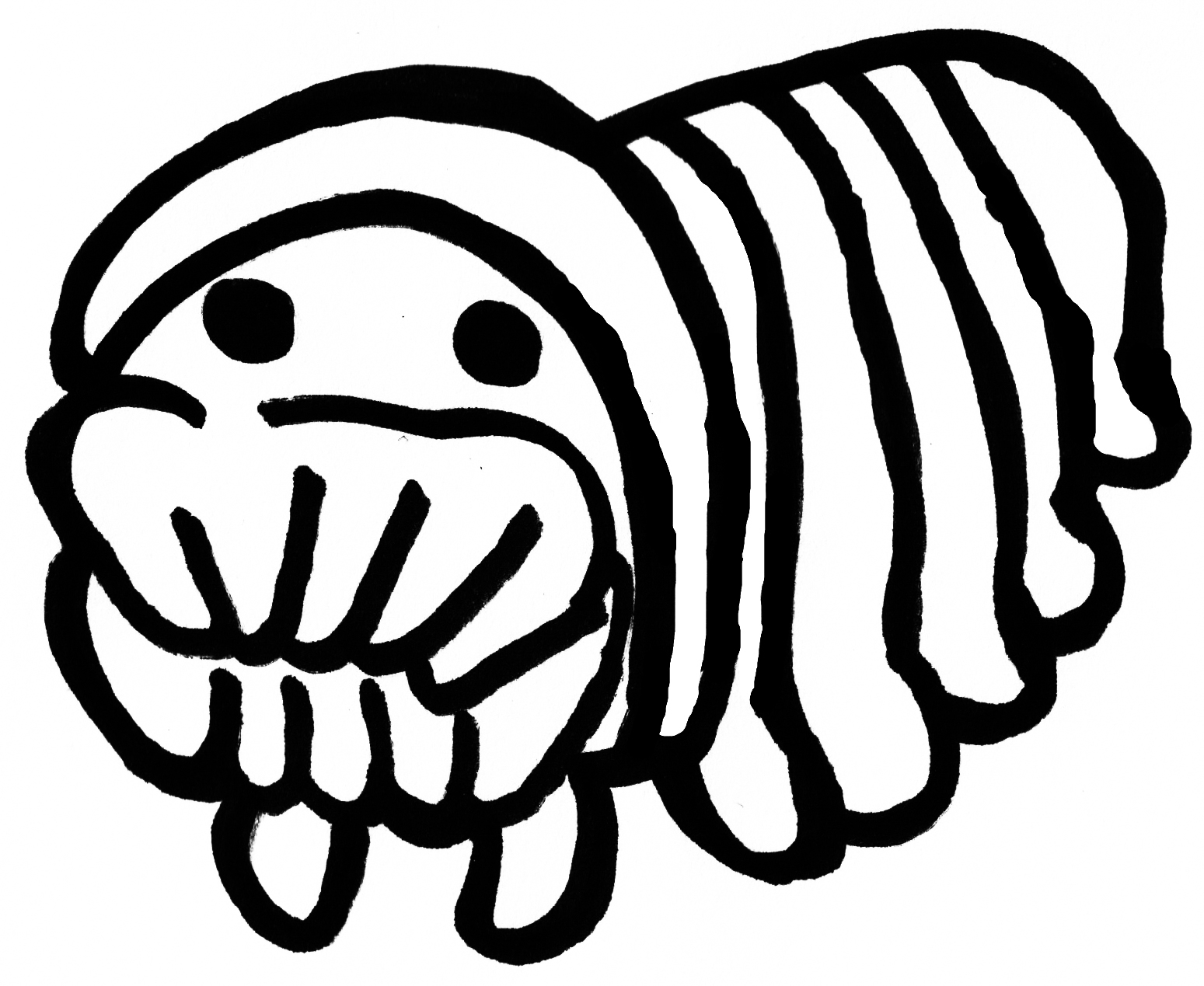
Over the course of their journey, Mickey isn’t just given dangerous jobs to do, he becomes the subject of outright inhumane laboratory tests. His brain gets backed up onto a hard drive every week and then he gets printed out again when he dies. He’s put outside in a spacesuit in order to be exposed to cosmic radiation; he’s used to collect spores from the new planet’s atmosphere so that a vaccination to the diseases present on the planet can be created; he’s exposed to an ongoing series of nerve gas exposures in order to develop new biological weapons. One would also have to assume that, as his rations keep being halved over and over again, one of the Mickeys must have starved to death. It’s not a charmed life, but Mickey is so in love with Nasha that he doesn’t mind dying over and over again as long as they are together. Things go sideways, however, when he’s left to die after falling into a crevasse. He’s rescued by the tardigrade-like aliens that are native to the planet and brought back to the surface, and when he manages to get back aboard the ship, he learns that his replacement, Mickey 18, has already been printed. If anyone learns that there are two of them, they’ll both be killed and the brain backup deleted in accordance with law, and Sen. and Mrs. Marshal are all too happy to kill both Mickey and the tardigrade aliens (whom they dub “Creepers”) despite the indigenous life form’s apparent sentience.
It’s a small detail, but one of the things that I liked at the beginning was that we see Mickey and Timo wearing the shirts for their failed macaron business, which features the slogan “macarons are not a sin.” It’s an unusual slogan but one that makes some modicum of sense since desserts and sweets are often considered an indulgence. However, we later learn in the film that “multiples are not a sin” was a rallying cry for a certain perspective on the question of the legality of the human backup-and-restore program. This all leads us to see how short-sighted Mickey is, as he clearly would have to know enough about the cloning process to see this as a reasonable macaron peddling tagline, but he also isn’t paying enough attention to know what he’s signing up for when he first enlists as an Expendable. Further, his taking inspiration (or willingness to go along with Timo’s inspiration) from a complicated legal and social issue for a myopic macaron business is more insight into Mickey’s doofiness. There is a charm in that, though, and the way that Nasha is instantly smitten with this dumb, lost puppy is endearing, as is her ongoing devotion to him despite the personality changes—some almost imperceptible, some quite obvious—that come with each rebirth.
Shortly after Mickey 17 returns to the ship and discovers that Mickey 18 is already up and about, Mickey 18 takes it upon himself to assassinate Marshall. 17 is able to stop him in time, but this action reveals their existence as multiples and also ends in the death of one of two baby Creepers who came aboard the ship inside of a rock sample. There’s some slapstick, Ruffalo bellows as Marshall, the little cat-sized alien beings run around, then one of them is gunned to pieces. My viewing companion leaned over to me and said “I hated that,” the moment that the sequence ended. I didn’t agree, but I also understand that Mickey 17 isn’t going to win over as many people as Bong’s previous works have; it’s a familiar theme of his in a new environment and with different sci-fi trappings, but for some, it just doesn’t have that same “wow” factor. Unfortunately, I find myself completely sympathizing with the underwhelmed.
-Mark “Boomer” Redmond







 Swampflix