Strangers on a Train (1951)

Strangers on a Train is one of Alfred Hitchcock’s truly great works. The larger body of his thriller work can be largely divided into two subgenres: domestic dramas and stories of international intrigue. The director’s recurring explorations of main characters who are wrongfully accused of something fall into both categories, with domestic “wrong man” thrillers dating all the way back to The Lodger and including other notable examples like Young and Innocent, Spellbound, and, naturally, The Wrong Man. It’s also one of his most frequently homaged and parodied works, with Throw Momma from the Train as the most triumphant example. It’s well worth noting that this might be because the narrative passed through two notable authors before it hit the screen, with the story coming from a novel by Patricia Highsmith (of The Talented Mr. Ripley and Carol fame) and the screenplay featuring work from hard-boiled detective novelist Raymond Chandler, seven years after the man’s first script, for Double Indemnity, which he co-wrote with director Billy Wilder.

Guy Haines (Farley Granger, previously of Rope) is an amateur tennis star traveling by train to visit his estranged wife Miriam, who has become pregnant by one of her extramarital affairs, in order to give her the money that she demands in order to retain a lawyer for their divorce. En route, he encounters an eccentric, lazy manchild of privilege named Bruno Antony (Robert Walker), who recognizes him from both the sports and society pages of the newspapers, as Guy has been romantically linked to Anne Morton (Ruth Roman), the daughter of a senator (Leo G. Carroll), in addition to the notoriety of his sports career. Bruno reveals that he wants nothing more than to draw income from his trust fund but that his attempts at a life of leisure are continuously foiled by his father’s insistence that he work, if not for a living then at least to contribute something and learn the value of a dollar. Bruno guesses at the source of Guy’s agitation and suggests that the two of them “swap murders,” so that Bruno kills Miriam and Guy slays Mr. Antony, in the belief that no one will be able to make the connection. Disturbed, Guy laughs off the suggestion and its supposed cleverness, and gets off at his stop. When he arrives home to Metcalf, Miriam reveals that she’s also become aware of Anne Morton and now refuses to divorce Guy, and will instead force him to support her child by another man. Their row over this is very public, which causes trouble for Guy later after Bruno tracks down and strangles Miriam at a fairground. Despite constant police surveillance, Guy finds himself harassed by Bruno to uphold his end of their “bargain.”

Although many of Hitchcock’s films contain noir elements (Shadow of a Doubt and Foreign Correspondent immediately come to mind), never do they come through as clearly as they do in Strangers on a Train. That really shouldn’t come as much of a surprise given Chandler’s involvement in the picture, as Double Indemnity is the codifying work for many of the elements of that genre. Even in his most beautiful and sumptuous B&W pictures, none of them are as gorgeously monochromatically chiaroscuro as Strangers is. That’s not the only genre convention at play here, either. While we talk about Psycho as the ur-slasher, some of the less lurid elements of the genre are taken from Strangers. One could almost draw a direct line from Bruno’s dark figure cast against the white marble steps of a D.C. government building as a frightened Guy makes his getaway in a cab to the ominous sight of Michael Myers stalking Jamie Lee Curtis in Halloween. There’s even a kind of killer’s P.O.V. shot on the carnival’s “smoochers’ island” when Bruno finds Miriam alone and his hands come into shot with Guy’s lighter. The film also contains one of the best spectacle setpieces in the Hitchcock canon while also remaining one of the most grounded, as it takes something as commonplace and ordinary as a carnival carousel and turns it into a giant, deadly machine. In typical Hitchcock fashion, this is not the fault of the film’s villain, but of incompetent police who fire a gun into a crowd and miraculously only manage to kill the carousel operator.

Rope and Rebecca are usually thought of as Hitchcock’s major works in the queer canon, with Rope having been based on a play in which the characters were explicitly gay (toned down but still noticeable in the film) and Rebecca’s Mrs. Danvers having an erotic fixation on the late Mrs. de Winter that drives her to burn down Manderley. It would be remiss to leave Strangers on a Train out of that discussion, however. In her later years, Highsmith was insistent that Tom Ripley was not written as a gay man (having reread the novel again earlier this year, I call B.S.) and that the queerness of her work was all subtextual. From what I can gather without getting my hands on her novel (I’m fourth in line with a hold on two copies that my library has), the Guy and Bruno equivalents therein have a relationship that is not unlike that of Ripley and Dickie Greenleaf, with one fixated upon the other in a way that transcends their “bargain.” It’s strong enough that, in the book, Guy does go through with killing Bruno’s father, which dramatically changes the ending. I can’t be certain until I give it a read, but I think that I prefer this ending. Why, without it, we wouldn’t get that wonderfully tense scene of Bruno almost losing the evidence he intends to plant in a storm drain!

Ruth Roman is a bit of a cypher here as Guy’s love interest — serviceable, but not that interesting or exciting. However, her inclusion ensures that we get to spend some time with her precocious kid sister, Barbara (Alfred’s daughter, Patricia Hitchcock), who is a total delight. Whenever Bruno meets Barbara, her similar glasses to Miriam’s gives him a flashback to the murder, which almost results in him throttling a socialite at a government function, which is a great scene that calls back to the gorgeous double composition of Miriam’s murder, reflected in both lenses of her fallen glasses. This is one of the larger roles that Alfie gave Pat, and it makes a case that she could have been included more, but perhaps she was too gracious to take the easy nepo baby route to stardom, unlike others who shall remain nameless.

If you’re planning to make November Noirvember, make sure to put this one on your list.

-Mark “Boomer” Redmond
Throw Momma from the Train (1988)

I recently started a rewatch of Star Trek: Voyager (ding!), prompted because the person I’m dating expressed that this series was the most of interest because of their love of Kate Mulgrew, based solely on her performance in Orange is the New Black. We also recently watched Throw Momma from the Train, not because Kate Mulgrew was in it, but because it was on both of our lists, and it was a happy coincidence. 

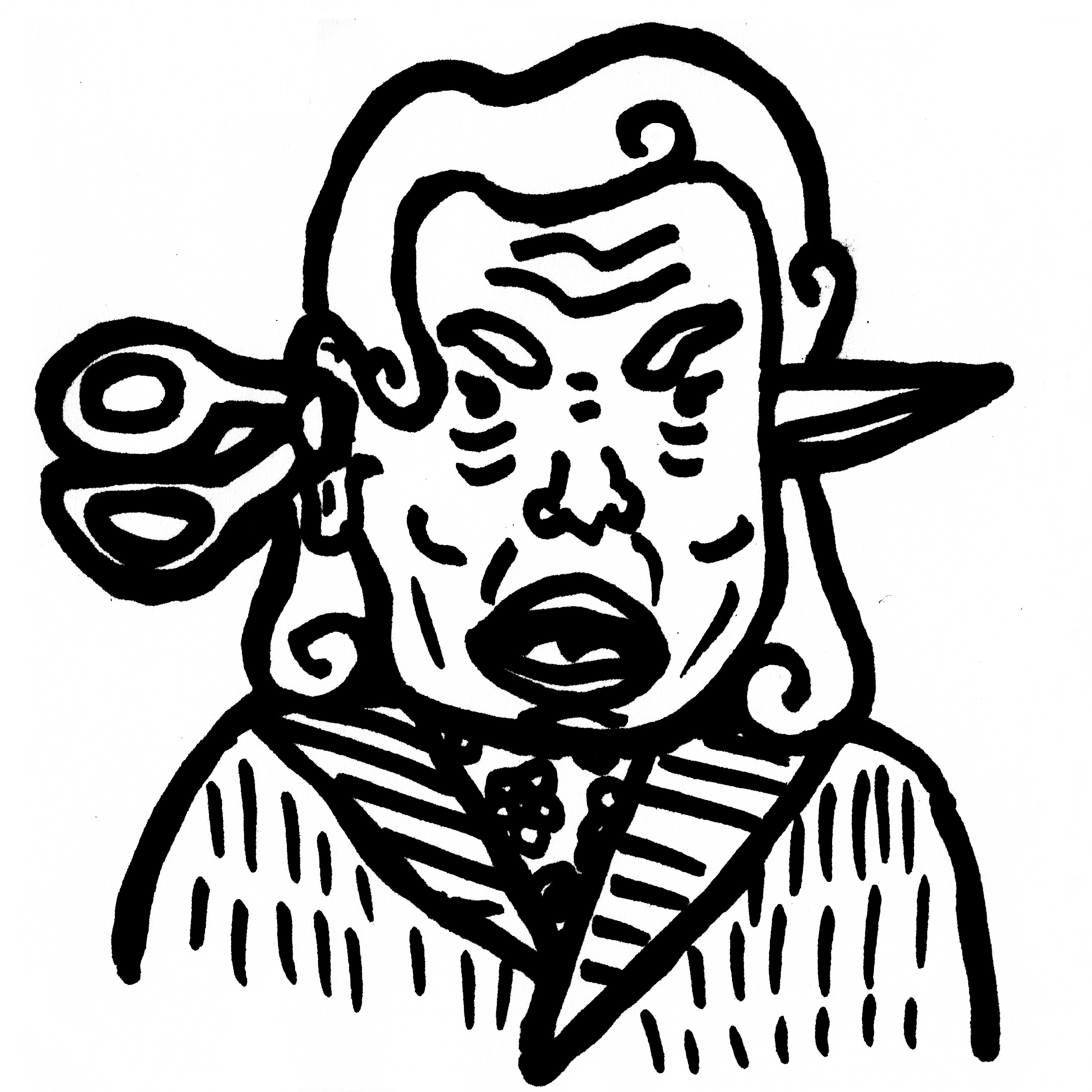
Danny DeVito writes, directs, and co-stars in this late-80s comedy riff on Alfred Hitchcock’s Strangers on a Train, which appears in the film directly as the movie that DeVito’s character, Owen, sees at the behest of his beleaguered creative writing teacher. Said instructor is Larry, played by Billy Crystal, a man whose ex-wife Margaret (Mulgrew) stole the novel he wrote while they were together and is now seeing great success from it — interviews with Oprah, diamond earrings, a palatial Hawaiian estate, etc. Larry’s intense jealousy clouds his mind, and he’s stuck teaching a class of not-very-imaginative adult students who are trying to learn to write. Even among the students, Owen stands out as particularly unimaginative, although his daydreams about killing his overbearing, needy mother (Anne Ramsey) are colorful. When Owen starts to stalk Larry in order to get better insight into the creative process, he learns about Larry’s disastrous divorce and, when Larry suggests he go see a Hitchcock film to better understand how mysteries should be structured, Strangers on a Train just happens to be playing at the local cinema, he happens upon the idea of swapping murders. Misunderstanding Larry’s recommendations, he opts to fly straight to Hawaii and, seizing his opportunity, pushes Margaret overboard on a ferry while she dangles over the side to try and retrieve one of her earrings. Returning home, he now insists that Larry “fulfill” his end of their “bargain” and kill the titular momma, all while Larry tries to avoid being arrested for Margaret’s apparent murder. 

Throw Momma from the Train is a perfect little comedy, so tightly structured and so novel that it’s hard to imagine it being made today. Larry’s would-be relationship with colleague Beth (Kim Griest), who loves trains, allows for a lot of train imagery to be scattered throughout as foreshadowing of the film’s allusions as well as its finale. Ramsey is as perfectly loathsome here as she was just a couple of years prior in The Goonies, with her occasional moments of kindness implying a dementia that has rendered her this awful. Crystal is playing the same character that he always does, but when that character makes you the leading man for romcoms of an entire era, why deviate from the norm? Mulgrew’s character’s role in the story necessitates that she disappear fairly early in the runtime, but she makes a great meal out of her scenes, and it’s always fun to see her cut loose a little. It’s DeVito who’s absolutely wonderful here, playing Owen as someone so simple he’s utterly incapable of malice but is nonetheless too dim to be manipulated, at least intentionally. As an actor, his career has largely been made up of playing scoundrels and shitheels, and even though he is the antagonist of his film, you can never hate him. 

The film also gets a lot of mileage out of Larry’s class of wannabe writers. One of them is in the process of crafting a coffee table book entitled One Hundred Women I’d Like to Pork, which gets a nice payoff when we see the publication at Larry’s house in the film’s ending. My absolute favorite, however, has to be Mrs. Hazeltine, whose concluding paragraph to her story is, in its entirety: “‘Dive! Dive!’ yelled the Captain through the thing! So the man who makes it dive pressed a button, or a something, and it dove. And, the enemy was foiled again. ‘Looks like we foiled them again,’ said Dave. ‘Yeah,’ said the Captain. ‘We foiled those bastards again. Didn’t we, Dave.’ ‘Yeah,’ said Dave. The End.” If you’ve ever taken a short story class, it’s frighteningly familiar. 

-Mark “Boomer” Redmond

Rene Brunet Jr., Hitchcock, and the Prytania’s Classic Movies Series

Oddly, the only time I’ve ever written about recently deceased local legend Rene Brunet, Jr. for this site was when I saw the storied theater operator introduce Cinema Paradiso for the Prytania Theatre‘s 100 Year Anniversary two long years ago. Brunet’s family has been in the business of local cinema operation since the 1900s and, at 95 years old, Rene had owned & operated many local cinemas himself over his seven decades in the profession. Within my lifetime, his name had become synonymous with the Prytania Theatre, which he had operated since the mid 90s. The last single screen neighborhood theater still playing movies in Louisiana, the Prytania is the physical manifestation of Brunet’s love of cinema history, a passion he’d fed into the co-authored book There’s One in Your Neighborhood: The Lost Movie Theaters of New Orleans and, more importantly (to me), the theater’s weekly Classic Movies series. Since the Classic Movies series began almost a decade ago, Brunet had been introducing his old favorites from cinema past every Sunday & Wednesday morning he could physically make it, usually with the same kind of anecdotes he preceded that Cinema Paradiso screening with. I’ve personally become very attached to those screenings over the past few months especially, thanks to the Prytania’s partnership with the New Orleans Film Society. Given that a particular week’s selection looked to be of interest, I’d make those screenings an essential part of my weekly movie-going routine. These aren’t the 35mm prints or 4k restorations of fancier art houses around the country (although the Prytania often programs those as well). Most films that screen for the Classic Movies series aren’t even presented in their intended aspect ratio. Besides the basic thrill of seeing them big & loud with an audience, Rene Brunet, Jr.’s passion for each selection is largely what made those screenings a weekly draw and I never heard him more passionate than he was when he was talking about Hitchcock.

The last movie Brunet introduced at those Classics screenings was The Wizard of Oz, a viewing experience that completely melted my mind in its Technicolor vibrancy, despite having grown up with its eternal repetition in television broadcasts. After a couple behind-the-scenes anecdotes, Mr. Brunet sweetly asked us if there were any bad witches in the audience, admitting that he could only see good ones. He would always deliver these routines from the perch of his wheelchair at the front of the crowd. Then, as he prompted the projectionist to start the feature, he’d be wheeled to the back while reminding us off-mic, as if he’d forgotten, to join him in the lobby for conversation after the movie, where “Coffee and cake are complimentary!” I never spoke to him in the lobby myself, but there was always something adorable about watching him hold court over the older patrons in his Three Stooges necktie as I made my way into the Sunday afternoon sunshine. I’d even come to get used to, if not sadly miss, the loud wooshing sounds of his oxygen tank at the back of the theater during the pictures, which was audible no matter where you sat. In a lot of ways, The Wizard of Oz was the perfect final picture to share with Mr. Brunet. Not only does it encapsulate the Old Hollywood movie magic he attempted to promote with the Classic Movies programming, but the pre-screening music at the Prytania is often a piano rendition it “Somewhere Over the Rainbow,” so that space & that film are already forever linked. I will say, though, that I had come to most closely associate the series with the work of Alfred Hitchcock. I never knew Brunet personally enough to suppose who is favorite filmmaker might have been, but I got the sense that he always treated Hitchcock screenings with a special care & enthusiasm. They were always the highlight of the Classic Movies schedule and it’s downright eerie watching the director’s work at those Sunday morning screenings in Brunet’s absence.

In particular, I’ll always owe Rene Brunet’s enthusiasm in presenting To Catch a Thief for the series, a screening he prefaced with anecdotes about Hitchcock’s hatred of eggs & where to look for that distaste in the film. To my surprise, what’s often dismissed as one of the director’s more frivolous works quickly rocketed up to one of my favorites in his catalog. Surely, the benefit of seeing that Technicolor sex comedy (which is superficially dressed up like a heist thriller) big & loud with an appreciative crowd had a large part in my enthusiasm for the work. However, I’ve been to two Hitchcock screenings since Brunet’s career-concluding presentation of The Wizard of Oz and, while I’m not sure exactly how much the effect of his absence had to do with my reaction, I just didn’t feel nearly as strongly. For the deviously taut thriller Stage Fright, I may have been worried by the video introduction from Mr. Brunet, whose physical absence was alarming, given his age & the appearance of his health. By the time Strangers on a Train was presented, the news he had passed was weeks in the rearview, but still a difficult adjustment. This was the first time I’d ever seen Strangers on a Train, which is just as slyly funny & visually impressive as To Catch a Thief, but didn’t hit me with the same intensity. Several sequences within the film undeniably felt like Best of All Time cinema landmarks: the Love Tunnel stalking, the Life or Death tennis match, the spectacle of the out-of-control carousel crash, etc. I just wasn’t as enraptured with it as I was with To Catch a Thief‘s much cheaper sex jokes & Technicolor pleasures. That likely has a lot to do with my generally trashy tastes and the expectation levels set by the film’s respective reputations, but I’m sure the environment I saw them in didn’t help Strangers much either. With To Catch a Thief I saw a local legend cheerfully introduce a little-loved work from what appeared to be one of his favorite artists. With Strangers on a Train I had to reflect on the reality that I’d never share that experience with Mr. Brunet again, which is a sad enough circumstance to sour any theater-going experience. He wasn’t there to hold my hand through another long-overdue Hitchcock initiation and the absence of his enthusiasm was immediately felt.

While it is emotionally distressing that Rene Brunet, Jr.’s physical presence will no longer be a part of the Prytania or its Classic Movies series, his influence on that New Orleans culture cornerstone is promised to continue in perpetuity. His son Robert Brunet continues on as a co-operator for the theater as it transitions into its second century serving the neighborhood. His portrait that hangs in the lobby has been updated with a plaque commemorating his passing. Even more endearing is the decision to have Rene continue to introduce the Classic Movies series even though he can’t be there to offer complimentary coffee, cake, and conversation after the credits roll. When I saw Strangers on a Train, the feature was preceded with a short video clip of Mr. Brunet speaking to the audience from a seat within the theater, enthusiastically addressing us with a “Welcome to the big screen!” They even retitled the series Rene Brunet’s Classic Movie of the Week, a tweak I pray that sticks indefinitely. Even beyond those weekly screenings and that small brick building on Prytania Street, Brunet’s presence is something that’s going to forever linger in New Orleans film culture. Every time I see a Hitchcock classic for the first time I’m going to hear his excited voice encouraging me to take notice of the tiny details and backstage lore. Every time I attend a local film fest or indie cinema I’ll have to appreciatively keep in mind the loving care he put into keeping that culture alive, especially in a time when it felt like AMC was going to eat this city alive. Rene Brunet, Jr. is already dearly missed, but his near century-long enthusiasm for the local cinema experience means he’ll always be a part of how people in this city watch & appreciate movies, especially the classics.

-Brandon Ledet
