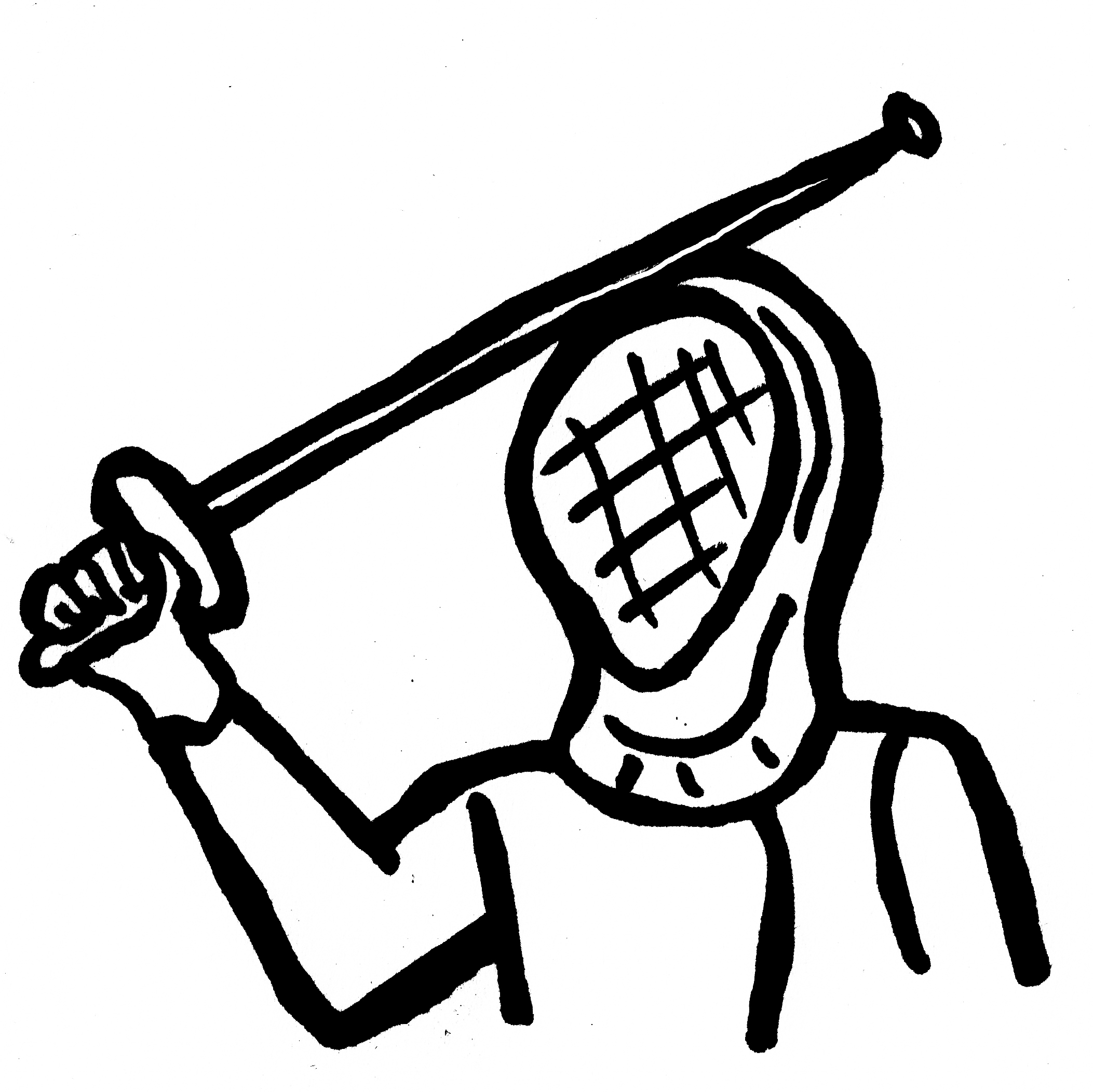
Agon (2026)

During the 2024 Olympic Games in Paris, I caught a couple live TV broadcasts of women’s fencing matches, expecting to watch some good old-fashioned swordfighting from world-class athletes. It turns out, modern fencing looks a lot more like retro sci-fi B-movies than the Old Hollywood swashbucklers I was picturing. I expected the competitors to be protected by masks & padding, sure; I just didn’t expect them to be plugged into electronic sensors, with each of their scores marked by lights & beeps when they completed a circuit with their foils, seemingly making the on-site referees just as vestigial as they are in the WWE. The new Italo arthouse headscratcher Agon presents the first cinematic instance I know of where modern, computerized fencing is represented at length onscreen, no longer relegated to bi-annual Olympic sports broadcasts. In fact, the sci-fi futurism of modern sports is just about the only thing on first-time writer-director Giulio Bertelli’s mind, as he spends Agon‘s entire runtime pondering & cataloging the various machines that have transformed the Olympic Games into an uncanny, inhuman abstraction rather than a straightforward demonstration of pure athletic prowess. It’s a surprisingly alienating, dissociative approach to the sports-movie formula, boldly announcing that the techno future of the sports drama is here, and it is terrifying.

In a semi-documentary style, we watch three women train & compete in various combat sports for a fictionalized version of the Olympics called The Ludoj Games. One is a fencer, who is physically plugged into the various computer sensors that have gradually transformed the sport into a live-action video game. Another is a sharpshooter, who is convinced that her own sport will become a literal video game in the near future, replacing traditional firearms with laser rifles. The third is a judo fighter, who you’d think would be safe from the encroachment of computer electronics in her sport, except that every aspect of her training and bodily maintenance requires high-grade, cutting-edge medical tech. Watching these women work at their craft is both chilling & beautiful, literalizing the ways that athletes’ bodies are precisely calibrated machines by surrounding them with endlessly bizarre, precisely calibrated machines. They hone their skills in abstract video game simulations. They measure their lung performance on treadmills by wearing Darth Vader-style breath masks. They reveal hidden injuries through X-rays & MRIs. They relieve stress between matches by streaming hentai on their smartphones. The entire film plays like a high-end version of those brain-rot video compilations of “satisfying factory machines,” minimizing the athletes’ bodies to an organic product of highly coordinated industrial processing.

Beyond its pronounced fetishism for the modern tech of sports medicine, Agon seems particularly interested in the exact tipping point where the simulated violence of combat sports turns into actual, physical harm. Very early on, our buff judo fighter suffers a painful knee injury, and we watch surgeons reconstruct her newly bionic body in intense documentary gore before she attempts to rehab her way back to the top of her field. Soon after, the sharpshooter lands in hot water with her financial sponsors over amoral hunting practices she’s engaged in outside the games, effectively transgressing by using her instrument for the exact purpose it was initially designed for – give or take her choice of target. It’s initially unclear what the fencer’s personal crisis with unstimulated violence could possibly be, and then it turns out she’s got it the worst out of the trio (especially once it’s revealed in the end credits that her own tragedy is inspired by a real-life freak event in the sport’s recent past). When the sharpshooter complains to an official representative of the games that she’s being professionally punished for her private behavior, the rep shoots back that, “There’s no room for violence here.” That’s a little rich, considering that the only sports profiled here are all simulations of violence, more military exercise than wholesome pastime.

When our psuedo-violent, semi-computerized athletes finally compete in The Ludoj Games, there is no live audience on hand to witness their technical achievements & failures. The games are staged in an abstracted black-box void, only to be witnessed by on-site officials, expensive camera rigs, and the all-important digital sensors. Obviously, this choice is at least partially driven by budgetary restraints, but Bertelli finds a way to make that limitation emphasize the cold post-humanism of modern Olympic sports. His interest in the subject appears to be somewhat personal, too, considering his advertised background in offshore sailing and, subsequently, the production of offshore sailing equipment. Not for nothing, but Bertelli also has familial ties to the fashion-industry royalty of Prada & Miu Miu, which is a dynasty he has attempted to professionally distance himself from but still shows in his filmmaking style. There’s a couture streetwear coolness in the way his three athletes model their sports’ various far-out gadgets, even as Bertelli dwells on the uglier, grotesque aspects of modern Olympic physicality. The movie is overall just as hip & fashionable as it is alienating & disorienting. Even the title “Agon” reads like the name of a fictional fashion brand, despite its intended academia as the Greek word for “conflict,” once used to describe the ancient, pre-computerized Olympics, BC.

-Brandon Ledet
I, Tonya (2017)

I can already tell I, Tonya is going to be bitterly divisive with most audiences, since I’m harshly divided on the film myself. For the first half hour I was totally onboard with the humorously cruel rehabilitation of disgraced figure skater Tonya Harding’s public persona. Margot Robbie delivers a phenomenal, humanizing performance as Harding; Allison Janney is even more of a force to be reckoned with as her terror of a mother. Both women are deeply flawed, but recognizably genuine human beings from a harsh economic & social background, portrayals that transform a tabloid sideshow into something resembling empathy. Then the beatings start. I, Tonya aims for a tone similar to early Alexander Payne works like Election & Citizen Ruth, where the mood alternates rapidly between quirky comedy & pitch black cruelty. The film is far too tonally messy and not nearly confident enough in its structure for me to always make those leaps, however. It’s difficult to be in the mood to laugh half a breath after watching your protagonist get punched full force in the face, thrown against a wall, pulled by the hair, cornered with a gun, and so on. The violence leveled on Harding throughout I, Tonya certainly makes her more of a recognizably sympathetic figure than what you’d gather from her news coverage. However, the nonstop beatings are near impossible to rectify with the Jared Hess-style Napoleon Dynamite quirk comedy that fill in the gaps between them. The film either doesn’t understand the full impact of the violence it portrays or is just deeply hypocritical about its basic intent.

I, Tonya is told through several contradictory, direct to the camera monologues that allow characters to reshape public perception through voice-over guidance. As Harding, Robbie delivers two clear mission statements for the film through this device. In one, she complains that she’s been beaten and abused both physically & emotionally throughout her entire life without any public sympathy, while Nancy Kerrigan is America’s Sweetheart for being whacked one time in the kneecap. The dark, matter of fact humor of that statement is representative of the film’s most subversive strengths, which completely flip an outsider’s perspective on the figure skating world’s most infamous controversy. The other mission statement line is where I, Tonya completely loses me. Harding bluntly accuses the audience of continuing her abuse by lambasting her in the press after her husband & his conspirators were caught rigging the competition by bashing Kerrigan’s knee. Pointing an accusatory finger at the audience in this way might work in a more self-aware, tonally sober film, but it feels completely out of line for a black comedy that exploits Harding’s hardships for cruel humor, essentially continuing the sideshow aspect of her story that it aims to condemn. I, Tonya wags its finger by jarringly interrupting its quirky character humor with sudden & brutal acts of deeply upsetting physical violence leveled on its star. The movie continually invites you to enjoy the humor of her situation’s absurdity before telling you you’re scum for obliging. It tosses out free candy only to slap it out if your hand and call you a greedy fuck for accepting it. Separately, I was onboard for Harding’s earnest public rehabilitation and the awkward humor of her working class background. I just found the way violence & audience-shaming editorializing was used to fuse those objectives together to be deeply unpleasant, if not morally repugnant. This is a spiritually ugly film, which might be fine if it were confident enough in its own convictions to own up to that ugliness.

Because I, Tonya‘s moral self-contradiction already had me cornered in a defensive position, I found myself picking at its formal shortcomings in a way I might not have if I were more fully convinced by its tone & objectives. There’s an uncanny valley quality to the CGI of its skate routines that feels both like a distraction & a terror. Its 70s-specific needle drops (despite telling a 90s story) of songs like “Spirit in the Sky” & “Break the Chain” feel as unwittingly cliché as the soundtrack of Robbie’s last major effort, Suicide Squad. The direct-to-the-camera narration is choppily arranged & inelegantly employed, especially as the film largely drops its over-the-top comedic tone in its never-ending third act. Janney & Robbie are uniformly wonderful, but they feel like they’re floating detached from the narrative of their worthy, but mismatched costars. The way real life footage of the conspirators in Kerrigan’s attack is used to justify the continued sideshow aspect of the work soured me even more on the film’s moralistic finger-wagging and sudden bursts of bone-crunching violence. Even the Miramax logo in the opening credits churned my stomach, for reasons that should be obvious. Yet, if I were more convinced by the confidence in the tone & humor of I, Tonya I could totally see myself forgiving or even embracing this scrappy sense of crudeness in craft. Part of the reason I find the film so frustrating is that it’s almost a success, but its self-contradiction is just miscalculated enough for everything to feel like a gut-wrenching failure. I honestly spent most of the picture wishing that I was rewatching the much less prestigious Melissa Rauch comedy The Bronze instead. It’s a trashier, less tonally ambitious version of an Olympics-setting black comedy than what I, Tonya aims for, but at least it doesn’t spit in your face for laughing at its own jokes.

-Brandon Ledet

The Bronze (2016)

EPSON MFP image

fourstar

I went into The Bronze not knowing who Melissa Rauch is & came out an instant fan. The problem is that anyone following Rauch from her run on the wildly successful (and wildly mediocre) CBS sitcom The Big Bang Theory is likely to have the exact opposite experience. The Bronze is a mercilessly dark comedy much more in line with Jody Hill-helmed cult comedies like Foot Fist Way, Eastbound & Down, and Observe & Report. Its pitch black humor is hilariously misanthropic for audiences with the right temperament, but also isn’t the kind of entertainment that has mass appeal. Anyone going into The Bronze looking for Rauch to deliver the broad, calculated comedy she’s associated with on The Big Bang Theory is going to be shocked by the loose, raunchy cruelty she brings to the screen here. Rauch helms The Bronze as a writer/lead actor & the film reveals that her personal sense of humor has a wicked mean streak to it that is sure to alienate a lot of fans, but also draw in some new devoted ones, myself included.

Much like the archetypal Danny McBride antihero in the Jody Hill content mentioned above, Rauch plays a has-been athlete with an oversized ego terrorizing the small town folks who are nice to her because they’re easily awed by her modest fame. The Bronze opens with Hope Ann Gregory (Rauch) masturbating to footage of her glory days when she became a local hero by bringing home an Olympic bronze medal in gymnastics. Her life has been a continuous rut since that youthful victory and Hope has slowly, bitterly grown into the world’s oldest teenager. She wears her hair in a ponytail, sleeps in until the afternoon, wastes her days getting high & hanging out at the mall, steals spending money from her dad (whom she lives with) when her allowance (!!!) isn’t sufficient enough to support her “lifestyle”, etc. When her dad threatens to cut her off & force her to get a job, she threatens to “suck dirty dicks” for cash to make him feel guilty. It takes an old friend’s suicide & posthumous blackmail to shake Hope out of her arrested state of adolescence. As she finds a second life as a coach & a mentor for gymnastics’ next generation, she learns what it means to be truly selfless & how much value there is in true companionship. Just kidding. All that changes is that she allows her petty jealousies & shameless narcissism to spread out & poison everyone she interacts with instead of keeping it confined to her father’s basement.

Besides the dark humor of its protagonist’s merciless selfishness, The Bronze also sets out to alienate audiences with an especially raunchy assault of sex humor. Hope is eternally horny in a purely animalistic, Jerri Blank sort of way. She’s constantly barraging her mild-mannered, Midwestern counterparts with phrases like”cock hole” & “clit jizz” and lights up the screen with the film’s centerpiece: an epic sexual encounter that could only be pulled off by a pair of oversexed Olympic gymnasts. Some of my favorite comedies of the past decade have been this gender-swapped version of raunch cinema (The To Do List, Appropriate Behavior, Wetlands, etc.) and The Bronze fits snugly among them. Combine that genre subversion with the film’s heartless cruelty, the novelty of its gymnastics-world setting, and expert use of my all-time favorite movie trope, the plot-summarizing rap song, and you have a strong contender for a future cult classic. Melissa Rauch’s twisted creation has the potential to alienate some of her network television-oriented fan base, but it also promises to earn a more rewarding longevity for fans of this kind of oversexed, misanthropic comedy. Personally, I’m already prepared to give it a second watch & introduce it to some like-minded buddies with the right kind of barbaric sense of humor.

-Brandon Ledet
