Wicked: For Good (2025)

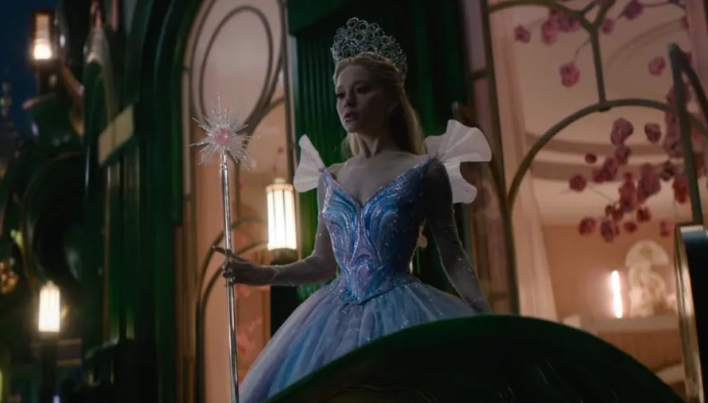
In the lead up to the release of last year’s Wicked—which surprised no one by turning out to be an adaptation of only the first half of the hit Broadway musical inspired by Gregory Maguire’s revisionist novel of the same name—I saw a spectrum of positive to negative press from legitimate outlets and fawning praise from musical fans and Ariana Grande devotees. My thoughts were mostly positive, finding it a perfectly pleasant, if incomplete, story with passable-to-admirable performances. I didn’t understand then why people seemed so upset about the film’s visual stylings; it wasn’t perfect, but I went into that film expecting to hate it and came out pleasantly surprised. It didn’t end up on my end of the year list, however, despite my positive review; I had a good time, but it didn’t stick with me. As early as the days following the premiere of 2024’s Wicked, those most familiar with the Wicked musical cited that it infamously has a weaker second half than its first and that this downward momentum would not serve the second film well. Their foresight was mostly true. Early reviews of Wicked: For Good moved the needle in an even more negative direction, as those who came without the foreknowledge of the overall quality of the back half of stage production were underwhelmed by this concluding outing. The reception has been mixed at best, so I once again went into this film expecting that I wouldn’t have a very good time, but once again, I enjoyed myself. Not as thoroughly as last time, and I expect this one to stick with me even less, but less enchantment didn’t mean I wasn’t charmed at all. 

The film picks up five years after Elphaba (Cynthia Erivo) oooh-wa-ah-ah-aaaaah’d off into the western sky. In the interim, her sister Nessarose (Marissa Bode) has taken over their late father’s position as governor of Munchkinland, with Munchkin Boq (Ethan Slater) as her primary attendant. The Wizard (Jeff Goldblum) is continuing his wholesale prosecution of the talking Animal community while winning the public relations war on two fronts: the impending completion of a major public works project, The Yellow Brick Road (which was built with enslaved Animal labor), and—via Madame Morrible (Michelle Yeoh)—a constant output of propaganda painting Elphaba as the terroristic “Wicked Witch of the West.” The opposite of wickedness is goodness, and to that end, Morrible and the Wizard have created a cult of personality around Galinda (Ariana Grande), who has now taken the name “Glinda” and accepted the title “the Good.” It’s so like a modern P.R. campaign that they even throw in a sudden celebrity marriage between Glinda and Prince Fiyero (official sexiest man alive Jonathan Bailey), who has been appointed to the Emerald City’s special “Gale Force” (get it?) tasked with taking down the Wicked Witch. 

There’s a big love pentagon going on here. Nessarose is in love with Boq, who was encouraged by Glinda to show Nessarose attention and affection in their college days, and who is ready to move on but has been hesitant to do so because she’s still grieving her father (and Elphaba, in a different way). Boq is in love with Glinda and has been since they were all in school together, and learning of her impending wedding to Fiyero causes him to try and depart for the Emerald City, only for Nessarose to go full fascist and shut down Munchkinland’s borders to keep him from leaving her. Glinda, despite still being a bit of an airhead, is deep enough to know that the lack of happiness she feels despite public adoration and supposed romantic fulfillment means that it’s all hollow underneath; nevertheless, she genuinely loves Fiyero. For his part, Fiyero is taken aback by the sudden announcement of his wedding (no proposal was made by either party) and feigns positive feelings about this development, continuing to hide his pining for Elphaba. She feels that same love in return, but all she can see from her vantage is the Emerald City-propagated public image of him as a righteous crusader against the vile Wicked Witch. 

These interpersonal relationships are more integral to the story than the supposed greater political situation, the subjugation of the sentient Animals, although there’s more here than in the stage musical. The film opens with an action sequence in which Elphaba disrupts the building of the yellow brick road by freeing the Animals being used as slave labor, and she later interacts with a group of animals who are fleeing Oz via a tunnel under the road, begging them not to give up. Later still, she discusses a truce with the Wizard, with her final demand being that he release the flying monkeys, to which he agrees, only for her to discover an entire second chamber full of abducted Animals in cages, including her goat professor from Shiz University. She releases the animals, which stampede through Glinda and Fiyero’s wedding, and then this subplot is mostly forgotten about as the film moves on to putting all the pieces on the board in the place that they need to be for the events of The Wonderful Wizard of Oz (the book) and perhaps more importantly The Wizard of Oz (the movie) to occur, getting only a moment of lip service in the conclusion as Glinda gives her big speech. 

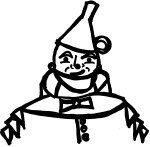
That table-setting is this film’s biggest hindrance, and why the back half of this story feels less organic and emotional than the first part. Nessarose has to decide to take advantage of the ancient spell book being open to try and use magic to make Boq stay with her, causing him to lose his heart. Elphaba has to try additional magic to save him, which means turning him into the Tin Woodsman, because eventually turning into the Tin Man is the only reason Boq is here in the first place. Madame Morrible wants to lure Elphaba out of hiding, so she sets out to hurt her sister. In order to do so, she creates the tornado that brings Dorothy’s house to Oz and crushes her in the street, because that’s where this story has always been going. The Cowardly Lion stuff is borderline irrelevant, other than his accusation that she was responsible for creating the winged monkeys rattling the Animals’ faith in her, but it’s here because that’s where this story has always been going. The most egregious is the fate of Fiyero. After holding his own ex-fiancee at gunpoint in order to get the Gale Force to release Elphaba, he doesn’t go with her, citing that it would be “too dangerous.” What? More dangerous than them dragging him off to torture him? Moments later, in “No Good Deed,” Elphaba sings that she presumes that they are in the process of beating him to death, if they haven’t already; I’m not really sure how that’s better than going on the run together? There’s absolutely no reason within this narrative for Fiyero not to run off with Elphaba in that very moment, but because we have to move the pieces into place for the story of The Wonderful Wizard of Oz to happen, he has to stay behind so that Elphaba’s concern for him can drive her to cast a spell that—surprise!—turns him into the Scarecrow we all know and love. It’s a necessary evil, but it doesn’t exactly flow the way that last year’s release does. 

This film is also goofier than the first, and it feels like it comes from carelessness, except when it’s audaciously borrowing elements from the MGM film. Elphaba levitates her paraplegic sister by enchanting their late mother’s silver (as they were in the book) slippers, but her power makes them glow red so that Universal Pictures can skirt MGM’s copyright for Judy Garland’s ruby slippers. Two of the songs featured in the film are new to the adaptation; one of them is Ariana Grande as Glinda as Britney Spears in the “Lucky” video. I’m serious. 
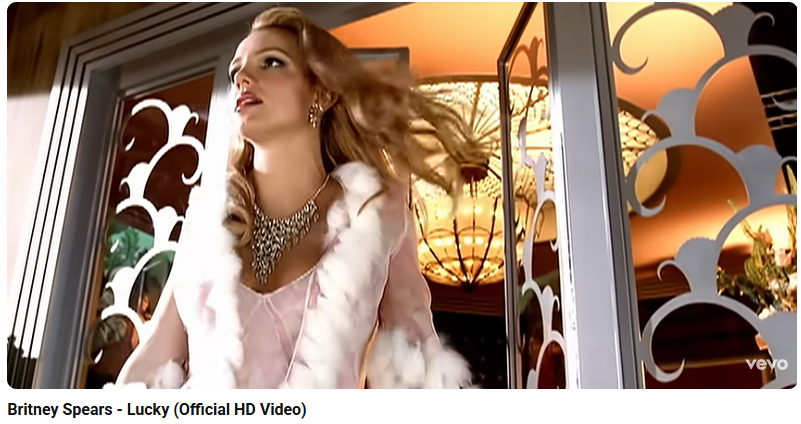
The second is a new song for Elphaba when she tries to inspire the Animals to stay and fight, and it’s called “No Place Like Home.” That’s trying too hard. It’s difficult not to notice since this film wraps up the narrative threads of everyone but the little girl whose fate is left unknown, given that Glinda is a witch with no magic (which is a miserable creature indeed) and can’t send her back to Kansas. Admittedly, this does lead to a funny background bit where the Wizard takes off in his balloon and leaves Dorothy behind, this viewpoint implying that he was running for his life before Glinda decides to turn his exile into imprisonment. About half of the laughs I had in the theater were clearly intentional on the film’s part; the other half … I’m not so sure. After Elphaba’s disruption of the road construction, the film’s title suddenly appears over an image of a government overseer fleeing through fields of flowers as tense, dramatic music plays, and it’s so jarring it feels like an intentional joke. When Elphaba confronts the Wizard for the first time in this film, he playfully bonks himself with a yellow brick, which he then demonstrates as being light and bouncy before tossing it away. Was that a bit that Goldblum did on set with a prop brick that they decided to keep in? It’s bizarre. At other times, I merely groaned as the film forced in references, or when we had to make a hard right in a given character’s storyline so that they can get railroaded on track for their respective stations of the canon

I’m being pretty negative about a film that I had a pretty decent time watching, so it’s worth noting that there’s still a lot to enjoy, even if it’s rushed in some places and sluggish in others as it chugs toward its inevitable conclusion. Erivo’s pipes are still masterful, and the songs are sufficiently rousing even if they’re not as inspired as the last time we were all here. It has come, it will go, and by this time next year we’ll have mostly forgotten about it. Once its theatrical run is completed, the overwhelming tie-in advertising (Bowen Yang and Bronwyn James put in two brief appearances as their sycophant characters from the first film in order to justify their appearances in For Good-themed ads for Secret Clinical deodorant) will come to an end, and people will mostly remember the first film fondly, and this one little if at all. Don’t take it too seriously, have a good time, and perhaps see it late enough in the evening that there will be a minimal number of children in your audience (trust me).

-Mark “Boomer” Redmond
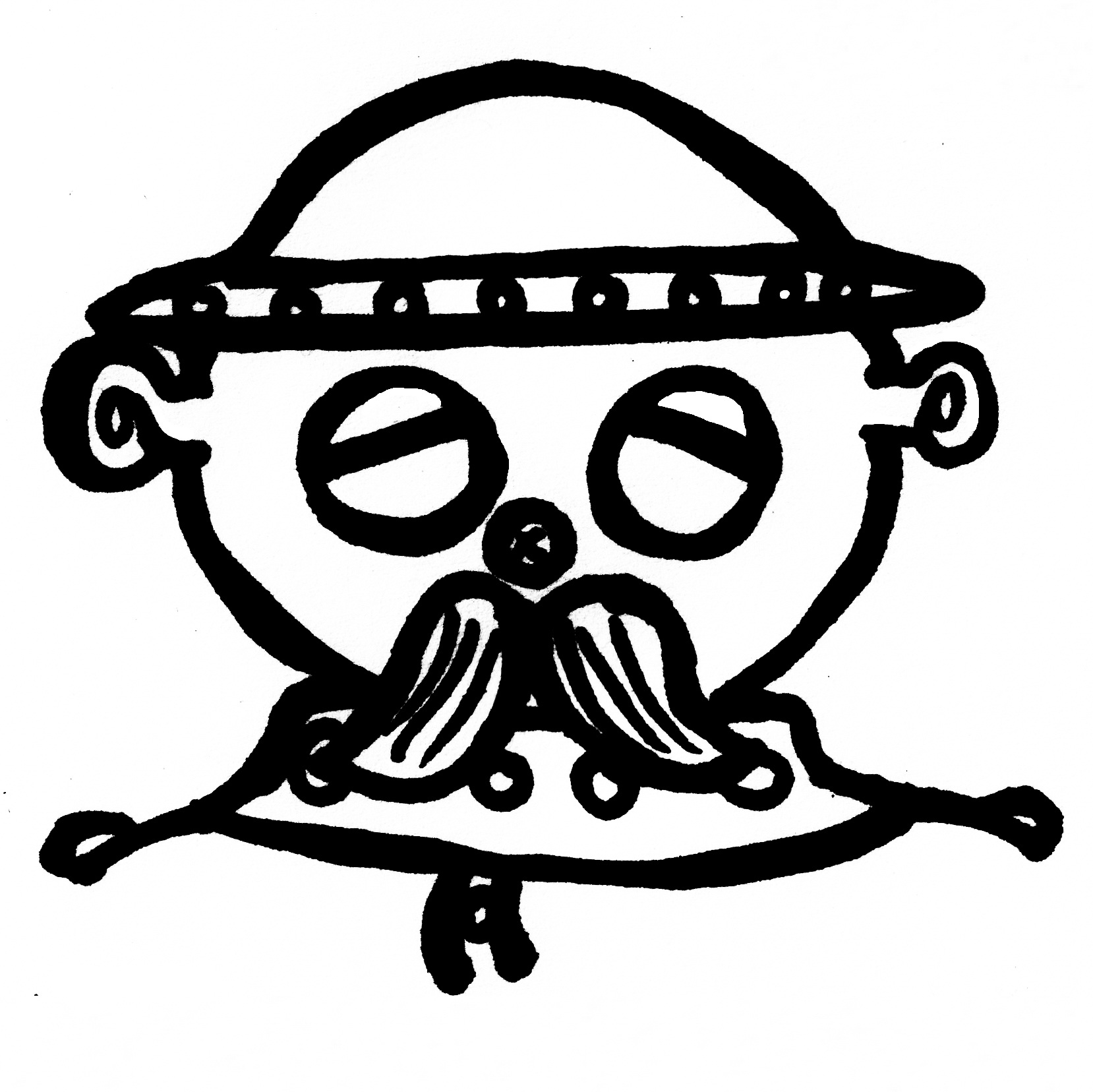
Return to Oz (1985)

My first obsession as a child was with Oz. The MGM musical has been a part of my life for so long that I can’t recall the first time I saw it, as its entrance into my life predates my earliest still-retained memories. I can recall the first time I saw any other Oz-related media, however, as I can still remember—even if distantly and vaguely—a Christmas that we spent at my grandparents’ cold New Jersey apartment when I was four years old. They had HBO, and in the early hours of the morning, with the scent of Community Coffee (which we always brought to my grandparents when travelling, as well as several containers of Tony Chachere’s, both of these being luxuries they couldn’t obtain in the north) and my grandmother’s Marlboro Reds in the air, I watched an episode of an animated series featuring Dorothy and company. This was a revelation to me, that there was more Oz to know, and I immediately started to devour as much of it as was available. I was reading by age five and although the early 20th century diction of the Oz books was somewhat difficult to parse, most of the versions available at my library were illustrated, and this was enough for the early years. But what affected me even more than the Judy Garland film was its long distant Fairuza Balk-starring sequel, Return to Oz, which was exactly the kind of proto-horror that my young brain was attuned to. 

Return to Oz opens in Kansas, where the reality of post-tornado living is dreary and dire (and, given the age that I was when I first saw it, likely felt familiar to me in the wake of Hurricane Andrew). It’s nearly winter and the new house isn’t complete, and while Dorothy excuses Uncle Henry’s tendency to stare into space with his feet up, Aunt Em knows that it’s PTSD, even if the terminology doesn’t exist yet. Still, she’s more concerned with young Dorothy’s mental state, given that the little girl no longer sleeps through the night (when she sleeps at all) and is insistent that her imaginary journey to fairyland and the friends she made there are real. Em’s desperation to do the right thing for her niece leads her to leave the girl in the care of a doctor named Worley (Nicol Williamson) and his severe-faced nurse Wilson (Jean Marsh) overnight, where they promise that the newly discovered “science” of electroshock therapy will cure all of Dorothy’s ills. A storm comes in the night that allows Dorothy an opportunity to escape, which she does, although she ends up falling into a river; climbing aboard some floating debris, she falls asleep, only to discover that she has awakened near Oz, and is in the company of Billina, one of her chickens, who has not laid an egg since the tornado. 

Dorothy quickly discovers an Oz in ruins. Although she finds the old house she first arrived to Oz in, there’s no Munchkin village nearby; the yellow brick road she travelled for much of the first film is in a state of advanced disrepair; the Emerald City’s brilliant gemstones have vanished as the city’s architecture lies in ruins. Worse, the city itself is ruled by the Wheelers, a pack of feral Klaus Kinski-looking men who travel on all fours on legs that end in squealing wheels. Hiding from them, she finds “the royal army of Oz,” which consists of a single individual, a mechanical man named Tik-Tok who is awakened via a series of wind-up keys. The inhabitants of the city have all been turned to stone by magic, with only Tik-Tok having survived this transformation unharmed by virtue of not quite truly being alive. He’s only the first of Oz’s inhabitants to join Dorothy’s new adventuring party, however, as she also soon collects Jack Pumpkinhead—a Jack o’ Lantern/scarecrow hybrid brought to life in order to scare the witch Mombi (Marsh again)—who governs the empty Emerald City as regent for the Nome King (Williamson again). The final member of the group is the “Gump,” a loathsome creature that Dorothy and company build out of old furniture and assorted attic garbage and bring to life via the same magic powder as Jack was in order to escape Mombi. Adventure awaits! 

Although it may not be the most valuable element of media made for children, I do think one of the things that makes a piece of kid-oriented art have some sense of staying power is the extent to which it encourages imaginary play. A kid who loves The Land Before Time will get just as much pleasure out of going to the playground and pretending to be Littlefoot with their friends as they would out of rewatching the movie. I vividly remember running around in my front yard with my mom as a kid, sometimes on all fours, shouting “To the meadow! To the meadow!” in recreation of a scene from Bambi; the Little Golden Book Scuffy the Tugboat encouraged me to get outside in the rain and play with my own toy boat, and my mother still uses “There’s enough to float Scuffy” as a descriptor of how much rainfall she gets when I call her. Even more so than The Wizard of Oz, The Return to Oz capitalizes on this inherent hunger that children have to create the magical out of the mundane, and it does so using the same extratextual decision that Wizard did—that Oz contains “echoes” of the real world—in a more deliberate way. In the earlier film, this was much more explicitly a way of telling the audience that Dorothy’s adventures were just a dream all along, that her companions were the farmhands and the witch was Mrs. Gulch, translated into her fantastical dreams. As an official sequel, Return follows that same narrative choice, but more subtly and arguably more fantastically. Besides the obvious correlation between Worley/the Nome King and Wilson/Mombi, we also see Dorothy’s “inspiration” for Tik-Tok in the form of the shock therapy device, and she’s given a tiny jack o’ lantern by another patient (who is the spitting image of the missing Ozma, princess of Oz, who also happened to be Jack Pumpkinhead’s “mother”). 

This is something that all children do, applying personality to toys and items and giving them voices and roles in their imaginary play. Even if kids don’t pick up on that being what’s happening in the film, that doesn’t mean that it doesn’t unconsciously get absorbed and make their internal worlds just that much more magical. That’s not even counting the number of kids who realized that they could imagine returning to a fantasy land in disarray as a new adventure to play out, following the yellow brick road once more, but one that’s twisted and broken. What if I pretended I was in NeverNeverLand, but without Peter? What if Fantasia needed another Bastian to give the Empress a new name? What if Narnia fell? (Admittedly, Prince Caspian opens in the ruins of the Pevensie’s castle Cair Paravel and The Last Battle features the actual end of Narnia, but you get what I’m saying.) 

I’ve spent enough time praising the film for its potential to inspire imagination, which, while valid, isn’t praise for the film as a text unto itself. Every time I watch Return, I discover (or rediscover) something new to love about it. For one thing, this is a film that I never really thought of as being funny when I was a kid, but there are one-liners and jokes aplenty that will no doubt appeal to any adults in the audience (one of my favorite smirkers is Dorothy’s reply to Jack’s confusion that Tik-Tok might still be able to talk after his “thinking” spring had run out, which is to say that “It happens to people all the time”). My favorite thing about the film is the presence of the copper kettle-like Tik-Tok, who was always my favorite character in the books as well, with the eighth book in the series, Tik-Tok of Oz (specifically the one with this less-than-honest cover) being read no less than fifty times in my childhood. He’s just adorable. I love him. Billina is perhaps the second best non-human actor in the film, a Henson Company creation that’s such a perfect recreation of a Buff Cochin Bantam hen that there are moments where I know she’s a puppet and others where I know she’s a real chicken, but there are many more where I could not tell you if she’s “real” or not to save my life. 

If the general public remembers this one at all, it’s usually negatively in comparison to their memory of the MGM picture, or they remember this one specifically for being on the scary side. While Wizard’s Wicked Witch of the West scared generations of children, this film had multiple frights that play out over the course of the film. The escape from the sanatorium is notably frightening, as the nurse screams into the pouring thunderstorm for Dorothy and her benefactor to return before they fall into a river and nearly drown. The Wheelers are scary, with their squealing wheels (inspired by the squeaking gurneys in the Kansas portion, naturally), and several of them are turned to sand and desiccate before blowing away when they fall into the Deadly Desert while pursuing Dorothy and friends. The Nome King’s death as he becomes more rocklike before crumbling and melting away in a hellish fire, his stone skeleton frozen into a screaming death face before it eventually crumbles, is also noteworthy, as is much to do with the Nomes and their kingdom in the first place (their faces moving about in stop motion on various rock faces remains impressive to this day). But the most memorable scene is one that I would argue remains one of the most chilling in all of cinema, including horror made for adults. At one point in the film, Dorothy must sneak into the chambers of Princess Mombi, which she has already seen contains dozens of glass-fronted cabinets containing the detached (but still living) heads of various Ozian women, which she changes to suit her mood as easily as changing hats. She awakens Mombi’s original head, which then begins chanting her name in a guttural, almost unearthly voice, as all the heads around her scream and Mombi’s headless body rises from her bed to attack. It’s fantastic!

It’s only a matter of time before this film gets lumped in with its intro-to-horror brethren as fodder for slop content along the lines of “CaN yOu BeLiEvE they showed THIS MOVIe to KiDs!!?!” that I’ve started to see pop up online. (Newsflash: if you’re under a certain age, you may not realize this, but art used to be created for multiple groups to enjoy and get something different out of because we didn’t all have individual devices programmed to shovel unchallenging, hyper attuned, algorithmically-driven, intellectually incurious fodder into our brains every waking hour). Enjoy it now before the internet tries to ruin it for you.

-Mark “Boomer” Redmond

Wicked (2024)

In our recent podcast episode about Sirocco and the Kingdom of the Winds, Brandon mentioned having seen (and not enjoyed) Wicked. I had previously shared that, when this film was over, I turned to my viewing companion and said, “I have a confession to make. I thought I was going to hate this,” but admitted that I had, in fact, loved it. The Wizard of Oz is one of the first movies that I can ever remember seeing, and I had a secondhand walkman that the red cassette of Oz songs basically lived inside of for years. I loved the books, reading them repeatedly (my favorite characters were Tik Tok and The Hungry Tiger, whose tormented existence torn between desire and moral conviction probably spoke to me at a deeper level, even at that young age). We named one of our chickens Billina and I even spent an entire summer saving my chore money toward a layaway copy of the much-maligned SNES Wizard video game. (The only other person I have ever met with any memory of the game, my friend Eric, also admitted he had never been able to beat it. About five years ago, we got together to watch a playthrough of it on YouTube and were shocked to discover that, of about 110 minutes of gameplay, neither of us had ever gotten past the first 25 minutes, which is where we inevitably died. It was just that hard.) I read Gregory Maguire’s Wicked in the summer between undergrad and grad school, and while I didn’t love it, I didn’t think it was bad, just that I preferred to imagine Oz as I had when I was a child. But after so many bad Oz movies and series over the years (especially Oz the Great and Powerful), I didn’t expect that I would fall into the magic of a movie that had so much negative press surrounding its visual style, especially since a musical is already kind of a hard sell for me. I was mostly there for the Jonathan Bailey of it all (since Broadchurch, if you’re keeping score at home). 

Wicked (Part 1, as everyone suspected) is about Elphaba Thropp (Cynthia Erivo), a woman from Munchkinland who, as the result of some magical hanky-panky in the middle of some extramarital hanky-panky, was born with green skin. This makes her an ostracized outsider among the Munchkins and leaves her the less-favored daughter of her widowed father, who dotes upon her paraplegic younger sister Nessarose (Marissa Bode). Nessarose is accepted to attend Oz’s Shiz University, and although Elphaba is not a prospective student, her accidental use of real magic in the presence of Madame Morrible (Michelle Yeoh) leads her to being invited to attend, under direct tutelage of Morrible, on the spot. As the result of a misunderstanding, Elphaba is set up to room with Galinda (Ariana Grande), the prettiest, most popular girl in all of Oz, although Elphaba ends up shoved into a small corner of their shared lodgings as a result of Galinda’s extensive pink wardrobe. Initial conflict between the two leads to Elphaba’s further isolation at school, and it is further exacerbated with the arrival of Prince Fiyero from Winkieland, whose devil-may-care attitude and carpe diem approach to academics, love, and life in general. Fiyero and Elphaba meet before he arrives at the school, and he is charmed by her lack of deference to either his royal title (of which she is ignorant) or his stunning good looks (which she cannot help but notice). However, upon arrival at the school, Galinda immediately gloms onto him and he accepts and reciprocates the attention, attempting to get the entire student body to reject the boredom of academia in favor of vice and fun, much to Elphaba’s annoyance. Meanwhile, there is an undercurrent of fascism and racism at Shiz U, as the once-diverse teaching body of the university has been whittled down to have only one remaining talking Animal instructor, the goat Dr. Dillamond (Peter Dinklage), who is the person willing to befriend Elphaba. Galinda and Elphaba eventually reconcile when, after a particularly cruel prank, Galinda learns that Elphaba has done something genuinely kind and meaningful in helping Galinda pursue her greatest ambitions; Galinda then makes it her project to rehabilitate Elphaba’s public image and make her, as the song says, popular. When Elphaba at last receives an invite to come to the Emerald City and meet The Wizard (Jeff Goldblum), she chooses instead to argue on behalf of the plight of the Animals rather than ask him to cure her of her green skin, setting events into motion that change the destinies of everyone involved. 

I’ve long been known to be a musical-averse person, but I’m coming around. After having seen recorded versions of Sweeney Todd (the one with Angela Lansbury) and Phantom of the Opera (the 25th anniversary production) this year, I’m more open to them than I once was, and it’s no secret that Wicked is one of the biggest and most widely acclaimed ones of all time. I can’t really speak to this one as an adaptation, but I really enjoyed it. I didn’t love every song (“Dancing Through Life” is acceptable as a bit of exposition/character development, but it’s very boring to me, and if it didn’t have Jonathan Bailey dancing through it, I wouldn’t work at all), but I thoroughly enjoyed most of them, and some are real standouts. Erivo’s voice is fantastic, and in some behind-the-scenes footage she’s singing live in several scenes that show that the magic is coming from her and not from any studio enhancements. She’s entrancing here as Elphaba, and I see so much of people I’ve known and loved in her performance that she completely won me over. I’ve also never been all that interested in Ariana Grande; she came along after I had already long graduated from the age group that she’s aimed at. I was of the generation whose adolescent-aimed-cable-channel-musical-industrial-complex products were Raven and Hillary Duff, so Grande’s rise from that same metaphorical farm league came long after I was among the target demographic. She’s quite fun here, and separates herself from the others on the same career path with a lot of genuine charm and a willingness to commit to the bit that’s quite admirable. 

As for most people’s complaints about the film and its visual style, I have to admit that I didn’t mind it. It would have been nice to have the film try to replicate the Technicolor-sais quoi of the MGM classic, but there’s still a lot to love here in the designs and the details. The costuming is fantastic, and at no point did I think that Oz looked boring or colorless, except in moments in which there’s an intentionality to the blandness that I find appropriate. This one left me feeling elevated and effervescent, and I loved that, even if what we’re watching is the real time character assassination of our protagonist at the hands of an evil government. What more could one really ask for?

-Mark “Boomer” Redmond

The Wiz (1978)

While still feeling the high of seeing The Wizard of Oz projected on the big screen earlier that morning, I took the opportunity to catch up with one of its stranger cultural echoes. Return to Oz inspired many childhood nightmares and Wicked sparked plenty a backseat singalong, but the legacy of The Wiz is much more difficult to pinpoint. The most expensive movie musical ever made (at the time of its release), The Wiz was a massive critical & commercial flop. Star power as potent as Diana Ross, Michael Jackson, and Richard Pryor all working in their 1970s prime did little to save it from pans & lackluster receipts in ’78, but did afford the film a cultural longevity. A Wizard of Oz-based musical with an all-black cast is a fascinating concept with instant cultural appeal, a memory many children of the ’70s remember fondly even if its reputation at the time was dogshit. Many cite The Wiz‘s financial failure as leading directly to white movie producers killing the era’s blacksploitation boom, believing black-led media to no longer be profitable. After all, if a musical spectacle starring former members of The Supremes & The Jackson 5 directed by one of the most well-respected filmmakers of his time can’t make money at the box office, what black-marketed film could? The problem, of course, was not a lack of interest in the market, but a legitimate deficiency in the product being sold. To put it lightly, The Wiz is a total fucking mess.

Besides the typical energy & passion deficiencies that haunt all cynical cashgrabs with ludicrously bloated budgets, the main problem The Wiz struggles with is authenticity. The film’s superstar cast and association with Motown Records (including a Quincy Jones soundtrack), suggest a black culture authenticity at first glance, but its white producers & filmmaking team undercut that perspective significantly. Directed by Sidney Lumet (12 Angry Men, Dog Day Afternoon, Serpico) and written by Joel Schumacher (Batman & Robin, Flatliners, The Number 23), The Wiz often feels like an embarrassing, borderline offensive approximation of black culture. Sequences involving sweatshop workers & humanoid crows in particular feel dangerously close to a minstrel act (with the crows being no less embarrassing than the ones depicted in Disney’s Dumbo four decades earlier, sadly). Even the film’s Motown-flavored soundtrack feels watered down & whitewashed for a wider (read: whiter) audience. The Wiz also can’t help but feel like an oddly cheap knockoff of the 1939 Wizard of Oz film, because of its rights issues. Based off a musical stage play that shares the same source material with the Technicolor classic, The Wiz was legally allowed to reference the L. Frank Baum books, but not elements of the original film. Dorothy can click her slippers, but they have to be silver, not ruby red. She can journey across the yellow brick road, but she has to “easy on down,” not “follow” it. Everything about The Wiz just feels slightly off in that way. Its basic hook is fertile ground for an amazing Wizard of Oz adaptation (and a lot of people very much enjoyed the recent NBC broadcast staging of the same play), but every odd step in its production amounted to a massive miscalculation. The fact that it could be great with a different creative team and less of a Studio Notes ethos makes the experience of watching it all the more frustrating too. I really wanted to enjoy it.

Diana Ross stars as Dorothy Gale (duh), a twenty-something school teacher who spends nearly her entire life couped up inside her family’s Harlem apartment. Ross plays Dorothy as scared & fragile, with none of Judy Garland’s awe-filled excitability. Her stress dream about traveling to Oz is triggered more by her fear of leaving the safety of her home than anxiety over her dog & the weather, although Toto does venture outside just in time for the two to be swept up in a tornado (snownado? snowclone?) in the Harlem snow. Unlike in the 1939 picture, Oz is an enclosed environment. Dorothy smashes through the ceiling and lands in a giant bowl of grits (*eyeroll*). The story doesn’t deviate much from the source material from there, except in its production design & characterization details. Characters have a tendency to speak exclusively in slang (or Joel Schumacher’s estimation of slang) and the world they populate had a grey, concrete “urban” look instead of the 1939 film’s vibrant Technicolor atmosphere. Michael Jackson plays the scarecrow, protecting a sunflower patch outside NYC housing projects. Comedian Nipsey Russell plays the Tin Man as a theme park automaton attached to a Coney Island rollercoaster. The lion starts as a concrete statue; the Munchkins are animated graffiti; the poppy fields are a corner of street hookers, etc. etc. etc. Only Lena Horne’s presence as an astral version of The Good Witch & Richard Pryor’s befuddled version of The Wizard aren’t marinated in Urban Flavor to “modernize” the material, but the relative blandness and the movie’s interminable 130min runtime raise questions audiences should probably never had to ask, like “Will this ever end?” or “Is Richard Pryor funny?” Anyway, Dorothy & her pals ease on the road, get an eyeful in Emerald City, defeat an evil witch, and then magically will themselves back to Harlem after learning about the wisdom, compassion, and courage they had in themselves all along or whatever.

As The Wiz is an eternal limbo of white men misinterpreting black culture into an overproduced, bafflingly boring mess of a late 70s musical, the best modern audiences can hope to mine from it is novelty as a cultural relic. The music is just as soulless & forgettable as Diana Ross & Richard Pryor’s asleep-at-the-wheel performances; Nipsey Russell’s robotic one-liners about STDs & his ex-wife get lamer by the minute. That essentially just leaves Michael Jackson’s scarecrow to carry the weight of making this exhausting display of oddball decisions feel at all worthwhile. He does okay. The costume designers rob him of his youthful beauty by drowning him fleshy neck & chin prosthetics, but he’s still a consistently magnetic presence with a golden voice. My favorite image in the entire film is a subway-set scene where two sentient trash cans attempt to eat Michael Jackson alive. That pretty much sums up the entire enterprise. I was frequently impressed with the massive scale of The Wiz‘s production design; the disco number set at The Emerald City was especially gorgeous in that respect (before it had time to outlast your patience). Its look is much more drab than the Technicolor dreamscape of its 1939 predecessor, but that’s not necessarily a bad thing. The dour look of the film echoes its more decidedly tragic tone, at least in the way Ms. Ross chose to play it. The problem is that the story its visual achievements serve is both punishingly boring & embarrassingly miscalculated. I’d love to see what a modern black filmmaker could do with this same material (and it sounds like I should at least catch up with its recent The Wiz Live! revival), but Lumet’s film ultimately amounts to a fascinating misfire at best. As is, it likely shouldn’t even exist.

-Brandon Ledet

Roger Ebert Film School, Lesson 34: The Wizard of Oz (1939)

Roger Ebert Film School is a recurring feature in which Brandon attempts to watch & review all 200+ movies referenced in the print & film versions of Roger Ebert’s (auto)biography Life Itself.

Where The Wizard of Oz (1939) is referenced in Life Itself: On page 158 of the first edition hardback, Ebert explains his general taste in cinema. He writes, “Of the other movies I love, some are simply about the joy of physical movement.”  One of his examples includes “when Judy Garland follows the yellow brick road.”

What Ebert had to say in his review(s): “The elements in The Wizard of Oz powerfully fill a void that exists inside many children. For kids of a certain age, home is everything, the center of the world. But over the rainbow, dimly guessed at, is the wide earth, fascinating and terrifying. There is a deep fundamental fear that events might conspire to transport the child from the safety of home and strand him far away in a strange land. And what would he hope to find there? Why, new friends, to advise and protect him. And Toto, of course, because children have such a strong symbiotic relationship with their pets that they assume they would get lost together.” – from his 1996 review for his Great Movies series

As I spent my high school and college years mostly tracking down transgressive films from the 70s, 80s, and beyond that broke away from the Old Hollywood studio system tradition, I lost touch with the merits of what that mammoth system could produce. My entry back into the strange (and often problematic) majesty of Old Hollywood triumphs has been the miracle of Technicolor, a discontinued color film treatment that produced the most intense, intoxicating hues to ever touch celluloid. My interest in Technicolor was initially piqued by giallo pictures like Suspiria and Blood & Black Lace, but as I’ve gotten further down the rabbit hole more mainstream titles like The Red Shoes & To Catch a Thief have been even more rewarding in their use of the medium. It was wonderful, then, to return to the Technicolor mecca of The Wizard of Oz by watching it on the big screen at the storied Prytania Theatre at this point in my life. Narratively, I know every beat in the Hollywood Classic by heart thanks to its omnipresence on television in my youth, but returning to its Technicolor delights after this decades-long break was a downright magical experience for me, one of my all-time most affecting trips to the cinema.

Although there are plenty of behind the scenes stories about the technical feats & real world evils that had to be pulled off to make The Wizard of Oz possible, the film still feels like a magical object that was conjured into the world instead of being made by human hands. 80s years have passed since its initial release, but the film’s bizarre energy & Technicolor beauty feel just as potent as ever, as if they were broadcast directly from a teen girl’s dream instead of being staged by a crew of hundreds on a movie studio sound stage. A production design triumph & featuring lavish costumes by Adrian (who also designed the fashion for fellow 1939 Technicolor wonder The Women), The Wizard of Oz is blatant in its artificiality at every turn, yet through some kind of dark movie magic fools you into seeing beyond its closed sets into an endless, beautifully hellish realm. I’m sure there were plenty musicals released in 1939 that have been forgotten by time, but it’s no mystery why this is the one that has endured as an esteemed classic. Even when staring directly at the seams where the 3D set design meets the painted backdrop of an endless landscape, I see another world, not a mural on the wall. It’s the closest thing I can recall to lucid dreaming, an experience that can be accessed by the push of the play button.

When recalling the visual delights of its Technicolor fantasy, it’s easy to forget that the reverie depicted in The Wizard of Oz is a stress dream, essentially a nightmare. Young Kansan teen Dorothy Gale has an especially awful day on the hell hole farm where she lives with her aunt & uncle, thanks to an evil neighbor who vows to have her dog Toto “destroyed,” as well as a tornado that threatens her home & knocks her unconscious. This early sequence is shot in the grim sepiatone of a German Expressionist film, which harshly contrasts with the intense Technicolor submersion of the dreamworld the tornado transports her to, Oz. Dorothy’s subconscious processes the terror of her day through a dream quest that reinterprets the  people in her life, good & bad, as fantasy characters: talking lions, animated scarecrows, wizards, witches, etc. Along with her newfound fantasy friends, Dorothy journeys to find qualities within herself she didn’t know she was missing: wisdom, compassion, bravery. As with other films I watched on loop as a child (especially Burton titles like Beetlejuice & Pee-wee’s Big Adventure), her journey feels much longer & more enduring in memory. Returning to it as an adult, the whole ordeal flies by and Dorothy is clicking her ruby slippers home in no time. There’s an intense energy to The Wizard of Oz that adapts the L. Frank Baum books of its 1900s source material into a kind of narrative whirlwind that tears across the screen like Kansas flatland.

The Wizard of Oz is just as terrifying as it is gorgeous. The special effects of its opening, reality-distorting twister still feels like a technical marvel, much more tactile in its impact than any modern CG disaster film. The indoor, hand-constructed sets of Oz feel like a kind of amusement park (and Oz was, indeed, made into a North Carolina amusement park that has since mostly been abandoned), but the sweeping camera movements & impossibly rich color suggest a majesty far beyond any knowable reality. The army of flying monkeys & bright red hellfire commanded by the main villain, the Wicked Witch of the West, are appropriately nightmarish, but also impressive in their construction. The massive cast of little people who populate the film’s Munchkinland sequence bear a real world horror in the actors’ mistreatment & exploitation, but the visual effect they amount to as they swarm across the screen is undeniably impressive. Even the film’s songs, which could afford to be shoddy given the visual majesty that surrounds them, are beautiful in their emotional tragedy. It’s difficult to imagine a world without Judy Garland singing “Somewhere Over the Rainbow” as Dorothy, but the ubiquitousness of that performance’s cultural footprint has done little to undercut its emotional gutpunch or its gorgeous tones. There’s an amoral evil lurking behind The Wizard of Oz‘s ancient production history that makes both the terror & the majesty of its Technicolor allure feel eternally relevant & almost crippling.

I’d have to write an entire book (and I doubt I’d be the first) to cover the entirety of The Wizard of Oz’s merits & impact, from cultural echoes like Wicked to queer adoption of Dorothy’s travel companions to the sordid backstage rumors that taint its onscreen magic with an undercurrent of real world terror. As many people already see the film annually thanks to television broadcast cycles, I can’t even do much in the way of recommending the world give it another look. It’s always getting another look. All I can really report for now is that in terms of constructing a Technicolor dreamscape, there’s still nothing quite like it. It was one of the first and it’s still one of the best, a legacy I understand even more clearly now that I better grasp the merits of Hollywood’s studio system past and have had the chance to see it projected it big & loud with an appreciative crowd.

Roger’s Rating (4/4, 100%)

Brandon’s Rating (5/5, 100%)

Next Lesson: Royal Wedding (1951)

-Brandon Ledet