How to Make a Killing (2026)

I was intrigued by the initial trailers for John Patton Ford’s modern update on Kind Hearts and Coronets, How to Make a Killing. Glen Powell as the disenfranchised heir to a massive fortune who has to pick off his awful relatives one by one, what’s not to love? Unfortunately, a better question would have been “What’s there to love?”, and the answer is “Not very much.” 

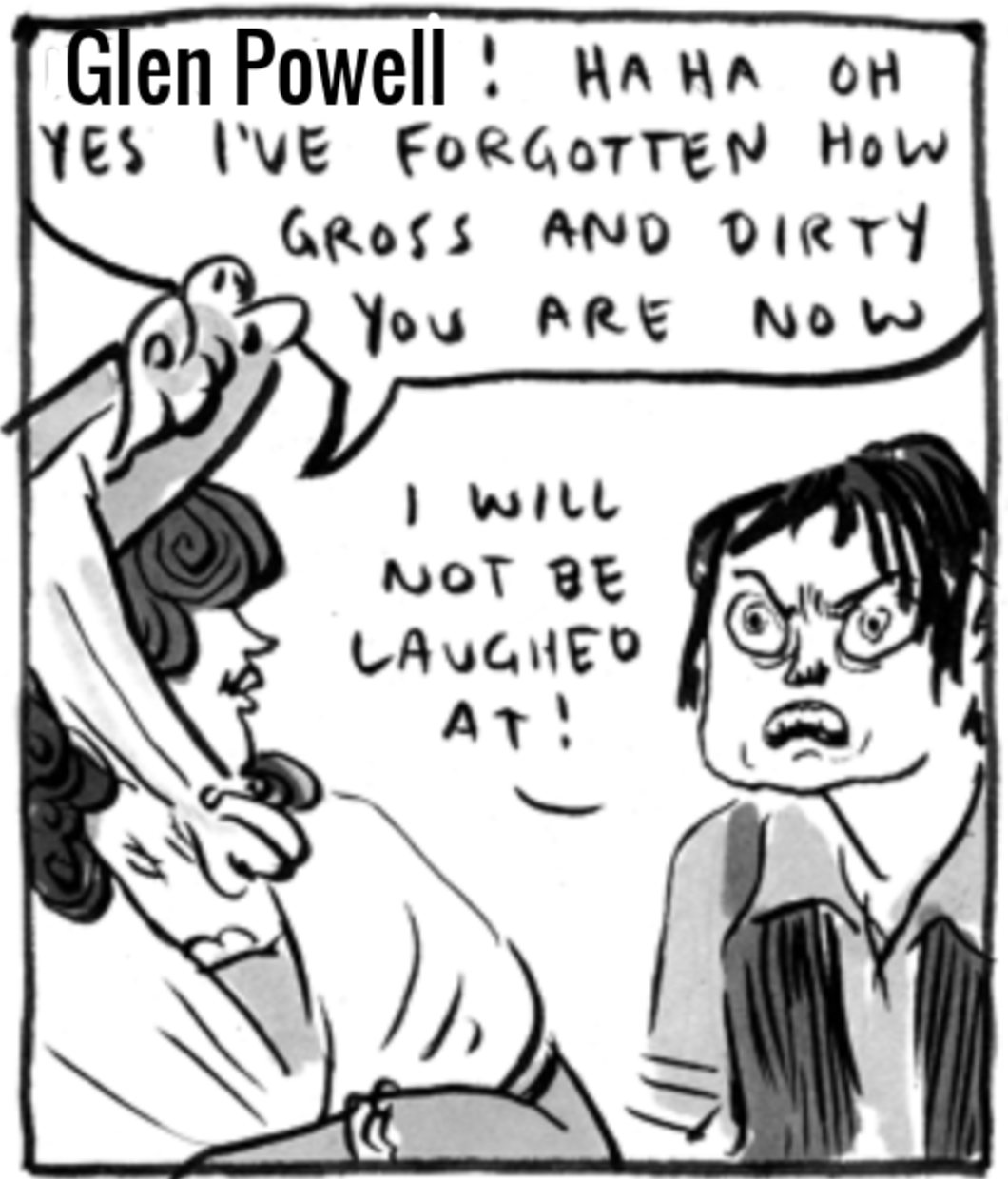
The extravagantly wealthy Redfellow clan exiles daughter Mary when she gets pregnant with the child of a commoner and refuses to abort it. The father of said child, whom Mary names Becket, dies on the day of his birth, and Mary spends the first several years of his life indoctrinating Becket into the belief that he “deserves” “the right kind of life.” Despite being a lowly civil servant, Mary ensures that Becket gets archery lessons and all of the other hallmarks of an upper class upbringing, which brings him into contact with Julia, an upper class girl with whom he falls in love. Becket shares with Julia that the Redfellow patriarch stipulated in his will that the last surviving member of the Redfellow clan inherits the entire $28M fortune, even those who were previously disinherited. As an adult, Becket (Powell) has a chance run-in with recently married Julia (Margaret Qualley) at the Manhattan haberdasherie where he works, where he’s reminded that she’s upper class and awful; it’s all very Kate Beaton’s Wuthering Heights.
When he is demoted from salesman to warehouse work at his job because the owner’s son is being slotted into Becket’s position, Becket decides to look into the whole “Let’s kill off my cousins so I can inherit everything” option. He starts with tech money halfwit Taylor (Jude Law’s son Raff), and his attendance of Taylor’s funeral brings him in contact with his uncle Warren (Bill Camp), who confesses that he always felt guilty about what happened to Mary but was powerless to stand up to current family head Whitelaw Redfellow (Ed Harris); Warren offers Taylor’s old job to Becket, who accepts. Becket sets sights on his second victim/cousin, Noah (Zach Woods), a pretentious Brooklyn hipster in the mold of Pulp’s “Common People,” whose girlfriend Ruth (Jessica Fenwick) falls for Becket after Noah’s death. Now that he has the love of a paternal figure, a job that he excels in and which nets him enough money to rent a luxurious NY apartment, and a down-to-earth girlfriend, Becket has the life he “deserves,” but it’s still not quite enough. In quick succession, he knocks off his megachurch money laundering cousin (Topher Grace), aviation obsessed uncle McArthur, and faux-humanitarian mega-adopter aunt Cassandra, leaving only Becket, Uncle Warren, and Grandpa Whitelaw in the Redfellow clan’s tontine, at which point Becket takes a pause to decide if he wants to continue with his murder spree. This is complicated by Julia’s re-entry to Becket’s life, begging for a loan for her in-over-his-head husband, and despite Becket’s “careful” alibi-creation for all of the deaths of his relatives, Julia has the evidence that would put him away if he refuses to bail her and her husband out. When Warren dies of natural causes, it all comes down to a showdown with Whitelaw, which we assume can only end one way, since we’ve been told this entire story via flashback that is set in a framing device of Becket in prison awaiting his execution. 

This film has no idea what it wants to be. It’s not quite funny enough to be a true comedy and instead takes a sharp turn into knockoff noir territory, especially when it comes to Julia’s late-film-twist transformation into the femme fatale to serve as a foil to Ruth’s good girl. Qualley is horribly miscast in this role; I’ve been an advocate for her based on her performances in The Substance and Kinds of Kindness despite seeing her plumb the depths with Drive Away Dolls, but it might be time to throw in the towel on defending her against the accusations that she’s just not a very good actor. That may not entirely be her fault, though; this is just a bad movie, and no one comes off well here. I’m generally charmed by Powell and adore Fenwick, but both are underwhelming here, and even Powell’s charisma isn’t enough to make Becket someone in whom we can become emotionally invested. This is a movie about nepotism, explicitly and textually, and I can’t tell if Qualley and Law were cast with a sense of irony or not, but no one “deserves” the kind of life that a multimillion-dollar fortune provides. The only performance that I genuinely loved was Topher Grace’s, who appears in a single scene. Most of the pruning of the Redfellow family tree is done almost perfunctorily, when spending a little more time with them and their awfulness would lend at least some sense of justice to Becket’s actions. Instead, one gets the sense that we’re supposed to find them loathsome despite the fact that their sins are enjoying their wealth in the same way that we see Becket enjoy his when he starts to have his own folding money. A more sincere effort to inspect that would have been more effective, but then that wouldn’t leave enough room for the “comedy” that the film was sold on. It’s messy and inconsistent. How to Make a Killing is too many things and nothing at all: a noir with all of its grit sanded off, a comedy that isn’t very funny, good and bad actors alike having no charisma with one another, and all of it shot with flat, featureless Netflix lighting. No wonder it had no staying power in cinemas.

-Mark “Boomer” Redmond

BlacKkKlansman (2018)

Part of the allure of genre filmmaking is that it provides a built-in satisfactory payoff in narrative that frees up directors to experiment in tone & aesthetic without worrying about storytelling basics. Slapstick comedies, revenge films, zombie horrors, and outer space creature features all have well-worn narrative patterns in their basic storytelling structure, each with a built-in release of tension in their final acts that, if handled well, satisfy through familiarity. The latest Spike Lee joint, BlacKkKlansman, is well aware of audience expectation for that familiar, comforting payoff in its chosen genre(s) and happily delivers it – at first. As its buddy cop & blacksploitation throwback narratives power through their natural conclusions, BlacKkKlansman pretends to be a straight-faced, well-behaved participation in old-fashioned genre tropes meant to leave audiences entertained & satisfied. Then all of that easy, comforting payoff is swept away with an epilogue that effectively punches the audience in the gut, reminding us that we’re not supposed to feel good about the way the past has shaken out, that the modern word remains messy & nauseating in a way that can’t be captured in a fully satisfied genre exercise. Spike Lee knows exactly how storytelling conventions have trained audiences to expect easy, comforting resolutions to even the most sickening thematic territory, and he’s found potent, purposeful ways to weaponize them against us.

John David Washington stars in BlacKkKlansman as Ron Stallworth, a real-life Colorado Springs police officer who was assigned in the 1970s to go undercover in investigations of both the local university’s radicalized Black Student Union and, more unbelievably, the local chapter of the Ku Klux Klan. Stallworth, a black man, mostly investigates the KKK via phone (for obvious reason) and relies on a (Jewish) partner played by Adam Driver to serve as his white body double for more hands-on portions of the investigation. It’s a story that’s presented somewhat glibly as “some fo’ real, fo’ real shit” in the opening title cards, but is overall depicted in terms not at all resembling a historically-minded biopic of Stallworth’s exploits. Lee fractures Stallworth’s story into a multimedia approach that incorporates 1970s blacksploitation homage, Shane Black-style buddy cop thrillers, film school lectures on racist cinema relics like Birth of a Nation & Gone with the Wind and, most curiously, slapstick farce. Each of those specific genres & tactics reach their own respective built-in payoffs in the way you’d expect them to, with the undercover cops effectively solving racism with their victory over the KKK and that grotesque prejudice being contextualized as a vestige of a long-gone past. After that narrative fully concludes, however, a rug-pull epilogue comprised of modern cell phone footage & news coverage fully undoes that satisfaction, effectively staging a political prank that demonstrates in clear terms how small-scale, individual victories like the ones depicted in the film mean nothing in the face of the systems that maintain the status quo.

There’s nothing subtle about the prankish, sickening epilogue that concludes BlacKkKlansman, just like there’s nothing subtle about the blacksploitation, cop thriller, or slapstick farce genre beats that precede it. Nor should there be. We do not live in subtle times. Racism in the 2010s is as public & as overt as ever, represented here in public-record statements from politicians like David Duke & Donald J Trump. Lee’s subtlety is neither thematic nor in choice of form, a reflection of how glaringly racist discourse has been allowed to thrive in the public sphere; his subtlety is in criticism of naïve do-gooders who feebly attempt to “change things from the inside,” something not allowed by the racist power structures that maintain that system from on high. All the film’s traditional, genre-faithful heroics are contextualized by the epilogue to be minor, unimportant victories in the face of larger, systemic oppression. In BlacKkKlansman’s main narrative, David Duke is portrayed (by Topher Grace) to be a cartoonish buffoon whose blatant villainy is befitting a racist authority figure in a 1970s blacksploitation pic. He gets his comeuppance as such, and the small-scale embarrassment he suffers being fooled by Ron Stallworth feels incredibly good in the moment of its third act payoff. That payoff is easily undone by Stallworth’s higher-ups, however, and a real-life Duke is shown thriving long after the fallout of the petty road-bump framed earlier as the ultimate victory. His hateful rhetoric remains just as blatant & ridiculous, but fully supported by the white men in charge. If there’s any subtlety in that dichotomy, it’s in Lee’s critique of the audience’s desire for a cleanly wrapped-up ending to a problem that has unsubtly, publicly persisted with full, systemic support.

It’s been a while since a movie had me ping-ponging from such extremes of pure pleasure & stomach-churning nausea. What’s brilliant about BlacKkKlansman is that it often achieves both effects using the same genre tools. Even when it’s taking the structure of an absurdist farce, its humor can be genuinely funny or caustically sickening. Racism is delivered kindly & with a wholesome American smile here, without apology; shamelessly evil bigotry is presented in the cadence & appearance of a joke, but lands with appropriate horror instead of humor. Lee only further complicates his genre subversion by mixing that horror with actual, genuine jokes, so that the film overall maintains the structure of a comedy. It’s a deliberately uneasy mixture that makes the victory-subverting epilogue feel like less of an out-of-nowhere sucker punch than a necessary, realistic addendum. The film’s general tactic from start to end is to offer the built-in satisfaction of throwback genre structure, only for the poison of our modern, grotesque reality to ruin the party. The ending only reinforces that tactic by dislodging systemic racism critiques from the distant past with a nauseous, necessary update.

-Brandon Ledet