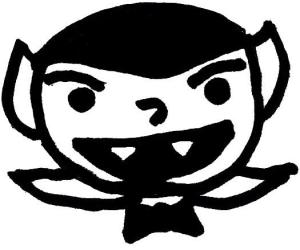
The Return of the Vampire (1943)

“The imagination of man at times sires the fantastic and the grotesque. That the imagination of man can soar into the stratosphere of fantasy is attested by . . . The Return of the Vampire.”

By the 1940s the major studio horror boom most notably typified by Universal’s Famous Monsters brand had all but dried up. This was bad news for many horror legends, including enduring cult icon Bela Lugosi, who had been consistently typecast as vampires and mad scientist types since he first struck gold as the star of Tod Browning’s Dracula in 1931. Before heading into a long, dispiriting run of playing second fiddle or headlining B-pictures on poverty row, Lugosi had his one last gasp as a major studio leading man in the 1940s. Although he had played Dracula knockoffs before in titles like Devil Bat & Mark of the Vampire and Columbia could not secure rights to the Dracula name, The Return of the Vampire is widely considered to be an “unofficial sequel” to the Tod Browning film. It would by no means be Bela Lugosi’s last great film, but there is a certain class & production value to it that would be missing from most of his later works, so it’s an easy film to underestimate and, thus, be impressed by the ways it surpasses expectations set by its B-picture contemporaries.

The Return of the Vampire‘s narrative setting is split between the two World Wars. The Lady of a house being used as a makeshift infirmary to accommodate the casualties of that war is perplexed when a number of her patients appear to be suffering from anemia. Their only other shared symptom? Two small puncture wounds on each of their necks. This, of course, means there’s a vampire nearby, revealed to be Bela Lugosi’s Not-Dracula hypnotist. As he sleeps through the daylight, Not-Dracula keeps a werewolf on staff as a permanently hypnotized servant who does his bidding while he sleeps. Lady Jane and her own staff of medical academics recognize the signs of vampiric activity immediately and recite plainly for the audience rules like aversion to sunlight, stakes to the heart, lack of a reflection, the entire crash course. Their fight to slay the vampire & convert his werewolf servant back to his human form is a decades-long struggle that’s blatantly stated to be a Good vs Evil battle in the most traditionally Christian of terms. The only real variation to the way this story naturally plays out in the Dracula knockoff genre is in its wartime setting, which introduces a sense of chaos in its blitz-style attacks & air raids that frequently disrupt the flow of the conflict in a refreshingly inventive way.

The Return of the Vampire is a surprisingly classy, well-paced & well-funded production that relieves the sting of more degrading works Lugosi was paraded through in the 40s & 50s, titles like Zombies on Broadway & Bela Lugosi Meets a Brooklyn Gorilla. There’s a little Ed Woodian use of wartime stock footage, the werewolf’s Shakespearean delivery veers perilously close to camp, and the film’s smoke machine budget appears to be wildly out of control, but otherwise The Return of the Vampire is surprisingly convincing as a legitimate Hollywood production. I was at first a little weary of its Christian moralizing about the power of Good versus the pitfalls of Evil (especially because it’s antithetical to what audiences would have gladly been paying to see), but even that tension leads to a nicely played, calmly bitter climactic showdown at a church organ that’s all solemn grimace instead of overblown moralizing. The whole film has a quietly menacing tone in that way, with an intense focus in the imagery of hypnosis, werewolf transformations, and women & children being attacked in their sleep through blown-open bedroom windows. The Return of the Vampire isn’t as prestigious as previous Lugosi pictures like Dracula or The Black Cat, but it does excel at what separates these works from the poverty row B-pictures he’d soon slip into: atmosphere. That heightened sense of spooky, vaguely lavish horror film atmosphere is well worth luxuriating in, as it would soon disappear from Lugosi’s career.

-Brandon Ledet

Kong: Skull Island (2017)

The big risk in me venturing out to see the latest King Kong reboot was that my love for loud & dumb movies about giant monsters might be crushed by my ever-growing boredom with war narratives. Kong: Skull Island made no secret of its Vietnam War cinema aesthetic in its advertising, promising to be something like an Apocalypse Now With Kaiju Primates genre mashup. The actual film is something more like Platoon With Kaiju Primates, but the effect is still the same. Skull Island‘s main hook is that it uses the traditional King Kong narrative as a thin metaphor for U.S. involvement in Vietnam (and other unwinnable, imperialistic conflicts of world-policing), declaring things like “Sometimes the enemy doesn’t exist until you’re looking for them.” It’s the same exact themes that are hammered to death across nearly all Vietnam War movies with the exact same Love The Smell of Napalm imagery (ever seen an explosion reflected in aviator sunglasses before?) and more or less the same needle drops (don’t worry if they don’t immediately play CCR; it’ll eventually happen twice). As an audience, I’m missing an essential Dad Gene that enables people to care about a very specific end of Macho Genre Cinema (including war films, submarine pictures, Westerns, and, oddly enough, the James Bond franchise). If there’s anyone out there with that Dad Gene who still enjoys the occasional Vietnam War film, they’d likely have a lot more fun with Kong: Skull Island than I did. For me, it was like someone mixed jelly into my peanut butter jar because they didn’t bother cleaning their spoon.

Perhaps the biggest disappointment about Kong: Skull Island is that it amounts to less than the sum of its parts. The cast alone is a testament to a staggering waste of potential: Samuel L. Jackson, John Goodman, Tom Hiddleston, recent Oscar-winner Brie Larson, all wasted. The movie is stacked with onscreen talent, but just about the only memorable performances delivered are from a fully committed Shea Whigham & John C. Reilly, who both pull off a tragic/comic balance in their respective roles as shell-shocked war veterans. Reilly is (rightly) getting a lot of attention in this film as a shipwrecked soldier who’s been stranded on Skull Island since WWII and is deliriously relieved to see people who share his language & culture for the first time in decades. The biggest laugh I got out of the film, though, was in watching Whigham chow down on a can of beans and casually describe his first battle with a skyscraper-sized ape as “an unconventional encounter.” The sense of wasted potential extends far beyond the immense talent of its dispassionate cast, however. Even its central hook of attempting a Vietnam Movie With A Giant Ape seems like it was handled in the blandest, least interesting way possible. Instead of writing a revisionist history where Kong is transported to Vietnam and intermingles with the soldiers on the ground, the soldiers are transported to his home, the titular Skull Island. This sets up an echo of the exact same narrative we’ve seen in nearly every version of a Kong picture. Peter Jackson’s (infinitely more passionate) version of King Kong was released just a little over a decade ago. All this one does to update it is toss in some helicopters & flamethrowers and increase the size of the titular ape.

I’m not sure a full plot description is necessary here, so I’ll try to make it quick. The day after the U.S. declares its withdrawal from Vietnam in 1973, a military troop is ordered to secretly escort a geological mission to survey the once mythical Skull Island. [Scene missing: soldiers complaining that they’re being deployed instead of going home.] There’s a lengthy assembling-the-team sequence where everyone’s various motives & vulnerabilities are revealed for future significance, but no one character gets enough screentime to make any of it count for anything. Do we really need to know Brie Larson’s background as a hippie anti-war photographer to watch her blankly stare at monsters & the Northern Lights for the next 90min? Doubtful. The “geological” expedition, of course, is a betrayal, a cover-up for finding proof of a two-fold conspiracy theory: that the Earth is hollow and that giant monsters live inside it. Once discovered, King Kong is initially seen as a threat, as he attacks the military crew that bombs his home in an attempt to prove those (correct) theories. Eventually, however, it’s revealed that the gigantic ape is the protector of the island and, by extension, the world at large. He fights off & keeps at bay the other monsters that threaten to crawl out of the hollow Earth to terrorize mankind: giant spiders, squids, something John C. Reilly’s freaked out war vet calls “skull crawlers,” etc. This dynamic of Kong as a protector doesn’t really do much for the film’s central Vietnam War metaphor. It mostly just hangs in the air as a naked setup for a M.U.T.O. (Massive Unidentified Terrestrial Organism, no C.H.U.D. that) cinematic universe, which is eventually supposed to link up with the most recent American Godzilla property (as opposed to the far superior Japanese one) for a pre-planned crossover film. And there you have yet another passionless blockbuster that’s a mere placeholder for a future film franchise payoff.

If I haven’t talked enough about Kong himself so far, it’s because the movie doesn’t give me much to work with. There isn’t too much new or different about the infamous beast in his most recent form. The quality of the CGI hasn’t advanced all that significantly since Jackson last tackled the property in ’05, which is kind of a big deal in the King Kong genre, going all the way back to its stop-motion animation roots in the 1930s. The ape’s gotten a lot bigger in scale (likely in preparation for his upcoming kaiju battles) and modern 3D made for an occasional moment of action cinema eye candy, but I couldn’t work up much awe or horror for the misunderstood monster, which is a problem. His inner anguish is always secondary to the soldiers’, never being afforded much of an onscreen emotional narrative outside John C. Reilly plainly informing us that he’s the last of his kind. Sacrificing the ape’s inner life for some killer kaiju battles might’ve made that thin emotional groundwork forgivable, but the giant monster violence of Kong: Skull Island is also a little lacking. In old school kaiju movies (and in more faithful throwbacks like Pacific Rim) the monsters would fight for minutes at a time, establishing pro wrestling-style narratives through the physical language of their battle sequences. Here, the fights only last for seconds at a time as we follow the human characters who navigate their paths of their destruction. Again, my disinterest with that end of the dynamic might have a lot to do with my general boredom with war movie plotting, so mileage may vary on that point. It just feels strange to me that a movie that boasts Kong’s name in the title would be so disinterested in the ape himself.

None of this is to say that Kong: Skull Island is a total disaster and an entirely joyless affair. There are some moments of monster movie mayhem that work well enough as eye candy and both John C. Reilly & Shea Whigham do their best to boost the spirit of the proceedings with some much-needed levity & camp. (I think my ideal, streamlined version of the film just be those two characters alone in a Swiss Army Man-style romance adventure on the same kaiju-infested island.) Overall, though, the movie feels like a well-funded version of a SyFy Channel mockbuster that can afford to hire legitimate actors instead of Ian Ziering or Steve Guttenberg or whoever’s up for it that particular weekend. Unlike the recent genre film rehash Death Race 2050, which applies that SyFy style of direct-to-VOD CG cheapie energy to something uniquely bizarre, Kong: Skull Island lacks any distinguishing sense of passion. I guess you could point to a smash-cut of Kong eating a human to a human eating a sandwich or the basic novelty of a giant ape fighting a giant squid as holding some kind of camp value, but that’s a bit of a stretch, given how much the movie focuses on its stale Vietnam War themes. The silliest Skull Island film gets in its basic DNA (outside Reilly & Whigham’s respective quirks) is in its shameless shots of muscular Kong ass, but even that line of putting-it-all-out-there ape anatomy could’ve been more over the top, #GiveKongADong2017. Maybe audiences more in tune with the basic thrills of war movies as a genre will feel differently, but I struggled to find anything in the film worth holding onto. Its stray stabs at silliness didn’t push hard enough to save it from self-serious tedium and its Vietnam War metaphor wasn’t strong enough to support that tonal gravity. Everything else in-between was passable as a passive form of entertainment, but nothing worth getting excited over, much less building a franchise on.

-Brandon Ledet

Howl’s Moving Castle (2005)

EPSON MFP image

fourstar

Acclaimed, visionary animator Hayao Miyazaki recently announced that he’ll be returning from what has been a very brief “retirement” to work on a 3D-animation short film, which is exciting news for rabid fans of Studio Ghibli & innovative visual craft of all kinds. Not being especially well-versed in Ghibli’s or Miyazaki’s history, I didn’t realize that this decision was a case of history repeating itself. Miyazaki had “retired”several times before in the past, once doubling back on his resolve to return to the director’s chair (does that idiom translate to animation?) to helm the somewhat troubled production of 2005’s Howl’s Moving Castle. Whether or not Miyazaki was brought in as a pinch-hitter/afterthought on a project that apparently needed a strong guiding hand, Howl’s Moving Castle was well worth the animation giant’s time & efforts. It’s not the most mindblowing or heartwarming film among the few Ghibli titles I’ve seen but it is a singularly magical experience that the world is better off for being enriched with (with its context as a pacifist take on the war in Iraq being especially fascinating). If there’s one thing I’ve learned about Miyazaki in the few works I’ve seen from him it’s that the world is all too lucky to have him & we should all be grateful for each precious gift he delivers on his own time.

I call Howl’s Moving Castle magical because it’s a film that values the folklore of magic, wizards, and witches over the more human realm of physical labor & constant war. A lover’s quarrel between The Wicked Witch of the Waste(land) & a frivolous, vain wizard named Howl claims the health & well-being of an innocent passerby, a young hat shop clerk whose meeting of Howl in passing enraged the jealous, possessive witch. This jealousy inspires the wicked witch to cast a spell that ages the hat shop girl horribly, so that she loses her precious youth & beauty to an old, withered body that upends her life. Determined to win back her cursed youth, the girl moves into Howl’s castle, which is indeed a moving, walking, transitive structure that would serve as event the most casual of steam punk’s wet dream. What she discovers is that he wizard is in a perpetual state of adolescence, in desperate need of someone to care for his body & home, and prone to teen angst temper tantrums that result in him summoning “the spirits of darkness” when he’s bummed & exclaiming things like “I see no point in living if I cant be beautiful!” Howl is in no shape to deal with the crushing realities of a hard-fought war & ends up needing the help & emotional support of the cursed hat shop girl just as much as she needs him.

What feels so right about the approach to magic in Howl’s Moving Castle is just how fluid everything feels in the details. The rules of the curse seem to change from scene to scene as the girl’s age fluctuates depending on her mood. Enemies who initially appear to be pure evil soon reveal themselves to be hurt, vulnerable souls in need of repair. Physical spaces (especially the titular castle) & people’s bodies (especially the wizard’s) change constantly, directly reflecting the ebb & flow of a universe that can be hopelessly cruel or endlessly wonderful depending on the tides of fate in life’s current direction. The only thing that seemingly doesn’t change is the way the film values magic & fluidity over the concrete, destructive concerns of governments & war.

Appropriately enough, it’s that exact value system that makes Miyazaki & other folks at Ghibli feel like such a gift & a blessing. They’re constantly exploring new ideas & techniques within their craft, but their general spirit is deeply rooted in an old world magic & tradition that feels both authentic & endlessly endearing. It’s a testament to how powerful the the studio’s output is that I was greatly impressed by Howl’s Moving Castle, but still hung up on the Ghibli flim about racoon testicles that I had just watched a few days before. Every Miyazaki work is worthy of attention & adoration to some degree and Howl’s Moving Castle was no exception to that rule. It wasn’t the most spectacular, wonderful, magical animated feature I’d ever seen or anything like that,but I still felt like I was lucky to have seen the film, which feels like par for the course for Miyazaki & his peers. May his retirement never be permanent & may the studio never officially close its doors. May our luck never run out.

-Brandon Ledet

Roger Ebert Film School, Lesson 3: Apocalypse Now (1979)

EPSON MFP image

Roger Ebert Film School is a recurring feature in which Brandon attempts to watch & review all 200+ movies referenced in the print & film versions of Roger Ebert’s (auto)biography Life Itself.

Where Apocalypse Now (1979) is referenced in Life Itself: In the first edition hardback, Apocalypse Now is referenced on page 2. Roger mentions that when “The Ride of the Valkyres”plays during a helicopter attack in the film, he got a rare, tingling sensation of “reality realigning itself,” the same feeling he had when he proposed marriage to Chaz & the day his father announced he was dying of cancer. In the film version of Life Itself, Ebert is shown arguing the merits of Apocalypse Now to a nonplussed Gene Siskel on two separate occasions. He seemed especially aggravated that Siskel enjoyed Full Metal Jacket more than Apocalypse Now.

What Ebert had to say in his reviews: “Years and years from now, when Coppola’s budget and his problems have long been forgotten, ‘Apocalypse’ will still stand, I think, as a grand and grave and insanely inspired gesture of filmmaking — of moments that are operatic in their style and scope, and of other moments so silent we can almost hear the director thinking to himself.” – From his 1979 review for the Chicago Sun Times

“Other important films such as ‘Platoon,’ ‘The Deer Hunter,’ ‘Full Metal Jacket’ and ‘Casualties of War’ take their own approaches to Vietnam. Once at the Hawaii Film Festival I saw five North Vietnamese films about the war. (They never mentioned ‘America,’ only ‘the enemy,’ and one director told me, ‘It is all the same–we have been invaded by China, France, the U.S. . . .’) But ‘Apocalypse Now’ is the best Vietnam film, one of the greatest of all films, because it pushes beyond the others, into the dark places of the soul. It is not about war so much as about how war reveals truths we would be happy never to discover.” -From his 1999 review for his “Great Movies” series
EPSON MFP image

It’s near impossible to tell whether or not I’ve seen Apocalypse Now before. Surely, there are plenty of scenes in the film that are vivid to me out of context, but I might’ve picked those up incidentally by catching them on a Greatest Movies of All Time clip show or playing on television while channel surfing. The reason I’m unsure if I’ve ever watched Apocalypse Now in its entirety before is that I feel like I’d more clearly remember a viewing experience as weighty as the film’s 3+hour runtime. I hate to be the kind of cinematic philistine who knocks a slow-paced “classic” for testing my patience, but Apocalypse Now is too damn long. There is a wealth of individual scenes in the film that carry a forceful impact in isolation, but when they’re broken up by a slow trudge upriver & Batman-gritty narration about “the horror, the horror” of war, Apocalypse Now reveals itself to be a huge commitment of time & effort that might not deliver everything it promises. As a literary adaptation of Joseph Conrad’s Heart of Darkness I think the film is a fresh, interesting take that reveals new truths about its source material by shifting its setting & narrative detail, but the truth is I found Heart of Darkness to be just as much of a chore as consuming Apocalypse Now in one sitting. This is a great adaptation of a novel I don’t care for & a runtime that spiraled out of control even before its extended “Redux” treatment. There’s no denying that the film is packing several powerful punches, though, and it’s all too easy to see how someone could fall in love with the film as a massive whole.

A lot of Apocalypse Now‘s imagery & one-liners are perhaps a little too over-familiar after years of reverent repetition: the ceiling fan blades fading into helicopter sounds, Martin Sheen’s mud-painted face emerging form the bog, the utterance of “I love the smell of napalm in the morning”, etc. However, it’s clear as day with two stretches of the film still play freshest in 2016. I feel like I’ve seen a lot of the film’s war-is-Hell grittiness covered thoroughly in other works. the alcohol-fueled PTSD, overbearing narration, and off-hand soldier quips like, “You’re in the asshole of the world, Captain” all feel like old hat at this point, whether or not they were groundbreaking representation in 1979. What does feel important & unique still is the film’s approach to representing madness among soldiers. Robert Duvall’s colonel might be remembered most for what he likes to smell in the morning, but his emotionally detached obsession with surfing under fire is what stands out most in modern viewings. While dodging bombs & bullets from the Viet Cong, Duvall orders his terrified young men to surf the incoming tide as if they were kicking back beers on a California beach instead of fearing for their lives under fire in Vietnam. It’s a perfect representation of how the war left many men emotionally detached & downright deranged.

Of course, Duvall’s colonel is just a small taste of wartime madness before the main feast: Marlon Brando’s Colonel Kurtz. It takes a three hour effort for Martin Sheen’s broken shell of a captain to make it upriver to meet Kurtz & decide whether or not to complete his mission of assassinating the defected madman. A lot of anticipation is built by the time Martin Sheen & Marlon Brando share their infamous face to face in the film’s third act and it’s amazing just how much Brando delivers under that pressure. His intensely weird performance as Kurtz is a tangible, skin-crawling kind of madness that feels inseparable from Brando as an actor, especially in light of the recent documentary Listen to Me Marlon that hits a lot of the same deranged, hypnotic notes. A lot of audiences in 1979 believed that, like Kurtz, Brando “had gone totally insane & that [his] methods were unsound.” However, if his performance were indeed a work of madness, it’s undeniably of the mad genius variety.

As Ebert points out in this review, any movie is lucky to have one or two great scenes & Apocalypse Now has many. The film gets on a particular roll in its final sequence once Kurtz’s mania graces the screen and the imagery & music combine to create a sort of wartime tone poem that just screams “art house darling” in every frame. There was a lot made of the troubled, over-budget production that plagued Apocalypse Now at the time of its release & there was indeed enough snafus during filming to support a feature length documentary, Hearts of Darkness: A Filmmaker’s Apocalypse. The prevailing wisdom of the time is that director Francis Ford Coppola, was in the middle of a winning streak that included titles like The Godfather & The Outsiders might’ve bitten off more than he could chew with Apocalypse Now & the resulting film was somewhat of an untethered mess that couldn’t quite match its ambition with a unifying sense of discipline. Discerning critics like Ebert, who heralded the film like a masterpiece, had a completely different take, lauding the film as an impeccably visualized descent into madness, an entirely new & powerful way of representing war’s savage effect on the fragile human mind.

I think the truth probably lies somewhere between these two takes. The third, Kurtz-focused hour of the film really does feel like it taps into a troubled soldier’s plight in a way that few film scan claim to do, with much of the credit for that accomplishment resting firmly on Marlon Brando’s beyond mad shoulders & Coppola’s eye for haunting visuals. However, the film’s sprawling runtime & three separate versions (including the “Redux” & an infamous bootleg of a workprint) point to a director who may have flew a little too close to the sun to fully realize his vision. I respect Apocalypse Now‘s ambition & find its messy approach to Vietnam War cinema to be a lot more satisfying than more cookie-cutter examples of the genre, but I also find the idea of the film being a masterpiece to be a somewhat flimsy argument. It really does have more truly great scenes than most movies could dream to bring to the screen, but the film itself never feels like more than the sum of its parts. Much like Sheen’s protagonist, Apocalypse Now goes on a dangerous, mind-threatening journey upriver to seek great existential truths, only to discover it’s not sure what to do once it reaches its destination.

EPSON MFP image

Roger’s Rating: (4/4, 100%)

fourstar

Brandon’s Rating: (3.5/5, 70%)

threehalfstar

-Brandon Ledet