
Normally, when I scan the New Orleans Film Fest line-up for titles I might be interested in, I rely heavily on the “Narrative Features” filter on their schedule. This year, only the gross-out Juggalo road trip comedy Off Ramp grabbed my attention from that section of the program, and I look forward to reviewing that film with regular podcast guest Bill Arceneaux later this month. Otherwise, the most exciting selections at this year’s NOFF were all documentaries, at least from what I could gather scrolling through blurbs & thumbnails on the festival’s website. All of the movies I ventured out to see on my own this year happened to be documentaries; they also all happened to feature queer themes in their subjects – sometimes subtly, often confrontationally.
So, here’s a quick-takes round-up of all the documentary films I caught at the 34th annual New Orleans Film Festival. It’s a short but commendable list, one that will make me think twice about my small-minded Narrative Feature biases in future years.

The Disappearance of Shere Hite

Since not all documentaries can get away with pushing the boundaries of fact or form, the medium is often most useful at its most informative rather than its most innovative. The Disappearance of Shere Hite feels like vital, vibrant documentary filmmaking without ever challenging the rules or structures of its medium; it’s simply an act of “Hey, were you aware this amazing person existed?” post-mortem publicity. Personally, I was not aware of Shere Hite’s existence before this doc’s festival run (starting way back at Sundance this January), which is something the movie assumes of anyone who’s too young to have experienced first-wave Feminism first-hand half a century ago. Shere Hite did not “disappear” in the Connie Converse sense; she only carries a similar air of mystique because the American media chose to forget her and willed her name recognition into cultural oblivion. Once upon a time, she was an important sex researcher whose debut publication The Hite Report was just as essential to American sex & romance discourse as the more formalist work of researchers like Kinsey and Masters & Johnson. That initial entry into the American sex chat was controversial in its time for reporting that most cisgender women orgasm through clitoral stimulation, not through vaginal penetration. It’s something that now registers as common, everyday knowledge but in the 1970s was treated as a vicious attack on traditional marital relations. In her most widely publicized follow-ups, she also dared to report that traditional masculine gender roles leave most men feeling dangerously lonely and that married women commit adultery just as often as married men. By that third common-sense statement, she was ridiculed out of her field by macho mob justice, fleeing to Europe so she didn’t have to hear any more angry men react to the headlines she made without ever actually reading the books she published.
Shere Hite conducted her research through self-printed sex-questionnaire zines. She was strikingly beautiful and dramatically eccentric in her fashion, making do as a nude model before reinventing herself as a D.I.Y. punk sex scientist. Her performative Old Hollywood glamour makes her an innately cinematic subject, so that there are hundreds of hours of televised interview footage to supplement the text of her writing. In a time when mainstream media was skeptically evaluating “the question of The Women’s Movement”, she devised a way to ask women what their private sexual lives were actually like in an intimately truthful approach, suggesting that there was obvious value to putting the tools of sex research in the hands of actual sex workers. I only know these things because I watched a documentary about her, even though there was a time when I could have seen her interviewed out in the open by the likes of Oprah, Geraldo, and Larry King. The Disappearance of Shere Hite is a politically sharp, oddly romantic documentary profile of an important figure the American media deliberately forgot because her challenges to traditional sex & gender dynamics were too uncomfortable to tolerate. The only thing that doesn’t fully work about the movie is Dakota Johnson’s softly precious narration as “the voice of Shere Hite” while reading her unpublished diaries between interview clips. It’s a performance that’s missing the Sandra Bernhard sass, Patricia Clarkson fierceness, and Susan Sarandon seduction of the real Shere Hite’s voice, which we often hear in direct contrast to Johnson’s. Still, having a movie star’s name attached to a woman who’s been deliberately stripped of her own name recognition is probably for the best. Anything that works towards undoing the Mandela Effect of a world without Shere Hite is worthwhile, so I can’t fault the movie (or Johnson) too much for it.

Going to Mars: The Nikki Giovanni Project
Speaking of Sundance selections about badass women who’ve fostered combative relationships with the American press, Going to Mars is a wonderful, kaleidoscopic portrait of poet-activist Nikki Giovanni. Whereas The Disappearance of Shere Hite is formally straight-forward in its linear overview of its subject’s biography & professional record, Going to Mars: The Nikki Giovanni Project attempts to at least partially match the inventive fervor of its subject’s art in its own impressionistic approach (and attempts to better match her tone in its own celebrity voiceover track, provided by Taraji P. Henson). It weaves together threads of Giovanni’s current, relatively comfortable life as an aging academic with her radical past as a Civil Rights organizer and her romantic visions of a sci-fi future led by Black women. The title refers to her assertion that no one is better prepared for space exploration than Black American women, whose ancestors were already forcibly transported to an alien planet and forced to mate with an alien species. Recordings of her poetry performances are just as often paired with outer-space screensavers as they are with footage of Civil Rights protests of the 1960s & 70s. Somewhere between those two distant worlds, there’s Giovanni’s current status as a peaceful, settled citizen of suburban America – still clear-eyed in her awareness of the nation’s ongoing racial atrocities but content to leave the fight for justice to future generations. There’s great tension in the way the archival footage’s incendiary fury clashes with her current-day domestic comfort, but what’s really impressive is how sharply observed her poetry remains in both states. She’s still one of America’s great thinkers; it’s just that her observations now sound closer to Wanda Sykes stand-up than Angela Davis activism.
There’s always great tension in Nikki Giovanni’s relation to the world, whether answering Q&A softballs from well-intentioned but intellectually inferior audiences or chain-smoking while verbally sparring with an equally thorny James Baldwin. It would be inaccurate to say she has no fucks left to give in her old age, since she’s always been a no-fucks-given communicator in her art & public persona. What Going to Mars offers is a chance to celebrate that combative candidness as a personality trait beyond its political utility; it celebrates her as a great, greatly difficult person.

Anima: My Father’s Dresses

Moving on to the festival’s Virtual Cinema program (which is still running through the end of this weekend), the German documentary Anima might be the most formally experimental documentary I saw in this year’s line-up. It’s an epistolary film, functioning as a posthumous conversation between director Uli Decker and her deceased father, Helmut. There aren’t many home movies or personal photographs to illustrate the details of that conversation, though, because it’s specifically about a family secret held while Helmut was alive and able to speak for himself. So, Uli reads his words from personal diaries and sends her responses via voiceover narration, often deviating from conventional interview footage to instead indulge in roughly animated collage. It’s an intimate family portrait personalized to look like a cut & paste sketchbook, staging a conversation that could have never happened in real time due to the Catholic conservatism of their family background. The film is about the shocking death-bed reveal of a family secret, but there’s nothing especially surprising about the story it tells its audience (save for the bizarre, newsworthy circumstances of Helmut’s sudden death). The project is not so much about telling a story as it is about offering Uli a sounding board where she can work out & express the feelings her guarded relationship with her father never made room for while he was alive.
The secret Helmut guarded was that he was a crossdresser in his private life. The betrayal Uli feels about that secret being kept from her is mostly resentment that her own explorations of gender & sexuality were severely policed by her family in her youth, as a queer woman who grew up as an eccentric theatre kid. Her father felt a close affinity to her as someone who felt constrained by traditional gender roles, but never expressed that affinity in any meaningful way while alive. He hid it in journals, which she could only access after he passed. To the audience, this is not especially groundbreaking subject matter. Between the anarchic formal experimentation of Ed Wood’s Glen or Glenda? in the 1950s and the extensive visual documentation of vintage closeted-crossdresser culture in this year’s Casa Susanna, there have been plenty of more artistically & historically substantial works to seek out before making time for Anima. Uli’s frustration with her family for playing the game of posing as a “normal” middle-class Catholic household that wouldn’t allow itself to be free & happy is the personal touch that can’t be found anywhere else, which makes it one of the few documentaries that can get away with this kind of shameless cornball navel-gazing (alongside Stories We Tell, Madame, Origin Story, etc.). I’m also a crossdresser who grew up struggling with Catholic shame, though, so maybe I’m just a hopeless sucker for this kind of material in general.
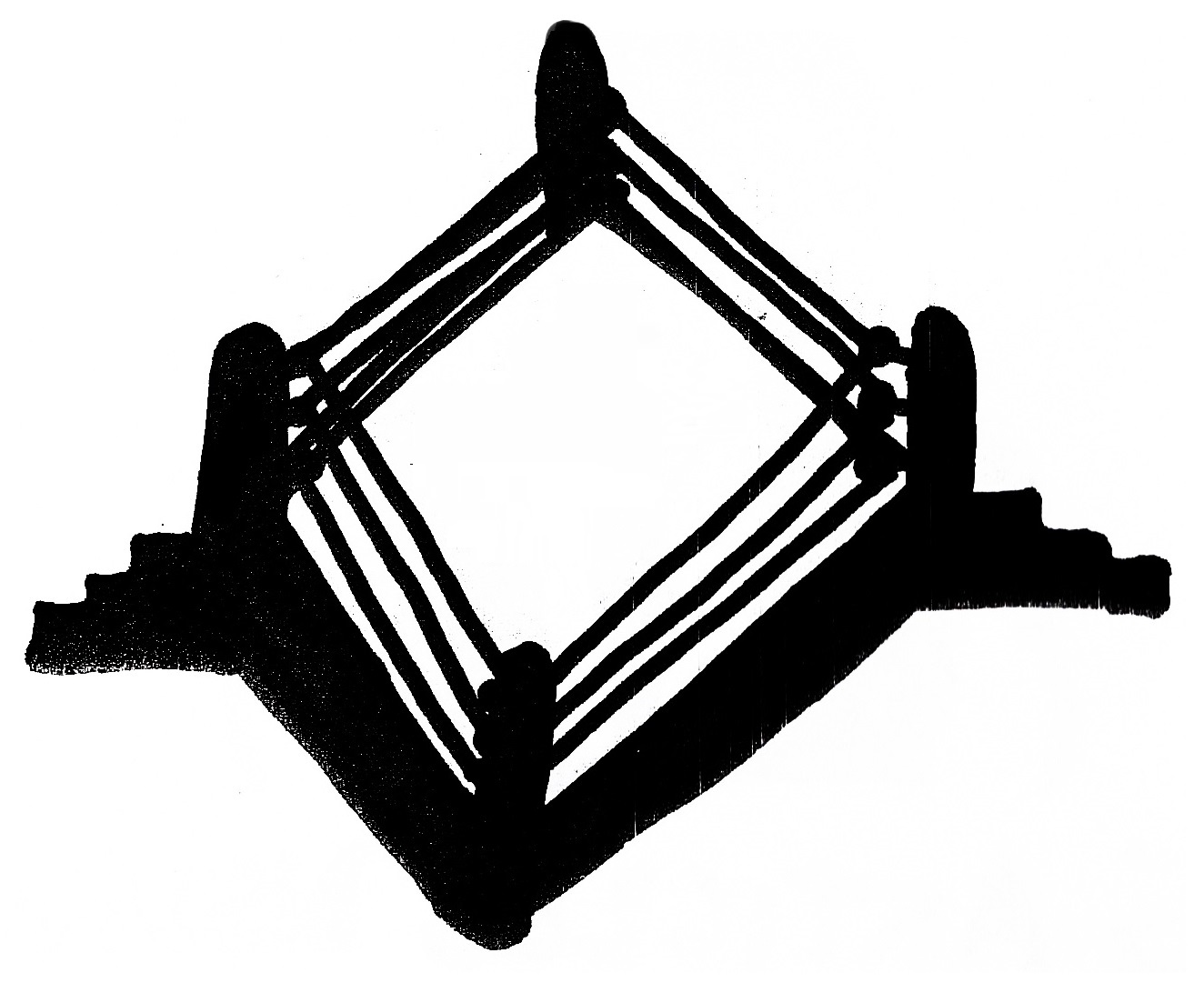
Chokehole: Drag Wrestlers Do Deutschland
If you’re in need of an advertisement for the benefits of proud, public queerness (in opposition to self-imposed Catholic penance), NOFF also offered a short-form documentary on the local drag collective Chokehole. It even took the drag-wrestling hybrid show on the road to Germany, where the much more somber Anima is also set. I use the term “advertisement” deliberately, too, as Drag Wrestlers Do Deutschland feels like the exact kind of Tourism TV commercial filmmaking that’s only available on hotel room channels, prompting you to get out of your complimentary bathrobe and contribute some vodka-soda money to the local economy. The first few Chokehole shows I attended were can’t-miss community events, the culmination of everything I love about Art: the absurdist exaggeration of gender performance in pro wrestling & dive bar drag, the half-cooked fever dream storytelling of vintage B-movies, the D.I.Y. construction of artificial worlds on no-budget sets, etc. I had ascended to genre trash heaven. By contrast, this documentary plays like an infomercial for a drag-themed amusement park. Curiously, the movie it reminds me most of was fellow globetrotting queer travel guide Queer Japan, not the sister Altered Innocence doc made by its director Yony Leyser, Queercore: How to Punk a Revolution.
This aesthetic quibble isn’t a dealbreaker, exactly. The Chokehole crew totally deserves the professional spotlight they’re afforded here. I’m just hopeful this short is a proof-of-concept tease for a grander statement down the line, where the tongue-in-cheek psychedelic editing that goes into Chokehole’s live-show video packages will inform the cinema about those shows the same way The Disappearance of Shere Hite is informed by its subject’s sensual mystique, Going to Mars is informed by its subject’s combative poetry, and Anima is informed by its subject’s cloistered intimacy.
-Brandon Ledet

 Swampflix