James Dean has been on my mind a lot lately, and not entirely by choice. New Orleans is lucky to now have two weekly repertory programs in Gap Tooth and Rene Brunet’s Classic Movies, where until recently we only had the latter. The two series both operate in their own hermetic headspaces, and their weekly film selections rarely speak to each other in any discernible way. So, it was a little jarring that the same week Gap Tooth screened David Cronenberg’s Crash, in which Elias Koteas restages James Dean’s vehicular death as an act of ritualistic foreplay, The Prytania happened to program Dean’s major bid at traditional movie stardom: the 1955 Steinbeck adaptation East of Eden. This was a coincidence, of course, as the two films are only truly linked in their shared highlight of James Dean as an Old Hollywood icon – a status solidified by Eden and later perverted by Crash. What struck me about that coincidence was a reminder during Harry Griffin’s introduction to East of Eden that Dean had only filmed three major film roles before his shocking death at age 24, two of which received posthumous Oscar nominations after his infamous car wreck. It was simple math, but I couldn’t help but dwell on the equation as the pre-film Looney Tunes short rolled . . . If we had already covered James Dean’s performance in the epic melodrama Giant a couple years back, and I was about to see his most prestigious performance in East of Eden, that means I’d only have one Dean role left to see to complete the trio. Wait a second, how had I gotten that far into his filmography without having seen his most iconic role in Rebel Without a Cause, the one that made him a star? Isn’t it a little weird that I’ve repeatedly watched James Spader get a boner at the thought of Dean’s death in Crash, or Tommy Wiseau whine “You’re tearing me apart!” at top volume in grotesque Dean caricature in The Room, but I’ve never bothered to witness Dean in all of his teen-rebel glory first-hand? I felt some deep shame about this realization all the way through East of Eden‘s blank-screen overture, making a mental note to finish my homework as soon as I got home.
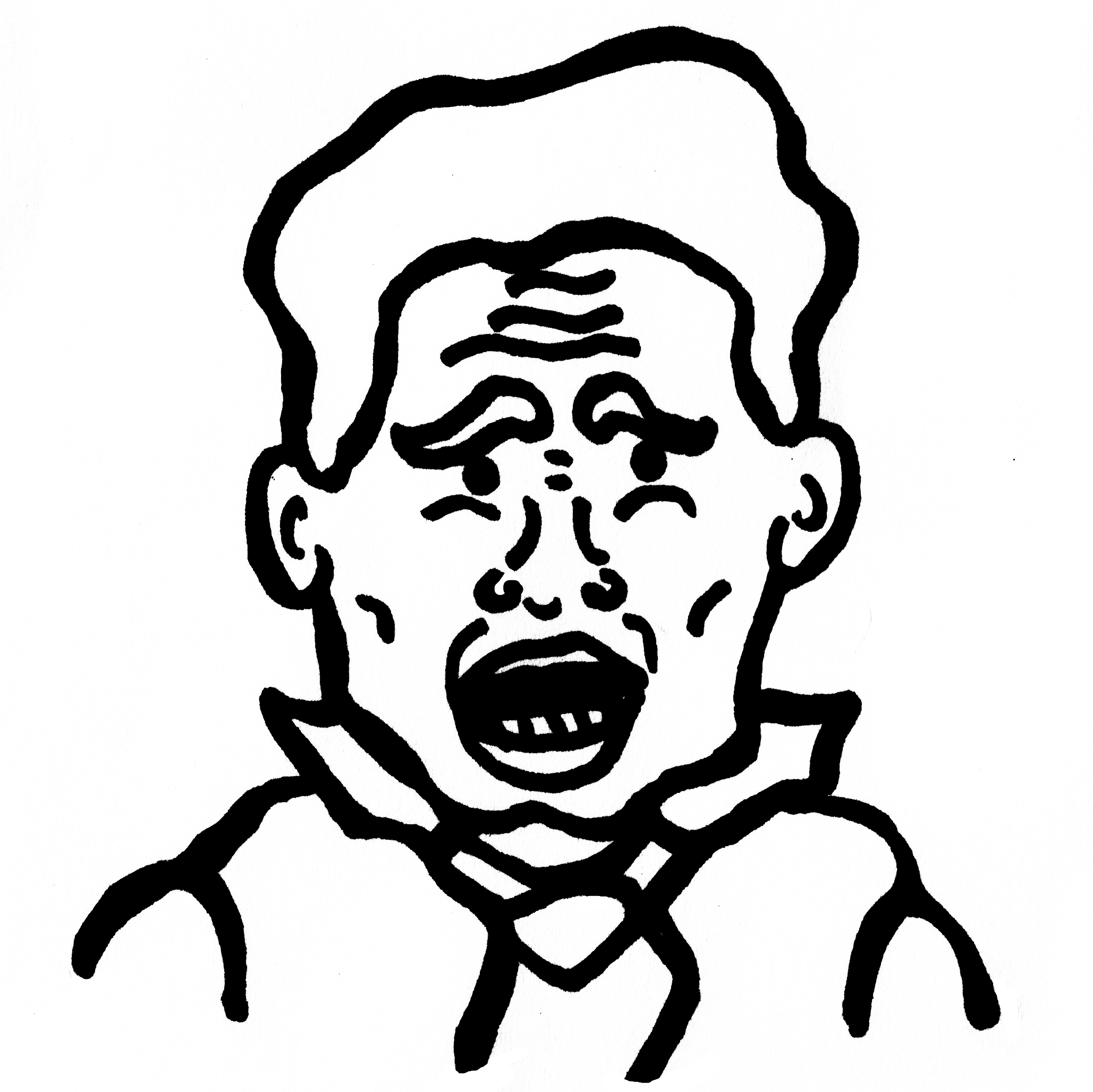
Thinking back on it now, my lack of urgency in catching up with James Dean’s filmography might be that I felt as if I already knew everything I needed to know about him from still photographs. This assumption was, of course, ludicrous. In my mind, James Dean was a cool, laidback bad boy, forever leaning on a nearby tree with a cigarette hanging causally from his lips. That’s what he conveys as a photographic model, anyway: 1950s devil-may-care machismo. His actual movie roles tell an entirely different story. In both Rebel Without a Cause & East of Eden, Dean is a gnarled knot of dorky teenage emotions, more hormones than man. His brow is forever furrowed in some internal debate about what to do with his awkward body next, seemingly always on the verge of sex or violence but choosing to whine in agony instead. His infamous “You’re tearing me apart!” line reading where he contorts his face in Mad Magazine-style caricature arrives mere minutes into the film’s opening sequence, not its emotional climax. We meet Dean as a rich-boy teen reprobate spending the night in his local police station’s drunk tank until his mentally checked-out parents arrive to throw money at the problem, bailing him out. Sure, he looks cool in his iconic red bomber jacket, which director Nicholas Ray transforms into a pop-art fashion piece just as iconic as Dorothy’s ruby slippers or that little squiggle on Charlie Brown’s t-shirt. Dean’s road-to-ruin antics as a teen rebel in peril are just far more anguished & whiny than you’d expect from the movie’s still frames. Onscreen, he expresses way more of the hormone-addled anxiety of being an actual teenager than he does the idealized teen-rebel cool you’ll see him exude as a still image on dorm room posters. I have to assume that’s a major factor as to why he was so popular with the youth of the era. The basic concept of a “teenager” was a Boomer-generation invention in the wake of WWII, and James Dean was there at ground zero to embody the exact puberty-pained animalism that defines that state of being – just as much of a hormonal monster as The Teenage Werewolf.
There’s some exciting tension in watching Studio System directors like Nicholas Ray & Elia Kazan attempt to match Dean’s off-kilter method actor energy in their filmmaking style. For his part, Ray goes full pop art, blowing up the Roger Corman teen crime picture to blockbuster scale. Elia Kazan is a little more subdued in East of Eden, taking the historical literature origins of its source text just as sincerely & somberly as George Stevens does in Giant. That is, until you get to the scenes in which Dean fights with his father. Surprisingly, East of Eden is just as much of a “Parents just don’t understand!” teen screed as Rebel Without a Cause, except instead of Dean’s internal crisis being triggered by his own participation in a deadly game of chicken, he’s challenged by the discovery that his estranged mother is not, as he was originally told, dead; she’s just the madame of a popular brothel one town over. This puts the sheltered farm boy at direct odds with his overly pious father, who’s always treated him with an unspoken disgust as the product of his mother’s sins. The film is grandiose in scale, using its wide CinemaScope framing to capture the great rural expanse of turn-of-the-century America. Then, in scenes where Dean’s protagonist confronts his father in domestic squabbles, that same CinemaScopic frame feels wildly inappropriate. Kazan (in collaboration with cinematographer Ted McCord) tilts the camera at extreme Dutch angles during their indoor power struggles, matching Dean’s off-kilter emotional state with a literally off-kilter camera. It’s an outright perverse use of the CinemaScope format, especially during a third-act fight when Dean menacingly lunges at his father from a tree-rope swing and the camera see-saws in either direction with every sway. It’s so disorienting that it’s nauseating. Ray pulls a similar trick in Rebel Without a Cause, often shooting Dean from an extreme low angle that emphasizes the potential for violence in his character’s big teenage emotions and newly embiggened teenage body. The fact that Dean was visibly in his 20s playing these roles only makes the images more confusing & grotesque.
All of James Dean’s teenage whininess, awkwardness, and animalistic capacity for violence are front & center in these leading-man roles, and they do nothing to diminish his sex appeal. In East of Eden, he unwittingly woos his brother’s buttoned-up fiancée, who finds herself jealous of the sexual freedom the local “bad girls” get to enjoy while following him around like puppies. In Rebel Without a Cause, he goes out of his way to woo a local bad girl, and he happens to pick up a homosexual admirer along the way in Sal Mineo, who likewise makes puppy eyes at his chosen master. These wayward teenage girls (& boy) sense a kindred spirit in Dean’s open-hearted rebelliousness, admiring the way he expresses their internal emotional torment on his movie-star-handsome exterior. He wasn’t explosively popular because he looked cool smoking a cigarette; he was popular because he was wildly uncool – overheated, even. In retrospect, that makes the perversion of his iconography in Crash even funnier in retrospect, given that Cronenberg’s characters are all deliberately stripped of any discernible human emotion, making them the philosophical opposite of the idol whose death they worship. It’s the rare occasion where one of our weekly local classic movie screenings helped directly inform the other, instead of acting as cross-town counterprogramming. I thought more about James Dean that week than I previously had in my entire life, and I feel like I get him now. I can also now definitively confirm that, yes, East of Eden is his most accomplished performance, if not only because there’s so little competition.
-Brandon Ledet
 Swampflix