The Night the World Exploded (1957)

There’s been a lot of grumbling this week about the way Trey Edward Shults’s sophomore feature It Comes at Night was marketed as a straightforward horror film, with a lot of people expecting some kind of monster attack based on its title. I want to believe that in two weeks’ time at most, first weekend horror audiences’ expectations will no longer matter and It Comes at Night will still be a fantastic film long after they’re forgotten. Sometimes, the title or the advertising of a film does matter in the long-run, though. Sixty years after its theatrical release, I found myself similarly bummed by the movie promised in the title The Night the World Exploded. I didn’t exactly expect Earth to explode in the picture, but the title does suggest some kind of alien invasion or large scale sci-fi threat, an expectation backed up by its inclusion on a drive-in double bill with The Claw, a creature feature about a giant killer bird. Unfortunately, this world-threatening event is a much more pedestrian kind of sci-fi villainy: earthquakes. It seems that in mocking general audiences for their titular & genre-based expectations, I was setting myself up for a taste of my own medicine. It did not taste sweet; it was, in fact, quite bland.

The Night the World Exploded announces its tedium up front by opening its narration with a weather report. The air was cool, low 50s, in case you’re interested. Three scientists who study the weather are concerned with drastic shifts in air pressure, which is somehow alarming to their unproven invention: a machine that accurately predicts earthquakes before they occur. Government officials don’t believe the validity of this machine’s prediction and refuse to evacuate the area indicated for severe impact. Many die as a result. A machine that can accurately predict earthquakes is still science fiction speculation, but between 70s disaster epics like Earthquake & modern throwbacks like San Andreas it’s an idea that had since become old hat in terms of cinematic depiction. What makes The Night the World Exploded more distinct as a sci-fi film is the source of its disastrous earthquakes. Instead of merely being set off by shifting tectonic plates, the earthquakes in the film are the direct result of a previously undiscovered element found under Earth’s surface that’s harmless when wet, but explodes when dry. Once this source is determined, what follows is an odd version of a 50s sci-fi message movie like Them! or The Space Children where, unlike nuclear war, there’s nothing real life audiences can do to stop its threat, since it’s entirely fictional.

Besides the fear mongering built around a fictional element that could explode the Earth from under us, I admire The Night the World Exploded‘s ambition​ to make its threat a worldwide event despite its budgetary limitations as drive-in schlock. Stock footage of buildings crumbling, newsreels of disaster relief & widespread fires, and even images of war are wrangled by a fast-talking narrator who attempts to tell a worldwide story of scientists & governments in crisis. Its smaller scale story of the three-scientist team that discovers the explosive element in their underground cave explorations is much less interesting. You see, the sole female scientist of the crew is frustrated because she wants to become a wife ASAP, explaining, “I’m a scientist, but I’m a woman too.” She’s frustrated because she’s settling to marry the wrong man, due to her co-worker being too wrapped up in his research to take notice of her romantic desire for him. What a pickle! (Oddly enough, this is more or less the same plot as Doris Wishman’s nudie cutie Nude on the Moon.) I hope it’s not too much of a spoiler say that the world does not explode and the two scientists eventually get their happily-ever-after kiss. What’s questionable is which resolution is more anti-climactic.

It’s likely not fair that I’m judging The Night the World Exploded based on its failings to deliver the sci-fi horror I was expecting based on its title. However, I’d like to think that if the film were an especially well made or deliriously fun version of an earthquake disaster picture I would’ve been able to overcome my expectations. There were moments of stock footage inanity and scientists demonstrating what the explosive element could do to the Earth on a plastic globe that certainly pushed me towards having a good time, only to be routinely deflated by its limp, central romance. Still, the truth is that I was settling in to watch one kind of old fashioned schlock based on the film’s title and was disappointed when I was treated to another. I guess this should teach me some sort of empathy for audiences who settled in for something like Insidious or The Bye Bye Man when they bought a ticket for It Comes at Night and were instead shown a quiet art house reflection on the terrors of familial grief. Those audiences even have the moral upper ground in this situation in that they paid to see their disappointment on the big screen while I, a hypocrite, was just looking for a way to waste a morning on YouTube.

-Brandon Ledet

Rupture (2017)

I had a difficult time fully understanding what more enthusiastic fans saw in the recent horror cheapie The Void (besides its incredible special effects craft), but I think I found my ideal version of that film’s aesthetic in Rupture. Like with The Void, there’s nothing in Rupture that hasn’t technically been pulled off better, both artistically & financially, in higher profile films that arrived before it. Specifically, Rupture film feels like a mashup of Martyrs & A Cure for Wellness, except boiled down to the production values of a late 90s episode of Outer Limits. Despite its inherent cheapness (or maybe because of it, knowing me) and its The Void level of objectively terrible acting & dialogue, I was wholly won over by Rupture as a low-key VOD horror charmer. It’s an efficient little slice of modern schlock that deliberately bites off more than it can chew thematically, but easily gets by on both visual style and the over-the-top absurdity of its basic premise.

Noomi Rapace (of Prometheus and Alien: Covenant, sorta) stars as a tough-skinned, fiercely independent single mom struggling to navigate the frustrated anger of the two men in her life: her teenage son and her ex-husband. After dropping off her son with his dad for the weekend, she is promptly abducted by a mysterious organization that tackles, tases, duct tapes, and handcuffs her into compliance. As she works on escaping and uncovering the identities of her captors, Rupture threatens to devolve into an array of genres that have already been exploited to death: abduction thrillers, Women in Captivity horror, torture porn, etc. Thankfully, it reaches for much more deliriously pulpy territory. Rupture is not traditional torture porn so much as psychological torture porn. As our hero & her fellow abductees are tormented with their greatest fears (heights, snakes, spiders, etc.), the film feels like a dirt cheap mockbuster version of Martyrs, where the next step of human evolution can be unlocked by science & fear. Rupture‘s genre film thrills are fortunately a lot less brutal & less gendered than they are in Martyrs, however, keeping the mood consistently light and enjoyably bizarre.

Director Steven Shainberg, who also helmed the BDSM cult classic Secretary, crafts a slick schlock aesthetic here, framing the film with a ludicrous comic book eye, as if it were a sequel to Sam Raimi’s Darkman. Giant syringes full of florescent liquid & futuristic Science Goggles™ recall 1950s B-pictures and the 1980s horrors that payed homage to them. Not all of Rupture is light, trashy, fun. I cringed through a few of Noomi Rapace’s awkwardly​ delivered interactions with her fellow captives, but the mysterious organization who tortures them for a triggered evolution is bursting with excellent performances from skilled character actors. Michael Chiklis, Peter Stormare, and Lesley Manville (who was a villainous joy on the first season of Harlots) are all effectively creepy as Rapace’s tormentors while still aligning their performances with the film’s overarching cheapness. I got genuine chills and light-hearted giggles when these villains would tenderly stroke Rapace’s cheek and mutter tenderly, “Interesting skin,” between experiments/torture sessions. It took me back to the old tonal victories in horror cheapies like Tobe Hooper’s Invaders from Mars, a deceptively difficult balance to strike between genuine terror & comic book absurdity.

I can’t tell you exactly why I was totally on-board with the horror film nostalgia of Rupture (and, looking further back, Clown) while the similar thrills of The Void left me largely cold. Maybe it’s because the mood was lighter. Maybe I’m that much of a sucker for intense horror movie lighting and was easily won over by Shainberg’s use of colorful reds, blues, and yellows, which gave the film the sheen of a forgotten Creepshow segment. Maybe I’m just a sucker for Shainberg’s eye in general. There’s no accounting for taste, really. The dialogue & acting in Rupture are just as awkwardly weak as they are in The Void, but they did little to sour my enjoyment of the film as a bargain bin mashup of A Cure for Wellness & Martyrs. The film is too much of a trashy delight to be sunk by something as trivial as subpar character work or embarrassing line deliveries. Those faults rarely ruined our appreciation of the 80s & 90s VHS horrors or the 1950s horror comics the film tonally resembles either, so there’s really no reason to let them get in the way now.

-Brandon Ledet

The Gayest Thing About The Babadook is that He Barely Appears Onscreen

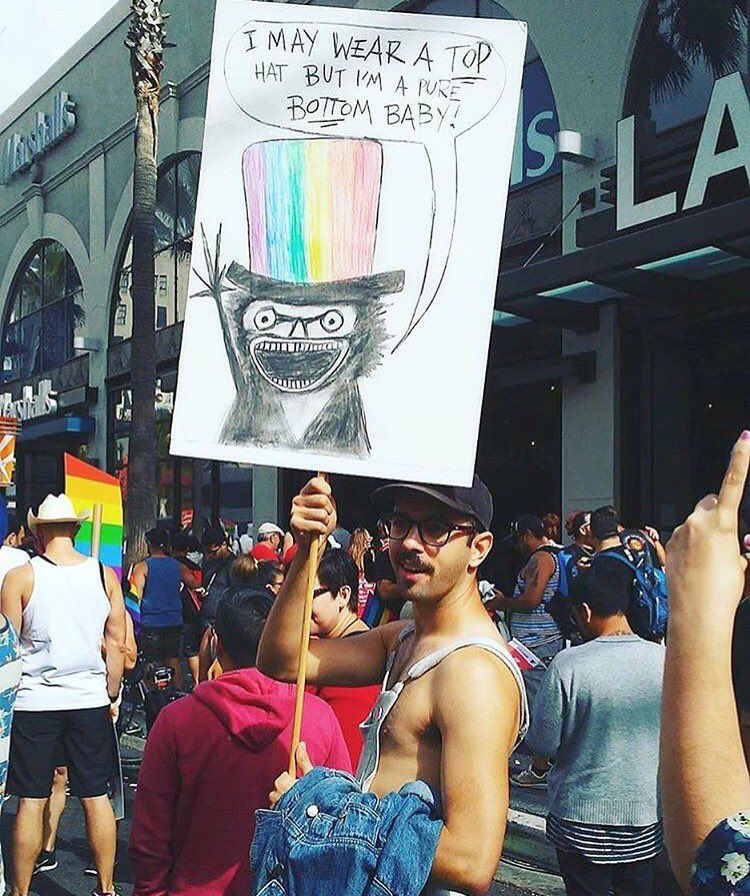
Writing about memes is silly business. By the time I publish this piece, it will have been well over a week since the story of the Babadook’s strange path to becoming an LGBTQ icon peaked, which in internet terms is a relative eternity. It’s still a funny story, though. Reportedly, a Netflix user noticed that the Jennifer Kent-directed instant cult classic horror The Babadook had been mistakenly filed under the LGBTQ Cinema category on the site’s streaming service. Users across social media platforms like Tumblr & Twitter then ran with the mistake, declaring the Babadook to be a gay icon. There has since been an immeasurable flood of memes inserting the Babadook into rainbow flag backdrops, stills from RuPaul’s Drag Race, and any other queer spaces that could easily be ‘Dooked. There have even been in-the-flesh sightings of the Babadook at Pride parades and the filming of the Drag Race finale. It’s been a bizarrely fun way to kick off 2017’s Pride Month​ celebrations and, unlike most memes, I hope this one never dies.

On one of our fist posts as a site, we declared The Babadook to be one of the best films of 2014, a very close second to the South Korean sci-fi epic Snowpiercer. We did not, however, have Netflix’s courage to declare that the film qualifies as LGBTQ content. It’s funny to return to Kent’s film now in search for glimpses of queerness, a context that was presumably far from anyone’s mind, Kent’s or otherwise, when it was first produced. It’s easy to make flippant jokes (and plenty have) about the Babadook’s dramatic presence in the arts (a children’s book about himself), how he’s a fancy dresser (complete with a signature top hat), how he’s kept locked away in a closet (actually, it’s a basement, but whatever), and his tendency to chat at length on the phone (about himself). If you really want to reach for something more substantive, I guess you could find interesting subtext by looking to the scene where the main character is prevented from masturbating with her ancient sex toy as an act of sexual oppression or by considering the fact that the Babadook himself is oppressed but never truly goes away as a kind of metaphorical struggle. The joke, though, is not necessarily that the film The Babadook is gay, but that its titular character is. This is still a film about a parent’s daily struggle with grief, depression, and resentment of their own child. The monstrous manifestation of that struggle, the Babadook, just happens to be a gay character within that story (according to current kayfabe, at least).

Keeping that separation of narrative and character in mind, there is something undeniably gay about the Babadook: he barely appears onscreen. In GLAAD’s recent scathing report on LGBTQ​ representation in major Hollywood productions, the organization took major studios like Disney & Sony to task for the pitifully minuscule amount of screentime they afforded queer characters in 2016. In one of the most absurd (and most damning) factoids from the report, it’s stated that the Lonely Island comedy Popstar: Never Stop Never Stopping accounted for 20% of all LGBTQ representation in major Hollywood productions last year, all because of a single Macklemore-spoofing song that satirizes a “no homo” brand of mainstream queer acceptance. Yet, you’d think that things were getting better than the report suggests, thanks to overblown flashes of queer representation like a suggestive campfire confession in the latest Power Rangers movie or an equally vague hint of LeFou’s homosexuality in the latest Beauty and the Beast. Audiences desperate for queer content will look for same sex romance in slightly suggestive friendships between characters like Poe & Finn in The Force Awakens or Steve & Bucky in the Captain America series, despite there being very little to support it, even in terms of subtext. Fans have to reach for those unspoken romances & declarations of queer identity because there’s nothing explicit to hold onto in most mainstream Hollywood productions. Worse yet, corporations like Disney will encourage this desperation because it sells tickets in certain demographics, yet they will do little to follow through on the promise.

The Babadook knows the struggle between lip service & onscreen representation all too well. His name is often spoken and his 2D image sometimes flashes in the form of his eponymous children’s book, but Babs himself does not appear onscreen until over halfway into the film. He’s relegated to the shadows, mostly locked away from eyesight, and the audience is blocked from getting the ‘Dook they want so badly. If we’re going to establish as a culture that the Babadook is gay, we’re also going to have to accept that the way he’s villainized and minimized in his own damn movie is sadly typical of how queer characters are represented onscreen. As an Australian indie director working on a minor budget, Jennifer Kent is far from a Hollywood big shot (and, breaking kayfabe for a minute, The Babadook is far from an LGBTQ film). It is funny, though, that as her horror genre monster has been gleefully co-opted as a queer icon that his minimized screen presence incidentally mirrors the way LGBTQ characters are typically represented (or not represented) in major Hollywood productions. It’s almost as funny as it is monstrously depressing.

-Brandon Ledet

It Comes at Night (2017)

In his debut feature, Krisha, young director Trey Edward Shults crafted an incredible level of tension & terror by staging a dramatic Thanksgiving dinner at his parents’ house. The wait to see what Shults could do with a bigger budget and a more straightforward horror tone has been blissfully short. His follow-up feature, It Comes at Night, has been pushed into wide release by modern indie distribution giants A24 and boasts recognizable actors like Joel Edgerton & Riley Keough (unlike Krisha‘s cast, which was mostly filled out by Shults & his family). First weekend horror audiences have been loudly disappointed by the film, saddling it with a “D” CinemaScore for not living up to their genre expectations, the same way a mass of people vocally derided The Witch, (our favorite film of 2016) upon its initial release. Do not be fooled by the grumbles & whines. Shults’s command of tension & terror is just as impressive here as it is in Krisha, even continuing that debut’s focus on familial discord & grief. The exciting thing is seeing that terror blown up to a slick, multi-million dollar film budget instead of a self-propelled scrappy indie production. 

Two young families struggle to survive a post-apocalyptic American landscape devastated by a deadly virus, a plague. This isn’t the outbreak horror of the more narrative-focused The Girl With All the Gifts, however. There are no zombies, no monsters, no transformations. The infected merely die, rot, and spread disease. The two families we get to know in this bleak scenario attempt to find peace & optimism in domestic cohabitation. They keep telling themselves everything will be fine, but there’s no indication that anything can or will ever improve. Edgerton’s paterfamilias often commands the room, setting firm rules on how to keep infected strangers & animals locked out of their peaceful, isolated cabin in the woods. It’s his teenage son who acts as the film’s de facto protagonist, though. Late at night, once the comfort of domestic routines and keeping busy fades away, the teen boy’s mind begins to wander into darkness. Anxieties over survival, sexuality, and sorrow for those already lost haunt him in hallucinatory dreams and late night walks through the house’s eerie hallways. What comes at night is not any kind of physically manifested evil, but rather an extreme grief for what’s already been lost and a dread for the violent, depressing end that’s fated to come in the near future.

Dream logic and nightmare imagery are a cinematic pleasure I never tire of and Shults does a fantastic job of building tension in these moments of subconscious dread. If It Comes at Night can be understood as the horror film A24 marketed it to be, those genre beats are wholly contained in the teen protagonist’s stress-induced nightmares. Nightmare imagery is not exactly unique territory for horror, though. Its presence in the genre stretches at least as far back as the German Expressionism movement of the silent era. What It Comes at Night captures more distinctly than any other horror or thriller I’ve seen before is the eerie feeling of being up late at night, alone, plagued by anxieties you can usually suppress in the daylight by keeping busy, and afraid to go back to sleep because of the cruelly false sense of relief that startles you when you slip back into your stress dreams. It’s in these late night, early morning hours when fear & grief are inescapable and nearly anything seems possible, just nothing positive or worth looking forward to. Shults inexplicably stirs up that same level of anxious terror in Krisha, with the same deeply personal focus on familial discord, but It Comes at Night features a new facet the director couldn’t easily afford in his debut: beauty. The nightmares & late night glides through empty hallways are frighteningly intense, but they’re also beautifully crafted & intoxicatingly rich for anyone with enough patience to fully drink them in.

Not everything in It Comes at Night is disjointed dream logic & slow burn focus on atmospheric tone. There’s plenty of tense dialogue, creepy treks through the woods, gunfire, and desperate scavenging for food & clean water. Often, the film’s late night eeriness is used to quietly lull the audience into a false sense of safety before a loud, disruptive threat explodes onscreen. It can even be a visually ugly film when the moment calls for it, often lighting trees & hallways like a crime scene via rifle-mounted flashlights. I’m not surprised that first weekend audiences were frustrated by their expectations of a straightforward genre film, though. Edgerton is an amazing screen presence who once again wholly disappears into his role, somewhat anchoring the film in dramatic moments of disagreement with his wife & son. There’s no explicit explanation of his demeanor or plans, however, just like how there’s no expositional explanation of the history of the plague that has trapped his family in that cabin in the woods. The highlights of the film are more image-focused & ethereal: a triangle-shaped shadow, complex tree roots & branches, sweeping pan shots & drone-aided arials, an intense fixation on a red door that separates the family from the plague lurking outside.

The subtlety of It Comes at Night‘s overwhelming potency is never more apparent than it is at its violent climax. That’s when its aspect ratio gradually, almost unnoticeably constricts its action into an increasingly cramped frame that gets more constrictive by the second until there’s no room to breathe. It’s in that climax that you get the sense that Shults may just be a master in the making. Let’s just hope that the memory of that “D” CinemaScore fades away quickly enough for more production money to flow the director’s way. If he can craft such memorably terrifying, personally revelatory works on budgets this minuscule, I’d love to see what he could do with total financial freedom, general audiences be damned.

-Brandon Ledet

The Blackcoat’s Daughter (2017)

Oz Perkins’s debut feature I Am the Pretty Thing that Lives in the House displayed an impressive command of an ambient art horror tone, but bottled it up in such a stubborn sense of stasis that it felt wasted on a story that didn’t deserve it. His follow-up (paradoxically completed before Pretty Thing and since left floating in a distribution limbo) is just as tonally unnerving as that quiet nightmare of a debut, but applies it to a much more satisfying end. Perkins’s sensibilities as a horror auteur are wrapped up in the eeriness of droning sound design and the tension of waiting for the hammer to drop. That aesthetic an be frustrating when left to rot in a directionless reflection on stillness, but when woven into the fabric of a supernatural mystery the way it is in The Blackcoat’s Daughter, it can be entirely rewarding, not to mention deeply disturbing.

Kiernan Shipka (Mad Men) & Lucy Boynton (Sing Street, Don’t Knock Twice) star as two Catholic boarding school students left stranded for their one week winter break when their parents fail to show and collect them. One girl is dealing with the complications of a secret teenage romance while the other just feels painfully alone. Left in an empty school with only snow & prayers to fill their days, their dual sense of loneliness begins to feel violently oppressive. Meanwhile a third girl, played by Emma Roberts (Nerve), escapes from a mental hospital and hitchhikes her way towards the school, establishing a sense of mystery about exactly how her story will merge with theirs and how the three girls’ loneliness will manifest into a real world evil. Evil is both physical & metaphysical in the film, as it is in most Catholic setting horrors, but the way it will choose to present itself is obscured until its presence is inescapable.

The Blackcoat’s Daughter follows a fractured, non-linear structure that teases the possibility of a puzzle that isn’t meant to be solved. Flashbacks of priests, hospitals, boiler rooms, and cops wielding rifles are filtered through multiple unreliable POVs, paradoxical timelines, and unexplained occultist rituals that strongly suggest the film will ultimately be a Lynchian puzzlebox, a question without an answer. Suddenly, without emphasis, its story does become very clear and relatively simple as the cloud of mystery lifts. Notes of classic horror milestones like Halloween & The Exorcist emerge from the film’s deceptively loose, mysterious tone, bringing it to the mix of high art aesthetic & low genre film familiarity I love so much. What starts as an art film meditation on loneliness gradually reveals itself to be a much more familiar mode of violent horror filmmaking, a genre exercise masquerading as a complex mind puzzle. I love it for that.

In some ways The Blackcoat’s Daughter is just as languid as I Am the Pretty Thing that Lives in the House, but it sets in motion so many more moving pieces and is a lot more willing to deliver the violence implied by its horrific tone. Personally, I should probably be giving Perkins’s command of tone much more attention as an audience than I am already. Both of his features are hinged on a roaring, ambient soundtrack (crafted by his brother Elvis Perkins) that would probably be better experienced through headphones, or at least on a more expensive sound system than the one I have at home. If you’re curious about his work or just have an appetite for ambient horror in general, I highly recommend starting with The Blackcoat’s Daughter and giving it the full alone late at night with headphones treatment. I really enjoyed it the first time around, but I’m going to have to revisit it for that immersive soundscape experience myself.

-Brandon Ledet

Ghost Cat (2003)

There’s an instant absurdist appeal to making a live action cat movie that I find endlessly entertaining, whether it be a “lighthearted” family comedy like Nine Lives or a weirdo genre film like The Night of 1,000 Cats or something in-between like The Cat from Outer Space. 2003’s made-for-Animal Planet TV movie Ghost Cat also splits the difference between those feline cinema subcategories. Starring a before-she-was-famous Ellen Page, still firmly in the Trailer Park Boys/I Downloaded a Ghost phase of her career, Ghost Cat is a cheaply ugly & transparently vapid time-waster of a family picture. Alternately marketed as a family drama under the titles Mrs. Ashboro’s Cat and The Cat that Came Back, it was only packaged as a feline horror thriller as an afterthought. Ghost Cat doesn’t have the heart to make a villain out of its titular threat, instead playing the ghost cat as a hero to animals everywhere & giving her the not-at-all-threatening name Margaret. Still, I found myself at least mildly charmed by the film’s quaintly campy thrills throughout and left it with a big, dumb smile on my face. The inane pleasures of a live action cat movie are that inherently strong.

Ghost Cat’s titular animal spirit is too lovable to demonize, so the film instead turns to the most tried & true villains of children’s media (and life in general): white businessmen. Greedy white men conspire to rob an old lady of her family home and her friendly neighbor of her animal rescue operation to make way for an Evil Real Estate Development Deal. Once the old lady dies alone at home, along with her cat (yikes! that’s depressing) the only thing standing in the way of the evil real estate development is the cat’s ghost and its only living human friend, a young girl played by Page. The ghost cat initially appears in the young girl’s stress-induced nightmares about her own dead mother, wildly meowing in an artfully inane montage of flames and black & white photographs. From there it does things you’d expect a cat’s ghost to do: mysteriously knocking items off shelves, walking across piano keys, and invisibly “making biscuits” on bedspreads. The cat’s ghostly deeds become more purposefully heroic as the film goes on, though, and Margaret eventually saves the day several times over by scratching the evil white men in the face and thwarting their shady contract deals by getting the right papers in the right people’s hands.

Made soon after national stories like the Enron scandal and Martha Stewart’s insider trading conviction, Ghost Cat has a surprising amount to say about how financial institutions are gleefully willing to rip off & tear down the people. The film even solidifies the threat by having its business cretins directly attack the most innocent victims possible: abused & neglected animals. It’s bad enough when they start the film pressuring an old woman to forfeit her property, but by the end the ghost cat has to stop them from literally gassing an entire animal shelter’s worth of rescues to death. That’s some top shelf TV movie villainy right there. Unfortunately, focusing the story’s weight on the evils of white man business dealings means there’s less room in the runtime for ghost cat tomfoolery, which is obviously the film’s main draw. I was satiated by the few ridiculous cat cam & feline nightmare sequences the film could afford me, but for the most part there just wasn’t nearly enough ghost cat in my Ghost Cat. This film is strictly for mid-afternoon lazy-watching, an easy on the brain indulgence that somewhat satisfies in its titular inanity, but leaves a lot of room to explore in future feline spirit realm cinema. I’ll be there for those future ghost cat experiments in TV movie artistry, but sadly I doubt Ellen Page will be joining me for the ride. She’s got better things to do. I don’t.

-Brandon Ledet

Billy the Kid Versus Dracula (1966)

I don’t know why I’m suddenly fascinated by the schlocky career of William Beaudine. The only two films I’ve previously seen from the professionaly subpar director, The Ape Man & Bela Lugosi Meets a Brooklyn Gorilla, both tested my usual unending patience for poverty row garbage starring Bela Lugosi, who I love dearly. Yet, there’s an undeniable draw to Beaudine’s schlocky frivolity, no matter how often the promise of his films’ premises fail to pay off. Take, for instance, his final two productions before retirement/death. Filming both titles in just eight days on the same Californian ranch, Beaudine capped off his career with the “Weird West” double bill of Billy the Kid Versus Dracula and Jesse James Meets Frankenstein’s Daughter. There’s no way either film could live up to the full schlock potential of their titles, thanks to Beaudine’s passionless workman sense of craft. Just the mere fact that films exist on the market with such preposterous titles is enough to draw me in as an audience, though, no matter how many times I’ve been burned before. In that way William Beaudine may just have been a movie/money-making genius.

Perhaps the most surprising thing about Billy the Kid Versus Dracula is that it was filmed in 1960s color instead of 1950s black & white. Otherwise, it’s the exact unimpressive mashup of supernatural action & lackluster romance you might expect from the title. Billy the Kid is a real life historical figure, placing the prestige & plausibility of this work somewhere around the heights of Abraham Lincoln: Vampire Hunter. In the film, he’s posited as a retired gunfighter, an outlaw made good. His determination to live a quiet life is jeapordized when his young fiancee is hypnotized and quarantined by a vampire (never once referred to as Dracula in the script) who arrives in their small Old West town posing as her uncle. Everyone else seems to ignore the improbability that this oddly incestuous European man would be this teenage woman’s uncle and accepts him as her new guardian after he drains her parents of their blood. Only Billy the Kid senses that something is afoul and must murder the vampire invader in a way that both doesn’t arouse suspicion from the law and trades in his pistol-shooting tactics for a traditional heart-staking. It’s all very silly.

Unfortunately, the silliness at the core of Billy the Kid Versus Dracula has all the urgency of a Halloween-themed episode of Bonanza or Gunsmoke. When the vampire hypnotizes women he glows red and closely resembles an illustration of Satan. His bat form is also adorably shoddy, like a Party City decoration, and is used as silhouetted screen wipes during the opening credits. The rest of the movie is on the most boring end of cheap Western media, however, and it’s not at all surprising that this “Weird West” double bill was financed by television producers. I’m much more in tune with the campy pleasures of cheap horror than whatever people see in cheap Westerns, so maybe the Cowboys & Indians gunplay of Billy the Kid Versus Dracula would play better for audiences who never tire of grizzled men with six shooters who uniformly refer to Native Americans as “savages.” I guess since my interest in watching the film was only piqued during its few stray vampire attacks, I might have been better off watching a different Dracula film altogether, but I will admit the absurdity of the setting has an endearing novelty to it that a 70min feature can easily sustain while remaining moderately charming.

As tickled as I am by the Billy the Kid Versus Dracula‘s titular premise, the movie has no excuse to be as dull or as uninventive as it is, especially considering its mid-60s release date. I like to imagine an alternate universe where William Beaudine were more passionate about his absurdist schlock. A version of this film made in the 1950s by a fired up Ed Wood could easily have been an all-time​ cult classic, maybe even with Bela Lugosi in the villainous lead. Beaudine manages to reduce something so wonderfully outlandish to a by the numbers, television-esque work of supernatural tedium. I was only moderately entertained by it for a few isolated stretches, but I still can’t resist the urge to watch its sister film, Jesse James Meets Frankenstein‘s Daughter anyway. Who could pass up a title like that, no matter who’s behind the camera? I am my own worst enemy.

-Brandon Ledet

Roger Ebert Film School, Lesson 29: The Third Man (1949)

Roger Ebert Film School is a recurring feature in which Brandon attempts to watch & review all 200+ movies referenced in the print & film versions of Roger Ebert’s (auto)biography Life Itself.

Where The Third Man (1949) is referenced in Life Itself: On page 157 of the first edition hardback, Ebert explains his general taste in cinema. He writes, “What kinds of movies do I like best? If I had to make a generalization, I would say that many of my favorite movies are about Good People. It doesn’t matter if the ending is happy or sad. It doesn’t matter if the characters win or lose. […] The Third Man is about two people who do the right thing and can never speak to each other as a result.”

What Ebert had to say in his review: “The Third Man reflects the optimism of Americans and the bone-weariness of Europe after the war. It’s a story about grownups and children: Adults like Calloway, who has seen at first hand the results of Lime’s crimes, and children like the trusting Holly, who believes in the simplified good and evil of his Western novels. The Third Man is like the exhausted aftermath of Casablanca. Both have heroes who are American exiles, awash in a world of treachery and black market intrigue. Both heroes love a woman battered by the war. But Casablanca is bathed in the hope of victory, while The Third Man already reflects the Cold War years of paranoia, betrayal and the Bomb.” – from his 1996 review for his Great Movies series.

I was hoping to redeem myself after my relatively muted response to Casablanca by falling head over heels for its British mystery thriller descendant The Third Man, which seems equally lauded as One of the Greatest Films of All Time. The Third Man boasts the same fast talking, hard drinking, manly noir efficiency of Casablanca, although its depressive post-war exhaustion is tonally different from the Humphrey Bogart classic’s wartime unease. I found myself technically impressed, but emotionally disengaged by both works, unable to echo their set-in-stone praise as the best of what cinema has to offer. I suppose the film’s dizzying Dutch angles and classic noir attention to lighting are largely what elevate it above most pulpy mysteries that were being produced in its era, but that visual flair only took me so far as a modern audience. The Third Man is undeniably a well-made film in terms of craft, but I’m failing to connect with it as an essential, rewarding cinematic experience.

An American pulp novelist arrives in a post-war Austria looking to meet with a dear old friend, Harry Lime. He discovers that Harry Lime has died in a suspicious car accident, where everyone at the scene knew the man personally in some way. Especially disturbed by the report of an unidentified “third man” present at the scene, the American novelist embarks on a vigilante mission that mirrors the kind of genre fluff he writes for a living. In the process he learns some shocking, damning things about Harry Lime’s post-war racketeering and makes the mistake of falling in love with Lime’s girlfriend, who remains true to him even in death & among accusations of his unscrupulous racketeering (which lead to many more deaths). Harry Lime becomes a sort of mythic legend during this investigation, both in the exposure of his crimes & in the endless repetition of his name. The mystery of how he died is gradually swapped out for the mystery of who he was as a person, a question that only can be answered in the grimmest of terms.

Besides its forward-thinking (and sideways-leaning) cinematography, I suspect The Third Man is a movie remembered mostly as a collection of iconic moments, the same way Casablanca plays like a greatest hits collection of Old Hollywood dialogue. Some of these moments worked especially well for me, including a movie-stealing speech from a maniacal Orson Welles in the third act and a couple chase scenes that lead to unexpected hideouts like a Ferris wheel or a movie theater or an applauding literary audience. Occasionally, though, I’d have to scratch my head over the movie’s reputation, like when the most shrill, annoying child actor in the history of shrill, annoying child actors accuses our American makeshift gumshoe of murder in a piercing whine. I was also confused by the praise of the film’s zither soundtrack, which gives it the comedic shrug of a Curb Your Enthusiasm episode, completely cutting the tension of watching our protagonist get in major trouble by asking too many questions. Ebert went out of his way to praise the zither’s influence on the film, writing “Has there ever been a film where the music more perfectly suited the action than in Carol Reed’s The Third Man? […] The sound is jaunty but without joy, like whistling in the dark. It sets the tone; the action begins like an undergraduate lark and then reveals vicious undertones.” I don’t understand at all where he’s coming from, but I doubt he’s alone in believing that.

There’s a really interesting post-war tone that commands a lot of The Third Man (when it isn’t being disrupted by children & zithers). Piles of rubble and greedy profits made from people’s suffering in a time of crisis lurk in the movie’s fringes, rarely directly playing into the plot the way it does in Casablanca, but often overpowering the impact of the central murder mystery. Major twists in that central mystery never meant more to me than that post-war gloom, but the two narratives do compliment each other nicely. Like with Casablanca, I’m willing to accept that a few rewatches might be necessary to fully appreciate The Third Man as an all-time classic, but the film’s murder mystery reveals will likely only dull in those revisits. It’s the post-war exhaustion that’s going to matter more in the long run (along with the film’s bold visual aesthetic). The doomed romance at the heart of Casablanca sounds a lot more pleasant to experience on loop, though, so for now I’ll just have to continue to damn this film by calling it merely very good.

Roger’s Rating: (4/4, 100%)

Brandon’s Rating: (3/5, 70%)

Next Lesson: The Silence of the Lambs (1991)

-Brandon Ledet

Wonder Woman (2017)

I’m going to admit up front that this movie was not made for me. I have not seen any other entries in the DC Universe other than the first two Christopher Nolan reboots of Batman. I’m not at all part of the superhero movie loving crowd, but in a world where the Dark Knight has at least twelve cinematic appearances, Superman has at least ten, and the Marvel Universe is dominated by male superheroes and small female roles in ensemble casts, it was about damn time we had a movie wholly dedicated to a female superhero. Also, in a world dominated by male directors, it was long overdue for a woman to helm a superhero film. It’s 2017 and Patty Jenkins is the first woman to direct a superhero film. Ever! It’s only fitting for that title to be Wonder Woman: an icon for women and young girls; a tough, no nonsense Amazon princess warrior; and arguably one of the best superheroes of all time. All this alone makes it a movie worth seeing and supporting; and it’s also fun, even for a superhero curmudgeon such as myself.

Wonder Woman starts with Diana’s childhood on the secret Island of the Amazons, Themyscira. Here we get a view of the culture of these women, why they exist, and how their island is eternally preserved and hidden by a veil of storm and fog. The training montages here are pretty cool, but a lot of what happens on the island (repetitive speeches about the gods and reiterations of what Diana is and is not allowed to do) just seems to drag. It’s cool to get a peak into the Amazon lifestyle, but only after so much of that do we finally get the inciting incident. A WWI era British Intelligence spy, Steve Trevor (Chris Pine) manages to crash through the protective field around the island, followed by German troups. After a huge fight on the beach where we get some commentary about the destructive killing power of guns, Diana decides to leave with Trevor and save the world from war. After lots of fish out of water humor and wacky, “Oh my god, you can’t just carry a sword through turn of the century London!” hijinks, they assemble a team of misfits and go straight to the front lines.

For a tale that takes place with WWI as a backdrop, this film’s not that gritty. Thanks goodness for that, because it could have easily been another gray, dull action movie about the horrors of war. That’s not to say that the horrors of war aren’t present here, especially since World War I was a particularly savage example of carnage and loss of life. The main villains are still an evil general and his mad scientist lover/sidekick, who are developing a particularly lethal form of mustard gas. Despite this, there’s a tone of hope. We believe in our seriously scarred and flawed heroes. Diana is a source of justice and light in the darkness. War is still hell, but in the end we know Diana is going to succeed. There’s no way she can’t. She’s Wonder Woman. The movie really sells us on the idea that she can do anything, and that’s not a bad thing at all.

There’s been a lot of talk about the gender politics of Wonder Woman and what it means to finally have a female director on board for a blockbuster this big. The idea of Diana not being a piece of meat and eye candy has been floated around (oh, how our standards are so low). Other ideas I’ve seen have mentioned the design of the Amazonian armor and how it’s not run of the mill female boob armor. Both of those I have to sadly disagree with. Sure the armor isn’t Linda Carter bustier stuff, but there’s still the defined breast shapes, which has been discussed time and time again to be realistically useless except for the purpose of showing off boobs. You would think that an ancient race of warrior women would have figured that out. Also, there were many examples of Diana being presented to the audience as eye candy. In one particular scene she shows up to a gala in a stunning blue dress as Steve Trevor looks on with his jaw dropped. The real triumph as far as gender goes is that she’s allowed to be more than just eye candy. Not only is she presented as a desirable woman, she’s also given a story line with actual character development. The other refreshing thing about the way the film is written is that there’s no competition between women. She’s never given any lines implying how she’s not like the other girls or how the women outside her world are very weak, which was refreshing. Even on Themyscira, there’s a sense of camaraderie rather than oneupmanship. The other interesting catering-to-the-women-in-the-audience bit (though it’s debatable whether or not this is a win at all) is the reversal of the male gaze. Chris Pine is just there to be a handsome face and love interest, and there’s even a nude scene, albeit mostly implied, with a lot of double entendre. His character is not completely a cardboard cut-out, but compared to Diana it’s pretty darn close.

Wonder Woman is still guilty of the same sins as other superhero movies: cliché speeches about justice with nonsensical taglines (“It’s not about ‘deserve’; it’s about what you believe”), excessive slow motion (especially in the form of hair flips), and a cheesy fight sequence soundtrack. For true fans of the genre those aren’t necessarily problems, but more like charming quirks.  It manages to blend the darkness of war with the fun, superhero tone. A woman’s touch isn’t as immediately obvious to me as a lot of people believe, but where I see it I think it’s great. I’m glad the world finally has a female superhero movie, and that it’s living up to the hype and expectations.

-Alli Hobbs