The Being (1983)

EPSON MFP image

three star

campstamp

After falling in love with Jackie Kong’s weirdo live action cartoon horror comedy Blood Diner, I was intrigued to see what other hidden gems the director managed to deliver in her modest four film career. Besides a couple mid-80s comedies (one featuring Andrew Dice Clay, yikes), Kong had only directed one other horror film, a creature feature titled The Being. Part The Thing, part Toxic Avenger, and released in-between the two, The Being is unfortunately not nearly as idiosyncratic as Blood Diner in terms of tone or context. It finds Kong younger and more restrained in both her bravery & her budget, aiming for a more generic drive-in horror aesthetic than what would later be delivered in her midnight movie circuit cult classic. It’s still impressively entertaining for a dirt cheap slice of drive-in schlock, though, and you can easily detect that Blood Diner sense of humor informing every scene of monster-driven mayhem.

Twilight Zone-spoofing narration reports the strange disappearances of young children in the small town of Puttsville, Idaho in an opening scene that plays more like a trailer than an actual movie. These mysterious disappearances seem to be tied to the town’s crisis of radiation-contaminated water from local, uncaring Big Business jerks. The company guilty for this Flint-reminiscent offense makes no effort to hide the fact that they’re dumping toxic chemicals into the water supply; they just have their evil PR stooge (Martin Landeau, the film’s only recognizable face) claim in public forums that the pollution is harmless. Of course, the pollution is far from harmless, unwittingly giving birth to a horrific monster (the titular “being”) who swoops in for frequent kills, the source of the film’s central disappearances. The company is aware of this mutated beast, but deflects attention by claiming the citizens of Puttsville really need to worry about the moral contamination of the sins of pornography peddlers & massage parlors. The product they’re protecting by covering up these supernatural murders? Potatoes.

Jackie Kong employs a much subtler hand in her blood-soaked satire here than she does with Blood Diner, but both films reveal her to be a great talent at surprising audiences from within the familiar. She keeps the titular mutated beast from The Being in the dark for the majority of its runtime the way most cheap horror films would, mostly just showing its gooey, demonic arms reaching for victims in its flights of murderous rampage. There’s plenty to be entertained by in the details even while the film’s withholding, though: a trucker decapitated while driving, a drive-in audience attacked through blood-oozing cars & screen, a bizarre Wizard of Oz-inspired black & white dream sequence. And when the being’s full body is revealed, Kong makes her limited effects budget count for all that it can, constructing a uniquely uncanny creature that resembles a gooey, organic version of the monster from Hardware.

The Being is less confident in its spooky-goofy tone than Blood Diner, but by the time the film ends on a comedic “Where are they now?” gag before the credits roll, it’s clear that Kong had not delivered just another by-the-books creature feature. Her sense of humor and her punk rock pranksterism are readily apparent in this earlier, less-formed work and it’s a shame she never had the chance to make a dozen more monster-driven horror movies after she had pushed her horror comedy formula even further. Two Jackie Kong horror titles aren’t nearly enough. Event though it’s been a few decades since her last film, I’m hoping to see her return to the director’s chair and crank out some more pictures ASAP.

-Brandon Ledet

Logan (2017)

I don’t like Wolverine.

This has been a topic of much contention with my fellow comic book nerds for a long time, but there are a host of reasons why he doesn’t appeal to me as a character. First, it’s never made much sense to me that Professor X has a spot on his peace-oriented team for a man whose powers and enhancements make him a perfect assassin or soldier. I’ve also never seen myself reflected in Wolverine the way that I see aspects of myself in Kitty Pryde, Emma Frost (under Joss Whedon’s pen), and (especially) Beast; nor do I see something I could aspire to be in Wolverine the way that I did and do in Storm’s serenity or Nightcrawler’s happiness in spite of a lifetime of abuse. I certainly understand the allure of a character without a past and the desire for redemption (although the importance of this desire was intermittent), but Wolverine never worked for me as a character.

I think that this is mostly because, despite his meager origins, the character of Wolverine evolved into a straight white male power fantasy, especially among the more self-pitying members of the nerd subculture of the eighties and nineties. Macho Wolverine gets the girl, takes no shit, and leaves his enemies shredded to ribbons: he’s the ultimate enviable hero of the platonic nineties nerd before Hollywood came along and turned comic books and superheroes into the hottest trends on Earth. Following this popularity explosion, the character was inescapable, which is probably my foremost issue with him. Don’t like Angel, or Jean Grey, or Psylocke? No problem: there are plenty of Marvel comics without them, including long periods of time in many X-books. Don’t like Wolverine? You’re out of luck, bub: try to find an X-Men comic from 1985 to 2014 where he’s not a presence (give or take an Excalibur here or there), and if you turn to another Marvel book for a Wolverine-free reading experience, you better not want to check out Avengers, or New Avengers, or even Power Pack. It’s essentially the same reason that, despite my long and storied love of Star Trek, I don’t like Data (a crucifiable offense in many circles): both he and Wolverine are such pets of vocal fans and some creators that they become the entire focus of what is supposedly an ensemble, to the detriment and derision of other characters*. You can even see this in the way that he was not only the de facto star of the X-Men films in which he appeared, but also got his own film franchise.

That franchise reaches what claims to be its final film in the recently released Logan, a gritty neo-western masquerading as a superhero film. The plot finds the titular Logan (Hugh Jackman) caring for an aging and increasingly senile Charles Xavier (Patrick Stewart) with the help of Caliban (Stephen Merchant) in the Mexican desert in 2029. The combination of a cataclysmic event and genetic suppression has rendered them among the last mutants on Earth, until Logan is drawn back into the world of heroism by Gabriella (Orange is the New Black‘s Elizabeth Rodriguez), a woman who begs him to help save a child named Laura (Dafne Keen) from Donald Pierce (Boyd Holbrook), a cybernetically enhanced mercenary. Their redemptive road trip also features appearances from Eriq La Salle and Elise Neal as world-weary farmers who provide shelter for the group.

My apathy and weariness about Wolverine aside, this is a good movie. Sure, it makes no logical sense within the confines of the different timelines that the other films in this franchise have provided without a conspiracy theory board of newspaper clippings, post-it notes, and red string, but 20th Century Fox doesn’t care anymore, so why should you? The one problem I’ve never had with the film version of Wolverine is Hugh Jackman’s consistently strong performance regardless of the variable quality of the material available, and this is his best work as the character to date. This is despite (or perhaps because of) the fact that, for once, we’re not reflecting back on his mysterious past as we have in literally every movie in which he appeared in this franchise and are instead seeing a man at the end of his career and, perhaps, his life. Logan deals with the more mundane aspects of growing old, like obsolescence in a changing world, the dementia of an elderly father (figure), and the betrayal of his own aging body and the disease thereof, despite his much-touted healing factor. This is not a character who is obsessed with learning about (or altering) his past, but one for whom the past is prologue to a slow, painful existence in an all-too-real dystopian future.

This is not the Sentinel-ruled technicolor hell of Days of Future Past, nor is it the candy-coated “corrected” timeline in which Jean, Scott, and Hank are alive: this is a dusty, economically depressed future in which life is cheap, crossing the border into Mexico is an ordeal, and Canada provides asylum to those on the run from an authoritarian government that hates them because they are different, all while said government not only condones but supports the imprisonment of and experimentation on children of color and treats Mexico like its dumping ground. This film has been in development for a while and takes a great deal of inspiration from graphic novel Old Man Logan, but it is particularly fascinating that the first X-film released following the election paints such a realistic picture of a dark future in comparison to the optimistic ending of Days of Future Past, which was released solidly in the middle of Obama’s second term, when the tide of freedom and progress seemed to flow ever-forward.

Logan never becomes explicitly political, however, instead allowing this interpretation to emerge from its subtext. This is, first and foremost, a story about a retired, past-his- prime gunbladeslinger who has long since lost what little place he had in the world before being brought back in for one last stand. You’ve seen this movie before, but dressing it up in these clothes puts a spin on the material that is fresher than I expected, in the same way that Winter Soldier was reinvigorating as both a government conspiracy thriller and a superhero flick. I’d love to see more movies like this, to be honest: James T. Kirk and Company as the Magnificent Seven/Seven Samurai, Black Widow having to Die Hard her way out of a building, or, hell, even Steve Rogers trying to save the old community center from being torn down to make way for those awful condominium/shopping center hybrid abominations.

Where the film doesn’t work for me is in its insistence on defining Logan’s little group as a family. The discovery of the genetic connection between Logan and Laura and the latter’s decision to help her does not necessarily an intimate connection make, and Xavier’s “This is what life looks like” moment rings falsely sentimental for the character, given all that we’ve seen him do and accomplish over the course of these films. For such a bloody and violent flick (which, make no mistake, Logan is), a fair amount of the emotional resonance that the film seeks to create works, but the occasional references to Laura and Xavier as Logan’s family work better when they’re subtle (like when he passes them off as his father and daughter) than they do when characters explicitly state that they are family. That aside, however, this serves as a fitting swan song for Hugh Jackman’s contribution to the franchise, especially if you’re  willing to forgive stilted dialogue and the occasionally unearned moments of pathos.

*Here’s the part where I admit that I love the Wolverine and the X-Men animated series, despite my general apathy towards the character; although Wolverine is the title character, WatX was much more of an ensemble piece that gave every character plenty of development and attention. He’s also cast in an unusual role as the reluctant leader with the atypically angsty Cyclops serving as the team’s loner. The show also has one of the darkest storylines ever constructed for what is ostensibly a show for children; it’s definitely worth checking out.

-Mark “Boomer” Redmond

Kong: Skull Island (2017)

The big risk in me venturing out to see the latest King Kong reboot was that my love for loud & dumb movies about giant monsters might be crushed by my ever-growing boredom with war narratives. Kong: Skull Island made no secret of its Vietnam War cinema aesthetic in its advertising, promising to be something like an Apocalypse Now With Kaiju Primates genre mashup. The actual film is something more like Platoon With Kaiju Primates, but the effect is still the same. Skull Island‘s main hook is that it uses the traditional King Kong narrative as a thin metaphor for U.S. involvement in Vietnam (and other unwinnable, imperialistic conflicts of world-policing), declaring things like “Sometimes the enemy doesn’t exist until you’re looking for them.” It’s the same exact themes that are hammered to death across nearly all Vietnam War movies with the exact same Love The Smell of Napalm imagery (ever seen an explosion reflected in aviator sunglasses before?) and more or less the same needle drops (don’t worry if they don’t immediately play CCR; it’ll eventually happen twice). As an audience, I’m missing an essential Dad Gene that enables people to care about a very specific end of Macho Genre Cinema (including war films, submarine pictures, Westerns, and, oddly enough, the James Bond franchise). If there’s anyone out there with that Dad Gene who still enjoys the occasional Vietnam War film, they’d likely have a lot more fun with Kong: Skull Island than I did. For me, it was like someone mixed jelly into my peanut butter jar because they didn’t bother cleaning their spoon.

Perhaps the biggest disappointment about Kong: Skull Island is that it amounts to less than the sum of its parts. The cast alone is a testament to a staggering waste of potential: Samuel L. Jackson, John Goodman, Tom Hiddleston, recent Oscar-winner Brie Larson, all wasted. The movie is stacked with onscreen talent, but just about the only memorable performances delivered are from a fully committed Shea Whigham & John C. Reilly, who both pull off a tragic/comic balance in their respective roles as shell-shocked war veterans. Reilly is (rightly) getting a lot of attention in this film as a shipwrecked soldier who’s been stranded on Skull Island since WWII and is deliriously relieved to see people who share his language & culture for the first time in decades. The biggest laugh I got out of the film, though, was in watching Whigham chow down on a can of beans and casually describe his first battle with a skyscraper-sized ape as “an unconventional encounter.” The sense of wasted potential extends far beyond the immense talent of its dispassionate cast, however. Even its central hook of attempting a Vietnam Movie With A Giant Ape seems like it was handled in the blandest, least interesting way possible. Instead of writing a revisionist history where Kong is transported to Vietnam and intermingles with the soldiers on the ground, the soldiers are transported to his home, the titular Skull Island. This sets up an echo of the exact same narrative we’ve seen in nearly every version of a Kong picture. Peter Jackson’s (infinitely more passionate) version of King Kong was released just a little over a decade ago. All this one does to update it is toss in some helicopters & flamethrowers and increase the size of the titular ape.

I’m not sure a full plot description is necessary here, so I’ll try to make it quick. The day after the U.S. declares its withdrawal from Vietnam in 1973, a military troop is ordered to secretly escort a geological mission to survey the once mythical Skull Island. [Scene missing: soldiers complaining that they’re being deployed instead of going home.] There’s a lengthy assembling-the-team sequence where everyone’s various motives & vulnerabilities are revealed for future significance, but no one character gets enough screentime to make any of it count for anything. Do we really need to know Brie Larson’s background as a hippie anti-war photographer to watch her blankly stare at monsters & the Northern Lights for the next 90min? Doubtful. The “geological” expedition, of course, is a betrayal, a cover-up for finding proof of a two-fold conspiracy theory: that the Earth is hollow and that giant monsters live inside it. Once discovered, King Kong is initially seen as a threat, as he attacks the military crew that bombs his home in an attempt to prove those (correct) theories. Eventually, however, it’s revealed that the gigantic ape is the protector of the island and, by extension, the world at large. He fights off & keeps at bay the other monsters that threaten to crawl out of the hollow Earth to terrorize mankind: giant spiders, squids, something John C. Reilly’s freaked out war vet calls “skull crawlers,” etc. This dynamic of Kong as a protector doesn’t really do much for the film’s central Vietnam War metaphor. It mostly just hangs in the air as a naked setup for a M.U.T.O. (Massive Unidentified Terrestrial Organism, no C.H.U.D. that) cinematic universe, which is eventually supposed to link up with the most recent American Godzilla property (as opposed to the far superior Japanese one) for a pre-planned crossover film. And there you have yet another passionless blockbuster that’s a mere placeholder for a future film franchise payoff.

If I haven’t talked enough about Kong himself so far, it’s because the movie doesn’t give me much to work with. There isn’t too much new or different about the infamous beast in his most recent form. The quality of the CGI hasn’t advanced all that significantly since Jackson last tackled the property in ’05, which is kind of a big deal in the King Kong genre, going all the way back to its stop-motion animation roots in the 1930s. The ape’s gotten a lot bigger in scale (likely in preparation for his upcoming kaiju battles) and modern 3D made for an occasional moment of action cinema eye candy, but I couldn’t work up much awe or horror for the misunderstood monster, which is a problem. His inner anguish is always secondary to the soldiers’, never being afforded much of an onscreen emotional narrative outside John C. Reilly plainly informing us that he’s the last of his kind. Sacrificing the ape’s inner life for some killer kaiju battles might’ve made that thin emotional groundwork forgivable, but the giant monster violence of Kong: Skull Island is also a little lacking. In old school kaiju movies (and in more faithful throwbacks like Pacific Rim) the monsters would fight for minutes at a time, establishing pro wrestling-style narratives through the physical language of their battle sequences. Here, the fights only last for seconds at a time as we follow the human characters who navigate their paths of their destruction. Again, my disinterest with that end of the dynamic might have a lot to do with my general boredom with war movie plotting, so mileage may vary on that point. It just feels strange to me that a movie that boasts Kong’s name in the title would be so disinterested in the ape himself.

None of this is to say that Kong: Skull Island is a total disaster and an entirely joyless affair. There are some moments of monster movie mayhem that work well enough as eye candy and both John C. Reilly & Shea Whigham do their best to boost the spirit of the proceedings with some much-needed levity & camp. (I think my ideal, streamlined version of the film just be those two characters alone in a Swiss Army Man-style romance adventure on the same kaiju-infested island.) Overall, though, the movie feels like a well-funded version of a SyFy Channel mockbuster that can afford to hire legitimate actors instead of Ian Ziering or Steve Guttenberg or whoever’s up for it that particular weekend. Unlike the recent genre film rehash Death Race 2050, which applies that SyFy style of direct-to-VOD CG cheapie energy to something uniquely bizarre, Kong: Skull Island lacks any distinguishing sense of passion. I guess you could point to a smash-cut of Kong eating a human to a human eating a sandwich or the basic novelty of a giant ape fighting a giant squid as holding some kind of camp value, but that’s a bit of a stretch, given how much the movie focuses on its stale Vietnam War themes. The silliest Skull Island film gets in its basic DNA (outside Reilly & Whigham’s respective quirks) is in its shameless shots of muscular Kong ass, but even that line of putting-it-all-out-there ape anatomy could’ve been more over the top, #GiveKongADong2017. Maybe audiences more in tune with the basic thrills of war movies as a genre will feel differently, but I struggled to find anything in the film worth holding onto. Its stray stabs at silliness didn’t push hard enough to save it from self-serious tedium and its Vietnam War metaphor wasn’t strong enough to support that tonal gravity. Everything else in-between was passable as a passive form of entertainment, but nothing worth getting excited over, much less building a franchise on.

-Brandon Ledet

Train to Busan (Busanhaeng, 2016)

It’s an oft-cited criticism among professional reviewers, the laity, and everyone in between (like me and probably you) that there are too few original ideas being produced in film, with various thinkpieces arguing the relative merits of remakes (like the upcoming Beauty and the Beast), reboots (like the upcoming The Mummy), reimaginings (like the upcoming IT), and sequels (of which there will be at least a dozen this year, but let’s just put a pin in Transformers: The Last Knight as the one that’s least likely to have any objective value). In the fight between the pedantic “You know that Wizard of Oz and The Maltese Falcon were remakes, don’t you?” camp versus the equally annoying “Everything’s a remake these days!” camp, there’s not a lot of room for middle ground. Although we’re no longer in the heyday of remakes that we were  ten years ago (for instance, Hollywood’s top performers in 2005 had a high percentage of remakes, 17%, which fell to 5% by 2014), the rise of narratively homogeneous “cinematic universes,” the tendency on the part of studios to fund financially safe sequels, and the widespread proliferation of lay criticism on YouTube and beyond means that you’re no less likely to hear kvetching about unoriginality today than you were in the summer of 2006; in fact, you probably hear it more often.

With regards to horror, the tendency to “follow the leader” whenever the wheel happens to be reinvented, either intentionally or accidentally, is non-negligible. The relative profundity of originality that catapulted The Blair Witch Project to success means that we’re approaching nearly two decades of found-footage horror, with six Paranormal Activity films in eight years and the most recent season of American Horror Story using the format as its central gimmick. The nineties saw a huge uptick in teen-oriented slasher films following the release of Scream, although the extent to which they retained that film’s sly metacommentary varied from project to project. Before that, the international success of George Romero’s Dawn of the Dead spawned a slew of imitators, including an entire separate string of foreign sequels starting with  Lucio Fulci’s Zombi 2.

Of course, Romero’s zombies became the default conception of the reanimated undead from that point forward, with the occasional outlier generating considerable interest in the horror fan community, despite the frequent obstinance of zombie “purists.” Danny Boyle’s astonishing 28 Days Later rocked the boat in 2001 with its so-called rage-zombies (although whether or not the infectees of the film are “true” zombies is still a matter of debate among the persnickety), and Edgar Wright’s delightful 2004 romp Shaun of the Dead adhered to the more traditional Romero zombie apocalypse scenario filtered through a distinctly comedic (and British) lens. It’s noteworthy that both of these zombie films of the aughts were made by Brits, following the distinct and entrenched American orientation of Romero’s satirism. At the same time that Shaun and 28 Days were making zombies interesting again, Americans were putting out regrettable and forgettable nonsense like the made-for- TV Return of the Living Dead sequels, Tobe Hooper’s Mortuary, and Romero’s own Land of the Dead, which is better than its contemporaries but suffers from both a lack of subtlety in its social criticism and its lack of freshness (there’s a reason that it’s not recalled or discussed with the reverence that is reserved for Night of the Living Dead or Dawn of the Dead).

It should come as no surprise, then, that following another decade of retreads of the zombie genre, with adaptations like World War Z (aka the zombie movie that your dad can watch), more Resident Evil movies than you can shake a stick at, and other flash-in- the-pan flicks, the next great thing in zombies also comes from outside America’s borders: Busanhaeng (aka Train to Busan), a South Korean production, is frenetic, gorgeous, and ironically full of life.

Seok-woo (Gong Yoo) is a workaholic fund manager who is inattentive to his young daughter Soo-an (Kim Su-an), to such an extent that his belated birthday gift to her is the same gaming system he bought the year before. Soo-an asks only that she be taken to her mother’s home in Busan as her birthday gift, and her father obliges. Unfortunately, before their train leaves the station, an infected young woman jumps aboard, and soon it’s zombies, zombies, zombies! Also along for the ride are: Sang-hwa (Ma Dong-seok), a working class ruffian with a heart of gold; his pregnant wife Seong-kyeong (Jung Yu-mi); young baseball player Yong-guk (Choi Woo-shik) and his team, including cheerleader Jin-hee (Ahn So-hee); and Yon-suk (Kim Eui-sung), a stereotypical (but no less true-to-life) rich CEO who is concerned with saving his own skin at the expense of all others.

There’s some social commentary in that Yon-suk’s pragmatic and unrelenting self-interest is reflective of Seok-woo’s potential to be just as monstrous in his banal  inhumanity as the older businessman. This is especially evident when Yon-suk is able to make contact with a friend on the outside who tells him to take a different path away from the platform when the train stops briefly at Daejeon and he tells no others, not even Sang-hwa and Seong-kyeong. He becomes a better man throughout, however, and ultimately makes the right choices for both himself and what survivors remain as they begin the final leg of their journey.

Train to Busan doesn’t reinvent the wheel; in fact, there’s an awful lot of 28 Days Later in its DNA, what with the Rage-like zombies, the urban environments, the involvement of military forces (although there’s no unsettling discussion about repopulating the earth by force here as there is in Days), and the ending. Still, placing the action on a train puts a new spin on things, as when one group of survivors is trying to reach another group in a distant compartment, with the horde between them. The interplay of light and darkness, the addition of color, and a child character who’s actually quite likable (serving as her father’s conscience) are all touches that this genre was missing. It’s such an obviously great idea that I’m honestly surprised it was never done before (despite searching my memory and the internet, I can find no evidence of previous zombies-on-a-train films). It’s worth checking out at the earliest opportunity.

-Mark “Boomer” Redmond

Dirty Grandpa (2016)

It’s so rare for Robert De Niro to put in a watchable performance nowadays that it’s tempting to overpraise his smaller roles in movies where he’s not even the main attraction, just because he put forth a notable effort. Bit parts in films like Stardust & Silver Linings Playbook keep the He’s Still Got It dream alive while most top bill De Niro performances urge us to abandon all hope, to accept that whatever talent or drive the actor held onto as a young man is long dead. Dirty Grandpa might be a game-changer in that respect (and in that one aspect only). Dirty Grandpa is a broad, crass comedy about overgrown man-children that makes no real attempt to distinguish itself from every other broad, crass comedy about overgrown man-children that have filled out theater marquees since the rise of the Judd Apatow era. Robert De Niro’s performance within that framework as the titular grimy geezer is worthy of distinguishing praise, however. Once you get past the fact that his role is a series of grotesque sexual come-ons, irreverent gross-outs, expletive-filled karaoke performances, and feverish torrents of masturbation, it becomes apparent that it might be the actor’s bravest, most fully committed work in decades. It’s almost Freddy Got Fingered levels of audience-trolling absurdity that he decided to apply that latent sense of passionate craft to such an aggressively inane, grotesque line of humor.

Zac Efron is a buttoned up lawyer on the verge of marrying an uptight woman he very obviously has no feelings for. Robert De Niro is his ex-military grandfather and a recent widower. At first he comes off as a kind of racist, homophobic asshole, but really no better or worse than any other old white man his age. As the film develops, he reveals that his outward crassness is a deliberate ploy to shake his too-refined grandson out of making the romantic mistake of a lifetime in marrying a woman he doesn’t love. It’s a typical bro comedy plot, playing almost like a The Hangover spin-off (especially in its demonization of a shrewish fiancée whose only enjoyment in life is in ruining boys-will-be-boys type fun). Dirty Grandpa manages to make the effort worthwhile, though. Centering its conflicts around the grandpa’s immediate quest to fuck a young college student (that’s right; this grandpa fucks) the day after his wife’s funeral, the movie seems entirely self-aware about the frivolity of the story it’s telling. Its climactic heart to heart has nothing to do with teaching the grandson a life lesson, but instead includes the line, “The greatest gift a guy can give his grandpa is unprotected sex with a college girl before he dies.” The road trip mishaps on the journey to organize that gift at a Daytona Beach Spring Break celebration also cut down on the movie’s ultra-macho posturing, especially once the brocation is interrupted by the likes of a crazed drug dealer (Jason Mantzoukas), a sarcastic gay man (UnReal‘s Jeffery Bowyer-Chapman), and a no-fucks-given anarchic monster (Aubrey Plaza).

I was initially very weary of the bro humor Dirty Grandpa gleefully rolled around in like a pig in shit. Verbal references to “retards,” “buttfuckers,” and prison rape cool the comedy a great deal in the initial goings, but it’s easy to warm up to the film once you realize De Niro’s elderly gremlin is supposed to be an unlikable monster. I wound up admiring how gross Dirty Grandpa‘s gross-out humor dared to be and by the time the ancient bastard was rapping along to Ice Cube’s “Today Was a Good Day” at a karaoke club I was fully on board with the cheap thrills this movie and this actor were willing to debase themselves to provide. Maybe De Niro is on some level too much of a talent to be employed for a gag where his adult grandson walks in on him fully nude & furiously masturbating (or “doing a #3,” in the movie’s parlance), but that kind of decision-making is more up to the actor & his agent than it is to me as an audience. I’m just happy to see the old man dive head first into non-vanilla, memorable material. Watching him take on a monstrous role as a wrinkled hellraiser with an unrelenting boner in a comedy whose title I consistently confuse with the throwaway Johnny Knoxville trifle Bad Grandpa might not have been my first choice in where I’d want to see his late-career trajectory go, but I’d be a liar if I said it wasn’t a pleasure to behold. A dirty, shameful pleasure.

-Brandon Ledet

Bringing Up Petey: Hawks’s Immeasurable Influence on Bogdanovich

When I first read that our Movie of the Month, What’s Up, Doc?, was directly influenced by the classic Howard Hawks comedy Bringing Up Baby, the connection instinctively made a lot of sense. Bogdanovich’s nostalgic eye is a large part of his filmmaking aesthetic, so it’s only natural that his big budget screwball comedy starring Barbara Streisand as a chaotic hellraiser would look back to lavish big studio comedies of the 30s & 40s for direct inspiration. Bringing Up Baby just seemed like a recognizable title to cite that typified the era. What I didn’t realize until I revisited Bringing Up Baby after watching What’s Up, Doc? was just how deep its influences run. In fact, the first two thirds of the Howard Hawks classic makes What’s Up, Doc? look like a beat-for-beat remake. Bogdanovich didn’t look back to Bringing Up Baby for just its sense of comedic tone. It also mined the work for its basic narrative plot.

Instead of watching the chaotically whimsical Barbara Streisand wreck the life of hunky nerd Ryan O’Neal, Bringing Up Baby follows the chaotically whimsical Katherine Hepburn as she wrecks the life of hunky nerd Cary Grant. A nagging fiancée more interested in financial success than genuine romance pressures Grant’s pushover scientist into chasing grant money from a big shot financial donor to fund his research. The potential marriage & awarding of the grant are disrupted when the reclusive nerd is steamrolled by the chaotic presence of a total stranger, played by a breathlessly energetic Hepburn. This is more or less the exact same plot as What’s Up, Doc? except that instead of collecting rocks, Grant’s scientist studies dinosaur bones and instead of invading his hotel room, Hepburn steals his car. After the first two acts, the films part ways in their respective plots. Bringing Up Baby gets distracted by the comings and goings of its titular leopard, while What’s Up, Doc? gets wrapped up in a Bullit-spoofing car chase and both films have varying interest paid to the shrewish fiancée threatening to cool off the central romance. (She more or less disappears from Bringing Up Baby, while Madeline Kahn’s performance as Eunice is afforded a more humanizing dose of screentime.) However, by the time their central mix-ups are sorted out by perplexed authorities in their overly chatty stabs at denouement (in a police station and before a judge’s bench, respectively) the two films’ mildly varied plots sync back up for a final bow.

Initially a financial flop, Bringing Up Baby was derided by The New York Times for being cliché-ridden, derivative drivel. Hawks was dropped from his RKO contract & Hepburn was labeled “box office poison.” The esteem for the film has obviously risen since then and extends far beyond Bogdanovich reflecting its mirror image in What’s Up, Doc?. What I find funny about that initial backlash, though, is that Hawks’s work was already being shot down as too traditionalist and derivative at the time of its release, yet the film has endured as a consistently cited landmark of comedic cinema. I think that kind of cultural longevity is entirely dependent on the manic energy of Hepburn’s breathlessly frantic performance, which is all wreckless chaos and no pause for concern. Streisand does her best to match that energy in What’s Up, Doc? (with a little bit of Bugs Bunny thrown in for good measure) and she’s charming in the role, but even she can’t approach what Hepburn achieves in what seems to be an effortless act of constant destruction. By looking back to that performance and the chaotic film that barely contained it, Bogdanovich was not only recreating a work he fell in love with as a youngster, but also participating in a tradition Hawks was also consciously keeping alive his own work.

Before he got his start in filmmaking under the guiding hand of legendary producer Roger Corman, Peter Bogdanovich was already a film critic & historian. As such, he has been loudly vocal about his appreciation of Bringing Up Baby since the release of his Barbara Streisand comedy and has made that film’s deep-running influence on the work as well known as he can. In an interview between the directors collected in the book Who the Devil Made It?, Hawks even joked, “You made a mistake in telling ’em where you stole it from. I didn’t tell ’em where I stole it from.” What’s Up, Doc?‘s blatant appropriation of Bringing Up Baby‘s basic structure extends far beyond minor details like ripped coattails & tormented academics in lavish hotel settings, though. Bogdanovich gets to the real heart of the Hawks film in his admittedly derivative work. In his commentary track for the Bringing Up Baby DVD, he explains, “That’s what the movie is: Cary’s downward spiral into normality. In Hawks’s view, she’s the one who’s more normal, in the sense that he’s living a completely closed life and she’s at least engaged.” Most actual remakes that announce themselves as faithful cover versions of an already established work don’t bother to get that kind of spiritual essence of the film they’re recreating down. Bogdanovich nailed the exact tone & romantic dynamic of Bringing Up Baby in What’s Up, Doc? and does such a subtle job of borrowing from & updating the formula that you have to watch them back to back to catch exactly how deep Hawks’s influence runs.

For more on March’s Movie of the Month, the throwback screwball comedy What’s Up, Doc?, check out our Swampchat discussion of the film.

-Brandon Ledet

Roger Ebert Film School, Lesson 24: Camelot (1967)

hobbit

Roger Ebert Film School is a recurring feature in which Brandon attempts to watch & review all 200+ movies referenced in the print & film versions of Roger Ebert’s (auto)biography Life Itself.

Where Camelot (1967) is referenced in Life Itself: On page 153 of the first edition hardback, Ebert mentions that he lacks a formal film education and that he learned a lot about filmmaking as a craft by visiting sets as a journalist. He writes, “I spent full days on sound stages during movies like Camelot and Butch Cassidy and the Sundance Kid, watching a scene being done with a master shot and then broken down into closer shots and angles. I heard lighting and sound being discussed. I didn’t always understand what I was hearing, but I absorbed the general idea. I learned to see movies in terms of individual shots, instead of being swept along by the narrative.”

What Ebert had to say in his review: “Camelot is exactly what we were promised: ornate, visually beautiful, romantic and staged as the most lavish production in the history of the Hollywood musical. If that’s what you like, you’ll like it.” – from his 1967 review for The Chicago Sun-Times

hobbit

Looks like I finally hit the inevitable crossroads in this project where Ebert & I greatly differ on our enthusiasm for a work. The late, great critic was ecstatic about the mid-60s movie musical Camelot, a towering production that managed to stretch across 170 minutes of celluloid despite omitting several musical numbers from its stage play source material. Personally, I only see the same uninspiring Big Studio bloat here that Ebert chided in our last lesson, the John Wayne action epic Hellfighters, except without that film’s stray moments of immense beauty. Arriving at a time when New Hollywood rebels like Bonnie & Clyde and The Graduate were re-energizing an increasingly workmanlike, dispassionate movie industry, this three hour swashbuckling Ren Faire musical feels lame, stale, uninspired. I can totally see how musical theater geeks or folks obsessed with Arthurian folklore could be enamored with the late-era Old Hollywood spectacle of Camelot (Ebert doubly so, since it was one of the first film sets he was invited to visit as a writer), but the movie just did nothing for me. Outside of providing some extratextual context for the recent film Jackie & boasting a delightfully mischievous performance from a young, scene-stealing Vanessa Redgrave, Camelot weighed on me heavily as an overlong bore. I couldn’t even take pleasure in its period-specific costuming, which had all of the visual interest of a local, underfunded Ren Faire.

Is there any point to summarizing the plot of this Arthurian legend? King Arthur, Merlyn, Excalibur, Guenevere, Lancelot, and the Knights of the Round Table should all be familiar names in the public conscious, even if by secondhand knowledge through Disney’s The Sword and the Stone or a half-remembered Wishbone episode. Besides a dirty hippie version of Merlyn nearly pulling off a proto-Rob Zombie look, there’s really not much deviation worth describing here. The one thing Camelot does differently from most tellings is delivering most of its character work through song, a result of its nature as a cinematic Broadway adaptation. The film’s main crisis centers on a love triangle vying for Guenevere’s affections, a tension that leads Lancelot & Arthur to engage in battle. The battling itself, depicted through carefully staged sword fights, isn’t nearly as important as the forbidden three-way Hollywood romance, a conflict conveyed through a series of characters noticing each other notice each other with intensely jealous eye contact. This might be compelling if all three participants in this doomed Arthur-Lancelot-Guenevere trio were interesting as individual characters, but only Vanessa Redgrave’s portrayal of Guenevere registers as particularly memorable. In her first two musical numbers, Guenevere sings about the simple joys of living single and how Springtime makes her horny, a one-two punch of strikingly modern numbers with entertainment value never touched by Richard Harris’s nostalgic/sappy performance as King Arthur. Unfortunately (but understandably), Arthur’s whiny inner conflicts eat up a majority of the runtime and Redgrave isn’t given nearly enough screentime to counterbalance the film’s overlong chore of a slow-drip narrative & uninteresting visual appeal.

Obviously, it’s highly likely that I’m the one who’s wrong about Camelot‘s entertainment value & filmmaking merits. After all, Ebert was likely much better equipped to judge the worth of a musical theater adaptation than I, a cynical outsider to the genre, and it did win three Academy Awards for its efforts: Best Art Direction, Best Costume Design, and Best Music. As heavily referenced in Jackie, the original musical version of Camelot was also a personal favorite of John F. Kennedy’s, so the musical & this adaptation surely held a strong cultural & historical significance in the years following his 1963 assassination. I’m okay with being the modern philistine who can’t relate with the material, because it’s just so far outside what I usually seek out in my entertainment media. It would take a very specific kind of theater/Ren Faire nerd to fully embrace Camelot as a first watch in 2017 and I just don’t fit the type. I will say, however, that Vanessa Redgrave’s performance, particularly in her musical number about Springtime horniness, almost made the three limp hours that surround it worthwhile. She’s that great.

EPSON MFP image

Roger’s Rating: (4/4, 100%)

fourstar

Brandon’s Rating (2/5, 40%)

twostar

Next Lesson: Butch Cassidy and the Sundance Kid (1969)

-Brandon Ledet

Mirror Mirror (1990)

EPSON MFP image

three star

campstamp

Every now and then a great celebrity name like a Rip Torn or a Royalty Hightower will jump out at you as a kind of artform unto itself, but I don’t think I’ve ever encountered a name quite like Rainbow Harvest before. Ms. Harvest was an actress & a public figure for a brief stretch in the early 90s, making something of a career out of vaguely resembling Lydia Deetz from Beetlejuice. At least, that’s the most I can gather from Google Image searches & her lead role in the 1990 horror cheapie Mirror Mirror. In a sea of 90s-era pastel prairie dresses & loose, faded blue jeans, Rainbow Harvest stands out vividly as a goth teen who lives every day like it’s Halloween. I can’t say there’s anything particularly exceptional about her performance in Mirror Mirror, but it is exceedingly difficult to take your eyes off her and her name alone ensures you’ll never forget who she is.

If there’s anything especially interesting about Mirror Mirror‘s narrative it’s that it telegraphs the basic elements of two superior horror movies that would follow years after its arrival: Oculus & The Craft. A goth teen arrives in a new town with a dead dad and an excess of angst. Feeling like a total outsider, she finds solace in newfound friends that grant her dangerous witchcraft powers that allow her to enact petty revenge on her bullies. Where Mirror Mirror deviates from The Craft is that this goth teen’s black magic friendships are with an evil antique mirror and the demon who lives inside it, recalling the basic premise of Oculus. Of course, our goth girl antihero’s new powers backfire and her casual evocation of the mirror demon snowballs in a dangerous, deadly way. The only thing that subverts what you might expect from this Oculus vs. The Craft plot mashup is a supernatural twist ending that acts as a last minute rug pull. I guess there’s also a slight novelty to the outsider teen being bullied actually being the real monster in a story like this, but teen girls are punished for transgressing outside the bounds of their limited agency all the time in film, so that aspect ultimately feels like par for the course.

Mirror Mirror is a decidedly minor work despite those narrative prototypes for better horror films to follow, but it’s charming enough in its smaller details to stand out as an entertaining trifle. The very idea of dark mirror realm magic has a dream logic charm to it that leads to some inventive teen bully kills. As the mirror oozes blood & covers itself with flies, its victims similarly bleed and swat away pests. There are plenty of horror films where girls are killed in showers, but this is the first I’ve seen where girls are killed by a shower, not to mention at the hands of an off-screen mirror demon. Speaking of the demon, my favorite scene in Mirror Mirror is a ludicrous moment if morbid teen narcissism where Rainbow Harvest makes out with her own reflection, Neon Demon style, and the devil’s hand extends from behind the glass to feel her up. It’s wildly over-the-top stuff the film could’ve used more of. Mirror Mirror also could’ve used more of actors like Karen Black (extending her horror resume beyond titles like Trilogy of Terror, Burnt Offerings, and Invaders from Mars & curiously trying on a new wig every few scenes) & Steven Tobolowsky (a That Guy! type most recognizable from his insurance salesman role in Groundhog Day) to add an air of legitimacy to what often feels like straight-to-VHS schlock.

I still found the movie enjoyable overall, though. It’s at least 20 minutes overlong for what it accomplishes, but it boasts enough inventive kills, 90s fashion quirks, and trippy plot twists in its goth girl/antique mirror buddy picture premise to remain a delight. I’d be a liar, though, if I didn’t admit that the most memorable aspect of Mirror Mirror was the real-life name of its star. Rainbow Harvest will likely stick with me as a celebrity for far longer than anything she actually did in-character. It’s the kind of name that is a work of art all on its own.

-Brandon Ledet

B.C. Butcher (2016)

It’s generally not the best policy to judge a movie based on its context instead of its content, but it’s nearly impossible to avoid doing so while discussing B.C. Butcher. Written by a 15 year old and directed in her dad’s (beautiful) backyard when she was 17, B.C. Butcher has a distinct teens-goofing-off vibe that makes a huge impact on its production value limitations and reasonable audience expectations. As young as she was, filmmaker Kansas Bowling did talk a big game in her promotional interviews for the film, citing names like Doris Wishman, Herschell Gordon Lewis, and Lloyd Kaufman (who distributed the film under his Troma brand) among her influences, names I didn’t know or care about until I was well into my 20s. Growing up in L.A. will do that for you, I guess, and Bowling is equipped with enough ingrained schlock history to know how to turn a small, unassuming camp film into a minor success. Shot on 16mm and coming in under an hour in length, B.C. Butcher looks & feels authentic to its trashy drive-in roots. This vibe carries over to the advertising’s David Friedman-esque claim that it’s the “world’s first prehistoric slasher film.” This isn’t the type of work that would normally bowl people over with excitement, but given the context of its production its’ difficult to shake the feeling that we may have another budding Anna Biller on our hands in Bowling: a young schlock historian looking back to old modes of B-picture filmmaking for new, interesting takes on since-stale genres.

In the year 1 million B.C., “before dinosaurs took to the skies,” a tribe of young prehistoric women are terrorized by two outside threats: a gross caveman who individually seduces members of the tribe only to cheat on them & an even somehow less gross monster that murders them one by one, slasher film style. The B.C. Butcher at least has a motive for his crimes against the tribe. He kills the girls as retribution for the slaying of his undead bride, who torments his nightmares with commands to kill! kill! kill! The caveman Casanova has no such excuse, driving the girls apart with his grotesque, predatory seduction merely for his own pleasure. The film boasts two “big name” actors: Kato Kaelin of O.J. fame plays the pantsless caveman loverboy and Kadeem Hardison, best known for portraying Dwayne Wayne on A Different World, is the off-screen narrator. The “plot” doesn’t get much more complicated from there, except maybe in the climactic moment where The B.C. Butcher sheds a magical tear, which was one of the film’s biggest laughs. That kind of slight, straightforward storytelling again feels true to Bowling’s schlocky roots and one of the smartest decisions she makes as a filmmaker is in limiting the runtime so that the story never really outwears its welcome. If it were actually released in the 60s or 70s it would’ve been the exact kind of throwaway junk that padded out a double bill at the drive-in. I mean that with love.

As something that shouldn’t be a surprise to anyone who’s seen a modern teen’s Tumblr or Instagram account, what B.C. Butcher excels at most is aesthetic. In the opening credits, girls pose in leopard print dresses, furs, and boas to a Coasters-type novelty song. In-between the film’s lightly gory kills, the same kids goof off while a punk soundtrack that sounds like it was provided by Burger Records, with band names like Vicky and the Vengents and The Ugly Kids, provides a pleasant aural backdrop for a mildly horrific version of playing dress up. These are, honestly, the best moments in the film. My favorite scene overall might be the mid-movie music video where The Ugly Kids mime one of their tunes on watermelon instruments. Bowling has a great eye for pure aesthetic, a saving grace that elevates her debut high above similar micro-budget horrors like Shark Exorcist & Desperate Teenage Lovedolls. She stumbles a little in a few stray decisions (it’s a little alarming that the only to black characters in the film are a killer ogre and a blind mystic), but there’s more than enough solid humor to be found in her gleefully schlocky details: character names like Anna Conda & Neandra, stock footage dream sequences, casual inclusion of plastic water bottles disrupting the prehistoric setting, etc. B.C. Butcher is a delightfully silly debut with a fascinating pedigree and even if the film itself doesn’t wholly satisfy every trash-gobbling viewer, it’s hard to imagine anyone walking away incurious about where its teenage director is headed next.

-Brandon Ledet

Searching for Divine Inspiration at Walt Disney World

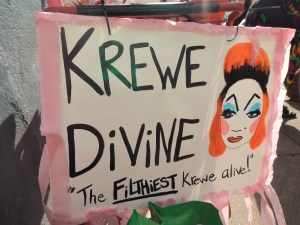
Mere hours after debuting our Divine-inspired, Swampflix-sponsored Mardi Gras krewe this past Fat Tuesday, CC & I found ourselves riding in the back seat of an SUV, exhausted, and headed toward Disney World. An immersive, three day adventure to the Happiest Place on Earth is always going to be a disorienting vacation no matter what mental state you’re in. Yet, there was something especially absurd about diving head first into such a wholesome fantasy space after running rampant through the French Quarter all morning, dressed as famous drag queen and frequent John Waters collaborator Divine in the alcohol-enhanced sunshine. 

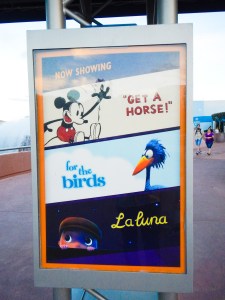
At first, I wasn’t sure exactly what I wanted to accomplish while at Disney World besides checking off a few boxes as a film buff. That part was easy. A visit to a Walt Disney memorabilia museum titled One Man’s Dream, a similar Star Wars exhibit, a charmingly outdated 3-D Muppets screening, and a regularly-running “short film festival” of interactive Disney & Pixar selections all satisfied my apparent addiction to sitting in the dark, watching moving images. What was a much more difficult itch to scratch was maintaining our focus on our previously most recent task of keeping Divine’s legacy alive. You’d think that finding anything related to Divine or John Waters at large would be an impossible feat in such an aggressively clean environment, but Divine’s presence can be found in all things. And in Disney World, it can be found in Ursula.
The sea witch Ursula, of course, is the main villain in Disney’s modern animated classic The Little Mermaid. Although the construction of her persona can be attributed to many different influences, including both Elaine Stritch & Joan Collins, Ursula’s physical form was directly modeled after Divine (the top, non-octopus half was, anyway). The Little Mermaid‘s animators scrapped an initial idea to adorn Ursula with a hairstyle similar to the one Divine rocks in Pink Flamingos for being “too over the top,” but they did notably maintain her signature eye makeup & unmistakable body type for Ursula’s final form. The characters’ resemblance isn’t exactly uncanny, but it is blatant.

Ursula’s gigantic presence in The Little Mermaid, both physical & narrative, is a difficult effect to replicate in a kids’ amusement park, not least of all because the park would likely want to avoid scaring the shit out of children. It makes sense, then, that human actors would only be asked to portray Ariel from the film for the park’s rigidly scheduled photo ops & daily Festival of Fantasy parade. That doesn’t mean Ursula (and, by extension, Divine) has been locked out of the park entirely, though. She’s lurking around with her slithering eel accomplices (mostly in the form of large animatronic puppets) if you know where to look for her. Hopefully our search for Divine inspiration within Disney World parks will help expedite others’ in the future, in case anyone finds themselves visiting Orlando while as thirsty for Divine content as we were.

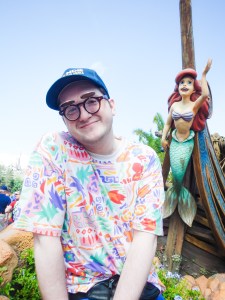
We started with the most obvious place you’d think to find Ursula lurking in the Walt Disney World parks: Magic Kingdom. There is exactly one The Little Mermaid-themed ride in Disney World’s oldest & most iconic park: Under the Sea – Journey of the Little Mermaid. Outside the ride you can wait in line to meet & take pictures with a professional Ariel cosplayer in her “grotto.” In line for the actual ride, Scuttle, the hoarder seagull, tries his best to simplify & recount the film’s plot in a digestible morsel to temper your boredom & distract you from heat exhaustion. Once inside, you’re strapped into a slow-moving clamshell vehicle that glides peacefully by two animatronic Ariels. One sings, “Part of Your World” and the other dances along to the ride’s centerpiece: a colorful, puppet-filled rendition of “Under the Sea” that’s doused with the widest variety of day-glo paint you’re ever likely to see in a single room.

None of that underwater glitz & glamor is our concern here, though. We’re looking for Divine. Ursula arrives in the ride just after the second Ariel in the “Under the Sea” number, isolated all by herself in a dark cove. She is a beautiful, oversized mechanical puppet I can only picture in my memory as cackling maniacally, even though in reality she sings a song. The purple sea witch is a breath of fresh, menacing air in a literal sea of smiling faces. Soak it in, because it will not last for long. After a glorious moment of hearing Ursula belt out the chorus of her show-stopping number “Poor Unfortunate Souls” in front of her giant crystal ball, she fades from the rest of the ride (or at least her inhuman, Divine-inspired form does), never to be heard from again. It was an all-too-brief Ursula encounter, but it fortunately wouldn’t be our last.

The next stop for Ursula content was a little less obvious and just happened to be something we stumbled into. As a park, Disney’s Hollywood Studios (formerly Disney-MGM Studios) is a little less cartoon-heavy than Magic Kingdom. This will be especially true once its current in-progress overhaul bulks up its Star Wars & MCU-themed attractions (for obviou$ rea$on$). The park is intensely focused on live theater, though, with attractions like The Tower of Terror & whatever the monstrously obnoxious Aerosmith rollercoaster is called existing as total outliers in an environment typically dedicated to more traditionally dramatic modes of entertainment. We were already having enough fun in the park being traumatized by the uncanny valley nightmare of the Robert Osbourne-hosted The Great Movie Ride (R.I.P.) and the distinctly Norman Bates theatricality of our server at the 50’s Prime Time Café, but there’s no good time that can’t be improved by a little Divine. Thankfully, the Divine lurking in Hollywood Studios was a large one. Freakishly large, even.

Located in the park’s Animated Courtyard area, the routinely performed indoor show Voyage of the Little Mermaid is very similar in content to the Journey of the Little Mermaid ride at Magic Kingdom (as if you couldn’t tell by their titles). Fish sing “Under the Sea;” Ariel sings “Part of Your World;” Ursula sings “Poor Unfortunate Souls” and then promptly disappears before the happily ever afters. It’s the same tidy retelling of the animated film with one major exception: the puppets. Whereas the Journey of the Little Mermaid ride is all 100% animatronic puppetry, the Voyage of the Little Mermaid is more of a mixed media affair. The fish puppets are all hand-operated by performers working in the stage’s shadows, Ariel & her boy toy Eric are portrayed by live human actors (as is the more degrading role of Eric’s dog), and the whole show is substantially beefed up by projections from the original animated film, laser light displays, and a waterfall curtain that smells authentically like seawater (whether or not the effect is intentional). It’s a totally pleasant, refreshingly cool way to spend 17 minutes of your life in the park, but what’s most impressive is the way the mini-play brings Ursula to life.

While Ariel & her fishy friends are given a new form of representation in Voyage of the Little Mermaid to distinguish them from Journey of the Little Mermaid, Ursula remains animatronic puppet. She’s so much more impressive in the show than she is in the ride, though, as her size is blown up to 12 feet high & 10 feet wide. I already fell in love with the mechanical puppet from the Little Mermaid ride (which is the more strikingly beautiful one in terms of basic visual craft), but it’s just absolutely dwarfed by the intimidatingly gigantic puppet from the show. It’s the kind of scale & magnificence that almost makes you want to fall to your knees in worship. In other words, it’s absolutely Divine.
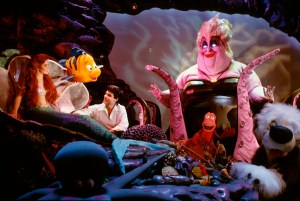
That giant puppet would be the last Divine presence we located at Disney World, but, honestly, her magnificent size would’ve been difficult to top by any other display. Maybe there was an Ursula lurking somewhere in one of the three parks we didn’t have a chance to visit (Animal Kingdom, Typhoon Lagoon, Blizzard Beach), but that seems highly unlikely. The only other places to search for our Divine inspiration, then, would be the park’s other other main attraction besides rides & shows: merchandise.

Disney villains from decades-old cartoons aren’t going to move nearly as much merch as the likes of an Elsa or an Olaf or an, um, Other Thing from Frozen. That doesn’t mean there’s no Ursula merch to be found in the parks, though. You just sometimes have to accept her as a package deal with other characters. For instance, outside the Finding Nemo ride at Epcot (which dumps you into a surprisingly decent aquarium), there’s an underwater-themed gift shop that sells a collection of Little Mermaid “squeeze toy” figurines. Ursula’s included, but you have to buy the whole collection to get her. Similarly, I found (and, of course, purchased) a purple baseball cap that features several of Disney’s more infamous female villains like Maleficent, the Evil Queen from Snow White, and, duh, Ursula. According to a brief search of the term “The Little Mermaid” on Disney World’s creepily helpful Disney Go app, there were some really nice Ursula “couture de force” figurines, art prints, and blouses for sale, but we never laid eyes on them (and they would’ve been far outside our price range anyway).

If you really want to take home Ursula’s visage isolated on some affordable merchandise, your only viable option is to find her on an enamel pin. We happened to purchase some Ursula pins at a kiosk located outside Space Mountain, but Disney has a surprisingly strong, park-wide enamel pin culture. You could probably find the damn things in any shop you poke your head into, as a lot of the stores seem to carry overlapping merch. (The same also goes with the squeeze toy figurines we found outside the Finding Nemo ride.) There’s also a lot of annual turnover on the merch that’s sold within the parks, so not only is it possible that we missed out on some sweet Ursula gear when we happened to be there, but you can also likely find excessed deadstock of old Ursula merch at the various Disney outlet malls sprinkled throughout Orlando.
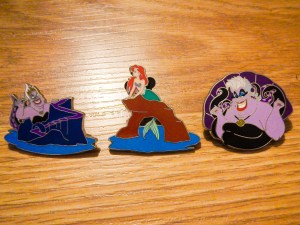
We really have no clue where Krewe Divine’s headed in the future in terms of scale or membership. It’s only a matter of time until one of us dresses as Ursula on Fat Tuesday, though, so it really was a treat to cap off our first year as a microscopic Mardi Gras krewe by treating Walt Disney World like an unofficial Divine scavenger hunt. As the release of The Little Mermaid is already nearly three decades behind us, it’s likely that Ursula’s Divine presence within the amusement park is on borrowed time. As is, she’s seemingly only represented in the form of two (beautiful) animatronic puppets and a few enamel pins already. Even that’s enough representation worth celebrating, though. I was overjoyed to see her there in any form. In a way it’s a kind of a miracle that there was ever any John Waters-adjacent content to be found at Disney World at all. It’s even more of a miracle that it happened to be Divine.
-Brandon Ledet