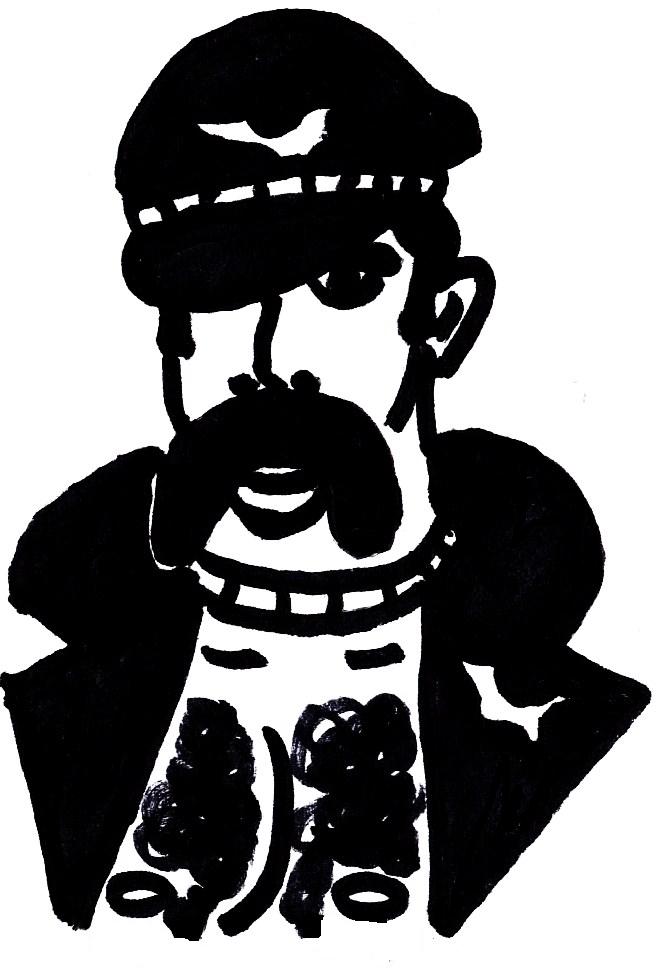
Frank (2014)

EPSON MFP image
fourstar
“I’ve always wanted to work with someone who shares my dream of making extremely likable music.”

It seems easier now than ever to be a “musician”: gather a couple friends, write a few songs, release them on the Internet.  But just because your music is easier to get heard does not mean that it’s necessarily good. In the 2014 comic drama Frank we follow one such mediocre musician, Jon, played by Domhnall Gleeson, who finds himself dropping everything to join an avant-garde pop band led by the enigmatic and mysterious Frank. Frank is a musical savant with a history of mental illness who hides himself inside a large papier-mâché head.  Jon is enthralled with Frank’s outsider art but fails to see past his own ambitions and realize that there are dark secrets behind that fake, gigantic head.

Frank is grounded by a stunning performance from Michael Fassbender as the titular protagonist who channels Jim Morrison, Captain Beefheart, and Daniel Johnston; artists whose own troubled past and history of mental illness mirror Frank’s. Props should also be given Domnhall Gleeson, as it could have been easy to lose our sympathy for Jon as he latches on to Frank’s coattails. But in the end we realize he’s just trying to be something he’s not and for that he earns our sympathy instead of our scorn.

Some viewers might feel that the story loses steam in its melodramatic finale but the emotional third act brings home the larger theme of how different people react to mental illness when it is coupled with something like vast creativity: diner patrons call Frank a “freak” and laugh at him; Jon thinks he must have been ‘traumatized’; Frank’s parents love and support him, but are clueless about how to help him.

Ultimately, what sounds like a premise for a ridiculous indie comedy instead ends up being a deeply moving exploration of mental illness and blind artist worship. It is also wickedly funny. Director Lenny Abrahamson does a great job of juggling the seemingly contradictory tones in the film: whimsical and offbeat, sweet and punk-spirited, funny and melancholic. A definite must watch.

Frank is currently streaming on Netflix.

-James Cohn

The Exterminating Angel (1962) and the “Party Out of Bounds” Story

exterminatingangel

One of my favorite types of stories, especially when told on stage or on the screen, is what The B-52s would call the “party gone out of bounds”. I love it when guests at a fictional party stop celebrating and start having a truly shitty, life-changing catastrophe of a time, but decide to stick around and see it through instead of taking the logical step out of the door. It’s a familiar feeling, that late hour biterness that arises when alcohol’s social lubrication takes a toxic turn and the vile, dangerous aspects of human nature start bubbling to the surface. Civility dissolves and our feral natures emerge. The “Party Out of Bounds” story is one I’ve lived many times before, mostly in the drunken hours of early morning when I should’ve gone to bed, but instead felt compelled to stay up and argue “important”, hurtful things I didn’t always mean. I take strange pleasure in seeing these repellent impulses reflected back at me in my entertainment media, particularly in movies & plays.

Part of the allure of “Party Out of Bounds” story is the motivation for sticking around. What compels someone to remain at a party when “situations degenerate, disgusting things you’d never anticipate”? In the genre’s most easily recognizable example, Who’s Afraid of Virginia Woolf?, it’s clear that the central couple George & Martha loathe their marriage and the make-believe required to keep it afloat, so their motivations for destroying each other’s delusions are fairly straightforward. But why do the younger couple, Nick & Honey, stick around once the tone gets sour and focused on destroying them as well? In Cat on a Hot Tin Roof, it’s understandable why Maggie wants Brick to snap out of his sullen state and actively engage with life, but why does Brick allow the evening to go on endlessly, Maggie & his father digging deeper into his painful past? In The Boys In The Band, Michael allows his own self-loathing & alcoholism to tank the birthday party he throws for his friend Harold, but why do the other guests allow themselves to get sucked into his emotional black hole? The instinct to tough it out and see the awful thing through is fascinating to me.

Some “Party Out of Bounds” stories side-step the issue of motivation by confining their characters with literal barriers, some physical and some metaphysical. It’s A Disaster & Coherence are both great recent examples of this tactic, using chemical warfare & a supernatural occurrence to bottle their partygoers at a disastrous brunch & dinner party, respectively. This approach to the genre is more metaphorical than the one detailed above, but belongs all the same. Although an external force is trapping the characters, it’s their internal failings that drive the parties out of bounds. Both situations would have soured with or without the outside help.

Surrealist master Luis Buñuel’s 1962 film The Exterminating Angel plays both sides of this coin beautifully. There is an external force that keeps the film’s aristocratic partygoers trapped in a single cramped room of an expansive mansion, but it is a force than cannot be explained. The characters are compelled to remain in the mansion’s music room as if there were a force field blocking them at the door. At first the guests seem to remain at the dinner party out of nervousness & etiquette, like little kids waiting anxiously for someone to take the first dive at a pool party. Each time someone makes a motion to leave, they find a flimsy excuse to stick around: a forgotten purse, a cup of coffee. As with Coherence & It’s A Disaster there’s an external authority confining the partygoers to the music room, but the fact that this authority cannot be seen or even understood links the movie to the compulsion detailed in the classic examples listed above. The Exterminating Angel is the ultimate “Party Out of Bounds” story: the instinct that coerces its partygoers to see the awful thing through is given tangible power. It is an ugly compulsion materialized, a masochistic urge physically manifested.

As the ultimate “Party Out of Bounds” story, The Exterminating Angel starts with the wealthiest, most civilized party guests and ends with them reaching a feral state, fighting for food & water like wild animals. More than any other film listed above, the party starts at the greatest height of good manners before plummeting into murkiest depths of depravity. Civility more than dissolves here. It’s erased so completely that you begin to question whether it was present in the first place. As the days stretch on in the music room and the guests turn on each other one by one, the opulence & etiquette on display in the early scenes take the shape of a thin veneer, just barely covering the seething vulgarity under the surface. At the film’s beginning, the guests were already full of hatred, already committing adultery, already prone to frivolous cruelty, but were much better at covering up their indiscretions. Getting trapped in the music room merely forces them to display their true natures openly & honestly.

The debasement is gradual. At first guests become fatigued and take cat naps on various chairs & couches, but it’s fatigue that can be attributed to food, alcohol and the late hour of the party. Then they begin to undress from their tuxedos & gowns and clear places to sleep on the floor. As they wake from their makeshift slumber party, they start looking disheveled, unkempt. The reality of their inability to leave slowly dawns on them and they lose their self-control one by one. Those who initially remain calm consider themselves superior to the other guests, but that leverage doesn’t last long. Over time they come to blame each other for getting them in the bizarre predicament, pace at the doorway’s invisible barrier, cry, slip into comas, fight, fuck, commit suicide, hallucinate, insult each other’s hygiene and break into fits of hysterical laughter. When the story begins the characters are embarrassed to be caught acting like human beings. By its end they’re killing sheep with their bare hands and breaking apart furniture & musical instruments for firewood.

Yes, there are sheep roaming the house. There’s also a bear than begins to scale the mansion’s columns as if climbing a tree in plain view of the music room, seemingly mocking the party’s return to nature. The bear and the sheep were acquired for after-dinner entertainment that never arrived. There’s some symbolism to be made of the sheep’s presence (phrases like “mindless sheep” & “like lambs to the slaughter” come to mind), but what are we to make of the bear? And then there’s other details that beg to be picked apart: the vases the guests use as toilets are portals to an open-air outside world, there’s a severed hand that crawls across the floor like The Addams Family’s Thing, the rules of who can and who cannot cross the music room’s barrier becomes increasingly convoluted, the mansion itself is located on Providence Street, etc. It’s all, for a lack of a better word, perfectly surreal. Applying logical analysis to these images is a fool’s errand in my opinion, like the doctor at the party who tries to understand the music room phenomenon through reasoning and ultimately gets nowhere, just like his fellow partygoers.

It’s tempting to read into each of these images separately, but they’re better served when left at face value. Any of the larger ideas that need to get across are fairly plain without too much analysis. The aristocracy is like a gang of helpless infants without its serving staff. The barrier that keeps the affluent trapped in their mansion’s most frivolous room mirrors the way wealth can isolate a person from the “real” world outside and the common people who occupy it. Most importantly, though, civility is really a façade for the snarling beasts lurking within us. As characters begin to violate “the most basic concepts of good etiquette” and fail to “remember their upbringing”, one character calls it “the very end of human dignity.” I say good riddance to that dignity.

Getting back to the B-52s song in question, I’d like to answer the line “Who’s to blame when parties really get out of hand?” Only ourselves, buddy. Just us. Well, maybe us and alcohol. There’s a lot of great “Party Out of Bounds” stories out there and their conflict is always the same: a drunken, joyous celebration is derailed by repressed impulses & inherent, hideous aspects of human nature once civility is no longer there to keep them at bay. Buñuel’s The Exterminating Angel pushes this conflict to unmatched extremes that are somehow just as amusing as they are terrifying. It’s an incredible feat of filmmaking and the crown jewel of a genre I love.

-Brandon Ledet

The Juniper Tree (1990)

EPSON MFP image

three star

Discovering Björk’s acting debut in The Juniper Tree was some divine happenstance. I had lost track of her music career sometime after 2001’s Vespertine, so it was delightful to recently give her latest album Biophilia a (four years late) first listen and discover its fantastic weirdness, obsessively looping it through my headphones all last week. A recommendation that same week alerted me that I was 25 years behind on the release of another Björk project, a small budget, black & white indie film about witchcraft.

The Juniper Tree was filmed in 1986 in the months following the dissolution of Björk’s post-punk band KUKL and the birth of her first child. By the time the film cleared its financial hurdles and saw a 1990 release in Iceland and on film festival circuits, she had already earned much greater success with the alt rock group The Sugarcubes. By the time it saw a wide, international release in 1993, she had achieved major success as a solo artist with the album Debut. In comparison to the huge “Bad Taste” art collective behind The Sugarcubes and the big-name record labels behind Debut, The Juniper Tree’s cast and budget are microscopic, but the film does a lot with a little, pulling a weird little story and some bizarre images from a few locations and even fewer moving pieces. At least from a funding standpoint, it was a time capsule of a primitive state of Björk’s growth as an artist, but one that demonstrates how little material she needs to work with to produce something great.

Loosely based on the Brothers Grimm fairy tale of the same name, The Juniper Tree is the story of two grieving families struggling to blend into one cohesive unit. Think of it as an Icelandic Brady Bunch, but with witches & cannibalism instead of puppy love & nose-breaking footballs. Björk plays Margit, a young woman whose mother was recently stoned & burned for practicing witchcraft. In the escape from their home her sister Katla marries a young widower who lives alone with his son. The boy befriends Margit, but is vehemently against his father’s marriage to Katla, who he knows to be a witch. Although Katla does cast spells (cruelly & often), it is Margit who possesses truly magical abilities, most importantly the ability to communicate with ghosts.

The film’s heart lies with the relationship between Margit and her young brother-in-law and the mourning that bonds them, but it’s the fleeting, hallucinatory imagery that makes it noteworthy. Despite its budget, The Juniper Tree manages to produce an impressive range of images: a hand thrust into a black hole, a ghost perched on Icelandic cliffs, fish picking at an underwater corpse, Northern Lights, birds in flight. It’s a somber, self-serious affair, but one that earns its odder moments in a very short run time. If nothing else, the heavenly tones of Björk’s singing voice elevate the material into otherworldly territory. She’s perfectly suited for this world of witchcraft & mourning and it shows in the final product.

Of course, The Juniper Tree will always be known as the other Björk movie. Lars von Trier’s powerful Dancer in the Dark gave her a much larger stage to prove herself not only as an incredible composer, but also as an actress, a talent she doesn’t utilize nearly enough. The Juniper Tree gets drowned out in the comparison, but when considered in isolation it’s an interesting little art movie. It’s very much Super Serious 80s/90s Film School Fodder, but if a young, feral Björk practicing witchcraft goes as far with you as it does with me, you’ll find it kinda perfect in its small-scale intimacy.

The Juniper Tree is currently streaming on Hulu.

-Brandon Ledet

Electrick Children (2012)

electrickchildren

fourhalfstar

Tape Jacket
The first & last sounds you hear in the dreamlike Electrick Children are ocean waves & a cassette player. If you played the film on loop, these sounds would parallel the experience of listening to the clicks & hisses of an audio tape switching from Side A to Side B and back again. This reverence for sound is a vital part of the film’s allure and essential to its plot. When the protagonist, a 15 year old girl simply named Rachel, listens to her very first rock & roll song she becomes inexplicably pregnant. As she navigates the consequences of this “miracle” in two irreconcilable worlds, her life takes the same Side A & Side B anatomy of the cassette tape that changed it forever.

Side A
Rachel’s home life is an isolated, fundamentalist Mormon community in Utah. It’s a loving environment, but one that strangles her personal desires & freedoms. Rachel has a sense of humor that’s generally discouraged in her piously pensive household. Her father (played by a terrifying thing that calls itself Billy Zane) is the community’s patriarch & spiritual leader, exuding a level of control that’s never purely healthy. He’s suspicious of Rachel’s prayers thanking God for modern inventions like tape recorders. Rachel’s mother is suspicious of her daughter’s intense interest in a bedtime story about a red Mustang. The story is meant for the kids to interpret as the tale of a mythical horse, but is in fact the story of the mother’s seduction in the passenger seat of a sports car. Her parents were right to be worried, as this fascination with the outside world literally impregnates their daughter through the conduit of a cassette tape recording of a new wave band covering Blondie’s “Hanging on the Telephone”. The only modern world objects in their house are hidden in the basement like a dirty secret: an electric light with a picture of the ocean, the audio cassette player & tapes. It’s in that basement where Rachel becomes pregnant. She confesses her transgression to her parents, reasoning “Maybe I listened to something I wasn’t supposed to and then I’m pregnant.” They don’t believe her and plan to conceal her “sin” by marrying her to a near stranger.

Side B
To avoid the unwanted marriage, Rachel runs away to Las Vegas in search of the voice on the cassette tape, a voice she believes belongs to her baby’s father. She approaches guitar-playing street performers and boys wearing images of cassettes in her desperate search. Vegas is a blown up version of the electric music & lights in her parents’ basement. Typical pillars of teenage rebellion swirl around her: cursing, drugs, kissing, punk shows & skate parks. Her mother’s mythical red Mustang appears to her throughout the journey: first on the drive into Vegas, then during her first kiss, and a final time after her first legitimate crime. Each time the car passes through her life it’s blasting “Hanging on the Telephone.” The car & the musicians she befriends don’t lead her to the father of her miraculous child, but along the way she falls in love, discovers autonomy, and hits every other typical beat you’d expect in a cinematic coming-of-age story. Rachel’s parents warned her of the sinful, destructive nature of the modern world, but it proves not to be true. She treats the modern world with a humble, humorous kindness and it returns the favor. Her only conflicts, including the pregnancy, result from her own transgressions.

Liner Notes
Some reviews for Electrick Children unfairly take points off for it being too cute or fanciful. There’s a preciousness to the story that could be a turn-off for some viewers, but is entirely appropriate for what the movie is: a modern fairy tale, an exercise in magic realism. The film’s Big Hollywood Ending brings its two worlds together in a moment that feels unreal, but no more unreal than the central Immaculate Conception. The characters come across somewhat as indie movie archetypes, but that artificiality is exploited to its full advantage. They’re only assigned first names and limited motivations, but that plays into their allegorical usefulness. The actors playing Rachel and her love interest Clyde (Julia Garner & Rory Culkin) get great mileage with the shorthand, bringing depthless empathy to characters that are mostly limited to one mode: wide-eyed hope and Bill & Ted style sloth, respectively. The skill with which first time director Rebecca Thomas handles her limited budget is remarkable. She pulls a fantastic dream world out of a few locations and a small-scale cast, finding an impressive wealth of significance in a few minor details like an electric light, a cassette tape, a Mustang, and Clyde’s Hawaiian shirt. She even seemingly taunts potential detractors with lines like “You guys playing Garden State or are you coming?” Most importantly, Thomas establishes fantasy in her attention to sound: the clicks of a cassette player, “Hanging on the Telephone”, Rachel’s recorded prayers & their accompanying somber piano notes, the sounds of ocean waves. When the waves return at the film’s end and Rachel says “Let’s go back to the beginning”, it’s tempting to take the suggestion and let the tape play over again, automatically switching back to Side A.

Secret Bonus Track
Rebecca Thomas cites Pasolini’s film The Gospel According To St Matthew (1964) as a stylistic influence on Electrick Children. She said “He takes a fairly neutral and nonjudgmental approach to the New Testament […] It was also important for me to keep my version of the Virgin Mary story as grounded as I could, even though I was dealing with the supernatural: I like to ground things that are fantastical to understand them more.” As the debauchery-benchmark Salò was the only Pasolini film I had seen before, I found that influence pretty surprising. As Thomas says, the film itself is a fairly literal, unsentimental telling of (an unusually angry) Jesus’ life, but one with some striking imagery and occasional brutality, even if it does feel like eating your vegetables. It’s not required viewing to enjoy or understand Electrick Children, but it does help provide context for Thomas’ ambitions. Also, it features an Odetta song, which is always nice.

Electrick Children is currently streaming on Netflix.

-Brandon Ledet

Bird People (2014)

birdpeople

twostar

Last year’s Bird People is the exact kind of French indie movie I used to rent from Blockbuster as a kid to drive my parents crazy. It’s a deliberately bizarre work that deals mostly in somber, humorless tones in its first half before taking an inexplicable left turn into some really goofy, exuberant territory in the second. I really wanted to like this movie, but the two pieces never came together for me. As mirrors of each other the film’s two halves don’t have much to say about their reflections. They remain separate, isolated, which may have been the intended to match the narrative, but makes for a frustrating viewing experience. Besides, the second segment is vastly more interesting than the first, so the whole thing feels off-balance.

What Works: Audrey
Let’s get the main hook/spoiler/ridiculousness out of the way: about halfway into the movie one of the two main characters turns into a bird. I can’t explain it. She can’t explain it. It’s just a thing that happens. Audrey, the bird person in question, is a meek hotel maid who lives her life vicariously through the guests that pass through the rooms she cleans. She’s a nonsexual voyeur, a fly on the wall, an observer. When she unexpectedly turns into a sparrow she’s suddenly able to indulge in her observations up close. Her small size and ability to fly enables her to intrude & eavesdrop unnoticed and she even feels brave enough to interact with the people she’s watching, something she wouldn’t dare in human form. For lack of a better phrase she’s free as a bird. It’s an unusual, interesting idea that could’ve been stretched out & explored enough to justify its own movie. The problem is it comes too late in this one; the damage had already been done by Gary’s segment.

What Doesn’t Work: Gary
The film’s opening segment feels like a completely different movie, a much more sullen movie than the fanciful bird transformation story of the back half. It follows Gary, a guest at the hotel that employs Audrey, as he suffers a personal crisis/panic attack on a business trip that prompts him to sever all ties to his work & his family. Through a series of telephone & Skype conversations, Gary frees himself of all personal responsibilities to the shock & disgust of his wife & coworkers. It’s an isolating performance that puts a lot of weight on actor Josh Charles’ shoulders and, unfortunately, I don’t think it’s a weight he can carry. After watching Tom Hardy master this type of one-man-against-the-world-and-himself story in last year’s Locke, Charles’ performance can’t help but look weak by comparison. Gary’s Skype conversation with his wife should be an absolute soul-crusher, but instead comes off as more of a shrug.

What’s Missing: Who knows?
There are some connections to be made between Gary’s refusal to remain a casual observer in his own life and severing personal ties to obtain freedom & Audrey’s transformation into a sparrow that allows her leave behind the pretense of her maid duties and look into people’s lives more openly. These connections don’t feel fully fleshed out, though. It’s as if this feature-length film were truly meant to be a short or there was a missing third missing segment that would’ve helped tie both parts together or balance them out. As is, I think Bird People is half of a great movie. That half just comes too late to win me back over from its lackluster partner.

Superficial Side Note
I found it very distracting that Gary’s full name was Gary Newman. It’d be like if a character’s name were Mark Mothersbrow, Thomas Colby or Deborah Farry. While watching most of Gary’s segment I periodically wished I was listening to The Pleasure Principle with my eyes closed instead. Actually, I think I’m going to do that right now.

Bird People is currently streaming on Netflix.

-Brandon Ledet

Can’t Stop the Music (1980)

EPSON MFP image
three star
campstamp
I’ll never forget the first time I discovered Can’t Stop the Music and all of its tacky goodness. My best friend and I were searching for a Friday night movie at Major Video, a great local video rental store that has sadly closed up shop, and we hit the jackpot. Waiting on the bottom shelf of the comedy aisle was Can’t Stop the Music. Deciding to rent it was one of the best decisions I’ve ever made in my life. This film’s got everything: an amazing soundtrack with loads of Village People tunes, bizarre dance routines, tons of exposed chest hair, and Bruce Jenner in his prime.

The film starts out with one of the greatest roller-skating scenes ever, and it’s personally my favorite part of the movie. Jack Morell (Steve Guttenberg) is skating around the streets of New York like a pro to the David London’s “The Sound of the City” after quitting his job in order to take a DJ gig at a nightclub. This scene is the reason I own a pair of roller skates; that’s how inspirational it is. Another unforgettable moment is the dance number the cast performs to the Village People’s mega-hit “YMCA.” There’s a bit of nudity (no surprise there) in this scene, which really makes me wonder how this received a PG rating. What was the MPAA thinking? I could list all my favorite parts of this movie, but that would probably take forever because the whole movie is just so bizarre.

Even though I’ve seen this movie a million times, I still don’t understand what it’s about. I guess that’s the magic of it? It’s basically supposed to be a movie about the formation of the Village People, but it’s really just a mess of terrible acting, a bad script, musical numbers that make no sense whatsoever, and crappy special effects. It’s no secret that the film didn’t achieve much success. Also, releasing a disco-themed musical in 1980 wasn’t the best idea since disco was pretty much dead. Can’t Stop the Music actually won the very first Golden Raspberry Award for Worst Picture and inspired John J. B. Wilson to start what is now known as the Razzies. If that’s not reason enough to see a film, then I don’t know what is.

Can’t Stop The Music is currently streaming on Netflix & Amazon Prime.

-Britnee Lombas

Nightbreed (1990)

EPSON MFP image

fourhalfstar

campstamp

There are many reasons why Nightbreed has a special place in my heart and I am honored to give this cult classic a positive review. Yes, it was a box office flop and doesn’t have the best reputation, but Nightbreed was a victim of bad decisions made by big shot producers. Clive Barker is the mastermind behind this fantasy-horror flick and, unfortunately, he was majorly screwed over by the production studio. For example, the marketing department failed to promote the film properly as a horror-fantasy masterpiece, but instead got lazy and advertised the film as a slasher flick. This film couldn’t be farther away from being a slasher flick; it’s pretty much the gold standard of monster movies.

Now don’t get me wrong, the plot is a bit puzzling, but at the same time, it’s just so unique. Aaron Boone (Craig Sheffer) suffers from recurring nightmares that take place in Midian, the home to a society of monsters. While Boone is struggling with trying to figure out exactly what’s going on inside his head, there is a serial killer on the loose. Boone’s psychiatrist, Dr. Philip Decker (David Cronenberg), is well-aware of his issue, and attempts to convince Boone that he is the killer. It’s really hard to explain the rest of the plot without spoiling the film, but basically the mysteries of Midian begin to unravel, a few unexpected twists occur, and everything gets a little out of control.

Honestly, the critics were kind of right about the film’s underdeveloped characters and confusing plot, but can’t a movie just be tons of ridiculous fun? I think so, and that’s really what Nightbreed is all about. With loads of gore, terrible acting, rad monsters, and an incredible score by Danny Elfman, what’s not to love?

Right now the long-awaited Director’s Cut of Nightbreed is available on Netflix. Watch it before it gets sucked into Midian forever!

-Britnee Lombas

The Meta Experience of Prytania Screening Cinema Paradiso (1989)

paradiso

I was washing dishes this Thursday afternoon when I was unexpectedly alerted that Prytania Theatre was going to screen Cinema Paradiso for free in a half-hour’s time. I dried my hands, crated the dog and sped Uptown just in time to take my seat among the little old biddies and stray college students just before the movie began. With no time for Google or IMDb before I ran out the door, I went into the movie completely blind. All I knew was that it’s one of those foreign titles synonymous with phrases like “Oh man that’s a classic” and “How have you not seen that yet?” Oh man. It was a classic. How had I not seen that yet?

Cinema Paradiso is a movie about movies, cinema about a cinema, art about art. It’s one of those rare films that attempts to provoke every possible response in its viewers (laughter, tears, heartbreak, frustration, unbridled joy) and succeeds consistently. As the audience watches the story young boy grow into an old man, they also watch a history of how audiences have engaged with film over the course of decades. When we watch Cinema Paradiso, we watch the way people watch movies. At the beginning of the film the Cinema Paradiso’s audiences basically riot throughout the pictures. Towards the end they sit in rapt silence.

The audience at Prytania that day was anything but silent. They weren’t the masturbating, shit slinging, drunken near-rioters of Cinema Paradiso, but there was some audible chatter throughout the movie in the seats behind me and a full-on celebration in the lobby that could easily be heard through the dividing curtains. The Prytania was screening free movies that day and was gearing up for an afternoon block party to commemorate its 100th anniversary. As the oldest operating cinema in New Orleans and the only one in its neighborhood, it’s way too easy to draw connections between the Prytania Theatre and the titular Cinema Paradiso. Just as the Cinema Paradiso grows with & serves its Sicilian village, Prytania is a cultural mainstay of Uptown New Orleans. They planned on screening the film a second time later that night at the block party, the same kind of outdoor community screening Alfredo stages in the film.

Before the afternoon screening I attended began, Prytania’s 93 year old operator Rene Brunet told the following anecdote: When the one-screen theatre first ran Cinema Paradiso in 1989 it played for over six weeks, upsetting the locals (presumably the college kids) enough to picket the theatre to finally move on & play another movie. It’s the exact kind of episode that would’ve happened in the film itself, although presumably more tame.

The meta experience doesn’t stop there. When Cinema Paradiso was first released to an American audience, the undisputed king of cinematic self-sabotage Harvey Weinstein cut a full 51 minutes of footage from the Italian original (a tactic he almost repeated with last year’s Snowpiercer). The streamlined cut is the one that played at Prytania this Thursday, but it’s also the one that played in its original extended run at that cinema, as well as the one that earned the Oscar for Best Foreign Film. Oddly enough, Roger Ebert himself contended that the Weinstein cut is “a better film than the longer.” Whether or not that is true, it’s still hilarious to me that drastic edits were made to a film that depicts a priest making drastic edits to other films as one of its thematic lynchpins.

The programming choice to celebrate Prytania’s century long history with Cinema Paradiso was wholly perfect. It was the story of New Orleans’ most significant one-screen cinema examining itself by revisiting the most significant story of a one-screen cinema around. They could’ve played a more tragic (but just as potent) work of cinematic navel-gazing like 1971’s The Last Picture Show or last year’s Life Itself, but that would’ve undermined the reason we were all there: a celebration. Commemorating Prytania’s first 100 years with Paradiso left me with the hope that it will last at least 100 more. There was no  better way possible to celebrate the movies than to watch people watch movies.

-Brandon Ledet

The Brainiac (1962)

thebraniac

fourstar

campstamp

Like with all art forms, it’s difficult to find a great “bad movie”. For every transcendently awful Plan 9 or Troll 2 you have to sift through a hundred mind-numbingly dull Hobgoblins. A lot of old school schlock was made with the intention of getting butts in seats. As long as a trailer hoodwinked audiences into buying tickets the job was considered done and no effort had to be made on delivering the goods. Every now and then, though, everything clicks. When a B movie is firing on all cylinders, enthusiastically exploring every weird idea it has to their full potential, there’s really nothing like it. A lot of the sarcastic mockery associated with people who binge on bad movies is really just a front. Shlock fans put up with a lot of abuse from the movies they watch. A lot of times they abuse the movies back, but the truth is that they love the trash, even when verbally protesting. The dedication it takes to find the gems among the garbage has to come from a place of patient love, but it’s a love that can really pay off from time to time.

That being said, I loved The Braniac (or, as it was known in its native Mexico, The Baron of Terror). It’s such a bizarre little horror cheapie that didn’t need to try nearly as hard as it did. Check out this plot: It opens with hooded executioners of the Spanish Inquisition expressing their frustration that a specific victim, a philandering Mexican baron, was surviving all of their torture methods by bending the laws of physics like an omnipotent god. When they sentence the baron to a death-by-burning execution, he escapes by hitching a ride on a passing comet and promises to return in 300 years to murder the descendants of the Inquisitors. He delivers on this promise in the form of a forked-tongued space alien beast. All of this transpires in the opening 20 minutes.

After that incredible beginning, the film levels out a bit and hits all the usual beats you’d expect from a black & white creature feature on MST3K or late night basic cable. The baron alternates between human & beastly forms, cordially schmoozing his intended victims before exacting his revenge on them one at a time. His preferred murder tactic? He sucks their brains directly out of their skulls with the aforementioned demon tongue and then stores them for casual snacking. Although it opened with its most outlandish segment, The Braniac maintains a consistent cruelty that’s pretty remarkable for its schlocky parameters. The baron strangles, drowns, commits acts of cannibalism and seduces women before their fathers & husbands. He’s a monster. A lot of B pictures in this genre would drag the monster out for a couple killings now & then and try to limit its effect on the budget, but The Braniac consistently delivers.

I’m not saying the movie’s not cheap; it’s cheap. The baron’s space monster form is essentially an unsettlingly hairy, pulsating rubber mask paired with the baron’s business suit and some gloves. The sets & special effects are also laughably artificial, the pacing can be clunky, and despite a couple lines like “My hate is much stronger than my love, like a master no one can control,” the dialogue is mostly featureless. All of this is forgivable to me, considering the movie’s scope & budget. It’s the kind of ragtag production that feels like ordinary people trying to put on a good show. Like the best of bad movies, you can see the sticky fingerprints of the people who made it all over the picture. Instead of losing yourself in the film, you’re constantly aware that you’re watching something another human being tried their best to make entertaining. The Braniac’s been mocked before by the likes of Rifftrax and (according to a Dangerous Minds article that clued me in on its existence) Frank Zappa & Captain Beefheart, but it doesn’t really deserve the abuse. If you approach the movie with a little love & patience, it’s a pretty badass horror cheapie. If you’re a sucker for small budget creature features & outer space mysticism, it’s a genuine treat.

-Brandon Ledet

The Comedy (2012)

EPSON MFP image

fourstar

Throwing down the gauntlet in its opening shots, The Comedy begins with a sexlessly homoerotic dance party. Naked schlubs grind against each other to a sensual R&B soundtrack, pouring cheap beer down their pale, soft bodies, tucking their genitals between their legs. The last image before the title card is a flash of Tim Heidecker’s scrotum. The scene is devoid of sex appeal because the characters aren’t into what they’re doing. The ritual is a joke inspired by alcohol-fueled late night weirdness. The characters are governed by their sense of irony and the joke isn’t nearly as funny as they think it is.

Even The Comedy’s title is ironic. The same behavior Tim Heidecker usually employs for absurdist humor is weaponized here for a scathing indictment of a generation of scumbags whose entire personalities are affectations. Heidecker’s protagonist makes a sport out of saying things he presumably doesn’t mean. He drunkenly defends Hitler as a flirtation tactic, muses about his terminally ill father’s prolapsed anus, and loudly insults a Catholic church as his degenerate friends blow out prayer candles and roughhouse on the pews. Playing an overgrown, affluent child, Heidecker drifts through menial jobs that would suit a teenager on summer break out of boredom rather than necessity. He manipulates people with his wealth in almost Cheap Thrills levels of cruelty. He pinches a sleeping woman’s eyelids when he’s ready for her to wake. He is more toddler than man and it’s genuinely tragic when he admits that he’s 35 years old. The film doesn’t allow much room for sympathy, though, as it’s gradually revealed that he’s less of a lost, listless soul and more of a spoiled brat & racist prick.

Through a few minor signifiers, like the protagonist’s affinity for the Williamsburg neighborhood and cans of Pabst Blue Ribbon, the movie specifies its exact target: the aging American hipster. This is not the broad definition of “hipster” that applies to almost anyone relatively young & discerning. It’s a very specific subsect of rich kids who speak & act exclusively through ironic detachment. It was brave of Heidecker to lend his Tim & Eric brand of humor (including longtime cronies Eric Wareheim & Gregg Turkington) to such a brutal impeachment of a group that likely overlaps with his established audience. Injecting Tim & Eric’s anti-humor into real human interactions leaves their characters looking like pampered shitheads as others blankly stare at them with disgust and exhaustion. The Comedy is a melancholy, unforgiving portrait of ironic toddler men. It’s not the kind of movie where a lesson is learned. The privileged don’t get their comeuppance. No one is punched in the mouth, even when they truly deserve it. Instead, they float on unchallenged, intoxicated, and refusing to engage with a sincere existence. Just like in real life.

The Comedy is currently streaming on Netflix.

-Brandon Ledet