Parasite (2019)

“Money is an iron.”

This is the thesis statement of Bong Joon-ho’s Parasite, a beautiful film about the lengths that one family living in poverty will go to in order to climb the ladder of social success. As stated by a member of this quartet, money is an iron, as it irons out all the wrinkles in life, both metaphorical and literal, leaving behind flawless skin and a life virtually devoid of the anxieties of the common man.

A couple of years ago, a friend was taken on a date by a man of great wealth (she never mentioned his name, either to maintain the air of mystery or possibly due to an NDA). She described the evening, in which they were seated at a table in a clearing that was essentially devoid of people, servers appearing seemingly out of thin air when more wine was needed or to deliver unidentifiable gourmet foods and then disappearing back into the bushes. At the end of the night, when her host was driving her home in a wine-buzzed state, he tapped the rear bumper of another car. My friend watched as the wealthy man got out and talked to the other driver, the scene playing out in the Lynchian halo of headlights: no arguments, just a civil conversation, until finally her host took out his wallet, handed the younger man an amount of cash, and at the end of their discussion, the victim hugged the man whose car had struck his own. “In that moment,” my friend said, “I realized my whole life was a lie. Nothing matters. Money can do anything.” Money is an iron.

Kim Ki-woo (Choi Woo-shik, of Train to Busan) lives in a half-basement apartment with his parents and sister, all of them working odd jobs, like folding pizza boxes, to scrape by. One day Ki-woo’s friend Min-hyuk (Park Seo-joon) visits the family to deliver a suseok shaped like a mountain—and meant to act as a charm to bring the family wealth—and ask Ki-woo to take over his position as English tutor to the teenaged daughter of a wealthy family whose patriarch Park Dong-ik (Lee Sun-kyun) is the CEO of an IT company. Ki-woo, who is naturally bright but was unable to afford college following his required military service, is initially reluctant, but agrees to interview for the position with school documents forged by his sister Ki-jeong (Park So-dam), and is accepted for the role by the relatively simple-minded family matriarch, Yeon-gyo (Cho Yeo-jeong). Noticing that the couple’s younger, undisciplined child, son Da-song (Jung Hyun-joon), likes to paint, Ki-woo secures a job for Ki-jeong as the boy’s art teacher, under the guise of a friends cousin from art school in the U.S. With a little more finagling, he gets his mother Chung-sook (Jang Hye-jin) and father Ki-taek (Song Kang-ho, of Snowpiercer) positions working for the Park family as well. And that’s when things get . . . weird.

To say more would be to spoil the film’s various twists and turns, although all of them are foreshadowed beautifully: Ki-taek’s tendency to leave the windows of the family’s hovel open results in disaster, Ki-woo’s obsession with and allegiance to the rock that is meant as a talisman for the family’s upward mobility brings him nothing but misfortune, even Ki-jeong’s fortuitously lucky guess that something “traumatic” happened to Da-song when he was younger turns out to be true, after a fashion. For the Park family, money is an iron, as it not only frees them from difficulties others experience, but protects them from even having to be aware of them, as they live in an ornate, sun-kissed mansion surrounded by a perfectly manicured and maintained lawn—the only vegetation that we see in the entire film. Approaching the Park home from the street, there is only a set of stairs and a garage door visible, but once inside, the walls at the edge of the property make the house and its inhabitants seem completely isolated, the shrubbery creating an optical illusion as if there is no world beyond the edge, no starving people living in easily-flooded basements just subway stops away.

The Parks are not malicious people, just naive and separated from the rest of the world. The Kims are not evil either; they are merely trapped within a social structure that offers no legitimate or straightforwardly moral methods to escape from their social tier. The rules are different for the rich, and it shows in the way that they treat their domestic employees: Ki-taek may be treated like a trusted advisor and even a friend most of the time, but Dong-ik doesn’t hesitate to remind him that he is being paid when the former is hesitant to participate in a roleplay for Da-song’s birthday. The Parks also remark upon Ki-taek’s smell, noting that it is musty and “like the subway,” not that any member of their family has set foot in a subway in years, and Dong-ik’s involuntary reaction to being confronted by the scent unexpectedly plays a major role in the film’s resolution. Further, the Park family even fetishizes poverty at one point, as husband and wife lie together and he whispers to her about the eroticism of the “cheap” panties (actually Ki-jeong’s) that were found in the backseat of his car earlier in the film.

Money is an iron. For the Parks, it is the metaphorical iron that makes life smooth and effortless, and the iron strength of the walls that separate them from the riffraff below. For the Kims, it is the iron of prison bars that keep them in a metaphorical prison of society and, perhaps, a literal one; it is the weight that drags them down, a millstone to prevent them from ever escaping the trap of stratified social classes.

-Mark “Boomer” Redmond

Riot Girls (2019)

After Satanic Panic & Porno, Riot Girls is the third cheap-o genre film I’ve seen this year with confoundingly strong word of mouth despite its modest payoffs, likely due to its creator’s accumulated goodwill from years of work in the horror industry. A recent episode of Switchblade Sisters detailed director Jovanka Vuckovic’s professional background as the editor-in-chief of Rue Morgue Magazine – a beloved Canadian horror publication. On paper, the film she was promoting—Riot Girls—sounded like a revolutionary kick to the industry’s balls from a genre film aficionado who knew exactly what pitfalls of cliché & tedium to avoid or subvert in her debut as a filmmaker. In practice, the results are more aggressively ordinary than revolutionary – a pattern I’ve noticed in straight-to-VOD genre novelties like this & Satanic Panic recently. However, Riot Girls’s ordinary, familiar tones counterintuitively worked in its favor in the long run, as the film ultimately recalls the landscape of daytime syndicated television in the 1990s – a very specific corner of trash media I can’t help but remember fondly.

This post-Apocalyptic thriller is set in an alternate 1995 where all adults die of a horrific epidemic known as “gut rot.” The young children & teenagers left behind, unaffected by the disease until they reach full maturity, attempt to maintain a semblance of societal structure after this cataclysmic event. Maintaining the wealth disparity of the generations that preceded them to a petty, increasingly meaningless degree, the kids of Small Town, USA split their city into two warring halves: The Rich Side & The Poor Side. The rich run their government like a high school principle’s office while the poor dress like mid-90s mall punks who just discovered their first Bad Religion record. It’s letterman jackets vs. Elmer’s glue mohawks as the rich kids take the poor kids’ leader hostage on the wrong side of the border. A small crew of mall punk misfits (including a central lesbian couple) break in to free their bud, literalizing a class warfare that had been bubbling under the surface since long before their parents all mysteriously died.

There’s a whole lot to complain about here. The movie peaks early with an L7 needle drop and a stylish info-dump prologue designed to look like a hip 90s Fantagraphics comic. The eighty minutes of hostage-heist rescue missions that follow are astoundingly inert, no matter how many studded leather jackets or power chord guitar riffs decorate it. The worst part is that the title has little, if anything to do with the onscreen action; there are two female leads who might qualify for the “riot girl” distinction, but for the most part the movie is far too well-behaved & testosterone-addled for the title to mean much of anything. It does at least gesture to the production’s 90s setting & sensibility, but ultimately the movie isn’t feminist nor punk enough to earn that title. There’s barely a riot here and only a couple of girls around to start one, which is a shame, since the title & post-Hernandez Brothers poster art promise something very specific that cannot be delivered under those circumstances.

Fortunately, there is a media category where this That’s So 90s sensibility & mall punk posturing feels right at home: the vintage daytime syndication TV show. Riot Girls’s unrushed tempo, kids-against-the-world premise, and post-aPunkalyptic costuming recall 90s shows like The Tribe, Ocean Girl, and Animorphs. Except now those sub-Xena disposables are beefed up with blood & cusses (and the threat of sexual assault for some unwelcome lagniappe). It’s a little easier to forgive the film for its dramatic flaws & lack of urgency once you allow it to mentally transport you back to those simpler times. Don’t look to Riot Girls to kick in your teeth with a Punk Rock Kids Apocalypse; former Movie of the Month selection Class of 1999 might be your better option there. Rather, allow it to dial the clock back to when you would casually drain away entire Saturdays watching nonsense trash like Beastmaster, Highlander, and Baywatch Nights in a passive trance – drooling cereal-flavored saliva onto your Power Rangers pajamas. Every now & then a flash of gore or an onscreen bong rip will break that trance, but for the most part it comfortably fits in that exact milieu.

-Brandon Ledet

Reži (2019)

The basic premise of the low-budget Serbian indie Reži (also distributed as Love Cuts and Cutting Close) is an incredible hook: a teenage brat attempts to reconcile with her ex-boyfriend while also suffering a stab wound from a local gang. I was so sold on that logline that I dragged my decrepit body out to the very last programing slot at this year’s New Orleans Film Festival, a brutally unforgiving condition to see any feature film. It’s unclear how much of my exhaustion during that screening was due to the film itself vs. its late-night position at the tail end of a full week of low-budget wonders (or, most likely, a combination of both). I did feel frustrated that it didn’t fully live up to the darkly comic mayhem promised by its central hook, though, as it’s ultimately a pretty good film that’s constantly on the verge of being great.

Kristina Jovanovic stars as Aja, a tiny blonde teen with the attitude of a knuckle-dragging biker. Her brattiness borders on abuse as she stalks her long-suffering boyfriend, shouts “What the fuck is wrong with you?” at her doting mother, and just generally fills the world with nothing but combative violence & homophobic slurs. When Aja’s shit-talking bestie, Maja, starts a fight with a local gang, our loudmouth antihero is unexpectedly stabbed in the gut with a switchblade while defending her honor. Pervesely, it’s almost a relief when she’s stabbed, as the first moments of quiet & calm don’t arrive until after that act of violence. Before the stabbing, Aja moves through the world as an abusive whirlwind, unable to even eat a sandwich without appearing to be in a rage. Afterwards, there’s a sweetness & vulnerability to her character that reluctantly bubbles to the surface as she asks herself “What is it about me that makes people want to stab me?” and “How can I work on that so I don’t get stabbed again?” The tragedy of the film is that this wounded self-reflection arrives a little too late, as she’s already kickstarted a chain reaction of escalating violence with its own self-propelling momentum.

Reži feels like it’s reaching for the kind of tenderness & humor against a backdrop of constant cruelty that’s achieved to much greater effect in films like Wetlands & Tangerine, only further proving how difficult of a tone that is to balance. The chaotic, handheld camerawork & absurd dismissal of how serious stab wounds are can be enrapturing in stops & starts, but I do feel like the film overplays its acidity to the point where it can’t ever be fully endearing. Jokes about how girlfriends be crazy, threats of sexual assault, and constant barrages of ableist & homophobic slurs sour the mood too much for the bittersweet counterbalance of its repentance & romance to fully break through. Still, even if the film is overall too frustrating to merit a hearty recommendation, the combatively prankish attitude it performs in every frame is too infectious to fully ignore – like so many festering stab wounds. I may have never fully lost myself in its romantic or self-improvement drama, but I was certainly impressed by its sneering attitude & wickedly dark sense of humor.

-Brandon Ledet

A Great Lamp (2019)

This year’s New Orleans Film Festival was a 30th anniversary celebration, one that (in the social media marketing, at least) looked back at the festival’s gradual transformation from indie film & video showcase to increasingly massive Oscar-Qualifying institution. The no-budget feature A Great Lamp was an excellent programming choice for that occasion, then, as its sensibilities are evenly split between the early indie boom of the late 80s when the fest started and the radical earnestness of modern day. In look & texture, A Great Lamp feels akin to the aimless slacker comedies of yesteryear – the kind of deliberately apathetic, glibly existential art that put names like Jarmusch & Linklater on the map back when Independent Filmmaking was first becoming a viable industry. It’s got the handheld, high-contrast black & white look of a zine in motion (and I’m sure many a Clerks knockoff from festivals past), evoking a bountiful history of D.I.Y. no-budget art. However, in both tone & sentiment there’s no way the film could have bene made by previous generations of artful slackers, as its heart is clearly rooted in a 2010s sensibility.

A homeless, gender nonconforming punk named Max spends their structureless days wheat-pasting a flyer that memorializes their grandmother all over their sundrenched Southern town. Their aimless adventures committing petty, punk-af crimes like jaywalking, vandalism, and sleeping outside are interrupted when they meet a sharply dressed weirdo named Howie. Max is initially put off by Howie’s insistence that they attend a fabled rocket launch that will supposedly occur in three days’ time, but eventually the unlikely pair become incredibly intimate friends & collaborators. Their joint excursions around town frequently border on a mundane version of magical realism and are often interrupted by vignettes of a seemingly unrelated character suffering from the ennui of a much more privileged life, never truly coalescing into a coherent linear narrative. That aimlessness is intentional, of course, as waiting for that mythic rocket launch often feels like waiting for Godot. The unrushed, unfocused slacker vibe of this set-up might have been a patience-tester in any other modem return to Gen-X filmmaking, but Max’s exuberance & sweetness mutates the genre into an entirely new, exciting specimen. Max’s generosity toward Howie’s emotional wounds, their genuine eagerness for new loves & new adventures, and their exposed vulnerability as a grieving, lonely street kid are unusually earnest touches for this tried & true slacker formula. It’s like if Buzzard had a heart instead of a fart.

When director Saad Qureshi introduced the film at our screening, he said it was made during a particularly miserable summer for his social circle; making a movie just seemed like a great excuse to hang out with his friends. It’s likely that summer-bummer motivator and the crew’s total lack of production funds are what dictated the film’s throwback slacker aesthetic rather than any intentional exercise in 90s nostalgia. Still, they chose to accentuate that Gen-X patina by animating hand-drawn scratches & scuffs over the black & white digital images to simulate the look of a vintage 16mm cheapie. These meticulously applied “scratches” are fascinating to watch in a way that an editing filter approximating that same effect couldn’t be, as they often transform into crude animation artistry (provided by Max Wilde, who also performs as our eponymous hero), accentuating the film’s lowkey magical realist bent. This is a film that was made with no money and no real goal beyond making a film, any film, and so its existence is in itself a kind of minor miracle. Making any movie is always a triumph over frustration, logistics, and funding, so turning such limited resources into a work this heartfelt & nimbly crafted is a feat worth celebrating. Despite its modern earnestness, it’s the exact kind of D.I.Y. passion that’s been filtering through film festival lineups for as long as NOFF has been in existence – and with good reason. There’s apparently still new textures & sentiments to be mined from the time-honored slacker tradition.

-Brandon Ledet

New Orleans Uncensored (1955)

The Prytania has been running an unofficial William Castle retrospective over the past few months as part of their ongoing Classic Movies series. That programming choice made a lot of sense around October, when Castle’s iconically kitschy team-ups with Vincent Price – The Tingler, The House on Haunted Hill, 13 Ghosts, etc. – where a perfect celebratory lead-up to Halloween. One Castle title just before that run stood out like a sore thumb, though, as it predated his infamous theatrical horror gimmicks and instead fell into a genre Castle isn’t often associated with. New Orleans Uncensored is a cheap-o, locally shot noir about corrupt shipping dock workers, much more in tune with films like Panic in the Streets than anything resembling the Percepto! or Emergo! horror gimmickry that later made Castle a legend. The director does find stray chances to exhibit his eye for striking, attention-grabbing imagery throughout the film, but for the most part his presence is overpowered by New Orleans itself, making the film more of a worthwhile curio for locals than it is for Castle fanatics.

Originally titled Riot on Pier 6, this film mostly concerns the organized crime rackets that had quietly, gradually overtaken hold of the second largest port in the U.S. Amazingly, it frames the suggestion that New Orleans government & business might be susceptible to corruption as a total shock; sixty years later it’s as obvious of a fact as the sky being blue. The docks themselves are portrayed as gruff working-class playpens where fistfights often break out en mass to the point where workers are recruited for professional boxing careers and assigned nicknames like “Scrappy.” This wild, bully-overrun schoolyard is controlled from behind the scenes by a few Dick Tracy-level mobster archetypes who tend to fire bullets instead of throwing punches, the cowards. We watch a naïve outsider who hopes to start his own legit shipping business at the docks get seduced by the power & convenience the existing mafia structure offers him instead; he then eventually helps the fine folks at the NOPD take those criminals down once he realizes the full scope of their corruption & violence. It’s all very surface-level, familiar noir territory.

The one distinguishing element of New Orleans Uncensored is the visual spectacle of its locale – a 1950s New Orleans backdrop that looks almost exactly the same half a century later. Whereas Panic in the Streets was a document of local faces & personalities, Castle’s film is actively interested in documenting the physical locations of the city like an excited sight-seeing tourist. Panic in the Streets was mostly contained at the shipping docks and backrooms that concerned its plot, while New Orleans Uncensored goes out of its way to capture as many of the city’s cultural hotspots as possible: Pontchartain Beach, The Court of Two Sisters, Jackson Square, French Quarter nightclubs, Canal Street float parades, etc. In one particularly egregious indulgence in sight-seeing, a couple shares a nightcap beignet at Café du Monde, claiming the ritual is “a traditional New Orleans way of saying goodnight.” It’s practically a tourism board television ad. Of course, as the title suggest, the appeal of this local sightseeing to outsiders is the city’s national reputation for sin & debauchery. The film’s plot about corrupt shipping dock companies getting their due punishment for their transgressions against social order is mostly an excuse for displaying as much sex, drunkenness, and Cajun-flavored merriment as the Hays Code would allow. That becomes a major problem in the snooze of third act when the tourism is sidelined to resolve the much less engaging mafia plot, but it’s fun while the good times last.

There isn’t much room for William Castle to show off this unique touch for attention-grabbing gimmickry & cheap-o surrealism while ogling “The Mistress of The Mississippi.” Outside an opening credits graphic where a disembodied hand stamps the word “UNCENSORED” on a map of the city and a drunken montage depicting an all-nighter of a couple partying until dawn in French Quarter nightclubs, Castle is fairly well behaved in his visual stylings. The closest the film comes to touching on his iconic gimmickry is the way the movie is presented as if it were a documentary instead of a fictional drama – bolstered by stock footage & news reel voiceover. However, that choice often reads as an Ed Woodian means of cutting financial corners more than some deliberate artistic vision. If anything, the movie does function as a genuine documentary, as its sightseeing record of a 1950s New Orleans is far more valuable & purposeful than its criminal conspiracy drama or its William Castle visual play. The history & personality of the city is far more pronounced than Castle’s here, and if the movie maintains any value as a cinematic artifact it’s in that local tourism.

-Brandon Ledet

The Tingler (1959)

It’s becoming apparent that I’ve been foolishly overlooking William Castle’s value as a visual stylist & an auteur. Thanks to my own heroes’ reverence for Castle in works like the John Waters book Role Models & Joe Dante’s Matinee, I’ve always thought of him as a charming huckster & a good anecdote. Most coverage of William Castle’s art understandably focuses on his gleeful love for & exploitation of theatrical gimmicks: 3D tech, plastic skeletons that “fly” over the audience in key scenes, offering insurance policies to the audience, etc. As endearing as those playful pranks are and as big of an impression they made on the young genre nerds who grew up to become the producer’s biggest champions, it’s kind of a shame that they’ve wholly overshadowed his other merits as a filmmaker. After catching the Joan Crawford psychobiddy Strait-Jacket earlier this year and now the infamously gimmick-dependent The Tingler this Halloween, I’m shocked by how little praise Castle gets as a visual stylist, a boldly visionary genre cinema schlockteur. His imagery is often just as vividly memorable as his marketing gimmicks, which is something that needs to be stressed more often when he’s being praised.

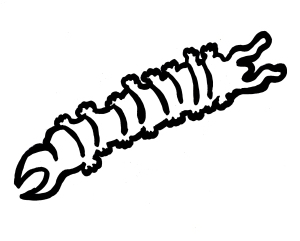
1959’s The Tingler is a perfect illustration of the fight for attention between Castle’s visual work & his offscreen theatrical gimmickry. The movie is most often remembered for its so-called Percepto! gimmick – which simulated spine-tingling sensations referenced onscreen with electrically rigged theater seats that would mildly shock audiences during the bigger scares. The titular “tingler” in the film is explained to be a centipedal creature that lives in each of our spines, growing into massive rock-hard spinal obstructions whenever we are stricken with fear. Castle himself appears onscreen to introduce the film, instructing audiences to scream for relief from this rigid-back, tingly spine sensation whenever we get too scared, or else our respective tinglers will become too strong and crush our spinal columns from within. This insane mythology was conceived by screenwriter Robb White when he found himself studying centipede specimens around the time Aldous Huxley encouraged him to experiment with LSD. Castle’s gift was being able to transform those William S. Burroughs-level dark forces in the screenplay into a playful theatrical prank that’s fun for the whole family. And yet, as much as the Percepto! gimmick has aged into kitschy fun, Castle found other ways to accentuate the surrealism of this acid-soaked centipede premise in imagery that borders on legitimate fine art.

Vincent Price stars as a frustrated mad scientist studying the phenomenon of the tingler, increasingly obsessed with extracting the creature from a patient’s spine at the exact moment they’re effectively crippled with fear. In-between struggling for funding, fighting through skepticism from his peers, and engaging in bitter spats with his flagrantly adulterous wife, Price experiments with inciting terror in potential subjects (read: victims) in an attempt to extract a tingler at its most rigid. He starts with performing autopsies on already-executed prisoners, but diabolically graduates to shooting large amounts of LSD into his own arm in an attempt to scare himself and pulling a gun on his philandering wife to frighten her into frenzy. In each case, the subjects’ involuntary screams interrupt the experiment before completion, “releasing the fear tensions” before the tingler can fully take shape. Eventually, though, the mad scientist finds his his perfect specimen in the spine of a mute woman who cannot scream to dissolve her tingler. Once he inevitably frees the monster from her body, it runs loose, causing havoc onscreen and—through Castle’s Percepto! gimmick—in the very theater where the audience is watching the film. The tingler itself is an adorable centipede puppet operated by clearly visible twine, but Castle manages to squeeze more pure entertainment value out of those limited means than any working filmmaker could with big-budget modern tech.

Of course, you can’t entirely separate what Castle achieves as a visual artist from the novelty appeal of his theatrical pranks, since everything onscreen is toiling in service of that almighty gimmickry. Even just the long-winded, convoluted mythology of a fear-feeding centipede that causes spinal tingling in the moments of intense fear is such an over-the-top justification for the Percepto! stunt, making for one of the most delightfully bizarre B-movie plots in history (especially when you factor in Price’s onscreen experiments with mainlining LSD). Once the tingler is loose, though, the film’s formal experiments with theatrical cinema get even more impressively bizarre. The creature sneaks into an old-fashioned silent era movie house to terrorize the audience there, mimicking the theatrical environment where The Tingler would be screening in real life (an effect enhanced greatly for me by catching the film at the historic Prytania Theatre). It crawls across the projector light, revealing a kaiju-scale silhouette of its centipedal body. Vincent Price “cuts the lights” in the theater, shouting encouragements in the dark for the audience to scream in a collective effort to subdue the tingler, lest we suffer the wrath of the Percepto! chairs. Castle’s gimmickry is not a distraction from his visual artistry, but rather a commercial justification for it – finding a wonderful middle ground between surreal art & cheap amusement.

The tingler itself only represents a portion of the visual novelties Castle screentests here. Disembodied heads scream in a pitch-black surrealistic void as a visual representation of fear. A haunted house display disrupts the film’s black & white palette with splashes of blood-red color as one character attempts to scare a tingler out of another. The movie theater itself becomes a confining menace as the projector light shuts off, trapping the audience alone in a room with the monster they paid to see attack fictional others. William Castle’s playfulness extends beyond his imagination for attention-grabbing gimmickry to push schlocky premises into the realm of vividly graphic, surreal art. I have not been giving him the respect he’s owed for that willingness to experiment with the boundaries of cinema myself, and The Tingler’s a perfect example of these experiments’ dual extremes as silly novelty & high art.

-Brandon Ledet

Leto (2019)

Russian director Kirill Serebrennikov is known for criticizing Russian government with his work on stage and screen, putting him high on Putin’s radar. During the final week of wrapping up and editing his most recent film, Leto, Serebrennikov was arrested for “fraud” charges, forcing him to complete his work on the film under house arrest. Many (including myself) believe this arrest was politically motivated, so the fact that Serebrennikov pushed through and completed Leto regardless of his circumstances is so badass. He even did it without being connected to the internet (Russian government took it away as part of his sentence). Leto, a musical film about Russia’s revolutionary rock movement in the early 1980s, has rebellion running through its veins. That alone is enough reason to watch this movie.

Leto (loosely translated from the Russian word for “Summer”) takes place in repressive Leningrad in the early 1980s. Rock music is loved by the Soviet Union’s youth, but older folk view it as music of the enemy because of its Western roots (influenced by Bowie, T. Rex, Lou Reed). The Leningrad Rock Club has recently opened and serves as the heart of the Soviet Union’s rock scene. The problem is that it’s overseen by the KGB and all musicians’ lyrics must be approved prior to performances. During the film’s beginning, the band Zoopark is performing at the Leningrad Rock Club to a seated audience being monitored by police. If anyone does anything beyond light claps for applause, head bobbing, and toe tapping, the police are on their ass. Watching a venue full of people quietly sitting while high-energy music is blaring through the speakers was beyond strange. Zoopark’s front man, Mike Naumenko (Roman Bilyk), is a prominent figure in this new scene. He’s a cool guy who wears sunglasses indoors and keeps things as funky as possible while following the rules of the KGB. He eventually meets Viktor Tsoi (Te Yoo), the singer and songwriter from the band Kino. Viktor is a little more rebellious with his music than Mike, but not enough to get him in jail or kicked out of the rock club. The relationship between Mike and Viktor is an interesting one. It’s hard to tell if Mike views Viktor as competition or if he wants to take Viktor under his wing and guide him through this new, growing music scene. Their relationship becomes even more confusing when Natasha (Irina Starshenbaum), Mike’s wife and mother to his child, gets permission from Mike to hook up with Viktor.

Zoopark and Kino are actual bands and Mike and Viktor are real-life members of those bands. However, this film is not considered to be a biopic. It’s more like historical fiction loosely based on two bands considered to be founding fathers of Russian rock music. There are times throughout the film where characters break the fourth wall to say, “This really didn’t happen.” prior to a scene. It’s a quirky way to remind us all that we are not watching a biopic, even though it really feels like we are. I went into this film knowing nothing about Russian rock music, much less Russian rock music from the early 80s, and I didn’t feel like I was ever not in the know. The film sort of jumps into the plot without any background or history, but its in-the-moment style is done so well that there is no need for a newcomer like me to be brought up to speed.

What really made Leto memorable for me was the film’s unique style. The entire film is in black and white (with a few flashbacks in grainy color), and there are musical moments with hand-drawn scribbles floating all over the screen. My favorite musical number was a rendition of the Talking Heads hit “Psycho Killer” during a violent train altercation. I’ve watched it multiple times. Let it be known that there aren’t that many musical numbers, so don’t avoid seeing this movie if you’re not a fan of musicals.

-Britnee Lombas

Jojo Rabbit (2019)

Is it okay to admit that I genuinely don’t know what to make of this movie? After Taika Waititi’s hot streak of instant 5-star classics—Hunt for the Wilderpeople, What We Do in the Shadows, Boy—it’s tempting to give the writer-director the benefit of the doubt in my unease with Jojo Rabbit’s tone & aesthetic. I especially wish I could celebrate Waititi’s willingness to immediately torch all the money & goodwill he earned making a crowd-pleasing Marvel movie by starring as Adolf Hitler in a pitch-black comedy with wild, deliberately alienating tonal shifts. Still, Jojo Rabbit’s mashup of Cute & Vile sentiments left me more confounded than either frustrated or moved. I suppose that discomfort & unease was largely the point, but it ultimately just didn’t feel as confident or personal as Waititi’s previous experiments in light-and-dark tonal clashes. It’s the first time I can assume one of his films didn’t fully achieve whatever it set out to accomplish.

The titular Jojo Rabbit is a 1940s German boy, Johannes, who is foolheartedly committed to his enrollment in The Hitler Youth. Already a victim to Nazi propaganda before the film starts, Jojo treats The Hitler Youth as a Weekend Fun precursor to The Boy Scouts (which it kinda was). He fully buys into the program’s antisemitic brainwashing that portrays Jewish people as magical, greedy demons with horns, scales, and forked tongues. This naïve, fanatical devotion to Nazi ideology is challenged when Jojo discovers that his own mother is secretly hiding a teenage Jewish girl from the Gestapo in the walls of their house, trapping him between the White Nationalist lies he’s been immersed in and the quiet demonstrations of kindness & charity towards Jews his mother exhibits at home. Naturally, he talks himself through this internal conflict with the help of his imaginary friend – a goofball, superheroic version of The Fuhrer himself, played by Waititi with the same vaudevillian broadness Charlie Chaplin brought to The Great Dictator.

Between the film’s Wes Andersonian visual fussiness, cutesy childhood humor, and ice-cold stares into the depths of wartime cruelty, Jojo Rabbit tosses a lot of clashing flavors into one overflowing gumbo. The not-for-everyone ingredient in that recipe (the okra, if you will) is the film’s peculiar sense of humor, which is broad enough to feel like it was intended for an audience of children despite the thematic severity it’s supposed to undercut. This film is consistently gorgeous as a meticulously tailored art object and seemingly heartfelt in its pangs of familial & genocidal drama, but it’s never quite funny enough to full earn its self-proclaimed status as “an anti-hate satire.” Making Hitler out to be a goofball lunatic who “can’t grow a full mustache” and teasing him with schoolyard names like “Shitler” registers only faintly on the satire scale, a whisper of righteous dissent. To be fair, it’s the kind of humor a school-age young’n might find darkly subversive, which fits the POV character’s mentality just fine. For an adult audience, though, the jokes rarely land with anything more than a droll chuckle of recognition, which to me means this outrageous Hitler comedy is paradoxically playing it safe.

Thankfully, it works much better as a political & familial drama, especially in Jojo’s relationships with the women in his house. Spending time with an actual, in-the-flesh Jewish girl reorients Jojo’s dehumanization of her people as horned demons in the exact ways you’d expect. His relationship with his mother (played by Scarlett Johansson with an SNL-tier “German” accent) is much more complex & capable of surprise, as she grieves for the loss of her sweet, kindhearted son to Nazi propaganda as if he had died in battle. The women’s disappointment in Jojo’s indoctrination into antisemitism and their dismissal of his burgeoning Nazi ideology as “a scared child playing dress-up” registers as the most clear-eyed satirical target in the film – one with undeniable parallels to the resurgence of Nazism among young white men online in the 2010s. The imaginary Hitler device doesn’t lead to anything nearly as poignant as that dramatic anchor (although it is satisfying to see the racist icon portrayed by a self-described “Polynesian Jew”).

If I’m unsure how successful Jojo Rabbit is overall, that unease is mostly due to its middling successes as a comedy. A few jokes land here or there with a light chuckle, but the humor peaks early with an opening credits sequence that reframes Leni Riefenstahl’s propoganda footage of Nazi crowds to play like a precursor to Beatlemania. Overall, the film’s “anti-hate satire” wasn’t nearly as pointed or as ambitious as the 2016 German comedy Look Who’s Back, which amplified tonal clashing in its parody of modern Nazism to the scale of a cosmic farce. For me, Jojo Rabbit worked best as a maternal parallel to the paternal drama of Waititi’s Boy. The difference is that I left Boy marveling at how he pulled off such a delicate tonal balance with such confident poise, whereas I left Jojo Rabbit wondering if I had just seen him lose his balance entirely and tumble to the floor for the first time. The answer remains unclear to me.

-Brandon Ledet

Gracefully (2019)

My entire familiarity with gender performance as entertainment has been centered on American (or at least Western) drag tradition until recently, which was even further limited to the arena of Southern pageant drag until just a few years ago. As the influence of avant-garde Club Kids artistry is rapidly spreading on the “mainstream” drag stage, the definition of what drag is and what drag can be is changing. For instance, it was impossible to watch the glammed-up luchadores of the recent documentary Cassandro, the Exotico! and not think of how that tradition was an extension of drag artistry, not just a mutation of Mexican pro wrestling culture. Similarly, you’ll never hear the word “drag” uttered in the documentary Gracefully, but it’s clear that the unnamed Iranian female impersonator the film profiles is clearly performing a non-American variation on the artform. He performs purely as a dancer when exhibiting his art, sidestepping the lip-syncing traditions of drag as we know it. There’s also drastically different cultural history to how his own artform came to be, which means you’ll never hear the word “queer’ or “gay” uttered in the film either; they’re just not part of his background. And yet, the D.I.Y. glam artistry, political combativeness, and illusionary gender performance of his work all qualify him to be considered in a drag context – a medium that’s exponentially expanding its scope every passing year.

This unnamed dancer’s work is not some fresh invention of the modern era of drag. If anything, Gracefully catches up with the dancer in an era where his time is long gone and his traditions are threatening to fade away, forgotten. The conservative moralism that overtook his country after the Iranian Revolution of 1979 made his artform obsolete—as dancing itself was effectively outlawed—making this film just as much a harsh look at art under censorship as it is a portrait of a singular, fascinating man. Once a popular sensation as a man who dances in woman’s clothing (thanks to a gendered privilege that allowed him certain freedoms women couldn’t afford), he mostly continues his art in private, performing for no one. Sub-professional venues like local wedding celebrations & nursing home visits are certainly beneath his former prestige as a nationally recognized dancer with a burgeoning film career, but it’s amazing he’s still performing at all. Hell, it’s amazing that he’s alive. He toils most days as a respectable working-class farmer and the father to six(!) adult sons, but one whose domestic routines seem like harshly quiet, cruelly restrained distractions from what truly makes him happy, what he was born to do. Any time we get to see him perform his art for the camera it’s a gorgeous act of self-expression; the tragedy of the film is how limited those opportunities have become.

Gracefully is smart to never allow the flashiness of its craft to overpower the inherent fasciation of its subject (something that unfortunately can’t be said about this year’s Cassandro, the Exotico!). When it does get noticeably artful in its framing & imagery, it’s only ever in service of its subject’s dancing—often showing him performing in pitch-black voids as if his D.I.Y. glamor was the only thing in the world that matters. Otherwise, the emotional wallops of the film arrive in surprisingly understated ways: watching him raise young calves on the farm, listening to his sons express their varied opinions on the value & morality of his art, the tragedy of his extensive femme wardrobe being locked away in storage containers where no one can admire it, etc. Lest you think we’ve already arrived at a place where drag is no longer a subversively political act (which I don’t think is true in America; it’s just the kind of thing that Very Online, jaded city-folk might say), Gracefully offers an incredibly distinct, fascinating example where it’s being censored out of existence. Its nameless subject is a kind of rebellious activist in that sense, but for the most part he only wants to have the freedom to do what he pleases: dance in women’s clothing. And he’s really good at it! It’s devastating to see that his art has been so limited by censorship that he himself has become a living archive for a dead tradition, but at least this movie consciously strives to preserve his corner of drag tradition to help ensure his legacy is not forgotten. It’s important work.

-Brandon Ledet

Pier Kids (2019)

There’s a reason we’ve seen so many documentaries about homeless queer youth in America over the decades, especially on the festival circuit: it’s a huge fucking problem. Gay, trans, nonbinary, and otherwise queer children are especially vulnerable to being kicked out onto the street by their families, which often resigns them to high-risk lives of petty theft & sex work to get by in an increasingly hostile world. Many documentaries are (rightfully) drawn to signal-boosting these stories as a means to advocating for the kids locked in this never-ending epidemic, which makes for both an amplified political advocacy in total and a crowded field where it is difficult for any one individual film to distinguish itself in isolation. Pier Kids is one of many, many documentaries on a frequently covered (even if vital) topic. Its merits as an individual work can only be judged by two criteria, then: the specific kids it chooses to document and the way it handles presenting their story.

This particular queer homeless youth advocacy doc opens with seething commentary on the assumed POV in the cultural history of queer identity. A title card asserts that in the fifty years since the Stonewall Riots the narrative of modern gay rights has been dominated by cisgender White Gays, when the real work needs to be focused on protecting & uplifting POC homeless youth, especially black trans women. Other recent documentary work I’ve seen in this same line of advocacy has been centered on action & organization in “solving” this epidemic, like the unofficial Paris is Burning sequel Kiki and the gang violence “rehabilitation” effort Check It!. Pier Kids is seemingly more focused on calling attention to the problem than actively advocating for a specific solution, as it profiles individual homeless youths who frequent the piers of NYC in-between excursions in sex work & shoplifting. This matter-of-fact document of systemically ignored & discarded youth has plenty of intrinsic value without having to push for a more clearly defined solution to the problem, and the film is likely better for not reaching beyond its means for that lofty goal.

The title “Pier Kids” is especially telling in this approach, as it emphasizes that these young, homeless sex workers are disenfranchised children who’re struggling to establish a foundation of normality in a systemically cruel world. Like many docs in this milieu, the film dedicates much of its energy to parsing out the structure & functions of gay “families” – wherein veterans of the scene provide makeshift homes & parental guidance to their “gay children.” Cops, drunken Wall Street bros, and physically violent johns create a cruelly unfair, rigged system where financially desperate youths are solicited for sex, then suffer all the legal, emotional, and physical consequences for prostitution. Director Elegance Bratton can’t help themselves in vocally responding “Oh my god” and “I’m so sorry” to the more egregious horrors suffered by their subjects, but just as much room is left for tenderness & tough love shared in these chosen, D.I.Y. family structures. This is not an act of culture-gazing; it’s a slice of life look at a community with volatile ups & downs.

To its credit, Pier Kids openly acknowledges its small part in a larger documentary tradition. Glimpses at ball culture glamor and detailed explanations of differing vogueing “house” structures directly recall Paris is Burning. A central subject named Krystal Labeija Dixon encourages the audience to look up the Crystal Labeija’s infamous read from the landmark documentary The Queen on YouTube as an explanation of why she chose her name. Pier Kids’s cheap digital equipment leaves it with a cold visual palette that can’t compete with those early documentaries’ wonderfully grimy, color-saturated celluloid patina. Similarly, its soundtrack is often overwhelmed by the roar of traffic, the hum of mobile streetlight generators, and the menace of police sirens. However, its personal, intimate documentation of a new, specific crop of homeless queer kids is just as essential as any past works – if not only as confirmation that the epidemic is still ongoing. These children are still out there taking care of themselves & each other with no end or solution to this cycle in sight. I do hope there will be a day when these documentaries are no longer such a regular routine, but only in the sense that I hope for a future where they’re no longer necessary. We’re not there yet.

-Brandon Ledet