There are a lot of things that they just don’t make like they used to. Cadbury creme eggs, Star Warses, western democracy. But one thing that’s still reliably chugging along through the same well-worn, comfortable ruts that the covered wagons made, and that’s the small-town crime thriller. Now with more Eric Bana!
Bana stars in The Dry as Aaron Falk, a federal agent in Australia who returns to his fictional hometown of Kiewarra, some twenty years after he was run out of town by locals who believed the then-teenaged Aaron (Joe Klocek) had something to do with the drowning death of his girlfriend, Ellie (Bebe Bettencourt). Although Kiewarra is now suffering economically due to the titular intense drought, flashbacks show a verdant river and fields as backdrop to the youthful friendship between Aaron and Luke (played by Martin Dingle-Wall as an adult and Sam Corlett in the past), as well as Luke’s then-girlfriend, Gretchen (Claude Scott-Mitchell). Unfortunately, it’s the tragic death of Luke and his family that’s brought Aaron home after all this time, in an apparent murder suicide at the hands of his old friend.
Asked by Luke’s parents to stay and investigate further in order to prove their son’s innocence, Aaron finds himself the object of scorn and scrutiny by Ellie’s older brother Grant (Matt Nable), who still believes Aaron got off scot-free for his sister’s murder, as well as Ellie’s now cognitively challenged father Mal (William Zappa), who confusedly accuses Aaron for covering up for his son, not recognizing that the man he’s accusing is the Falk boy. He also reunites with Gretchen (Genevieve O’Reilly), and the two reconnect while he investigates. While reviewing the files of Luke’s wife, Aaron discovers “Grant?” written on the back of a document, which leads him into conflict with Ellie’s family once again.
Most of the reviews for this film label it a “slow burn,” and it’s definitely that, with an emphasis on “slow.” This isn’t necessarily a bad thing, but it also wasn’t really what I was in the mood for when I was finally able to set aside some time to screen this one. There are no molds being broken here; nothing ever starts to get meta or strays from the conventional. It’s your standard Protagonist Archetype 7C (Law Enforcement Officer, Federal) with modifier 32-A (Chip on the Shoulder) sigma (adolescent tragedy), in setting 3 (small town) B (where they grew up) dash 5 (in economic crisis) dash B (due to inclement weather), where Kappa (a homicide) has occurred, involving Pi-3 (their childhood friend). The plot is solid and hangs together. It’s nothing new, but if this is the thing that’s up your alley, then you will enjoy it.
Normally, when we apply the descriptor “paint by numbers,” which certainly applies here, we’re talking about something with mass market appeal and application. This film is more of a masterpiece by numbers, where your end result is something that’s good enough to be truly proud of, or even be turned into a 1000-piece puzzle. I wish I could speak more highly of it, because what normally renders the more run-of-the-mill versions of these films to the heap of forgotten mediocrity is that they have no staying power beyond their twist, but this one is gorgeously shot, thoughtfully edited, and masterfully acted. You can really feel the heat radiating off of the ground in draught-addled Kiewarra, but it’s not enough to elevate this into the pantheon of its genre. It’s above average but does not exceed expectations.
I was very excited this past summer when, during that period when things were starting to reopen and I was able to go back to the theater for the first time sinceEmma. way back in March 2020, to seeBlack Widow. I managed to see two others in theaters before the end of the year, when threats of Omicron (Persei 8) means that many of us are once again sworn off of the in-person theatrical experience, Nicole Kidman be damned. For the past two weeks, I’ve been trying to squeeze in a few last 2021 releases in order to soothe my conscience with regards to ensuring that my forthcoming end of the year list was sufficiently well rounded and informed, consistently texting Brandon that “I just need[ed] to finish Matrix Resurrections/The French Dispatch/etc. and then I [would] ‘call it.'” Many years ago, I wrote that no one could gaslight me like I could gaslight myself, and like Charles Boyer himself, I just kept moving those goalposts, until I think we are finally at an end, as I got the opportunity to see Spider-Man: No Way Home in a relatively safe environment courtesy of coincidental access to a GMC Terrain and Austin’s own Blue Starlite Drive In.
Spoilers!
We open just where we left off inFar from Home, with our friendly neighborhood Spider-Twink (Tom Holland) having just had his secret identity as Peter Parker exposed by J. Jonah Jameson, once again played by J.K. Simmons, although this time instead of being an editorial-mad editor, he’s here running a Daily Bugle that, instead of being a decently respectable publication, is not-quite-InfoWars. Although no criminal charges associated with the accusation that he killed Mysterio manage to stick (thanks in no small part to Charlie Cox reprising his role as Matt “Daredevil” Murdock), the repercussions of the allegations ripple throughout his life. Peter and May have to move out of their apartment to avoid harassment from Mysterio truthers, and the controversy costs Peter and his friends the opportunity to go to MIT together. It’s the last of these that prompts Peter to seek out assistance from Dr. Strange to try and reverse the damage, but Peter’s second guessing causes the magic to go haywire, setting off a bizarre series of events.
Seriously, spoilers.
As a result, everyone who knows Peter Parker is Spider-Man, even in other universes, begins to appear in New York. Doc Ock (Alfred Molina) from Spider-Man 2? Of course! Willem Dafoe’s hypnotic Sam Raimi-movies Green Goblin? You betcha! Electro (Jamie Foxx) from Amazing Spider-Man 2? Um, ok, yeah. Thomas Haden Church as Raimi’s Sandman and Rhys Ifans as Lizard? If, um, if you want, I guess. Aunt May (Rosemary Harris)?! Unfortunately, no, although I kept an eagle eye out for both her and Mageina Tovah. Peter manages to round up these accidental invaders with help from Ned (Jacob Batalon) and MJ (Zendaya), and Strange prepares to send them back. However, when each of them shares that the last thing that they remember are the moments leading up to what we the audience know are their deaths (give or take a Sandman), Peter decides that he can’t knowingly send them to their respective dooms without instead curing them so that they might live instead: repairing the broken interface between Octavius and his cybernetic arms, ridding Osbourne of the Goblin identity, delectrifying Electro, etc. It’s actually kind of nice, but of course, goblins gotta goblin, so it goes off the rails, which is where things start to get really interesting.
I wasn’t sure what to expect from this one. A few years back, the CW DC shows did a big multiverse crossover event that managed to incorporate a shocking number of appearances from “other universes” that were explicitly other media adaptations: Smallville, Doom Patrol, Titans, the 1990s Flash, Superman Returns, and even more esoteric examples like Lucifer. There were appearances from Huntress from the short-lived Birds of Prey series from 2002, Burt Ward reprising his role as Dick “Robin” Grayson from the 1960s, and having Kevin Conroy, who voiced Batman in the 1990s animated series (aka my Batman), appear in the flesh as Bruce Wayne for the first time. Watching it unfold was like a matryoshka doll of niche specificity; it was a much lower budget than this, obviously, but it was still fun. I knew Far from Home was planned as a big crossover, that would start off the multiverse thing, which was hinted at in WandaVision and would play a big role in the upcoming Doctor Strange and the Who Cares, blah blah blah. But following on the heels of the what narratively should (but obviously capitalistically never could) have been the finale of this whole enterprise withEndgame, I didn’t really think that another installment in the Disney money-printing machine would manage to elicit the same kind of emotional thrill that of four-color yesteryear.
And then it did, somehow. Maybe? There’s no Disney logo at the beginning; when the Sony logo came up, followed by Tristar, I thought it was another trailer, until the ending audio from Far from Home played. But I’m getting off track. Pre-release, it was impossible to avoid the rumors. Would Tobey Maguire come back? Surely not. The rights alone would make it all so complicated. But someone saw, or said they saw, or maybe heard from the PA that you met at a friend’s party that Andrew Garfield and his Tumblr-famous jiggly puffs were spotted back in the old spandex. And somehow, post-release, even after a couple of weeks, I assumed that it must not have happened, since no one on Twitter had spoiled it (for me) yet, but yeah, here they are. And, like, it’s impossible not to feel a swell of something warm inside when they all meet here.
It’s common to call reference-heavy, perhaps even fan service-y fare a “love letter to the fans.” I’m not usually a fan of that phrase since most of the things that are intended to be so—perhaps especially when it comes to my beloved Star Trek franchise—usually come out muddy at best and are frequently, sometimes infamously, bad. And this does run the risk of that, especially if one is too young to really remember or to have ever even seen the older films referenced herein. But sometimes, especially in trying times, maybe a little bit of nostalgia is all that you need. Sometimes, it’s more than enough. Spider-Man: Three Spider-Men wrang legitimate tears out of me, and not just because no one bothered, I assume, to see what Rosemary Harris was doing. After the two older Spider-Men recount to Gen-Z Peter how they respectively lost their Uncle Ben and/or Gwen Stacy, Amazing Spider-Man gets the opportunity to save a falling MJ here, and this time he succeeds where he failed before, and it’s genuinely one of the most emotionally satisfying things that this bombastic, bloated franchise has ever managed to affect.
And that’s just the bittersweet stuff; there’s still plenty of humor to go around, although obviously not on the level ofHomecoming. I’ve spoiled enough of the drama that I’ll leave the comedy unrepeated so that there’s something for you to still discover if you haven’t already seen this one. If there’s one big quibble that I do have, it’s that Jameson as no-celebrities-were-harmed Alex Jones doesn’t quite work for me. Firstly, there’s no way that Marvel could ever let J.K. Simmons ever go full Jones; Disney might take a couple of potshots at him by having Jameson hawk not-quite-nootropics, but a film under their umbrella is never going to have Jameson get involved with Pizzagate or get taken to court for calling the Battle of New York survivors crisis actors. Although the film briefly touches on what the equivalent of our own real world conspiracy theorists would look like in the MCU, it’s pretty toothless. Going soft on Jones with a parody that neither sees him get his comeuppance nor push his pathological adherence to his outrageous beliefs past the line where his charisma fails to walk him back … you just wonder why they bothered.
I guess I should close by saying that although this was a lot of fun, it doesn’t really hook me on the franchise’s future at all. I didn’t stay for the post-credits scene, and although it’s true that I was, as stated, at a drive-in and that my bladder was full, I still simply couldn’t bring myself to care enough to stay. But, like, does that matter? Did it ever? Maybe. Probably not. As a capper on the Spider-Man series, this would also do, and it brings it all home.
Before phrases like “sex positivity” & “kink” wormed their way into my vocabulary as a horned-up youth, Annie Sprinkle already embodied them in my mind as a sex-culture mascot. Like other retro fetish icons like Bettie Page & Dita Von Teese, Annie Sprinkle has seemingly always been around in the public eye as a cheerleader for fun, adventurous sex – reaching me before I was old enough to access pornography without parental surveillance. I don’t know if I first encountered her in a magazine interview or on a late-night broadcast of HBO’s Real Sex, but she’s definitely one of the first cultural ambassadors for kink & sex positivity that penetrated my sheltered suburban bubble. Long before I had seen a single frame of her golden age pornos, she symbolized the ways that pornography could be fun & feminist in the right circumstances, which helped shape the ways I think of the medium.
While the mainstream porno Deep Inside Annie Sprinkle is likely her biggest commercial success, I don’t think Sprinkle peaked as artist until a decade later, when she was making avant-garde video art instead of traditional hardcore. The cult VHS oddity Sluts & Goddesses Video Workshop: How to be a Sex Goddess in 101 Easy Steps is a tongue-in-ass-cheek instructional video promoting kink & sex positivity, a wonderful document of the Annie Sprinkle ethos. Co-directed with a young Maria Beatty (who still makes artsy fetish videos like Ecstasy in Berlin, 1926) and scored by experimental electronic musician Pauline Oliveros, the video is ostensibly a taped version of Sprinkle’s sex-positivity workshops that she ran in early-90s NYC but is something much stranger & more cinematic than that documentation implies. In the video version of the workshop, Sprinkle lectures directly to the camera about the mystical slut/goddess binary. She promises to “awaken your inner slut” and “your inner goddess,” challenging cultural biases that a sexually enthused woman is somehow vulgar or immoral. She walks you through this spiritual slut awakening in front of surreal green screen video-art effects while arhythmic keyboard flourishes, marching drums, and slide whistles trigger a kind of D.I.Y. psychedelic hypnotism. Sprinkle declares that she wants the video to make sex “empowering, liberating, and healthy,” but in the process she also makes sex a bizarre psychotronic head-fuck.
While commercially marketed as a porno, the Sluts & Goddesses Video Workshop plays more like experimental video art than it does like pure erotica. It’s telling that Sprinkle & Beatty tacked on a lengthy threesome scene at the end of the video as an afterthought, realizing late in production that their sex video didn’t have much actual sex in it. And even that scene concludes with Sprinkle experiencing a five-minute, unedited orgasm, lecturing about the different levels of orgasmic pleasure in voiceover while a digital clock counts every eternal second. Everything that precedes that mind-blowing climax lands somewhere between the high-art mysticism of Derek Jarman’s The Garden and the psychedelic sketch comedy of Tim and Eric Awesome Show, Great Job!. A kaleidoscope of vulvas undulates on the screen while Sprinkle instructs on how to find “your goddess spot” and makes cheeky puns about how genital piercings make you “holier.” Brief sex acts shared between her crew of “Transformation Facilitators” are transposed in front of backdrops that are usually reserved for karaoke screens. The video is often hot and always fun, but it’s less pornography than it is Dianetics for your clit.
As you’d likely expect, not all of Annie Sprinkle’s sex-positive politics have aged gracefully over the past three decades. The Sluts & Goddesses Video Workshop has some major blind spots when it comes to cultural appropriation in particular, encouraging superficial Orientalist engagement with yoga & bindis as cultural costuming instead of genuine spiritual practices. In the audio commentary on my mid-2000s DVD copy of the film, Sprinkle shrugs off the insensitivity of these missteps, explaining that she didn’t even know what cultural appropriation was at the time of filming. However, she also recounts that those aspects of the workshop caused some of the video’s more radical performers to walk off-set in protest on the first day of filming, so those conversations were very much being had at the time whether or not she chose to listen. Still, I’d like to think that it’s worth squinting past Sprinkle’s political blind spots to appreciate her ambassadorship for good sex and good pornography. After all, she does have an entire section on her Wikipedia page titled “Contributions to Feminism,” which should be some implication of how important her messaging was at the time, short sights aside.
If there’s anything especially radical about the Sluts & Goddesses Video Workshop, it’s not necessarily in its erotic mysticism or in its video-art psychedelia. Annie Sprinkle’s most invigorating contribution to pornography is in her D.I.Y. punk ethos, encouraging her audience to have more playful sex and even to make their own pornography at home. It’s the same mobilizing energy that the Riot Grrrl movement brought to feminist bands & zines at the time, inciting women to make their own self-liberating art in defiance of the era’s cultural gatekeepers. Sprinkle’s version just happened to allow her to experience a continuous 5-minute orgasm in the process, which is a pretty sweet bonus if you can achieve it.
I’ve been a huge fan of Natalie Morales for a very, very long time. In fact, I just got the Middleman DVD box set for Christmas and am doling out episodes to myself at a slow rewatch pace like a post-holiday Advent calendar, after my last rewatch of gray market .avi files that are still watermarked with the ABC Family branding. I heard about the then-unfilmed Plan B, Morales’s directorial debut, sometime back and then don’t remember ever hearing anything else about it until it premiered on Hulu. There’s a distinct style to her comedic delivery and timing that I have always loved, and it’s present in her other non-Wendy Watson roles with which we have been graced over the years; it’s also present here, in an esoteric spiritual way and in the way that her voice comes through so clearly in the cadence of her characters’ dialogue.
Lupe (Victoria Moroles) and Sunny (Kuhoo Verma) are best friends. Both have single parents: Sunny is an only child being raised by her mother, Rosie (Jolly Abraham), a driven real estate agent with high expectations for Sunny’s academic performance; Lupe has younger brothers, and her mother passed away some time ago, pushing her minister father (Jacob Vargas) towards overprotection, against which she bristles. Sunny’s crushing on Hunter (Michael Provost), a sensitive boy whose signature pairing of cardigan and P.E. uniform revs her engine, and she’s egged on by the ostensibly more sexually experienced Lupe. When Rosie leaves for an out-of-state realty conference, Lupe convinces Sunny to throw a house party in order to spend time with Hunter, but when he leaves with another girl, Sunny ends up having (brief and unsatisfying) sex with a different classmate, the zealously Christian dweeb Kyle (Mason Cook).
The next morning, she realizes that despite her best efforts to use protection, she may be amongst the minute percentage for whom condoms are ineffective. This kicks off a series of events in which the girls try to obtain the titular pharmaceutical, during the course of which they run afoul of a pharmacist (Jay Chandrasekhar) who invokes the state’s laws allowing for those of his profession to withhold medication based on “moral” objections, a gas station attendant (Edi Patterson, of The Righteous Gemstones) with her own issues, and a supposedly teenaged drug dealer (the 31-year-old Moses Storm) whose apparent age is the result of never drinking water. En route to the closest Planned Parenthood, a several-hour car ride that turns into an overnight coming-of-age road comedy, Sunny has an unexpected encounter with Hunter, and Lupe finally meets her oft-mentioned off screen love interest, Logan, for the first time in person; both we and Sunny learn that Logan (Myha’la Herrold) is actually a woman. With the ticking clock to get both the Plan B pill before it starts to lose its efficacy, and for the girls to get home before Sunny’s mom gets back from her conference, one never forgets that stakes, regardless of how many peals of laughter are experienced between delays.
There’s a great scene early on in which we get a one-scene performance from Rachel Dratch as Ms. Flaucher, the characters’ sex ed teacher. Just like I did, they’re getting an abstinence-only curriculum in which premarital sex is given an elaborate metaphor. You know the one; in his late-2019 stand-up special, Jaboukie Young-White talked about his Catholic upbringing in which the sinfulness of the Marital Act outside of the Marriage Bed was demonstrated by having everyone spit in a cup and challenging the last person to drink it. My school also had the one with the Scotch tape, in which once you put it on someone’s shirt, then someone else’s, then a third person’s, the tape lost adhesiveness, to show how we could never really properly bond to our future spouses if we allowed ourselves to be sullied by physical encounters in which loose threads were exchanged, if you follow. The September 2019 installment of Into the Dark, entitled Pure, took place at a purity retreat; during the scene in which the event’s spiritual leader asked for a piece of gum and started chewing it, I told my then-roommate that this was about to become a metaphor for how “gross” and “used” people were, and he couldn’t believe that this prediction came true. At least I am too old to have been subjected to Christian trap music, which plays a role here in Plan B.
On the VHS tape (ha!) shown to Lupe and Sunny’s class, a woman’s virginity (and it’s specifically a woman’s in this case, which is discussed) is presented as a much-abused car, which her husband refuses to ride in. There’s something essential about comedy that requires it to be knowing, and that’s what elevates Plan B. It’s not just funny, it’s funny in a very intimate way, which matches the subject matter, appropriately interspersed with emotional reminders of the potency of teenage emotion. Sometimes, no matter how adult you think you are and attempt to take care of your problems, you’re still a child and you need an adult, and it’s ok to acknowledge that. That emotional honesty plays out in its demonstration of young love, and how it can be sweet and still a little embarrassing. And it does it all with humor that verges-upon-but-does-not-quite-become gross-out comedy, vignetted character portraits of outlandish but somehow instantly familiar personalities, and the warmth of basking in the effortless conversational volley between two best friends who know each other better than anyone else in the world. There are a few missteps; I personally can’t stand a late-film friendship-threatening argument, and although this one is blissfully short and quickly reversed, that really underscores how unnecessary it is. But I’m not here to get bogged down in those details, and neither should you be. This one’s a lot of fun.
Rare Beasts is the directorial debut of Billie Piper, whom you might know as a nineties British pop star, the companion of the Ninth and Tenth Doctors, or perhaps even from Secret Diary of a Call Girl or Penny Dreadful. It also stars the talented Piper and was written by her as well, and it’s a bizarre, barbed delight, despite the mixed reviews, which we’ll get to.
Mandy (Piper) is a single mother to the behaviorally challenged Larch (Toby Woolf), who may be on the spectrum. She works for a TV production company where she and several others are tasked with delivering pitch ideas, and the ones which the audience is allowed to hear are universally bad. It’s here that Mandy meets her relationship interest, Pete (Leo Bill). I say “relationship interest” because I initially typed “love interest” and then gagged a little, updated it to “romantic interest” and thought that this was an inaccurate adjective as well, given that there’s very little in the way of romance either. Pete’s a horrible man who comes very close to turning red and having kettle steam jet out of the sides of his head on their first date, as he spews unprompted vitriol about how much he hates women and desires what he considers an ideal marriage (one of female subservience), and how these questionable values align with his religious identity. Like, no one ever says “MRA” or “red pilled” but there’s a very clear reason why he’s alone.
Nonetheless, the two navigate through the stations of the canon of the romcom plot; they go to their first wedding together (where Mandy briefly flirts with a man with whom she clearly has a history, and whose eyes twitch exactly like Larch’s), have a day in the park (which ends in a scene in which Pete and Larch bond and seemingly come to some kind of understanding by way of a screeching tantrum mirror match), and Mandy meeting Pete’s family for the first time. Every situation is frighteningly familiar to anyone who’s ever seen a screaming match break out at a wedding or family dinner, but also takes comfort in the bleak humor of detachment; it’s Marge Simpson in “Scenes from the Class Struggle in Springfield” murmuring her way into the act break after grimly telling herself “At times like this, I guess all you can do is laugh” – The Movie. That’s especially true as these relationship woes play out against the scenery of her relationship with her mother (Kerry Fox), who is terminally ill and, although separated from him, is still tormented by the not-so-harmless shenanigans of Mandy’s mostly absentee father (David Thewlis).
I’m always someone who’s more interested in a fascinating movie over one that’s “good,” but I think Rare Beasts manages to be both. There’s a hyperreality to the bizarre dialogue, which is stilted and almost impenetrable in its content at times, but always delivered in a perfect clipped cadence. It’s an experience that ends up feeling like you’re hovering halfway between an unfamiliar Shakespeare play performed with the original dialogue but in a modern setting and one of those short films or musical performances that are meant to evoke the experience of what English sounds like to non-English speakers. It’s surreal and hyperreal at the same time.
Mandy is captivating (as is Piper). She’s struggling, and that’s life. Larch is going to be who he is, and there’s very little that can be done about it. People are horrible, meeting dates is a tragedy in slow motion, and your parents will, someday, die. My favorite detail about Mandy is that, according to her father, she would write little death threats when she was a child. He laughs this off, but when pressed for what kind of threats they were, he notes that they were the kind “that would have you thinking,” as his eyes widen. Rare Beasts is a film of subtle details in that way; in an attempt at foregoing all the potential issues with intimacy, she shows Pete every part of herself, revealing in extreme detail which parts of her body she is neurotically obsessed about (there are many, including her legs, which are “too much femur, not enough tibia.”
The camerawork here is fantastic, shockingly ambitious for a first-time director and surprisingly effective and empathetic where it needs to be. When her sexist boss insults her talent and fires her, there’s a reversal of the kind of shot that’s so frequently applied to women; she is framed though his legs, and instead of being titillating, the angle at which his legs are spread (much more than would make logical sense for a standing person not in the middle of a cheer routine) creates a sense of overall wrongness that permeates the film just as it permeates our existence. At one point after Mandy stands up for herself, there’s an immediate cut to a crane shot of Pete and Mandy running through a deserted London intersection, and it’s like something out of a coming-of-age film, but it feels wrong, long before the details set in. At one point, when Mandy is eavesdropping on her parents by sitting on the floor outside of her mother’s bedroom, her father notices here and shuts the door, but he’s looking down on her as if she were a child, shortly before a sequence in which Mandy tap dances from childhood to her present age, in line with the film’s frequent dream logic.
I was surprised by the film’s low Rotten Tomatoes score, which is an extremely imperfect metric at best, but when looking at the reviews and the critics who provided them, I noticed a pattern, and dug in a little further. There were 50 reviews, and for 48 of them, I could identify the critic’s gender (bless Rory Doherty for putting his pronouns in his Twitter bio and keeping that from being 47). Of those, 26 (54.2%) were written by women, and 22 (45.8%) were written by men, which is pretty uncommon; normally, reviews from male critics on RT outnumber those by women 2:1. I tried to find a film with similar statistics that I could compare that to and confirm, and after taking a look at The Novice, which had 60 reviews, I realized that it was also a film with a woman helming it, as both writer and director, so that would hew too close and skew the results. Then I found Cyrano, which at the time had 51 reviews, Joe Wright’s period piece with Peter Dinklage in the title role. With roughly equivalent reviews, 12 (25.5%) were written by women, and 38 (75.5%) by men. So yeah. Of Rare Beasts‘ 48, 10 of the male critics (45.5%) gave it a negative review, as opposed to 8 (30.8%) critics who are women. So not only did this film attract disproportionately female critical attention, more men still somehow managed to dislike it than women, and with women having an internal positive/negative ratio of 2.25:1, compared to 1.2:1 for dudes. So, I guess what I’m saying is that if you’re a man, maybe this one won’t be to your liking, but that’s not a guarantee since, you know, I thought it was excellent. Then again, this film is very much Not For Everyone, so maybe that’s to be expected.
There was a point sometime in the past decade—at least as early as 2014’s Sharknado 2: The Second One—where I completely lost my appetite for ironic “bad”-on-purpose schlock. Even retro broadcasts of Mystery Science Theatre 3000 have lost their luster for me, as I often find myself wishing I was just watching the B-movies being mocked without all the Gen-X sarcasm spoiling the mood. Based on its title, its blatant Ed Wood homages, and its $10 budget, I was worried that Codependent Lesbian Space Alien Seeks Same would be the exact kind of lazy B-movie throwback that I’ve lost my appetite for in recent years. I was wrong. It’s incredibly funny & heartwarming, joining the ranks of the few rare examples of digital-era retro schlock that’s genuinely entertaining as the genre relics it’s parodying:Don’t Let the Riverbeast Get You!, B.C. Butcher, The Lost Skeleton of Cadavra, etc. Its cheap digital sheen & buzzing room tones almost scared me away in the very first scene, but by the end I was wishing it was a pilot for a What We Do in the Shadows-style sitcom instead of a standalone film.
The titular lovelorn Lesbian Space Aliens are basically a rehash of The Coneheads, complete with bald caps and robotic vocal inflections. They’ve been exiled to Earth from planet Zots because their “big emotions” are eroding their homeworld’s ozone layer. The plan is for the trio of romantic misfits to enter the dating pool in NYC, where they’re sure to have their hearts broken and return to Zots emotionally numb. While one of the Zotsians is a shameless flirt seeking “hot alien-on-Earthling action,” the other two are just painfully lonely. Their romantic mishaps on the NYC singles scene are mostly an absurd excuse to make tragicomic observations about the quirks of lesbian dating – the kinds of anxious “Are we being friendly or are we flirting?” observations that still routinely make the rounds on Twitter. Every character in their orbit is oddly loveable in their downtrodden, softspoken misery – right down to the self-deprecating G-men who’re assigned to uncover their UFO launching site. And when one alien does make a genuine romantic connection, it’s more satisfying than any mainstream romcom storyline Hollywood has produced in decades.
I’m not surprised to learn that Codependent Lesbian Space Alien Seeks Same originated as a queer-culture stage play in the early 90s, nearly two decades before its movie adaptation. Its writing & performances are much better defined than most backyard digi movies on its production level, and its retro-schlock patina is more of a launching pad for its humor than it is the entire joke. The film was met with high praise when it premiered at Sundance & Out Fest in the early 2010s but hasn’t had much of a cultural impact in the decade since. Anecdotally, it appears to have a low number of viewers but a high satisfaction rate, and director Madeleine Olnek at least went on to helm the more robust production Wild Nights with Emily (with Susan Ziegler, the actor who plays the codependent lesbian space alien Zoinx, in tow). I totally get audiences’ general suspicion of low-budget, “bad”-on-purpose B-movie parodies like this, but it’s one of the good ones – meaning it’s one that has a sincere heart beating in its chest, just beneath its irony-coated novelty skeleton.
Saint Maud was one of the very first 2021 releases to sneak onto my Best of the Year list and Benedettawas one of the last, which means that my movie year was bookended by erotic horror stories about religious zealots. Let it be known that queercore provocateur Bruce LaBruce also entered the chat in that particular forum last year with his latest low-budget button pusher, Saint-Narcisse. Of the three erotic religious nightmares I saw last year, Saint–Narcisse was the least substantial, but it was also the gayest and the most pornographic, which has gotta count for something. Saint Maud & Benedetta were also pretty horned-up & gay in their own respects, but they were outdone in both metrics by LaBruce, whose fearlessness in soaring over the top apparently surpasses even Verhoeven’s.
Saint–Narcisse is a taboo melodrama about a narcissist who falls into lust with his long-estranged twin. The narcissist has transformed himself into his own fetish object, only experiencing erotic euphoria when taking dirty Polaroids of himself in isolation . . . until he meets his twin. The twin is a cloistered monk whose own sex life is traumatically limited to the abuses of the higher-ups in his monastery, who’ve raised him since birth. The two brothers are psychically linked through erotic nightmare visions of each other; they’re also linked to their witchy, reclusive mother, who’s been estranged from them since birth. The narrative drive of the film is in liberating the diasporic family from their various sexual prisons, uniting them in a shamelessly incestuous commune isolated from the judgmental eyes of the outside world. As always, its overall purpose is driven by LaBruce amusing himself by discomforting the audience with a series of tongue-in-cheek erotic pranks. It’s not great, but it is great fun.
There’s a flat, soap opera approach to this incestuous familial drama that’s in direct conflict with the atmospheric tension that usually carries religious inner-conflict movies of its kind. In LaBruce’s The Misandrists, that emotionless, detached acting style was hilariously paired with overwritten political rants that kept the mood lively, if not outright volatile. Here, the flat dialogue exchanges are spaced out with pensive motorcycle rides & wet dream sequences, calling for a level of dramatic & atmospheric tension that the movie never delivers. Still, LaBruce rewards your patience with plenty of narrative pranks at the expense of good taste, including a backyard cookout cheerily scored by a cover of Sly & The Family Stone’s “Family Affair.” Whether that punchline ending is worth the road trip journey of its set-up is debatable, but it’s undeniable that LaBruce is a brave soul for attempting it in the first place.
We’d be in a much better place if more filmmakers were this shameless in amusing themselves at their audience’s expense, even if the results are often bested by better-funded competitors who work within much more rigid guard rails.
It’s totally understandable to feel burnt out on biopics as a genre. They’re often formulaic to the point of self-parody, especially the American star-vehicle variety that seems specifically designed to generate applaudable clips for Oscar highlight reels. The recent Finnish film Tove admittedly does little to reinvent the biopic, but it at least finds ways to make its overly familiar tropes & structure feel intimate & tactile. It’s unlikely that anyone who wasn’t already interested in the life & art of its titular subject would get much out of the film, which likely means it does not transcend the limitations of its genre. Still, it doesn’t waste her fans’ time by shoehorning her into the by-the-numbers clichés that sink most biopics into tedium.
It helps that Tove is not a birth-to-death recap of Moomins creator Tove Jansson’s entire life. It covers only her creative breakthrough & troubled romance years post-WWII. We do not watch her experience an “Aha!” discovery at her drafting table, conjuring Moomins characters directly out of the creative ether. She’s already doodling them in the margins of her notebooks at the start of the film, as if they were idle distractions from her “real art” as a classically trained painter. Her journey in the film is less a rise-to-success story that is a slow, reluctant acceptance of the popularity of her more “frivolous” children’s book illustrations at the expense of her Serious Art. Her self-acceptance as an artist runs parallel to her volatile bisexual romances in that same period, where she also finds herself reluctant to accept which opportunities are fruitful vs which are dead ends. It’s all shot with a delicate, drunken fury in up-close, handheld engagement with Jansson as a complete, self-contradicting person – not just an iconic visual artist.
Tove is nothing mind-blowing, really, but it is lovely. I was much more impressed with the similarly styled biopic Tom of Finlanda few years back, which more aggressively shakes loose the limitations of its genre. By contrast, the rejections of biopic cliché are much subtler here, rooted in exclusion & de-emphasis. I’m a recent Moomins reader, so I knew nothing of Jansson’s life going into the film beyond the most popular work she left behind. It was cool to see her raising hell in post-War Europe with her fellow art-community rebels, who dreamed that they could collectively re-shape the morals of modernity in the wreckage of the Old World. Even though the Moomins are new to my life, I likely would’ve most appreciated this film in my teens or 20s, since it presents one of those fantasy realms where every single person you know is an artist of some kind – including your browbeating parents. Seeing it now, it really only enhances the art I already adore by fleshing out the ferocious creator behind it.
One of the most surprising frontrunners for 2021’s Movie of the Year is the culinary revenge drama Pig, in which a world-weary Nicolas Cages emerges from retirement & isolation to smite his rivals with the fine art of fine dining. I personally related to Pig‘s kitchen culture critiques more than I expected to, especially as someone who put themselves through college by working back-of-house positions for most of the 2000s. But what about people with no kitchen experience? What if you’re a veteran of less macho service industries, like hair salons & drag clubs? Don’t you deserve your own revenge-mission drama that’s quietly bitter about the changing world?
Yes, Swan Song is essentially Pig for bitter old queens instead of bitter old chefs. Udo Kier stars as a gay-elder hairdresser in Sandusky, Ohio, who’s dragged out of retirement for one final mission (and to square off against his nemesis in glamor, Jennifer Coolidge). “Inspired by a true icon,” he’s known in his community as “The Liberace of Sandusky,” but he dresses & quips more like a small-town Quentin Crisp. Reassembling his gaudy costume rings & 70s leisure suits like knights’ armor, he embarks on a heroic journey to spruce the hair of his wealthiest client as she lays in her casket, carefully burning every bridge along the way between his old life & a new—to his eyes—less authentic world.
Unfortunately, this is a case where the character is much stronger than the movie that contains him. Swan Song constantly distracts from its own antique glamor with attempts at a distinctly modern, Sundancey style. Despite its shockingly expensive soundtrack, it’s shot with the same cheap, bland digi sheen that’s plagued most quirky character studies on Sundance’s docket in recent decades (although the film notably premiered at SXSW, despite appearing tailor-made for that fest). Its story structure is so by the numbers that you halfway expect Tim Meadows to interject, “Pat Pitesenbarger needs to think about his whole life before he dresses hair.” And the frustrating thing is that the character is solid enough of an anchor on his own that none of the movie’s failed attempts at style or poignancy are at all necessary. In an ideal world, this would get a Sordid Lives-style spinoff sitcom where Kier & Coolidge wage war in competing hair salons across the street from each other. I could watch them bitterly banter forever, even if everything around them tested my patience.
There is one major advantage Swan Song has over the other quirky character studies that continually ooze out of festivals like Sundance & SXSW: it has a distinct point of view. Udo Kier’s bitterness about the changing world can sometimes feel justified, as when he laments “I wouldn’t even know how to be gay anymore” in frustration over cruising’s migration from bars to apps. Sometimes, it feels pointlessly egotistical, as when he complains that younger generations should be “kissing his rings” for paving the road to their civil rights. It at least has something pointed to say about the way community elders are often left behind by youth-obsessed gay culture instead of being properly revered & cared for, whatever the occasional limitations of that perspective may be. It’s also amusing as a bitterly fabulous counterpoint to Pig, with truffles swapped out for vintage cans of Vivante hair gel.
It’s been a popular meme among online movie-nerds in recent years to declare “All movies are bad” in self-deprecating irony. The latest experimental essay from Theo “RatFilm” Anthony actually makes a sincere case for that exact sentiment, damning its own medium as a tool of police & military violence since the moment of its invention. AllLight, Everywhere broadly details the weaponization of motion picture recordings in our racist surveillance state, but it extends that critique to the very first examples of motion pictures, underlining that “All movies are bad” – at least on a moral, political level. It’s one of those philosophical nightmares that makes you bitter about being born on this miserable hell planet (or at least makes the cinephile in you want to find a new hobby). It’s also a great movie, even if it is anti-movie.
It doesn’t take much effort for All Light, Everywhere to make a modern audience feel sickened & infuriated by police bodycam tech. The breezy, self-protective training that cops receive when equipped with bodycams and the smug self-satisfaction of the tech’s biggest manufacturer Axios advertising their wares is difficult to stomach. Memories of Black citizens murdered by the police state without consequence for the cops who pulled the trigger—thanks to the intentional limitations & biases of surveillance tech—lurk just outside the frame, souring every chipper onscreen boast about its profitability and illusion of accountability. Anthony even threads those memories into his larger thematic preoccupations with his home city of Baltimore by citing the murder of Freddie Gray as a specific example of bodycams protecting cops instead of citizens. It’s all emotionally raw, morally corrupt, and worthy of documentation.
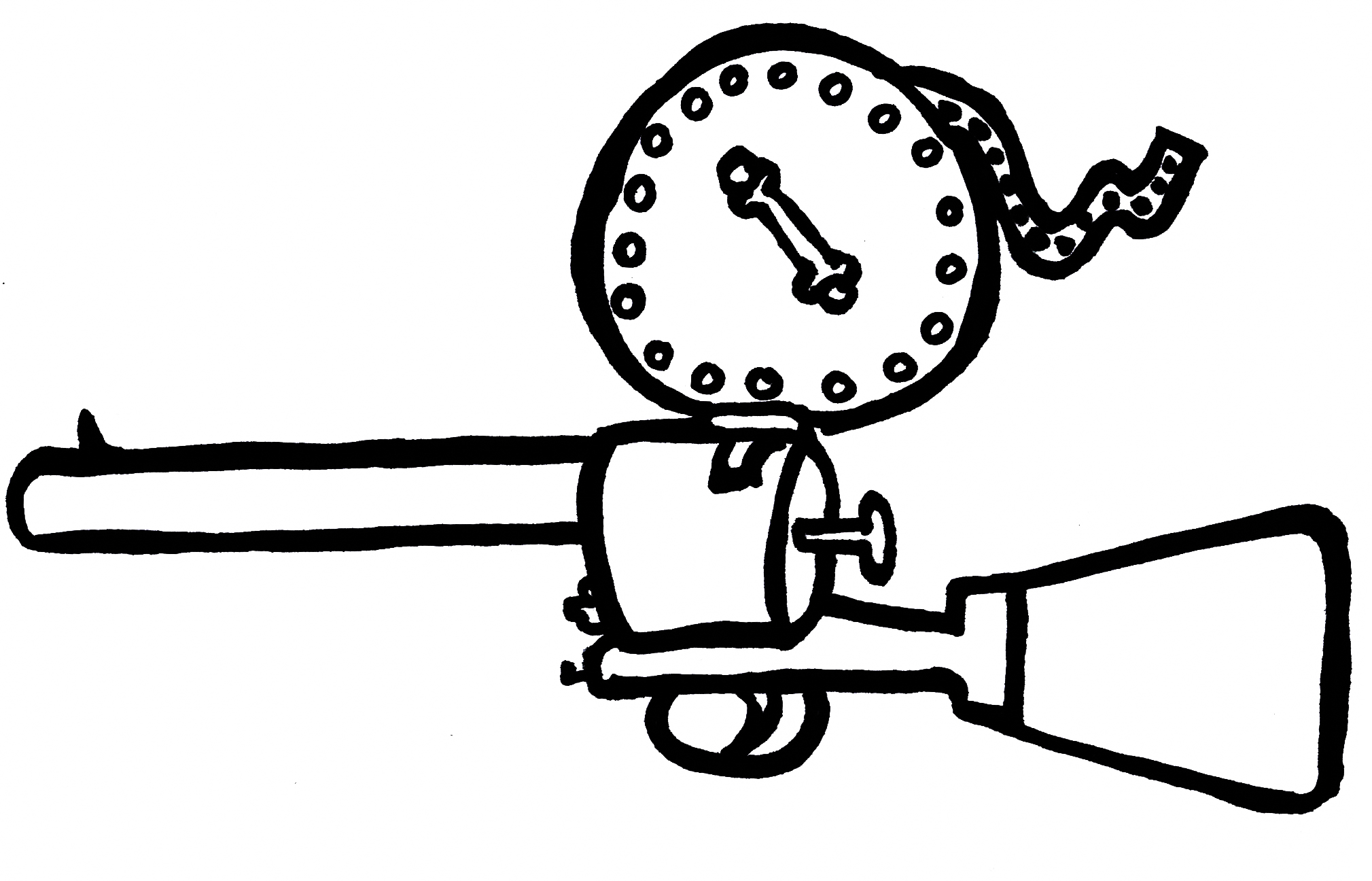
Where All Light, Everywhere excels is in connecting that modern weaponization of the motion picture camera back to its earliest uses & abuses. Early movie cameras were typified by designs like “the photographic rifle” and “the photographic revolver,” leaving behind a language where cameras still “shoot” their subjects. There’s a hypothetical version of this movie to be made where each new development in motion picture tech was used to further the art & distribution of pornography, but instead Anthony focuses on how they were used to afford the illusion of unbiased automation to morally bankrupt police & military systems. Police body cameras are just the next logical evolution in a long history of supposedly “objective” motion picture recordings reinforcing the biases of the inherently violent political institutions behind them.
If you’ve seen RatFilm, you know that Anthony does not lay out this political history of the weaponized movie camera in a linear, easily digestible argument. Instead, scientific explanations of the camera’s “blind spots”, the philosophy of its place in modern culture, its effect on human perception of the world, and the racial politics of Baltimore as a microcosm of the US at large are all loosely mixed in an open-ended visual essay that’s heavier on atmospheric dread than it is on declarative statements. Still, the movie leaves you disgusted with the motion picture as a medium, no matter how open its arguments are left for interpretation or how much Anthony strives to leave on a moment of hope in the epilogue. It turns out all movies really are bad. Bummer.