


-Brandon Ledet
-Brandon Ledet


As I’ve previously mentioned in recent reviews of The Night of the Juggler, Highest 2 Lowest, and every podcast topic I can shoehorn it into, I’ve been watching a lot of Law & Order lately. I had never seen a full episode of the criminal-justice procedural before this summer, and I’m now roughly 200 episodes deep into its original run, both facts to my shame. Part of the attraction in early seasons of the show is how pristine their current HD scans look on Hulu, especially in the initial stretch where most episodes were shot by all-star cinematographer Ernest Dickerson. Now that I’m halfway into the ninth season, that attention to visual craft has mostly faded, and I’m more addicted to the storytelling format than I am impressed by the imagery. So it goes. However, I have recently found, hidden in those Hulu uploads, a made-for-TV Law & Order movie that aired in November of 1998 and makes a conscious effort to return to the cinematic slickness of the show’s early style. The only problem with Exiled: A Law & Order Movie, really, is that it’s all law and no order, deviating from the show’s bifurcated format to only focus on the police work that leads to a suspect’s arrest, skipping over the courtroom litigation that follows. That choice undercuts the set-up, punchline rhythms that make the show so routinely satisfying, but I suppose movies have a lot more leeway to leave an audience hanging. As someone currently invested in the show’s season-to-season quality shifts, it was an illustrative reminder of how much the show has changed over its first decade on air, dialing the clock back to where it started in 1990. I can’t imagine it’s especially useful to anyone who’s not currently nursing a Law & Order addiction, though, since it just barely works as a by-the-numbers cop thriller without its connection to the show.
Exiled is first & foremost a vanity parade for actor (and credibly alleged sexual abuser) Chris Noth, likely intended to capitalize on his then-recent premiere as Mr. Big on the hit HBO Show Sex and the City. Noth even gets a partial “Story By” credit, indicating that he got to shape how his original-cast Law & Order character, Detective Mike Logan, would return for his two-hour victory lap. For those who haven’t seen or thought about Detective Mike Logan since the 1990s, I will remind you that his character left the show in disgrace after punching a homophobic politician in front of TV news cameras, finally letting his hothead temperament get away from him in front of the wrong people. The “exile” of the title refers to his reassignment after that incident, having been shipped off to work domestic calls on Staten Island instead of homicide cases in Manhattan. At the start of the movie, he recovers a drowned corpse in the bay between his old life and his new one, shrewdly deciding to angle for his old job back by claiming jurisdiction over a homicide that clearly belongs to the other side. From there, Logan immediately returns to his old ways. He whores around Manhattan, shamelessly hitting on both the victim’s twin sister and his new partner, while interrogating suspects in his old favorite strip joints up & down 42nd Street (the kind that only exist on broadcast television, where strippers conspicuously dance in their bras & panties instead of fully nude). Like all “very special episodes” of Law & Order, the investigation inevitably leads to the mafia and a major corruption scandal, except now the TV-movie budget can afford a couple car chases & shootouts that the show never splurges on. Because Logan isn’t slated to return to the main cast of the show (as he quickly becomes busy tormenting Carrie Bradshaw elsewhere in the city), the movie then has to return him to where he starts in this story: an ambitious hothead loser with a barely manageable sex addiction, eternally imprisoned on Staten Island. It digs him back up just to bury him all over again.
Exiled is most interesting as an outlier curio for longtime Law & Order fans, an extended side-quest episode packed with trivial tidbits. It’s the only entry in the Law & Order canon I can name that doesn’t feature the iconic theme song or gavel-bang sound effects. Dana Ekleson’s casting as Logan’s Staten Island partner marks the first female detective in the show’s main cast. Ice-T also makes his first appearance here, although in this instance he’s playing a pimp named Kingston, not his detective character from Law & Order: SVU. It’s also the last time Mike Logan appears in the main cast of the flagship show, only returning later in recurring cameos on Law & Order: Criminal Intent. Speaking of its infinite spin-off series, 1998 was the very last year that Law & Order remained a singular, standalone show and not a franchise brand. To that end, Noth’s return to the series here is a naked effort to tie together all the loose threads of the original show’s casts before they fray beyond repair. Hilariously, that move makes the movie double as both a vanity project for Noth and also a tearful goodbye to John Forie’s background player Detective Tony Profaci, who hangs around the first eight seasons of the show doing nothing in particular except handing reports to the characters who matter. If the name “Profaci” means nothing to you, then there’s nothing to see here, but I found it amusing to see him get the Main Player treatment in Exiled while fan favorites Jerry Orbach & Sam Waterston are relegated to his usual background role. Also, Dabney Coleman fills in the Special Guest Star slot to maintain some continuity in the show’s usual format, even if the courtroom drama half is skipped entirely. Exiled is a snapshot of where the Law & Order of old (1990) intersects with the Law & Order of “now” (1998), captured just before the show mutated into a new, unmanageable beast. Now that this is out of my system, I will do my best not to clutter up this movie blog with too many more dispatches from my series watch-through in the second half of the show’s run, but I can’t make any promises. I’m already in too deep.
-Brandon Ledet

Welcome to Episode #252 of The Swampflix Podcast. For this episode, Brandon, James, and Britnee test the murky waters of made-for-Tubi movies, starting with the star-packed cult horror Hellblazers (2022).
0:00 Welcome
02:27 Basket Case (1982)
04:36 Materialists (2025)
06:47 28 Years Later (2025)
08:18 Boys Go to Jupiter (2025)
10:14 Demon Pond (1979)
16:18 Hellblazers (2022)
38:16 Love and Penguins (2022)
53:02 Unborn (2022)
1:01:07 Match (2025)
You can stay up to date with our podcast through SoundCloud, Spotify, iTunes, TuneIn, or by following the links on this page.
– The Podcast Crew

In the lead up to the release of last year’s Wicked—which surprised no one by turning out to be an adaptation of only the first half of the hit Broadway musical inspired by Gregory Maguire’s revisionist novel of the same name—I saw a spectrum of positive to negative press from legitimate outlets and fawning praise from musical fans and Ariana Grande devotees. My thoughts were mostly positive, finding it a perfectly pleasant, if incomplete, story with passable-to-admirable performances. I didn’t understand then why people seemed so upset about the film’s visual stylings; it wasn’t perfect, but I went into that film expecting to hate it and came out pleasantly surprised. It didn’t end up on my end of the year list, however, despite my positive review; I had a good time, but it didn’t stick with me. As early as the days following the premiere of 2024’s Wicked, those most familiar with the Wicked musical cited that it infamously has a weaker second half than its first and that this downward momentum would not serve the second film well. Their foresight was mostly true. Early reviews of Wicked: For Good moved the needle in an even more negative direction, as those who came without the foreknowledge of the overall quality of the back half of stage production were underwhelmed by this concluding outing. The reception has been mixed at best, so I once again went into this film expecting that I wouldn’t have a very good time, but once again, I enjoyed myself. Not as thoroughly as last time, and I expect this one to stick with me even less, but less enchantment didn’t mean I wasn’t charmed at all.
The film picks up five years after Elphaba (Cynthia Erivo) oooh-wa-ah-ah-aaaaah’d off into the western sky. In the interim, her sister Nessarose (Marissa Bode) has taken over their late father’s position as governor of Munchkinland, with Munchkin Boq (Ethan Slater) as her primary attendant. The Wizard (Jeff Goldblum) is continuing his wholesale prosecution of the talking Animal community while winning the public relations war on two fronts: the impending completion of a major public works project, The Yellow Brick Road (which was built with enslaved Animal labor), and—via Madame Morrible (Michelle Yeoh)—a constant output of propaganda painting Elphaba as the terroristic “Wicked Witch of the West.” The opposite of wickedness is goodness, and to that end, Morrible and the Wizard have created a cult of personality around Galinda (Ariana Grande), who has now taken the name “Glinda” and accepted the title “the Good.” It’s so like a modern P.R. campaign that they even throw in a sudden celebrity marriage between Glinda and Prince Fiyero (official sexiest man alive Jonathan Bailey), who has been appointed to the Emerald City’s special “Gale Force” (get it?) tasked with taking down the Wicked Witch.
There’s a big love pentagon going on here. Nessarose is in love with Boq, who was encouraged by Glinda to show Nessarose attention and affection in their college days, and who is ready to move on but has been hesitant to do so because she’s still grieving her father (and Elphaba, in a different way). Boq is in love with Glinda and has been since they were all in school together, and learning of her impending wedding to Fiyero causes him to try and depart for the Emerald City, only for Nessarose to go full fascist and shut down Munchkinland’s borders to keep him from leaving her. Glinda, despite still being a bit of an airhead, is deep enough to know that the lack of happiness she feels despite public adoration and supposed romantic fulfillment means that it’s all hollow underneath; nevertheless, she genuinely loves Fiyero. For his part, Fiyero is taken aback by the sudden announcement of his wedding (no proposal was made by either party) and feigns positive feelings about this development, continuing to hide his pining for Elphaba. She feels that same love in return, but all she can see from her vantage is the Emerald City-propagated public image of him as a righteous crusader against the vile Wicked Witch.
These interpersonal relationships are more integral to the story than the supposed greater political situation, the subjugation of the sentient Animals, although there’s more here than in the stage musical. The film opens with an action sequence in which Elphaba disrupts the building of the yellow brick road by freeing the Animals being used as slave labor, and she later interacts with a group of animals who are fleeing Oz via a tunnel under the road, begging them not to give up. Later still, she discusses a truce with the Wizard, with her final demand being that he release the flying monkeys, to which he agrees, only for her to discover an entire second chamber full of abducted Animals in cages, including her goat professor from Shiz University. She releases the animals, which stampede through Glinda and Fiyero’s wedding, and then this subplot is mostly forgotten about as the film moves on to putting all the pieces on the board in the place that they need to be for the events of The Wonderful Wizard of Oz (the book) and perhaps more importantly The Wizard of Oz (the movie) to occur, getting only a moment of lip service in the conclusion as Glinda gives her big speech.
That table-setting is this film’s biggest hindrance, and why the back half of this story feels less organic and emotional than the first part. Nessarose has to decide to take advantage of the ancient spell book being open to try and use magic to make Boq stay with her, causing him to lose his heart. Elphaba has to try additional magic to save him, which means turning him into the Tin Woodsman, because eventually turning into the Tin Man is the only reason Boq is here in the first place. Madame Morrible wants to lure Elphaba out of hiding, so she sets out to hurt her sister. In order to do so, she creates the tornado that brings Dorothy’s house to Oz and crushes her in the street, because that’s where this story has always been going. The Cowardly Lion stuff is borderline irrelevant, other than his accusation that she was responsible for creating the winged monkeys rattling the Animals’ faith in her, but it’s here because that’s where this story has always been going. The most egregious is the fate of Fiyero. After holding his own ex-fiancee at gunpoint in order to get the Gale Force to release Elphaba, he doesn’t go with her, citing that it would be “too dangerous.” What? More dangerous than them dragging him off to torture him? Moments later, in “No Good Deed,” Elphaba sings that she presumes that they are in the process of beating him to death, if they haven’t already; I’m not really sure how that’s better than going on the run together? There’s absolutely no reason within this narrative for Fiyero not to run off with Elphaba in that very moment, but because we have to move the pieces into place for the story of The Wonderful Wizard of Oz to happen, he has to stay behind so that Elphaba’s concern for him can drive her to cast a spell that—surprise!—turns him into the Scarecrow we all know and love. It’s a necessary evil, but it doesn’t exactly flow the way that last year’s release does.
This film is also goofier than the first, and it feels like it comes from carelessness, except when it’s audaciously borrowing elements from the MGM film. Elphaba levitates her paraplegic sister by enchanting their late mother’s silver (as they were in the book) slippers, but her power makes them glow red so that Universal Pictures can skirt MGM’s copyright for Judy Garland’s ruby slippers. Two of the songs featured in the film are new to the adaptation; one of them is Ariana Grande as Glinda as Britney Spears in the “Lucky” video. I’m serious.
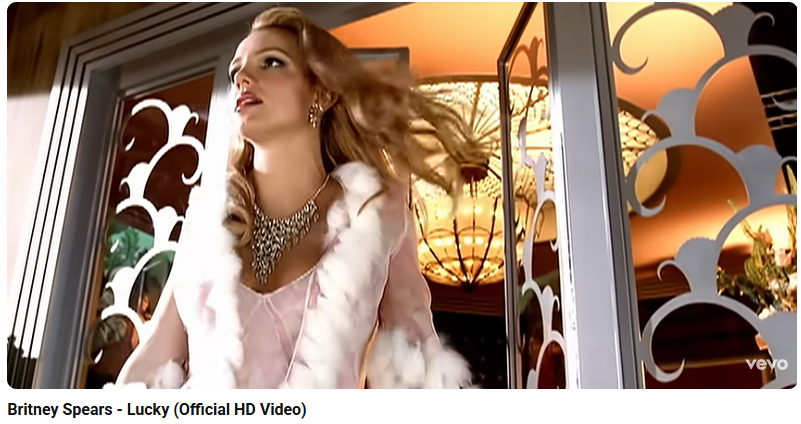

The second is a new song for Elphaba when she tries to inspire the Animals to stay and fight, and it’s called “No Place Like Home.” That’s trying too hard. It’s difficult not to notice since this film wraps up the narrative threads of everyone but the little girl whose fate is left unknown, given that Glinda is a witch with no magic (which is a miserable creature indeed) and can’t send her back to Kansas. Admittedly, this does lead to a funny background bit where the Wizard takes off in his balloon and leaves Dorothy behind, this viewpoint implying that he was running for his life before Glinda decides to turn his exile into imprisonment. About half of the laughs I had in the theater were clearly intentional on the film’s part; the other half … I’m not so sure. After Elphaba’s disruption of the road construction, the film’s title suddenly appears over an image of a government overseer fleeing through fields of flowers as tense, dramatic music plays, and it’s so jarring it feels like an intentional joke. When Elphaba confronts the Wizard for the first time in this film, he playfully bonks himself with a yellow brick, which he then demonstrates as being light and bouncy before tossing it away. Was that a bit that Goldblum did on set with a prop brick that they decided to keep in? It’s bizarre. At other times, I merely groaned as the film forced in references, or when we had to make a hard right in a given character’s storyline so that they can get railroaded on track for their respective stations of the canon.
I’m being pretty negative about a film that I had a pretty decent time watching, so it’s worth noting that there’s still a lot to enjoy, even if it’s rushed in some places and sluggish in others as it chugs toward its inevitable conclusion. Erivo’s pipes are still masterful, and the songs are sufficiently rousing even if they’re not as inspired as the last time we were all here. It has come, it will go, and by this time next year we’ll have mostly forgotten about it. Once its theatrical run is completed, the overwhelming tie-in advertising (Bowen Yang and Bronwyn James put in two brief appearances as their sycophant characters from the first film in order to justify their appearances in For Good-themed ads for Secret Clinical deodorant) will come to an end, and people will mostly remember the first film fondly, and this one little if at all. Don’t take it too seriously, have a good time, and perhaps see it late enough in the evening that there will be a minimal number of children in your audience (trust me).
-Mark “Boomer” Redmond

Excluding the AMC multiplexes out in the suburbs, the Zeitgeist outpost in Arabi, and the backroom microcinemas in-between, there are exactly two regularly operational cinema hubs in Orleans Parish: The Prytania and The Broad. Both of these cultural epicenters work hard to make full use of their relatively limited screen space, finding the right balance between the arthouse titles that keep their die-hard regulars hooked and the big-ticket Disney products that actually keep the lights on. The most noble service The Prytania and The Broad provide is making room for regular, weekly repertory programming in the schedule gaps between new releases. Not too long ago, the Sunday morning Classic Movies slot at The Prytania Uptown was the only reliable spot to catch older titles in a proper theater around here, but the New Orleans repertory scene has gradually bulked up in recent years. The Broad has a classic horror movie slot every Monday night through ScreamFest NOLA (who’ve recently screened classics like Ginger Snaps, Frankenhooker, and Day of the Dead), an arthouse repertory slot every Wednesday night via Gap Tooth Cinema (who’ve recently screened once-in-a-lifetime obscurities like The Idiots, Supervixens, and Adua and Her Friends), and frequent specialty screenings at their neighboring outdoor venue The Broadside. Meanwhile, Rene Brunet’s Classic Movie Series is still going strong at The Prytania (recent standout titles: The Conversation, Dial ‘M’ for Murder, and 13 Ghosts in Illusion-O), and they’ve recently collaborated with the folks at Overlook Film Fest to program classic horror titles as well (Frankenstein, The Exorcist, and Interview with the Vampire, among others, during this year’s in-house “Kill-O-Rama” festival). Between these two businesses’ four locations, you can also routinely find specialty one-off screenings & re-releases on the weekly schedules (recently, Battle Royale & Linda Linda Linda at The Prytania’s Canal Place theaters and Night of the Juggler & Leila and the Wolves at The Broad).
All in all, our local rep scene is still too small to compete with larger cities like Los Angeles, New York, Austin, Chicago, Toronto, and San Francisco, where audiences seemingly get to see an older “new-to-you” title projected on the big screen every day of the week. New Orleans rep screenings are out there, though, and they are easily accessible if you know where to look. As evidence that this scene exists, here are a few quick short-form reviews of the repertory screenings I happened to catch around the city over the past couple weeks, along with notes on where I found them. I’ve also recently started a Letterboxd list to track what classic titles we’ve been able to cover on Swampflix over the years thanks to this growing scene, which seems to have only gotten more robust since I last filed one of these reports in 2023.

The Asphalt Jungle (1950)
The original Uptown location of The Prytania is still the most consistent local venue for seeing repertory titles on the big screen, as it has been for as long as I can remember. The only catch is that their Classic Movies program is almost entirely restricted to Hollywood productions, the kinds of titles you expect to see on TCM’s weekly broadcast schedule. As limited in range as that may sound, it’s an excellent resource for catching up with the works of luminary greats like Kubrick, Welles, and Hitchcock that you might’ve missed (especially Hitchcock, their house-favorite auteur), big & loud in an environment where you’re unlikely to get distracted by your phone. To that end, I recently saw John Huston’s foundational diamond-heist thriller The Asphalt Jungle for the first time as part of that series, after having previously seen Huston’s foundational noir The Maltese Falcon there several years earlier. Within the heist-thriller genre, there’s nothing especially surprising about The Asphalt Jungle‘s scene-to-scene plot beats, as it is an immeasurably influential work that helped establish that genre’s basic story structure in the first place. Where it does manage to surprise is in the little details of the character quirks, as it gradually becomes a story about the unlikely friendship between the elderly mastermind and the young hooligan muscle at opposite ends of the criminal hierarchy, both of whom are equally doomed. The framing compositions are also top-notch; that John Huston kid is a name to watch, I tell you what.
It would be disingenuous to call The Asphalt Jungle a hangout film, as there is plenty of urgent thriller tension in its textbook bank heist plot. The four factions vying for victory are clearly defined: the heist crew hastily assembled by a recently-paroled criminal mastermind (Sam Jaffe), the crooked lawyer who intends to steal away that crew’s loot for himself (Louis Calhern), the corrupt cop who pretends to be on their case while taking bribes beneath the table (Barry Kelley), and the by-the-books police commissioner who still believes in the nobility of obeying the law (John McIntire). The cops’ involvement in the diamond-heist fallout is mostly present as a background inevitability, something that makes the crooked lawyer sweat as he schemes to rip off his own accomplices. The real heart of the story is in the way the bank robbers pass their time between the heist and getting caught, recalling the crime-thriller hangouts of Quentin Tarantino’s oeuvre. There’s something sweet in the simple, pleasure-seeking worldviews of the mastermind and the hothead muscle (Sterling Hayden) in particular — one of whom meets his end while taking the time to watch a teen girl dance to a roadside diner jukebox and the other meeting his own end while indulging in homesick nostalgia, feebly returning to his family farm while he slowly bleeds to death from a gunshot wound. A baby-faced Marilyn Monroe also makes a huge impression in the couple scenes afforded to her as the crooked lawyer’s age-gap mistress, exclaiming “Yipe!” whenever she gets excited, and referring to her much older lover by pet names like “Uncle” and “Banana Head.” The editing rhythms of The Asphalt Jungle are not especially hurried or thrilling, but Huston arranges his performers in the Academy-ratio frame with consistently adept blocking, and he constantly feeds them all-timer lines of dialogue like, “Experience has taught me never to trust a policeman. Just when you think one’s all right, he turns legit.” It’s a great mood to sit in, especially once its noir-archetype characters start making unlikely friends & foes in the hours after the plot-catalyst heist.

Black Narcissus (1947)
Curiously, my most recent dip into the Gap Tooth Cinema program at The Broad was also a classic title you could expect to catch in TCM’s broadcast line-up, whereas the series is generally more unique for its “Where else would you ever see this?” selections (On the Silver Globe, Entertaining Mr. Sloane, Coonskin, etc.). 1947’s Black Narcissus is as core of a text to nuns-in-crisis cinema as The Asphalt Jungle is to bank heist thrillers. If it’s not the most often seen & referenced convent drama, that’s only because The Sound of Music has a more iconic sing-a-long soundtrack, whereas most of the sound design in Black Narcissus is overpowered by howling, ominous winds. It was hearing those winds in immersive theatrical surround sound that made this first-time watch so memorably intense for me, though, whereas Powell & Pressburger’s follow-up ballet industry melodrama The Red Shoes is more striking for its three-strip Technicolor fantasia. While there are flashes of Technicolor brilliance throughout Black Narcissus, the combination of its doomed nuns’ white habits & skin is so uniformly pale the film often registers as monochrome. It’s the constant roar of the cold winds that gradually break those nuns’ minds along with the audience’s, eventually triggering the passionate, color-saturated violence of the third act. I know it’s gauche to describe anything as “Lynchian” these days, but those howling winds are maddening in a distinctly Lynchian way, and it turns out the production was filmed the same year Lynch himself was born. Coincidence? I think not.
The sinful evil those winds summon is mostly the seduction of nostalgia & memory. Deborah Kerr stars as a remarkably young Mother Superior who’s assigned to start a new convent in a former cliffside harem in the Himalayas, offering medicine and education to the Indian locals who don’t need or want the nuns’ presence. The isolation of the newly repurposed “house of women” on that mountaintop weighs on the sisters who are assigned there, as the ominous winds and dizzying altitude invite their minds to drift to memories from before they took their holy vows. Since it’s a British studio picture made in the 1940s, the nuns never express the transgression directly, but they specifically start to doubt their commitment to Christ because they’ve become desperately horny & lonely, to the point of madness. The burly presence of a blowhard macho handyman onsite is especially tempting for the women, and their repressed desire for him explodes into expressionistically violent acts that can only lead to death, never actual sex. It’s in those climactic violent acts that Black Narcissus most directly recalls the dark fantasy gestures of The Red Shoes, especially in the sisters’ extreme, wild-eyed close-ups. The winds that push them towards the matte-painting cliffsides outside the convent are much more consistently surreal throughout, however, recalling much later, freer works like David Lynch’s Twin Peaks: The Return or Hiroshi Teshigahara’s Woman in the Dunes.

Mr. Melvin (1989, 2025)
While The Prytania’s Classic Movies and The Broad’s Gap Tooth series are dependable workhorse repertory programs, you have to walk next door from The Broad to their outdoor sister venue The Broadside to catch the more extravagant specialty screenings. For instance, it’s where I caught Lamberto Bava’s classic Italo meta-horror Demons with a live score from Goblin’s Claudio Simonetti and, more recently, it’s where I caught the new remix of The Toxic Avenger Parts II & III (1989), now Frankensteined together and retitled as Mr. Melvin (2025). That Mr. Melvin screening was supposed to be accompanied with a Lloyd Kaufman meet & greet, but the recently injured Kaufman couldn’t travel so he appeared only via video message, sending Troma regular Lisa Gaye to act as his brand ambassador instead. The movie was also accompanied with an opening punk rock set from The Pallbearers, making for a much rowdier setting than is typical for movie-nerd rep screenings around the city. The general party atmosphere at The Broadside can be distracting if you’ve never seen the film they’re screening before (I remember being especially distracted by the circus-act antics of Gap Tooth’s showing of Carny there), but it’s perfect for celebrating a VHS-era classic that you’re used to watching alone at home. The timing of this Mr. Melvin cut was personally serendipitous for me, then, as I had just watched every Toxic Avenger film for a podcast episode the previous month.
Since I had already exorcised all my demonic opinions about Toxie’s big-screen journey so recently on the podcast, I don’t have much new to say about Mr. Melvin except in pinpointing where it ranks among other titles in the series. Objectively, the best Toxic Avenger film is likely either the bad-taste original from 1984 or Macon Blair’s punching-up revision that was also released this year, and yet I can’t help but admire Mr. Melvin as a completionist’s timesaver. It’s all the best parts of the official Toxie sequels (the Japanese travelogue from Toxic Avenger II, the Toxie-goes-yuppie satire of Toxic Avenger III, not a single frame from Toxic Avenger IV) with at least 70 minutes of time-wasting junk erased from the public record. Mathematically speaking, it’s the most efficiently entertaining Toxic Avenger film to date, which technically qualifies it as public service — something to be considered by Lloyd Kaufman’s parole board. And since the original, in-tact sequels were rotting so close to the forefront of my mind, I was able to step away during the screening to grab another beer without missing anything, which is essential to appreciating any Troma release. You go to The Prytania to watch Old Hollywood classics in a historic setting, sipping morning coffee to the vintage Looney Tunes shorts that precede the feature. You go to Gap Tooth screenings at The Broad to challenge yourself with some daringly curated arthouse obscurities, chatting with friends afterwards to parse through complex feelings & ideas. In contrast, the repertory programming next door at The Broadside is for pounding beers and whooping along to a personal fav you’ve already seen a couple dozen times with likeminded freaks. Plan your repertory outings accordingly.
-Brandon Ledet


I’ve been living in Austin for over a decade now, and there’s still a goodly number of famous locals that I have yet to encounter or even learn about. Most recently, some friends hosted a backyard cookout/projector movie night at their home in East Austin, as they had acquired a VHS copy of the locally-produced 2022 comedy Erica’s First Holy Sh!t, starring “Very Famous [Austin Specific] Fitness Guru” Erica Nix. I was fairly certain that night that I had never heard of Erica Nix before, but the very next morning I went to the same local coffee shop where I had hosted my recent Halloween film screenings and there on the bar was a flyer for one of her workout classes:

This past weekend was also the second weekend of the Austin Art Crawl/Studio Tour, and I asked some friends that I ran into at Canopy Studios if they had ever heard of her; some had, some hadn’t, and one had made out with her once. It also turns out that she’s participated in some of the same Austin Public TV sketch stuff that I occasionally do (although we’ve never worked in a scene together), so maybe the problem is just that I don’t pay enough attention. Upon further reflection, I did remember her brief run for Austin mayor, which features as a plot point in Holy Sh!t, but didn’t connect her name to the one that I recalled from reading that story in the newspaper years ago. Regardless, Erica’s First Holy Sh!t is a stunning piece of art for someone whose extreme fame is so geographically fixed.
In the midst of the pandemic lockdown, Erica Nix hosts a queer virtual orgy of mostly witches before settling in for some self care via a long soak with a Lush beauty mask. Realizing that the mask contains molly, meth, and more, she flashes back to purchasing the goop in the days leading up to the lockdown, then goes on a psychedelic journey that takes her to her childhood bedroom to interrupt her pubescent self (P1Nkstar)’s pillow-humping session, a Zoom call with God (Nikki DaVaughn), an erotic encounter with Mother Nature (Christeene), a quick sidebar with Satan herself (Andie Flores) while exploring the inside of Mother Nature’s anus like Lemmiwinks, and a wellness session with Gwyneth Paltrow (Lynn Metcalf) in which Erica learns to forgive herself. She also runs the gauntlet of several of her personal issues, American Gladiators style, facing off against personifications of her nemeses/weaknesses: Olestra, Xanax, Prolapse, and Buzzfeed, all of it hosted by the Effie Trinket-esque Edie Teflon and her co-host, Problematic.
It’s all great fun, but it’s also one of those films that’s a deeply revelatory exploration of its creator’s soul. Erica bares it all—literally and figuratively—many times. Some of the things that she’s concerned about are so specific that they transcend the personal and become universal; one standout is a scene during one of the gauntlet challenges where Erica has to vibrate herself to climax while ignoring increasingly mounting concerns, and another is the fact that she’s supposed to be feeding a friend’s cat but she suddenly can’t remember the last time she checked in on the pet. It’s a small thing, but in microcosm represents so much about the tendency to prioritize self care, which is something that Erica tackles over and over again throughout the movie. There’s also a great bit where Erica has her Zoom call with God, represented here by a Black actress, who chides Erica for calling her real-life counterpart (each of the people Erica encounters were also part of her Zoom orgy at the beginning, to ensure we get one last Oz allusion in at the end with the “And you were there, and you were there . . .” scene) after the death of George Floyd, as if her Black friend was now going to be somehow responsible for helping Erica navigate the social and political situations that were to follow. This is followed up on again later, when Erica has to face off against one of the Gladiators, who is shooting lasers at her as she navigates a literalized obstacle course of allyship, activism, and insecurities about being perceived as being merely performative. It’s self-reflective without being too self-forgiving, and it makes for an interesting film.
This is also a production that clearly managed to navigate COVID restrictions and still create something special. Aside from the big outdoor dance number at the end, I’m hard pressed to think of many scenes in which two actors are physically in the same space; there’s Erica and her younger self, the two hosts of the American Gladiators spoof are together in the same room, and the outdoor sequence in which Erica meets Gwyneth Paltrow and learns to forgive herself for her flaws. Almost everything else is green screened and edited together into shot/reverse-shot compositions, but it’s pretty seamless. Speaking of, Metcalf’s performance as Paltrow is alongside DaVaughn’s as God, Flores’s as Satan, and Christeene’s as Mother Nature as one of the best in the film; she doesn’t even superficially resemble the GOOP “guru,” but her vocal impersonation is spot on. It’s quite good.
I would recommend this film pretty highly, and although it’s not streaming for free anywhere, you can find it for rent on Vimeo here. Or, if you’re local to Austin, you can always rent a VHS copy from WeLuvVideo on North Loop Blvd, presuming you’ve got a membership of sufficient tenure. It won’t be for everyone, but if it’s for you, you know who you are.
-Mark “Boomer” Redmond


It’s strange that we got two different films this year that were based on Stephen King novels that he originally published under his pseudonym of “Richard Bachman,” with The Running Man premiering just a few short months after The Long Walk. I haven’t seen the 1987 adaptation of Running Man since I was a kid, but I remember skimming the original text once in my adolescent years and not seeing many similarities, and reading that the earlier film had largely taken only a few concepts from the novel and changed much of the meat of it. Edgar Wright’s new film, based on a cursory examination of the text’s summaries online, hews closer to it, with a few modernizations to account for changing technology, as Bachman/King’s original, despite being set in 2025, couldn’t have foreseen the ways that we’d build our own dystopia. What struck me about this is that although The Long Walk was written when King was a student in the 1960s and was published in 1979, both that narrative and this one focus on a man driven to participate in a widely broadcast, necropolitical bread and circuses-style contest that ends in either death or functionally endless wealth. For The Long Walk, it’s clear that King drew inspiration from the seemingly endless Vietnam War, the first war to be televised. (As a side note, the Latin for “bread and circuses” is panem et circenses, with the Long Walk-inspired Hunger Games taking the word “panem” as the name of the nation in which it takes place.) The origin of what inspired The Running Man is less clear.
Regardless, this made me curious about whether, consciously or unconsciously, King shunted the works in which he expressed rage against an unfair and unjust system into his Bachman-credited works while keeping his King brand spooky (as of the 1977 publication of the first Bachman novel, aptly titled Rage, King had published Carrie, ‘Salem’s Lot, and The Shining). Rage, which has nothing to do with The Rage: Carrie 2, has become semi-notorious since publication, as to the rise of school shootings in the decades since its publication has haunted King, who removed the book from publication after it became associated with some actual acts of violence. In that novel, main character Charlie Decker retrieves a pistol from his locker after being expelled and goes on a rampage, but he does so with no real ideology and the only clues we get to his reasoning are flashbacks to his abusive childhood.
That’s not quite in the same wheelhouse as Running Man or The Long Walk, but the latter two do share similarities to the 1981 Bachman novel Roadwork, which could best be synopsized as “Charlotte Hollis does a Falling Down.” Roadwork features a man named Dawes whose sentimental attachment to the industrial laundry where he is employed and the house in which he raised his deceased son Charlie leads him on a campaign against the expansion of a highway that will result in both being demolished. He eventually finds himself in a standoff with the police before he detonates the house himself while inside of it, and the epilogue confirms that the highway extension project had only been approved so that the city could build the minimum number of miles to secure future federal funding. Roadwork was a contemporary novel, so it lacked the speculative fiction future setting of the dystopias of The Long Walk or Running Man, but despite a more realistic setting, the protagonist is still a person who, like the boys in the former and the running men in the latter, finds himself forced by an inhumanly callous and bureaucratic system into a path from which there seems to be no escape. It lacks the “being broadcast to the masses” element, but it is replaced by the fact that the piece is bookended by excerpts from a journalist who interviews Dawes both before and during his rampage.
With that frustration with (and ultimate defiance of) the system being a foundational element of most of the Bachman-credited works, and with the globalization of virtual omnipresence of social media creating a world in which most people have willingly submitted themselves to an online surveillance state, it’s not surprising that we would get a Running Man remake (or re-adaptation). And, if you’re going to do it, I can hardly think of a better person to play protagonist Ben Richards than Glen Powell, who has the handsome face and toned body to please a ravenous viewing audience, both those watching the film and the TV—or rather “FreeVee”—show within it. Edgar Wright has made some of my favorite little oddballs over the years; I was a huge fan of his Sean Pegg/Nick Frost/Jessica Hynes-nee-Stephenson TV series Spaced as well as Shawn of the Dead, Hot Fuzz, and his Scott Pilgrim adaptation, and even if I was lukewarm on The World’s End and never saw Baby Driver, I was more fond of Last Night in Soho than most. The early reactions to Running Man, many of which expressed frustration with Wright and recommending he re-team with Pegg and Frost, had me worried, but I ultimately had a pretty good time with it. While catching up about recent releases we had seen in the top half of our recent podcast episode, Brandon and I talked about our different reactions to Predator: Badlands, and aligned on the fact that it was the perfect movie for a mid-afternoon beer at an action flick; this is exactly the same experience.
Ben Richards (Powell) is a laborer who has been blacklisted from virtually every job because of “insubordination” like telling a union rep about radiation leakage; that one megacorporation has a monopoly on virtually all industry doesn’t help. When his wife Sheila (Jayme Lawson) is planning to hit a third shift at the seedy nightclub where she waitresses so that they can try to get medicine for their ill infant daughter, Ben instead heads off to audition for one of the many game shows that are presented on the megacorp’s FreeVee service. He promises that he’s not foolish enough to try and get on The Running Man, a show in which the contestants must try to stay alive for thirty days while staying ahead of the elite five person “Hunter” team led by the mysterious masked McCone (Lee Pace), the omnipresent “goons” (the corp’s privatized police which have replaced all other law enforcement in the U.S.), and all private citizens, who are incentivized to record and report the Runners with cash prizes. He ends up not having a choice, as he gets slotted to The Running Man after various physical and psychological tests, and he’s talked into accepting the signing bonus that will get baby Cathy in to see a doctor by network exec Dan Killian (Josh Brolin). Killian tells Ben that he thinks he has what it takes to go the distance, and even as he tries to endear himself to Ben by admitting that he says that to all the players but “this time [he] really mean[s] it,” Ben sees right through him, promising that he’ll destroy him in the end. Killian directs him to amp up his rage issues for the camera, and then Ben and the other runners, Laughlin (Katy O’Brian) and Jansky, are introduced to the in-studio and at home audiences by host Bobby T (Colman Domingo), where they’re painted as thieves, welfare parasites, and malcontents, to the jeers and boos of the frothing populace.
The rules are simple. Viewers at home can record and submit footage of the Runners via an app, and they get cash payouts both for confirmed sightings and if their contribution helps “eliminate” the Runner; Runners have to stay alive and on-the-run while recording a ten-minute tape per day and then mailing it in, supposedly anonymously. After a near miss with the Hunters while staying at a similar-to-but-legally-distinct-from YMCA, Richards meets Bradley (Daniel Ezra), a rebel who takes him in as part of the underground resistance and whose online presence as an anonymous exposer of the secrets of the broadcasts means he can provide all the exposition that Ben needs. He helps secret Ben to Elton Parrakis (Michael Cera), another rebel who plans to get Ben to an underground bunker after pre-recording his tapes so that he can lie low, and whose house is booby-trapped to the gills. Ben attempts to get more information out about the real activities of the megacorp, but his tapes are edited before broadcast to show him confessing to having enjoyed killing the goons sent after him and that he literally eats puppies. The longer he stays alive, however, the more the in-universe audience transitions from believing the villainous image that the show paints him as to finding him a bit of a folk hero.
Before Bachman was outed as King, some contemporary critics compared the “two” writers’ work and usually found that although their styles were very similar, Bachman’s endings tended to be more bleak than King’s, which were often dark but ended on an optimistic tone. I’m not sure I really agree; Carrie ends grimly, as does ‘Salem’s Lot, but this apparent discrepancy was highlighted specifically by Steve Brown, the bookstore clerk credited with cracking the case that Bachman and King were the same person, so there must be some merit in that analysis. The recent adaptation of The Long Walk makes minor changes to the ending (mostly regarding who wins) but retains that work’s dark tone. Wright’s reimagining of the finale of King’s Running Man rejects the original climax, in which Ben crashes a stolen jet into the megacorp network building, in favor of having Ben escape the plane’s destruction prior to the plane being destroyed by the megacorp’s missiles so that he can become the figurehead of a revolution. I’m not terribly concerned with textual fidelity, all things considered, but it’s worth noting that all of the Bachman texts have downer endings. Charlie is killed by the police at the climax of Rage, the winner of the titular Long Walk runs toward a specter of death on the other side of the finish line, Dawes blows himself up in Roadwork, and Ben Richards of the novel is a martyr (at best), not a revolutionary. Even the latter works that were published after Bachman’s true identity was exposed, Thinner and Blaze, end with their protagonists losing weight to death and being shot to death by the police, respectively. It does feel like The Running Man, in either prose or film form, shouldn’t really have a happy ending; it could have had a merely poignant one. Instead, this one ends in such a way that although it is a complete story in and of itself, it’s deliberately open-ended enough that it leaves the door open for a sequel that it should not have.
Politically, the film is kind of shallow. Ben Richards is a man with a short fuse, and his driving need is to provide for his family. He is a man with a motivation but without an ideology, and although he takes up arms against the system, one never buys that his personal vendetta against Killian transcends the personal into the revolutionary. We never learn what becomes of Ben’s wife and child in the novel, and that kind of ambiguity makes for a more interesting text, giving you something to mull over, while the film explicitly shows him reuniting with his wife after “winning” the game, after a fashion. There are the occasional very minor references to our contemporary real world and its problems. The only broadcast FreeVee that seems to exist consists entirely of game shows and a Kardashians spoof called The Americanos, which reflects a lot of the current media landscape, and there’s one piece of graffiti that reads “A[ll] G[oons] A[re] B[ad],” but no one is going to go into this film and see themselves in any of the characters with negative traits. That’s not something that every film needs to have, but when one is making a satire, which this film purports (and occasionally manages) to be, if there’s nothing that challenges the viewer to recognize himself in the brain-rotted masses who cheer for the death of an innocent man because of manipulation tactics, then what are we doing here? When the film does hit, it does so in the way that the audience is manipulated. In one particularly noteworthy scene, the mouthpiece of a show that gives Richards a bonus for the death of a goon brings all of the children of the dead men on stage for a candlelight vigil. It’s good stuff, and it’s in these moments that the film manages to show a little of the edge that it’s reaching for but failing to grasp.
It sounds like I’m really down on this film, and that’s not really the case. I had a good time, and this was a well-paced action thriller with a likable leading man and some side characters who, if they can’t be fully fleshed-out, can at least be quirky. Glen Powell’s selling some tickets based on his towel-clad hostel escape alone, I can assure you. ‘Tis the season of heavy, heady prestige dramas like If I Had Legs I’d Kick You, After the Hunt, Die My Love, and still more in the days ahead, and sometimes it’s nice to have something that’s pretty to look at and decently constructed, even if it’s a little empty, just to break things up a little.
-Mark “Boomer” Redmond

“It’s been the end of the world for a long time.”
How do we continue to seek & experience pleasure while the world is actively ending all around us? I have no idea if that question was on director Oliver Laxe’s while he was making the new apocalyptic rave-scene drama Sirāt, but it was certainly on mine while watching it. In fact, it’s getting increasingly difficult to think about anything else these days, when simple, for their-own-sake pleasures are feeling less attainable and more amoral by the minute. The transient partiers of Sirāt have to selectively tune out constant news reportage about the start of World War III in order to enjoy their daily travels & pleasure hunts, stubbornly continuing their journey to the next big party on the horizon despite what the audience can only assume is an impending nuclear holocaust. From a distance, it may seem excessively selfish or hedonistic for them to continue raving on while the world is ending just outside their periphery, but it’s also difficult to imagine what a small crew of recreational drug users & dance music enthusiasts could possibly do to stop that apocalyptic momentum anyway, even if they were more politically engaged with the world outside their vans. The only two options they have, really, are to either helplessly fret their final hours away or to fill those hours with as many small, for-their-own sake pleasures as they can manage. In the immortal words of Andrew W.K., “When it’s time to party [i.e, to distract ourselves from impending doom and the ever-present desire to cry until we puke], we will always party hard.” Words to live by, I guess.
I do not want to imply that Sirāt‘s entire cast of characters is evaporated into a mushroom cloud at the story’s climax. WWIII is more of a background hum beneath their constant soundtrack of techno beats than it is a direct threat on their lives. If they are in any mortal danger, it’s due to their personal choices, not global circumstances. The film opens in the vastness of the Moroccan desert, with unnamed party promoters erecting enormous speaker towers in the sand like Kubrick’s monolith. When thunderous bass starts pumping through those speakers, a crowd of ravers materialize to party the hours away, dancing up a dust cloud to a nonstop techno track. The only interlopers among them are a middle aged, working-class dad (Sergi López) and his young son, who pass out “Missing Person” flyers in an attempt to track down a member of their family who hasn’t returned home in a half-year’s time. When military troops breaks up the party, the out-of-place father & son duo decide to follow the biggest risk-taker ravers to a second rave even deeper in the desert, risking their lives for the possibility of staging a family reunion. Meanwhile, the more hardcore ravers are risking their lives for the pure thrill of the risk. As the makeshift convoy journeys towards the Promised Land rave deeper in the desert, the film starts hitting thriller genre beats more reminiscent of a Sorcerer or a Fury Road than the small character drama beats it hits in the opening stretch. Shit gets real. People get hurt. And yet, their lives still feel small & inconsequential within the context of the larger global catastrophe being set in motion just outside the frame.
Despite the lethal stakes of Sirāt‘s scene-to-scene drama and apocalyptic setting, the movie can be oddly sweet. It’s a character drama at heart, one populated by real, believable people with real-life faces of interest — as opposed to the perfectly sculpted plastic faces of its Hollywood studio equivalents. The European ravers each speak multiple languages; they gradually assimilate the misguided father & son into their own found family; and they wax poetic about the simple joys of taking drugs to techno music, explaining to the befuddled, “It’s not for listening; it’s for dancing.” The fact that tragic things happen to them on the road (and that their world is doomed regardless) is an inevitability beyond their control. All they can do is party in the present and hope to survive long enough to party again in the future, often with open disdain for reminiscing about the past. The up-close details of their lifestyle are entirely alien to me, as I neither take the right drugs nor listen to the right music to fit into the raver scene they inhabit. Their collective impulse to seek small sensory pleasures in a world that’s actively collapsing around them should resonate with anyone who’s had the misfortune of being alive & aware this century, though, regardless of the futility in their pursuit. Not for nothing, their search for the next big party in the Moroccan wilderness is also strangely reminiscent of how I dream, when my unconscious mind is constantly sorting through a chaotic assemblage of fictional, self-generated obstacles while I’m trying to make my way to a dreamworld concert, party, or film screening that doesn’t actually exist.
-Brandon Ledet

For this lagniappe episode of The Swampflix Podcast, Boomer & Brandon discuss two different films that share the same title and director: Alfred Hitchcock’s The Man Who Knew Too Much (1934) and its loose remake The Man Who Knew Too Much (1956).
00:00 The Soup
02:50 KPop Demon Hunters (2025)
8:02 The Blue Gardenia (1953)
13:25 Erica’s First Holy Sh!t (2022)
20:06 Cloud (2025)
26:40 The Mastermind (2025)
30:54 Eephus (2025)
37:00 Frankenstein (2025)
44:47 Predator – Badlands (2025)
52:32 Keeper (2025)
1:04:36 Materialists (2025)
1:10:15 Die My Love (2025)
1:14:12 Reflections in a Dead Diamond (2025)
1:17:48 Mr. Melvin (2025)
1:22:12 Sirāt (2025)
1:26:37 Twinless (2025)
1:33:00 The Man Who Knew Too Much (1934, 1956)
You can stay up to date with our podcast through SoundCloud, Spotify, iTunes, TuneIn, or by following the links on this page.
– The Lagniappe Podcast Crew

Osgood Perkins has become a contentious figure of late, as he’s really only become a figure of theatrical release interest in recent years. His first directorial features, The Blackcoat’s Daughter & I Am the Pretty Thing That Lives in the House, premiered after their festival screenings to streaming on DirecTV and Netflix respectively (although Blackcoat’s Daughter got a limited theatrical release after its streaming premiere, presumably for award nomination qualification purposes). Gretel & Hansel got dumped into theaters in the January wastelands and was on streaming within nine weeks. Then came Longlegs, which was boosted by a far-reaching and powerful advertising campaign that none of his previous work had. Longlegs garnered a fair amount of praise and attention, but with the greater visibility that a wider audience provided also came backlash from viewers who didn’t connect with (or outright rejected) his nontraditional narrative & stylistic choices and eccentricities. I loved Longlegs, but I really didn’t care for The Monkey, and for at least some portion of the general movie-going public, those two movies constitute the entirety of Perkins’s body of work because that’s all that’s gotten any widespread attention. Although out of Perkins’s catalog this one is most similar to Gretel & Hansel—a film that I was fairly lukewarm about—Keeper managed to work for me, although I don’t expect it to win back over anyone who’s already disinterested in his work.
Liz (Tatiana Maslany!), after a lifetime as a “subway dwelling city-rat” for whom a relationship that lasts a whole year is a record, is taking an anniversary trip to the countryside cabin of her beau, Dr. Malcolm Westbridge (Rossif Sutherland). It’s a beautiful, secluded place, and although she seems happy to be going on the trip when talking about it with her friend Maggie, the vibes aren’t all that she had hoped they would be once they get there. There’s not a door in the place other than the one to the bathroom, and it’s all giant windows with no blinds or shades, so although there are gorgeous views of verdant forest available from every vantage point, Liz feels exposed. As Malcolm hangs one of Liz’s paintings in the house, she discovers a cake that was supposedly left behind by the property caretaker, the box containing it having smudged in a way that renders it off-putting. Their peaceful, serene dinner is interrupted by Malcolm’s cousin Darren (Kett Turton), who lives in the neighboring “cabin,” and his date for the weekend, a model named Minka (Eden Weiss) he claims doesn’t speak English, although when she and Liz are alone, she ominously tells Liz that the cake “tastes like shit.”
Strange things are already afoot. While taking a relaxing bath, Liz begins to have visions of women in period dress from across a couple of centuries, as if they are spirits of the dead come to warn her away from the house. Behind her and out of her sight, something unseen mimics her by drawing a heart in the condensation on the window, as she had mere hours before. In the night, she finds herself drawn to the remainder of the suspicious cake and finishes the whole thing, despite finding what appear to be bloody fingers inside of it, and she is drawn to the nearby babbling brook, where she finds a locket that she begins wearing. There’s something about the way that Malcolm hangs her painting that, intentional or not, signaled a kind of “My Last Duchess” element, which felt like it was being borne out by the Bluebeard-y vibes that Malcolm puts out, especially when he leaves her alone in the house, but we also witness (even if we do not clearly see) Minka meet her death outside in the woods at the hands of an unseen force that doesn’t appear to have any human attributes at all. Liz begins to lose time, waking up with her clothes on backwards despite being alone in the house while Malcolm is supposedly attending to his medical practice back in the city (lending further circumstantial evidence to Maggie’s belief that Liz, despite her protests to the contrary, is being used as Malcolm’s unwitting mistress). But is he? Whatever is happening to Liz is clearly outside of the realm of natural and the real, and the unflattering portrait we get of Darren makes it clear that he may be a real scumbag, but he’s definitely human, and so must Malcolm presumably be. What is happening in these woods?
Perkins’s work is overwhelmingly fabular, whether he’s adapting an actual fairy tale, as he did with Gretel, or when he’s telling a story that merely has those overtones of spooky campfire stories, or of the pre-sanitization, pre-Disneyfication of older, darker folk stories. That’s what The Blackcoat’s Daughter feels most like to me, a kind of warped “Cinderella” with the all girls boarding school where our first main character is bullied by upperclassmen instead of wicked stepsisters, until she is visited by the darkest version of a fairy godmother one could imagine, with tragic consequences. Setting Longlegs in the 1990s does some of the work that an opening line of, “Once upon a time …” would bring, and the fact that one of the narrative threads revolves around a woman promising her firstborn to an intercessor for spiritual evil bears similarities to several fairy tales. One could even imagine it as a postmodernist take on “What if Rumplestiltskin never really went away?” in the vein of reimaginings like the ones found in the Kate Bernheimer-edited My Mother She Killed Me, My Father He Ate Me anthology. Ultimately, Keeper is “Bluebeard;” even if Malcolm never warns Liz not to go looking in the basement, we do learn that, if she had, she would have found evidence that she was not the first “keeper” he had brought home, even if her ultimate fate would have been unchanged.
A couple things of note … We can add Tatiana Maslany to the list of performers in dual roles this year that was first mentioned in our Predator: Badlands review, as one of the women in her visions is an 18th Century witch who looked exactly like her. Why this is the case is never revealed; we never get to learn if, perhaps, she is this same woman reincarnated or if this apparent identicality is a trick of perception or degraded memory over time, and while it is important to some characters’ motivations and the overall narrative, it’s not something that needed to be answered in order to enjoy this one, if you’re going to be someone who does enjoy it. It’s worth noting that Perkins only directed this one, from a script by Nick Lepard, whose sole other credit to date was this year’s sharksploitation survival horror Dangerous Animals. The only other instance to date of Perkins directing a film that he didn’t pen was Gretel & Hansel, which was written by Rob Hayes. That might explain why this script doesn’t quite feel like him, as despite its frequent usage of tranquil nature shots to establish the tranquility of the setting as a counterbalance to the film’s unsettling, trepidatious feeling. It’s still full to the brim with slow burns, but it still feels like it’s moving at a pretty good clip, which I appreciated. I hate to reveal too much, but there are some creature designs at the end of this film that are so good, I was disgusted. Nice work, everyone. Let’s hope this one wins some people back over, even if I doubt it will.
-Mark “Boomer” Redmond

