Bergman’s Image of Death in The Seventh Seal (1957) and Bill & Ted’s Bogus Journey (1991)

EPSON MFP image

In our Swampchat discussion about Ingmar Bergman’s The Seventh Seal last week, James pointed out that “the film is now remembered mostly for its historical significance and that iconic image of Death, parodied in movies like Bill & Ted’s Bogus Journey and Last Action Hero, rather than its substance.” It’s no wonder to me why. There’s more than one way to be a cinephile after all. Some folks gravitate toward the artier side of cinema, preferring to grapple with life’s big questions about art and morality and death every time they pop in a movie. Others are more escapist in their tastes, seeking out mindless films that that are less confrontational & more purely entertaining in both story & style. I would like to think that most people are somewhere in the middle, like a cinematic version of a Kinsey scale, appreciating both the heftiest art & the trashiest pleasures in varied amounts. Folks who are watching Bill & Ted’s Bogus Journey aren’t necessarily interested in confronting the nature of death & “The Silence of God” in those 90min, but that doesn’t mean they wouldn’t appreciate a reference to a more “important” film that does. In fact, acknowledging the existence of an art house classic in a dumb, time-traveling stoner comedy can only enhance the film’s gleeful stupidity by way of comparison.

As a sequel to a deliberately lowbrow buddy comedy, Bill & Ted’s Bogus Journey could have easily been an uninspired retread. Instead of taking the expected step of having the time-traveling goofballs collecting historical figures to pass a college course (as opposed to the high school course they pass in the first one), Bogus Journey readjusts the franchise’s plot to make room for “fully full-on evil” robot doppelgangers, space aliens, God, Satan, and the rock band Primus. Mixing practical effects & overreaching set design with then-impressive CGI, the film aims to achieve a lot more than sequels to hit comedies generally do. One of the film’s most impressive ambitions of all is its eagerness to interact with Bergman’s daunting The Seventh Seal.

On the surface, Bogus Journey & The Seventh Seal are unlikely bedmates. One is set in the future; the other in the past. One features deviously evil robots as its antagonists; the other an indifferent Death. One is a stoner comedy about winning over bodacious babes; the other art house cinema that tackles “The Silence of God”. However, the two films share an oddly similar moral. As James stated in our conversation about The Seventh Seal’s central couple, “Jof and Mia who, while maybe naïve, fully embrace life, family, and art despite the dread and despair that surrounds them. As Jof, Mia, and Mikael are the only characters to survive the film, I think Bergman is trying to say that the only way to conquer the fear of death is to truly embrace life, which makes the film, in my eyes, an ultimately uplifting one.” If Jof & Mia are naïve, Bill & Ted are barely mentally functional. They are constantly cheerful (even while being murdered) and their central message of “Be excellent to each other” is not at all dissimilar to how Jof & Mia escape The Seventh Seal unharmed. I’m not sure if Ingmar Bergman would have seen or enjoyed Bogus Journey before he died but if he did I would hope he would at least appreciate the film’s central philosophy.

That’s not to say that Bogus Journey gets everything right about The Seventh Seal. In Bergman’s classic Death only participates in the film’s iconic chess match as a diversion, an amusement that allows the protagonist Antonius Black to delay his inevitable fate. In Bogus Journey, Bill & Ted challenge Death as the ultimate wager, the fate of their souls hanging in the balance. The gag involving Death losing to the boys in Battleship, Clue, electric football, and Twister is pretty damn hilarious, but does sort of miss the point of the chess match in The Seventh Seal entirely. Bill & Ted also visit both Heaven & Hell in the film, which I’m not sure are places that exist in The Seventh Seal’s worldview and Death takes more of the position of the butt of jokes than the menacing, but playful figure he is in Bergman’s film. When the boys give Death a wedgie and exclaim “I can’t believe we just melvined Death!” it’s a far cry from the character’s opposing presence in The Seventh Seal. That’s okay, though. It is a dumb comedy after all.

Attempts at defining the meaning of life and the nature of death couldn’t be more varied than they are in The Seventh Seal and Bill & Ted’s Bogus Journey. What’s more interesting than their differences, though, is the common moral they share, namely that we enjoy this good thing before it’s gone and above all else we should “be excellent to each other.” Whether you want that message packaged in a somber, black & white art film or an endearingly idiotic stoner comedy can vary depending on taste & mood. Either way, it’s an admirable message all the same and it’s awesome that Bogus Journey used a reference to Bergman’s character design for Death (which I earlier described as “somewhere between a mime & a wizard”) to bridge the gap between those two aesthetics.

For more of March’s Movie of the Month, 1957’s The Seventh Seal, visit last week’s Swampchat on the film.

-Brandon Ledet

Pop Music Cinema & That Thing You Do! (1996)

EPSON MFP image

After spilling what most likely already amounts to way too much ink on pro wrestling movies, we here at Swampflix decided to collect all of our reviews & articles about the “sport” on a single page titled Wrestling Cinema. As time has gone on it’s become apparent that we have more than wrestling on our minds. We also like movies about pop music. From Björk to ABBA to KISS, movies about or featuring musicians are apparently a source of fascination for us, so we’re starting a Pop Music Cinema page to give those movies their own home as well. To commemorate the birth of our Pop Music Cinema page, I’d like to revisit one of the most delightful examples of the genre I can remember: 1996’s That Thing You Do!

The first feature film written & directed by America’s goofy uncle, Tom Hanks, That Thing You Do! is remarkable both in its effortless charm and in its perceptive mimicry & satirization of pop music clichés. The only film that’s maybe covered more pop music ground in the twenty years since its release is 2007’s Walk Hard: The Dewey Cox Story. The difference is that Walk Hard, while gust-bustingly funny, is poking fun at the pop music biopic & all of its genre-trappings while That Thing You Do! proudly wears the costume of the pop music biopic, playing some jokes at its expense, but mostly honoring it through homage. It toes a fine line between honoring & making fun, between nostalgia & derision, between parody & the real thing. Tom Hanks wrote & executed a very funny, perceptive script with his first feature, something that he failed to do a second time with his back-to-college midlife crisis comedy Larry Crowne just five years later.

Part of what makes That Thing You Do! work so well is its succinct accuracy. Framed as the biopic of a single American, Beatles-imitating one hit wonder group, the story is more the biopic of every American, Beatles-imitating one hit wonder group. It follows the entire birth, rise, and fall life-cycle of the fictional group The (one hit) Wonders. The film opens with the band writing their signature song & trying to agree on a name for their group. They then win a local talent show that leads to a steady gig at a restaurant near the airport where their fan base swells to the point where they decide it’s time to cut a record. An upstart manager takes an interest in the band, gets their song played on the radio, and books touring gigs that eventually lead to them losing touch with the friends, families, and lovers they leave behind in their small town. The band bombs their first major concert, but lands an incredible record deal anyway and begin to tour with much bigger acts, groups they’ve idolized for years. While on tour their hit song climbs the Billboard charts in the inevitable climbing-the-Billboard-charts montage. They land opportunities to appear in movies & television until their popularity reaches a breaking point where their egos are far too oversized for the band to continue. They then dissolve & separate, the band of their dreams now a pleasant, but distant memory as they assume new identities as studio musicians & has-beens. As Tom Hanks himself says in the film, “It’s a very common tale.”

As cynical of a take on pop music as a business as all that sounds, the film is still remarkably celebratory. There’s an infectious nostalgia for the mic’d handclaps, groovy wardrobes, and shoddy Gidget movies of yesteryear. The hit song at center of the film is legitimately enjoyable, which is a great advantage since it plays at least a dozen times throughout the runtime- the same way you’d expect to hear a hit song repetitively on the radio. The cast (which includes Tom Hanks, Charlize Theron, Liv Tyler, Giovani Ribisi and a brief early glimpse of Bryan Cranston) is thoroughly likeable. Even Steve Zahn, who can grate on me in large doses, is nothing but charming as the world’s only lead guitarist who can’t seem to get laid. His brand of smart-ass comedy is the funniest it’s ever been; the way he sells lines like “A man in a really nice camper wants to put our songs on the radio!” are among the best moments of his entire career. It’s as if the entire cast and, by extension, the film itself borrowed Tom Hanks’ likeability as if it were a pair of shoes. The main protagonist, played by Tom Everett Scoott, borrowed so much that he even eerily looks like he could be Hanks’ offspring.

That Thing You Do!‘s central message seems to be encapsulated in the line “Ain’t no way to keep a band together. Bands come and go.” It’s smart to recognize, however, that when a band is in full glory it can be a magical thing. The ecstatic look on girls’ faces as The Wonders play on television, the excitement musicians feel when meeting their idols & living their dreams, and the inevitably sappy true-love conclusion to the story all make the fleeting, somewhat meaningless success of a pop group seem like the most important thing in the world. That Thing You Do! showed me that you can be critical of how a thing works on a fundamental level while still finding a deep appreciation for its benefits. It also taught me that Tom Hanks can be terrifying when he’s acting mean. It’s not the most important film about pop music ever made, but it is an immensely enjoyable one & it’s one that has a lot to say about what the genre means as an art form. I’m sure as time goes on that we’ll cover many films that have a lot to say about the genre as well. The nature of pop music seems to be be an endlessly fascinating subject for both folks behind the camera and the rest of us here in the audience.

-Brandon Ledet

The Magic, Mystique, and Merchandising of KISS on Film

EPSON MFP image

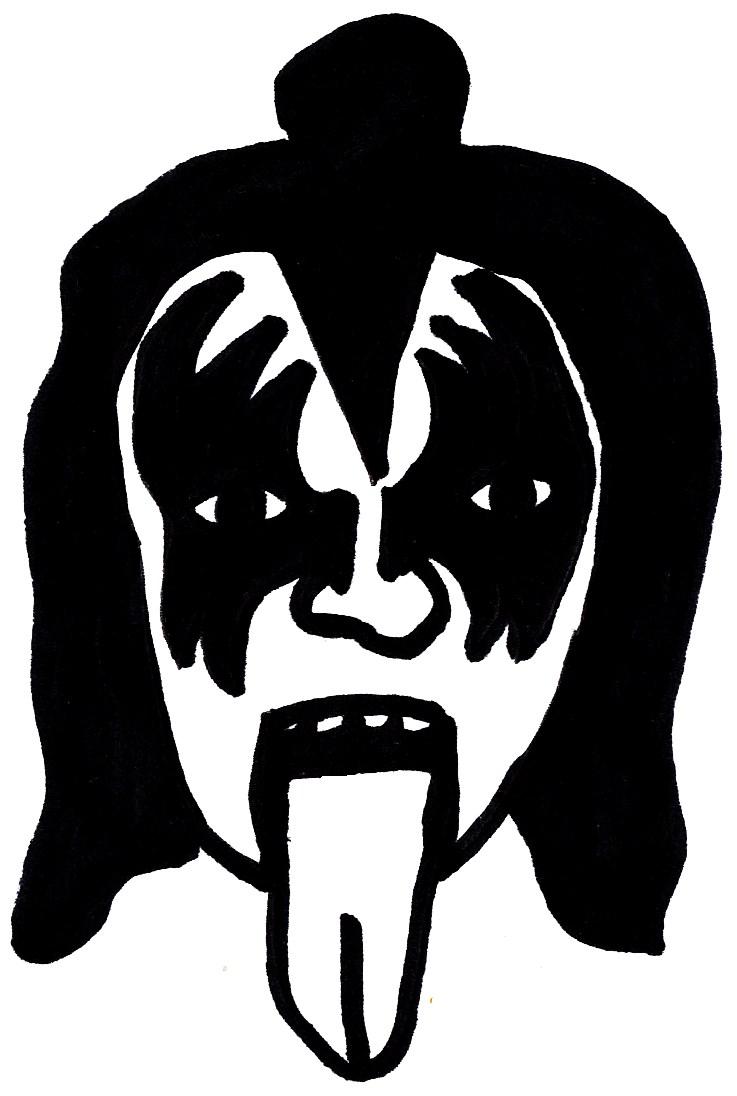
One thing is for certain in regards to the rock band KISS: they’re far better businessmen than they are musicians. That’s not to say they’re particularly bad musicians or they don’t have at least a few great pop tunes (I’m personally partial to “Love Gun”); it’s more of a testament to how great they are at selling themselves as a product. The range of KISS merchandise is staggering. In addition to standard rock n’ roll commodities like t-shirts & guitar picks, the band sells everything from beach towels & throw pillows to baseballs, oven mitts, garden gnomes, pinball machines and air fresheners featuring their likeness. This dedication to branding not only made relatively harmless songs about partying seem downright demonic to unsuspecting parents in the 70s, it’s also given the band a strange longevity in the pop culture landscape. No matter how ugly KISS are (both morally & physically) without their makeup or how boring they are without the glam rock showmanship covering up their underlying mundanity, their flare for merchandising makes them an ever-present powerhouse. Their two forays into feature films, 1999’s Detroit Rock City & 1978’s KISS Meets the Phantom of the Park, are merely an extension of that keen, pragmatic business sense. KISS on film is not all that much different than KISS on lunchboxes or KISS on lava lamps, all things considered.

The 1999 film Detroit Rock City was my first major exposure to both KISS as a band and KISS as a product. As a young teen misanthrope with an unfortunate affinity for nu metal (it was a different time, folks) I was firmly in the film’s target demographic. Conceived & filmed around the same time as That 70s Show, Detroit Rock City works with a very similar visual language: glorifying the era’s outsider teen ennui while also nostalgically celebrating its more commercial curiosities like vintage K-Mart fashion & disco. I identified with the film pretty deeply at the time. In what basically amounts to a standard stoner comedy/road trip movie, four members of a KISS cover band embark on individual journeys to score tickets to their favorite group’s show in the KISS mecca of Detroit. The characters aren’t nearly as likeable as I remembered (their fondness for the word “fag” is definitely a turn-off), but it’s easy to see what drew teen me to the film. Along their journey to The Concert of Their Lives, the four bumbling fools satisfy typical rebellious teen urges like getting laid, smoking weed, and telling their parents to fuck off. The stoner gags are fairly effective as far as those things go and there are several good turns from a few actors of note. A young Edward Furlong sells menacing teen angst uncomfortably well. Natasha Lyonne is beyond fabulous as a party-hungry disco queen. Character actress Lin Shaye steals the show as an obnoxiously uptight & overeager Christian mother. There’s a lot to love about Detroit Rock City even when the four main characters aren’t themselves loveable.

One thing Detroit Rock City does very well is sell the legend of KISS. Lin Shaye’s overprotective mother leads a conservative protest group called Mothers Against the Music of KISS. She’s the type that proclaims rock n’ roll to be “The Devil’s Music” and has no doubt that KISS is Satan’s favorite group among the worst of the worst. She genuinely, foolishly believes the band’s name to be a sly acronym for “Knights in Satan’s Service”. This attitude, of course, makes the band all the more attractive to her teenage son, who worships KISS in his every waking moment. In addition to the KISS cover band he drums for, the protagonist Jam is the exact kind of kid who collects KISS belt buckles, posters, drumsticks, and so on (behind his mother’s back, of course). The film really does make the band feel like a supernatural phenomenon, like the greatest thing that has ever happened to popular music or maybe even to modern society as a whole. KISS is not just a band to the four main characters; it’s an identity. It’s a personal rebellion that gives them a sense of purpose & sets them apart from straight-laced normals who can’t get it through their thick skulls that “disco sucks!” Like all false idols, no band could ever live up to that level of importance & mystique, so the movie smartly limits the amount of screen time KISS gets in a film designed to constantly remind you about how awesome they are. Detroit Rock City’s killer 70s soundtrack is era-defining, including cuts from The Runaways, T. Rex, Thin Lizzy, Edgar Winter, Black Sabbath, David Bowie and The Ramones. KISS does make up nearly half of the soundtrack, but they’re never allowed to overpower it. As much praise as the band receives during the film’s 90min runtime, they only physically appear at the climactic concert in Detroit, which is the exact opposite of other band-worship films like, say, ABBA: The Movie. It’s an effective tactic, as it affords the band a mysterious, magical charisma.

In 1978’s made-for-TV feature KISS Meets the Phantom of the Park, the band’s charisma is literally magical. During the opening credits KISS soars through the air, playing loud rock music over footage of amusement park rides. They then fade to the background during a fairly dull stretch of rising action involving a mad scientist who narrow-mindedly sets his sights on dominating an amusement park instead of the world at large. When the band returns it’s in glorious fashion: they descend from space, shooting laser beams from their eyes and breathing fire while lightning dances around them. Apparently KISS can read minds, burst through walls, roar like lions, and master martial arts maneuvers that would make Batman envious. In KISS Meets the Phantom of the Park, the band members aren’t merely Peter, Paul, Gene and Ace. They’re Cat Man, Star Child, Space Ace and The Demon. Although the mad scientist plot starts slowly, it pays off by affording the magical foursome the opportunity to fight opponents like android werewolves and Frankenstein’s monster. It also allows for strange details like a not-so-subtle Star Wars nod in some androids’ light-up swords and strange magical talismans that provides the band their special powers.

After seeing how extensively KISS was worshiped by their fans (or “The KISS Army”, if you will) in Detroit Rock City it’s satisfying to see them act as literal deities in Phantom of the Park. The only problem is that it’s hard to imagine that The KISS Army would have enjoyed the film at all, because it not only tries to appease them, but also tries to win over their parents. Scenes showing the band’s gentler side in heart-felt ballads, gags about an animatronic barber shop quartet, and an onslaught of corny one-liners all do a huge disservice to the band’s mystique. Only “The Demon” Gene comes out unscathed & still menacing while the rest of his bandmates are portrayed as truly good dudes under all that scary makeup. Personally, as a fan of cheese & schlock, I enjoyed how awful & miscalculated the humor was in Phantom of the Park. It’s just hard to imagine the bong water-soaked, KISS worshiping teens of Detroit Rock City feeling the same way, considering that the band’s demonic powers are used for good instead of party-minded chaos in the film. I imagine the band’s younger fans were over the moon for Phantom of the Park; I just can’t say the same about stoner teens.

Even for those who aren’t fans of KISS’s music, both Detroit Rock City and KISS Meets the Phantom of the Park are surprisingly watchable. It’s fascinating to an outsider how an okay-at-best party band branded themselves through mysterious lore and on-stage theatrics as fire-breathing, laser-shooting gods of rock n’ roll. As a stoner comedy, Detroit Rock City is an amusing glimpse into the late 90s’ nostalgic fascination with 70s cool. As a family-friendly, made-for-TV creature feature about robot werewolves and a band from outer space, KISS Meets the Phantom of the Park is entertaining enough as how-was-this-even-made shlock. Together they help paint a picture of a rock group that was incredibly adept at brand-awareness, self-lore, and merchandising. KISS may not be the greatest musical act on record or on film, but they might very well be the best act on golf club covers, lip balms, snow globes and Christmas ornaments. That’s certainly a feat within itself.

-Brandon Ledet

Monster Brawl (2011)

wrasslin

fivestar

campstamp

We here at Swampflix love wrestling movies. We love horror & gore. We also love low-budget/high-concept camp. It should come to no surprise then that the low budget camp fest Monster Brawl, within which famous monsters fight to the death in a graveyard wrestling tournament, is a huge hit with us. It’s the perfect example of a high-concept thoroughly explored and a modest-at-best budget pushed to its limits. The movie so firmly in our wheelhouse that I’d suspect it was secretly made with us in mind if it weren’t released four years before our modest blog was born.

If you’re asking yourself why famous monsters would meet to wrestle in a literal death match in an American graveyard the answer is simple: to determine the most powerful ghoul of all time, of course. Monster Brawl is filmed like a televised wrestling promotion: the company’s logo appears in the bottom of the screen, each competitor boasts about their monstrous abilities in individual promos, and an announcing team calls the matches live as they happen. For a small-time promotion that started in someone’s mom’s basement (seriously) Monster Brawl secured a surprisingly deep, talented roster. The Undead Conference features The Mummy, Zombie Man, Lady Vampire, and Frankenstein (“Technically it’s Frankenstein’s monster if you want to be a dick about it”). Wrestling for The Creatures Conference we have Werewolf, Cyclops, Witch Bitch, and Swamp Gut (a local boy as it were; Swamp Gut is an obese, Louisiana-tinged knockoff of The Creature from the Black Lagoon). The monster make-up and the in-the-ring gore looks great, seemingly eating up most of the film’s budget considering the range & scope of the limited locations & actors. A lot of time & energy went into the monsters, which was the right decision, and it pays off in gags like hieroglyphics playing under The Mummy’s incomprehensible promo and the Cyclops’ face-searing laser beams (or “mythical laser blasts” if you will).

Narrating the action, Monster’s Brawl’s ringside announcers feature Kids in the Hall vet Dave Foley as a barely-functioning alcoholic and character actor Art Hindle as former Monster Brawl champion Sasquatch Sid Tucker. Foley & Hindle seem to have a lot of fun with the absurdity of their lines, which include gems like “We underestimated this monster. He must have been trained in vampire slaying techniques” and “For the first time in professional sports, folks, we’re witnessing the dead rising from their graves to attack Frankenstein.” Monster’s Brawl gets a lot right about the more ridiculous aspects of pro wrestling: the former-wrestlers-turned-announcers, the inconsequential refs, the outside-the-ring action, etc. Because the film’s “death matches” are quite literal the action can include violence that the more family-friendly WWE cannot: chair shots to the head, inter-gender matches, murder. The spirit of wrestling is captured well and even includes small roles for former NWO member Kevin Nash and Hulk Hogan’s former blowhard manager “The Mouth of the South” Jimmy Hart. In addition to Hart’s ecstatic shouting & the announcing team’s endless drunken blathering the film features a third level of narration: the disembodied voice of the legendary horror staple Lance Henrikson, who is billed here simply as “God”. Henrikson only occasionally interjects on the action, punctuating particularly gruesome wrestling moves with words like “Majestic.”, “Appalling.”, “Tremendous.”, and “Discombobulating.” in what has to be a parody of the narration in Mortal Kombat gameplay.

Just as Monster Brawl gets wrestling right, it also nails the tone of horror flicks. Instead of cheesy entrance music that usually accompanies performers, the famous monsters get the eerie horror soundtracks they deserve. The action of the film also devolves into complete chaos in its final act, which is pretty standard for a creature feature. We were fairly cruel to Monster Brawl director Jesse Thomas Cook’s most recent film, the “hideous poo beast” monster movie Septic Man, but Monster Brawl gets so much right about both its pro-wrestling-meets-classic-horror premise, that it’s impossible not to love it (given that wrestling or gore-soaked horror are your thing). Scripted & shot like a broadcast of a wrestling promotion every disturbed ten year old wishes existed, Monster Brawl is camp cinema at its finest.

-Brandon Ledet

The Flintstones & WWE: Stone Age SmackDown (2015)

EPSON MFP image

threehalfstar

campstamp

As I noted in my review of Scooby-Doo! WrestleMania Mystery, professional wrestling & animation were practically made for one another. Their shared love for campy violence, garish costumes, and corny jokes make them a heavenly pair. Crossing over the WWE brand with characters from the classic Hanna-Barbera universe is even more of a genius move, as it allows for some of wrestling & animation’s most over-the-top personalities to coexist in a single space. Characters like Scooby-Doo, Barney Rubble, The Undertaker, and “The Devil’s Favorite Demon”/”See No Evil” Kane are ridiculous enough in isolation. When they share a screen it’s downright magical (in the trashiest way possible). In Scooby-Doo! WrestleMania Mystery this pungently cheesy combination allowed for John Cena’s superhero strength & Sin Cara’s apparent ability to fly match the Mystery, Inc. gang’s seemingly supernatural monsters (in that particular case a “g-g-g-ghost b-b-b-bear”). In The Flintstones & WWE: Stone Age SmackDown the combo not only connects both The Flintstones’ Honeymooners-style comedy and the WWE’s complete detachment from reality with their roots in working class escapism, it also revels in the most important element in all of wrestling & animation, the highest form of comedy: delicious, delicious puns.

Let’s just get the list of Stone Age wrestler puns out of the way early. The Flinstones & WWE: Stone Age SmackDown features the likes of CM Punkrock, John Cenastone, Brie & Nikki Boulder, Marble Henry, Daniel Bryrock, Rey Mysteriopal, and Vince McMagma. CM Punk & Mark Henry even adapt their catchphrases to the Stone Age setting, calling themselves “The Best in the Prehistoric World” & “The World’s Strongest Caveman” respectively. Daniel Bryan makes no adjustments to his go-to “Yes! Yes! Yes!” chant (not a lot of room for wordplay there) but it’s put to great comical use anyway. Speaking of refusing to play along with the Stone Age puns, The Undertaker appears in Stone Age SmackDown simply as “The Undertaker”. I’m not sure if they had problems working a great pun in there (Try it at home. It’s a tough one.) but the side-effect is kind of charming anyway: it makes it seem as if The Undertaker has been alive forever, just sort of skulking around graveyards, waiting for a wrestling match.

In the Scooby-Doo crossover the WWE Superstars are already world famous and idolized, even more so than in reality; they even have their own WWE City complete with a Mount Rushmore style tribute to the championship belt. In The Flinstones crossover they’re just working class Joes (with impeccable physiques) that live milquetoast lives before a wrestling promotion is built around them. The wrestling promotion in question is FFE (Fred Flintstone Entertainment). Fred builds the enterprise from the ground up as a get-rich-quick scheme meant to fund a couples’ vacation to Rockapulco. As a WWE stand-in, FFE does a great job of poking fun at itself. At one point Fred is giving a pep-talk to his Superstars, urging them to “tear each other’s heads off . . . in a family-friendly way, of course,” satirizing WWE’s self-contradictory brand of PG violence. FFE differs in WWE in other ways, of course, as it’s a very small organization just trying its darnedest to put on a good show for the folks out there in the audience, which is a far cry from the real-life juggernaut’s billion dollar industry. There’s a good bit of blue-collar workplace humor towards the beginning of the film that recalls the The Flintstones’ Honeymooners roots and that vibe carries on nicely into the mom & pop wrestling promotion Fred creates once the plot picks up speed.

The only thing Stone Age SmackDown gets horrifically wrong from the original Flinstones series is Barney Rubble’s voice. The other characters aren’t perfectly imitated, but they’re at least passable. Barney is just not the same person at all, trading in his dopey baritone for a nasally “wise guy, eh?” voice that feels like a violation of the original character’s nature. The rest of the film is pretty much on point, though. In addition to the rock puns & working class humor mentioned above, the movie features enough Rube Goldberg contraptions, dinosaurs as appliances, visual gags (“We’ve got bigger fish to fry” is a pretty great one that you can probably imagine without the image), and swanky-kitsch music that feel true to the original cartoon. In a lot of ways, Scooby-Doo! WrestleMania Mystery brought the Hanna-Barbera characters to WWE’s world and Stone Age SmackDown is almost an exact reversal, with pro wrestlers making the time-traveling journey to Bedrock. There are a few modern updates to the Flintstones’ visual language (like wall-mounted TVs and computer tablets), but they don’t do much to distract from the show’s classic charms. In fact, the digital HD update provides the format a very vivid, vibrant look that intensifies the original series’ pop art appeal immensely.

Even though the movie is mercifully short it still makes time for fun tangents like CM Punkrock’s world-class promos, history’s first cage match (between The Undertaker & Barney Rubble of course), and some absurd sexual leering at “The Boulder Twins”. It’s a much quicker and less complicated film than the Scooby-Doo crossover and all the better for it. Plus, I really need these crossovers to work out long enough to get that Stardust Meets The Jetsons movie I’ve been clammering for. I desparately need that to happen so, as Fred puts it in Stone Age SmackDown, “Let’s yabba dabba do this” y’all. Keep these goofy wrestling cartoons coming.

-Brandon Ledet

White Bird in a Blizzard (2014)

birdpeople

three star

campstamp

White Bird in a Blizzard is a very curiously compromised movie. On one hand it has an intense visual style & a killer late 80s soundtrack that makes the film feel effortlessly cool in its most enjoyable moments. On the other hand its stilted narration & affected try-hard tone makes it feel like all too many recent, underwhelming YA adaptations. It’s both a run-of-the-mill YA coming-of-age tale and a dreamily spooky Lifetime Original thriller. At times I loved every frame I was watching and at other times I felt like I was light-years outside the intended target audience. One thing I can say is that it works a lot better as a campy thriller than as a straight-forward indie drama.

Let’s get the film’s negative influence out of the way first: the acting, mainly Shailene Woodley’s. I have a very difficult time getting on her wavelength. The film begins with her wooden delivery of the line “I was 17 when my mother disappeared” and it’s difficult to tell if her emotionless reading is entirely a choice to portray the character’s teenage faux nonchalance or if she’s just a terrible actress. I can sort of justify her flat, uninteresting vocal style because of the narration’s framing device of a therapy session (those are usually pretty awkward, right?) but she’s not much more relaxed when hanging out with her friends (a demographically diverse pair that’s mostly there to accessorize her white, middleclass background). Once the film’s trashier, Lifetime Original Movie plot twists regarding the days & months that surrounded her mother’s sudden disappearance get to laughably overwrought heights, the labored acting matters a lot less. In fact, it might even help the film’s case. It’s just part of the Lifetime territory.

To the film’s credit, camp or otherwise, director Gregg Araki injects a lot of otherworldly touches to counterbalance the film’s more contrived tendencies. The film’s winterscape dream sequences & leering glorification of shirtless teen flesh (both male & female) feel like glimpses into a much more intense, respectable film. Although Woodley’s narration rarely transcends its dreadful, dispassionate effect, it is put to great use in lines like this description of her parents’ unhappy marriage: “They just went on like that: my mom never coming, my dad jacking off in the basement, all the while pretending everything was fine.” Araki seems to know just what kind of movie he’s making here, mixing the sublimely artful with the dismally tawdry, but I’m not sure he’s entirely successful in getting the point across.

Even though the film doesn’t consistently nail the perfect tone in its dialogue, it does have a perfect soundtrack. There are few ways to win me over quicker than to play a Cocteau Twins song in the opening credits (“Sea, Swallow Me” in this case). The soundtrack is perfect moody 80s teen music through & through, featuring the likes of Siouxsie & The Banshees, Depeche Mode, The Cure, Echo & The Bunnymen, This Mortal Coil and more. It’s surprising competent touches like the musical cues & Araki’s imagery that make me want to give the film a pass for being so relentlessly cheesy, even early in the proceedings when the YA ennui is in full, obnoxiously self-absobed swing. Once the mystery of the missing mother gets a little more gaudily complicated the movie also becomes a lot more engaging. As a heartbreaking family drama White Bird in a Blizzard fails miserably. As a spooky, oddly artful Lifetime movie with a killer 80s soundtrack, it’s definitely worth a watch.

-Brandon Ledet

Honeymoon (2014)

EPSON MFP image

twostar

Watching the low budget horror flick Honeymoon is how I would imagine an arranged marriage going: forced into it, you look for the positives and hold out hope that it might end up working out, only to end up completely disappointed.

Brits Harry Treadaway & Rose Leslie (of Game of Thrones fame) play American newlyweds Paul & Bea, an ultra-happy, obnoxiously affectionate couple who decide to honeymoon in the most romantic destination imaginable: a remote cabin in the woods. Secluded, they fill their time with passionate sex, boat trips around the lake, and Yahtzee (“You’re my chance”). The first third of Honeymoon is almost entirely the two fawning, staring longingly into each other’s eyes, and discussing their future. It is as tedious as it sounds.

Thankfully, the feel-goods turn to feel-bads when, following a heated argument, Bea is found sleepwalking naked in the woods and begins behaving strangely. Paul, terrified, starts to believe Bea is no longer the person he married. Mysterious “mosquito bites” appear on her legs, he finds her coaching herself in the mirror on how to turn him down for sex, and, gasp, she forgets to batter the French toast.

Honeymoon‘s second act ratchets up the intensity and has a lot of interesting ideas, but you’ll still see the answers to the questions it raises coming from a mile away. The movie’s nightmarish final act ends features a flurry of gore that had the other people I was watching with cover their eyes, but still doesn’t fulfill the promise of the rest of the film. First time director Leigh Janiak does a great job of establishing a general uneasiness on a limited budget and Leslie & Treadaway give dedicated performances, but Honeymoon ends up falling under the weight of a underwhelming, predictable ending.

-James Cohn

Scooby-Doo! WrestleMania Mystery (2014)

scooby-doo

three star

campstamp

Look out, garbage lovers & overgrown children everywhere. WWE Studios has officially gotten in the business of making cartoons. It’s a brilliant move by all accounts, since professional wrestling itself could be described as a sort of live-action cartoon. The garish costumes, over-the-top personalities, and campy approach to violence should all be familiar to fans of animation and the two worlds have, of course, crossed paths before. Wrestling cartoons have generally been Saturday morning cartoon fodder, with dire projects like Hulk Hogan’s Rock & Wrestling and ¡Mucha Lucha! bringing no discernable level of prestige to the genre. As the WWE is currently in its long-lived, so-called “PG Era” (in which the company intensely markets its content to children) and its movie-making division WWE Studios is churning out more feature-length content than ever before, it’s a beautiful work of synergy that the company has gotten into bed with Hana-Barbera for a few proper straight-to-video animation crossovers.

Last year’s gloriously titled Scooby-Doo! WrestleMania Mystery was the first of the WWE/Hanna-Barbera crossovers. In the film, which is more fun than it should be, the Mystery, Inc. gang is dragged to WrestleMania against their will by the overenthusiastic Shaggy & Scooby. The film sets up an interesting mark/smark divide here, as the characters engage with the product in a variety of different ways. At one end of the spectrum, Shaggy & Scooby are completely obsessed with WWE’s brand of sports entertainment, sinking endless time & energy into the company’s video games and worshiping the talent like living gods. Fred takes an interest in pro-wrestling as a subject for his photography, eager to take some “wicked action shots.” Daphne falls in love with wrestling’s masculine sexuality the second she witnesses a wrestler (John Cena, specifically) removing his shirt. Velma’s all the way on the other end of the mark/smark divide, attempting to engage with the product on a purely intellectual level. She researches the history of the sport in favor of actually losing herself in the matches until the sheer spectacle of the WrestleMania main event wins her over into a little bit of mark territory and she becomes a true fan. To be fair to Velma, it is an especially spectacular main event. John Cena, Kane, Sin Cara, Shaggy & Scooby all join forces to fight a gigantic robotic ghost bear or, as the boys would put it, a “g-g-g-ghost b-b-b-bear”.

The ghost bear is a formidable threat, but nothing too out of the ordinary considering the history of Mystery, Inc. What is out of the ordinary is the sheer amount of pro-wrestling personalities that get involved in the proceedings. In addition to Cena, Kane, and Sin Cara (who get the most screen time), the movie also includes the likes of Triple H, AJ Lee, Brodus Clay, Santino, The Miz, and The Big Show (as well as cameos from Sgt. Slaughter & Jerry “The King” Lawler curiously portrayed as if they were still in their youth). Ringside announcer Michael Cole even gets in on the fun (lamenting the loss of his “favorite” table when Big Show gets smashed through it), as does WWE chairman & CEO Vince McMahon. McMahon is treated like some kind of deity by the boys, who do a “we’re not worthy” Wayne’s World routine at the billionaire’s feet. However, despite McMahon’s idol worship, Sin Cara’s apparent ability to literally fly, “See No Evil” Kane’s portrayal as a true-to-life demon, and AJ Lee’s brute strength that earns her the boys’ fearful concession that she’s “like Kane with lipstick”, no one gets quite as much ego massaging as longtime face of the company John Cena. Cena’s persona as an unstoppable superhuman can get tiresome on a weekly televised basis, but it’s kind of adorable here. He can seduce a beautiful woman with the mere removal of his shirt, conquer Indiana Jones-sized boulders and undead bears with just his hands, and is an instant friend to everyone, because he’s just so gosh darned likeable. It would be sickening if it weren’t so ridiculous. On the raw end of that deal, The Miz is just utterly abused here. His character pops in for some occasional goofball comic relief, which is totally fair all things considered, but looks absolutely nothing like him. Just no resemblance at all to the money-maker. If it weren’t for the sound of his voice or the cartoonish narcissism it would be near impossible to tell it was him.

For fans of either Scooby-Doo or pro-wrestling, the movie should be a fairly easy sell. It’s not a mind-blowing feat of animation, but it is remarkably likeable. In some ways the WWE does glorify itself a bit here, even if it’s tounge-in-cheek. For example, within the story the company has its own fully-functioning WWE City, which features a Mount Rushmore style tribute to the heavyweight championship belt. At the same time, both Hanna-Barbera & WWE poke a good bit of fun at themselves as well. Shaggy jokes that the gang wears the same outfits every day, so they have no need to pack for their trip to WrestleMania and there are also surprising references to WWE City’s environmental impact on the forest surrounding it & more realistically, former wrestlers’ career-ending injuries. The film also features some ridiculous asides like Scooby wrestling mutated junk food in outer space and Sin Cara telling the gang “The Legend of the Bear” through interpretive dance. It’s a very silly, inconsequential movie all in all, so it’s difficult to fault it for any shortcomings. Personally, I look forward to the upcoming WWE/Hanna-Barbera crossovers (which include a Flinstones picture as well as a Scooby-Doo sequel) and hope that they’ll go on at least long enough for a Stardust Meets The Jetsons feature. That’s the dream anyway.

-Brandon Ledet

Ghosts of Mars (2001)

ghostofmars

twostar

campstamp

In 1965 Italian horror mastermind Mario Bava released the eerie, way-ahead-of-its-time Planet of the Vampires. In 1979 directorial enigma Ridley Scott drew major influence from the atmospheric elements of Planet of the Vampires and reworked them into Alien, one of the scariest, most striking creature features of all time. In 2001 former-genius-turned-shlock-peddler John Carpenter borrowed Planet of the Vampires’ most superficial plot points and turned them into a nu-metal shootout in space that nobody asked for.

Told through the unnecessary framing device of a criminal hearing in a Martian mining colony of a future matriarchal society (we know this detail because of a title card that helpfully reads “Society: Matriarchal”), the bare bones story of Ghosts of Mars is awfully similar to that of Planet of the Vampires. While digging under Mars’ surface, miners mistakenly release disembodied Martian spirits (or “ghosts” if you will) who are none too pleased with the planet’s new human inhabitants. As one character puts it, “As far as they’re concerned, we are the invaders.” Yep. The ghosts of Mars exact their revenge on the Earth invaders by inhabiting their bodies, then causing them to self-mutilate & murder each other indiscriminately. The ghosts are essentially impossible to kill, because when one of their bodily vehicles dies they simply move on to the next.

Instead of properly utilizing the horrific potential of this premise, Carpenter mistakenly aims for a late-90s cool, the same effect he attempted in his 1998 misfire Vampires. Characters saunter around in black leather trench coats, getting high on space drugs, piloting steampunk hot air balloons, and trading we’re-so-cool quips like “Maybe I’d sleep with you if you were the last man on Earth. But we’re not on Earth.” If it weren’t for the ghosts, the Martian community could be mistaken for an especially dour year at Burning Man. Despite that, the ghosts themselves are menacing enough. Even though the cheapness of their costumes suggests Mad Max cosplay or a GWAR cover band, they have a distinct affinity for decapiation that makes them viable as a real threat. The problem is that any threat they pose is severely undercut by the nu-metal riffage that obnoxiously drones on in the background, trying (but failing) to portray them as super cool instead of super creepy.

Ghosts of Mars isn’t a total loss, but it is a disappointment. The cast is surprisingly decent, considering the quality of the film: Clea DuVall, Jason Statham, Natasha Henstridge, and Pam Grier are always welcome faces (although, how there are two Pam-Grier-In-Space movies and they both suck is beyond me). Ice Cube steals the show, firmly operating in angry NWA mode and not his more recent milquetoast-family-man mode. Although it’s a disappointment that the film’s genuinely cool ghosts-in-space concept devolves into a generic nu-metal shootout film, watching Ice Cube (and Clea DuVall for that matter) run around like a shoot-em-up action star is a draw in itself. Carpenter failed to utilize the body possession aspects of the premise to its full Planet of the Vampires potential & lazily used storytelling devices like flashbacks within the central flashback to get its point across and he paid the price for it. Ghosts of Mars was a huge flop, earning only half of its $28 million back at the box office. The most frustrating thing about the film is that you can see elements in play that could swing it either in the direction of an actually decent horror flick or at least a ridiculous camp fest if exploited properly. It instead mires itself in self-mutilating, nu-metal-soaked mediocrity.

-Brandon Ledet

Fan Art: An Ode to Large Marge

EPSON MFP image

As your headlights were shinning down that dark, lonely road
I knew that you would change my life forever
The dignified way you blew your big rig’s horn
Not a soul could ever do it better

Sitting behind the wheel with a blank stare on your face
Your dingy lumberjack shirt made you look a bit odd
You began to tell a tale filled with horror and fright
And I realized you were more than just some old broad

You explained the worst accident you had ever seen
And how it took place on this same road 10 years ago
The tone of your rough voice began to sound personal
Were you describing the death of someone you used to know?

Oh, but it was you that was killed in that terrible crash
Now you’re a ghost driving on a road that never ends
How I wish I could be sitting in your passenger seat
We could get to know each other and become best friends

-Britnee Lombas