Swamp & Sand: The Swampflix Top 100

At the end of this year, Swampflix will be celebrating its 10th anniversary as a movie review website.  To celebrate, we’ve attempted to create something the world has never seen before: a definitive list of the 100 greatest movies of all time.  Kidding, of course.  This is well-trodden territory for any film criticism publication, most notably including the BFI’s Sight & Sound list dating back to the 1950s.  The difference is that Sight & Sound polls over 1,000 professional film critics and filmmakers to compile their Top 100 list, whereas we only have six active contributors.  Hopefully, this means our list reflects our personal tastes & passions among the more standard consensus picks for The Greatest Films of All Time, since less than 20% of our titles overlapped with Sight & Sound‘s most recent poll in 2022

We created this list in two quick rounds of voting & ranking among our six active contributors in March of 2024, followed by a brief period of ensuring that every film listed had been covered on the site via either podcast or written review.  You can find blurbs for every film listed on the new official landing page of The Swampflix Top 100, or you can find more fleshed-out reviews of each film by clicking the links below.  We love movies, we love working on this website, and we hope that love shines through to anyone who follows along. 

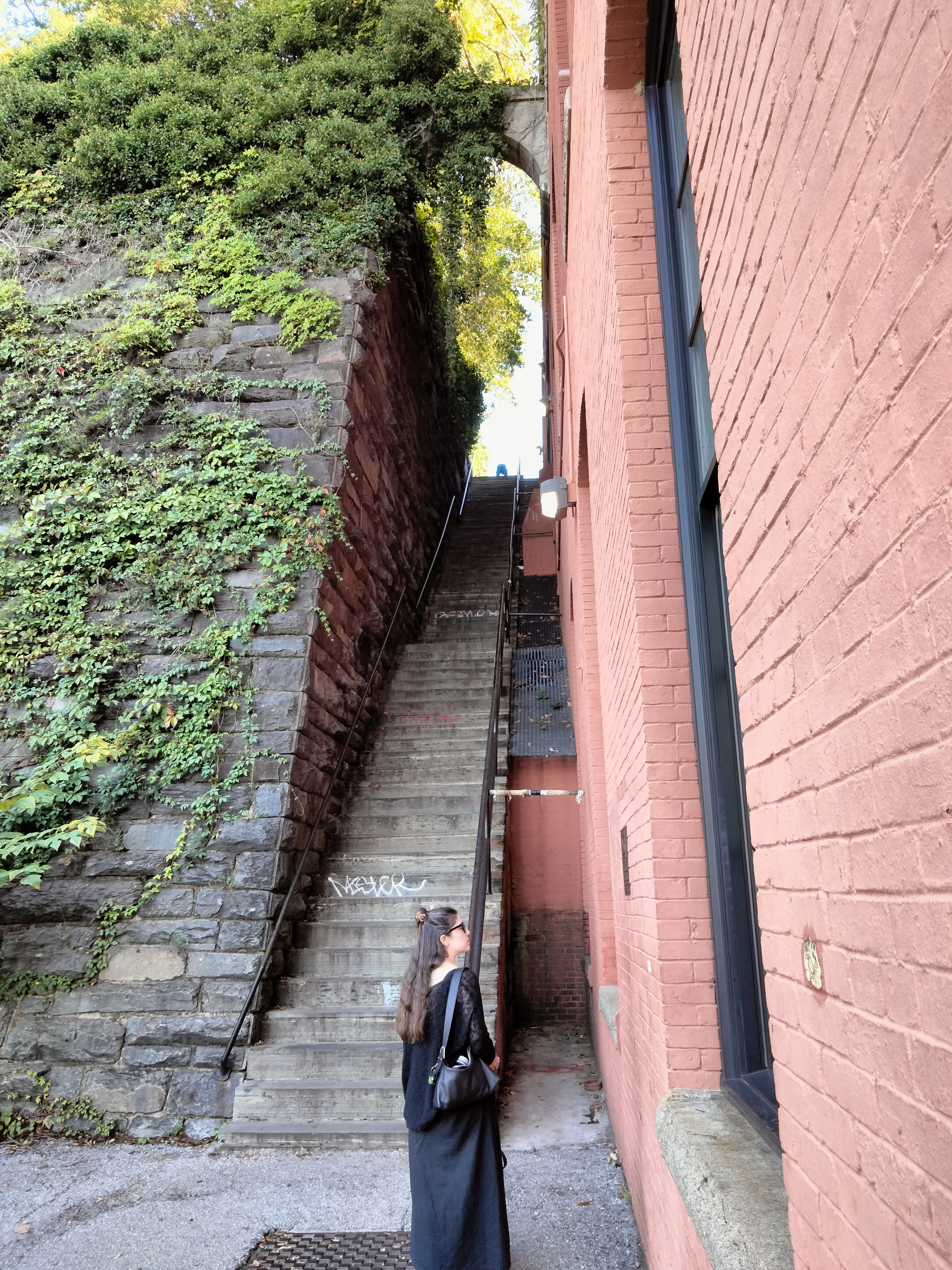
1. House (1977) – “The best thing about haunted house movies is the third-act release of tension where there are no rules and every feature of the house goes haywire all at once, not just the ghosts. The reason this is the height of the genre is that it doesn’t wait to get to the good stuff; it doesn’t even wait to get to the house. It’s all haywire all the time, totally unrestrained.”

2. The Night of the Hunter (1955) – “A classic tale of good versus evil, love versus hate. The black and white cinematography drives home the point with its sharp dynamic lighting. It’s chilling, uncanny and even ruthless at times, but it also has so many makings of a good fairy tale: lost children, evil stepparents, and even a fairy godmother in the end.”

3. The Wizard of Oz (1939) – “Blatant in its artificiality at every turn, yet through some kind of dark movie magic fools you into seeing beyond its closed sets into an endless, beautifully hellish realm. I’m sure there were plenty musicals released in 1939 that have been forgotten by time, but it’s no mystery why this is the one that has endured as an esteemed classic. Even when staring directly at the seams where the 3D set design meets the painted backdrop of an endless landscape, I see another world, not a mural on the wall. It’s the closest thing I can recall to lucid dreaming, an experience that can be accessed by the push of the play button.”

4. Videodrome (1983) – “‘The battle for the mind of North America will be fought in the video arena: The Videodrome. The television screen is the retina of the mind’s eye. Therefore, the television screen is part of the physical structure of the brain. Therefore, whatever appears on the television screen emerges as raw experience for those who watch it. Therefore, television is reality, and reality is less than television.’

I lie awake at night wondering what Brian O’Blivion would make of TikTok.”

5. Tampopo (1985) – “Hailed as the first ‘ramen western’ (a play on the term ‘spaghetti Western’), Tampopo takes that designation to its most extremely literal end, focusing on the title character’s ramen shop as the location of metaphorical quick-draws and high noon showdowns, as well incorporating a variety of loosely connected comedy sketches about food.”

6. 3 Women (1977) – “This feels like a huge departure from what I’ve come to expect from a Robert Altman picture. I’m much more used to seeing him in his big cast/overlapping dialogue mode this is a much more insular, cerebral experience than that. I wish he had tackled this kind of eerie, dreamlike, horror-adjacent material more often (see also: Images, That Cold Day in the Park); he’s damn good at it.”

7. Moonstruck (1987) – “On a short list of classics that I can rewatch at any time no questions asked, especially if I’m feeling low. Come to think of it, Mermaids & The Witches of Eastwick are also on that list, so maybe I just seek comfort in Cher’s curls.”

8. The Red Shoes (1948) – “The centerpiece nightmare ballet is maybe the most gorgeous cinema has ever been. If nothing else, it’s unquestionably the most gorgeous that the color red has ever looked onscreen, which is appropriate since it’s right there in the title.”

9. Peeping Tom (1960) – “It’s near impossible to gauge just how shocking or morally incongruous this must’ve been in 1960, especially in the opening scenes where old men are shown purchasing pornography in the same corner stores where young girls buy themselves candy for comedic effect, and the protagonist/killer is introduced secretly filming a sex worker under his trench coat before moving in for his first kill. Premiering the same year as Hitchcock’s Psycho and predating the birth of giallo & the slasher in 1962’s Blood & Black Lace, this was undeniably ahead of its time. A prescient ancestor to the countless slashers to follow, Powell’s classic is a sleek, beautifully crafted work that should’ve been met with accolades & rapturous applause instead of the prudish dismissal it sadly received.”

10. Sunset Boulevard (1950) – “Not sure why Whatever Happened to Baby Jane? is universally cited as the kickstart to the psychobiddy genre while this is fabulously campy/draggy in almost the exact same way (love them both). Anyways, it’s a masterpiece, but you already knew that.”

11. Grey Gardens (1975)
12. Vertigo (1958)
13. Akira (1988)
14. Polyester (1981)
15. Alien (1979)
16. Persona (1966)
17. Rosemary’s Baby (1968)
18. Spirited Away (2001)
19. Heathers (1988)
20. Suspiria (1977)
21. Daisies (1966)
22. The Thing (1982)
23. Blue Velvet (1986)
24. All That Heaven Allows (1955)
25. Pan’s Labyrinth (2006)

26. Possession (1981) – “With a title like Possession and the heavy synths in the opening theme, it’d be reasonable to expect a straight-forward 80s zombie or vampire flick, but the film refuses to be pinned down so easily. If Possession were to be understood as a creature feature, the monster in question would be the coldness of romantic separation. When a character supposes early in the film, ‘Maybe all couples go through this’ it seems like a reasonable claim. The bitterness of divorce, loneliness, and adulterous desire then devolve into a supernatural ugliness. The main couple frantically move about Berlin as if drunk or suffering seizures, downright possessed by their romantic misery. Their own motion & inner turmoil is more of a violent threat than the film’s most menacing blood-soaked monsters or electric carving knives.”

27. Heavenly Creatures (1994)
28. The Virgin Suicides (1999)
29. Princess Mononoke (1997)
30. Crimes of Passion (1984)
31. Pee-wee’s Big Adventure (1985)
32. Psycho (1960)
33. Robocop (1987)
34. Citizen Kane (1941)
35. My Winnipeg (2007)
36. Santa Sangre (1989)
37. Blow Out (1981)
38. The Cook the Thief His Wife and Her Lover (1989)
39. Cruising (1980)
40. Female Trouble (1974)
41. The VVitch (2015)
42. Hard Boiled (1992)
43. The Shining (1980)
44. Paprika (2006)
45. Fargo (1996)
46. Poor Things (2023)
47. The Seventh Seal (1957)
48. Serial Mom (1994)
49. Jackie Brown (1997)
50. Eyes Without a Face (1960)

51. Don’t Look Now (1973) – “A delectable head-scratcher. For a movie with such clear themes & purposeful imagery, it’s difficult to parse out exactly what it was getting at with its conclusion, which is definitely part of the charm. Reminded me of many great works of its era, but most of all Fulci’s The Psychic. Would gladly watch it a few more times to continue to puzzle at it, which I suppose is the highest praise you can lay on any film.”

52. Paris is Burning (1990)
53. Mulholland Drive (2001)
54. The Royal Tenenbaums (2001)
55. Au Hasard Balthazar (1966)
56. Midsommar (2019)
57. Basic Instinct (1992)
58. Parasite (2019)
59. Beauty and the Beast (1946)
60. Metropolis (1927)
61. Starship Troopers (1997)
62. True Stories (1986)
63. Some Like It Hot (1959)
64. Women on the Verge of a Nervous Breakdown (1988)
65. Birth (2004)
66. The Rocky Horror Picture Show (1975)
67. Wild at Heart (1990)
68. Body Double (1984)
69. Amelie (2001)
70. Muriel’s Wedding (1994)
71. Brief Encounter (1945)
72. All About My Mother (1999)
73. Diabolique (1955)
74. M (1931)
75. Knife+Heart (2018)

76. Boogie Nights (1997) – “Even more so than Goodfellas, this has cinema’s clearest distinction between its story’s Fuck Around era (the 1970s) and his Find Out era (the 1980s), down to the minute.”

77. Rear Window (1954)
78. Adaptation (2002)
79. Jurassic Park (1993)
80. The Silence of the Lambs (1991)
81. Clueless (1995)
82. Opera (1987)
83. What Ever Happened to Baby Jane? (1962)
84. Labyrinth (1986)
85. In the Mood for Love (2000)
86. Last Year at Marienbad (1961)
87. Dogtooth (2009)
88. All About Eve (1950)
89. Theorem (1968)
90. mother! (2017)
91. After Hours (1985)
92. A.I. Artificial Intelligence (2001)
93. The Young Girls of Rochefort (1967)
94. What Happened Was … (1994)
95. Altered States (1980)
96. Gaslight (1944)
97. Raw (2016)
98. Halloween (1978)
99. The Exterminating Angel (1962)
100. The Doom Generation (1995)

Scroll through the full list here.

-The Swampflix Crew

Vendetta (1986)

There are currently no fewer than four feature films that populate on Tubi when you search for the title “Vendetta“.  That’s including longer titles like Vendetta: No Conscience, No Mercy but excluding partial matches like Midnight Vendetta or Vendetta Road.  Honestly, I thought there’d be more.  Vendetta is such a vague, generic title for the exact kind of cheap-o action revenge flicks that pad out Tubi’s vast library that I would not have been surprised if the results tallied to at least a dozen.  Still, among the half-dozen or so Vendettas currently streaming on Tubi, it’s unlikely any are half as entertaining as the crown jewel of the collection, the one from 1986.  A sleazy women-in-prison revenge thriller about a stuntwoman scorned, 1986’s Vendetta mixes two familiar genres into one surprisingly novel, volatile concoction.  Just like there’s a long tradition of titling your generic revenge actioner Vendetta, there’s also a long tradition of highlighting behind-the-scenes stunt actors as real-life, authentic action heroes, from classic novelties like 1978’s Stunt Rock to this year’s big-screen adaptation of The Fall Guy.  Likewise, there’s also a long tradition of leering exploitation films that offer a risqué peak at the intimate sex & violence of women’s prisons, often with more salacious titles like Caged Heat, The Naked Cage, Sex Hell, and Sadomania.  As far as I can tell, though, Vendetta ’86 is the only film that’s thought to combine all of those genre tropes into a single 90min exploitation pic, and it deserves some respect for that efficiency.

Vendetta opens during a Fulci-style zombie stampede, inexplicably set in small-town 1980s America instead of 70s-sleaze Italy.  After running from a rabid hoard of Italo zombies, our hero is shown collapsed and burning alive on city pavement.  This, of course, turns out to be just another day on the job for the professional stuntwoman played by Karen Chase, who cheerfully pops up from this controlled burn shoot as soon as the fire-extinguishers cool her down.  She doesn’t even bother to change out of her charred jumpsuit before speeding off to the wrap party, waving along her younger, even bubblier sister.  Soon, it becomes apparent that the staged free-falls, car chases, and bare-knuckled brawls of the movie-within-the-movie aren’t nearly as dangerous as the small-town mentality of its shooting location.  After downing a few brewskies at the local bar (while a band of new-wave punks play square-dance country schtick in the background), the younger sister sneaks out with the cutest roughneck she can find and immediately finds trouble.  He sexually assaults her, she shoots him dead with his own pistol, and the local cops, judge, and jury unsurprisingly side with their hometown boy instead of the Hollywood outsider who killed him in self-defense.  Worse yet, the local-yokel bullying continues once the teenager lands in prison, quickly getting her killed after she refuses the hard drugs and sexual advances of the top dog of the prison yard (It’s Always Sunny‘s Sandy Martin).  It’s up to the stuntwoman, then, to seek true justice and avenge her sister’s murder, purposefully getting herself locked up so she can kill the women responsible one by one in a newfound, immoral use for her martial-arts skills.

Every plot point of Vendetta is pure exploitation, but it more often implies than it dwells on the grislier details.  The instigating roadside rape that lands our hero behind bars is shocking but not eroticized.  Admittedly, the prison-yard bullying that escalates that tragedy is eroticized, leaning into the lesbian leering of the wider women-in-prison genre.  Still, there are no actual sex scenes to speak of, just some casual nudity as women hang around the showers and locker rooms as spectators to the violence.  The contraband drug trade that fuels that violence gets pretty salacious too, with multiple scenes of forced heroin injection raising the dramatic stakes at every turn.  All of this sensational material is softened by sincere scenes of intense melodrama scored by Lifetime music cues, affording Vendetta an oddly tender touch for a VHS-era exploitation picture.  It’s also just as much an excuse for Karen Chase to road-test action stunts outside of a movie set as it is an excuse to position her in mildly salacious women’s prison scenarios.  It’s essentially the soft-rock Skinemax version of Stunt Rock, complete with a climactic stage performance from a drag king Prince impersonator in the prison cafeteria to match the wizardly stadium rock act of its predecessor.  It’s all very disjointed, but it’s also all very 80s, which you might expect from the only feature film directed by Bruce Logan, cinematographer for the original Tron.  It’s also all exactly what you’d expect from a revenge picture titled Vendetta streaming on Tubi, except with maybe three or four Vendetta movies’ worth of plot & novelty for the price* of one.

*free with ads

-Brandon Ledet

Lagniappe Podcast: Adaptation (2002)

For this lagniappe episode of The Swampflix Podcast, Boomer and Alli discuss Charlie Kaufman’s writer’s-block anxiety thriller Adaptation (2002), starring Nicolas Cage & Meryl Streep.

00:00 Welcome

01:05 Immaculate (2024)
07:57 Time Masters (1982)
11:37 Trap (2024)
13:06 In the Mood for Love (2000)
19:56 Cuckoo (2024)
25:43 Wicked Little Letters (2024)

27:48 Adaptation (2002)

You can stay up to date with our podcast through SoundCloudSpotifyiTunesTuneIn, or by following the links on this page.

– The Lagniappe Podcast Crew

The Not-So-New 52: Batman – Hush (2019)

Welcome to The Not-So-New 52, your digital Swampflix comic book (adaptation) newsstand! Starting in 2007, DC Comics and Warner Premiere entered the direct-to-home-video market with animated features, mostly in the form of adaptations of well-received event comics or notable arcs. This Swampflix feature takes its name from the 2011 DC relaunch event “The New 52,” and since there are (roughly) fifty-two of these animated features as of the start of 2024, Boomer is watching them in order from the beginning with weekly reviews of each. So, get out your longboxes and mylar sleeves and get ready for weekly doses of grousing, praise, befuddlement, recommendations, and occasional onomatopoeia as we get animated for over fifteen years of not-so-new comic cartoons. 

Jeph Loeb is an interesting figure in comics. After a couple of notable writing credits in the 80s (including the script of the original Michael J. Fox Teen Wolf and a “story by” credit for the Schwarzenegger vehicle Commando), he went on to pen some of the best mainstream comic book material that the medium had to offer in the decade before and after the turn of the millennium. Batman: The Long Halloween was a particularly seminal work that had a profound impact on the public’s relationship with the character in both the short term (as it was very popular in its day) and the long term (as an influence on the Nolan films about the character, which created a world that we’re all still living in the fallout of). Like today’s topic, Long Halloween also got an adaptation in one of these movies and thus will get its own discussion in the coming months, don’t you worry. He also wrote the Superman/Batman arcs that Public Enemies and Apocalypse are based upon, and he was the driving narrative force for the Supergirl series that comic spun off in 2005, about which I have spoken positively in the past. Outside of DC, he’s fairly well known for his work on X-Men projects as well as stories related to the Hulk, including the creation of Red Hulk, and he still worked on TV and film projects, including involvement with the first season of Heroes at the same time that he was writing Supergirl; he ended up co-executive producing 56 episodes of that, 12 episodes of Lost, and 66 episodes of Smallville. That’s before you get into the fact that he was one of the creative forces behind the pre-Disney+ era of Marvel’s TV wing; he exec-produced 18 episodes of Agent Carter, 26 episodes of Luke Cage, 23 episodes of Iron Fist, 24 episodes of The Punisher, 39 episodes each of Jessica Jones and Daredevil, and 136 episodes of Agents of S.H.I.E.L.D. 

Hush was released in 2002, and was a smash hit at the time, critically and commercially. Penned by Loeb and with art from Batman superstar Jim Lee, the comic was a nice bit of mystery, playing with the introduction of a new villain—the titular Hush—whose machinations to take on the Dark Knight involved manipulation of several other longtime Bat-antagonists. This gave the new villain some instant credibility for a late addition to the rogues gallery. All this is to say that, for many, Loeb is a sacred cow. This is a man who has had a foot in each of the worlds of four color and Technicolor for decades, and who has shaped what that medium and its associated adaptations have meant, quite a lot. For that reason, there are people who can be a bit … let’s say “precious” about his work and its adaptations, and this film adaptation of Hush was no exception. Of course, as someone who read Marvel’s Ultimates 3 (2008) and Ultimatum (2009) as they were published, the two comics that, alongside DC’s Final Crisis (2008) and the one-two punch of Marvel’s Civil War (2007) and Secret Invasion (2008), were the reason that I stopped reading comics, I’m not going to die on any hills for him. 

The film opens with Bruce Wayne (Jason O’Mara) headed for a black-tie function, where he encounters Selina Kyle (Jennifer Morrison), with whom he has some romantic tension in both his identities, although she remains unaware that Bruce and Batman are one and the same. It’s been a few years since she last was involved with any criminal activity and, perhaps because the Bruce of this continuity was privy to the internal conflict Clark experienced about telling Lois his secret in Death of Superman, Bruce considers whether it’s time for his own confession. Their flirtation is twice interrupted, first by the sudden appearance of Bruce’s childhood friend, a nationally renowned neurosurgeon named Thomas Eliot (Maury Sterling), then by a call from Alfred regarding the kidnapping of a child by Bane; the latter of these prompts Bruce to depart. He confronts Bane and saves the boy, but he sees Catwoman escaping with the missing ransom and pursues her, with interference from an unknown third party wrapped in bandages and wearing a trenchcoat resulting in Batman falling to the streets and being badly injured. After Alfred and Nightwing (Sean Maher) craft a cover story involving playboy Bruce Wayne getting involved in a car accident (and sending Batgirl off to wrap one of the Wayne estate’s many expensive cars around a tree), they take him to see Dr. Thomas Eliot, who manages to stabilize him. When he awakes, Bruce commits to being a better friend to Thomas in a tender scene, while the doctor remains wryly amused at the situation, notably mentioning that Bruce isn’t even the most notorious patient he’s had; he exits the room with a smirk. Gee, I wonder who this new villain could be under all that mummy wrap? 

Except … Thomas Eliot is not Hush (as we will soon learn that this new criminal mastermind is named), as was the case in the comic. Here, the man behind all of these actions is someone else entirely. We’ll come back to that, but first, one of the other major status quo changes that the 2002 comic ushered in was that, from that point forward, Catwoman would be aware that Bruce was Batman. This happens in the film as in the comic as Bruce reveals himself to Selina, following on the heels of the revelation that Catwoman (as well as others, including Bane) have been made unwitting pawns via applied use of Poison Ivy’s mind control pheromones. Bruce decides to bring her in on everything, and she becomes an effective, if less selfless, member of the Bat team. The way that we see this play out initially is a nice bit of foreshadowing, as the duo of Batman and Catwoman follow Ivy’s trail to Metropolis, which results in them having to face off against an Ivy-puppeted Superman. Batman is convinced that, even under pheromone control, some semblance of the person being controlled is able to use their willpower to mitigate what they are being forced to do; he has Selina kidnap Lois Lane and take her to the top of the Daily Planet building in the hopes that this will break through Clark’s mind control. When it doesn’t, Selina throws Lois off, which does finally cause Clark to break free and save her, and while Bruce takes the heat for this from Clark, his later conversation with Selina confirms that he told her explicitly not to let Lois fall. 

Selena’s lack of the same (perhaps self destructive) moral code that compels Bruce to attempt to save the lives of his foes even at the risk of his own comes back around in the end. In the climax, Bruce manages to catch Hush with one of his infamous grappling lines before the latter can fall to his fiery death, but the building is coming apart around them and Selina isn’t willing to put herself or her lover to the test to save a killer. She performs the cold calculus of cutting a rope and letting Hush fall so that they can escape certain death rather than complete a performative pyrrhic moral victory. Ultimately, this is what prevents the couple from remaining together, and this shifting of assumptions makes for a more interesting story than if things had been perfect for them, even if you (like me) kinda ship it. This is a slightly more sophisticated story than a lot of these others, because the relationship dynamics are more mature than what normally comes down this pipeline. It’s not Hitchcock’s Notorious or anything, but it’s noteworthy, even if it’s not breaking any molds. 

That breakup happens at the end of Loeb’s Hush as well, albeit with the slightest of differences, The big departure, as noted above, is that Thomas Eliot is revealed not to be Hush, although this Hush was a patient of his, and Eliot ends up suffering the consequences of not being able to live up to his reputation as a miracle worker with this person. I won’t spoil who this turns out to be (if you must be spoiled, Wikipedia can do that for you, but I would suggest going in blind even if I’ve already revealed that it doesn’t stick to the source material’s choice), but it’s an interesting and fun choice, even if you’re already familiar with the comic. This was, of course, something that people got up in arms about, but I’m pleased with it. The impulse for a mystery to be solved exactly the same way in an adaptation as in the original text is a boring one, and a preference for strict adherence to canon rather than pleasant surprise at a novel addition to the experience reflects a shallowness of imagination, if you ask me. 

I’m reasonably certain that I gave this a sort of half-assed watch sometime during the early days of quarantine, which lines up with the timeline of when it would have hit streaming. As such, and not really thinking about it at the time as a part of an ongoing story, I thought at the time that this one functioned suitably as a standalone adaptation of Hush, as I didn’t even realize it as being of a piece with a larger continuity. Watching it now, I’m surprised that I didn’t find it odd that we had a handful of check-ins with minor characters who feel completely extraneous without some foundational knowledge about this subfranchise. I’m reasonably pleased that we had a final check-in with, for instance, Damian, as I don’t expect him to play much of a role in the upcoming Wonder Woman: Bloodlines or the “series finale” of Justice League Dark: Apocalypse War, but it also feels like a stumbling block for anyone who might see this in a Redbox without context and decide to rent it. Like the comics themselves, this “DCAMU” (I’m so looking forward to no longer taking psychic damage every time I type that acronym) has gotten too self-referential to grow its audience, which is why we’re headed for that inevitable reboot after just two more installments. Although these movies have risen above the median a few times, there’s a lack of richness in the storytelling that elevates the rare number of these DTV animated products to be anything more than cynically driven cash-ins here. Damian’s scene is just a cute little cameo with a couple of quips thrown in, but with the knowledge that these halcyon days coming to an end, I can’t help but think that it’s annoying they made yet another Batman movie when it might have been nice to see another Justice League movie, or checked in on the Teen Titans one last time; they keep being mentioned as doing something offscreen, but are never involved. 

I suppose that’s why this one is a bit of a mixed bag critically, especially in comparison to the original comic. For people who are interested in the larger storyline of this universe, this is a fine story, but nothing to write home about, while those who are interested in the film as an adaptation are largely represented in the discourse by people who were dissatisfied with the extent of its faithfulness. I appreciated that this one did something that this series hadn’t really done before and fully committed to making a film that could be slotted into “romance” as a genre, but it’s not one that I foresee myself giving much thought in the future.

-Mark “Boomer” Redmond

Frogman (2024)

There are two things that can quickly win me over to enjoying an otherwise mediocre movie: a cool-looking monster and a go-for-broke ending.  Thankfully, the new found-footage cryptid horror Frogman has both.  Based on real-life legends of a half-human, half-frog mutant who wields a magic sparkler wand in the woods outside of Loveland, Ohio, Frogman gets away with a lot of time-wasting bullshit just by delivering on an adorable creature design, lovingly rendered as a rubber-suit monster.  The titular Frogman appears early in flashback camcorder footage from the late-90s, assuring the audience that this is not exactly a Blair Witch Project or Willow Creek situation where the monster will go entirely unseen.  He’s around, and he’s so dang cute that you can’t wait to spend more time with him.  Unfortunately, the movie then makes you wait a full hour to return to the pleasure of the Loveland Frog’s company, but it does reward your patience by ending on 20 hectic minutes of over-the-top Frogman action, adding to the cryptid’s lore by dreaming up a frogperson death cult who worship the wizardly beast and offer up their bodies to be merged with his froggy DNA.  It’s entirely possible to roll your eyes through a majority of the film’s runtime and still get excited by the concluding title card warning that “Frogman is still out there,” teasing a potential sequel.  Any time spent with Frogman is time well spent.

While Frogman does not mimic Blair Witch & Willow Creek‘s withholding of an onscreen monster, it mimics everything else about their narrative structure, often reading like a copy of a copy.  A struggling low-fi filmmaker who captured the late-90s camcorder footage of Frogman as a child (Nathan Tymoshuk) returns to Loveland to prove wrong all the haters & doubters of the “Hey guys” YouTube commentariat who mock the credibility of his sighting.  He brings along two friends who also don’t take the existence of Frogman seriously but are still excited about the idea of making a movie (Chelsey Grant as an insufferably corny actress who’s road-testing a hack Southern Belle stock character named Norma Jean Wynette, and Benny Barrett as an aspiring cinematographer who constantly complains about “losing light” even though he shoots every single interaction backlit & out of focus on an ancient camcorder).  The friend-dynamic drama between that central trio is autopilot found-footage filmmaking, but things pick up quick once they start interacting with the local yokels of Loveland.  The amount of true believers who are deadly serious about Frogman give the wayward crew the creeps, then the wizardly Frogman’s “telekinetic interference” with the shoot throws the project into chaos, trapping them in a deadly game of hide-and-seek with a bloodthirsty frog cult.  So, while Frogman is not always ribbeting, given enough time it is plenty ribbiculous.

If there’s anything new that Frogman brings to the found-footage horror canon, it’s all contained in its ending and in its monster.  The titular rubber-suited Frogman looks great and—defying found-footage tradition—does not kill every single character who lays eyes on him, which means the movie has to find a new way to end its story that doesn’t just mindlessly echo the exact beats of Blair Witch.  Otherwise, Frogman is most recommendable as regional cinema.  Recalling Matt Farley’s modern small-town cryptid classic Don’t Let the Riverbeast Get You!, there’s something charming about Frogman’s extremely local sensibilities in the quest to put Loveland, Ohio on the map by promoting the existence of its resident cryptid; the only shame is that nothing in the movie is half as funny nor as surprising as any random page of a Matt Farley script.  Still, Frogman excels as a tourism ad for the city, which just adopted the Loveland Frog as its official mascot in 2023, after nearly seven decades of reported sightings.  Even when I was bored with the interpersonal drama between the central mockumentary crew, I was still delighted by the Frogman merch they found in their interrogation of the Loveland citizenry: a sign that reads “Frog parking only; violators will be toad” and t-shirts with slogans like “Frog around and find out” or “M.I.L.F. (Man I Love Frogman)”.  It made me want to travel to Loveland just to visit the gift shop.

-Brandon Ledet

Day for Night (1973)

One of my weaknesses as a critical thinker is that I’m pathetically vulnerable to enjoying movies about how great The Movies are, from nostalgic recreations of large-scale Old Hollywood spectacles in movies like Hail, Caesar! to comedic takes on scrappy D.I.Y. communal filmmaking in low-budget genre trash like One Cut of the Dead.  I even choke up during those hokey little Magic of the Movies montages that everyone else complains about during Oscars broadcasts every year.  The same goes for poems about poetry and rock songs about rocking out.  The creation of art ranks highly among the few worthy things you can do with your brief time on this planet, so it deserves to be the subject of that art just as much as the few other go-to subjects of every other song, poem, and movie out there (mainly God, sex, and death).  So, I’m less willing than most movie-obsessed cynics to roll my eyes when Oscar voters award top prizes to love-letter-to-cinema movies about The Movies.  I totally understand the impulse.  The cool, hip opinion to have is that Jean-Luc Godard’s poison-penned hate letters to cinema like The Image Book are much worthier of time and study than his intellectual frenemy François Truffaut’s magic-of-moviemaking dramedy Day for Night, because they are more challenging in their observation & interrogation of the medium.  The thing is, though, that as intellectually lazy as it may be, it feels much better to celebrate than to challenge, especially when the subject is as wonderful as the art of the moving image.  If my two choices as a cinephile are to be corny or self-loathing, I’m perfectly fine being corny.

Director François Truffaut stars in Day for Night as a François Truffaut-type director, lording over the film shoot of a mediocre-looking melodrama titled Meet Pamela.  The metatextual joke of the movie is that there’s nothing as dramatic nor exciting in the narrative of Meet Pamela as the drama & excitement of its production.  As the auteur du jour, Truffaut is responsible for guiding the decision-making of hundreds of cast & crew members, who bombard him with random, dissonant either/or questions as he attempts to funnel their chaotic input into a single, coherent picture.  The bigger personalities he struggles to manage are, of course, his actors, who include Fellini collaborator Valentina Cortese as a has-been drunk who refuses to learn her cues and longtime Truffaut muse Jean-Pierre Léaud as a “spoiled brat who will not grow up,” always angling to go to the movies instead of making one.  Newcomer chanteuse Dani also makes a star-making impact as the level-headed script girl who puts out the fires Truffaut himself does not notice, simply because she’s a true believer in the cause of Cinema.  Explaining her passion for the medium above all else, she sweetly declares “I’d drop a guy for a film. I’d never drop a film for a guy.”  True to the nature of real-life film production, most of the drama between these players occurs during the punishing rhythm of having to get multiple takes until a scene fully works or during the punishing boredom of time spent on set waiting around for those takes to be fully set up.  It’s essentially an ensemble cast comedy set in a hyper-specific industry & locale, made by the people who know that industry better than anyone else in the world.

Where Day for Night becomes a transcendent piece of art in its own right (rather than just an appreciation for the transcendent nature of art) is in the sweeping montages when all of these chaotic personalities are overpowered by the momentum of the production, and everything fall exactly into place.  The behind-the-camera busyness of the set is drowned out by heavy orchestration on the soundtrack, relaxing all tension & frustration with the stop-and-start repetition of filming a scene to instead ease into the flow of a shooting day where everything goes exactly right.  Given how many different, opposing people it takes to make a professional movie, it’s a miracle every time one is completed, let alone is any good.  Truffaut digs deep into the mechanics of how movies are made, to the point where it’s likely Day for Night was many people’s first instance of hearing the terms “headshots,” “pans,” “rushes,” and “reshoots” outside of the trades. You can tell that those practical details aren’t as interesting to him as the poetry that they produce, though, especially in scenes where he doesn’t bother hiding the shadow of the crane-shot camera crew shooting the fictional camera crew of the movie-within-the movie.  He puts a lot more care & effort into displaying a reading list of film books on the great auteurs, proudly displaying names like Dreyer, Bergman, and Buñuel for the camera while romantic orchestrations swells.  The only sequence where this mechanics-vs-poetry dynamic is flipped is the opener, where an extensive tracking shot full of life & wonder is revealed to be a movie-within-the-movie fake-out and is then broken down into individual, choreographed components through multiple takes.  Otherwise, it works the other way around; the mechanics come before the poetry.

I can only think of two instances in Day for Night wherein Truffaut becomes noticeably cynical about his craft.  The major one is in Léaud’s characterization as a petulant child who refuses to grow up, treating women as either caretakers or playthings depending on his scene-to-scene whims.  It’s very much the same fuckboy posturing that he displays in The Mother and the Whore, and both instances feel like a knowing commentary on the sexual & moral immaturity of Léaud’s generation, since he had become a kind of living mascot for The French New Wave as soon as Truffaut first cast him in The 400 Blows.  The other cynical note is a one-liner potshot at Hollywood as a competing movie industry, dismissing it as a playground “where kids try to live up to their famous parents.”  If Hollywood was offended by that friendly jab, they didn’t show it in their adoring appreciation of Day for Night, which they awarded the 1975 Oscar for Best Foreign Language Film.  In a way, the film is a major pioneer in the Magic of the Movies montages that have become an annual tradition for the ceremony’s television broadcasts, but with an obvious major difference.  Those montages only celebrate The Movies when they achieve transcendent visual poetry (and box office profits), whereas Truffaut loves The Movies as they are, warts & all.  You get the sense watching Day for Night that he genuinely enjoyed the chaos of wrangling brats, drunks, and freaks to make mediocre art in artificial locales; he loved making movies.  That might seem like a shallow subject to rigorous academic cynics or to more narrative-focused moviegoers who are just “looking for a good story,” but it feels deeply spiritual & meaningful to me, a guy who also loves The Movies.

-Brandon Ledet

Bonus Features: The Swimmer (1968)

Our current Movie of the Month, 1968’s The Swimmer, stars Burt Lancaster as an aging suburban playboy who, on a whim, decides to “swim home” by visiting a string of friends’ backyard pools across his wealthy East Coast neighborhood.  It’s a boldly vapid premise that New Hollywood button-pusher Frank Perry (along with his then-wife Eleanor Perry, who wrote the majority of his early screenplays) somehow molded into a low-key mindmelter of 1960s moral rot through an eerie, matter-of-fact sense of surrealism.  The Swimmer is more of a quirky character piece than it is concerned with the internal logic of its supernatural plot.  Instead of only traveling by the “continuous” “river” of swimming pools he initially envisions over his morning cocktail, Lancaster spends much of the runtime galloping alongside horses, leisurely walking through forests, and crossing highway traffic barefoot.  He does often emerge from one borrowed swimming pool to the next, though, and along the way we dig deeper into the ugliness of his himbo playboy lifestyle.  He starts the film as a masterful charmer, seducing the world (or at least the world’s wives and mistresses) with an infectious swinging-60s bravado.  By the time he swims his last pool, we recognize him as a miserable piece of shit who doesn’t deserve to kiss the feet of the infinite wonderful women of his past whom we meet along the way.  The overall result is sinisterly ludicrous beefcake melodrama, presented in lurid Technicolor.

I can’t think of a better time to revisit The Swimmer than now.  Not only was its general film-nerd awareness boosted during its brief run on the Criterion Channel earlier this year, but it’s also been so brutally, unrelentingly hot outside that all I want to do is look at, dive into, and drown in swimming pools.  Every day that I have to take the bus or walk home from work in the Carribean hell heat of downtown New Orleans, I imagine how wonderful it would be if I could swim my way across the city in an endless line of swimming pools instead, just like in Perry’s film.  Unfortunately, even Lancaster’s decrepit playboy protagonist couldn’t pull that off without cutting some corners on-foot, so his swimming-home dream remains unachievable.  However, I have been able to swim my way across several other movies in the same milieu as The Swimmer: intense psychological dramas centered around summertime sex, booze and, of course, swimming pools.  So, here are a few more titles in that subgenre to check out in addition to our Movie of the Month.

La Piscine (The Swimming Pool, 1969)

There’s no telling how the over-the-hill playboy Ned sees himself in The Swimmer, but it might look a little like 1960s Alain Delon.  Delon was in his prime when he filmed his own poolside psych drama La Piscine, but his outer beauty does little to conceal the inner ugliness he shares with Lancaster in The Swimmer.  The film opens with Delon lounging half-naked poolside, barely lifting his head to sip his cocktail, then initiating sex with his girlfriend the second she’s within butt-swatting reach.  The couple are enjoying a horny, lazy vacation in South France before the reverie is interrupted the arrival of her ex-boyfriend and his teenage daughter, played by a young Jane Birkin.  Tensions quickly rise as it’s immediately apparent that everyone in the makeshift foursome is attracted to exactly the wrong person, threatening to escalate the volatile group dynamic with physical violence if anyone acts on their obvious, mutual desire.

La Piscine is not especially exciting as a psychological crime thriller, but it still excels as deliriously overheated summertime hedonism.  It feels like the entire cast is always seconds away from either a poolside orgy or an afternoon nap, and they’re all too miserable to enjoy either option.  It’s a real shame for all involved that the tension is released through violence instead of orgasm.  Before that act of violence (which takes place in the titular pool, of course), they lounge around a true summertime Eden, soaking up the oversaturated Eastman Color sunshine of a gorgeous, chic European locale.  There have been plenty of erotic dramas & thrillers over the years that have taken direct influence from La Piscine, but the director I found myself thinking of most was Luca Guadagnino, who borrowed its summertime color palette for Call Me By Your Name and its plot for A Bigger Splash (another classic in Swimming Pool Cinema).

Swimming Pool (2003)

Luca Guadagnino is not the only European hedonist to have floated a soft remake of La Piscine.  François Ozon’s 2003 erotic thriller Swimming Pool is so directly influenced by La Piscine that it barely bothered to change the title.  Charlotte Rampling stars as an uptight pulp mystery writer in need of inspiration, vacationing at another Southern French villa with its own backyard swimming pool.  Once there, she becomes obsessed with the sex life of a local twentysomething who has frequent, loud fuck sessions just one bedroom wall away.  The two mismatched women quickly develop a catty, petty roommate rivalry that, again, escalates to a shocking act of violence involving the swimming pool just outside their bedroom windows.  Swimming Pool works really well as a poolside erotic thriller (telegraphing some of the best aspects of Ozon’s Double Lover), but it works even better as a repressed-Brits-vs-the-liberated-French cultural differences comedy, as Rampling struggles to adjust to the local hedonism.

The differences between the two women’s personalities are plainly delineated by how they interact with the titular swimming pool.  While the younger roomie is content to swim in the pool without any leaf-skimming or PH maintenance, Rampling coldly declares “I absolutely loathe swimming pools” as a way to imply only a filthy beast would swim in that Petri dish.  It’s the difference between someone who truly lives and someone who only writes about people who live, a difference that Ozon sketches out with a sly smirk by the final reveal.  He also has a lot of fun playing with the wavy mirror surface of the pool water, reflecting and abstracting Rampling’s obsessive gaze as she ogles the half-naked youth swimming & fucking just outside her own bedroom. 

Deep End (1970)

If all of these suburban & provincial swim sites make the other swimming pool dramas on this list a little difficult to relate to as an urbanite in need of cooling off, dive into Jerzy Skolimowski’s Deep End instead.  Set in downtown Swinging 60s London, Deep End follows the mouthbreather exploits of a horny teenager who falls for his older coworker in an urban bathhouse, to both of their perils.  The story gradually establishes a hierarchy of low-level sex work from bathhouse-attendant tips to porno theater cruising sites to strip clubs and actual, true-blue brothels, but the bathhouse’s swimming pool is ultimately its main source of leisure and its main site of violence, as is customary to the genre.  As the teen’s older, street-wiser coworker, Jane Asher might be the most inspired “Risk it all for her” casting in the history of the practice; she could easily make a chump out of anyone.  Still, it’s incredibly bleak watching the ways the poorly socialized lout conspires to sexually corner her so that he can lose his virginity with his boyhood crush.  It probably says something that when he does finally corner her in the deep end of the central pool, it’s been entirely drained of water.  It’s eerily empty.

All four of these movies involve sex between adults and nearby youth.  All involve heavy drinking and physical violence, usually poolside.  No wonder this year’s January horror novelty Night Swim found so much to be scared of just beneath the surface of its backyard suburban swimming hole.  Pools are not just an excuse to get half-naked & cool off in a semi-social setting.  They’re also deadly, with just as much threat of drowning as threat of spontaneous sex & merriment.

-Brandon Ledet

The Not-So-New 52: Justice League vs. The Fatal Five (2019)

Welcome to The Not-So-New 52, your digital Swampflix comic book (adaptation) newsstand! Starting in 2007, DC Comics and Warner Premiere entered the direct-to-home-video market with animated features, mostly in the form of adaptations of well-received event comics or notable arcs. This Swampflix feature takes its name from the 2011 DC relaunch event “The New 52,” and since there are (roughly) fifty-two of these animated features as of the start of 2024, Boomer is watching them in order from the beginning with weekly reviews of each. So, get out your longboxes and mylar sleeves and get ready for weekly doses of grousing, praise, befuddlement, recommendations, and occasional onomatopoeia as we get animated for over fifteen years of not-so-new comic cartoons. 

At the end of my review of Reign of the Supermen, I mentioned that, given DC’s tendency to milk every udder until it bleeds, it’s possible that the “DCAMU” may one day return following the yet-to-be-reviewed Justice League Dark: Apokalips War that serves as the mini-franchise’s finale. After all, who would have thought that, nearly thirteen years after the 2006 finale of Justice League Unlimited, there would be another installment in the DC Animated Universe that we all knew and loved (I have decided that I must align myself with the camp that does not count that other thing). In 2019, Warner Animation released Justice League vs. The Fatal Five, a continuation of sorts from JLU, and honestly? I love it. 

We open in the 31st Century, where some members of the Legion of Superheroes attempt to hold off several villains as they attempt to steal a bubble-shaped time machine. A future, heroic version of Brainiac attempts to upload a virus to the time craft so that even if they fail to stop the bad guys, they won’t be able to get aboard and get up to their temporal shenanigans. The trio of villains gets past him just as the upload hits 99%, and they are able to get away, although not without a stowaway, Thomas “Star Boy” Kallor (Elyes Gabel), who travels on the outside of the time sphere and manages to get the upload complete, imprisoning the villains within as the sphere falls to earth in the 21st Century, as does Star Boy. While Superman (George Newbern) and Wonder Woman (Susan Eisenberg) save civilians from the falling ship, Star Boy lands and realizes that his supply of medication, which he needs to take periodically to stabilize his thoughts and clear his mind, has been destroyed. He goes in search of a replacement at a nearby pharmacy only to realize too late that there is no equivalent in this time period; in the process of attempting to get help, he disrobes because he thinks that the pharmacist is frightened by his costume. As one would expect when a naked man appears in a pharmacy in the middle of the night demanding a medication that does not exist and talking about being from a different time, the authorities become involved, and Batman (Kevin Conroy) ultimately appears on the scene, too, taking the temporally displaced babbler to Arkham, while the locked sphere is taken to Justice League headquarters for analysis. 

After a ten month time jump, we meet our new additions to the League since we last saw them, lo these many years ago. At JL HQ, Mr. Terrific (Kevin Michael Richardson), a supergenius gadgeteer hero is working to unlock the mysterious sphere. In the field, Batman is training/testing Miss Martian (Daniela Bobadilla), niece of team member Martian Manhunter, to see if she’s ready to join the team. Finally and most interestingly, we meet Jessica Cruz (Diane Guerrero), a woman who, while hiking with some friends in the Pacific Northwest, stumbled upon a mafia burial; her friends were executed in front of her and she managed to escape, but now suffers from extreme agoraphobia. She also happens to be Earth’s most recent recruit into the Green Lantern Corps, and it’s her that the villains from the future are after. You see, the titular Fatal Five were defeated in their own time, ten centuries hence, and the heroes of the future could think of no way to properly incarcerate their most powerful member except to send her into the past, when the Green Lantern Corps still existed, so that they could lock her up there. When Terrific and Superman finally crack the enigma of the time sphere, the three freed villains can now seek out Jessica to use her as the key to free their incarcerated companions and become the Fatal Five once more. 

Within the first five minutes of the movie, as I mentioned above, we get to see the power trio of the Justice League again, and I have to tell you, I was not expecting to have the emotional reaction to this that I did. I imprinted on the nineties animated Batman at a very young age (I have very distinct memories of running down our very long driveway from the bus after kindergarten to watch it on Baton Rouge’s FOX affiliate, WGMB, and can even remember specific images and episodes), and I grew up with that franchise and its associated media like Justice League and Justice League Unlimited. I was nineteen when JLU ended, so this version of these characters were very formative for me. When Superman saves a child from being obliterated by the falling time ship and commends the kid for his courage but tells him that it’s okay to run sometimes, and then Wonder Woman appears next to him, and they play that electric guitar riff (you know, the one from like fifteen seconds into the JLU opening theme), I actually got a little verklempt. 

I also really like that the group we know and love is still together, and still gaining new members, and that this expanded runtime allows the story to center in on Jessica, to deal straightforwardly with her PTSD and her agoraphobia, and to allow her to bond with this timelost hero of the future over their dual psychological issues. Although it would have been nice to see Flash, Manhunter, or some of the other characters that we haven’t seen in a long time, the absence of John Stewart, the Green Lantern from the TV show (an absence that is explained by the fact that Lanterns are dealing with a major issue in deep space, which also handily explains why the prison break on their headquarters world meets such little resistance) means that we get to spend a lot of time with Jessica, and I really liked her. She’s ultimately this film’s main character, as she is the one who undergoes dynamic change and growth over the course of the narrative, up to and including facing her fears in her darkest hour and ultimately forging herself into something stronger as a result. To a lesser extent, we get to spend some time with Miss Martian, a character who was still largely unknown at the time that JLU went off the air (she would become more prominent after the character was one of the main cast in Young Justice), and it’s fun to see her in this animation style; she’s very cute, and I like her characterization in this narrative. 

On an extratextual note, this one is also special because it’s the last time that the late Kevin Conroy voiced his iconic role. After JLU’s conclusion, he voiced the character in several of these animated releases: Gotham Knight, Public Enemies, Apocalypse, Doom, Flashpoint Paradox, Assault on Arkham, and The Killing Joke, but this was the first time that he was reprising this Batman, with this design, the one that I grew up with and the one that I love most. Conroy passed away in 2022 after a private battle with cancer, and although archive audio (I assume) was used in one of these animated films that was released just this year, this 2019 release is the last time that he really got to play this part. It’s made all the more touching that there is a sequence in which Batman, Jessica, and Miss Martian enter Star Boy’s mind and see the future there, which includes a museum dedicated to the founders of the Justice League (and in which Jessica sees a statue of herself, which helps her to understand her place in all of this and gives her the confidence that she needs to keep picking herself up again). Here, Batman gazes upon a memorial to himself, some hundred decades into the future, and although there’s no change in his attitude, it’s a loving (if coincidental) tribute to Conroy as well, who will forever be my Batman. May he rest in peace. 

-Mark “Boomer” Redmond

Podcast #219: Phase IV (1974) & Creepy Crawlies

Welcome to Episode #219 of The Swampflix Podcast. For this episode, Hanna, James, Britnee and Brandon discuss a grab bag of horror movies about bugs & slugs, starting with Saul Bass’s psychedelic killer-ants freakout Phase IV (1974).

00:00 Welcome

01:29 When the Wind Blows (1986)
07:09 Set It Off (1996)
13:16 True Crime (1995)
16:17 Television
20:50 Blonde Ambition (1981)

27:47 Bugs
36:19 Phase IV (1974)
52:34 Slugs (1988)
1:09:00 The Nest (1988)
1:15:28 Mimic (1997)

You can stay up to date with our podcast through SoundCloudSpotifyiTunesTuneIn, or by following the links on this page.

– The Podcast Crew

Trap (2024)

My best friend constantly teases me about how I rate and rank movies, and how sometimes I’ll describe what seems to her to be the worst movie she’s ever heard of, but which I’ll find something to praise about and then wind up giving it 3.5 stars. For weeks in advance of the premiere of Trap, while she predicted (accurately) that I’d give this one that rating, we speculated about what the major twist would be. I put my money on the premise being that Josh Hartnett’s character was actually kidnapping people because his daughter was some kind of vampire creature, which may simply have been because I saw the trailer for this in conjunction with the one for Abigail so many times that it incepted me a little. In reality, there’s no “big twist” in this one, with the portioned revelations coming not in the form of a huge rug pull but like actual ongoing narrative reveals. I know that what I’m describing is just “a movie” but when you’re talking about a director whose early career was so defined by his whiplash endings that, (A) if you remember Robot Chicken mocking him with the quote “What a twist!”, then congratulations, it’s time to schedule that colonoscopy—that episode aired in 2005—and (B) something this relatively straightforward seems like a novelty. 

Tweenage Riley (Ariel Donoghue) has been having a tough time at school lately, entering that period of adolescence where friend groups start to change and ostracization can be at its most emotionally damaging. She still got good grades this semester, so, as promised, her father Cooper (Josh Hartnett) is taking her to see her favorite pop star, Lady Raven (Saleka Shyamalan). Upon arrival, however, he starts to note that there’s a massive police presence at the arena where the concert is being held, and he discovers that the police learned that a serial killer known as “The Butcher” would be attendance that evening and have turned the entire place into a, well, Trap in order to put an end to his reign of terror. That’s bad news for Cooper, since The Butcher is him. Of course, if you saw the trailer, then you already know that, and you might even assume that this will be the film’s entire premise (I did), but this reveal comes very early in the film and the movie eventually spills out of the arena and into the streets, with quite a lot of plot left to go. I was delighted to see Alison Pill’s name in the credits, and flabbergasted to see the name “Hayley Mills” appear before my eyes. She’s in far less of the movie than one would want, as she plays the FBI profiler who has helped to create the titular trap; the film does play with this, however, as she frequently explains over the radio (one of which Cooper has pilfered) what the Butcher’s next most likely action will be while Cooper is doing it, forcing him to have to reverse and rethink his actions on the fly. Although her role is small, it’s omnipresent and pervasive, and that was fun. 

This feels like M. Night Shyamalan doing his version of a Hitchcock plot. We’ve got a dangerous man stuck in a situation that was devised specifically to entrap him and use his own psychology against him, using his quick thinking (and a lot of luck) to stay one step ahead of his pursuers. It’s as if Roger Thornhill from North by Northwest actually was George Kaplan, and Kaplan was a murderer. Like Norman Bates, Cooper is a man that we know is guilty, and for whom we can’t help but hope that his plan succeeds, because we’re with him every moment — trying to get away from the overly apologetic and invested mother of one of Riley’s friends-turned-mean-girls, watching nervously as other men are pulled out of the crowd for questioning, and being directly questioned by an officer after having learned the codeword taught to stadium staff, but not realizing that he would need to present additional documentation. All through it, Hartnett’s choice to play Cooper as ever-so-slightly off is incredibly effective; he seems superficially charming, and Josh Hartnett’s natural good looks go a long way to explaining why no one seems to notice that there’s something wrong. There’s a real juggling act going on in this performance, as Cooper’s mannerisms seem practiced and artificial every time that he has to interact with another person, like he’s spent a long time imitating human behavior but still hasn’t quite gotten it down, like he’s fluent in being normal, but it’s unmistakably accented. The only time he seems to be himself and not putting on the character of “Cooper” is when he’s alone and calculating his escape route, or when he’s with Riley, which does a lot of work humanizing him. 

One really noteworthy thing here is that this empathy we naturally have for our primary viewpoint character takes a strange turn at about the midpoint, when Lady Raven becomes aware that Cooper is The Butcher and thinks quickly and cleverly in order to stick with him in a way that he can’t prevent without revealing himself. She briefly becomes the heroine of the story, as she manages to get Cooper’s phone away from him and use it to get more information about where his latest victim is being held and then going on Instagram live to ask her massive group of fans to help her find and save the man. The trailers would lead you to believe that the pop superstar arena show is just set dressing, or a means to justify having all of the action take place in a stadium for the novelty of the location, but Lady Raven actually ends up being central to the plot and even emanates a bit of Final Girl energy. Surprisingly, I also found Raven’s music, which Saleka Shyamalan composed and performed herself, to be a lot of fun. Not every one of the tracks that she performs hits the same, but there were a few legitimate bops in there; not since Josie and the Pussycats or Popstar: Never Stop Never Stopping have I enjoyed a movie’s representation of in-universe popular music as much as this, and both of those were comedies. If this movie was a backdoor into springboarding a larger music career for her, I’d say she has a decent chance, and it got me out of the house and into a place where I witnessed shirtless Josh Hartnett (he’s still got it, in case you were wondering) get tased by Hayley Mills (she does too), larger than life. 

There are, of course, some issues. The fact that all of Cooper/The Butcher’s victims are talked about in glowing terms about what great parents/teachers/children/community members they were got a bit of an eyeroll out of me; I don’t need the victims of a serial murderer to be paragons of heteronormative virtue in order to think that their deaths are tragic. If anything, heaping that much praise on them early in the film made me think that the big Shyamalan Twist™ was going to be that Cooper was some kind of vigilante picking off people whose apparent moral perfection belied their true, evil natures. Further, nitpickers will find a lot to complain about here, as there are a number of instances in which Cooper eludes the law’s grasp through pure luck rather than through any ingenuity. This starts first when he manages to find himself in the good graces of an arena employee (Jonathan Langdon) mostly because of his handling of a situation in which Riley and another girl have conflict over the last tour shirt in their shared size, which feels like a reach. Later, however, Cooper dons an apron to pose as staff while attempting to escape to the roof and is stopped by security, who ask him to present a card in conjunction with the codeword, and he just so happens to have grabbed an apron in which the real employee left their wallet, “I’m not The Butcher” card and all. It’s a narrative necessity, but you already know how the people who treat the enjoyment of the cinematic art as some kind of argument to win are going to beat this talking point to death whenever the social media algorithm figures out how to spin Trap discourse into your timeline. I hate to side with them at all, but by the time that Riley gets pulled on-stage to dance with Lady Raven, I had to concede that there were some “conveniences” that might have been spackled over with just one more draft of the script. The fact that Cooper has OCD and that this is something that is only barely hinted at (when he folds his napkin very precisely when he and Riley grab food at the concert) before it becomes a major part of his profile, which ends up seeming a little underbaked, but otherwise, the planting and payoff is effective. 

This is a pretty good time. Nepotism aside, Saleka Shyamalan is a welcome screen presence with musical talent that makes this one work in a way that it absolutely wouldn’t if the concert that the characters were attending felt as artificial as they often do in movies and TV. (There’s actually a cute moment in the early part of the film wherein Riley is singing along to Lady Raven in the car and missing many of the notes, then says to her father that she might want to be a singer one day, and he politely goes along with this dream, which is very funny in the context of said singer being the director’s daughter.) Hartnett is always a welcome addition to any cast, and although seeing the heartthrob of The Faculty and Halloween H20 playing the father of a middle schooler aged me like I had just stepped onto the beach that makes you old, he was great here. I honestly didn’t really realize that Hayley Mills was alive, but seeing her here made me realize how much I’ve missed her, and I hope that this emergence from retirement is long lived and that I get to see her again soon (she also really classes up the joint). It may not be worth running out to the theater to see, but this is one I’d recommend checking out for a nice, low stakes movie night when it comes to home video. 

-Mark “Boomer” Redmond