The Devil Conspiracy (2023)

We cover many flavors of schlock on this blog, but we tend to ignore one of the most popular, profitable sources of schlock around: “faith-based” Christian propaganda.  Outside a one-off podcast episode where we dipped our collective toe into the frigid waters of Evangelical schlock (covering God’s Not Dead & The Shack) and Boomer’s long-dormant Late Great Planet Mirth series covering the Evangelical Rapture films of decades past, we haven’t dealt much with the cheap-o Christian propaganda that pads out new release schedules at every suburban multiplex, despite it indulging the same market-based opportunism as genres we do love, like sci-fi, fantasy, and horror.  That’s mostly because modern “faith-based” media preaches only to the choir, echoing predetermined conclusions that its target audience already righteously agrees with: God is real, abortion is evil, and anyone who disagrees is an agent of Satan.  It’s hard to have fun with even the silliest of B-movies when their messaging is that sourly cruel & misanthropic.  If anything, the micro-industry of “faith-based” propaganda has made it explicitly clear that it doesn’t want heathens like us in the audience.  It doesn’t want us alive & free to walk about in public at all, a sentiment it’s more than willing to voice through fascist mouthpieces like Kevin Sorbo & Kirk Cameron into the nearest, loudest megaphone.  That’s why it’s so weird that I found myself watching, reviewing, and—against all odds—enjoying the faith-based propaganda piece The Devil Conspiracy.  Like God’s Not Dead before it, it’s a despicable film that asserts in every line-reading & plot beat that God is real, abortion is evil, and anyone who disagrees is an agent of Satan.  Unlike God’s Not Dead, however, it’s also a fun, silly little romp and a good time at the movies.

The Devil Conspiracy represents a new evolution in “faith-based” Christian propaganda, borrowing the visual language of action-fantasy superhero epics to sweeten the bitter, hateful messaging at the genre’s core.  It brings me no pleasure to admit that the gamble mostly works, which is evident in how little enthusiasm actual Catholics & Evangelicals appear to have for it.  My (admittedly light) internet research attempting to gauge the film’s cultural impact revealed very little since it snuck into wide distribution this January, except a few articles detailing small Catholic protests decrying the movie as “blasphemous.”  This is surprising on both sides of the Christian-heathen coin.  You’d think that religious groups would embrace the film as cultural outreach, Trojan Horsing the same anti-Satan, anti-abortion rhetoric that’s usually reserved for bland message pieces “starring” Kelsey Grammer into a thrilling action film comparable to (the Thor: The Dark World era of) The MCU.  You’d also think that schlock-hungry horror obsessives catching a glimpse of the word “Devil” in the title would’ve been drawn to its bonkers logline premise, of which I can do no better job marketing than to just copy & past in plain text: “The hottest biotech company in the world has discovered they can clone history’s most influential people from the dead.  Now, they are auctioning clones of Michelangelo, Galileo, Vivaldi, and others for tens of millions of dollars to the world’s ultra-rich.  But when they steal the Shroud of Turin and clone the DNA of Jesus, all hell breaks loose.”  The Devil Conspiracy may have achieved the widest gap between wild premise and mild purpose in the history of genre filmmaking.  It is the ultimate reactionary superhero film, approximating what it might be like if Zack Snyder remade End of Days for Pure Flix Entertainment.  The result apparently baffles everyone and pleases almost no one, except the few freaks who find the novelty of R-rated Christian superhero propaganda inherently fascinating (i.e., me).

It might surprise you to learn that the plot to clone Jesus from his mythical DNA remnants on the Shroud of Turin isn’t a ploy to jumpstart his Second Coming.  Because the world is so overrun with abortion-happy Satanists, Jesus’s DNA is instead perverted to create a suitable host body for the in-the-flesh coming of Satan, who has been awaiting his opportunity to reign on Earth since he initially rebelled.  Satan’s poor mother-to-be is an unsuspecting, unmarried academic who values science over religion, to her own peril.  After losing a few God’s Not Dead-style theological “debates” with enlightened clergymen, she’s kidnapped by Satanists and, in the film’s most hellish sequence, forcibly impregnated in a laboratory with the Jesus/Satan hybrid child, which essentially transforms her into a demonic hellbeast with a baby bump.  It’s up to the archangel Michael and his magical sword to save her soul and save humanity before the Satan-Christ can be born in the flesh, which mostly amounts to him fighting off a few robed cultists in industrial hallways.  It’s not easy staging a blockbuster superhero epic on the leftover sets & budget of Dario Argento’s Mother of Tears, but The Devil Conspiracy does a decent job of wringing its batshit premise for all its worth.  There’s something about its scrappy brand of demon-slaying, Satanist-decapitating action-horror that helps its despicable messaging that “Science has given The Devil his way out of Hell” go down a lot smoother than it would’ve coming out of Kevin Sorbo’s equally horrific mouth, despite my better judgement.  As soon as the superheroic prologue where Lucifer falls from “Heaven” (outer space) to Hell (the Earth’s core) and growls to Michael that it’s “better to reign in Hell than serve in Heaven” there’s no appropriate response to its incendiary, Biblically metal imagery other than “This is badass.”

I should be clear here: I’m glad The Devil Conspiracy failed.  Ideologically, I am opposed to everything it has to say about humanity & spiritualism.  Formally, I think it hits the exact same numbing dips in novelty & momentum that most secular, crowd-pleasing superhero epics suffer.  Still, there was a lot of perverse fun in watching one of these hateful propaganda pieces aim its weapons just outside its usual target demographic, seeking not just to preach but also to entertain.  In a different, worse world where it became a breakout success, I’d hate seeing its army of imitators emerge from the bowels of Heaven to smite my heathen ass.  As an anomalous, R-rated Christian propaganda film loved by no one, it’s got its scrappy, schlocky charms.  May I never be tempted by one of these evil, hateful sermons again, no matter how spectacularly silly.

-Brandon Ledet

Lagniappe Podcast: We Kill for Love & Overlook Film Fest 2023

For this lagniappe episode of the podcast, Brandon, James, Hanna, and guest Bill Arceneaux discuss a selection of genre films that screened at this year’s Overlook Film Fest, including the exhaustive direct-to-video erotic thriller documentary We Kill for Love (2023).

00:00 Welcome

03:32 Aberrance (2023)
09:04 Appendage (2023)
15:18 The Five Devils (2023)
21:31 Smoking Causes Coughing (2023)

27:03 We Kill for Love (2023)

1:01:31 Moviegoing with Bill
1:05:15 A Street Cat Named Desire (2023)
1:08:04 FROM.BEYOND (2023)
1:11:45 Give Me an A (2023)
1:19:35 Birth/Rebirth (2023)
1:24:15 Mister Organ (2023)
1:27:05 Late Night with the Devil (2023)

Overlook Film Fest 2023 Selections Ranked & Reviewed

1. Smoking Causes Coughing
2. The Five Devils
3. We Kill for Love
4. Late Night with the Devil
5. Birth/Rebirth
6. Appendage
7. Mister Organ
8. The Artifice Girl
9. Aberrance

You can stay up to date with our podcast through SoundCloudSpotifyiTunesStitcherTuneIn, or by following the links on this page.

-The Podcast Crew

Enys Men (2023)

In a year when all the buzziest horror titles are slow-cinema abstractions, it feels nice to finally have one stab me squarely in the brain stem after so many near-misses.  I greatly enjoyed the experience of parsing my way through The Outwaters & Skinamarink, but my response to both of those microbudget crowd-displeasers was more intellectual than emotional.  Yes, Skinamarink left me tense & unnerved, but it also left me with lingering questions about how its modern digital filters interacted with or clashed against its vintage analog setting.  The Outwaters is, by design, much more traditionally satisfying, delivering recognizable scares in its found footage freak-out finale, but it also leaves plenty of free time to question whether the deliberate boredom of its opening acts is worth the journey to that finale.  I had no such doubts or hesitations about Mark Jenkin’s slow-cinema nightmare Enys Men.  In many ways, Enys Men is even more inscrutable & disjointed than both of those digital-age D.I.Y. abstractions, since its dream-logic “plotting” makes it impossible to fully interpret in any clean, clear terms.  And yet I had full confidence that Jenkin thoroughly, thoughtfully considered each of his formal & narrative choices so that instead of picking apart its eerie psychedelic imagery I was instead fully submerged in it, eventually gasping for air as the resulting tension became unbearable.  When defining the effects & methods of slow cinema as a young film critic, Paul Schrader coined the term “transcendental style” as an easy go-to marker for what it could achieve.  It’s immensely satisfying to finally know what that transcendence feels like, at least when it’s deployed for a purely horrific effect.

It’s a little dishonest for me to link Enys Men so closely with smaller, modernist works that just happen to terrorize audiences at the same slow-drip tempo.  This Cornish folk horror about a Stone Henge-like monument to sailors drowned at sea is part of a long English filmmaking tradition, as recently documented in the folk horror compendium Wooodlands Dark and Days Bewitched.  Its vintage 16mm camera equipment & 1970s setting threaten to dip into kitschy folk-horror pastiche, but instead it feels like a genuine marriage of form & content that projects a timeless, eerie familiarity rather than cutesy nostalgia.  Even its version of “transcendental style” owes a lot to slow cinema giants of the distant past, with its science researcher protagonist repeating her daily field work in a distinct, methodical Jeanne Dielman rhythm (before her own fixed routine unravels to resemble the seaside ghost story of John Carpenter’s The Fog).  Slow cinema has only gotten more extreme in the half-century since Chantal Akerman made The Greatest Film of All Time, though, and Enys Men‘s underlying modernity eventually shines through in the volatility of its editing style once its nameless researcher loses grip.  It’s remarkable how Jenkin dredges up something that feels at once familiar yet cutting edge – a Skinamarinkian slow-cinema shocker rendered in a vintage Don’t Look Now color palette.  More important, its traditionalist imagery is useful in establishing a false sense of comfort & safety among a jaded horror audience who’ve seen it all before, so that when we’re plunged into the unfamiliar in the final hour, the effect is much scarier than it would’ve been under a layer of modern digital grain.

Mary Woodvine stars as the nameless volunteer scientist who studies a small cluster of flowers on the cliffs of the titular Enys Men (a Cornish name that translates to “Stone Island”).  After several lonely weeks observing “No changes” in those flowers, she notices lichen growing on their pedals, an intrusion that has an instant hallucinatory effect on her psyche.  Initially isolated with only her field research and a few dog-eared paperbacks to fill her days, she’s joined by the presence of ghostly figures from both the history of Enys Men and from the history of her own life.  It’s unclear where the young girl who resembles her fits into her own past (a lost daughter? a younger version of herself?), but it is clear that the drowned miners & seamen memorialized by the stone monument outside her cottage door still linger around the island as lost spirits.  Or at least that’s what little sense my brain could make of the loopy, looping images Jenkin floods the screen with; there’s ultimately too little information to confidently assign any linear story to the emotional, hallucinatory journey our researcher in distress travels.  Enys Men is a pure psychedelic meltdown of id at the bottom of a deep well of communal grief, one where running out of your monthly supply of tea is just as devastating as losing a boatful of loved ones at sea.  Like Akerman before him, Jenkin makes his troubled protagonist’s world so small & regimented that the tiniest changes in her routine mean the world in the moment.  Only, assigning any logical meaning to those changes is a fool’s mission in this case, as her downfall is staged entirely inside her own mind, with the titular island serving mostly as spooky Old World set dressing.

Hesitations about individual examples aside, you have to respect that the innate marketability of the horror genre is starting to import experimental filmmaking tactics into the mainstream.  Enys Men immediately picked up North American distribution after it premiered at last year’s Cannes, likely because its traditionalist folk horror aesthetic was such an easy sell.  Meanwhile, Jenkin’s previous feature Bait has yet to reach wide domestic distribution despite its years of fanatic endorsement from major British critic Mark Kermode and its similar vintage visual panache.  It’s likely no coincidence that Bait is a real-world drama about gentrification in a small Cornwall fishing village, which can’t help sounding like homework even if it’s just as freely, weirdly expressive as Jenkin’s follow-up.  The joy of seeing movies as difficult as The Outwaters & Skinamarink break through as unlikely hits earlier this year only highlights how horror has become one of the only viable mediums where artists can Trojan Horse actual Art into mainstream venues, since the genre’s popularity is seemingly eternal.  Since Skinamarink was the biggest hit of the three, it turns out that a little grassroots buzz & viral marketing on TikTok also help.  It’s a shame that Enys Men missed the boat on TikTok’s momentary obsession with sea shanties a few years ago, when it was best primed to be a cult-circuit hit.  It’s still wonderful that it was nationally distributed at all, though, since it’s the exact kind of sensory nightmare that requires theatrical immersion to fully work its dark, hypnotic magic.

-Brandon Ledet

Identity & Artifice @ Overlook Film Fest 2023

After I happened to spend an entire day watching horror movies about motherhood at this year’s Overlook Film Fest, I found myself searching for patterns in the festival’s programming wherein the movies were communicating with each other just as much as they were provoking the audience.  I didn’t have to squint too hard at my next double-feature to see their thematic connections, since the word “artifice” was already staring back at me in the first film’s title.  My third & final day at this year’s Overlook was all about the tension between identity & artifice, and how the latter obscures the former.  In the philosophical sci-fi horror at the top of that self-programmed double bill, the opaque surface of artifice is stripped away to reveal a complex, futuristic sense of identity underneath.  In the true crime documentary that followed, the surface of artifice is removed to uncover no discernible human identity at all, which makes for a much bleaker, scarier reveal.  Please forgive me for the inanity of reporting that this is an instance where the truth is stranger than fiction; I watched these particular movies hungover in a chilly downtown shopping mall, and I’m not sure my brain has fully recovered from watching two twisty thrillers about the complexities of human identity in that hazy state.

That morning’s theme-unlocking opener, The Artifice Girl, is a well-timed A.I. chatbot technothriller, turning just a few actors running lines in drab office spaces into a complex study of the fuzzy borders between human & artificial identity.  Approached with the same unrushed, underplayed drama as the similarly structured Marjorie Prime, The Artifice Girl jumps time frames between acts as the titular A.I. chatbot is introduced in her infancy, gains sentience, and eventually earns her autonomy.  She is initially created with queasy but altruistic intentions: designed to bait and indict online child molesters with the visage of a little girl who does not actually, physically exist.  As the technology behind her “brain” patterns exponentially evolves, the ethics of giving something with even a simulation of intelligence & emotion that horrifically shitty of a job becomes a lot murkier.  By the time she’s creating art and expressing genuine feelings, her entire purpose becomes explicitly immoral, since there’s no foolproof way to determine what counts as her identity or free will vs. what counts as her user-determined programming.  The Artifice Girl does a lot with a little, asking big questions with limited resources.  The closest it gets to feeling like a professional production is in the climactic intrusion of genre legend Lance Henriksen in the cast, whose journey as Bishop in the Alien series has already traveled these same A.I. autonomy roads on a much larger scale in the past.  It’s got enough surprisingly complex stage play dialogue to stand on its own without Henriksen’s support, but his weighty late-career presence is the exact kind of hook it needs to draw an audience’s attention.

By contrast, David Farrier’s new documentary Mister Organ desperately searches for an attention-grabbing hook but never finds one.  The New Zealand journalist drives himself mad attempting to recapture the lighting-in-a-bottle exposé he engineered in Tickled, investigating another unbelievable shit-heel subject who “earns” his living in nefarious, exploitative ways.  At first, it seems like Farrier is really onto something.  The titular Mr. Organ is an obvious conman, introduced to Farrier as a parking lot bully who “clamps” locals’ tires for daring to park in the wrong lot, then shakes them down for exorbitant piles of cash to remove the boots – making the high-end antique store he patrols a front for a much more lucrative, predatory side hustle.  With only a little digging, that parking lot thug turns out to be a much bigger news story, one with fascinating anecdotes about stolen yachts, abandoned asylums, micro cults, and forged royal bloodlines.  Or so Farrier thinks.  The more he digs into his latest subject’s past to uncover his cleverly obscured identity, the more Farrier comes away empty-handed & bewildered.  Mr. Organ is more an obnoxious Ricky Gervais caricature of a human being than he is a genuine one.  He babbles for hours on end about nothing, holding Farrier hostage on speakerphone with the promise of a gotcha breakthrough moment that will never come.  Organ is a literal ghoul, a real-life energy vampire, an artificial surface with no identity underneath.  As a result, the documentary is a creepy but frustrating journey to nowhere, one where by the end the artist behind it is just as unsure what the point of the entire exercise was as the audience. It is a document of a failure.

Normally, when I contrast & compare two similarly themed features I walk away with a clearer understanding of both.  In this case, my opinion of this unlikely pair only becomes more conflicted as I weigh them against each other.  In the controlled, clinical, fictional environment of The Artifice Girl, an identity-obscuring layer of artifice is methodically, scientifically removed to reveal a complex post-human persona underneath.  In the messy, real-world manipulations of Mister Organ, the surface-level artifice is all there is, and stripping it away reveals nothing that can be cleanly interpreted nor understood.  Of course, the fictional stage play version of that exercise is more narratively satisfying than the reality-bound mechanics of true crime storytelling, which often leads to unsolved cases & loose, frayed ends.  The Artifice Girl tells you exactly how to feel at the end of its artificially engineered drama, which is effective in the moment but leaves little room for its story to linger after the credits.  The open-ended frustration of Mister Organ is maybe worthier to dwell in as you leave the theater, then, even if its own conclusion amounts to Farrier throwing up his hands in forfeit, walking away from an opaque nothing of a subject – the abstract personification of Bad Vibes.  As a result, neither film was wholly satisfying either in comparison or in isolation, and I don’t know that I’ll ever fully make sense of my dehydrated, dispirited afternoon spent pondering them.

-Brandon Ledet
Mommy Issues @ Overlook Film Fest 2023

Film festival programming is a real-world Choose Your Own Adventure game where individual moviegoers can have wildly varied, simultaneous experiences at the exact same venue.  Overall, I had a great time at this year’s Overlook (an annual horror festival that’s quickly become the most rewarding cinematic Cultural Event on the New Orleans social calendar), but I weirdly frontloaded my personal programming choices so that the films I was most excited to see—Late Night with the Devil, The Five Devils, and Smoking Causes Coughing—were all knocked out as a rapid-fire triple feature on the very first day.  For the rest of the weekend, I wandered around Overlook in a self-induced daze, wowed by my Opening Night selections and hoping something smaller & more anonymous would match those early highs as I bounced between screening rooms at the downtown Prytania.  I can’t say I ever got there (at least not in the way other festivalgoers gushed about big-name titles like Renfield, Talk to Me, and Evil Dead Rise throughout the weekend), but I did find some clear thematic patterns in my personal program as the fest stretched on.  For instance, my entire second day at this year’s Overlook focused on the horrors of motherhood, a self-engineered happenstance I can’t imagine was the intent of the festival’s programmers, since they could not have known which exact Choose Your Own Adventure path their audience would lock ourselves into.  While nothing on Day 2 floored me the way buzzier titles had on Day 1, they collectively gave me a lot of squicky Mommy Issues to dwell on in the festival’s downtown shopping mall locale – a theme that, come to think of it, was also echoed elsewhere on the docket in Clock, The Five Devils, Give Me an A, and Evil Dead Rise.

The best of the motherhood horrors I caught that day was the prickly pregnancy story Birth/Rebirth, which will premiere on Shudder later this year.  In its simplest terms, Birth/Rebirth is a morbid little Found Family story where the family glue is composed of reanimated corpses & unethically harvested fetal tissue.  Let’s call it Women in FrankenSTEM.  It details the unlikely team-up of a brash, uncaring pathologist who experiments on reanimating dead bodies in her inner-city apartment and a warm, compassionate nurse from the same hospital who loses her young daughter to an aggressive bacterial infection.  The two women form a makeshift family when they inevitably bring the daughter back to “life” via a serum derived from prenatal tissue, harvested through a chemical process that eventually leads to desperate acts of violence to keep the experiment going.  There’s plenty of morbid humor in the film’s “Honey, I’m home,” “How was work?” domestic banter as this new family routine becomes more comfortable, but its tone & central themes are relatively heavy.  For all of its upsetting surgical imagery involving needles, spines, and wombs (sometimes made even grimier through found-footage camcorder grain), the film often just engages in a very thoughtful contrast/compare debate about the differences between science & medicine.  That debate gets especially heated when hospital staff maintain a cold, scientific distancing from their pregnant patients instead of treating them like human beings in need of compassionate care, a threshold that even the more humane nurse crosses in pursuit of keeping her daughter “alive.”  Birth/Rebirth is refreshingly honest & matter-of-fact about pregnant women’s bodily functions and the medical industry’s indifference to their wellbeing.  It’s not a great film (often lacking a pronounced sense of style or narrative momentum), but it is a satisfying, provocative one.

The worst of the motherhood horrors on my docket was the Mongolian axe-murder thriller AberranceAberrance may even be the worst feature I can remember seeing at any film festival, a self-programming mistake that became apparent as soon as its opening frames foreshadow its pregnant damsel in distress running from its axe-wielding killer under a veil of cheaply rendered digital snowfall.  Whereas Birth/Rebirth had smart, straightforward observations to make about how misogynist the medical industry can be, Aberrance instead follows a series of for-their-own sake plot twists that muddle any possible good-faith readings of its social messaging.  At the start, this vapid, cheap-o thriller pretends to be a domestic violence story about a heroic neighbor bravely standing up to the abuser next door, who keeps his pregnant wife locked away from the world in order to “protect” her from her own mental illness.  Several generic plot twists & mainstream horror tropes later, the movie appears to be asserting an extensive list of incendiary falsehoods that get more infuriating as they thoughtlessly pile up: Don’t be nosy about apparent domestic abuse conflicts in other people’s homes; don’t trust the medication prescribed to treat your mental illness; and, most importantly, if a woman is mentally ill, the best fix is for her to just have a baby.  While Birth/Rebirth has incisive things to say about women’s minds, bodies, and care, Aberrance doesn’t care at all about the pregnant victim at the center of its story.  She’s a mostly wordless vehicle for thematically inane, irresponsible plot twists and flashy, for-its-own sake camerawork that initially appears playful & inventive but quickly becomes dull & repetitive.  The only halfway interesting thing about the movie is the cultural specificity of its Mongolian setting, but that’s not nearly enough to compensate for its boneheaded qualities as a mother-in-peril story.

Lurking somewhere between the disparate quality of those two polar-opposite motherhood thrillers is the couture-culture body horror Appendage, which will premiere on Hulu sometime later this year (likely as part of their annual “Huluween” package).  Appendage‘s connections to the day’s unintentional motherhood theme are initially less apparent than the first two films’, unless you consider a woman growing a sentient, talking tumor on her hip to represent an abstract form of giving birth.  The story follows a young fashion designer whose professional stress over a highly competitive, demanding job manifests in a hateful, id-indulging tumor that grows on her body and gradually develops a life of its own.  It’s a fairly common creature feature set-up, especially in a horror comedy context.  Think Basket Case but make it fashion (or Hatching but make it fashion, or Bad Milo but make it fashion, or How to Get Ahead in Advertising but make it fashion, etc.).  The scenes featuring the rubber-puppet monster make for an adorable addition to that subgenre, but they also highlight how bland Appendage can feel when the absorbed-twin tumor is nowhere to be seen.  Except, I did find its connective-tissue drama interesting within the larger theme of the day, if only through happenstance.  By the end of the film, it’s clear that our troubled fashionista’s self-negging workplace woes are less about job stress than they are an echo of her uptight WASP mother’s overly harsh criticisms of her every decision.  As it chugs along, Appendage proves to have way more on its mind about its underlying Mommy Issues than it does about the fashion industry, which is mostly used as an arbitrary broad-comedy backdrop akin to the killer-blue-jeans novelty horror Slaxx.  The promise of the premise is that we’ll watch a young woman spar against the monstrously abnormal growth on her body, but instead we often watch her do petty, verbal battle with the abnormal monster who birthed her.

Birth/Rebirth was my favorite selection from the second day of Overlook by any metric, and it only grew in my estimation as the day’s incidental horrors-of-motherhood patterns revealed themselves.  Even so, there are brief moments of Appendage that make it recommendable as potential Halloween Season viewing, especially for anyone who’s delighted by throwback practical-effects monsters.  The same cannot be said about Aberrance, an entirely useless work as both a pregnancy narrative and as an axe-wielding slasher cheapie.  It’s admirable that Overlook programmed a low-budget no-namer from an underserved market like Mongolia but, much like me, they took a chance on a dud.  It still helped guide & flesh out my Choose Your Own Adventure programming choices for the day, though, even if only to make the other motherhood horror titles that bookended it appear even greater by comparison.

-Brandon Ledet

Late Night with the Devil (2023)

It’s easy to get dispirited by the deluge of current pop culture product that’s just nostalgic regurgitation of vintage hits from decades ago.  If you dwell on how much of our current “creative” output is just a distant echo of pre-existing iconic works, you’re only going to see a culture in decline.  Not all pastiche is empty, though.  While most nostalgia bait cites past triumphs for an easy pop of recognition, there are plenty modern throwbacks that sincerely interrogate or subvert the artistic intent & cultural context of their inspirational texts.  For every Netflix special that drags the Power Rangers out of retirement for a nostalgia-stoker victory lap, there’s an absurdist French comedy that subverts & recontextualizes that same vintage 90s iconography into something wonderfully new & strange.  The same day I saw Quentin Dupieux’s absurdist Power Rangers parody Smoking Causes Coughing at this year’s Overlook Film Festival, I also happened to catch a similarly subversive nostalgia piece in Late Night with the Devil, which dialed the pop culture clock even further back for even weirder effect (and won the festival’s Audience Award for Best Feature as a result).  Late Night with the Devil is vintage TV Land horror, a parody of a late-night 70s talk show broadcast that’s hijacked midway by The Devil.  It stokes vintage 1970s pop culture nostalgia as its initial hook, but mostly just uses that temporal backdrop for a sense of comfort & familiarity that can be stripped away for effective third-act scares once the titular Devil is conjured.  It’s also thematically purposeful in returning to that era because it has something specific to say about pop culture at that time, an embarrassingly low bar that isn’t cleared by more routine nostalgia cash-ins like the upcoming Mighty Morphin’ Power Rangers: Once & Always.

David Dastmalchian stars as a late-night talk show host who teeters somewhere between the post-vaudevillian comedy of Johnny Carson and the cigar-smoke intellectualism of Dick Cavett.  After a faux-documentary prologue sketches out the basic outline of Dastmalchian’s fictional Night Owl talk show (including its imagined ratings war with Carson and its host’s personal dabblings in the occult), we’re submerged in a real-time Sweeps Week novelty episode of the show, supposedly broadcast on Halloween Night in 1977.  Even within that Halloween Special context, Late Night with the Devil mostly functions as a loose collection of 70s kitsch, touching on iconic-to-forgotten figures of the era like Orson Welles, Anton LaVey, and The Amazing Kreskin as if they’re all of equal importance.  Things get dicey when the Night Owl producers restage a real-life version of Friedkin’s 70s horror classic The Exorcist as a shameless ratings stunt, unwittingly unleashing a powerful demon that calls itself Mr. Wriggles onto the American public through live broadcast.  The demonic scares of the film’s back half allow its initial Nick at Nite nostalgia trip to go wildly off the rails in exciting, unpredictable ways.  It also opens the text up for direct, sincere criticism of the era’s professional machismo – interrogating the ways that men nearing the top of the corporate ladder were willing to exploit the vulnerable underlings below them (especially if they’re women) just to scramble up the last few rungs.  Sweeps Week desperation has never been so deadly, nor has inane talk show chatter about “current” events & the weather. 

If there’s anything holding Late Night with the Devil back from achieving greatness as a standalone novelty, it’s that there are so many nostalgia-critical genre throwbacks already out there to match or best.  In particular, its real-time simulation of an actual cursed, vintage TV broadcast is outshone by the Satanic Panic era news report parody film WNUF Halloween Special, which is also framed as a ratings stunt gone wrong.  Not only does WNUF have more politically incisive things to say about the cultural moment it time-travels to for cheap gags & scares, but it also fully commits to the bit in a way Late Night with the Devil doesn’t dare.  Instead of repeating the WNUF trick of breaking up its broadcast with parodies of vintage television commercials, Late Night cheats by bolstering its narrative with backstage drama & impossible “documentary” footage that distract from the verisimilitude of its premise.  It’s a frustrating indulgence at first, but the film eventually makes the most of it in a go-for-broke, reality-bending finale that’s worth forgiving the few shortcut cheats it takes to get there.  If you don’t mind a little logical looseness in your “found footage” horror novelties, Late Night with the Devil is perfectly calibrated Halloween Season programming.  It pulls double duty in both nostalgically calling back to vintage horrors past (which is especially welcome if you’ve already seen The Exorcist and its many knockoffs one too many times) and finds modern political & technological justifications in returning to those well-treaded waters.  It’s not nostalgia bait so much as it’s nostalgia perversion, which is a much more interesting angle than you’ll find most modern pop culture attempting.

-Brandon Ledet

The Five Devils (2023)

One of the major reasons I love film festivals is that they transform otherwise low-profile, niche-interest oddities into the hottest tickets in town.  I always find it a little silly when festival crowds fight for a seat to see a wide-release studio film just a few weeks before it’ll play at every suburban multiplex anyway, but I’m charmed when that enthusiasm trickles down the program to smaller titles that will otherwise play to empty arthouse auditoriums before dying a slow death on streaming.  I was sharply aware of that phenomenon when lining up to see the weirdo fantasy drama The Five Devils at this year’s Overlook Film Fest the same day that it was premiering at The Broad Theater just a few blocks away from my house.  The Five Devils is the exact kind of low-budget, high-ambition art film that I’m used to watching alone at The Broad (or even at the same downtown location of The Prytania where most of Overlook is staged), so it was heartwarming to queue up with a swarm of like-minded, enthusiastic freaks psyched to be bewildered by it in unison.  It shouldn’t be surprising that a local genre festival could draw a sizable crowd to see a title that’s already screening outside its downtown shopping mall locale, considering the self-selection process of an audience already receptive to what Overlook offers.  Still, it was wonderful to see an odd, alienating little movie like The Five Devils get treated like a Cultural Event, when outside of festivals that kind of buzzy Thursday-night premiere is strictly reserved for superhero sequels & Tom Cruise suicide missions.

The last time I saw a French time-travel drama about a little girl who meets the younger, more troubled version of her mother through an unexplained, magical-realist device, it was in a near-empty auditorium.  Petite Maman is a much more accommodating, crowd-pleasing version of that story template too, underplaying the supernatural immensity of its time-travel premise to instead focus on subtle moments of dramatic grace.  In contrast, The Five Devils is Petite Maman for sickos, which is why it’s so heartwarming that Overlook was able to scrape together a full crowd of sickos to bask in its abrasive, brain-rattling glory.  Calling its time traveling anti-hero a “little girl” is a little reductive.  She’s more of an untrained, irresponsible witch, one who uses her supernatural sense of smell to jar up homemade potions that distill the unique essence of her few loved ones so she can mentally revisit them at will through sense memory.  This lonely pastime gets out of control when she gets a hold of an elixir that allows her to astral-project into those memories, effectively time-travelling to her mother’s youth.  What she discovers while traveling via these jarred scents is that she hails from a complex lineage of similarly obsessive, volatile women – most notably the younger, brasher version of her mother and her mother’s secret high school lover.  From there, The Five Devils unravels to reveal an intensely fucked-up little time-travel family drama, one punctuated by wild jabs of style & emotion that you won’t find outside of buzzy festival line-ups, empty arthouse theaters and, eventually, public library DVD loans.

There are plenty of readymade reference points that might help define The Five Devils through comparison: the childhood time travel & poolside romance of Céline Sciamma’s Petite Maman & Water Lilies; the ecstatic gymnastic seizures of Ana Rose Holmer’s The Fits; Divine’s supernatural sniffer in John Water’s Polyester; etc.  Its wide range of vaguely familiar elements are reconfigured into such a uniquely high-style, high-drama mode of modern queer filmmaking that it can’t be cleanly categorized into any one long-running genre, though, except maybe to say that it makes for an incredibly uncomfortable Christmas film.  Similarly, I can’t pinpoint exactly what’s being conjured by its provocative title, since there are no literal devils in its narrative (which would more firmly push it into the horror territory covered by most of Overlook’s programming).  Are the five “devils” the five senses?  It certainly made me squirm under the sense of touch as the hard sequins of a gymnastic uniform scraped against freshly burnt flesh in its barnburner finale, but most of the story is dominated by smell.  Are they the four family members that crowd the small French household where the little scent-witch dwells, plus the one spurned & injured lover her parents left behind when they hooked up as teenagers?  Maybe. But no one among them is evil or villainous, exactly.  They all just indulge in messy, passionate human behavior, sometimes heighted by their unexplained supernatural powers.  Ultimately, I don’t actually want an answer to the question.  It’s just indicative of the rhetorical games of provocation & illogic that the film plays with the audience, and it’s often shocking how complex & emotional the results of those games can be.

To find the passionate cult audience it deserves, The Five Devils needs to be chopped up into easily digestible, memeable morsels the way similar crowd alienators like Midsommar, Tár, and Annette have in the recent past.  There’s plenty to work with there, from the striking visuals of young newcomer Sally Dramé huffing her collection of self-labeled scents to the total emotional breakdown of indie darling Adèle Exarchopoulos drunkenly slurring “Total Eclipse of the Heart” on a karaoke stage.  Hell, even I’m guilty of reducing it to something cuter & simpler than it is with my little “Petite Maman for sickos” quip.  In truth, it’s a very thorny, elusive work that’s difficult to market in any effective way without spoiling & overexplaining each of its dramatic twists.  That’s why it’s so great that festivals like Overlook & Cannes (where The Five Devils premiered) are able to drum up actual, real-life enthusiasm for a film this abrasively weird.  I love that I regularly get to see this kind of genre-defiant anomaly at The Prytania & The Broad, but it’s often a much quieter, lonelier experience.

-Brandon Ledet

Smoking Causes Coughing (2023)

French absurdist Quentin Dupieux has been on a real hot streak lately.  Threatened to only be remembered as an early-internet memester for his Mr. Oizo music videos and the killer-tire horror comedy Rubber, Dupieux recently hit a creative breakthrough in the killer-jacket horror comedy Deerskin.  On paper, it might not appear that there had been much progression between his early novelty horror about a murderous rubber tire with telekinetic powers and his more recent novelty horror about a murderous deerskin jacket with telepathetic powers, but Deerskin really did mark a new level of maturity & self-awareness in Dupieux’s art that’s been consistently paying off in the few years since.  Every one of his films, including Rubber, are proudly Absurdist comedies about the meaninglessness of Everything, but Deerskin extended that worldview a step further to indict his own catalog of work as meaningless art about meaninglessness – an endless parade of empty frivolities.  That might sound like it would de-value Dupieux’s creative output, but it’s instead freed him to follow his most inane, meaningless impulses for the sake of their own pleasure, and he’s been making his funniest comedies to date as a result.

At first glance, Smoking Causes Coughing registers as just another one of Dupieux’s hilarious but meaningless novelties, no more important in his larger oeuvre than his recent Dumb & Dumber buddy comedy about a monstrously gigantic housefly.  Since all of his movies assert a consistent absurdist worldview, there isn’t much to distinguish the individual titles from each other outside the immediate humor of their high-concept bar napkin premises.  If Dupieux had fully committed to a feature-length Power Rangers parody entirely focused on the Super Sentai superhero knockoffs rebuilding group “cohesion” & “sincerity” on a mundane work retreat, that’s exactly what Smoking Causes Coughing would be: another fun, dumb, proudly meaningless comedy from an increasingly prolific director who makes two or three novelties just like it every year.  Instead, it manages to feel like yet another Deerskin-style shakeup to his creative routine, freeing him to be even dumber & more meaningless than ever before.  That’s because it’s an anthology horror comedy disguised as a feature-length Power Rangers parody, a surprise change in format that has not been hinted at in the film’s cheeky advertising.

Apparently antsy about having to spend 80 minutes on just one absurdist bar napkin premise, Dupieux is now chopping them up into bite-sized 8-minute morsels, which is great, because every impulse he has is hilariously idiotic.  With Smoking Causes Coughing, he’s entered his goofball Roy Andersson era, merging philosophical art & sight-gag sketch comedy into an efficient joke-telling machine that’s free to follow its momentary whims from vignette to vignette without fear of losing the audience’s confidence.  In the Power Rangers-spoofing wraparound story, a team of helmeted rubber-monster fighters called The Tobacco Squad (because they use the destructive powers of cigarette smoke to defeat their intergalactic kaiju enemies) find their teamwork in daily battles increasingly disjointed, so they go on a corporate-style work retreat to rebuild group cohesion.  As soon as that gag is milked for all it’s worth, the individual members of Tobacco Squad (Nicotine, Mercury, Methanol, etc.) entertain each other with campfire horror stories to pass the time, which allows Dupieux to fire off as many short-form, for-their-own-sake inanities as he pleases.  They’re all very funny (especially the slasher parody segment involving a noise-cancelling isolation helmet) and intensely idiotic in the exact ways Dupieux’s ideas have been from the start, but none of them threaten to outstay their welcome the way a single-joke premise like Rubber might have in the past. 

All that Dupieux’s missing at this point, really, is an American audience.  It’s likely no coincidence that my favorite two movies from him to date are the ones I happened to catch in the theater, so it’s a shame their only New Orleans screenings were at festivals, not in regular theatrical runs.  I very much appreciated getting to laugh along with like-minded crowds during Deerskin at New Orleans French Film Fest in early 2020 and, more recently, during Smoking Causes Coughing at Overlook Film Fest last week (the same day it was domestically released VOD). Still, it’s odd to see his work sidelined as specialty events for niche audiences.  Both films killed in the room, and it would be incredibly cool to see Dupieux’s recent output get the crowd-pleaser rollout they deserve.  If an easily marketable Power Rangers aesthetic and a glowing blurb from John Waters calling his latest “a superhero movie for idiots” & “one of the best films of the year” isn’t enough to earn Dupieux wide theatrical distro before being siphoned to streaming, it’s doubtful anything ever will.  We shouldn’t be allowing the funniest comedies on the market to be downplayed as high-brow festival fodder because they happen to be in French, but I guess I should just be grateful that he’s continuing to make them and that local fests like Overlook are continuing to program them; it’s always a blast, especially with a crowd.

-Brandon Ledet

Podcast #183: Sleep Has Her House (2017) & Slow Cinema

Welcome to Episode #183 of The Swampflix Podcast. For this episode, Brandon, James, Britnee, and Hanna discuss the highbrow, low-energy art of “slow cinema” – ranging from Scott Barley’s self-distributed microbudget cult film Sleep Has Her House (2017) to Chantal Akerman’s landmark feminist classic Jeanne Dielman (1975), recently cited by Sight & Sound as “the greatest film of all time”.

00:00 Welcome

02:24 Jethica (2023)
05:48 The Strange Thing About the Johnsons (2011)
11:30 Knock at the Cabin (2023)
14:57 Branded to Kill (1967)
19:58 A Ghost Story (2017)

27:26 Sleep Has Her House (2017)
53:46 Jeanne Dielman, 23 quai du Commerce, 1080 Bruxelles (1975)
1:18:00 La Ciénaga (2001)
1:43:10 Tropical Malady (2004)

You can stay up to date with our podcast through SoundCloudSpotifyiTunesStitcherTuneIn, or by following the links on this page.

-The Podcast Crew

Tár (2022)

I didn’t really have any interest in Tár when it first appeared on the scene. For one thing, Brandon’s Tár/Triangle of Sadness mash-up review invoked the name of Aaron Sorkin twice, which made me think he was actually associated with the production, which was a turn off for me (he’s not, and I was forced to retreat from a pre-viewing argument in embarrassment when this fact was pointed out to me after I claimed it, but in my defense, the last time Todd Field made a movie, I was nineteen years old). For another, I have an intense aversion to most “Oscar bait” movies, which this seemed to be in every conceivable way. But after watching Maggie Mae Fish’s video essay “Tár on Time”, I knew it was only a matter of, ahem, time before I would fall into its orbit. Because this isn’t just an Oscar bait feature, it’s a movie that falls into my favorite not-quite-a-genre: women on the verge. And what a rich and rewarding text it is (to me, anyway, even if that makes me, in Brandon’s words, one of “the most boring people alive”). 

Tár is the story of Lydia Tár, an elitist célébrité, a woman of prolific success in one of the most misogynistic artistic professions, musical conduction. But she’s not just that, of course; she’s also an accomplished composer, a studied musical anthropologist, an instructor at Julliard, and a forthcoming author. Outside of the realm of art and instruction, however, her personal life is … well, not “messier,” since every part of her life is ordered, measured, and precise, but definitely less in her command, even if she thinks that she’s in complete control. Her existence is a perfect curation of an image of who “Lydia Tár” is and what she means, and it’s built not on a solid foundation as she thinks and pretends, but hangs like a spiderweb, intricate and beautiful but incredibly fragile at the same time. Her marriage is perfunctory, passionless, and transactional, and the only person in her life who reciprocates her love without expectation, her daughter Petra, often goes long periods without seeing her, and even when she does, she calls her “Lydia,” not “Mom.” 

Her professional accomplishments, which include completion of an EGOT, draws a curtain over the fact that, like countless men who have come before her in the same profession and who have abused every iota of power which has ever been accorded them, she is a predator. Lydia Tár, over the course of her career, has left a bevy of scarred women in her wake, students upon whom she has heaped her affections and with whom she has carried on power-imbalanced affairs, all with the expectation that, under (or after) her tutelage, said women will reap the benefits of her largesse in the form of placement into a competitive composition program or coveted conductor position. When the film opens, however, the first crack in the ice over the deeper waters of her abuses of power is starting to form: Eliot Kaplan (Mark Strong), who oversees the Tár Fellowship (the organization that launders her sexual predation into academic acceptability), notes that they’ve placed every one of the previous fellows into a conservatory somewhere, Lydia herself notes “except one.” Although her house of cards was bound to fall eventually, it’s that one, a woman named Krista Tayor, who will be the catalyst that brings about the fall of Tár. 

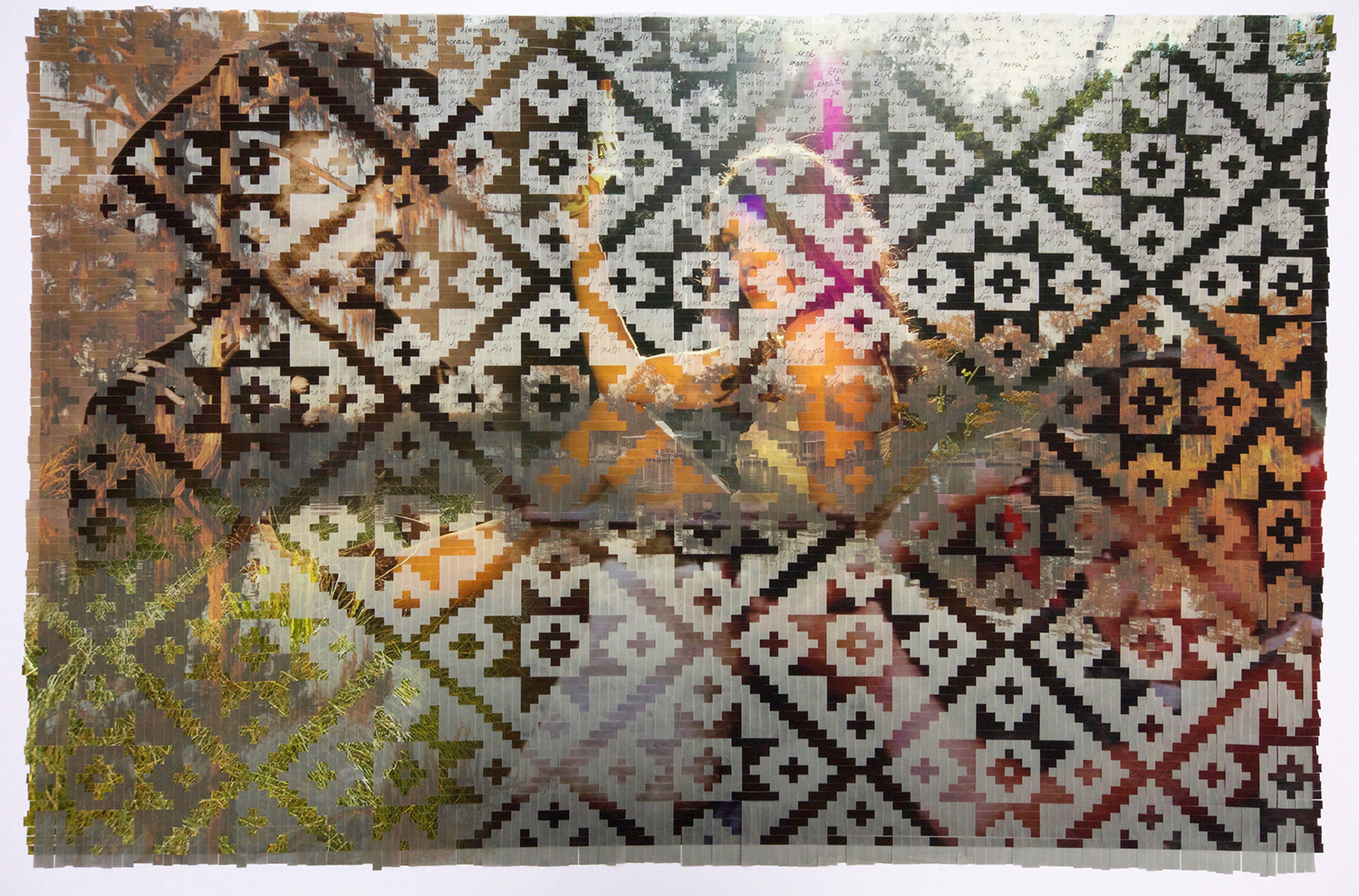
In some ways, Tár is a ghost story, and Krista is the specter, regardless of whether she is on this plane of existence or not. She is a ghost, existing permanently on the outskirts of our perception, and perhaps Lydia’s as well. We never see her face: in early scenes and before we are aware of who she is, we see her from behind as she takes in the spectacle that is the walking, talking performance entitled “Lydia Tár”; she appears in Lydia’s dreams, but the warping of space that is the common element for these nightmare sequences occludes her; even the newspaper article that Lydia reads about her uses a photograph of Krista in motion, conducting, a great lock of her fiery red hair obscuring her face like a mask. She is present and non-present at once, like a vapor that Lydia tries to disperse with a waving of her conductorial hand, but which lingers, waiting for Lydia’s comeuppance. Although it’s not my interpretation, it’s possible to read that there is something supernatural at play here as well, as there are certain moments that imply a more conventional haunting is at play; Lydia is forever aware of various noises behind the walls or out of her sight. While running, she hears screams coming from somewhere out of her range of vision (keen-eared viewers will recognize these as, of all things, Heather’s screams from The Blair Witch Project); while trying to work on her newest composition, she is constantly interrupted by a two-tone sound reminiscent of a doorbell, which is later revealed to be the emergency tone of her dying neighbor on the other side of the wall; she is awoken by the humming of her refrigerator and the ticking of a metronome inside of a cabinet. It’s the last of these that’s most intriguing, as the metronome’s face is inscribed with a Kené pattern, which is not only used as a form of writing by the Shipibo-Konibo people of Peru who were the subject of five years of study by Lydia, but also appears in other places; notably, this pattern was added to the title page of Vita Sackville-West’s Challenge that is left anonymously at Lydia’s hotel (and which was presumably drawn in by Krista), as well as appearing in Petra’s bedroom in the form of clay that the child has been playing with.

Notably, this scene with the clay occurs after we learn that Krista has died. Is this just something that Petra saw in her mother’s work that she’s recreating, or a pattern that she stumbled across purely coincidentally? We know that Lydia gives her keys to her assistants based on an interaction with Francesca, so it’s not out of the realm of possibility that the inscription and activation of the earlier ticking metronome could have been something that Krista did intentionally in order to get under Lydia’s skin, but the clay remains unanswered. The fact that Petra is not allowed in Lydia’s office is mentioned several times, but immediately after observing the pattern in her daughter’s playthings, Lydia then finds Petra in that very office, a ghostly silhouette in the gossamer curtains, where the child has hidden from her sitter. Did Petra start the metronome while playing around after bedtime? Is Lydia sleepwalking and creating these patterns herself? The film doesn’t (and shouldn’t) provide a solid answer, and while I am firmly of the belief that there’s nothing supernatural happening here, the film doesn’t completely rule out that interpretation for the viewer who is so inclined. 

Frankly, that everything is happening might have a rational explanation, or that perhaps in her spiral Lydia is seeing patterns (literally) where they do not exist as her past catches up with her, is much more frightening and anxiety-inducing. Frequently, Lydia is seen responding to sounds, or perhaps impressions, that she perceives but which we do not. While listening to NPR, she mocks the tone of the voice on the speaker, then turns to look behind her suddenly as if she just saw something out of the corner of her eye. This happens several times throughout the film, and it paints her as a person who, although seemingly thoroughly self-possessed, is always looking over her shoulder for her past to catch up with her. That’s what makes this a “woman on the verge” picture: the mask of sanity is slipping. To quote her directly, Lydia knows that her fall from grace is coming, inevitable even, and we know it too; she “know[s] precisely what time it is, and the exact moment we [Lydia and we the viewer] will arrive at our destination together,” and that destination is her downfall. 

Everything about Lydia Tár is a lie, but she doesn’t see it that way; she’s conducting the way that people perceive her, even if that means out and out falsehood. She steals her wife’s medication before the movie even starts, gets replacements while abroad, and pretends to find a pill in a drawer when she returns home to find her wife in medical distress. She claims that she never reads reviews but in fact takes a detour on her miles-long run to visit a newsstand off the beaten path, where the proprietor has already pulled the publication with her most recent review for her; they do this all the time, and she adds this latest to a box of many more. She claims that other women doth protest too much about sexism in her field but she knows that this is an out and out falsehood. Her fellowship is supposed to help support women who want to get into the field, but it’s really little more than a recruitment front for the next ingenue who will become her sexual prey. She rejects gendered terminology and prefers “maestro” to “maestra,” but when confronting her daughter’s bully, identifies herself as Petra’s father, because she knows that, outside of being witty, urbane, and dismissive of the power of patriarchy as part of her public persona, maleness, with its power to intimidate and threaten, is still substantial, even if that masculinity exists only in perception and not reality. Even her impassioned defense of Bach to a queer, BIPOC student is not about Bach, but about herself: one must separate the art from the artist, she insists, but she’s really talking about herself, because beneath all the layers of tailored suits and carefully choreographed photoshoots that the art which is entitled Lydia Tár must be separated from the artist, Linda Tarr (as we learn she was named before deciding to play her own game of identity politics). It is a preemptive apology, not in the sense that it precedes her many ethical failings, but in the sense that it precedes their discovery. She’s already on the edge, verging on the fall, and she can hear her destiny sneaking up on her, even if there’s nothing there when she turns to look at it. 

This is a rich, detailed, many-layered, and beautiful text, one that lends itself to a multitude of interpretations. It’s dense with meaning and subtleties that exist to be cleaved and inspected. Now that it’s available to a wide audience, I can’t recommend it highly enough. It’s demanding, but it’s worth the reward. 

-Mark “Boomer” Redmond