The Roses (2025)

When we went to see Superman while I was in New Orleans in July, Brandon & I mentioned a couple of trailers that we were both sick of seeing and expressed our lack of interest in the films that they were promoting. One of them was Freakier Friday, which I ended up loving, and the other was The Roses. With apologies to my viewing companions who loved this, unlike with Freakier Friday, this one was just as awful as the trailer made it out to be. 

Theo (Benedict Cumberbatch) and Ivy Rose (Olivia Colman) are at an inflection point in their marriage. It’s been ten years since they first met, when Theo escaped into the kitchen of a restaurant to cool off when another person took credit for his designs at a work dinner, meeting chef Ivy. The two moved to the U.S., where Theo’s just landed a major contract to design and build a maritime museum, and he uses the advance from the project to open Ivy’s dream restaurant, called “We’ve Got Crabs.” Unfortunately, the museum collapses during a storm as a result of his poor handiwork, but the same storm ends up stranding a huge crowd of people at Ivy’s usually-empty restaurant, including a notable film critic. As Theo’s career essentially comes to an end (not helped by his filmed reaction to the collapsing building going viral), Ivy’s suddenly explodes, and the two decide to let her be the breadwinner for a time while he raises their two children, Hattie and Roy. A few years later, the kids have transformed from fun-loving little moppets who ate sugar until they threw up to preteen athletes obsessed with performance and fitness, while Ivy’s empire has expanded through franchising of her restaurant. Although Theo was mollified for a time by Ivy’s funding of his design and construction of their (read: his) dream house, now that he’s done with that and ready to re-enter the workforce, their resentments toward one another eventually bubble over and the two start the process of a divorce, as acrimoniously as possible. 

This film was directed by Jay Roach, whose early-career comedy success with the Austin Powers and Meet the Parents franchises eventually devolved into making things like the poorly received American remake of Le Dîner de Cons in 2010’s Dinner for Schmucks and the toothless political satire The Campaign starring Will Ferrell and Zach Galafianakis. Screenwriter Tony McNamara has a better reputation around these parts, having written Poor Things (and having a hand in writing The Favourite), but while this script is serviceable, it’s not up to par with either of those works. In McNamara’s defense, this feels like a film in which the attitude toward adlibbing was a bit too lenient, although given how clunkily some of the film’s supposed zingers thud to the ground it’s hard to believe that this was the best that this cast could come up with. Andy Samberg doesn’t pull out any of his trademark charm as he sleepwalks through his lines with an identical and static “Can you believe this?” smirking energy, but at least he’s not as out of place as Kate McKinnon’s portrayal of his wife, an oddball whose desire to get into Theo Rose’s pants is as obvious as it is offputting. She does deliver the film’s best line, however, when she admits that she’s thrown caution to the wind because she’s old, her face is melting, and she knows her body’s “working up a stage 4 something” so she might as well live a little. 

Both Samberg and McKinnon’s performances have the air of something that would have worked well if the film had been edited with a little more oomph. Their failure isn’t in the performance (at least not entirely) as much as it is in the pacing and the way that the camera lingers on them a little too long after they do a bit. The same cannot be said for Zoë Chao and Jamie Demetriou, who are bafflingly unfunny in ways that I didn’t imagine possible. If you don’t recognize Chao from her voice work on Creature Commandos or know Jamie Demetriou from Fleabag, you’ll know them from the trailer as the couple doing the “We love your witty banter” bit, which is even less funny in the film than it was in the marketing material. Ncuti Gatwa, who plays Ivy’s head waiter, has a couple of good lines, but he’s also playing his character a bit broad; as I’m currently catching up on Doctor Who after losing interest around 2019 and was just coming to the end of Jodie Whittaker’s run, I was a bit concerned that this would bode poorly for his turn as the title character (having since watched his premier in “The Giggle,” I can say that I’m very looking forward to his time as the Doctor). 

I’ve never seen the Danny DeVito-directed original adaptation of this under the same name as the novel, The War of the Roses, but I can’t imagine that this improves on that one. For one thing, that film features DeVito as both a character (he’s a divorce lawyer) and narrator, and it also seems like that one gets into the actual conflict between the couple a lot earlier in the narrative than this one does. I suppose the omission of “war” from the title was actually a declaration that this movie wasn’t terribly interested in that conflict and would instead be a longer portrait of what is, for the first two acts, a fairly ordinary marriage. By the time Ivy’s making deepfakes of her husband confessing to intentionally botching the maritime museum in order to put the final nail in the coffin and Theo’s bashing the actual stove that belonged to Julia Child to pieces, there’s barely any runtime left. The film’s final moment is the most interesting and novel element, but it’s far too little and comes far too late to save this. 

-Mark “Boomer” Redmond

The Phoenician Scheme (2025)

After getting out of my afternoon screening of The Phoenician Scheme, I texted Brandon that it might have hit my top three Wes Anderson films right out of the gate (although on later reflection it’s more safely in the top five), and he replied that it had been largely dismissed out of Cannes as a minor work from him. Within days, I stumbled upon this tweet and sent it to Brandon; in case it disappears, it reads “Oh, did another Wes Anderson film premiere to a muted response at Cannes only to turn out to be another masterpiece? I guess it’s summer again.” I mentioned last year in discussions around Asteroid City that I think Anderson is a filmmaker that we have started to take for granted, even if I personally didn’t care much for The French Dispatch (which Brandon reviewed very positively here). There was much consternation about Asteroid City among some of the people that I ran into at a Friendsgiving in November, and I mostly kept my opinion to myself. It’s a movie that requires you to get on its level and is the only one of his films that I would describe as genuinely surreal. If you didn’t like or get it, then I don’t know that I really have the language to articulate what about it spoke so clearly and effectively to me, or that “getting it” would automatically translate to “liking it.” What I will say is that Asteroid City is far from being an entry level Anderson film, or one with broad general appeal, and that The French Dispatch is also not one that I think should be anyone’s first. The Phoenician Scheme, however, with its mostly straightforward narrative structure, is one that I think will be of interest to a larger audience and range of viewers. 

Zsa-Zsa Korda (Benicio Del Toro) is an international arms dealer and industrialist who finds himself surviving the most recent of numerous attempts on his life when his plane goes down in 1950. Unlike in his previous miraculous survivals, any of which may have taken the lives of his three dead wives, this time he undergoes a near death experience in which he faces divine judgment regarding his heavenly worthiness. Somewhat shaken by this, Korda reaches out to the eldest of his ten children and only daughter, Liesl (Mia Threapleton, Kate Winslet’s daughter), who is a novice preparing to take her final vows to become a nun. Although it’s been years, he offers to provisionally make her the heir to his empire, which would be flattering if all of her brothers weren’t children aged three to fifteen (Korda has adopted several in addition to his biological sons, in case all of his genetic progeny turn out to be duds). Further complicating matters is the widespread belief that Liesl’s mother, Korda’s first wife, was killed at his hands, and although he vehemently denies that he has ever directly or indirectly committed murder, his ongoing recognition of a large number of assassins whom he previously employed calls his veracity into question. Not to mention that he is completely unencumbered by any apparent ethical limitations, as his most recent and greatest work, an infrastructural overhaul of the fictional nation of Phoenicia, will require the use of slave labor, and that he claims responsibility for a famine in the area that’s destabilized local power structures in order for him to have his way. Although Liesl’s devotion to her faith calls her to return and take her vows, her own morals demand that she take the opportunity to agree to Korda’s offer on the condition that there are no more famines or slaves (and that her brothers are moved from a dormitory across the street into Korda’s gigantic mansion, and that some level of paternal attentiveness is provided for them).

For all his many, many flaws as a father and a human being, Korda has an endless thirst for knowledge, which includes the hiring of numerous tutors on various subjects to provide extemporaneous lectures to the boys and himself. The most recent of these is Norwegian entomology professor Bjørn Lund (Michael Cera), who ends up along for the ride serving as Korda’s new administrative secretary (the last one died in the plane crash that opened the film). Korda lays out the movie’s overarching plot quickly and in detail. Due to actions on the part of Korda’s industrial enemies, market manipulation of the cost of “bashable rivets” has suddenly created a funding gap for the whole titular scheme, so he must convince all of the other investors in his project to cover some percentage of “The Gap.” These include Phoenicia’s crown prince Farouk (Riz Ahmed), the brother duo of venture capitalists Leland (Tom Hanks) and Reagan (Bryan Cranston), Korda’s second cousin Hilda Sussman-Korda (Scarlett Johansson), Casablanca-inspired nightclub owner and gangster Marseille Bob (Mathieu Amalric), and “Uncle” Nubar (Benedict Cumberbatch), Korda’s estranged half-brother. As Korda meets with each of them in turn, he finds himself returning to Heaven’s courtroom, where he is defended by an attorney named Knave (Willem Dafoe) before God (Bill Murray) and interacts with Liesl’s mother (Charlotte Gainsbourg) in her afterlife. Under the guidance of Liesl’s moral certitude and with things not going well for him “upstairs,” Korda grows as a person despite never losing his sardonic edge. 

The set pieces that comprise this one are all a lot of fun. When I was telling a friend about it, the one with whom I had watched so many Final Destination films, I noted that this movie opened almost like one of those would, with an airplane blowing out part of its fuselage and a man being ripped in half as a result, except that it’s done in a typically Andersonian visual style, with string and stop motion bits in place of fire and guts, and it sets a great tone for what is to follow. Even while using his standard palette, Anderson is doing a few new things, including using a very shallow depth of field in several wide shots of the massive room in which Korda reunites with his daughter, which causes the image to appear diorama-like until people enter and the illusory spell is broken. It’s fun stuff, and calls to mind the experimental playfulness on display in, for instance, the tour of the submarine in The Life Aquatic. The aforementioned surreality of Asteroid City is not completely absent here, although it’s limited to the scenes in which Korda finds himself at his out of body inquest and its various asides, and they’re very funny; there’s something a bit Mel Brooks about the whole celestial spectacle, which I mean as a great compliment. They’re also much more palatable, as I can imagine the average moviegoer—a “normie” for lack of a better term—showing up to Asteroid City and being completely put off by some of the more esoteric choices, especially with regards to the “You can’t wake up if you don’t fall asleep” refrain that occurs near the film’s ending. Here, confining the more dreamlike elements of the piece to these near-death visions posits them in a rhetorical space that demands less suspension of disbelief (and which contains, perhaps, less whimsy) and is likely going to be more acceptable to the standard viewer. As such, The Phoenician Scheme could easily function as a very good introduction to Anderson’s body of work, since it’s much more straightforward approach would have a broader appeal. 

Del Toro is excellent in this, giving a truly outstanding performance. Korda is a bit of an Andersonian archetype in that his treatment of his children is absurd in the way it finds comedy in its outlandish neglectfulness. This, along with his desire for familial reconciliation, makes him a figure very much like Gene Hackman’s Royal Tenenbaum, but with a bit of a twist. Whereas Royal had a desire to reconnect with his family that was almost entirely selfish and self-interested and he was willing to fake having a terminal illness to get in close, Korda is the ultimate capitalist robber baron who seems to have never cared about anyone other than himself (and perhaps Liesl’s late mother) but who has a large, unloved family that he has no real desire to connect to (like certain other billionaires we could name). He seems more interested in having a family because he’s expected to have some kind of legacy, even if he hadn’t given much thought to what that could mean until he survives his seventh plane crash. There’s a great scene in the “Marseille Bob” segment of the film in which said gangster’s night club is invaded by socialist revolutionaries led by Richard Ayoade, and Korda gets into the middle of things and ends up shot by a trigger-happy rebel. Bob mistakes this accident as a sign of Korda’s nobility and immediately agrees to cover a part of The Gap, and although Korda clearly takes advantage of this error, Del Toro plays the moment as if the motor-mouthed cad is slightly taken aback at how good it feels for someone to believe you’re capable of change. There’s a talent to adding that kind of nuance in both performance and direction without skipping a beat in the dizzyingly-fast dialogue. 

As a counterpoint to all of this, we see Liesl slowly let go of the trappings of faith while retaining her sense of self (there’s a great bit where she admits she’s never heard God’s voice but that she imagines that she does, and He just tells her to do what she was going to do anyway). First, as a rider to her accepting provisional heirship, Korda has her give up her humble rosary for a “secular” one, which is gaudy and covered in jewels. Later, she is given a more ornate replacement for her corncob pipe, which is even tackier. When she tries to return to her order, the Mother Superior tells her that these worldly possessions (which she did not seek but merely received) indicate that she is among those who are simply not cut out for a life of cloistered humility spent in prayer. Part of the film’s genuine heart is finding out where Liesl and her father are going to meet in the middle, and the film is filled with objective correlative metaphors for this in the number of images of things which don’t quite connect, most notably a railway gap of about twenty feet that ends up becoming a makeshift basketball court (it makes sense in context). 

Where the film fumbled somewhat was with the Uncle Nubar character. Cumberbatch is done up in intentionally ridiculous facial hair, and he looks a bit like Ming the Merciless if he stopped grooming or conditioning his mustache and beard and let the whole situation get a little scraggly. It’s a little much, and Cumberbatch’s performance is at first a hard pill to swallow, but by the time he and Korda get into a knock-down drag-out fight, I had come around on it. Some people in my screening were enjoying it from the start, and what I noticed at this movie (which was actually the same theater in which I saw Asteroid City last year) was that it shared that film’s propensity to elicit laughs from different parts of the audience at different times. The jokes come at such a rapid pace that sometimes you just have to give yourself over to the music of the dialogue, and the guy six seats over is laughing at something that you’ve missed and the couple behind you are getting a lot more out of Cumberbatch than you are while you’re laughing at something that it seems like only one other person enjoyed. In my screening, there was one man one row in front of me and two seats over who fell asleep almost immediately and then snored for the remaining 90 minutes. A comedy that’s able to be funny to different people in different ways (and a great movie to take a nap to for that guy in Row C) is laudable, and isn’t to be taken for granted. 

-Mark “Boomer” Redmond

Doctor Strange (2016)

EPSON MFP image

twohalfstar

Earlier this year Boomer wrote a wonderfully incisive piece on the political reasons he’d be abstaining from watching Doctor Strange until he could conveniently view it for free, thus decidedly not contributing to its already massive profits. So much ink has already been spilled here & elsewhere on the myriad of ways the film fumbled the issue of racial representation in its casting, particularly in the controversy of awarding Tilda Swinton the role The Ancient One, a character that traditionally would be played by an Asian man. Director Scott Derrickson has since admitted in interviews that in trying to avoid the “Fu Manchu” stereotype pitfalls of that character’s source material he had made an even bigger mistake in whitewashing the role, a transgression that many Hollywood productions have been indulging in lately. As Boomer & many others have already covered in their thoughts on Doctor Strange‘s insensitivity to whitewashing & cultural appropriation (not to mention its intenional omission of references to Tibet), including Derrickson himself, it’s no surprise that the film had several glaring problems in the cultural mindfulness department. What has been surprising, though, is that Doctor Strange has been earning very high critical marks outside of that controversy context. Some have even called it one of the best films of the MCU, comparing its wide appeal to the first Avengers film & Guardians of the Galaxy. I personally don’t understand the praise, as its storytelling structure dialed the franchise all the way back to the first Iron Man, with almost a decade of MCU creativity & innovation lost in the process.

The one thing that really worked for me in Doctor Strange was the exact selling point that put my butt in the seat in the first place: the visuals. The film has a kaleidoscopic, Inception-inspired way of folding space & time in on itself to create a psychedelic viewing experience unrivaled in most straightforward action adventures of its ilk. Even within Marvel’s own ranks only the microscopic & subatomic shenanigans of Ant-Man come close. Entire cities geometrically fold over like complicated origami. Galaxies expand, contract, and implode as characters’ astral projections tunnel through them. Time inverts, changes direction, and ties itself in knots as both complications and solutions to the Good vs Evil plot. And yet, for all of Doctor Strange‘s mind-bending, gorgeous, playfully surreal visual treats, the story they support is one of the laziest, most simplistic stabs at hacky comedy & unearned redemption narratives since the lifestyle porn beginnings of this franchise in Jon Favreau’s original Iron Man feature. It’s a dispiriting backslide into the worst corner of the MCU, where an egomaniacal monster is celebrated for his immense skill & wit instead of being shamed as the villainous shit that he so obviously is. I don’t regret catching this film in its IMAX 3D format while it’s still screening at every conceivable cineplex, as it gave me the best possible shot at enjoying what was truly a beautiful application of CG psychedelia. I just left the theater feeling more than a little let down by the story that technology was wasted on.

Heartless ass Stephen Strange is the Western world’s foremost neurosurgeon, a fame-obsessed brute who plays pop music trivia during intense surgical procedures, lives in a fabulously expensive apartment the audience is meant to envy, and scoffs at any philosophical ideas that cannot be explained through logic & modern science. His hubris is temporarily put in check after a violent car wreck destroys his most precious assets: his hands. It’s a classic tale of ironic tragedy that dates back to horror cinema as old as The Monster Maker & The Hands of Orlac, if not further, and Strange intends to right this universal wrong by traveling to Nepal and getting himself some of that good old-fashioned Far East mysticism. He’s shamed & trained into momentary submission by the aforementioned Ancient One, who, while dressed in the garb of a Tibetan monk, is actually a centuries-old Celtic woman, for what little it’s worth. We’re then bombarded with a whole lotta Marvel bloat: two(!) new-to-the-franchise villains, a loyal crew of underserved sidekicks, astral projections, alternate dimensions, space-time continuums, all kinds of nonsense. Before you know it, two post-credits stingers later, the whole thing has blown over without leaving much of anything in its wake.

At the center of all this and, apparently, all things in the Universe is the film’s main problem, Stephen Strange himself. The movie asks, “Who are you in this vast multiverse, Mr. Strange?” with the intent to humble him, but the answer the story gives is that he is Everything. No other character is afforded a second of importance that isn’t in some way tied to Strange’s magnificence. His unconvincing turnaround from badboy heel to crowd favorite babyface is made more important than the potential collapse of the Universe. He immediately masters an ancient art others have been steadily studying for decades, yet his rich white man in the East vacation is supposed to be a humbling spiritual journey. Much like with the irredeemable blowhard cad Tony Stark, the audience is asked to sympathize & laugh along with a jokester bully here, buying into a reformed badboy storyline at a moment’s notice, with no significant behavioral or personality change and a very brief loss of wealth & social status. In my recent dive into the entirety of the MCU, I’ve found that I connect with truly good, sincere superhero archetypes like Captain America much more easily than I do with sarcastic anti-hero villains in superheroes’ clothing like Stark, so my distaste for Dr. Strange as a character is certainly the result of a personal bias. I enjoyed this film well enough on a purely sensory level, but was overall soured by its narrative return to an Iron Man aesthetic. Given the immense popularity of the Iron Man franchise & this film’s early critical praise, I expect to be in the minority on that point, but I’m okay with that.

It’s easy to see on a strategic, Kevin Feige level why Marvel felt the need to bring in Dr. Strange as connective tissue in its ever-expanding universe (well, “multiverse” now, I guess). The psychedelia, witchcraft, and real world magic Strange brings to the table easily makes room for Feige & company to tie in the outer space reaches of Thor, Thanos, and the Guardians with the Earthbound characters of the Avengers and the inner space microverse Ant-Man antics. Why tie all of that narrative glue to a character who both closely resembles a protagonist you’ve already built your franchise around and whose origins are so hopelessly backwards in their racist depictions of Eastern stereotypes that you have to rewrite & whitewash them into a barely more acceptable compromise? There are more Marvel characters than I could ever care to count and surely somewhere in there one of them could’ve been a less problematic and more narratively distinct franchise-unifier. Off the top of my head, my two favorite characters in the Marvel pantheon could’ve easily done the job: Howard the Duck & The Son of Satan. I’d understand how past financial performance would set a bad precedent for Howard’s inclusion (despite his outer space origins & the casual disruption of the rules of reality in his often magical villains), but The Son of Satan could surely carry all of Strange’s multiverse-spanning psychedelia without any of the cultural baggage inherent to his origin story. And these are just two characters I know about, not being at all well-read in the vastness of Marvel folklore.

The point is that if Doctor Strange was such a difficult work to adapt with a culturally sensitive eye, there’s really no reason that it should‘ve been adapted at all. There must have been other, better options. This feels especially true once the cookie cutter mediocrity of the story sinks in. For all of the film’s reality-shifting visual creativity, it winds up feeling like so many Marvel origin stories we’ve already seen in the past, never justifying a necessity for its existence as an isolated property instead of as a connective piece for a franchise, which is a total shame & one of Marvel’s most frequent blunders. Maybe if I had any particular affinity for (the eternally forgettable charisma void) Benedict Cumberbatch as an actor I might be singing a different tune, but even my beloved Tilda Swinton couldn’t save this film from banality and she was backed by some of the most beautifully disorienting imagery I’ve ever seen put to use in action cinema. Doctor Strange is a feast for the eyes, but fails to nourish on any comedic, narrative, spiritual, philosophical, or emotional level. For a work that’s inspired over a year of think piece controversy and a few weeks of hyperbolic Best of the MCU praise, it mostly exists as a flashy, but disappointing hunk of Nothing Special.

-Brandon Ledet

Dr. Strange, Marvel’s Race Problem, and Conscientious Objection

EPSON MFP image

Marvel has a race problem. There’s really no arguing with that, unless you’re just not paying attention. So far, black men in the MCU have largely been relegated to secondary roles; Anthony Mackie’s Falcon and Don Cheadle’s James “Rhodey” Rhodes are great characters who play important roles in their respective films, but they’re still essentially sidekicks for the white main characters. Even in Age of Ultron, white newcomers Wanda and Pietro get more screentime than Falcon or War Machine; the two black characters are stuck on the second string. Idris Elba is awesome in the Thor films, but he’s still consigned to staying out of the action and isn’t treated with the same kind of importance in the rest of the MCU as other members of Thor’s supporting cast (like Stellan Skarsgård’s scientist or Loki, both of whom appeared in Avengers, with Dr. Selvig even making his way back to the action for Age of Ultron*). I understand that Gamora is green in the comics, but that doesn’t change the fact that Guardians of the Galaxy featured the biggest role so far for a black woman in this franchise but also saw her ethnicity being erased in the most literal sense imaginable. The problem isn’t that they kept Gamora green, it’s that it  took that long for a black actress to feature so prominently in one of these films. How many Asian characters can you count in the films? There’s Hogun, whose appearances in the Thor films maybe add up to ten minutes of screentime, and there’s Helen Cho, the doctor from Age of Ultron. But that’s pretty much it, isn’t it?

Frankly, it’s kind of pathetic that Agents of S.H.I.E.L.D. has managed to have more POC in major roles than the MCU proper has (with superpowered characters like Daisy, Jiaying, Giyera, Joey, Yo-Yo, and Raina along with non-powered people like Mack, Mike Peterson, Melinda May, Blair Underwood’s Andrew, Edward James Olmos’s interim SHIELD director, and others). It would be easy to say that, for instance, Jessica Jones has thirteen episodes a season and thus more time to develop the character of Luke Cage, or that Daredevil has more time to focus on Rosario Dawson’s Claire Temple, but that’s essentially making the argument that white characters are of primary import, and non-white characters need only be included “if there’s time.” I can already hear the objection that there’s a Black Panther movie coming out soon, so can’t I just be happy about that? And, hey, I am! But I can’t ignore that it took over a dozen films to get to the point where Marvel was willing to “take a risk” on developing a film about a black superhero. This is especially ironic given that the MCU wouldn’t exist were it not for the surprise success of Blade, which we’ve been talking about over in Agents for a while now (it’s not surprising that Blade’s importance has been largely erased from film history; how many articles have you read talking about how Deadpool is “the first R-rated comic book movie”?).

All of this is a long-winded introduction to say that Brandon and I will not be doing an Agents of S.W.A.M.P.F.L.I.X. feature for Doctor Strange while the film is in theatres. He might take the opportunity to review the film independently, but I can’t in good conscience contribute to the box office for this movie. Batman v Superman was not a good film (rants from defensive fans aside), but there will be sequels because of what a financial success it was. Even though the contribution that I made to that success with my ticket fare is largely negligible, I cannot divest myself of some sense of responsibility. Doctor Strange’s whitewashing of the source material, and the blatant monetary reasons for doing so, are not something that I can condone or participate in, so I will not be seeing the film in theatres. Brandon may view the film in order to review it, but readers should not expect an Agents point/counterpoint review until after I have the opportunity to view the film without contributing to it financially.

If you’re upset about this, decrying that Doctor Strange has never been depicted as a POC in the mainstream Marvel continuity and therefore the MCU is not beholden to make him non-white in the adaptation, then my guess is that you are already in the comments section letting everyone in the world know that you’re a low-key racist. But if you’re still with me, here are a few things to bear in mind. First, the argument that characters who are white in the comics should remain so in any and all adaptations because it stays “true” to the original vision of the creators ignores the history of representation (and the lack thereof) in entertainment history. The reason that there aren’t that many black or Asian or Latinx characters in comics isn’t because this is a natural result of reader interest. The reason that the Jay Garrick and Barry Allen Flash characters aren’t white in the comics is because they are of a different era, when accepting that white maleness was the default was the status quo; we live in the future, and it’s time to accept that. When you’re looking at a medium that is 95% white characters, expanding the number of characters who are non-white from 5% to 10%, 15%, or 20% is barely progress, and yet there are people who will fight tooth and nail to keep Johnny Storm, Wally West, and Stephen Strange white.

Secondly, it’s important to look at who is being left behind. Stephen Strange and Danny Rand (of the upcoming Netflix Iron Fist series) in particular are characters that would benefit from solidifying their ties to the Asian cultures that are relevant in their narratives (or, in Iron Fist’s case, connecting the character to something real rather than a fantasized fictionalized Asian culture). Iron Fist exists as a character because Marvel writer Roy Thomas caught a kung fu movie and thought it would be fun to do a kung fu storyline in the comics; Danny Rand’s basically a character that exists because of seventies films that reduced all cultures of the East into a single monoculture for the purposes of exploitation, just as Luke Cage was born out of the popularity of blaxploitation flicks. Yes, the character of Danny Rand is a white guy who is trained by the inhabitants of fictional K’un L’un, but he’s such an obvious choice to diversify the MCU that it boggles the mind that the powers that be chose to cast white actor Finn Jones instead of an Asian actor (off the top of my head Osric Chau comes to mind, or Godfrey Gao if you want to skew a little older). The Netflix adaptations up to this point had actually been somewhat radical in that they focused on characters who exist in marginalized spaces: the handicapped (Daredevil), women in general and abuse survivors specifically (Jessica Jones), and African American men (the upcoming Luke Cage). Casting a white actor as Iron Fist is a total fumble and isn’t even internally consistent with the other Defenders programs.

But when it comes to Doctor Strange, it’s not just a matter of severing ties to an exoticized and fetishized “Orientalism” that was the ground from which Iron Fist sprang. Stephen Strange, in all adaptations, is a conceited surgeon whose fine motor control is lost due to an accident resulting from his hubris, ending his medical career. Confronted by his limitations, he must be apprenticed to the Ancient One, a centuries-old magic user who trains young sorcerers; he is drawn to Strange because he believes that the younger man will one day become the new Sorcerer Supreme, the most powerful wielder of magic of this generation. The history of the Ancient One is that he was born in a Himalayan community known as Kamar-Taj, in what is now Tibet. And that’s where Marvel runs into a problem.

It’s a natural end result of globalization (and cultural colonialism as American  media is distributed around the world) that the international market be taken into consideration with regards to marketing and distribution. Films can live or die these days on the international box office, and China is one of the largest consumers of American film as a consumer good outside of the domestic sphere. As much as we hear complaints these days from regressive pedants about media “pandering” to “SJWs” because of the inclusion of gay, trans*, queer, and POC characters (you know, like people who live in the real world), the most obvious example of pandering in film is the way that films set themselves up to play to the Chinese market. For the most obvious example, just look at the most recent Transformers film, which relocates its action to China in the final third of the film’s runtime, including product placement for Chinese companies that have no foothold in the U.S. You don’t have to pay that much attention to the news to know that Chinese citizens live under an information embargo, with strict censorship laws and an inarguably totalitarian government (unlike the U.S., where we live under a totalitarian economy that controls the government, but the internet is open enough that even flat earthers and anti-vaxxers can voice their absurd beliefs). Transformers 4 went so far as to actually prop up the Chinese government, which is, frankly, amoral. Can you imagine if The Beast from 20,000 Fathoms was made in 1940 instead of 1953 and featured a 40 minute finale sequence set in Germany, with characters asking if they should contact Der Fuhrer for help fighting off a monster, because he’s such a good leader? Yeah, mull that over for a minute.

What does that have to do with Doctor Strange? Well, sweet summer children, the mythos of the comic is strongly tied to Tibet, which was annexed by China and placed under the control of the Chinese People’s Liberation Army in 1951. Ostensibly, the PLA wanted to leave Tibet to operate autonomously, even guaranteeing the people of Tibet the right to religious freedom, but this was a colossal falsehood (the PLA was particularly anti-religious, and the Tibetan monks’ willingness to provide asylum and safe haven for rebels fighting against the oppression of the PLA made them particularly vilified). Tibetan sovereignty essentially died with the Cultural Revolution (1966-1976), when Chinese officials destroyed monasteries, temples, and religious icons in an act of inarguable cultural genocide. Religious leaders and highly educated people were forced to undergo re-education, and exposure of these atrocities to the public eye (most notably with the famous photo of the protestor in Tienanmen Square) brought some attention to the plight of the Tibetan people, but the fervor of Western support was shallow and ultimately short-lived.

References to Tibet in media are, obviously, strictly censored in China. The government bans pretty much any person or piece of media that mentions Tibet at all; the possession of a Tibetan flag is a criminal offense in China. The Communist Party of China (CPC) has effectively destroyed an entire culture and is actively working to erase the history of their atrocity and the people affected by it from the face of the earth, which is sickening. My problem with Doctor Strange is not merely that Marvel cast Benedict Cumberbatch instead of a non-white actor, or that they cast Tilda Swinton as the Tibetan Ancient One, which is basic whitewashing of the character and problematic in its own right. My major issue is that, in doing so, Disney/Marvel is actively participating in the erasure and cover-up of a cultural genocide against the Tibetan people, all for the sake of ensuring that they can continue to see high profit margins on the international (and specifically Chinese) market. Marvel has changed their source material not to keep up with the times, but in order to cowtow to a regime. I am but one man, and a very privileged one at that, but I can recognize that this is amoral at best, and as such I will not be purchasing a ticket to see Doctor Strange. I hope that you will stand with me and do the same.

*I didn’t forget that Idris Elba is also in Ultron, but only in a dream sequence Thor has, which hardly counts.

-Mark “Boomer” Redmond

Zoolander 2 (2016)

EPSON MFP image

threehalfstar

It’s been fifteen years since the release of the original Zoolander, which seems like an awfully long stretch of time before deciding the world needs a sequel. A lot has happened since 2001, including (perhaps least importantly) a major turnaround on Ben Stiller’s fashion world comedy’s cultural cache. Zoolander suffered mixed-to-negative reviews upon its initial release, but has since grown a strong cult following that seems too large to even consider “cult” at this point. I even remember personally going into the theater prepared to hate Zoolander‘s guts as a grumpy teenager & being wholeheartedly won over as soon as the explosive Wham!-soundtracked gas station gag in the first act. The funny thing about Zoolander‘s fifteen-years-late sequel is that it’s on the exact same trajectory for long-term cultural success as the first film. The reviews are dire. The box office numbers are hardly any better. However, the dirty little secret is that Zoolander 2, while being nowhere near as perfectly inane as its predecessor, is actually a damn fun time at the movies. Nowhere near every joke lands in the film, but it’s smart to flood you with enough impossibly idiotic humor that you’re bound to laugh at something, maybe even more often than you’d expect.

In order to justify its own existence, Zoolander 2 has to undo a lot of the happy ending denouement of the original. Former male models/makeshift political intrigue heavies Derek Zoolander (Ben Stiller) & Hansel (Owen Wilson) must again start from the bottom. Hansel has been horrifically scarred & is experiencing growing pains with his in-effect wife, an orgy of weirdos. Derek’s own wife has passed away due to his own failures as a businessman & custody of his son has been revoked by the state due to his total lack of parenting skills in areas as basic as “how to make spaghetti soft”. In order to reclaim their estranged familial relationships & earn back their rightful place on top of the fashion world, Hansel & Derek have to repair their irrevocably broken friendship, putting aside the narcissism that plagues them both so deeply. Obviously, the plot doesn’t matter too much in a comedy as aggressively vapid as this, but I do think there’s something oddly sweet about Zoolander 2‘s central bromance that wasn’t nearly as fully realized in the first film. Derek & Hans really do need each other. They’re entirely codependent in their joint efforts to understand a world that doesn’t make sense to their tiny, uncomprehending minds. It’s a fascinating, even touching companionship even if it is an assertively brainless one.

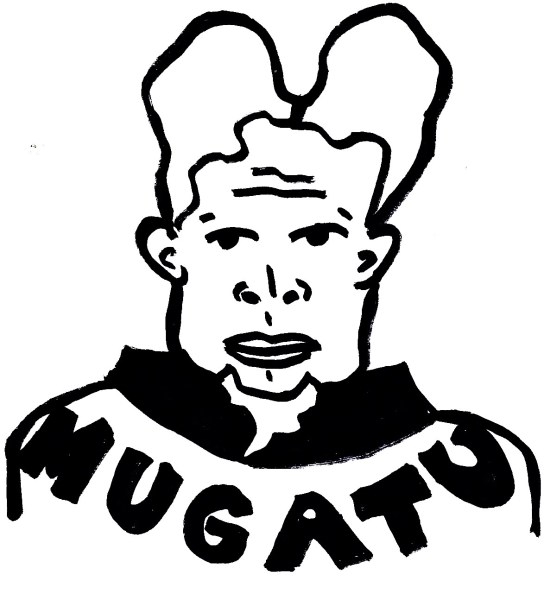
Zoolander 2 does have an Achilles heel, but it’s not exactly the first place you’d expect. The film sidesteps most concerns about being late to the table in terms of following up its original iteration by making the outdated, past-their-prime cultural irrelevance of the its protagonists a major plot point. The redundancy of a second film following the same protagonists as they transition from male modeling to a life in political intrigue is also avoided by adding concerns about familial bonds and, absurdly enough, radical Biblical interpretations & quests for immortality into the mix. Where the film gets a little exasperating is in its never ending list of cameos & bit roles. Even in the film’s trailer swapping an appearance by David Bowie for the much lesser musical being/tabloid fixture Justin Beiber felt like a weak trade-off (although Bieber is actually far from the worst cameo on deck; his time is brief & fairly amusing). The film is overstuffed with both celebrity cameos & SNL vets dropping in for a dumb joke or two. Will Ferrell was a welcome return as the impossibly wicked megalomaniac Mugatu, Penélope Cruz was charming (not to mention breathtakingly gorgeous) as a secret agent for INTERPOL’s fashion division, and current SNL cast member Kyle Mooney proved himself to be a stealth MVP as a double-talking sleazebag hipster piece of shit who’s ironically stuck in the nu metal 00s (an archetype he always nails without fail). These are just a few faces in a sea of many, though, and the nonstop torrent of names like Kristen Wiig, Willie Nelson, Fred Armisen, Katy Perry, and whoever else felt like walking through the film’s perpetually open door did little for Zoolander 2 except to make it feel a little sloppy & out of control.

There were thing I loved about Zoolander 2 & things I easily could’ve done without. The film’s Looney Tunes physics & complete disinterest in stimulating the intellect felt entirely in tune with the original’s sensibility. The vaguely transphobic joke about Benedict Cumberbatch’s androgynous model All in the trailer is not at all improved by being expanded in the movie. Even though Hansel & Derek are close-minded imbeciles who believe things like fat = bad person, their treatment of All is an uncomfortable mixed bag at best & mostly just distracts from the film’s better realized gags. Many of the celebrity cameos & bit roles equally feel like a waste of time that could’ve been better step, but Zoolander 2 decisively aims for a quantity over quality M.O. & by the time the film finds its stride far more of its jokes land than fall flat. I spent most of Zoolander 2‘s runtime laughing heartily, which might as well be the sole requirement for a movie this militantly irreverent to succeed as a finished product. It’s not the best comedy in the theater right now (that would be Hail, Caesar!), but it’s also not the worst (*cough* Deadpool *cough*) & I could easily see myself watching/enjoying the film multiple times in the future. If nothing else, that’s a far better experience than I expected based on its early reviews, which is pretty much how this whole ordeal worked out the first time around in 2001.

-Brandon Ledet

Black Mass (2015)

EPSON MFP image

threehalfstar

What the hell has Johnny Depp been doing for the last decade? It used to be that every new Depp performance was worth getting excited about, but the last time I can remember being impressed with him was as the notorious reprobate John Wilmot, 2nd Earl of Rochester in 2004’s The Libertine. Everything since feels like a formless blur of pirates, Tontos, and CGI chameleons. No matter. Depp has returned to his past life as a solid, exciting actor in another formally middling biopic packed to the gills with great performances, Black Mass. With his receding hairline, hideous teeth, ever-present aviators & pinky rings, and eyes so grey-blue they almost make him look blind, Depp plays the infamous South Boston crimelord Whitey Bulger like a strange cross between Hunter S. Thompson & Nosferatu. It’s a measured, but menacing performance that proves Depp still has it in him to terrify & captivate, completely transforming beyond recognition & losing himself in his best role of the past decade.

The worst accusation that can be thrown at Black Mass is that it’s a little formally & narratively overfamiliar. The film doesn’t bring anything particularly fresh to the 70s-era organized crime drama format, calling to mind works from names like Brian De Palma, William Friedkin, and Martin Scorsese in nearly every scene. In fact, because of the thick Boston accents inherent to Whitey Bulger & The Winter Hill Gang it’s easy to pinpoint a specific point of reference in Scorsese’s oeuvre that Black Mass can be accused of being a little too reminiscent of: The Departed. Just know that if you’re looking forward to this film as a fan of that genre there’s not going to be long stretches of brutal violence & gunfire that usually accompany organized crime films. Black Mass has its moments of brutality, sure, limited mostly to bursts of fist to face sadism & quick bursts of assassination, but for the most part it’s a calm story of political intrigue. The movie is almost entirely focused on the real-life Bulger’s secretive “alliance” with the FBI that allowed the two agencies to work together to eradicate the Italian mafia from Boston, making room for Bulger to bloom from a small time crime boss into an all-powerful kingpin. Black Mass is concerned with the audio surveillance tapes, buried/forged paperwork, and back alley dealings with the federal government that allowed for Bulger’s rise to power much more than it is with his murderous deeds, which amount to exactly one onscreen shooting & two strangling on Depp’s bloody hands. Bulger is terrifying, but the threat he poses is more systemic than it is physical, making for a film that may have defied the more bloodthirsty expectations of its audience. I noticed quite a few viewers at our screening checking their cellphones in the second & third acts . . .

Any muted expectations I had for Black Mass based on its 70s-era crime drama familiarity (an aesthetic that somehow hilariously continues well into the 90s in the film’s timeline) were surpassed merely on the merit of its performances. Besides Depp’s horrifying, career-revitalizing turn as Whitey Bulger, there’s also great, unexpected screen presence from Kevin Bacon, Adam Scott, Dakota Johnson, Joel Edgerton, Benedict Cumberbatch, Peter Sarsgaard, and, my personal favorite, Julianne Nichlson (who was fantastic in both Boardwalk Empire & Masters of Sex and whom I only want the best things for). This is an actor’s movie. The 70s crime pastiche is merely a backdrop for the absurdly talented cast’s parade of heavy Boston accents & emotional turmoil. The screenplay offers very little in terms of surprise. Of course Bulger is the kind of gangster that is gentle & neighborly with old ladies, but will have a man killed for threatening to punch him in a bar. Of course, despite his official status as a “top echelon informant”, he’s prone to saying things like, “I don’t consider this ratting or informing. This is business.” Of course, because this is a gangster movie, the script is a long procession of a million “fuck”s, one with just a few homophobic & anti-Italian slurs thrown in there for good measure. I consistently got the feeling that we’ve all seen this play out countless times before, but I still enjoyed it a great deal. Just as a particularly corrupt FBI agent justifies his involvement with Bulger as “a little white lie to protect the bigger truth”, Black Mass is a little, unassuming movie worthwhile for how it supports such a massive list of excellent performances, Depp’s return to form, believe it or not, being just one drop in the bucket.

-Brandon Ledet