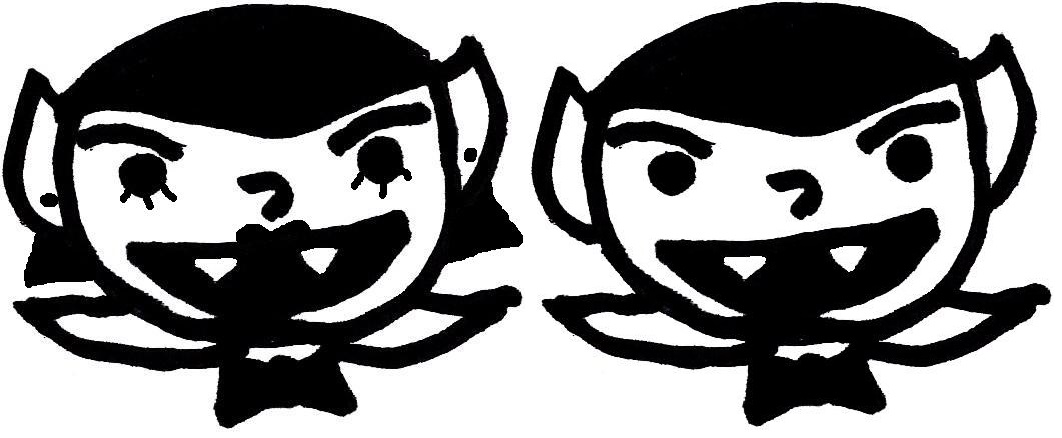

Late Night with the Devil (2023)

It’s easy to get dispirited by the deluge of current pop culture product that’s just nostalgic regurgitation of vintage hits from decades ago.  If you dwell on how much of our current “creative” output is just a distant echo of pre-existing iconic works, you’re only going to see a culture in decline.  Not all pastiche is empty, though.  While most nostalgia bait cites past triumphs for an easy pop of recognition, there are plenty modern throwbacks that sincerely interrogate or subvert the artistic intent & cultural context of their inspirational texts.  For every Netflix special that drags the Power Rangers out of retirement for a nostalgia-stoker victory lap, there’s an absurdist French comedy that subverts & recontextualizes that same vintage 90s iconography into something wonderfully new & strange.  The same day I saw Quentin Dupieux’s absurdist Power Rangers parody Smoking Causes Coughing at this year’s Overlook Film Festival, I also happened to catch a similarly subversive nostalgia piece in Late Night with the Devil, which dialed the pop culture clock even further back for even weirder effect (and won the festival’s Audience Award for Best Feature as a result).  Late Night with the Devil is vintage TV Land horror, a parody of a late-night 70s talk show broadcast that’s hijacked midway by The Devil.  It stokes vintage 1970s pop culture nostalgia as its initial hook, but mostly just uses that temporal backdrop for a sense of comfort & familiarity that can be stripped away for effective third-act scares once the titular Devil is conjured.  It’s also thematically purposeful in returning to that era because it has something specific to say about pop culture at that time, an embarrassingly low bar that isn’t cleared by more routine nostalgia cash-ins like the upcoming Mighty Morphin’ Power Rangers: Once & Always.

David Dastmalchian stars as a late-night talk show host who teeters somewhere between the post-vaudevillian comedy of Johnny Carson and the cigar-smoke intellectualism of Dick Cavett.  After a faux-documentary prologue sketches out the basic outline of Dastmalchian’s fictional Night Owl talk show (including its imagined ratings war with Carson and its host’s personal dabblings in the occult), we’re submerged in a real-time Sweeps Week novelty episode of the show, supposedly broadcast on Halloween Night in 1977.  Even within that Halloween Special context, Late Night with the Devil mostly functions as a loose collection of 70s kitsch, touching on iconic-to-forgotten figures of the era like Orson Welles, Anton LaVey, and The Amazing Kreskin as if they’re all of equal importance.  Things get dicey when the Night Owl producers restage a real-life version of Friedkin’s 70s horror classic The Exorcist as a shameless ratings stunt, unwittingly unleashing a powerful demon that calls itself Mr. Wriggles onto the American public through live broadcast.  The demonic scares of the film’s back half allow its initial Nick at Nite nostalgia trip to go wildly off the rails in exciting, unpredictable ways.  It also opens the text up for direct, sincere criticism of the era’s professional machismo – interrogating the ways that men nearing the top of the corporate ladder were willing to exploit the vulnerable underlings below them (especially if they’re women) just to scramble up the last few rungs.  Sweeps Week desperation has never been so deadly, nor has inane talk show chatter about “current” events & the weather. 

If there’s anything holding Late Night with the Devil back from achieving greatness as a standalone novelty, it’s that there are so many nostalgia-critical genre throwbacks already out there to match or best.  In particular, its real-time simulation of an actual cursed, vintage TV broadcast is outshone by the Satanic Panic era news report parody film WNUF Halloween Special, which is also framed as a ratings stunt gone wrong.  Not only does WNUF have more politically incisive things to say about the cultural moment it time-travels to for cheap gags & scares, but it also fully commits to the bit in a way Late Night with the Devil doesn’t dare.  Instead of repeating the WNUF trick of breaking up its broadcast with parodies of vintage television commercials, Late Night cheats by bolstering its narrative with backstage drama & impossible “documentary” footage that distract from the verisimilitude of its premise.  It’s a frustrating indulgence at first, but the film eventually makes the most of it in a go-for-broke, reality-bending finale that’s worth forgiving the few shortcut cheats it takes to get there.  If you don’t mind a little logical looseness in your “found footage” horror novelties, Late Night with the Devil is perfectly calibrated Halloween Season programming.  It pulls double duty in both nostalgically calling back to vintage horrors past (which is especially welcome if you’ve already seen The Exorcist and its many knockoffs one too many times) and finds modern political & technological justifications in returning to those well-treaded waters.  It’s not nostalgia bait so much as it’s nostalgia perversion, which is a much more interesting angle than you’ll find most modern pop culture attempting.

-Brandon Ledet

The Five Devils (2023)

One of the major reasons I love film festivals is that they transform otherwise low-profile, niche-interest oddities into the hottest tickets in town.  I always find it a little silly when festival crowds fight for a seat to see a wide-release studio film just a few weeks before it’ll play at every suburban multiplex anyway, but I’m charmed when that enthusiasm trickles down the program to smaller titles that will otherwise play to empty arthouse auditoriums before dying a slow death on streaming.  I was sharply aware of that phenomenon when lining up to see the weirdo fantasy drama The Five Devils at this year’s Overlook Film Fest the same day that it was premiering at The Broad Theater just a few blocks away from my house.  The Five Devils is the exact kind of low-budget, high-ambition art film that I’m used to watching alone at The Broad (or even at the same downtown location of The Prytania where most of Overlook is staged), so it was heartwarming to queue up with a swarm of like-minded, enthusiastic freaks psyched to be bewildered by it in unison.  It shouldn’t be surprising that a local genre festival could draw a sizable crowd to see a title that’s already screening outside its downtown shopping mall locale, considering the self-selection process of an audience already receptive to what Overlook offers.  Still, it was wonderful to see an odd, alienating little movie like The Five Devils get treated like a Cultural Event, when outside of festivals that kind of buzzy Thursday-night premiere is strictly reserved for superhero sequels & Tom Cruise suicide missions.

The last time I saw a French time-travel drama about a little girl who meets the younger, more troubled version of her mother through an unexplained, magical-realist device, it was in a near-empty auditorium.  Petite Maman is a much more accommodating, crowd-pleasing version of that story template too, underplaying the supernatural immensity of its time-travel premise to instead focus on subtle moments of dramatic grace.  In contrast, The Five Devils is Petite Maman for sickos, which is why it’s so heartwarming that Overlook was able to scrape together a full crowd of sickos to bask in its abrasive, brain-rattling glory.  Calling its time traveling anti-hero a “little girl” is a little reductive.  She’s more of an untrained, irresponsible witch, one who uses her supernatural sense of smell to jar up homemade potions that distill the unique essence of her few loved ones so she can mentally revisit them at will through sense memory.  This lonely pastime gets out of control when she gets a hold of an elixir that allows her to astral-project into those memories, effectively time-travelling to her mother’s youth.  What she discovers while traveling via these jarred scents is that she hails from a complex lineage of similarly obsessive, volatile women – most notably the younger, brasher version of her mother and her mother’s secret high school lover.  From there, The Five Devils unravels to reveal an intensely fucked-up little time-travel family drama, one punctuated by wild jabs of style & emotion that you won’t find outside of buzzy festival line-ups, empty arthouse theaters and, eventually, public library DVD loans.

There are plenty of readymade reference points that might help define The Five Devils through comparison: the childhood time travel & poolside romance of Céline Sciamma’s Petite Maman & Water Lilies; the ecstatic gymnastic seizures of Ana Rose Holmer’s The Fits; Divine’s supernatural sniffer in John Water’s Polyester; etc.  Its wide range of vaguely familiar elements are reconfigured into such a uniquely high-style, high-drama mode of modern queer filmmaking that it can’t be cleanly categorized into any one long-running genre, though, except maybe to say that it makes for an incredibly uncomfortable Christmas film.  Similarly, I can’t pinpoint exactly what’s being conjured by its provocative title, since there are no literal devils in its narrative (which would more firmly push it into the horror territory covered by most of Overlook’s programming).  Are the five “devils” the five senses?  It certainly made me squirm under the sense of touch as the hard sequins of a gymnastic uniform scraped against freshly burnt flesh in its barnburner finale, but most of the story is dominated by smell.  Are they the four family members that crowd the small French household where the little scent-witch dwells, plus the one spurned & injured lover her parents left behind when they hooked up as teenagers?  Maybe. But no one among them is evil or villainous, exactly.  They all just indulge in messy, passionate human behavior, sometimes heighted by their unexplained supernatural powers.  Ultimately, I don’t actually want an answer to the question.  It’s just indicative of the rhetorical games of provocation & illogic that the film plays with the audience, and it’s often shocking how complex & emotional the results of those games can be.

To find the passionate cult audience it deserves, The Five Devils needs to be chopped up into easily digestible, memeable morsels the way similar crowd alienators like Midsommar, Tár, and Annette have in the recent past.  There’s plenty to work with there, from the striking visuals of young newcomer Sally Dramé huffing her collection of self-labeled scents to the total emotional breakdown of indie darling Adèle Exarchopoulos drunkenly slurring “Total Eclipse of the Heart” on a karaoke stage.  Hell, even I’m guilty of reducing it to something cuter & simpler than it is with my little “Petite Maman for sickos” quip.  In truth, it’s a very thorny, elusive work that’s difficult to market in any effective way without spoiling & overexplaining each of its dramatic twists.  That’s why it’s so great that festivals like Overlook & Cannes (where The Five Devils premiered) are able to drum up actual, real-life enthusiasm for a film this abrasively weird.  I love that I regularly get to see this kind of genre-defiant anomaly at The Prytania & The Broad, but it’s often a much quieter, lonelier experience.

-Brandon Ledet

Smoking Causes Coughing (2023)

French absurdist Quentin Dupieux has been on a real hot streak lately.  Threatened to only be remembered as an early-internet memester for his Mr. Oizo music videos and the killer-tire horror comedy Rubber, Dupieux recently hit a creative breakthrough in the killer-jacket horror comedy Deerskin.  On paper, it might not appear that there had been much progression between his early novelty horror about a murderous rubber tire with telekinetic powers and his more recent novelty horror about a murderous deerskin jacket with telepathetic powers, but Deerskin really did mark a new level of maturity & self-awareness in Dupieux’s art that’s been consistently paying off in the few years since.  Every one of his films, including Rubber, are proudly Absurdist comedies about the meaninglessness of Everything, but Deerskin extended that worldview a step further to indict his own catalog of work as meaningless art about meaninglessness – an endless parade of empty frivolities.  That might sound like it would de-value Dupieux’s creative output, but it’s instead freed him to follow his most inane, meaningless impulses for the sake of their own pleasure, and he’s been making his funniest comedies to date as a result.

At first glance, Smoking Causes Coughing registers as just another one of Dupieux’s hilarious but meaningless novelties, no more important in his larger oeuvre than his recent Dumb & Dumber buddy comedy about a monstrously gigantic housefly.  Since all of his movies assert a consistent absurdist worldview, there isn’t much to distinguish the individual titles from each other outside the immediate humor of their high-concept bar napkin premises.  If Dupieux had fully committed to a feature-length Power Rangers parody entirely focused on the Super Sentai superhero knockoffs rebuilding group “cohesion” & “sincerity” on a mundane work retreat, that’s exactly what Smoking Causes Coughing would be: another fun, dumb, proudly meaningless comedy from an increasingly prolific director who makes two or three novelties just like it every year.  Instead, it manages to feel like yet another Deerskin-style shakeup to his creative routine, freeing him to be even dumber & more meaningless than ever before.  That’s because it’s an anthology horror comedy disguised as a feature-length Power Rangers parody, a surprise change in format that has not been hinted at in the film’s cheeky advertising.

Apparently antsy about having to spend 80 minutes on just one absurdist bar napkin premise, Dupieux is now chopping them up into bite-sized 8-minute morsels, which is great, because every impulse he has is hilariously idiotic.  With Smoking Causes Coughing, he’s entered his goofball Roy Andersson era, merging philosophical art & sight-gag sketch comedy into an efficient joke-telling machine that’s free to follow its momentary whims from vignette to vignette without fear of losing the audience’s confidence.  In the Power Rangers-spoofing wraparound story, a team of helmeted rubber-monster fighters called The Tobacco Squad (because they use the destructive powers of cigarette smoke to defeat their intergalactic kaiju enemies) find their teamwork in daily battles increasingly disjointed, so they go on a corporate-style work retreat to rebuild group cohesion.  As soon as that gag is milked for all it’s worth, the individual members of Tobacco Squad (Nicotine, Mercury, Methanol, etc.) entertain each other with campfire horror stories to pass the time, which allows Dupieux to fire off as many short-form, for-their-own-sake inanities as he pleases.  They’re all very funny (especially the slasher parody segment involving a noise-cancelling isolation helmet) and intensely idiotic in the exact ways Dupieux’s ideas have been from the start, but none of them threaten to outstay their welcome the way a single-joke premise like Rubber might have in the past. 

All that Dupieux’s missing at this point, really, is an American audience.  It’s likely no coincidence that my favorite two movies from him to date are the ones I happened to catch in the theater, so it’s a shame their only New Orleans screenings were at festivals, not in regular theatrical runs.  I very much appreciated getting to laugh along with like-minded crowds during Deerskin at New Orleans French Film Fest in early 2020 and, more recently, during Smoking Causes Coughing at Overlook Film Fest last week (the same day it was domestically released VOD). Still, it’s odd to see his work sidelined as specialty events for niche audiences.  Both films killed in the room, and it would be incredibly cool to see Dupieux’s recent output get the crowd-pleaser rollout they deserve.  If an easily marketable Power Rangers aesthetic and a glowing blurb from John Waters calling his latest “a superhero movie for idiots” & “one of the best films of the year” isn’t enough to earn Dupieux wide theatrical distro before being siphoned to streaming, it’s doubtful anything ever will.  We shouldn’t be allowing the funniest comedies on the market to be downplayed as high-brow festival fodder because they happen to be in French, but I guess I should just be grateful that he’s continuing to make them and that local fests like Overlook are continuing to program them; it’s always a blast, especially with a crowd.

-Brandon Ledet

Podcast #183: Sleep Has Her House (2017) & Slow Cinema

Welcome to Episode #183 of The Swampflix Podcast. For this episode, Brandon, James, Britnee, and Hanna discuss the highbrow, low-energy art of “slow cinema” – ranging from Scott Barley’s self-distributed microbudget cult film Sleep Has Her House (2017) to Chantal Akerman’s landmark feminist classic Jeanne Dielman (1975), recently cited by Sight & Sound as “the greatest film of all time”.

00:00 Welcome

02:24 Jethica (2023)
05:48 The Strange Thing About the Johnsons (2011)
11:30 Knock at the Cabin (2023)
14:57 Branded to Kill (1967)
19:58 A Ghost Story (2017)

27:26 Sleep Has Her House (2017)
53:46 Jeanne Dielman, 23 quai du Commerce, 1080 Bruxelles (1975)
1:18:00 La Ciénaga (2001)
1:43:10 Tropical Malady (2004)

You can stay up to date with our podcast through SoundCloudSpotifyiTunesStitcherTuneIn, or by following the links on this page.

-The Podcast Crew

Quick Takes: New Orleans Rep Scene Report

I’ve hit a dry spell with new releases lately.  Now that last year’s Awards Season holdovers and January’s Dumping Season genre trash have fallen off local marquees, there just isn’t that much out there for me.  I’d be in much better shape if I kept up with the annual sequels to ongoing franchises like Shazam, Creed, and John Wick, but I resent the idea that I need to do prerequisite homework before going to the movies, so I’m okay just letting them pass me by.  During this ritualistic dry spell that crops up before “Summer Blockbuster” season gets rolling mid-Spring, I find myself thinking a lot about cities like Los Angeles, New York, Austin, Chicago, and Toronto that aren’t nearly as reliant on the new release calendar for their moviegoing options.  These are cities with robust, flourishing repertory scenes where audiences seemingly get to see an older “new-to-you” title projected on the big screen every day of the week.  The New Orleans rep scene is much smaller & more scattered, to the point where it isn’t actually an organized scene at all.  You have to scrounge local listings on a weekly basis to find a couple disparate repertory titles worth getting excited about, something I become sharply aware of every time the new release calendar gets this consistently dull.  New Orleans rep screenings are out there, though, and they are easily accessible if you know where to look.

So, here are a few quick short-form reviews of the repertory screenings I happened to catch around the city over the past month, along with notes on where I found them.

Cléo from 5 to 7 (1962)

You can find the usual suspects of broad-appeal crowdpleaser rep screenings on a near-monthly basis—namely, Rocky Horror & The Room—but for the really good stuff you have to wait for annual festivals.  For instance, the upcoming Overlook Film Festival is about to bring legacy screenings of titles like Joe Dante’s Matinee, William Castle’s The Tingler, and David Cronenberg’s Dead Zone to both locations of The Prytania for one killer rep-friendly weekend we won’t see again until next Overlook.  This is happening less than a month after the most recent New Orleans French Film Festival (also staged at The Prytania) included Agnès Varda’s French New Wave classic Cléo from 5 to 7 in collaboration with the host venue’s weekly Classic Movie series.  That was also no fluke.  In the past, I’ve gotten to see French classics like Breathless, Children of the Paradise, Beauty and the Beast, Umbrellas of Cherbourg, Mr. Klein, and The Nun for the first time on the big screen thanks to French Film Fest, when I’d usually have to seek that kind of artsy-fartsy fare on the Criterion Channel at home.  I’ve particularly become spoiled when it comes to Varda’s work, of which I’ve seen most of her titles that I’m familiar with (including personal favorites The Gleaners & I and Le Bonheur) for the first time at that exact venue.  In all honesty, I should have sought out Cléo from 5 to 7 a lot sooner, as it’s arguably her most iconic work, but I was convinced it would eventually play at the festival if I was patient enough . . . and the gamble paid off.

The titular Cleopatra is a young chanteuse enjoying mild notoriety for her yé-yé pop tunes in early-60s Paris.  She’s also a superstitious, narcissistic hypochondriac who’s awaiting potentially devastating news from a doctor who recently screened her for cancer.  The movie follows Cléo’s attempts to distract herself for the final two hours before those test results arrive, explaining through an observational character study how, in her mind, the anticipation is far worse than any news her doctor could deliver.  Incidentally, the film also doubles as a real-time tour of 1960s Paris, as Varda’s handheld, ground-level camera commits brazen acts of people-watching while Cléo cabs & busses from cafe to art studio to couturier.  As Cléo muses about how modeling new clothes is intoxicating and her free-spirit bestie muses the same about nude modeling for art students, that cinematic voyeurism becomes the main thematic thrust of the picture.  The camera casually observes the people of Paris.  The people of Paris intensely observe the fashionable Cléo, who in turn even more intensely observes her own reflection.  Even though not much actually happens in the film, I was thrilled by how much of its screen space was overwhelmed by reflections in mirrors & windowpanes.  Not only did those reflections underline its themes of self-obsession & strange gazes, but it also just looked cool, affording Varda even more room to chop up & alter her images from infinite angles. And just as I was putting that thought together, the movie “overhears” a café discussion of Cubism as an artform.  As always with these Varda screenings at French Film Fest, Cléo was an immensely rewarding trip to the theater, one that made me fondly remember its newfound superiority over Breathless in the most recent Sight & Sound rankings.

Assault on Precinct 13 (1976)

Besides sporadic festival offerings, the most obvious, consistent venues for rep screenings are the only venues where you can watch any movies in New Orleans proper: The Broad and The Prytania, which among them account for the only three full-time cinemas within city limits.  Luckily, they’re both well balanced & adventurous in their programming, squeezing in as a many freak-show arthouse screenings as they can between the Top Gun & Avatar behemoths that pay the bills.  Since they recently acquired the Canal Place venue, The Prytania has had more screens to play with than The Broad, so they have more room for regular repertory programming like their aforementioned Classic Movie series and their weirder, wilder Wildwood series on Thursday nights.  I check both theatres’ listings every Tuesday afternoon to survey the next week of showtimes, though, and they’ve both come through with plenty of great repertory screenings in recent months – from new-to-me genre relics like Ghost in the Shell & Calvaire to very strange, one-of-a-kind presentations of The Mothman Prophecies and Antonioni’s Blow-Up.  Even though their rep offerings are less frequent, The Broad accounts for about half of the screenings I actually make it to (not least of all because they’re a much shorter bus ride away from my house), and I very much appreciate that they make room for older titles on the few screens they have to play with.  In particular, they’ve been on a John Carpenter kick lately, screening 4K restorations of his genre-defining classics that happened to get past me in my video store youth, which is how I recently got to see both The Fog and Assault on Precinct 13 for the first time on the big screen.

I would never place a Western-inspired prison siege movie above Carpenter’s supernatural horror classics as the director’s absolute best, but Assault on Precinct 13 does have a strong case as Carpenter’s absolute coolest.  Set in the vaguely defined war zone of “a Los Angeles ghetto”, this punk-era cops vs. gangsters shootout recalls much later, grimier genre pictures like Tenement, The Warriors, and Streets of Fire than it does the gruff, traditionalist John Wayne heroics that inspired it.  That said, Darwin Joston is doing a straight-up John Wayne impersonation as the laidback Death Row inmate Napoleon Wilson, who’s temporarily set free by his jailers to fire back at the ghoulish gangsters who relentlessly invade the titular police station where he is held captive.  His uneasy, sardonic friendship & romance with the officers he fights beside make Precinct a kind of unlikely hangout film in the tradition of the similarly violent-but-laidback Rio Bravo.  It’s Carpenter’s overbearing directorial style that makes it a classic in its own right, though, especially in the way he portrays the invading gangsters as no less mysterious & otherworldly than the ghosts that emerge from The Fog.  His halfway-closed police station setting is an eerie liminal space, and the morality of who’s in “the right” in the plot’s pigs vs. civilians warfare is just as unsettled.  I’ve gotten to see a lot of John Carpenter classics for the first time theatrically (including his actual career-best, The Thing, at The Prytania), and two things are always consistent among those screenings: his signature synth scores are electrifying in that full surround-sound environment, and no matter how great the movies are I always struggle to stay awake for their entirety.  In a perfect world, I’d love for the city’s somewhat regular John Carpenter rep screenings to play as matinees instead of cult-classic Midnighters, but as is I’ve gotten used to seeing them in my own liminal halfway dream state, re-running key scenes on Tubi as soon as I get home to make sure I didn’t actually sleep through something vital.  Given its real-world setting & premise, I didn’t expect Assault on Precinct 13 to fit so well into that eerie supernatural mold, but that’s apparently the John Carpenter touch.

Crouching Tiger, Hidden Dragon (2000)

When things get really desperate, you can always leave the city for the suburbs, where there are multiple AMC Theaters waiting to dazzle you with “$5 Fan Favorite” rep screenings of crowd-pleasers like E.T., Jurassic Park, The Goonies and, presumably, even a few movies not produced by Steven Spielberg.  I happened to catch AMC at an opportune moment in recent weeks, when the Awards Season afterglow of the Oscars allowed for more variety on their schedule than usual.  In particular, AMC Elmwood included Ang Lee’s international wuxia hit Crouching Tiger, Hidden Dragon on its recent Fan Favorites schedule, presumably inspired by Michele Yeoh’s Oscars Moment as the lead of the Daniels’ Everything Everywhere All at Once.  Movies like Crouching Tiger returning to the big screen for their victory laps (or, often enough, getting funded in the first place) are the major reason I consider the exhausting Oscars ritual an overall net good. They’re more of a useful marketing tool than they are a signifier of artistic quality, but they are useful.  Until now, I’ve only ever experienced Crouching Tiger, Hidden Dragon as an on-the-couch Blockbuster VHS rental, and it was wonderful to see its fantastic fight choreography play out on a larger canvas for the first time.

To my taste, the classy, buttoned-up version of martial arts cinema in Crouching Tiger is not nearly as exciting as the more playful, over-the-top actioners Michele Yeoh was making in her Hong Kong heyday.  Since The Heroic Trio is unlikely to ever make its way back to the suburban multiplex, however (despite a recent co-sign from The Criterion Collection, an actual signifier of good taste), I was ecstatic to watch Yeoh clang swords & hop rooftops in this Oscars-certified historical drama.  I can’t say that the will-they-won’t-they love story Yeoh shares with Chow Yun-Fat ever landed much emotional impact with me in the few times I’ve seen this film, nor do I pay much attention to the quiet nobility of their mission to find a rightful home for a 400-year-old sword.  I’m the kind of dipshit who prefers Pearl Chang’s low-rent, goofball version of wuxia acrobatics to the headier, classier oeuvre of King Hu, though, so it’s probably best that my personal taste is not dictating what gets screened around the city.  At its best, Crouching Tiger, Hidden Dragon is a visual spectacle about the beauty of tactile fight choreography and wire work, and no matter how restrained the drama is between those fights (nor how mundane a theatrical venue the AMC can be), it’s impossible to deny the power of seeing those images big & loud for the first time.

-Brandon Ledet

Lagniappe Podcast: Baahubali (2015 – 2017)

For this lagniappe episode of the podcast, Boomer, Brandon, and Alli discuss S.S. Rajamouli’s two-part South Indian action epic Baahubali: The Beginning (2015) & Baahubali: The Conclusion (2017).

00:00 Welcome

00:42 Europe After the Rain (1978)
06:40 Images (1972)
12:36 The Murder of Sherlock Holmes (1984)
17:03 Crimes of the Future (2022)
27:20 Crouching Tiger, Hidden Dragon (2000)
30:41 Full River Red (2023)
34:36 Thunivu (2023)

37:23 Baahubali (2015 – 2017)

You can stay up to date with our podcast through SoundCloudSpotifyiTunesStitcherTuneIn, or by following the links on this page.

-The Lagniappe Podcast Crew

Full River Red (2023)

Awards “Season” is such an exhausting, never-ending cycle that I fear I’m breaking a sensitive taboo just by speaking its name so soon after this year’s ritual “concluded”.  Any sane, sensible person should not be saying the word “Oscars” for at least another seven months.  I promise that there is a point to the transgression, though, as I’ve noticed a couple immediate benefits to surviving this year’s Awards Season gauntlet, mostly due to the sweeping wins of the Daniels’ sci-fi action comedy Everything Everywhere All at Once.  First, EEAAO is back in theaters again, and as much as its online fandom & Awards Season success makes it seem like a cultural juggernaut, it’s only been during this post-Oscars push that the its box office profits have finally surpassed the grim superhero origin story Morbius – a film sincerely enjoyed by no one.  Even better, the Oscars marketing machine has also cleared some space for a wider cultural appreciation of Michelle Yeoh, who is currently both the subject of a Criterion Channel sub-collection of Hong Kong action classics and the inspiration for a theatrical re-release of the early-aughts Oscar contender Crouching Tiger, Hidden Dragon.  I bring that up not only because it’s worth celebrating, but because in its own post-Oscars glow (landing four wins out of nine nominations) Crouching Tiger also cleared space for a wider range of genre cinema at the suburban multiplex, proving this post-EEAAO bump is no fluke. 

In particular, I remember the post-Crouching Tiger marketing push for wuxia martial arts cinema bringing the films of Zhang Yimou to the US, with his films Hero and House of Flying Daggers reaching a much wider international audience than they would have without Crouching Tiger‘s Oscars clearing the way.  Even concurrent to Crouching Tiger‘s post-EEAAO re-release two decades later, Zhang’s latest feature is currently screening in US theaters despite most modern Chinese blockbusters of its ilk not enjoying the same international platform.  Full River Red isn’t even a wuxia fantasy epic the way Zhang’s earlier successes were; it’s not even technically martial arts or action.  It’s being sold abroad on the strength of Zhang’s name alone – a name built on the back of Crouching Tiger‘s international success.  Looking back to those early days of Zhang Yimou buzz isn’t entirely flattering to Full River Red, since his latest is proudly exemplary of the way that modern Chinese blockbusters carry a dual duty as both populist entertainment and as state-sponsored nationalist propaganda.  Its title is a reference to a rabblerousing Chinese nationalist poem that is recited at the emotional climax with near-religious reverence, ensuring that all of the preceding cheap-thrills entertainment is contextualized within service & deference to the state.  That’s not any different than the rah-rah American militarism of Top Gun: Maverick, the MCU, or Michael Bay’s entire oeuvre, but it does feel like a far cry from the escapist fantasy epics Zhang Yimou used to get away with as recently as the aughts.

Before fulfilling its patriotic obligations as a pro-military poetry reading, however, Full River Red has a lot of cheeky fun as a murder mystery of covert political intrigue.  Set during a 12th Century clash between warring Song & Jing Dynasties, the film opens with the murder of a traveling diplomat and the disappearance of a secret-letter MacGuffin, a small token of widespread espionage.  With only a couple hours to solve the crime before dawn breaks and chaos ensues, an enigmatic Prime Minister figurehead assigns two makeshift detectives to the case: a cunning lowlife criminal turned loyal soldier and a hothead commanding officer who’s prone to killing suspects in fits of anger – creating literal dead ends in the investigation.  As the initial whodunnit premise gives way to a complex political puzzle of double-triple-quadruple crossings among the infinite sea of suspects, Zhang keeps the mood light with slapstick hijinks and the stakes high with vicious, horrific violence.  The walled-in fortress where the investigation plays out looks perfectly designed for close-quarters fistfights, but that’s not the genre Zhang is working in this time around.  He instead uses the setting as a labyrinth redesign of a classic stage play setup, with most of the “action” being restricted to wordplay, lies, and stabbings.  As actors travel from room to room, it appears they’ve gone nowhere at all, which only makes the circular murder investigation and contraband search all the more maddening as the morning light approaches.

Stylistically, Full River Red finds Zhang Yimou as sharp as ever.  He’s slightly held back by a lack of urgency in the circular plotting and by a muted day-for-night color palette but, overall, he delivers a viciously amusing shell game of 12th Century political espionage – one with an absolutely killer, operatic hip-hop soundtrack.  As birds-eye-view tracking shots of characters swiftly marching from room to identical room play out to electroshocked revisions of classical Chinese music, it feels like Zhang is delivering something that you can’t find anywhere else in modern cinema.  If Full River Red were a little brighter and a little zippier, it could’ve been an all-timer, both in Zhang’s catalog and in the greater whodunnit canon.  At the very least I would’ve appreciated a few more pops of red blood or lipstick against the metallic, stonework grays that wash over most of the screen.  It’s no matter.  Instead of complaining about the few ways Full River Red falls short of its ideal self, I’d rather just celebrate the fact that it made it to big-screen distribution at the AMC Westbank at all.  The movie would certainly exist without the Oscars marketing machine boosting its international profile, since the Chinese movie industry is sturdy enough on its own without the influence or support of Hollywood’s own nationalist propaganda muddying the waters.  I just don’t know that it would have reached me, personally, without that lingering Zhang Yimou bump in wuxia’s brief moment of Oscars glory – something that was impossible to ignore while Crouching Tiger, Hidden Dragon was simultaneously playing on the opposite side of the Mississippi from Full River Red at AMC Elmwood.

-Brandon Ledet

Signature Move (2017)

I remember Jennifer Reeder’s surrealist high school melodrama Knives & Skin harshly dividing the audience at Overlook Film Fest in 2019, with the more macho Horror Bros in the crowd grumbling that it was the worst film they’d seen all fest and with other scattered weirdos gushing that it was the best.  Personally, I dug it, especially for the way it warped the teen-friendly Lynchian melodrama of early Riverdale by submerging it in a hallucinatory Robotrip aesthetic.  I wasn’t especially surprised that Knives & Skin confused the more rigidly horror-minded section of the crowd, though, since it’s a Laura Palmer-style murder mystery that doesn’t care as much about the murder as it cares about teen-girl bedroom decor and eerie vocal choir renditions of 80s pop tunes.  Hell, even my own reaction was confused.   I left the theater thinking I had watched a messy but ambitious debut feature from a boldly stylistic genre nerd.  I was wrong.  Reeder had not only made a name for herself as a prolific short filmmaker on the festival circuit, but she also had already completed her first feature in 2017’s Signature Move.  And now having caught up with that debut, I’m as confused as ever.  After the slow-motion, high-style freakout of Knives & Skin, I was expecting a lot more visual panache out of the straightforward, Sundancey romcom that preceded it.  I still don’t have a clear answer to the question “Who is Jennifer Reeder?” Maybe I never will.

Signature Move stars Fawzia Mirza as a closeted, thirtysomething Chicagoan who hides her lesbian social life from her first-generation mother, an agoraphobic shut-in who spends all her time watching Pakistani soap operas and needling her daughter about marriage.  As an act of private rebellion and stress relief, Mirza secretly trains as a professional wrestler between dull dayshifts working the desk at a law office.  She also sneaks around the city’s lesbian bar scene, where she meets a much more out-and-proud love interest played by Sari Sanchez.  Her new girlfriend lives a freer, more honest lesbian life, having grown up with an actual professional wrestler as her mother – an open-minded luchadora named Luna Peligrosa.  As one woman struggles to reveal her true self to her conservative parent and the other refuses to regress into the closet, conflict ensues.  From there, there isn’t much to Signature Move that you can’t find in any 90s festival-circuit romcom or, more recently, any streaming-era sitcom.  Even the lesbian-scene setting isn’t especially distinctive amongst similar, superior titles like Saving Face, Appropriate Behavior, The Watermelon Woman, or whatever was the first queer romcom you happened to catch on IFC before Netflix “disrupted” (i.e., gutted) the original purpose of cable.  I suppose there’s some value in documenting the food, fabrics, art, jewelry, and bootleg DVDs of Chicago’s Muslim & Latinx neighborhoods as our two mismatched-but-perfectly-matched lovers negotiate their new relationship, but in some ways those moments of cultural window dressing almost make the film more anonymous among similar low-budget comedies that pad out the programs at Sundance & Outfest every single year.

If there’s any detectable trace of Jennifer Reeder auteurism in Signature Move, it’s in the inevitable climax where Mirza’s shut-in mother bravely ventures out of their shared apartment to witness her daughter’s pro wrestling debut at what appears to be a lucha-drag hybrid event akin to our local Choke Hole drag-wrasslin’ promotion.  There’s a heightened artificiality to that queer-dream-realm wrestling venue that Reeder would later intensify & expand in Knives & Skin until it consumed an entire fictional suburb.  Otherwise, I can’t say I found much to either praise or pick apart with any fervor in Signature Move, which is just as straightforward & unassuming as Knives & Skin is uncanny & confounding.  It’s a cute enough movie on its own terms, though, and there can never be enough media celebrating how gay wrestling is as a microculture.  Otherwise, it appears that I time-traveled in the wrong direction when trying to get a firmer handle on Jennifer Reeder’s signature aesthetics as a director.  Her two follow-up features after Knives & Skin—last year’s Night’s End and the upcoming Perpetrator—are both supernatural horrors that promise a lot more room for the high-style, low-logic playfulness that caught my attention at Overlook than this cookie-cutter indie romcom was ever going to deliver.

-Brandon Ledet

Podcast #182: Rumpelstiltskin (1995) & Dark Fairy Tales

Welcome to Episode #182 of The Swampflix Podcast. For this episode, Brandon, James, Britnee, and Hanna discuss a grab bag of dark, horrific takes on classic fairy tales, starting with the 1995 creature feature Rumpelstiltskin.

00:00 Welcome

02:14 Finde (2021)
05:30 The Little Mermaid (1968)
08:37 The Cremator (1969)
16:40 The Firemen’s Ball (1967)
21:51 Assault on Precinct 13 (1976)

26:41 Rumpelstiltskin (1995)
48:41 Beauty and the Beast (1978)
1:02:50 Snow White: A Tale of Terror (1997)
1:16:00 Freeway (1996)

You can stay up to date with our podcast through SoundCloudSpotifyiTunesStitcherTuneIn, or by following the links on this page.

-The Podcast Crew

Thunivu (2023)

One of the biggest adjustments in my life recently has been getting used to getting around without a car.  It’s been fine.  Between bikes, buses, streetcars, and long walks, I’ve been able to access pretty much everything I want or need within New Orleans city limits . . . with one major exception.  The weekly screenings of Indian action movies I used to catch at AMC Elmwood are now prohibitively far away, so I’m a lot less likely to make that expensive trek out to the suburban multiplex unless it’s for a major hit, like the recent high-octane spy thriller Pathaan.  Despite the ongoing pop culture phenomenon of RRR, the two lone theaters in Orleans Parish (The Broad & The Prytania) have yet to take a chance on programming the Indian action blockbusters I love & miss. Even the recent EncoRRRe “fan favorite” screenings of that breakout hit were all held at AMC Elmwood, the exact venue where I first saw it a full year ago.  And so, I’m now relying on at-home streaming services to provide access to Indian action content, which isn’t quite the same as being obliterated by their explosive sound & spectacle on the big screen, but at least they’re sometimes quick to the punch.  The Tamil-language bank heist thriller Thunivu popped up on Netflix only one month after it screened at AMC Elmwood this January, so if I had any lingering FOMO from the missed opportunity it didn’t last very long.  And hey, I’m pretty used to watching these obnoxiously loud action flicks in empty theaters anyway, so there really wasn’t all that much difference in watching it on my couch.

In Thunivu, middle-aged action star Ajith Kumar plays a mysterious bank robber who pulls off a heist of a smaller, scrappier heist that’s already in motion.  Through a never-ending supply of preposterous flashbacks & plot twists it turns out that that heist was also sub-heist under a much grander, more complex theft being pulled off by the real criminals of the modern world: investment bankers.  So, Kumar’s anonymous Dark Devil persona is hijacking two different groups of thieves—gangster & corporate—by lumping them in with the usual crowd of everyday hostages typical to a bank-heist plot.  It takes a long time for him to assert dominance over this convoluted triple-heist, quieting the room with a relentless storm of machine gun bullets until no one dares stand against him.  He feels laidback & in control the entire time, though, cracking wise and impersonating Michael Jackson dance moves to win over the common people watching news coverage at home.  And then, when he has the world’s attention, he narrates a lengthy flashback that explains in great detail how the bank itself is the biggest thief of all, scamming working-class customers out of their hard-earned money without any legal consequence.  Thunivu starts as a standard bank heist thriller (complete with a “Here’s the plan” montage for the scrappier bank robbery that never comes to fruition), but eventually evolves into the DTV action equivalent of The Big Short.  It’s trashy, brutal, earnest excess featuring an action hero lead with self-declared “charismatic presence” and a healthy disgust for banking as an industry.

If that heist-within-a-heist-within-a-heist plot description was kind of a mess, it’s because the movie is too.  It’s at least a stylish, entertaining mess, though – one that remains excitingly volatile even when it defaults to infotainment monologues about the evils of modern banking.  There are some wonderfully explosive action scenes, some childish cornball humor, and a jolty, hyperactive editing style that plays like the modern CG equivalent of an overcranked nickelodeon projector.  If Thunivu starred Liam Neeson and was directed by Neveldine & Taylor it would be celebrated as a cult classic for decades to come by action movie nerds everywhere.  Instead, it’s mainly a victory lap celebration for Ajith Kumar’s adoring fans in India, now over 60 titles deep into his career as an action star & a “charismatic presence”.  As with all the leads of the Kollywood & Tollywood actioners I’ve been seeking out in recent years, Kumar’s Dark Devil persona is celebrated in Thunivu as the coolest dude to ever walk the earth.  He’s constantly adorned with sunglasses, a wind machine, and a hip-hop theme song declaring him “the gangsta”, living the full music video fantasy as a rock star bankrobber while everyone on the other side of his machine gun is blown to bits.  The movie goes out of its way to modernize this populist action hero archetype with CG graphics of cybertheft & corporate thuggery and with the Dark Devil taking on a masked Anonymous avatar when dealing with the press, but it’s all pretty basic, classic action hero machismo. He’s a hero of the people, fighting back against the villainous slimeballs in suits who hold us down.

I don’t want to complain too much here about the programming at The Broad & The Prytania, which between them offer just about every new release I’d want to see on the big screen.  Just about.  Even when explosively over-the-top Indian action blockbusters like Thunivu play out at the suburban multiplex (which has 20 screens under one roof to play around with), they often play to near-empty rooms.  I guess what I’m most lamenting is that the recent successes of films like RRR & Pathaan have yet to drum up much of an appetite for other Bollywood, Kollywood, and Tollywood action epics, despite their routine delivery of the most exciting populist entertainment on the market, Hollywood be damned.  These crowdpleasing genre pictures are still treated like a niche interest in America, an esoteric cultural novelty that you can only access via a 90-minute bus ride or, if you’re patient enough, a subscription to Netflix. 

-Brandon Ledet