Monster Trucks (2017)

fourstar

campstamp

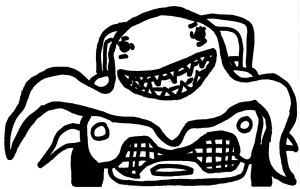
Wanted: Creature Seeking Male Companion – Me: Loves dogs & horses, comforts friends when sad, never says “no” to a spontaneous adventure, always says “yes” to night swimming in moonlight, has tentacles & drinks gasoline. You: A late-20s high school student with a shitty attitude, crippling daddy issues, and a receding hairline. Only selfish, low-energy badboy bores need apply. Serious offers only, please.

God, I love January so much. In what’s often referred to as the cinematic “dumping season,” it’s these first few weeks of the year when studios roll out their wounded animals, a parade of misfit misfires they have no idea how to market. It’s also in these first few weeks when high profile prestige films from the last year’s awards season slowly roll out from their New York & Los Angeles hidey-holes to finally reach The South, which is how I wound up watching both Silence & Monster Trucks at the theater on the same day. It was a glorious day. Not only was I treated to one of the most haunting technical achievements of Marin Scorsese’s career, I also got to see one of Hollywood’s most visually bizarre blunders since the likes of Howard the Duck, Jack Frost, Garbage Pail Kids, and Mac & Me. Monster Trucks is the rare camp cinema gem that’s both fascinating in the deep ugliness of its creature design and genuinely amusing in its whole-hearted dedication to children’s film inanity. It feels like a relic of the 1990s, its existence as an overbudget $125 million production being entirely baffling in a 2017 context (recalling last year’s similarly out of place, but more reasonably priced talking cat comedy Nine Lives). It isn’t often that camp cinema this wonderfully idiotic springs up naturally without winking at the camera; Monster Trucks is a gift to be cherished, a precious early January diamond for those digging for treasure in the trash. There’s no scenario where this film would catch on enough to earn back its ludicrous budget, but we’re not the ones losing money on it, so I say kick back and enjoy the show.

The lore behind Monster Trucks‘s creation & eventual financial blunder is just as fascinating as the movie itself. In 2013, then-president of Paramount Pictures, the since-fired Adam Goodman, conceived the pun-centric elevator pitch for this children’s film (“What if monster trucks were literal monster-operated trucks?”) while watching his toddler play with toy vehicles by smashing them together. The story goes that, after two years of development, a 2015 test screening of the film sent children screaming in fear due to the creature design of its main monster, known simply as Creech. I would kill to see that original “director’s cut” with the initial Creech design. Unfortunately, it’s lost to history, as the studio completely overhauled the monster’s CG-animated form and recut the film to soften the terror of its visage. That’s largely how we arrived at our obnoxious $125 million price tag, but that doesn’t explain exactly why Monster Trucks is such an entertaining mess of a final product. I’m sure somewhere among the film’s legitimately talented actors (Rob Lowe, Thomas Lennon, Danny Glover, Amy Ryan) there’s someone who’s super embarrassed to be involved with this dud of an intended franchise-starter/merchandise-generator. Surely, all of Paramount would love to have the whole fiasco wiped from the record completely. I think the embarrassment is entirely unwarranted, though. Monster Trucks might be an epic financial disaster on the production end, but as an audience member I find its delirious stupidity & grotesque creature design an endless delight. I just can’t honestly say it was worth every penny.

In true 90s relic fashion, Monster Trucks begins with evil oil drilling business men disrupting the order of things with their horrific money-grubbing ways. While fracking for more! more! more! oil in nowhere North Dakota, the Evil Corporation (helmed by a diabolical Rob Lowe) accidentally unearths an ancient population of subterranean, tentacled sea monsters who drink oil for sustenance in their own underground Ferngully utopia. Two of the creatures are detained, but one escapes by hiding in the frame of an out-of-commission truck, eventually winding up in the safe haven of a junkyard, just like in Brad Bird’s The Iron Giant. Without the structural support of a metal truck frame, this poor beast, known simply as Creech, is a useless slob, a pile of soft, melty flesh. Truck frames work as a sort of wheelchair for the unadapted sea creature and it at first operates them like a Flintstones car before getting the hang of properly working the gears. Also like in The Iron Giant, this monster is adopted as a pet by a curious, emotionally stunted little boy struggling with the absence of a father figure. In Monster Trucks, however, the little boy in question is a high school student played by a hilariously miscast Lucas Till, who is well into his 20s and looks it. In an interesting reversal of the lonely outcast trope, everyone who knows our protagonist desperately wants to hang out with him, but he’s too much of a selfish, self-absorbed jerk to give them the time of day. It’s not that he’s too cool for them either, unless you think a near-30 high school student who lives at home, rides the bus, plays racecar when no one’s looking, and whose mom is boinking the sheriff sounds cool. Creech doesn’t teach this bozo a life lesson or improve his shitty attitude in any way. When they have to part ways at the film’s teary-eyed conclusion, all he can muster is, “I’m going to miss you, Creech. You were a good truck.” Selfish prick. He’s almost awful enough to make me root for the oil company’s hired killer goon to succeed in snapping his overgrown-kid neck, but the loss would make Creech too unbearably sad and that’s the last thing I’d want.

Luckily, Monster Trucks isn’t about ugly high school students stuck in an eternal rut learning valuable life lessons or about how greedy oil companies were the true monster (truck) all along. It’s about two much simpler, more universally lovable concepts: monsters & trucks. In the film’s purest, most deliriously idiotic moments Creech drives his truck-shaped mech suit up walls, over lesser vehicles, down mountainsides, and (in my personal favorite bit) through open fields in unison with galloping horses to a country pop soundtrack. This is truck porn about goin’ muddin’ lazily disguised as a kid-friendly creature feature. None of that gear head idiocy would mean a thing without Creech, though, who is paradoxically the cutest & most grotesque CG creation since last year’s realization of Krang in TMNT: Out of the Shadows. Creech is initially played to be scary and is nearly crushed in a hydraulic press before its not made-for-this-world adorability saves its tentacled ass. Your affection for Creech’s design (along with similarly ugly/cute creations in titles like Howard the Duck, Gooby, and Mac & Me) will largely determine how much fun you have with Monster Trucks. It’ll make or break the cuteness of scenes where Creech gargles oil or poses for selfies. It’ll dictate whether you empathize with the Black Fish levels of cruelty in early scenes where its separated from its scrotum-esque parents as well as their inevitable reunion, a endearing Kodak moment that recalls the shunting scene from Society. No matter how much you love trucks on their own (you sick freak), you really have to love Creech’s ugly-cute visage to appreciate Monster Trucks in all of its ill-considered glory.

Unfortunately, I’m not able to capture Creech’s very specific brand of aquatic monstrosity in words. It’s a horror you have to see to believe. Monster Trucks makes several efforts to construct a memorable plot around its visually striking (to put it kindly) truck-creature, but not much sticks. A genuinely creepy villain who legitimately attempts to murder “children”, a few possible goons’ lives lost in the two bigger action set pieces, a Disney Channel love interest (Don’t Breathe‘s Jane Levy, oddly enough) who calls out the selfish prick protagonist for assuming Creech’s gender as male by default, my beloved horse-galloping/truck-muddin’ scene: there are plenty of amusing details that help pad out the film’s unwieldy 105 minute runtime. None of this can surpass the basic joys of gazing at Creech, though. Every minute of Creech content is a blessing, a gift from the trash cinema gods. It may be a good few years before any Hollywood studio goofs up this badly again and lets something as interesting-looking & instantly entertaining as Creech see the light of day, so enjoy this misshapen beast while you can. And I guess the life lesson learned for the next Monster Trucks-type misfire to come down the line would be to try to pull off its low-key chams for $100 million less on the production end. Who knows? They might even accidentally make a profit.

monster-trucks monstertrucks_main screen-shot-2016-06-07-at-4-37-48-pm

-Brandon Ledet

Death Race 2050 (2017)

threehalfstar

campstamp

When people claim that “bad on purpose,” winking-at-the-camera camp films of recent years aren’t ever as exciting as those of distant schlock cinema past, I don’t think they’re necessarily saying that, as a rule, intentional, “low” camp is by nature less engaging than bad-on-accident, “high” camp. I hope not, anyway. I just think there’s typically a laziness to straight-to-VOD/SyFy Channel schlock that stops at a premise or a title, say Shark Exorcist or Cowboys vs. Dinosaurs, without any thorough or passionate pursuit of where its initial ideas can lead. To put it simply, modern CG schlock is rarely as deeply weird as it’s advertised to be in its Ain’t This Weird?! titles. That doesn’t mean all “bad”-on-purpose cinema is worthless, though. Just look to last year’s camp cinema triumphs like The Love Witch, The Greasy Strangler, and Pee-wee’s Big Holiday to prove that’s not true. Modern camp just needs to keep in mind that its most memorable ancestors, from the likes of Roger Corman or John Waters or Ed Wood, were made with great filmmaking passion that covered up whatever shortcomings their microbudgets couldn’t. Even when their tone wasn’t genuine, their inherent weirdness was.

Death Race 2050 is a genuinely weird film. It isn’t much more than a R-rated version of straight-to-SyFy Channel schlock, but it makes its cheap camp aesthetic count when it can and it survives comfortably on its off-putting tone of deeply strange “bad”-on-purpose black comedy. Much more closely in line with the Paul Bartel-directed/Roger Corman-produced original film Death Race 2000 than its gritty, self-serious Paul W.S. Anderson remake, Death Race 2050 is a cheap cash-in on the combined popularity of Hunger Games & Fury Road and makes no apologies for that light-hearted transgression. Corman productions have a long history of cannibalizing the films they’ve influenced, like when Joe Dante’s Piranha film openly riffed on Jaws (which was essentially a Corman film on a Hollywood budget). The original Death Race 2000, along with countless other Corman productions, surely had an influence on both the Mad Max & Hunger Games franchises and it’s hilarious to see the tireless film producer still willing to borrow from his own spiritual descendants for a quick buck all these years later. It’s also funny to hear him describe Death Race 2050 as “a car racing picture with some black humor,” which is about the most mild-mannered way you could possibly put it. The movie is, more honestly put, a live-action cartoon bloodbath featuring broad comedic personalities that would make a pro wrestling promoter blush . . . with a little car racing thrown in for fun. It never tries to survive solely on the strength of its premise, but instead injects each possible moment with weird character details and ludicrous production design. That’s the open secret of its many minor successes.

The plot here is standard Death Race lore. A near-future dystopia known as The United Corporations of America enacts population control through a televised racing competition in which contestants earn points for each pedestrian they run over. Children & the elderly earn them extra. Each contestant has a pro wrestling-sized persona: an obnoxious pop music idol, a genetic freak with inner conflicts regarding his sexuality, a Texas Christian archetype who’s turned her faith into terrorist fanaticism. None are nearly as popular as Frankenstein, however. A cyborg crowd-favorite who has long remained masked, Frankenstein is the paradoxical heartless killer with a heart of gold. Because this film is at least partly a Fury Road knockoff, New Zealander Manu Bennett plays Frankenstein as a cheap Tom Hardy stand-in instead of a reflection of David Carradine’s work in the original film. He drives across the country racking up points, trying not to fall in love with his comely co-pilot/annoying audience surrogate, fighting off a misguided revolution, and ultimately taking aim at his most crucial foil: a CEO-type dictator who falls somewhere between Emperor Snow & Donald Trump (the film’s only casting “get,” Malcolm McDowell). Rapid montages of a pollution-crippled future mix with television gameshow gimmickry, dismembered body parts gore (both traditional & CG), a long list of pointless tangents (including an otherwise-useless scene that deliberarely points to its own minimum-effort satisfaction of The Bechdel Test), and a romance plot no one asked for to make this ultra-violent race across the country a consistently fun, if wholly predictable journey. Death Race 2050 never transcends the bounds of what it is: a straight-to-VOD trifle. It stands as an enthusiastically entertaining example of the format, though, one that pulls some weird punchlines like “When your DNA sleeps it dreams of me,” and “Looks like rain today . . . and enslavement by machines tomorrow” whenever it gets the chance.

The only glaring faults I can cite in Death Race 2050 are a total lack of chemistry between its dull protagonists (Frankenstein & his co-pilot) and a dinky production value that suffers under what must have been a microscopic budget. That’s not so bad for a shameless, winking-at-the-camera remake meant to capitalize on two unrelated franchises that have earned popularity in its original version’s wake. Although Death Race 2050 tries to update some of Death Race 2000‘s minor details for a modern context (VR goggles that look an awful lot like swimming goggles, a Donald Trump-like villain, a self-driving AI vehicle contestant, references to things like St. Dwayne The Rock Johnson & Bieber Elementary), its spirit is very much rooted in the genuine weirdness of the Paul Bartel original. It’s a difficult tone to strike, I presume, given how often these cheap CG camp exercises come off as lifeless, passion-free slogs. Through some simple production details (especially in its dystopian Rainbow Store costuming), a dedication to R-rated sex & gore, and a surprisingly authentic punk soundtrack, Death Race 2050 shines like a rare CG gem in a murky sea of unmemorable schlock. It’s loud, dumb, “bad-on-accident” fun, but in a deliberately strange fashion that never feels lazy or half-cooked the way its peers often do.

-Brandon Ledet

Nude on the Moon (1961)

threehalfstar

campstamp

While we were performing our various autopsies on the best movies we watched in 2016, I noticed something embarrassing about my own viewing habits. Out of the near-400 films I watched last year, less than 40, a mere 10%, were directed by women. As a minor corrective to this massive oversight, I’ve decided to take the 52 Films by Women pledge this year, a very simplistic resolution that only urges that you watch one film a week directed by a filmmaker. It’s very little to ask of someone who watches film with any regularity, but I think it’s an important means of consciously paying attention to who’s behind the camera in your media production. My first step in achieving this goal, and my first viewing experience of this year overall, is proof positive that this 52 Films by Women pledge will in no way limit the variety of films I’m watching in terms of genre, style, or content; it will only make sure that a woman is behind them. The light sci-fi nudie cutie Nude on the Moon, directed by undercelebrated sexploitation filmmaker Doris Wishman (under the psuedonym Anthony Brooks), is not likely to be a typical inclusion on most people’s 52 Films by Women lists. It was a solid start for the year in my mind, though, considering how much it tickled my lowbrow sensibilities.

Two amateur rocket scientists tinker away with vaguely defined bleep bloop machines & chem lab beakers in order to pull off a self-funded trip to the moon. Ignoring the all-too-obvious romantic desire of his sheepish, but buxom secretary, the youngest scientist buries his head in his work until an inheritance payment from a deceased uncle fully funds the trip, newly energizing the ultra-macho nerd. The two-man expedition to the moon goes beautifully smooth . . . almost too beautifully smooth. The men land in a crater teeming with unexpected treasures: water, plants, “moon gold,” and, most treasurable of all, half-naked space aliens. The citizens of the moon are beautiful humanoid specimens, both male & female, who wear only shiny lamé booty shorts & dumb little antennas that allow for telepathic communication. Much like in the similar erotic fantasy piece Cat-Women of the Moon, they follow a matriarchal Moon Queen, except in this case the monarch is topless & means no harm for the Earthmen. Our two rocket scientist heroes frolic in this nudist colony for as long as they’re allowed, then return to Earth unharmed, but without proof of what they’ve witnessed. The only thing that’s changed upon their return is that the hunkier professor finally notices that his adoring secretary looks an awful lot like his beloved Moon Queen (both roles were played by an actress billed simply as “Marietta”) and he rapturously returns her affection.

As the title suggests, there’s not much more to Nude on the Moon than an indulgence in light-hearted kitsch. The main innovation Doris Wishman brings to the post-Immoral Mr. Teas nudie cutie genre is in transporting the typical nude colony setting to an extraterrestrial locale. Adding a sci-fi touch to its genre’s flimsy excuses to leer at beautiful, naked bodies makes the film a memorable novelty, especially in its dinky rocket ship model & ASMR telepathic space alien whispers. Nude on the Moon is careful not to frame its actors in the same shot as its kids’ science fair project moon rocket, which is only shown from a distance. We do get a close look at the astronauts’ space suits, though, which feature exposed skin where the helmet doesn’t meet the body and vaguely resemble either the green Power Ranger’s 90s getup or The History of Future Folk, I can’t decide. The dialogue is exactly as goofy as you’d expect, given the circumstances. For instance, an astronaut points for his Earth-buddy to notice a ladder that’s leaning on a wall, only to tell him in perfect deadpan, “This leads to the top of the wall.” All of this cheap sci-fi silliness combines with an original lounge crooner number “Moon Doll,” set to a a picturesque, starry sky moonscape, to pad out the film’s opening half, which has been tasked with the dubious honor of entertaining audiences before the film delivers on the nudity promised in the title. It’s all delightfully inane.

Don’t be surprised if when I recap the films I watched for the 52 Films by Women pledge at the end of the year, over half of my selections are Doris Wishman productions. Although this light nudie cutie territory is far-removed from the nastier “roughies” genre pictures her career would eventually devolve into (strangely mirroring Russ Meyer’s own sexploitation career path), it was wildly entertaining stuff. Making an interesting picture solely out of near-nude actors & cheap sci-fi effects is a much more difficult kind of genre film alchemy than you might imagine. Although Nude on the Moon didn’t quite match my enthusiasm for the less bawdy, but similar-in-spirit Cat-Women of the Moon, it was still a delightful novelty and I can’t wait to see what else Wishman delivered with that innate understanding of what makes this kind of half-cooked frivolity so appealing to audiences like me.

-Brandon Ledet

Hurricane Bianca (2016)

EPSON MFP image

three star

campstamp

It’s honestly not at all fair for me to make this comparison, since Bianca Del Rio (the drag persona of local boy-made-good Roy Haylock) was already a success long before she appeared on the show, but the campy drag queen comedy Hurricane Bianca feels like a sketch from RuPaul’s Drag Race stretched to a feature length film. The comedy sketches have never been the highlight of that show, which is more about fashion artistry & reality show competition than drag-themed SNL skits, but every now & then the right performer can make them worthwhile. Bianca Del Rio was already a fully developed talent by the time she arrived at (and won) Drag Race, so selling the comedy in the show’s aggressively corny bits was second nature to her. She actually might be the most over-qualified queen in the history of the show to helm a feature length broad comedy like Hurricane Bianca, which is even below such prestige-free ventures as SNL‘s Superstar & It’s Pat! movies in terms of production quality. Cameos & bit roles from Drag Race standouts like Willam, Alyssa Edwards, and RuPaul himself (out of drag, as a weatherman) only reinforce the film’s general expanded Drag Race sketch vibe and your enjoyment in (and patience with) Hurricane Bianca might depend largely on how much fun you have with that aspect of the show.

Presented as a storybook fairy tale (or, in the film’s terms, the tale of a fairy), Hurricane Bianca stars Haylock as a queer high school teacher from NYC who’s forced to find work in rural Texas to make do. Headed by an unusually hateful Rachel Dratch (applying her trademark SNL-style mugging to her role as a bigoted bully), the group of Conservative Texans this hopeless nerd science teacher/failed stand-up comedian interlopes reject him outright as a pariah (“There’s something queer about him. I just can’t put my finger on it.”) and our put-upon hero once again finds himself jobless. Then, in a plot straight out of an aborted Adam Sandler screenplay, the teacher gets re-hired at the same school as a woman, adopting his meant-to-be Bianca Del Rio persona almost 2/3rds into the runtime. Del Rio presents a dichotomy where drag equals confidence and the teacher transforms from a timid nerd to an instant queen bitch. Her Don Rickles insult-clown routine destroys the false superiority of Dratch’s evil bigot antagonist and the teen bullies who do such delightful things as take “Smear the queer” selfies with the one openly gay student in their school, whom they abuse daily. Strangely mirroring the third act of The Dressmaker, Hurricane Bianca gradually transforms into an absurd revenge fantasy in which drag queens have their day and the evil Texan Christians are put in their place by such cartoonish weapons as Bugs Bunny gags & surprise swarms of bees.

It’s difficult to say if Hurricane Bianca works as a starmaker for Del Rio, since it is such a for-fans-only proposition. The film is so cartoonishly silly & unapologetically queer that it’s bound to appeal to a very limited subset of camp-minded dorks, likely the exact crowd who would have followed Bianca’s career closely enough to hear about this very minor release in the first place. It very much feels like a SNL movie or a WWE Studios production in that way and, as a trash-gobbling dork myself, I would love nothing more than for Drag Race as a brand to keep making small scale movies that appeal only to its own insular audience (starting with Alyssa Edwards’s Ambrosia Salad character from this film, preferably). Within that limited scope framework, Hurricane Bianca is a resounding success. It provides Del Rio with a larger platform for her insult comedy, gives Haylock an excuse to appear out of drag to hopefully expand his familiarity, and actually has a surprisingly political bent to it between its sillier moments, especially in the way it spoofs the bigotry of Texan Christianity & attempts to provide hope for queer high school students who are continually bullied by their peers. I can’t say that if you aren’t already on board with Del Rio that you will be surprised & won over by what Hurricane Bianca provides. If you’re already a fan & you don’t often find yourself fast-forwarding through the sketch comedy bits on RuPaul’s Drag Race, however, you’ll likely have a gay ol’ time.

-Brandon Ledet

Invaders from Space (1965)

EPSON MFP image

threehalfstar

campstamp

The made for TV cheapie Atomic Rulers of the World introduced me to the inane, interplanetary wonders of Starman, a blatant Superman rip-off & star of the Japanese mini-series Super Giant. Super Giant was cut down & re-edited into several made-for-American-TV movies, starting with Atomic Rulers, which was mostly a standard atomic age plot about the alien council of the Emerald Planet deploying Starman to prevent an inevitable nuclear holocaust by disrupting the dangerous gangsterism of some shady arms dealers. Invaders form Space starts with the exact same introduction, a shot-for-shot copy of the Emerald Planet council’s scene in the first film as they choose to employ Starman to once more save Earth. This helpful preamble provides not only context for Starman’s origins, but also a concise overview of his powers, both the ones he was born with (he’s made of the strongest steel) and the ones afforded to him by his fancy “globe meter” wristwatch (flight, radio activity detection, language adaptability). Thankfully, though, Invaders from Space didn’t repeat much else from Atomic Rulers’s basic structure. Instead of fighting off evil nuclear warmongers in this case, Starman does away with an alien invasion of artsy theater types with a proclivity for witchcraft and the results are deliciously ridiculous.

The titular alien invaders in this film are known by name as the Salamander Men of Planet Kuliman. When undercover, they dress like mobster types with black surgical masks covering their hideous alien faces. When letting their freak flags fly, however, they’re alien-frog humanoids with steel-tearing claws and radioactive fire breath. Their uncovered, mutilated faces recall The Joker or a nameless Dick Tracy goon. They fly UFOs seemingly made entirely of light and hide among humanity as “an unusual dance troupe” who put on a “weird performance” at an arts theater that makes its entire audience sick with radiation poisoning. The one female Salamander is a witch that chases children around a suburban home; the salamander people’s temporary home on Earth is a phallic palace with a blatant dickhead on its tallest tower; their second life as an avant-garde dance troupe means that there’s tons of cartwheels & gymnastics included in their hand-to-hand combat styles. So much of Invaders form Space resembles the exact tone of Atomic Rulers of the World that it’s impossible to ever forget the series’ origins as a television property instead of proper cinema. The film still stands out on its own in comparison to Starman’s introductory title, Atomic Rulers, though, mostly because of the absurdity of the Salamander Men of Planet Kuliman are such a perfectly comic strip-oriented type of foe for our bargain bin Superman to thwart.  Another film where Starman bucks against arms-dealing G-men might’ve been a monotonous slog, as we’ll see in a future sequel, but the UFO attacks & interpretive dance combat of Invaders from Space make for a highly entertaining sequel, one that might even surpass the original film on the basic level of enjoyability.

Cobbled together from the 3rd & 4th entries in the Super Giant series, The Mysterious Spacemen’s Demonic Castle & Earth on the Verge of Destruction, Invaders from Space finds the Starman franchise hitting its full stride. The introduction of Ken Utsui’s spandex-clad space alien hero in Atomic Rulers was  a delightful novelty, but just like most superheroes, the strength of his world relies heavily on the shoulders of his villains. The Salamander Men of Planet Kuliman don’t exactly elevate Invaders from Space into a higher tier of cinematic quality above Atomic Rulers; this is still an even keel of made-for-TV schlock that the Super Giant series is operating on. They do, however, keep the series interesting after the initial charm of Starman & his atomic menace foes settles and the reality of watching four of these ventures becomes a potential chore. Starman’s introduction remains static & carbon copied at the top of each feature. There’s no room for him to grow or change as a character from movie to movie, so it’s up to the villains he defeats to provide a sense of variety & continual novelty. Modern dance fish people from outer space who exhale radiation and live in a dick castle are more than fascinating enough as villains to maintain that novelty and Invaders form Space is one of the most interesting entries in the Super Giant series thanks to their gloriously weird presence.

-Brandon Ledet

The Spirit of Christmas (2015)

ghost

three star

campstamp

It’s that time of year! That joyous time when we try to keep out cats from knocking over Christmas trees, drink double our body weight in hot chocolate, and watch really bad Lifetime Christmas movies! I rightfully chose to start with a ghostly romance.

The Spirit of Christmas is a lighthearted story about a no nonsense lawyer who falls in love with a ghost. Jen Lilley plays Kate, a lawyer trying to work up the ladder in her practice. She doesn’t believe in or have time for love. An inn owner dies and she has 12 days leading up to Christmas to get it appraised. Daniel (Thomas Beaudoin) has haunted the inn for the last 97 years, but for the 12 days before Christmas he gets his human form back.  During those 12 days, he and Kate butt heads and eventually fall for each other. There’s also a mystery shoehorned in. They have to figure out who killed him so he can pass on, and also there might be a second ghost. If that sounds familiar, you’ve probably seen the classic The Ghost and Mrs. Muir, which while set not during Christmas, has the same idea of a living woman falling in love with an attractive ghost tied to a specific location. Mrs. Muir is far more revered than any of its derivatives, but that’s probably just due to small things like film quality and better acting.

Other things about this movie that warrant appreciation, other than the contrived lines and suspect acting: In the flash backs, all the old-timey men have such unrealistically impeccable haircuts; the soundtrack is that soft, sparse piano music that all cheesy Christmas movies have; and the rules about how ghosts and hauntings work make no sense! The Spirit of Christmas is cheesy and trashy, but dammit it’s my kind of cheesy and trashy. I love the human-ghost relationship trope, and by the end I’m left wondering, can they make it work?

-Alli Hobbs

Double Team (1997)

EPSON MFP image

fourstar

campstamp

Try to think back to a time before he started making baffling political affiliations with North Korea & Donald Trump; Dennis Rodman was a pretty cool dude. For a high profile athlete, Rodman was a striking pop culture presence in his gender-fluid fashion choices. Belly rings, make-up, wedding dresses, brightly-dyed hair: these aren’t exactly the typical hallmarks of an NBA superstar’s wardrobe and I think we shouldn’t take for granted how cool it was that Rodman was blurring gender lines in his personal style choices in the 90s, even if he’s revealed himself to be an ass in the decades since. Where there’s novelty, there’s always money to be made, too. It turns out that action movie producers at the time were inexplicably interested in cashing in on Rodman’s striking visual presence & converting that gender fluidity into box office dollars through some kind of shoot-em-up cinema alchemy. The first title in Rodman’s very short career as an action hero found him teaming up with genre mainstay Jean-Claude Van Damme. He is in no way natural to the terrain, feeling like a cameo role that somehow got conflated to second-bill in a buddy picture and his strange presence elevates what would be a standard issue action film into a chaotic mess of loosely connected set pieces & glorious inanity. Double Team would’ve been a decent genre picture without Rodman, but it gets excitingly, memorably dumb when he kinks up the works, both literally & figuratively.

Double Team plays like two distinct movies smashed together into an incoherent mess. One film is your standard JCVD vehicle where the Muscles from Brussels must retrieve his pregnant wife from the treacherous clutches of a before-he-got-gross Mickey Rourke. In this half, Rodman sort of makes sense in what seems like a single-scene cameo as a kooky arms dealer who hangs out in a pansexual, S&M themed nightclub. The film’s other half is a technofuture fantasy about an island of highly skilled assassins being held prisoner (with the help of underwater lasers, of course) because they’ve “gone soft” and forced to work as an espionage think tank. Because Rodman’s role as a wise-cracking sidekick was needlessly expanded to last throughout the entire length of the film, neither of Double Team‘s dueling plots ever feel like they have enough room to breathe. Either a whole movie about escaping the futuristic assassin island or one about taking down a wickedly cruel Rourke could’ve worked coherently on its own, but when smashed together & elbowed into the corners of the frame by Rodman’s ball-hogging screen presence, it’s mostly just a ludicrous mess (and all the more memorable for it). By the time Double Team‘s parade of cartoonish set-pieces (which include carnivals, infirmaries, fetish clubs, and fantasy islands) culminate in a climactic martial arts showdown in an ancient coliseum loaded with landmines and a bloodthirsty tiger, none of these plot concerns matter. At all. You just passively watch Rodman & JCVD duck for cover behind some convenient ad placement Coke machines as the coliseum explodes and the credits bring on a club hit featuring Rodman’s rhythmic mumblings & a pulsing gay 90s beat. Double Team is gloriously half-cooked in this way and I’m not sure I would have preferred a version of the film that followed through on any of its loosely-connected storylines any more carefully or thoroughly than it already did. That attention was much better spent on crafting & presenting Dennis Rodman’s wide range of distinct looks & flatly-delivered one-liners, no question.

There is really only one scene in Double Team where Dennis Rodman’s involvement makes sense. Van Damme is in need of some high tech gear early in the film to take out Rourke’s trecherous terrorist and he finds his perfect weapons dealer in Rodman. For his part, the basketball star is holed up in a massive, queer nightclub loaded with drag queens, club kids, and SCUBA-themed S&M models. Rodman’s most natural involvement in this film would’ve been to sell JCVD some cool future-guns and exchange a couple sarcastic quips before being on his merry way, never to return. Indeed, Van Damme asks Rodman, “Who does your hair, Siegfried or Roy?” Rodman shoots back, “The last guy who insulted my hair is still pulling his head out of his ass,” to which Van Damme responds, “I don’t want to hear about your sex life.” In a movie where that was the end of their transaction, this scene would have played as casually homophobic, but since Rodman & Van Damme are burgeoning buddies at the start of a feature-length bromance, it somehow comes off as light, harmless teasing. Rodman shoehorns himself into the rest of the film’s plot to make room for sore thumb basketball references (“The best defense is a good offense,” “Oops! Airball,”) & a wide range of gender-defiant wardrobe choices, with no further reference made to his sexuality in the script before his gay 90s club hit plays over the end credits. It’s an oddly progressive choice for something that’s mostly a by-the-books action flick and although Rodman’s sore thumb presence & subpar line deliveries disrupt Double Team‘s narrative structure & pacing, they also elevate the film into a more memorable camp spectacle status.

Double Team is the American debut of Chinese action director Tsui Hark, whose most recognizable credits might be a stray Jet Li or Jackie Chan production among his sea of titles like A Chinese Ghost Story, Once Upon a Time in China, and Flying Swords of Dragon Gate. The filmmaker is well-respected in his martial arts cinema genre of choice and I think Double Team might’ve worked a little better if its narrative were allowed to stretch out to a standard Chinese action film’s runtime, which tend to be a little lengthier than American genre pictures. Compressing the disparate storylines of Double Team into a brisk 90min package made each story beat feel inconsequential & frivolous, especially since so much of the film was dedicated to the lofty goal of making Dennis Rodman seem funny & tough. Tsui Hark seems a tad overqualified for such a generic action vehicle in the first place, but his sense of scale & brutality makes for memorable action cinema moments, especially once the tigers & hospitals full of newborn babies get involved. Rodman’s blinding distraction of a presence makes sure that the film’s action sequences and hodgepodge plot are in no danger of dominating discussion surrounding the film, however. This is a mid-90s camp relic most notable for its inclusion of a gender-defiant fashion prankster with some highly questionable political affiliations who apparently used to play basketball or something. I can’t say for sure if Rodman’s strange presence was enough to carry a lead role in his other action vehicle, Simon Sez, and I’m honestly a little afraid to find out. However, as a comic relief sidekick with an attitude problem airdropped into an action vehicle where he doesn’t belong (like so many Poochies of X-treme 90s past), he’s a delightfully off-putting novelty that makes Double Team way more fun & noteworthy than it has right to be.

-Brandon Ledet

The Love Witch (2016)

EPSON MFP image

fourstar

campstamp

I understand why a lot of people are immediately turned off by intentionally “bad” movies. Forced, manufactured camp value can often feel cheap & disingenuous, especially when the filmmaking it supports aims lazily low in its overall sense of ambition. Accusations of taking the low road and making an intentionally “bad” movie are certain to accompany Anna Biller’s erotic horror comedy The Love Witch, but the film is far from lazy in its ambition & attention to craft. The Love Witch carefully recalls the cheap sets, rear projections, absurdly stilted dialogue, and half-hearted attempts at sophisticated smut of many erotic horror B-pictures of the 60s & 70s. Biller doesn’t rely solely on easy humor & cinematic nostalgia to make this schlocky throwback worthwhile, however. Besides writing, directing, and editing The Love Witch, Biller is also credited with the film’s set & costume design. She exhibits a godlike control over her visual palette, crafting an intricately detailed work packed with occult paintings, pentagrams, potions, candles, jars, lingerie, and intensely-colored make-up. She elevates the depths of lazily decorated schlock to a new high standard of meticulous visual artistry, a kind of personalized, auteurist ambition that’s often missing from “bad”-on-purpose cinema. More importantly, though, Biller uses this backwards gaze into the B-picture abyss to reappropriate traditionally misogynist modes of genre filmmaking for a fresh, fiercely feminist purpose. The Love Witch is more than a comedic exercise in camp-minded nostalgia; it’s also a beautiful art piece with an unforgiving political bent.

Samantha Robinson stars as Elaine, the titular witch, who finds herself in constant trouble with the law for her deadly seduction of men. Elaine uses “love potions” & “sex magic” to lure men into her dangerous web of lust & overwhelming devotion. She doesn’t exactly murder her suitors & side flings in cold blood. Rather, the men she seduces just aren’t physically or spiritually capable of handling the immense pressure of true love & genuine emotion that accompanies her supernatural mode of romance. Their bodies crumble while trying to reconcile a basic human experience the women around them handle with grace on a daily basis. The Love Witch airdrops legitimate feminist criticism into its cartoonish narrative in this way. There’s plenty of inane banter played for laughs, like when Elaine babbles about “parapsychology” or explains that she first wanted to become a witch because she “wanted to have magical powers.” What’s striking, though, is the way these camp cinema callbacks are interrupted by lines like, “Men are very fragile. They can get crushed down if you assert yourself in any way,” and “You sound as if you’ve been brainwashed by the patriarchy.” The Love Witch filters modern feminist ideology, particularly in relation to heterosexual power dynamics, through old modes of occultist erotica & vaguely goth burlesque to craft the ultimate post-modern camp cinema experience. Biller establishes herself as not only a stylist & a makeshift schlock historian, but also a sly political thinker and a no-fucks-given badass with a bone to pick, which is more than you’d typically expect with an intentionally “bad” movie about witchcraft & strippers.

The Love Witch plays like a restoration of the best camp film you’ve never heard of, one where time-traveling cellphones & feminist ideology appear as if they’re a natural part of the territory. The film is eerily accurate in its dedication to recreating cheap horror erotica, right down to the awkward dead space that punctuates each line of dialogue & the over-use of goofy lighting tricks to evoke its love potion psychedelia. It plays exceedingly well with a crowd; the raucous audience I saw it with was enthusiastic and treated it like a midnight movie despite it being an early evening screening. Beneath all of the film’s gloriously bad visual art, eye-melting costume design, and absurdly overstated dialogue, however, it’s a surprisingly dark, quietly angry political piece. The men of The Love Witch range from selfish crybabies & power-hungry rapists and the way the film undercuts & subverts their privilege & control is surprisingly pointed for something so deliberately silly & narratively slight. Mixing in a little sugar to sweeten the medicine, the film appears to be an intentional exercise in dimwitted, oversexed schlock, but that “so bad it’s good” facade is only one layer to a work that’s much more visually & politically fascinating than it initially appears to be.

-Brandon Ledet

The Vampire and the Ballerina (1960)

fourhalfstar

campstamp

I’m not sure how much of my ecstatic reaction to the 1960 Italian horror cheapie The Vampire and the Ballerina had to do with my pitifully low expectations going in, but the film bowled me over. Where I expected lazy, thoughtless schlock, I happened to find something deliriously strange and carefully made. The Vampire and the Ballerina resembles so much cheaply made cult classic trash of its era, from the burlesque horror of Cat Women of the Moon to the vampiric kills & stock footage reliance of Plan 9 from Outer Space to the rubber mask monsters of The Brainiac. And yet, for a film so silly & so rooted in the context of its time, this throwaway horror title paradoxically feels ahead of the crowd in terms of where horror was going to go in the future. Hammer House horror, style over substance giallo, and, especially, over-sexed European vampire films of the 60s & 70s all feel somewhat indebted to the weirdly off-kilter shocks, scares, and titillation lurking in this strange little genre film. This is the exact kind of rare gem I’m looking for when I’m digging through piles of trash cinema and, as usual, I found it in a place I least expected it.

A group of young, attractive, scantily clad dancers are “preparing a ballet” while guests at a wealthy man’s estate near a remote village. There are several mysterious murders coinciding with their stay, explained by local superstitions to be the work of a vampire. The film’s rules adhere to traditional vampire lore: deadly sunlight, stakes through the heart, garlic, crosses, the whole deal. It only adds the caveat of the monsters needing to feed under a full moon to that dynamic, a little flavor borrowed from werewolf pictures. At first, the girls’ wealthy host (who wears capes & seems to know an awful lot about vampire history) or one of their macho beaus seem like prime suspects for these murders, but this film is anything but a murder mystery. As soon as the vampires appear onscreen, posing as gracious hosts of a crypt-like castle, you know for a fact that they’re the perpetrators. Where The Vampire and the Ballerina (a title that really should be pluralized) gets weird is in the strange revelation of how the two vampires’ relationship works. It’s a bizarre glimpse into one of cinema’s most toxic codependent relationships, a weirdly unromantic back & forth that’s far more satisfying than any who’s-the-undead-killer mystery could have possibly been.

The film’s thematic weirdness is only amplified by its strikingly thoughtful (although cheaply produced) cinematography. Images of silhouettes growing on cave walls, passing sky & falling dirt seen from the POV of a freshly bit victim being buried “alive,” and the vampire’s legitimately upsetting rubber mask & plaster visage all combine to make for a much more striking visual experience than you’d typically expect from this kind of work. Where The Vampire and the Ballerina shines best, though, is when it combines this visual thoughtfulness with the tawdry horniness that drives its most base thrills. The movie makes no excuse for oggling at the dancers as they lounge around in flimsy underwear and perform in revealing tights.The shameless butt shots in the dance scenes, which fuse ballet with world music & burlesque, crowd the screen in a leering cacophony of hip shaking, leg flashing filth. This combines in other scenes with the film’s more lyrical ambitions to make for some truly strange, sexually charged imagery: a victim shot from between her killer’s legs (a la Slumber Party Massacre), stock footage trees thrashing in the wind as hypnotized women writhe in sexual frustration, a woman sunbathing on a rock as a background waterfall flows the frame’s attention directly to her crotch. The Vampire and the Ballerina is in every way cheap, artful filth and I’m in awe of how much memorable imagery it was able to generate in spite of being such a slack jawed work of horror-minded eroticism.

I don’t want to make this sound as if it’s some long lost masterpiece that could rival the heights of a Bava or a Corman-Cycle Poe. It’s a deeply silly movie, one that features several nonsensical minutes of women chasing each other through the woods to big band music for reasons I couldn’t explain if I tried. I do, however, believe that The Vampire and the Ballerina has some strong, untapped cult classic potential. Cynically made as a cash grab in the wake of Christopher Lee’s Dracula finding popularity in Italy, this is a deliberately over-sexed work that anyone under the age of 16 was banned from watching at the theater. You can feel those trashy origins in every frame of The Vampire and the Ballerina, but the film still manages to be a surprisingly artful experience for me. Anyone who regularly enjoys a slice of cheap black & white schlock should get a kick out of the film’s creature designs & shameless, theremin-scored burlesque. What’ll really stick with you if you’re on that wavelength, though, is the strange relationship dynamics between its vampiric killers & the artfully odd images the film manages to pull out of a seemingly nonexistent budget. If you watch enough of these kinds of horror titles, they start to blend together and everything begins to feel monotonous; The Vampire and the Ballerina is an exciting reminder that there’s still weirdo outliers out there waiting to be discovered. There’s still gems lurking in cinema’s discarded trash.

-Brandon Ledet

Knock Knock (2015)

EPSON MFP image

threehalfstar

campstamp

I’ve never bothered watching an Eli Roth movie before, mostly because I associate him with the mid 00s torture porn aesthetic that I generally try to avoid in my horror binges. Roth has a way of sneaking into other projects I’m interested in, though, and I’ve started to notice over the years that he seems to have a sense of humor to his work that I had missed out on from the outside looking in. If you judge Roth solely by his fake Thanksgiving trailer for the Grindhouse project, his performance as “The Bear Jew” in Inglourious Basterds, and his production work on the campy body horror Clown, he comes off as much less misanthropic than his usual reputation would suggest. As sick as his sense of humor seems to be, I’ve come to think of Roth as something of a prankster. If you need a brief glimpse of what I’m getting at, look to the trailer for Roth’s recent home invasion piece Knock Knock. Everything from Keanu Reeves’s strange line deliveries to the film’s cheap digital look to its winking title suggests that it’s supposed to play like a joke. I’m not sure that I have enough context to settle that question of Roth’s tonal intent on my own, but I can say that if Knock Knock was indeed meant to be a setup for a joke, the punchline was constantly amusing, making for a decent entry point into a career I’ve been too grossed out to approach for more than a decade now.

A nasty exploitation thriller that resembles a direct-to-DVD knockoff of Funny Games, it’s tempting to view Knock Knock in the same light as more typifying Eli Roth ventures like Hostel or Green Inferno. Whereas those titles have a pointed central message (usually about cultural tourism & American entitlement) & a dedication to gut-wrenching gore, however, Knock Knock is much more deliberately ditzy. Keanu Reeves plays a doting husband who’s alone for the weekend in his beautiful home when two young women knock on his door soaked & shivering in the rain. He’s initially kind to the girls, but far from predatory; things eventually get too steamy for him to resist, though, as the girls flirtatiously pressure him into cheating on his wife over the course of a night lifted straight out of a letter to Penthouse. Of course, as soon as he cheats his doom is sealed and the girls immediately switch from sexual fantasy to violent nightmare. They destroy his home, yip like wild dogs, tie him up, sexually assault him, and stab him with food utensils. You could search for meaning or a sense of morality in their gleeful chaos, maybe something about the gender reversal of predatory sexuality or about how all men are liars & cheats under the surface, but the film feels far too deliberately empty-headed for any of those themes to register. Instead, all that shines through is a Daisies-esque dedication to pointless, childlike abandon (except without the political context or attention to visual craft). Knock Knock is much more of a nihilist comedy than a pointed satire of gender politics and the psyche of the modern American husband/father.

One of the reasons it’s difficult to tell if the comedy was entirely intentional here is that it largely comes across in the performances. Keanu Reeves has a bewildering way of balancing between overacting & underacting, with no measured sense of middle ground, that plays so damn weird when he’s given enough space to chew scenery. In Knock Knock, he reaches Nic Cage levels of distracting performance, a one man camp spectacle that often feels as if he’s making fun of his own lines instead of trying to sell them. There’s an obvious humor to his delivery of lines like, “Wowww, chocolate with sprinkles!,” “Do you kids want to live in a box?,” and “It was free pizza!,” but they’re far from Keanu’s only amusing line readings. Something about the way he says things like, “What’s the point of this?!,” “I’m a good person. I made a mistake,” and “I’m an architect, so I believe that things happen by your own design,” points directly back to how hacky & corny the script is on a fundamental level, to the point where the film plays more like sketch comedy than erotic thriller. Actors Ana de Armas and Lorenza Izzo have an obvious blast playing Reeves’s seductors/tormentors, but even their over-the-top, childlike exuberance somehow can’t match the strangely inhuman way he quietly delivers his lines. Knock Knock truly is Reeves’s Wicker Man (2006) or his Vampire’s Kiss. It’s just waiting to be picked apart and cut down to YouTube memery.

The only question I have is exactly how much Roth was participating in the humor of this film. Knock Knock features a female-on-male rape, raises questions about childhood sexual abuse & incest, and indulges in the exact modes of life-threatening violence you’d expect from a self-serious home invasion exploitation piece, so it’s tempting to believe the director meant for his audience to take the film at face value. However, there’s just as much evidence to the contrary onscreen. Besides Roth’s prankster past & the joke plainly hinted at in Knock Knock‘s title, there’s a visual play to the movie that matched Reeves’s weirdo comedy energy, particularly in the way the frame lingers on details like the Hollywood sign & strategically-placed portraits of its protagonist’s family. If Knock Knock were meant to play as a straightforward thriller about predatory sexuality & the dangers of infidelity, I’d say it was a thorough misfire. As a nasty comedy overflowing with pointless nihilism & memorably campy performances, however, the film resonates a consistent success. I may not know enough about Eli Roth to decidedly say where this film falls on that divide, but I can honestly report that it amused me for the entirety of its runtime, which was a lot more payoff than what I expected to take away from this one.

-Brandon Ledet