Razorback (1984)

EPSON MFP image

threehalfstar

campstamp
An Australian horror film about a supernaturally enormous wild boar, Razorback should not be worth much more than its value as an 80s creature feature, but there’s something oddly special about it, especially in its visual palette. Although it is by all means a run of the mill horror film, at least narratively speaking, it also excels in monster movie mayhem & dreamlike visual trickery. Its skeezy tale of big city folks from New York being tormented by dangerous, near-feral Outback locals is far from extraordinary in the context of its genre & can often be downright repugnant in its cruelty. Still, Razorback endures as a unique oddity. The true draw of the film, of course, is the titular razorback, a gigantic beast whose remarkably horrific screen presence makes for one of the best cinematic monsters I’ve seen in a good while, but there’s also a much stranger undercurrent of psychedelia backing the boar up with a beyond-ominous atmosphere that helps the film outshine its mundane dedication to the horror tropes of its era.

The wild boar star of Razorback is far from the kind of cinematic swine you’ll find in titles like Babe or Gordy. It’s a disgusting, vile monster of a beast, tearing apart homes & vehicles and snatching up babies & women with wild abandon, his menacing tusks threatening to gore everything in site. There’s a certain amount of typical low budget monster movie concealment that keeps the razorback in the dark, hiding him in shadows or depicting action from a boar cam that captures his POV, but whenever he’s afforded screen time he shines as a grotesque menace. Given the unlikability of most of the film’s local brutes, it’s almost tempting to sympathize with the boar in all of his horrific magnificence. There’s even a scene where the hideous bastard prevents a near-rape, almost shining as an unlikely hero, but that sentiment is severely undercut when he immediately devours the would-be victim.

Even the schlockiest of horror flicks rarely can survive on the strengths of their monsters alone & although Razorback boasts some surprisingly effective creature horror, it’s the movie’s general atmosphere that makes its special. The film has an otherworldly eye for Australian wilderness, illuminating the setting’s wide open landscapes with strangely colored lights, animated skeletons, and humanoid pig faces. Just as a dehydrated traveler would hallucinate in the Australian wild, Razorback‘s visual eye is a horrifically detached-from-reality trip through a dangerous landscape ruled by dangerous reprobates & and ripped apart by a supernaturally dangerous boar that ties the whole thing together in a neat little creature feature package. It’s an alarmingly wild film (especially considering its strict adherence to genre tropes) that’s definitely worth a look next time you want to take a trip into the more sordid, but oddly psychedelic depths of the natural horror genre.

-Brandon Ledet

The Legend of Boggy Creek (1972)

EPSON MFP image

threehalfstar

campstamp

When I was a kid, I looked forward every week to the articles on TV Guide’s website from the Televisionary and FlickChick (better known as critic Maitland McDonagh). These proto-blogs were where perplexed readers who had reached the outer limits of their personal research could ask what this film or that TV show was that featured that thing–you know that thing–and finally get an answer after years of trying to recall. “What was that movie with the kid living in the walls?” Bad Ronald. “What was that series with the girl whose dad was an alien and she talked to him through a crystal?” Out of this World. “What was that movie that was like Blair Witch Project but, like, from the 70s?” The Legend of Boggy Creek.

I was lucky enough to take in a viewing of this 1972 oddity at the Alamo Drafthouse last night, projected from the last known extant 35mm copy, loaned to the theatre by its owner, a certain director you may have heard of named Quentin Tarantino. Boggy Creek is a curious entry into the canon of 1970s horror flicks. Like Blair Witch, which was made nearly 30 years later, the film is shot largely as a documentary, featuring interviews with individuals who encountered what became known as the Fouke Monster, a three-toed, vaguely sasquatchian cryptozoological beast that supposedly roamed (or perhaps still roams) Fouke, Arkansas and the surrounding waterways. The film was made by a relatively amateur director, Charles B. Pierce, who had made a series of commercials for Texarkana-based trucking firm Ledwell & Son Enterprises before borrowing $160,000 from the company to produce Boggy Creek. Surprisingly, the film became the 11th highest grossing film of 1972, netting $20 million(!) dollars. More people saw Boggy Creek in theatres than Hitchcock’s penultimate outing Frenzy, or Peter O’Toole’s Man of La Mancha, or the film adaptation of Slaughterhouse Five. In fact, were it not for the surprise mainstream popularity of Behind the Green Door–a movie that is literally pornography–Boggy Creek would have cracked the top ten, not a bad legacy for an independently produced flick about one town’s personal Bigfoot.

Boggy Creek is not an excellent movie, but it is obviously a labor of love and was made by someone with an untrained but doubtlessly cinematic eye. There are lovingly framed shots of a child fleeing across a field from the howling in the night, accompanied by voice-over from the film’s narrator: “I was seven years old the first time I heard him scream; it scared me then, and it scares me now.” The omnipresent narration of the film, some of it framed as the recollections of an adult who lived in Fouke as a child and some of it having a more documentarian distance, is one of the odder elements, but it contributes to the feeling that this is not a work of fiction–and many of the people interviewed in the film would argue that it is not, recalling individual interactions and inexplicable events. Some of these interactions are recreated on screen, and although the Fouke Monster, a furry creature with hair hanging down in its face, looks silly to the modern eye, it nonetheless is effectively discomfiting, and by the end of the film feels like a real creature that you might see dart across a dark highway while driving at night, or be caught washing its feet in a stream by a wandering hunter.

The last third of the film is taken up with an extended reenactment of the monster’s two-night assault on a multi-family household. This is the most captivating section, and it feels like it was spliced in from a very different film, although it would likely not work as well as it does without the backstory provided by the more Direct Cinema elements of the first two-thirds. There are certain parts of this segment that are somewhat repetitive, but there are some legitimate scares and shocks in it, so it works. There are other sections of the film that can charitably be described as “padding,” but these also yield something memorable. Pierce wrote and performed two songs for the film; one, which is either titled (or should be titled) “The Ballad of Travis Crabtree,” plays over a montage of said teenager (who was also the film’s key grip) checking traps and engaging in standard rural lifestyle activities. The second is a lovingly crafted ballad about what it must be like to be the only monster in the world, and whether that life would be terrible lonely or not. It’s an undeniably silly excursion that’s treated with complete sincerity, which is the best way to describe the film overall. It’s a slow burn, but it finds its fun in both camp and otherwise, and is a great testament to how one person can create a career out of finding one narrative and following it through to its end.

-Mark “Boomer” Redmond

Patch Town (2015)

EPSON MFP image

threehalfstar

campstamp

There’s been a lot of grumbling lately about the inherent lameness of intentionally campy B-pictures aiming for a cult audience in an overtly phony way. Movies like Sharknado & Zombeavers have been derided by many schlock junkies for recreating a calculated sense of what was once felt like genuine cinematic weirdness in order to gain an instant, unearned cult status. It wouldn’t be too hard to see that same allegation being lashed at the horror comedy Patch Town, but (besides being generally more lenient on the calculated cult movie as a genre than some) I believe there’s something a little more special about the film than titles like Wolf Cop & Piranhaconda. Patch Town‘s high-concept, low budget weirdness is calculated, sure, but it’s also surprisingly thorough in pushing that concept as far as it could possibly go & even better, it’s surprisingly funny.

A horror comedy about an evil Cabbage Patch dolls factory, Patch Town sounds like the kind of Sci-Fi Channel dreck that would settle for a couple odd moments & a celebrity cameo, then call it a day. Instead, it milks its concept for all it’s worth, telling the story of a magically talented toy inventor who discovers a cabbage patch in the woods that gives birth to real-life babies. Unable to provide for every single babe he finds, he uses his advanced toy-making technology to preserve them in plastic doll bodies & sells them in stores so that little girls can mother them (real-life Cabbage Patch dolls used to come with adoption papers). Once the girls became women & left their adopted baby dolls by the wayside the (since-deceased) inventor’s evil son would snatch them up, free them from their plastic doll prisons, and force them to work in his evil doll factory where they perform grotesque cesarean section operations on the magical forest cabbages. That’s not even to mention a subplot in which one of the workers breaks free to track down the mother who abandoned him. Or the fact that it’s a Christmas movie. And a musical.

If Patch Town were made in the 1980s there’s no doubt in my mind that it would have a strong cult following. It may even just be strange enough to pull one off in the 2010s. There certainly aren’t that many horror comedy Christmas musicals about evil doll factories around these days to compete for its potential audience. I don’t think it’s an entirely successful endeavour from front to end, but it does have a whole lot going for it in terms of go-for-broke narrative absurdity & genuinely hilarious moments that feel like bizarre sketch comedy tangents (complete with a Scott Thompson cameo). I’d understand if some folks dismiss it outright based on its calculated cult following ambitions alone (especially considering how flooded that particular market is at the moment) but I believe it’s genuinely strange enough to deserve a fairer shake than that.

-Brandon Ledet

Strange Invaders (1983)

EPSON MFP image

twohalfstar

campstamp

There’s nothing misleading about the title of Strange Invaders. Much like the recently-mentioned Invaders from Mars, the 80s sci-fi cheapie attempts to profess its love for 50s alien schlock sensibilities while updating them for a modern audience, but unfortunately the results are much less successful here than they are in the Tobe Hooper film. There are plenty of interesting ideas at work in Strange Invaders & enough grotesque practical effects to fill a decent YouTube highlight reel, but getting through the painfully paced 90 min runtime is a lot less fun than it should be. This is highly dispiriting, considering that the filmed was partially penned by a young Bill Condon, who I have a certain affection for, but it still remains true.

Strange Invaders‘ plot involves a bland everyman searching for his missing ex-wife in a ghost town populated by some gross-ass aliens who can transform human beings into floating balls of energy merely by zapping them with their fingertip lightning. Oh yeah, and this town, which was, officially-speaking, “destroyed by a tornado”, is temporally trapped in the 1950s. And the government totally knows about it. And the aliens can (and do) mate with the human populace to create human-alien hybrids. And so on & so forth. You’d think that with as much of a narratively stacked deck that Strange Invaders has to play with it’d be a breezily entertaining picture, but the truth is that its sublime moments of occasional alien invasion weirdness are mere respites from a slog of a movie that more of often than not bores its audience to tears.

The most significantly enjoyable aspect of Strange Invaders is its fleeting moments of body horror. Aliens ripping off their human disguises, spewing green blood from bulletholes, and sucking the life out of human victims to add to their precious orb collection are the sole bright moments in an desperately dull film, probably all better experienced as .gifs than as complete scenes. You get a real sense here that Bill Condon has a love for dated genre films, a love best put to use in his breakout film Gods & Monsters, but that influence just makes Strange Invaders al the more frustrating. You can feel a better movie dying to be cut loose from the bland, pooly-paced orb that contains it, trapped in time decades later, still waiting to be rescued in the editing room.

-Brandon Ledet

After Midnight (1989)

EPSON MFP image

three star

campstamp

Brothers Jim and Ken Wheat are a director/writer duo best known for the Riddick franchise and, my personal favorite, Ewoks: The Battle for Endor. In 1989, the brothers decided to dabble in the wonderful world of horror anthologies, and as a result, After Midnight was born. The film focuses on the element of fear and the fact that we tend to truly fear things that can actually occur (being stalked and murdered) more than things that are unrealistic (having a monster in the closet). Like the majority of horror films from the 80’s, this film is far from being a serious movie, but it’s interesting to say the least.

The film opens with a very bold scene involving a terrifyingly handsome college instructor, Professor Edward Derek, introducing himself to his Psychology of Fear class. Derek demonstrates his philosophy of fear on a frat boy by pointing a gun to his head for a game of Russian roulette, causing to student to piss his pants. He then turns the gun on himself and blasts his brains out, but it turns out that he’s a psycho-jokester and this was a well-planned hoax. The school doesn’t agree with his teaching methods (obviously), so he is forced to have more traditional lessons in the classroom; however, he invites his students to his home if they’re interested in experiencing his unusual approach to teaching. A couple of bozos decide to take him up on his offer, and on a dark, stormy night, they share scary stories with one another.

In the first story, “The Old Dark House,” a married couple takes a late-night drive home after the husband’s birthday dinner, and their car catches a flat near a spooky old house. This is so cliché, but there’s a surprisingly dark ending. “A Night on the Town” is the second tale in the anthology, and it follows the story of a group of teens that sneak out for, well, a night on the town. This was probably the worst out of all the stories because the segment was essentially a pack of street dogs chasing girls through city streets. After about 5 minutes of watching the ridiculous dog chase, I was hoping for the dog to rip them all to pieces so I could move on to the next and final story, which was “All Night Messenger.” This one was creepy, but not as much as the “The Old Dark House.” A call operator is working the late shift all alone and gets numerous disturbing calls from an anonymous male caller. By the time I asked myself, “How the hell is he going to find and kill this poor woman?” he was already inside the building!

After everyone finishes sharing their tales of fear, things get really silly really fast. The pee-pants boy from the first scene returns with an axe and some rope to get revenge on the twisted professor, and then it’s just one very bad plot twist after another. After Midnight is the perfect choice when you just can’t decide on what to watch. It’s terrible, yet very entertaining. All in all, I got a lot of laughs out of this one, and while I probably won’t watch it again anytime soon, I think it will eventually make its way into my DVD collection.

-Britnee Lombas

Invaders from Mars (1986)

EPSON MFP image

threehalfstar

campstamp

When I first watched Invaders from Mars, I was expecting (based on title alone) the kind of black & white 50s sci-fi cheapie you’d typically find playing on late night television. It turns out that the DVD copy I had purchased on a whim was actually a remake of such a movie. The original Invaders from Mars film was a rushed 1953 production meant to beat War of the Worlds to the punch of showing extraterrestrial invaders on screen in color for the first time ever. What I had in my hands had even stranger origins, however. Not only was the 1986 Invaders from Mars produced by Golan-Globus, one of the era’s finest peddlers of over-the-top schlock (with titles like Invasion USA & Breakin’ 2: Electric Boogaloo lurking in their extensive catalog), but it was also directed by Tom Hooper, who is most widely known for bringing the world The Texas Chainsaw Massacre & Poltergeist. The result of that powerful genre movie combo & the production’s 50s schlock origins is a fun little cartoon of a sci-fi horror teeming with wholesome camp & decidedly unwholesome practical effects.

Invaders from Mars comes from a nice little sweet spot in 80s cinema where movies ostensibly aimed at little kids were more than eager to scare its pintsized audience shitless. Although the film boasts the general vibe of a Goosebumps paperback about parents & teachers turned into aliens, it’s also crawling with hideous, handmade creature effects worthy of any adult’s sweatiest nightmare. Released just a year after Joe Dante’s wonderful film Explorers, Invaders mimics that film’s child-meets-alien dynamic, but adds a much more twisted, grotesque layer to the exercise. It’s not only smart enough to acknowledge its roots in 50s schlock, but also to update that aesthetic to a more modern, more terrifying approach to children’s horror media that unfortunately has faded out of fashion in the decades since.

When I was a kid my favorite films used to scare the crap out of me (Monster Squad, Killer Klowns from Outer Space, Pee-Wee’s Big Adventure, etc) and I have no doubt that if I had seen the 1980s Invaders from Mars at the time it’d have been among my most cherished VHS selections. As is, I appreciate it a great deal for its combination of childlike wonder & hideous alien beasts. This isn’t an Invasion of the Body Snatchers kind of film that’s going to earn any accolades as the heights of the alien invasion genre, but it is a surprisingly fun & wickedly dark little love letter to camp cinema from a crew of 70s & 80s weirdos who themselves know a thing or two about memorable camp cinema.

-Brandon Ledet

Road House (1989)

EPSON MFP image

threehalfstar

campstamp

(Viewed 7/29/15, available on Netflix)

Man. Man oh man. Road House is terrible. Terrible and perfect, shining at us like a beacon out of 1989. Patrick Swazye at his absolute peak. I believe in this man. I do not, however, believe in a single other thing in this movie.

Road House is a modern camp classic. In a world populated entirely by stuntmen and models, the mysterious “cooler” (the much, um, cooler term for “bouncer”) Dalton takes a job cleaning up the rough and tumble Double Deuce. There’s romance, brawling, improbable explosions, impossible martial arts, fantastically volumized hair, taxidermy, small-town corruption, genuine blues music, heroic feats, oiled up bodies, dark pasts, and generalized awesomeness.

This movie’s only failing is that it takes itself seriously.

Pop some popcorn. Turn off your brain. There are no allegories, there is no moral to be learned. This movie does not apply to reality in any way. Do not attempt to watch this movie so much as experience it. Let yourself step into the avatar of Dalton, coil around yourself your perfect hair, your gleaming muscles, and your tortured past. Road House is an unblemished example of machismo put on screen, of every self-gratifying fantasy that you’ve ever had made visible.

-Erin Kinchen

Mission: Impossible – Rogue Nation (2015)

EPSON MFP image

fourstar

There’s an admittedly cheap, but remarkably effective result from committing a night at the opera to film. No matter how cynical or out of place its inclusion, the opera elevates cinema, especially genre films that can use a leg up. It elevates the romcom in Moonstruck, the deliberately dumb comedy in the Bob Sagat-directed Norm MacDonald vehicle Dirty Work, the slasher horror in Dario Argento’s (appropriately titled) Opera, and now in the fifth installment of the Mission: Impossible series, Rogue Nation, it elevates the super spy action movie. In one of Rogue Nation‘s most elegant sequences our hero & the thorn in the government’s side Ethan Hunt infiltrates an operatic production to put a stop to four separate assassination attempts on a single Austrian dignitary. John Woo (embarrassingly) attempted to invoke a sort of rack rock opera in the climax of Mission: Impossible 2 fifteen years ago, but it wasn’t until Rogue Nation that the series’ operatic ambitions amounted to anything meaningful. The assassination prevention is a ridiculous, impossible mission, but it’s neither the first or the last of the film’s many over the top set pieces. The fact that the film’s literal operatic heights are almost forgettable amongst its other action-laden tangents is merely a testament to how eager it is to please as a popcorn spectacle.

As you may have noticed (presuming anyone out there might be paying attention), I have been superficially tracking my journey through the Mission: Impossible series by the length of Tom Cruise’s hair in the films. In the delightful first & third entries, Cruise was rocking a short, handsome hairdo that conveniently coincided with the films’ somewhat concise approach to action delivery & 60s super spy nostalgia. In the second film his hair got remarkably douchier in length, which was mirrored in the film’s awful late 90s/early 00s aesthetic, a mistake repeated in the fourth installment, Ghost Protocol, which I’m willing to forgive since Cruise begins the film in a Serbian prison. It’s more than excusable. It’s not like he’s the President of the Limp Bizkit Fan Club in the fourth film (I’m assuming he was in the second), so the terrible hairdo can slide. In Rogue Nation, Cruise’s hair length also goes rogue, striking an in-between balance that serves as a nod to both hair styles. Rogue Nation is a satisfying culmination of all the Mission: Impossible films, forming a single entity greater than the sum of its parts & Cruise’s hair length is a nod to that cohesion. You may scoff, but I swear it’s true.

There are, of course, less simplistic & much more dignified ways of tracking the Mission: Impossible franchise’s progress as a whole. For instance, the The Gang’s All Here mentality that never truly solidified until Ghost Protocol was put to to great use in Rogue Nation, at the very least comically speaking. Since the beginning I’ve heralded Ving Rhames’ presence as a saving grace, even through the John Woo dark times, and it’s here that he finally joins the Abbott & Costello duo of Jeremy Renner & Simon Pegg to form some sort of unholy trinity of comic relief. The small taste of Alec Baldwin doing his best Jack Donaghy is merely icing on the already too-sweet cake. Rogue Nation also acknowledges its franchise’s history in the way it combines all of its past female characters (the agent, the double agent, the super sexy/deadly assassin, the love interest & Ethan Hunt’s only hope) into a single convenient package that’s smart enough to take off her heels before battle, unlike one of this summer’s most egregious female leads (who we’ve already effectively ripped to shreds).

What’s most fun about Rogue Nation, though, is that it combines the main selling points of the third & fourth installments (that Ethan Hunt is a divine being among men & that he has a loyal team behind him that helps create the myth of that divinity) into a satisfying, cohesive whole. The Mission: Impossible ball didn’t truly get rolling until the third entry & it somehow didn’t reach its true apex until the fifth. Hunt’s crew of loyal super spies (and Ving Rhames) eat up much of the film’s runtime, but they use that platform to elevate their fearless leader as “The Living Manifestation of Destiny.” By limiting his screen time in favor of letting his talented supporting cast run the show (which as a producer he could’ve easily turned into a vanity project), Cruise made great strides in Rogue Nation to build his character up as something more than just the “dude with a dangerous job” he was in the third film. He’s an impossible character in an improbable world who has to battle an equally impossible “syndicate” of evil spies helmed by a cross between a murderous Steve Jobs & Eddy Redmayne’s wicked, eternally hoarse drag queen from space in Jupiter Ascending. It’s thrilling, but highly goofy stuff.

Cruise has a history of working with an eclectic list of directors in this series (Brian De Palma, John Woo, JJ Abrams, Brad Bird) & here he enlists Christopher McQuarrie, a relative unkown, but longtime collaborator who he’s worked with on in films like Edge of Tomorrow, Jack Reacher, and Valkyrie. McQuarrie holds his own here, not only crafting one of the most enjoyable entries in the franchise to date, but also continuing to solidify a somewhat messy series of films as a recognizably unique intellectual property. Rogue Nation is a relentlessly fun action pic that Cruise & McQuarrie should be proud of bringing to the screen, both as a campy espionage spectacle and as a continuation of a decades-old franchise that has finally reached the operatic heights it promised way back when rap rock was still a viable commodity.

-Brandon Ledet

Dead Snow (2009)

EPSON MFP image
three star
campstamp

There’s a critical flaw at the heart of the Norwegian horror comedy Dead Snow that keeps it from being the absolute classic Shaun of the Dead-style schlock send-up it comes so close to achieving. For some strange reason the film stubbornly likes to pretend that its audience doesn’t know what is coming. Despite the exact nature of its threat being spoiled in every last piece the film’s advertising, Dead Snow keeps its monsters in the dark for as long as possible. Anyone likely to watch the movie in the first place would presumably be interested solely because of the gimmick of its monsters, so withholding them from the screen doesn’t build tension. It feels more like treading water.

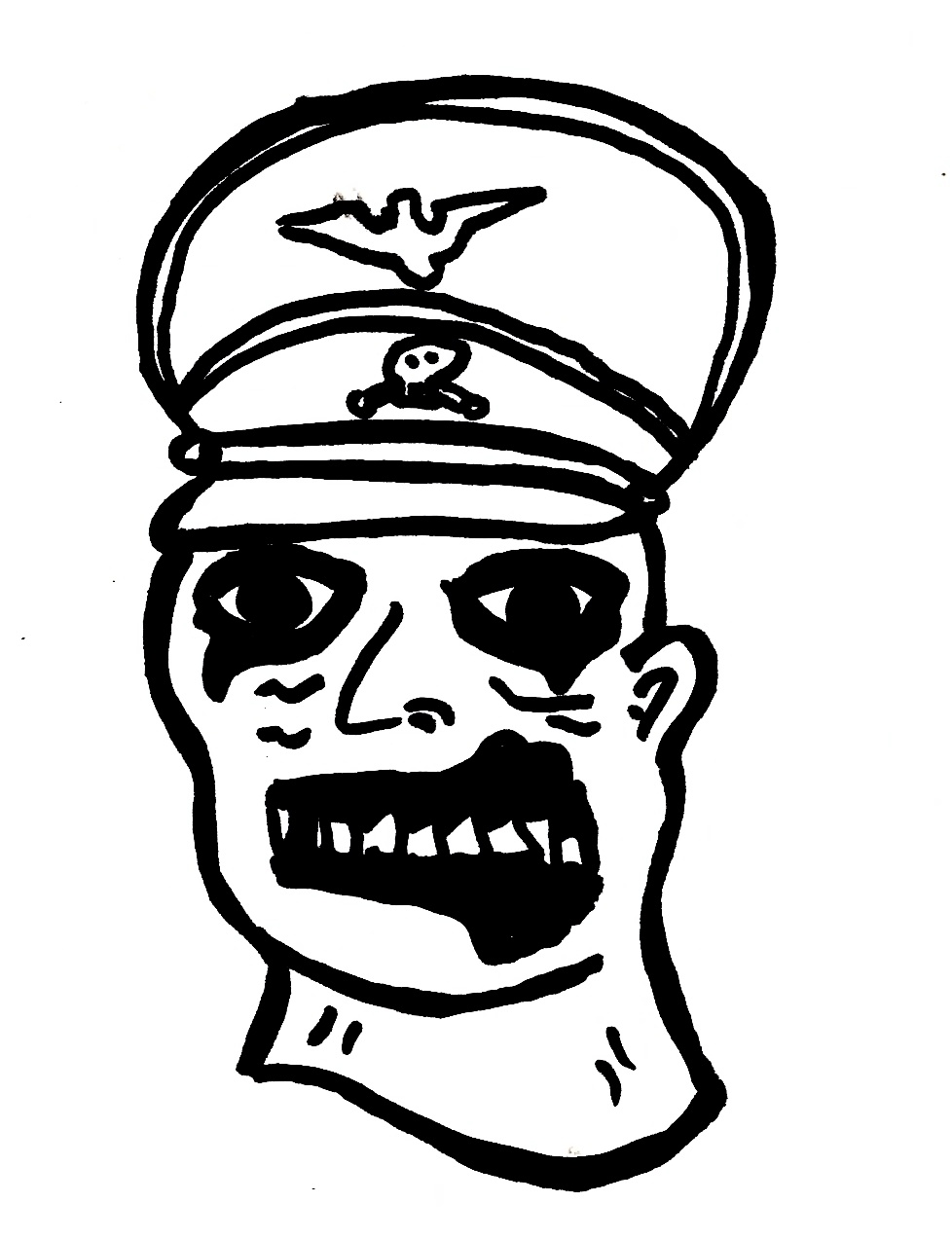
Since I’ve already hinted to the “surprise” in the illustration above & it’s much more explicitly laid out in the film’s promotional material, I’ll just go ahead & spill the beans. Dead Snow is about Nazi zombies. It’s a Nazi zombie horror comedy. Since most of the audience is already prepared for that premise from the get go, it becomes increasingly frustrating that we don’t see a zombie Nazi in full regalia until 2/3 into the film. As if the promo material weren’t enough to prime you for the “surprise” there’s an ominous monologue from a local yokel that spins a yarn about a bygone Nazi occupation & some stolen gold that sets up a Leprechaun type scenario where the doomed victims are bound to unwittingly “steal” some Nazi treasure that the undead fascists will undoubtedly come knocking for. When the first fully visible Nazi zombie appears on the screen I was expecting to shout “Awesome!” but instead it was more of a “Finally!”

Despite the little bit of pained effort it takes to get there, Dead Snow eventually delivers on its promise of Nazi zombie mayhem & the film devolves into some great splatter-soaked chaos. With references to films like Peter Jackson’s Braindead (aka Dead Alive) & every group-of-youngsters-murdered-in-a-cabin horror cheapie ever, Dead Snow is smart to go over the top once it finally delivers on its premise. Eyes are gouged, head are crushed, a vast army of undead Nazi scumbags are gunned down & ripped to shreds. It’s a truly fun release after a very slow build that unnecessarily tests the audience’s patience before it lets loose. I’m hoping that since the hammer has already fallen that the same mistake wasn’t repeated in the sequel, last year’s Dead Snow 2: Red vs Dead. If it just would get to the good, bloody stuff a little quicker, a Dead Snow movie could easily go from “pretty good” to something much more special.

-Brandon Ledet

Sabotage (2014)

EPSON MFP image

three star

campstamp

Loving Arnold Schwarzenegger can sometimes mean loving repetition. There are distinct phases to the action legend’s career where he shifts gears & tries new types of films, but he’s pretty much consistently the same old Arnold in each role. Whether it’s The Running Man, Commando, or Kindergarten Cop, all wildly different films, he’s pretty much consistently the spotless tough guy with a great sense of comic timing & an unexplained Austrian accent. It’s been interesting to see, though, where he wants to go with his career in its latest phase. The post-gubernatorial, elderly Arnold is a strange bird, one that’s difficult to pigeonhole just yet. In projects like Terminator Genisys & The Last Stand, it definitely feel like he’s slipping back into his old ways, but then there’s more out-there choices like this year’s zom-drama Maggie, which showed him playing tender & quietly pensive. I didn’t enjoy Maggie very much on the whole, but I did respect Arnold’s vulnerability in getting out there & trying something new at this late stage of his career, even if he was disappointingly quiet & inexpressive in that role.

It wasn’t until I saw last year’s Sabotage that I got a glimpse of where I’d love Arnold’s career to go. Playing a crooked, disgraced DEA agent who heads an out-of-control crew that has devolved more or less into a gang, Arnold subverts his eternally unblemished good guy routine for the first time I can remember since The Terminator. And he does it so well. There’s something so satisfying to see him pull a (to borrow a pro wrestling term) heel-turn at this point of his career & play a cigar-chomping scumbag driven out of his mind by the violence of Mexican drug cartels. It’s already a little jarring to watch him head a team instead of falling into his usual lone wolf Commando routine, but it’s even more jarring to watch him head a team of such hopeless reprobates.

The catch with Sabotage is that Arnold is far from the film’s only scumbag. The entire film is just oozing with scum. I felt dirty just watching it. With character names like “Breacher” & “Grinder” and a visual palette that makes time to include blood, shit, and viscera, Sabotage is an ugly, ugly film. Much like with Swordfish & See No Evil, it’s the kind of movie where nearly every line of dialogue is loaded with an insult. Characters constantly call each other “assholes” & “crackwhores” and command each other to “Shut the fuck up” or “Wake up, you drunk fuck” or to quit “fingering The Devil’s pussy.” It’s far from a pleasant film & I wasn’t surprised to learn afterwards that the dude who wrote & directed it was also responsible for penning both Training Day & that upcoming Suicide Squad movie. David Ayer apparently has an eye & an ear for the grotesque and from what I’ve seen from his work this kind of nastiness is something he brings to the screen often.

The only truly remarkable thing about Sabotage‘s nastiness is that it managed to drag Schwarzenegger through the mud with it. This is far from the actor’s first ultraviolent rodeo, but his bloody action films usually have a sort of detached, cartoonish nature to them that’s intentionally missing here. Although Arnold’s shown chomping cigars & pumping iron in Sabotage, he’s almost unrecognisable as the film’s King Scumbag. I honestly appreciated that about the film. Its I Know What You Did Last Summer revenge plot was tolerable, but not exactly thrilling, and it was severely lacking for a single pleasant image or line of dialogue or any ray of sunshine, really to break through its deeply nasty, garbage water pessimism, but Arnold’s performance kinda made up for those shortcomings. There’s a really interesting idea at the heart of the way he plays villain here & I’d love to see that thread explored in other, more easy-to-stomach projects in the future.

-Brandon Ledet